EP0727251B1 - Microcapsules à paroi constituée par des produits de réaction de polyisocyanates et quanidines - Google Patents
Microcapsules à paroi constituée par des produits de réaction de polyisocyanates et quanidines Download PDFInfo
- Publication number
- EP0727251B1 EP0727251B1 EP96100155A EP96100155A EP0727251B1 EP 0727251 B1 EP0727251 B1 EP 0727251B1 EP 96100155 A EP96100155 A EP 96100155A EP 96100155 A EP96100155 A EP 96100155A EP 0727251 B1 EP0727251 B1 EP 0727251B1
- Authority
- EP
- European Patent Office
- Prior art keywords
- guanidine
- microcapsules
- salts
- acid
- compounds
- Prior art date
- Legal status (The legal status is an assumption and is not a legal conclusion. Google has not performed a legal analysis and makes no representation as to the accuracy of the status listed.)
- Expired - Lifetime
Links
- 239000003094 microcapsule Substances 0.000 title claims description 43
- 239000005056 polyisocyanate Substances 0.000 title claims description 27
- 229920001228 polyisocyanate Polymers 0.000 title claims description 26
- 239000007795 chemical reaction product Substances 0.000 title claims description 8
- 150000002357 guanidines Chemical class 0.000 claims description 41
- ZRALSGWEFCBTJO-UHFFFAOYSA-N anhydrous guanidine Natural products NC(N)=N ZRALSGWEFCBTJO-UHFFFAOYSA-N 0.000 claims description 33
- 150000003839 salts Chemical class 0.000 claims description 29
- 239000003921 oil Substances 0.000 claims description 26
- XLYOFNOQVPJJNP-UHFFFAOYSA-N water Substances O XLYOFNOQVPJJNP-UHFFFAOYSA-N 0.000 claims description 26
- 239000006185 dispersion Substances 0.000 claims description 25
- CHJJGSNFBQVOTG-UHFFFAOYSA-N N-methyl-guanidine Natural products CNC(N)=N CHJJGSNFBQVOTG-UHFFFAOYSA-N 0.000 claims description 24
- SWSQBOPZIKWTGO-UHFFFAOYSA-N dimethylaminoamidine Natural products CN(C)C(N)=N SWSQBOPZIKWTGO-UHFFFAOYSA-N 0.000 claims description 24
- 239000000839 emulsion Substances 0.000 claims description 20
- 239000002243 precursor Substances 0.000 claims description 18
- -1 guanidine compounds Chemical class 0.000 claims description 17
- 150000007529 inorganic bases Chemical class 0.000 claims description 17
- 238000006243 chemical reaction Methods 0.000 claims description 12
- 239000000126 substance Substances 0.000 claims description 12
- STIAPHVBRDNOAJ-UHFFFAOYSA-N carbamimidoylazanium;carbonate Chemical compound NC(N)=N.NC(N)=N.OC(O)=O STIAPHVBRDNOAJ-UHFFFAOYSA-N 0.000 claims description 11
- 238000004519 manufacturing process Methods 0.000 claims description 11
- IQPQWNKOIGAROB-UHFFFAOYSA-N isocyanate group Chemical group [N-]=C=O IQPQWNKOIGAROB-UHFFFAOYSA-N 0.000 claims description 10
- QTBSBXVTEAMEQO-UHFFFAOYSA-N Acetic acid Chemical class CC(O)=O QTBSBXVTEAMEQO-UHFFFAOYSA-N 0.000 claims description 9
- 239000007864 aqueous solution Substances 0.000 claims description 9
- 239000005057 Hexamethylene diisocyanate Substances 0.000 claims description 8
- RRAMGCGOFNQTLD-UHFFFAOYSA-N hexamethylene diisocyanate Chemical compound O=C=NCCCCCCN=C=O RRAMGCGOFNQTLD-UHFFFAOYSA-N 0.000 claims description 8
- VEXZGXHMUGYJMC-UHFFFAOYSA-N Hydrochloric acid Chemical class Cl VEXZGXHMUGYJMC-UHFFFAOYSA-N 0.000 claims description 6
- NBIIXXVUZAFLBC-UHFFFAOYSA-N Phosphoric acid Chemical class OP(O)(O)=O NBIIXXVUZAFLBC-UHFFFAOYSA-N 0.000 claims description 6
- 239000002253 acid Substances 0.000 claims description 6
- 150000007513 acids Chemical class 0.000 claims description 6
- 125000001931 aliphatic group Chemical group 0.000 claims description 6
- 125000003118 aryl group Chemical group 0.000 claims description 6
- BDAGIHXWWSANSR-UHFFFAOYSA-N methanoic acid Chemical class OC=O BDAGIHXWWSANSR-UHFFFAOYSA-N 0.000 claims description 6
- QAOWNCQODCNURD-UHFFFAOYSA-N Sulfuric acid Chemical class OS(O)(=O)=O QAOWNCQODCNURD-UHFFFAOYSA-N 0.000 claims description 5
- 239000000654 additive Substances 0.000 claims description 5
- OHJMTUPIZMNBFR-UHFFFAOYSA-N biuret Chemical compound NC(=O)NC(N)=O OHJMTUPIZMNBFR-UHFFFAOYSA-N 0.000 claims description 5
- 239000012442 inert solvent Substances 0.000 claims description 5
- HXSACZWWBYWLIS-UHFFFAOYSA-N oxadiazine-4,5,6-trione Chemical group O=C1ON=NC(=O)C1=O HXSACZWWBYWLIS-UHFFFAOYSA-N 0.000 claims description 5
- 239000005058 Isophorone diisocyanate Substances 0.000 claims description 4
- ZFSLODLOARCGLH-UHFFFAOYSA-N isocyanuric acid Chemical compound OC1=NC(O)=NC(O)=N1 ZFSLODLOARCGLH-UHFFFAOYSA-N 0.000 claims description 4
- NIMLQBUJDJZYEJ-UHFFFAOYSA-N isophorone diisocyanate Chemical compound CC1(C)CC(N=C=O)CC(C)(CN=C=O)C1 NIMLQBUJDJZYEJ-UHFFFAOYSA-N 0.000 claims description 4
- OSWFIVFLDKOXQC-UHFFFAOYSA-N 4-(3-methoxyphenyl)aniline Chemical class COC1=CC=CC(C=2C=CC(N)=CC=2)=C1 OSWFIVFLDKOXQC-UHFFFAOYSA-N 0.000 claims description 3
- GRYLNZFGIOXLOG-UHFFFAOYSA-N Nitric acid Chemical class O[N+]([O-])=O GRYLNZFGIOXLOG-UHFFFAOYSA-N 0.000 claims description 3
- 229910000147 aluminium phosphate Inorganic materials 0.000 claims description 3
- 238000009835 boiling Methods 0.000 claims description 3
- BVKZGUZCCUSVTD-UHFFFAOYSA-N carbonic acid Chemical class OC(O)=O BVKZGUZCCUSVTD-UHFFFAOYSA-N 0.000 claims description 3
- 235000019253 formic acid Nutrition 0.000 claims description 3
- 229910017604 nitric acid Inorganic materials 0.000 claims description 3
- RMAQACBXLXPBSY-UHFFFAOYSA-N silicic acid Chemical class O[Si](O)(O)O RMAQACBXLXPBSY-UHFFFAOYSA-N 0.000 claims description 3
- PCHXZXKMYCGVFA-UHFFFAOYSA-N 1,3-diazetidine-2,4-dione Chemical compound O=C1NC(=O)N1 PCHXZXKMYCGVFA-UHFFFAOYSA-N 0.000 claims description 2
- 238000007259 addition reaction Methods 0.000 claims description 2
- 150000001733 carboxylic acid esters Chemical class 0.000 claims description 2
- 239000003925 fat Substances 0.000 claims description 2
- 229930195733 hydrocarbon Natural products 0.000 claims description 2
- 150000002430 hydrocarbons Chemical class 0.000 claims description 2
- 235000011167 hydrochloric acid Nutrition 0.000 claims description 2
- 238000002844 melting Methods 0.000 claims description 2
- 230000008018 melting Effects 0.000 claims description 2
- 235000011007 phosphoric acid Nutrition 0.000 claims description 2
- 235000012239 silicon dioxide Nutrition 0.000 claims description 2
- 235000013311 vegetables Nutrition 0.000 claims description 2
- 229910052799 carbon Inorganic materials 0.000 claims 2
- 239000000975 dye Substances 0.000 claims 2
- 239000000463 material Substances 0.000 claims 1
- 239000001117 sulphuric acid Chemical class 0.000 claims 1
- 235000011149 sulphuric acid Nutrition 0.000 claims 1
- 239000000243 solution Substances 0.000 description 33
- 239000002775 capsule Substances 0.000 description 32
- 239000012071 phase Substances 0.000 description 23
- HEMHJVSKTPXQMS-UHFFFAOYSA-M Sodium hydroxide Chemical compound [OH-].[Na+] HEMHJVSKTPXQMS-UHFFFAOYSA-M 0.000 description 18
- 239000000203 mixture Substances 0.000 description 14
- 229920002451 polyvinyl alcohol Polymers 0.000 description 12
- 239000004372 Polyvinyl alcohol Substances 0.000 description 11
- 238000003756 stirring Methods 0.000 description 10
- 239000008346 aqueous phase Substances 0.000 description 8
- 239000007764 o/w emulsion Substances 0.000 description 7
- 239000012948 isocyanate Substances 0.000 description 6
- 150000002513 isocyanates Chemical class 0.000 description 6
- 238000000034 method Methods 0.000 description 6
- 239000002585 base Substances 0.000 description 5
- 239000002245 particle Substances 0.000 description 5
- 229920000768 polyamine Polymers 0.000 description 5
- IJGRMHOSHXDMSA-UHFFFAOYSA-N Atomic nitrogen Chemical compound N#N IJGRMHOSHXDMSA-UHFFFAOYSA-N 0.000 description 4
- 239000003086 colorant Substances 0.000 description 4
- NDEMNVPZDAFUKN-UHFFFAOYSA-N guanidine;nitric acid Chemical compound NC(N)=N.O[N+]([O-])=O.O[N+]([O-])=O NDEMNVPZDAFUKN-UHFFFAOYSA-N 0.000 description 4
- 238000005259 measurement Methods 0.000 description 4
- 238000002360 preparation method Methods 0.000 description 4
- 238000003892 spreading Methods 0.000 description 4
- 230000007480 spreading Effects 0.000 description 4
- RPNUMPOLZDHAAY-UHFFFAOYSA-N Diethylenetriamine Chemical compound NCCNCCN RPNUMPOLZDHAAY-UHFFFAOYSA-N 0.000 description 3
- 150000001412 amines Chemical class 0.000 description 3
- 150000001414 amino alcohols Chemical class 0.000 description 3
- 230000008901 benefit Effects 0.000 description 3
- 150000001875 compounds Chemical class 0.000 description 3
- 239000008367 deionised water Substances 0.000 description 3
- 229910021641 deionized water Inorganic materials 0.000 description 3
- 239000003995 emulsifying agent Substances 0.000 description 3
- 238000005342 ion exchange Methods 0.000 description 3
- 150000002500 ions Chemical class 0.000 description 3
- 230000008569 process Effects 0.000 description 3
- 239000002002 slurry Substances 0.000 description 3
- LIZLYZVAYZQVPG-UHFFFAOYSA-N (3-bromo-2-fluorophenyl)methanol Chemical compound OCC1=CC=CC(Br)=C1F LIZLYZVAYZQVPG-UHFFFAOYSA-N 0.000 description 2
- IAUKWGFWINVWKS-UHFFFAOYSA-N 1,2-di(propan-2-yl)naphthalene Chemical compound C1=CC=CC2=C(C(C)C)C(C(C)C)=CC=C21 IAUKWGFWINVWKS-UHFFFAOYSA-N 0.000 description 2
- KCZQSKKNAGZQSZ-UHFFFAOYSA-N 1,3,5-tris(6-isocyanatohexyl)-1,3,5-triazin-2,4,6-trione Chemical compound O=C=NCCCCCCN1C(=O)N(CCCCCCN=C=O)C(=O)N(CCCCCCN=C=O)C1=O KCZQSKKNAGZQSZ-UHFFFAOYSA-N 0.000 description 2
- ZIZJPRKHEXCVLL-UHFFFAOYSA-N 1,3-bis(6-isocyanatohexyl)-1,3-diazetidine-2,4-dione Chemical compound O=C=NCCCCCCN1C(=O)N(CCCCCCN=C=O)C1=O ZIZJPRKHEXCVLL-UHFFFAOYSA-N 0.000 description 2
- FXSFKECPPGDGBN-UHFFFAOYSA-N 3,3-bis(1h-indol-2-yl)-2-benzofuran-1-one Chemical class C12=CC=CC=C2C(=O)OC1(C=1NC2=CC=CC=C2C=1)C1=CC2=CC=CC=C2N1 FXSFKECPPGDGBN-UHFFFAOYSA-N 0.000 description 2
- OAKJQQAXSVQMHS-UHFFFAOYSA-N Hydrazine Chemical compound NN OAKJQQAXSVQMHS-UHFFFAOYSA-N 0.000 description 2
- 229920002396 Polyurea Polymers 0.000 description 2
- VYPSYNLAJGMNEJ-UHFFFAOYSA-N Silicium dioxide Chemical class O=[Si]=O VYPSYNLAJGMNEJ-UHFFFAOYSA-N 0.000 description 2
- 230000009471 action Effects 0.000 description 2
- 239000003513 alkali Substances 0.000 description 2
- 125000003277 amino group Chemical group 0.000 description 2
- 239000011230 binding agent Substances 0.000 description 2
- 230000015572 biosynthetic process Effects 0.000 description 2
- 238000004581 coalescence Methods 0.000 description 2
- 239000000571 coke Substances 0.000 description 2
- 238000001035 drying Methods 0.000 description 2
- 230000001804 emulsifying effect Effects 0.000 description 2
- 238000005538 encapsulation Methods 0.000 description 2
- 238000005516 engineering process Methods 0.000 description 2
- 150000002429 hydrazines Chemical class 0.000 description 2
- 125000002887 hydroxy group Chemical group [H]O* 0.000 description 2
- 238000011065 in-situ storage Methods 0.000 description 2
- 238000002156 mixing Methods 0.000 description 2
- 229910052757 nitrogen Inorganic materials 0.000 description 2
- 239000004814 polyurethane Substances 0.000 description 2
- 229920002635 polyurethane Polymers 0.000 description 2
- 239000002994 raw material Substances 0.000 description 2
- 125000006850 spacer group Chemical group 0.000 description 2
- 239000003381 stabilizer Substances 0.000 description 2
- VPIXQGUBUKFLRF-UHFFFAOYSA-N 3-(2-chloro-5,6-dihydrobenzo[b][1]benzazepin-11-yl)-N-methyl-1-propanamine Chemical compound C1CC2=CC=C(Cl)C=C2N(CCCNC)C2=CC=CC=C21 VPIXQGUBUKFLRF-UHFFFAOYSA-N 0.000 description 1
- ZAMOUSCENKQFHK-UHFFFAOYSA-N Chlorine atom Chemical compound [Cl] ZAMOUSCENKQFHK-UHFFFAOYSA-N 0.000 description 1
- 235000008733 Citrus aurantifolia Nutrition 0.000 description 1
- LFQSCWFLJHTTHZ-UHFFFAOYSA-N Ethanol Chemical compound CCO LFQSCWFLJHTTHZ-UHFFFAOYSA-N 0.000 description 1
- 235000019738 Limestone Nutrition 0.000 description 1
- 239000004721 Polyphenylene oxide Substances 0.000 description 1
- KWYUFKZDYYNOTN-UHFFFAOYSA-M Potassium hydroxide Chemical compound [OH-].[K+] KWYUFKZDYYNOTN-UHFFFAOYSA-M 0.000 description 1
- 235000011941 Tilia x europaea Nutrition 0.000 description 1
- 238000006887 Ullmann reaction Methods 0.000 description 1
- 230000000996 additive effect Effects 0.000 description 1
- 239000000853 adhesive Substances 0.000 description 1
- 230000001070 adhesive effect Effects 0.000 description 1
- 229910000287 alkaline earth metal oxide Inorganic materials 0.000 description 1
- 239000010775 animal oil Substances 0.000 description 1
- 150000001450 anions Chemical class 0.000 description 1
- 150000005130 benzoxazines Chemical class 0.000 description 1
- 230000001680 brushing effect Effects 0.000 description 1
- AXCZMVOFGPJBDE-UHFFFAOYSA-L calcium dihydroxide Chemical compound [OH-].[OH-].[Ca+2] AXCZMVOFGPJBDE-UHFFFAOYSA-L 0.000 description 1
- 239000000920 calcium hydroxide Substances 0.000 description 1
- 229910001861 calcium hydroxide Inorganic materials 0.000 description 1
- 238000004364 calculation method Methods 0.000 description 1
- 239000001913 cellulose Substances 0.000 description 1
- 229920002678 cellulose Polymers 0.000 description 1
- 239000000460 chlorine Substances 0.000 description 1
- 229910052801 chlorine Inorganic materials 0.000 description 1
- 238000010924 continuous production Methods 0.000 description 1
- 238000001816 cooling Methods 0.000 description 1
- 238000004132 cross linking Methods 0.000 description 1
- 239000003431 cross linking reagent Substances 0.000 description 1
- CZZYITDELCSZES-UHFFFAOYSA-N diphenylmethane Chemical class C=1C=CC=CC=1CC1=CC=CC=C1 CZZYITDELCSZES-UHFFFAOYSA-N 0.000 description 1
- 239000003814 drug Substances 0.000 description 1
- 238000004945 emulsification Methods 0.000 description 1
- 230000002349 favourable effect Effects 0.000 description 1
- 239000003205 fragrance Substances 0.000 description 1
- 239000012458 free base Substances 0.000 description 1
- 239000000417 fungicide Substances 0.000 description 1
- 159000000011 group IA salts Chemical class 0.000 description 1
- 239000004009 herbicide Substances 0.000 description 1
- 230000007062 hydrolysis Effects 0.000 description 1
- 238000006460 hydrolysis reaction Methods 0.000 description 1
- 150000004679 hydroxides Chemical class 0.000 description 1
- 239000002917 insecticide Substances 0.000 description 1
- 239000000543 intermediate Substances 0.000 description 1
- 238000011835 investigation Methods 0.000 description 1
- 239000004816 latex Substances 0.000 description 1
- 229920000126 latex Polymers 0.000 description 1
- 239000004571 lime Substances 0.000 description 1
- 230000035800 maturation Effects 0.000 description 1
- 239000003960 organic solvent Substances 0.000 description 1
- 239000002304 perfume Substances 0.000 description 1
- 229920000570 polyether Polymers 0.000 description 1
- 125000002924 primary amino group Chemical group [H]N([H])* 0.000 description 1
- 239000000376 reactant Substances 0.000 description 1
- 239000000377 silicon dioxide Chemical class 0.000 description 1
- 239000002904 solvent Substances 0.000 description 1
- 238000003860 storage Methods 0.000 description 1
- 150000004897 thiazines Chemical class 0.000 description 1
- 231100000331 toxic Toxicity 0.000 description 1
- 230000002588 toxic effect Effects 0.000 description 1
- 239000013638 trimer Substances 0.000 description 1
- 150000004961 triphenylmethanes Chemical class 0.000 description 1
- 125000001834 xanthenyl group Chemical class C1=CC=CC=2OC3=CC=CC=C3C(C12)* 0.000 description 1
Classifications
-
- C—CHEMISTRY; METALLURGY
- C08—ORGANIC MACROMOLECULAR COMPOUNDS; THEIR PREPARATION OR CHEMICAL WORKING-UP; COMPOSITIONS BASED THEREON
- C08G—MACROMOLECULAR COMPOUNDS OBTAINED OTHERWISE THAN BY REACTIONS ONLY INVOLVING UNSATURATED CARBON-TO-CARBON BONDS
- C08G18/00—Polymeric products of isocyanates or isothiocyanates
- C08G18/06—Polymeric products of isocyanates or isothiocyanates with compounds having active hydrogen
- C08G18/28—Polymeric products of isocyanates or isothiocyanates with compounds having active hydrogen characterised by the compounds used containing active hydrogen
- C08G18/30—Low-molecular-weight compounds
- C08G18/38—Low-molecular-weight compounds having heteroatoms other than oxygen
- C08G18/3819—Low-molecular-weight compounds having heteroatoms other than oxygen having nitrogen
-
- A—HUMAN NECESSITIES
- A01—AGRICULTURE; FORESTRY; ANIMAL HUSBANDRY; HUNTING; TRAPPING; FISHING
- A01N—PRESERVATION OF BODIES OF HUMANS OR ANIMALS OR PLANTS OR PARTS THEREOF; BIOCIDES, e.g. AS DISINFECTANTS, AS PESTICIDES OR AS HERBICIDES; PEST REPELLANTS OR ATTRACTANTS; PLANT GROWTH REGULATORS
- A01N25/00—Biocides, pest repellants or attractants, or plant growth regulators, characterised by their forms, or by their non-active ingredients or by their methods of application, e.g. seed treatment or sequential application; Substances for reducing the noxious effect of the active ingredients to organisms other than pests
- A01N25/26—Biocides, pest repellants or attractants, or plant growth regulators, characterised by their forms, or by their non-active ingredients or by their methods of application, e.g. seed treatment or sequential application; Substances for reducing the noxious effect of the active ingredients to organisms other than pests in coated particulate form
- A01N25/28—Microcapsules or nanocapsules
-
- B—PERFORMING OPERATIONS; TRANSPORTING
- B01—PHYSICAL OR CHEMICAL PROCESSES OR APPARATUS IN GENERAL
- B01J—CHEMICAL OR PHYSICAL PROCESSES, e.g. CATALYSIS OR COLLOID CHEMISTRY; THEIR RELEVANT APPARATUS
- B01J13/00—Colloid chemistry, e.g. the production of colloidal materials or their solutions, not otherwise provided for; Making microcapsules or microballoons
- B01J13/02—Making microcapsules or microballoons
- B01J13/06—Making microcapsules or microballoons by phase separation
- B01J13/14—Polymerisation; cross-linking
- B01J13/16—Interfacial polymerisation
-
- B—PERFORMING OPERATIONS; TRANSPORTING
- B41—PRINTING; LINING MACHINES; TYPEWRITERS; STAMPS
- B41M—PRINTING, DUPLICATING, MARKING, OR COPYING PROCESSES; COLOUR PRINTING
- B41M5/00—Duplicating or marking methods; Sheet materials for use therein
- B41M5/124—Duplicating or marking methods; Sheet materials for use therein using pressure to make a masked colour visible, e.g. to make a coloured support visible, to create an opaque or transparent pattern, or to form colour by uniting colour-forming components
- B41M5/165—Duplicating or marking methods; Sheet materials for use therein using pressure to make a masked colour visible, e.g. to make a coloured support visible, to create an opaque or transparent pattern, or to form colour by uniting colour-forming components characterised by the use of microcapsules; Special solvents for incorporating the ingredients
-
- C—CHEMISTRY; METALLURGY
- C08—ORGANIC MACROMOLECULAR COMPOUNDS; THEIR PREPARATION OR CHEMICAL WORKING-UP; COMPOSITIONS BASED THEREON
- C08G—MACROMOLECULAR COMPOUNDS OBTAINED OTHERWISE THAN BY REACTIONS ONLY INVOLVING UNSATURATED CARBON-TO-CARBON BONDS
- C08G18/00—Polymeric products of isocyanates or isothiocyanates
- C08G18/06—Polymeric products of isocyanates or isothiocyanates with compounds having active hydrogen
- C08G18/08—Processes
- C08G18/0838—Manufacture of polymers in the presence of non-reactive compounds
- C08G18/0842—Manufacture of polymers in the presence of non-reactive compounds in the presence of liquid diluents
- C08G18/0861—Manufacture of polymers in the presence of non-reactive compounds in the presence of liquid diluents in the presence of a dispersing phase for the polymers or a phase dispersed in the polymers
- C08G18/0866—Manufacture of polymers in the presence of non-reactive compounds in the presence of liquid diluents in the presence of a dispersing phase for the polymers or a phase dispersed in the polymers the dispersing or dispersed phase being an aqueous medium
-
- Y—GENERAL TAGGING OF NEW TECHNOLOGICAL DEVELOPMENTS; GENERAL TAGGING OF CROSS-SECTIONAL TECHNOLOGIES SPANNING OVER SEVERAL SECTIONS OF THE IPC; TECHNICAL SUBJECTS COVERED BY FORMER USPC CROSS-REFERENCE ART COLLECTIONS [XRACs] AND DIGESTS
- Y10—TECHNICAL SUBJECTS COVERED BY FORMER USPC
- Y10T—TECHNICAL SUBJECTS COVERED BY FORMER US CLASSIFICATION
- Y10T428/00—Stock material or miscellaneous articles
- Y10T428/29—Coated or structually defined flake, particle, cell, strand, strand portion, rod, filament, macroscopic fiber or mass thereof
- Y10T428/2982—Particulate matter [e.g., sphere, flake, etc.]
- Y10T428/2984—Microcapsule with fluid core [includes liposome]
-
- Y—GENERAL TAGGING OF NEW TECHNOLOGICAL DEVELOPMENTS; GENERAL TAGGING OF CROSS-SECTIONAL TECHNOLOGIES SPANNING OVER SEVERAL SECTIONS OF THE IPC; TECHNICAL SUBJECTS COVERED BY FORMER USPC CROSS-REFERENCE ART COLLECTIONS [XRACs] AND DIGESTS
- Y10—TECHNICAL SUBJECTS COVERED BY FORMER USPC
- Y10T—TECHNICAL SUBJECTS COVERED BY FORMER US CLASSIFICATION
- Y10T428/00—Stock material or miscellaneous articles
- Y10T428/29—Coated or structually defined flake, particle, cell, strand, strand portion, rod, filament, macroscopic fiber or mass thereof
- Y10T428/2982—Particulate matter [e.g., sphere, flake, etc.]
- Y10T428/2984—Microcapsule with fluid core [includes liposome]
- Y10T428/2985—Solid-walled microcapsule from synthetic polymer
-
- Y—GENERAL TAGGING OF NEW TECHNOLOGICAL DEVELOPMENTS; GENERAL TAGGING OF CROSS-SECTIONAL TECHNOLOGIES SPANNING OVER SEVERAL SECTIONS OF THE IPC; TECHNICAL SUBJECTS COVERED BY FORMER USPC CROSS-REFERENCE ART COLLECTIONS [XRACs] AND DIGESTS
- Y10—TECHNICAL SUBJECTS COVERED BY FORMER USPC
- Y10T—TECHNICAL SUBJECTS COVERED BY FORMER US CLASSIFICATION
- Y10T428/00—Stock material or miscellaneous articles
- Y10T428/29—Coated or structually defined flake, particle, cell, strand, strand portion, rod, filament, macroscopic fiber or mass thereof
- Y10T428/2982—Particulate matter [e.g., sphere, flake, etc.]
- Y10T428/2984—Microcapsule with fluid core [includes liposome]
- Y10T428/2985—Solid-walled microcapsule from synthetic polymer
- Y10T428/2987—Addition polymer from unsaturated monomers only
Definitions
- the present invention relates to microcapsules with walls made of reaction products of polyisocyanates and guanidines, their preparation and improved Carbonless papers containing such microcapsules.
- Microcapsules with walls made of polyurea or polyurea-polyurethane are usually produced by a two-phase polyaddition process.
- an oil phase is emulsified that contains an organic water-immiscible contains inert solvent, polyisocyanate and the substance to be encapsulated, in an aqueous phase, the water and optionally additives such as Contains emulsifiers, stabilizers and / or substances preventing coalescence.
- a polyaddition reaction begins at the interface of the oil droplets with the water phase of amino and / or hydroxyl groups with isocyanate groups.
- Water can also intervene in the polyaddition reaction, e.g. by having isocyanate groups hydrolyzed, forming amino groups, which then with existing isocyanate groups can react.
- the proportions of the reactants for the polyaddition are selected in generally so that all existing isocyanate groups react.
- a wide variety of difunctional and higher-functional isocyanates with an aliphatic or aromatic structure can be used as polyisocyanates, and a wide variety of amines with an aliphatic structure containing two or more NH 2 groups per molecule can be used as polyamines.
- Hydrazine, hydrazine derivatives and / or amino alcohols which contain at least one NH 2 and at least one OH group per molecule can also be used.
- EP-A 227 562 DE-A 3 620 347, DE-A 3 635 823, JP-A-1-07 28 86 and EP-A 392 876.
- microcapsules The main area in which microcapsules are used is manufacturing carbonless carbonless papers.
- the microcapsules contain a dye precursor.
- the microcapsules When writing, the microcapsules are in places destroyed where high pressure is applied.
- the emerging dye precursor then produces a typeface under the influence of a developer.
- Microcapsules have now been found which are characterized in that their walls are made from reaction products of guanidine compounds of the formula (I) in the and Y for H ⁇ , NC ⁇ , H 2 N ⁇ , HO ⁇ stand, or their salts with acids and polyisocyanates exist or contain such reaction products.
- the parent compound guanidine is in contrast to organic amines from the inexpensive and easy to handle inorganic raw materials lime, coke and nitrogen accessible without the use of elemental chlorine (see e.g. Ullmanns Encyclopedia of technical chemistry, 4th edition, Weinheim 1975, volume 9, pages 70 and 642; Volume 10, page 146 and Volume 12, page 411).
- Microcapsules produced show in their practical application in coal-free Carbonless papers generally have a higher carbonless intensity than Microcapsules made from polyisocyanates and di- or polyamines according to the prior art of technology. This is in addition to the ecologically favorable raw material base a particular application technology advantage of microcapsules according to the invention.
- Guanidine compounds of the formula (I) around salts of carbonic acid, nitric acid, Sulfuric acid, hydrochloric acid, silica, phosphoric acid, formic acid and / or acetic acid act.
- the use of salts of guanidine compounds of the formula (I) can in combination with inorganic bases to free the salts in situ from the salts Obtain guanidine compounds of formula (I).
- inorganic bases for this Purpose come e.g. Alkali and / or alkaline earth hydroxides and / or alkaline earth oxides questionable.
- Aqueous solutions or slurries of these bases are preferred, in particular aqueous sodium hydroxide solution, aqueous potassium hydroxide solution and aqueous solutions or Calcium hydroxide slurries. Combinations of several can also be used Bases are applied.
- inorganic bases are used, they can be used in stoichiometric, substoichiometric and superstoichiometric amounts, based on salts of guanidine compounds. Preferably 10 to 100 equivalent% of inorganic base (based on salts of the guanidine compounds) is used.
- the addition of inorganic bases means that in the microencapsulation in the aqueous phase guanidine compounds with free NH 2 groups are available for reaction with the polyisocyanates contained in the oil phase.
- salts of guanidine compounds and bases are expediently added in such a way that they are added separately to the aqueous phase.
- guanidine or salts of guanidine with carbonic acid, Nitric acid, sulfuric acid, hydrochloric acid, silicic acid, phosphoric acid, formic acid and / or acetic acid used.
- guanidine compounds of the invention which are suitable for the present invention Formula (I) can also be obtained from their water-soluble salts by ion exchange according to the state of the art with the help of commercially available basic ion exchangers getting produced.
- the eluate can be taken directly from the ion exchanger to the Draw up capsule wall formation by covering it with the oil-in-water emulsion mixed.
- guanidine compounds that 0.2 to 4.0 mol of free NH 2 groups in the form of guanidine compounds are introduced into or released from the water phase per mole of NCO groups which are present as polyisocyanate in the oil phase. This amount is preferably 0.5 to 1.5 mol.
- free NCO groups remain after the reaction with the polyisocyanate. These then generally react with water, which is usually not critical because new, free, crosslinkable amino groups are formed.
- the guanidine compounds are preferably in the form of aqueous solutions used.
- concentration of such solutions is not critical and in general limited only by the solubility of the guanidine compounds in water. Suitable are e.g. 1 to 20% by weight aqueous solutions of guanidine compounds.
- the polyisocyanates used for the production of microcapsules according to the invention are the various aliphatic, aromatic and aromatic-aliphatic 2- and higher-functional isocyanates are used, especially those used in the preparation of microcapsules are known. Aliphatic polyisocyanates are preferred used. The following are particularly preferably used: hexamethylene diisocyanate, Isophorone diisocyanate and / or free isocyanate groups Derivatives of hexamethylene diisocyanate and isophorone diisocyanate, the Contain biuret, isocyanurate, uretdione and / or oxadiazinetrione groups. It Mixtures of different polyisocyanates can also be used. Some usable polyisocyanates are e.g. described in EP-A 227 562, EP-A 164 666 and EP-A 16 378.
- the microcapsules according to the invention are preferably used to produce carbon-free Carbonless papers used. They therefore contain as an encapsulated substance preferably dye precursors.
- dye precursors for this Types in question, especially triphenylmethane compounds, diphenylmethane compounds, Bisindolylphthalide compounds, bisarylcarbazolylmethane compounds, Xanthene compounds, benzoxazine compounds, thiazine compounds and spiropyran compounds, especially those that act as dye precursors for the production of carbonless carbonless papers are known. It mixtures of several dye precursors can also be used.
- Some usable Dye precursors are e.g. described in EP-A 591 106, EP-A 315 901, EP-A 234 394, DE-A 3 622 262 and EP-A 187 329.
- the microcapsules together with the substance to be encapsulated and the polyisocyanate are part of the oil phase, e.g. aromatic, aliphatic and naphthenic Hydrocarbons, carboxylic acid esters, chlorinated paraffins, animal oils and of vegetable origin, natural fats with melting points in the range 10 to 35 ° C and aromatic and aliphatic ethers boiling above 100 ° C are possible. It can mixtures of several solvents can also be used.
- the aqueous phase can optionally Contain emulsifiers, stabilizers and / or substances preventing coalescence.
- Emulsifiers can optionally also contain the oil phase.
- the amount of such Additives can e.g. in the range 0 to 2% by weight, based on the respective phase lie.
- Microcapsules according to the invention can contain not only dye precursors but also also for example perfume oils, fragrances, adhesives, pharmaceuticals, insecticides, Fungicides, herbicides and repellants.
- perfume oils such as perfume oils, fragrances, adhesives, pharmaceuticals, insecticides, Fungicides, herbicides and repellants.
- the substances to be combated may be among the Encapsulation conditions of course do not react with isocyanates.
- Microcapsules according to the invention can be prepared according to known continuous and discontinuous processes are prepared, the crosslinking agent then not being the usual polyamines but guanidine compounds of formula (I) or their salts optionally in combination with inorganic bases.
- the crosslinking agent then not being the usual polyamines but guanidine compounds of formula (I) or their salts optionally in combination with inorganic bases.
- alkaline salts of guanidine compounds with weak Acids for good results.
- This way of working is technically particularly advantageous because the free base does not have to be manufactured separately, e.g. by adding inorganic Bases or by ion exchange.
- microcapsules according to the invention have a number of advantages. You point good mechanical and chemical stability when used for carbon-free Carbonless papers quickly become an intensive typeface and become large-scale available guanidine compounds made from the lime stones, Coke and nitrogen in a simple, inexpensive and easy way Are accessible.
- the present invention also relates to a method for producing microcapsule dispersions, where you have an oil phase, which is an organic one, with water not miscible inert solvent, the substance to be encapsulated and a polyisocyanate contains, in a water phase, which optionally contains additives, emulsifies and Adds a substance to the emulsion that undergoes addition reactions with isocyanate groups can enter into, which is characterized in that one of the emulsion Guanidine compound of formula (I) adds.
- the present invention also relates to carbonless carbonless papers, contain and characterized in the dye precursors in microencapsulated form are that the walls of the microcapsules are reaction products of guanidine compounds of formula (I) with polyisocyanates.
- Example 2 360 g of an oil phase prepared according to Example 1 were mixed with 40 g of oxadiazinetrione of hexamethylene diisocyanate (NCO content 20.6% - manufactured according to DE-A 16 70 664) and, as described in Example 1, with 454.4 g of 1% strength aqueous polyvinyl alcohol solution processed into an oil-in-water emulsion.
- the resulting emulsion was composed of a solution at room temperature 11.9 g guanidine nitrate, 3.9 g sodium hydroxide and 123.5 water are added, heated to 60 ° C within 3 hours and another 4 hours at 60 ° C touched. It was a dispersion with a capsule content of about 41% and one average particle size of 7.4 microns obtained after brushing on Paper and measurement (as described in Example 1) an impression with the Intensity value 0.55 delivered.
- Example 2 360 g of the oil phase described in Example 1 were mixed with 40 g of oxadiazinetrione of hexamethylene diisocyanate (NCO content 20.6% - manufactured according to DE-A 16 70 664) and, as described, with 506 g of aqueous 1% strength Polyvinyl alcohol solution processed into an oil-in-water emulsion.
- a solution was prepared from 9.4 g guanidine carbonate in 84.7 g water and then with slow stirring at a temperature of 50 ° C to the oil-in-water emulsion dripped.
- the pH of the mixture was continuously monitored measured and the rate of dropping adjusted so that the pH stayed between 8 and 9.
- the mixture was then stirred at 60 ° C for 1 hour.
- the resulting dispersion had a capsule content of approximately 40% and one average particle size of 7.0 microns. After spreading on paper and Measurement (as described under Example 1) was an impression with a Obtained intensity value of 0.62.
- Guanidine carbonate 70.0 g of a 10% solution in water
- Isocyanate 28 g biuret of hexamethylene diisocyanate, NCO content 23.4%
- Colorant solution 372 g, type as described in Example 1
- Water phase 537 g 1% aqueous polyvinyl alcohol solution
- Example 1 After adding the guanidine carbonate solution at room temperature, the Dispersion heated to 58 ° C within 1 hour and at this temperature stirred for a further 4 hours. An approximately 40% microcapsule dispersion resulted with an average particle size of 6.0 ⁇ m. Checking the copy behavior was carried out as in Example 1 and gave an intensity value of 0.51.
- Example 2 360 g of a colorant solution prepared as described in Example 1 were mixed with 40 g of polyisocyanate mixture, the latter having an NCO content of 22.1% and 20% from the oxadiazinetrione and 80% from the Uretdione of hexamethylene diisocyanate existed. After adding 544.5 g 1% aqueous polyvinyl alcohol solution was emulsified under a high shear field. At room temperature, this emulsion was gently stirred with a Solution consisting of 6.4 g guanidine nitrate, 2.1 g sodium hydroxide and 55.5 g Water added. The temperature of the dispersion was then increased with stirring increased to 58 ° C within 60 minutes and another 4 hours at this Stirred temperature. The resulting dispersion had a capsule content of approx. 40% and an average capsule diameter of 6.9 ⁇ m. The intensity value, measured as in Example 1, was 0.52.
- Example 1 360 g of a colorant solution prepared as described in Example 1 were mixed with 40 g of a polyisocyanate by the reaction of isocyanurate groups containing hexamethylene diisocyanate trimer with polyether alcohol (according to EP-A 206 059) and an NCO content of 19.5% exhibited. From this mixture and 554 g of 1% aqueous polyvinyl alcohol solution was under reduced shear field, but otherwise as described in Example 1, made an emulsion. The conversion to a capsule dispersion happened at Room temperature by adding 51 g of a 10% guanidine solution in Water made by ion exchange of a guanidine carbonate solution on one basic ion exchanger. The resulting dispersion became as in Example 7 described aftertreated. The investigation showed a capsule content of approx. 41%, an average capsule diameter of 9.9 ⁇ m and an intensity value of 0.40 (measured as in Example 1).
- the mixture was stirred for a further 4 hours at 60 ° C.
- the resulting dispersion had a capsule content of approx. 41% and an average particle size of 6.5 ⁇ m on. After spreading on paper and measurement as in example 1 an intensity value of 0.42 was determined.
- the leak test (performed as indicated in Example 10) showed the presence of densities Capsules.
- the first half was at room temperature with slow stirring Solution of 7.0 g of diethylenetriamine in 71 g of deionized water was added to second part in a corresponding manner a solution of 6.0 g guanidine in 68 g deionized water.
- the dispersions that formed formed within 2 Heated to 60 ° C for hours and 4 hours after reaching this temperature Stirred slowly for hours.
- Capsule dispersion made with diethylene triamine Capsule dispersion made with guanidine
Landscapes
- Chemical & Material Sciences (AREA)
- Health & Medical Sciences (AREA)
- Organic Chemistry (AREA)
- Dispersion Chemistry (AREA)
- Chemical Kinetics & Catalysis (AREA)
- Life Sciences & Earth Sciences (AREA)
- Engineering & Computer Science (AREA)
- General Health & Medical Sciences (AREA)
- Medicinal Chemistry (AREA)
- Polymers & Plastics (AREA)
- Agronomy & Crop Science (AREA)
- Manufacturing & Machinery (AREA)
- Pest Control & Pesticides (AREA)
- Plant Pathology (AREA)
- Toxicology (AREA)
- Dentistry (AREA)
- Wood Science & Technology (AREA)
- Zoology (AREA)
- Environmental Sciences (AREA)
- Manufacturing Of Micro-Capsules (AREA)
- Color Printing (AREA)
- Polyurethanes Or Polyureas (AREA)
- Organic Low-Molecular-Weight Compounds And Preparation Thereof (AREA)
Claims (12)
- Microcapsules caractérisées en ce que leurs parois sont constituées par des produits réactionnels de composés de guanidine répondant à la formule (I)dans laquelle X représente HN=,
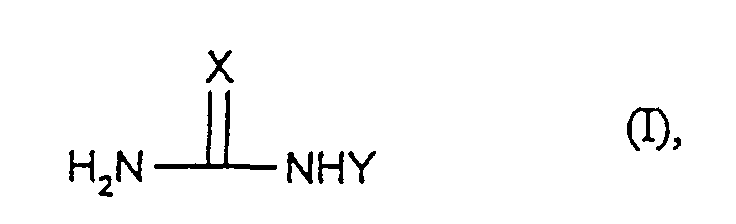 et Y représente H―, NC―, H2N―, HO―,
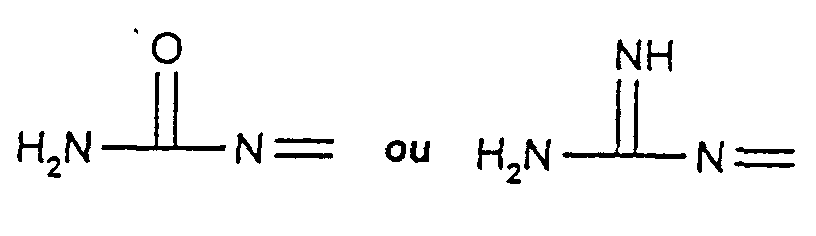 ou de leurs sels avec des acides
et de polyisocyanates ou bien contiennent de tels produits réactionnels. - Microcapsules selon la revendication 1, caractérisées en ce qu'il s'agit, en ce qui concerne les sels, de sels de l'acide carbonique, de l'acide nitrique, de l'acide sulfurique, de l'acide chlorhydrique, de l'acide silicique, de l'acide phosphorique, de l'acide formique et/ou de l'acide acétique.
- Microcapsules selon les revendications 1 et 2, caractérisées en ce qu'on met en oeuvre, lors de leur préparation, des sels de composés de guanidine et de 10 à 100 équivalents % de bases inorganiques (rapportés aux sels des composés de guanidine).
- Microcapsules selon les revendications 1 à 3, caractérisées en ce qu'on introduit ou on libère, lors de leur préparation, par mole de groupes NCO dans le polyisocyanate, de 0,2 à 4,0 moles de groupes NH2 libres sous la forme de composés de guanidine.
- Microcapsules selon les revendications 1 à 4, caractérisées en ce qu'on met en oeuvre, lors de leur préparation, à titre de polyisocyanates, l'hexaméthylènediisocyanate, l'isophoronediisocyanate et/ou des dérivés de l'hexaméthylène-diisocyanate et de l'isophoronediisocyanate présentant des groupes isocyanate libres, qui contiennent des groupes biuret, des groupes isocyanurate, des groupes uretdione et/ou des groupes oxadiazinetrione.
- Microcapsules selon les revendications 1 à 5, caractérisées en ce qu'elles contiennent des précurseurs de colorants et des solvants non miscibles à l'eau et inertes, à propos desquels il s'agit d'hydrocarbures aromatiques, aliphatiques et/ou naphténiques, d'esters carboxyliques, de paraffines chlorées, d'huiles d'origine animale et végétale, de graisses naturelles possédant des points de fusion dans le domaine de 10 à 35 °C et/ou d'éthers aromatiques ou aliphatiques possédant des points d'ébullition supérieurs à 100°C.
- Microcapsules selon les revendications 1 à 6, caractérisées en ce qu'on les obtient en discontinu à une température de 10 à 50°C par addition d'une quantité d'un composé de guanidine qui correspond à la quantité stoechiométrique requise pour la réaction de tous les groupes isocyanate présents ou bien on les prépare en continu à une température de 25 à 50°C par addition d'une solution aqueuse d'un composé de guanidine et, le cas échéant, par la libération de composés de guanidine à partir de sels avec une base inorganique.
- Microcapsules selon les revendications 1 à 7, caractérisées en ce qu'on met en oeuvre, à titre de composé de guanidine, du carbonate de guanidine en l'absence de base inorganique.
- Procédé pour la préparation de dispersions de microcapsules, caractérisé en ce qu'on émulsifie une phase huileuse qui contient un solvant organique inerte non miscible à l'eau, la substance à encapsuler et un polyisocyanate, dans une phase aqueuse qui contient le cas échéant des additifs, et on ajoute à l'émulsion une substance qui peut déclencher des réactions d'addition avec des groupes isocyanate, caractérisé en ce qu'on ajoute à l'émulsion un composé de guanidine.
- Procédé pour la préparation de microcapsules selon la revendication 9, caractérisé en ce qu'on met en oeuvre, à titre de composé de guanidine, du carbonate de guanidine en l'absence de base inorganique.
- Papiers autocopiants exempts de carbone qui contiennent des précurseurs de colorants sous forme microencapsulée, caractérisés en ce que les parois des microcapsules contiennent des produits réactionnels de composés de guanidine avec des polyisocyanates.
- Papiers autocopiants exempts de carbone selon la revendication 11, caractérisés en ce qu'on met en oeuvre, à titre de composé de guanidine, du carbonate de guanidine en l'absence de base inorganique.
Applications Claiming Priority (2)
| Application Number | Priority Date | Filing Date | Title |
|---|---|---|---|
| DE19501479A DE19501479A1 (de) | 1995-01-19 | 1995-01-19 | Mikrokapseln mit Wänden aus Umsetzungsprodukten von Polyisocyanaten und Guanidinen |
| DE19501479 | 1995-01-19 |
Publications (3)
| Publication Number | Publication Date |
|---|---|
| EP0727251A2 EP0727251A2 (fr) | 1996-08-21 |
| EP0727251A3 EP0727251A3 (fr) | 1997-01-22 |
| EP0727251B1 true EP0727251B1 (fr) | 2001-09-26 |
Family
ID=7751827
Family Applications (1)
| Application Number | Title | Priority Date | Filing Date |
|---|---|---|---|
| EP96100155A Expired - Lifetime EP0727251B1 (fr) | 1995-01-19 | 1996-01-08 | Microcapsules à paroi constituée par des produits de réaction de polyisocyanates et quanidines |
Country Status (9)
| Country | Link |
|---|---|
| US (1) | US5635211A (fr) |
| EP (1) | EP0727251B1 (fr) |
| JP (1) | JP3179017B2 (fr) |
| CN (1) | CN1087188C (fr) |
| CA (1) | CA2167346C (fr) |
| DE (2) | DE19501479A1 (fr) |
| ES (1) | ES2164170T3 (fr) |
| TW (1) | TW358041B (fr) |
| ZA (1) | ZA96395B (fr) |
Families Citing this family (25)
| Publication number | Priority date | Publication date | Assignee | Title |
|---|---|---|---|---|
| DE19607632A1 (de) * | 1996-02-29 | 1997-09-04 | Bayer Ag | Mikrokapseln mit Wänden aus Umsetzungsprodukten von Biuret-Polyisocyanaten und Guanidinen |
| DE10051194A1 (de) | 2000-10-16 | 2002-04-25 | Bayer Ag | Mikrokapseln mit Wänden aus Polyharnstoff |
| DE10051190A1 (de) | 2000-10-16 | 2002-04-25 | Bayer Ag | Mikrokapseln mit Wänden aus Polyharnstoff |
| DE10117671A1 (de) * | 2001-04-09 | 2002-10-10 | Bayer Ag | Mit duftstoffhaltigen Mikrokapseln ausgerüstetes Leder |
| DE10241000A1 (de) * | 2001-09-10 | 2003-03-27 | Bayer Ag | Mikrokapsel-haltige Vliese |
| US20080206291A1 (en) * | 2005-06-30 | 2008-08-28 | Firmenich Sa | Polyurethane and Polyurea Microcapsules |
| DE102008002145A1 (de) | 2008-06-02 | 2009-12-03 | Symrise Gmbh & Co. Kg | Kapsel mit organisch-anorganischer Hybridwand |
| WO2015023961A1 (fr) | 2013-08-15 | 2015-02-19 | International Flavors & Fragrances Inc. | Capsules en polyurée ou polyuréthane |
| US9816059B2 (en) | 2009-09-18 | 2017-11-14 | International Flavors & Fragrances | Stabilized capsule compositions |
| US9687424B2 (en) | 2009-09-18 | 2017-06-27 | International Flavors & Fragrances | Polyurea capsules prepared with aliphatic isocyanates and amines |
| US10085925B2 (en) | 2009-09-18 | 2018-10-02 | International Flavors & Fragrances Inc. | Polyurea capsule compositions |
| US11311467B2 (en) | 2009-09-18 | 2022-04-26 | International Flavors & Fragrances Inc. | Polyurea capsules prepared with a polyisocyanate and cross-linking agent |
| US10226405B2 (en) | 2009-09-18 | 2019-03-12 | International Flavors & Fragrances Inc. | Purified polyurea capsules, methods of preparation, and products containing the same |
| EP2338342A1 (fr) * | 2009-12-24 | 2011-06-29 | Sebastian Oberwalder | Polyurée dotée de propriétés biocides |
| US9499769B2 (en) | 2011-06-28 | 2016-11-22 | Firmenich Sa | Process for preparing polyurea microcapsules |
| JP6250055B2 (ja) * | 2012-09-24 | 2017-12-20 | フイルメニツヒ ソシエテ アノニムFirmenich Sa | 多層コア/シェルマイクロカプセル |
| WO2015017494A1 (fr) | 2013-07-31 | 2015-02-05 | P.H. Glatfelter Company | Documents et encres indicateurs d'effraction |
| US20170029625A1 (en) * | 2015-07-30 | 2017-02-02 | P.H. Glatfelter Company | Impact indicator coatings and methods |
| WO2017143174A1 (fr) | 2016-02-18 | 2017-08-24 | International Flavors & Fragrances Inc. | Compositions à base de capsules en polyurée |
| US20180085291A1 (en) | 2016-09-28 | 2018-03-29 | International Flavors & Fragrances Inc. | Microcapsule compositions containing amino silicone |
| US11135561B2 (en) * | 2016-12-22 | 2021-10-05 | Firmenich Sa | Microcapsules having a mineral layer |
| DE102018126744A1 (de) * | 2018-10-26 | 2020-04-30 | Mitsubishi Hitec Paper Europe Gmbh | Wärmeempfindliches Aufzeichnungsmaterial mit verkapseltem Farbentwickler |
| EP3890875B1 (fr) | 2018-12-03 | 2024-01-10 | Agfa-Gevaert N.V. | Dispersion aqueuse de capsules |
| EP4045179A1 (fr) * | 2019-10-16 | 2022-08-24 | Symrise AG | Microcapsules de polyurée et systèmes tensioactifs liquides les contenant |
| CN112250830B (zh) * | 2020-09-24 | 2022-09-23 | 长安大学 | 一种环保型路用微胶囊及其制备方法和地沟油的应用 |
Family Cites Families (4)
| Publication number | Priority date | Publication date | Assignee | Title |
|---|---|---|---|---|
| DE3403500A1 (de) * | 1984-02-02 | 1985-08-08 | Bayer Ag, 5090 Leverkusen | Verfahren zur herstellung von stabilisierten polyisocyanaten, stabilisierte isocyanate ratardierter reaktivitaet und ihre verwendung zur polyurethanherstellung |
| US4708812A (en) | 1985-06-26 | 1987-11-24 | Union Carbide Corporation | Encapsulation of phase change materials |
| JPS62212190A (ja) * | 1986-03-13 | 1987-09-18 | Kanzaki Paper Mfg Co Ltd | 感熱記録体 |
| DE3710607A1 (de) * | 1987-03-31 | 1988-10-20 | Bayer Ag | Mikroschaumperlen und verfahren zu ihrer herstellung |
-
1995
- 1995-01-19 DE DE19501479A patent/DE19501479A1/de not_active Withdrawn
- 1995-02-21 US US08/391,990 patent/US5635211A/en not_active Expired - Lifetime
-
1996
- 1996-01-08 DE DE59607743T patent/DE59607743D1/de not_active Expired - Lifetime
- 1996-01-08 ES ES96100155T patent/ES2164170T3/es not_active Expired - Lifetime
- 1996-01-08 EP EP96100155A patent/EP0727251B1/fr not_active Expired - Lifetime
- 1996-01-12 JP JP02063696A patent/JP3179017B2/ja not_active Expired - Lifetime
- 1996-01-16 CA CA002167346A patent/CA2167346C/fr not_active Expired - Lifetime
- 1996-01-18 ZA ZA96395A patent/ZA96395B/xx unknown
- 1996-01-19 CN CN96101907A patent/CN1087188C/zh not_active Expired - Lifetime
- 1996-07-18 TW TW085108714A patent/TW358041B/zh active
Also Published As
| Publication number | Publication date |
|---|---|
| ES2164170T3 (es) | 2002-02-16 |
| US5635211A (en) | 1997-06-03 |
| CN1134853A (zh) | 1996-11-06 |
| ZA96395B (en) | 1996-08-15 |
| EP0727251A3 (fr) | 1997-01-22 |
| CA2167346A1 (fr) | 1996-07-20 |
| EP0727251A2 (fr) | 1996-08-21 |
| JPH08252454A (ja) | 1996-10-01 |
| CN1087188C (zh) | 2002-07-10 |
| JP3179017B2 (ja) | 2001-06-25 |
| DE59607743D1 (de) | 2001-10-31 |
| CA2167346C (fr) | 2007-03-27 |
| TW358041B (en) | 1999-05-11 |
| DE19501479A1 (de) | 1996-07-25 |
Similar Documents
| Publication | Publication Date | Title |
|---|---|---|
| EP0727251B1 (fr) | Microcapsules à paroi constituée par des produits de réaction de polyisocyanates et quanidines | |
| EP1205239B1 (fr) | Microcapsules ayant parois de polyurée | |
| EP1199100B1 (fr) | Microcapsules ayant des parois de polyurée | |
| EP0841088B1 (fr) | Microcapsules obtenues par utilisation de polyisocyanate d'iminooxadiazinione | |
| EP0023302B1 (fr) | Séchage par pulvérisation de dispersions de microcapsules | |
| EP0164666B1 (fr) | Préparation en continu de dispersions de microcapsules | |
| EP0040770B1 (fr) | Suspension concentrée de microcapsules, un procédé de sa préparation et son application pour des papiers de copie par réaction | |
| EP0265743B1 (fr) | Microcapsules avec des parois modifiées | |
| EP0000903B1 (fr) | Papier copiant sans carbone et sa fabrication | |
| EP0023613B1 (fr) | Papier carbone chimique | |
| EP0780154A1 (fr) | Procédé de préparation de microcapsules dégradables | |
| DE2617747C2 (de) | Reaktionsdurchschreibepapiere | |
| DE3202551C2 (fr) | ||
| DE3635822A1 (de) | Mikrokapseln mit waenden aus polyurethan | |
| EP0792682A1 (fr) | Microcapsules dont les parois sont constituées de produits de réaction des Biuret-polyisocyanates et des guanidines | |
| EP0516742B1 (fr) | Microcapsules contenant une phase aqueuse | |
| EP1151789A1 (fr) | Microcapsules obtenues en utilisant protéine hydrolysat comme émulsifiant | |
| DE19623566A1 (de) | Mikrokapseln mit Wänden aus Umsetzungsprodukten von Uretdion-Polyisocyanaten und Guanidinen | |
| EP0468323B1 (fr) | Microcapsules améliorées | |
| EP0268071B1 (fr) | Microcapsules avec des parois améliorées | |
| DE3802271A1 (de) | Farbbildner enthaltende mikrokapseln | |
| MXPA96002835A (en) | Microcapsules that have the walls made of polyisocianate / guanid reaction products | |
| DE10025302A1 (de) | Mikrokapseln erhältlich unter Verwendung von Eiweißhydrolysaten als Emulgator |
Legal Events
| Date | Code | Title | Description |
|---|---|---|---|
| PUAI | Public reference made under article 153(3) epc to a published international application that has entered the european phase |
Free format text: ORIGINAL CODE: 0009012 |
|
| AK | Designated contracting states |
Kind code of ref document: A2 Designated state(s): BE DE ES FR GB IT |
|
| PUAL | Search report despatched |
Free format text: ORIGINAL CODE: 0009013 |
|
| AK | Designated contracting states |
Kind code of ref document: A3 Designated state(s): BE DE ES FR GB IT |
|
| 17P | Request for examination filed |
Effective date: 19970207 |
|
| 17Q | First examination report despatched |
Effective date: 19990317 |
|
| GRAG | Despatch of communication of intention to grant |
Free format text: ORIGINAL CODE: EPIDOS AGRA |
|
| GRAG | Despatch of communication of intention to grant |
Free format text: ORIGINAL CODE: EPIDOS AGRA |
|
| GRAH | Despatch of communication of intention to grant a patent |
Free format text: ORIGINAL CODE: EPIDOS IGRA |
|
| GRAH | Despatch of communication of intention to grant a patent |
Free format text: ORIGINAL CODE: EPIDOS IGRA |
|
| GRAA | (expected) grant |
Free format text: ORIGINAL CODE: 0009210 |
|
| AK | Designated contracting states |
Kind code of ref document: B1 Designated state(s): BE DE ES FR GB IT |
|
| REF | Corresponds to: |
Ref document number: 59607743 Country of ref document: DE Date of ref document: 20011031 |
|
| GBT | Gb: translation of ep patent filed (gb section 77(6)(a)/1977) |
Effective date: 20011026 |
|
| REG | Reference to a national code |
Ref country code: GB Ref legal event code: IF02 |
|
| REG | Reference to a national code |
Ref country code: ES Ref legal event code: FG2A Ref document number: 2164170 Country of ref document: ES Kind code of ref document: T3 |
|
| ET | Fr: translation filed | ||
| PLBE | No opposition filed within time limit |
Free format text: ORIGINAL CODE: 0009261 |
|
| STAA | Information on the status of an ep patent application or granted ep patent |
Free format text: STATUS: NO OPPOSITION FILED WITHIN TIME LIMIT |
|
| 26N | No opposition filed | ||
| PGFP | Annual fee paid to national office [announced via postgrant information from national office to epo] |
Ref country code: GB Payment date: 20040107 Year of fee payment: 9 |
|
| PGFP | Annual fee paid to national office [announced via postgrant information from national office to epo] |
Ref country code: FR Payment date: 20040109 Year of fee payment: 9 |
|
| PGFP | Annual fee paid to national office [announced via postgrant information from national office to epo] |
Ref country code: BE Payment date: 20040128 Year of fee payment: 9 |
|
| PG25 | Lapsed in a contracting state [announced via postgrant information from national office to epo] |
Ref country code: GB Free format text: LAPSE BECAUSE OF NON-PAYMENT OF DUE FEES Effective date: 20050108 |
|
| PG25 | Lapsed in a contracting state [announced via postgrant information from national office to epo] |
Ref country code: BE Free format text: LAPSE BECAUSE OF NON-PAYMENT OF DUE FEES Effective date: 20050131 |
|
| BERE | Be: lapsed |
Owner name: *BAYER A.G. Effective date: 20050131 |
|
| GBPC | Gb: european patent ceased through non-payment of renewal fee |
Effective date: 20050108 |
|
| PG25 | Lapsed in a contracting state [announced via postgrant information from national office to epo] |
Ref country code: FR Free format text: LAPSE BECAUSE OF NON-PAYMENT OF DUE FEES Effective date: 20050930 |
|
| REG | Reference to a national code |
Ref country code: FR Ref legal event code: ST |
|
| PGFP | Annual fee paid to national office [announced via postgrant information from national office to epo] |
Ref country code: IT Payment date: 20060131 Year of fee payment: 11 |
|
| REG | Reference to a national code |
Ref country code: ES Ref legal event code: PC2A |
|
| BERE | Be: lapsed |
Owner name: *BAYER A.G. Effective date: 20050131 |
|
| PG25 | Lapsed in a contracting state [announced via postgrant information from national office to epo] |
Ref country code: IT Free format text: LAPSE BECAUSE OF NON-PAYMENT OF DUE FEES Effective date: 20070108 |
|
| PGFP | Annual fee paid to national office [announced via postgrant information from national office to epo] |
Ref country code: ES Payment date: 20150115 Year of fee payment: 20 Ref country code: DE Payment date: 20150121 Year of fee payment: 20 |
|
| REG | Reference to a national code |
Ref country code: DE Ref legal event code: R071 Ref document number: 59607743 Country of ref document: DE |
|
| REG | Reference to a national code |
Ref country code: ES Ref legal event code: FD2A Effective date: 20160426 |
|
| PG25 | Lapsed in a contracting state [announced via postgrant information from national office to epo] |
Ref country code: ES Free format text: LAPSE BECAUSE OF EXPIRATION OF PROTECTION Effective date: 20160109 |