EP0728841A2 - DNS-Segmente und Verfahren zur Erhöhung von Polysaccharid-Produktion - Google Patents
DNS-Segmente und Verfahren zur Erhöhung von Polysaccharid-Produktion Download PDFInfo
- Publication number
- EP0728841A2 EP0728841A2 EP96300467A EP96300467A EP0728841A2 EP 0728841 A2 EP0728841 A2 EP 0728841A2 EP 96300467 A EP96300467 A EP 96300467A EP 96300467 A EP96300467 A EP 96300467A EP 0728841 A2 EP0728841 A2 EP 0728841A2
- Authority
- EP
- European Patent Office
- Prior art keywords
- sphingan
- sphingomonas
- dna
- dna sequence
- rha
- Prior art date
- Legal status (The legal status is an assumption and is not a legal conclusion. Google has not performed a legal analysis and makes no representation as to the accuracy of the status listed.)
- Granted
Links
- 150000004676 glycans Chemical class 0.000 title claims abstract description 94
- 229920001282 polysaccharide Polymers 0.000 title claims abstract description 93
- 239000005017 polysaccharide Substances 0.000 title claims abstract description 93
- 238000000034 method Methods 0.000 title claims abstract description 58
- 238000004519 manufacturing process Methods 0.000 title claims abstract description 56
- 230000001965 increasing effect Effects 0.000 title description 15
- 241000736131 Sphingomonas Species 0.000 claims abstract description 150
- 241000894006 Bacteria Species 0.000 claims abstract description 124
- 239000012634 fragment Substances 0.000 claims abstract description 113
- 230000015572 biosynthetic process Effects 0.000 claims abstract description 66
- 241001135759 Sphingomonas sp. Species 0.000 claims abstract description 23
- 244000005700 microbiome Species 0.000 claims abstract description 14
- 108020004414 DNA Proteins 0.000 claims description 192
- 108090000623 proteins and genes Proteins 0.000 claims description 173
- 108091028043 Nucleic acid sequence Proteins 0.000 claims description 80
- SHZGCJCMOBCMKK-UHFFFAOYSA-N D-mannomethylose Natural products CC1OC(O)C(O)C(O)C1O SHZGCJCMOBCMKK-UHFFFAOYSA-N 0.000 claims description 48
- PNNNRSAQSRJVSB-UHFFFAOYSA-N L-rhamnose Natural products CC(O)C(O)C(O)C(O)C=O PNNNRSAQSRJVSB-UHFFFAOYSA-N 0.000 claims description 48
- WQZGKKKJIJFFOK-GASJEMHNSA-N Glucose Chemical compound OC[C@H]1OC(O)[C@H](O)[C@@H](O)[C@@H]1O WQZGKKKJIJFFOK-GASJEMHNSA-N 0.000 claims description 39
- SHZGCJCMOBCMKK-JFNONXLTSA-N L-rhamnopyranose Chemical compound C[C@@H]1OC(O)[C@H](O)[C@H](O)[C@H]1O SHZGCJCMOBCMKK-JFNONXLTSA-N 0.000 claims description 32
- WQZGKKKJIJFFOK-QTVWNMPRSA-N D-mannopyranose Chemical compound OC[C@H]1OC(O)[C@@H](O)[C@@H](O)[C@@H]1O WQZGKKKJIJFFOK-QTVWNMPRSA-N 0.000 claims description 24
- 239000008103 glucose Substances 0.000 claims description 21
- 241000588724 Escherichia coli Species 0.000 claims description 18
- 238000000855 fermentation Methods 0.000 claims description 18
- 230000004151 fermentation Effects 0.000 claims description 18
- 229920000642 polymer Polymers 0.000 claims description 15
- IAJILQKETJEXLJ-UHFFFAOYSA-N Galacturonsaeure Natural products O=CC(O)C(O)C(O)C(O)C(O)=O IAJILQKETJEXLJ-UHFFFAOYSA-N 0.000 claims description 13
- 230000009286 beneficial effect Effects 0.000 claims description 13
- 230000002068 genetic effect Effects 0.000 claims description 13
- 125000002791 glucosyl group Chemical group C1([C@H](O)[C@@H](O)[C@H](O)[C@H](O1)CO)* 0.000 claims description 11
- 108700023372 Glycosyltransferases Proteins 0.000 claims description 10
- 102000051366 Glycosyltransferases Human genes 0.000 claims description 10
- SHZGCJCMOBCMKK-HGVZOGFYSA-N alpha-L-rhamnopyranose Chemical compound C[C@@H]1O[C@@H](O)[C@H](O)[C@H](O)[C@H]1O SHZGCJCMOBCMKK-HGVZOGFYSA-N 0.000 claims description 10
- 229940097043 glucuronic acid Drugs 0.000 claims description 10
- AEMOLEFTQBMNLQ-AQKNRBDQSA-N D-glucopyranuronic acid Chemical compound OC1O[C@H](C(O)=O)[C@@H](O)[C@H](O)[C@H]1O AEMOLEFTQBMNLQ-AQKNRBDQSA-N 0.000 claims description 9
- 241000834608 Sphingomonas bacterium Species 0.000 claims description 5
- AEMOLEFTQBMNLQ-UHFFFAOYSA-N beta-D-galactopyranuronic acid Natural products OC1OC(C(O)=O)C(O)C(O)C1O AEMOLEFTQBMNLQ-UHFFFAOYSA-N 0.000 claims description 5
- 230000002708 enhancing effect Effects 0.000 claims description 4
- 238000012258 culturing Methods 0.000 claims description 3
- 230000001747 exhibiting effect Effects 0.000 claims 1
- 239000013612 plasmid Substances 0.000 description 92
- 102000004169 proteins and genes Human genes 0.000 description 54
- 235000018102 proteins Nutrition 0.000 description 52
- 241000589636 Xanthomonas campestris Species 0.000 description 39
- 238000003786 synthesis reaction Methods 0.000 description 38
- 238000003780 insertion Methods 0.000 description 36
- 230000037431 insertion Effects 0.000 description 36
- 101150093861 spsB gene Proteins 0.000 description 32
- 210000004027 cell Anatomy 0.000 description 29
- 230000035772 mutation Effects 0.000 description 29
- 241000204918 Sphingomonas sp. S88 Species 0.000 description 25
- 108090000992 Transferases Proteins 0.000 description 23
- 229920002444 Exopolysaccharide Polymers 0.000 description 22
- 102000004357 Transferases Human genes 0.000 description 22
- 235000000346 sugar Nutrition 0.000 description 22
- 102000004190 Enzymes Human genes 0.000 description 21
- 108090000790 Enzymes Proteins 0.000 description 21
- 239000013598 vector Substances 0.000 description 20
- KFZMGEQAYNKOFK-UHFFFAOYSA-N Isopropanol Chemical compound CC(C)O KFZMGEQAYNKOFK-UHFFFAOYSA-N 0.000 description 19
- 108091008146 restriction endonucleases Proteins 0.000 description 18
- 239000013611 chromosomal DNA Substances 0.000 description 17
- 239000013600 plasmid vector Substances 0.000 description 17
- 229920001285 xanthan gum Polymers 0.000 description 17
- 238000010367 cloning Methods 0.000 description 16
- 150000001413 amino acids Chemical class 0.000 description 13
- 239000000047 product Substances 0.000 description 13
- 108020004705 Codon Proteins 0.000 description 12
- 125000003275 alpha amino acid group Chemical group 0.000 description 11
- 150000001720 carbohydrates Chemical class 0.000 description 11
- 235000014633 carbohydrates Nutrition 0.000 description 11
- 230000013011 mating Effects 0.000 description 11
- 230000028327 secretion Effects 0.000 description 11
- 238000012546 transfer Methods 0.000 description 11
- 239000000230 xanthan gum Substances 0.000 description 11
- 235000010493 xanthan gum Nutrition 0.000 description 11
- 229940082509 xanthan gum Drugs 0.000 description 11
- 108010001478 Bacitracin Proteins 0.000 description 10
- LFQSCWFLJHTTHZ-UHFFFAOYSA-N Ethanol Chemical compound CCO LFQSCWFLJHTTHZ-UHFFFAOYSA-N 0.000 description 10
- 229960003071 bacitracin Drugs 0.000 description 10
- 229930184125 bacitracin Natural products 0.000 description 10
- CLKOFPXJLQSYAH-ABRJDSQDSA-N bacitracin A Chemical compound C1SC([C@@H](N)[C@@H](C)CC)=N[C@@H]1C(=O)N[C@@H](CC(C)C)C(=O)N[C@H](CCC(O)=O)C(=O)N[C@@H]([C@@H](C)CC)C(=O)N[C@@H]1C(=O)N[C@H](CCCN)C(=O)N[C@@H]([C@@H](C)CC)C(=O)N[C@H](CC=2C=CC=CC=2)C(=O)N[C@@H](CC=2N=CNC=2)C(=O)N[C@H](CC(O)=O)C(=O)N[C@@H](CC(N)=O)C(=O)NCCCC1 CLKOFPXJLQSYAH-ABRJDSQDSA-N 0.000 description 10
- 230000001580 bacterial effect Effects 0.000 description 10
- 210000000349 chromosome Anatomy 0.000 description 10
- 230000021615 conjugation Effects 0.000 description 10
- 239000002773 nucleotide Substances 0.000 description 10
- 125000003729 nucleotide group Chemical group 0.000 description 10
- 229920002148 Gellan gum Polymers 0.000 description 9
- WQZGKKKJIJFFOK-VFUOTHLCSA-N beta-D-glucose Chemical compound OC[C@H]1O[C@@H](O)[C@H](O)[C@@H](O)[C@@H]1O WQZGKKKJIJFFOK-VFUOTHLCSA-N 0.000 description 9
- 238000003776 cleavage reaction Methods 0.000 description 9
- 230000007017 scission Effects 0.000 description 9
- 108091029865 Exogenous DNA Proteins 0.000 description 8
- 210000003578 bacterial chromosome Anatomy 0.000 description 8
- 230000000694 effects Effects 0.000 description 8
- 230000006870 function Effects 0.000 description 8
- 101150100449 gumD gene Proteins 0.000 description 8
- 238000012216 screening Methods 0.000 description 8
- 239000000126 substance Substances 0.000 description 8
- 241001515965 unidentified phage Species 0.000 description 8
- 101100366535 Bacillus subtilis (strain 168) spsD gene Proteins 0.000 description 7
- 241001138501 Salmonella enterica Species 0.000 description 7
- 230000001851 biosynthetic effect Effects 0.000 description 7
- 238000012217 deletion Methods 0.000 description 7
- 230000037430 deletion Effects 0.000 description 7
- 108700014210 glycosyltransferase activity proteins Proteins 0.000 description 7
- 230000002209 hydrophobic effect Effects 0.000 description 7
- XLYOFNOQVPJJNP-UHFFFAOYSA-N water Substances O XLYOFNOQVPJJNP-UHFFFAOYSA-N 0.000 description 7
- GJCOSYZMQJWQCA-UHFFFAOYSA-N 9H-xanthene Chemical compound C1=CC=C2CC3=CC=CC=C3OC2=C1 GJCOSYZMQJWQCA-UHFFFAOYSA-N 0.000 description 6
- CSCPPACGZOOCGX-UHFFFAOYSA-N Acetone Chemical compound CC(C)=O CSCPPACGZOOCGX-UHFFFAOYSA-N 0.000 description 6
- IJGRMHOSHXDMSA-UHFFFAOYSA-N Atomic nitrogen Chemical compound N#N IJGRMHOSHXDMSA-UHFFFAOYSA-N 0.000 description 6
- 101100150182 Bacillus subtilis (strain 168) spsK gene Proteins 0.000 description 6
- 108020000946 Bacterial DNA Proteins 0.000 description 6
- ISWSIDIOOBJBQZ-UHFFFAOYSA-N Phenol Chemical compound OC1=CC=CC=C1 ISWSIDIOOBJBQZ-UHFFFAOYSA-N 0.000 description 6
- 241000589196 Sinorhizobium meliloti Species 0.000 description 6
- 241000589634 Xanthomonas Species 0.000 description 6
- 239000002253 acid Substances 0.000 description 6
- IAJILQKETJEXLJ-QTBDOELSSA-N aldehydo-D-glucuronic acid Chemical compound O=C[C@H](O)[C@@H](O)[C@H](O)[C@H](O)C(O)=O IAJILQKETJEXLJ-QTBDOELSSA-N 0.000 description 6
- 238000004458 analytical method Methods 0.000 description 6
- 239000002609 medium Substances 0.000 description 6
- 239000000203 mixture Substances 0.000 description 6
- 239000002243 precursor Substances 0.000 description 6
- 230000009466 transformation Effects 0.000 description 6
- 108010006533 ATP-Binding Cassette Transporters Proteins 0.000 description 5
- 102000005416 ATP-Binding Cassette Transporters Human genes 0.000 description 5
- 101100366534 Bacillus subtilis (strain 168) spsC gene Proteins 0.000 description 5
- 101100366536 Bacillus subtilis (strain 168) spsE gene Proteins 0.000 description 5
- 101100218308 Emericella nidulans (strain FGSC A4 / ATCC 38163 / CBS 112.46 / NRRL 194 / M139) atrB gene Proteins 0.000 description 5
- -1 Isoprenyl Chemical group 0.000 description 5
- WQZGKKKJIJFFOK-JFNONXLTSA-N L-mannopyranose Chemical compound OC[C@@H]1OC(O)[C@H](O)[C@H](O)[C@H]1O WQZGKKKJIJFFOK-JFNONXLTSA-N 0.000 description 5
- 108700026244 Open Reading Frames Proteins 0.000 description 5
- 229920002310 Welan gum Polymers 0.000 description 5
- PNNNRSAQSRJVSB-BXKVDMCESA-N aldehydo-L-rhamnose Chemical compound C[C@H](O)[C@H](O)[C@@H](O)[C@@H](O)C=O PNNNRSAQSRJVSB-BXKVDMCESA-N 0.000 description 5
- 101150082732 atrD gene Proteins 0.000 description 5
- 230000002759 chromosomal effect Effects 0.000 description 5
- ZOSQFDVXNQFKBY-CGAXJHMRSA-N dTDP-beta-L-rhamnose Chemical compound O[C@@H]1[C@H](O)[C@@H](O)[C@H](C)O[C@@H]1OP(O)(=O)OP(O)(=O)OC[C@@H]1[C@@H](O)C[C@H](N2C(NC(=O)C(C)=C2)=O)O1 ZOSQFDVXNQFKBY-CGAXJHMRSA-N 0.000 description 5
- 238000009396 hybridization Methods 0.000 description 5
- 238000010348 incorporation Methods 0.000 description 5
- 239000007788 liquid Substances 0.000 description 5
- 238000002703 mutagenesis Methods 0.000 description 5
- 231100000350 mutagenesis Toxicity 0.000 description 5
- 238000001556 precipitation Methods 0.000 description 5
- 241000894007 species Species 0.000 description 5
- 238000010561 standard procedure Methods 0.000 description 5
- 239000007218 ym medium Substances 0.000 description 5
- 101100150181 Bacillus subtilis (strain 168) spsG gene Proteins 0.000 description 4
- OKTJSMMVPCPJKN-UHFFFAOYSA-N Carbon Chemical compound [C] OKTJSMMVPCPJKN-UHFFFAOYSA-N 0.000 description 4
- HEDRZPFGACZZDS-UHFFFAOYSA-N Chloroform Chemical compound ClC(Cl)Cl HEDRZPFGACZZDS-UHFFFAOYSA-N 0.000 description 4
- 206010061764 Chromosomal deletion Diseases 0.000 description 4
- 241000736110 Sphingomonas paucimobilis Species 0.000 description 4
- 238000013459 approach Methods 0.000 description 4
- 210000004899 c-terminal region Anatomy 0.000 description 4
- 125000000837 carbohydrate group Chemical group 0.000 description 4
- 229910052799 carbon Inorganic materials 0.000 description 4
- 230000001413 cellular effect Effects 0.000 description 4
- 239000013599 cloning vector Substances 0.000 description 4
- 230000000295 complement effect Effects 0.000 description 4
- 238000010276 construction Methods 0.000 description 4
- 230000007547 defect Effects 0.000 description 4
- 238000004520 electroporation Methods 0.000 description 4
- 238000002474 experimental method Methods 0.000 description 4
- 238000002743 insertional mutagenesis Methods 0.000 description 4
- PHTQWCKDNZKARW-UHFFFAOYSA-N isoamylol Chemical compound CC(C)CCO PHTQWCKDNZKARW-UHFFFAOYSA-N 0.000 description 4
- 239000002244 precipitate Substances 0.000 description 4
- MQCJHQBRIPSIKA-UHFFFAOYSA-N prenyl phosphate Chemical compound CC(C)=CCOP(O)(O)=O MQCJHQBRIPSIKA-UHFFFAOYSA-N 0.000 description 4
- 230000008569 process Effects 0.000 description 4
- 238000005215 recombination Methods 0.000 description 4
- 230000002269 spontaneous effect Effects 0.000 description 4
- UCSJYZPVAKXKNQ-HZYVHMACSA-N streptomycin Chemical compound CN[C@H]1[C@H](O)[C@@H](O)[C@H](CO)O[C@H]1O[C@@H]1[C@](C=O)(O)[C@H](C)O[C@H]1O[C@@H]1[C@@H](NC(N)=N)[C@H](O)[C@@H](NC(N)=N)[C@H](O)[C@H]1O UCSJYZPVAKXKNQ-HZYVHMACSA-N 0.000 description 4
- 150000008163 sugars Chemical class 0.000 description 4
- 238000012360 testing method Methods 0.000 description 4
- 230000032258 transport Effects 0.000 description 4
- 229920001817 Agar Polymers 0.000 description 3
- 102000016928 DNA-directed DNA polymerase Human genes 0.000 description 3
- 108010014303 DNA-directed DNA polymerase Proteins 0.000 description 3
- 241000620209 Escherichia coli DH5[alpha] Species 0.000 description 3
- 239000004098 Tetracycline Substances 0.000 description 3
- XCCTYIAWTASOJW-UHFFFAOYSA-N UDP-Glc Natural products OC1C(O)C(COP(O)(=O)OP(O)(O)=O)OC1N1C(=O)NC(=O)C=C1 XCCTYIAWTASOJW-UHFFFAOYSA-N 0.000 description 3
- HSCJRCZFDFQWRP-JZMIEXBBSA-N UDP-alpha-D-glucose Chemical compound O[C@@H]1[C@@H](O)[C@H](O)[C@@H](CO)O[C@@H]1OP(O)(=O)OP(O)(=O)OC[C@@H]1[C@@H](O)[C@@H](O)[C@H](N2C(NC(=O)C=C2)=O)O1 HSCJRCZFDFQWRP-JZMIEXBBSA-N 0.000 description 3
- HSCJRCZFDFQWRP-UHFFFAOYSA-N Uridindiphosphoglukose Natural products OC1C(O)C(O)C(CO)OC1OP(O)(=O)OP(O)(=O)OCC1C(O)C(O)C(N2C(NC(=O)C=C2)=O)O1 HSCJRCZFDFQWRP-UHFFFAOYSA-N 0.000 description 3
- 239000008272 agar Substances 0.000 description 3
- WQZGKKKJIJFFOK-PHYPRBDBSA-N alpha-D-galactose Chemical compound OC[C@H]1O[C@H](O)[C@H](O)[C@@H](O)[C@H]1O WQZGKKKJIJFFOK-PHYPRBDBSA-N 0.000 description 3
- AEMOLEFTQBMNLQ-WAXACMCWSA-N alpha-D-glucuronic acid Chemical compound O[C@H]1O[C@H](C(O)=O)[C@@H](O)[C@H](O)[C@H]1O AEMOLEFTQBMNLQ-WAXACMCWSA-N 0.000 description 3
- 108091092356 cellular DNA Proteins 0.000 description 3
- 238000006243 chemical reaction Methods 0.000 description 3
- WIIZWVCIJKGZOK-RKDXNWHRSA-N chloramphenicol Chemical compound ClC(Cl)C(=O)N[C@H](CO)[C@H](O)C1=CC=C([N+]([O-])=O)C=C1 WIIZWVCIJKGZOK-RKDXNWHRSA-N 0.000 description 3
- 238000000605 extraction Methods 0.000 description 3
- 229930182830 galactose Natural products 0.000 description 3
- 108091008053 gene clusters Proteins 0.000 description 3
- 238000010353 genetic engineering Methods 0.000 description 3
- 239000001963 growth medium Substances 0.000 description 3
- 229930027917 kanamycin Natural products 0.000 description 3
- 229960000318 kanamycin Drugs 0.000 description 3
- SBUJHOSQTJFQJX-NOAMYHISSA-N kanamycin Chemical compound O[C@@H]1[C@@H](O)[C@H](O)[C@@H](CN)O[C@@H]1O[C@H]1[C@H](O)[C@@H](O[C@@H]2[C@@H]([C@@H](N)[C@H](O)[C@@H](CO)O2)O)[C@H](N)C[C@@H]1N SBUJHOSQTJFQJX-NOAMYHISSA-N 0.000 description 3
- 229930182823 kanamycin A Natural products 0.000 description 3
- 230000002101 lytic effect Effects 0.000 description 3
- 238000013507 mapping Methods 0.000 description 3
- 239000000463 material Substances 0.000 description 3
- 229910052757 nitrogen Inorganic materials 0.000 description 3
- 230000006798 recombination Effects 0.000 description 3
- 230000010076 replication Effects 0.000 description 3
- 101150064450 rhsA gene Proteins 0.000 description 3
- 150000003839 salts Chemical class 0.000 description 3
- 229960002180 tetracycline Drugs 0.000 description 3
- 229930101283 tetracycline Natural products 0.000 description 3
- 235000019364 tetracycline Nutrition 0.000 description 3
- 150000003522 tetracyclines Chemical class 0.000 description 3
- 238000004809 thin layer chromatography Methods 0.000 description 3
- 238000011179 visual inspection Methods 0.000 description 3
- YBJHBAHKTGYVGT-ZKWXMUAHSA-N (+)-Biotin Chemical compound N1C(=O)N[C@@H]2[C@H](CCCCC(=O)O)SC[C@@H]21 YBJHBAHKTGYVGT-ZKWXMUAHSA-N 0.000 description 2
- 108020004465 16S ribosomal RNA Proteins 0.000 description 2
- QGZKDVFQNNGYKY-UHFFFAOYSA-O Ammonium Chemical compound [NH4+] QGZKDVFQNNGYKY-UHFFFAOYSA-O 0.000 description 2
- PAYRUJLWNCNPSJ-UHFFFAOYSA-N Aniline Chemical compound NC1=CC=CC=C1 PAYRUJLWNCNPSJ-UHFFFAOYSA-N 0.000 description 2
- 101100360600 Bacillus subtilis (strain 168) rfbB gene Proteins 0.000 description 2
- 101100150180 Bacillus subtilis (strain 168) spsF gene Proteins 0.000 description 2
- 101100150183 Bacillus subtilis (strain 168) spsL gene Proteins 0.000 description 2
- RBNPOMFGQQGHHO-UWTATZPHSA-N D-glyceric acid Chemical group OC[C@@H](O)C(O)=O RBNPOMFGQQGHHO-UWTATZPHSA-N 0.000 description 2
- 102000012410 DNA Ligases Human genes 0.000 description 2
- 108010061982 DNA Ligases Proteins 0.000 description 2
- 238000007400 DNA extraction Methods 0.000 description 2
- 238000012270 DNA recombination Methods 0.000 description 2
- 206010059866 Drug resistance Diseases 0.000 description 2
- 101100034049 Escherichia coli (strain K12) rhsD gene Proteins 0.000 description 2
- 108010055629 Glucosyltransferases Proteins 0.000 description 2
- 102000000340 Glucosyltransferases Human genes 0.000 description 2
- 108010092364 Glucuronosyltransferase Proteins 0.000 description 2
- 102000016354 Glucuronosyltransferase Human genes 0.000 description 2
- 108010006464 Hemolysin Proteins Proteins 0.000 description 2
- XEEYBQQBJWHFJM-UHFFFAOYSA-N Iron Chemical compound [Fe] XEEYBQQBJWHFJM-UHFFFAOYSA-N 0.000 description 2
- 241001293418 Mannheimia haemolytica Species 0.000 description 2
- LRHPLDYGYMQRHN-UHFFFAOYSA-N N-Butanol Chemical compound CCCCO LRHPLDYGYMQRHN-UHFFFAOYSA-N 0.000 description 2
- NBIIXXVUZAFLBC-UHFFFAOYSA-N Phosphoric acid Chemical compound OP(O)(O)=O NBIIXXVUZAFLBC-UHFFFAOYSA-N 0.000 description 2
- 108020005091 Replication Origin Proteins 0.000 description 2
- 101100301886 Rhizobium meliloti (strain 1021) rhbD gene Proteins 0.000 description 2
- AUNGANRZJHBGPY-SCRDCRAPSA-N Riboflavin Chemical compound OC[C@@H](O)[C@@H](O)[C@@H](O)CN1C=2C=C(C)C(C)=CC=2N=C2C1=NC(=O)NC2=O AUNGANRZJHBGPY-SCRDCRAPSA-N 0.000 description 2
- PXIPVTKHYLBLMZ-UHFFFAOYSA-N Sodium azide Chemical compound [Na+].[N-]=[N+]=[N-] PXIPVTKHYLBLMZ-UHFFFAOYSA-N 0.000 description 2
- DTQVDTLACAAQTR-UHFFFAOYSA-N Trifluoroacetic acid Chemical compound OC(=O)C(F)(F)F DTQVDTLACAAQTR-UHFFFAOYSA-N 0.000 description 2
- 125000002777 acetyl group Chemical group [H]C([H])([H])C(*)=O 0.000 description 2
- 150000007513 acids Chemical class 0.000 description 2
- 239000000654 additive Substances 0.000 description 2
- 239000003242 anti bacterial agent Substances 0.000 description 2
- 229940088710 antibiotic agent Drugs 0.000 description 2
- 239000012736 aqueous medium Substances 0.000 description 2
- 101150080962 atrB gene Proteins 0.000 description 2
- 239000013602 bacteriophage vector Substances 0.000 description 2
- 239000002775 capsule Substances 0.000 description 2
- 239000000969 carrier Substances 0.000 description 2
- 239000003795 chemical substances by application Substances 0.000 description 2
- 229960005091 chloramphenicol Drugs 0.000 description 2
- 239000000470 constituent Substances 0.000 description 2
- 230000029087 digestion Effects 0.000 description 2
- DMBHHRLKUKUOEG-UHFFFAOYSA-N diphenylamine Chemical compound C=1C=CC=CC=1NC1=CC=CC=C1 DMBHHRLKUKUOEG-UHFFFAOYSA-N 0.000 description 2
- 230000002255 enzymatic effect Effects 0.000 description 2
- 238000012869 ethanol precipitation Methods 0.000 description 2
- 125000002519 galactosyl group Chemical group C1([C@H](O)[C@@H](O)[C@@H](O)[C@H](O1)CO)* 0.000 description 2
- 230000014509 gene expression Effects 0.000 description 2
- 238000003167 genetic complementation Methods 0.000 description 2
- 125000001475 halogen functional group Chemical group 0.000 description 2
- 210000002443 helper t lymphocyte Anatomy 0.000 description 2
- 238000002744 homologous recombination Methods 0.000 description 2
- 230000006801 homologous recombination Effects 0.000 description 2
- 238000002169 hydrotherapy Methods 0.000 description 2
- 238000011081 inoculation Methods 0.000 description 2
- 239000002054 inoculum Substances 0.000 description 2
- 230000010354 integration Effects 0.000 description 2
- 238000002955 isolation Methods 0.000 description 2
- 231100000518 lethal Toxicity 0.000 description 2
- 230000001665 lethal effect Effects 0.000 description 2
- 230000007246 mechanism Effects 0.000 description 2
- 239000012528 membrane Substances 0.000 description 2
- 239000000123 paper Substances 0.000 description 2
- 238000006116 polymerization reaction Methods 0.000 description 2
- 229910052700 potassium Inorganic materials 0.000 description 2
- 239000013587 production medium Substances 0.000 description 2
- 238000000746 purification Methods 0.000 description 2
- LXNHXLLTXMVWPM-UHFFFAOYSA-N pyridoxine Chemical compound CC1=NC=C(CO)C(CO)=C1O LXNHXLLTXMVWPM-UHFFFAOYSA-N 0.000 description 2
- 101150013127 rhsD gene Proteins 0.000 description 2
- JQXXHWHPUNPDRT-WLSIYKJHSA-N rifampicin Chemical compound O([C@](C1=O)(C)O/C=C/[C@@H]([C@H]([C@@H](OC(C)=O)[C@H](C)[C@H](O)[C@H](C)[C@@H](O)[C@@H](C)\C=C\C=C(C)/C(=O)NC=2C(O)=C3C([O-])=C4C)C)OC)C4=C1C3=C(O)C=2\C=N\N1CC[NH+](C)CC1 JQXXHWHPUNPDRT-WLSIYKJHSA-N 0.000 description 2
- 229960001225 rifampicin Drugs 0.000 description 2
- 238000011218 seed culture Methods 0.000 description 2
- 230000000638 stimulation Effects 0.000 description 2
- 229960005322 streptomycin Drugs 0.000 description 2
- 238000006467 substitution reaction Methods 0.000 description 2
- 239000000758 substrate Substances 0.000 description 2
- JZRWCGZRTZMZEH-UHFFFAOYSA-N thiamine Chemical compound CC1=C(CCO)SC=[N+]1CC1=CN=C(C)N=C1N JZRWCGZRTZMZEH-UHFFFAOYSA-N 0.000 description 2
- 231100000331 toxic Toxicity 0.000 description 2
- 230000002588 toxic effect Effects 0.000 description 2
- 238000001890 transfection Methods 0.000 description 2
- 230000014621 translational initiation Effects 0.000 description 2
- 239000011782 vitamin Substances 0.000 description 2
- 235000013343 vitamin Nutrition 0.000 description 2
- 229940088594 vitamin Drugs 0.000 description 2
- 229930003231 vitamin Natural products 0.000 description 2
- NDVRKEKNSBMTAX-BTVCFUMJSA-N (2r,3s,4r,5r)-2,3,4,5,6-pentahydroxyhexanal;phosphoric acid Chemical compound OP(O)(O)=O.OC[C@@H](O)[C@@H](O)[C@H](O)[C@@H](O)C=O NDVRKEKNSBMTAX-BTVCFUMJSA-N 0.000 description 1
- GHOKWGTUZJEAQD-ZETCQYMHSA-N (D)-(+)-Pantothenic acid Chemical compound OCC(C)(C)[C@@H](O)C(=O)NCCC(O)=O GHOKWGTUZJEAQD-ZETCQYMHSA-N 0.000 description 1
- OWEGMIWEEQEYGQ-UHFFFAOYSA-N 100676-05-9 Natural products OC1C(O)C(O)C(CO)OC1OCC1C(O)C(O)C(O)C(OC2C(OC(O)C(O)C2O)CO)O1 OWEGMIWEEQEYGQ-UHFFFAOYSA-N 0.000 description 1
- NCMVOABPESMRCP-SHYZEUOFSA-N 2'-deoxycytosine 5'-monophosphate Chemical compound O=C1N=C(N)C=CN1[C@@H]1O[C@H](COP(O)(O)=O)[C@@H](O)C1 NCMVOABPESMRCP-SHYZEUOFSA-N 0.000 description 1
- LTFMZDNNPPEQNG-KVQBGUIXSA-N 2'-deoxyguanosine 5'-monophosphate Chemical compound C1=2NC(N)=NC(=O)C=2N=CN1[C@H]1C[C@H](O)[C@@H](COP(O)(O)=O)O1 LTFMZDNNPPEQNG-KVQBGUIXSA-N 0.000 description 1
- QKNYBSVHEMOAJP-UHFFFAOYSA-N 2-amino-2-(hydroxymethyl)propane-1,3-diol;hydron;chloride Chemical compound Cl.OCC(N)(CO)CO QKNYBSVHEMOAJP-UHFFFAOYSA-N 0.000 description 1
- OPIFSICVWOWJMJ-AEOCFKNESA-N 5-bromo-4-chloro-3-indolyl beta-D-galactoside Chemical compound O[C@@H]1[C@@H](O)[C@@H](O)[C@@H](CO)O[C@H]1OC1=CNC2=CC=C(Br)C(Cl)=C12 OPIFSICVWOWJMJ-AEOCFKNESA-N 0.000 description 1
- FHVDTGUDJYJELY-UHFFFAOYSA-N 6-{[2-carboxy-4,5-dihydroxy-6-(phosphanyloxy)oxan-3-yl]oxy}-4,5-dihydroxy-3-phosphanyloxane-2-carboxylic acid Chemical compound O1C(C(O)=O)C(P)C(O)C(O)C1OC1C(C(O)=O)OC(OP)C(O)C1O FHVDTGUDJYJELY-UHFFFAOYSA-N 0.000 description 1
- 108010083528 Adenylate Cyclase Toxin Proteins 0.000 description 1
- 229920000936 Agarose Polymers 0.000 description 1
- GUBGYTABKSRVRQ-XLOQQCSPSA-N Alpha-Lactose Chemical compound O[C@@H]1[C@@H](O)[C@@H](O)[C@@H](CO)O[C@H]1O[C@@H]1[C@@H](CO)O[C@H](O)[C@H](O)[C@H]1O GUBGYTABKSRVRQ-XLOQQCSPSA-N 0.000 description 1
- 101100437888 Alternaria brassicicola bsc11 gene Proteins 0.000 description 1
- 101150076489 B gene Proteins 0.000 description 1
- 108010023063 Bacto-peptone Proteins 0.000 description 1
- BTBUEUYNUDRHOZ-UHFFFAOYSA-N Borate Chemical compound [O-]B([O-])[O-] BTBUEUYNUDRHOZ-UHFFFAOYSA-N 0.000 description 1
- 101100378273 Brachyspira hyodysenteriae acpP gene Proteins 0.000 description 1
- 101150111062 C gene Proteins 0.000 description 1
- OYPRJOBELJOOCE-UHFFFAOYSA-N Calcium Chemical compound [Ca] OYPRJOBELJOOCE-UHFFFAOYSA-N 0.000 description 1
- UXVMQQNJUSDDNG-UHFFFAOYSA-L Calcium chloride Chemical compound [Cl-].[Cl-].[Ca+2] UXVMQQNJUSDDNG-UHFFFAOYSA-L 0.000 description 1
- BVKZGUZCCUSVTD-UHFFFAOYSA-L Carbonate Chemical compound [O-]C([O-])=O BVKZGUZCCUSVTD-UHFFFAOYSA-L 0.000 description 1
- 235000014653 Carica parviflora Nutrition 0.000 description 1
- VEXZGXHMUGYJMC-UHFFFAOYSA-M Chloride anion Chemical compound [Cl-] VEXZGXHMUGYJMC-UHFFFAOYSA-M 0.000 description 1
- 108091026890 Coding region Proteins 0.000 description 1
- 108091033380 Coding strand Proteins 0.000 description 1
- RYGMFSIKBFXOCR-UHFFFAOYSA-N Copper Chemical compound [Cu] RYGMFSIKBFXOCR-UHFFFAOYSA-N 0.000 description 1
- FBUKMFOXMZRGRB-UHFFFAOYSA-N Coronaric acid Natural products CCCCCC=CCC1OC1CCCCCCCC(O)=O FBUKMFOXMZRGRB-UHFFFAOYSA-N 0.000 description 1
- 101150097493 D gene Proteins 0.000 description 1
- NBSCHQHZLSJFNQ-GASJEMHNSA-N D-Glucose 6-phosphate Chemical compound OC1O[C@H](COP(O)(O)=O)[C@@H](O)[C@H](O)[C@H]1O NBSCHQHZLSJFNQ-GASJEMHNSA-N 0.000 description 1
- AUNGANRZJHBGPY-UHFFFAOYSA-N D-Lyxoflavin Natural products OCC(O)C(O)C(O)CN1C=2C=C(C)C(C)=CC=2N=C2C1=NC(=O)NC2=O AUNGANRZJHBGPY-UHFFFAOYSA-N 0.000 description 1
- 238000001712 DNA sequencing Methods 0.000 description 1
- 238000007900 DNA-DNA hybridization Methods 0.000 description 1
- 229920002307 Dextran Polymers 0.000 description 1
- KCXVZYZYPLLWCC-UHFFFAOYSA-N EDTA Chemical compound OC(=O)CN(CC(O)=O)CCN(CC(O)=O)CC(O)=O KCXVZYZYPLLWCC-UHFFFAOYSA-N 0.000 description 1
- 241001646716 Escherichia coli K-12 Species 0.000 description 1
- 241000701959 Escherichia virus Lambda Species 0.000 description 1
- 108700039887 Essential Genes Proteins 0.000 description 1
- PLUBXMRUUVWRLT-UHFFFAOYSA-N Ethyl methanesulfonate Chemical compound CCOS(C)(=O)=O PLUBXMRUUVWRLT-UHFFFAOYSA-N 0.000 description 1
- VFRROHXSMXFLSN-UHFFFAOYSA-N Glc6P Natural products OP(=O)(O)OCC(O)C(O)C(O)C(O)C=O VFRROHXSMXFLSN-UHFFFAOYSA-N 0.000 description 1
- 108020004469 Glucose-1-phosphate thymidylyltransferase Proteins 0.000 description 1
- 206010018910 Haemolysis Diseases 0.000 description 1
- 241000606768 Haemophilus influenzae Species 0.000 description 1
- DGAQECJNVWCQMB-PUAWFVPOSA-M Ilexoside XXIX Chemical compound C[C@@H]1CC[C@@]2(CC[C@@]3(C(=CC[C@H]4[C@]3(CC[C@@H]5[C@@]4(CC[C@@H](C5(C)C)OS(=O)(=O)[O-])C)C)[C@@H]2[C@]1(C)O)C)C(=O)O[C@H]6[C@@H]([C@H]([C@@H]([C@H](O6)CO)O)O)O.[Na+] DGAQECJNVWCQMB-PUAWFVPOSA-M 0.000 description 1
- SHZGCJCMOBCMKK-PQMKYFCFSA-N L-Fucose Natural products C[C@H]1O[C@H](O)[C@@H](O)[C@@H](O)[C@@H]1O SHZGCJCMOBCMKK-PQMKYFCFSA-N 0.000 description 1
- SHZGCJCMOBCMKK-DHVFOXMCSA-N L-fucopyranose Chemical compound C[C@@H]1OC(O)[C@@H](O)[C@H](O)[C@@H]1O SHZGCJCMOBCMKK-DHVFOXMCSA-N 0.000 description 1
- GUBGYTABKSRVRQ-QKKXKWKRSA-N Lactose Natural products OC[C@H]1O[C@@H](O[C@H]2[C@H](O)[C@@H](O)C(O)O[C@@H]2CO)[C@H](O)[C@@H](O)[C@H]1O GUBGYTABKSRVRQ-QKKXKWKRSA-N 0.000 description 1
- 101710170970 Leukotoxin Proteins 0.000 description 1
- 229920000761 Levan polysaccharide Polymers 0.000 description 1
- 101100098690 Listeria monocytogenes serovar 1/2a (strain ATCC BAA-679 / EGD-e) hly gene Proteins 0.000 description 1
- 239000006137 Luria-Bertani broth Substances 0.000 description 1
- FYYHWMGAXLPEAU-UHFFFAOYSA-N Magnesium Chemical compound [Mg] FYYHWMGAXLPEAU-UHFFFAOYSA-N 0.000 description 1
- 229920002774 Maltodextrin Polymers 0.000 description 1
- GUBGYTABKSRVRQ-PICCSMPSSA-N Maltose Natural products O[C@@H]1[C@@H](O)[C@H](O)[C@@H](CO)O[C@@H]1O[C@@H]1[C@@H](CO)OC(O)[C@H](O)[C@H]1O GUBGYTABKSRVRQ-PICCSMPSSA-N 0.000 description 1
- ZOKXTWBITQBERF-UHFFFAOYSA-N Molybdenum Chemical compound [Mo] ZOKXTWBITQBERF-UHFFFAOYSA-N 0.000 description 1
- 102000014842 Multidrug resistance proteins Human genes 0.000 description 1
- 108050005144 Multidrug resistance proteins Proteins 0.000 description 1
- 101100400865 Mus musculus Abcb1b gene Proteins 0.000 description 1
- 229910002651 NO3 Inorganic materials 0.000 description 1
- DFPAKSUCGFBDDF-UHFFFAOYSA-N Nicotinamide Chemical compound NC(=O)C1=CC=CN=C1 DFPAKSUCGFBDDF-UHFFFAOYSA-N 0.000 description 1
- NHNBFGGVMKEFGY-UHFFFAOYSA-N Nitrate Chemical compound [O-][N+]([O-])=O NHNBFGGVMKEFGY-UHFFFAOYSA-N 0.000 description 1
- 101710163270 Nuclease Proteins 0.000 description 1
- 239000004677 Nylon Substances 0.000 description 1
- 229910019142 PO4 Inorganic materials 0.000 description 1
- 241001494479 Pecora Species 0.000 description 1
- 201000005702 Pertussis Diseases 0.000 description 1
- 101100226886 Phomopsis amygdali PaPT gene Proteins 0.000 description 1
- ZLMJMSJWJFRBEC-UHFFFAOYSA-N Potassium Chemical compound [K] ZLMJMSJWJFRBEC-UHFFFAOYSA-N 0.000 description 1
- 241000589516 Pseudomonas Species 0.000 description 1
- 108020004511 Recombinant DNA Proteins 0.000 description 1
- 241000589180 Rhizobium Species 0.000 description 1
- 241000589192 Rhizobium leguminosarum bv. phaseoli Species 0.000 description 1
- 241000589191 Rhizobium leguminosarum bv. viciae Species 0.000 description 1
- 101100301877 Rhizobium meliloti (strain 1021) rhbA gene Proteins 0.000 description 1
- 101100301878 Rhizobium meliloti (strain 1021) rhbB gene Proteins 0.000 description 1
- 241000589187 Rhizobium sp. Species 0.000 description 1
- 240000004808 Saccharomyces cerevisiae Species 0.000 description 1
- 241000680874 Schizochlamydella capsulata Species 0.000 description 1
- 238000012300 Sequence Analysis Methods 0.000 description 1
- VYPSYNLAJGMNEJ-UHFFFAOYSA-N Silicium dioxide Chemical compound O=[Si]=O VYPSYNLAJGMNEJ-UHFFFAOYSA-N 0.000 description 1
- VMHLLURERBWHNL-UHFFFAOYSA-M Sodium acetate Chemical compound [Na+].CC([O-])=O VMHLLURERBWHNL-UHFFFAOYSA-M 0.000 description 1
- 241000736091 Sphingobium yanoikuyae Species 0.000 description 1
- 241001135757 Sphingomonas adhaesiva Species 0.000 description 1
- 241001135758 Sphingomonas parapaucimobilis Species 0.000 description 1
- 241000191967 Staphylococcus aureus Species 0.000 description 1
- 241000193985 Streptococcus agalactiae Species 0.000 description 1
- 101100350255 Streptomyces antibioticus oleW gene Proteins 0.000 description 1
- CZMRCDWAGMRECN-UGDNZRGBSA-N Sucrose Chemical compound O[C@H]1[C@H](O)[C@@H](CO)O[C@@]1(CO)O[C@@H]1[C@H](O)[C@@H](O)[C@H](O)[C@@H](CO)O1 CZMRCDWAGMRECN-UGDNZRGBSA-N 0.000 description 1
- 229930006000 Sucrose Natural products 0.000 description 1
- QAOWNCQODCNURD-UHFFFAOYSA-L Sulfate Chemical compound [O-]S([O-])(=O)=O QAOWNCQODCNURD-UHFFFAOYSA-L 0.000 description 1
- 108010020764 Transposases Proteins 0.000 description 1
- 102000008579 Transposases Human genes 0.000 description 1
- 241001672648 Vieira Species 0.000 description 1
- 101100123254 Xanthomonas campestris pv. campestris gumD gene Proteins 0.000 description 1
- 241000607477 Yersinia pseudotuberculosis Species 0.000 description 1
- 240000008042 Zea mays Species 0.000 description 1
- 235000005824 Zea mays ssp. parviglumis Nutrition 0.000 description 1
- 235000002017 Zea mays subsp mays Nutrition 0.000 description 1
- HCHKCACWOHOZIP-UHFFFAOYSA-N Zinc Chemical compound [Zn] HCHKCACWOHOZIP-UHFFFAOYSA-N 0.000 description 1
- 108010052309 abequosyltransferase Proteins 0.000 description 1
- 238000009825 accumulation Methods 0.000 description 1
- 230000002378 acidificating effect Effects 0.000 description 1
- 125000002252 acyl group Chemical group 0.000 description 1
- 239000000853 adhesive Substances 0.000 description 1
- 230000001070 adhesive effect Effects 0.000 description 1
- 239000011543 agarose gel Substances 0.000 description 1
- 229940072056 alginate Drugs 0.000 description 1
- 235000010443 alginic acid Nutrition 0.000 description 1
- 229920000615 alginic acid Polymers 0.000 description 1
- HXXFSFRBOHSIMQ-VFUOTHLCSA-N alpha-D-glucose 1-phosphate Chemical compound OC[C@H]1O[C@H](OP(O)(O)=O)[C@H](O)[C@@H](O)[C@@H]1O HXXFSFRBOHSIMQ-VFUOTHLCSA-N 0.000 description 1
- 229910000147 aluminium phosphate Inorganic materials 0.000 description 1
- 239000000427 antigen Substances 0.000 description 1
- 239000007864 aqueous solution Substances 0.000 description 1
- 238000003556 assay Methods 0.000 description 1
- 244000052616 bacterial pathogen Species 0.000 description 1
- GUBGYTABKSRVRQ-QUYVBRFLSA-N beta-maltose Chemical compound OC[C@H]1O[C@H](O[C@H]2[C@H](O)[C@@H](O)[C@H](O)O[C@@H]2CO)[C@H](O)[C@@H](O)[C@@H]1O GUBGYTABKSRVRQ-QUYVBRFLSA-N 0.000 description 1
- 230000003570 biosynthesizing effect Effects 0.000 description 1
- 229960002685 biotin Drugs 0.000 description 1
- 235000020958 biotin Nutrition 0.000 description 1
- 239000011616 biotin Substances 0.000 description 1
- 239000011575 calcium Substances 0.000 description 1
- 229910052791 calcium Inorganic materials 0.000 description 1
- 239000001110 calcium chloride Substances 0.000 description 1
- 229910001628 calcium chloride Inorganic materials 0.000 description 1
- 229940041514 candida albicans extract Drugs 0.000 description 1
- 125000003178 carboxy group Chemical group [H]OC(*)=O 0.000 description 1
- 239000005018 casein Substances 0.000 description 1
- BECPQYXYKAMYBN-UHFFFAOYSA-N casein, tech. Chemical compound NCCCCC(C(O)=O)N=C(O)C(CC(O)=O)N=C(O)C(CCC(O)=N)N=C(O)C(CC(C)C)N=C(O)C(CCC(O)=O)N=C(O)C(CC(O)=O)N=C(O)C(CCC(O)=O)N=C(O)C(C(C)O)N=C(O)C(CCC(O)=N)N=C(O)C(CCC(O)=N)N=C(O)C(CCC(O)=N)N=C(O)C(CCC(O)=O)N=C(O)C(CCC(O)=O)N=C(O)C(COP(O)(O)=O)N=C(O)C(CCC(O)=N)N=C(O)C(N)CC1=CC=CC=C1 BECPQYXYKAMYBN-UHFFFAOYSA-N 0.000 description 1
- 235000021240 caseins Nutrition 0.000 description 1
- 230000003197 catalytic effect Effects 0.000 description 1
- 239000004568 cement Substances 0.000 description 1
- RPKLZQLYODPWTM-KBMWBBLPSA-N cholanoic acid Chemical compound C1CC2CCCC[C@]2(C)[C@@H]2[C@@H]1[C@@H]1CC[C@H]([C@@H](CCC(O)=O)C)[C@@]1(C)CC2 RPKLZQLYODPWTM-KBMWBBLPSA-N 0.000 description 1
- 239000011248 coating agent Substances 0.000 description 1
- 238000000576 coating method Methods 0.000 description 1
- 229910017052 cobalt Inorganic materials 0.000 description 1
- 239000010941 cobalt Substances 0.000 description 1
- GUTLYIVDDKVIGB-UHFFFAOYSA-N cobalt atom Chemical compound [Co] GUTLYIVDDKVIGB-UHFFFAOYSA-N 0.000 description 1
- AGVAZMGAQJOSFJ-WZHZPDAFSA-M cobalt(2+);[(2r,3s,4r,5s)-5-(5,6-dimethylbenzimidazol-1-yl)-4-hydroxy-2-(hydroxymethyl)oxolan-3-yl] [(2r)-1-[3-[(1r,2r,3r,4z,7s,9z,12s,13s,14z,17s,18s,19r)-2,13,18-tris(2-amino-2-oxoethyl)-7,12,17-tris(3-amino-3-oxopropyl)-3,5,8,8,13,15,18,19-octamethyl-2 Chemical compound [Co+2].N#[C-].[N-]([C@@H]1[C@H](CC(N)=O)[C@@]2(C)CCC(=O)NC[C@@H](C)OP(O)(=O)O[C@H]3[C@H]([C@H](O[C@@H]3CO)N3C4=CC(C)=C(C)C=C4N=C3)O)\C2=C(C)/C([C@H](C\2(C)C)CCC(N)=O)=N/C/2=C\C([C@H]([C@@]/2(CC(N)=O)C)CCC(N)=O)=N\C\2=C(C)/C2=N[C@]1(C)[C@@](C)(CC(N)=O)[C@@H]2CCC(N)=O AGVAZMGAQJOSFJ-WZHZPDAFSA-M 0.000 description 1
- 230000005757 colony formation Effects 0.000 description 1
- 238000011109 contamination Methods 0.000 description 1
- 229910052802 copper Inorganic materials 0.000 description 1
- 239000010949 copper Substances 0.000 description 1
- 235000005822 corn Nutrition 0.000 description 1
- 239000002537 cosmetic Substances 0.000 description 1
- 239000012228 culture supernatant Substances 0.000 description 1
- GYOZYWVXFNDGLU-XLPZGREQSA-N dTMP Chemical compound O=C1NC(=O)C(C)=CN1[C@@H]1O[C@H](COP(O)(O)=O)[C@@H](O)C1 GYOZYWVXFNDGLU-XLPZGREQSA-N 0.000 description 1
- NHVNXKFIZYSCEB-XLPZGREQSA-N dTTP Chemical compound O=C1NC(=O)C(C)=CN1[C@@H]1O[C@H](COP(O)(=O)OP(O)(=O)OP(O)(O)=O)[C@@H](O)C1 NHVNXKFIZYSCEB-XLPZGREQSA-N 0.000 description 1
- 230000020176 deacylation Effects 0.000 description 1
- 238000005947 deacylation reaction Methods 0.000 description 1
- 230000002950 deficient Effects 0.000 description 1
- 239000008367 deionised water Substances 0.000 description 1
- 229910021641 deionized water Inorganic materials 0.000 description 1
- KHWCHTKSEGGWEX-UHFFFAOYSA-N deoxyadenylic acid Natural products C1=NC=2C(N)=NC=NC=2N1C1CC(O)C(COP(O)(O)=O)O1 KHWCHTKSEGGWEX-UHFFFAOYSA-N 0.000 description 1
- LTFMZDNNPPEQNG-UHFFFAOYSA-N deoxyguanylic acid Natural products C1=2NC(N)=NC(=O)C=2N=CN1C1CC(O)C(COP(O)(O)=O)O1 LTFMZDNNPPEQNG-UHFFFAOYSA-N 0.000 description 1
- 230000001419 dependent effect Effects 0.000 description 1
- 238000010586 diagram Methods 0.000 description 1
- 239000005546 dideoxynucleotide Substances 0.000 description 1
- 238000007598 dipping method Methods 0.000 description 1
- 238000001035 drying Methods 0.000 description 1
- 238000001962 electrophoresis Methods 0.000 description 1
- 238000005516 engineering process Methods 0.000 description 1
- 210000003743 erythrocyte Anatomy 0.000 description 1
- 108010052305 exodeoxyribonuclease III Proteins 0.000 description 1
- 238000011049 filling Methods 0.000 description 1
- 235000013312 flour Nutrition 0.000 description 1
- 238000005187 foaming Methods 0.000 description 1
- 229940014144 folate Drugs 0.000 description 1
- OVBPIULPVIDEAO-LBPRGKRZSA-N folic acid Chemical compound C=1N=C2NC(N)=NC(=O)C2=NC=1CNC1=CC=C(C(=O)N[C@@H](CCC(O)=O)C(O)=O)C=C1 OVBPIULPVIDEAO-LBPRGKRZSA-N 0.000 description 1
- 235000019152 folic acid Nutrition 0.000 description 1
- 239000011724 folic acid Substances 0.000 description 1
- 235000013305 food Nutrition 0.000 description 1
- 230000002538 fungal effect Effects 0.000 description 1
- 230000004927 fusion Effects 0.000 description 1
- 239000003349 gelling agent Substances 0.000 description 1
- 238000007429 general method Methods 0.000 description 1
- 229950010772 glucose-1-phosphate Drugs 0.000 description 1
- 125000003147 glycosyl group Chemical group 0.000 description 1
- 238000010438 heat treatment Methods 0.000 description 1
- 239000003228 hemolysin Substances 0.000 description 1
- 230000008588 hemolysis Effects 0.000 description 1
- 101150024289 hly gene Proteins 0.000 description 1
- 101150021605 hlyA gene Proteins 0.000 description 1
- XMBWDFGMSWQBCA-UHFFFAOYSA-N hydrogen iodide Chemical compound I XMBWDFGMSWQBCA-UHFFFAOYSA-N 0.000 description 1
- 230000007062 hydrolysis Effects 0.000 description 1
- 238000006460 hydrolysis reaction Methods 0.000 description 1
- 230000001939 inductive effect Effects 0.000 description 1
- 229910001959 inorganic nitrate Inorganic materials 0.000 description 1
- 238000011835 investigation Methods 0.000 description 1
- 150000002500 ions Chemical class 0.000 description 1
- 229910052742 iron Inorganic materials 0.000 description 1
- BPHPUYQFMNQIOC-NXRLNHOXSA-N isopropyl beta-D-thiogalactopyranoside Chemical compound CC(C)S[C@@H]1O[C@H](CO)[C@H](O)[C@H](O)[C@H]1O BPHPUYQFMNQIOC-NXRLNHOXSA-N 0.000 description 1
- 239000008101 lactose Substances 0.000 description 1
- 230000000670 limiting effect Effects 0.000 description 1
- AGBQKNBQESQNJD-UHFFFAOYSA-M lipoate Chemical compound [O-]C(=O)CCCCC1CCSS1 AGBQKNBQESQNJD-UHFFFAOYSA-M 0.000 description 1
- 230000000598 lipoate effect Effects 0.000 description 1
- 238000009630 liquid culture Methods 0.000 description 1
- 239000006166 lysate Substances 0.000 description 1
- 239000011777 magnesium Substances 0.000 description 1
- 229910052749 magnesium Inorganic materials 0.000 description 1
- 238000012423 maintenance Methods 0.000 description 1
- WPBNNNQJVZRUHP-UHFFFAOYSA-L manganese(2+);methyl n-[[2-(methoxycarbonylcarbamothioylamino)phenyl]carbamothioyl]carbamate;n-[2-(sulfidocarbothioylamino)ethyl]carbamodithioate Chemical compound [Mn+2].[S-]C(=S)NCCNC([S-])=S.COC(=O)NC(=S)NC1=CC=CC=C1NC(=S)NC(=O)OC WPBNNNQJVZRUHP-UHFFFAOYSA-L 0.000 description 1
- 239000003550 marker Substances 0.000 description 1
- 239000011159 matrix material Substances 0.000 description 1
- 238000002844 melting Methods 0.000 description 1
- 230000008018 melting Effects 0.000 description 1
- 108020004999 messenger RNA Proteins 0.000 description 1
- 229910052751 metal Inorganic materials 0.000 description 1
- 239000002184 metal Substances 0.000 description 1
- 150000002739 metals Chemical class 0.000 description 1
- 230000000813 microbial effect Effects 0.000 description 1
- 238000013508 migration Methods 0.000 description 1
- 230000005012 migration Effects 0.000 description 1
- 238000012986 modification Methods 0.000 description 1
- 230000004048 modification Effects 0.000 description 1
- 229910052750 molybdenum Inorganic materials 0.000 description 1
- 239000011733 molybdenum Substances 0.000 description 1
- 150000002772 monosaccharides Chemical class 0.000 description 1
- 210000004897 n-terminal region Anatomy 0.000 description 1
- 230000007935 neutral effect Effects 0.000 description 1
- 229960003966 nicotinamide Drugs 0.000 description 1
- 235000005152 nicotinamide Nutrition 0.000 description 1
- 239000011570 nicotinamide Substances 0.000 description 1
- 239000006916 nutrient agar Substances 0.000 description 1
- 229920001778 nylon Polymers 0.000 description 1
- 230000008520 organization Effects 0.000 description 1
- 238000004806 packaging method and process Methods 0.000 description 1
- 239000003973 paint Substances 0.000 description 1
- 229940014662 pantothenate Drugs 0.000 description 1
- 235000019161 pantothenic acid Nutrition 0.000 description 1
- 239000011713 pantothenic acid Substances 0.000 description 1
- 239000003209 petroleum derivative Substances 0.000 description 1
- NBIIXXVUZAFLBC-UHFFFAOYSA-K phosphate Chemical compound [O-]P([O-])([O-])=O NBIIXXVUZAFLBC-UHFFFAOYSA-K 0.000 description 1
- 239000010452 phosphate Substances 0.000 description 1
- 102000020244 polysaccharide lyase Human genes 0.000 description 1
- 108091022901 polysaccharide lyase Proteins 0.000 description 1
- 150000004804 polysaccharides Polymers 0.000 description 1
- 239000011591 potassium Substances 0.000 description 1
- 230000001376 precipitating effect Effects 0.000 description 1
- 230000002028 premature Effects 0.000 description 1
- 125000002924 primary amino group Chemical group [H]N([H])* 0.000 description 1
- 230000001681 protective effect Effects 0.000 description 1
- 108020001580 protein domains Proteins 0.000 description 1
- 235000008160 pyridoxine Nutrition 0.000 description 1
- 239000011677 pyridoxine Substances 0.000 description 1
- 238000009790 rate-determining step (RDS) Methods 0.000 description 1
- 238000011084 recovery Methods 0.000 description 1
- 230000002829 reductive effect Effects 0.000 description 1
- 230000003362 replicative effect Effects 0.000 description 1
- 230000000717 retained effect Effects 0.000 description 1
- 101150007325 rhsB gene Proteins 0.000 description 1
- 229960002477 riboflavin Drugs 0.000 description 1
- 239000002151 riboflavin Substances 0.000 description 1
- 235000019192 riboflavin Nutrition 0.000 description 1
- 230000000630 rising effect Effects 0.000 description 1
- 159000000005 rubidium salts Chemical class 0.000 description 1
- 238000013341 scale-up Methods 0.000 description 1
- 238000012163 sequencing technique Methods 0.000 description 1
- 238000012807 shake-flask culturing Methods 0.000 description 1
- 238000010898 silica gel chromatography Methods 0.000 description 1
- 229910052708 sodium Inorganic materials 0.000 description 1
- 239000011734 sodium Substances 0.000 description 1
- 239000001632 sodium acetate Substances 0.000 description 1
- 235000017281 sodium acetate Nutrition 0.000 description 1
- AJPJDKMHJJGVTQ-UHFFFAOYSA-M sodium dihydrogen phosphate Chemical compound [Na+].OP(O)([O-])=O AJPJDKMHJJGVTQ-UHFFFAOYSA-M 0.000 description 1
- 229910000162 sodium phosphate Inorganic materials 0.000 description 1
- 239000000243 solution Substances 0.000 description 1
- 239000011877 solvent mixture Substances 0.000 description 1
- 230000007480 spreading Effects 0.000 description 1
- 238000003892 spreading Methods 0.000 description 1
- 101150060965 spsK gene Proteins 0.000 description 1
- 101150005682 spsL gene Proteins 0.000 description 1
- 238000003756 stirring Methods 0.000 description 1
- 239000005720 sucrose Substances 0.000 description 1
- 239000004753 textile Substances 0.000 description 1
- 235000019157 thiamine Nutrition 0.000 description 1
- 239000011721 thiamine Substances 0.000 description 1
- 238000013519 translation Methods 0.000 description 1
- 230000017105 transposition Effects 0.000 description 1
- 239000004034 viscosity adjusting agent Substances 0.000 description 1
- 230000000007 visual effect Effects 0.000 description 1
- 239000011715 vitamin B12 Substances 0.000 description 1
- 229940011671 vitamin b6 Drugs 0.000 description 1
- 238000005303 weighing Methods 0.000 description 1
- 239000012138 yeast extract Substances 0.000 description 1
- 239000011701 zinc Substances 0.000 description 1
- 229910052725 zinc Inorganic materials 0.000 description 1
Images








Classifications
-
- C—CHEMISTRY; METALLURGY
- C12—BIOCHEMISTRY; BEER; SPIRITS; WINE; VINEGAR; MICROBIOLOGY; ENZYMOLOGY; MUTATION OR GENETIC ENGINEERING
- C12P—FERMENTATION OR ENZYME-USING PROCESSES TO SYNTHESISE A DESIRED CHEMICAL COMPOUND OR COMPOSITION OR TO SEPARATE OPTICAL ISOMERS FROM A RACEMIC MIXTURE
- C12P19/00—Preparation of compounds containing saccharide radicals
- C12P19/04—Polysaccharides, i.e. compounds containing more than five saccharide radicals attached to each other by glycosidic bonds
-
- C—CHEMISTRY; METALLURGY
- C12—BIOCHEMISTRY; BEER; SPIRITS; WINE; VINEGAR; MICROBIOLOGY; ENZYMOLOGY; MUTATION OR GENETIC ENGINEERING
- C12N—MICROORGANISMS OR ENZYMES; COMPOSITIONS THEREOF; PROPAGATING, PRESERVING, OR MAINTAINING MICROORGANISMS; MUTATION OR GENETIC ENGINEERING; CULTURE MEDIA
- C12N15/00—Mutation or genetic engineering; DNA or RNA concerning genetic engineering, vectors, e.g. plasmids, or their isolation, preparation or purification; Use of hosts therefor
- C12N15/09—Recombinant DNA-technology
- C12N15/11—DNA or RNA fragments; Modified forms thereof; Non-coding nucleic acids having a biological activity
- C12N15/52—Genes encoding for enzymes or proenzymes
-
- Y—GENERAL TAGGING OF NEW TECHNOLOGICAL DEVELOPMENTS; GENERAL TAGGING OF CROSS-SECTIONAL TECHNOLOGIES SPANNING OVER SEVERAL SECTIONS OF THE IPC; TECHNICAL SUBJECTS COVERED BY FORMER USPC CROSS-REFERENCE ART COLLECTIONS [XRACs] AND DIGESTS
- Y02—TECHNOLOGIES OR APPLICATIONS FOR MITIGATION OR ADAPTATION AGAINST CLIMATE CHANGE
- Y02P—CLIMATE CHANGE MITIGATION TECHNOLOGIES IN THE PRODUCTION OR PROCESSING OF GOODS
- Y02P20/00—Technologies relating to chemical industry
- Y02P20/50—Improvements relating to the production of bulk chemicals
- Y02P20/582—Recycling of unreacted starting or intermediate materials
-
- Y—GENERAL TAGGING OF NEW TECHNOLOGICAL DEVELOPMENTS; GENERAL TAGGING OF CROSS-SECTIONAL TECHNOLOGIES SPANNING OVER SEVERAL SECTIONS OF THE IPC; TECHNICAL SUBJECTS COVERED BY FORMER USPC CROSS-REFERENCE ART COLLECTIONS [XRACs] AND DIGESTS
- Y10—TECHNICAL SUBJECTS COVERED BY FORMER USPC
- Y10S—TECHNICAL SUBJECTS COVERED BY FORMER USPC CROSS-REFERENCE ART COLLECTIONS [XRACs] AND DIGESTS
- Y10S435/00—Chemistry: molecular biology and microbiology
- Y10S435/8215—Microorganisms
- Y10S435/822—Microorganisms using bacteria or actinomycetales
Definitions
- the present invention relates to DNA sequences and fragments, thereof, which are involved in the biosynthetic production of sphingan polysaccharides of and isolated from Sphingomonas sp .
- the isolated DNA fragments may he inserted into the same or different strains of Sphingomonas sp. or related bacteria in multiple copies to increase polysaccharide, preferably sphingan production.
- the engineered bacteria containing exogenous DNA produce significantly greater amounts of polysaccharide compared to non-engineered bacteria under identical fermentation conditions.
- the present invention also relates to methods of engineering strains of Sphingomonas sp. and other related bacteria to be hyperproducers of polysaccharide as well as the engineered bacteria. Methods of identifying and isolating DNA sequences useful for increasing the production of sphingan polysaccharides in Sphingomonas sp. are also described.
- EPS extracellular polysaccharides
- exopolysaccharides also known as exopolysaccharides or EPS.
- exopolysaccharides xanthan gum and a group of polysaccharides Known as “sphingans” are included.
- Sphingans are produced by gram-negative bacteria of the genus Sphingomonas.
- the "sphingans” are capsular polysaccharides which have similar but not identical structures and are secreted by members of the genus Sphingomonas (Pollock, T.J. 1993, J. Gen. Microbiol. 139:1939-1945).
- the various sphingans have different side groups and either L-rhamnose or L-mannose is found at one position in the backbone. L-mannose itself is exceedingly rare in nature.
- Aqueous solutions of the polymers have unique and useful rheological properties (See, Moorhouse, R. 1987, "Structure/property relationships of a family of microbial polysaccharides," p. 187-206. In M.
- Xanthomonas campestris is a gram-negative bacterium which constitutively produces an exopolysaccharide, xanthan gum, in large amounts. Jeanes, et al., J. Appl. Polymer Sci. , 5, 519-526 (1961). The biosynthesis of xanthan gum has been studied in considerable detail because of its commercial importance. Recently, another bacterial exopolysaccharide, gellan, was developed as a gelling agent. It is a member of the sphingan family of polysaccharides which includes S-88 (See, Kang and Veeder, U.S. Patent No. 4,535,153); welan (See, Kang and Veeder, U.S.
- Patent Number 4,342,866 See, Robison and Stipanovic, U.S. Patent No. 4,874,044); rhamsan (See, Peik, et al., U.S. Patent No. 4,401,760); S-198 (See, Peik, et al. U.S. Patent No. 4,529,797); S-657 (See, Peik, et al., Eur. Patent Application 209277A1); and heteropolysaccharide-7 (See, Kang and McNeely, U.S. Patent No. 4,342,866).
- the chemical structures of the sphingan polysaccharides are all somewhat related.
- the main chain of each sphingan consists of a related sequence of four sugars-D-glucose, D-glucuronic acid, L-mannose and L-rhamnose.
- Polysaccharide members of the sphingan group are distinguishable from each other by virtue of the carbohydrates which comprise the polymer backbone (main chain) and the sidechains.
- the sphingan carbohydrates may contain carbohydrate side chains and acetyl or glycerate groups attached to carbohydrates on the polymer backbone.
- sphingans are useful as specialty polymers and as additives in textile applications, foods, cosmetics, paper, paint, cements, e.g. as viscosity modifiers, in various other coating applications, and as adhesives and additives to petroleum products and specialty chemicals.
- the focus of initial studies which culminated in the present invention was the first step in the biosynthesis of a representative sphingan polysaccharide, S-88.
- This sphingan is biosynthesized by Sphingomonas strain S88.
- an isoprenylphosphate carrier For example, in the case of xanthan gum biosynthesis by X. campestris , since the main chain of xanthan gum contains only glucose, the first synthetic step is likely the transfer of glucose-phosphate from UDP-glucose to a C55-isoprenylphosphate (IP) carrier.
- IP isoprenylphosphate
- sequences of DNA as segments or fragments are isolated from sphingan-producing bacteria, generally from Sphingomonas strains.
- the resulting genetic material is cloned, incorporated as multiple copies into sphingan-producing or non-producing mutants of Sphingomonas or related bacteria.
- These DNA sequences have proved useful in restoring sphingan production in mutant bacteria which do not produce sphingan.
- unexpectedly it has been found that the restoration of sphingan production in these mutants is coupled with production of amounts of sphingan which is significantly greater than the production expected from wild type strains which produce Sphingan.
- DNA segments or fragments which are isolated from one Sphingomonas strain may be inserted as multiple copies into sphingan-producing or mutant non-producing bacteria of the same strain or different strains of Sphingomonas with the resultant engineered bacterium becoming a hyperproducer of sphingan.
- This is particularly unexpected inasmuch as the DNA segments or fragments isolated from, for example, Sphingomonas S60 and inserted into Sphingomonas S88 wild type or nonmucoid mutants will produce an engineered hyperproducer of S-88 sphingan which is generally not contaminated with S-60 sphingan.
- This complementation may be rather broadly applied across various strains of Sphingomonas (interstrain complementation) and even to the production of xanthan gum in Xanthomonas campestris (intergeneric complementation).
- the present invention also comprises engineered Sphingomonas bacteria into which the above-described isolated DNA segments or fragments have been inserted. These engineered bacteria contain multiple copies of isolated DNA segments or fragments according to the present invention.
- the engineered bacteria according to the present invention are hyperproducers of sphingan.
- the DNA fragments according to the present invention may be isolated, recovered and cloned by techniques which are readily available in the art. Thereafter, the DNA is inserted into bacteria of the genus Sphingomonas in multiple copies, generally as extrachromosomal or plasmidic DNA. After insertion into the target bacteria, the production of sphingan is determined by fermenting the engineered bacteria under the same conditions as an identical concentration of non-engineered sphingan-producing bacteria of the same strain. Hyperproducers are determined by their increased sphingan production relative to the non-engineered sphingan-producing strain. DNA sequences for enhancing the production of sphingan polysaccharide from virtually any member of sphingan-producing Sphingomona s sp . bacteria may be readily determined using this procedure.
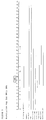
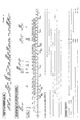
- Figure 1 is a diagrammatic representation of the restriction enzyme cleavage sites of a 34 kilobase nucleotide unit DNA segment isolated from chromosomal DNA of Sphingomonas strain S88 (ATCC accession number 31554).
- a number of the DNA sequences presented in Figure 1 were inserted into Sphingomonas bacteria and examined for their ability to enhance sphingan production. Restriction sites for several enzymes are also shown in Figure 1 (as well as figures 2, 3, 8, 9 and 10 ): B (BamHI), Bg (BglII), E (EcoRI), H (HindIII) and S (SalI).
- the spsB region set forth in Figure 1, corresponds to the DNA sequence which codes for the protein SpsB.
- Figure 2 is a diagrammatic representation of restriction enzyme cleavage sites of a DNA segment (approximately 28 kbase units) isolated from chromosomal DNA of Sphingomonas strain S60 (ATCC accession number 31461). Restriction sites for this DNA sequence are shown in Figure 2 as B, E and H sites.
- the sgeB region corresponds to the DNA sequence which codes for the protein SgeB.
- Figure 3 is a diagrammatic representation of restriction enzyme sites of a DNA segment (approximately 33 kbase units) isolated from chromosomal DNA of Sphingomonas strain NW11 (ATCC accession number 53272). Restriction sites for this DNA sequence are shown in Figure 3 as E, H, B, Bg and S sites.
- the snwB region corresponds to the DNA sequence which codes for the protein SnwB.
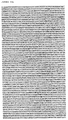
- Figure 4 is a diagrammatic representation of the DNA sequence corresponding to the spsB gene, containing approximately 1950 base pairs, of Sphingomonas strain S88.
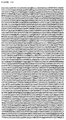
- Figure 5 is a diagrammatic representation of a deduced amino acid sequence of the SpsB protein of Sphingomonas strain S88.
- Figure 6 is a diagrammatic representation of the chemical structures of a number of sphingan polysaccharides representative of those produced by the present invention.
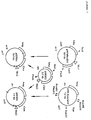
- FIG. 7 is a map of the construction of plasmids pSEB24 and pSEB26 as detailed in Examples 6 and 12 of the present application.
- Mcs1 is a multiple cloning site that includes the following restriction sites (clockwise, from top): EcoRI, SmaI, BamHI, SalI, PstI, and HindIII.
- Mcs2 includes (clockwise, from top): HindIII, PstI, SalI, XbaI, BamHI, SmaI, SstI and EcoRI.
- OriT is the origin of conjugal transfer
- OriV is a broad-host-range replication origin
- ori is the replication origin from pUC12 and 13.
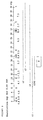
- Figure 8 is a diagrammatic representation of the restriction enzyme cleavage sites of a 34 kilobase nucleotide unit DNA segment isolated from chromosomal DNA of Sphingomonas strain S88 (ATCC accession number 31554). Restriction sites for several enzymes are also shown in Figure 1 (as well as figure 2 and 3): B (BamHI), Bg (BglII), E (EcoRI), H (HindIII) and S (SalI).
- the spsB region set forth in Figure 8 (also Figure 1), corresponds to the DNA sequence which codes for the protein SpsB.
- sps genes which are involved in sphingan biosynthesis are indicated by capital letters: G, S, R, Q, I, K, L, J, F, D, C and E.
- the genes designated as rhsACBD indicate the map position of the genes which are involved in the synthesis of a precursor to sphingans: dTDP-(L)rhamnose.
- Genes 32, 26, 31 and 34 are unidentified open translational reading frames, and the atrDB genes code for a transport function which is unrelated to sphingan synthesis.
- “Sec” indicates a gene needed for secretion of sphingans and "Trase” indicates a gene that codes for an enzyme that transfers sugar from a nucleotide-sugar precursor to sphingan during assembly of the sphingan repeat subunit.
- Figure 9 is a diagrammatic representation of restriction enzyme cleavage sites of a DNA segment (approximately 42 kbase units) isolated from chromosomal DNA of Sphingomonas strain S198 (ATCC accession number 31853). Restriction sites for this DNA sequence are shown in Figure 9 as H (HindIII) and E (EcoRI). The order of closely spaced sites enclosed within parentheses are unknown. The lateral extents of cosmid clones c2, c3, c4, c5 and subclone L242 are shown as dashed lines. The boxed "B" region corresponds to the DNA sequence which codes for the protein which complements mutants in the S88 gene spsB .
- Figure 10 is a diagrammatic representation of restriction enzyme cleavage sites of a DNA segment (approximately 42 kbase units) isolated from chromosomal DNA of Sphingomonas strain S7 (ATCC accession number 21423). Restriction sites for this DNA sequence are shown in Figure 10 as H (HindIII)), E (EcoRI) and B (BamHI). The lateral extents of cosmid clones c1, c2, c3 and c6 are shown as dashed lines. Clones c2 and c3 extend beyond the region depicted on the right of Figure 10. Similarly, clone c6 extends to the left. The boxed "B" region corresponds to the DNA sequence which codes for the protein which complements mutants in the S88 gene spsB.
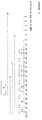
- Figure 11 is a diagrammatic representation of the gene cluster for sphingan S-88 synthesis.
- B BamHI; E, EcoRI; and H, HindIII.
- Cloned fragments c1 ⁇ 3, c2, c3, c4, c5,and c6
- subcloned segments named according to restriction enzyme used and approximate length in kbp
- deletions created in the S88 chromosome each line represents DNA presence
- the mini-Tn10kan insertions pZ167, pZ168, pZ180, pZ202 and pZ206 were in the c2 segment cloned in plasmid pRK311 and introduced into either of two deletion strains: ⁇ Tn493 or ⁇ Tn495. Similarly, all of the other plasmid insertions were in the c3 segment and introduced into the deletion strains ⁇ Tn358 and 365.
- the positional accuracy for the mini-Tn10kan insertions is ⁇ 50 bp relative to the sequenced restriction sites, while the graphic accuracy is ⁇ 100 bp.
- Figure 12 shows the alignment of deduced amino acid sequences of SpsB and glycosyl-IP transferases.
- the numbers to the right are residue numbers for the rightmost amino acid on each line.
- the galactosyl-IP transferases are immediately above the sequence for SpsB, and the glucosyl-IP transferases are below.
- the gene products are identified on the right:: ExoYn, Rhizobium sp. NGR234 (Gray, et al., 1990, J. Bacteriol. 172:193); CpsD, S. agalactiae (Rubens, et al., 1993, Mol. Microbiol. , 8:843); RfbP, S.
- enterica LT2 enterica LT2 (Jiang, et al., 1991, Mol. Microbiol. , 5:695); GumD, X. campestris B1459S-4L (Capage, et al., 1987, International Patent WO/05938); Pss4, R. leguminosarum bv. viciae strain VF39 (GenBank accession number M93042); and Pss2, R. leguminosarum bv. phaseoli (Borthakur, et al., 1988, Mol. Gen. Genet. , 213:155).
- ⁇ indicates identical amino acids for SpsB and galactosyl- or glucosyl-IP transferases, above or below respectively; :, indicates a conservative amino acid substitution based on the following groups of related amino acids: IFVWML, ST, QNED and HKR. Underlined sequences are contiguous segments of about 20 hydrophobic amino acids.
- Figure 13 shows the alignments of the rhsA, B, C, and D gene products and dTDP-L-rhamnose biosynthetic enzymes from S. enterica (Jiiang, et al., 1991, Molecular Microbiology , 5: 695-713) and X. campestris (Köplin, et al., 1993, J. Bacteriol. , 175:7786-7792). The symbols are the same as in figure 12.
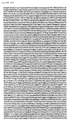
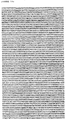
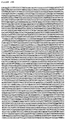
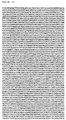
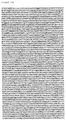
- Figure 14 is a diagrammatic representation of the entire DNA sequence of the DNA segment isolated from chromosomal DNA of Sphingomonas strain S88 (ATCC accession number 31554) corresponding to the nucleotide sequence referred to in the restriction map of Figure 8 (from base pair 0 to base pair 28,800).
- the present invention relates to the discovery that DNA sequences obtained from donor sphingan-producing Sphingomonas bacteria and incorporated as multiple copies into the same strain or a different strain of recipient Sphingomonas bacteria will transform the recipient Sphingomonas bacteria into a hyperproducer of sphingan polysaccharide. It further has been discovered that even where the DNA sequence is isolated from bacteria which produce one type of sphingan polysaccharide, that sequence may be incorporated as multiple copies into a different strain of Sphingomonas bacteria and produce a hyperproducer of that different strain without contamination of sphingan polysaccharide characteristic of the donor bacteria.
- the relevant DNA sequence which is incorporated into the recipient bacteria encodes genetic information which is beneficial or essential for the biosynthesis of sphingan polysaccharide.
- the beneficial or essential genetic information may be responsible for or involved in the biosynthesis of sphingan by the bacteria in any number of ways.
- the exogenous DNA may have a beneficial effect on the biosynthesis of sphingan for example, by expressing the synthesis of enzymes or other proteins involved in a rate-limiting enzymatic step, by inducing the synthesis of an enzyme, cofactor or other biochemical component which results in the increased production of polysaccharide, by increasing the production of an enzyme, such as a polymerase, which aids in the linking of subunits of the polysaccharide, by binding to one or more repressor genes, by aiding the secretion of the polysaccharide from the bacteria and preventing the expression of a repressor which normally inhibits the production of rate limiting steps in the biosynthesis of the polysaccharide.
- an enzyme such as a polymerase
- the relevant DNA sequences are isolated from strains of Sphingomonas using techniques and methods which are standard in the art.
- the bacteria are generally cultured (standard fermentation procedures with glucose concentration below about 0.5%, preferably about 0.1% to about 0.2%, as described in further detail hereinbelow) to produce a broth containing high concentrations of bacteria.
- the bacterial cells are then centrifuged and resuspended for DNA extraction.
- the DNA may be extracted from the bacteria by first removing the proteins from the mixture, and then precipitating the high molecular weight DNA with ethanol or isopropanol. See Birnboim and Doly, Nucl. Acids Res. , 7, 1513 (1979).
- the isolated DNA segments or fragments generally are cloned to produce DNA for insertion into recipient Sphingomonas .
- the high molecular Weight DNA sequences from above are partially digested with a restriction enzyme (for example, SalI enzyme) and electrophoresed using standard methods. See Loftus, et al., BioTechniques, 12, 172 (1992). After electrophoresis, the larger DNA fragments (20 kbp and larger) are further purified (extraction and precipitation).
- the DNA fragments isolated from the bacteria are thereafter inserted directly into cloning vectors (generally, plasmids) for cloning the DNA or alternatively, are further subjected to restriction enzymes to produce smaller DNA fragments which are inserted into cloning vectors.
- cloning vectors generally, plasmids
- restriction enzymes to produce smaller DNA fragments which are inserted into cloning vectors.
- the cloning of DNA in the present invention relies on general techniques and methods which have become standard in the art. It is noted that any number of methods may be used to clone the DNA segments according to the present invention and the present invention is not limited, for example, to the use of plasmidic cloning vectors.
- the DNA fragments may be cloned by insertion into a bacteriophage vector, such as, charon 4A, EMBL3 (See Rodriguez and Denhardt, Vectors, Chapter 2, pg. 43, 1988, Butterworth Publishers, Boston) or P1 (1990, Sternberg, Proc. Natl. Acad. Sci. U.S.A., 87, 103-107)
- a bacteriophage vector such as, charon 4A, EMBL3 (See Rodriguez and Denhardt, Vectors, Chapter 2, pg. 43, 1988, Butterworth Publishers, Boston) or P1 (1990, Sternberg, Proc. Natl. Acad. Sci. U.S.A., 87, 103-107)
- the DNA fragments first are prepared for insertion into a cloning vector.
- Any number of cloning vectors for producing DNA segments or fragments according to the present invention may be used.
- the vector containing the isolated DNA is packaged into a bacteriophage, transferred to a bacterium (generally, E. coli ) by a transfection process, and replicated within the transfected bacteria.
- a bacterium generally, E. coli
- the resulting colonies of bacterial cells containing cloned DNA are pooled and stored or utilized directly.
- the cloned DNA is thereafter screened to determine the relative efficacy of a DNA fragment to enhance the production of sphingan in Sphingomonas .
- the DNA in an appropriate vector is then inserted into a recipient strain of Sphingomonas by conjugation (for example, tri-parental mating, as described by Ditta, et al., Proc. Natl. Acad. Sci. USA, 77, 7347 (1980)), the resultant engineered bacterium containing the DNA in multiple copies and its sphingan production is then tested to determine activity.
- the DNA segments or fragments determined to enhance sphingan production are then transferred into a recipient Sphingomonas strain to produce a hyperproducer strain containing at least two copies of at least a substantial part of the transferred DNA segment as previously described.
- a preferred screening method has been developed for use in the instant invention.
- DNA is screened for the presence of genes beneficial or essential for sphingan synthesis by inserting the DNA in a recipient non-producing strain of Sphingomonas .
- a non-producing mutant for example, Sps - Bac r of strain S88
- a sphingan-producing strain of Sphingomonas is engineered to contain multiple copies of the DNA to be screened.
- the determination of the ability of a DNA segment or fragment to enhance sphingan producing activity is generally based upon readily recognized phenotypic differences which exist between sphingan-producing bacteria and non-sphingan-producing mutants on culture plates.
- sphingan-producing Sphingomonas strains are mucoid producers, which often can result in colony formation which is easily differentiated by simple visual inspection (e.g., upright round colonies surrounded by a bright ring for sphingan producers versus flat rough translucent colonies for non-producers).
- the screening process may be modified to screen for the activity of the relevant DNA in bacteria where the phenotypic differences between producers and non-producers are more readily recognized by visual inspection.
- This aspect of the present invention makes use of the fact that DNA fragments useful in the present invention exhibit interstrain and intergeneric complementation and in multicopies will enhance sphingan production in virtually all Sphingomonas strains.
- DNA segments or fragments useful in the present invention will also exhibit activity in Xanthomonas campestris . Consequently, DNA fragments which are not easily screened by using one or more strains of Sphingomonas bacteria may be incorporated into a non-xanthan producing mutant of X. campestris , for example X59m31, among others, in multiple copies and then screened by visual inspection for the production of xanthan.
- the non-producing mutants of X will also exhibit activity in Xanthomonas campestris . Consequently, DNA fragments which are not easily screened by using one or more strains of Sphingomonas bacteria may be incorporated into a non-xanthan producing mutant of X. campestris , for example X59m31, among others, in multiple copies and then screened by visual inspection for the production of xanthan.
- the non-producing mutants of X are not easily screened by using one or more strains of Sphingomonas bacteria.
- campestris such as X59m31
- campestris are readily obtained by selecting survivors of exposure to bacitracin and observing whether the colonies formed by the bacitracin-resistant mutants on YM agar plates are mucoid (producers) or non-mucoid (non-producers) in appearance.
- mucoid producers
- non-producers non-producers
- a suitable medium or fermentation broth for culturing the engineered Sphingomonas bacteria is an aqueous medium which generally contains a source of carbon such as, for example, carbohydrates including glucose, lactose, sucrose, maltose or maltodextrins, a nitrogen source such as, for example, inorganic ammonium, inorganic nitrate, organic amino acids or proteinaceous materials such as hydrolyzed yeast, soy flour or casein, distiller's solubles or corn seep liquor, inorganic salts and vitamins.
- a source of carbon such as, for example, carbohydrates including glucose, lactose, sucrose, maltose or maltodextrins
- a nitrogen source such as, for example, inorganic ammonium, inorganic nitrate, organic amino acids or proteinaceous materials such as hydrolyzed yeast, soy flour or casein, distiller's solubles or corn seep liquor, inorganic salts and vitamins.
- a wide variety of fermentation media will support
- the carbohydrates are included in the fermentation broth in varying amounts but usually between about 1% and 5% by weight of the fermentation medium.
- the carbohydrates may be added all at once prior to fermentation or alternatively, during fermentation.
- the amount of nitrogen may range from about 0.01% to about 0.4% by weight of the aqueous medium.
- a single carbon source or nitrogen source may be used, as well as mixtures of these sources.
- inorganic salts which find use in fermenting Sphingomonas bacteria are salts which contain sodium, potassium, ammonium, nitrate, calcium, phosphate, sulfate, chloride, carbonate and similar ions.
- Trace metals such as magnesium, manganese, cobalt, iron, zinc, copper, molybdenum, iodide and borate may also be advantageously included.
- Vitamins such as biotin, folate, lipoate, niacinamide, pantothenate, pyridoxine, riboflavin, thiamin and vitamin B 12 and mixtures thereof may also be advantageously employed.
- the fermentation is carried out at temperatures between about 25° and 35°C, with optimum productivity obtained within a temperature range of about 28° and 32°C.
- the inoculum is prepared by standard methods of volume scale-up, including shake flask cultures and small-scale submerged stirred fermentation.
- the medium for preparing the inoculum can be the same as the production medium or can be any one of several standard media well-known in the art, such as Luria broth or YM medium.
- the concentration of carbohydrate can be reduced in the seed cultures to less than about 1% by weight. More than one seed stage may be used to obtain the desired volume for inoculation. Typical inoculation volumes range from about 0.5% to about 10% of the total final fermentation volume.
- the fermentation vessel typically contains an agitator to stir the contents.
- the vessel also may have automatic pH and foaming controls.
- the production medium is added to the vessel and sterilized in place by heating. Alternatively, the carbohydrate or carbon source may be sterilized separately before addition.
- a previously grown seed culture is added to the cooled medium (generally, at the fermentation temperature of about 28° to about 32°C) and the stirred culture is fermented for about 48 to about 96 hours, producing a high viscosity broth.
- the sphingan polysaccharide is recoved from the broth by the standard method of precipitation with an alcohol, generally isopropanol.
- this application discloses DNA segments or fragments which were isolated from several bacterial strains, in particular, Sphingomonas strains S88, S60, NW11, S198, S7 and S194 (available from the American Type Culture Collection as deposits ATCC31554, ATCC31461, ATCC53272, ATCC31853, ATCC21423 and ATCC31961, respectively). These DNA segments or fragments were found to be useful for increasing sphingan S-88, S-60 and NW-11 production in the respective strains of Sphingomonas bacteria when they were incorporated in multiple copies as extrachromosomal (plasmidic) DNA in the strains of bacteria.
- Sphingomonas strains S88, S60, NW11, S198, S7 and S194 available from the American Type Culture Collection as deposits ATCC31554, ATCC31461, ATCC53272, ATCC31853, ATCC21423 and ATCC31961, respectively.
- the isolated segment of chromosomal DNA is approximately 34 kbase units in size and contains between 23 and 25 genes.
- the 34 kbp region is the combined extents of two clones: c3 and c2.
- a number of DNA sequences from this 34 kbase DNA sequence labelled C1 ⁇ 3, c2, c3, c4, c5, c6, H15.6, B7.1, B8.6, E5.9, E1.5, E2.4, E4.5, E6.6, E12.8, etc. are also presented in Figure 1.
- Figures 8 and 11 describe isolated S88 chromosomal DNA in further detail.
- Sphingomonas strain S60 a number of DNA sequences from the chromosomal DNA were isolated including c1, c2 and c3 (see Figure 2). Sequence c2 was cloned, placed into a pRK311 vector and inserted into Sphingomonas bacteria strains S88, S60 and NW11 to assess sphingan-producing activity (see example 9, described in further detail herein).
- DNA segments were isolated from these strains as well (See Figures 9 and 10). A number of additional DNA segments may also be isolated from these strains following the general methodology outlined in greater detail in this application and utilized to produce increase sphingan production in bacteria according to the present invention.
- DNA segments were prepared using a procedure as generally described above from S88, S60 and NW11 strains of Sphingomonas .
- Each of these DNA segments (as indicated as full length DNA segments in plasmid vectors), when inserted into one or more strains of Sphingomonas (wild type sphingan producer or nonmucoid mutant derived from wild type producer), changes the bacteria into hyperproducers of sphingan polysaccharide.
- Each of the DNA segments or fragments is derived from the DNA segment or fragment isolated from Sphingomonas strains, inserted into plasmid vectors as indicated.
- the DNA segments or fragments are defined by maps of restriction enzyme cleavage sites (see Figures 1, 2 and 3).
- the cloned DNA can be introduced into wild-type sphingan-producing Sphingomonas or non-sphingan-producing mutants to realize the hyperproduction effect.
- the cloned DNA in multiple copies may be introduced into either sphingan-producing wild-type strains or nonmucoid mutants derived from sphingan-producing strains, respectively.
- the resulting engineered bacteria are hyperproducers of sphingan in comparison to sphingan-producing wild-type bacteria or mutant non-producing bacteria of the same strain.
- the recombinant bacteria after introduction of the cloned DNA into the bacterium in multiple copies, the recombinant bacteria now have sphingan polysaccharide synthesis activity at levels which are elevated relative to the wild type.
- the DNA segments useful in the present invention carry genes which are beneficial or essential for synthesis of sphingan by Sphingomonas strains, including a DNA fragment which codes for a protein that is required to attach an initial glucose residue onto a carrier isoprenylphosphate, which is an early step in assembling or biosynthesizing sphingan in these strains.
- the DNA sequence of the spsB gene ( Figure 4) and the deduced amino acid sequence of the SpsB protein ( Figure 5) are also disclosed. All DNA fragments which contain DNA coding for the SpsB protein (or an analogous protein such as SgeB, SnwB, SneB, SssB and SrhB, among others, depending on Sphingomonas strain) may be incorporated into Sphingomonas strains as multiple copies to enhance the production of sphingan by the resultant engineered bacteria.
- DNA segments or fragments containing the sgeB gene (encoding the SpsB-analogous SgeB protein) isolated from S60 Sphingomonas and the snwB gene isolated from NW11 Sphingomona s.
- the sgeB gene ( Figure 2) is analogous to the spsB gene of the S88 chromosomal DNA (and the corresponding sneB , sssB and srhB genes from, respectively, the S198, S7 and S194 strains of Sphingomonas which encode for the SneB, SssB and SrhB proteins), in that it is believed (based upon DNA hybridization with fragments corresponding to the spsB gene of S88) to encode a protein which is analogous to the protein encoded by the spsB gene.
- the snwB region set forth in Figure 3, corresponds to the DNA sequence which encodes for the protein SnwB.
- the snwB gene is analogous to the spsB gene of the S88 chromosomal DNA and the sgeB gene of the S60 chromosomal DNA. These DNA fragments may be inserted into plasmids as generally described hereinabove to produce multiple copies for enhancing sphingan production in Sphingomonas .
- the spsB gene is believed to code for glucosyl-IP transferase in Sphingomonas S88.
- the strongest evidence that the spsB gene codes for a glucosyl-IP transferase is the similarity of its deduced amino acid sequence to the sequences of other genes generally believed to code for glycosyl-IP transferases.
- the carboxyl halves of glucosyl and galactosyl-IP transferases lack this extensive homology, the SpsB protein is similar to the RfbP protein of S.
- enterica (1991, Jiang, et al. , Mol. Microbiol., 5, 695) in that it has multiple hydrophobic stretches which suggest membrane-spanning domains.
- the hydrophobic domains of SpsB include amino acids 35-59 (+2.2 average hydropathy), 68-86 (+1.7), 105-123 (+2.3) and 282-303 (+2.9). The position of the latter hydrophobic region is common to these related gene products. It is located adjacent to the region of greatest homology.
- DNA segments or fragments containing DNA sequences encoding for glycosyl-IP transferases of various strains of Sphingomonas bacteria including S88, S60, NW11, S130, S194, S198, S657 and S7, among numerous others, are advantageously employed in multiple copies in recipient Sphingomonas bacteria to enhance sphingan production in the recipient bacteria.
- genes or DNA fragments encoding for sugar synthons or sugar precursors i.e., sugar components which comprise constituent parts of the sphingan polysaccharides and are used to biosynthesize sphingans, e.g., glucose, galactose, rhamnose, mannose, other sugar synthons and precursors
- genes or DNA fragments encoding for enzymes or proteins which aid in the polymerization or secretion of the polysaccharide from the intact cell structure may be advantageously employed in the present invention.
- bacterial strains, plasmids and bacteriophage are listed in the following Table 1.
- Luria-Bertani and YM media were standard (Pollock, et al.,1994., J. Bacteriol . 176 :6229-6237).
- Amounts of antibiotics used (Sigma): bacitracin (Bac) 73 units/mg and 0.01-8 mg/ml as specified; rifampicin (Rif) 50 ⁇ g/ml; streptomycin (Stm) 50 ⁇ g/ml; kanamycin (Kan) 25 ⁇ g/ml; chloramphenicol (Cam) 15 ⁇ g/ml; and tetracycline (Tet) 4-12 ⁇ g/ml.
- DNA fragments essential for synthesis of sphingans were cloned from strains of Sphingomonas .
- a complete library of DNA segments was prepared as follows.
- a bacterial strain (S88 in this example) was shaken overnight in 25 ml of liquid YM medium at 30°C to give a viscous broth containing rafts of cells.
- YM medium contained 3 g Bacto yeast extract, 3 g Bacto malt extract, 5 g Bacto peptone (Difco) and 10 g D-glucose (Difco) per liter of water.
- Sodium azide was added to 0.01% and sphinganase enzyme (1994, Mikolajczak, et al., Appl. Environ. Mirobiol.
- S88 DNA was partially digested with SalI enzyme, electrophoresed through 1% low melting point agarose in Tris-acetate-EDTA buffer, and fragments larger than 20 kbp were purified by phenol extraction and ethanol precipitation.
- the SalI-digested S88 DNA was treated with Klenow DNA polymerase to add dCMP and dTMP to the cohesive ends, heated for 20 min at 70°C and then precipitated with ethanol.
- the vector plasmid pRK311 (1985, Ditta, et al., Plasmid, 13, 149-153) was digested to completion with BamHI enzyme and then heated for 15 min at 65°C and purified by phenol extraction and ethanol precipitation.
- the BamHI-digested pRK311 DNA was treated with Klenow DNA polymerase to add dGMP and dAMP and then purified as above.
- the ligation reaction with T4 DNA ligase contained equal molar amounts of vector and insert fragments. All restriction enzymes, Klenow DNA polymerase and T4 DNA ligase were from Stratagene and the manufacturer's reaction conditions were used.
- the ligated molecules were transferred into E. coli DH5 ⁇ TM by transfection and cells were spread onto LB plates containing tetracycline at a concentration of from 4 to 12 ⁇ g/ml.
- One library of 1700 and one of 3400 Tet r colonies were separately pooled and frozen.
- the Tet r colonies (10 of 10 tested) contained inserts of 25 to 30 kbp with internal SalI restriction sites.
- libraries of chromosomal DNA segments were also prepared from other strains of Sphingomonas , including NW11, S60, S198, S194 and S7. In these cases, the cells which were the source for the cloned DNA were grown in medium with glucose less than 0.5% w/v, and the sphinganase treatment was omitted.
- Mutant S88m260 is a representative member of this Sps - Bac r group.
- the failure to make exopolysaccharides by S88m260 and the other Bac r Sps - mutants resulted in a colony appearance that was more flat, rough-surfaced and translucent compared to the wild type colonies, and the Bac r Sps - colonies were also surrounded by a narrow light-refracting halo when held up to light and viewed from below. These phenotypic differences were not as obvious as the copious mucoidy of wild type X. campestris and flat appearance of corresponding Gum - mutants.
- the colonial phenotypes were verified by growing cultures in liquid YM medium and weighing the dried exopolysaccharides after precipitation with isopropyl alcohol.
- Sps - mutants were sensitive to bacitracin and subsequently were found to define genes that were essential for sphingan synthesis but that were distinct from the gene associated with the bacitracin-resistant phenotype.
- Plasmid DNA from the gene library was transferred from E. coli to Xanthomonas or Sphingomonas by tri-parental mating (Ditta et al. Proc. Natl. Acad. Sci. USA, 77, 7347, 1980). Mixtures of donor cells containing Mob + Tra - recombinant plasmids (pRK311 with S88 insert), helper cells containing Mob + Tra + pRK2013 plasmid, and exopolysaccharide-negative recipient cells in the ratio of 5:2:10 were spotted onto nonselective YM plates lacking glucose and incubated for 6-16 h at 30°C.
- Exconjugants of Xanthomonas were isolated by spreading a loopful of the mating mixture onto plates containing rifampicin (50 ⁇ g/ml) to select against the helper and donor cells, and tetracycline (4-12 ⁇ g/ml) for pRK311 or chloramphenicol (20 ⁇ g/ml) for pSEB24 to select for the recombinant plasmid.
- Sphingomonas is naturally resistant to streptomycin, which is used to select against the donor and helper cells when Sphinogomonas is the recipient.
- the exconjugants of strain S88 were judged by eye as either Sps + (upright round opaque colonies, surrounded by a bright ring when held up to a light and viewed from below) or Sps - (flat rough translucent colonies with no ring).
- Sps + upright round opaque colonies, surrounded by a bright ring when held up to a light and viewed from below
- Sps - flat rough translucent colonies with no ring.
- Gum + colonies grown from Xanthomonas excojugants were mucoid in appearance compared to the matte or non-shiny colonies of the Gum - recipient.
- the S88 gene library was mated from E. coli into X. campestris strain X59m31 which has a Bac r Gum - defect in the gumD gene (Pollock, et al. J. Bacteriol. , 176. pp. 6229-6237, 1994; Thorpe et al., J. Bacteriol. , 169, 3593, 1987). From this intergeneric mating we found some Gum + Tet r colonies on YM plates and they appeared at a frequency of about 10 -3 to 10 -4 . Individual plasmids were purified from the complemented mutants and transferred back into E. coli for restriction analysis.
- Plasmid pRK311-S88c1 also complemented several additional independently isolated Bac r Sps - mutations in Sphingomonas strain S88 and Bac r Gum - mutants of X. campestris .
- Plasmid pRK311-S88c1 restored sphingan synthesis to Sphingomonas and xanthan gum synthesis to X. campestris. These results indicated that plasmid pRK311-S88c1 coded for exopolysaccharide biosynthetic functions missing in the Bac r polysaccharide-negative mutants, and that genes from one genus could replace the missing function in a second genus.
- the segment S88c1 is similar to segment S88c1 ⁇ 3 shown in Figure 1, except that S88c1 also includes an additional 7.5 kbp HindIII fragment at the rightmost end of S88c1 ⁇ 3. The 7.5 kbp segment was specifically deleted from S88c1 to produce the derivative S88c1 ⁇ 3.
- the above-described method is utilized for determining DNA fragments isolated from Sphingomonas strains S60, NW11, S198, S7 and S194 and other sphingan-producing Sphingomonas strains which are useful for increasing sphingan production in each of these strains.
- the double-stranded nucleotide sequence for 1950 bp of the spsB region was obtained from a fragment of 3300 bp subcloned from plasmid pSEB24-S88E4.5::Tn#72.
- the sequence of the coding strand is given in Figure 4.
- ORF long open reading frame
- the coding region began with ATG at nucleotide 361 and continued until the TGA stop codon at 1771. This ORF coded for 470 amino acids and was preceded by a putative ribosome binding site.
- the deduced amino acid sequence using standard single-letter abbreviations is given in Figure 5.
- the leftmost 6.6 kbp fragment shown for S88c1 ⁇ 3 is actually 12.8 kbp when the overlapping clones S88c2, S88c3, and S88c4 are digested with EcoRI, because one of the EcoRI sites is from the multiple cloning site of the vector.
- the region of S88-S60 homology is given in Figure 2. In independent tests for DNA homology we localized the homologous region between strain NW11 and S88 as shown in Figure 3.
- DNA fragments were isolated from Sphingomonas S60, NW11, S198, S7 and S194. The method was the same as described in the above examples for strain S88.
- the maps of restriction sites of the DNA fragments from strains S60, NW11, S198, S7 and S194 are provided in Figures 2, 3, 9 and 10, respectively.
- the sizes of restriction fragments generated by digestion of DNA with single or multiple restriction enzymes are listed here for two independently isolated clones, pRK311-S194c1 and pRK311-S194c2.
- the sizes were determined by comparing the electrophoretic migration of the fragments through agarose gels to fragments of known size; fragments of bacteriophage lambda DNA after digestion with HindIII and the "Kb DNA Ladder" of Stratagene.
- the fragment sizes identify the DNA sequences included in these two cloned segments.
- the following provides data for the fragment sizes for the plasmid pRK311-S194c1, which contained a c1 fragment isolated from Sphingomonas S194.
- the fragment sizes in kilobase pairs for pRK311-S194c1 are: (EcoRI) >25, 8.3, 5.4 and 1.5; (EcoRI + HindIII) 13.0, 9.7, 8.3, 5.4, 2.8, and 1.5; (HindIII) >25 and 2.8; (BamHI + HindIII) >25, 5.8, 3.9, 2.0, and 0.8; (BamHI) >25, 5.8 and 4.7; (BamHI+EcoRI+HindIII) 13.0, 8.3, 5.8, 5.4, 3.9, 2.0, 1.5 and 0.8; (BamHI+EcoRI) 15.0, 8.3, 5.8, 5.4, 4.7 and 1.5.
- the fragment sizes in kilobase pairs for pRK311-S194c2 are: (EcoRI) 14.5, 10.0, 8.3, 6.1, 2.6, and 1.35; (EcoRI+HindIII) 13, 8.3, 5.7, 4.6, 4.0, 2.6, 1.8, 1.35, 0.75, 0.35 and 0.25; (HindIII) >20, 12.8, 4.6, 2.1, 0.75 and 0.25; (BamHI+HindIII) >20, 3.8, 3.1, 2.8, 2.3, 1.65, 1.6, 1.3, 1.2, 0.95, 0.9, 0.8 and 0.25; (BamHI) >20, 5.8, 3.1, 2.8, 2.6, 2.3, 2.0, 1.6 and 0.25; (BamHI+EcoRI+HindIII) 13, 8.3, 3.8, 3.1, 2.4, 2.3, 1.6, 1.35, 1.3, 0.95, 0.9, 0.85, 0.8, 0.45,0.35 and 0.3; (BamHI+EcoRI) 14.
- Plasmids pSEB24 and pSEB26 were assembled to contain specific replication and conjugal mating functions, drug-resistance genes that were suitable to Sphingomonas and compatible with mini-Tn 10kan , and with multiple cloning sites. Plasmid pSEB24 has a broad host range, while pSEB26 replicates in E. coli but not in either Sphingomonas or Xanthomonas .
- plasmid pSEB23 which is Amp r and Cam r and makes blue colonies with added X-Gal and IPTG.
- pSEB24 we ligated the ScaI-PvuII fragment of about 2130 bp from pSEB23 to the ScaI-PvuII portion of pMMB66EH (1986, Marieste, et al., Gene , 48, 119) to retain oriV (broad host range origin of replication from RSF1010) and to regenerate the Amp r gene.
- the increased production does not require the presence of antibiotics in the culture to maintain a selection for the recombinant plasmids.
- the increased production can result from the insertion into the chromosome or endogenous native plasmids of one or more DNA fragments, preferably encoding a gene or set of genes from this chromosomal segment.
- One of ordinary skill can readily introduce additional DNA fragments into a sphingan-producing bacterium by inserting DNA fragments containing relevant sphingan-producing genes into the resident bacterial chromosome, into endogenous native plasmids or into exogenous plasmid vectors. It is noteworthy that the results which have been evidenced in this application indicate that increased sphingan production is not dependent on the use of any particular plasmid vector.
- Extracellular xanthan from X. campestris and sphingan S-88 from Sphingomonas were separated from liquid culture media by precipitation with 2-3 volumes of isopropyl alcohol, dried at 80°C and weighed.
- the polysaccharides were resuspended in high performance liquid chromotography (HPLC) water at 5 mg/ml.
- HPLC high performance liquid chromotography
- Anhydrous trifluoroacetic acid (88 ⁇ l; from Sigma Chemical Co.) was mixed with 75 ⁇ l HPLC water (Baker) and 225 ⁇ l polysaccharide (5mg/ml) in a 0.6 ml microcentrifuge tube and incubated at 95°C for 16 h.
- hydrolysates were dried under vacuum, resuspended in 200 ⁇ l HPLC water, placed in a new microcentrifuge tube, dried again and resuspended in 45 ⁇ l HPLC water.
- the samples 25 ⁇ g/ml
- Sugar standards D-glucose, D-glucuronic acid, D-mannose, L-mannose, L-rhamnose, and L-fucose
- Precoated, channelled, silica gel chromatography plates Karlgel 60 CF 254, 10 20 cm, E.
- campestris was the recipient of the S88 DNA fragments, glucose, mannose and glucuronic acid were present.
- Sphingomonas strain S88 was the recipient for the gumD gene of X. campestris then rhamnose, glucose, mannose and glucuronic acid were present in amounts similar to S-88 exopolysaccharide.
- DNA fragments isolated from a particular strain of Sphingomonas may be used to increase production of a sphingan (not produced by that strain) in a different strain of Sphingomonas by inserting the isolated DNA fragments in multiple copies following the techniques and methods set forth in the above examples and in particular, example 7.
- a DNA fragment containing genetic material essential for the production of sphingan in any Sphingomonas strain may be inserted into an appropriate plasmid vector or otherwise and introduced in multiple copies into a sphingan-producing or nonmucoid mutant of the same or a different Sphingomonas strain from which the DNA is isolated, which is a sphingan producer or is a non-producing mutant of the sphingan-producing strain.
- the resulting engineered Sphingomonas microorganism produces sphingan in amounts which generally exceed that produced by the non-engineered, non-mutant sphingan producer under identical fermentation conditions.
- campestris located adjacent to lactose-utilization genes recombined with the cellular DNA by normal homologous recombination causing the lactose-utilization genes to become attached to and contiguous with the bacterial chromosome.
- the result was the stable insertion of the cloned segment into the bacterial chromosome. This is explained more fully with the diagram in the paper. The same approach to inserting genes into bacteria has been used by others on numerous occasions.
- DNA segments carried by bacteriophage or by transposons are also well known to insert themselves into the bacterial chromosome by site-specific DNA recombination. Usually, bacteriophage insert specifically at one or a few locations, whereas transposons usually insert at numerous essentially random locations. Furthermore, it is not necessary for the DNA to be carried into the cell attached to a cloning vector, such as a plasmid. It is well known that DNA fragments can enter bacterial cells by transformation and retain the ability to recombine with the cellular DNA.
- Plasmid pSEB26 has the ampicillin-resistance gene, chloramphenical-resistance gene, multiple-cloning site, Lac segment, and oriT as in plasmid pSEB24 (also shown in Figure 7). However, it differs by having a narrow-host-range origin of replication from plasmid pBR322, instead of the broad-host-range oriV sequence of plasmid pSEB24.
- the pBR322 origin allows the plasmid to replicate in Escherichia coli, but not in Sphingomonas . Therefore the only way DNA sequences cloned into plasmid pSEB26 can persist in Sphingomonas is if they become integrated into the bacterial DNA, such as the chromosome or endogenous plasmids, before the plasmid is lost from the cell or culture.
- the pSEB26-S88E12.8 plasmid was exposed to mutagenesis with transposon mini-Tn10kan (1991, Kleckner, et al., 204, pp. 139-180).
- Tn10 derivative 103 mini-Tn10kan/Ptac-ATS transposase carried by lambda bacteriophage NK1316.
- the result was the insertion of a kanamycin-resistance gene into the plasmid.
- Third, using the triparental mating scheme we separately transferred each of the recombinant plasmids into Sphingomonas S88 and selected for kanamycin-resistant progeny.
- the S88 DNA sequences located on either side of the kanamycin-resistance gene recombined with the recipient cell's chromosome such that the karamycin-resistance gene became integrated into the bacterial chromosome.
- the gene was able to survive the inability of the vector plasmid to replicate in Sphingomonas.
- exogenous DNA segments in this case the karamycin-resistance gene
- a recipient bacterium so that the incoming gene becomes integrated into the bacterial chromosome.
- the location of integration is determined by the DNA sequences that are adjacent to the gene.
- the exogenous gene integrated into different sites within the E12.8 segment of strain S88. Integration by homologous recombination is a routinely practiced method of gene manipulation.
- the bac8 strain was typical of mutants that were initially selected as Bac r and then shown to also be Sps - .
- the failure to make sphingan S-88 by the Sps - Bac r mutants resulted in a colony appearance that was more flat, rough-surfaced and translucent compared to wild type colonies, which were also surrounded by a narrow light-refracting halo when held up to light and viewed from below.
- the Sps - mutants also failed to secrete sphingans into liquid YM medium as judged by the absence of alcohol-precipitable exopolysaccharides.
- a small fraction of the Sps - Bac r mutants carried second mutations.
- mutant 102w colonies were white rather than yellow.
- Mutant 134 had a mutation in the rhsD gene in addition to spsB .
- mutants 54 and 302 had defects in spsK as well as spsB .
- the Sps - mutations shown immediately above the genetic map in Fig. 11 were either spontaneous or obtained following exposure to ultraviolet light or ethylmethane sulfonate. All of the other mutations studied here (shown in Fig. 11 with either a "Y" or "B" prefix) resulted from random insertions of transposon mini-Tn10kan.
- the gumD gene is required to transfer glucose-6-phosphate from UDP-glucose to isoprenyl-phosphate as the first step in the assembly of xanthan gum (Capage, et al., October 1987, International patent WO87/05938 and Ielpi, et al., 1993, J. Bacteriol. 175:2490-2500).
- assembly of sphingan S-88 probably also began with glucose and that it might be possible for the enzyme from Sphingomonas to complement the Bac r Gum - mutants in X. campestris since DNA segments containing the gumD gene of X.
- campestris could restore sphingan S-88 synthesis in Bac r Sps - mutants of Sphingomonas (Pollock, et al., 1994, J. Bacteriol. 176:6229-6237). From the intergeneric matings we found Gum + colonies of X. campestris o n YM plates at a frequency of about 1 per 10 3 to 10 4 Tet r exconjugants.
- Plasmids were purified from the complemented X. campestris mutants by transformation of E. coli and then mated into Sphingomonas S88 mutant 260. About 5-25% of the exconjugants became Sps + .
- the frequency of transfer for the vector alone (pRK311) was 100 to 1000 times higher than for the larger recombinant plasmids. Although most of the recombinant plasmids suffered extensive deletions when mated into Sphingomonas , one was recovered intact and used for subsequent work: pRK311-S88c1. The leftmost 21 kbp of S88c1 is shown in Fig. 1, 8 and 11 as subclone c1 ⁇ 3.
- Plasmid pRK311-S88c1 also restored polysaccharide synthesis to several other independently isolated Bac r Sps - mutants of strain S88 and Bac r Gum - mutants of X. campestris .
- Exopolysaccharide from Sphingomonas mutant 260 bearing plasmid pRK311-S88c1 contained glucose, mannose and rhamnose, while X. campestris m31 with pRK311-S88c1 contained only glucose and mannose.
- Each polysaccharide also contained glucuronic acid although the recovery of the acidic sugar was systematically low due to the hydrolysis conditions.
- spsG , spsK, spsF, spsD, spsC, spsE, spsB and rhsD genes were determined by complementation tests using the Sps - point mutants as recipients in conjugation. The results are summarized in Fig. 11 above the map. Recombinant plasmids bearing small subcloned DNA segments or larger segments were exposed to insertional mutagenesis with mini-Tn10kan in E. coli and then transferred by mating into Sps - mutants of strain S88. Two matable broad-host-range plasmid vectors were used: pRK311 and pSEB24 (Fig. 7).
- the exconjugants that received the drug-resistance marker of the entering plasmid were then scored as Sps + or Sps - based on colonial appearance.
- the Bac r Sps - S88 mutants were mapped initially to the E4.5 subclone and then the E4.5 segment was exposed to random insertional mutagenesis with mini-Tn10kan. Insertions into positions B231 and B230 (Fig. 11) did not affect the restoration of sphingan synthesis for mutant 260, however insertions B233, B239 and B238 blocked complementation. Mutant 134 was complemented by segment B8.6, but not by either E4.5 or E5.9.
- Mutant 134 has a defect in the spsB gene and also in the nearby rhsD gene. The more precise location of the rhsD mutation was determined by exposing the B8.6 segment to mini-Tn10kan mutagenesis and analyzing the complementation pattern for the B441, B440, B438, B437 and B435 insertions. Mutants 54 and 302 also appeared to be double mutants with defects in the spsK and spsB genes.
- the spsF mutants (62, 68 and 94 of Figure 11) were localized and separated from the nearby spsDCE cluster due to the lack of complementation by segments B12.6 and c1 ⁇ 3 and by restoration of sphingan S-88 synthesis by clones c3 and c5.
- Complementation results for the contiguous spsD, spsC and spsE genes following insertional mutagenesis of the E6.6 fragment are also shown is Fig. 11.
- the complementation results suggested two groups: the first including mutations 76 and 78; and the second comprising mutations 69, 72, b104, 3, 9 and 41.
- Segments of cloned S88 DNA were ligated to the matable narrow-host-range Cam r plasmid pSEB26 (Fig. 11), exposed to mutagenesis by mini-Tn10kan in E. coli, and then conjugally transferred into wild type (Sps + ) Sphingomonas strain S88.
- the plasmids were not able to replicate in Sphingomonas so that maintenance of the Kan r gene required recombination with the bacterial chromosome. We selected only those recombinants that were Kan r and Cam s , expecting that this group did not retain plasmid sequences.
- the DNA sequence of 28,804 bp was determined for both strands (see Fig. 14).
- An average profile (and standard deviation) for a typical Sphingomonas gene in this cluster was determined based on the skewed G+C contents, rare codon frequencies and "Shine-Dalgarno" or translation initiation sequences (Table 4).
- a high frequency of G or C in the third codon position was typical for each of the genes.
- a set of rarely used codons for Sphingomonas was identified early in the work by analyzing 2500 codons from the rhsACBD operon and the spsB, D, C, and E genes.
- Each rare codon in the set was present at less than 0.2% of the total and included: AGA, AGG, CGA, TGT, GGA, ATA, CTA, TTA, TTG, AAA, TTT, CCA, CCT, AGT, TCA, TCT, ACA and ACT.
- Translation usually initiates in E. coli adjacent and downstream from a sequence that is complementary to the 3' terminus of 16S rRNA (Shine and Dalgarno, 1974, Proc. Natl.. Acad. Sci. USA , 71: 1342).
- the analogous "Shine-Dalgarno" sequence complementary to 16S rRNA in S. paucimobilis DSM1098 is TAAGGAGGTG (Moore, et al., 1993, Lett. Appl. Microbiol. 17 :115-118.).
- the SpsB protein is believed to catalyze the first step in assembly of sphingan S-88 because of the striking similarity of the deduced amino acid sequence of SpsB to other gene products believed to code for glycosyl-IP transferases.
- Fig. 12 shows an alignment of amino acid sequences of suspected glucosyl- and galactosyl-IP transferases. There is considerable homology for the C-terminal halves of these proteins. Although the N-terminal regions lack this extensive homology, the SpsB protein is similar to the RfbP protein of S.
- enterica enterica (Jiang, et al., 1991, Molecular Microbiology , 5, 695-713) by having several hydrophobic regions which suggest membrane-spanning domains (underlined in Fig. 12).
- the hydrophobic domains of SpsB include amino acids 35-59 (+2.2 average hydropathy), 68-86 (+1.7), 105-123 (+2.3) and 282-303 (+2.9). The position of the latter hydrophobic segment was common to these related gene products and was located in mid-protein adjacent to the region of greatest homology.
- the spsB coding domain deduced from the DNA sequence was confirmed by complementation studies. We observed whether or not different insertions of mini-Tn 10 Kan in the E4.5 segment interfered with complementation of Bac r Sps - mutants. The sites of insertion of mini-Tn 10 kan and "+" or "-" complementation results are shown above the spsB gene in Fig. 11. Three mini-Tn10kan insertions failed to restore sphingan synthesis to the Sps - mutant S88m260 (B233, B239, and B238) while several flanking insertions including B231 and B230 retained thee ability to supply the missing function.
- the deduced amino acid sequences of the proteins coded by the rhsACBD genes were very similar to enzymes from S. enterica group B and X. campestris which synthesize dTDP-L-rhamnose in four steps from dTTP and glucose-1-phosphate (Fig. 13).
- the Sphingomonas operon was unique in four respects.
- the order of genes, ACBD ⁇ was different from either S. enterica (BDAC ⁇ ) or X.
- campestris (BACD ⁇ ).
- the high G+C content matched the surrounding genes in the cluster and unrelated genes from other Sphingomonas species.
- glycosyl transferases Three genes are likely to code for glycosyl transferases: spsQ, spsK, and spsL .
- sugar specificities for these transferases could not be determined by sequence analysis alone, since the proteins showed only limited local homologies to other glucosyl and rhamnosyl transferases.
- glycosyl transferases are quite divergent even for enzymes from a single bacterium that attach the same sugars in an identical linkage (Glucksman, et al., 1993, J. Bacteriol. 175:7045-7055).
- the deduced spsQ gene product was similar to orf11 adjacent to gnd in E.
- coli K-12 which is believed to code for a rhamnosyl transferase (Stevenson, et al., 1994, J. Bacteriol. 176:4144-4156) and was also similar to the ExoO and ExoU glucosyl transferases of R. meliloti (Reuber and Walker, 1993, Cell, 74:269-280).
- the spsQ gene was essential for sphingan S-88 synthesis.
- Mini-Tn10kan was inserted into the spsQ gene (Z206 in Fig. 11) on a plasmid bearing the S88c2 segment and the mutated plasmid was then introduced into S88 cells carrying a chromosomal deletion of the spsGSRQI genes.
- the recipient cells were viable but polysaccharide synthesis was blocked.
- the deduced spsL gene product was similar to spsQ product when compared by a dot matrix analysis, and showed some local similarity to a rhamnosyl transferase (RfbN) of S. enterica and a putative abequosyl transferase from Yersinia pseudotuberculosis (Liu, et al., 1995, J. Bacteriol. , 177:4084-4088).
- Searches for proteins similar to spsK produced only marginal similarities of which the predominant members were glycosyl transferases containing a common putative binding site for UDP.
- UDP glucosyl or glucuronosyl transferase.
- a mutant with a specific insertion in the spsK gene (pY882 in Fig. 14) as well as non-insertion mutants 54 and 302 were viable but failed to make polysaccharide.
- the adjacent spsC and spsE genes with overlapping start and stop codons code for proteins similar to two different domains within ExoP.
- the similar SpsC-ExoP sequences included a motif (PX 2 PX 4 SPKX 11 GXMXG) that was recently implicated in chain-length determination for bacterial O-antigens (Becker, et al., 1995, Mol. Microbiol. , 16: 191-203).
- Three segments of SpsC of 92, 30 and 19 amino acids respectively were 22, 30 and 42 percent identical to similarly ordered sequences from the N-terminal half of ExoP, and two segments of SpsE of 75 and 98 amino acids were 32 and 29 percent identical to the C-terminal half of ExoP.
- SpsS Three segments of SpsS of 37, 20 and 44 amino acids were 38, 55 and 23 percent identical to ExoT.
- the deduced SpsJ protein showed some similarity to KpsT, BexA, and ABC transporters by sharing a putative nucleotide-binding domain.
- the spsR gene was not required for sphingan synthesis, its gene product was remotely similar to bacterial and fungal polysaccharide lyases. Therefore it may be important for release of the glucuronic acid-containing sphingans from either cellular or substrate surfaces, or for reuse of the polymer as a carbon source.
- mini-Tn10kan insertions in spsJ maintained on a multicopy plasmid in a mutant strain with a large chromosomal deletion were either Sps + or Sps - .
- Bacterium Polysaccharide Corresponding gene products a Sphingomonas S88 sphingan S-88 SpsD SpsC SpsE SpsJ SpsS R. meliloti succinoglycan ExoF ExoP ExoP ExoT X. Campestris xanthan gum GumB GumC GumJ E. coli polysialic acid KpsD KpsT H.
- influenzae group II capsule BexD BexC BexA a References for secretion roles of each protein: ExoF, ExoP, ExoT (Becker et al., 1995, Mol. Microbiol. , 16:191; Horinouchi and Weisblum, 1982, J. Bacteriol. , 150, 815; and Reuber and Walker, 1993, Cell , 74:269) GumB, GumC , GumJ (Glucksmann, et al., 1993, J. Bacteriol. , 175:7033; Becker et al., 1995, Mol. Microbiol. , 16:191; and Glucksmann, et al., 1993, J. Bacteriol.
- KpsD and KpsT Wunder, et al., 1994, J. Bacteriol. , 176:4025; and Smith, et al., 1990, Mol. Microbiol. , 4:1863 BexD, BexC, and BexA (Kroll, et al., 1990, Mol. Microbiol. , 4:1853)
- hlyA a hemolysin gene
- Pseudomonas paucimobilis now reclassified as a Sphingomonas .
- About 48% of the amino acids deduced from the DNA sequence of the atrB gene were identical to those of the cyclolysin ABC transporter of Bordatella pertussis .
- the atrB gene product was also strikingly similar to the entire HlyB protein of E. coli and the LktB protein of Pasteurella haemolytica which transport hemolysin and leukotoxin respectively.
- the C-terminal half of atrB was similar to many other ABC transporters including the C-terminal half of the NdvA protein of R. meliloti and the two repeated ATP-binding domains within the human multi-drug resistance protein Mdr1.
- the atrD gene product was similar in sequence to the HlyD protein of E. coli and the LktD protein of P. haemolytica .
- Unlike the related transport genes from other genera there was no analogous lytic or toxic gene adjacent to the Sphingomonas atrB and atrD genes or within the sps cluster.
- Reciprocal genetic complementation of polysaccharide-negative mutations in one genus of bacteria by DNA taken from a second genus was first demonstrated for Xanthomonas and Rhizobium (Borthakur, et al., 1988, Mol. Gen. Genct. , 213:155). In this early case, restoration of mucoidy was observed on agar plates. It was later reported that reciprocal intergeneric complementation occurred for the gumD gene of X. campestris and the spsB gene of Sphingomonas strain S88 (Pollock, et al., 1994, J. Bacteriol. , 176:6229), and we showed that the complementing gene from the donor restored synthesis of the exopolysaccharide of the recipient by compositional analyses.
- DNA fragments which are to be incorporated into recipient bacteria according to the present invention preferably include a gene encoding for glycosyl IP-transferase enzyme (whether glucosyl-, galactosyl- or related IP transferases). It is believed that the initial step in assembling sphingan S-88, for example, is most likely transfer of a glucose-P to the carrier IP. Consequently, the inclusion of a gene which encodes for an enzyme which facilitates this biosynthetic reaction would be advantageously included in DNA fragments according to the present invention.
- the different sphingan exopolysaccharides can be thought of as defensive in nature, similar to the protective capsules of many invasive pathogenic bacteria. They may also play a role in cellular attachment to a substrate.
- the other sphingan-producing strains of Sphingomonas also have clusters of genes that are organized similarly to the S88 cluster described here in detail, thus making the results obtained in the examples presented here instructive in allowing one of ordinary skill to obtain workable DNA fragments from all Sphingomonas sp .
- sphingan gum hyperproducer from a sphingan non-producer or normal producer (recipient bacterium) may be readily obtained by inserting into the recipient bacterium DNA isolated from a sphingan-producing donor Sphingomonas sp .
- bacterium which encodes the beneficial or essential genetic information for the biosynthesis of sphingan. Hyperproducers are readily attainable and the method is generally applicable to virtually any sphingan-producing strain of Sphinogmonas sp .
- the DNA fragment(s) obtained from the donor bacterium which contains genes or other DNA fragments; such as spsB of S88, which encode for glucosyl-IP transferase (the first step in assembly of sphingan carbohydrates) is advantageously employed in the present invention.
- rhamnose is an important sugar synthon or building block of the polysaccharide formed
- the inclusion of a rhamnose operon or gene may be preferably employed in order to maximize production of certain sphingan polysaccharides by the hyperproducers of the present invention.
- genes or other DNA fragments encoding for glycosyl transferases for example, spsQ, spsK and spsL of Sphingomonas strain S88, or for the secretion of the final polysaccharide formed (for example, spsD, C, E, J and S of Sphingomonas S88) may be advantageously employed where the inclusion of these enzymes will aid production of the final polysaccharide produced.
- Other DNA fragments or genes encoding for all of the above-described enzymes or functions may also be advantageously employed, depending upon the desired polysaccharide.
- the first six microorganisms listed below have been deposited with the American Type Culture Collection located at 12301 Parklawn Drive, Rockville, Maryland 20852 pursuant to the Budapest Treaty for the International Recognition of the Deposit of Microorganisms for the Purposed of Patent Procedure. All restrictions on the availability of the materials deposited will be irrevocably removed upon the issuance of a patent thereon. The last three microorganisms are publicly available from the American Type Culture Collection in Rockville, Maryland. Microorganism ATCC Designation Xanthomonas campestris , X59m31 55653 Escherichia coli DH5 ⁇ , pRK311-S88c1 69732 E.
Landscapes
- Genetics & Genomics (AREA)
- Engineering & Computer Science (AREA)
- Health & Medical Sciences (AREA)
- Life Sciences & Earth Sciences (AREA)
- Organic Chemistry (AREA)
- Chemical & Material Sciences (AREA)
- Zoology (AREA)
- Wood Science & Technology (AREA)
- Biomedical Technology (AREA)
- Biotechnology (AREA)
- Bioinformatics & Cheminformatics (AREA)
- General Engineering & Computer Science (AREA)
- Microbiology (AREA)
- Molecular Biology (AREA)
- General Health & Medical Sciences (AREA)
- Biochemistry (AREA)
- Chemical Kinetics & Catalysis (AREA)
- General Chemical & Material Sciences (AREA)
- Physics & Mathematics (AREA)
- Biophysics (AREA)
- Plant Pathology (AREA)
- Micro-Organisms Or Cultivation Processes Thereof (AREA)
- Preparation Of Compounds By Using Micro-Organisms (AREA)
Priority Applications (1)
| Application Number | Priority Date | Filing Date | Title |
|---|---|---|---|
| EP07075787A EP1895007B1 (de) | 1995-01-24 | 1996-01-24 | DNA-Segmente und Verfahren zur Steigerung der Polysaccharidproduktion |
Applications Claiming Priority (2)
| Application Number | Priority Date | Filing Date | Title |
|---|---|---|---|
| US08/377,440 US5985623A (en) | 1995-01-24 | 1995-01-24 | DNA segments and methods for increasing polysaccharide production |
| US377440 | 1995-01-24 |
Related Child Applications (1)
| Application Number | Title | Priority Date | Filing Date |
|---|---|---|---|
| EP07075787A Division EP1895007B1 (de) | 1995-01-24 | 1996-01-24 | DNA-Segmente und Verfahren zur Steigerung der Polysaccharidproduktion |
Publications (3)
| Publication Number | Publication Date |
|---|---|
| EP0728841A2 true EP0728841A2 (de) | 1996-08-28 |
| EP0728841A3 EP0728841A3 (de) | 1997-09-17 |
| EP0728841B1 EP0728841B1 (de) | 2008-01-02 |
Family
ID=23489120
Family Applications (2)
| Application Number | Title | Priority Date | Filing Date |
|---|---|---|---|
| EP07075787A Expired - Lifetime EP1895007B1 (de) | 1995-01-24 | 1996-01-24 | DNA-Segmente und Verfahren zur Steigerung der Polysaccharidproduktion |
| EP96300467A Expired - Lifetime EP0728841B1 (de) | 1995-01-24 | 1996-01-24 | DNS-Segmente und Verfahren zur Erhöhung von Polysaccharid-Produktion |
Family Applications Before (1)
| Application Number | Title | Priority Date | Filing Date |
|---|---|---|---|
| EP07075787A Expired - Lifetime EP1895007B1 (de) | 1995-01-24 | 1996-01-24 | DNA-Segmente und Verfahren zur Steigerung der Polysaccharidproduktion |
Country Status (4)
| Country | Link |
|---|---|
| US (3) | US5985623A (de) |
| EP (2) | EP1895007B1 (de) |
| CA (1) | CA2167981C (de) |
| DE (1) | DE69637385T2 (de) |
Cited By (4)
| Publication number | Priority date | Publication date | Assignee | Title |
|---|---|---|---|---|
| EP1005564A4 (de) * | 1997-06-12 | 2003-04-23 | Shinetsu Bio Inc | Herstellung von nicht-arteigenen, bakteriellen exopolysacchariden in einem rekombinanten bakteriellen wirt |
| EP1771559A4 (de) * | 2004-07-23 | 2008-06-04 | Shinetsu Chemical Co | Zusammensetzungen und verfahren zur verwendung eines regulators der biopolymerproduktion |
| KR101054886B1 (ko) | 2008-07-16 | 2011-08-09 | 대한민국 | 잔탄검 생합성 관련 돌연변이 유전자와 이를 포함하는잔탄검 생합성 균주 및 돌연변이 균주를 이용한 잔탄검의제조방법 |
| US8198064B2 (en) | 2000-03-02 | 2012-06-12 | Cp Kelco U.S., Inc. | Mutant bacterial strains of the genus sphingomonas deficient in production of polyhydroxybutyrate and a process of clarification of sphingans and compositions thereof |
Families Citing this family (27)
| Publication number | Priority date | Publication date | Assignee | Title |
|---|---|---|---|---|
| US20010022434A1 (en) * | 1993-07-19 | 2001-09-20 | Sauter Thomas M. | In-line roller skate with internal support and external ankle cuff |
| EP1068294B1 (de) | 1998-03-30 | 2008-02-13 | Metabolix, Inc. | Mikrobielle stämme und verfahren für die herstellung von biomaterialien |
| US6709845B1 (en) | 1999-07-02 | 2004-03-23 | Shin-Etsu Bio, Inc. | Production of modified polysaccharide S-7 |
| WO2001057234A2 (en) * | 2000-02-02 | 2001-08-09 | The State Of Oregon Acting By And Through The State Board Of Higher Education On Behalf Of Oregon State University | Biopolymer thickener |
| US20110027838A1 (en) * | 2009-07-31 | 2011-02-03 | Harding Nancy E | Sphingomonas Strains Producing Greatly Increased Yield Of PHB-Deficient Sphingan (Diutan) |
| US6602997B2 (en) * | 2000-04-27 | 2003-08-05 | Shin-Etsu Bio, Inc. | Whole cell and cell-debris polysaccharide |
| CA2351233C (en) * | 2000-07-24 | 2010-10-19 | Shin-Etsu Chemical Co., Ltd. | Production of exopolysaccharides unattached to the surface of bacterial cells |
| DE60233137D1 (de) * | 2001-02-16 | 2009-09-10 | Univ R | Transporter mit beabstandeten arginin-teilchen |
| DE10120061A1 (de) * | 2001-04-24 | 2002-10-31 | Werner Lubitz | Exopolysaccharidproduktion |
| DE60228439D1 (de) * | 2001-06-06 | 2008-10-02 | Dsm Ip Assets Bv | Verbesserte isoprenoid herstellung |
| EP1438387A4 (de) * | 2001-09-14 | 2004-10-13 | Momenta Pharmaceuticals Inc | Verfahren zur herstellung von glycomolekülen mit verstärkten aktivitäten und verwendungen davon |
| US7439044B2 (en) * | 2003-03-21 | 2008-10-21 | Cp Kelco U.S., Inc. | High viscosity xanthan polymer preparations |
| EP1722792A1 (de) * | 2004-03-03 | 2006-11-22 | Boehringer Ingelheim International GmbH | Ausgewählte cgrp-antagonisten, verfahren zu deren herstellung sowie deren verwendung als arzneimittel |
| CN103087970B (zh) | 2005-02-04 | 2016-12-21 | Cp凯尔科美国公司 | 多糖粘液形成菌的靶基因缺失 |
| JP4597708B2 (ja) * | 2005-02-25 | 2010-12-15 | 平田機工株式会社 | Foupオープナ |
| US7868167B2 (en) | 2005-11-01 | 2011-01-11 | Cp Kelco U.S., Inc. | High viscosity diutan gums |
| BRPI0618145B1 (pt) | 2005-11-01 | 2022-06-07 | Cp Kelco U.S., Inc | Goma de diutana |
| WO2007053612A2 (en) * | 2005-11-01 | 2007-05-10 | Harding, Nancy, E. | High viscosity diutan gums and methods of producing |
| AU2013201377B2 (en) * | 2005-11-01 | 2014-10-23 | Cp Kelco U.S., Inc. | High viscosity diutan gums and methods of producing |
| WO2011127322A1 (en) | 2010-04-07 | 2011-10-13 | Momenta Pharmaceuticals, Inc. | High mannose glycans |
| EP2686671A4 (de) | 2011-03-12 | 2015-06-24 | Momenta Pharmaceuticals Inc | N-acetylhexosamin-haltige n-glykane in glycoproteinprodukten |
| WO2013181575A2 (en) | 2012-06-01 | 2013-12-05 | Momenta Pharmaceuticals, Inc. | Methods related to denosumab |
| EP2877589B1 (de) | 2012-07-26 | 2024-03-06 | Momenta Pharmaceuticals, Inc. | Glykoproteine mit entzündungshemmenden eigenschaften |
| US10450361B2 (en) | 2013-03-15 | 2019-10-22 | Momenta Pharmaceuticals, Inc. | Methods related to CTLA4-Fc fusion proteins |
| WO2014186310A1 (en) | 2013-05-13 | 2014-11-20 | Momenta Pharmaceuticals, Inc. | Methods for the treatment of neurodegeneration |
| WO2015057622A1 (en) | 2013-10-16 | 2015-04-23 | Momenta Pharmaceuticals, Inc. | Sialylated glycoproteins |
| CN113355378A (zh) * | 2021-06-08 | 2021-09-07 | 绥化市蓝源生物工程有限公司 | 一种r-多糖发酵液及其发酵方法、抑菌应用、含有r-多糖发酵液的食品防腐剂 |
Family Cites Families (10)
| Publication number | Priority date | Publication date | Assignee | Title |
|---|---|---|---|---|
| US3960832A (en) * | 1973-10-05 | 1976-06-01 | Kenneth Suk Kang | Polysaccharide and bacterial fermentation process for its preparation |
| US4326053A (en) * | 1978-12-04 | 1982-04-20 | Merck & Co., Inc. | Polysaccharide S-60 and bacterial fermentation process for its preparation |
| US4342866A (en) * | 1979-09-07 | 1982-08-03 | Merck & Co., Inc. | Heteropolysaccharide S-130 |
| US4535153A (en) * | 1979-09-07 | 1985-08-13 | Merck & Co., Inc. | Heteropolysaccharide S-88 |
| US4529797A (en) * | 1981-04-23 | 1985-07-16 | Merck & Co., Inc. | Heteropolysaccharide S-198 |
| US4401760A (en) * | 1981-10-21 | 1983-08-30 | Merck & Co., Inc. | Heteropolysaccharide S-194 |
| IL79165A0 (en) * | 1985-06-28 | 1986-09-30 | Merck & Co Inc | Heteropolysaccharide s-657 and its preparation |
| DE3783145T2 (de) * | 1986-02-06 | 1993-06-03 | Merck & Co Inc | Rekombinantes dns-plasmid zur herstellung von xanthangummi. |
| US5338841A (en) * | 1987-04-14 | 1994-08-16 | Shin-Etsu Chemical Co., Ltd. | DNA segments controlling production of xanthan gum |
| US5342773A (en) * | 1992-02-18 | 1994-08-30 | Shin-Etsu Bio, Inc. | Endoglycanase isolated from bacillus ATCC 55294 |
-
1995
- 1995-01-24 US US08/377,440 patent/US5985623A/en not_active Expired - Fee Related
-
1996
- 1996-01-24 EP EP07075787A patent/EP1895007B1/de not_active Expired - Lifetime
- 1996-01-24 US US08/592,874 patent/US5854034A/en not_active Expired - Fee Related
- 1996-01-24 EP EP96300467A patent/EP0728841B1/de not_active Expired - Lifetime
- 1996-01-24 DE DE69637385T patent/DE69637385T2/de not_active Expired - Lifetime
- 1996-01-24 CA CA2167981A patent/CA2167981C/en not_active Expired - Lifetime
-
1999
- 1999-11-15 US US09/440,530 patent/US6284516B1/en not_active Expired - Lifetime
Cited By (12)
| Publication number | Priority date | Publication date | Assignee | Title |
|---|---|---|---|---|
| EP1005564A4 (de) * | 1997-06-12 | 2003-04-23 | Shinetsu Bio Inc | Herstellung von nicht-arteigenen, bakteriellen exopolysacchariden in einem rekombinanten bakteriellen wirt |
| US8198064B2 (en) | 2000-03-02 | 2012-06-12 | Cp Kelco U.S., Inc. | Mutant bacterial strains of the genus sphingomonas deficient in production of polyhydroxybutyrate and a process of clarification of sphingans and compositions thereof |
| US8652792B1 (en) | 2000-03-02 | 2014-02-18 | C.P. Kelco U.S., Inc. | Mutant bacterial strains of the genus Sphingomonas deficient in production of polyhydroxybutyrate and a process of clarification of sphingans and compositions thereof |
| US8865241B1 (en) | 2000-03-02 | 2014-10-21 | Cp Kelco U.S., Inc. | Mutant bacterial strains of the genus Sphingomonas deficient in production of polyhydroxybutyrate and a process of clarification of sphingans and compositions thereof |
| US9290783B2 (en) | 2000-03-02 | 2016-03-22 | Cp Kelco U.S., Inc. | Mutant bacterial strains of the genus Sphingomonas deficient in production of polyhydroxybutyrate and a process of clarification of Sphingans and compositions thereof |
| US9725523B2 (en) | 2000-03-02 | 2017-08-08 | Cp Kelco U.S., Inc. | Mutant bacterial strains of the genus sphingomonas deficient in production of polyhydroxybutyrate and a process of clarification of sphingans and compositions thereof |
| EP1771559A4 (de) * | 2004-07-23 | 2008-06-04 | Shinetsu Chemical Co | Zusammensetzungen und verfahren zur verwendung eines regulators der biopolymerproduktion |
| US7645600B2 (en) | 2004-07-23 | 2010-01-12 | Shin-Etsu Chemical Co., Ltd. | Compositions and methods for enhanced bacterial exopolysaccharide production |
| US7700345B2 (en) | 2004-07-23 | 2010-04-20 | Shin-Etsu Chemical Co., Ltd. | Exopolysaccharide hyper-producing cells unresponsive to modulator of bacterial exopolysaccharide biosynthesis |
| US7883895B2 (en) | 2004-07-23 | 2011-02-08 | Shin-Etsu Chemical Co., Ltd. | Methods for enhanced bacterial exopolysaccharide production |
| US7883877B2 (en) | 2004-07-23 | 2011-02-08 | Shin-Etsu Chemical Co., Ltd. | Compositions and methods for enhanced bacterial exopolysaccharide production |
| KR101054886B1 (ko) | 2008-07-16 | 2011-08-09 | 대한민국 | 잔탄검 생합성 관련 돌연변이 유전자와 이를 포함하는잔탄검 생합성 균주 및 돌연변이 균주를 이용한 잔탄검의제조방법 |
Also Published As
| Publication number | Publication date |
|---|---|
| CA2167981A1 (en) | 1996-07-25 |
| EP1895007A1 (de) | 2008-03-05 |
| US6284516B1 (en) | 2001-09-04 |
| EP0728841A3 (de) | 1997-09-17 |
| EP0728841B1 (de) | 2008-01-02 |
| DE69637385T2 (de) | 2008-12-11 |
| DE69637385D1 (de) | 2008-02-14 |
| US5985623A (en) | 1999-11-16 |
| US5854034A (en) | 1998-12-29 |
| EP1895007B1 (de) | 2013-01-09 |
| CA2167981C (en) | 2012-03-27 |
Similar Documents
| Publication | Publication Date | Title |
|---|---|---|
| EP1895007B1 (de) | DNA-Segmente und Verfahren zur Steigerung der Polysaccharidproduktion | |
| Yamazaki et al. | Linkage of genes essential for synthesis of a polysaccharide capsule in Sphingomonas strain S88 | |
| Harding et al. | Genetic and physical analyses of a cluster of genes essential for xanthan gum biosynthesis in Xanthomonas campestris | |
| US10351858B2 (en) | Targeted gene deletions for polysaccharide slime formers | |
| CN101558165B (zh) | 高粘度迪优坦胶及其制备方法 | |
| EP1543105B1 (de) | Neue mutantenstämme von pseudomonas fluorescens und varianten davon, verfahren zu ihrer herstellung und verwendungen davon bei der alginatproduktion | |
| FI120543B (fi) | DNA-yhdisteitä, jotka sisältävät mannuronaani-C-5-epimeraasia koodaavia sekvenssejä | |
| JP2612583B2 (ja) | キサンタンガムの組換dnaによる製造 | |
| US20030100078A1 (en) | Mutant strain of Sphingomonas elodea which produces non-acetylated gellan gum | |
| EP0765939A2 (de) | Familie von auf Xanthan basierenden Polysaccharidpolymeren, welche sowohl nichtacetylierten und/oder nichtpyruvylierten Gummi beeinhalten | |
| US5559015A (en) | Recombinant-DNA mediated production of xanthan gum | |
| CN101072873B (zh) | 利用调节剂生产生物聚合物的组合物和方法 | |
| EP0233019A2 (de) | Rekombinantes DNS-Plasmid zur Herstellung von Xanthangummi | |
| EP0584206A1 (de) | Genetische kontrolle zur acetylierung und pyruvylierung von polysacchariden der art xanthan | |
| JPH0829076B2 (ja) | キサンタンガムの製造方法 | |
| JPH09252775A (ja) | Dnaセグメント及び多糖類の高生産方法 | |
| JP2014183848A (ja) | Dna分子、細菌を操作する方法、組換え細菌、スフィンガン産生を高める方法、スフィンガンを生産するための方法及び生物学的に純粋な培養物 |
Legal Events
| Date | Code | Title | Description |
|---|---|---|---|
| PUAI | Public reference made under article 153(3) epc to a published international application that has entered the european phase |
Free format text: ORIGINAL CODE: 0009012 |
|
| AK | Designated contracting states |
Kind code of ref document: A2 Designated state(s): DE FR GB SE |
|
| PUAL | Search report despatched |
Free format text: ORIGINAL CODE: 0009013 |
|
| AK | Designated contracting states |
Kind code of ref document: A3 Designated state(s): DE FR GB SE |
|
| 17P | Request for examination filed |
Effective date: 19980305 |
|
| 17Q | First examination report despatched |
Effective date: 20011207 |
|
| GRAP | Despatch of communication of intention to grant a patent |
Free format text: ORIGINAL CODE: EPIDOSNIGR1 |
|
| RIC1 | Information provided on ipc code assigned before grant |
Ipc: C12N 1/21 20060101ALI20070327BHEP Ipc: C12P 19/04 20060101ALI20070327BHEP Ipc: C12N 15/74 20060101ALI20070327BHEP Ipc: C12N 15/54 20060101ALI20070327BHEP Ipc: C12N 15/52 20060101AFI20070327BHEP |
|
| GRAS | Grant fee paid |
Free format text: ORIGINAL CODE: EPIDOSNIGR3 |
|
| GRAA | (expected) grant |
Free format text: ORIGINAL CODE: 0009210 |
|
| AK | Designated contracting states |
Kind code of ref document: B1 Designated state(s): DE FR GB SE |
|
| REG | Reference to a national code |
Ref country code: GB Ref legal event code: FG4D |
|
| REF | Corresponds to: |
Ref document number: 69637385 Country of ref document: DE Date of ref document: 20080214 Kind code of ref document: P |
|
| REG | Reference to a national code |
Ref country code: SE Ref legal event code: TRGR |
|
| ET | Fr: translation filed | ||
| PLBE | No opposition filed within time limit |
Free format text: ORIGINAL CODE: 0009261 |
|
| STAA | Information on the status of an ep patent application or granted ep patent |
Free format text: STATUS: NO OPPOSITION FILED WITHIN TIME LIMIT |
|
| 26N | No opposition filed |
Effective date: 20081003 |
|
| PGFP | Annual fee paid to national office [announced via postgrant information from national office to epo] |
Ref country code: SE Payment date: 20090128 Year of fee payment: 14 |
|
| EUG | Se: european patent has lapsed | ||
| REG | Reference to a national code |
Ref country code: FR Ref legal event code: TP |
|
| REG | Reference to a national code |
Ref country code: GB Ref legal event code: 732E Free format text: REGISTERED BETWEEN 20110127 AND 20110202 |
|
| REG | Reference to a national code |
Ref country code: DE Ref legal event code: R081 Ref document number: 69637385 Country of ref document: DE Owner name: CP KELCO US INC. (N.D.GES.D. STAATES DELAWARE), US Free format text: FORMER OWNERS: SHIN-ETSU BIO INC., SAN DIEGO, CALIF., US; SHIN-ETSU CHEMICAL CO., LTD., TOKYO, JP Effective date: 20110510 Ref country code: DE Ref legal event code: R081 Ref document number: 69637385 Country of ref document: DE Owner name: CP KELCO US INC. (N.D.GES.D. STAATES DELAWARE), US Free format text: FORMER OWNER: SHIN-ETSU BIO INC., SHIN-ETSU CHEMICAL CO., LTD., , JP Effective date: 20110510 |
|
| PG25 | Lapsed in a contracting state [announced via postgrant information from national office to epo] |
Ref country code: SE Free format text: LAPSE BECAUSE OF NON-PAYMENT OF DUE FEES Effective date: 20100125 |
|
| REG | Reference to a national code |
Ref country code: FR Ref legal event code: PLFP Year of fee payment: 20 |
|
| PGFP | Annual fee paid to national office [announced via postgrant information from national office to epo] |
Ref country code: DE Payment date: 20150128 Year of fee payment: 20 |
|
| PGFP | Annual fee paid to national office [announced via postgrant information from national office to epo] |
Ref country code: GB Payment date: 20150127 Year of fee payment: 20 Ref country code: FR Payment date: 20150119 Year of fee payment: 20 |
|
| REG | Reference to a national code |
Ref country code: DE Ref legal event code: R071 Ref document number: 69637385 Country of ref document: DE |
|
| REG | Reference to a national code |
Ref country code: GB Ref legal event code: PE20 Expiry date: 20160123 |
|
| PG25 | Lapsed in a contracting state [announced via postgrant information from national office to epo] |
Ref country code: GB Free format text: LAPSE BECAUSE OF EXPIRATION OF PROTECTION Effective date: 20160123 |