EP0730004B1 - Thermoplastische Harzzusammensetzung mit verbesserten Verschleisseigenschaften - Google Patents
Thermoplastische Harzzusammensetzung mit verbesserten Verschleisseigenschaften Download PDFInfo
- Publication number
- EP0730004B1 EP0730004B1 EP96102566A EP96102566A EP0730004B1 EP 0730004 B1 EP0730004 B1 EP 0730004B1 EP 96102566 A EP96102566 A EP 96102566A EP 96102566 A EP96102566 A EP 96102566A EP 0730004 B1 EP0730004 B1 EP 0730004B1
- Authority
- EP
- European Patent Office
- Prior art keywords
- weight percent
- oxymethylene
- lower alkyl
- group
- composition
- Prior art date
- Legal status (The legal status is an assumption and is not a legal conclusion. Google has not performed a legal analysis and makes no representation as to the accuracy of the status listed.)
- Expired - Lifetime
Links
- 239000000203 mixture Substances 0.000 title claims description 67
- 229920001169 thermoplastic Polymers 0.000 title claims description 22
- -1 polyoxymethylenes Polymers 0.000 claims description 59
- VTYYLEPIZMXCLO-UHFFFAOYSA-L Calcium carbonate Chemical compound [Ca+2].[O-]C([O-])=O VTYYLEPIZMXCLO-UHFFFAOYSA-L 0.000 claims description 44
- 229920006324 polyoxymethylene Polymers 0.000 claims description 35
- 229920001897 terpolymer Polymers 0.000 claims description 27
- 230000001050 lubricating effect Effects 0.000 claims description 26
- 229930040373 Paraformaldehyde Natural products 0.000 claims description 22
- 229910000019 calcium carbonate Inorganic materials 0.000 claims description 22
- 125000005704 oxymethylene group Chemical group [H]C([H])([*:2])O[*:1] 0.000 claims description 22
- OCKWAZCWKSMKNC-UHFFFAOYSA-N [3-octadecanoyloxy-2,2-bis(octadecanoyloxymethyl)propyl] octadecanoate Chemical compound CCCCCCCCCCCCCCCCCC(=O)OCC(COC(=O)CCCCCCCCCCCCCCCCC)(COC(=O)CCCCCCCCCCCCCCCCC)COC(=O)CCCCCCCCCCCCCCCCC OCKWAZCWKSMKNC-UHFFFAOYSA-N 0.000 claims description 21
- 229920000642 polymer Polymers 0.000 claims description 21
- 238000000034 method Methods 0.000 claims description 18
- ISWSIDIOOBJBQZ-UHFFFAOYSA-N Phenol Chemical compound OC1=CC=CC=C1 ISWSIDIOOBJBQZ-UHFFFAOYSA-N 0.000 claims description 17
- 239000004698 Polyethylene Substances 0.000 claims description 17
- 229920000573 polyethylene Polymers 0.000 claims description 17
- TXSUIVPRHHQNTM-UHFFFAOYSA-N n'-(3-methylanilino)-n-phenyliminobenzenecarboximidamide Chemical compound CC1=CC=CC(NN=C(N=NC=2C=CC=CC=2)C=2C=CC=CC=2)=C1 TXSUIVPRHHQNTM-UHFFFAOYSA-N 0.000 claims description 15
- 229920001577 copolymer Polymers 0.000 claims description 14
- DHKHKXVYLBGOIT-UHFFFAOYSA-N acetaldehyde Diethyl Acetal Natural products CCOC(C)OCC DHKHKXVYLBGOIT-UHFFFAOYSA-N 0.000 claims description 12
- 125000000217 alkyl group Chemical group 0.000 claims description 11
- 125000004432 carbon atom Chemical group C* 0.000 claims description 11
- BGJSXRVXTHVRSN-UHFFFAOYSA-N 1,3,5-trioxane Chemical compound C1OCOCO1 BGJSXRVXTHVRSN-UHFFFAOYSA-N 0.000 claims description 10
- 229920001519 homopolymer Polymers 0.000 claims description 9
- 229920000098 polyolefin Polymers 0.000 claims description 9
- PPBRXRYQALVLMV-UHFFFAOYSA-N Styrene Chemical compound C=CC1=CC=CC=C1 PPBRXRYQALVLMV-UHFFFAOYSA-N 0.000 claims description 8
- 230000004580 weight loss Effects 0.000 claims description 8
- 150000004292 cyclic ethers Chemical class 0.000 claims description 6
- RXPKHKBYUIHIGL-UHFFFAOYSA-L calcium;12-hydroxyoctadecanoate Chemical compound [Ca+2].CCCCCCC(O)CCCCCCCCCCC([O-])=O.CCCCCCC(O)CCCCCCCCCCC([O-])=O RXPKHKBYUIHIGL-UHFFFAOYSA-L 0.000 claims description 5
- 229910052799 carbon Inorganic materials 0.000 claims description 5
- 230000001747 exhibiting effect Effects 0.000 claims description 5
- 239000000155 melt Substances 0.000 claims description 5
- 125000000325 methylidene group Chemical class [H]C([H])=* 0.000 claims description 5
- 239000004952 Polyamide Substances 0.000 claims description 4
- 239000004734 Polyphenylene sulfide Substances 0.000 claims description 4
- 125000003545 alkoxy group Chemical group 0.000 claims description 4
- GYZLOYUZLJXAJU-UHFFFAOYSA-N diglycidyl ether Chemical compound C1OC1COCC1CO1 GYZLOYUZLJXAJU-UHFFFAOYSA-N 0.000 claims description 4
- 229910052739 hydrogen Inorganic materials 0.000 claims description 4
- 239000001257 hydrogen Substances 0.000 claims description 4
- 229920002647 polyamide Polymers 0.000 claims description 4
- 229920000515 polycarbonate Polymers 0.000 claims description 4
- 239000004417 polycarbonate Substances 0.000 claims description 4
- 229920000728 polyester Polymers 0.000 claims description 4
- 229920000069 polyphenylene sulfide Polymers 0.000 claims description 4
- 239000004971 Cross linker Substances 0.000 claims description 3
- 230000005484 gravity Effects 0.000 claims description 3
- 125000005824 oxyalkoxy group Chemical group 0.000 claims description 3
- 239000004416 thermosoftening plastic Substances 0.000 claims description 2
- 239000004699 Ultra-high molecular weight polyethylene Substances 0.000 claims 4
- 229920000785 ultra high molecular weight polyethylene Polymers 0.000 claims 4
- 125000004435 hydrogen atom Chemical group [H]* 0.000 claims 3
- QVGXLLKOCUKJST-UHFFFAOYSA-N atomic oxygen Chemical compound [O] QVGXLLKOCUKJST-UHFFFAOYSA-N 0.000 claims 2
- 239000007795 chemical reaction product Substances 0.000 claims 2
- 229910052760 oxygen Inorganic materials 0.000 claims 2
- 239000001301 oxygen Substances 0.000 claims 2
- 238000012360 testing method Methods 0.000 description 18
- 229920005123 Celcon® Polymers 0.000 description 11
- 229920012196 Polyoxymethylene Copolymer Polymers 0.000 description 10
- WFDIJRYMOXRFFG-UHFFFAOYSA-N Acetic anhydride Chemical compound CC(=O)OC(C)=O WFDIJRYMOXRFFG-UHFFFAOYSA-N 0.000 description 9
- WSFSSNUMVMOOMR-UHFFFAOYSA-N Formaldehyde Chemical compound O=C WSFSSNUMVMOOMR-UHFFFAOYSA-N 0.000 description 9
- 150000001241 acetals Chemical class 0.000 description 9
- 229920001343 polytetrafluoroethylene Polymers 0.000 description 9
- 239000004810 polytetrafluoroethylene Substances 0.000 description 9
- 230000000052 comparative effect Effects 0.000 description 8
- 238000004458 analytical method Methods 0.000 description 7
- 239000000654 additive Substances 0.000 description 6
- 239000000314 lubricant Substances 0.000 description 6
- 125000002947 alkylene group Chemical group 0.000 description 5
- 150000001875 compounds Chemical class 0.000 description 5
- 239000008188 pellet Substances 0.000 description 5
- 239000006057 Non-nutritive feed additive Substances 0.000 description 4
- XBDQKXXYIPTUBI-UHFFFAOYSA-M Propionate Chemical compound CCC([O-])=O XBDQKXXYIPTUBI-UHFFFAOYSA-M 0.000 description 4
- WERYXYBDKMZEQL-UHFFFAOYSA-N butane-1,4-diol Chemical compound OCCCCO WERYXYBDKMZEQL-UHFFFAOYSA-N 0.000 description 4
- 230000015556 catabolic process Effects 0.000 description 4
- 238000006731 degradation reaction Methods 0.000 description 4
- WNXJIVFYUVYPPR-UHFFFAOYSA-N 1,3-dioxolane Chemical compound C1COCO1 WNXJIVFYUVYPPR-UHFFFAOYSA-N 0.000 description 3
- 229920013683 Celanese Polymers 0.000 description 3
- LYCAIKOWRPUZTN-UHFFFAOYSA-N Ethylene glycol Chemical compound OCCO LYCAIKOWRPUZTN-UHFFFAOYSA-N 0.000 description 3
- OKKJLVBELUTLKV-UHFFFAOYSA-N Methanol Chemical compound OC OKKJLVBELUTLKV-UHFFFAOYSA-N 0.000 description 3
- 230000001588 bifunctional effect Effects 0.000 description 3
- 239000003054 catalyst Substances 0.000 description 3
- 238000004519 manufacturing process Methods 0.000 description 3
- 239000000178 monomer Substances 0.000 description 3
- RKISUIUJZGSLEV-UHFFFAOYSA-N n-[2-(octadecanoylamino)ethyl]octadecanamide Chemical compound CCCCCCCCCCCCCCCCCC(=O)NCCNC(=O)CCCCCCCCCCCCCCCCC RKISUIUJZGSLEV-UHFFFAOYSA-N 0.000 description 3
- 229920003023 plastic Polymers 0.000 description 3
- 239000004033 plastic Substances 0.000 description 3
- WPMYUUITDBHVQZ-UHFFFAOYSA-N 3-(3,5-ditert-butyl-4-hydroxyphenyl)propanoic acid Chemical compound CC(C)(C)C1=CC(CCC(O)=O)=CC(C(C)(C)C)=C1O WPMYUUITDBHVQZ-UHFFFAOYSA-N 0.000 description 2
- ZVVFVKJZNVSANF-UHFFFAOYSA-N 6-[3-(3,5-ditert-butyl-4-hydroxyphenyl)propanoyloxy]hexyl 3-(3,5-ditert-butyl-4-hydroxyphenyl)propanoate Chemical compound CC(C)(C)C1=C(O)C(C(C)(C)C)=CC(CCC(=O)OCCCCCCOC(=O)CCC=2C=C(C(O)=C(C=2)C(C)(C)C)C(C)(C)C)=C1 ZVVFVKJZNVSANF-UHFFFAOYSA-N 0.000 description 2
- LCGLNKUTAGEVQW-UHFFFAOYSA-N Dimethyl ether Chemical compound COC LCGLNKUTAGEVQW-UHFFFAOYSA-N 0.000 description 2
- VYPSYNLAJGMNEJ-UHFFFAOYSA-N Silicium dioxide Chemical compound O=[Si]=O VYPSYNLAJGMNEJ-UHFFFAOYSA-N 0.000 description 2
- VMHLLURERBWHNL-UHFFFAOYSA-M Sodium acetate Chemical compound [Na+].CC([O-])=O VMHLLURERBWHNL-UHFFFAOYSA-M 0.000 description 2
- BGYHLZZASRKEJE-UHFFFAOYSA-N [3-[3-(3,5-ditert-butyl-4-hydroxyphenyl)propanoyloxy]-2,2-bis[3-(3,5-ditert-butyl-4-hydroxyphenyl)propanoyloxymethyl]propyl] 3-(3,5-ditert-butyl-4-hydroxyphenyl)propanoate Chemical compound CC(C)(C)C1=C(O)C(C(C)(C)C)=CC(CCC(=O)OCC(COC(=O)CCC=2C=C(C(O)=C(C=2)C(C)(C)C)C(C)(C)C)(COC(=O)CCC=2C=C(C(O)=C(C=2)C(C)(C)C)C(C)(C)C)COC(=O)CCC=2C=C(C(O)=C(C=2)C(C)(C)C)C(C)(C)C)=C1 BGYHLZZASRKEJE-UHFFFAOYSA-N 0.000 description 2
- 230000021736 acetylation Effects 0.000 description 2
- 238000006640 acetylation reaction Methods 0.000 description 2
- 239000003963 antioxidant agent Substances 0.000 description 2
- 125000001188 haloalkyl group Chemical group 0.000 description 2
- 239000000463 material Substances 0.000 description 2
- 239000011159 matrix material Substances 0.000 description 2
- VNWKTOKETHGBQD-UHFFFAOYSA-N methane Chemical compound C VNWKTOKETHGBQD-UHFFFAOYSA-N 0.000 description 2
- 238000002156 mixing Methods 0.000 description 2
- 238000000465 moulding Methods 0.000 description 2
- 125000006353 oxyethylene group Chemical group 0.000 description 2
- 150000002989 phenols Chemical class 0.000 description 2
- 230000000704 physical effect Effects 0.000 description 2
- 230000000379 polymerizing effect Effects 0.000 description 2
- 238000002360 preparation method Methods 0.000 description 2
- 239000001632 sodium acetate Substances 0.000 description 2
- 235000017281 sodium acetate Nutrition 0.000 description 2
- 229920005992 thermoplastic resin Polymers 0.000 description 2
- 238000005303 weighing Methods 0.000 description 2
- DNIAPMSPPWPWGF-GSVOUGTGSA-N (R)-(-)-Propylene glycol Chemical compound C[C@@H](O)CO DNIAPMSPPWPWGF-GSVOUGTGSA-N 0.000 description 1
- TUYBEVLJKZQJPO-UHFFFAOYSA-N 19-(3,5-ditert-butyl-4-hydroxyphenyl)heptatriacontan-19-ylphosphonic acid Chemical compound CCCCCCCCCCCCCCCCCCC(CCCCCCCCCCCCCCCCCC)(P(O)(O)=O)C1=CC(C(C)(C)C)=C(O)C(C(C)(C)C)=C1 TUYBEVLJKZQJPO-UHFFFAOYSA-N 0.000 description 1
- KGRVJHAUYBGFFP-UHFFFAOYSA-N 2,2'-Methylenebis(4-methyl-6-tert-butylphenol) Chemical compound CC(C)(C)C1=CC(C)=CC(CC=2C(=C(C=C(C)C=2)C(C)(C)C)O)=C1O KGRVJHAUYBGFFP-UHFFFAOYSA-N 0.000 description 1
- QSRJVOOOWGXUDY-UHFFFAOYSA-N 2-[2-[2-[3-(3-tert-butyl-4-hydroxy-5-methylphenyl)propanoyloxy]ethoxy]ethoxy]ethyl 3-(3-tert-butyl-4-hydroxy-5-methylphenyl)propanoate Chemical compound CC(C)(C)C1=C(O)C(C)=CC(CCC(=O)OCCOCCOCCOC(=O)CCC=2C=C(C(O)=C(C)C=2)C(C)(C)C)=C1 QSRJVOOOWGXUDY-UHFFFAOYSA-N 0.000 description 1
- NCLHYVDSVOPBJY-UHFFFAOYSA-N 2-[2-tert-butyl-6-[(3-tert-butyl-2-hydroxy-5-methylphenyl)methyl]-4-methylphenyl]prop-2-enoic acid Chemical compound CC(C)(C)C1=CC(C)=CC(CC=2C(=C(C=C(C)C=2)C(C)(C)C)C(=C)C(O)=O)=C1O NCLHYVDSVOPBJY-UHFFFAOYSA-N 0.000 description 1
- SHKUUQIDMUMQQK-UHFFFAOYSA-N 2-[4-(oxiran-2-ylmethoxy)butoxymethyl]oxirane Chemical compound C1OC1COCCCCOCC1CO1 SHKUUQIDMUMQQK-UHFFFAOYSA-N 0.000 description 1
- PFANXOISJYKQRP-UHFFFAOYSA-N 2-tert-butyl-4-[1-(5-tert-butyl-4-hydroxy-2-methylphenyl)butyl]-5-methylphenol Chemical compound C=1C(C(C)(C)C)=C(O)C=C(C)C=1C(CCC)C1=CC(C(C)(C)C)=C(O)C=C1C PFANXOISJYKQRP-UHFFFAOYSA-N 0.000 description 1
- MDWVSAYEQPLWMX-UHFFFAOYSA-N 4,4'-Methylenebis(2,6-di-tert-butylphenol) Chemical compound CC(C)(C)C1=C(O)C(C(C)(C)C)=CC(CC=2C=C(C(O)=C(C=2)C(C)(C)C)C(C)(C)C)=C1 MDWVSAYEQPLWMX-UHFFFAOYSA-N 0.000 description 1
- VSAWBBYYMBQKIK-UHFFFAOYSA-N 4-[[3,5-bis[(3,5-ditert-butyl-4-hydroxyphenyl)methyl]-2,4,6-trimethylphenyl]methyl]-2,6-ditert-butylphenol Chemical compound CC1=C(CC=2C=C(C(O)=C(C=2)C(C)(C)C)C(C)(C)C)C(C)=C(CC=2C=C(C(O)=C(C=2)C(C)(C)C)C(C)(C)C)C(C)=C1CC1=CC(C(C)(C)C)=C(O)C(C(C)(C)C)=C1 VSAWBBYYMBQKIK-UHFFFAOYSA-N 0.000 description 1
- 229910052582 BN Inorganic materials 0.000 description 1
- PZNSFCLAULLKQX-UHFFFAOYSA-N Boron nitride Chemical compound N#B PZNSFCLAULLKQX-UHFFFAOYSA-N 0.000 description 1
- OKTJSMMVPCPJKN-UHFFFAOYSA-N Carbon Chemical compound [C] OKTJSMMVPCPJKN-UHFFFAOYSA-N 0.000 description 1
- 229920004943 Delrin® Polymers 0.000 description 1
- IAYPIBMASNFSPL-UHFFFAOYSA-N Ethylene oxide Chemical compound C1CO1 IAYPIBMASNFSPL-UHFFFAOYSA-N 0.000 description 1
- 229920006074 Nylatron® Polymers 0.000 description 1
- 239000004677 Nylon Substances 0.000 description 1
- 229930182556 Polyacetal Natural products 0.000 description 1
- 239000011354 acetal resin Substances 0.000 description 1
- 239000002253 acid Substances 0.000 description 1
- 230000002378 acidificating effect Effects 0.000 description 1
- 150000008064 anhydrides Chemical class 0.000 description 1
- 238000004140 cleaning Methods 0.000 description 1
- 238000011109 contamination Methods 0.000 description 1
- 238000007334 copolymerization reaction Methods 0.000 description 1
- 125000004122 cyclic group Chemical group 0.000 description 1
- 150000001983 dialkylethers Chemical class 0.000 description 1
- OEBRKCOSUFCWJD-UHFFFAOYSA-N dichlorvos Chemical compound COP(=O)(OC)OC=C(Cl)Cl OEBRKCOSUFCWJD-UHFFFAOYSA-N 0.000 description 1
- 239000006185 dispersion Substances 0.000 description 1
- 238000001035 drying Methods 0.000 description 1
- 150000002148 esters Chemical class 0.000 description 1
- 125000001033 ether group Chemical group 0.000 description 1
- 239000000835 fiber Substances 0.000 description 1
- 229920002313 fluoropolymer Polymers 0.000 description 1
- 239000004811 fluoropolymer Substances 0.000 description 1
- 238000009472 formulation Methods 0.000 description 1
- 239000010439 graphite Substances 0.000 description 1
- 229910002804 graphite Inorganic materials 0.000 description 1
- 229910052736 halogen Chemical group 0.000 description 1
- 150000002367 halogens Chemical group 0.000 description 1
- 125000001976 hemiacetal group Chemical group 0.000 description 1
- 150000002431 hydrogen Chemical group 0.000 description 1
- 230000007062 hydrolysis Effects 0.000 description 1
- 238000006460 hydrolysis reaction Methods 0.000 description 1
- 239000003112 inhibitor Substances 0.000 description 1
- 239000003999 initiator Substances 0.000 description 1
- 238000002347 injection Methods 0.000 description 1
- 239000007924 injection Substances 0.000 description 1
- 238000005461 lubrication Methods 0.000 description 1
- 238000002844 melting Methods 0.000 description 1
- 230000008018 melting Effects 0.000 description 1
- 229910052751 metal Inorganic materials 0.000 description 1
- 239000002184 metal Substances 0.000 description 1
- 239000010445 mica Substances 0.000 description 1
- 229910052618 mica group Inorganic materials 0.000 description 1
- CWQXQMHSOZUFJS-UHFFFAOYSA-N molybdenum disulfide Chemical compound S=[Mo]=S CWQXQMHSOZUFJS-UHFFFAOYSA-N 0.000 description 1
- DNIAPMSPPWPWGF-UHFFFAOYSA-N monopropylene glycol Natural products CC(O)CO DNIAPMSPPWPWGF-UHFFFAOYSA-N 0.000 description 1
- 231100000252 nontoxic Toxicity 0.000 description 1
- 230000003000 nontoxic effect Effects 0.000 description 1
- 229920001778 nylon Polymers 0.000 description 1
- 125000004430 oxygen atom Chemical group O* 0.000 description 1
- 239000012188 paraffin wax Substances 0.000 description 1
- 235000019809 paraffin wax Nutrition 0.000 description 1
- 239000002245 particle Substances 0.000 description 1
- 235000019271 petrolatum Nutrition 0.000 description 1
- 239000003208 petroleum Substances 0.000 description 1
- 235000013772 propylene glycol Nutrition 0.000 description 1
- 150000003254 radicals Chemical class 0.000 description 1
- 229920005989 resin Polymers 0.000 description 1
- 239000011347 resin Substances 0.000 description 1
- 238000007151 ring opening polymerisation reaction Methods 0.000 description 1
- 239000000377 silicon dioxide Substances 0.000 description 1
- 229920005573 silicon-containing polymer Polymers 0.000 description 1
- 239000007787 solid Substances 0.000 description 1
- 239000007921 spray Substances 0.000 description 1
- 239000003381 stabilizer Substances 0.000 description 1
- 239000000126 substance Substances 0.000 description 1
- 125000005705 substituted oxymethylene group Chemical group 0.000 description 1
- 239000010689 synthetic lubricating oil Substances 0.000 description 1
- 239000000454 talc Substances 0.000 description 1
- 229910052623 talc Inorganic materials 0.000 description 1
- 239000012815 thermoplastic material Substances 0.000 description 1
- XLYOFNOQVPJJNP-UHFFFAOYSA-N water Substances O XLYOFNOQVPJJNP-UHFFFAOYSA-N 0.000 description 1
Classifications
-
- C—CHEMISTRY; METALLURGY
- C08—ORGANIC MACROMOLECULAR COMPOUNDS; THEIR PREPARATION OR CHEMICAL WORKING-UP; COMPOSITIONS BASED THEREON
- C08L—COMPOSITIONS OF MACROMOLECULAR COMPOUNDS
- C08L59/00—Compositions of polyacetals; Compositions of derivatives of polyacetals
-
- C—CHEMISTRY; METALLURGY
- C08—ORGANIC MACROMOLECULAR COMPOUNDS; THEIR PREPARATION OR CHEMICAL WORKING-UP; COMPOSITIONS BASED THEREON
- C08L—COMPOSITIONS OF MACROMOLECULAR COMPOUNDS
- C08L101/00—Compositions of unspecified macromolecular compounds
-
- C—CHEMISTRY; METALLURGY
- C08—ORGANIC MACROMOLECULAR COMPOUNDS; THEIR PREPARATION OR CHEMICAL WORKING-UP; COMPOSITIONS BASED THEREON
- C08L—COMPOSITIONS OF MACROMOLECULAR COMPOUNDS
- C08L59/00—Compositions of polyacetals; Compositions of derivatives of polyacetals
- C08L59/02—Polyacetals containing polyoxymethylene sequences only
-
- C—CHEMISTRY; METALLURGY
- C08—ORGANIC MACROMOLECULAR COMPOUNDS; THEIR PREPARATION OR CHEMICAL WORKING-UP; COMPOSITIONS BASED THEREON
- C08L—COMPOSITIONS OF MACROMOLECULAR COMPOUNDS
- C08L23/00—Compositions of homopolymers or copolymers of unsaturated aliphatic hydrocarbons having only one carbon-to-carbon double bond; Compositions of derivatives of such polymers
-
- C—CHEMISTRY; METALLURGY
- C08—ORGANIC MACROMOLECULAR COMPOUNDS; THEIR PREPARATION OR CHEMICAL WORKING-UP; COMPOSITIONS BASED THEREON
- C08L—COMPOSITIONS OF MACROMOLECULAR COMPOUNDS
- C08L2555/00—Characteristics of bituminous mixtures
- C08L2555/40—Mixtures based upon bitumen or asphalt containing functional additives
Definitions
- the present invention relates to self-lubricating, low wear compositions containing a thermoplastic polymer and lubricating system suitable for use as a molding resin to prepare shaped articles. Shaped articles prepared from the composition exhibit low friction properties as well as reduced surface wear under loads.
- Thermoplastic polymers e.g., polyamides, polyesters, polyphenylene sulfide, polyoxymethylene, polyolefins, styrene polymers, and polycarbonates, are characterized as polymers that exhibit exceptional mechanical and electrical properties, as well as good moldability and chemical resistance. However, these polymers may exhibit inadequate tribological properties when utilized in some friction environments, e.g., plastic to metal, and plastic to plastic interfaces. While many lubricating compositions have been applied to thermoplastic polymers to improve friction and wear properties of shaped articles prepared therefrom, some applications prohibited the use of certain lubricants because of possible contamination, e.g., food handling, clothing preparation and volatile environments.
- EP-A-0 148 743 discloses a composition comprising a thermoplastic resin, an UHMW polyolefin and CaCO 3 .
- thermoplastic compositions possessing surface wear resistance and low friction properties under increasing loads over long periods of time.
- a suitable composition when fabricated into a shaped article, should maintain the desired mechanical and physical properties long associated with thermoplastic polymers, and be safely utilized in food handling and clothing manufacturing industries.
- the present invention relates to a self-lubricating composition suitable for forming a low friction, shaped article, characterized as a melt blend of from 70 to 99.5 weight percent of a thermoplastic polymer, and from 30 to 0.5 weight percent of a lubricating system, wherein said lubricating system may be characterized as an ultra high molecular weight polyolefin, pentaerythritol tetrastearate (PETS) and calcium carbonate.
- PETS pentaerythritol tetrastearate
- Processing aids that do not detract from the characteristics of the invention may be added to the composition to enhance physical properties and processing, e.g., dispersion of the lubricating system within the polymer matrix.
- composition may be formed into self-lubricating shaped articles, e.g., bearings, gears, cams, rollers, sliding plates, pulleys, levers, guides, conveyor links, etc., which exhibit good friction properties and are useful in numerous applications wherein parts exhibiting low friction and reduced wear properties are desirable.
- self-lubricating shaped articles e.g., bearings, gears, cams, rollers, sliding plates, pulleys, levers, guides, conveyor links, etc.
- the invention is directed to a self-lubricating composition which may be fabricated into shaped articles exhibiting good friction properties.
- the composition may be characterized as an admixture of from 70 to 99.5 weight percent of a thermoplastic polymer and from 30 to 0.5 weight percent of a lubricating system.
- the composition may contain from 85 to 99 weight percent of the thermoplastic polymer and from 15 to 1 weight percent of the lubricating system.
- the composition contains about 98 weight percent of the thermoplastic polymer and about 2 weight percent of the lubricating system, based on the total weight of the composition.
- Thermoplastic polymer useful in the self lubricating composition of the present invention may be, generally, selected from polyamides, polyesters, polyphenylene sulfides, polyolefins, polyoxymethylenes, styrene polymers, and polycarbonates.
- Particular preferred thermoplastic polymer of the invention is polyoxymethylenes, i.e., polymeric acetals or oxymethylene polymers. Polyoxymethylenes exhibit physical and mechanical properties that make them suitable for many industrial applications.
- Polyoxymethylenes i.e., polyacetals or oxymethylene polymers useful in the present invention are generally characterized as having recurring oxymethylene units of the general formula: (O-CH 2 )
- Polyoxymethylenes that are useful in making composition of the invention generally have a fairly high content of oxymethylene units, i.e., generally greater 85 percent. These materials are commercially available from a number of manufacturers as homopolymers, copolymers, terpolymers, and the like.
- These highly crystalline acetals described briefly hereinbelow, are well known in the art and have been reviewed extensively. For example, a review of polymeric acetals entitled, "Acetal Resins," by T. J. Dolce and J. A.
- Grates may be found in the Second Edition of Encyclopedia of Polymer Science and Engineering, John Wiley and Sons, New York, 1985, Vol. 1, pp. 42-61. Additional information on acetal polymers can be found in French Patent No. 1,221,148 as well as commonly assigned U.S. Patent Nos. 3,027,352, 3,072,069, 3,147,234, and 3,210,318.
- acetal homopolymers may be prepared by polymerizing anhydrous formaldehyde or trioxane.
- Oxymethylene homopolymers are typically stabilized against thermal degradation by end-capping with, for example, ester or ether groups, such as those derived from alkanoic anhydrides (e.g., acetic anhydride) or dialkyl ethers, (e.g., dimethyl ether) or by incorporating stabilizer compounds into the homopolymer.
- ester or ether groups such as those derived from alkanoic anhydrides (e.g., acetic anhydride) or dialkyl ethers, (e.g., dimethyl ether) or by incorporating stabilizer compounds into the homopolymer.
- acetal homopolymer is made by polymerizing anhydrous formaldehyde in the presence of an initiator after which the polymer is end-capped by acetylation of the hemiacetal end groups with acetic anhydride in the presence of sodium acetate catalyst. Methods for making end-capped acetal homopolymers are taught in U.S. Patent Nos. 2,786,994 and 2,998,409. Acetal homopolymers are well know in the art and are commercially available under the trademarks DELRIN® and TENAC®.
- Polymeric acetals which have been found to be especially suitable for use in the composition of the present invention are crystalline oxymethylene copolymers having repeat units which consist essentially of oxymethylene groups interspersed with oxy(higher alkylene) groups of the general formula: wherein each R 1 and R 2 is hydrogen, a lower alkyl group, or a halogen substituted lower alkyl group, each R 3 is a methylene, oxymethylene, lower alkyl or haloalkyl substituted methylene or lower alkyl or haloalkyl substituted oxymethylene group, and n is zero or an integer from one to three, inclusive. Each lower alkyl group preferably contains one or two carbon atoms.
- Oxymethylene groups generally will constitute from 85 to 99.9 percent of the recurring units in such copolymers and are generally incorporated by ring-opening polymerization of trioxane in the presence of an acidic catalyst.
- the oxy(higher alkylene) groups are incorporated into the polymer by copolymerizing a cyclic ether or cyclic formal having at least two adjacent carbon atoms in the ring in addition to trioxane.
- the cyclic ether or formal is incorporated by the breaking of an oxygen-to-carbon linkage.
- the preferred oxy(higher alkylene) group is oxyethylene, having the formula: -O-CH 2 -CH 2 - Oxyethylene may be incorporated into the polymer by copolymerization of ethylene oxide or 1,3-dioxolane with trioxane.
- the preferred crystalline acetal copolymers as described above which have a structure consisting essentially of oxymethylene and oxyethylene groups, are thermoplastic materials having a melting point of at least 150°C. They normally are millable or processible at temperatures ranging from 175°C to 230°C. These copolymers are normally highly crystalline and exhibit a polymer crystallinity from 40 percent to 90 percent or greater.
- oxymethylene copolymers are stabilized after manufacture by degradation of unstable molecular ends of the polymer chains to a point where a relatively stable carbon-to-carbon linkage prevents further degradation of each end of the polymer chain.
- degradation of unstable molecular ends is generally effected by hydrolysis, as disclosed, for example, in U.S. Patent No. 3,219,623 to Berardinelli.
- Oxymethylene copolymer may also be stabilized by end-capping, again using techniques well known to those skilled in the art, as for example by acetylation with acetic anhydride in the present of a sodium acetate catalyst.
- CELCON® acetal copolymer A particularly preferred class of oxymethylene copolymers is commercially available under the trade name CELCON® acetal copolymer.
- CELCON acetal copolymers typically are copolymers of about 98 weight percent of trioxane and about 2 percent of dioxolane.
- CELCON is a registered trademark of Hoechst Celanese Corporation.
- the compositions of the current invention may be made using any commercial grade of CELCON acetal, including CELCON grades U-10, M-25, M-90, M-270 and M-450.
- CELCON M-25 acetal copolymer has a melt index of about 2.5 g/10 min when tested in accordance with ASTM D1238-82.
- CELCON M-90 acetal copolymer has a lower molecular weight and melt viscosity than CELCON M-25.
- CELCON M-270 has an even lower molecular weight and melt viscosity than CELCON M
- Oxymethylene terpolymers may also be used in making the self-lubricating compositions of the present invention. These terpolymers contain oxymethylene groups, oxy(higher alkylene) groups such as those corresponding to the general formula: and a different third group which has been interpolymerized with the oxymethylene and oxy(higher alkylene) groups.
- a terpolymer as described above is typically made by reacting trioxane with a cyclic ether or cyclic acetal and a third monomer which is a bifunctional compounds, such as a diglycide of the formula: wherein Z represents a carbon-to-carbon bond, an oxygen atom, an oxyalkoxy group of 1 to 8 carbon atoms, inclusive, preferably 2 to 4 carbon atoms, an oxycycloalkoxy group of 4 to 8 carbon atoms, inclusive, or an oxypoly(lower alkoxy) group, preferably one having from 2 to 4 recurring lower alkoxy groups each with 1 or 2 carbon atoms.
- bifunctional compounds examples include the diglycidyl ethers of ethylene glycol, 1,2-propanediol, and 1,4-butanediol with the diglycidyl ether of 1,4-butanediol being preferred.
- ratios of from 99.89 to 89.0 weight percent trioxane, 0.1 to 10 weight percent of the cyclic ether or cyclic acetal, and 0.01 to 1 weight percent of the bifunctional compound are preferred, based on the total weight of monomers used in forming the terpolymer.
- a particularly preferred oxymethylene terpolymer is commercially available from Hoechst Celanese Corporation under the name CELCON U10 acetal polymer, made from 1,4-butanediol diglycidyl ether crosslinker, dioxolane and trioxane containing about 0.05 weight percent, 2.0 weight percent, and 97.95 weight percent, respectively, of repeating units derived from these three monomers, based on the total weight of the terpolymer.
- the oxymethylene-based terpolymers are made and stabilized by methods well known in the art, such as by the addition of antioxidants and formaldehyde and acid scavengers. More detailed descriptions of the methods for making oxymethylene-based terpolymers and their compositions can be found in previously cited patents.
- oxymethylene polymers may be combined in various proportions by melt blending in extruders or similar apparatus to form suitable polymers for preparation of the self-lubricating composition of the present invention.
- polyoxymethylene polymers are readily blended with the lubricating system and processing aids when the polymer is in the molten state, i.e., at temperatures of at least about 170°C.
- the lubricating system of the present invention may be characterized as containing ultra high molecular weight polyolefin, pentaerythritol tetrastearate and a calcium carbonate.
- the ultra high molecular weight polyolefin may be a linear polyethylene exhibiting a crystallinity of about 40 percent, a weight-average molecular weight of at least about 3x10 6 (typically from 5x10 6 to 6x10 6 ), an intrinsic viscosity of at least about 28 dl/g (measured by ASTM No. D4020), a bulk density of at least about 0.5 g/cm 3 (measured by ASTM No. D1895), and a specific gravity of about 0.93 g/cm 3 .
- UHMW polyethylene A particular preferred ultra high molecular weight (UHMW) polyethylene, meeting FDA/USDA compliance, is Hostalen® GUR 415 UHMW polyethylene distributed by Hoechst Celanese Corporation of Somerville, New Jersey.
- the lubricant system of the present invention is characterized as containing at least about 0.1 weight percent of UHMW polyethylene, 0.1 weight percent of PETS, and least about 0.1 weight percent of the calcium carbonate, based on the total weight of the composition.
- the lubricant system is characterized as containing from 0.2 to 10.0 weight percent of UHMW polyethylene, from 0.25 to 2.0 weight percent of PETS, and from 0.25 to 4.0 weight percent of the calcium carbonate, based on the total weight of the composition.
- the lubricating system is characterized as containing about 1.5 weight percent of UHMW polyethylene, 1.0 weight percent of PETS, and about 1.0 weight percent of the calcium carbonate, based on the total weight of the composition.
- additives may be combined proportionally with the lubricating system and admixed as a package with the thermoplastic polymer or they may be added directly to the composition.
- These additives may be selected from: (a) at least about 0.25 weight percent of a polyoxymethylene terpolymer; (b) at least about 0.25 weight percent of a hindered phenol; and (c) at least about 0.05 weight percent of calcium ricinoleate or calcium hydroxystearate, based on the total weight percent of the composition.
- these additives may be admixed with the self-lubricating composition in amounts selected from: (a) from 0.25 to 2.0 weight percent of a polyoxymethylene terpolymer; (b) from 0.25 to 0.75 weight percent of a hindered phenol; and (c) from 0.05 to 0.3 weight percent of calcium ricinoleate or calcium hydroxystearate, based on the total weight percent of the composition.
- these additives are admixed with the composition in amounts of: (a) about 0.5 weight percent of a polyoxymethylene terpolymer; (b) about 0.4 weight percent of a hindered phenol; and (c) 0.1 weight percent of calcium ricinoleate or calcium hydroxystearate, based on the total weight percent of the composition.
- processing aids will typically result in a concomitant adjustment in the amount of thermoplastic resin.
- Other processing aids known to those skilled in the art, such as silicone or fluoropolymer mold sprays may be used to aid molding.
- the calcium carbonate useful in the invention is characterized as exhibiting a particle size of about 0.6 ⁇ m, a surface area of about 7 m 2 /gm, a bulk density of about 400 kg/m 3 (25 lb/ft 3 ), and a specific gravity of about 2.7.
- a preferred calcium carbonate is Super-Pflex® 200 available from Pfizer, Inc.
- the hindered phenol useful in the present invention are generally known as antioxidants or free radical inhibitors. At least one of 2,2'-methylenebis(4-methyl-6-t-butylphenol), hexamethyleneglycol-bis(3,5-di-t-butyl-4-hydroxyhydrocinnamate), tetrabis[methylene(3,5-di-t-butyl-4-hydroxyhydrocinnamate)]methane, triethyleneglycol-bis-3-(3-t-butyl-4-hydroxy-5-methylphenyl) propionate, 1,3,5-trimethyl-2,4,6-tris(3,5-di-t-butyl-4-hydroxy-benzyl)-benzen, p-octadecyl-3-(4'-hydroxy-3',5'-di-t-butyl-phenol)propionate, 4,4'-methylenebis(2,6-di-t-butylphenol), 4,4'-butylidene-bis-
- the useful hindered phenols are not limited to these compounds.
- Other hindered or stereo-obstructing phenols of the same kind as the above described ones are effective.
- hexamethyleneglycolbis(3,5-di-t-butyl-4-hydroxyhydrocinnamate) available from Ciba-Geigy
- a preferred hindered phenol is hexamethyleneglycol-bis(3,5-di-t-butyl-4-hydroxyhydrocinnamate).
- the components were tumbled in a barrel followed by high speed mixing for 30 sec. in a Henschel mixer to form a mixture.
- the mixture was extruded into strands in a Werner and Pfleiderer twin screw ZSK extruder, heated and purged with polyacetal pellets.
- the extruder zones were operated at 189°C to 197°C (372° to 387°F), the melt temperature was 213°C (415°F) and under a vacuum of 686 mm Hg (27 in. Hg), and the screw speed was 150 rpm.
- Strands of extrudate were produced at a rate of 17 kg/h (38 lbs/hr). Thereafter, the strands were quenched in cold water and cut into pellets.
- the pellets were injection molded at conventional pressure, velocity and cycle time settings, a nozzle temperature setting of 182°C to 216°C (360° to 420°F), and barrel temperature setting of 177°C to 216°C (350° to 420°F) to from 32 mm (1.25 in) diameter disks, each weighing about 7 gm, for mechanical and tribological analyses.
- the disks were prepared for surface wear resistance and torque analyses by cleaning in a bath of methanol, drying in air, and weighing to about one-tenth (1/10) of a milligram. These disks were tested according to a Pin-on-Disk Wear Test. In performing the tests, a machined Nylatron Nylon pin with a spherical tip having a radius of 4.75 mm (0.187 inches) was mounted on the upper spindle of a Falex Friction and Wear Test Machine, Model Multi-Specimen at a distance of 12 mm (0.469 inches) from the center of the test disks, which was mounted on the lower spindle.
- Testing times ranged from 0.5 to 65 hours. After testing, the pin tip and disk were separated from contact and the disk was removed, air brushed to remove loose debris, and weighed for weight loss, i.e., surface wear.
- Torque ( ⁇ ), measured during the test, was converted into a coefficient of friction ( f ) by application of the equation: f ⁇ (2.137/20)
- the factor 2.137 is a specific coefficient for this machine. Results of surface wear and coefficients of friction are in Table I.
- a polymeric composition was prepared by substituting 1.5 wt% polytetrafluoroethylene (PTFE) for the lubricating system of Example 1, the following components were utilized:
- PTFE polytetrafluoroethylene
- a polymeric composition was prepared by substituting 3.0 wt% PTFE for the lubricating system of Example 1, the following components were utilized:
- Results of analyses illustrate that after 0.5 hours of pin-on-disk testing, Example 1 samples exhibited an average weight loss of 1.1 mg; after 17 hours of testing, the disks exhibited an average weight loss of 4.3 mg and a coefficient of friction of 0.075; and after a total of 65 hours of testing, disks exhibited an average weight loss of 5.4 mg.
- Example 4 The compostions of Examples 4 through 10 were molded into test disks and wear tested according to a Pin-on-Disk Wear Test in accordance with the procedure of Example 1. The results of the test are illustrated in Table I, below: Wt. Loss, mg/Coefficient of Friction Ex Lub. System, wt% Test Time, hrs.
- the Table illustrates that the composition of Examples 4, 9 and 10 containing UHMW polyethylene, calcium carbonate and PETS, provides superior lubrication properties after 17 and 65 hours of wear testing in comparison to the composition containing less than all three components.
Landscapes
- Chemical & Material Sciences (AREA)
- Health & Medical Sciences (AREA)
- Chemical Kinetics & Catalysis (AREA)
- Medicinal Chemistry (AREA)
- Polymers & Plastics (AREA)
- Organic Chemistry (AREA)
- Compositions Of Macromolecular Compounds (AREA)
- Lubricants (AREA)
Claims (20)
- Selbstschmierende Zusammensetzung, die zum Bilden eines reibungsarmen geformten Gegenstandes geeignet ist, die eine Schmelzemischung aus 70 bis 99,5 Gewichtsprozent eines thermoplastischen Polymers und 30 bis 0,5 Gewichtsprozent eines Schmiersystems umfasst, das ein Polyolefin von extrem hohem Molekulargewicht, Pentaerythrittetrastearat und ein Calciumcarbonat umfasst.
- Zusammensetzung nach Anspruch 1, wobei das thermoplastische Polymer ausgewählt ist aus der Gruppe, die aus Polyamiden, Polyestern, Polyphenylensulfid, Polyoxymethylenen, Styrolpolymeren und Polycarbonaten besteht.
- Zusammensetzung nach Anspruch 2, wobei das thermoplastische Polymer Polyoxymethylen ist.
- Zusammensetzung nach Anspruch 3, wobei das Polyoxymethylen ausgewählt ist aus der Gruppe, die besteht aus:(i) Oxymethylen-Homopolymeren,(ii) Oxymethylen-Copolymeren, die 85 bis 99,9 Prozent Oxymethylen-Wiederholungseinheiten umfassen, zwischen denen Wiederholungseinheiten mit der Formeleingefügt sind, wobei R1 und R2 jeweils ausgewählt sind aus der Gruppe, die aus Wasserstoff, niederen Alkylresten und mit Halogen substituierten niederen Alkylresten besteht, wobei die niederen Alkylreste jeweils 1 bis 2 Kohlenstoffatome aufweisen, R3 jeweils ausgewählt ist aus der Gruppe, die aus Methylen-, Oxymethylen-, mit niederem Alkyl und Halogenalkyl substituierten Methylen- und mit niederem Alkyl und Halogenalkyl substituierten Oxymethylenresten besteht, und n eine ganze Zahl von 0 bis einschließlich 3 ist,
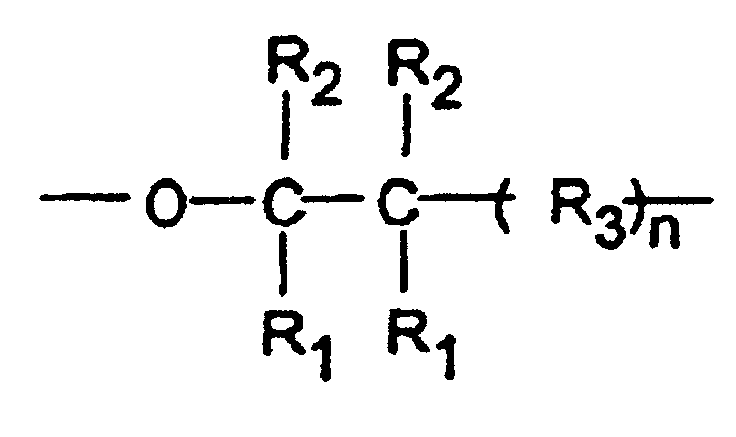 (iii)Oxymethylen-Terpolymeren, die das Reaktionsprodukt sind von Trioxan und einem cyclischen Ether und/oder einem cyclischen Acetal und einem Diglycidylether-Vernetzer mit der Formel:wobei Z ausgewählt ist aus der Gruppe, die aus einer Kohlenstoff-Kohlenstoff-Bindung, Sauerstoff, einer Oxyalkoxyeinheit mit 1 bis 8 Kohlenstoffatomen und einer Oxypoly(niederes Alkoxy)-Einheit besteht, und
 (iv) Mischungen aus zwei oder mehr Gliedern der Gruppe, die aus (i), (ii) und (iii) besteht.
 - Zusammensetzung nach Anspruch 4, wobei das Polyolefin ein lineares Polyethylen von extrem hohem Molekulargewicht ist.
- Zusammensetzung nach Anspruch 5, wobei das Polyethylen eine Kristallinität von mindestens 40 Prozent, ein Molekulargewicht von mindestens 3 x 10⁶, eine Grenzviskosität von mindestens 28 dl/g, eine Schüttdichte von 0,5 g/cm3 und eine relative Dichte von mindestens 0,93 aufweist.
- Zusammensetzung nach Anspruch 6, die 85 bis 99 Gewichtsprozent des Polyoxymethylens und 15 bis 1 Gewichtsprozent des Schmiersystems umfasst.
- Zusammensetzung nach Anspruch 7, wobei das Schmiersystem mindestens 0,1 Gewichtsprozent des Polyethylens von extrem hohem Molekulargewicht, mindestens 0,1 Gewichtsprozent Pentaerythrittetrastearat und mindestens 0,1 Gewichtsprozent Calciumcarbonat umfasst.
- Zusammensetzung nach Anspruch 8, die ferner umfasst: (a) 0,25 bis 2,0 Gewichtsprozent eines Polyoxymethylen-Terpolymers, (b) 0,25 bis 0,75 Gewichtsprozent eines gehinderten Phenols und (c) 0,05 bis 0,3 Gewichtsprozent Calciumricinoleat oder Calciumhydroxystearat, basiert auf den Gesamtgewichtsprozenten der Zusammensetzung.
- Geformter Gegenstand, der aus der selbstschmierenden Zusammensetzung nach Anspruch 9 hergestellt ist, der nach 17 Stunden Abrieb bei einer Umdrehungsgeschwindigkeit von 31,8 m/min (104,3 ft/min) und einer angewandten Belastung von 9 kg (20 lbs) einen Gewichtsverlust in dem Bereich von 4,2 mg bis 7,8 mg und einen Reibungsbeiwert von 0,075 aufweist.
- Verfahren zum Verbessern der Oberflächenabriebbeständigkeit eines thermoplastischen geformten Gegenstandes, umfassend die Schritte des(a) Herstellens einer Schmelzemischungszusammensetzung, die 70 bis 99,5 Gewichtsprozent eines thermoplastischen Polymers und 30 bis 0,5 Gewichtsprozent eines Schmiersystems umfasst, wobei das Schmiersystem ein Polyolefin von extrem hohem Molekulargewicht, Pentaerythrittetrastearat und Calciumcarbonat umfasst, und(b) Verarbeitens der Zusammensetzung zu einem geformten Gegenstand, wobei der Gegenstand einen verbesserten Reibungsbeiwert und eine verbesserte Oberflächenabriebbeständigkeit aufweist.
- Verfahren nach Anspruch 11, wobei das thermoplastische Polymer ausgewählt ist aus der Gruppe, die aus Polyamiden, Polyestern, Polyphenylensulfid, Polyoxymethylenen, Styrolpolymeren und Polycarbonaten besteht.
- Verfahren nach Anspruch 12, wobei das Polyoxymethylen ausgewählt ist aus der Gruppe, die besteht aus:(i) Oxymethylen-Homopolymeren,(ii) Oxymethylen-Copolymeren, die 85 bis 99,9 Prozent Oxymethylen-Wiederholungseinheiten umfassen, zwischen denen Wiederholungseinheiten mit der Formeleingefügt sind, wobei R1 und R2 jeweils ausgewählt sind aus der Gruppe, die aus Wasserstoff, niederen Alkylresten und mit Halogen substituierten niederen Alkylresten besteht, wobei die niederen Alkylreste jeweils 1 bis 2 Kohlenstoffatome aufweisen, R3 jeweils ausgewählt ist aus der Gruppe, die aus Methylen-, Oxymethylen-, mit niederem Alkyl und Halogenalkyl substituierten Methylen- und mit niederem Alkyl und Halogenalkyl substituierten Oxymethylenresten besteht, und n eine ganze Zahl von 0 bis einschließlich 3 ist,
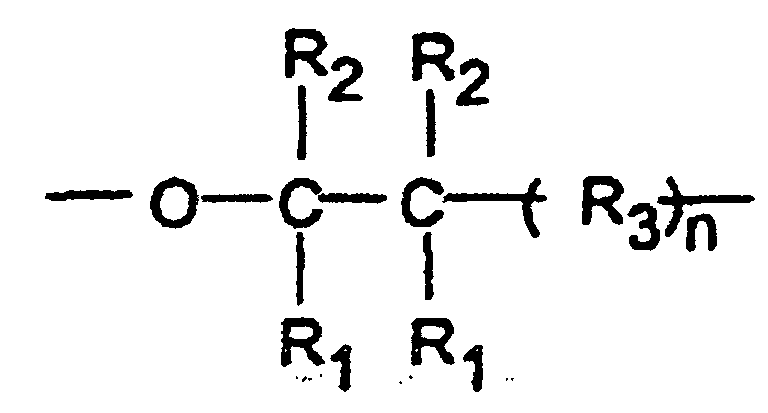 (iii)Oxymethylen-Terpolymeren, die das Reaktionsprodukt sind von Trioxan und einem cyclischen Ether und/oder einem cyclischen Acetal und einem Diglycidylether-Vernetzer mit der Formelwobei Z ausgewählt ist aus der Gruppe, die aus einer Kohlenstoff-Kohlenstoff-Bindung, Sauerstoff, einer Oxyalkoxyeinheit mit 1 bis 8 Kohlenstoffatomen und einer Oxypoly(niederes Alkoxy)-Einheit besteht, und
 (iv) Mischungen aus zwei oder mehr Gliedern der Gruppe, die aus (i), (ii) und (iii) besteht.
 - Verfahren nach Anspruch 13, wobei die Zusammensetzung 85 bis 99 Gewichtsprozent des Polyoxymethylens und 15 bis 1 Gewichtsprozent des Schmiersystems umfasst.
- Verfahren nach Anspruch 14, wobei das Polyoxymethylen Oxymethylen-Copolymer ist, das 85 bis 99,9 Prozent Oxymethylen-Wiederholungseinheiten umfasst, zwischen denen Wiederholungseinheiten mit der Formeleingefügt sind, wobei R1 und R2 jeweils ausgewählt sind aus der Gruppe, die aus Wasserstoff, niederen Alkylresten und mit Halogen substituierten niederen Alkylresten besteht, wobei die niederen Alkylreste jeweils 1 bis 2 Kohlenstoffatome aufweisen, R3 jeweils ausgewählt ist aus der Gruppe, die aus Methylen-, Oxymethylen-, mit niederem Alkyl und Halogenalkyl substituierten Methylenund mit niederem Alkyl und Halogenalkyl substituierten Oxymethylenresten besteht, und n eine ganze Zahl von 0 bis einschließlich 3 ist.

- Verfahren nach Anspruch 15, wobei das Schmiersystem mindestens 0,1 Gewichtsprozent Polyethylen von extrem hohem Molekulargewicht, mindestens 0,1 Gewichtsprozent Pentaerythrittetrastearat und mindestens 0,1 Gewichtsprozent Calciumcarbonat umfasst.
- Verfahren nach Anspruch 16, wobei das Schmiersystem 0,2 bis 10 Gewichtsprozent Polyethylen von extrem hohem Molekulargewicht, 0,25 bis 2,0 Gewichtsprozent Pentaerythrittetrastearat und 0,25 bis 4,0 Gewichtsprozent Calciumcarbonat umfasst.
- Verfahren nach Anspruch 17, wobei die Zusammensetzung ferner umfasst: (a) 0,5 Gewichtsprozent eines Polyoxymethylen-Terpolymers, (b) 0,4 Gewichtsprozent eines gehinderten Phenols und (c) 0,1 Gewichtsprozent Calciumricinoleat oder Calciumhydroxystearat, basiert auf den Gesamtgewichtsprozenten der Zusammensetzung.
- Geformter Gegenstand, der gemäß dem Verfahren nach Anspruch 18 hergestellt ist, wobei der Gegenstand nach 17 Stunden Abrieb bei einer Umdrehungsgeschwindigkeit von 31,8 m/min (104,3 ft/min) und einer angewandten Belastung von 9 kg (20 lbs) einen Gewichtsverlust von 4,3 mg und einen Reibungsbeiwert von weniger als 0,05 aufweist.
- Geformter Gegenstand nach Anspruch 19, wobei der Gegenstand ausgewählt ist aus der Gruppe, die aus Lagern, Getrieben, Nocken, Rollen, Verschiebeplatten, Riemenscheiben, Hebeln, Führungen und Fördermittelverbindungsgliedern besteht.
Applications Claiming Priority (4)
| Application Number | Priority Date | Filing Date | Title |
|---|---|---|---|
| US39604795A | 1995-02-28 | 1995-02-28 | |
| US396047 | 1995-02-28 | ||
| PCT/US1996/002591 WO1997031055A1 (en) | 1995-02-28 | 1996-02-26 | Thermoplastic polymer composition with improved wear properties |
| CA002226388A CA2226388C (en) | 1995-02-28 | 1996-02-26 | Thermoplastic composition with improved wear properties |
Publications (2)
| Publication Number | Publication Date |
|---|---|
| EP0730004A1 EP0730004A1 (de) | 1996-09-04 |
| EP0730004B1 true EP0730004B1 (de) | 2003-11-19 |
Family
ID=25679973
Family Applications (1)
| Application Number | Title | Priority Date | Filing Date |
|---|---|---|---|
| EP96102566A Expired - Lifetime EP0730004B1 (de) | 1995-02-28 | 1996-02-21 | Thermoplastische Harzzusammensetzung mit verbesserten Verschleisseigenschaften |
Country Status (4)
| Country | Link |
|---|---|
| US (1) | US5641824A (de) |
| EP (1) | EP0730004B1 (de) |
| CZ (1) | CZ271397A3 (de) |
| DE (1) | DE730004T1 (de) |
Families Citing this family (27)
| Publication number | Priority date | Publication date | Assignee | Title |
|---|---|---|---|---|
| DE19725054A1 (de) * | 1997-06-13 | 1998-12-17 | Basf Ag | Gleitreibebeständige Formmassen |
| US5906523A (en) * | 1997-08-14 | 1999-05-25 | Thordon Bearings Inc. | Intermediate marine bearing with itegrated alignment system |
| US6016946A (en) * | 1997-12-31 | 2000-01-25 | Porter-Cable Corporation | Internal combustion fastener driving tool shuttle valve |
| US7086525B2 (en) * | 1999-09-23 | 2006-08-08 | Stewart Systems, Inc. | Conveyor for continuous proofing and baking apparatus |
| US6257397B1 (en) * | 1999-09-23 | 2001-07-10 | Sasib North America, Inc. | Conveyor for continuous proofing and baking apparatus |
| DE10029533A1 (de) * | 2000-06-15 | 2001-12-20 | Ticona Gmbh | Gleitmittelhaltige Polyoxymethylenformmasse, ihre Verwendung und daraus hergestellter Formkörper |
| CN1276952C (zh) * | 2001-12-21 | 2006-09-27 | 三菱瓦斯化学株式会社 | 热塑性树脂组合物 |
| US6783189B1 (en) * | 2002-08-16 | 2004-08-31 | Zanini Tennessee, Inc. | Wheel cover with noise abatement ring |
| US6936651B2 (en) * | 2002-12-17 | 2005-08-30 | E. I. Du Pont De Nemours And Company | Compatibility improvement in crystalline thermoplastics with mineral fillers |
| US7294663B2 (en) * | 2002-12-17 | 2007-11-13 | E. I. Du Pont De Nemours And Company | Compatibility improvement in aromatic polyesters with mineral fillers |
| US6974849B2 (en) * | 2003-03-03 | 2005-12-13 | Ticona Llc | Polyacetals with improved resistance to bleach |
| US20060025507A1 (en) | 2004-07-26 | 2006-02-02 | Moore David T | Low wear resin composition having improved surface appearance |
| ES2632125T3 (es) * | 2006-07-31 | 2017-09-11 | Novo Nordisk A/S | Sistemas y dispositivos de bajo rozamiento |
| US20110237727A1 (en) * | 2010-03-29 | 2011-09-29 | Jung-Pao Chang | Durable polyoxymethylene composition |
| US8759431B2 (en) | 2010-03-29 | 2014-06-24 | Min Aik Technology Co., Ltd. | Durable polyoxymethylene composition |
| EP2647666A1 (de) | 2012-04-05 | 2013-10-09 | Ticona GmbH | Tribologisch modifiziertes Polyoxymethylen |
| EP2931804B1 (de) | 2012-12-13 | 2018-08-08 | Ticona LLC | Laserschweissbares polyoxymethylen mit antistatischen eigenschaften und mit fasern aus leitfähigen metallfüllstoffen |
| EP2938673B1 (de) | 2012-12-27 | 2018-10-03 | Ticona LLC | Leitfähiges polyoxymethylen auf der basis von edelstahlfasern |
| JP6700178B2 (ja) | 2013-10-21 | 2020-05-27 | ティコナ ゲゼルシャフト ミット ベシュレンクテル ハフツング | 本質的に低摩擦のポリオキシメチレン |
| US20160177219A1 (en) | 2014-12-17 | 2016-06-23 | Ticona Gmbh | Polyoxymethylene polymer composition having low friction |
| CN108368325A (zh) | 2015-09-30 | 2018-08-03 | 塞拉尼斯销售德国有限公司 | 低摩擦无刺耳音的组合件 |
| EP3526289A1 (de) | 2016-10-11 | 2019-08-21 | Celanese Sales Germany GmbH | Verschleissfeste polymerzusammensetzung mit verbessertem oberflächenaussehen |
| CN119931278A (zh) | 2017-03-10 | 2025-05-06 | 塞拉尼斯销售德国有限公司 | 聚酯聚合物组合物 |
| CN110651006B (zh) | 2017-04-07 | 2023-04-18 | 提克纳有限责任公司 | 低排放聚甲醛组合物 |
| US20190010299A1 (en) | 2017-07-06 | 2019-01-10 | Celanese Sales Germany Gmbh | Low Noise Polymer Composition |
| US11661512B2 (en) | 2018-12-12 | 2023-05-30 | Celanese International Corporation | Color stable and low wear polymer composition and articles made therefrom |
| CA3227810A1 (en) | 2021-08-04 | 2023-02-09 | Johannes Vorholz | Polymer composition based on poly(meth)acrylimide for tribological applications |
Family Cites Families (15)
| Publication number | Priority date | Publication date | Assignee | Title |
|---|---|---|---|---|
| GB1510237A (en) * | 1975-10-18 | 1978-05-10 | Takahashi H | Inorganic filler and resin compositions filled therewith |
| US4408000A (en) * | 1981-06-15 | 1983-10-04 | General Electric Company | Compositions comprising thermoplastic resin, mold release agent and long chained fatty acid |
| US4409351A (en) * | 1981-06-15 | 1983-10-11 | General Electric Company | Compositions comprising thermoplastic resin and long chained fatty acid |
| JPS59191756A (ja) * | 1983-04-15 | 1984-10-30 | Mitsubishi Rayon Co Ltd | ポリエステル樹脂組成物 |
| US4670508A (en) * | 1984-01-06 | 1987-06-02 | Mitsui Petrochemical Industries Ltd. | Thermoplastic resin composition |
| JPH0662831B2 (ja) * | 1986-07-28 | 1994-08-17 | 三ツ星ベルト株式会社 | ポリアセタ−ル樹脂組成物の製造方法 |
| US4960813A (en) * | 1988-02-25 | 1990-10-02 | Hoechst Celanese Corporation | Internal lubricant for glass reinforced polyarylene sulfide |
| JPH0826207B2 (ja) * | 1988-04-15 | 1996-03-13 | ポリプラスチックス株式会社 | 摺動部材用ポリアセタール樹脂組成物並びにこれを用いたガイドローラー又はガイドポール |
| JP2993062B2 (ja) * | 1990-07-02 | 1999-12-20 | 三菱瓦斯化学株式会社 | オキシメチレン共重合体組成物 |
| US5126391A (en) * | 1990-04-27 | 1992-06-30 | Mitsubishi Petrochemical Co., Ltd. | Filler-containing stretched film |
| US5302651A (en) * | 1990-10-19 | 1994-04-12 | Dainippon Ink And Chemicals, Inc. | Polyarylene sulfide resin composition |
| DE69113421T2 (de) * | 1990-12-21 | 1996-04-11 | Sumitomo Chemical Co | Polyolefinharzzusammensetzung. |
| CA2109630C (en) * | 1991-05-23 | 2003-04-01 | Tatsuhiro Takahashi | Polyacetal resin composition |
| JP2915168B2 (ja) * | 1991-05-29 | 1999-07-05 | ポリプラスチックス株式会社 | 難燃性ポリブチレンテレフタレート樹脂組成物 |
| US5300552A (en) * | 1991-10-07 | 1994-04-05 | Phillips Petroleum Company | Poly(arylene sulfide) composition |
-
1996
- 1996-02-06 US US08/597,334 patent/US5641824A/en not_active Expired - Lifetime
- 1996-02-21 DE DE0730004T patent/DE730004T1/de active Pending
- 1996-02-21 EP EP96102566A patent/EP0730004B1/de not_active Expired - Lifetime
- 1996-02-26 CZ CZ972713A patent/CZ271397A3/cs unknown
Also Published As
| Publication number | Publication date |
|---|---|
| US5641824A (en) | 1997-06-24 |
| EP0730004A1 (de) | 1996-09-04 |
| CZ271397A3 (en) | 1997-12-17 |
| DE730004T1 (de) | 1996-12-12 |
Similar Documents
| Publication | Publication Date | Title |
|---|---|---|
| EP0730004B1 (de) | Thermoplastische Harzzusammensetzung mit verbesserten Verschleisseigenschaften | |
| US5886066A (en) | Thermoplastic polymer composition exhibiting improved wear | |
| US5482987A (en) | Self-lubricating thermoplastic polymer composition | |
| JP6936278B2 (ja) | 本質的に低摩擦のポリオキシメチレン | |
| JP4751352B2 (ja) | 改善された耐摩耗性を有する熱可塑性ポリマー組成物 | |
| EP0179668B1 (de) | Verfahren zur Herstellung von Formmassen von Oxymethylenpolymer mit Beständigkeit gegen Fleckenbildung | |
| WO2004078834A1 (en) | Polyacetals with improved resistance to bleach | |
| US20060025507A1 (en) | Low wear resin composition having improved surface appearance | |
| CN109983076A (zh) | 具有改进表面外观的耐磨聚合物组合物 | |
| CA2226388C (en) | Thermoplastic composition with improved wear properties | |
| JP2000505116A (ja) | 改善された耐摩耗性を有する熱可塑性ポリマー組成物 | |
| KR100387771B1 (ko) | 증진된마모성을지닌열가소성조성물 | |
| CA2293005A1 (en) | Polyoxymethylene resin compositions having improved molding characteristics | |
| EP1896543A1 (de) | Verschleissfeste zusammensetzungen mit polyacetal von hohem molekulargewicht und polyethylen von ultrahohem molekulargewicht sowie daraus hergestellte gegenstände | |
| CN1085698C (zh) | 高耐磨性的热塑性聚合物组合物 | |
| MXPA00000585A (en) | Thermoplastic polymer composition exhibiting improved wear | |
| CA2314081A1 (en) | Polyoxymethylene resin compositions having improved molding characteristics | |
| US5618870A (en) | Polyketone polymer blend | |
| MXPA97006539A (en) | Improved composition of polymer thermoplastic self-soluble | |
| KR100463967B1 (ko) | 대전방지 조성물 | |
| KR910010024B1 (ko) | 강성이 우수한 함유 폴리아세탈 수지 복합체 조성물 | |
| JPH07118494A (ja) | ポリアセタール摺動部材組成物 |
Legal Events
| Date | Code | Title | Description |
|---|---|---|---|
| PUAI | Public reference made under article 153(3) epc to a published international application that has entered the european phase |
Free format text: ORIGINAL CODE: 0009012 |
|
| DET | De: translation of patent claims | ||
| 17P | Request for examination filed |
Effective date: 19970304 |
|
| RBV | Designated contracting states (corrected) |
Designated state(s): AT BE DE ES FR GB IT NL SE |
|
| 17Q | First examination report despatched |
Effective date: 20010628 |
|
| GRAH | Despatch of communication of intention to grant a patent |
Free format text: ORIGINAL CODE: EPIDOS IGRA |
|
| GRAS | Grant fee paid |
Free format text: ORIGINAL CODE: EPIDOSNIGR3 |
|
| GRAA | (expected) grant |
Free format text: ORIGINAL CODE: 0009210 |
|
| AK | Designated contracting states |
Kind code of ref document: B1 Designated state(s): AT BE DE ES FR GB IT NL SE |
|
| PG25 | Lapsed in a contracting state [announced via postgrant information from national office to epo] |
Ref country code: AT Free format text: LAPSE BECAUSE OF FAILURE TO SUBMIT A TRANSLATION OF THE DESCRIPTION OR TO PAY THE FEE WITHIN THE PRESCRIBED TIME-LIMIT Effective date: 20031119 |
|
| REG | Reference to a national code |
Ref country code: GB Ref legal event code: FG4D |
|
| REF | Corresponds to: |
Ref document number: 69630725 Country of ref document: DE Date of ref document: 20031224 Kind code of ref document: P |
|
| PG25 | Lapsed in a contracting state [announced via postgrant information from national office to epo] |
Ref country code: SE Free format text: LAPSE BECAUSE OF FAILURE TO SUBMIT A TRANSLATION OF THE DESCRIPTION OR TO PAY THE FEE WITHIN THE PRESCRIBED TIME-LIMIT Effective date: 20040219 |
|
| PG25 | Lapsed in a contracting state [announced via postgrant information from national office to epo] |
Ref country code: ES Free format text: LAPSE BECAUSE OF FAILURE TO SUBMIT A TRANSLATION OF THE DESCRIPTION OR TO PAY THE FEE WITHIN THE PRESCRIBED TIME-LIMIT Effective date: 20040302 |
|
| ET | Fr: translation filed | ||
| PLBE | No opposition filed within time limit |
Free format text: ORIGINAL CODE: 0009261 |
|
| STAA | Information on the status of an ep patent application or granted ep patent |
Free format text: STATUS: NO OPPOSITION FILED WITHIN TIME LIMIT |
|
| 26N | No opposition filed |
Effective date: 20040820 |
|
| PGFP | Annual fee paid to national office [announced via postgrant information from national office to epo] |
Ref country code: NL Payment date: 20080214 Year of fee payment: 13 Ref country code: IT Payment date: 20080223 Year of fee payment: 13 Ref country code: GB Payment date: 20080220 Year of fee payment: 13 |
|
| PGFP | Annual fee paid to national office [announced via postgrant information from national office to epo] |
Ref country code: FR Payment date: 20080214 Year of fee payment: 13 |
|
| PGFP | Annual fee paid to national office [announced via postgrant information from national office to epo] |
Ref country code: BE Payment date: 20080327 Year of fee payment: 13 |
|
| BERE | Be: lapsed |
Owner name: *HOECHST CELANESE CORP. Effective date: 20090228 |
|
| GBPC | Gb: european patent ceased through non-payment of renewal fee |
Effective date: 20090221 |
|
| NLV4 | Nl: lapsed or anulled due to non-payment of the annual fee |
Effective date: 20090901 |
|
| REG | Reference to a national code |
Ref country code: FR Ref legal event code: ST Effective date: 20091030 |
|
| PG25 | Lapsed in a contracting state [announced via postgrant information from national office to epo] |
Ref country code: NL Free format text: LAPSE BECAUSE OF NON-PAYMENT OF DUE FEES Effective date: 20090901 |
|
| PG25 | Lapsed in a contracting state [announced via postgrant information from national office to epo] |
Ref country code: BE Free format text: LAPSE BECAUSE OF NON-PAYMENT OF DUE FEES Effective date: 20090228 |
|
| PG25 | Lapsed in a contracting state [announced via postgrant information from national office to epo] |
Ref country code: GB Free format text: LAPSE BECAUSE OF NON-PAYMENT OF DUE FEES Effective date: 20090221 Ref country code: FR Free format text: LAPSE BECAUSE OF NON-PAYMENT OF DUE FEES Effective date: 20090302 |
|
| PG25 | Lapsed in a contracting state [announced via postgrant information from national office to epo] |
Ref country code: IT Free format text: LAPSE BECAUSE OF NON-PAYMENT OF DUE FEES Effective date: 20090221 |
|
| PGFP | Annual fee paid to national office [announced via postgrant information from national office to epo] |
Ref country code: DE Payment date: 20130213 Year of fee payment: 18 |
|
| REG | Reference to a national code |
Ref country code: DE Ref legal event code: R119 Ref document number: 69630725 Country of ref document: DE |
|
| REG | Reference to a national code |
Ref country code: DE Ref legal event code: R119 Ref document number: 69630725 Country of ref document: DE Effective date: 20140902 |
|
| PG25 | Lapsed in a contracting state [announced via postgrant information from national office to epo] |
Ref country code: DE Free format text: LAPSE BECAUSE OF NON-PAYMENT OF DUE FEES Effective date: 20140902 |