EP0730874A2 - Wundverschlussverband für verbesserte Wund- und Einschnittheilung und seine Verwendung - Google Patents
Wundverschlussverband für verbesserte Wund- und Einschnittheilung und seine Verwendung Download PDFInfo
- Publication number
- EP0730874A2 EP0730874A2 EP96200173A EP96200173A EP0730874A2 EP 0730874 A2 EP0730874 A2 EP 0730874A2 EP 96200173 A EP96200173 A EP 96200173A EP 96200173 A EP96200173 A EP 96200173A EP 0730874 A2 EP0730874 A2 EP 0730874A2
- Authority
- EP
- European Patent Office
- Prior art keywords
- weight
- tape
- styrene
- hydrocolloid
- polyisobutylenes
- Prior art date
- Legal status (The legal status is an assumption and is not a legal conclusion. Google has not performed a legal analysis and makes no representation as to the accuracy of the status listed.)
- Withdrawn
Links
Images



Classifications
-
- A—HUMAN NECESSITIES
- A61—MEDICAL OR VETERINARY SCIENCE; HYGIENE
- A61L—METHODS OR APPARATUS FOR STERILISING MATERIALS OR OBJECTS IN GENERAL; DISINFECTION, STERILISATION OR DEODORISATION OF AIR; CHEMICAL ASPECTS OF BANDAGES, DRESSINGS, ABSORBENT PADS OR SURGICAL ARTICLES; MATERIALS FOR BANDAGES, DRESSINGS, ABSORBENT PADS OR SURGICAL ARTICLES
- A61L15/00—Chemical aspects of, or use of materials for, bandages, dressings or absorbent pads
- A61L15/16—Bandages, dressings or absorbent pads for physiological fluids such as urine or blood, e.g. sanitary towels, tampons
- A61L15/42—Use of materials characterised by their function or physical properties
- A61L15/58—Adhesives
- A61L15/585—Mixtures of macromolecular compounds
Definitions
- This invention relates to the discovery that elastic, film-backed wound dressings, when coated with a hydrocolloid adhesive, may be used to close incisions or other skin breaches usually requiring sutures, and that these dressings may be applied to cover the entire surface of a treated skin breach.
- Such incision coverings avoid the creation of suture tracks that can lead to infection, provide a barrier blocking access by infectious agents to an incision site, have sufficient elasticity to avoid the torsion blistering that often accompanies the use of acrylic adhesive tape closure strips, such as Steri-Strips® and similar inelastic wound dressings, and avoid the foreign body reaction that often accompanies the use of tissue glue.
- the medical community has for a number of years had available to it flexible, elastic wound coverings coated with hydrocolloid adhesives. See, for instance, U.S. Patents 4,551,490, 4,538,603, and 4,909,243. Despite this availability, such coverings have not been used as incision closures. Instead the medical community has used sutures, surgical staples, tissue glues and small inelastic adhesive strips. The failure of the medical community to turn to flexible, elastic coverings for use as incision closures probably reflects the prevailing belief that incisions should be open to the air. One concern behind this belief is that by more fully covering the incision, as would result with flexible, elastic coverings, the exudate from the incision would remain moist and provide a fertile breeding ground for microorganisms.
- Acrylic tape closure devices function essentially as substitutes for sutures. They are intended to clasp together discrete segments of a breach of the skin, leaving substantial area between each tape closure devices where exudate from the wound is not flow restricted by a closure device. Such devices do not absorb substantial amount of fluid such as exudate. The exudate emerging immediately below a non-absorbent adhesive device may travel, without substantial restriction, along the incision or breach to an area not covered with a closure device.
- an absorbent dressing is usually packed above the closure devices to absorb exudate.
- acrylic closure devices often create torsion blisters when the wounded tissue swells and contracts due to normal motion and flexing of the skin, inflammation and the healing process.
- Sutures create "suture tracks" that create a pathway for microbes to breach the protective barrier of the skin and enter the subcutaneous tissue, thus increasing the potential for infection.
- suturing With suturing, the inflammation associated with responding to increased microbial attacks, the foreign body reactions against the non-absorbable sutures, and the damage due to tissue strangulation created by the sutures are believed to aggravate the healing process.
- Surgical staples while convenient and useful to reduce the time that a patient spends in surgery, have these same deficiencies.
- the invention relates to the use of a tape comprising :
- the elastic film set forth above may possess a series of holes positioned to substantially align with the skin breach.
- the segments of the skin breach under the holes lacks the direct adhesive and bridging support provided to adjacent segments of the breach by the adhesive-coated film.
- the size of the holes is selected to be small enough so that the breach under the holes is substantially held together by the stabilizing action of the adjacent adhesive-coated film and the integument surrounding the breach.
- Fig. 1C which is an enlargement of a portion of the dressing of Fig. 1A, one can see that the adhesive at positions A and B will add support for maintaining the apposition of the tissue at the segment of the breach at position C.
- This embodiment is useful for wounds that are anticipated to produce large amounts of exudate, especially early in the healing process (for instance, a wound caused by a procedure to remove a cyst).
- the holes provide a pathway for some of the exudate to exit from under the tape.
- An absorbent dressing may be placed immediately over the holes in the tape to absorb exudate. This absorbent dressing may be facilely replaced without disturbing the closed breach.
- Figures 1A, 1B and 1C illustrate the tape used in the invention when it has been applied to a skin breach.
- Figures 2A and 2B illustrate an embodiment of the tape used in the invention when it has been applied to a skin breach.
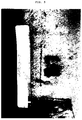
- Figure 3 displays an incision that is closed and remains covered with a hydrocolloid closure tape.
- Figure 4 displays a healed incision that was closed with a hydrocolloid closure tape.
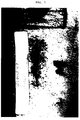
- the closure device is also shown after it was partially pealed away from the skin surrounding the incision.
- Figure 5 displays a healed incision that had been closed with a hydrocolloid closure tape.
- Figure 6 displays an incision that was treated by closing with sutures and covering with a hydrocolloid dressing.
- Figure 7 displays an incision that was treated with a tissue glue.
- the polymeric elastic film can be made of a number of polymers, including polyurethane, polyacrylate, polyethylene and mixtures thereof.
- the film comprises polyurethane.
- the modulus of elasticity of the film generally should be such that when the film is stretched 10% in the machine direction, it will exhibit a force of between about 1000 and about 5000 psi; preferably between about 2000 and about 4000; more preferably between about 2500 and about 3500. In this way, the elastic modulus of the film is not dissimilar to that of skin.
- the thickness of the film will generally be between about 0.0005 and about 0.003 inches (i.e., between about 1/2 and 3 mils), preferably between about 0.001 and about 0.002 inches, more preferably about 0.001 inches.
- the surface of the film not coated with adhesive will be surface treated with a siliconizing agent such as polysiloxane (available from General Electric, Schenectady, NY). Generally, about 0.2 g/m 2 to about 0.6 g/m 2 of silicone will be applied, preferably, about 0.3 g/m 2 .
- This surface treatment allows the closure tape to be rolled up on itself without the adhesive layer adhering too strongly to the non-adhesive surface upon it has been rolled. In the absence of such surface treatment, generally the closure tape will be stored loosely adhered to another siliconized layer material such a paper, so that it may be conveniently handled.
- the hydrocolloid adhesives used in the invention incorporate (1) hydrophilic components and (2) hydrophobic components.
- the hydrophilic components typically include water soluble hydrocolloids such as sodium carboxymethylcellulose (“CMC”), pectin, gelatin, guar gum, locust bean gum, gum karaya, and mixtures thereof.
- Optional further hydrophilic components include water swellable adhesive strengthening agents, such as the following finely divided substantially water insoluble cross-linked materials: sodium CMC; starch-acrylonitrile graft copolymer; or dextran, as discussed in U.S. Patent No. 4,551,490, (the "'490 patent”), the entire disclosure of which is incorporated herein by reference.
- the hydrophobic components (2) typically include one or more elastomers such as a polyisobutylene.
- elastomers such as a polyisobutylene.
- elastomers such as a butyl rubber, styrene radial or block-type copolymers.
- hydrophobic components typically include an oil such as mineral oil. Examples of these components are described in the '490 patent.
- hydrocolloid adhesives useful in the invention are described in the '490 patent, as are methods for mixing the component ingredients.
- the '490 patent further identifies component ratios believed to produce useful adhesives.
- optional components such as antimicrobial agents that may be added to the adhesive composition.
- the adhesive composition should be capable of absorbing substantial fluid while retaining adhesiveness.
- the adhesive preferably includes from about 5% to about 30% by weight of one or more low molecular weight polyisobutylenes or a blend of one or more low molecular weight polyisobutylenes and butyl rubber (more preferably about 5% to about 15%), from about 3% to about 20% by weight of one or more styrene-isoprene-styrene or styrene-butadiene-styrene block type copolymers (more preferably about 10% to about 20%), from about 8% to about 40% by weight of mineral oil (more preferably about 20% to about 40%), from about 15% to about 65% by weight of one or more water soluble hydrocolloid gums (more preferably about 30% to about 65%), up to about 15% by weight of one or more water swellable cohesive strengthening agents, provided that the water soluble hydrocolloid gums and cohesive strengthening agents combined are present at from about 15%
- the composition includes an antioxidant such as zinc dibutyldithiocarbamate or tetrakis (methylene--3,5-di-tertbutyl-4-hydroxyhydrocinnaminate)methane.
- an antioxidant such as zinc dibutyldithiocarbamate or tetrakis (methylene--3,5-di-tertbutyl-4-hydroxyhydrocinnaminate)methane.
- the antioxidant comprises up to about 0.5% of the composition.
- the hydrocolloid adhesive is capable of swelling to incorporate at least about 0.03 g of water per mil of thickness and cm 2 of area while retaining adhesive tack, more preferably, it retains at least about 0.05 g of biological fluid per mil of thickness and cm 2 of area while retaining adhesive tack.
- the hydrocolloid adhesive can retain at least about 0.3 g of water, more preferably at least about 0.5 g. It is not critical that a portion of the adhesive adjacent to the skin breach has lost its tack, since neighboring portions of the adhesive will generally retain adhesive tack and maintain tissue apposition.
- the hydrocolloid adhesive coating will preferably have a thickness of from about 1.0 mils to about 100 mils, more preferably from about 5 mils to about 50 mils, still more preferably from about 5 mils to about 40 mils.
- the hydrocolloid adhesive can be tested for adhesiveness according to ASTM protocol D-3330, which measures the initial force needed for a 180° peel from stainless steel. Prior to absorbing fluid, the adhesiveness will generally be at least about 10 newtons, preferably at least about 12 newtons, more preferably at least about 14 newtons.
- the film of the closure tape of the invention has a series of holes situated to align with the breach that is to be closed with the closure tape, as illustrated in Figure 1.
- These closure tapes should be useful for skin breaches that are anticipated to produce substantially exudate, especially in the first day or two after the tape is applied.
- Such high exudate producing breaches include, for example, breaches formed as a result of cyst removals. (Large amounts of exudate will generally flow into the subdermal void formed by the removal of a cyst and subsequently flow outward through the channels formed by surgical incisions.)
- Figures 1A, 1B and 1C display closure tapes (1) with holes (2).
- the tapes are positioned on wounds to substantially align the holes with the lines (3) created by the closed skin breach.
- the use of a patterned arrangement of holes, as in Figure 1B, allows a covered skin breach to be more facilely aligned with the holes, especially when the breach does not define a straight line.
- the holes should be of a size that allows for substantial exudate to flow out from beneath the closure tape but does not substantially disrupt the tissue clamping action of the closure tape. As the holes become too large, the sides of the breach under the hole will lose the structural support that holds them adjacent to one another. It is believed that this loss of support would lead to elliptical scar formation, epidermal detour and scarring. To avoid this, the size and placement of the holes is selected so that the tissue stabilization action of the tape is not substantially disrupted. Generally, the holes are sized and situated so that at least about 50% of the breach is covered by the hydrocolloid coated tape, preferably at least about 70%, more preferably at least about 80%.
- the holes contemplated for the tape include, but are not limited to, the slits contemplated Karami et al. in U.S. Patent Nos. 5,244,457 and 5,308,313, or by Gilman in U.S. Patent Nos. 5,056,510 and 5,106,362, the disclosures of which are incorporated herein by reference.
- the holes of the present invention need not be slits. Neither do the holes of the invention need to force "tortuous flow" of exudate.
- the holes of the invention shall not be slits or otherwise designed to force tortuous flow.
- the adhesive-coated face of the film will be uniformly coated with hydrocolloid adhesive. Accordingly, in this embodiment there will be no portions of the coated face of the film that lack adhesive.
- the holes on the tape of this embodiment are uniformly spaced. Preferably, for any line in the plane of the film, no more than about 50% of the line will intersect a hole. More preferably, no more than about 30% of the line will intersect the line, still more preferably, no more than about 20%.
- An absorbent dressing containing an absorbent such as cotton, hydrophilic gels, gauze, alginate, etc.
- the absorbent dressing will have an adhesive portion to adhere it in position over the exudate-releasing holes.
- the absorbent portion is generally substantially rectangular in shape, with adhesive portions extending from at least two opposing sides of the rectangular shape.
- the face of the elastic film of the closure tape opposite from that covered with adhesive is surface-treated to allow facile application and removal of the adhesive portion of the absorbent dressings.
- the non-adhesive face is surface treated with a siliconizing agent such as polysiloxane (which is available, for instance, from General Electric, Schenectady, NY).
- FIG. 2A top view of the combination dressing, having both a closure tape (4) and an absorbent dressing (5) is illustrated.
- the absorbent (6) is situated over the holes (7) of the closure tape.
- the adhesive portion of the absorbent dressing (8) extends from two sides of the absorbent and is situated over the elastic film of the closure tape.
- FIG 2B a side perspective along axis A-B of the dressing of Figure 2A is shown.
- the closure tape (4) includes a film layer (4a) and an hydrocolloid adhesive layer (4b).
- the skin breach (9) is situated under the absorbent (6) and separates two portions of skin tissue (10).
- subcutaneous sutures When a breach of the skin is deep enough, e.g., when it extends into fat or muscle layers, it may be necessary to use subcutaneous sutures in conjunction with the closure tape of the invention to sufficiently stabilize the wound, as will be recognized by a physician of ordinary skill.
- the use of subcutaneous sutures in conjunction with the invention is within the scope of the invention.
- Use of the tape to close a skin breach can also include leaving the applied tape in place for a period of time sufficient to control exudate production.
- the tape will be left in place for a period of time sufficient to permit epithelialization.
- the tape will be left in place until the underlying epithelium has matured sufficiently so that the cell layer to which the film is adhered begins to slough off.
- the tape may be left in place for at least about two days, preferably about 4 days, more preferably about 7 days, yet more preferably about 14 days.
- HCD hydrocolloid
- the third means was closing the incision with a cyanoacrylate adhesive of the type marketed as "Nexabrand S/C®” (TriPoint Med, Raleigh, NC) which is a tissue glue.
- cyanoacrylate adhesives are packaged as pre-polymers. When applied to a wound, the pre-polymers polymerize due to exposure to air and moisture. The polymerizate is hydrophobic, and thus lacks the capacity to absorb moisture.
- the fourth means was closing the incision with a HCD occlusive dressing, of the kind marketed as DuoDerm Extra Thin®, a use within the present invention.
- tissue glue and HCD occlusive dressing were carefully applied to align the edges of the incision.
- One of each treatment was applied to one of the four incisions on each side of a swine.
- Extreme care was needed with the Nexaband product (tissue glue) to avoid deposition of cyanoacrylate polymer within the incision.
- the adhesive dressings when used, were left in place for seven days.
- the third swine had its dressing replaced on day two.
- Figure 4 shows a photograph of an incision covered with a HCD occlusive dressing.
- Figure 5 shows an incision after an HCD occlusive dressing has been pulled away.
- Figure 6 shows a healed incision that had been closed with an HCD occlusive dressing.
- Figure 7 shows an incision that was treated with sutures and a HCD occlusive dressing.
- Figure 8 shows an incision that was treated with tissue glue.
- This example is directed to preparing an adhesive made having the following composition: Percent by weight Polyisobutylene (Vistanex LM-MH)* 10.2 Styrene-isoprene-styrene copolymer (Kraton 1107) 12.6 Mineral oil 25.1 Zinc dibutyldithiocarbamate (Butyl Zimate) 0.06 Tackifier (Pentalyn H) 8.94 Sodium carboxymethylcellulose 31.0 Cross-linked sodium carboxymethylcellulose (AcDiSol) 12.1 * A listing of suppliers follows Example 3 below.
- the mineral oil (187.5 g), polyisobutylene (75.8 g), Kraton 1107 (92.8 g) and Butyl Zimate (0.4 g) were combined in a sigma blade mixer with heating (to about 115°C) and agitation for approximately one to three hours. Then, while mixing continued, the mixture was allowed to cool to about 100°C and sodium carboxymethylcellulose (89.1 g) and Pentalyn H (66.1 g) were added. Mixing was continued until a homogeneous mass resulted (after about 30 more minutes). The mass was allowed to cool and then it was flattened to the desired thickness. Silicone coated release paper was applied to both sides. After one of the release papers is removed, the adhesive layer can be applied to another surface, such as a polymeric, elastic film.
- compositions 2 - 25 were prepared following the procedure of Example 2, except that the components of the compositions, on a weight percent basis, were as listed in the following tables: Ingredient 2 3 4 5 6 7 8 9 10 11 12 13 Polyisobutylene (Vistanex LM-MH) 11.68 11.68 7.75 5.9 6.7 --- 10 15 13 --- 15 15 Polyisobutylene (Vistanex LM-MS) --- --- --- 10.8 --- --- 15 --- --- Guar Gum --- --- --- --- --- --- --- --- --- --- --- Locust Bean Gum --- -- -- --- --- --- --- 20 --- --- --- --- Pectin --- --- --- --- --- 10 --- 10 --- --- --- --- --- --- --- --- --- --- --- 15 --- Gelatin --- --- --- --- --- 10 --- --- --- --- --- --- --- --- --- 15 --- Gelatin ---
Landscapes
- Health & Medical Sciences (AREA)
- Hematology (AREA)
- Chemical & Material Sciences (AREA)
- Engineering & Computer Science (AREA)
- Materials Engineering (AREA)
- Epidemiology (AREA)
- Life Sciences & Earth Sciences (AREA)
- Animal Behavior & Ethology (AREA)
- General Health & Medical Sciences (AREA)
- Public Health (AREA)
- Veterinary Medicine (AREA)
- Materials For Medical Uses (AREA)
- Surgical Instruments (AREA)
Applications Claiming Priority (2)
| Application Number | Priority Date | Filing Date | Title |
|---|---|---|---|
| US37813395A | 1995-01-24 | 1995-01-24 | |
| US378133 | 1995-01-24 |
Publications (2)
| Publication Number | Publication Date |
|---|---|
| EP0730874A2 true EP0730874A2 (de) | 1996-09-11 |
| EP0730874A3 EP0730874A3 (de) | 1997-07-30 |
Family
ID=23491863
Family Applications (1)
| Application Number | Title | Priority Date | Filing Date |
|---|---|---|---|
| EP96200173A Withdrawn EP0730874A3 (de) | 1995-01-24 | 1996-01-24 | Wundverschlussverband für verbesserte Wund- und Einschnittheilung und seine Verwendung |
Country Status (5)
| Country | Link |
|---|---|
| EP (1) | EP0730874A3 (de) |
| JP (1) | JPH08229065A (de) |
| AU (1) | AU705360B2 (de) |
| CA (1) | CA2167961A1 (de) |
| ZA (1) | ZA96225B (de) |
Cited By (24)
| Publication number | Priority date | Publication date | Assignee | Title |
|---|---|---|---|---|
| WO1998010801A1 (fr) * | 1996-09-16 | 1998-03-19 | Laboratoires D'hygiene Et De Dietetique | Nouvelle masse adhesive hydrophile |
| WO1998027914A1 (en) * | 1996-12-23 | 1998-07-02 | The Procter & Gamble Company | Adhesive for secure topical attachment to the skin and comfortable removal |
| WO1998028017A1 (en) * | 1996-12-23 | 1998-07-02 | The Procter & Gamble Company | Disposable absorbent article with side cuffs comprising an adhesive for topical attachment of the side cuffs to the skin of a wearer |
| WO1998028015A1 (en) * | 1996-12-23 | 1998-07-02 | The Procter & Gamble Company | Lipophilic adhesive for secure topical attachment to the skin and comfortable removal |
| EP0855190A1 (de) * | 1996-12-23 | 1998-07-29 | The Procter & Gamble Company | Lokal anwendbares Adhäsiv für die Haut und bequeme Entfernung, insbesondere für Absorptionsartikel |
| WO2000053690A1 (fr) * | 1999-03-09 | 2000-09-14 | Laboratoires D'hygiene Et De Dietetique | Nouvelle masse adhesive hydrocolloide presentant une meilleure resistance a la degradation de sa capacite d'absorption apres radiosterilisation |
| US6191189B1 (en) | 1996-12-23 | 2001-02-20 | The Procter & Gamble Company | Adhesive for secure topical attachment to the skin and comfortable removal |
| US6326421B1 (en) | 1997-09-16 | 2001-12-04 | Avery Dennison Corporation | Hydrocolloid pressure sensitive adhesives |
| US6583220B1 (en) | 1997-08-29 | 2003-06-24 | Avery Dennison Corporation | Biological fluid absorbing pressure sensitive adhesives |
| US6761710B2 (en) * | 1999-12-03 | 2004-07-13 | The Procter & Gamble Company | Container for the collection of menstrual flow |
| US7335416B2 (en) | 2001-04-26 | 2008-02-26 | Avery Dennison Corporation | Mouldable hydrocolloid adhesive compositions |
| EP2203137B1 (de) | 2007-10-11 | 2016-02-24 | Spiracur, Inc. | Unterdruck-therapievorrichtung für geschlossene schnittwunden |
| EP2453933B1 (de) * | 2009-07-14 | 2016-08-31 | LTS LOHMANN Therapie-Systeme AG | Wasserdampfdurchlässiges hautpflaster |
| EP1020195B2 (de) † | 1999-01-11 | 2016-09-14 | Jentec, Inc. | Wundverband |
| USD824525S1 (en) | 2014-09-25 | 2018-07-31 | Ethicon Llc | Release paper for wound treament devices |
| CN110051877A (zh) * | 2018-01-18 | 2019-07-26 | 近镒生技股份有限公司 | 止血材料、其制备方法及包含其的药物组合物 |
| US10398800B2 (en) | 2004-07-12 | 2019-09-03 | Ethicon, Inc. | Adhesive-containing wound closure device and method |
| US10398802B2 (en) | 2004-02-18 | 2019-09-03 | Ethicon, Inc. | Adhesive-containing wound closure device and method |
| US10470935B2 (en) | 2017-03-23 | 2019-11-12 | Ethicon, Inc. | Skin closure systems and devices of improved flexibility and stretchability for bendable joints |
| WO2020026063A1 (en) | 2018-07-31 | 2020-02-06 | Ethicon, Inc. | Skin closure devices with interrupted closure |
| US10687986B2 (en) | 2016-09-29 | 2020-06-23 | Ethicon, Inc. | Methods and devices for skin closure |
| US10792024B2 (en) | 2016-09-28 | 2020-10-06 | Ethicon, Inc. | Scaffolds with channels for joining layers of tissue at discrete points |
| USD907217S1 (en) | 2016-09-29 | 2021-01-05 | Ethicon, Inc. | Release paper for wound treatment devices |
| US11504446B2 (en) | 2017-04-25 | 2022-11-22 | Ethicon, Inc. | Skin closure devices with self-forming exudate drainage channels |
Families Citing this family (6)
| Publication number | Priority date | Publication date | Assignee | Title |
|---|---|---|---|---|
| WO2000026293A1 (en) * | 1998-11-03 | 2000-05-11 | Bristol-Myers Squibb Company | Hydrocolloid adhesive compositions |
| CA2262408C (en) * | 1999-02-23 | 2007-10-23 | Advanced Therapeutic Technologies At2 Inc. | Wound closure system |
| EP2536340B1 (de) * | 2010-02-19 | 2018-10-17 | LifeCell Corporation | Vorrichtungen zur behandlung der abdominalwand |
| ES2546780T3 (es) * | 2011-04-04 | 2015-09-28 | Coloplast A/S | Parche adhesivo |
| FR3009188B1 (fr) * | 2013-08-05 | 2017-02-17 | Urgo Lab | Dispositif applicateur de pansement interface |
| US10034799B2 (en) * | 2014-07-31 | 2018-07-31 | Johnson & Johnson Consumer Inc. | Two-stage wound dressing assembly |
Citations (7)
| Publication number | Priority date | Publication date | Assignee | Title |
|---|---|---|---|---|
| US4538603A (en) | 1982-04-22 | 1985-09-03 | E. R. Squibb & Sons, Inc. | Dressings, granules, and their use in treating wounds |
| US4551490A (en) | 1983-06-27 | 1985-11-05 | E. R. Squibb & Sons, Inc. | Adhesive composition resistant to biological fluids |
| US4909243A (en) | 1988-07-20 | 1990-03-20 | E. R. Squibb & Sons, Inc. | Wound dressing system |
| US5056510A (en) | 1989-04-13 | 1991-10-15 | The Kendall Company | Vented wound dressing |
| US5106362A (en) | 1989-04-13 | 1992-04-21 | The Kendall Company | Vented absorbent dressing |
| US5244457A (en) | 1992-03-23 | 1993-09-14 | The Kendall Company | Vented wound dressing |
| US5308313A (en) | 1991-07-29 | 1994-05-03 | The Kendall Company | Vented wound dressing |
Family Cites Families (3)
| Publication number | Priority date | Publication date | Assignee | Title |
|---|---|---|---|---|
| EP0028452A1 (de) * | 1979-09-27 | 1981-05-13 | Smith and Nephew Associated Companies p.l.c. | Klebender Wundverschluss |
| DK147035C (da) * | 1980-12-05 | 1984-09-03 | Coloplast As | Hudplade |
| US5419913A (en) * | 1992-03-05 | 1995-05-30 | Podell; Howard I. | Adhesive bandages, wound dressings, sutures, drapes, orthodontic rubber bands, toothbrushes, and the like |
-
1996
- 1996-01-11 ZA ZA96225A patent/ZA96225B/xx unknown
- 1996-01-22 JP JP8028417A patent/JPH08229065A/ja active Pending
- 1996-01-23 AU AU42137/96A patent/AU705360B2/en not_active Ceased
- 1996-01-24 CA CA002167961A patent/CA2167961A1/en not_active Abandoned
- 1996-01-24 EP EP96200173A patent/EP0730874A3/de not_active Withdrawn
Patent Citations (7)
| Publication number | Priority date | Publication date | Assignee | Title |
|---|---|---|---|---|
| US4538603A (en) | 1982-04-22 | 1985-09-03 | E. R. Squibb & Sons, Inc. | Dressings, granules, and their use in treating wounds |
| US4551490A (en) | 1983-06-27 | 1985-11-05 | E. R. Squibb & Sons, Inc. | Adhesive composition resistant to biological fluids |
| US4909243A (en) | 1988-07-20 | 1990-03-20 | E. R. Squibb & Sons, Inc. | Wound dressing system |
| US5056510A (en) | 1989-04-13 | 1991-10-15 | The Kendall Company | Vented wound dressing |
| US5106362A (en) | 1989-04-13 | 1992-04-21 | The Kendall Company | Vented absorbent dressing |
| US5308313A (en) | 1991-07-29 | 1994-05-03 | The Kendall Company | Vented wound dressing |
| US5244457A (en) | 1992-03-23 | 1993-09-14 | The Kendall Company | Vented wound dressing |
Cited By (39)
| Publication number | Priority date | Publication date | Assignee | Title |
|---|---|---|---|---|
| CN1112942C (zh) * | 1996-09-16 | 2003-07-02 | 卫生与营养实验室 | 新型亲水粘合剂 |
| WO1998010801A1 (fr) * | 1996-09-16 | 1998-03-19 | Laboratoires D'hygiene Et De Dietetique | Nouvelle masse adhesive hydrophile |
| WO1998028015A1 (en) * | 1996-12-23 | 1998-07-02 | The Procter & Gamble Company | Lipophilic adhesive for secure topical attachment to the skin and comfortable removal |
| WO1998027914A1 (en) * | 1996-12-23 | 1998-07-02 | The Procter & Gamble Company | Adhesive for secure topical attachment to the skin and comfortable removal |
| WO1998028023A1 (en) * | 1996-12-23 | 1998-07-02 | The Procter & Gamble Company | Adhesive for secure topical attachment to the skin and comfortable removal |
| WO1998028019A1 (en) * | 1996-12-23 | 1998-07-02 | The Procter & Gamble Company | Adhesif for secure topical attachment to the skin and comfortable removal |
| WO1998028017A1 (en) * | 1996-12-23 | 1998-07-02 | The Procter & Gamble Company | Disposable absorbent article with side cuffs comprising an adhesive for topical attachment of the side cuffs to the skin of a wearer |
| EP0855190A1 (de) * | 1996-12-23 | 1998-07-29 | The Procter & Gamble Company | Lokal anwendbares Adhäsiv für die Haut und bequeme Entfernung, insbesondere für Absorptionsartikel |
| WO1998028014A1 (en) * | 1996-12-23 | 1998-07-02 | The Procter & Gamble Company | Adhesive for secure topical attachment to the skin and comfortable removal |
| US6191189B1 (en) | 1996-12-23 | 2001-02-20 | The Procter & Gamble Company | Adhesive for secure topical attachment to the skin and comfortable removal |
| US6583220B1 (en) | 1997-08-29 | 2003-06-24 | Avery Dennison Corporation | Biological fluid absorbing pressure sensitive adhesives |
| US6326421B1 (en) | 1997-09-16 | 2001-12-04 | Avery Dennison Corporation | Hydrocolloid pressure sensitive adhesives |
| EP1020195B2 (de) † | 1999-01-11 | 2016-09-14 | Jentec, Inc. | Wundverband |
| US6964987B1 (en) | 1999-03-09 | 2005-11-15 | Laboratoires D'hygiene Et De Dietetique | Hydrocolloid adhesive mass with improved resistance to deterioration of its absorption capacity after being sterilized by radiation |
| WO2000053690A1 (fr) * | 1999-03-09 | 2000-09-14 | Laboratoires D'hygiene Et De Dietetique | Nouvelle masse adhesive hydrocolloide presentant une meilleure resistance a la degradation de sa capacite d'absorption apres radiosterilisation |
| FR2790763A1 (fr) * | 1999-03-09 | 2000-09-15 | Lhd Lab Hygiene Dietetique | Nouvelle masse adhesive hydrocolloide presentant une meilleure resistance a la degradation de sa capacite d'absorption apres radiosterilisation |
| US6761710B2 (en) * | 1999-12-03 | 2004-07-13 | The Procter & Gamble Company | Container for the collection of menstrual flow |
| US7335416B2 (en) | 2001-04-26 | 2008-02-26 | Avery Dennison Corporation | Mouldable hydrocolloid adhesive compositions |
| US10398802B2 (en) | 2004-02-18 | 2019-09-03 | Ethicon, Inc. | Adhesive-containing wound closure device and method |
| US11413370B2 (en) | 2004-02-18 | 2022-08-16 | Ethicon, Inc. | Adhesive-containing wound closure device and method |
| US10434211B2 (en) | 2004-02-18 | 2019-10-08 | Ethicon, Inc. | Adhesive-containing wound closure device and method |
| US11446407B2 (en) | 2004-07-12 | 2022-09-20 | Ethicon, Inc. | Adhesive-containing wound closure device and method |
| US10398800B2 (en) | 2004-07-12 | 2019-09-03 | Ethicon, Inc. | Adhesive-containing wound closure device and method |
| EP2203137B1 (de) | 2007-10-11 | 2016-02-24 | Spiracur, Inc. | Unterdruck-therapievorrichtung für geschlossene schnittwunden |
| EP2453933B1 (de) * | 2009-07-14 | 2016-08-31 | LTS LOHMANN Therapie-Systeme AG | Wasserdampfdurchlässiges hautpflaster |
| USD854171S1 (en) | 2014-09-25 | 2019-07-16 | Ethicon Llc | Release paper for wound treatment devices |
| USD824525S1 (en) | 2014-09-25 | 2018-07-31 | Ethicon Llc | Release paper for wound treament devices |
| US10792024B2 (en) | 2016-09-28 | 2020-10-06 | Ethicon, Inc. | Scaffolds with channels for joining layers of tissue at discrete points |
| US11679034B2 (en) | 2016-09-29 | 2023-06-20 | Ethicon, Inc. | Methods and devices for skin closure |
| US12403043B2 (en) | 2016-09-29 | 2025-09-02 | Ethicon, Inc. | Methods and devices for skin closure |
| US10687986B2 (en) | 2016-09-29 | 2020-06-23 | Ethicon, Inc. | Methods and devices for skin closure |
| USD907217S1 (en) | 2016-09-29 | 2021-01-05 | Ethicon, Inc. | Release paper for wound treatment devices |
| US10470935B2 (en) | 2017-03-23 | 2019-11-12 | Ethicon, Inc. | Skin closure systems and devices of improved flexibility and stretchability for bendable joints |
| US11883264B2 (en) | 2017-03-23 | 2024-01-30 | Ethicon, Inc. | Skin closure systems and devices of improved flexibility and stretchability for bendable joints |
| US11504446B2 (en) | 2017-04-25 | 2022-11-22 | Ethicon, Inc. | Skin closure devices with self-forming exudate drainage channels |
| CN110051877A (zh) * | 2018-01-18 | 2019-07-26 | 近镒生技股份有限公司 | 止血材料、其制备方法及包含其的药物组合物 |
| US10993708B2 (en) | 2018-07-31 | 2021-05-04 | Ethicon, Inc. | Skin closure devices with interrupted closure |
| US11974734B2 (en) | 2018-07-31 | 2024-05-07 | Ethicon, Inc. | Skin closure devices with interrupted closure |
| WO2020026063A1 (en) | 2018-07-31 | 2020-02-06 | Ethicon, Inc. | Skin closure devices with interrupted closure |
Also Published As
| Publication number | Publication date |
|---|---|
| JPH08229065A (ja) | 1996-09-10 |
| AU4213796A (en) | 1996-08-01 |
| CA2167961A1 (en) | 1996-07-25 |
| AU705360B2 (en) | 1999-05-20 |
| EP0730874A3 (de) | 1997-07-30 |
| ZA96225B (en) | 1997-07-11 |
| MX9600348A (es) | 1998-07-31 |
Similar Documents
| Publication | Publication Date | Title |
|---|---|---|
| AU705360B2 (en) | Method and closure tape for improved wound or incision healing | |
| US11590257B2 (en) | Antimicrobial hydrocolloid dressing containing sequestered peroxide and preparation thereof | |
| EP2123309B1 (de) | Funktionelles nanobeschichtetes hämostatisches Material/Vorrichtung | |
| US11413370B2 (en) | Adhesive-containing wound closure device and method | |
| CA1225764A (en) | Adhesive composition resistant to biological fluids | |
| EP0370789B1 (de) | Kompressions- und Stützverband aus einem Mischmaterial | |
| EP1007597B1 (de) | Biologische flüssigkeitsabsorbierende druckempfindliche klebstoffe | |
| AU2018369903B2 (en) | Buffered adhesive compositions for skin-adhering medical products | |
| US20070154510A1 (en) | Adsorbent-Containing Hemostatic Devices | |
| WO1999014282A1 (en) | Hydrocolloid pressure sensitive adhesives | |
| IL46797A (en) | Synthetic surgical dressing | |
| CZ91099A3 (cs) | Hydrofilní adhezivní hmota a její použití | |
| EP0343807A2 (de) | Absorbierendes Heftpflaster mit kontrollierter Hydratierung | |
| US20200405655A1 (en) | Method for accelerating wound healing | |
| US20090253824A1 (en) | Extended stay on wound dressing | |
| MXPA96000348A (en) | Closure tape for closing incision wounds | |
| JP2583173B2 (ja) | 創傷被覆材 | |
| KR101139279B1 (ko) | 접착제 함유 창상 봉합 장치 및 방법 |
Legal Events
| Date | Code | Title | Description |
|---|---|---|---|
| PUAI | Public reference made under article 153(3) epc to a published international application that has entered the european phase |
Free format text: ORIGINAL CODE: 0009012 |
|
| AK | Designated contracting states |
Kind code of ref document: A2 Designated state(s): AT BE CH DE DK ES FR GB GR IE IT LI LU MC NL PT SE |
|
| PUAL | Search report despatched |
Free format text: ORIGINAL CODE: 0009013 |
|
| AK | Designated contracting states |
Kind code of ref document: A3 Designated state(s): AT BE CH DE DK ES FR GB GR IE IT LI LU MC NL PT SE |
|
| 17P | Request for examination filed |
Effective date: 19980130 |
|
| 17Q | First examination report despatched |
Effective date: 20001208 |
|
| STAA | Information on the status of an ep patent application or granted ep patent |
Free format text: STATUS: THE APPLICATION HAS BEEN WITHDRAWN |
|
| 18W | Application withdrawn |
Withdrawal date: 20010611 |