EP0731416A2 - Dispositif de détection sans contact - Google Patents
Dispositif de détection sans contact Download PDFInfo
- Publication number
- EP0731416A2 EP0731416A2 EP96103329A EP96103329A EP0731416A2 EP 0731416 A2 EP0731416 A2 EP 0731416A2 EP 96103329 A EP96103329 A EP 96103329A EP 96103329 A EP96103329 A EP 96103329A EP 0731416 A2 EP0731416 A2 EP 0731416A2
- Authority
- EP
- European Patent Office
- Prior art keywords
- marking
- image
- area
- sensors
- workpiece
- Prior art date
- Legal status (The legal status is an assumption and is not a legal conclusion. Google has not performed a legal analysis and makes no representation as to the accuracy of the status listed.)
- Granted
Links
Images


Classifications
-
- G—PHYSICS
- G06—COMPUTING OR CALCULATING; COUNTING
- G06K—GRAPHICAL DATA READING; PRESENTATION OF DATA; RECORD CARRIERS; HANDLING RECORD CARRIERS
- G06K7/00—Methods or arrangements for sensing record carriers, e.g. for reading patterns
- G06K7/10—Methods or arrangements for sensing record carriers, e.g. for reading patterns by electromagnetic radiation, e.g. optical sensing; by corpuscular radiation
- G06K7/14—Methods or arrangements for sensing record carriers, e.g. for reading patterns by electromagnetic radiation, e.g. optical sensing; by corpuscular radiation using light without selection of wavelength, e.g. sensing reflected white light
Definitions
- the invention relates to a device for contactless detection of moving objects, in particular workpieces, which has at least one optical sensor which detects a marking in the area of the object and which is connected to an evaluation unit which has an analyzer for evaluating a detected marking and at the analyzer is connected to a memory in which reference patterns for analyzing the detected markings are stored.
- Similar devices are used, for example, in the retail sector to speed up a checkout process. Markings designed as bar codes are arranged on the goods to be recognized, the bar code containing information both about the type of goods and about the price. With help of a optical sensor, this bar code is detected and the corresponding information content is determined via an evaluation. This makes it possible to print out both plain text on the type of goods and the corresponding price on a receipt. A method for recognizing such a bar code is described in EP-PS 0 408 126.
- DE 32 03 897 C2 relates to a device for recognizing and processing characters and / or optical details.
- an optical sensor with mark recognition directly identifies the mark in the area of the workpiece and passes it on for further processing as a directly determined and not virtually created image of the mark for analysis.
- This publication does not include a multi-window control, brand identification via at least three image sensors, evaluation of the three individual images, generation of a virtual image from the individual images and subsequent evaluation of the virtual brand image with regard to the brand content.
- DE 36 23 519 A1 relates to a device for recognizing and processing alphanumeric characters and special characters in block diagram form.
- the publication shows a one-step process.
- DE 32 03 879 C2 there is agreement that alphanumeric identification of the brand content is carried out.
- the object of the present invention is therefore to design a device of the type mentioned in the introduction in such a way that contactless identification and registration can be carried out on moving workpieces without any interaction in the transport process of the workpieces having to take place.
- a multi-stage control which first generates an image containing the marking from several different captured images and then evaluates this image for recognizing and decoding the marking, it being first checked whether one of the images completely completes the marking contains and in the event of a negative verification result in the resulting captured images in each case partial areas of the Mark is identified and a complete image of the marking is generated from these partial areas.
- the multi-stage control makes it possible to first recognize those image locations which contain the marking in the several different captured images. Possibly. the information contained in the respective images is combined in such a way that an image is created which completely reproduces the marking. Then this image provided with the complete marking is decoded and the corresponding information content is evaluated.
- the decoding can be carried out in a simple manner by comparing the detected marking in the area of the comparator with a reference pattern. This enables a very wide variety of markings to be used. For example, it is possible to capture pictorial markings. It is also possible to evaluate contours to identify the workpieces.
- the marking is recognized in the first stage of the analysis unit.
- the detection of the marking can optionally be carried out equally well by all analysis units working in parallel in the first processing stage.
- the marking with its content can be identified as desired by selecting from a single one of the three results within the second analysis stage with regard to the marking content.
- the parallel image acquisition unit with direct can Further connection of the analyzer for the identification of the marking in the first stage.
- the markings or parts of the markings are recognized and transferred to the second analysis stage.
- the images from the data acquired in parallel in the first stage are combined and combined to form a complete image of the marking. The process then continues as in the case of an original detection of a complete marking.
- the optical marking is recognized, using an analysis method that is optimally adapted to the defined marking.
- the content of the marking which can consist of any characters, is also identified using optimized analysis methods. Comparator methods or pixel-based or vector-based methods can be used in both stages.
- lighting be arranged in the area of the workpiece in the area of the optical sensors in order to specify the brightness.
- An expedient implementation is that at least one of the optical sensors is designed as a camera.
- Simultaneous detection of different views of the workpiece is made possible in that several optical sensors are arranged relative to the workpiece with different detection directions in the area of a detection location.
- the sensors For complete image detection of the workpiece, it is sufficient for the sensors to be arranged so far from one another relative to the detection location that gapless detection is realized.
- FIG. 1 shows a detection device (1) which is coordinated by a system controller (2).
- the system control (2) acts on an energy supply (3) that feeds lighting (4).
- An optical sensor (5) is also monitored by the system controller (2).
- Output signals of the optical sensor (5) are fed to a brand recognition (6), which transmits their output signals to a brand identification (7).
- the optical sensor (5) and the mark recognition (6) are designed in triplicate.
- the brand recognition (6) and the brand identification (7) are also connected to the system control (2).
- a trademark registration (8) can be arranged spatially separate from the detection device (1).
- the brand registration (8) is transmitted the output data of the brand identification (7) via a connecting line (9). In principle, wireless transmission can also be implemented.
- Fig. 2 illustrates a possible geometric arrangement of three optical sensors (5), which are designed, for example, as cameras.
- the optical sensors (5) are arranged relative to a detection location (10) at which a workpiece (11) is located in such a way that a complete detection of the area required for the evaluation of the mark recognition is ensured. For example, it is contemplated to arrange the optical sensors (5) offset by 120 degrees relative to the detection location (10).
- the optical sensors (5) are connected to an image processing system (12) which essentially contains the system control (2), the brand recognition (6) and the brand identification (7). An arrangement of brand recognition (6) as part of the image processing system (12) together with the sensor system (5) is possible.
- the number of optical sensors (5) used depends on the prevailing environmental conditions, the size and arrangement of the marking and the workpiece (11) to be detected.
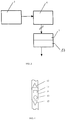
- Fig. 3 illustrates in a modified form the sequence of image processing as the first stage of identification, in which one or more optical sensors (5) transmit their information to the brand recognition (6).
- the brand image is analyzed and optimized and then used for brand identification (17).
- a resulting image is generated from several images, which includes the area of the workpiece (11) containing the marking. If the marking is arranged in the area of the workpiece (11), for example, in such a way that only part of the marking can be detected by an optical sensor (5) and the other part of the marking by another optical sensor (5), this partial information is used generates a new image that contains the entire marking.
- the image generated in this way is fed to the second stage of the brand identification (17) in order to carry out a recognition of the marking content and to carry out a corresponding decoding of the marking.
- the brand recognition (6) and part of the brand identification (17) thus represent the first stage of image processing and in the area of brand identification (17) the second stage of image recognition is implemented.
- the marking in the area of the workpiece (11) can be in the form of numbers, letters, codes or pictorial characters, for example.
- the illumination (4) generates sufficient brightness, and sufficient contrast is also provided for the recording system.
- the image sensor (5) is each provided with a brand recognition (6,7) provided so that this process can be carried out clearly in real time. The brand completion and brand identification can be processed without real-time connection.
- Fig. 4 shows a partial representation of a workpiece (11) which can be designed as a shaft or as a drill. Markings (13), which are designed as graphic elements, are arranged in the region of the workpiece (11).
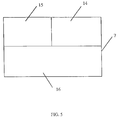
- FIG. 5 schematically shows the structure of the brand identification (7), which is equipped with a memory (15) for storing reference patterns, an analyzer (14) for comparing the reference patterns with the current image information and a working memory (16) for storing the current image information is.
- FIG. 6 and 7 schematically show the generation of a virtual new image in the brand identifier (7) as a result of the three images of the brand from the three brand identifications (6).
Landscapes
- Engineering & Computer Science (AREA)
- Physics & Mathematics (AREA)
- Artificial Intelligence (AREA)
- General Health & Medical Sciences (AREA)
- Toxicology (AREA)
- Electromagnetism (AREA)
- Health & Medical Sciences (AREA)
- Computer Vision & Pattern Recognition (AREA)
- General Physics & Mathematics (AREA)
- Theoretical Computer Science (AREA)
- Image Processing (AREA)
- Image Analysis (AREA)
- Geophysics And Detection Of Objects (AREA)
Applications Claiming Priority (2)
| Application Number | Priority Date | Filing Date | Title |
|---|---|---|---|
| DE19508024 | 1995-03-07 | ||
| DE19508024A DE19508024C2 (de) | 1995-03-07 | 1995-03-07 | Vorrichtung zur berührungslosen Erkennung |
Publications (3)
| Publication Number | Publication Date |
|---|---|
| EP0731416A2 true EP0731416A2 (fr) | 1996-09-11 |
| EP0731416A3 EP0731416A3 (fr) | 1998-01-21 |
| EP0731416B1 EP0731416B1 (fr) | 2002-09-04 |
Family
ID=7755909
Family Applications (1)
| Application Number | Title | Priority Date | Filing Date |
|---|---|---|---|
| EP96103329A Expired - Lifetime EP0731416B1 (fr) | 1995-03-07 | 1996-03-04 | Dispositif de détection sans contact |
Country Status (2)
| Country | Link |
|---|---|
| EP (1) | EP0731416B1 (fr) |
| DE (2) | DE19508024C2 (fr) |
Cited By (2)
| Publication number | Priority date | Publication date | Assignee | Title |
|---|---|---|---|---|
| US6844286B2 (en) | 2002-07-31 | 2005-01-18 | Umicore Ag & Co. Kg | Water-based catalyst inks and their use for manufacture of catalyst-coated substrates |
| EP3399335A1 (fr) * | 2017-05-03 | 2018-11-07 | Sick AG | Capteur de contraste |
Families Citing this family (1)
| Publication number | Priority date | Publication date | Assignee | Title |
|---|---|---|---|---|
| DE10050368A1 (de) * | 2000-10-11 | 2002-04-18 | Sick Ag | Vorrichtung und Verfahren zur Erkennung von Codes |
Family Cites Families (8)
| Publication number | Priority date | Publication date | Assignee | Title |
|---|---|---|---|---|
| DE3203897A1 (de) * | 1981-11-07 | 1983-05-19 | Licentia Patent-Verwaltungs-Gmbh, 6000 Frankfurt | Vorrichtung zur erkennung und verarbeitung von zeichen und/oder vorgegebenen optischen details |
| JPS58123164A (ja) * | 1982-01-14 | 1983-07-22 | Sumitomo Light Metal Ind Ltd | 線管材のマ−ク部検出装置 |
| DE3623519A1 (de) * | 1986-07-11 | 1988-01-21 | Helmut A Kappner | Verfahren zum automatischen erkennen von zeichen |
| DE3630202A1 (de) * | 1986-09-04 | 1988-03-10 | Karl F Zimmer Kg | Elektro-optische abtasteinrichtung fuer einen strichcode, bei welchem die striche als erhabene stege ausgebildet sind |
| US4982438A (en) * | 1987-06-02 | 1991-01-01 | Hitachi, Ltd. | Apparatus and method for recognizing three-dimensional shape of object |
| JPH02141889A (ja) * | 1988-11-22 | 1990-05-31 | Eastman Kodatsuku Japan Kk | バーコード読取方法 |
| NL8901759A (nl) * | 1989-07-10 | 1991-02-01 | Nederland Ptt | Werkwijze voor het detecteren van een streepcode. |
| CA2022269A1 (fr) * | 1990-01-05 | 1991-07-06 | Theodosios Pavlidis | Methode de decodage de codes a barres a partir de balayages partiels |
-
1995
- 1995-03-07 DE DE19508024A patent/DE19508024C2/de not_active Expired - Fee Related
-
1996
- 1996-03-04 DE DE59609614T patent/DE59609614D1/de not_active Expired - Fee Related
- 1996-03-04 EP EP96103329A patent/EP0731416B1/fr not_active Expired - Lifetime
Cited By (3)
| Publication number | Priority date | Publication date | Assignee | Title |
|---|---|---|---|---|
| US6844286B2 (en) | 2002-07-31 | 2005-01-18 | Umicore Ag & Co. Kg | Water-based catalyst inks and their use for manufacture of catalyst-coated substrates |
| EP3399335A1 (fr) * | 2017-05-03 | 2018-11-07 | Sick AG | Capteur de contraste |
| US10726288B2 (en) | 2017-05-03 | 2020-07-28 | Sick Ag | Contrast sensor |
Also Published As
| Publication number | Publication date |
|---|---|
| EP0731416A3 (fr) | 1998-01-21 |
| EP0731416B1 (fr) | 2002-09-04 |
| DE19508024C2 (de) | 1996-12-19 |
| DE19508024A1 (de) | 1996-09-12 |
| DE59609614D1 (de) | 2002-10-10 |
Similar Documents
| Publication | Publication Date | Title |
|---|---|---|
| EP2128793B1 (fr) | Procédé et dispositif destinés à vérifier des produits d'impression, programme informatique et produit de programme informatique | |
| DE4000603C2 (de) | Verfahren und Vorrichtung zur Zwischenspeicherung von Gegenständen, wie Briefen o.ä. in einem Lesesystem | |
| DE69603614T2 (de) | System und verfahren zum lesen von paketinformation | |
| DE10034606B4 (de) | Verfahren zur Bereitstellung von fertigungsbezogenen Daten in einer Serienfertigung von Fertigungsobjekten, insbesondere von Kraftfahrzeugen | |
| EP0752137B1 (fr) | Systeme d'identification et de controle de produits a traiter et/ou a transporter | |
| EP0356705B1 (fr) | Lecture de données pour un dispositif de réglage de l'encre | |
| EP3164830B1 (fr) | Procédé de détection visuelle de données, reliées a un animal, d'un animal d'abattoir | |
| EP0731416B1 (fr) | Dispositif de détection sans contact | |
| DE3414455C2 (de) | Verfahren und Vorrichtung zum Lesen und Verarbeiten von Information, die aus dekodierbarer Schriftinformation und/oder nichtdekodierbarer Graphikinformation besteht | |
| DE3617774A1 (de) | Datenverarbeitungsvorrichtung fuer serielle daten | |
| DE19507059B9 (de) | Verfahren zur omnidirektionalen Erfassung von OCR-Klarschrift auf Etiketten oder ähnlichen Datenträgern durch zufallsgesteuerte Suche und Dekodierung mit einem neuronalen Netzwerk | |
| DE10137093A1 (de) | Verfahren zum Erkennen eines Codes und Codeleser | |
| DE4211171C2 (de) | Verfahren zum Erkennen von interessierenden Mustern | |
| EP1229483B1 (fr) | Méthode et appareil pour lire des adresses d'envoi avec codes postaux | |
| DE10161302A1 (de) | Verfahren zum Unterscheiden von mindestens zwei in einem Wirkfeld einer Lesevorrichtung befindlichen RFID-Tags und RFID-Tag | |
| EP1139285A1 (fr) | Procédé et dispositif pour contrôle ou inspection d'objets | |
| DE3903595A1 (de) | Verfahren zum lesen von barcodes | |
| EP1229484B1 (fr) | Méthode et appareil pour lire des adresses d'envoi avec codes postaux | |
| DE10064226B4 (de) | Verfahren und Vorrichtung zum Lesen von Postkodes von Adressen auf Sendungen | |
| EP2926323B1 (fr) | Dispositif et procede permettant de verifier un marquage laser realise en fonction d'un angle sur la surface d'un document | |
| DE3406694C2 (fr) | ||
| DE69224191T2 (de) | Fragebogen-abtastsystem unter verwendung von erweiterbaren antwort-markierungsgebieten fuer effiziente abtastung und markierungserfassung | |
| EP1116162B1 (fr) | Procede de lecture d'un code a barres | |
| DE112021007955T5 (de) | Vorrichtung und Verfahren zur automatischen Kennzeichnung von Einschermanövern | |
| DE102008049858B4 (de) | Verfahren und Prüfsystem zur optischen Prüfung eines Prüfobjekts |
Legal Events
| Date | Code | Title | Description |
|---|---|---|---|
| PUAI | Public reference made under article 153(3) epc to a published international application that has entered the european phase |
Free format text: ORIGINAL CODE: 0009012 |
|
| AK | Designated contracting states |
Kind code of ref document: A2 Designated state(s): CH DE DK FR GB IT LI NL SE |
|
| PUAL | Search report despatched |
Free format text: ORIGINAL CODE: 0009013 |
|
| AK | Designated contracting states |
Kind code of ref document: A3 Designated state(s): CH DE DK FR GB IT LI NL SE |
|
| 17P | Request for examination filed |
Effective date: 19971211 |
|
| GRAG | Despatch of communication of intention to grant |
Free format text: ORIGINAL CODE: EPIDOS AGRA |
|
| GRAG | Despatch of communication of intention to grant |
Free format text: ORIGINAL CODE: EPIDOS AGRA |
|
| GRAH | Despatch of communication of intention to grant a patent |
Free format text: ORIGINAL CODE: EPIDOS IGRA |
|
| 17Q | First examination report despatched |
Effective date: 20020228 |
|
| RAP1 | Party data changed (applicant data changed or rights of an application transferred) |
Owner name: ASTRIUM GMBH |
|
| GRAH | Despatch of communication of intention to grant a patent |
Free format text: ORIGINAL CODE: EPIDOS IGRA |
|
| GRAA | (expected) grant |
Free format text: ORIGINAL CODE: 0009210 |
|
| AK | Designated contracting states |
Kind code of ref document: B1 Designated state(s): CH DE DK FR GB IT LI NL SE |
|
| PG25 | Lapsed in a contracting state [announced via postgrant information from national office to epo] |
Ref country code: NL Free format text: LAPSE BECAUSE OF FAILURE TO SUBMIT A TRANSLATION OF THE DESCRIPTION OR TO PAY THE FEE WITHIN THE PRESCRIBED TIME-LIMIT Effective date: 20020904 Ref country code: IT Free format text: LAPSE BECAUSE OF FAILURE TO SUBMIT A TRANSLATION OF THE DESCRIPTION OR TO PAY THE FEE WITHIN THE PRE;WARNING: LAPSES OF ITALIAN PATENTS WITH EFFECTIVE DATE BEFORE 2007 MAY HAVE OCCURRED AT ANY TIME BEFORE 2007. THE CORRECT EFFECTIVE DATE MAY BE DIFFERENT FROM THE ONE RECORDED.SCRIBED TIME-LIMIT Effective date: 20020904 Ref country code: GB Free format text: LAPSE BECAUSE OF FAILURE TO SUBMIT A TRANSLATION OF THE DESCRIPTION OR TO PAY THE FEE WITHIN THE PRESCRIBED TIME-LIMIT Effective date: 20020904 Ref country code: FR Free format text: LAPSE BECAUSE OF NON-PAYMENT OF DUE FEES Effective date: 20020904 |
|
| REG | Reference to a national code |
Ref country code: GB Ref legal event code: FG4D Free format text: NOT ENGLISH |
|
| REG | Reference to a national code |
Ref country code: CH Ref legal event code: EP |
|
| REF | Corresponds to: |
Ref document number: 59609614 Country of ref document: DE Date of ref document: 20021010 |
|
| PG25 | Lapsed in a contracting state [announced via postgrant information from national office to epo] |
Ref country code: SE Free format text: LAPSE BECAUSE OF FAILURE TO SUBMIT A TRANSLATION OF THE DESCRIPTION OR TO PAY THE FEE WITHIN THE PRESCRIBED TIME-LIMIT Effective date: 20021204 Ref country code: DK Free format text: LAPSE BECAUSE OF FAILURE TO SUBMIT A TRANSLATION OF THE DESCRIPTION OR TO PAY THE FEE WITHIN THE PRESCRIBED TIME-LIMIT Effective date: 20021204 |
|
| NLV1 | Nl: lapsed or annulled due to failure to fulfill the requirements of art. 29p and 29m of the patents act | ||
| PGFP | Annual fee paid to national office [announced via postgrant information from national office to epo] |
Ref country code: DE Payment date: 20030227 Year of fee payment: 8 |
|
| GBV | Gb: ep patent (uk) treated as always having been void in accordance with gb section 77(7)/1977 [no translation filed] |
Effective date: 20020904 |
|
| PG25 | Lapsed in a contracting state [announced via postgrant information from national office to epo] |
Ref country code: LI Free format text: LAPSE BECAUSE OF NON-PAYMENT OF DUE FEES Effective date: 20030331 Ref country code: CH Free format text: LAPSE BECAUSE OF NON-PAYMENT OF DUE FEES Effective date: 20030331 |
|
| EN | Fr: translation not filed | ||
| PLBE | No opposition filed within time limit |
Free format text: ORIGINAL CODE: 0009261 |
|
| STAA | Information on the status of an ep patent application or granted ep patent |
Free format text: STATUS: NO OPPOSITION FILED WITHIN TIME LIMIT |
|
| 26N | No opposition filed |
Effective date: 20030605 |
|
| REG | Reference to a national code |
Ref country code: CH Ref legal event code: PL |
|
| PG25 | Lapsed in a contracting state [announced via postgrant information from national office to epo] |
Ref country code: DE Free format text: LAPSE BECAUSE OF NON-PAYMENT OF DUE FEES Effective date: 20041001 |