EP0732850B1 - Système convertisseur pour télévision par câble fonctionnellement modifiable - Google Patents
Système convertisseur pour télévision par câble fonctionnellement modifiable Download PDFInfo
- Publication number
- EP0732850B1 EP0732850B1 EP96108778A EP96108778A EP0732850B1 EP 0732850 B1 EP0732850 B1 EP 0732850B1 EP 96108778 A EP96108778 A EP 96108778A EP 96108778 A EP96108778 A EP 96108778A EP 0732850 B1 EP0732850 B1 EP 0732850B1
- Authority
- EP
- European Patent Office
- Prior art keywords
- converter
- operating software
- channel
- software
- received
- Prior art date
- Legal status (The legal status is an assumption and is not a legal conclusion. Google has not performed a legal analysis and makes no representation as to the accuracy of the status listed.)
- Expired - Lifetime
Links
Images


Classifications
-
- H—ELECTRICITY
- H04—ELECTRIC COMMUNICATION TECHNIQUE
- H04N—PICTORIAL COMMUNICATION, e.g. TELEVISION
- H04N21/00—Selective content distribution, e.g. interactive television or video on demand [VOD]
- H04N21/40—Client devices specifically adapted for the reception of or interaction with content, e.g. set-top-box [STB]; Operations thereof
- H04N21/43—Processing of content or additional data, e.g. demultiplexing additional data from a digital video stream; Elementary client operations, e.g. monitoring of home network or synchronising decoder's clock; Client middleware
- H04N21/434—Disassembling of a multiplex stream, e.g. demultiplexing audio and video streams, extraction of additional data from a video stream; Remultiplexing of multiplex streams; Extraction or processing of SI; Disassembling of packetised elementary stream
- H04N21/4348—Demultiplexing of additional data and video streams
- H04N21/4349—Demultiplexing of additional data and video streams by extracting from data carousels, e.g. extraction of software modules from a DVB carousel
-
- H—ELECTRICITY
- H04—ELECTRIC COMMUNICATION TECHNIQUE
- H04N—PICTORIAL COMMUNICATION, e.g. TELEVISION
- H04N21/00—Selective content distribution, e.g. interactive television or video on demand [VOD]
- H04N21/20—Servers specifically adapted for the distribution of content, e.g. VOD servers; Operations thereof
- H04N21/23—Processing of content or additional data; Elementary server operations; Server middleware
- H04N21/235—Processing of additional data, e.g. scrambling of additional data or processing content descriptors
-
- H—ELECTRICITY
- H04—ELECTRIC COMMUNICATION TECHNIQUE
- H04N—PICTORIAL COMMUNICATION, e.g. TELEVISION
- H04N21/00—Selective content distribution, e.g. interactive television or video on demand [VOD]
- H04N21/20—Servers specifically adapted for the distribution of content, e.g. VOD servers; Operations thereof
- H04N21/25—Management operations performed by the server for facilitating the content distribution or administrating data related to end-users or client devices, e.g. end-user or client device authentication, learning user preferences for recommending movies
- H04N21/254—Management at additional data server, e.g. shopping server, rights management server
- H04N21/2543—Billing, e.g. for subscription services
-
- H—ELECTRICITY
- H04—ELECTRIC COMMUNICATION TECHNIQUE
- H04N—PICTORIAL COMMUNICATION, e.g. TELEVISION
- H04N21/00—Selective content distribution, e.g. interactive television or video on demand [VOD]
- H04N21/20—Servers specifically adapted for the distribution of content, e.g. VOD servers; Operations thereof
- H04N21/25—Management operations performed by the server for facilitating the content distribution or administrating data related to end-users or client devices, e.g. end-user or client device authentication, learning user preferences for recommending movies
- H04N21/258—Client or end-user data management, e.g. managing client capabilities, user preferences or demographics, processing of multiple end-users preferences to derive collaborative data
- H04N21/25866—Management of end-user data
- H04N21/25891—Management of end-user data being end-user preferences
-
- H—ELECTRICITY
- H04—ELECTRIC COMMUNICATION TECHNIQUE
- H04N—PICTORIAL COMMUNICATION, e.g. TELEVISION
- H04N21/00—Selective content distribution, e.g. interactive television or video on demand [VOD]
- H04N21/40—Client devices specifically adapted for the reception of or interaction with content, e.g. set-top-box [STB]; Operations thereof
- H04N21/43—Processing of content or additional data, e.g. demultiplexing additional data from a digital video stream; Elementary client operations, e.g. monitoring of home network or synchronising decoder's clock; Client middleware
- H04N21/435—Processing of additional data, e.g. decrypting of additional data, reconstructing software from modules extracted from the transport stream
-
- H—ELECTRICITY
- H04—ELECTRIC COMMUNICATION TECHNIQUE
- H04N—PICTORIAL COMMUNICATION, e.g. TELEVISION
- H04N21/00—Selective content distribution, e.g. interactive television or video on demand [VOD]
- H04N21/40—Client devices specifically adapted for the reception of or interaction with content, e.g. set-top-box [STB]; Operations thereof
- H04N21/43—Processing of content or additional data, e.g. demultiplexing additional data from a digital video stream; Elementary client operations, e.g. monitoring of home network or synchronising decoder's clock; Client middleware
- H04N21/438—Interfacing the downstream path of the transmission network originating from a server, e.g. retrieving encoded video stream packets from an IP network
- H04N21/4383—Accessing a communication channel
-
- H—ELECTRICITY
- H04—ELECTRIC COMMUNICATION TECHNIQUE
- H04N—PICTORIAL COMMUNICATION, e.g. TELEVISION
- H04N21/00—Selective content distribution, e.g. interactive television or video on demand [VOD]
- H04N21/40—Client devices specifically adapted for the reception of or interaction with content, e.g. set-top-box [STB]; Operations thereof
- H04N21/43—Processing of content or additional data, e.g. demultiplexing additional data from a digital video stream; Elementary client operations, e.g. monitoring of home network or synchronising decoder's clock; Client middleware
- H04N21/442—Monitoring of processes or resources, e.g. detecting the failure of a recording device, monitoring the downstream bandwidth, the number of times a movie has been viewed, the storage space available from the internal hard disk
- H04N21/44213—Monitoring of end-user related data
- H04N21/44222—Analytics of user selections, e.g. selection of programmes or purchase activity
-
- H—ELECTRICITY
- H04—ELECTRIC COMMUNICATION TECHNIQUE
- H04N—PICTORIAL COMMUNICATION, e.g. TELEVISION
- H04N21/00—Selective content distribution, e.g. interactive television or video on demand [VOD]
- H04N21/40—Client devices specifically adapted for the reception of or interaction with content, e.g. set-top-box [STB]; Operations thereof
- H04N21/43—Processing of content or additional data, e.g. demultiplexing additional data from a digital video stream; Elementary client operations, e.g. monitoring of home network or synchronising decoder's clock; Client middleware
- H04N21/442—Monitoring of processes or resources, e.g. detecting the failure of a recording device, monitoring the downstream bandwidth, the number of times a movie has been viewed, the storage space available from the internal hard disk
- H04N21/4424—Monitoring of the internal components or processes of the client device, e.g. CPU or memory load, processing speed, timer, counter or percentage of the hard disk space used
-
- H—ELECTRICITY
- H04—ELECTRIC COMMUNICATION TECHNIQUE
- H04N—PICTORIAL COMMUNICATION, e.g. TELEVISION
- H04N21/00—Selective content distribution, e.g. interactive television or video on demand [VOD]
- H04N21/40—Client devices specifically adapted for the reception of or interaction with content, e.g. set-top-box [STB]; Operations thereof
- H04N21/45—Management operations performed by the client for facilitating the reception of or the interaction with the content or administrating data related to the end-user or to the client device itself, e.g. learning user preferences for recommending movies, resolving scheduling conflicts
- H04N21/458—Scheduling content for creating a personalised stream, e.g. by combining a locally stored advertisement with an incoming stream; Updating operations, e.g. for OS modules ; time-related management operations
- H04N21/4586—Content update operation triggered locally, e.g. by comparing the version of software modules in a DVB carousel to the version stored locally
-
- H—ELECTRICITY
- H04—ELECTRIC COMMUNICATION TECHNIQUE
- H04N—PICTORIAL COMMUNICATION, e.g. TELEVISION
- H04N21/00—Selective content distribution, e.g. interactive television or video on demand [VOD]
- H04N21/80—Generation or processing of content or additional data by content creator independently of the distribution process; Content per se
- H04N21/81—Monomedia components thereof
- H04N21/8166—Monomedia components thereof involving executable data, e.g. software
-
- H—ELECTRICITY
- H04—ELECTRIC COMMUNICATION TECHNIQUE
- H04N—PICTORIAL COMMUNICATION, e.g. TELEVISION
- H04N21/00—Selective content distribution, e.g. interactive television or video on demand [VOD]
- H04N21/80—Generation or processing of content or additional data by content creator independently of the distribution process; Content per se
- H04N21/81—Monomedia components thereof
- H04N21/8166—Monomedia components thereof involving executable data, e.g. software
- H04N21/818—OS software
-
- H—ELECTRICITY
- H04—ELECTRIC COMMUNICATION TECHNIQUE
- H04N—PICTORIAL COMMUNICATION, e.g. TELEVISION
- H04N21/00—Selective content distribution, e.g. interactive television or video on demand [VOD]
- H04N21/80—Generation or processing of content or additional data by content creator independently of the distribution process; Content per se
- H04N21/83—Generation or processing of protective or descriptive data associated with content; Content structuring
- H04N21/845—Structuring of content, e.g. decomposing content into time segments
- H04N21/8456—Structuring of content, e.g. decomposing content into time segments by decomposing the content in the time domain, e.g. in time segments
-
- H—ELECTRICITY
- H04—ELECTRIC COMMUNICATION TECHNIQUE
- H04N—PICTORIAL COMMUNICATION, e.g. TELEVISION
- H04N7/00—Television systems
- H04N7/16—Analogue secrecy systems; Analogue subscription systems
- H04N7/162—Authorising the user terminal, e.g. by paying; Registering the use of a subscription channel, e.g. billing
- H04N7/165—Centralised control of user terminal ; Registering at central
-
- H—ELECTRICITY
- H04—ELECTRIC COMMUNICATION TECHNIQUE
- H04N—PICTORIAL COMMUNICATION, e.g. TELEVISION
- H04N7/00—Television systems
- H04N7/16—Analogue secrecy systems; Analogue subscription systems
- H04N7/167—Systems rendering the television signal unintelligible and subsequently intelligible
- H04N7/1675—Providing digital key or authorisation information for generation or regeneration of the scrambling sequence
Definitions
- the present invention relates to cable television apparatus, and more particularly to a converter with remotely modifiable functionality provided by downloadable software.
- Cable television converters are currently available that allow a cable system operator to remotely control subscriber service authorizations from a central "headend" site. These units, which are commonly referred to as “addressable converters", allow the cable system operator to control access to various premium services by sending a control signal from the headend to individual converters located at subscribers' homes.
- the authorization signals are carried on the cable television system, and enable individual subscribers to view programs that they pay an additional fee for.
- the control signals typically enable the converter to descramble the premium channels for viewing by the subscriber.
- Such operational parameters include, for example, information that maps displayed channels to tuned channels, time-out periods, barker channel(s), the converter output channel, the terminal configuration, and enable/disable functions for subscriber features such as remote hand-held control, parental control, favorite channel recall, volume control, and the like.
- the current state of the art is to download configuration information for a set of features that have been predetermined at the time of manufacture or installation of the cable television converter.
- An example of such a converter is the Model DPV7200 addressable converter manufactured by the Jerrold Division of General Instrument Corporation, Hatboro, Pennsylvania, U.S.A.
- U.S. Patent 4,054,911 to Fletcher, et al. relates to an information retrieval system capable of capturing packets or rows of video displayable data and/or control program instructions from data continuously transmitted in a common predetermined format.
- a user decides what information is to be retrieved, and takes action to cause a terminal to retrieve that information.
- a user can vary the function of the terminal by capturing different transmitted data, it is the user that determines what video displayable information is to be received, and how the terminal which receives this information is to process it.
- the system disclosed in this patent downloads all of the operating software to a cable television converter over a dedicated "booter channel", to which the converter is force tuned when first turned on. After the download is complete, the converter's data receiver is returned to the regular data channel, where it remains until the converter is turned off.
- EP 0 132 401 A2 discloses a system of transmitting information individually and secretly.
- the information to be transmitted is converted, on the transmission side, in accordance with a predetermined algorithm designated by two keys and then transmitted to a receiving side.
- the receiving side is supplied with at least two keys from the transmitting side for reproducing the transmitted information by using the two keys.
- One of the keys is frequently changed so that the algorithm is also changed frequently.
- US 4,710,955 discloses a pay-per-view cable television system that uses a separate telephone line as a secondary communication path.
- a subscriber terminal includes a tunable converter arranged to receive command data and to download operational parameters forwarded from a headend.
- GB 2 118 750 A discloses a system for downloading information, software modules and control data to selected terminals in order to provide additional functions such as unscrambling of pay-TV signals, and subscriber interaction signals.
- the present invention provides such a method and system for remotely modifying the functionality of a cable television converter or other terminal.
- a cable television addressable converter with remotely modifiable functionality comprises frequency agile data receiver means capable of tuning to different carrier frequencies for receipt of addressable converter control data from a cable television headend on a first channel and for receipt of operating software from said headend on a second channel of the distributing cable;
- the converter includes means for receiving software downloaded over a cable television network, and means coupled to the receiving means for storing the software.
- means are provided for verifying the integrity of the software, and processor means coupled to the storing means accesses and executes the software to provide one or more converter functions dictated by the software.
- nonvolatile memory means are coupled to the processor means for storing default operation software for the converter.
- means responsive to the verifying means cause the processor means to execute the default operation software, instead of the downloaded operating software, in the event the integrity of the software is not verified.
- Data receiving means are preferably provided for obtaining instructions downloaded over a cable television network. Downloaded software is received and stored by the converter only in response to specific instructions received by the data receiving means.
- the software receiving means and data receiving means advantageously comprise a frequency agile data receiver, together with means for selectively tuning the receiver, to receive instructions on a first channel and downloaded software on a second channel.
- Timer means return the receiver to the first channel if the receiver has been tuned to the second channel for a predetermined time period.
- the predetermined time period may be specified in instructions received on said first channel, and the length of the time period may be dependent on an amount of firmware to be received. In this manner, a converter will not become stuck on the second channel by error, and be rendered unable to receive further instructions on the first channel.
- the downloaded software received and stored by the converter can implement a functional layout on a keyboard associated with the converter.
- Software can also implement a feedback function, such as an LED (light-emitting-diode) display or on-screen display to assist a user in operating the converter.
- a control function for a video recorder coupled to the converter can also be implemented by the software.
- the software can implement a communication protocol for the converter, a descrambling technique for the converter, an on-screen display to be provided by the converter to a television coupled thereto, and/or a user interface to services provided over the cable television network.
- software is transmitted in an encrypted form, and the instructions contain a key for decrypting the software.
- the software may also be received by the converter in a plurality of segments, with the instructions identifying the number of segments to be received for a complete software download. Means can be provided of determining if all of the segments have been validly received, and for receiving replacement segments if one or more segments of the software have not been validly received. Receipt of software can be prevented if the number of segments identified by the instructions is greater than a predetermined limit.
- a cable television headend apparatus for downloading operating software to an addressable, remotely modifiable cable television converter.
- Means are provided for transmitting addressable converter data on a first data channel of a cable television network.
- Means are provided for transmitting operating software on a second data channel of the cable television network.
- An address specific to a particular converter is provided in the addressable converter data, which enables specific data to be received by the converter. Instructions are provided in the specific data, to cause the converter to receive software transmitted on the second channel.
- the cable television headend apparatus can further include means for verifying that software downloaded to the converter has been successfully received by the converter.
- Billing means maintain records of the cable television services each converter on the system is authorized to receive, and the various functions the converter is to have, and can assign a particular software package to be downloaded to a particular converter on the basis of the functions specified for that converter.
- a method for providing a cable television addressable converter with functions dictated by downloaded operating software is also provided.
- Converter addressable control data is received from a remote location via a cable television network.
- a designated software package is captured from a set of firmware packages carried on the cable television network, in response to instructions contained in the converter control data.
- the designated software package is stored in a memory provided in the converter, and is executed to provide at least one converter function dictated thereby.
- the software packages may be carried on the cable television network in encrypted form, and decrypted using a key contained in the converter control data.
- the converter control data is received on a first data channel and the software packages are captured from a second data channel on the cable television network.
- the first channel is monitored to receive converter control data, and the second channel is tuned to captured software upon receipt of appropriate instructions on the first channel. Reception is returned to the first channel after the software is captured. If the software has not been captured within a predetermined time period, reception switches back to the first channel from the second channel.
- a remotely modifiable user terminal in the form of a cable television converter which comprises means for receiving a plurality of cyclically transmitted software segments, the segments together comprising a software package.
- Means coupled to the receiving means verify each segment upon receipt thereof, and means are provided for storing each verified segment. A determination is made as to whether a complete software package has been stored in the storing means at the completion of a software transmission cycle. If not, then reception, verification, and storage of transmitted software segments continues during a subsequent software transmission cycle. Reception of the software segments is terminated upon a finding that a complete software package has been stored. Means can further be provided for precluding the execution of the software segments until a complete software package has been stored.
- the verifying means can operate by testing a checksum for each software segment as it is received.
- the terminal may further comprise means for maintaining a record of the proper checksum for each segment, and means for periodically retesting the checksums after a complete software package has been stored.
- Default operation software may be stored for the terminal, and executed if the checksums are not verified upon retesting.
- the complete software package may also be verified after it has been stored, and the default operation software executed if the complete software package is not valid.
- the default operation software may also be executed if reception of software segments is not completed during a predetermined time period.
- a complete software package may include a plurality of modules. Execution of fewer than all of the modules may be precluded as an additional security feature.
- the present invention provides a method and system for downloading software to a remote terminal, such as a cable television converter, to allow modification of virtually any or all software functions of the terminal by the system operator.
- a remote terminal such as a cable television converter
- the present invention provides a method and system for remotely modifying the functionality of a cable television converter or other terminal, which is operable in a nominal or baseline operation mode by downloading specific software to the converter.
- a cable television system is depicted having headend components, generally designated 10 and subscriber components, generally designated 12.
- the headend communicates with the subscriber via a distribution cable 36.
- a firmware development system 16 is used to create new functional software packages for subscriber terminals, such as converter 40.
- Software development system 16 may be physically located at the headend, but is more typically located at the facilities of a vendor which develops new software programs for sale to a cable system operator. New software packages may be transferred to an addressable controller 14 located at the headend by magnetic tape 20 which is read by addressable controller 14, or by communication between the software development system 16 and addressable controller 14 via direct connection or modems 18 operating over conventional telephone lines.
- addressable controller 14 located at the headend by magnetic tape 20 which is read by addressable controller 14, or by communication between the software development system 16 and addressable controller 14 via direct connection or modems 18 operating over conventional telephone lines.
- the data channel may be either the primary addressable data channel provided in a conventional cable television network having addressable converters, or a separate secondary data channel. In either event, the data channel(s) can transmit the data on an FSK modulated FM carrier or by any other suitable transmission scheme well known in the art.
- Control signals including data such as converter addresses, program authorization codes, and the like is communicated from addressable controller 14 to a converter 40 via control data modulator 26.
- the output of control data modulator 26 is coupled to distribution cable 36 via a tap 34, and data is received therefrom by converter 40 via tap 38.
- the control data modulator transmits the data signals on a primary channel, and in accordance with the present invention, the data includes instructions to converter 40 which cause the converter to receive specified software downloaded from addressable controller 14.
- the software is transmitted on a secondary channel by software modulator 24, coupled to the cable network at tap 30.
- converter 40 switches to the secondary channel for receipt of designated software.
- An additional data path 28 may optionally be provided via tap 32 for receipt of data from converter 40 by addressable controller 14. Such data might include, for example, a verification that converter 40 has successfully received a software package it has been instructed to receive.
- the provision of a return path 28, which provides a "two-way" cable communication system, is well known in the art.
- Billing system 22 is provided at the headend for maintaining accounting information relating to charges incurred by subscribers on the cable system.
- different software packages downloaded by headend 10 to converter 40 may provide different converter functions, with higher levels of service providing increased converter functionality.
- Billing system 22 keeps track of the level of service for each subscriber, and assigns particular software packages to subscriber converters on the basis of converter functionality to be provided to each subscriber.
- a subscriber may have one or more video appliances 42, 44 coupled to the output of converter 40.
- video appliance 42 might be a television set
- video appliance 44 might be a video recorder ("VCR").
- software downloaded to converter 40 can provide functions relating to a VCR.
- An example of such a function is time controlled programming. This function enables the converter to be programmed to make channel changes at various times so that the VCR can record different television programs on different channels automatically and while unattended.
- Such a function can also enable "impulse pay-per-view" orders to be programmed into the converter by a subscriber, so that special premium programs can be ordered, when the subscriber is not home, and recorded on the subscriber's VCR for later viewing.
- FIG. 2 is a block diagram illustrating the pertinent components in one embodiment of a converter 40 in accordance with the present invention.
- the converter receives addressable data on one data channel and downloaded software on another data channel. It is noted that both the addressable data and the software can also be received over a single data channel. Or, the software may be carried on some other media, such as the public telephone network.
- a microprocessor 50 receives data from cable 36 via a frequency agile receiver 52.
- a transmitter 61 and return path 62 can be provided from microprocessor 50 back to addressable controller 14 in the event the converter is used with a two-way cable television system.
- transmitter 61 can be frequency agile to enable a choice of return transmission frequencies.
- a tuner 54 under the control of microprocessor 50, tunes frequency agile receiver 52 to either a primary channel for receipt of addressable data (e.g., instructions to capture a particular software package) or to a secondary channel for the receipt of software.
- addressable data e.g., instructions to capture a particular software package
- secondary channel for the receipt of software.
- frequency agile receiver will be tuned to the primary channel, and will only switch to the secondary channel upon specific instructions contained in data received on the first channel.
- frequency agile receiver 52 and tuner 54 can be replaced with a fixed frequency data receiver.
- software data is broadcast cyclically on the second channel, by addressable controller 14 at the headend.
- a plurality of different software packages are broadcast on the secondary channel, each package providing different converter functions or combinations of functions.
- microprocessor 50 Upon receipt of instructions on the primary channel, microprocessor 50 will cause tuner 54 to switch receiver 52 to the secondary channel for receipt of a designated software package.
- ROM 56 contains a program that allows converter 40 to retrieve and execute a downloaded software package. Upon receiving the proper command from the addressable controller, the converter aborts any downloaded package currently being executed, accesses the appropriate data channel for receipt of a designated software package to be downloaded, and receives and loads the software into nonvolatile firmware RAM 60.
- ROM 56 also contains default operation software, which is used to restore the converter to a nominal or "baseline” operation if a bad software download occurs. Such a nominal or “baseline” operation provides the basic functions to a converter, so that watching of at least one television program is possible. These basic functions in particular are predetermined options. As explained below, if an error is detected in the receipt of downloaded software, or if the software is found to be invalid, the converter is forced to execute only the default operation software stored in ROM 56.
- a timer 64 is associated with microprocessor 50 to provide a time-out feature that prevents the converter from getting stuck on the secondary channel, in the event there is a problem receiving specified software.
- addressable controller 14 When billing system 22 assigns a new software package to a particular converter 40, addressable controller 14 is commanded to transmit instructions to the converter.
- the instructions are received by microprocessor 50, and include an identifier specifying which software package to receive, where to find the software package (i.e., on the primary or a specified secondary channel), a predetermined time limit defining how long the converter should attempt to receive the software before aborting, a key to use in decrypting the data in the event it is encrypted, and the maximum segment number to be loaded (indicating how many segments are included in the software package to be received).
- timer 64 While the software is being received, timer 64 counts down the time-out period specified in the download command. If the timer expires, microprocessor 50 aborts the download, and returns to the original data channel.
- the time-out period specified in the download command can be varied depending on the amount of software to be downloaded.
- Timer 64 is also used in connection with a self-check that is periodically performed by the converter to ensure that the software has not changed since the last authorized download.
- This self-check is a security feature to guard against infiltration of the converter by a "software pirate” who attempts to download unauthorized software to the converter, in an effort to steal services from the cable system.
- timer 64 retests the checksum for each of the software segments at regular intervals after the software has been downloaded. In the event a checksum is found to be invalid, microprocessor 50 restores the converter to baseline operation by executing the default operation software contained in ROM 56.
- Converter 40 contains various other components with functions that can be modified by downloaded software.
- a light-emitting-diode (“LED") display or other display 66 may be provided on the converter to give a user feedback concerning converter operations. Pressing a button on the converter, or its remote control unit, can cause an LED to light, verifying that the button has been pressed or that a function to be activated by the button has occurred. Such a feedback function is useful to assist a user in operating the converter.
- LED light-emitting-diode
- the converter also includes a keyboard 68, the functional layout of which can be defined and/or modified by software downloaded to the converter.
- Keyboard 68 may be physically on the converter box, on a remote hand-held unit for the converter, or a separate keyboard can be provided in both places.
- Converter 40 also includes a descrambler 70 for descrambling premium programs received via the cable television network.
- Various descrambling techniques are well known in the art, and different techniques can be implemented by downloading different software to the converter.
- converter 40 Another feature that can be provided by converter 40 is the display of information on a user's television set.
- On-screen display driver 72 is provided for this purpose.
- An example of such a display is the channel number tuned to, or the current time.
- on-screen displays can be used to distribute messages from the cable system operator, e.g., "your account is past due; please send us a check”.
- An electronic mail, or "E-mail” feature can also be provided, enabling a subscriber to send and receive text messages on his television (or other display) via the cable system.
- the implementation and/or modification of on-screen displays can be provided by software downloaded to the converter.
- the software is downloaded to the converter in an encrypted form.
- the data is decrypted at the converter by a decryption module 74.
- a decryption key is transmitted to the converter from the headend as part of the addressable data instructions that command the converter to receive a particular software package.
- Encryption and decryption schemes are well known in the art. Examples of such schemes are provided in commonly owned U.S. Patent Nos. 4,638,356 of William A. Frezza, entitled “Apparatus and Method for Restricting Access to a Communication Network", and 4,710,955 of Marc W. Kauffman, entitled “Cable Television System with Two-Way Telephone Communication Path".
- a viewership monitor 76 can be provided in accordance with the present invention to enable a cable system operator to determine what programs and services a subscriber has received using each converter, and/or to retrieve a list of the functions which have been used on each converter. Viewership monitor 76 will monitor the operation of the converter, and store pertinent data relating thereto. By addressing an appropriate command to the converter, the cable system operator will be able to upload the data to the headend for analysis.
- Other functions that can be implemented by software downloaded to the converter include communication protocols for the converter, and user interfaces to services provided over the cable television network.
- a user may be provided with the capability to order pay-per-view programs on an impulse basis.
- the procedure for ordering such programs can be modified through downloadable software.
- Utility meter reading can also be provided, by adding an asynchronous data port to the converter and controlling the retrieval of utility data via downloaded software.
- a flowchart illustrating a routine which can be used by the addressable controller in connection with the receipt and downloading of software is provided in Figure 3.
- the routine begins at box 80, and at box 82 a determination is made as to whether a software update has been received from the software development system. If so, control passes to box 84 and the new software data is encrypted. At box 86, the encrypted data is loaded into the secondary data channel transmitter (software modulator 24) and continuously transmitted on the secondary channel together with other software packages that can be provided to converters on the system.
- the command is addressed to the particular converter that is to receive the software, and identifies the channel the software is to be received from, identifies the software package to be received, provides the decryption key necessary to decrypt the software data, identifies the number of segments which make up the complete software package, and sets forth the time-out parameter defining the maximum time the converter should stay tuned to the secondary channel for receipt of the downloaded software.
- the converter receives the software in fixed length "segments", and specific converter models will have specific maximum segment numbers determining the actual maximum size of allowable software downloads.
- the maximum segment number is a hard-coded parameter. Should an attempt be made to download software that exceeds the maximum size, the download will be rejected by the converter. In operation, the converter will ignore the download command and will not switch to the secondary channel if the transmitted maximum segment number parameter exceeds the internal converter maximum.
- the routine of Figure 3 ends. It will be appreciated by those skilled in the art that the routine of Figure 3 is called on a periodic basis (or can be a continuous loop) to enable new software to be received from the software development system and to download software packages to converters at the command of billing system 22.
- Figure 4 illustrates a routine that the addressable controller can use to continuously transmit firmware data over the secondary channel.
- the routine commences at box 100, and at box 102 data is transmitted over the secondary channel.
- a determination is made as to whether the last segment of a software package has been transmitted. If not, transmission of the remaining segments continues as indicated at box 102.
- control passes to box 106 and the addressable controller transmits a check/execute command to the converter(s) that was to receive the software package.
- the check/execute command includes the software package number that was to be received, and a check pattern. The check pattern is used to verify the entire download prior to execution.
- the converter checks to see if all required segments have been received, and that the check pattern downloaded matches the pattern calculated from the actual downloaded data. If all checks are valid, the converter permits execution of the downloaded code, and returns to the primary data channel. After the check/execute command is sent at box 106 of Figure 4, control returns to box 102, and continuous transmission of the data proceeds over the secondary channel.
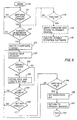
- Figure 5 is a flowchart illustrating the capture of downloaded software by a converter.
- the routine begins at box 110, and control passes to box 112 where a determination is made as to whether a software capture command has been sent to the converter. If not, the converter continuously waits for such a command to be received at box 112.
- an ancillary time-out process commences as indicated at boxes 114, 116, and 118.
- a timer counts down the time-out period specified in the software capture command. If the time-out period expires before the specified software package has been successfully captured, as determined at box 114, control passes to box 116 where the download is aborted and the converter returns to the primary data channel.
- the default operation software is executed so that the converter can operate in a baseline mode until the appropriate software package can be properly downloaded.
- a converter that has been commanded to accept a new package tunes to the appropriate channel and loads each packet that has the proper version identifier. While loading, the converter keeps track of each segment successfully loaded in an internal segment bit map. As indicated at box 126, a determination is made as to whether a segment has been successfully loaded. This is accomplished by computing a checksum for each segment, and comparing the checksum with one downloaded with the firmware segment. If the checksums match, the converter decrypts the data contained in the segment, stores the data, and sets an appropriate bit in a software segment bit map as indicated at box 130. In storing the data, if prior software has been stored in the converter, the appropriate segment of the prior software is overwritten with the newly received data.
- the converter ignores the segment and proceeds directly to box 132.
- box 132 a determination is made as to whether the last segment in a software package has been received. If not, control returns to box 124 and the procedure continues until all segments are received.
- box 136 responds to the check/execute command transmitted by the addressable controller at box 106 in Figure 4.
- the converter checks to see if all required segments have been received and that the check pattern downloaded matches a pattern calculated from the actual downloaded data (i.e., the complete software package). If the patterns do not match, control returns to box 124 and additional attempts are made to receive the software as long as a time-out (box 114) has not occurred.
- software contained in the converter's ROM ROM 56 - Figure 2 can periodically determine if all of the functional modules contained in the software package are being executed, and if not, subsequent execution of the software can be precluded by turning off a separate, special execution bit maintained by the converter
- the downloading of a software package is complete, and the converter returns to the primary data channel.
- the routine ends at box 142.
- the software download process is a destructive one. Once a converter receives the command to accept a new package, the old downloaded software (if any) is effectively deleted and cannot be executed. In the preferred embodiment, partial downloads are not supported, and an entire package must be sent. This further frustrates a software pirate's efforts, and allows a software download to be nullified by sending the command to accept a package immediately followed by sending the command to return to the primary data channel.
- the "Accept Software Download” command is used to initiate the software download process. It may be sent to one individual converter or globally to a set of converters that understand a group address. The addressed converter(s) prepares to accept the package number, on the appropriate channel, using the given firmware decryption key and maximum segment number. The software download time-out value is also given. Upon reception of this command, the converter goes into its software download mode, in which it must not execute any downloaded code.
- the "Return to Primary Channel” command is used to force a converter to return to the primary data channel.
- This command may also be sent in a specific format to an individual converter, or in group format to a set of converters. All converters receiving this command abort the current software download, clear their software segment bit maps, and exit the software download mode.
- the "Disallow Downloaded Execution” command explicitly disallows the execution of any downloaded software. It may be sent in the specific or group format. All converters receiving this command abort execution of any downloaded software, clear their software segment bit maps, exit software download mode, and execute the default operation software contained in ROM for baseline operation. Another method of prohibiting downloaded software from being executed is to send an "Accept software Download” command immediately followed by a "Return to Primary Channel” command.
- the "Load Software Segment” command is used to download the individual segments of a software package. All converters receiving this command, if in software reception mode, overwrite the appropriate segment of software by the received data. Before actually overwriting the code, the converter checks to see if the package number matches the commanded package number, and calculates the segment check pattern from the received data. If the check pattern is correct, the segment data is decrypted, the appropriate prior segment is overwritten with the new segment, and the appropriate bit in the software segment bit map is set.
- the "Check/Execute Software” command is used to terminate the software download process. All converters receiving this command respond only if the package number matches the one sent originally in the "Accept Software Download” command, and if in software reception mode. If so, the converter checks to see if all of the necessary segments of software have been correctly received. If they have been, the package check pattern is calculated and tested. If the check pattern is bad, the converter ignores the command. If the check pattern is good, the converter permits execution of the newly downloaded package, switches back to the primary data stream, exits the software download mode, and clears its software download segment bit map.
- the "Send Software Check Pattern" command is used to verify the software download process.
- a converter receiving this command responds only if it is not in software reception mode. In this event, the converter reports the check pattern of the appropriate segment or of the entire package. This verification scheme is only available on a two-way cable system.
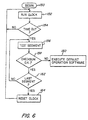
- Figure 6 illustrates a periodic self-check routine used by the converter to test the validity of downloaded software to ensure that it has not changed since the last download.
- This self-check is performed by the converter itself, and no addressable controller command is required to initiate it.
- the routine begins at box 150.
- box 152 a clock runs to keep track of time.
- box 154 a determination is made as to whether a predetermined time interval has passed. If not, the routine loops back to box 152 and the process continues until the time interval has run. Then, box 154 passes control to box 156 to commence the periodic self-check.
- the first segment of the software package is tested by computing its checksum.
- a determination is made as to whether the checksum is the proper checksum for that segment. If not, control passes to box 160 and the default operation software is executed to return the converter to baseline operation. If the checksum for the segment is proper, control passes to box 162, which determines if the segment just tested is the last segment in the software package. If not, the routine loops back to box 156 so that all of the segments in the software package can be tested.
- control is passed from box 162 to box 164 where the clock is reset. Control then loops back to box 152 and the process continues, so that the self-check will be periodically performed at the time interval dictated by the time-out determination function at box 154.
- the present invention provides a method and apparatus for remotely modifying the functionality of a terminal, such as a cable television converter.
- Terminal functions are dictated by downloaded software.
- the software is transmitted in small segments to reduce the likelihood and severity of transmission errors, and to reduce the temporary buffering requirements within the terminal.
- Each section of a software package is transmitted with an identifier indicating which segment it is, and which software package it is part of.
- a multiplicity of software packages may be carried on a single system, with different terminals in the system accepting and executing different packages as specified by the system headend.
- the software is stored at the terminal in nonvolatile memory, such as RAM with a battery backup.
- nonvolatile memory such as RAM with a battery backup.
Landscapes
- Engineering & Computer Science (AREA)
- Signal Processing (AREA)
- Multimedia (AREA)
- Databases & Information Systems (AREA)
- Computer Security & Cryptography (AREA)
- Social Psychology (AREA)
- Software Systems (AREA)
- Computer Networks & Wireless Communication (AREA)
- General Engineering & Computer Science (AREA)
- Health & Medical Sciences (AREA)
- General Health & Medical Sciences (AREA)
- Computer Graphics (AREA)
- Two-Way Televisions, Distribution Of Moving Picture Or The Like (AREA)
- Input Circuits Of Receivers And Coupling Of Receivers And Audio Equipment (AREA)
- Stored Programmes (AREA)
- Details Of Television Systems (AREA)
- Closed-Circuit Television Systems (AREA)
- Selective Calling Equipment (AREA)
- Circuits Of Receivers In General (AREA)
Claims (39)
- Un convertisseur adressable de télévision par câble à fonctionnalité modifiable à distance comprenant :un moyen récepteur de données agile en fréquence (52) capable de s'accorder sur différentes fréquences porteuses pour recevoir des données de contrôle de convertisseur adressable depuis une tête de réseau de télévision par câble (10) sur une première voie de transmission d'un câble de distribution (36) et pour recevoir un logiciel d'exploitation depuis ladite tête de réseau sur une seconde voie de transmission du câble de distribution (36) ;un moyen (54) pour accorder ledit moyen récepteur (52) sur ladite seconde voie de transmission en commutant d'une fréquence porteuse de la première voie de transmission sur une fréquence porteuse de la seconde voie de transmission pour recevoir le logiciel d'exploitation en réponse à des instructions contenues dans lesdites données de contrôle de convertisseur adressable reçues sur ladite première voie de transmission ;un moyen mémoire (60) pour mémoriser le logiciel d'exploitation reçu sur ladite seconde voie de transmission ; etun moyen processeur (50) couplé audit moyen mémoire (60) pour accéder au logiciel d'exploitation reçu depuis ladite tête de réseau (10) et l'exécuter afin de fournir au moins une fonction de convertisseur.
- Le convertisseur de la revendication 1 comprenant de plus :un moyen pour vérifier l'intégrité dudit logiciel d'exploitation reçu sur ladite seconde voie de transmission ; etun moyen pour amener ledit moyen processeur à exécuter le logiciel d'exploitation par défaut à la place dudit logiciel d'exploitation au cas où l'intégrité dudit logiciel d'exploitation ne se serait pas vérifiée.
- Le convertisseur tel que défini dans l'une des revendications 1 ou 2 comprenant de plus :
un moyen minuteur pour renvoyer ledit récepteur sur ladite première voie de transmission s'il a été accordé sur ladite seconde voie de transmission pendant un laps de temps prédéterminé. - Le convertisseur de la revendication 3 dans lequel ledit laps de temps prédéterminé est spécifié dans des instructions contenues dans lesdites données de contrôle de convertisseur adressable reçues sur ladite première voie de transmission.
- Le convertisseur tel que défini dans l'une des revendications 3 ou 4 dans lequel la durée dudit laps de temps prédéterminé est fonction de la taille dudit logiciel d'exploitation devant être reçu.
- Le convertisseur tel que défini dans l'une des revendications 1 à 5 dans lequel ledit logiciel d'exploitation implémente une disposition fonctionnelle des touches de clavier associée audit convertisseur.
- Le convertisseur tel que défini dans l'une des revendications 1 à 6 dans lequel ledit logiciel d'exploitation implémente une fonction de rétroaction pour aider un utilisateur à faire fonctionner le convertisseur.
- Le convertisseur tel que défini dans l'une des revendications 1 à 7 dans lequel ledit logiciel d'exploitation implémente une fonction de contrôle pour un magnétoscope couplé au convertisseur.
- Le convertisseur tel que défini dans l'une des revendications 1 à 8 dans lequel ledit logiciel d'exploitation implémente un protocole de communication pour le convertisseur.
- Le convertisseur tel que défini dans l'une des revendications 1 à 9 dans lequel ledit logiciel d'exploitation implémente une technique de désembrouillage pour le convertisseur.
- Le convertisseur tel que défini dans l'une des revendications 1 à 10 dans lequel ledit logiciel d'exploitation implémente un affichage à l'écran devant être fourni par le convertisseur à une télévision à laquelle il est couplé.
- Le convertisseur tel que défini dans l'une des revendications 1 à 11 dans lequel ledit logiciel d'exploitation implémente une interface utilisateur pour des services fournis sur un réseau de télévision par câble.
- Le convertisseur tel que défini dans l'une des revendications 1 à 12 dans lequel ledit logiciel d'exploitation implémente une fonction courrier électronique devant être fournie sur un réseau de télévision par câble.
- Le convertisseur tel que défini dans l'une des revendications 1 à 13 dans lequel ledit logiciel d'exploitation implémente une fonction de surveillance de l'audience.
- Le convertisseur tel que défini dans l'une des revendications 1 à 14 comprenant de plus :
un moyen pour autoriser la réception et la mémorisation, par le convertisseur, du logiciel d'exploitation téléchargé uniquement en réponse à des instructions spécifiques reçues par ledit moyen récepteur de données. - Le convertisseur tel que défini dans l'une des revendications 1 à 15 dans lequel ledit logiciel d'exploitation est transmis sous une forme encryptée et lesdites instructions contiennent une clé pour décrypter le logiciel d'exploitation.
- Le convertisseur tel que défini dans l'une des revendications 1 à 16 dans lequel ledit logiciel d'exploitation est reçu en une pluralité de segments et lesdites instructions identifient le nombre de segments devant être reçus pour un téléchargement du logiciel d'exploitation au complet.
- Le convertisseur de la revendication 17 comprenant de plus :un moyen pour déterminer si lesdits segments ont tous été reçus de façon valide ; etun moyen pour recevoir des segments de remplacement si un segment, ou plus, dudit logiciel d'exploitation n'a pas été reçu de façon valide.
- Le convertisseur tel que défini dans l'une des revendications 17 ou 18 comprenant de plus :
un moyen pour empêcher la réception dudit logiciel d'exploitation si le nombre de segments identifiés par lesdites instructions est supérieur à une limite prédéterminée. - Appareil pour tête de réseau de télévision par câble pour télécharger un logiciel d'exploitation sur un convertisseur adressable de télévision par câble modifiable à distance (40), comprenant :un moyen (26) pour transmettre des données de contrôle de convertisseur adressable sur une fréquence porteuse d'une première voie de transmission de données d'un câble de distribution (36) d'un réseau de télévision par câble ;un moyen (24) pour transmettre un logiciel d'exploitation sur une fréquence porteuse d'une seconde voie de transmission de données du câble de distribution (36) dudit réseau de télévision par câble ;un moyen (14) pour fournir, dans lesdites données de contrôle de convertisseur adressable, une adresse spécifique à un convertisseur particulier (40) couplé au réseau, ladite adresse permettant audit convertisseur (40) de recevoir des données spécifiques sur ladite première voie de transmission de données ; etun moyen (50) pour fournir des instructions dans lesdites données spécifiques, lesdites instructions amenant ledit convertisseur à commuter de ladite fréquence porteuse de ladite première voie de transmission sur ladite fréquence porteuse de ladite seconde voie de transmission afin de recevoir le logiciel d'exploitation transmis sur ladite seconde voie de transmission.
- L'appareil de la revendication 20 comprenant de plus :
un moyen pour vérifier que le logiciel d'exploitation téléchargé sur ledit convertisseur a été reçu avec succès par le convertisseur. - L'appareil tel que défini dans l'une des revendications 20 ou 21 comprenant de plus :
un moyen de listage pour tenir un état des fonctions que ledit convertisseur est autorisé à avoir et pour attribuer, sur la base des fonctions autorisées, un progiciel d'exploitation particulier devant être téléchargé sur ledit convertisseur. - Un procédé pour fournir à un convertisseur adressable de télévision par câble des fonctions dictées par le logiciel d'exploitation téléchargé, comprenant les étapes consistant :à recevoir des données de contrôle de convertisseur adressable depuis un emplacement de tête de réseau à distance sur une première voie de transmission d'un câble de distribution ;à commuter ledit moyen récepteur de données (52) d'une fréquence porteuse de ladite première voie de transmission sur une fréquence porteuse d'une seconde voie de transmission en réponse à des instructions contenues dans lesdites données de contrôle de convertisseur adressable ;à capturer un progiciel d'exploitation désigné dans un ensemble de progiciels d'exploitation transmis depuis ledit emplacement de tête de réseau à distance sur ladite seconde voie de transmission du câble de distribution en réponse à des instructions contenues dans lesdites données de contrôle de convertisseur adressable ;à mémoriser le progiciel d'exploitation désigné reçu sur ladite seconde voie de transmission dans une mémoire dont est muni ledit convertisseur ; età exécuter ledit logiciel d'exploitation afin de fournir au moins une fonction de convertisseur dictée de ce fait.
- Le procédé de la revendication 23 dans lequel les progiciels d'exploitation sont transmis sous forme encryptée, ledit procédé comprenant l'étape supplémentaire consistant à :
décrypter le logiciel d'exploitation capturé en utilisant une clé contenue dans lesdites données de contrôle de convertisseur. - Le procédé de la revendication 23 ou de la revendication 24 comprenant les étapes supplémentaires consistant :à surveiller ladite première voie de transmission afin de recevoir lesdites données de contrôle de convertisseur adressable ;à commuter sur ladite seconde voie de transmission, après réception d'instructions appropriées sur ladite première voie de transmission, afin de capturer ledit logiciel d'exploitation ; età commuter en retour sur ladite première voie de transmission unefois ledit logiciel d'exploitation capturé.
- Le procédé de la revendication 25 comprenant l'étape supplémentaire consistant à :
commuter en retour de ladite seconde voie de transmission sur ladite première voie de transmission après expiration d'un laps de temps prédéterminé si le logiciel d'exploitation n'a pas été capturé dans ledit laps de temps. - Le procédé de la revendication 26 comprenant l'étape supplémentaire consistant à :
trouver ledit laps de temps dans lesdites données de contrôle de convertisseur adressable reçues sur ladite première voie de transmission. - Le procédé tel que défini dans l'une des revendications 26 ou 27 dans lequel la durée du laps de temps est fonction de la taille dudit logiciel d'exploitation devant être capturé.
- Un terminal utilisateur modifiable à distance sous la forme d'un convertisseur de télévision par câble selon l'une des revendications 1 à 19, ledit terminal utilisateur comprenant :un moyen pour recevoir une pluralité de segments de logiciel d'exploitation transmis de façon cyclique formant ensemble un progiciel d'exploitation ;un moyen couplé audit moyen récepteur pour vérifier chaque segment après sa réception ;un moyen sensible audit moyen vérificateur pour mémoriser chaque segment vérifié ;un moyen pour déterminer si un progiciel d'exploitation au complet a été mémorisé dans ledit moyen de mémorisation à la fin d'un cycle de transmission de logiciel d'exploitation ;un moyen sensible audit moyen de détermination pour continuer de recevoir, vérifier et mémoriser des segments de logiciel d'exploitation transmis durant un cycle de transmission de logiciel d'exploitation ultérieur si ledit moyen de détermination constate qu'un progiciel d'exploitation au complet n'a pas été mémorisé ; etun moyen pour interrompre la réception desdits segments de logiciel d'exploitation après constat, par ledit moyen de détermination, qu'un progiciel d'exploitation au complet a été mémorisé.
- Le terminal de la revendication 29 comprenant de plus :
un moyen pour prévenir l'exécution desdits segments de logiciel d'exploitation tant qu'un progiciel d'exploitation au complet n'a pas été mémorisé. - Le terminal tel que défini dans l'une des revendications 29 ou 30 dans lequel ledit moyen vérificateur examine, pour chaque segment de logiciel d'exploitation, une somme de contrôle, ledit terminal comprenant de plus :un moyen pour tenir un état de la somme de contrôle propre pour chaque segment ; etun moyen pour ré-examiner périodiquement lesdites sommes de contrôle une fois qu'un progiciel d'exploitation au complet a été mémorisé.
- Le terminal de la revendication 31 comprenant de plus :un moyen pour mémoriser un logiciel d'exploitation par défaut pour ledit terminal ; etun moyen pour exécuter ledit logiciel d'exploitation par défaut si lesdites sommes de contrôle ne se sont pas vérifiées après avoir été ré-examinées.
- Le terminal tel que défini dans l'une des revendications 29 à 32 comprenant de plus :
un moyen pour valider le progiciel d'exploitation au complet une fois qu'il a été mémorisé. - Le terminal de la revendication 33 comprenant de plus :un moyen pour mémoriser un logiciel d'exploitation par défaut pour ledit terminal ; etun moyen pour exécuter ledit logiciel d'exploitation par défaut si ledit moyen de validation détermine que le progiciel d'exploitation au complet n'est pas valide.
- Le terminal tel que défini dans l'une des revendications 29 à 34 comprenant de plus :un moyen minuteur pour interrompre la réception de segments de logiciel d'exploitation une fois un laps de temps prédéterminé écoulé.
- Le terminal de la revendication 35 comprenant de plus :un moyen pour mémoriser un logiciel d'exploitation par défaut pour ledit terminal ; etun moyen pour exécuter ledit logiciel d'exploitation par défaut si ledit moyen minuteur interrompt la réception desdits segments de logiciel d'exploitation.
- Le terminal tel que défini dans l'une des revendications 29 à 36 dans lequel l'exécution dudit logiciel d'exploitation fournit au moins une fonction de convertisseur du convertisseur de télévision par câble.
- Le terminal tel que défini dans l'une des revendications 29 à 37 dans lequel un progiciel d'exploitation au complet comporte une pluralité de modules, ledit terminal comprenant de plus :
un moyen pour prévenir l'exécution d'un logiciel d'exploitation téléchargé si les modules ne sont pas tous disponibles pour l'exécution. - Procédé pour fournir un logiciel d'exploitation téléchargé à un convertisseur adressable de télévision par câble modifiable à distance grâce à un appareil de tête de réseau de télévision par câble, comprenant les étapes consistant :à transmettre des données de contrôle de convertisseur adressable sur une fréquence porteuse d'une première voie de transmission de données d'un câble de distribution d'un réseau de télévision par câble ;à transmettre ledit logiciel d'exploitation sur une fréquence porteuse d'une seconde voie de transmission de données du câble de distribution dudit réseau de télévision par câble ;à fournir, dans lesdites données de contrôle de convertisseur adressable, une adresse spécifique à un convertisseur particulier couplé au réseau, ladite adresse permettant audit convertisseur de recevoir des données spécifiques sur ladite première voie de transmission de données ; età fournir des instructions dans lesdites données spécifiques, lesdites instructions amenant ledit convertisseur à commuter de ladite fréquence porteuse de ladite première voie de transmission sur ladite fréquence porteuse de ladite seconde voie de transmission afin de recevoir ledit logiciel d'exploitation transmis sur ladite seconde voie de transmission.
Applications Claiming Priority (3)
| Application Number | Priority Date | Filing Date | Title |
|---|---|---|---|
| US357174 | 1982-03-11 | ||
| US07/357,174 US5003591A (en) | 1989-05-25 | 1989-05-25 | Functionally modifiable cable television converter system |
| EP90107108A EP0399200B1 (fr) | 1989-05-25 | 1990-04-12 | Système convertisseur pour télévision par câble fonctionnellement modifiable |
Related Parent Applications (2)
| Application Number | Title | Priority Date | Filing Date |
|---|---|---|---|
| EP90107108A Division EP0399200B1 (fr) | 1989-05-25 | 1990-04-12 | Système convertisseur pour télévision par câble fonctionnellement modifiable |
| EP90107108.4 Division | 1990-04-12 |
Publications (2)
| Publication Number | Publication Date |
|---|---|
| EP0732850A1 EP0732850A1 (fr) | 1996-09-18 |
| EP0732850B1 true EP0732850B1 (fr) | 2002-01-23 |
Family
ID=23404590
Family Applications (2)
| Application Number | Title | Priority Date | Filing Date |
|---|---|---|---|
| EP96108778A Expired - Lifetime EP0732850B1 (fr) | 1989-05-25 | 1990-04-12 | Système convertisseur pour télévision par câble fonctionnellement modifiable |
| EP90107108A Expired - Lifetime EP0399200B1 (fr) | 1989-05-25 | 1990-04-12 | Système convertisseur pour télévision par câble fonctionnellement modifiable |
Family Applications After (1)
| Application Number | Title | Priority Date | Filing Date |
|---|---|---|---|
| EP90107108A Expired - Lifetime EP0399200B1 (fr) | 1989-05-25 | 1990-04-12 | Système convertisseur pour télévision par câble fonctionnellement modifiable |
Country Status (10)
| Country | Link |
|---|---|
| US (1) | US5003591A (fr) |
| EP (2) | EP0732850B1 (fr) |
| JP (1) | JPH0321184A (fr) |
| AT (2) | ATE154741T1 (fr) |
| AU (1) | AU617279B2 (fr) |
| CA (1) | CA2013982C (fr) |
| DE (2) | DE69033906T2 (fr) |
| DK (1) | DK0399200T3 (fr) |
| HK (1) | HK1008411A1 (fr) |
| IE (2) | IE960735L (fr) |
Families Citing this family (212)
| Publication number | Priority date | Publication date | Assignee | Title |
|---|---|---|---|---|
| US5742677A (en) * | 1995-04-03 | 1998-04-21 | Scientific-Atlanta, Inc. | Information terminal having reconfigurable memory |
| US6292568B1 (en) | 1966-12-16 | 2001-09-18 | Scientific-Atlanta, Inc. | Representing entitlements to service in a conditional access system |
| US4965825A (en) | 1981-11-03 | 1990-10-23 | The Personalized Mass Media Corporation | Signal processing apparatus and methods |
| US7831204B1 (en) | 1981-11-03 | 2010-11-09 | Personalized Media Communications, Llc | Signal processing apparatus and methods |
| USRE47642E1 (en) | 1981-11-03 | 2019-10-08 | Personalized Media Communications LLC | Signal processing apparatus and methods |
| US5355480A (en) | 1988-12-23 | 1994-10-11 | Scientific-Atlanta, Inc. | Storage control method and apparatus for an interactive television terminal |
| US5260778A (en) * | 1990-06-26 | 1993-11-09 | General Instrument Corporation | Apparatus for selective distribution of messages over a communications network |
| CA2058114A1 (fr) * | 1990-12-21 | 1992-06-22 | Stephen S. Walker | Systeme de transmission de programmes de television |
| JP2960803B2 (ja) * | 1991-08-28 | 1999-10-12 | 株式会社日立製作所 | デジタル放送信号受信装置およびデジタル放送信号受信テレビジョン受信機 |
| JPH05130604A (ja) * | 1991-11-06 | 1993-05-25 | Sony Corp | スクランブル信号の受信装置 |
| US5231664A (en) * | 1991-11-14 | 1993-07-27 | Zenith Electronics Corporation | Cable system having multiple barkering |
| US5477262A (en) * | 1991-11-29 | 1995-12-19 | Scientific-Altanta, Inc. | Method and apparatus for providing an on-screen user interface for a subscription television terminal |
| JP3082447B2 (ja) * | 1992-06-25 | 2000-08-28 | ソニー株式会社 | デジタル放送受信機 |
| US6166728A (en) * | 1992-12-02 | 2000-12-26 | Scientific-Atlanta, Inc. | Display system with programmable display parameters |
| US5600364A (en) | 1992-12-09 | 1997-02-04 | Discovery Communications, Inc. | Network controller for cable television delivery systems |
| US7336788B1 (en) | 1992-12-09 | 2008-02-26 | Discovery Communicatoins Inc. | Electronic book secure communication with home subsystem |
| US7835989B1 (en) | 1992-12-09 | 2010-11-16 | Discovery Communications, Inc. | Electronic book alternative delivery systems |
| US7168084B1 (en) | 1992-12-09 | 2007-01-23 | Sedna Patent Services, Llc | Method and apparatus for targeting virtual objects |
| US8073695B1 (en) | 1992-12-09 | 2011-12-06 | Adrea, LLC | Electronic book with voice emulation features |
| US5659350A (en) | 1992-12-09 | 1997-08-19 | Discovery Communications, Inc. | Operations center for a television program packaging and delivery system |
| DE69331715T2 (de) | 1992-12-09 | 2002-10-24 | Discovery Communications, Inc. | Fernbedienung für Kabelfernsehverteilsysteme |
| US7509270B1 (en) | 1992-12-09 | 2009-03-24 | Discovery Communications, Inc. | Electronic Book having electronic commerce features |
| US5798785A (en) * | 1992-12-09 | 1998-08-25 | Discovery Communications, Inc. | Terminal for suggesting programs offered on a television program delivery system |
| US5600573A (en) | 1992-12-09 | 1997-02-04 | Discovery Communications, Inc. | Operations center with video storage for a television program packaging and delivery system |
| US7849393B1 (en) | 1992-12-09 | 2010-12-07 | Discovery Communications, Inc. | Electronic book connection to world watch live |
| US6201536B1 (en) | 1992-12-09 | 2001-03-13 | Discovery Communications, Inc. | Network manager for cable television system headends |
| US7401286B1 (en) * | 1993-12-02 | 2008-07-15 | Discovery Communications, Inc. | Electronic book electronic links |
| US7721307B2 (en) * | 1992-12-09 | 2010-05-18 | Comcast Ip Holdings I, Llc | Method and apparatus for targeting of interactive virtual objects |
| US7073187B1 (en) | 1992-12-09 | 2006-07-04 | Sedna Patent Services, Llc | Menu-driven television program access system and method |
| US9286294B2 (en) | 1992-12-09 | 2016-03-15 | Comcast Ip Holdings I, Llc | Video and digital multimedia aggregator content suggestion engine |
| US7269841B1 (en) | 1992-12-09 | 2007-09-11 | Sedna Patent Services, Llc | Digital cable headend for cable television delivery system |
| US5329590A (en) * | 1993-07-08 | 1994-07-12 | Uniden America Corporation | Automatic pay-per-view reception in a satellite receiver |
| IL106746A (en) * | 1993-08-19 | 1997-02-18 | News Datacom Ltd | CATV systems |
| GB9322999D0 (en) * | 1993-11-08 | 1994-01-05 | Foley John P | Terrestrial television standards converter |
| US7861166B1 (en) | 1993-12-02 | 2010-12-28 | Discovery Patent Holding, Llc | Resizing document pages to fit available hardware screens |
| US7865567B1 (en) | 1993-12-02 | 2011-01-04 | Discovery Patent Holdings, Llc | Virtual on-demand electronic book |
| US9053640B1 (en) | 1993-12-02 | 2015-06-09 | Adrea, LLC | Interactive electronic book |
| US8095949B1 (en) | 1993-12-02 | 2012-01-10 | Adrea, LLC | Electronic book with restricted access features |
| US5553311A (en) * | 1994-02-17 | 1996-09-03 | Image Telecommunications Inc. | Customer premise device for controlling data transmissions by storing a limited number of operation algorithms and receiving operation instructions from external sources |
| US5787172A (en) * | 1994-02-24 | 1998-07-28 | The Merdan Group, Inc. | Apparatus and method for establishing a cryptographic link between elements of a system |
| EP0907270B1 (fr) * | 1994-02-24 | 2009-04-15 | Comcast Cable Holdings, LLC | Dispositif et procédé d'établissement d'une liaison cryptographique entre éléments d'un système |
| US5563648A (en) * | 1994-04-28 | 1996-10-08 | Thomson Consumer Electronics, Inc. | Method for controlling execution of an audio video interactive program |
| DE69535646T2 (de) * | 1994-04-28 | 2008-11-06 | OpenTV, Inc., San Francisco | Vorrichtung und Verfahren zum Formulieren eines interaktiven Signales |
| US5819034A (en) † | 1994-04-28 | 1998-10-06 | Thomson Consumer Electronics, Inc. | Apparatus for transmitting and receiving executable applications as for a multimedia system |
| USRE44685E1 (en) * | 1994-04-28 | 2013-12-31 | Opentv, Inc. | Apparatus for transmitting and receiving executable applications as for a multimedia system, and method and system to order an item using a distributed computing system |
| US8793738B2 (en) * | 1994-05-04 | 2014-07-29 | Starsight Telecast Incorporated | Television system with downloadable features |
| US5768539A (en) * | 1994-05-27 | 1998-06-16 | Bell Atlantic Network Services, Inc. | Downloading applications software through a broadcast channel |
| US5666293A (en) * | 1994-05-27 | 1997-09-09 | Bell Atlantic Network Services, Inc. | Downloading operating system software through a broadcast channel |
| DE69534757T2 (de) * | 1994-09-15 | 2006-08-31 | International Business Machines Corp. | System und Verfahren zur sicheren Speicherung und Verteilung von Daten unter Verwendung digitaler Unterschriften |
| US5606660A (en) * | 1994-10-21 | 1997-02-25 | Lexar Microsystems, Inc. | Method and apparatus for combining controller firmware storage and controller logic in a mass storage system |
| TW250616B (en) * | 1994-11-07 | 1995-07-01 | Discovery Communicat Inc | Electronic book selection and delivery system |
| US6460036B1 (en) | 1994-11-29 | 2002-10-01 | Pinpoint Incorporated | System and method for providing customized electronic newspapers and target advertisements |
| US9832610B2 (en) | 1994-11-29 | 2017-11-28 | Apple Inc. | System for collecting, analyzing, and transmitting information relevant to transportation networks |
| US5758257A (en) | 1994-11-29 | 1998-05-26 | Herz; Frederick | System and method for scheduling broadcast of and access to video programs and other data using customer profiles |
| US8799461B2 (en) | 1994-11-29 | 2014-08-05 | Apple Inc. | System for collecting, analyzing, and transmitting information relevant to transportation networks |
| US6571279B1 (en) * | 1997-12-05 | 2003-05-27 | Pinpoint Incorporated | Location enhanced information delivery system |
| US5583563A (en) * | 1995-01-12 | 1996-12-10 | Us West Marketing Resources Group, Inc. | Method and system for delivering an application in an interactive television network |
| US5572517A (en) * | 1995-02-28 | 1996-11-05 | General Instrument Corporation | Configurable hybrid medium access control for cable metropolitan area networks |
| IL117221A0 (en) * | 1995-02-28 | 1996-06-18 | Gen Instrument Corp | Configurable hybrid medium access control for cable metropolitan area networks |
| US6424717B1 (en) | 1995-04-03 | 2002-07-23 | Scientific-Atlanta, Inc. | Encryption devices for use in a conditional access system |
| US8548166B2 (en) | 1995-04-03 | 2013-10-01 | Anthony J. Wasilewski | Method for partially encrypting program data |
| US6252964B1 (en) * | 1995-04-03 | 2001-06-26 | Scientific-Atlanta, Inc. | Authorization of services in a conditional access system |
| US6246767B1 (en) | 1995-04-03 | 2001-06-12 | Scientific-Atlanta, Inc. | Source authentication of download information in a conditional access system |
| US7224798B2 (en) * | 1995-04-03 | 2007-05-29 | Scientific-Atlanta, Inc. | Methods and apparatus for providing a partial dual-encrypted stream in a conditional access overlay system |
| US20040136532A1 (en) * | 1995-04-03 | 2004-07-15 | Pinder Howard G. | Partial dual-encrypted stream utilizing program map tables |
| US6937729B2 (en) * | 1995-04-03 | 2005-08-30 | Scientific-Atlanta, Inc. | Representing entitlements to service in a conditional access system |
| US6560340B1 (en) | 1995-04-03 | 2003-05-06 | Scientific-Atlanta, Inc. | Method and apparatus for geographically limiting service in a conditional access system |
| JP2786126B2 (ja) * | 1995-04-28 | 1998-08-13 | 日本電気移動通信株式会社 | 基地局装置保守運用システム |
| BR9608610A (pt) * | 1995-06-07 | 2000-04-25 | Starsight Telecast Inc | Sistema de telivisão com artigos de destaque expansores |
| US7917922B1 (en) * | 1995-06-08 | 2011-03-29 | Schwab Barry H | Video input switching and signal processing apparatus |
| US5826166A (en) * | 1995-07-06 | 1998-10-20 | Bell Atlantic Network Services, Inc. | Digital entertainment terminal providing dynamic execution in video dial tone networks |
| US6801979B1 (en) | 1995-07-31 | 2004-10-05 | Lexar Media, Inc. | Method and apparatus for memory control circuit |
| US6081878A (en) | 1997-03-31 | 2000-06-27 | Lexar Media, Inc. | Increasing the memory performance of flash memory devices by writing sectors simultaneously to multiple flash memory devices |
| US6728851B1 (en) | 1995-07-31 | 2004-04-27 | Lexar Media, Inc. | Increasing the memory performance of flash memory devices by writing sectors simultaneously to multiple flash memory devices |
| US6757800B1 (en) | 1995-07-31 | 2004-06-29 | Lexar Media, Inc. | Increasing the memory performance of flash memory devices by writing sectors simultaneously to multiple flash memory devices |
| US5859878A (en) * | 1995-08-31 | 1999-01-12 | Northrop Grumman Corporation | Common receive module for a programmable digital radio |
| US5867535A (en) * | 1995-08-31 | 1999-02-02 | Northrop Grumman Corporation | Common transmit module for a programmable digital radio |
| US5909193A (en) * | 1995-08-31 | 1999-06-01 | Northrop Grumman Corporation | Digitally programmable radio modules for navigation systems |
| US6072994A (en) * | 1995-08-31 | 2000-06-06 | Northrop Grumman Corporation | Digitally programmable multifunction radio system architecture |
| DE69637700D1 (de) | 1995-11-13 | 2008-11-13 | Gemstar Dev Corp | Verfahren und Vorrichtung zur Anzeige von Text- oder Grafikdaten auf einem Fernsehbildschirm |
| US5845077A (en) * | 1995-11-27 | 1998-12-01 | Microsoft Corporation | Method and system for identifying and obtaining computer software from a remote computer |
| US5771064A (en) * | 1995-11-29 | 1998-06-23 | Scientific-Atlanta, Inc. | Home communications terminal having an applications module |
| US5734822A (en) * | 1995-12-29 | 1998-03-31 | Powertv, Inc. | Apparatus and method for preprocessing computer programs prior to transmission across a network |
| US5951639A (en) * | 1996-02-14 | 1999-09-14 | Powertv, Inc. | Multicast downloading of software and data modules and their compatibility requirements |
| US5761504A (en) * | 1996-02-16 | 1998-06-02 | Motorola, Inc. | Method for updating a software code in a communication system |
| US6189030B1 (en) * | 1996-02-21 | 2001-02-13 | Infoseek Corporation | Method and apparatus for redirection of server external hyper-link references |
| US6202088B1 (en) * | 1996-03-14 | 2001-03-13 | Motorola Inc. | Cable communication system and method for management |
| US6049671A (en) * | 1996-04-18 | 2000-04-11 | Microsoft Corporation | Method for identifying and obtaining computer software from a network computer |
| US6331876B1 (en) * | 1996-11-12 | 2001-12-18 | U.S. Philips Corporation | Method of updating software in a video receiver |
| US6802061B1 (en) | 1996-12-12 | 2004-10-05 | Microsoft Corporation | Automatic software downloading from a computer network |
| US6675383B1 (en) | 1997-01-22 | 2004-01-06 | Nielsen Media Research, Inc. | Source detection apparatus and method for audience measurement |
| US5970386A (en) * | 1997-01-27 | 1999-10-19 | Hughes Electronics Corporation | Transmodulated broadcast delivery system for use in multiple dwelling units |
| JP3896625B2 (ja) | 1997-03-07 | 2007-03-22 | ソニー株式会社 | データ送信装置、データ受信装置、データ送信方法およびデータ受信方法 |
| IL131933A0 (en) * | 1997-03-21 | 2001-03-19 | Canal Plus Sa | Downloading a computer file from a transmitter via a receiver/decoder to a computer |
| US6411546B1 (en) | 1997-03-31 | 2002-06-25 | Lexar Media, Inc. | Nonvolatile memory using flexible erasing methods and method and system for using same |
| JPH10289108A (ja) * | 1997-04-17 | 1998-10-27 | Matsushita Electric Ind Co Ltd | リモートプログラムダウンロード装置 |
| US6209127B1 (en) * | 1997-06-05 | 2001-03-27 | Matsushita Electrical Industrial Co., Ltd | Terminal device capable of remote download, download method of loader program in terminal device, and storage medium storing loader program |
| US7515712B2 (en) * | 1997-08-01 | 2009-04-07 | Cisco Technology, Inc. | Mechanism and apparatus for encapsulation of entitlement authorization in conditional access system |
| JP3567696B2 (ja) | 1997-09-24 | 2004-09-22 | 松下電器産業株式会社 | ソフトウェアダウンロードシステム |
| US6154633A (en) * | 1997-10-22 | 2000-11-28 | Motorola, Inc. | Method and apparatus for upgrading features and functions of a set top box in the field |
| US6040851A (en) * | 1998-01-20 | 2000-03-21 | Conexant Systems, Inc. | Small-format subsystem for broadband communication services |
| JP4016359B2 (ja) * | 1998-03-24 | 2007-12-05 | ソニー株式会社 | 受信装置及びプログラム書き換え方法 |
| US6985477B2 (en) * | 1998-03-26 | 2006-01-10 | Cisco Technology, Inc. | Method and apparatus for supporting multiservice digital signal processing applications |
| US6340997B1 (en) * | 1998-04-08 | 2002-01-22 | Microsoft Corporation | Worldwide television tuning system with object-based tuning control modules |
| US7042526B1 (en) * | 1998-04-08 | 2006-05-09 | Microsoft Corporation | Worldwide television tuning system with country code based tuning |
| DE69838956T2 (de) | 1998-05-12 | 2009-04-09 | Nielsen Media Research, Inc. | Vorrichtung für die Erfassung der Einschaltquoten für das digitale Fernsehen |
| US6427238B1 (en) | 1998-05-29 | 2002-07-30 | Opentv, Inc. | Module manager for interactive television system |
| US6948183B1 (en) | 1998-06-18 | 2005-09-20 | General Instrument Corporation | Dynamic security for digital television receivers |
| WO1999066714A1 (fr) * | 1998-06-18 | 1999-12-23 | General Instrument Corporation | Securite dynamique pour recepteurs de television numeriques |
| US6381742B2 (en) * | 1998-06-19 | 2002-04-30 | Microsoft Corporation | Software package management |
| US6256393B1 (en) | 1998-06-23 | 2001-07-03 | General Instrument Corporation | Authorization and access control of software object residing in set-top terminals |
| US9009773B1 (en) | 1998-06-30 | 2015-04-14 | Cox Communications, Inc. | Method and apparatus for providing broadcast data services |
| US6442755B1 (en) | 1998-07-07 | 2002-08-27 | United Video Properties, Inc. | Electronic program guide using markup language |
| US6668158B1 (en) * | 1998-07-16 | 2003-12-23 | Sony Corporation | Control method, control apparatus, data receiving and recording method, data receiver and receiving method |
| US6470496B1 (en) * | 1998-08-03 | 2002-10-22 | Matsushita Electric Industrial Co., Ltd. | Control program downloading method for replacing control program in digital broadcast receiving apparatus with new control program sent from digital broadcast transmitting apparatus |
| US6868433B1 (en) | 1998-09-11 | 2005-03-15 | L.V. Partners, L.P. | Input device having positional and scanning capabilities |
| US6704864B1 (en) | 1999-08-19 | 2004-03-09 | L.V. Partners, L.P. | Automatic configuration of equipment software |
| US6823388B1 (en) | 1998-09-11 | 2004-11-23 | L.V. Parners, L.P. | Method and apparatus for accessing a remote location with an optical reader having a programmable memory system |
| US7386600B1 (en) | 1998-09-11 | 2008-06-10 | Lv Partners, L.P. | Launching a web site using a personal device |
| US7159037B1 (en) | 1998-09-11 | 2007-01-02 | Lv Partners, Lp | Method and apparatus for utilizing an existing product code to issue a match to a predetermined location on a global network |
| US7191247B1 (en) | 1998-09-11 | 2007-03-13 | Lv Partners, Lp | Method for connecting a wireless device to a remote location on a network |
| US7284066B1 (en) | 1998-09-11 | 2007-10-16 | Lv Partners, Lp | Method and apparatus for matching a user's use profile in commerce with a broadcast |
| US7440993B1 (en) | 1998-09-11 | 2008-10-21 | Lv Partners, L.P. | Method and apparatus for launching a web browser in response to scanning of product information |
| US6636896B1 (en) | 1998-09-11 | 2003-10-21 | Lv Partners, L.P. | Method and apparatus for utilizing an audibly coded signal to conduct commerce over the internet |
| US7392945B1 (en) | 1998-09-11 | 2008-07-01 | Lv Partners, L.P. | Portable scanner for enabling automatic commerce transactions |
| US6745234B1 (en) | 1998-09-11 | 2004-06-01 | Digital:Convergence Corporation | Method and apparatus for accessing a remote location by scanning an optical code |
| US7370114B1 (en) | 1998-09-11 | 2008-05-06 | Lv Partners, L.P. | Software downloading using a television broadcast channel |
| US6425133B1 (en) * | 1998-10-01 | 2002-07-23 | General Instrument Corporation | Method for configuring cable television converter terminal using multiple channels and arrangement therefor |
| US6374337B1 (en) | 1998-11-17 | 2002-04-16 | Lexar Media, Inc. | Data pipelining method and apparatus for memory control circuit |
| US7415102B2 (en) * | 1999-01-22 | 2008-08-19 | Pointset Corporation | Method and apparatus for setting programmable features of an appliance |
| JP4228252B2 (ja) * | 1999-02-05 | 2009-02-25 | ソニー株式会社 | データ設定方法、データ送信システム及び受信端末装置 |
| US6374405B1 (en) * | 1999-02-17 | 2002-04-16 | Opentv, Corp. | Module scheduling with a time interval and ending time |
| US6975632B2 (en) * | 1999-03-15 | 2005-12-13 | Cisco Technology, Inc. | Multi-service architecture with any port any service (APAS) hardware platform |
| US6469742B1 (en) | 1999-04-12 | 2002-10-22 | Koninklijke Philips Electronics N.V. | Consumer electronic devices with adaptable upgrade capability |
| US20040030768A1 (en) * | 1999-05-25 | 2004-02-12 | Suban Krishnamoorthy | Unified system and method for downloading code to heterogeneous devices in distributed storage area networks |
| US7640571B1 (en) * | 1999-07-15 | 2009-12-29 | General Instrument Corporation | Method and apparatus for preventing disruptions in set-top terminal function due to the download of updated programming or data to the set-top terminal |
| US6813778B1 (en) * | 1999-08-16 | 2004-11-02 | General Instruments Corporation | Method and system for downloading and managing the enablement of a list of code objects |
| EP1427214A3 (fr) * | 1999-09-02 | 2004-12-22 | General Instrument Corporation | Procédé et système d'identification de logiciels et de micrologiciels aptes a être téléchargés sur un réseau, par exemple un système de télédiffusion par cable |
| US7120926B1 (en) | 1999-09-02 | 2006-10-10 | General Instrument Corporation | Method and system of identifying software and firmware objects available for download over a network such as a cable television system |
| US6904611B1 (en) * | 1999-09-03 | 2005-06-07 | General Instrument Corporation | Method and system for directing the download of software and firmware objects over a network such as a cable television system |
| US6640334B1 (en) * | 1999-09-27 | 2003-10-28 | Nortel Networks Limited | Method and apparatus of remotely updating firmware of a communication device |
| WO2001028248A1 (fr) * | 1999-10-13 | 2001-04-19 | Digital Convergence.:Com Inc. | Telechargement de logiciel a l'aide de canaux de telediffusion |
| WO2001031924A1 (fr) * | 1999-10-22 | 2001-05-03 | General Instrument Corporation | Procede et appareil pour autorisation de caracteristiques et d'applications de logiciels dans des terminaux de communication numerique par le biais d'un systeme central de facturation |
| EP1234451B1 (fr) * | 1999-10-22 | 2003-05-07 | General Instrument Corporation | Procede et appareil permettant de gerer de multiples applications dans des reseaux a grande echelle |
| WO2001031912A1 (fr) * | 1999-10-22 | 2001-05-03 | General Instrument Corporation | Autorisation d'objet et de caracteristique pour terminaux de communication numeriques |
| US6832323B1 (en) | 1999-10-22 | 2004-12-14 | General Instrument Corporation | Object and feature authorization for digital communication terminals |
| US7630986B1 (en) | 1999-10-27 | 2009-12-08 | Pinpoint, Incorporated | Secure data interchange |
| US6970641B1 (en) | 2000-09-15 | 2005-11-29 | Opentv, Inc. | Playback of interactive programs |
| US6622246B1 (en) * | 1999-11-12 | 2003-09-16 | Xerox Corporation | Method and apparatus for booting and upgrading firmware |
| US20020116706A1 (en) * | 1999-12-14 | 2002-08-22 | Ardavan Bahraini | Selection between an in-band and an out-of-band channel for downloading code to a set top box |
| US7069578B1 (en) * | 2000-02-04 | 2006-06-27 | Scientific-Atlanta, Inc. | Settop cable television control device and method including bootloader software and code version table for maintaining and updating settop receiver operating system software |
| JP4485639B2 (ja) * | 2000-03-03 | 2010-06-23 | パナソニック株式会社 | 放送情報受信装置および放送情報受信方法 |
| US7743330B1 (en) | 2000-06-19 | 2010-06-22 | Comcast Ip Holdings I, Llc | Method and apparatus for placing virtual objects |
| WO2002005560A2 (fr) * | 2000-07-12 | 2002-01-17 | General Instrument Corporation | Procede et dispositif servant a telecharger des objets par l'intermediaire d'un canal en bande avec un impact minimum sur l'abonne |
| IL137296A (en) * | 2000-07-13 | 2009-09-01 | Nds Ltd | Configurable hardware system |
| WO2002035348A1 (fr) * | 2000-10-26 | 2002-05-02 | Kreatel Communications Ab | Procede et dispositif d'envoi d'informations dans un systeme de communication |
| US7301933B1 (en) | 2000-12-22 | 2007-11-27 | Cisco Technology, Inc. | Delivery of a service program to a digital signal processor within a multiservice processing system |
| US7660754B1 (en) | 2000-12-26 | 2010-02-09 | At&T Delaware Intellectual Property Inc. | Technician communications system with automated claims processing |
| US7286994B1 (en) * | 2000-12-26 | 2007-10-23 | At&T Bls Intellectual Property, Inc. | System for facilitating technician sales referrals |
| US20020178455A1 (en) * | 2001-03-14 | 2002-11-28 | General Instrument Corporation | Dynamic movement of the control channel for broadband communication devices |
| US7213052B2 (en) * | 2001-03-31 | 2007-05-01 | Minolta Co., Ltd. | Data communication apparatus capable of rewriting firmware |
| US7184522B2 (en) * | 2001-05-16 | 2007-02-27 | Comverse, Inc. | Method and apparatus for managing calls through an entertainment center |
| KR100392306B1 (ko) * | 2001-06-04 | 2003-07-22 | 주식회사 한단정보통신 | 위성방송수신기 시스템의 프로그램 처리 장치 및 방법 |
| US7606712B1 (en) | 2001-06-28 | 2009-10-20 | At&T Intellectual Property Ii, L.P. | Speech recognition interface for voice actuation of legacy systems |
| US7401144B1 (en) | 2001-06-28 | 2008-07-15 | At&T Delaware Intellectual Property, Inc. | Technician intranet access via systems interface to legacy systems |
| US8831949B1 (en) | 2001-06-28 | 2014-09-09 | At&T Intellectual Property I, L.P. | Voice recognition for performing authentication and completing transactions in a systems interface to legacy systems |
| US7219137B1 (en) | 2001-06-28 | 2007-05-15 | Bellsouth Intellectual Property Corp | Technician wireline and wireless intranet access via systems interface to legacy systems |
| US7793326B2 (en) | 2001-08-03 | 2010-09-07 | Comcast Ip Holdings I, Llc | Video and digital multimedia aggregator |
| US7908628B2 (en) | 2001-08-03 | 2011-03-15 | Comcast Ip Holdings I, Llc | Video and digital multimedia aggregator content coding and formatting |
| US7174548B2 (en) * | 2001-10-15 | 2007-02-06 | Intel Corporation | Managing firmware download |
| US7376625B2 (en) * | 2001-11-15 | 2008-05-20 | Nokia Corporation | System and method for activating individualized software modules in a digital broadcast environment |
| US7149702B1 (en) | 2001-12-31 | 2006-12-12 | Bellsouth Intellectual Property Corp. | System and method for document delays associated with a project |
| US20030131350A1 (en) | 2002-01-08 | 2003-07-10 | Peiffer John C. | Method and apparatus for identifying a digital audio signal |
| US20030233667A1 (en) * | 2002-06-17 | 2003-12-18 | Abs-Cbn Broadcasting Corporation | Method and apparatus for implementing a scaled upgrading of an upgradeable set-top box |
| US6961813B2 (en) * | 2002-06-21 | 2005-11-01 | Hewlett-Packard Development Company, L.P. | System and method for providing multi-initiator capability to an ATA drive |
| US6948036B2 (en) * | 2002-06-21 | 2005-09-20 | Hewlett-Packard Development Company, L.P. | System and method for providing multi-initiator capability to an ATA drive |
| US6879526B2 (en) * | 2002-10-31 | 2005-04-12 | Ring Technology Enterprises Llc | Methods and apparatus for improved memory access |
| US7707351B2 (en) * | 2002-10-31 | 2010-04-27 | Ring Technology Enterprises Of Texas, Llc | Methods and systems for an identifier-based memory section |
| US7197662B2 (en) * | 2002-10-31 | 2007-03-27 | Ring Technology Enterprises, Llc | Methods and systems for a storage system |
| US7415565B2 (en) * | 2002-10-31 | 2008-08-19 | Ring Technology Enterprises, Llc | Methods and systems for a storage system with a program-controlled switch for routing data |
| US7827312B2 (en) * | 2002-12-27 | 2010-11-02 | The Nielsen Company (Us), Llc | Methods and apparatus for transcoding metadata |
| US20050102573A1 (en) * | 2003-11-03 | 2005-05-12 | Macronix International Co., Ltd. | In-circuit configuration architecture for embedded configurable logic array |
| CN101917242B (zh) * | 2003-11-04 | 2013-02-27 | 韩国电子通信研究院 | 接收数据广播服务以支持与移动网络连接的装置和方法 |
| US8396216B2 (en) * | 2003-11-21 | 2013-03-12 | Howard G. Pinder | Partial dual-encryption using program map tables |
| US20050120384A1 (en) * | 2003-12-01 | 2005-06-02 | General Instrument Corporation | Methods and systems for enabling software and firmware downloads to high definition television appliances |
| US7594135B2 (en) * | 2003-12-31 | 2009-09-22 | Sandisk Corporation | Flash memory system startup operation |
| US20050194456A1 (en) | 2004-03-02 | 2005-09-08 | Tessier Patrick C. | Wireless controller with gateway |
| JP2005303549A (ja) * | 2004-04-08 | 2005-10-27 | Olympus Corp | 通信装置 |
| US7523145B2 (en) | 2004-04-22 | 2009-04-21 | Opentv, Inc. | System for managing data in a distributed computing system |
| US7801449B2 (en) * | 2004-09-07 | 2010-09-21 | Finisar Corporation | Off-module optical transceiver firmware paging |
| US8229301B2 (en) * | 2004-09-07 | 2012-07-24 | Finisar Corporation | Configuration of optical transceivers to perform custom features |
| US7802124B2 (en) * | 2004-10-29 | 2010-09-21 | Finisar Corporation | Microcode configurable frequency clock |
| US7974538B2 (en) * | 2004-10-29 | 2011-07-05 | Finisar Corporation | Transaction for transceiver firmware download |
| US7957651B2 (en) * | 2004-10-29 | 2011-06-07 | Finisar Corporation | Configurable optical transceiver feature specific cost transaction |
| JP3112392U (ja) * | 2005-05-10 | 2005-08-11 | 船井電機株式会社 | Hdtv |
| US8424041B2 (en) * | 2005-09-07 | 2013-04-16 | Sony Corporation | Method and system for downloading content to a content downloader |
| US20070288986A1 (en) * | 2006-06-13 | 2007-12-13 | Candelore Brant L | Method and system for downloading content to a target device |
| US8719363B2 (en) * | 2005-10-19 | 2014-05-06 | Adobe Systems Incorporated | Presentation of secondary local content in a region of a web page after an elapsed time |
| US8763022B2 (en) * | 2005-12-12 | 2014-06-24 | Nielsen Company (Us), Llc | Systems and methods to wirelessly meter audio/visual devices |
| US9015740B2 (en) | 2005-12-12 | 2015-04-21 | The Nielsen Company (Us), Llc | Systems and methods to wirelessly meter audio/visual devices |
| EP1811778A1 (fr) * | 2006-01-24 | 2007-07-25 | Nagracard S.A. | Méthode de mise à jour du microprogramme d'un module de sécurité |
| US20070288985A1 (en) * | 2006-06-13 | 2007-12-13 | Candelore Brant L | Method and system for uploading content to a target device |
| US20080016150A1 (en) * | 2006-06-29 | 2008-01-17 | Chen Wen-Shyen E | System and method for downloading information |
| JP4508243B2 (ja) * | 2008-01-15 | 2010-07-21 | ソニー株式会社 | 受信装置および受信方法 |
| JP4508249B2 (ja) * | 2008-03-04 | 2010-07-21 | ソニー株式会社 | 受信装置および受信方法 |
| US9124769B2 (en) | 2008-10-31 | 2015-09-01 | The Nielsen Company (Us), Llc | Methods and apparatus to verify presentation of media content |
| US8925028B2 (en) * | 2010-12-10 | 2014-12-30 | Verizon Patent And Licensing Inc. | Auto reconciliation |
| JP5313286B2 (ja) * | 2011-03-31 | 2013-10-09 | ミハル通信株式会社 | Catv伝送路機器のソフトウエア更新方法とそれに使用可能なcatv伝送路機器 |
| US9380356B2 (en) | 2011-04-12 | 2016-06-28 | The Nielsen Company (Us), Llc | Methods and apparatus to generate a tag for media content |
| US9515904B2 (en) | 2011-06-21 | 2016-12-06 | The Nielsen Company (Us), Llc | Monitoring streaming media content |
| US9571826B1 (en) | 2014-11-05 | 2017-02-14 | CSC Holdings, LLC | Integrated diagnostic and debugging of regional content distribution systems |
| US9762965B2 (en) | 2015-05-29 | 2017-09-12 | The Nielsen Company (Us), Llc | Methods and apparatus to measure exposure to streaming media |
Family Cites Families (9)
| Publication number | Priority date | Publication date | Assignee | Title |
|---|---|---|---|---|
| IT1047329B (it) * | 1975-09-30 | 1980-09-10 | C Olivetto E C S P A Ing | Dispositivo di teleaccensione e di inizzializzazione di un terminale |
| US4054911A (en) * | 1976-06-03 | 1977-10-18 | Idr, Inc. | Information retrieval system for providing downstream loading of remote data and processing control thereof |
| CA1177558A (fr) * | 1982-04-15 | 1984-11-06 | Groupe Videotron Ltee. (Le) | Systeme de transmission de donnees par reseau cable |
| CA1219930A (fr) * | 1983-07-21 | 1987-03-31 | Takashi Kamitake | Systeme de transmission d'informations |
| DE3501178A1 (de) * | 1985-01-16 | 1986-07-17 | Blaupunkt-Werke Gmbh, 3200 Hildesheim | Verfahren und schaltungsanordnung zur verhinderung des unberechtigten empfangs verschluesselter fernsehsignale |
| US4638356A (en) * | 1985-03-27 | 1987-01-20 | General Instrument Corporation | Apparatus and method for restricting access to a communication network |
| US4710955A (en) * | 1985-11-25 | 1987-12-01 | General Instrument Corporation | Cable television system with two-way telephone communication path |
| US4712239A (en) * | 1986-06-16 | 1987-12-08 | General Instrument Corporation | Security arrangement for downloadable cable television converters |
| US4792972A (en) * | 1986-08-19 | 1988-12-20 | Scientific-Atlanta, Inc. | Remote programming of CATV channel authorization unit |
-
1989
- 1989-05-25 US US07/357,174 patent/US5003591A/en not_active Expired - Lifetime
-
1990
- 1990-04-05 CA CA002013982A patent/CA2013982C/fr not_active Expired - Lifetime
- 1990-04-10 IE IE960735A patent/IE960735L/xx not_active IP Right Cessation
- 1990-04-10 IE IE129290A patent/IE80417B1/en not_active IP Right Cessation
- 1990-04-12 AT AT90107108T patent/ATE154741T1/de not_active IP Right Cessation
- 1990-04-12 EP EP96108778A patent/EP0732850B1/fr not_active Expired - Lifetime
- 1990-04-12 AT AT96108778T patent/ATE212495T1/de not_active IP Right Cessation
- 1990-04-12 DE DE69033906T patent/DE69033906T2/de not_active Expired - Fee Related
- 1990-04-12 DK DK90107108.4T patent/DK0399200T3/da active
- 1990-04-12 EP EP90107108A patent/EP0399200B1/fr not_active Expired - Lifetime
- 1990-04-12 DE DE69030933T patent/DE69030933T2/de not_active Expired - Fee Related
- 1990-05-08 AU AU54819/90A patent/AU617279B2/en not_active Ceased
- 1990-05-24 JP JP2132779A patent/JPH0321184A/ja active Pending
-
1998
- 1998-06-24 HK HK98106354A patent/HK1008411A1/en not_active IP Right Cessation
Non-Patent Citations (1)
| Title |
|---|
| SCHNEPERS C: "Der Schlüssel zum Scrambling-Problem?", FUNKSCHAU, no. 5, 24 February 1989 (1989-02-24), pages 59 - 62, XP000575334 * |
Also Published As
| Publication number | Publication date |
|---|---|
| AU617279B2 (en) | 1991-11-21 |
| JPH0321184A (ja) | 1991-01-29 |
| EP0399200B1 (fr) | 1997-06-18 |
| IE80417B1 (en) | 1998-07-01 |
| CA2013982A1 (fr) | 1990-11-25 |
| AU5481990A (en) | 1990-11-29 |
| DE69030933D1 (de) | 1997-07-24 |
| US5003591A (en) | 1991-03-26 |
| EP0399200A3 (fr) | 1992-07-08 |
| ATE154741T1 (de) | 1997-07-15 |
| DE69030933T2 (de) | 1998-01-08 |
| CA2013982C (fr) | 1995-06-06 |
| DE69033906D1 (de) | 2002-03-14 |
| HK1008411A1 (en) | 1999-05-07 |
| IE901292L (en) | 1990-11-25 |
| EP0399200A2 (fr) | 1990-11-28 |
| DK0399200T3 (da) | 1997-12-29 |
| EP0732850A1 (fr) | 1996-09-18 |
| DE69033906T2 (de) | 2002-09-12 |
| ATE212495T1 (de) | 2002-02-15 |
| IE960735L (en) | 1990-11-25 |
Similar Documents
| Publication | Publication Date | Title |
|---|---|---|
| EP0732850B1 (fr) | Système convertisseur pour télévision par câble fonctionnellement modifiable | |
| HK1008411B (en) | Functionally modifiable cable television converter system | |
| US4995080A (en) | Television signal scrambling system and method | |
| CA2250791C (fr) | Procede permettant de gerer la protection de documents dans des reseaux video numeriques | |
| US5003384A (en) | Set-top interface transactions in an impulse pay per view television system | |
| EP0416455B1 (fr) | Appareil à commande à distance intelligente pour abonnés de télévision par câble | |
| JP4216534B2 (ja) | 時刻検証システム | |
| US8250597B2 (en) | Method and apparatus for providing copy protection using a transmittal mode command | |
| US5629868A (en) | Method of programming local control | |
| US5644354A (en) | Interactive video system | |
| US4677467A (en) | CATV addressable converter with multi-purpose, bi-directional serial digital data port | |
| KR100215435B1 (ko) | 모뎀을 이용한 위성방송수신기의 프로그램수신방법및그장치 | |
| HK1008163B (en) | Catv subscriber apparatus with intelligent remote control | |
| MXPA98007850A (en) | Method to control the protection to copying in digi video networks | |
| HK1015997B (en) | A method for controlling copy protection in digital video networks | |
| JPH0137076B2 (fr) |
Legal Events
| Date | Code | Title | Description |
|---|---|---|---|
| PUAI | Public reference made under article 153(3) epc to a published international application that has entered the european phase |
Free format text: ORIGINAL CODE: 0009012 |
|
| AC | Divisional application: reference to earlier application |
Ref document number: 399200 Country of ref document: EP |
|
| AK | Designated contracting states |
Kind code of ref document: A1 Designated state(s): AT BE CH DE DK FR GB IT LI NL SE |
|
| RIN1 | Information on inventor provided before grant (corrected) |
Inventor name: MILLER, MICHAEL R. Inventor name: KAUFFMAN, MARC W. |
|
| 17P | Request for examination filed |
Effective date: 19970307 |
|
| RAP1 | Party data changed (applicant data changed or rights of an application transferred) |
Owner name: GENERAL INSTRUMENT CORPORATION |
|
| 17Q | First examination report despatched |
Effective date: 19990426 |
|
| GRAG | Despatch of communication of intention to grant |
Free format text: ORIGINAL CODE: EPIDOS AGRA |
|
| GRAG | Despatch of communication of intention to grant |
Free format text: ORIGINAL CODE: EPIDOS AGRA |
|
| GRAG | Despatch of communication of intention to grant |
Free format text: ORIGINAL CODE: EPIDOS AGRA |
|
| GRAH | Despatch of communication of intention to grant a patent |
Free format text: ORIGINAL CODE: EPIDOS IGRA |
|
| GRAH | Despatch of communication of intention to grant a patent |
Free format text: ORIGINAL CODE: EPIDOS IGRA |
|
| GRAA | (expected) grant |
Free format text: ORIGINAL CODE: 0009210 |
|
| REG | Reference to a national code |
Ref country code: GB Ref legal event code: IF02 |
|
| AC | Divisional application: reference to earlier application |
Ref document number: 399200 Country of ref document: EP |
|
| AK | Designated contracting states |
Kind code of ref document: B1 Designated state(s): AT BE CH DE DK FR GB IT LI NL SE |
|
| PG25 | Lapsed in a contracting state [announced via postgrant information from national office to epo] |
Ref country code: NL Free format text: LAPSE BECAUSE OF FAILURE TO SUBMIT A TRANSLATION OF THE DESCRIPTION OR TO PAY THE FEE WITHIN THE PRESCRIBED TIME-LIMIT Effective date: 20020123 Ref country code: LI Free format text: LAPSE BECAUSE OF FAILURE TO SUBMIT A TRANSLATION OF THE DESCRIPTION OR TO PAY THE FEE WITHIN THE PRESCRIBED TIME-LIMIT Effective date: 20020123 Ref country code: IT Free format text: LAPSE BECAUSE OF FAILURE TO SUBMIT A TRANSLATION OF THE DESCRIPTION OR TO PAY THE FEE WITHIN THE PRE;WARNING: LAPSES OF ITALIAN PATENTS WITH EFFECTIVE DATE BEFORE 2007 MAY HAVE OCCURRED AT ANY TIME BEFORE 2007. THE CORRECT EFFECTIVE DATE MAY BE DIFFERENT FROM THE ONE RECORDED.SCRIBED TIME-LIMIT Effective date: 20020123 Ref country code: CH Free format text: LAPSE BECAUSE OF FAILURE TO SUBMIT A TRANSLATION OF THE DESCRIPTION OR TO PAY THE FEE WITHIN THE PRESCRIBED TIME-LIMIT Effective date: 20020123 Ref country code: BE Free format text: LAPSE BECAUSE OF FAILURE TO SUBMIT A TRANSLATION OF THE DESCRIPTION OR TO PAY THE FEE WITHIN THE PRESCRIBED TIME-LIMIT Effective date: 20020123 Ref country code: AT Free format text: LAPSE BECAUSE OF FAILURE TO SUBMIT A TRANSLATION OF THE DESCRIPTION OR TO PAY THE FEE WITHIN THE PRESCRIBED TIME-LIMIT Effective date: 20020123 |
|
| REF | Corresponds to: |
Ref document number: 212495 Country of ref document: AT Date of ref document: 20020215 Kind code of ref document: T |
|
| REG | Reference to a national code |
Ref country code: CH Ref legal event code: EP |
|
| REF | Corresponds to: |
Ref document number: 69033906 Country of ref document: DE Date of ref document: 20020314 |
|
| PG25 | Lapsed in a contracting state [announced via postgrant information from national office to epo] |
Ref country code: SE Free format text: LAPSE BECAUSE OF FAILURE TO SUBMIT A TRANSLATION OF THE DESCRIPTION OR TO PAY THE FEE WITHIN THE PRESCRIBED TIME-LIMIT Effective date: 20020423 Ref country code: DK Free format text: LAPSE BECAUSE OF FAILURE TO SUBMIT A TRANSLATION OF THE DESCRIPTION OR TO PAY THE FEE WITHIN THE PRESCRIBED TIME-LIMIT Effective date: 20020423 |
|
| NLV1 | Nl: lapsed or annulled due to failure to fulfill the requirements of art. 29p and 29m of the patents act | ||
| ET | Fr: translation filed | ||
| REG | Reference to a national code |
Ref country code: CH Ref legal event code: PL |
|
| PLBE | No opposition filed within time limit |
Free format text: ORIGINAL CODE: 0009261 |
|
| STAA | Information on the status of an ep patent application or granted ep patent |
Free format text: STATUS: NO OPPOSITION FILED WITHIN TIME LIMIT |
|
| 26N | No opposition filed | ||
| PGFP | Annual fee paid to national office [announced via postgrant information from national office to epo] |
Ref country code: FR Payment date: 20030403 Year of fee payment: 14 |
|
| PG25 | Lapsed in a contracting state [announced via postgrant information from national office to epo] |
Ref country code: FR Free format text: LAPSE BECAUSE OF NON-PAYMENT OF DUE FEES Effective date: 20041029 |
|
| REG | Reference to a national code |
Ref country code: FR Ref legal event code: ST |
|
| PGFP | Annual fee paid to national office [announced via postgrant information from national office to epo] |
Ref country code: GB Payment date: 20060314 Year of fee payment: 17 |
|
| PGFP | Annual fee paid to national office [announced via postgrant information from national office to epo] |
Ref country code: DE Payment date: 20060428 Year of fee payment: 17 |
|
| GBPC | Gb: european patent ceased through non-payment of renewal fee |
Effective date: 20070412 |
|
| PG25 | Lapsed in a contracting state [announced via postgrant information from national office to epo] |
Ref country code: DE Free format text: LAPSE BECAUSE OF NON-PAYMENT OF DUE FEES Effective date: 20071101 |
|
| PG25 | Lapsed in a contracting state [announced via postgrant information from national office to epo] |
Ref country code: GB Free format text: LAPSE BECAUSE OF NON-PAYMENT OF DUE FEES Effective date: 20070412 |
|
| P01 | Opt-out of the competence of the unified patent court (upc) registered |
Effective date: 20230520 |