EP0732935B1 - Formulations lyophylisees du facteur des cellules souches - Google Patents
Formulations lyophylisees du facteur des cellules souches Download PDFInfo
- Publication number
- EP0732935B1 EP0732935B1 EP95906058A EP95906058A EP0732935B1 EP 0732935 B1 EP0732935 B1 EP 0732935B1 EP 95906058 A EP95906058 A EP 95906058A EP 95906058 A EP95906058 A EP 95906058A EP 0732935 B1 EP0732935 B1 EP 0732935B1
- Authority
- EP
- European Patent Office
- Prior art keywords
- scf
- formulation
- formulations
- mannitol
- histidine
- Prior art date
- Legal status (The legal status is an assumption and is not a legal conclusion. Google has not performed a legal analysis and makes no representation as to the accuracy of the status listed.)
- Expired - Lifetime
Links
- 239000000203 mixture Substances 0.000 title claims abstract description 125
- 238000009472 formulation Methods 0.000 title claims abstract description 115
- 210000000130 stem cell Anatomy 0.000 title claims abstract description 13
- FBPFZTCFMRRESA-KVTDHHQDSA-N D-Mannitol Chemical compound OC[C@@H](O)[C@@H](O)[C@H](O)[C@H](O)CO FBPFZTCFMRRESA-KVTDHHQDSA-N 0.000 claims abstract description 47
- 229930195725 Mannitol Natural products 0.000 claims abstract description 47
- 239000000594 mannitol Substances 0.000 claims abstract description 47
- 235000010355 mannitol Nutrition 0.000 claims abstract description 47
- HNDVDQJCIGZPNO-UHFFFAOYSA-N histidine Natural products OC(=O)C(N)CC1=CN=CN1 HNDVDQJCIGZPNO-UHFFFAOYSA-N 0.000 claims abstract description 43
- WHUUTDBJXJRKMK-UHFFFAOYSA-N Glutamic acid Natural products OC(=O)C(N)CCC(O)=O WHUUTDBJXJRKMK-UHFFFAOYSA-N 0.000 claims abstract description 39
- 235000013922 glutamic acid Nutrition 0.000 claims abstract description 39
- 239000004220 glutamic acid Substances 0.000 claims abstract description 39
- 239000005720 sucrose Substances 0.000 claims abstract description 37
- 229930006000 Sucrose Natural products 0.000 claims abstract description 36
- CZMRCDWAGMRECN-UGDNZRGBSA-N Sucrose Chemical compound O[C@H]1[C@H](O)[C@@H](CO)O[C@@]1(CO)O[C@@H]1[C@H](O)[C@@H](O)[C@H](O)[C@@H](CO)O1 CZMRCDWAGMRECN-UGDNZRGBSA-N 0.000 claims abstract description 36
- 239000000872 buffer Substances 0.000 claims description 25
- 238000000034 method Methods 0.000 claims description 22
- 239000003795 chemical substances by application Substances 0.000 claims description 11
- 238000004108 freeze drying Methods 0.000 claims description 11
- 239000004067 bulking agent Substances 0.000 claims description 10
- 230000001105 regulatory effect Effects 0.000 claims description 6
- 239000003381 stabilizer Substances 0.000 claims description 5
- 238000002156 mixing Methods 0.000 claims description 2
- WHUUTDBJXJRKMK-VKHMYHEASA-N L-glutamic acid Chemical compound OC(=O)[C@@H](N)CCC(O)=O WHUUTDBJXJRKMK-VKHMYHEASA-N 0.000 abstract description 14
- HNDVDQJCIGZPNO-YFKPBYRVSA-N L-histidine Chemical compound OC(=O)[C@@H](N)CC1=CN=CN1 HNDVDQJCIGZPNO-YFKPBYRVSA-N 0.000 abstract description 14
- 150000001413 amino acids Chemical class 0.000 description 41
- 235000001014 amino acid Nutrition 0.000 description 39
- 229940024606 amino acid Drugs 0.000 description 39
- LWIHDJKSTIGBAC-UHFFFAOYSA-K tripotassium phosphate Chemical compound [K+].[K+].[K+].[O-]P([O-])([O-])=O LWIHDJKSTIGBAC-UHFFFAOYSA-K 0.000 description 24
- 235000018102 proteins Nutrition 0.000 description 19
- 108090000623 proteins and genes Proteins 0.000 description 19
- 102000004169 proteins and genes Human genes 0.000 description 19
- 229910019142 PO4 Inorganic materials 0.000 description 16
- NBIIXXVUZAFLBC-UHFFFAOYSA-K phosphate Chemical compound [O-]P([O-])([O-])=O NBIIXXVUZAFLBC-UHFFFAOYSA-K 0.000 description 16
- 239000010452 phosphate Substances 0.000 description 16
- FAPWRFPIFSIZLT-UHFFFAOYSA-M Sodium chloride Chemical compound [Na+].[Cl-] FAPWRFPIFSIZLT-UHFFFAOYSA-M 0.000 description 14
- 229920002594 Polyethylene Glycol 8000 Polymers 0.000 description 12
- 229910000160 potassium phosphate Inorganic materials 0.000 description 12
- 235000011009 potassium phosphates Nutrition 0.000 description 12
- 238000001035 drying Methods 0.000 description 11
- 238000011534 incubation Methods 0.000 description 9
- 230000009477 glass transition Effects 0.000 description 8
- 239000004353 Polyethylene glycol 8000 Substances 0.000 description 7
- 230000002776 aggregation Effects 0.000 description 7
- 238000004220 aggregation Methods 0.000 description 7
- 210000004027 cell Anatomy 0.000 description 7
- 239000000499 gel Substances 0.000 description 7
- 229940085678 polyethylene glycol 8000 Drugs 0.000 description 7
- 235000019446 polyethylene glycol 8000 Nutrition 0.000 description 7
- 239000000047 product Substances 0.000 description 7
- 239000011780 sodium chloride Substances 0.000 description 7
- WEVYAHXRMPXWCK-UHFFFAOYSA-N Acetonitrile Chemical compound CC#N WEVYAHXRMPXWCK-UHFFFAOYSA-N 0.000 description 6
- 230000004071 biological effect Effects 0.000 description 6
- 210000003958 hematopoietic stem cell Anatomy 0.000 description 6
- BQCADISMDOOEFD-UHFFFAOYSA-N Silver Chemical compound [Ag] BQCADISMDOOEFD-UHFFFAOYSA-N 0.000 description 5
- VMHLLURERBWHNL-UHFFFAOYSA-M Sodium acetate Chemical compound [Na+].CC([O-])=O VMHLLURERBWHNL-UHFFFAOYSA-M 0.000 description 5
- 239000000539 dimer Substances 0.000 description 5
- 239000012669 liquid formulation Substances 0.000 description 5
- 238000004007 reversed phase HPLC Methods 0.000 description 5
- 229910052709 silver Inorganic materials 0.000 description 5
- 239000004332 silver Substances 0.000 description 5
- 239000001632 sodium acetate Substances 0.000 description 5
- 235000017281 sodium acetate Nutrition 0.000 description 5
- 241000894007 species Species 0.000 description 5
- XLYOFNOQVPJJNP-UHFFFAOYSA-N water Substances O XLYOFNOQVPJJNP-UHFFFAOYSA-N 0.000 description 5
- DHMQDGOQFOQNFH-UHFFFAOYSA-N Glycine Chemical compound NCC(O)=O DHMQDGOQFOQNFH-UHFFFAOYSA-N 0.000 description 4
- 239000002202 Polyethylene glycol Substances 0.000 description 4
- 239000007853 buffer solution Substances 0.000 description 4
- 238000004132 cross linking Methods 0.000 description 4
- 238000012258 culturing Methods 0.000 description 4
- 238000007710 freezing Methods 0.000 description 4
- 230000008014 freezing Effects 0.000 description 4
- 239000007788 liquid Substances 0.000 description 4
- 238000004519 manufacturing process Methods 0.000 description 4
- 239000000463 material Substances 0.000 description 4
- 210000005259 peripheral blood Anatomy 0.000 description 4
- 239000011886 peripheral blood Substances 0.000 description 4
- 229920001223 polyethylene glycol Polymers 0.000 description 4
- 238000002360 preparation method Methods 0.000 description 4
- 229940074404 sodium succinate Drugs 0.000 description 4
- ZDQYSKICYIVCPN-UHFFFAOYSA-L sodium succinate (anhydrous) Chemical compound [Na+].[Na+].[O-]C(=O)CCC([O-])=O ZDQYSKICYIVCPN-UHFFFAOYSA-L 0.000 description 4
- 108091029865 Exogenous DNA Proteins 0.000 description 3
- 108010017080 Granulocyte Colony-Stimulating Factor Proteins 0.000 description 3
- 102000004269 Granulocyte Colony-Stimulating Factor Human genes 0.000 description 3
- HEMHJVSKTPXQMS-UHFFFAOYSA-M Sodium hydroxide Chemical compound [OH-].[Na+] HEMHJVSKTPXQMS-UHFFFAOYSA-M 0.000 description 3
- 210000001185 bone marrow Anatomy 0.000 description 3
- 210000002798 bone marrow cell Anatomy 0.000 description 3
- 238000000502 dialysis Methods 0.000 description 3
- 230000000694 effects Effects 0.000 description 3
- 239000003102 growth factor Substances 0.000 description 3
- 238000004128 high performance liquid chromatography Methods 0.000 description 3
- 238000010348 incorporation Methods 0.000 description 3
- 238000004255 ion exchange chromatography Methods 0.000 description 3
- 229920000642 polymer Polymers 0.000 description 3
- 238000003998 size exclusion chromatography high performance liquid chromatography Methods 0.000 description 3
- 238000002415 sodium dodecyl sulfate polyacrylamide gel electrophoresis Methods 0.000 description 3
- 239000000243 solution Substances 0.000 description 3
- 239000007858 starting material Substances 0.000 description 3
- 239000003643 water by type Substances 0.000 description 3
- 108020004414 DNA Proteins 0.000 description 2
- 241000588724 Escherichia coli Species 0.000 description 2
- 239000004471 Glycine Substances 0.000 description 2
- 108010002386 Interleukin-3 Proteins 0.000 description 2
- 108090001005 Interleukin-6 Proteins 0.000 description 2
- 108010046938 Macrophage Colony-Stimulating Factor Proteins 0.000 description 2
- 102000007651 Macrophage Colony-Stimulating Factor Human genes 0.000 description 2
- IQFYYKKMVGJFEH-XLPZGREQSA-N Thymidine Chemical compound O=C1NC(=O)C(C)=CN1[C@@H]1O[C@H](CO)[C@@H](O)C1 IQFYYKKMVGJFEH-XLPZGREQSA-N 0.000 description 2
- DTQVDTLACAAQTR-UHFFFAOYSA-N Trifluoroacetic acid Chemical compound OC(=O)C(F)(F)F DTQVDTLACAAQTR-UHFFFAOYSA-N 0.000 description 2
- 230000009471 action Effects 0.000 description 2
- 239000004480 active ingredient Substances 0.000 description 2
- 239000011149 active material Substances 0.000 description 2
- 238000004458 analytical method Methods 0.000 description 2
- 229960003237 betaine Drugs 0.000 description 2
- 238000004166 bioassay Methods 0.000 description 2
- 230000015572 biosynthetic process Effects 0.000 description 2
- 230000006240 deamidation Effects 0.000 description 2
- 238000006731 degradation reaction Methods 0.000 description 2
- 239000003814 drug Substances 0.000 description 2
- 230000002708 enhancing effect Effects 0.000 description 2
- 239000012634 fragment Substances 0.000 description 2
- KWIUHFFTVRNATP-UHFFFAOYSA-N glycine betaine Chemical compound C[N+](C)(C)CC([O-])=O KWIUHFFTVRNATP-UHFFFAOYSA-N 0.000 description 2
- 239000001963 growth medium Substances 0.000 description 2
- 230000003394 haemopoietic effect Effects 0.000 description 2
- 235000014304 histidine Nutrition 0.000 description 2
- 230000006872 improvement Effects 0.000 description 2
- 238000000338 in vitro Methods 0.000 description 2
- 238000005342 ion exchange Methods 0.000 description 2
- 239000012931 lyophilized formulation Substances 0.000 description 2
- 230000007246 mechanism Effects 0.000 description 2
- 239000008194 pharmaceutical composition Substances 0.000 description 2
- 229920005862 polyol Polymers 0.000 description 2
- 150000003077 polyols Chemical class 0.000 description 2
- 230000008569 process Effects 0.000 description 2
- 239000003223 protective agent Substances 0.000 description 2
- 230000001681 protective effect Effects 0.000 description 2
- 239000011550 stock solution Substances 0.000 description 2
- KDYFGRWQOYBRFD-UHFFFAOYSA-L succinate(2-) Chemical compound [O-]C(=O)CCC([O-])=O KDYFGRWQOYBRFD-UHFFFAOYSA-L 0.000 description 2
- 238000012360 testing method Methods 0.000 description 2
- PHIQHXFUZVPYII-ZCFIWIBFSA-N (R)-carnitine Chemical compound C[N+](C)(C)C[C@H](O)CC([O-])=O PHIQHXFUZVPYII-ZCFIWIBFSA-N 0.000 description 1
- QFVHZQCOUORWEI-UHFFFAOYSA-N 4-[(4-anilino-5-sulfonaphthalen-1-yl)diazenyl]-5-hydroxynaphthalene-2,7-disulfonic acid Chemical compound C=12C(O)=CC(S(O)(=O)=O)=CC2=CC(S(O)(=O)=O)=CC=1N=NC(C1=CC=CC(=C11)S(O)(=O)=O)=CC=C1NC1=CC=CC=C1 QFVHZQCOUORWEI-UHFFFAOYSA-N 0.000 description 1
- 208000030507 AIDS Diseases 0.000 description 1
- QTBSBXVTEAMEQO-UHFFFAOYSA-M Acetate Chemical compound CC([O-])=O QTBSBXVTEAMEQO-UHFFFAOYSA-M 0.000 description 1
- 206010002961 Aplasia Diseases 0.000 description 1
- 239000004475 Arginine Substances 0.000 description 1
- 206010065553 Bone marrow failure Diseases 0.000 description 1
- 102000004219 Brain-derived neurotrophic factor Human genes 0.000 description 1
- 108090000715 Brain-derived neurotrophic factor Proteins 0.000 description 1
- 229920002134 Carboxymethyl cellulose Polymers 0.000 description 1
- 229920002307 Dextran Polymers 0.000 description 1
- 108010092408 Eosinophil Peroxidase Proteins 0.000 description 1
- 108050007372 Fibroblast Growth Factor Proteins 0.000 description 1
- 102000018233 Fibroblast Growth Factor Human genes 0.000 description 1
- 108010017213 Granulocyte-Macrophage Colony-Stimulating Factor Proteins 0.000 description 1
- 102100039620 Granulocyte-macrophage colony-stimulating factor Human genes 0.000 description 1
- 108090000723 Insulin-Like Growth Factor I Proteins 0.000 description 1
- 102000004218 Insulin-Like Growth Factor I Human genes 0.000 description 1
- 102000014150 Interferons Human genes 0.000 description 1
- 108010050904 Interferons Proteins 0.000 description 1
- 108010002352 Interleukin-1 Proteins 0.000 description 1
- 108090000174 Interleukin-10 Proteins 0.000 description 1
- 108090000177 Interleukin-11 Proteins 0.000 description 1
- 108010065805 Interleukin-12 Proteins 0.000 description 1
- 108010002350 Interleukin-2 Proteins 0.000 description 1
- 108090000978 Interleukin-4 Proteins 0.000 description 1
- 108010002616 Interleukin-5 Proteins 0.000 description 1
- 108010002586 Interleukin-7 Proteins 0.000 description 1
- 108090001007 Interleukin-8 Proteins 0.000 description 1
- 108010002335 Interleukin-9 Proteins 0.000 description 1
- ODKSFYDXXFIFQN-BYPYZUCNSA-N L-arginine Chemical compound OC(=O)[C@@H](N)CCCN=C(N)N ODKSFYDXXFIFQN-BYPYZUCNSA-N 0.000 description 1
- 229930064664 L-arginine Natural products 0.000 description 1
- 235000014852 L-arginine Nutrition 0.000 description 1
- 102000003855 L-lactate dehydrogenase Human genes 0.000 description 1
- 108700023483 L-lactate dehydrogenases Proteins 0.000 description 1
- 108090000581 Leukemia inhibitory factor Proteins 0.000 description 1
- 241000124008 Mammalia Species 0.000 description 1
- 239000007832 Na2SO4 Substances 0.000 description 1
- 108010025020 Nerve Growth Factor Proteins 0.000 description 1
- 102000007072 Nerve Growth Factors Human genes 0.000 description 1
- 208000028389 Nerve injury Diseases 0.000 description 1
- 108091028043 Nucleic acid sequence Proteins 0.000 description 1
- 230000018199 S phase Effects 0.000 description 1
- PMZURENOXWZQFD-UHFFFAOYSA-L Sodium Sulfate Chemical compound [Na+].[Na+].[O-]S([O-])(=O)=O PMZURENOXWZQFD-UHFFFAOYSA-L 0.000 description 1
- JXXCENBLGFBQJM-FYZOBXCZSA-N [(2r)-3-carboxy-2-hydroxypropyl]-trimethylazanium;chloride Chemical compound [Cl-].C[N+](C)(C)C[C@H](O)CC(O)=O JXXCENBLGFBQJM-FYZOBXCZSA-N 0.000 description 1
- 239000004469 amino acid formulation Substances 0.000 description 1
- 208000007502 anemia Diseases 0.000 description 1
- ODKSFYDXXFIFQN-UHFFFAOYSA-N arginine Natural products OC(=O)C(N)CCCNC(N)=N ODKSFYDXXFIFQN-UHFFFAOYSA-N 0.000 description 1
- 235000009697 arginine Nutrition 0.000 description 1
- 238000003556 assay Methods 0.000 description 1
- 230000009286 beneficial effect Effects 0.000 description 1
- 239000001768 carboxy methyl cellulose Substances 0.000 description 1
- 235000010948 carboxy methyl cellulose Nutrition 0.000 description 1
- 239000008112 carboxymethyl-cellulose Substances 0.000 description 1
- 229960004203 carnitine Drugs 0.000 description 1
- 230000015556 catabolic process Effects 0.000 description 1
- 230000022131 cell cycle Effects 0.000 description 1
- 230000004663 cell proliferation Effects 0.000 description 1
- 230000008859 change Effects 0.000 description 1
- 230000000973 chemotherapeutic effect Effects 0.000 description 1
- 238000002512 chemotherapy Methods 0.000 description 1
- 238000011210 chromatographic step Methods 0.000 description 1
- 238000003776 cleavage reaction Methods 0.000 description 1
- 150000001875 compounds Chemical class 0.000 description 1
- 239000012141 concentrate Substances 0.000 description 1
- 230000000959 cryoprotective effect Effects 0.000 description 1
- 210000004748 cultured cell Anatomy 0.000 description 1
- 239000007857 degradation product Substances 0.000 description 1
- 238000004925 denaturation Methods 0.000 description 1
- 230000036425 denaturation Effects 0.000 description 1
- 230000001419 dependent effect Effects 0.000 description 1
- 238000011033 desalting Methods 0.000 description 1
- 238000011161 development Methods 0.000 description 1
- 230000018109 developmental process Effects 0.000 description 1
- -1 dextran Chemical compound 0.000 description 1
- 238000011026 diafiltration Methods 0.000 description 1
- 238000010790 dilution Methods 0.000 description 1
- 239000012895 dilution Substances 0.000 description 1
- PXEDJBXQKAGXNJ-QTNFYWBSSA-L disodium L-glutamate Chemical compound [Na+].[Na+].[O-]C(=O)[C@@H](N)CCC([O-])=O PXEDJBXQKAGXNJ-QTNFYWBSSA-L 0.000 description 1
- 229940079593 drug Drugs 0.000 description 1
- 239000012149 elution buffer Substances 0.000 description 1
- 230000007717 exclusion Effects 0.000 description 1
- 238000000855 fermentation Methods 0.000 description 1
- 230000004151 fermentation Effects 0.000 description 1
- 239000012530 fluid Substances 0.000 description 1
- 239000012537 formulation buffer Substances 0.000 description 1
- 230000004927 fusion Effects 0.000 description 1
- 238000001415 gene therapy Methods 0.000 description 1
- 239000011521 glass Substances 0.000 description 1
- 239000003365 glass fiber Substances 0.000 description 1
- 238000003306 harvesting Methods 0.000 description 1
- 238000001727 in vivo Methods 0.000 description 1
- 208000000509 infertility Diseases 0.000 description 1
- 230000036512 infertility Effects 0.000 description 1
- 231100000535 infertility Toxicity 0.000 description 1
- 229940079322 interferon Drugs 0.000 description 1
- 230000000968 intestinal effect Effects 0.000 description 1
- 201000002364 leukopenia Diseases 0.000 description 1
- 239000006193 liquid solution Substances 0.000 description 1
- 238000011068 loading method Methods 0.000 description 1
- 238000005259 measurement Methods 0.000 description 1
- 239000002609 medium Substances 0.000 description 1
- 210000003593 megakaryocyte Anatomy 0.000 description 1
- 239000012528 membrane Substances 0.000 description 1
- 230000004048 modification Effects 0.000 description 1
- 238000012986 modification Methods 0.000 description 1
- 238000000329 molecular dynamics simulation Methods 0.000 description 1
- 235000013923 monosodium glutamate Nutrition 0.000 description 1
- 230000008764 nerve damage Effects 0.000 description 1
- 230000000926 neurological effect Effects 0.000 description 1
- 239000003900 neurotrophic factor Substances 0.000 description 1
- 102000045246 noggin Human genes 0.000 description 1
- 108700007229 noggin Proteins 0.000 description 1
- 150000007523 nucleic acids Chemical group 0.000 description 1
- 150000002894 organic compounds Chemical class 0.000 description 1
- 230000003647 oxidation Effects 0.000 description 1
- 238000007254 oxidation reaction Methods 0.000 description 1
- 230000037361 pathway Effects 0.000 description 1
- 210000004976 peripheral blood cell Anatomy 0.000 description 1
- 229920002401 polyacrylamide Polymers 0.000 description 1
- 239000011148 porous material Substances 0.000 description 1
- 238000004321 preservation Methods 0.000 description 1
- 125000002924 primary amino group Chemical group [H]N([H])* 0.000 description 1
- 230000005855 radiation Effects 0.000 description 1
- 238000011084 recovery Methods 0.000 description 1
- 230000033458 reproduction Effects 0.000 description 1
- 230000004044 response Effects 0.000 description 1
- 230000007017 scission Effects 0.000 description 1
- 230000001235 sensitizing effect Effects 0.000 description 1
- 238000000926 separation method Methods 0.000 description 1
- 238000001542 size-exclusion chromatography Methods 0.000 description 1
- 239000011734 sodium Substances 0.000 description 1
- 229940073490 sodium glutamate Drugs 0.000 description 1
- 229910052938 sodium sulfate Inorganic materials 0.000 description 1
- 238000010561 standard procedure Methods 0.000 description 1
- 238000003860 storage Methods 0.000 description 1
- 239000000126 substance Substances 0.000 description 1
- 208000011580 syndromic disease Diseases 0.000 description 1
- WROMPOXWARCANT-UHFFFAOYSA-N tfa trifluoroacetic acid Chemical compound OC(=O)C(F)(F)F.OC(=O)C(F)(F)F WROMPOXWARCANT-UHFFFAOYSA-N 0.000 description 1
- 206010043554 thrombocytopenia Diseases 0.000 description 1
- 210000003014 totipotent stem cell Anatomy 0.000 description 1
- 238000002054 transplantation Methods 0.000 description 1
- 238000005406 washing Methods 0.000 description 1
Images


Classifications
-
- A—HUMAN NECESSITIES
- A61—MEDICAL OR VETERINARY SCIENCE; HYGIENE
- A61K—PREPARATIONS FOR MEDICAL, DENTAL OR TOILETRY PURPOSES
- A61K38/00—Medicinal preparations containing peptides
- A61K38/16—Peptides having more than 20 amino acids; Gastrins; Somatostatins; Melanotropins; Derivatives thereof
- A61K38/17—Peptides having more than 20 amino acids; Gastrins; Somatostatins; Melanotropins; Derivatives thereof from animals; from humans
- A61K38/18—Growth factors; Growth regulators
Definitions
- the present invention relates to novel stem cell factor compositions and methods. More specifically, the present invention relates to novel lyophilized formulations of stem cell factor and methods for production.
- SCF Stem cell factor
- SCF stability is limited by a number of degradation reactions, including cleavage, deamidation, and modification on RP-HPLC.
- Freeze drying is considered useful and effective for preservation of many biologically active materials, including proteins.
- lyophilization induces its own stresses, including extreme concentration of the protein during the freezing process and removal of water, which may result in instability of the product.
- lyophilization may result in increased rates of crosslinking (covalent oligomer formation) and noncovalent aggregation, in addition to deamidation and oxidation, both of which can occur in the lyophilized state as well as the liquid state.
- protective agents are often required to enhance stability of the drug by a number of mechanisms, including raising the glass transition of the formulation (that is, the temperature at which the composition changes from a fluid, rubbery and reactive state to a rigid, and, therefore less reactive state); acting as cryo- or lyoprotectants, (that is protective agents during the freezing and/or drying processes); and/or by replacing bound water molecules that are necessary for the conformational stability of the protein.
- Amino acids have been noted in some cases to act as stabilizers for freeze-dried protein products.
- Sodium glutamate and lysine-HC1 have been reported to have cryoprotective effects on the freeze denaturation of a protein, lactate dehydrogenase (Seguro, et al., Cryobiology 27 ; 70-79 (1990)).
- Hora, et al. report the use of the L-arginine, L-carnitine chloride, or L-betaine as buffers for rhIL-2 (in Developments in Biological Standardization, Vol. 74, Karger, Basel, 1992).
- the present invention relates to novel formulations of freeze dried SCF which include amino acid buffers.
- incorporation of the amino acids histidine and/ or glutamic acid as buffers increases SCF stability, as compared to formulations in which inorganic or other types of organic compounds are used to adjust and maintain pH.
- Preferred forms of the present formulations are those that are buffered with a combination of histidine and glutamic acid.
- the present formulations may optionally include additional stabilizers such as sucrose.
- Such formulations may also optionally include a bulking agent, and/or an osmolarity regulating agent, such as mannitol.
- the glass transition temperature for histidine is that temperature at which the composition (here, containing SCF) changes from being a relatively inflexible, unreactive (and therefore fairly stable) state to a relatively flexible, more reactive (and therefore less stable) state. Because the glass transition temperature of histidine is relatively high compared to non-amino acid buffer components, histidine may contribute to the overall stability of the freeze-dried formulation.
- amino acids may protect SCF is by co-concentrating with the protein during freezing, thus serving to dilute and protect the protein. It is also possible that the amphiphilic amino acids may specifically interact with the protein to protect it against denaturaturation during the freezing and/or freeze drying processes.
- sucrose is seen to have a protective effect on lyophilized SCF formulations.
- the precise mode of action is unknown, but one possible explanation relates to the glass transition temperature, similar to the explanation set forth above for histidine.
- the glass transition temperature overall depends on the glass transition temperature of the formulation components, as well as their relative proportions, and sucrose also has a relatively high glass transition temperature. Because sucrose co-concentrates with SCF in the frozen state, it may serve to dilute the SCF, and therefore protect against aggregation.
- Proteins such as SCF contain bound water molecules, the replacement of which by polyols may increase stability. Sucrose may have superior water replacement properties over other polyols.
- the present formulations using the amino acid histidine and/or the amino acid glutamic acid, and optionally sucrose, and optionally a bulking agent such as mannitol, and further optionally an osmolarity regulating agent, which also may be mannitol, satisfy a need for an SCF formulation with increased stability.
- the present invention also relates to methods for preparation of such formulations.
- FIGURE 1 is a bar graph illustrating the relative stability, in terms of the increase in minor SCF species (fragments being indicated by outline, dimers indicated by blackened-in outline), of various formulations of SCFmet1-165 (at a concentration of 6.0 mg/mL) in an accelerated stability study conducted at high temperature (45°C) for four weeks.
- the first bar (on the left) represents a liquid solution of SCFmet1-165 containing 10 mM sodium acetate, pH 5.0, and 140 mM NaCl (A5N).
- the second bar (S5M) represents 10 mM sodium succinate, pH 5.0, 5% mannitol;
- the third bar (G5M) represents 10 mM glutamic acid, pH 5.0, 5% mannitol;
- the fourth bar (GH5M) is 10 mM glutamic acid, 8.35 mM histidine pH 5.0, 5% mannitol;
- the fifth bar (H6M) represents 10 mM histidine pH 6.0, 5% mannitol;
- the sixth bar (HG6M) represents 10 mM histidine, 5 mM glutamic acid, pH 6.0, 5% mannitol.
- This Figure illustrates that samples buffered with glutamic acid or histidine are more stable than a comparable formulation buffered with a non-amino acid (succinate); and that formulations buffered with a combination of histidine and glutamic acid contain less crosslinked dimer than formulations of the same pH buffered with a single amino acid.
- FIGURE 2 is a bar graph illustrating the relative stability, in terms of aggregation (which may include crosslinked and non-crosslinked species) of various formulations of SCFmet1-165. The samples and conditions were the same as those of Figure 1.
- FIGURE 3 is a bar graph illustrating the relative purity, in terms of species detectable by RP-HPLC, of various formulations of SCFmet1-165, in an accelerated stability study conducted at high temperature (45°C) for 12 weeks.
- the samples shown are the same as those of Figure 1, except that the sample without an amino acid buffer is deleted from this Figure.
- the points at the top of the Figure, indicated by small boxes, indicates the purity of the samples at the beginning of the study.
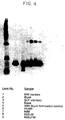
- FIGURE 4 is a photograph of a silver-stained SDS gel showing the degree of crosslinking occurring in various SCFmet1-165 formulations after incubation for four weeks at 45°C.
- Lane 1 (from the left) is molecular weight markers, lane 2 is blank; lane 3 is an SCFmet1-165 standard; lane 4 is blank; lane 5 is a liquid formulation SCFmet1-165 control (A5N described as in Figure 1 except at 1.5 mg/mL); lane 6 is HG6M described for Figure 1 (except containing SCF at 1.5 mg/mL);
- lane 7 (K6M) is an SCFmet1-165 1.5 mg/mL formulation containing 10 mM K phosphate, pH 6.0, 5% mannitol; lane 8 is an SCFmet1-165 1.5 mg/mL formulation containing 10 mM K phosphate pH 6.0, 0.5% sucrose, 4.5% mannitol (K6SuM); lane 9 is an SCFmet1-165 1.5
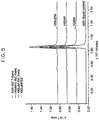
- FIGURE 5 is an SEC-HPLC chromatogram of various SCF formulations after six weeks of incubation at (45°C). The samples used are those described above for FIGURE 4.
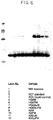
- FIGURE 6 is a photograph of a silver-stained SDS gel of various SCFmet1-165 (1.5 mg/mL) formulations after five weeks of incubation at 45°C.
- the formulations, unless otherwise indicated, are as described for Figure 4.
- Lane 1 (from the left) is molecular weight markers; lane 2 is blank, lane 3 is an SCFmet 1-165 standard; lane 4 is A5N (SCF liquid control); lane 5 is HG6M;
- lane 6 (HG6PM) is an SCFmet1-165 formulation containing 10mM histidine, 5mM glutamic acid, pH 6.0, 0.5% PEG-8000, and 5% mannitol;
- lane 7 (HG6SuM) is an SCFmet1-165 formulation containing 10 mM histidine, 5 mM glutamic acid, pH 6.0, 0.5% sucrose and 4.5% mannitol;
- lane 8 (HG6SuPM) is an SCFmet1-165 formulation
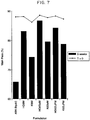
- FIGURE 7 is a bar graph illustrating the relative purity, in terms of species detectable by ion exchange-HPLC, of various SCF formulations as described in Figure 6 above, after incubation for five weeks at 37°C.
- the present invention relates to SCF formulations with improved stability.
- One aspect of the present invention is lyophilized SCF formulations including histidine and/or glutamic acid.
- the lyophilized formulations may optionally include sucrose, and also optionally a bulking agent and an osmolarity regulating agent.
- the present invention relates to methods for production of such formulations.
- SCF may be used herein, preferably those disclosed and taught in PCT WO91/05795 will be used, and most preferably human recombinant SCFmet1-165 as produced by E . coli will be used as the active ingredient.
- the bulking agent is preferably mannitol, but others skilled in the art will recognized other agents suitable for forming a lyophilized "cake" with proper mass and osmolarity.
- Other agents include NaCl, glycine, polymers such as dextran, polyvinylpyrolidone, and carboxymethylcellulose, however, as indicated above, mannitol is preferred.
- the SCF formulation will preferably include an amino acid selected from histidine and glutamic acid, and more preferably the formulation includes histidine, glutamic acid and sucrose.
- the most stable and therefore most preferable formulation includes lyophilized human recombinant SCFmet1-165, histidine, glutamic acid, sucrose, a bulking agent and an osmolarity regulating agent, which, as stated above, is most preferably mannitol.
- the pH is preferably adjusted to between pH 5.0 and pH 6.0, most preferably, pH 6.0
- a preferred lyophilized formulation for SCF is 10 mM histidine, 5 mM glutamic acid, pH 6.0, 0.5% sucrose and 4.5% mannitol.
- Another preferred lyophilized formulation for SCF is 10 mM histidine, 5 mM glutamic acid, pH 6.0, with 5% mannitol.
- the preferred active ingredient is SCFmet1-165, as indicated above, at a concentration of 0.25 - 12.5 mg/mL, for reasons of greatest commercial practicability.
- the present methods relate to the preparation of the present formulations.
- the present invention relates to a method for preparing a lyophilized SCF formulation comprised of the steps of:
- the present methods further comprise one or more of the following steps: adjusting the pH of said mixture to between pH 5.0 and pH 6.0 prior to lyophilization, adding sucrose to said mixture prior to lyophilizing, adding at least one agent selected from a bulking agent and an osmolarity regulating agent to said mixture prior to lyophilization.
- the agent may be mannitol, glycine, NaCl, or polymers, such as those listed on the previous page.
- SCF may be used in the treatment of a variety of hematopoietic, neurological and reproduction related conditions. See WO 91/05795 which has been incorporated by reference, see also U.S.S.N. 07/982,255 which is also herein incorporated by reference. Thus, the present compositions and methods for manufacture of medicaments may be useful for the treatment of such conditions.
- Such conditions include but are not limited to the treatment of leucopenia, the treatment of thrombocytopenia, the treatment of anemia, enhancing engraftment of bone marrow during transplantation, enhancing bone marrow recovery in treatment of radiation, chemical or chemotherapeutic induced bone marrow aplasia or myelosuppression, acquired immune deficiency syndrome, and sensitizing cells to chemotherapy.
- uses and compositions also include providing treatment to a mammal suffering from nerve damage, infertility, or intestinal damage.
- the present SCF formulations may also be used in vitro .
- a gene therapy setting one may desire to transfect a hematopoietic cell with exogenous DNA, and culture said cell using the present SCF formulations.
- the present invention involves a method for culturing hematopoietic cells in vitro comprised of:
- the present invention provides a method of transfecting hematopoietic cells with exogenous DNA comprising: (i) culturing said hematopoietic cells with SCF formulated according to the present invention, and (ii) transfecting said cultured cell with exogenous DNA.
- the hematopoietic cells may be, for example, bone marrow cells or peripheral blood progenitor cells.
- the present invention provides a kit containing components for culturing bone marrow cells or peripheral blood progenitor cells comprised of:
- the uses or products herein may involve the administration or inclusion of at least one additional factor selected from among EPO, G-CSF, GM-CSF, M-CSF, CSF-1, IL-1, IL-2, IL-3, IL-4, IL-5, IL-6, IL-7, IL-8, IL-9, IL-10, IL-11, IL-12, IGF-1, LIF, interferon (such as ⁇ , ⁇ , gamma or consensus) neurotrophic factors (such as BDNF, NT-3, CTNF or noggin), other multi-potent growth factors, (such as stem cell proliferation factor, and totipotent stem cell factor), fibroblast growth factors (such as FGF), and analogs, fusion molecules or other derivatives of the above.
- interferon such as ⁇ , ⁇ , gamma or consensus
- neurotrophic factors such as BDNF, NT-3, CTNF or noggin
- other multi-potent growth factors such as stem cell proliferation factor, and totipotent stem cell factor
- SCF in combination with G-CSF has been found to mobilize peripheral blood progenitor cells in vivo .
- SCF in combination with G-CSF, IL-3 and IL-6 has been found useful for expansion of peripheral blood cells.
- Example 1 demonstrates that SCF formulations buffered with amino acids are more stable over time than SCF formulations in which pH is maintained with other compounds.
- Example 2 demonstrates that sucrose enhances the stability of SCF in amino and non-amino acid formulations. It also demonstrates, again, the increase in stability when amino acid buffers are used.
- Example 3 demonstrates the biological activity of the present formulations.
- SCFmet1-165 for the present formulation studies was produced in E. coli (K-12 strain). The nucleic acid sequence used and amino acid sequence is shown below. Following fermentation, the cell paste was lysed. The SCF was solubilized, refolded and oxidized, and purified by means of several chromatography steps. The apparent molecular weight of the protein is approximately 18,500.
- Formulation Buffers were prepared from concentrated stock solutions. Buffers consisting of sodium succinate, potassium phosphate, glutamic acid or histidine were adjusted if necessary to the desired pH by addition of HCl or NaOH.
- Buffer Exchange SCF was supplied in 10 mM Na acetate, pH 5.0, 140 mM NaCl.
- the protein was exchanged into the formulation buffers by dialysis at 4°C using SpectraPor 7 dialysis membranes, molecular weight cut-off approximately 3,500. Each sample was dialyzed against 3 changes of the formulation buffer, where each change of buffer was at least 100x the volume of the sample being formulated.
- PEG-8000 was added from a concentrated stock solution following dialysis.
- buffer exchange could be performed by diafiltration , desalting over a GPC column, or any other appropriate method.
- SCF concentration was determined by absorbence at 280 nm and adjusted by dilution to the desired value. SCF concentration can range from 0.25 mg/mL or less to 12.5 mg/mL or greater. (The SCF concentration is specified for each example below).
- samples were sterile filtered using 0.22 micron Gelman Acrodisc syringe filters and filled into 3 cc Type I glass vials. Lyophilization stoppers were positioned over the vials in the laminar flow hood.
- SDS-PAGE SDS-PAGE was performed by standard methods (Laemmli, Nature 227 : 680-685 (1970)). Single concentration 15% polyacrylamide gels were used for the separation. For loading, 7.5 ⁇ g of material was used per lane. Gels were stained with Coomassie Blue and scanned using a Molecular Dynamics Personal Densitometer. After scanning, the gels were either dried as is or re-stained with silver stain.
- RP-HPLC Reverse-Phase (RP)-HPLC .
- RP-HPLC was performed on a Waters 625 LC System using a 5 micron C4 column from Vydac, pore size 300 A. Protein was injected onto a column equilibrated with 45.6% acetonitrile, 0.1% trifluoroacetic acid (TFA) and eluted with a linear gradient from 45.6 to 64.6% acetonitrile, 0.1% TFA. Protein peaks were monitored by absorbence at 220 nm.
- TFA trifluoroacetic acid
- SEC-HPLC Size Exclusion (SEC)-HPLC .
- SEC-HPLC was performed on a Waters 625 LC System using a Phenomenox BioSep SEC-S3000 column.
- the elution buffer was 100 mM phosphate, pH 6.9. Protein was monitored by absorbence at 280 nm.
- IEX-HPLC Ion Exchange (IEX)-HPLC .
- IEX-HPLC was performed on a Waters 625 LC System using a TSK Progel 5P-5PW column at room temperature. Samples were diluted 6X in 20 mM sodium acetate, pH 4.8 buffer and applied to a column equilibrated in the same buffer. SCF was eluted using a linear gradient of Na 2 SO 4 0-0.5M. Protein was monitored by absorbence at 230 nm.
- Bioactivity was tested using the growth factor dependent human megakaryocyte cell line UT-7.
- UT-7 The growth factor dependent human megakaryocyte cell line UT-7.
- SCF serum-derived cell line
- UT-7 cells were washed to remove exogenous growth factor, and plated in the presence of various SCF samples as described in Example 3.
- a six hour pulse of 3 H-thymidine was administered.
- Incorporation into DNA was measured by washing, harvesting and counting the radioactivity of the cells deposited on glass fiber filters. Activity as measured in units of mass of test samples was determined by comparison to a standard curve.
- This Example demonstrates improvement in SCF stability in formulations buffered with amino acids. It also demonstrates further improvements when combinations of amino acids were used.
- formulations with no amino acids were compared to formulations using amino acids, at two different pH's: pH 5.0 pH 6.0 S5M (10 mM sodium succinate, pH 5.0, 5% mannitol) G5M (10 mM glutamic acid, pH 5.0, 5% mannitol) H6M (10 mM histidine pH 6.0, 5% mannitol) GH5M (10 mM glutamic acid, 8.35 mM histidine pH 5.0, 5% mannitol) HG6M (10 mM histidine, 5 mM glutamic acid, pH 6.0, 5% mannitol)
- the SCF concentration was 6.0 mg/mL for all samples. All formulations were lyophilized under the same conditions; the primary drying temperature for this study was -25°C. For comparison, a liquid formulation (also 6.0 mg/mL SCF) was shown.
- the liquid formulation (A5N) was 10 mM sodium acetate, pH 5.0, 140 mM NaCl.
- the samples were incubated at a high temperature, 45°C, for at least four weeks. Some samples were maintained at 45°C for twelve weeks. At the end of the time period, the samples were analyzed for degree of stability.
- Figures 1, 2, and 3 show (1) the formulations containing amino acids were more stable over time than those buffered without amino acids; (2) the formulations containing amino acids at pH 6.0 performed better than those at pH 5.0; (3) the formulations containing a combination of the amino acids histidine and glutamic acid, at pH 6.0 performed best, in that they show the lowest rate of increase of SCF species differing from the starting material (fragments, aggregates, etc.) as determined by various analytical methods.
- FIGURE 1 is a bar graph illustrating the degree of cross-linked SCF products (i.e., SCF oligomers, a degradation product) after incubation at an accelerated temperature (45°C), as determined by SDS-PAGE, as described above.
- the lyophilized formulations containing amino acids as buffers contained fewer crosslinked dimers than the formulation containing sodium succinate as a buffer (S5M).
- S5M sodium succinate
- fewer dimers were observed in the formulations at pH 6.0 (H6M and HG6M) than comparable formulations at pH 5.0 (G5M and GH5M).
- FIGURE 2 is a bar graph illustrating the degree of non-covalent aggregation found in the various formulations, as determined by size exclusion chromatography, as described above.
- the formulation having succinate pH 5.0 buffer has the highest percent aggregation (greater than 3%), and again, consistent with the results illustrated in FIGURE 1, the SCF formulation buffered with histidine and glutamic acid at pH 6.0 (HG6M) contained the lowest percent aggregation (less than 1%).
- FIGURE 3 is a bar graph illustrating the percent purity (i.e., the percent of main peak as determined by reverse phase HPLC as described above) of the various SCF formulations. This measurement was taken after incubation at high temperature for 12 weeks. This graph illustrates that the SCF formulation HG6M, containing histidine, glutamic acid and mannitol at pH 6.0, had the highest percent purity, of over 90% (as determined by these methods) of the samples tested. The second highest was also for an amino acid combination buffer formulation, GH5M, at pH 5.0, which also had a purity of over 90%. Note that the liquid control (A5N) had a percent purity of between 60 and 70%. RP-HPLC degradation, a major pathway of solution instability, is substantially reduced using the present compositions and methods.
- This Example shows, in two steps, that sucrose improves stability of the formulations tested.
- the first study shows that sucrose improves the stability of SCF formulations buffered in non-amino acid containing buffers. Additionally, in the non-amino acid containing buffers containing sucrose, polyethylene glycol was shown to also contribute to stability.
- This study also shows that an SCF formulation using the amino acid buffers histidine and glutamic acid is more stable than the non-amino acid buffered formulations, even when the latter contains additional stabilizers.
- sucrose also enhances stability of the amino-acid buffered formulations.
- Polyethylene glycol-8000 was shown to have no effect, however, on the stability of these formulations.
- SGFmet1-165 All formulations used SGFmet1-165 at 1.5 mg/mL. All formulations were lyophilized under the conditions as described above, the primary drying temperature being -25°C. A liquid formulation (also 1.5 mg/mL SCFmet1-165) was used for comparison, and it contained 10 mM sodium acetate, pH 5.0, 140 mM NaCl.
- FIGURE 4 shows a silver-stained SDS gel of samples after 4 weeks incubation at 45°C.
- K6SuPM shows the smallest high molecular weight band, indicating the lowest degree of cross-linked (i.e., covalently dimerized) SCF.
- sucrose and polyethylene glycol contribute to stability.
- FIGURE 4 also shows, however, is that the formulation containing amino acid buffer has the least material at the high molecular weight, indicating that the histidine/glutamic acid formulation is even more stable that the potassium phosphate/sucrose /polyethylene glycol formulation.
- FIGURE 5 shows a size exclusion-HPLC (as described above) chromatogram of the above samples (HG6M, K6SuM, K6SuPM, and the liquid control, A5N. The samples were incubated for six weeks at 45°C. As can be seen, the HG6M displays one major peak, and one minor peak (containing aggregate). In substantial contrast, the potassium phosphate buffered formulations contained several peaks.
- FIGURE 6 shows a silver-stained SDS gel of samples after 5 weeks of incubation at an elevated temperature of 45°C.
- pH 6.0 the formulations buffered with the combination of histidine and glutamic acid show much less crosslinking than the equivalent formulations buffered with potassium phosphate.
- 0.5% sucrose significantly improves the stability of the histidine/glutamic acid buffered as well as the phosphate buffered formulations.
- polyethylene glycol 8000 had no effect on the degree of crosslinking seen; this may have been due to the lower temperature of primary drying (-35°C here vs.-25°C with the Study 1 samples).
- FIGURE 7 shows a comparison of the same formulations by ion-exchange chromatography.
- the histidine/glutamic acid buffered formulations show greater stability under the accelerated incubation conditions than the equivalent phosphate buffered formulations.
- Incorporation of sucrose (0.5%) improves the stability of both the amino acid and phosphate buffered formulations.
Landscapes
- Health & Medical Sciences (AREA)
- Life Sciences & Earth Sciences (AREA)
- Medicinal Chemistry (AREA)
- Epidemiology (AREA)
- Chemical & Material Sciences (AREA)
- Engineering & Computer Science (AREA)
- Bioinformatics & Cheminformatics (AREA)
- Immunology (AREA)
- Zoology (AREA)
- Pharmacology & Pharmacy (AREA)
- Proteomics, Peptides & Aminoacids (AREA)
- Gastroenterology & Hepatology (AREA)
- Animal Behavior & Ethology (AREA)
- General Health & Medical Sciences (AREA)
- Public Health (AREA)
- Veterinary Medicine (AREA)
- Medicinal Preparation (AREA)
- Medicines That Contain Protein Lipid Enzymes And Other Medicines (AREA)
- Medicines Containing Material From Animals Or Micro-Organisms (AREA)
Claims (11)
- Formulation lyophilisée du facteur des cellules souches (SCF) contenant de l'histidine et/ou de l'acide glutamique comme tampon et stabilisant.
- Formulation lyophilisée de SCF selon la revendication 1, caractérisée en ce qu'elle contient du saccharose.
- Formulation lyophilisée de SCF selon la revendication 1 ou 2, caractérisée en ce qu'elle contient un agent de gonflement.
- Formulation lyophilisée de SCF selon la revendication 3, caractérisée en ce que l'agent de gonflement est le mannitol.
- Formulation lyophilisée de SCF selon la revendication 4, caractérisée en ce qu'elle contient 10 mM d'histidine, 5 mM d'acide glutamique, 0,5 % de saccharose et 4,5 % de mannitol et en ce que son pH est ajusté à une valeur variant de 5,0 à 6,0.
- Formulation lyophilisée de SCF selon la revendication 4, caractérisée en ce qu'elle contient 10 mM d'histidine, 5 mM d'acide glutamique et 5 % de mannitol et en ce que son pH est ajusté à une valeur de 6,0.
- Procédé pour préparer une formulation lyophilisée du facteur des cellules souches comprenant les étapes qui consistent à :(a) mélanger le SCF avec un tampon contenant de l'histidine et/ou de l'acide glutamique ; et(b) lyophiliser le mélange.
- Procédé selon la revendication 7, caractérisé en ce qu'il comprend en outre l'étape consistant à ajuster le pH de ladite formulation à une valeur variant de 5,0 à 6,0, avant lyophilisation.
- Procédé selon la revendication 7, caractérisé en ce qu'il comprend en outre l'étape consistant à ajouter du saccharose à la formulation, avant lyophilisation.
- Procédé selon la revendication 9, caractérisé en ce qu'il comprend en outre l'étape consistant à ajouter, à la formulation, au moins un agent choisi parmi un agent de gonflement et un agent régulateur d'osmolarité, avant lyophilisation.
- Procédé selon la revendication 10, caractérisé en ce que l'agent de gonflement est le mannitol.
Applications Claiming Priority (3)
| Application Number | Priority Date | Filing Date | Title |
|---|---|---|---|
| US08/172,507 US6288030B1 (en) | 1993-12-22 | 1993-12-22 | Stem cell factor formulations and methods |
| US172507 | 1993-12-22 | ||
| PCT/US1994/014739 WO1995017206A1 (fr) | 1993-12-22 | 1994-12-21 | Formulations lyophylisees du facteur des cellules souches |
Publications (2)
| Publication Number | Publication Date |
|---|---|
| EP0732935A1 EP0732935A1 (fr) | 1996-09-25 |
| EP0732935B1 true EP0732935B1 (fr) | 1998-11-18 |
Family
ID=22627993
Family Applications (1)
| Application Number | Title | Priority Date | Filing Date |
|---|---|---|---|
| EP95906058A Expired - Lifetime EP0732935B1 (fr) | 1993-12-22 | 1994-12-21 | Formulations lyophylisees du facteur des cellules souches |
Country Status (13)
| Country | Link |
|---|---|
| US (4) | US6288030B1 (fr) |
| EP (1) | EP0732935B1 (fr) |
| CN (1) | CN1105575C (fr) |
| AT (1) | ATE173402T1 (fr) |
| AU (1) | AU696860B2 (fr) |
| CA (1) | CA2182970C (fr) |
| DE (1) | DE69414723T2 (fr) |
| DK (1) | DK0732935T3 (fr) |
| ES (1) | ES2123951T3 (fr) |
| IL (1) | IL112088A (fr) |
| NZ (1) | NZ278252A (fr) |
| WO (1) | WO1995017206A1 (fr) |
| ZA (1) | ZA9410189B (fr) |
Families Citing this family (52)
| Publication number | Priority date | Publication date | Assignee | Title |
|---|---|---|---|---|
| US6267958B1 (en) | 1995-07-27 | 2001-07-31 | Genentech, Inc. | Protein formulation |
| GB9515839D0 (en) * | 1995-08-02 | 1995-10-04 | Q One Biotech Ltd | Feline stem cell factor |
| TW518219B (en) * | 1996-04-26 | 2003-01-21 | Chugai Pharmaceutical Co Ltd | Erythropoietin solution preparation |
| US6017876A (en) | 1997-08-15 | 2000-01-25 | Amgen Inc. | Chemical modification of granulocyte-colony stimulating factor (G-CSF) bioactivity |
| US6541033B1 (en) | 1998-06-30 | 2003-04-01 | Amgen Inc. | Thermosensitive biodegradable hydrogels for sustained delivery of leptin |
| US6420339B1 (en) | 1998-10-14 | 2002-07-16 | Amgen Inc. | Site-directed dual pegylation of proteins for improved bioactivity and biocompatibility |
| US6245740B1 (en) | 1998-12-23 | 2001-06-12 | Amgen Inc. | Polyol:oil suspensions for the sustained release of proteins |
| US6500418B1 (en) | 1999-02-12 | 2002-12-31 | The Washington University | Stimulating neutrophil function to treat inflammatory bowel disease |
| US8106098B2 (en) | 1999-08-09 | 2012-01-31 | The General Hospital Corporation | Protein conjugates with a water-soluble biocompatible, biodegradable polymer |
| US6472208B1 (en) * | 1999-12-13 | 2002-10-29 | Héma-Québec | Method of producing human IFN-α using sendai virus-infected hematopoietic stem cells |
| US7311905B2 (en) | 2002-02-13 | 2007-12-25 | Anthrogenesis Corporation | Embryonic-like stem cells derived from post-partum mammalian placenta, and uses and methods of treatment using said cells |
| EP2206772A3 (fr) * | 2000-12-06 | 2010-08-04 | Robert J. Hariri | Procédé de collecte de cellules souches placentaires |
| US20080152629A1 (en) * | 2000-12-06 | 2008-06-26 | James Edinger | Placental stem cell populations |
| EP2336299A1 (fr) * | 2001-02-14 | 2011-06-22 | Anthrogenesis Corporation | Placenta post-gravidique de mammifere, son utilisation et cellules souches placentaires correspondantes |
| US7700090B2 (en) | 2002-02-13 | 2010-04-20 | Anthrogenesis Corporation | Co-culture of placental stem cells and stem cells from a second source |
| US20030191056A1 (en) | 2002-04-04 | 2003-10-09 | Kenneth Walker | Use of transthyretin peptide/protein fusions to increase the serum half-life of pharmacologically active peptides/proteins |
| JP3963786B2 (ja) * | 2002-06-11 | 2007-08-22 | 富士通株式会社 | 情報処理装置 |
| KR101042448B1 (ko) | 2002-11-26 | 2011-06-16 | 안트로제네시스 코포레이션 | 세포요법제, 세포요법제 단위 및 이를 이용한 치료방법 |
| CN1770976A (zh) * | 2003-02-13 | 2006-05-10 | 人类起源公司 | 利用脐带血治疗患有疾病、紊乱或状况的个体的用途 |
| GB0321337D0 (en) * | 2003-09-11 | 2003-10-15 | Massone Mobile Advertising Sys | Method and system for distributing advertisements |
| NZ548049A (en) * | 2003-12-02 | 2009-01-31 | Celgene Corp | Methods and compositions for the treatment and management of hemoglobinopathy and anemia |
| CA2552241C (fr) | 2003-12-30 | 2013-10-01 | Durect Corporation | Dispositifs copolymeriques pour la liberation controlee d'agents actifs |
| WO2006138181A2 (fr) | 2005-06-14 | 2006-12-28 | Amgen Inc. | Preparations de proteines a tamponnage spontane |
| JP2009502972A (ja) * | 2005-07-29 | 2009-01-29 | アムジエン・インコーポレーテツド | タンパク質凝集を抑制する製剤 |
| CA2624925C (fr) | 2005-10-13 | 2014-09-30 | Anthrogenesis Corporation | Immunomodulation realisee avec des cellules souches placentaires |
| ES2708933T3 (es) | 2005-12-29 | 2019-04-12 | Celularity Inc | Poblaciones de células madre placentarias |
| AR059066A1 (es) | 2006-01-27 | 2008-03-12 | Amgen Inc | Combinaciones del inhibidor de la angiopoyetina -2 (ang2) y el inhibidor del factor de crecimiento endotelial vascular (vegf) |
| EP1854478A1 (fr) * | 2006-05-12 | 2007-11-14 | Cytos Biotechnology AG | Composition vaccinale comprenant des conjugués nicotine-porteur |
| JP2010507392A (ja) * | 2006-10-23 | 2010-03-11 | アントフロゲネシス コーポレーション | 胎盤細胞集団で骨欠損を治療するための方法及び組成物 |
| KR101569168B1 (ko) | 2007-02-12 | 2015-11-13 | 안트로제네시스 코포레이션 | 태반 줄기세포를 이용한 염증 질환의 치료 |
| US20100172830A1 (en) * | 2007-03-29 | 2010-07-08 | Cellx Inc. | Extraembryonic Tissue cells and method of use thereof |
| TWM322542U (en) * | 2007-05-23 | 2007-11-21 | Universal Scient Ind Co Ltd | Testing machine |
| US9200253B1 (en) | 2007-08-06 | 2015-12-01 | Anthrogenesis Corporation | Method of producing erythrocytes |
| CA2700613C (fr) * | 2007-09-26 | 2022-09-20 | Celgene Cellular Therapeutics | Cellules angiogeniques provenant d'un perfusat placentaire humain |
| CA2700617C (fr) * | 2007-09-28 | 2018-11-06 | Celgene Cellular Therapeutics | Elimination des tumeurs au moyen d'un perfusat placentaire humain et de cellules tueuses naturelles intermediaires provenant d'un placenta humain |
| DK2217329T3 (en) * | 2007-11-07 | 2018-04-23 | Anthrogenesis Corp | APPLICATION OF NAVLINE BLOOD IN THE TREATMENT OF COMPLIANCES IN CONNECTION WITH PREGNANCY BIRTH |
| JP5950577B2 (ja) * | 2008-08-20 | 2016-07-13 | アンスロジェネシス コーポレーション | 単離胎盤細胞を使用した脳卒中の治療 |
| DK2330889T3 (en) * | 2008-08-20 | 2017-01-30 | Anthrogenesis Corp | Improved cell composition and process for making the same |
| HRP20130812T1 (en) * | 2008-08-22 | 2013-09-30 | Anthrogenesis Corporation | Methods and compositions for treatment of bone defects with placental cell populations |
| CN102282252B (zh) * | 2008-11-19 | 2017-07-04 | 人类起源公司 | 羊膜来源的贴壁细胞 |
| MX2011005230A (es) * | 2008-11-21 | 2011-06-16 | Anthrogenesis Corp | Tratamiento de enfermedades, desordenes o condiciones del pulmon usando celulas de placenta. |
| US8586360B2 (en) | 2009-07-02 | 2013-11-19 | Anthrogenesis Corporation | Method of producing erythrocytes without feeder cells |
| ES2646750T3 (es) * | 2010-01-26 | 2017-12-15 | Anthrogenesis Corporation | Tratamiento de cánceres relacionados con hueso utilizando células madre placentarias |
| IL250234B2 (en) | 2010-04-07 | 2023-10-01 | Anthrogenesis Llc | Angiogenesis using placental stem cells |
| MX2012011543A (es) | 2010-04-08 | 2013-05-06 | Anthrogenesis Corp | Tratamiento de sarcoidosis empleando celulas madre placentarias. |
| KR20180099915A (ko) | 2010-07-13 | 2018-09-05 | 안트로제네시스 코포레이션 | 천연 킬러 세포의 생성 방법 |
| JP2014502252A (ja) | 2010-09-28 | 2014-01-30 | アミリン・ファーマシューティカルズ,リミテッド・ライアビリティ・カンパニー | 作用持続時間が増した改変ポリペプチド |
| AU2011352036A1 (en) | 2010-12-31 | 2013-07-18 | Anthrogenesis Corporation | Enhancement of placental stem cell potency using modulatory RNA molecules |
| CN104220081A (zh) | 2011-06-01 | 2014-12-17 | 人类起源公司 | 利用胎盘干细胞治疗疼痛 |
| WO2013055476A1 (fr) | 2011-09-09 | 2013-04-18 | Anthrogenesis Corporation | Traitement de la sclérose latérale amyotrophique au moyen de cellules souches placentaires |
| AU2014215458A1 (en) | 2013-02-05 | 2015-08-13 | Anthrogenesis Corporation | Natural killer cells from placenta |
| MA42613A (fr) | 2015-08-13 | 2018-06-20 | Amgen Inc | Filtration en profondeur chargée de protéines de liaison à un antigène |
Citations (1)
| Publication number | Priority date | Publication date | Assignee | Title |
|---|---|---|---|---|
| WO1994007510A1 (fr) * | 1992-10-02 | 1994-04-14 | Kabi Pharmacia Ab | Composition comprenant une formulation d'un facteur de coagulation viii, procede pour sa preparation et utilisation d'un agent tensioactif comme stabilisateur |
Family Cites Families (24)
| Publication number | Priority date | Publication date | Assignee | Title |
|---|---|---|---|---|
| US4165370A (en) | 1976-05-21 | 1979-08-21 | Coval M L | Injectable gamma globulin |
| JPS5534001A (en) * | 1978-08-28 | 1980-03-10 | Noda Sangyo Kagaku Kenkyusho | Stabilization of sarcosine oxidase |
| US4783441A (en) | 1979-04-30 | 1988-11-08 | Hoechst Aktiengesellschaft | Aqueous protein solutions stable to denaturation |
| EP0035204B2 (fr) | 1980-03-05 | 1991-05-22 | Miles Inc. | Compositions pasteurisées de protéines thérapeutiquement actives |
| JPS5874617A (ja) | 1981-10-28 | 1983-05-06 | Green Cross Corp:The | 人由来血液凝固第7因子含有水溶液の加熱処理方法 |
| JPS58134991A (ja) * | 1981-12-28 | 1983-08-11 | Takeda Chem Ind Ltd | セラチオペプチタ−ゼの安定化法 |
| JPS59134730A (ja) | 1983-01-20 | 1984-08-02 | Green Cross Corp:The | 血液凝固第8因子の加熱処理法 |
| IL74909A (en) | 1984-04-20 | 1992-01-15 | Genentech Inc | Preparation of functional human factor viii and dna sequences,expression vectors,transformed microorganisms and cell lines used therein |
| SE8501050D0 (sv) | 1985-03-05 | 1985-03-05 | Kabivitrum Ab | Biologically active fragments of human antihemophilic factor and method for preparation thereof |
| CA1292686C (fr) | 1986-10-27 | 1991-12-03 | Ze'ev Shaked | Compositions pharmaceutiques d'interleukine-2 recombinante et procede de fabrication |
| NZ226170A (en) | 1987-09-18 | 1990-07-26 | Ethicon Inc | Stable freeze-dried pharmaceutical composition containing epidermal growth factor |
| CA1329760C (fr) * | 1987-10-29 | 1994-05-24 | Ted C. K. Lee | Formulation de plasma et de proteines recombinantes dans des milieux a grande force ionique |
| US4877608A (en) | 1987-11-09 | 1989-10-31 | Rorer Pharmaceutical Corporation | Pharmaceutical plasma protein formulations in low ionic strength media |
| US5096885A (en) | 1988-04-15 | 1992-03-17 | Genentech, Inc. | Human growth hormone formulation |
| EP0381345B1 (fr) | 1989-01-30 | 1994-07-13 | Corint, Ltd. | Composition aqueuse à base de desmopressine-CMC |
| JPH02268681A (ja) * | 1989-04-07 | 1990-11-02 | Green Cross Corp:The | ウロキナーゼ前駆体の安定化方法及び乾燥製剤 |
| JPH03505334A (ja) * | 1989-04-11 | 1991-11-21 | イミユノバイオロジー・リサーチ・インスチチユート・インコーポレーテツド | 凍結乾燥されたペプチド製剤 |
| RU2212411C2 (ru) | 1989-10-16 | 2003-09-20 | Эмджен Инк. | Полипептид, обладающий гемопоэтической биологической активностью фактора стволовых клеток (варианты), днк (варианты), экспрессирующий вектор (варианты), фармацевтическая композиция для гемопоэтической терапии, способ получения полипептида и способ его использования (варианты) |
| DK0423980T3 (da) | 1989-10-16 | 2000-10-09 | Amgen Inc | Stamcellefaktor |
| SE465222C5 (sv) | 1989-12-15 | 1998-02-10 | Pharmacia & Upjohn Ab | Ett rekombinant, humant faktor VIII-derivat och förfarande för dess framställning |
| DE4001451A1 (de) | 1990-01-19 | 1991-08-01 | Octapharma Ag | Stabile injizierbare loesungen von faktor viii und faktor ix |
| WO1992000376A1 (fr) | 1990-06-25 | 1992-01-09 | Immunex Corporation | Facteur de croissance de mastocytes |
| SK279641B6 (sk) * | 1991-12-20 | 1999-01-11 | Novo Nordisk A/S | Stabilizovaný farmaceutický prípravok obsahujúci r |
| US5192743A (en) | 1992-01-16 | 1993-03-09 | Genentech, Inc. | Reconstitutable lyophilized protein formulation |
-
1993
- 1993-12-22 US US08/172,507 patent/US6288030B1/en not_active Expired - Fee Related
-
1994
- 1994-12-20 IL IL11208894A patent/IL112088A/en not_active IP Right Cessation
- 1994-12-21 EP EP95906058A patent/EP0732935B1/fr not_active Expired - Lifetime
- 1994-12-21 AT AT95906058T patent/ATE173402T1/de not_active IP Right Cessation
- 1994-12-21 CN CN94195012A patent/CN1105575C/zh not_active Expired - Fee Related
- 1994-12-21 NZ NZ278252A patent/NZ278252A/en not_active IP Right Cessation
- 1994-12-21 DE DE69414723T patent/DE69414723T2/de not_active Expired - Lifetime
- 1994-12-21 ES ES95906058T patent/ES2123951T3/es not_active Expired - Lifetime
- 1994-12-21 ZA ZA9410189A patent/ZA9410189B/xx unknown
- 1994-12-21 AU AU14422/95A patent/AU696860B2/en not_active Ceased
- 1994-12-21 WO PCT/US1994/014739 patent/WO1995017206A1/fr not_active Ceased
- 1994-12-21 DK DK95906058T patent/DK0732935T3/da active
- 1994-12-21 CA CA002182970A patent/CA2182970C/fr not_active Expired - Fee Related
-
1998
- 1998-06-29 US US09/106,891 patent/US5965522A/en not_active Expired - Fee Related
-
1999
- 1999-04-15 US US09/292,222 patent/US6020469A/en not_active Expired - Fee Related
-
2000
- 2000-12-20 US US09/748,592 patent/US20020013258A1/en not_active Abandoned
Patent Citations (1)
| Publication number | Priority date | Publication date | Assignee | Title |
|---|---|---|---|---|
| WO1994007510A1 (fr) * | 1992-10-02 | 1994-04-14 | Kabi Pharmacia Ab | Composition comprenant une formulation d'un facteur de coagulation viii, procede pour sa preparation et utilisation d'un agent tensioactif comme stabilisateur |
Also Published As
| Publication number | Publication date |
|---|---|
| EP0732935A1 (fr) | 1996-09-25 |
| US20020013258A1 (en) | 2002-01-31 |
| US6020469A (en) | 2000-02-01 |
| CA2182970A1 (fr) | 1995-06-29 |
| DE69414723T2 (de) | 1999-07-22 |
| NZ278252A (en) | 1998-04-27 |
| ES2123951T3 (es) | 1999-01-16 |
| IL112088A0 (en) | 1995-03-15 |
| US6288030B1 (en) | 2001-09-11 |
| WO1995017206A1 (fr) | 1995-06-29 |
| US5965522A (en) | 1999-10-12 |
| AU1442295A (en) | 1995-07-10 |
| CN1105575C (zh) | 2003-04-16 |
| DE69414723D1 (de) | 1998-12-24 |
| HK1008815A1 (en) | 1999-05-21 |
| ATE173402T1 (de) | 1998-12-15 |
| CN1142771A (zh) | 1997-02-12 |
| AU696860B2 (en) | 1998-09-17 |
| DK0732935T3 (da) | 1999-08-02 |
| CA2182970C (fr) | 2000-11-28 |
| ZA9410189B (en) | 1995-08-25 |
| IL112088A (en) | 2001-04-30 |
Similar Documents
| Publication | Publication Date | Title |
|---|---|---|
| US6020469A (en) | Stem cell factor formulations and methods | |
| AU695129B2 (en) | Formulations for IL-12 | |
| CA2079780C (fr) | Methodes et formulations permettant de stabiliser le facteur de croissance des fibroblastes | |
| WO1996024369A9 (fr) | Formulations de preparation d'interleukine-12 | |
| EP0910399B1 (fr) | Composition pharmaceutique stable du facteur bdnf | |
| JP3927248B2 (ja) | Hgf凍結乾燥製剤 | |
| WO1990000397A1 (fr) | Composition pharmaceutique pour interleukine-2 contenant des stabilisants physiologiquement compatibles | |
| EP0787497A2 (fr) | Préparation pharmaceutique contenant l'hormone de croissance humaine | |
| EP1827483B1 (fr) | Formulations therapeutiques du facteur de croissance des keratinocytes | |
| EP0420964A1 (fr) | Compositions de peptides lyophilisees | |
| WO1993005799A1 (fr) | Compositions pharmaceutiques stables et lyophilisees contenant un facteur de stimulation de colonies de granulocytes et de macrophages | |
| US5714458A (en) | Stable pharmaceutical compositions containing a fibroblast growth factor | |
| US5885962A (en) | Stem cell factor analog compositions and method | |
| AU659997B2 (en) | Stable pharmaceutical compositions containing a fibroblast growth factor | |
| MXPA00005214A (es) | Una jeringa de una dosis, que comprende una composicion de proteina liofilizada, para administrar un volumen menor de 0.5 ml. | |
| KR880002037B1 (ko) | 인터페론 조성물 및 이의 제조방법 | |
| HK1008815B (en) | Lyophilized stem cell factor formulations | |
| JPH0378847B2 (fr) | ||
| AU738891B2 (en) | Stable transglutaminase preparations and process for producing them |
Legal Events
| Date | Code | Title | Description |
|---|---|---|---|
| PUAI | Public reference made under article 153(3) epc to a published international application that has entered the european phase |
Free format text: ORIGINAL CODE: 0009012 |
|
| 17P | Request for examination filed |
Effective date: 19960719 |
|
| AK | Designated contracting states |
Kind code of ref document: A1 Designated state(s): AT BE CH DE DK ES FR GB GR IE IT LI LU MC NL PT SE |
|
| 17Q | First examination report despatched |
Effective date: 19970130 |
|
| GRAG | Despatch of communication of intention to grant |
Free format text: ORIGINAL CODE: EPIDOS AGRA |
|
| GRAG | Despatch of communication of intention to grant |
Free format text: ORIGINAL CODE: EPIDOS AGRA |
|
| GRAH | Despatch of communication of intention to grant a patent |
Free format text: ORIGINAL CODE: EPIDOS IGRA |
|
| GRAH | Despatch of communication of intention to grant a patent |
Free format text: ORIGINAL CODE: EPIDOS IGRA |
|
| GRAA | (expected) grant |
Free format text: ORIGINAL CODE: 0009210 |
|
| AK | Designated contracting states |
Kind code of ref document: B1 Designated state(s): AT BE CH DE DK ES FR GB GR IE IT LI LU MC NL PT SE |
|
| REF | Corresponds to: |
Ref document number: 173402 Country of ref document: AT Date of ref document: 19981215 Kind code of ref document: T |
|
| REG | Reference to a national code |
Ref country code: CH Ref legal event code: EP |
|
| RAP2 | Party data changed (patent owner data changed or rights of a patent transferred) |
Owner name: AMGEN INC. |
|
| REF | Corresponds to: |
Ref document number: 69414723 Country of ref document: DE Date of ref document: 19981224 |
|
| REG | Reference to a national code |
Ref country code: IE Ref legal event code: FG4D |
|
| REG | Reference to a national code |
Ref country code: ES Ref legal event code: FG2A Ref document number: 2123951 Country of ref document: ES Kind code of ref document: T3 |
|
| NLT2 | Nl: modifications (of names), taken from the european patent patent bulletin |
Owner name: AMGEN INC. |
|
| ET | Fr: translation filed | ||
| REG | Reference to a national code |
Ref country code: PT Ref legal event code: SC4A Free format text: AVAILABILITY OF NATIONAL TRANSLATION Effective date: 19981118 Ref country code: CH Ref legal event code: NV Representative=s name: BOVARD AG PATENTANWAELTE |
|
| REG | Reference to a national code |
Ref country code: DK Ref legal event code: T3 |
|
| PLBE | No opposition filed within time limit |
Free format text: ORIGINAL CODE: 0009261 |
|
| STAA | Information on the status of an ep patent application or granted ep patent |
Free format text: STATUS: NO OPPOSITION FILED WITHIN TIME LIMIT |
|
| 26N | No opposition filed | ||
| REG | Reference to a national code |
Ref country code: GB Ref legal event code: IF02 |
|
| REG | Reference to a national code |
Ref country code: CH Ref legal event code: PUE Owner name: BIOVITRUM AB (PUBL) Free format text: AMGEN INC.#ONE AMGEN CENTER DRIVE#THOUSAND OAKS, CA 91320-1789 (US) -TRANSFER TO- BIOVITRUM AB (PUBL)# #112 76 STOCKHOLM (SE) Ref country code: CH Ref legal event code: NV Representative=s name: BUGNION S.A. |
|
| REG | Reference to a national code |
Ref country code: GB Ref legal event code: 732E Free format text: REGISTERED BETWEEN 20090709 AND 20090715 |
|
| BECA | Be: change of holder's address |
Owner name: BIOVITRUM A.B. PUBL,SE-112 76 STOCKHOLM Effective date: 20090806 |
|
| REG | Reference to a national code |
Ref country code: PT Ref legal event code: PC4A Owner name: BIOVITRUM AB (PUBL), SE Effective date: 20090528 |
|
| REG | Reference to a national code |
Ref country code: FR Ref legal event code: TP |
|
| PGFP | Annual fee paid to national office [announced via postgrant information from national office to epo] |
Ref country code: SE Payment date: 20091204 Year of fee payment: 16 Ref country code: MC Payment date: 20091006 Year of fee payment: 16 Ref country code: LU Payment date: 20091020 Year of fee payment: 16 Ref country code: IE Payment date: 20091008 Year of fee payment: 16 Ref country code: ES Payment date: 20091214 Year of fee payment: 16 Ref country code: DK Payment date: 20091111 Year of fee payment: 16 Ref country code: CH Payment date: 20091026 Year of fee payment: 16 Ref country code: AT Payment date: 20091106 Year of fee payment: 16 |
|
| PGFP | Annual fee paid to national office [announced via postgrant information from national office to epo] |
Ref country code: NL Payment date: 20091222 Year of fee payment: 16 |
|
| PGFP | Annual fee paid to national office [announced via postgrant information from national office to epo] |
Ref country code: PT Payment date: 20091009 Year of fee payment: 16 |
|
| PGFP | Annual fee paid to national office [announced via postgrant information from national office to epo] |
Ref country code: IT Payment date: 20091217 Year of fee payment: 16 Ref country code: GB Payment date: 20091106 Year of fee payment: 16 Ref country code: FR Payment date: 20091215 Year of fee payment: 16 |
|
| PGFP | Annual fee paid to national office [announced via postgrant information from national office to epo] |
Ref country code: GR Payment date: 20091009 Year of fee payment: 16 Ref country code: DE Payment date: 20091230 Year of fee payment: 16 Ref country code: BE Payment date: 20091208 Year of fee payment: 16 |
|
| REG | Reference to a national code |
Ref country code: NL Ref legal event code: SD Effective date: 20110120 |
|
| REG | Reference to a national code |
Ref country code: PT Ref legal event code: MM4A Free format text: LAPSE DUE TO NON-PAYMENT OF FEES Effective date: 20110621 |
|
| BERE | Be: lapsed |
Owner name: BIOVITRUM A.B. PUBL Effective date: 20101231 |
|
| REG | Reference to a national code |
Ref country code: NL Ref legal event code: V1 Effective date: 20110701 |
|
| PG25 | Lapsed in a contracting state [announced via postgrant information from national office to epo] |
Ref country code: MC Free format text: LAPSE BECAUSE OF NON-PAYMENT OF DUE FEES Effective date: 20101231 Ref country code: PT Free format text: LAPSE BECAUSE OF NON-PAYMENT OF DUE FEES Effective date: 20110621 |
|
| REG | Reference to a national code |
Ref country code: CH Ref legal event code: PL |
|
| REG | Reference to a national code |
Ref country code: DK Ref legal event code: EBP |
|
| GBPC | Gb: european patent ceased through non-payment of renewal fee |
Effective date: 20101221 |
|
| PG25 | Lapsed in a contracting state [announced via postgrant information from national office to epo] |
Ref country code: AT Free format text: LAPSE BECAUSE OF NON-PAYMENT OF DUE FEES Effective date: 20101221 |
|
| REG | Reference to a national code |
Ref country code: FR Ref legal event code: ST Effective date: 20110831 |
|
| REG | Reference to a national code |
Ref country code: SE Ref legal event code: EUG |
|
| REG | Reference to a national code |
Ref country code: IE Ref legal event code: MM4A |
|
| PG25 | Lapsed in a contracting state [announced via postgrant information from national office to epo] |
Ref country code: BE Free format text: LAPSE BECAUSE OF NON-PAYMENT OF DUE FEES Effective date: 20101231 Ref country code: SE Free format text: LAPSE BECAUSE OF NON-PAYMENT OF DUE FEES Effective date: 20101222 |
|
| PG25 | Lapsed in a contracting state [announced via postgrant information from national office to epo] |
Ref country code: CH Free format text: LAPSE BECAUSE OF NON-PAYMENT OF DUE FEES Effective date: 20101231 Ref country code: IE Free format text: LAPSE BECAUSE OF NON-PAYMENT OF DUE FEES Effective date: 20101221 Ref country code: LI Free format text: LAPSE BECAUSE OF NON-PAYMENT OF DUE FEES Effective date: 20101231 Ref country code: FR Free format text: LAPSE BECAUSE OF NON-PAYMENT OF DUE FEES Effective date: 20110103 |
|
| REG | Reference to a national code |
Ref country code: DE Ref legal event code: R119 Ref document number: 69414723 Country of ref document: DE Effective date: 20110701 |
|
| PG25 | Lapsed in a contracting state [announced via postgrant information from national office to epo] |
Ref country code: GB Free format text: LAPSE BECAUSE OF NON-PAYMENT OF DUE FEES Effective date: 20101221 Ref country code: DE Free format text: LAPSE BECAUSE OF NON-PAYMENT OF DUE FEES Effective date: 20110701 Ref country code: GR Free format text: LAPSE BECAUSE OF NON-PAYMENT OF DUE FEES Effective date: 20110704 |
|
| PG25 | Lapsed in a contracting state [announced via postgrant information from national office to epo] |
Ref country code: NL Free format text: LAPSE BECAUSE OF NON-PAYMENT OF DUE FEES Effective date: 20110701 Ref country code: IT Free format text: LAPSE BECAUSE OF NON-PAYMENT OF DUE FEES Effective date: 20101221 |
|
| REG | Reference to a national code |
Ref country code: ES Ref legal event code: FD2A Effective date: 20120220 |
|
| PG25 | Lapsed in a contracting state [announced via postgrant information from national office to epo] |
Ref country code: ES Free format text: LAPSE BECAUSE OF NON-PAYMENT OF DUE FEES Effective date: 20101222 |
|
| PG25 | Lapsed in a contracting state [announced via postgrant information from national office to epo] |
Ref country code: LU Free format text: LAPSE BECAUSE OF NON-PAYMENT OF DUE FEES Effective date: 20101221 |