EP0733362A1 - Polynactine als antiallergische Mittel und IL-5-Hemmer - Google Patents
Polynactine als antiallergische Mittel und IL-5-Hemmer Download PDFInfo
- Publication number
- EP0733362A1 EP0733362A1 EP95114153A EP95114153A EP0733362A1 EP 0733362 A1 EP0733362 A1 EP 0733362A1 EP 95114153 A EP95114153 A EP 95114153A EP 95114153 A EP95114153 A EP 95114153A EP 0733362 A1 EP0733362 A1 EP 0733362A1
- Authority
- EP
- European Patent Office
- Prior art keywords
- nonactin
- allergic
- cells
- eosinophilic
- macrocyclic compounds
- Prior art date
- Legal status (The legal status is an assumption and is not a legal conclusion. Google has not performed a legal analysis and makes no representation as to the accuracy of the status listed.)
- Withdrawn
Links
Images



Classifications
-
- A—HUMAN NECESSITIES
- A61—MEDICAL OR VETERINARY SCIENCE; HYGIENE
- A61K—PREPARATIONS FOR MEDICAL, DENTAL OR TOILETRY PURPOSES
- A61K31/00—Medicinal preparations containing organic active ingredients
- A61K31/33—Heterocyclic compounds
- A61K31/335—Heterocyclic compounds having oxygen as the only ring hetero atom, e.g. fungichromin
- A61K31/34—Heterocyclic compounds having oxygen as the only ring hetero atom, e.g. fungichromin having five-membered rings with one oxygen as the only ring hetero atom, e.g. isosorbide
Definitions
- This invention related to a method of inhibiting the production of human IL-5 by human T-cells and human IL-5 gene transcription and mRNA expression using macrolide antibiotics shown by formula 1, as well as therapeutic agents containing the above-mentioned substances for allergic and eosinophilic diseases.
- Type-I (based on classification of Coombs and Gell) allergic diseases, such as bronchial asthma, atopic dermatitis and allergic rhinitis, have been understood to be mainly caused by IgE-mediated release of chemical mediators from mast cells and basophils.
- Eosinophil granule-derived basic proteins such as major basic protein (MBP), eosinophil cationic protein (ECP) and eosinophil-derived peroxidase (EPO) have great tissue-damaging effects, causing tissue destruction and marked inflammatory reactions. Eosinophils serve as effector cells in inflammatory reactions.
- MBP major basic protein
- ECP eosinophil cationic protein
- EPO eosinophil-derived peroxidase
- IL-5 is a cytokine with a molecular weight of about 13 KDa and is mainly produced by activated T-cells. In humans, it has been shown to specifically affect eosinophils and enhance their growth, differentiation and cytotoxicity (effector function), as well as to enhance the release of mediators (such as leukotriene, MBP, etc.) by them (Lopez A.F. et al, Journal of Experimental Medicine, 167: 219-224, 1988).
- the inventors have conducted immunological studies on the pathology of bronchial asthma and found that IL-5 production by CD4-positive T-cells in peripheral blood is significantly greater in both atopic and non-atopic bronchial asthma patients than in healthy volunteers. A close correlation was found between therapeutic efficacy and IL-5 production in asthma patients (A. Mori, et al., International Immunology 7: 449-457, 1995).
- the inventors showed in vitro experiments that steroids, FK506 (an immunosuppressive agent) and cyclosporine A dose-dependently inhibit the production of IL-5 by T-cells (A. Mori, et al, International Immunology 7: 449-457, 1995).
- symptomatic bronchial asthma patients show marked improvement in clinical symptoms and laboratory tests within 1 week after treatment with steroids (inhalation). These improvements are associated with decreases in blood eosinophil counts and reduced production of IL-5 by peripheral CD4-positive T-cells. Furthermore, symptoms such as skin eruption and itching drastically improve within several days after local administration of FK506 in very severe atopic dermatitis patients. Production of IL-5 by peripheral CD4-positive T-cells is also markedly inhibited in these patients. The inventors therefore thought that IL-5 production inhibitors should be useful for treating allergic diseases associated with eosinophilic inflammation.
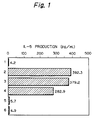
- Fig. 1 shows the inhibition by nonactin of IL-5 production by peripheral mononuclear cells obtained from allergic patients.
- the numbers in this figure indicate the following:
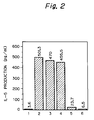
- Fig. 2 shows the inhibition by nonactin of IL-5 production by T-cell clones.
- the numbers in this figure indicate the following:
- Fig. 3 shows electrophoretograms which indicate the inhibition by nonactin of IL-5 gene transcription in peripheral mononuclear cells from allergic patients.
- the lane numbers in this figure show the following:
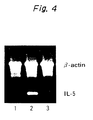
- Fig. 4 shows electrophoretograms which indicate the inhibition by nonactin of IL-5 gene transcription in T-cell clones.
- the figures in these pictures indicate the following:
- Fig. 5 shows the effects of nonactin on IL-2 and IL-4 production.
- the numbers in this figure indicate the following:
- Fig. 6 shows the simulated structure of plasmid pIL5 Luc.
- Fig. 7 shows the effects of nonactin on IL-5 gene transcription determined by measuring pIL5 Luc-derived luciferase activity.
- the numbers in this figure indicate the following:
- Fig. 8 shows the effects of nonactin on IL-2 gene transcription determined by measuring pIL2 Luc-derived luciferase activity.
- the figures in this figure indicate the following:
- Fig. 9 shows the effects of nonactin on IL-4 gene transcription determined by measuring pIL4 Luc-derived luciferase activity.
- the figures in this figure indicate the following:
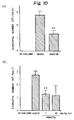
- Fig. 10a shows in vivo inhibitory effects on eosinophil infiltration of nonactin administered for 3 days after sensitization at 100 mg/kg.
- the figures in this figure indicate the following:
- Fig. 10b shows in vivo inhibitory effects on eosinophil infiltration of nonactin administered once daily for 7 days after sensitization at 3 mg/kg.
- the present invention offers a method of inhibiting human IL-5 gene transcription, mRNA expression and protein production by human T-cells using one or two or more compounds selected from those represented by formula I shown below (where R 1 , R 2 , R 3 and R 4 are each independently a C 1 -C 6 alkyl group).
- the present invention makes it possible to specifically inhibit IL-5 without inhibiting IL-2 or IL-4 gene transcription or production.
- the present invention also offers therapeutic agents for allergic diseases or eosinophilic inflammatory diseases which contain 1 or 2 or more compounds selected from those represented by formula I shown below (where R 1 , R 2 , R 3 and R 4 are each independently a C 1 -C 6 alkyl group).
- Allergic diseases which can be treated by therapeutic agents covered by the present invention include bronchial asthma, atopic dermatitis, pollinosis, allergic rhinitis and allergic conjunctivitis.
- Eosinophilic inflammatory diseases which can be treated by therapeutic agents covered by the present invention include eosinophilic syndrome, allergic angiitis, eosinophilic fasciitis, eosinophilic pneumonia, PIE syndrome and other diseases associated with eosinophilia.
- the inventors established allergen-specific T-cell clones from peripheral mononuclear cells from allergic patients, used these T-cell clones to establish T-cell hybridomas and screened drugs that inhibit IL-5 production using these T-cell lines and peripheral lymphocytes from atopic patients with a marked ability to produce IL-5.
- R 1 , R 2 , R 3 and R 4 are each independently a C 1 -C 6 alkyl group. They may either be the same or different, but preferably, R 1 , R 2 , R 3 and R 4 should be methyl or ethyl groups.
- the most desirable compounds are nonactin, monactin, dinactin, trinactin and tetranactin, which have the following structures:
- the methods and therapeutic agents of the present invention use 1 or 2 or more compounds selected from those represented by formula I above alone or in combination.
- the most desirable compound is nonactin.
- Monactin, dinactin, trinactin and tetranactin, derivatives of nonactin with modified side chains, have the same basic structure and similar effects as nonactin (US Patent No. 4843092, Jun. 27, 1989) and can be used in the same manner as nonactin for the purpose of the present invention.
- T-cell-specific immunosuppressive agents Cyclosporine and FK506 are both macrolide antibiotics produced by actinomycetes. Nonactin, monactin, dinactin, trinactin and tetranactin used in the method and therapeutic agents in the present invention are also produced by actinomycetes. Tetranactin was shown to inhibit the growth of T-cells and induction of NK cells (Tanouchi et al, Immunopharmacology, 16, 25-32, 1988). It was also found to inhibit antibody production and exert therapeutic efficacy against experimental autoimmune uveitis in rats (Tanouchi et al, Jpn. J.
- nonactin inhibits human IL-5 production by human T-cells and that this inhibitory effect is due to the inhibition of protein production by inhibition of human IL-5 gene transcription and mRNA expression.
- the inventors conducted another experiment similar to that shown in Fig. 1 in order to determine whether the inhibition by nonactin of IL-5 production is mediated by the inhibition of IL-5 gene expression (mRNA expression), and demonstrated that nonactin dose-dependently inhibits IL-5 gene expression by the RT-PCR (reverse transcription-polymerase chain reaction) method (Fig. 3).
- RT-PCR reverse transcription-polymerase chain reaction
- PKC protein kinase C
- IOM Ca ++ ionophore
- IL-5 gene transcription apparatus transcription factor
- IL-5 gene transcription apparatus transcription factor
- luciferase's mRNA is very stable, and protein is synthesized from mRNA at a constant rate, making it possible to determine whether nonactin affects IL-5 gene promoters/enhancers.
- nonactin was found to inhibit the expression of functions of human IL-5 gene promoters/enhancers at 100 nM and 1 ⁇ M, thereby inhibiting the transcription of IL-5 genes (Fig. 7).
- nonactin and its related substances are useful as therapeutic agents for allergic and eosinophilic diseases.
- nonactin blocked the recruitment of eosinophils in an in vivo study conducted using BDF1 mice sensitized with ovalbumin (Fig. 10), suggesting that compounds used in the present invention inhibit eosinophilic inflammation in vivo and that they are useful for the treatment of allergic and eosinophilic diseases.
- formula I compounds can be administered alone or in combination for the treatment of allergic or eosinophilic diseases.
- These compounds may be administered either per se or in the form of granules, tablets, hard or soft capsules, granules, powder, fine granules, emulsions, oral liquid or any other dosage forms manufactured using solid or fluid carriers for pharmaceutical use for oral, intravenous, intramuscular, intradermal or subcutaneous administration.
- Parenteral dosage forms may be prepared using powder before use.
- These compounds may also be administered locally into the rectum, nose, eyes and lungs in the form of suppositories, nasal or eye drops and inhalation drugs.
- Inhalation drugs may be aqueous or partially aqueous solutions for administration in aerosol form.
- the ratio of compounds shown by formula I to carriers may vary between 0.01 and 90 w/w% in the case of solid dosage forms.
- Appropriate carriers for solid dosage forms include lactose, dextrin, starch, calcium carbonate, etc. These dosage forms can be prepared using the conventional method.
- fluid dosage forms such as emulsions, suspensions, syrup and oral liquid
- water, alcohol and its derivatives, and oils fractionated coconut oil, peanut oil, etc.
- oils fractionated coconut oil, peanut oil, etc.
- oily esters such as oleic acid ethyl and myristic acid isopropyl can be used as carriers.
- Compounds shown by formula I can also be added to permitted diluents in amounts necessary to obtain clinical efficacy and can be administered locally as liquid, ointment, cream and lotion.
- Doses can be titrated according to the compounds used, administration route, severity of symptoms and patients' characteristics. In general, desirable doses range between 0.1 and 100 mg/kg/day. Safe clinical doses must be determined in clinical safety studies in the future (Phase I). Optimal doses and blood concentrations will be determined in therapeutic concentration determination studies (Phase II).
- Example 1 inhibition by nonactin of IL-5 production
- IL-5 production by peripheral T-cells is increased in allergic patients (Mori A. et al, International Immunology 7: in press). In that study, the inventors collected venous blood samples from some patients with increased IL-5 production with their consent.
- PBMC Peripheral blood mononuclear cells
- T-cell clones Peripheral blood mononuclear cells from allergic patients were stimulated by Der f II protein, a major allergen contained in house dust, and T-cell clones were established by the limiting dilution method (Mori A. et al, International Archives of Allergy and Immunology, 1995 in press). Clones (10 5 cells/well) which produce IL-5 upon stimulation by the antigen were incubated in a 96-well round-bottom culture plate. Production of IL-5 by T-cell clones was observed upon CD3 molecule-mediated stimulation in wells pre-coated with 10 ⁇ g/ml of anti-CD3 monoclonal antibodies (OKT3: Janssen Kyowa). Nonactin completely inhibited IL-5 production at 100 nM or higher concentrations (Fig. 2).
- Example 2 Inhibition by nonactin of IL-5 gene expression
- RT-PCR reverse transcription-polymerase chain reaction
- PBMC separated from peripheral blood of allergic patients as motioned above were cultured at 2 ⁇ 10 6 cells/well using a 24-well plate (Corning) and stimulated using 10 ⁇ g/ml of Con A. Nonactin was added upon start of culture. Cells were harvested 8 hours later and 1 ml of Isogen (Nippon Genes) was added to pellets in order to dissolve cells. Cells were then homogenized 10 times using a 5 ml-syringe with a 25G needle and centrifuged at 13,000 rpm for 15 min at 4°C after addition of 200 ⁇ l of chloroform and thorough mixing. The aqueous layer was collected and 500 ⁇ l of isopropyl alcohol was added.
- PCR reaction fluid shown in Table 2 was prepared and 45 ⁇ l was added to 5 ⁇ l of cDNA.
- Table 2 10x PCR reaction Buffer: 5 ⁇ l 2.5 mM MgC12: 3 ⁇ l Sterile water: 32.6 ⁇ l dNTPmix (10mM): 2 ⁇ l 20 ⁇ M 5'-I L-5 primer: 1 ⁇ l 20 ⁇ M 3'-I L-5 primer: 1 ⁇ l 20 ⁇ M 5'- ⁇ Bactin primer: 1 ⁇ l 20 ⁇ M 3'- ⁇ Bactin primer: 1 ⁇ l Taq polymerase 5 U/ ⁇ l: 0.4 ⁇ l
- 6x Type III dye (Nippon Genes) was added to 10 ⁇ l of each sample and electrophoresis was carried out using 0.5x TBE 1% agarose gel.
- Beta-actin was used as the positive control.
- Example 2 The Der f II-specific T-cell clones described in Section 2) of Example 1 were stimulated by 20 nM phorbol 12-myristate 13-acetate (PMA) and 1 ⁇ M ionomycin (IOM) and cells were harvested 6 hours later. Nonactin was added upon start of incubation. RNA was extracted as mentioned in 2) above and IL-5 mRNA expression was determined by the RT-PCR method. As shown in Fig. 4, nonactin showed no effect on ⁇ -actin gene expression but effectively inhibited IL-5 mRNA expression.
- PMA phorbol 12-myristate 13-acetate
- IOM ionomycin
- PBMC peripheral blood of allergic patients as mentioned in Example 1, incubated in a 24-well plate at 2 ⁇ 10 6 cells/well and stimulated with 10 ⁇ g/ml of Con A. Nonactin was added at the same time. After incubation for 48 hours, the supernatant was collected and determination was carried out using IL-2 and IL-4 ELISA kits (R&D System). Nonactin did not inhibit the production of IL-2 and IL-4 between 100 nM and 1 ⁇ M (Fig. 5).
- Example 4 Inhibition by nonactin of human cytokine gene transcription
- Human IL-5 gene expression T-cell hybridomas were obtained by fusing the T-cell clones mentioned above with a human T-cell tumor cell line (Mori A. et al, International Archives of Allergy and Immunology, 1995 in press).
- pIL-5 Luc was prepared by connecting DNA of about 500 bp in the human IL-5 gene promoter/enhancer region to luciferase genes (reporter genes) (Fig. 6).
- T-cell hybridomas (5 ⁇ 10 6 ) were suspended in 0.5 ml of RPMI medium (Gibco BRL) and 10 ⁇ g of pIL-5 Luc was transiently transfected by the electropolation method at 250V and 800 ⁇ F. After washing, cells were stimulated by 20 nM of PMA and 1 ⁇ M of IOM and cells were harvested 24 hours later. Induced luciferase activity was determined using a luciferase assay system (Toyo Ink Mfg. Co., Ltd.).
- nonactin completely inhibited pIL-5 Luc-derived luciferase activity at 100 nM and 1 ⁇ M, indicating that it inhibits IL-5 gene transcription by inhibiting the expression of human IL-5 gene promoter/enhancer functions.
- the vector pIL-2 Luc was prepared as mentioned in 1) above by connecting DNA of 275 bp in the human IL-2 gene promoter/enhancer region to luciferase genes. Ten ⁇ g of pIL-2 Luc was transfected to the above-mentioned human T-cell hybridomas using the electropolation method and stimulated for 48 hours with PMA and IOM. Induced luciferase activity was determined. As shown in Fig. 8, nonactin did not inhibit IL-2 gene transcription at 100 nM.
- the vector pIL-4 Luc was prepared by connecting DNA of 270 bp in the human IL-4 gene promoter/enhancer region to luciferase genes. Ten ⁇ g of pIL-4 Luc was transfected to the human T-cell hybridomas and stimulated for 48 hours with PMA and IOM. As shown in Fig. 9, nonactin did not inhibit IL-4 gene transcription at 100 nM.
- Example 5 Inhibition by nonactin of eosinophil infiltration in vivo
- nonactin clearly inhibited eosinophil infiltration by blocking IL-5-dependent eosinophil recruitment in vivo even at a very low dose (3 mg/kg).
Landscapes
- Health & Medical Sciences (AREA)
- Chemical & Material Sciences (AREA)
- Medicinal Chemistry (AREA)
- Pharmacology & Pharmacy (AREA)
- Epidemiology (AREA)
- Life Sciences & Earth Sciences (AREA)
- Animal Behavior & Ethology (AREA)
- General Health & Medical Sciences (AREA)
- Public Health (AREA)
- Veterinary Medicine (AREA)
- Pharmaceuticals Containing Other Organic And Inorganic Compounds (AREA)
Applications Claiming Priority (4)
| Application Number | Priority Date | Filing Date | Title |
|---|---|---|---|
| JP7742995 | 1995-03-08 | ||
| JP77429/95 | 1995-03-08 | ||
| JP10169695 | 1995-04-03 | ||
| JP101696/95 | 1995-09-03 |
Publications (1)
| Publication Number | Publication Date |
|---|---|
| EP0733362A1 true EP0733362A1 (de) | 1996-09-25 |
Family
ID=26418510
Family Applications (1)
| Application Number | Title | Priority Date | Filing Date |
|---|---|---|---|
| EP95114153A Withdrawn EP0733362A1 (de) | 1995-03-08 | 1995-09-08 | Polynactine als antiallergische Mittel und IL-5-Hemmer |
Country Status (2)
| Country | Link |
|---|---|
| US (2) | US5721270A (de) |
| EP (1) | EP0733362A1 (de) |
Families Citing this family (4)
| Publication number | Priority date | Publication date | Assignee | Title |
|---|---|---|---|---|
| EP0733362A1 (de) * | 1995-03-08 | 1996-09-25 | Environmental Research Institute, Inc. | Polynactine als antiallergische Mittel und IL-5-Hemmer |
| AU762102B2 (en) * | 1998-04-16 | 2003-06-19 | Thomas Dosumu-Johnson | Method for the treatment of asthma |
| US6569436B1 (en) | 1998-10-05 | 2003-05-27 | The Malaghan Institute Of Medical Research | Method of using a vaccine |
| US20100167335A1 (en) * | 2008-12-30 | 2010-07-01 | The Research Foundation Of State University Of New York | Methods for diagnosing and treating allergies |
Citations (2)
| Publication number | Priority date | Publication date | Assignee | Title |
|---|---|---|---|---|
| US4843092A (en) * | 1986-04-25 | 1989-06-27 | Hitoshi Shichi | Immunosuppressive agent |
| EP0475746A1 (de) * | 1990-09-11 | 1992-03-18 | Kiyoshi Takatsu | Menschlicher und Murin-Interleukin-5-Rezeptor |
Family Cites Families (1)
| Publication number | Priority date | Publication date | Assignee | Title |
|---|---|---|---|---|
| EP0733362A1 (de) * | 1995-03-08 | 1996-09-25 | Environmental Research Institute, Inc. | Polynactine als antiallergische Mittel und IL-5-Hemmer |
-
1995
- 1995-09-08 EP EP95114153A patent/EP0733362A1/de not_active Withdrawn
- 1995-09-12 US US08/527,188 patent/US5721270A/en not_active Expired - Fee Related
-
1998
- 1998-06-22 US US09/102,088 patent/US5962511A/en not_active Expired - Fee Related
Patent Citations (2)
| Publication number | Priority date | Publication date | Assignee | Title |
|---|---|---|---|---|
| US4843092A (en) * | 1986-04-25 | 1989-06-27 | Hitoshi Shichi | Immunosuppressive agent |
| EP0475746A1 (de) * | 1990-09-11 | 1992-03-18 | Kiyoshi Takatsu | Menschlicher und Murin-Interleukin-5-Rezeptor |
Non-Patent Citations (6)
| Title |
|---|
| A. MORI: "IL-5 production by CD4+ T cells of asthmatic patients is supressed by glucocorticoids and the immunosuppressants FK506 and cyclosporin A", INT. IMMUNOL., vol. 7, no. 3, March 1995 (1995-03-01), pages 449 - 457, XP000572903 * |
| A. MORI: "Regulation of Interleukin-5 production by peripheral blood mononuclear cells from atopic patients with FK506, cyclosporin A and glucocorticoid", INT. ARCH. ALLERGY IMMUNOL., vol. 104, no. suppl. 1, 1994, pages 32 - 35, XP000572909 * |
| D.M. CALLEWAERT: "Tetranactin, a macrotetrolide antibiotic, suppresses in vitro proliferation of human lymphocytes and generation of cytotoxicity.", IMMUNOPHARMACOL., vol. 16, no. 1, 1988, pages 25 - 32, XP000572925 * |
| DATABASE MEDLINE [online] 1990, "The human eosinophil in inflammation", accession no. STN INTERNATIONAL Database accession no. 90224784 * |
| DATABASE MEDLINE [online] 1993, accession no. STN INTERNATIONAL Database accession no. 2000241807 * |
| Y. TANAOUCHI: "Immunosuppressive and anti-proliferative effects of a macrotetrolide antibiotic, tetranactin.", IMMUNOLOGY, vol. 63, no. 3, 1988, pages 471 - 475, XP000572929 * |
Also Published As
| Publication number | Publication date |
|---|---|
| US5962511A (en) | 1999-10-05 |
| US5721270A (en) | 1998-02-24 |
Similar Documents
| Publication | Publication Date | Title |
|---|---|---|
| EP1778224B1 (de) | Flt3-inhibitoren zur immunsuppression | |
| Lackie | A dictionary of biomedicine | |
| Griffiths et al. | Leukotriene B4 plays a critical role in the progression of collagen-induced arthritis. | |
| Leech et al. | Macrophage migration inhibitory factor in rheumatoid arthritis: evidence of proinflammatory function and regulation by glucocorticoids | |
| JP3434824B2 (ja) | 例えばn−(3−オキシヘキサノイル)ホモセリンラクトンのような免疫抑制剤及び抗アレルギー性化合物 | |
| Wang et al. | The new water‐soluble artemisinin derivative SM905 ameliorates collagen‐induced arthritis by suppression of inflammatory and Th17 responses | |
| Xu et al. | Tangeretin promotes regulatory T cell differentiation by inhibiting Notch1/Jagged1 signaling in allergic rhinitis | |
| Ferrara et al. | Sirt6 inhibition delays the onset of experimental autoimmune encephalomyelitis by reducing dendritic cell migration | |
| EP3603633B1 (de) | Medizinische verwendung von artemisininderivat zur behandlung von entzündlichen darmerkrankungen | |
| Lee et al. | Suppression of the onset and progression of collagen‐induced arthritis by chebulagic acid screened from a natural product library | |
| Barros et al. | Triclosan inhibition of acute and chronic inflammatory gene pathways | |
| Delfraissy et al. | Captopril and immune regulation | |
| CN117230186B (zh) | 谷氨酰胺转运体ASCT2作为靶点在制备治疗Tfh相关自身免疫性疾病药物中的应用 | |
| Liu et al. | Artemisinin derivative TPN10466 suppresses immune cell migration and Th1/Th17 differentiation to ameliorate disease severity in experimental autoimmune encephalomyelitis | |
| US5721270A (en) | Drugs for allergic and eosinophilic diseases | |
| Novak-Kotzer et al. | STAT3 phosphorylation in the rheumatoid arthritis immunological synapse | |
| MX2007002169A (es) | Inhibidores de cdk de purina y pirimidina y su uso para el tratamiento de enfermedades inmunes. | |
| Liu et al. | Artemisitene ameliorates carbon tetrachloride-induced liver fibrosis by inhibiting NLRP3 inflammasome activation and modulating immune responses | |
| CA2400896A1 (en) | Novel compositions and uses of dictyostatin compounds | |
| Robbins et al. | POS0006 NX-5948, a selective degrader of BTK, significantly reduces inflammation in a model of autoimmune disease | |
| Peng et al. | Iguratimod inhibits protein citrullination and inflammation by downregulating NBCe2 in patients with rheumatoid arthritis | |
| US11944601B2 (en) | Applications of ellagic acid in preparation of immunomodulatory medicines for treatment of neuromyelitis optica or immune rejection after skin transplantation | |
| JP2834583B2 (ja) | 免疫関連病処置剤及びその探索方法 | |
| US20260007640A1 (en) | Compositions for the treatment of inflammatory disorders | |
| WO2008040149A1 (en) | Composition and method for treating immune-mediated skin disorders |
Legal Events
| Date | Code | Title | Description |
|---|---|---|---|
| PUAI | Public reference made under article 153(3) epc to a published international application that has entered the european phase |
Free format text: ORIGINAL CODE: 0009012 |
|
| AK | Designated contracting states |
Kind code of ref document: A1 Designated state(s): AT BE CH DE DK ES FR GB GR IE IT LI LU MC NL PT SE |
|
| AX | Request for extension of the european patent |
Free format text: LT PAYMENT 950908;SI PAYMENT 950908 |
|
| RAX | Requested extension states of the european patent have changed |
Free format text: LT PAYMENT 950908;SI PAYMENT 950908 |
|
| 17P | Request for examination filed |
Effective date: 19961008 |
|
| 17Q | First examination report despatched |
Effective date: 19971201 |
|
| STAA | Information on the status of an ep patent application or granted ep patent |
Free format text: STATUS: THE APPLICATION IS DEEMED TO BE WITHDRAWN |
|
| 18D | Application deemed to be withdrawn |
Effective date: 20020314 |