EP0733459A2 - Gaine en matière thermoplastique retractable procédé pour sa fabrication et son utilisation - Google Patents
Gaine en matière thermoplastique retractable procédé pour sa fabrication et son utilisation Download PDFInfo
- Publication number
- EP0733459A2 EP0733459A2 EP95114302A EP95114302A EP0733459A2 EP 0733459 A2 EP0733459 A2 EP 0733459A2 EP 95114302 A EP95114302 A EP 95114302A EP 95114302 A EP95114302 A EP 95114302A EP 0733459 A2 EP0733459 A2 EP 0733459A2
- Authority
- EP
- European Patent Office
- Prior art keywords
- film
- hose
- folds
- hose according
- tube
- Prior art date
- Legal status (The legal status is an assumption and is not a legal conclusion. Google has not performed a legal analysis and makes no representation as to the accuracy of the status listed.)
- Withdrawn
Links
- 229920001169 thermoplastic Polymers 0.000 title claims abstract description 4
- 239000004416 thermosoftening plastic Substances 0.000 title claims abstract 3
- 238000004519 manufacturing process Methods 0.000 title claims description 12
- 238000000034 method Methods 0.000 claims abstract description 16
- 238000002372 labelling Methods 0.000 claims abstract description 7
- 229920000139 polyethylene terephthalate Polymers 0.000 claims description 17
- 239000005020 polyethylene terephthalate Substances 0.000 claims description 17
- -1 polyethylene terephthalate Polymers 0.000 claims description 12
- 229920001155 polypropylene Polymers 0.000 claims description 8
- 239000004743 Polypropylene Substances 0.000 claims description 7
- 239000011521 glass Substances 0.000 claims description 5
- 239000004698 Polyethylene Substances 0.000 claims description 4
- 229920000573 polyethylene Polymers 0.000 claims description 4
- 230000000717 retained effect Effects 0.000 claims description 3
- 239000004793 Polystyrene Substances 0.000 claims description 2
- 239000004800 polyvinyl chloride Substances 0.000 claims description 2
- 239000012815 thermoplastic material Substances 0.000 claims description 2
- 239000002184 metal Substances 0.000 claims 1
- 229920002223 polystyrene Polymers 0.000 claims 1
- 229920000915 polyvinyl chloride Polymers 0.000 claims 1
- 238000004804 winding Methods 0.000 abstract description 3
- 238000007639 printing Methods 0.000 abstract description 2
- 238000010438 heat treatment Methods 0.000 abstract 1
- 229920006257 Heat-shrinkable film Polymers 0.000 description 3
- 230000015572 biosynthetic process Effects 0.000 description 3
- 239000011888 foil Substances 0.000 description 3
- 239000004033 plastic Substances 0.000 description 3
- 229920003023 plastic Polymers 0.000 description 3
- 229920003299 Eltex® Polymers 0.000 description 2
- 239000000463 material Substances 0.000 description 2
- 230000003287 optical effect Effects 0.000 description 2
- 238000004806 packaging method and process Methods 0.000 description 2
- 229920000098 polyolefin Polymers 0.000 description 2
- 238000004064 recycling Methods 0.000 description 2
- 229920006300 shrink film Polymers 0.000 description 2
- 239000000243 solution Substances 0.000 description 2
- VGGSQFUCUMXWEO-UHFFFAOYSA-N Ethene Chemical compound C=C VGGSQFUCUMXWEO-UHFFFAOYSA-N 0.000 description 1
- 239000005977 Ethylene Substances 0.000 description 1
- 229910004298 SiO 2 Inorganic materials 0.000 description 1
- 235000013361 beverage Nutrition 0.000 description 1
- 230000033228 biological regulation Effects 0.000 description 1
- 239000003795 chemical substances by application Substances 0.000 description 1
- 239000003086 colorant Substances 0.000 description 1
- 230000000052 comparative effect Effects 0.000 description 1
- 229920001577 copolymer Polymers 0.000 description 1
- ZSWFCLXCOIISFI-UHFFFAOYSA-N cyclopentadiene Chemical class C1C=CC=C1 ZSWFCLXCOIISFI-UHFFFAOYSA-N 0.000 description 1
- 230000007423 decrease Effects 0.000 description 1
- 230000007547 defect Effects 0.000 description 1
- 239000004205 dimethyl polysiloxane Substances 0.000 description 1
- 230000000694 effects Effects 0.000 description 1
- 238000005516 engineering process Methods 0.000 description 1
- 230000007613 environmental effect Effects 0.000 description 1
- UAUDZVJPLUQNMU-KTKRTIGZSA-N erucamide Chemical compound CCCCCCCC\C=C/CCCCCCCCCCCC(N)=O UAUDZVJPLUQNMU-KTKRTIGZSA-N 0.000 description 1
- 229920005677 ethylene-propylene-butene terpolymer Polymers 0.000 description 1
- 238000002474 experimental method Methods 0.000 description 1
- 238000001125 extrusion Methods 0.000 description 1
- 238000005188 flotation Methods 0.000 description 1
- 239000003292 glue Substances 0.000 description 1
- 238000007373 indentation Methods 0.000 description 1
- 238000001746 injection moulding Methods 0.000 description 1
- 239000000203 mixture Substances 0.000 description 1
- 239000002245 particle Substances 0.000 description 1
- 229920000435 poly(dimethylsiloxane) Polymers 0.000 description 1
- 229920000642 polymer Polymers 0.000 description 1
- 229920001384 propylene homopolymer Polymers 0.000 description 1
- 229920005989 resin Polymers 0.000 description 1
- 239000011347 resin Substances 0.000 description 1
- 238000000926 separation method Methods 0.000 description 1
Images




Classifications
-
- G—PHYSICS
- G09—EDUCATION; CRYPTOGRAPHY; DISPLAY; ADVERTISING; SEALS
- G09F—DISPLAYING; ADVERTISING; SIGNS; LABELS OR NAME-PLATES; SEALS
- G09F3/00—Labels, tag tickets, or similar identification or indication means; Seals; Postage or like stamps
- G09F3/04—Labels, tag tickets, or similar identification or indication means; Seals; Postage or like stamps to be fastened or secured by the material of the label itself, e.g. by thermo-adhesion
-
- B—PERFORMING OPERATIONS; TRANSPORTING
- B29—WORKING OF PLASTICS; WORKING OF SUBSTANCES IN A PLASTIC STATE IN GENERAL
- B29C—SHAPING OR JOINING OF PLASTICS; SHAPING OF MATERIAL IN A PLASTIC STATE, NOT OTHERWISE PROVIDED FOR; AFTER-TREATMENT OF THE SHAPED PRODUCTS, e.g. REPAIRING
- B29C53/00—Shaping by bending, folding, twisting, straightening or flattening; Apparatus therefor
- B29C53/02—Bending or folding
- B29C53/10—Bending or folding of blown tubular films, e.g. gusseting
-
- B—PERFORMING OPERATIONS; TRANSPORTING
- B29—WORKING OF PLASTICS; WORKING OF SUBSTANCES IN A PLASTIC STATE IN GENERAL
- B29C—SHAPING OR JOINING OF PLASTICS; SHAPING OF MATERIAL IN A PLASTIC STATE, NOT OTHERWISE PROVIDED FOR; AFTER-TREATMENT OF THE SHAPED PRODUCTS, e.g. REPAIRING
- B29C63/00—Lining or sheathing, i.e. applying preformed layers or sheathings of plastics; Apparatus therefor
- B29C63/38—Lining or sheathing, i.e. applying preformed layers or sheathings of plastics; Apparatus therefor by liberation of internal stresses
- B29C63/42—Lining or sheathing, i.e. applying preformed layers or sheathings of plastics; Apparatus therefor by liberation of internal stresses using tubular layers or sheathings
- B29C63/423—Lining or sheathing, i.e. applying preformed layers or sheathings of plastics; Apparatus therefor by liberation of internal stresses using tubular layers or sheathings specially applied to the mass-production of externally coated articles, e.g. bottles
-
- B—PERFORMING OPERATIONS; TRANSPORTING
- B65—CONVEYING; PACKING; STORING; HANDLING THIN OR FILAMENTARY MATERIAL
- B65D—CONTAINERS FOR STORAGE OR TRANSPORT OF ARTICLES OR MATERIALS, e.g. BAGS, BARRELS, BOTTLES, BOXES, CANS, CARTONS, CRATES, DRUMS, JARS, TANKS, HOPPERS, FORWARDING CONTAINERS; ACCESSORIES, CLOSURES, OR FITTINGS THEREFOR; PACKAGING ELEMENTS; PACKAGES
- B65D23/00—Details of bottles or jars not otherwise provided for
- B65D23/08—Coverings or external coatings
- B65D23/0842—Sheets or tubes applied around the bottle with or without subsequent folding operations
- B65D23/0878—Shrunk on the bottle
-
- B—PERFORMING OPERATIONS; TRANSPORTING
- B29—WORKING OF PLASTICS; WORKING OF SUBSTANCES IN A PLASTIC STATE IN GENERAL
- B29C—SHAPING OR JOINING OF PLASTICS; SHAPING OF MATERIAL IN A PLASTIC STATE, NOT OTHERWISE PROVIDED FOR; AFTER-TREATMENT OF THE SHAPED PRODUCTS, e.g. REPAIRING
- B29C2793/00—Shaping techniques involving a cutting or machining operation
- B29C2793/0081—Shaping techniques involving a cutting or machining operation before shaping
-
- B—PERFORMING OPERATIONS; TRANSPORTING
- B29—WORKING OF PLASTICS; WORKING OF SUBSTANCES IN A PLASTIC STATE IN GENERAL
- B29C—SHAPING OR JOINING OF PLASTICS; SHAPING OF MATERIAL IN A PLASTIC STATE, NOT OTHERWISE PROVIDED FOR; AFTER-TREATMENT OF THE SHAPED PRODUCTS, e.g. REPAIRING
- B29C2795/00—Printing on articles made from plastics or substances in a plastic state
- B29C2795/002—Printing on articles made from plastics or substances in a plastic state before shaping
-
- B—PERFORMING OPERATIONS; TRANSPORTING
- B29—WORKING OF PLASTICS; WORKING OF SUBSTANCES IN A PLASTIC STATE IN GENERAL
- B29C—SHAPING OR JOINING OF PLASTICS; SHAPING OF MATERIAL IN A PLASTIC STATE, NOT OTHERWISE PROVIDED FOR; AFTER-TREATMENT OF THE SHAPED PRODUCTS, e.g. REPAIRING
- B29C53/00—Shaping by bending, folding, twisting, straightening or flattening; Apparatus therefor
- B29C53/36—Bending and joining, e.g. for making hollow articles
- B29C53/38—Bending and joining, e.g. for making hollow articles by bending sheets or strips at right angles to the longitudinal axis of the article being formed and joining the edges
- B29C53/48—Bending and joining, e.g. for making hollow articles by bending sheets or strips at right angles to the longitudinal axis of the article being formed and joining the edges for articles of indefinite length, i.e. bending a strip progressively
-
- B—PERFORMING OPERATIONS; TRANSPORTING
- B29—WORKING OF PLASTICS; WORKING OF SUBSTANCES IN A PLASTIC STATE IN GENERAL
- B29K—INDEXING SCHEME ASSOCIATED WITH SUBCLASSES B29B, B29C OR B29D, RELATING TO MOULDING MATERIALS OR TO MATERIALS FOR MOULDS, REINFORCEMENTS, FILLERS OR PREFORMED PARTS, e.g. INSERTS
- B29K2027/00—Use of polyvinylhalogenides or derivatives thereof as moulding material
- B29K2027/06—PVC, i.e. polyvinylchloride
-
- B—PERFORMING OPERATIONS; TRANSPORTING
- B29—WORKING OF PLASTICS; WORKING OF SUBSTANCES IN A PLASTIC STATE IN GENERAL
- B29K—INDEXING SCHEME ASSOCIATED WITH SUBCLASSES B29B, B29C OR B29D, RELATING TO MOULDING MATERIALS OR TO MATERIALS FOR MOULDS, REINFORCEMENTS, FILLERS OR PREFORMED PARTS, e.g. INSERTS
- B29K2067/00—Use of polyesters or derivatives thereof, as moulding material
-
- B—PERFORMING OPERATIONS; TRANSPORTING
- B29—WORKING OF PLASTICS; WORKING OF SUBSTANCES IN A PLASTIC STATE IN GENERAL
- B29K—INDEXING SCHEME ASSOCIATED WITH SUBCLASSES B29B, B29C OR B29D, RELATING TO MOULDING MATERIALS OR TO MATERIALS FOR MOULDS, REINFORCEMENTS, FILLERS OR PREFORMED PARTS, e.g. INSERTS
- B29K2995/00—Properties of moulding materials, reinforcements, fillers, preformed parts or moulds
- B29K2995/0037—Other properties
- B29K2995/0049—Heat shrinkable
-
- B—PERFORMING OPERATIONS; TRANSPORTING
- B29—WORKING OF PLASTICS; WORKING OF SUBSTANCES IN A PLASTIC STATE IN GENERAL
- B29L—INDEXING SCHEME ASSOCIATED WITH SUBCLASS B29C, RELATING TO PARTICULAR ARTICLES
- B29L2031/00—Other particular articles
- B29L2031/712—Containers; Packaging elements or accessories, Packages
- B29L2031/7158—Bottles
Definitions
- the invention relates to a tube made of cross-shrinkable film made of thermoplastic material, to a method for its production and its use.
- the invention further relates to a method for labeling essentially cylindrical containers.
- films are required which have a high shrinkage perpendicular to the longitudinal axis of the container, i.e. H. the films must shrink in the circumferential direction of the container.
- H. the films
- films with high shrinkage across the roll direction i.e. H. transverse to the machine direction of the film.
- these foils are processed into a tube, put over the container and then shrunk.
- the shrinking direction corresponds to the transverse direction of the film, i.e. H. the film shrinks perpendicular to its direction of roll or machine.
- films with high shrinkage in the roll direction i. H. along the machine direction of the film.
- the film is processed directly from the roll after being cut.
- the direction of shrinkage corresponds to the longitudinal direction of the film, i.e. H. the film shrinks along the direction of the roll or machine.
- the present invention relates to a tube made of a heat-shrinkable film, which is suitable for the first-mentioned method, in which - at least in the relevant temperature range - a high transverse shrinkage, ie a high shrinkage transverse to the direction of roll or machine travel of the film, with a simultaneously low longitudinal shrinkage.
- FIGS. 1a to 1e The processing of such films according to the prior art is outlined in FIGS. 1a to 1e.
- the film (1) is printed (12), cut (14) (Fig. 1a), formed into a tube (21 (mandrel 16) and glued together at the overlapping edges.
- the tube (2) is formed to form two folds (8) laid flat and wound up into a roll (13) (Fig. 1b)
- the tube is cut into the individual all-round labels (6) which are placed on the bottle with a placement machine
- the subsequent shrinking process (4) (Fig. 1d)
- the label fits tightly against the wall (7) of the bottle (3).
- the circumferential direction of the bottle (3) coincides
- the film must have a high transverse and a low longitudinal shrinkage.
- a high longitudinal shrinkage leads to an odd and wavy edge closure of the label (6), in particular in the area of the two folds (8) which are caused by the lay-flat and winding of the hose (2) occur, optical def ects in the form of two bubbles (10) on the edge of the label (Fig. 1e).
- the individual components of the bottle must be separable: these are the PET bottle, the screw cap and the label.
- the combination of bottle, screw cap and label is shredded, then the chips are separated into the individual types of plastic using the flotation process.
- the PET chips are pelletized and used again for the production of PET bottles using the co-injection molding process. This process of separation into the individual components requires different specific weights of bottle and label material. Therefore, labels made of olefinic plastics such as polypropylene (PP) or polyethylene (PE) or mixtures of both materials are preferred for PET bottles.
- PP polypropylene
- PE polyethylene
- the shrinking process In the shrink labeling of PET bottles, the shrinking process must be carried out at significantly lower temperatures or with significantly shorter dwell times than in the shrink labeling of glass bottles.
- the glass temperature of PET (approx. 70 ° C) must not be significantly exceeded, otherwise the PET bottle will bulge and become unusable. This problem already occurs when the PET bottle is short-term, i.e. H. for approx. 2 s approx. 20 ° C, is heated above the glass point.
- the label edge For the label edge to shrink completely, the label must shrink considerably more in the fold area (8), as a result of which the longitudinal shrinkage of the film is also more noticeable.
- the label (6) contracts even more as a result of this longitudinal shrinkage at the edge (15).
- a dent (9) is created, which to the right and left of the fold (8) results in two more or less pronounced bubbles (10) (FIGS. 1e and 4b).
- the label is not clean and the labeled bottle is not acceptable from a marketing perspective.
- a hose of the type mentioned the distinguishing feature of which is that the hose receives more than two folds when laying flat, which are retained when the flat hose is wound into a roll.
- the maximum distance X 'of the label edge (15) from the wall (7) of the bottle (3) is smaller by the dimension Y than the distance Z when laying flat according to the state of the art Technology (Fig. 4a).
- the shrink path in the critical area of the folds (8) is significantly reduced by the measure according to the invention (by Y), as a result of which a dent or bubble formation on the label edges (15) is clearly counteracted.
- the hose is laid flat so that it receives more than two folds.
- the hose is given three to twenty folds, preferably six to ten, when laid flat.
- the folds are preferably designed in such a way that they are more or less evenly distributed over the circumference of the attached label and so the subsequent winding of the folded tube is not or only slightly disturbed.
- Figure 5a and b shows a schematic representation of the method for producing the hose according to the invention using the example of a selected embodiment of the invention.
- the cross-shrinkable film is generally first printed (see FIG. 1a) and then cut into strip-shaped webs in the longitudinal direction of the film.
- the width of these foil webs corresponds approximately to the circumference of the later all-round label (plus double the width of the seam (5)).
- the cut film web is formed into a tube (2) and the overlapping edges are sealed or glued to form the seam (5).
- the folds (8) are introduced into the tube (2). This is advantageously done by double-tapered rollers (11), which are attached next to the two hose sides ( Figure 5a). These rollers protrude into the hose (2) by a certain dimension X (FIG. 5a).
- the size of the fold sections is determined by the distance between the roller (11) and the hose (2) and by the size of the roller. Finally, the flattening is carried out by a pair of rollers (12), which is mounted perpendicular to the axis of the rollers (11) (FIG. 5b), and finally the folded hose (2) is wound up to form the roller (13) (cf. FIG. 1b).
- FIGS. 6 to 9 Further expedient configurations of the hose according to the invention are shown in FIGS. 6 to 9.
- Figure 6 shows an embodiment of the hose (2) according to the invention with six folds (8).
- the advantage here is the uniform, almost symmetrical division of the folds (8) over the circumference of the label (6) and from it resulting equal number of layers of film across the width of the flat tube.
- the solution shown is particularly suitable for bottles with a large diameter (8 cm to 20 cm).
- FIG. 7 shows an embodiment of the hose (2) with ten folds (8).
- the hose (2) is characterized by the advantage that the flat-laid hose has two further contact surfaces in its center, which have a thickness-equalizing effect and give the roll greater stability.
- the hoses (2) according to the invention shown in FIG. 8 and in FIG. 9 represent further possible variants of the arrangement of folds (8).
- thermoplastic plastic capable of shrinking are suitable as films for producing the hose according to the invention, for example those made of polyvinyl chloride (PVC), polystyrene (PS), polyethylene terephthalate (PET) or polyolefin polymers (PP, PE).
- PVC polyvinyl chloride
- PS polystyrene
- PET polyethylene terephthalate
- PP polyolefin polymers
- cross-shrinkable films are those which have a shrinkage in the transverse direction of more than 15%, based on the initial dimensions, at 100 ° C. and 15 minutes in a forced air oven. It is desirable that these films simultaneously have the lowest possible longitudinal shrinkage. Low longitudinal shrinkage in the sense of the invention is less than 5% in the longitudinal direction under the above-mentioned conditions, also based on the initial dimensions. It is expedient that the film can be printed and sealed or glued in order to enable simple seam formation.
- Polyolefin films in particular multilayer polypropylene films, are preferred for producing the hose according to the invention.
- the polypropylene films can be both transparent and opaque / opaque.
- Conventional polypropylene shrink films have a thickness of 10 to 100 ⁇ m, preferably 20 to 80 ⁇ m, in particular 30 to 70 ⁇ m.
- the hose according to the invention including film properties, is to be illustrated using an example.
- a transparent three-layer film with a symmetrical structure and a total thickness of 50 ⁇ m was produced by coextrusion and subsequent stepwise orientation in the longitudinal and transverse directions.
- the cover layers each had a thickness of 0.6 ⁇ m.
- a base layer :
- the manufacturing conditions in the individual process steps are:
- the film was pretreated on one side by means of the corona process before the roll-up, a surface tension of 40 mN / m being achieved.
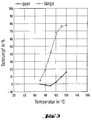
- the film has the shrink properties as shown in Figure 2.
- the film was printed by means of counter pressure, cut and folded into a tube according to the invention according to FIGS. 5a to c and then wound up.
- the label according to the invention was placed on a 0.33 liter bottle made of PET and then shrunk on in a shrinking furnace at a shrinking furnace temperature of 300 ° C. and a residence time of approx. 2 s.
Landscapes
- Engineering & Computer Science (AREA)
- Mechanical Engineering (AREA)
- Manufacturing & Machinery (AREA)
- Physics & Mathematics (AREA)
- General Physics & Mathematics (AREA)
- Theoretical Computer Science (AREA)
- Shaping By String And By Release Of Stress In Plastics And The Like (AREA)
- Shaping Of Tube Ends By Bending Or Straightening (AREA)
Applications Claiming Priority (2)
| Application Number | Priority Date | Filing Date | Title |
|---|---|---|---|
| DE4433962 | 1994-09-23 | ||
| DE19944433962 DE4433962A1 (de) | 1994-09-23 | 1994-09-23 | Schlauch aus thermoplastischer Schrumpffolie, Verfahren zu seiner Herstellung und seine Verwendung |
Publications (2)
| Publication Number | Publication Date |
|---|---|
| EP0733459A2 true EP0733459A2 (fr) | 1996-09-25 |
| EP0733459A3 EP0733459A3 (fr) | 1996-11-20 |
Family
ID=6528975
Family Applications (1)
| Application Number | Title | Priority Date | Filing Date |
|---|---|---|---|
| EP95114302A Withdrawn EP0733459A3 (fr) | 1994-09-23 | 1995-09-12 | Gaine en matière thermoplastique retractable procédé pour sa fabrication et son utilisation |
Country Status (2)
| Country | Link |
|---|---|
| EP (1) | EP0733459A3 (fr) |
| DE (1) | DE4433962A1 (fr) |
Cited By (1)
| Publication number | Priority date | Publication date | Assignee | Title |
|---|---|---|---|---|
| US9637264B2 (en) | 2010-01-28 | 2017-05-02 | Avery Dennison Corporation | Label applicator belt system |
Families Citing this family (7)
| Publication number | Priority date | Publication date | Assignee | Title |
|---|---|---|---|---|
| DE19859063A1 (de) * | 1998-12-22 | 2000-06-29 | Frank Berrenbaum | Dekoratives Rundumetikett für Getränkeflaschen |
| DE29919479U1 (de) * | 1999-11-05 | 2001-03-22 | Steinbeis PPL GmbH, 83098 Brannenburg | Splitterschutzmantel, insbesondere für eine Glasflasche |
| DE10311067A1 (de) * | 2003-03-13 | 2004-09-30 | Schreiner Group Gmbh & Co. Kg | Aufhängevorrichtung |
| WO2008124581A1 (fr) | 2007-04-05 | 2008-10-16 | Avery Dennison Corporation | Etiquette thermorétractable sensible à la pression |
| US8282754B2 (en) | 2007-04-05 | 2012-10-09 | Avery Dennison Corporation | Pressure sensitive shrink label |
| CN101570060B (zh) * | 2008-05-04 | 2012-07-18 | 杨启赞 | 应用环保树脂材料制成收缩塑料膜的方法 |
| DE102011103570B3 (de) * | 2011-05-30 | 2012-10-25 | Frank Berrenbaum | Anordnung und Verfahren zum Aufbringen eines Schrumpfschlauches auf ein Behältnis |
Family Cites Families (7)
| Publication number | Priority date | Publication date | Assignee | Title |
|---|---|---|---|---|
| GB741906A (en) * | 1953-06-04 | 1955-12-14 | Theodore Willard Keller | Improvements relating to machines for making tubing from sheet material |
| DE2640031A1 (de) * | 1976-09-06 | 1978-03-09 | Windmoeller & Hoelscher | Verfahren zum herstellen von bodenfalten-schrumpfhauben |
| SE7909384L (sv) * | 1979-11-14 | 1981-05-15 | Iacconi Marie | Forfaringssett vid framstellning av skyddshuv for godsenhet, samt anordning for applicerande av sadan skyddshuv |
| DE3144798C1 (de) * | 1981-11-11 | 1983-02-03 | Hoechst Ag, 6000 Frankfurt | Verfahren zum Herstellen eines umhuellten Koerpers |
| IT1184200B (it) * | 1984-03-26 | 1987-10-22 | Vercon Inc | Procedimento per la produzione di contenitori tubolari termoplastici con strato di barriera |
| FR2572709B1 (fr) * | 1984-11-06 | 1986-12-12 | Fresnel Jacques | Procede d'habillage d'objets par des manchons en film thermoretractable |
| DE3917652A1 (de) * | 1989-05-31 | 1990-12-06 | Hoechst Ag | Mehrschichtige transparente polyolefinfolie fuer die schrumpfetikettieranwendung |
-
1994
- 1994-09-23 DE DE19944433962 patent/DE4433962A1/de not_active Withdrawn
-
1995
- 1995-09-12 EP EP95114302A patent/EP0733459A3/fr not_active Withdrawn
Non-Patent Citations (1)
| Title |
|---|
| None |
Cited By (1)
| Publication number | Priority date | Publication date | Assignee | Title |
|---|---|---|---|---|
| US9637264B2 (en) | 2010-01-28 | 2017-05-02 | Avery Dennison Corporation | Label applicator belt system |
Also Published As
| Publication number | Publication date |
|---|---|
| EP0733459A3 (fr) | 1996-11-20 |
| DE4433962A1 (de) | 1996-03-28 |
Similar Documents
| Publication | Publication Date | Title |
|---|---|---|
| DE69825742T2 (de) | Bei niedriger Temperatur wärmeschrumpfbare Folie für Etiketten | |
| EP0651004B1 (fr) | Feuille en polyoléfine etirée biaxialement, procédé pour sa préparation et utilisation | |
| DE69208002T2 (de) | Verfahren zur Herstellung einer Streckverpackungsfolie | |
| DE60022427T2 (de) | Wärmeschrumpfbare Polyesterfolie | |
| DE69719772T2 (de) | Film aus polyethylenhoher dichte mit hoher biaxialer orientierung | |
| DE69327507T2 (de) | Heisssiegelbarer mehrschichtiger Schrumpffilm | |
| DE69930730T2 (de) | Etikett | |
| EP0340579B1 (fr) | Feuille en polypropylène, rétrécissable et scellable à chaud, procédé pour sa fabrication et son utilisation comme étiquette rétrécissable | |
| DE69212664T2 (de) | Verfahren zum Herstellen eines in eine Form einzulegenden Etiketts | |
| EP0400456B1 (fr) | Feuille multicouche transparente en polyoléfine et utilisation pour étiquettes rétrécissables | |
| DE60016641T2 (de) | Wärmeschrumpfbarer Polyesterfilm | |
| DE68927690T2 (de) | Schrumpfbare Polyesterfolie | |
| DE69831800T2 (de) | Verbesserte zusammensetzung für uniaxial hitzeschrumpfbare biaxial-orientierte polypropylenfolie | |
| DE60027517T2 (de) | Wärmeschrumpfbare folie und mit dieser folie durch wärmeschrumpfen verbundener behälter | |
| EP0348749A2 (fr) | Feuille transparente et rétrécissable en polypropylène, procédé pour sa fabrication et son utilisation comme étiquette rétrécissable | |
| DE19949898C2 (de) | Verwendung einer Polyolefinfolie als In-Mould-Etikett | |
| EP0546311B1 (fr) | Dispositif et procédé pour produire un stratifié multicouche | |
| EP0207047B1 (fr) | Elément moulé rigide comportant des couches orientées moulées ensemble par compression ainsi que son procédé de fabrication | |
| DE2036031A1 (de) | Verfahren zur Herstellung in Langs richtung orientierter thermoplastischer Filme | |
| DE69226715T2 (de) | Verfahren zur Herstellung von schrumpfbaren Folien und so hergestellte schrumpfbare Folien und Laminate | |
| DE60128856T2 (de) | Verwendung von wärmeschrumpfbaren thermoplastischen Kunststofffolien aus Polyestern | |
| DE69027205T2 (de) | Hitzeschrumpfbarer geschäumter Mehrschichtfilm und Verfahren zur Herstellung | |
| EP0733459A2 (fr) | Gaine en matière thermoplastique retractable procédé pour sa fabrication et son utilisation | |
| DE60116419T2 (de) | Schichtige, wärmeschrumpfbare Folien und Etiketten für Flaschen | |
| DE60216797T2 (de) | Schrumpfbare irisierende folie |
Legal Events
| Date | Code | Title | Description |
|---|---|---|---|
| PUAI | Public reference made under article 153(3) epc to a published international application that has entered the european phase |
Free format text: ORIGINAL CODE: 0009012 |
|
| AK | Designated contracting states |
Kind code of ref document: A2 Designated state(s): BE CH DE FR GB LI NL |
|
| PUAL | Search report despatched |
Free format text: ORIGINAL CODE: 0009013 |
|
| AK | Designated contracting states |
Kind code of ref document: A3 Designated state(s): BE CH DE FR GB LI NL |
|
| 17P | Request for examination filed |
Effective date: 19970520 |
|
| STAA | Information on the status of an ep patent application or granted ep patent |
Free format text: STATUS: THE APPLICATION HAS BEEN WITHDRAWN |
|
| 18W | Application withdrawn |
Withdrawal date: 19970918 |