EP0735735A2 - Video- und Audiorufnummerauskunft - Google Patents
Video- und Audiorufnummerauskunft Download PDFInfo
- Publication number
- EP0735735A2 EP0735735A2 EP19960301904 EP96301904A EP0735735A2 EP 0735735 A2 EP0735735 A2 EP 0735735A2 EP 19960301904 EP19960301904 EP 19960301904 EP 96301904 A EP96301904 A EP 96301904A EP 0735735 A2 EP0735735 A2 EP 0735735A2
- Authority
- EP
- European Patent Office
- Prior art keywords
- directory assistance
- calling party
- video information
- sought
- telephone number
- Prior art date
- Legal status (The legal status is an assumption and is not a legal conclusion. Google has not performed a legal analysis and makes no representation as to the accuracy of the status listed.)
- Withdrawn
Links
- 230000004044 response Effects 0.000 claims description 27
- 238000000034 method Methods 0.000 claims description 22
- 240000004760 Pimpinella anisum Species 0.000 description 1
- 230000005540 biological transmission Effects 0.000 description 1
- 238000001514 detection method Methods 0.000 description 1
- 238000010586 diagram Methods 0.000 description 1
- 230000009977 dual effect Effects 0.000 description 1
- 230000006870 function Effects 0.000 description 1
- 238000012986 modification Methods 0.000 description 1
- 230000004048 modification Effects 0.000 description 1
- 230000001360 synchronised effect Effects 0.000 description 1
Images


Classifications
-
- H—ELECTRICITY
- H04—ELECTRIC COMMUNICATION TECHNIQUE
- H04N—PICTORIAL COMMUNICATION, e.g. TELEVISION
- H04N1/00—Scanning, transmission or reproduction of documents or the like, e.g. facsimile transmission; Details thereof
- H04N1/32—Circuits or arrangements for control or supervision between transmitter and receiver or between image input and image output device, e.g. between a still-image camera and its memory or between a still-image camera and a printer device
- H04N1/327—Initiating, continuing or ending a single-mode communication; Handshaking therefor
- H04N1/32765—Initiating a communication
- H04N1/32771—Initiating a communication in response to a request, e.g. for a particular document
- H04N1/32782—Initiating a communication in response to a request, e.g. for a particular document using a tone- or pulse-coded request
-
- H—ELECTRICITY
- H04—ELECTRIC COMMUNICATION TECHNIQUE
- H04M—TELEPHONIC COMMUNICATION
- H04M3/00—Automatic or semi-automatic exchanges
- H04M3/42—Systems providing special services or facilities to subscribers
- H04M3/487—Arrangements for providing information services, e.g. recorded voice services or time announcements
- H04M3/493—Interactive information services, e.g. directory enquiries ; Arrangements therefor, e.g. interactive voice response [IVR] systems or voice portals
- H04M3/4931—Directory assistance systems
-
- H—ELECTRICITY
- H04—ELECTRIC COMMUNICATION TECHNIQUE
- H04N—PICTORIAL COMMUNICATION, e.g. TELEVISION
- H04N1/00—Scanning, transmission or reproduction of documents or the like, e.g. facsimile transmission; Details thereof
- H04N1/00127—Connection or combination of a still picture apparatus with another apparatus, e.g. for storage, processing or transmission of still picture signals or of information associated with a still picture
-
- H—ELECTRICITY
- H04—ELECTRIC COMMUNICATION TECHNIQUE
- H04N—PICTORIAL COMMUNICATION, e.g. TELEVISION
- H04N1/00—Scanning, transmission or reproduction of documents or the like, e.g. facsimile transmission; Details thereof
- H04N1/32—Circuits or arrangements for control or supervision between transmitter and receiver or between image input and image output device, e.g. between a still-image camera and its memory or between a still-image camera and a printer device
- H04N1/327—Initiating, continuing or ending a single-mode communication; Handshaking therefor
- H04N1/32765—Initiating a communication
- H04N1/32771—Initiating a communication in response to a request, e.g. for a particular document
-
- H—ELECTRICITY
- H04—ELECTRIC COMMUNICATION TECHNIQUE
- H04N—PICTORIAL COMMUNICATION, e.g. TELEVISION
- H04N1/00—Scanning, transmission or reproduction of documents or the like, e.g. facsimile transmission; Details thereof
- H04N1/32—Circuits or arrangements for control or supervision between transmitter and receiver or between image input and image output device, e.g. between a still-image camera and its memory or between a still-image camera and a printer device
- H04N1/327—Initiating, continuing or ending a single-mode communication; Handshaking therefor
- H04N1/32765—Initiating a communication
- H04N1/32771—Initiating a communication in response to a request, e.g. for a particular document
- H04N1/32784—Initiating a communication in response to a request, e.g. for a particular document using a voice request
-
- H—ELECTRICITY
- H04—ELECTRIC COMMUNICATION TECHNIQUE
- H04N—PICTORIAL COMMUNICATION, e.g. TELEVISION
- H04N7/00—Television systems
- H04N7/14—Systems for two-way working
- H04N7/141—Systems for two-way working between two video terminals, e.g. videophone
- H04N7/147—Communication arrangements, e.g. identifying the communication as a video-communication, intermediate storage of the signals
Definitions
- This invention relates to automated directory assistance, as provided by telephone companies to their subscribers.
- Telephone companies provide many types of information to their customers as part of directory assistance service. For example, a calling customer may obtain a name, telephone number, address, and zip code from directory assistance.
- a calling customer may obtain a name, telephone number, address, and zip code from directory assistance.
- the information must be stored and organized in a database, the type of information available is limited by the database structure. This makes it difficult for companies offering directory assistance to store customized or "miscellaneous" data for each subscriber in the database. For example, it would be difficult, if not impossible, to store information such as a price list of goods or services available from a subscriber in the database.
- conventional directory assistance systems typically provide automated responses to directory assistance requests. That is, once a "live" operator has ensured that the correct directory assistance entry has been located, the actual directory information often is delivered to the calling party by an automated operator position in the form of a computer-generated message. This limits the amount of information that can be delivered to a calling customer by the directory assistance system while still maintaining the efficiencies provided by automated operator positions.
- Video directory assistance information is provided together with (or in place of) audio directory assistance information.
- Directory assistance calls from a calling party desiring to learn a sought-after telephone number are routed to a directory assistance system.
- the directory assistance system determines whether there is video information associated with the sought-after directory listing.
- video information is available, the information is provided to the calling party together with or in lieu of an audio directory assistance message.
- Providing video directory assistance information in this manner greatly increases the amount of information that can be provided to a calling party, while still allowing directory assistance to be automated.
- Video directory assistance also provides increased flexibility in the type of information that can be provided.
- non-video directory assistance information is stored in a conventional directory assistance database, together with an indication of whether there is video information associated with a particular directory listing (e.g., telephone service subscriber or telephone number) in the database.
- Video information which could be one or more still images or a motion picture, is stored in a separate video database.
- the conventional database provides a pointer to the location in the video database at which is stored the video information necessary to respond to a particular directory assistance request.
- the exemplary communications system of Fig. 1 is equipped to provide audio and video directory assistance in accordance with the principles of the invention.
- the system includes a calling terminal 110 connected to a local telephone switch 112, a telecommunications switch 114 operating under stored program control, a directory assistance computer 116, a local switch 118, and a called terminal 120.
- a caller at calling terminal 110 uses the services of the directory assistance computer to obtain a directory listing, such as the telephone number (hereafter referred to as the "sought-after number") of called terminal 120.
- Calling terminal 110 and called terminal 120 may be either conventional telephones or telephones equipped to provide video telephony service (including, for example, a computer terminal capable of providing video telephone service and cable TV telephones).
- Local switches 112 and 118 illustratively are central office switches capable of switching video information.
- Switch 114 is a switch such as the 5ESS switch manufactured by AT&T Corp., arranged to offer the Operator Services Position System (OSPS) features.
- OSPS Operator Services
- Switch 114 includes a control block 122, a switching block 124 for switching voice, data and video signals, a voice processing unit (VPU) block 126, an audio response unit block 128, and a video response unit block 130.
- Control 122 is a distributed control system operating under the control of a group of data and call processing programs to control various blocks of the switch.
- Control block 122 communicates with directory assistance computer 116 via a data link 136.
- VPU 126 is connected to control 122 to receive voice commands from a subscriber at calling terminal 110.
- VPU 126 also generates tones and voice messages to prompt a customer to speak or key information (e.g., in the form of dual tone multifrequency (DTMF) digits) into the system for subsequent recognition by the VPU.
- VPU 126 includes both announcement circuits and detection circuits.
- VPU 126 could be implemented, for example, using the Conversant® voice response system commercially available from AT&T Corp.
- Directory assistance computer 116 includes several components, including a processor 138, a memory 140 associated with the processor, a directory assistance database 142, and a video database 144.
- the directory assistance database of directory assistance computer 116 is provisioned in a conventional manner by provisioning facilities 146. Provisioning facilities 146 also update and provision video database 144.
- the video information may include a still image, multiple still images, or a motion picture.
- a directory assistance computer terminal 148 communicates with directory assistance computer 116 to provide a directory assistance operator with access to the computer.
- Audio response unit 128 is coupled via a link 132 to directory assistance computer 116. Audio response unit 128, under the control of control block 122, plays audio responses from directory assistance computer 116 to calling terminal 110. The audio information typically is output from directory assistance database 142. Audio response unit 128 provides these responses to calling terminal 110 via switching block 124. Video response unit 130 receives video signals from directory assistance computer 116 via a video link 134. Video response unit 130 formats the received video signals and outputs the video signals to switching block 124 for delivery to calling terminal 110. The operation of audio response unit 128 and video response unit 130 are controlled and synchronized with the operation of directory assistance computer 116 by control block 122.
- a directory assistance request When a directory assistance request is received from calling terminal 110, the call is routed by switch 112 to switch 114. Switch 114 communicates with directory assistance computer 116 via line 136 to process the directory assistance request.
- the operator at terminal 148 communicates orally with a customer at calling terminal 110 and, on the basis of these communications, keys information into terminal 148 for transmission to computer 116.
- the computer responds to the keyed information by generating displays of information, which may include the desired directory number, on directory assistance computer terminal 148. Until the customer gives enough information to locate a valid listing from directory assistance database 142, the customer may not be connected to audio response unit 128, as there is nothing to announce. However, when the operator ascertains that the desired number or listing has been obtained, the operator signals to computer 116 to identify the correct listing and a directory number is then announced to the customer by audio response unit 128.
- video information is provided (when available) to calling terminal 110 together with the audio directory assistance information.
- the process involves (1) determining whether calling terminal 110 has video capability, (2) determining whether there is video information associated with the sought-after directory listing (e.g., the sought-after telephone number), and (3) delivering the video information (and typically delivering audio information) to calling terminal 110.
- the process may include additional steps (or fewer steps), such as receiving the automatic number identifiers (ANI) of calling terminal 110 and providing video information which varies depending on the received ANI, or receiving DTMF signals from calling terminal 110 indicating a selection of video information by the caller and delivering the caller-selected information.
- ANI automatic number identifiers
- the video information "associated" with the sought-after telephone number may be video information which is specific to the sought-after number (i.e., specific to the called party at called terminal 120) or may be some "default" information which is not specific to the sought-after number.
- the party at called terminal 120 is a sports equipment retail store.
- Video information which is specific to the sought-after number of called terminal 120 might include, for example, a price list of various types of sports equipment available from the store.
- An example of "default" video information would be an advertisement or logo provided by the telephone company (e.g., in exchange for reducing the telecommunications cost to called terminal 120), which bears no particular relation to the sports equipment retail store.
- Processor 138 determines whether calling terminal 110 is equipped to receive video information.
- processor 138 accesses memory 140 to determine whether terminal 110 has such capability.
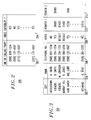
- Fig. 2 shows an exemplary table 200, that may be stored within memory 140, which indicates which telephone stations have video capability.
- Table 200 illustratively includes two columns, 202 and 204.
- Column 202 stores a list of ANIs of various calling terminals (such as calling terminal 110) which have access to directory assistance computer 116.
- Column 204 stores an indication, for each respective ANI in column 202, of whether the ANI has video capability.
- Processor 138 uses the ANI of calling terminal 110 (which ANI is received from switches 112 and 114) as an input to memory 140, and receives as an output from the memory an indication of whether calling terminal 110 can receive video signals.
- ANI ANI is received from switches 112 and 114
- Processor 138 uses the ANI of calling terminal 110 (which ANI is received from switches 112 and 114) as an input to memory 140, and receives as an output from the memory an indication of whether calling terminal 110 can receive video signals.
- ANI which ANI is received from switches 112 and 114
- the determination could be made directly based upon an indication of video capability or information provided directly by calling terminal 110 or switches 112 or 114.
- memory 140 returns information indicating to processor 138 that calling terminal 110 does not have video capability, the directory assistance call or request is processed in a conventional manner. Calling terminal 110 receives only audio directory assistance information. However, if memory 140 returns information indicating to processor 138 that calling terminal 110 can receive video signals, processor 138 determines whether there is video information stored within video database 144 that is associated with the directory assistance telephone number sought after by the caller at calling terminal 110.
- Fig. 3 shows an exemplary table 300 illustrating the database structure stored within directory assistance database 142.
- Table 300 includes multiple rows and columns. Each row represents a record or information held for a particular directory assistance telephone number.
- Columns 302, 304, and 306 of table 300 respectively store the city of residence, name, and telephone number of each person in the directory assistance database.
- Column 308 stores an indication of whether there is video information stored within video database 144 that is associated with the telephone number (of the same row) in column 306.
- column 308 may specify that there is no specific video information stored, but that selected default video information is to be provided for the specified telephone number of column 306.
- Column 310 stores a pointer to the location in video database 144 which stores the video information for the telephone number in column 306.
- Column 310 may be empty if column 308 indicates that there is no video information for the directory number in column 306.
- An additional column, column 312, may be included to provide a second pointer to an alternative memory location in video database 144. This second pointer is useful, for example, to provide a second video image, a set of still video images, or a different motion picture to be sent to calling terminal 110 after a predetermined period of time has elapsed.
- the second pointer (or additional pointers which are not shown) also may be used to identify video information to be delivered to a caller at calling terminal 110 in response to a DTMF signal entered by the caller.
- processor 138 under program control, selects the appropriate pointer on the basis of the DTMF digit detected by VPU 126.
- column 312 is to provide the capability of delivering information on the basis of a portion of the ANI of calling terminal 110.
- column 310 stores a pointer to video information to be provided for all area codes other than 908, 201, 914 and 212.
- Column 312 stores a pointer to video information to be delivered when area code of calling terminal 110 is one of 908, 201, 914 and 212.
- Fig. 4 shows a flow chart which summarizes the steps of an illustrative call flow. Processing starts at step 400. Processor 138 determines whether the calling party has video telephone (e.g., video reception) capability. If calling terminal 110 does not have such capability, the directory assistance request is processed in a conventional manner to provide an audio response. Otherwise, processing continues at step 402. At step 402 the processor determines whether the called party wants video information to be displayed. That is, processor 138 determines whether column 308 of table 300 includes a "yes" or "no" (or "default") indication. If the determination is that video information is not to be returned to calling terminal 110 with the sought-after number, only the audio response is provided.
- video telephone e.g., video reception
- processor 138 determines which information is to be provided (step 404). This step may be accomplished by checking column 310 of table 300 to retrieve the pointer to a memory location in video database 144. The appropriate video information is then output (step 406) from video database 144 to video response unit 130 of switch 114. Video response unit 130 formats the video information as required or appropriate for display on calling terminal 110. The appropriate audio response is provided from directory assistance database 142 via audio response unit 128.
- Processor 138 preferably is programmed to poll switch 114 to determine whether calling terminal 110 has disconnected from the call (step 408). If the caller has disconnected, the directory assistance request has been satisfied and further processing is terminated. If calling terminal 110 has not disconnected, processor 138 determines whether a predetermined time period has elapsed (step 410). If the predetermined time period has elapsed, processing continues at step 404, and processor 138 determines what video image is to be provided to calling terminal 110. This sequence of operations permits different video information to be displayed while the call is in progress.
- processor 138 polls the call connection for a DTMF tone entry by the caller at calling terminal 110 (step 412) while waiting for the predetermined time period to elapse. If no DTMF tone is received from calling terminal 110, processor 138 returns to step 408 to determine whether the caller at calling terminal 110 is still connected. However, if a DTMF tone is received from calling terminal 110, processor 138 selects different video information to display on calling terminal 110 in response to the entered tone (step 414).
Landscapes
- Engineering & Computer Science (AREA)
- Signal Processing (AREA)
- Multimedia (AREA)
- Telephonic Communication Services (AREA)
- Two-Way Televisions, Distribution Of Moving Picture Or The Like (AREA)
Applications Claiming Priority (2)
| Application Number | Priority Date | Filing Date | Title |
|---|---|---|---|
| US414848 | 1989-09-29 | ||
| US41484895A | 1995-03-31 | 1995-03-31 |
Publications (1)
| Publication Number | Publication Date |
|---|---|
| EP0735735A2 true EP0735735A2 (de) | 1996-10-02 |
Family
ID=23643240
Family Applications (1)
| Application Number | Title | Priority Date | Filing Date |
|---|---|---|---|
| EP19960301904 Withdrawn EP0735735A2 (de) | 1995-03-31 | 1996-03-20 | Video- und Audiorufnummerauskunft |
Country Status (3)
| Country | Link |
|---|---|
| EP (1) | EP0735735A2 (de) |
| CA (1) | CA2170086A1 (de) |
| MX (1) | MX9601181A (de) |
Cited By (5)
| Publication number | Priority date | Publication date | Assignee | Title |
|---|---|---|---|---|
| DE19744139A1 (de) * | 1997-09-29 | 1999-04-01 | Deutsche Telekom Ag | Verfahren zur Erweiterung des Informationsinhaltes für ein elektronisches Telekommunikationsverzeichnis |
| WO1999038309A1 (de) * | 1998-01-20 | 1999-07-29 | Siemens Aktiengesellschaft | Auskunftsdienst in eine telekommunikationsnetz |
| CN1080967C (zh) * | 1998-02-26 | 2002-03-13 | 曲振兴 | 程控电话自动系列查号系统 |
| EP0980175A3 (de) * | 1998-08-10 | 2003-09-03 | Tenovis GmbH & Co. KG | Verfahren zur Anzeige von Daten über Zielteilnehmer |
| EP1777930A3 (de) * | 2000-01-31 | 2007-07-18 | Grape Technology Group, Inc. | Kommunikationsunterstützungssystem und -verfahren |
-
1996
- 1996-02-22 CA CA 2170086 patent/CA2170086A1/en not_active Abandoned
- 1996-03-20 EP EP19960301904 patent/EP0735735A2/de not_active Withdrawn
- 1996-03-28 MX MX9601181A patent/MX9601181A/es unknown
Cited By (6)
| Publication number | Priority date | Publication date | Assignee | Title |
|---|---|---|---|---|
| DE19744139A1 (de) * | 1997-09-29 | 1999-04-01 | Deutsche Telekom Ag | Verfahren zur Erweiterung des Informationsinhaltes für ein elektronisches Telekommunikationsverzeichnis |
| WO1999038309A1 (de) * | 1998-01-20 | 1999-07-29 | Siemens Aktiengesellschaft | Auskunftsdienst in eine telekommunikationsnetz |
| CN1080967C (zh) * | 1998-02-26 | 2002-03-13 | 曲振兴 | 程控电话自动系列查号系统 |
| EP0980175A3 (de) * | 1998-08-10 | 2003-09-03 | Tenovis GmbH & Co. KG | Verfahren zur Anzeige von Daten über Zielteilnehmer |
| EP1777930A3 (de) * | 2000-01-31 | 2007-07-18 | Grape Technology Group, Inc. | Kommunikationsunterstützungssystem und -verfahren |
| US8139748B2 (en) | 2000-01-31 | 2012-03-20 | Grape Technology Group, Inc. | Communication assistance system and method |
Also Published As
| Publication number | Publication date |
|---|---|
| MX9601181A (es) | 1997-02-28 |
| CA2170086A1 (en) | 1996-10-01 |
Similar Documents
| Publication | Publication Date | Title |
|---|---|---|
| CA2024245C (en) | Multilocation queuing for telephone calls | |
| US5278894A (en) | Use of incoming caller line identification | |
| EP0609019B1 (de) | Verbesserte Audio/Video Telefonkommunikation | |
| US4788682A (en) | Telephone system adapted to telemarketing | |
| US7961859B2 (en) | Method and system for providing enhanced call waiting and caller identification | |
| JP2669627B2 (ja) | 自動音声処理補助顧客情報システム | |
| US5528672A (en) | Telephone system with subscriber selected audio and image announcements | |
| US5506890A (en) | Method and apparatus for group-specific calling | |
| US7492884B2 (en) | Call screening apparatus and method | |
| MXPA01000887A (es) | Metodo y sistema para proveer identificacion de llamador mejorada. | |
| CA2143057C (en) | Automatic call distributor with automated postconversation message system | |
| GB2287609A (en) | Handling follow-up telephone call messages | |
| MXPA02001257A (es) | Metodo y sistema para proveer informacion de identificacion. | |
| EP0715474A2 (de) | Auf einem Zusatzprozessor basiertes Anrufverarbeitungssystem | |
| US6088440A (en) | Method and apparatus for operating a telephone exchange having selectable audio sources | |
| US7130392B2 (en) | System for providing commercial advertising to a telephone user | |
| EP0735735A2 (de) | Video- und Audiorufnummerauskunft | |
| US5854837A (en) | Method and system for providing interactive data exchange between an interactive platform and a caller | |
| US6332019B1 (en) | Telecommunications network with store for data associated with an area code | |
| KR20000070162A (ko) | 전화 교환기 및 그 제어방법 | |
| US7295661B2 (en) | Enhanced telecommunications alerting | |
| EP1046270B1 (de) | Vermittlungsnetze | |
| AU695965C (en) | Telephone exchange | |
| JPH04342399A (ja) | 内線ルーティング制御方式 | |
| KR19990055974A (ko) | 사설교환기에서 문자정보 제공방법 |
Legal Events
| Date | Code | Title | Description |
|---|---|---|---|
| PUAI | Public reference made under article 153(3) epc to a published international application that has entered the european phase |
Free format text: ORIGINAL CODE: 0009012 |
|
| AK | Designated contracting states |
Kind code of ref document: A2 Designated state(s): DE ES FR GB |
|
| STAA | Information on the status of an ep patent application or granted ep patent |
Free format text: STATUS: THE APPLICATION HAS BEEN WITHDRAWN |
|
| 18W | Application withdrawn |
Withdrawal date: 19970718 |