EP0736099B1 - Expression selbstprozessierender polyproteine in transgenen pflanzen - Google Patents
Expression selbstprozessierender polyproteine in transgenen pflanzen Download PDFInfo
- Publication number
- EP0736099B1 EP0736099B1 EP95903855A EP95903855A EP0736099B1 EP 0736099 B1 EP0736099 B1 EP 0736099B1 EP 95903855 A EP95903855 A EP 95903855A EP 95903855 A EP95903855 A EP 95903855A EP 0736099 B1 EP0736099 B1 EP 0736099B1
- Authority
- EP
- European Patent Office
- Prior art keywords
- sequence
- protein
- translation
- polyprotein
- cleavage site
- Prior art date
- Legal status (The legal status is an assumption and is not a legal conclusion. Google has not performed a legal analysis and makes no representation as to the accuracy of the status listed.)
- Expired - Lifetime
Links
Images


Classifications
-
- C—CHEMISTRY; METALLURGY
- C07—ORGANIC CHEMISTRY
- C07K—PEPTIDES
- C07K14/00—Peptides having more than 20 amino acids; Gastrins; Somatostatins; Melanotropins; Derivatives thereof
- C07K14/005—Peptides having more than 20 amino acids; Gastrins; Somatostatins; Melanotropins; Derivatives thereof from viruses
-
- C—CHEMISTRY; METALLURGY
- C12—BIOCHEMISTRY; BEER; SPIRITS; WINE; VINEGAR; MICROBIOLOGY; ENZYMOLOGY; MUTATION OR GENETIC ENGINEERING
- C12N—MICROORGANISMS OR ENZYMES; COMPOSITIONS THEREOF; PROPAGATING, PRESERVING, OR MAINTAINING MICROORGANISMS; MUTATION OR GENETIC ENGINEERING; CULTURE MEDIA
- C12N15/00—Mutation or genetic engineering; DNA or RNA concerning genetic engineering, vectors, e.g. plasmids, or their isolation, preparation or purification; Use of hosts therefor
- C12N15/09—Recombinant DNA-technology
- C12N15/11—DNA or RNA fragments; Modified forms thereof; Non-coding nucleic acids having a biological activity
- C12N15/62—DNA sequences coding for fusion proteins
-
- C—CHEMISTRY; METALLURGY
- C12—BIOCHEMISTRY; BEER; SPIRITS; WINE; VINEGAR; MICROBIOLOGY; ENZYMOLOGY; MUTATION OR GENETIC ENGINEERING
- C12N—MICROORGANISMS OR ENZYMES; COMPOSITIONS THEREOF; PROPAGATING, PRESERVING, OR MAINTAINING MICROORGANISMS; MUTATION OR GENETIC ENGINEERING; CULTURE MEDIA
- C12N15/00—Mutation or genetic engineering; DNA or RNA concerning genetic engineering, vectors, e.g. plasmids, or their isolation, preparation or purification; Use of hosts therefor
- C12N15/09—Recombinant DNA-technology
- C12N15/63—Introduction of foreign genetic material using vectors; Vectors; Use of hosts therefor; Regulation of expression
- C12N15/79—Vectors or expression systems specially adapted for eukaryotic hosts
- C12N15/82—Vectors or expression systems specially adapted for eukaryotic hosts for plant cells, e.g. plant artificial chromosomes (PACs)
- C12N15/8216—Methods for controlling, regulating or enhancing expression of transgenes in plant cells
-
- C—CHEMISTRY; METALLURGY
- C12—BIOCHEMISTRY; BEER; SPIRITS; WINE; VINEGAR; MICROBIOLOGY; ENZYMOLOGY; MUTATION OR GENETIC ENGINEERING
- C12N—MICROORGANISMS OR ENZYMES; COMPOSITIONS THEREOF; PROPAGATING, PRESERVING, OR MAINTAINING MICROORGANISMS; MUTATION OR GENETIC ENGINEERING; CULTURE MEDIA
- C12N15/00—Mutation or genetic engineering; DNA or RNA concerning genetic engineering, vectors, e.g. plasmids, or their isolation, preparation or purification; Use of hosts therefor
- C12N15/09—Recombinant DNA-technology
- C12N15/63—Introduction of foreign genetic material using vectors; Vectors; Use of hosts therefor; Regulation of expression
- C12N15/79—Vectors or expression systems specially adapted for eukaryotic hosts
- C12N15/82—Vectors or expression systems specially adapted for eukaryotic hosts for plant cells, e.g. plant artificial chromosomes (PACs)
- C12N15/8241—Phenotypically and genetically modified plants via recombinant DNA technology
-
- C—CHEMISTRY; METALLURGY
- C12—BIOCHEMISTRY; BEER; SPIRITS; WINE; VINEGAR; MICROBIOLOGY; ENZYMOLOGY; MUTATION OR GENETIC ENGINEERING
- C12N—MICROORGANISMS OR ENZYMES; COMPOSITIONS THEREOF; PROPAGATING, PRESERVING, OR MAINTAINING MICROORGANISMS; MUTATION OR GENETIC ENGINEERING; CULTURE MEDIA
- C12N9/00—Enzymes; Proenzymes; Compositions thereof; Processes for preparing, activating, inhibiting, separating or purifying enzymes
- C12N9/14—Hydrolases (3)
- C12N9/48—Hydrolases (3) acting on peptide bonds (3.4)
- C12N9/50—Proteinases, e.g. Endopeptidases (3.4.21-3.4.25)
- C12N9/503—Proteinases, e.g. Endopeptidases (3.4.21-3.4.25) derived from viruses
- C12N9/506—Proteinases, e.g. Endopeptidases (3.4.21-3.4.25) derived from viruses derived from RNA viruses
-
- C—CHEMISTRY; METALLURGY
- C07—ORGANIC CHEMISTRY
- C07K—PEPTIDES
- C07K2319/00—Fusion polypeptide
- C07K2319/61—Fusion polypeptide containing an enzyme fusion for detection (lacZ, luciferase)
-
- C—CHEMISTRY; METALLURGY
- C12—BIOCHEMISTRY; BEER; SPIRITS; WINE; VINEGAR; MICROBIOLOGY; ENZYMOLOGY; MUTATION OR GENETIC ENGINEERING
- C12N—MICROORGANISMS OR ENZYMES; COMPOSITIONS THEREOF; PROPAGATING, PRESERVING, OR MAINTAINING MICROORGANISMS; MUTATION OR GENETIC ENGINEERING; CULTURE MEDIA
- C12N2770/00—MICROORGANISMS OR ENZYMES; COMPOSITIONS THEREOF; PROPAGATING, PRESERVING, OR MAINTAINING MICROORGANISMS; MUTATION OR GENETIC ENGINEERING; CULTURE MEDIA ssRNA viruses positive-sense
- C12N2770/00011—Details
- C12N2770/36011—Togaviridae
- C12N2770/36111—Alphavirus, e.g. Sindbis virus, VEE, EEE, WEE, Semliki
- C12N2770/36122—New viral proteins or individual genes, new structural or functional aspects of known viral proteins or genes
Definitions
- This invention relates generally to the expression of self-processing polyproteins in transgenic plants.
- the relative levels of expression of several introduced genes in transgenic plants is notoriously influenced by "position effects" determined by the particular site of transgene integration into the genome. Even when introduced genes are linked on the same T-DNA, driven either by convergent or divergent promoters, they are usually not co-ordinately expressed at similar levels. This poses particular problems when high levels of expression of a number of introduced activities is required, for instance when attempting to express novel biochemical pathways in plants. In an attempt to achieve tissue specific, co-ordinated expression of two proteins, other researchers have linked genes by co-transference on the same T-DNA.
- Linking proteins in the form of polyproteins is a strategy adopted in the replication of many viruses.
- virus-encoded proteinases mediate extremely rapid intramolecular (cis) cleavages of the polyprotein to yield discrete protein products.
- a number of viral proteinases have been partially characterised and are thought to be related, both structurally and in catalytic mechanism, to cellular proteinases.
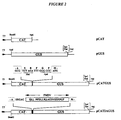
- picornaviridae a single long open reading frame encodes a polyprotein of some 225kD, but full-length translation products are not normally observed due to extremely rapid "primary" intramolecular (cis) cleavages mediated by virus encoded proteinases.
- cis intramolecular
- a primary cleavage occurs between the P1 capsid protein precursor and the replicative domains of the polyprotein (P2, P3; Figure 1,A). This cleavage is mediated by a virus encoded proteinase (2A pro ), of some 17kDa, cleaving at its own N-terminus.
- FMDV polyprotein undergoes a primary polyprotein cleavage at the C-terminus of the 2A region between the capsid protein precursor (P1-2A) and replicative domains of the polyprotein 2BC and P3 ( Figure 1,B). Precursors spanning the 2A/2B cleavage site are not detected during native polyprotein processing. This situation is somewhat analogous to the 2A cleavage in entero- and rhinoviruses described above. However the 2A region of the FMDV polyprotein was demonstrated to be only 16 amino acids long (Figure 1,C).
- the predicted amino acid sequence of this region is totally conserved amongst all aphthovirus genomic RNAs sequenced to date.
- the FMDV 2A region also shows high similarity to the C-terminal region of the approximately ten fold larger 2A protein of another genus of the picornaviridae, the cardioviruses.
- a method for the expression of multiple proteins in a transgenic plant comprising inserting into the genome of the plant a gene construct comprising a 5'-region which includes a promoter which is capable of initiating transcription of a structural gene under the control thereof, a protein encoding sequence coding for more than one protein and a 3'-terminator region which includes a polyadenylation signal, each of the said protein encoding sequences being separated from an adjacent protein encoding sequence by a DNA LINKER sequence which on translation autoproteolytically cleaves to give the component protein molecules.
- the DNA sequence which encodes the post-translation cleavage site is derived from a virus, particularly a picornavirus.
- the DNA sequence providing the cleavage site encodes the amino acid sequence NFDLLKLAGDVESNPGPFF [SEQ ID NO.1].
- the amino acid sequence NFDLLKLAGDVESNPGPFF amino acid sequence NFDLLKLAGDVESNPGPFF [SEQ ID NO.1].
- FMDV 2A represents a polyprotein region whose sole function in the viral genome is to effect or direct a single cleavage at its own C-terminus, functioning only in cis. Due to its small size, FMDV 2A (and related sequences or derivatives) presents an ideal candidate for engineering into plant polyprotein expression vectors.
- FMDV 2A functions as a substrate for a cellular proteinase, which, to account for the observed cleavage kinetics, would need to be closely coupled to translation, (ii) the FMDV 2A sequence in some manner disrupts the normal peptide bond formation during translation, or (iii) the FMD 2A sequence possesses an entirely novel type of proteolytic activity.
- pCAT2AGUS plasmid in which the 20 amino acid sequence spanning FMDV 2A was inserted between the reporter genes chloramphenicol acetyl transferase (CAT) and ß-glucuronidase (GUS) maintaining a single, long, open reading frame ( Figure 2).
- CAT chloramphenicol acetyl transferase
- GUS ß-glucuronidase
- Figure 2 a plasmid
- FMDV sequence can function in a manner similar to that observed in FMDV polyprotein processing: the [CAT2AGUS] polyprotein undergoes a co-translational, apparently autoproteolytic, cleavage yielding [CAT-2A] and GUS. It is clear that the 20 amino acid FMDV 2A-spanning sequence does not require other domains within the FMDV polyprotein to function and is an autonomous element capable of mediating cleavage-even in a completely foreign context.
- an oligopeptide comprising the C-terminal 14 residues of the EMC 2A protein together with the N-terminal proline residue of EMC protein 2B can also mediate cleavage in a foreign context, although to a lower level than FMD 2A
- FMDV 2A together with the N-terminal proline residue of protein 2B may represent an entirely novel type of protein cleavage activity. Although the mechanism of cleavage is not yet understood, its utility is apparent. Because of its small size the FMDV 2A sequence or derivatives of it are particularly attractive candidates for use in plant polyprotein expression constructs enabling the co-ordinated and stoichiometric expression of multiple proteins from a single open reading frame.
- the FMDV 2A sequence (plus the requisite carboxy-terminal proline) inserted between protein coding sequences, may allow the engineering of plant expression vectors where multiple whole proteins or protein domains can be expressed as a polyprotein and cleaved apart co-translationally with high efficiency. This may enable the rapid introduction of entire enzyme cascades into plants.
- the reporter genes CAT and GUS were amplified by PCR using oligonucleotide primers such that restriction sites were created at both termini.
- Individual genes were cloned into pGEM transcription vectors (pCAT; pGUS) and also assembled together (pCATGUS) to produce a single open reading frame encoding the artificial polyprotein [CATGUS] ( Figure 2).
- Coding sequences from the FMDV 2A region were assembled in the plasmid vector pGEM 7zf(+) in such a way that a series of unique restriction sites were created throughout the sequence.
- the FMDV 2A sequence was excised and inserted between the CAT and GUS genes of pCATGUS to retain a single open reading frame and form construct pCAT2AGUS ( Figure 2).
- Translation studies were performed in a coupled transcription/ translation (TnT) wheat germ system using T7 polymerase.
- Translation directed by plasmids pCAT , pGUS and pCATGUS yielded polypeptides of the expected molecular weight for CAT (25.7kDa), GUS (70.4kDa) and the polyprotein [CATGUS] (96.3kDa) respectively ( Figure 3, lanes 1, 4 and 2).
- Translation directed by pCAT2AGUS yielded two major products at 70kDa and 26kDa (lane 3). The 70kDa polypeptide migrated identically to the product of pGUS shown in lane 1 and represents GUS polypeptide processed from the [CAT2AGUS] polyprotein during translation.
- the 26kDa band migrated slightly more slowly than the product of pCAT shown in lane 4 and corresponds to the [CAT-2A] cleavage product.
- a third fainter band appeared at approx. 96kDa (lane 3) and co-migrated with the product of pCATGUS (lane 2). This corresponds to the entire polyprotein product of pCAT2AGUS and suggests that a small proportion of the polyprotein is not processed in the wheat germ lysate.
- Densitometric analysis of the distribution of radiolabel in the polypeptides in lane 3 showed that over 90% of the [CAT2AGUS] translation product was cleaved to [CAT-2A] and GUS.
- the [CAT2AGUS] portion of pCAT2AGUS was excised, inserted between the 35S CaMV promoter and nos 3' terminator and cloned into a Binl9-derived plant expression vector containing a functional neomycin phosphotransferase gene.
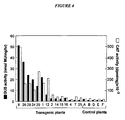
- This construct was introduced into tobacco via Agrobacterium- mediated leaf disk transformation. Transformed plants were selected and rooted on kanamycin. Protein extracts were prepared from leaves of transformed plants and assayed for GUS and CAT activities. The results are shown in Figure 4. A high degree of correlation was found between the activities of the two enzymes in any given plant. Of 18 independent transformed plants, seven plants (6, 26, 28, 24, 29, 1 and 12) expressed both enzymes at relatively high levels. Four plants (2, 14, 15, 16) expressed both enzymes at low levels. The remaining plants (only three shown in Figure 4, plants 4, 7 and 25) did not express either enzyme at levels above that detected in untransformed control plants (A, B, D, E, F).
- the data presented here demonstrates that the FMDV 2A sequence can function in a manner similar to that observed in FMDV polyprotein processing when expressed in chimeric genes in plant extracts and cells. Both in wheat germ lysates and transgenic plants, the chimeric [CAT2AGUS] polyprotein undergoes rapid, apparently autoproteolytic, cleavage to yield [CAT-2A] and GUS.
- FMDV 2A may represent an entirely novel type of protein cleavage activity. Although the mechanism of cleavage is not yet understood, its utility is apparent. Because of it's small size the FMDV 2A sequence or derivatives of it are particularly attractive candidates for use in plant polyprotein expression constructs enabling the coordinated and stoichiometric expression of multiple proteins from a single open reading frame.
- the FMDV 2A sequence inserted between protein coding sequences allows the engineering of plant expression vectors where multiple whole proteins or protein domains can be expressed as a polyprotein and cleaved apart co-translationally with high efficiency. This may enable the rapid introduction of entire enzyme cascades into plants.
Landscapes
- Health & Medical Sciences (AREA)
- Life Sciences & Earth Sciences (AREA)
- Genetics & Genomics (AREA)
- Chemical & Material Sciences (AREA)
- Engineering & Computer Science (AREA)
- Organic Chemistry (AREA)
- Biomedical Technology (AREA)
- Zoology (AREA)
- Molecular Biology (AREA)
- Bioinformatics & Cheminformatics (AREA)
- Wood Science & Technology (AREA)
- Biotechnology (AREA)
- General Engineering & Computer Science (AREA)
- Biochemistry (AREA)
- General Health & Medical Sciences (AREA)
- Biophysics (AREA)
- Microbiology (AREA)
- Virology (AREA)
- Plant Pathology (AREA)
- Physics & Mathematics (AREA)
- Medicinal Chemistry (AREA)
- Cell Biology (AREA)
- Gastroenterology & Hepatology (AREA)
- Proteomics, Peptides & Aminoacids (AREA)
- Breeding Of Plants And Reproduction By Means Of Culturing (AREA)
- Micro-Organisms Or Cultivation Processes Thereof (AREA)
- Cultivation Of Plants (AREA)
- Compounds Of Unknown Constitution (AREA)
- Agricultural Chemicals And Associated Chemicals (AREA)
- Peptides Or Proteins (AREA)
- Enzymes And Modification Thereof (AREA)
Claims (5)
- Verfahren zur Expression multipler Proteine in einer transgenen Pflanze, umfassend das Insertieren eines Genkonstrukts, das eine 5'-Region, die einen Promotor einschließt, der zur Initiierung der Transkription eines Struktur-Gens unter dessen Kontrolle fähig ist, eine Protein-kodierende Sequenz, die für mehr als ein Protein kodiert, und eine 3'-Terminatorregion umfaßt, die ein Polyadenylierungssignal einschließt, in das Genom der Pflanze, wobei jede der Protein-kodierenden Sequenzen von einer benachbarten Protein-kodierenden Sequenz durch eine DNA-Linkersequenz getrennt ist, die bei der Translation autoproteolytisch spaltet, um die Komponentenproteinmoleküle zu ergeben.
- Verfahren gemäß Anspruch 1, worin die DNA-Sequenz, die den Post-Translationsspaltungsort kodiert, aus einem Virus abgeleitet ist, insbesondere einem Picornavirus.
- Verfahren gemäß Anspruch 1, worin die DNA-Sequenz, die den Spaltungsort bereitstellt, die Aminosäuresequenz NFDLLKLAGDVESNPGPFF kodiert.
- Genkonstrukt zur Verwendung in der genetischen Modifizierung von Pflanzen, umfassend in dieser Reihenfolge einen in Pflanzenzellen aktiven Gen-Promotor, eine Anzahl von kodierenden Regionen und eine 3'-nicht-translatierte Region, die ein Polyadenylierungssignal enthält,
dadurch gekennzeichnet, daß
jede der Anzahl von kodierenden Regionen durch eine DNA-Linkersequenz getrennt ist, die bei der Translation autoproteolytisch gespalten wird, um die Komponentenproteinmoleküle zu ergeben. - Gen-Konstrukt gemäß Anspruch 4, worin der Spaltungsort die Aminosäuresequenz NFDLLKLAGDVESNPGPFF hat.
Applications Claiming Priority (3)
| Application Number | Priority Date | Filing Date | Title |
|---|---|---|---|
| GB9326271 | 1993-12-23 | ||
| GB939326271A GB9326271D0 (en) | 1993-12-23 | 1993-12-23 | Expression of self-processing polyprotein in transgenic plants |
| PCT/GB1994/002765 WO1995017514A1 (en) | 1993-12-23 | 1994-12-19 | Expression of self-processing polyproteins in transgenic plants |
Publications (2)
| Publication Number | Publication Date |
|---|---|
| EP0736099A1 EP0736099A1 (de) | 1996-10-09 |
| EP0736099B1 true EP0736099B1 (de) | 2001-10-24 |
Family
ID=10747081
Family Applications (1)
| Application Number | Title | Priority Date | Filing Date |
|---|---|---|---|
| EP95903855A Expired - Lifetime EP0736099B1 (de) | 1993-12-23 | 1994-12-19 | Expression selbstprozessierender polyproteine in transgenen pflanzen |
Country Status (9)
| Country | Link |
|---|---|
| US (1) | US5846767A (de) |
| EP (1) | EP0736099B1 (de) |
| JP (1) | JPH09506773A (de) |
| AT (1) | ATE207541T1 (de) |
| AU (1) | AU696643B2 (de) |
| CA (1) | CA2176209A1 (de) |
| DE (1) | DE69428804T2 (de) |
| GB (1) | GB9326271D0 (de) |
| WO (1) | WO1995017514A1 (de) |
Cited By (2)
| Publication number | Priority date | Publication date | Assignee | Title |
|---|---|---|---|---|
| US8945876B2 (en) | 2011-11-23 | 2015-02-03 | University Of Hawaii | Auto-processing domains for polypeptide expression |
| US10011847B2 (en) | 2013-05-20 | 2018-07-03 | 3P Biopharmaceuticals, S.L. | Alphaviral vectors and cell lines for producing recombinant proteins |
Families Citing this family (24)
| Publication number | Priority date | Publication date | Assignee | Title |
|---|---|---|---|---|
| US5965789A (en) * | 1991-01-11 | 1999-10-12 | American Red Cross | Engineering protein posttranslational modification by PACE/furin in transgenic non-human mammals |
| US5912167A (en) * | 1995-06-06 | 1999-06-15 | Wisconsin Alumni Research Foundation | Autocatalytic cleavage site and use thereof in a protein expression vector |
| EP1104468A1 (de) * | 1998-08-18 | 2001-06-06 | Syngenta Limited | Genetisches verfahren zur expression von polyproteinen in pflanzen |
| US6053454A (en) * | 1998-09-04 | 2000-04-25 | Hughes Electronics Corporation | Modular spacecraft payload support structure |
| US6921634B2 (en) * | 1999-12-23 | 2005-07-26 | Board Of Regents, The University Of Texas System | Replication competent hepatitus C virus and methods of use |
| EP1334181B1 (de) * | 2000-11-17 | 2010-03-17 | Metabolix, Inc. | Herstellung von polyhydroxyalkanoaten mittlerer kettenlänge aus fettsäure-biosynthesewegen |
| DE60109819T2 (de) * | 2001-01-30 | 2006-01-19 | Wisconsin Alumini Research Foundation, Madison | Expression von multiplen proteinen in transgenen pflanzen |
| WO2005017149A1 (en) * | 2003-06-03 | 2005-02-24 | Cell Genesys, Inc. | Compositions and methods for enhanced expression of recombinant polypeptides from a single vector using a peptide cleavage site |
| US20050136035A1 (en) * | 2003-06-03 | 2005-06-23 | Derek Ko | Cell specific replication-competent viral vectors comprising a self processing peptide cleavage site |
| US7485291B2 (en) * | 2003-06-03 | 2009-02-03 | Cell Genesys, Inc. | Compositions and methods for generating multiple polypeptides from a single vector using a virus derived peptide cleavage site, and uses thereof |
| EP2423216B1 (de) | 2003-12-01 | 2015-07-08 | Board Of Regents, The University Of Texas System | Replikationsfähiges Hepatitis-C-Virus und Verwendungsverfahren |
| US7714119B2 (en) * | 2004-07-13 | 2010-05-11 | Biosante Pharmaceuticals, Inc. | AAV vector compositions and methods for enhanced expression of immunoglobulins using the same |
| US7632509B2 (en) * | 2005-07-19 | 2009-12-15 | Biosante Pharmaceuticals, Inc. | Methods to express recombinant proteins from lentiviral vectors |
| EP2468768A3 (de) | 2005-07-21 | 2012-10-31 | Abbott Laboratories | Mehrfache Genexpression mit sORF-Konstrukten und Verfahren mit Polyproteinen, Pro-Proteinen und Proteolyse |
| JP6092497B2 (ja) | 2006-03-30 | 2017-03-08 | ユニバーシティー オブ カリフォルニア | 抗ctla−4抗体の限局性分泌のための方法および組成物 |
| US20070292922A1 (en) * | 2006-03-31 | 2007-12-20 | Cell Genesys, Inc. | Regulated expression of recombinant proteins from adeno-associated viral vectors |
| US7919079B2 (en) | 2006-03-31 | 2011-04-05 | Biosante Pharmaceuticals, Inc. | Cancer immunotherapy compositions and methods of use |
| EP2097533B9 (de) | 2006-11-28 | 2010-12-22 | Proyecto de Biomedicina Cima, S.L. | Viraler vektor und seine verwendungen |
| US8609936B2 (en) | 2007-04-27 | 2013-12-17 | Monsanto Technology Llc | Hemipteran-and coleopteran active toxin proteins from Bacillus thuringiensis |
| CA2776990A1 (en) * | 2009-10-30 | 2011-05-05 | Abbott Laboratories | Sorf constructs and multiple gene expression |
| WO2011064437A2 (es) | 2009-11-26 | 2011-06-03 | Proyecto De Biomedicina Cima, S.L. | Vectores virales y procedimientos útiles en la preparación de gdnf |
| WO2012001196A2 (es) | 2010-06-28 | 2012-01-05 | Proyecto De Biomedicina Cima, S.L. | Vectores alfavirales y usos de los mismos para la expresión de genes heterólogos |
| EP2407534A1 (de) | 2010-07-14 | 2012-01-18 | Neo Virnatech, S.L. | Verfahren und Reagenzien zum Erhalt von transkriptionell aktiven virusähnlichen Artikeln und rekombinante Virionen |
| WO2019200013A1 (en) | 2018-04-11 | 2019-10-17 | Cancer Targeting Systems, Inc. | Therapeutic constructs for treating cancer |
Family Cites Families (1)
| Publication number | Priority date | Publication date | Assignee | Title |
|---|---|---|---|---|
| US5162601A (en) * | 1989-11-22 | 1992-11-10 | The Upjohn Company | Plant potyvirus expression vector with a gene for protease |
-
1993
- 1993-12-23 GB GB939326271A patent/GB9326271D0/en active Pending
-
1994
- 1994-12-19 AU AU12762/95A patent/AU696643B2/en not_active Ceased
- 1994-12-19 CA CA002176209A patent/CA2176209A1/en not_active Abandoned
- 1994-12-19 WO PCT/GB1994/002765 patent/WO1995017514A1/en not_active Ceased
- 1994-12-19 AT AT95903855T patent/ATE207541T1/de not_active IP Right Cessation
- 1994-12-19 DE DE69428804T patent/DE69428804T2/de not_active Expired - Fee Related
- 1994-12-19 US US08/646,293 patent/US5846767A/en not_active Expired - Fee Related
- 1994-12-19 EP EP95903855A patent/EP0736099B1/de not_active Expired - Lifetime
- 1994-12-19 JP JP7517258A patent/JPH09506773A/ja active Pending
Cited By (2)
| Publication number | Priority date | Publication date | Assignee | Title |
|---|---|---|---|---|
| US8945876B2 (en) | 2011-11-23 | 2015-02-03 | University Of Hawaii | Auto-processing domains for polypeptide expression |
| US10011847B2 (en) | 2013-05-20 | 2018-07-03 | 3P Biopharmaceuticals, S.L. | Alphaviral vectors and cell lines for producing recombinant proteins |
Also Published As
| Publication number | Publication date |
|---|---|
| DE69428804T2 (de) | 2002-04-25 |
| AU696643B2 (en) | 1998-09-17 |
| DE69428804D1 (de) | 2001-11-29 |
| CA2176209A1 (en) | 1995-06-29 |
| GB9326271D0 (en) | 1994-02-23 |
| ATE207541T1 (de) | 2001-11-15 |
| US5846767A (en) | 1998-12-08 |
| WO1995017514A1 (en) | 1995-06-29 |
| AU1276295A (en) | 1995-07-10 |
| EP0736099A1 (de) | 1996-10-09 |
| JPH09506773A (ja) | 1997-07-08 |
Similar Documents
| Publication | Publication Date | Title |
|---|---|---|
| EP0736099B1 (de) | Expression selbstprozessierender polyproteine in transgenen pflanzen | |
| US5162601A (en) | Plant potyvirus expression vector with a gene for protease | |
| AU634168B2 (en) | Potyvirus coat protein genes and plants transformed therewith | |
| Halpin et al. | Self‐processing 2A‐polyproteins–a system for co‐ordinate expression of multiple proteins in transgenic plants | |
| Verchot et al. | The 35-kDa protein from the N-terminus of the potyviral polyprotein functions as a third virus-encoded proteinase | |
| Carrington et al. | Expression of potyviral polyproteins in transgenic plants reveals three proteolytic activities required for complete processing. | |
| Lee et al. | The complete sequence (22 kilobases) of murine coronavirus gene 1 encoding the putative proteases and RNA polymerase | |
| US5491076A (en) | Expression of foreign genes using a replicating polyprotein producing virus vector | |
| Basso et al. | Evidence for an internal ribosome entry site within the 5′ non-translated region of turnip mosaic potyvirus RNA | |
| Sasaki et al. | An insect picorna-like virus, Plautia stali intestine virus, has genes of capsid proteins in the 3′ part of the genome | |
| WO1990012107A1 (en) | Recombinant expression system based on satellite tobacco mosaic virus | |
| CA2278523C (en) | Rna binding protein and binding site useful for expression of recombinant molecules | |
| JP2002176995A (ja) | 殺虫性結晶タンパクの合成遺伝子 | |
| AU693770B2 (en) | RNA packaging system | |
| Hughes et al. | Identification of the murine coronavirus p28 cleavage site | |
| CA2232736A1 (en) | Commercial production of avidin in plants | |
| Ma et al. | Expressing multiple genes in a single open reading frame with the 2A region of foot-and-mouth disease virus as a linker | |
| Marcos et al. | In vitro characterization of a cassette to accumulate multiple proteins through synthesis of a self-processing polypeptide | |
| CA2078134A1 (en) | Transformation of plants with non-structural plant virus gene sequences | |
| WO1987003619A1 (en) | PROCESS FOR ENHANCING TRANSLATIONAL EFFICIENCY OF EUKARYOTIC mRNA | |
| EP0786003A1 (de) | Insektenviren und ihre verwendung im pflanzenschutz | |
| WO1995033834B1 (en) | Lag1: a gene for increasing the longevity of eukaryotes | |
| Cao et al. | Genetic variation of the poliovirus genome with two VPg coding units. | |
| WO1995021249A1 (en) | A cassette to accumulate multiple proteins through synthesis of a self-processing polypeptide | |
| US7045685B2 (en) | Insect viruses and their uses in protecting plants |
Legal Events
| Date | Code | Title | Description |
|---|---|---|---|
| PUAI | Public reference made under article 153(3) epc to a published international application that has entered the european phase |
Free format text: ORIGINAL CODE: 0009012 |
|
| 17P | Request for examination filed |
Effective date: 19960723 |
|
| AK | Designated contracting states |
Kind code of ref document: A1 Designated state(s): AT BE CH DE DK ES FR GB GR IE IT LI LU MC NL PT SE |
|
| 17Q | First examination report despatched |
Effective date: 19991228 |
|
| GRAG | Despatch of communication of intention to grant |
Free format text: ORIGINAL CODE: EPIDOS AGRA |
|
| RAP1 | Party data changed (applicant data changed or rights of an application transferred) |
Owner name: SYNGENTA LIMITED |
|
| GRAG | Despatch of communication of intention to grant |
Free format text: ORIGINAL CODE: EPIDOS AGRA |
|
| GRAH | Despatch of communication of intention to grant a patent |
Free format text: ORIGINAL CODE: EPIDOS IGRA |
|
| GRAH | Despatch of communication of intention to grant a patent |
Free format text: ORIGINAL CODE: EPIDOS IGRA |
|
| GRAA | (expected) grant |
Free format text: ORIGINAL CODE: 0009210 |
|
| AK | Designated contracting states |
Kind code of ref document: B1 Designated state(s): AT BE CH DE DK ES FR GB GR IE IT LI LU MC NL PT SE |
|
| PG25 | Lapsed in a contracting state [announced via postgrant information from national office to epo] |
Ref country code: IT Free format text: LAPSE BECAUSE OF FAILURE TO SUBMIT A TRANSLATION OF THE DESCRIPTION OR TO PAY THE FEE WITHIN THE PRE;WARNING: LAPSES OF ITALIAN PATENTS WITH EFFECTIVE DATE BEFORE 2007 MAY HAVE OCCURRED AT ANY TIME BEFORE 2007. THE CORRECT EFFECTIVE DATE MAY BE DIFFERENT FROM THE ONE RECORDED.SCRIBED TIME-LIMIT Effective date: 20011024 Ref country code: GR Free format text: LAPSE BECAUSE OF NON-PAYMENT OF DUE FEES Effective date: 20011024 Ref country code: BE Free format text: LAPSE BECAUSE OF FAILURE TO SUBMIT A TRANSLATION OF THE DESCRIPTION OR TO PAY THE FEE WITHIN THE PRESCRIBED TIME-LIMIT Effective date: 20011024 Ref country code: AT Free format text: LAPSE BECAUSE OF FAILURE TO SUBMIT A TRANSLATION OF THE DESCRIPTION OR TO PAY THE FEE WITHIN THE PRESCRIBED TIME-LIMIT Effective date: 20011024 |
|
| REF | Corresponds to: |
Ref document number: 207541 Country of ref document: AT Date of ref document: 20011115 Kind code of ref document: T |
|
| REG | Reference to a national code |
Ref country code: CH Ref legal event code: EP |
|
| REG | Reference to a national code |
Ref country code: IE Ref legal event code: FG4D |
|
| REG | Reference to a national code |
Ref country code: CH Ref legal event code: NV Representative=s name: BOVARD AG PATENTANWAELTE |
|
| REF | Corresponds to: |
Ref document number: 69428804 Country of ref document: DE Date of ref document: 20011129 |
|
| PG25 | Lapsed in a contracting state [announced via postgrant information from national office to epo] |
Ref country code: MC Free format text: LAPSE BECAUSE OF NON-PAYMENT OF DUE FEES Effective date: 20011219 Ref country code: LU Free format text: LAPSE BECAUSE OF NON-PAYMENT OF DUE FEES Effective date: 20011219 Ref country code: IE Free format text: LAPSE BECAUSE OF FAILURE TO SUBMIT A TRANSLATION OF THE DESCRIPTION OR TO PAY THE FEE WITHIN THE PRESCRIBED TIME-LIMIT Effective date: 20011219 |
|
| REG | Reference to a national code |
Ref country code: GB Ref legal event code: IF02 |
|
| ET | Fr: translation filed | ||
| PG25 | Lapsed in a contracting state [announced via postgrant information from national office to epo] |
Ref country code: SE Free format text: LAPSE BECAUSE OF FAILURE TO SUBMIT A TRANSLATION OF THE DESCRIPTION OR TO PAY THE FEE WITHIN THE PRESCRIBED TIME-LIMIT Effective date: 20020124 Ref country code: PT Free format text: LAPSE BECAUSE OF FAILURE TO SUBMIT A TRANSLATION OF THE DESCRIPTION OR TO PAY THE FEE WITHIN THE PRESCRIBED TIME-LIMIT Effective date: 20020124 Ref country code: DK Free format text: LAPSE BECAUSE OF FAILURE TO SUBMIT A TRANSLATION OF THE DESCRIPTION OR TO PAY THE FEE WITHIN THE PRESCRIBED TIME-LIMIT Effective date: 20020124 |
|
| PG25 | Lapsed in a contracting state [announced via postgrant information from national office to epo] |
Ref country code: ES Free format text: LAPSE BECAUSE OF FAILURE TO SUBMIT A TRANSLATION OF THE DESCRIPTION OR TO PAY THE FEE WITHIN THE PRESCRIBED TIME-LIMIT Effective date: 20020430 |
|
| PLBE | No opposition filed within time limit |
Free format text: ORIGINAL CODE: 0009261 |
|
| STAA | Information on the status of an ep patent application or granted ep patent |
Free format text: STATUS: NO OPPOSITION FILED WITHIN TIME LIMIT |
|
| RAP2 | Party data changed (patent owner data changed or rights of a patent transferred) |
Owner name: SYNGENTA LIMITED |
|
| REG | Reference to a national code |
Ref country code: IE Ref legal event code: MM4A |
|
| 26N | No opposition filed | ||
| NLT2 | Nl: modifications (of names), taken from the european patent patent bulletin |
Owner name: SYNGENTA LIMITED |
|
| REG | Reference to a national code |
Ref country code: CH Ref legal event code: PFA Owner name: SYNGENTA LIMITED SYNGENTA EUROPEAN REGIONAL CENTR Free format text: SYNGENTA LIMITED#FERNHURST#HASLEMERE, SURREY GU27 3JE (GB) -TRANSFER TO- SYNGENTA LIMITED SYNGENTA EUROPEAN REGIONAL CENTRE#PRIESTLEY ROAD, SURREY RESEARCH PARK,#GUILDFORD, SURREY GU2 7YH (GB) |
|
| PGFP | Annual fee paid to national office [announced via postgrant information from national office to epo] |
Ref country code: NL Payment date: 20041205 Year of fee payment: 11 |
|
| PGFP | Annual fee paid to national office [announced via postgrant information from national office to epo] |
Ref country code: FR Payment date: 20041208 Year of fee payment: 11 |
|
| PGFP | Annual fee paid to national office [announced via postgrant information from national office to epo] |
Ref country code: CH Payment date: 20041215 Year of fee payment: 11 |
|
| PGFP | Annual fee paid to national office [announced via postgrant information from national office to epo] |
Ref country code: DE Payment date: 20041216 Year of fee payment: 11 |
|
| REG | Reference to a national code |
Ref country code: GB Ref legal event code: 732E |
|
| PG25 | Lapsed in a contracting state [announced via postgrant information from national office to epo] |
Ref country code: LI Free format text: LAPSE BECAUSE OF NON-PAYMENT OF DUE FEES Effective date: 20051231 Ref country code: CH Free format text: LAPSE BECAUSE OF NON-PAYMENT OF DUE FEES Effective date: 20051231 |
|
| PG25 | Lapsed in a contracting state [announced via postgrant information from national office to epo] |
Ref country code: NL Free format text: LAPSE BECAUSE OF NON-PAYMENT OF DUE FEES Effective date: 20060701 Ref country code: DE Free format text: LAPSE BECAUSE OF NON-PAYMENT OF DUE FEES Effective date: 20060701 |
|
| REG | Reference to a national code |
Ref country code: CH Ref legal event code: PL |
|
| PG25 | Lapsed in a contracting state [announced via postgrant information from national office to epo] |
Ref country code: FR Free format text: LAPSE BECAUSE OF NON-PAYMENT OF DUE FEES Effective date: 20060831 |
|
| NLV4 | Nl: lapsed or anulled due to non-payment of the annual fee |
Effective date: 20060701 |
|
| REG | Reference to a national code |
Ref country code: FR Ref legal event code: ST Effective date: 20060831 |
|
| PGFP | Annual fee paid to national office [announced via postgrant information from national office to epo] |
Ref country code: GB Payment date: 20091216 Year of fee payment: 16 |
|
| GBPC | Gb: european patent ceased through non-payment of renewal fee |
Effective date: 20101219 |
|
| PG25 | Lapsed in a contracting state [announced via postgrant information from national office to epo] |
Ref country code: GB Free format text: LAPSE BECAUSE OF NON-PAYMENT OF DUE FEES Effective date: 20101219 |