EP0737919A2 - Verfahren und System zum Ermöglichen der Zusammenarbeit von zur Ausführung auf unterschiedlichen Betriebssystemen geschriebenen Prozessen - Google Patents
Verfahren und System zum Ermöglichen der Zusammenarbeit von zur Ausführung auf unterschiedlichen Betriebssystemen geschriebenen Prozessen Download PDFInfo
- Publication number
- EP0737919A2 EP0737919A2 EP96302575A EP96302575A EP0737919A2 EP 0737919 A2 EP0737919 A2 EP 0737919A2 EP 96302575 A EP96302575 A EP 96302575A EP 96302575 A EP96302575 A EP 96302575A EP 0737919 A2 EP0737919 A2 EP 0737919A2
- Authority
- EP
- European Patent Office
- Prior art keywords
- context
- operating system
- context object
- objects
- child process
- Prior art date
- Legal status (The legal status is an assumption and is not a legal conclusion. Google has not performed a legal analysis and makes no representation as to the accuracy of the status listed.)
- Granted
Links
Images


Classifications
-
- G—PHYSICS
- G06—COMPUTING OR CALCULATING; COUNTING
- G06F—ELECTRIC DIGITAL DATA PROCESSING
- G06F9/00—Arrangements for program control, e.g. control units
- G06F9/06—Arrangements for program control, e.g. control units using stored programs, i.e. using an internal store of processing equipment to receive or retain programs
- G06F9/46—Multiprogramming arrangements
- G06F9/48—Program initiating; Program switching, e.g. by interrupt
- G06F9/4806—Task transfer initiation or dispatching
- G06F9/4843—Task transfer initiation or dispatching by program, e.g. task dispatcher, supervisor, operating system
-
- G—PHYSICS
- G06—COMPUTING OR CALCULATING; COUNTING
- G06F—ELECTRIC DIGITAL DATA PROCESSING
- G06F9/00—Arrangements for program control, e.g. control units
- G06F9/06—Arrangements for program control, e.g. control units using stored programs, i.e. using an internal store of processing equipment to receive or retain programs
- G06F9/44—Arrangements for executing specific programs
- G06F9/455—Emulation; Interpretation; Software simulation, e.g. virtualisation or emulation of application or operating system execution engines
- G06F9/45533—Hypervisors; Virtual machine monitors
- G06F9/45537—Provision of facilities of other operating environments, e.g. WINE
-
- G—PHYSICS
- G06—COMPUTING OR CALCULATING; COUNTING
- G06F—ELECTRIC DIGITAL DATA PROCESSING
- G06F9/00—Arrangements for program control, e.g. control units
- G06F9/06—Arrangements for program control, e.g. control units using stored programs, i.e. using an internal store of processing equipment to receive or retain programs
- G06F9/46—Multiprogramming arrangements
- G06F9/54—Interprogram communication
- G06F9/541—Interprogram communication via adapters, e.g. between incompatible applications
Definitions
- the present invention relates to a method and system generally in the field of computer program interoperability among processes written to execute on different operating systems.
- the present invention relates to the field of facilitating interoperability between two or more processes which were initially written to execute on top of two different operating systems but instead execute on top of a third operating system.
- a design goal for some of these new operating systems is to provide interoperability among incompatible legacy applications running on top of the new operating system.
- developers of the new Spring operating system from Sun Microsystems would like to provide interoperability between applications written for the Solaris 1.x family of operating systems and for the Solaris 2.x family of operating systems 1 .
- the problems with fulfilling this design goal are twofold.
- the legacy applications are incompatible among themselves if they were written to run on top of different legacy operating systems.
- a wordprocessing program written to run on top of the Solaris 2.4 operating system may be unable to interact with a spreadsheet program written to run on top of the Solaris 1.0 operating system. Therefore, a user of these application programs would be unable to create a compound document, such as a sales report, which included text from the wordprocessing program and spreadsheet cells from the spreadsheet program.
- the legacy applications are incompatible with the new operating system because they were not written to run on top of the new operating system. Therefore, without further improvements, the legacy applications would be unable to run on top of the new operating system.
- the developers of the present invention provide functionality in the new operating system to allow incompatible legacy applications to interact when executing on top of the new operating system.
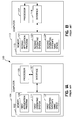
- Figure 1A illustrates a first application program which runs on top of a first operating system.
- the computer system 100 of Figure 1A includes a computer 101, a memory 103, a processor 105, and an interface 107.
- the memory 103 includes a first application program 109 and a first operating system 111.
- the first application program 109 makes calls to the first operating system 111 in a format compatible with the first operating system's application programming interface ("API").
- API application programming interface
- the API usually provides a set of function calls which an application invokes to gain access to the operating system's services.
- the first operating system 111 accepts these calls from the first application program 109, parses the calls to determine what system resource(s) need to be accessed in order to perform the function, performs the requested function by accessing the necessary system resource (e.g. a file) through a name space 112 associated with the first operating system, and returns the results to the first application program.
- the necessary system resource e.g. a file
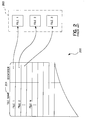
- Figure 2 illustrates a typical name space 200 used to access directories and files in a computer system.
- the name space 200 provides a mapping (also called a "binding") between a set of file names 201 and their associated directories or files 203. Given a file name 201 in a name space 200, a user can "resolve" the file name to retrieve the associated file or directory (often called a context). It is important to note that a given file name is always interpreted relative to a particular name space. For example, a directory named “/sys/bin/operating_system," when resolved relative to a name space for the first operating system 111, could refer to a directory containing the binaries for the first operating system.
- Figure 1B illustrates a second application program which runs on top of a second operating system.
- the computer 113 includes a memory 115, a processor 117, and an interface 119.
- the memory 115 includes a second application program 121, a second operating system 123, and a second name space 124.
- the second application program 121 makes calls to the second operating system 123 in a format compatible with the second operating system's API.
- the second operating system 123 accepts these calls from the second application program 121, performs the requested function by accessing files and directories through the second operating system's name space 124, and returns the results to the second application program.
- the API of the first operating system 111 is different than and therefore incompatible with the API of the second operating system 123 because it provides a different set of services and mandates use of a different set of interfaces than the API of the second operating system.
- the name space 112 of the first operating system 111 is different than and therefore incompatible with the name space 124 associated with the second operating system 123 because it provides different bindings between directory or file names and the directories or files themselves.
- An embodiment of the present invention provides an efficient and robust way to facilitate interoperability between two or more processes which were initially written to execute on top of two different operating systems but instead execute on top of a third operating system.
- the preferred embodiment begins by launching a parent process which was initially written to execute on top of a first operating system.
- the preferred embodiment then obtains a context object that implements a naming graph for the parent process.
- the context object includes bindings between a given set of names and an associated set of objects that are specific to the first operating system.
- the parent process spawns a child process which was initially written to execute on top of a second operating system.
- the parent process instantiates a copy of its context object.
- the parent process then performs a context merge operation which ensures that object names used by the second process are interpreted relative to objects from a context object associated with the second operating system before (or in lieu of) being interpreted relative to objects from the context object for the first operating system.
- the new context object is then passed to the child process and execution of the second process begins. Therefore, system calls initiated by the child process will first be interpreted relative to the name space for the second operating system.
- the child process can further create other child processes designed to execute on other operating systems. In this way two processes which were initially written to execute on top of two different operating systems can interoperate while executing on top of yet a third operating system.
- Figure 1A illustrates a first application program which runs on top of a first operating system
- Figure 1B illustrates a second application program which runs on top of a second operating system.
- Figure 2 illustrates a name space used to access directories and files in a computer system.
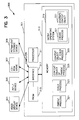
- Figure 3 is a block diagram of a computer system for practicing the preferred embodiment of the present invention.
- Figure 4 is a block diagram of a context object.
- Figure 5 is a block diagram of the context object after a context merge method has finished executing.
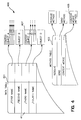
- Figure 6 graphically illustrates a per-process context object.
- Figure 7 illustrates the context object of a parent process.
- Figure 8 is a flow diagram of a Native OS procedure.
- Figure 9 is a flow diagram of a Create Process procedure.
- Figure 10 is a flow diagram of a Generate Context Object procedure.
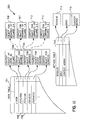
- Figure 11 illustrates the context object of a child process.
- a preferred embodiment of the present invention provides an improved method and system that facilitates interoperability between two or more processes which were initially written to execute on top of two different operating systems but instead execute on top of a third operating system.
- the preferred embodiment begins by invoking a parent process which was initially written to execute on top of a first operating system.
- the preferred embodiment obtains a context object that implements a name space (or, more precisely, a naming graph) for the parent process.
- the context object includes bindings between a given set of names and an associated set of objects that are specific to the first operating system.
- the context object could include a binding between the name "/sys/bin" and the object which implements a directory containing the binary files for the first operating system.
- the parent process At some point during execution of the parent process it spawns a child process which was initially written to execute on top of a second operating system.
- the parent process To allow the parent process to successfully spawn the child process, and to allow the child process to execute on top of the third operating system, the preferred embodiment performs the following steps.
- the parent process instantiates a copy of its context object. Since the child process was initially written to run on top of the second operating system and not the first operating system, the child process needs to have bindings in its name space which are specifically associated with objects in the second operating system.
- the parent process performs a context merge operation (discussed in more detail below), which ensures that object names used by the second process are interpreted relative to objects from a context object for the second operating system before (or in lieu of) being interpreted relative to objects from the context object for the first operating system.
- a context merge operation discussed in more detail below
- the new context object is passed to the child process and execution of the child process begins.
- system calls initiated by the child process will first be interpreted relative to the name space for the second operating system.
- a system call by the child process to "Open /sys/bin/operating_system” will "Open” the binary files for the second operating system instead of the binary files for the first operating system.
- two processes which were initially written to execute on top of two different operating systems can interoperate while executing on top of yet a third operating system.
- FIG. 3 is a block diagram of a computer system 300 for practicing the preferred embodiment of the present invention.
- the computer system 300 includes a computer 301, a video display device 303, an input device 305, such as a keyboard, mouse, or pointing device, a CD-ROM drive 307,and a permanent storage device 309, such as a disk drive.
- the computer 301 includes a processing unit 311 a random access memory (“RAM”) 313, a programmable read-only memory (“PROM”) 315, and an interface 317 for enabling communication between the processing unit 311 and the RAM 313 or the PROM 315.
- the interface 317 also facilitates communication between the processing unit 311 and peripheral devices (e.g., the video display device 303, the input device 305, and the CD-ROM device 307).
- the computer memory 313 holds a number of items, including an operating system 319 that is responsible for controlling the allocation and usage of the system's hardware resources, such as memory 313, processing unit 311, and CD-ROM drive 307.
- the preferred operating system is the Spring operating system from Sun Microsystems, Inc., of Mountain View, California.
- Spring is a distributed, object-oriented operating system. Thus the Spring operating system is based around the creation and manipulation of objects.
- a Spring object is an abstraction that is defined by an interface.
- An interface is a strongly-typed contract between an object and a client of the object. The interface specifies a set of operations that may be preformed on the object. Underlying the interface is an encapsulated set of data and methods which carry out the operations.
- Spring objects spans a wide range, from small data-like objects to large objects such as files and print services.
- the implementations vary from libraries, to separate protected servers, to distributed services implemented by multiple servers.
- Spring objects are first class objects. Therefore, clients can manipulate objects directly by performing operations on them or passing them as parameters in operations on other objects.
- the client of an object is a process.
- a process includes an address space, threads, and other system resources.
- Spring provides a uniform naming service.
- the Spring uniform naming service permits any object to be bound to any name.
- the Spring naming service is based on a few fundamental concepts: names, contexts, name bindings, the composition of name spaces, and context merges.
- Names are conventionally represented as strings, are usually printable, and usually have some syntax for encoding different information by convention.
- a name is said to denote an object.
- Figure 4 is a block diagram of a context object 400.
- the context object 400 contains a data table 401 which maintains a set of name-to-object associations (also called name bindings).
- name bindings also called name bindings.
- names have meaning only in the context object in which they are used. Thus an object may be bound to several different names in several different context objects at the same time.
- a client of the uniform naming service performs naming operations via methods stored in a method table 403 of the context object 400.
- the Spring context object allows the client to resolve a name of an object. Resolving a name on a context object obtains the object denoted by the name.
- the Spring context object also allows the client to bind a name to an object Binding a name to a context object associates a name with a particular object.
- Name space composition permits one name space to be attached to another name space.
- Context objects are often formed in this manner because, like any other object in the Spring environment, context objects can be bound to a name in a data table of some other context object.
- naming graph which is a directed graph with nodes and labeled edges, where the nodes with outgoing edges are contexts.
- naming graphs and context objects are also referred to as name spaces.
- Spring provides separate, system-supplied name spaces that can be composed together, instead of providing a single, system-supplied name space, as is traditionally done in the UNIX environment.
- the context merge method extends the idea of name space composition to allow more than one context object to be bound to the same name within the same context object.
- Figure 5 is a more detailed block diagram of context object "c" 407 and illustrates that context object "c” 407 is implemented by merging the objects from both context object "s" 501 and "t” 503 into context object "c” 407.
- the object name "x" is bound to both context object "s” 501 and context object "t” 503. From a user's perspective, however, only object “x” 505 exists. To create this perspective for the user, the context merge method reorders the objects from the underlying context objects "s" 501 and "t” 503.
- context object 501 implements objects for a first operating system
- context object "t” 503 implements objects for a second operating system
- the process using context object "c” 407 was initially written to execute on top of the first operating system.
- the context merge method would order the objects from the underlying context objects to ensure that name resolutions were performed relative to the objects from context object "s" 501 before (or in lieu of) being performed relative to the objects from context object "t” 503.
- a name resolution on object name "x" 505 would be resolved relative to the object "x" bound to context object "s” 501.
- the Spring operating system is typically used on computers in a distributed network environment.
- the Spring operating system groups machines into "villages" based on geographical location, security considerations, administrative convenience and the like. For example, the accounting department of a corporation may have a separate village for security reasons. Similarly, different facilities in a university may each maintain its own village.
- context objects are provided at the process, machine, and village level.
- context composition can be used to attach the context objects of the machines in a village together to help create a village context object.
- Figure 6 graphically illustrates a per-process context object (or, simply, a "process context object") that is customized to access selected contexts of the machine and village name spaces within which the process is executing.
- the process context object typically contains private name bindings, shared name spaces, and-standard system objects.
- Private name bindings include environment variables and program input/output objects (e.g., I/O context object 601). Changes made to private name bindings are only visible to the process containing those bindings.
- Shared name spaces i.e., objects shared with other processes in the machine and in the village
- a "users" context object containing the context objects of different users in the village may be attached to the process's context object.
- the "device” context object containing both private and shared devices may also be attached (e.g., the "dev" context object 603).
- the context object 604 for the machine within which the process executes as well as the village context object 606 for the village within which the machine is located are also attached. Any changes made to shared name spaces attached to the process's context object are visible to all sharing processes.
- Context objects of processes also have context objects that contain system objects such as "sys” which, for example, may contain executables under a "/sys/bin” context object 605 and libraries under a "/syS/lib” context object 607.
- system objects such as "sys” which, for example, may contain executables under a "/sys/bin” context object 605 and libraries under a “/syS/lib” context object 607.
- An object of the preferred embodiment is to facilitate interoperability between a parent process and a child process even though the parent process and the child process were initially written to run on top of two distinct operating systems, both of which are different than a native operating system on which the processes currently run.
- the preferred embodiment will be discussed with reference to Figure 3 and Figures 7 through 11.
- the system 300 is booted and running on top of the native operating system 319.
- the parent process 321 has been obtained (e.g., a word processing program written to run under the Solaris 1.x operating system has been launched).
- a context object 325 of the parent process 321 has also been obtained in order to map object names generated by the parent process within a name space appropriate to the parent process 321.
- Figure 7 illustrates the context object 325 of the parent process 321.
- the context object 325 includes a data table 701 and a method table 703.
- the data table 701 maps object names to their corresponding objects. For example, because the parent process 321 was initially written to run on top of the Solaris 1.x family of operating systems, entry 705 in data table 701 first maps the name "/sys/bin" into objects bound to a context object 707. These objects implement the binary files for the Solaris 1.x family of operating systems. Only if the name being resolved is not bound to an object from the context object 707 does entry 705 examine objects bound to context object 708.
- the bindings in context object 708 map names to objects implementing the binary files for the Solaris 2.x family of operating systems.
- entry 709 first maps the name"/sys/lib" into objects from a context object 711. These objects contain libraries for the Solaris 1.x family of operating systems. Only if the name being resolved is not bound to an object from the context object 711 does entry 709 examine objects from a context object 712. Objects from context object 712 implement the library files for the Solaris 2.x family of operating systems.
- FIG 8 is a flow diagram of the Native OS procedure which carries out requests from processes in the system 300. While the native operating system 319 actually performs a myriad of operations in the system 300, for clarity, only the operation to create a new process is discussed in detail herein.
- the native operating system receives input from the system 300.
- the native operating system 319 determines whether the input was an "invoke process" request. If the input was an "invoke process” request then processing continues with step 805.
- step 805 the native operating system 319 calls the Create Process procedure 327.
- the Create Process procedure allocates address space for the process, generates threads for the process, and generates a context object which embodies a name space for the process.
- processing continues in step 801.
- step 807 the native operating system 319 performs normal processing. For example, if an exit request was received, the native operating system 319 would end processing in the computer 301.
- FIG 9 is a flow diagram of the Create Process procedure.
- the Create Process procedure obtains the system resources needed to implement a process.
- the Create Process procedure typically obtains an address space in the memory 313, generates one or more threads, and maps any code associated with the process into the process's address space.
- the Create Process procedure calls the Generate Context Object procedure which generates a new context object for the new process.
- the new context object is sent to the child process in step 905.
- Figure 10 is a flow diagram of the Generate Context Object procedure which creates a context object for a process.
- the Generate Context Object procedure may be called by the parent process 321 to create the context object 329 for the child process 323.
- step 1001 the Generate Context Object procedure instantiates a copy of the context object 325 of the parent process 321.
- a copy of the parent's context object 325 is instantiated in step 1001 because the child process either uses a copy of the parent's context object as its own context object or the parent's context object is used as the foundation for building the context object 329 of the child process 323.
- processing in the Generate Context Object procedure takes one of two paths, depending on a comparison of a "process type” of the child process with a "process type” of the parent process (step 1003).
- a "process type” indicates which operating system the process was initially written to run on top of. For example, if the parent process 321 was initially written to execute on top of the Solaris 1.x operating system then the "process type” of the parent process is "Solaris 1.x.”.
- the "process type" of a process is preferably stored in a header section of a file which stores code used to generate the process.
- the file which stores the code used to implement a spreadsheet program typically includes a header section which contains "process type" information for the spreadsheet program. If the comparison indicates that the child process 323 and the parent process 321 were both initially written to run on top of the same operating system (e.g., the Solaris 1.x operating system) then the child process 323 is fully compatible with the parent process' context object 325 and, therefore, just uses the copy of the parent's context object as its own context object 329. An example may help illustrate this compatibility between the child process and the parent process. If the child process 323 invokes a library function using the name "/sys/lib" then the child process 323 will expect to retrieve a function from the Solaris 1.x library.
- the same operating system e.g., the Solaris 1.x operating system
- the context object 711( Figure 7) containing the libraries of the Solaris operating system 1.x is accessed. In this way, the appropriate object from the Solaris 1.x library is returned to the child process 323 for further processing.
- the child process 323 is not fully compatible with the context object 325 of the parent process 321.
- This incompatibility can also be seen by way of example using Figure 7. Assume that the child process 323 invokes a request to resolve a name containing the string "/sys/lib" or "/sys/bin". Also assume that the child process 323 is resolving the name relative to a copy of the context object 325 of the parent process 321. In this case the child process 323 will receive an object from the name space of the Solaris 1.x operating system.
- the child process 323 instead needs access to objects containing binaries or libraries of the Solaris 2.x operating system.
- the Generate Context Object procedure invokes a context merge method 715 ( Figure 7).
- the context merge method 715 orders the context objects so that the objects most appropriate to the child process are accessed first when resolving an object name.
- the context merge method 715 first determines the "process type" of the child process 323.
- the process type indicates the operating system the process was initially written to run on top of.
- the process type of the child process 323 is the Solaris 2.x operating system.
- the context merge method 715 determines the process type of the parent process 321.
- the process type of the parent process 321 is the Solaris 1.x operating system.
- the context merge method determines what information in the data table 701 needs to be modified in order to fully support the child process 323. The needed modifications are dependent on the process types of the context objects being merged.
- Figure 11 illustrates the modifications made to the (Solaris 1.x) context object 325 in order to provide full compatibility to the (Solaris 2.x) context process 323.
- the context merge method 715 modifies entry 705 of the data table 701 to indicate that a context merge operation has been performed on the object name "/sys/bin".
- the preferred syntax for indicating that the context merge operation has been performed on an entry uses the symbol "::” followed immediately by an identifier.
- the context merge method modifies entry 705 to read "/sys/bin ⁇ Solaris 2.x:: Solaris 1.x" to indicate that the name "/sys/bin” is first resolved relative to objects from a context object 708 containing binaries of the Solaris 2.x operating system.
- context merge method 715 makes similar modifications to entry 709 to indicate that the name "/sys/lib” is resolved relative to objects from a context object 712 for libraries of the Solaris 2.x operating system before (or in lieu of) resolving the name relative to objects from context object 711 containing libraries of the Solaris 1.x operating system.
- step 905 the Create Process procedure sends the context object 329 to the child process 323.
- the child process 323 can safely perform any of its operations because the object names contained in the operation requests will be resolved relative to objects from the appropriate context object.
- a parent process written to execute on top of a first operating system can spawn a child process written to execute on top of a second operating system, while both the parent process and the child process are actually executing on top of yet a third operating system.
- Another embodiment of the present invention statically generates preferred context objects for each non-native operating system which the native operating system supports.
- a server preferably stores each preferred context object When a child process needs a context object, the appropriate context object is retrieved from the server.
Landscapes
- Engineering & Computer Science (AREA)
- Software Systems (AREA)
- Theoretical Computer Science (AREA)
- Physics & Mathematics (AREA)
- General Engineering & Computer Science (AREA)
- General Physics & Mathematics (AREA)
- Stored Programmes (AREA)
- Information Retrieval, Db Structures And Fs Structures Therefor (AREA)
Applications Claiming Priority (2)
| Application Number | Priority Date | Filing Date | Title |
|---|---|---|---|
| US42273795A | 1995-04-14 | 1995-04-14 | |
| US422737 | 1995-04-14 |
Publications (3)
| Publication Number | Publication Date |
|---|---|
| EP0737919A2 true EP0737919A2 (de) | 1996-10-16 |
| EP0737919A3 EP0737919A3 (de) | 1997-01-15 |
| EP0737919B1 EP0737919B1 (de) | 2002-06-26 |
Family
ID=23676147
Family Applications (1)
| Application Number | Title | Priority Date | Filing Date |
|---|---|---|---|
| EP96302575A Expired - Lifetime EP0737919B1 (de) | 1995-04-14 | 1996-04-12 | Verfahren und System zum Ermöglichen der Zusammenarbeit von zur Ausführung auf unterschiedlichen Betriebssystemen geschriebenen Prozessen |
Country Status (5)
| Country | Link |
|---|---|
| US (1) | US6182158B1 (de) |
| EP (1) | EP0737919B1 (de) |
| JP (1) | JPH09198260A (de) |
| CA (1) | CA2173695A1 (de) |
| DE (1) | DE69621975T2 (de) |
Cited By (3)
| Publication number | Priority date | Publication date | Assignee | Title |
|---|---|---|---|---|
| WO1999031584A1 (de) * | 1997-12-17 | 1999-06-24 | Fujitsu Siemens Computers Gmbh | Verfahren zum umsetzen eines systemaufrufs |
| EP1031924A3 (de) * | 1999-02-19 | 2003-10-15 | Hitachi, Ltd. | Mehrere Betriebssyteme ausführender Rechner |
| EP1209564A3 (de) * | 2000-10-30 | 2006-01-11 | Microsoft Corporation | Kernemulator für nicht arteigene Module |
Families Citing this family (73)
| Publication number | Priority date | Publication date | Assignee | Title |
|---|---|---|---|---|
| US6385645B1 (en) * | 1995-08-04 | 2002-05-07 | Belle Gate Investments B.V. | Data exchange system comprising portable data processing units |
| ES2153455T3 (es) | 1995-08-04 | 2001-03-01 | Belle Gate Invest B V | Sistema de intercambio de datos que incluye unidades portatiles de procesamiento de datos. |
| US6292820B1 (en) * | 1996-07-29 | 2001-09-18 | At& T Corp. | Porting POSIX-conforming operating systems to Win32 API-conforming operating systems |
| US6424988B2 (en) * | 1997-02-19 | 2002-07-23 | Unisys Corporation | Multicomputer system |
| US7076784B1 (en) * | 1997-10-28 | 2006-07-11 | Microsoft Corporation | Software component execution management using context objects for tracking externally-defined intrinsic properties of executing software components within an execution environment |
| US6119131A (en) * | 1998-06-12 | 2000-09-12 | Microsoft Corporation | Persistent volume mount points |
| US6996213B1 (en) | 1998-09-29 | 2006-02-07 | Sun Microsystems, Inc. | Superposition of data over voice |
| US6425003B1 (en) * | 1999-01-22 | 2002-07-23 | Cisco Technology, Inc. | Method and apparatus for DNS resolution |
| US6922835B1 (en) * | 1999-01-22 | 2005-07-26 | Sun Microsystems, Inc. | Techniques for permitting access across a context barrier on a small footprint device using run time environment privileges |
| US6823520B1 (en) | 1999-01-22 | 2004-11-23 | Sun Microsystems, Inc. | Techniques for implementing security on a small footprint device using a context barrier |
| US6633984B2 (en) | 1999-01-22 | 2003-10-14 | Sun Microsystems, Inc. | Techniques for permitting access across a context barrier on a small footprint device using an entry point object |
| US6829770B1 (en) * | 1999-02-23 | 2004-12-07 | Microsoft Corporation | Object connectivity through loosely coupled publish and subscribe events |
| ATE475139T1 (de) | 1999-06-10 | 2010-08-15 | Belle Gate Invest B V | Vorrichtung zum speichern unterschiedlicher versionen von datensätzen in getrennten datenbereichen und verfahren zur aktualisierung eines datensatzes in einem speicher |
| US6826760B1 (en) * | 1999-06-16 | 2004-11-30 | Microsoft Corporation | Methods of factoring operating system functions, methods of converting operating systems, and related apparatus |
| US6748555B1 (en) | 1999-09-09 | 2004-06-08 | Microsoft Corporation | Object-based software management |
| US6363523B1 (en) * | 1999-11-12 | 2002-03-26 | Sun Microsystems, Inc. | Optimization of N-base typed arithmetic expressions |
| US7207037B2 (en) * | 1999-11-12 | 2007-04-17 | Sun Microsystems, Inc. | Overflow sensitive arithmetic instruction optimization using chaining |
| US7010786B2 (en) | 1999-11-12 | 2006-03-07 | Sun Microsystems, Inc. | Predictive arithmetic overflow detection |
| US7158993B1 (en) | 1999-11-12 | 2007-01-02 | Sun Microsystems, Inc. | API representation enabling submerged hierarchy |
| US8453133B2 (en) * | 1999-11-12 | 2013-05-28 | Oracle America, Inc. | Optimization of N-base typed arithmetic instructions via rework |
| US7107581B2 (en) * | 1999-11-12 | 2006-09-12 | Sun Microsystems, Inc. | Overflow predictive arithmetic instruction optimization using chaining |
| AU1586500A (en) | 1999-12-06 | 2001-06-12 | Sun Microsystems, Inc. | Computer arrangement using non-refreshed dram |
| US7080261B1 (en) | 1999-12-07 | 2006-07-18 | Sun Microsystems, Inc. | Computer-readable medium with microprocessor to control reading and computer arranged to communicate with such a medium |
| US6883716B1 (en) | 1999-12-07 | 2005-04-26 | Sun Microsystems, Inc. | Secure photo carrying identification device, as well as means and method for authenticating such an identification device |
| US6920636B1 (en) | 1999-12-15 | 2005-07-19 | Microsoft Corporation | Queued component interface passing for results outflow from queued method invocations |
| US6611847B1 (en) * | 1999-12-30 | 2003-08-26 | Unisys Corporation | Method for dynamically linking two objects in two different models |
| US6883163B1 (en) | 2000-04-28 | 2005-04-19 | Sun Microsystems, Inc. | Populating resource-constrained devices with content verified using API definitions |
| US6986132B1 (en) | 2000-04-28 | 2006-01-10 | Sun Microsytems, Inc. | Remote incremental program binary compatibility verification using API definitions |
| US6651186B1 (en) * | 2000-04-28 | 2003-11-18 | Sun Microsystems, Inc. | Remote incremental program verification using API definitions |
| DE60037342T2 (de) | 2000-07-20 | 2008-11-27 | Belle Gate Investment B.V. | Verfahren und system für kommunizierende geräte, und vorrichtungen dafür, mit geschützter datenübertragung |
| US6754672B1 (en) * | 2000-09-13 | 2004-06-22 | American Management Systems, Inc. | System and method for efficient integration of government administrative and program systems |
| US6981245B1 (en) | 2000-09-14 | 2005-12-27 | Sun Microsystems, Inc. | Populating binary compatible resource-constrained devices with content verified using API definitions |
| TW552502B (en) * | 2000-11-21 | 2003-09-11 | Matsushita Electric Industrial Co Ltd | File management method and content recording/playback apparatus |
| TWI230858B (en) * | 2000-12-12 | 2005-04-11 | Matsushita Electric Industrial Co Ltd | File management method, content recording/playback apparatus and content recording program |
| US9047102B2 (en) | 2010-10-01 | 2015-06-02 | Z124 | Instant remote rendering |
| US8966379B2 (en) | 2010-10-01 | 2015-02-24 | Z124 | Dynamic cross-environment application configuration/orientation in an active user environment |
| US9098437B2 (en) | 2010-10-01 | 2015-08-04 | Z124 | Cross-environment communication framework |
| US8726294B2 (en) | 2010-10-01 | 2014-05-13 | Z124 | Cross-environment communication using application space API |
| US20130024812A1 (en) | 2011-07-13 | 2013-01-24 | Z124 | Foreground/background assortment of hidden windows |
| US8819705B2 (en) | 2010-10-01 | 2014-08-26 | Z124 | User interaction support across cross-environment applications |
| US8933949B2 (en) | 2010-10-01 | 2015-01-13 | Z124 | User interaction across cross-environment applications through an extended graphics context |
| US7113937B2 (en) | 2001-12-18 | 2006-09-26 | International Business Machines Corporation | Systems, methods, and computer program products to improve performance of ported applications, such as a database, operating on UNIX system services for the OS/390 |
| US6877045B2 (en) | 2001-12-18 | 2005-04-05 | International Business Machines Corporation | Systems, methods, and computer program products to schedule I/O access to take advantage of disk parallel access volumes |
| US6754734B2 (en) | 2001-12-18 | 2004-06-22 | International Business Machines Corporation | Systems, methods, and computer program products to improve performance of ported applications, such as a database |
| US7299466B2 (en) * | 2001-12-20 | 2007-11-20 | Cadence Design Systems, Inc. | Mechanism for managing execution environments for aggregated processes |
| US7159217B2 (en) * | 2001-12-20 | 2007-01-02 | Cadence Design Systems, Inc. | Mechanism for managing parallel execution of processes in a distributed computing environment |
| US7117500B2 (en) * | 2001-12-20 | 2006-10-03 | Cadence Design Systems, Inc. | Mechanism for managing execution of interdependent aggregated processes |
| US7093259B2 (en) * | 2001-12-20 | 2006-08-15 | Cadence Design Systems, Inc. | Hierarchically structured logging for computer work processing |
| GB0226874D0 (en) * | 2002-11-18 | 2002-12-24 | Advanced Risc Mach Ltd | Switching between secure and non-secure processing modes |
| US9146585B2 (en) | 2010-10-01 | 2015-09-29 | Z124 | Dual-screen view in response to rotation |
| US7424723B2 (en) * | 2003-10-30 | 2008-09-09 | Microsoft Corporation | System and method for executing an arbitrary function from an external process |
| US7421698B2 (en) * | 2003-12-22 | 2008-09-02 | Sun Microsystems, Inc. | System and method for dynamically and persistently tracking incremental profiling data in a process cloning application environment |
| DE102004016122A1 (de) * | 2004-04-01 | 2005-10-27 | Siemens Ag | Rechnersystem mit einem in ein Betriebssystem eingebetteten Echtzeitbetriebssystem |
| US9274830B2 (en) * | 2004-11-18 | 2016-03-01 | Aol Inc. | Service clean-up |
| US8108878B1 (en) | 2004-12-08 | 2012-01-31 | Cadence Design Systems, Inc. | Method and apparatus for detecting indeterminate dependencies in a distributed computing environment |
| US8250131B1 (en) | 2004-12-08 | 2012-08-21 | Cadence Design Systems, Inc. | Method and apparatus for managing a distributed computing environment |
| US8244854B1 (en) | 2004-12-08 | 2012-08-14 | Cadence Design Systems, Inc. | Method and system for gathering and propagating statistical information in a distributed computing environment |
| US7979870B1 (en) | 2004-12-08 | 2011-07-12 | Cadence Design Systems, Inc. | Method and system for locating objects in a distributed computing environment |
| US8806490B1 (en) | 2004-12-08 | 2014-08-12 | Cadence Design Systems, Inc. | Method and apparatus for managing workflow failures by retrying child and parent elements |
| KR100810268B1 (ko) * | 2006-04-06 | 2008-03-06 | 삼성전자주식회사 | 모바일 디스플레이 장치에서의 색약자를 위한 구현 방법 |
| US8516505B2 (en) | 2008-03-14 | 2013-08-20 | Microsoft Corporation | Cross-platform compatibility framework for computer applications |
| US9405444B2 (en) | 2010-10-01 | 2016-08-02 | Z124 | User interface with independent drawer control |
| WO2012044557A2 (en) * | 2010-10-01 | 2012-04-05 | Imerj, Llc | Auto-configuration of a docked system in a multi-os environment |
| US8761831B2 (en) | 2010-10-15 | 2014-06-24 | Z124 | Mirrored remote peripheral interface |
| US9351237B2 (en) | 2011-09-27 | 2016-05-24 | Z124 | Displaying of charging status on dual screen device |
| US8843676B2 (en) | 2012-06-27 | 2014-09-23 | International Business Machines Corporation | Optimizing an operating system I/O operation that pertains to a specific program and file |
| CN107241651B (zh) * | 2016-03-28 | 2021-02-26 | 斑马智行网络(香港)有限公司 | 一种媒体数据播放方法和装置、智能终端 |
| US20170329526A1 (en) * | 2016-05-13 | 2017-11-16 | Hewlett Packard Enterprise Development Lp | Interoperable capabilities |
| US10324722B2 (en) | 2016-06-24 | 2019-06-18 | Hewlett Packard Enterprise Development Lp | Global capabilities transferrable across node boundaries |
| US10303615B2 (en) | 2017-06-16 | 2019-05-28 | Hewlett Packard Enterprise Development Lp | Matching pointers across levels of a memory hierarchy |
| US12265740B2 (en) | 2023-08-23 | 2025-04-01 | Sas Institute Inc. | Systems and methods for implementing and using a cross-process queue within a single computer |
| US12400149B1 (en) | 2024-04-22 | 2025-08-26 | Sas Institute Inc. | Systems and methods for parallel exploration of a hyperparameter search space |
| US12405773B1 (en) * | 2024-04-22 | 2025-09-02 | Sas Institute Inc. | Systems and methods for executing an analytical operation across a plurality of computer processes |
Family Cites Families (10)
| Publication number | Priority date | Publication date | Assignee | Title |
|---|---|---|---|---|
| JPH0664536B2 (ja) * | 1986-01-17 | 1994-08-22 | インタ−ナショナル ビジネス マシ−ンズ コ−ポレ−ション | 仮想端末サブシステムの制御方法 |
| US5067072A (en) * | 1987-11-06 | 1991-11-19 | Visystems, Inc. | Virtual software machine which preprocesses application program to isolate execution dependencies and uses target computer processes to implement the execution dependencies |
| US5175854A (en) * | 1989-06-19 | 1992-12-29 | Digital Equipment Corporation | Inter-applicataion interface system |
| US5249293A (en) * | 1989-06-27 | 1993-09-28 | Digital Equipment Corporation | Computer network providing transparent operation on a compute server and associated method |
| US5313578A (en) * | 1990-12-23 | 1994-05-17 | Motorola, Inc. | Portable interprocess communication facility |
| WO1993020511A1 (en) * | 1992-03-31 | 1993-10-14 | Aggregate Computing, Inc. | An integrated remote execution system for a heterogenous computer network environment |
| EP0567971B1 (de) * | 1992-04-27 | 1999-07-28 | Sony Corporation | Datenverarbeitungssystem, worin die Kompatibilität zwischen verschiedenen Modellen gewährleistet ist |
| EP0592080A2 (de) * | 1992-09-24 | 1994-04-13 | International Business Machines Corporation | Verfahren und Gerät für Kommunikation zwischen Prozessen in einem Multirechnersystem |
| US5577252A (en) * | 1993-07-28 | 1996-11-19 | Sun Microsystems, Inc. | Methods and apparatus for implementing secure name servers in an object-oriented system |
| US5515508A (en) * | 1993-12-17 | 1996-05-07 | Taligent, Inc. | Client server system and method of operation including a dynamically configurable protocol stack |
-
1996
- 1996-04-09 CA CA002173695A patent/CA2173695A1/en not_active Abandoned
- 1996-04-12 DE DE69621975T patent/DE69621975T2/de not_active Expired - Fee Related
- 1996-04-12 EP EP96302575A patent/EP0737919B1/de not_active Expired - Lifetime
- 1996-04-15 JP JP8115243A patent/JPH09198260A/ja active Pending
-
1997
- 1997-08-19 US US08/915,153 patent/US6182158B1/en not_active Expired - Lifetime
Cited By (7)
| Publication number | Priority date | Publication date | Assignee | Title |
|---|---|---|---|---|
| WO1999031584A1 (de) * | 1997-12-17 | 1999-06-24 | Fujitsu Siemens Computers Gmbh | Verfahren zum umsetzen eines systemaufrufs |
| US6725451B1 (en) | 1997-12-17 | 2004-04-20 | Siemens Aktiengesellschaft | Method for converting a system call |
| EP1031924A3 (de) * | 1999-02-19 | 2003-10-15 | Hitachi, Ltd. | Mehrere Betriebssyteme ausführender Rechner |
| US7810096B2 (en) | 1999-02-19 | 2010-10-05 | Hitachi, Ltd. | Computer executing multiple operating systems |
| EP1209564A3 (de) * | 2000-10-30 | 2006-01-11 | Microsoft Corporation | Kernemulator für nicht arteigene Module |
| US7478373B2 (en) | 2000-10-30 | 2009-01-13 | Microsoft Corporation | Kernel emulator for non-native program modules |
| US7574346B2 (en) | 2000-10-30 | 2009-08-11 | Microsoft Corporation | Kernel emulator for non-native program modules |
Also Published As
| Publication number | Publication date |
|---|---|
| JPH09198260A (ja) | 1997-07-31 |
| EP0737919A3 (de) | 1997-01-15 |
| EP0737919B1 (de) | 2002-06-26 |
| DE69621975D1 (de) | 2002-08-01 |
| US6182158B1 (en) | 2001-01-30 |
| CA2173695A1 (en) | 1996-10-15 |
| DE69621975T2 (de) | 2002-11-14 |
Similar Documents
| Publication | Publication Date | Title |
|---|---|---|
| EP0737919B1 (de) | Verfahren und System zum Ermöglichen der Zusammenarbeit von zur Ausführung auf unterschiedlichen Betriebssystemen geschriebenen Prozessen | |
| US6871345B1 (en) | Self managing software agents with introspection | |
| US6523166B1 (en) | Method and system for on-demand installation of software implementations | |
| US5950008A (en) | System and method for resolving symbolic references to externally located program files | |
| US6584612B1 (en) | Transparent loading of resources from read-only memory for an application program | |
| US6260078B1 (en) | Using a distributed object system to find and download java-based applications | |
| US7627865B2 (en) | Method and apparatus for accessing instrumentation data from within a managed code environment | |
| US8397227B2 (en) | Automatic deployment of Java classes using byte code instrumentation | |
| US7174361B1 (en) | Scripting task-level user-interfaces | |
| US6748591B1 (en) | Method, system, program, and data structures for loading programs into a runtime environment | |
| US20040103114A1 (en) | System and method for accessing objects in a platform dependent environment from a platform independent environment | |
| US8276125B2 (en) | Automatic discovery of the java classloader delegation hierarchy | |
| JPH09223116A (ja) | 複数ミドルウェアに渡る分散オブジェクトの位置透過性 | |
| JPH09171465A (ja) | 異なる命名サービス・プロバイダが動的に命名フェデレーションに接合することを可能とするシステムおよび方法 | |
| WO2007090817A1 (en) | Collaborative classloader system and method | |
| US7093242B2 (en) | Dynamic class interposition | |
| US6944620B2 (en) | File system creator | |
| US7673028B2 (en) | Method and system for container-managed configuration and administration | |
| US20070073849A1 (en) | Method and system for unifying configuration descriptors | |
| AU775624B2 (en) | Method and apparatus for dynamic command extensibility in an intelligent agent | |
| JP2003509767A (ja) | オブジェクト指向コンピュータプログラムのロード | |
| WO2010117692A2 (en) | In-process intermediary to create virtual processes | |
| US20060206458A1 (en) | Serving program elements through a unified interface | |
| US20060253858A1 (en) | Software service application and method of servicing a software application | |
| US20060090172A1 (en) | Printing interface for a computer platform |
Legal Events
| Date | Code | Title | Description |
|---|---|---|---|
| PUAI | Public reference made under article 153(3) epc to a published international application that has entered the european phase |
Free format text: ORIGINAL CODE: 0009012 |
|
| AK | Designated contracting states |
Kind code of ref document: A2 Designated state(s): DE FR GB IT SE |
|
| PUAL | Search report despatched |
Free format text: ORIGINAL CODE: 0009013 |
|
| AK | Designated contracting states |
Kind code of ref document: A3 Designated state(s): DE FR GB IT SE |
|
| 17P | Request for examination filed |
Effective date: 19970704 |
|
| 17Q | First examination report despatched |
Effective date: 20000315 |
|
| GRAG | Despatch of communication of intention to grant |
Free format text: ORIGINAL CODE: EPIDOS AGRA |
|
| GRAG | Despatch of communication of intention to grant |
Free format text: ORIGINAL CODE: EPIDOS AGRA |
|
| GRAH | Despatch of communication of intention to grant a patent |
Free format text: ORIGINAL CODE: EPIDOS IGRA |
|
| GRAH | Despatch of communication of intention to grant a patent |
Free format text: ORIGINAL CODE: EPIDOS IGRA |
|
| GRAA | (expected) grant |
Free format text: ORIGINAL CODE: 0009210 |
|
| AK | Designated contracting states |
Kind code of ref document: B1 Designated state(s): DE FR GB IT SE |
|
| REG | Reference to a national code |
Ref country code: GB Ref legal event code: FG4D |
|
| REF | Corresponds to: |
Ref document number: 69621975 Country of ref document: DE Date of ref document: 20020801 |
|
| ET | Fr: translation filed | ||
| PGFP | Annual fee paid to national office [announced via postgrant information from national office to epo] |
Ref country code: SE Payment date: 20030428 Year of fee payment: 8 |
|
| PLBE | No opposition filed within time limit |
Free format text: ORIGINAL CODE: 0009261 |
|
| STAA | Information on the status of an ep patent application or granted ep patent |
Free format text: STATUS: NO OPPOSITION FILED WITHIN TIME LIMIT |
|
| 26N | No opposition filed |
Effective date: 20030327 |
|
| PGFP | Annual fee paid to national office [announced via postgrant information from national office to epo] |
Ref country code: FR Payment date: 20040408 Year of fee payment: 9 |
|
| PG25 | Lapsed in a contracting state [announced via postgrant information from national office to epo] |
Ref country code: SE Free format text: LAPSE BECAUSE OF NON-PAYMENT OF DUE FEES Effective date: 20040413 |
|
| EUG | Se: european patent has lapsed | ||
| PGFP | Annual fee paid to national office [announced via postgrant information from national office to epo] |
Ref country code: DE Payment date: 20050407 Year of fee payment: 10 |
|
| PG25 | Lapsed in a contracting state [announced via postgrant information from national office to epo] |
Ref country code: IT Free format text: LAPSE BECAUSE OF NON-PAYMENT OF DUE FEES;WARNING: LAPSES OF ITALIAN PATENTS WITH EFFECTIVE DATE BEFORE 2007 MAY HAVE OCCURRED AT ANY TIME BEFORE 2007. THE CORRECT EFFECTIVE DATE MAY BE DIFFERENT FROM THE ONE RECORDED. Effective date: 20050412 |
|
| PG25 | Lapsed in a contracting state [announced via postgrant information from national office to epo] |
Ref country code: FR Free format text: LAPSE BECAUSE OF NON-PAYMENT OF DUE FEES Effective date: 20051230 |
|
| REG | Reference to a national code |
Ref country code: FR Ref legal event code: ST Effective date: 20051230 |
|
| PG25 | Lapsed in a contracting state [announced via postgrant information from national office to epo] |
Ref country code: DE Free format text: LAPSE BECAUSE OF NON-PAYMENT OF DUE FEES Effective date: 20061101 |
|
| PGFP | Annual fee paid to national office [announced via postgrant information from national office to epo] |
Ref country code: GB Payment date: 20150408 Year of fee payment: 20 |
|
| REG | Reference to a national code |
Ref country code: GB Ref legal event code: PE20 Expiry date: 20160411 |
|
| PG25 | Lapsed in a contracting state [announced via postgrant information from national office to epo] |
Ref country code: GB Free format text: LAPSE BECAUSE OF EXPIRATION OF PROTECTION Effective date: 20160411 |