EP0742482A1 - Procédé de traitement des produits photographiques à l'halogénure d'argent en noir et blanc - Google Patents
Procédé de traitement des produits photographiques à l'halogénure d'argent en noir et blanc Download PDFInfo
- Publication number
- EP0742482A1 EP0742482A1 EP96201166A EP96201166A EP0742482A1 EP 0742482 A1 EP0742482 A1 EP 0742482A1 EP 96201166 A EP96201166 A EP 96201166A EP 96201166 A EP96201166 A EP 96201166A EP 0742482 A1 EP0742482 A1 EP 0742482A1
- Authority
- EP
- European Patent Office
- Prior art keywords
- wash
- silver
- stabiliser
- tank
- fixer
- Prior art date
- Legal status (The legal status is an assumption and is not a legal conclusion. Google has not performed a legal analysis and makes no representation as to the accuracy of the status listed.)
- Withdrawn
Links
- 239000004332 silver Substances 0.000 title claims abstract description 112
- 229910052709 silver Inorganic materials 0.000 title claims abstract description 112
- 239000000463 material Substances 0.000 title claims abstract description 47
- 238000000034 method Methods 0.000 title claims abstract description 39
- -1 silver halide Chemical class 0.000 title claims abstract description 34
- 238000012545 processing Methods 0.000 title claims abstract description 30
- BQCADISMDOOEFD-UHFFFAOYSA-N Silver Chemical compound [Ag] BQCADISMDOOEFD-UHFFFAOYSA-N 0.000 claims abstract description 101
- 239000003381 stabilizer Substances 0.000 claims abstract description 26
- 238000011084 recovery Methods 0.000 claims abstract description 12
- 238000005406 washing Methods 0.000 claims description 14
- 238000001704 evaporation Methods 0.000 claims description 11
- 230000008020 evaporation Effects 0.000 claims description 11
- 238000004364 calculation method Methods 0.000 claims description 9
- 239000013626 chemical specie Substances 0.000 claims description 8
- 238000005259 measurement Methods 0.000 claims description 7
- 238000004806 packaging method and process Methods 0.000 claims description 2
- 230000036962 time dependent Effects 0.000 claims description 2
- 230000003019 stabilising effect Effects 0.000 claims 1
- 239000000243 solution Substances 0.000 description 42
- 239000000126 substance Substances 0.000 description 35
- XLYOFNOQVPJJNP-UHFFFAOYSA-N water Substances O XLYOFNOQVPJJNP-UHFFFAOYSA-N 0.000 description 22
- 230000001419 dependent effect Effects 0.000 description 15
- 230000032683 aging Effects 0.000 description 10
- 239000003795 chemical substances by application Substances 0.000 description 10
- 239000012141 concentrate Substances 0.000 description 7
- 230000000694 effects Effects 0.000 description 7
- 230000000717 retained effect Effects 0.000 description 7
- DHCDFWKWKRSZHF-UHFFFAOYSA-L thiosulfate(2-) Chemical compound [O-]S([S-])(=O)=O DHCDFWKWKRSZHF-UHFFFAOYSA-L 0.000 description 6
- 230000015556 catabolic process Effects 0.000 description 5
- 238000006731 degradation reaction Methods 0.000 description 5
- 238000010790 dilution Methods 0.000 description 5
- 239000012895 dilution Substances 0.000 description 5
- 239000006172 buffering agent Substances 0.000 description 4
- 238000011161 development Methods 0.000 description 4
- 230000018109 developmental process Effects 0.000 description 4
- 238000012360 testing method Methods 0.000 description 4
- QTBSBXVTEAMEQO-UHFFFAOYSA-N Acetic acid Chemical compound CC(O)=O QTBSBXVTEAMEQO-UHFFFAOYSA-N 0.000 description 3
- XYXNTHIYBIDHGM-UHFFFAOYSA-N ammonium thiosulfate Chemical compound [NH4+].[NH4+].[O-]S([O-])(=O)=S XYXNTHIYBIDHGM-UHFFFAOYSA-N 0.000 description 3
- 239000006227 byproduct Substances 0.000 description 3
- 238000006243 chemical reaction Methods 0.000 description 3
- 230000003287 optical effect Effects 0.000 description 3
- 150000003378 silver Chemical class 0.000 description 3
- 239000000654 additive Substances 0.000 description 2
- 230000009286 beneficial effect Effects 0.000 description 2
- 230000003139 buffering effect Effects 0.000 description 2
- 239000000975 dye Substances 0.000 description 2
- 150000004820 halides Chemical class 0.000 description 2
- 150000003839 salts Chemical class 0.000 description 2
- QGZKDVFQNNGYKY-UHFFFAOYSA-O Ammonium Chemical compound [NH4+] QGZKDVFQNNGYKY-UHFFFAOYSA-O 0.000 description 1
- USFZMSVCRYTOJT-UHFFFAOYSA-N Ammonium acetate Chemical compound N.CC(O)=O USFZMSVCRYTOJT-UHFFFAOYSA-N 0.000 description 1
- 239000005695 Ammonium acetate Substances 0.000 description 1
- PQUCIEFHOVEZAU-UHFFFAOYSA-N Diammonium sulfite Chemical compound [NH4+].[NH4+].[O-]S([O-])=O PQUCIEFHOVEZAU-UHFFFAOYSA-N 0.000 description 1
- 108010010803 Gelatin Proteins 0.000 description 1
- 239000004133 Sodium thiosulphate Substances 0.000 description 1
- 229940043376 ammonium acetate Drugs 0.000 description 1
- 235000019257 ammonium acetate Nutrition 0.000 description 1
- 239000001166 ammonium sulphate Substances 0.000 description 1
- 235000011130 ammonium sulphate Nutrition 0.000 description 1
- 238000013459 approach Methods 0.000 description 1
- 230000003115 biocidal effect Effects 0.000 description 1
- 239000003139 biocide Substances 0.000 description 1
- 150000001875 compounds Chemical class 0.000 description 1
- 230000006378 damage Effects 0.000 description 1
- 230000006866 deterioration Effects 0.000 description 1
- 230000001627 detrimental effect Effects 0.000 description 1
- 238000010586 diagram Methods 0.000 description 1
- 238000009792 diffusion process Methods 0.000 description 1
- 238000001035 drying Methods 0.000 description 1
- 239000000839 emulsion Substances 0.000 description 1
- 230000007613 environmental effect Effects 0.000 description 1
- 239000012530 fluid Substances 0.000 description 1
- 235000011194 food seasoning agent Nutrition 0.000 description 1
- 238000009472 formulation Methods 0.000 description 1
- 229920000159 gelatin Polymers 0.000 description 1
- 239000008273 gelatin Substances 0.000 description 1
- 235000019322 gelatine Nutrition 0.000 description 1
- 235000011852 gelatine desserts Nutrition 0.000 description 1
- 150000002500 ions Chemical class 0.000 description 1
- 239000007788 liquid Substances 0.000 description 1
- 239000000203 mixture Substances 0.000 description 1
- 239000000047 product Substances 0.000 description 1
- 230000001235 sensitizing effect Effects 0.000 description 1
- AKHNMLFCWUSKQB-UHFFFAOYSA-L sodium thiosulfate Chemical compound [Na+].[Na+].[O-]S([O-])(=O)=S AKHNMLFCWUSKQB-UHFFFAOYSA-L 0.000 description 1
- 235000019345 sodium thiosulphate Nutrition 0.000 description 1
- 238000001228 spectrum Methods 0.000 description 1
- 230000002459 sustained effect Effects 0.000 description 1
- 230000007704 transition Effects 0.000 description 1
- 238000002834 transmittance Methods 0.000 description 1
- 239000000080 wetting agent Substances 0.000 description 1
Images


Classifications
-
- G—PHYSICS
- G03—PHOTOGRAPHY; CINEMATOGRAPHY; ANALOGOUS TECHNIQUES USING WAVES OTHER THAN OPTICAL WAVES; ELECTROGRAPHY; HOLOGRAPHY
- G03D—APPARATUS FOR PROCESSING EXPOSED PHOTOGRAPHIC MATERIALS; ACCESSORIES THEREFOR
- G03D3/00—Liquid processing apparatus involving immersion; Washing apparatus involving immersion
- G03D3/02—Details of liquid circulation
- G03D3/06—Liquid supply; Liquid circulation outside tanks
- G03D3/065—Liquid supply; Liquid circulation outside tanks replenishment or recovery apparatus
-
- G—PHYSICS
- G03—PHOTOGRAPHY; CINEMATOGRAPHY; ANALOGOUS TECHNIQUES USING WAVES OTHER THAN OPTICAL WAVES; ELECTROGRAPHY; HOLOGRAPHY
- G03C—PHOTOSENSITIVE MATERIALS FOR PHOTOGRAPHIC PURPOSES; PHOTOGRAPHIC PROCESSES, e.g. CINE, X-RAY, COLOUR, STEREO-PHOTOGRAPHIC PROCESSES; AUXILIARY PROCESSES IN PHOTOGRAPHY
- G03C5/00—Photographic processes or agents therefor; Regeneration of such processing agents
- G03C5/26—Processes using silver-salt-containing photosensitive materials or agents therefor
- G03C5/395—Regeneration of photographic processing agents other than developers; Replenishers therefor
- G03C5/3958—Replenishment processes or compositions, i.e. addition of useful photographic processing agents
Definitions
- This invention relates to the processing of black-and-white photographic silver halide materials and, in particular, to the management of the washing step.
- Washing photographic materials is necessary to remove any processing chemicals from the processed material which might, in time, degrade the image. This degradation may happen though destruction of the image - i.e. a lowering of density - or it may happen through an increase in density as coloured substances are formed within the film or paper. Temperature, humidity and light all have a strong effect in accelerating these processes. To preserve an image adequately, the level of residual chemicals in the processed film must be kept low. In particular, the fixing agent and by-products of the fixing reaction are known to cause image degradation if they are retained in significant amounts in the film.
- Stabiliser solutions may also be used instead of water for the wash section of a processor.
- Stabilisers usually contain additives such as a wetting agent to enhance washing and drying, a biocide to guard against biogrowth in the solution or on tank and roller surfaces, hardening agents and possibly other additives to retard the effects of ageing in the processed photographic material.
- European Patent 0,385,334 describes a method wherein the minimum wash water replenishment rate in a photographic processor having multiple wash stages depends on the desired residual thiosulphate in the processed film and the concentration of thiosulphate in the fixer.
- European patent 0,456,684 (Rider) describes a method of controlling the rate of replenishment of chemical solutions used in photographic processing wherein a signal related to the measured exposure given to the photographic material is used to control the replenishment rate.
- Soluble complexes of silver with fixing agent are by-products from the fixing reaction. These complexes are produced in the photographic material as the fixing agent reacts with undeveloped silver in the form of silver halide. The complexes diffuse out of the material and into the bulk of the fixing solution. Without silver recovery on the fixing bath, the concentration of complexed silver may build up to quite high levels, especially when low replenishment rates are used for the fixer and when the level of silver in the photosensitive material is high. Since fixing rate shows an inverse dependence on silver concentration in the fixer bath, the time required to clear the film will also depend on the silver level. Whilst silver recovery is therefore beneficial for the performance of the fixer bath, it represents significant extra capital cost.
- a particular problem seen upon ageing of processed film for graphic arts is a rise in the optical density in the ultra-violet region of the spectrum of the non-image areas, referred to as "UV D min ".
- UV D min ultra-violet contact exposures are used to copy a graphic arts film onto a printing plate or another piece of film and very high contrast images are needed for accurate copying.
- the difference between the minimum and maximum optical density of the image to be copied is reduced, the contrast of the image is effectively lowered.
- inaccuracies may result.
- the minimum density of the image increases, the overall exposure time for the copying process increases.
- the present invention provides a method of processing a black-and-white photographic silver halide material in which the material is passed though a processing machine having a number of processing tanks including a developing tank, a tank with fixing ability and one or more wash or stabiliser tanks wherein the rate of addition of wash or stabiliser solution to one or more of said wash or stabiliser tanks is a function of the concentration of silver or halide ions in one or more of the wash, stabiliser or fix tanks.
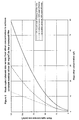
- Fig 1 is a schematic diagram of a processing machine which may be used in the present invention while Figs 2 and 3 are plots of wash replenishment rates versus fixer silver concentration.
- the concentration of the silver or halide may be determined by measurement or calculation.
- the concentration may itself be proportional to the coated weight of silver in the photographic material being processed. Preferably this amount is determined from data supplied by the manufacturer of the silver halide material which can be in the form of machine- or eye-readable indicia on the material or the packaging associated with the material.
- the calculation of the silver concentration may also include a term related to the amount of exposure being given to the material being processed.
- the function may also be a function of the number of wash and/or stabiliser tanks in the processing machine.
- the tank in which the concentration of the silver or halide ions is determined may be the bath with fixing ability nearest the wash or stabiliser tanks or it may be the final bath of the processing machine.
- the processing machine is not equipped with silver recovery means associated with any wash, fix or stabilise bath.
- image-dependent chemical species whose concentrations in the processing solutions of a replenished process are largely either dependent or independent of average exposure given to the photographic material being processed
- image-independent chemical species whose concentrations in the processing solutions of a replenished process are largely either dependent or independent of average exposure given to the photographic material being processed
- the level of silver complexes in the fixer bath will, for example, be image-dependent in a black-and-white process but will be image-independent in a colour process where the image is formed not from silver but from dye.
- Another example of an image-independent chemical would be the fixer buffering agent.
- the function of the buffering agent is to maintain pH. In a fixing bath, the buffering agent has to counteract the effects of the developer buffering agent which is carried into the fixer in proportion to the area of photographic material processed.
- the rate of addition of the wash or stabilise solution is above a predetermined minimum value.
- the minimum should be sufficient to maintain the concentration of one or more image-independent or stain-forming chemical species in any of the wash, stabiliser or fixing baths.
- the amount of silver remaining in the processed material is less than 20 mg/m 2 and the amount of thiosulphate remaining is less than 200 mg/m 2 of material being processed.
- control of retained non-image silver may be the prime determinant of wash replenishment rates in some circumstances, residual thiosulphate and other image-independent chemical species are still a significant cause of image degradation upon ageing.
- the levels of ammonium thiosulphate in a fixer may vary typically between 120 g/l and 180 g/l in a graphic arts processor, depending weakly on the average level of exposure given to the film being processed. This level of variation with average exposure, giving a ratio of 1.5 between the extremes of the range, is much less than for silver, where the ratio in a fixing bath not equipped with silver recovery might be as high as 30 or more and is therefore strongly dependent on exposure.
- the wash replenishment rate must therefore be set so that the level of residual thiosulphate in the film will always be less than the maximum permitted, as determined from ageing tests.
- W min for a particular processor and film type as the minimum wash replenishment rate needed to maintain thiosulphate ion and all other image-independent chemicals found in the fixing bath below their maximum acceptable levels in the processed film. This situation would arise when the film had been completely exposed so that all the silver is developed and no silver is therefore removed in the fixing bath.
- the wash replenishment rate must be increased as the levels of these chemicals in the fixer bath increase. Furthermore, it will be appreciated that when the levels of these chemicals in the fixer bath is low, it will be the control of the residual levels of image-independent chemicals that determines the wash replenishment rate.
- the present invention controls the wash replenishment rate using an algorithm so that levels of all residual chemicals in the processed film always remain below their maximum permitted values.
- the algorithm relates wash replenishment rate to an image-dependent chemical concentration, such as for example, silver, in either a fixing bath or a wash or stabilise bath.
- the level of silver in the fixer may be determined either by measurement with a silver sensor or by calculation based either on the exposure given to the film or on a measurement of the integrated density of the processed film.
- M is related to the level of exposure given to the film and to the coated weight of the chemical in the unprocessed film.
- exposure is usually measured as a percentage of the area which is developed fully. This information may be available from the exposing device directly or it may be obtained by scanning the film optically after development to determine the fractional area of the material which is black. With this information, it is possible to calculate the concentration of the chemical in the fixer bath. Taking the case of silver for example, with a material having a coated weight of 3.5 g/m 2 and at an average exposure level of 10%, we would calculate M silver to be 3.15 g/m 2 .
- the concentrations of image-dependent chemicals in the fixer will be linked stoichiometrically.
- the halide ion molar concentration in the fixer bath will be approximately the same as the silver molar concentration since the ratio of silver to halide ions in a photographic emulsion is 1:1. Any slight differences in molar concentrations in the fixer bath will be due to carryin of halide from the developer bath and differences in diffusion rates of the species through gelatin, but these differences will be small and may be corrected for.
- This invention has wide applicability across a range of processes where methods of removal of image-dependent chemicals from the fixer bath or any of the wash baths, such as silver recovery, are not used.
- the processor is preferably controlled by a microprocessor which, by using an appropriate algorithm, can initiate wash water replenishment when needed.
- FIG. 1 shows one embodiment of a processing machine which may be used in the present invention.
- the processor includes a developer tank (1), a fixer tank (2) and two wash tanks (3 & 4).
- the developer tank (1) is replenished from a holding tank (5) of previously mixed working strength developer replenisher, which is pumped into the developer tank at an appropriate rate by means of pump (10).
- the fixer tank (2) is replenished by means of pump (11), passing fixer concentrate from the holding vessel (6) and pump (12) passing wash water from wash tank (3) into the fixer tank (2) at an appropriate rate.
- the rates of replenishment of the solutions supplied by pumps (11) and (12) are maintained in a predetermined ratio.
- Wash tanks (3) and (4) are arranged such that when fresh wash solution is pumped from holding tank (7) by pump (13) into wash tank (4), the overflow so produced passes into wash tank (3), forming a conventional counterflow wash section.
- Level sensor (9) detects when the level of wash solution in wash tank (3) drops below a certain predetermined level. When the level drops below this predetermined level, a signal produced by the level sensor control means (8) sends a signal to pump (13) to add fresh wash solution to wash tank (4).
- the level sensor control means ends the flow of fresh wash solution into wash tank (4).
- Extra level sensors may also be provided so that evaporation losses may be controlled and appropriate extra solution replenishment may be made in any of the tanks.
- fixer considerations may dictate the exact form of the replenishment control algorithm.
- one of the functions of a fixer solution is to stop development by having sufficient buffering to drop the internal pH of the photographic material below the lowest pH at which development can be sustained. It may be that for some formulations of fixer solutions, the lowest replenishment rate for the concentrate which enables satisfactory buffering capacity requires a replenishment rate for the wash at a higher level than what would be strictly necessary to control residual chemicals below their maximum levels.
- the simplest functional dependence between silver or halide ion concentration and replenishment rate is a linear one with W min defining the minimum in the case when there are no image-dependent chemicals in the fixer bath.
- W min defining the minimum in the case when there are no image-dependent chemicals in the fixer bath.
- silver concentration will be used, though it will be understood that image-dependent chemicals are formed in proportion to one another. It will be appreciated that many other relationships between wash replenishment rate and the chosen image-dependent chemical concentration are possible according to the need of each processor configuration.
- the wash replenishment rate has a strong quadratic (i.e. a polynomial of order two) dependence on exposure as shown in figure 2.
- the squared term arises from the number of wash tanks involved.
- 3 curves have been calculated, all of which maintain a level of residual silver in the processed film of 20 mg/m 2 .
- the continuous line shows the relation between wash replenishment rate and fixer silver concentration when fix and wash times are effectively infinite.
- a wash replenishment rate of only 100 ml/m 2 is theoretically enough to wash the film with a fixer silver concentration of around 40 g/l.
- the dashed and dotted curves show the effect of a short fix times where silver in the film does not have sufficient time to equilibrate with the fixing solution, resulting in double the carryover of silver compared with the theoretical minimum.
- the dotted curve also includes the calculated effect of a short wash time where only 90% of the silver carried into each wash bath in or on the film has time to be washed out. In that case, a wash replenishment rate of 100 ml/m 2 will only control silver adequately from a fixer bath with 10 g/l silver concentration.
- C threshold will also vary with the number of wash baths as well as with the processing time in both fixer and wash baths. Given that W min is 75 ml/m 2 , in figure 2 C threshold would take values of 23 g/l, 12 g/l and 7.5 g/l for the continuous, dashed and dotted lines respectively.
- W min may be determined by ageing tests or it may be specified by stain considerations. For example, coloured substances from the developer bath, such as sensitising dyes and development reaction by-products, are passed into the fixing bath in the swollen photographic material being processed. These are diluted somewhat in the fixer and still further in the wash section. In systems where stain is a problem, W min may need to be set relatively high to control residual levels of stain forming chemicals.
- the wash algorithm could be usefully combined with sensors to determine the level of stain forming compounds in any of the wash or fixing baths.
- sensors For example, an optical sensor measuring the transmittance of the solution would generate data relating to the concentration of stain-forming chemicals in any of the wash or fixing baths. This data could be used for determining W min which may vary according to the type of film products being processed.
- W min is the electrical conductivity of the wash solution in the wash baths. This signal is related to the level of ions in the water and primarily to the level of the fixing agent, such as thiosulphate ion, which is present in significantly greater quantity than any other ionic species.
- the fixing agent such as thiosulphate ion
- Algorithms to control wash replenishment may therefore take a whole variety of different forms to suit the particular film and solutions being used and will also depend on the processor configuration.
- a sensor may be placed either in the fixer bath or in any of the wash baths. This is possible, because, using the methods of calculation outlined above, the concentration of the silver or halide ions may be calculated for all the fixer and wash baths providing it is known for one of them.
- wash replenishment solution may be performed by performing real-time calculation of the concentration of silver or halide ions in the fixer and wash baths. This feature maintains a minimum use of wash solution during seasoning of the processor from a start-up condition.
- replenishment rates may be deliberately kept low until the concentration of these chemicals builds up to the point where control of residual levels of the chemicals in the processed film demands that the correct replenishment rates, according to the normal algorithm, be used. This technique may not be applicable, however, if wash and fix replenishment rates are linked.
- wash replenishment rate algorithms does not deal with the replacement of wash solution lost through evaporation from the processing baths. It is normal practice to use level sensors on the wash baths to perform this function so that when the processor is switched on after a long period without use, the level sensors will register a loss of solution and will cause wash solution to be replenished automatically. If so desired the evaporation rates may be determined and automatic replenishment built into the wash replenishment control algorithm so that in addition to the algorithm described above, a time-dependent component may be implemented whereby an extra amount of wash solution may be added to the wash baths to replace evaporation losses.
- a preferred method ofachieving compensation for evaporation losses in both fixer and wash tanks in a processor where wash outflow is added to the fixer bath is to vary the ratio, ⁇ , between the volume of wash outflow and fixer replenisher added to the fixer tank as a function of time.
- wash tank level is controlled by a level sensor in the wash tank nearest the fixer tank which controls the addition of wash replenisher into the wash tank furthest from the fixer tank. Overflow from this tank replenishes the next wash tank and so on in a countercurrent arrangement until the level rises in the wash tank nearest the fixer tank and causes a level sensor transition.
- ⁇ When there are significant periods of acitivity, it is preferred to alter the ratio, ⁇ , from 2:1 up to 4:1 as the elapsed time since the last piece of film was processed increases.
- a particularly preferred method of doing this is to have different values of ⁇ for different bands of elapsed time. Such bands may run from under 600 seconds to greater than 2400 seconds with the value of ⁇ changing in steps of 0.5.
- the silver concentration in the seasoned fixer of such a graphic arts processor may vary typically from as little as 1 g/l to as much as 30 g/l depending on the silver content of the photographic material being processed, the average exposure given to it and the fixer replenishment rate. Since residual silver in the processed material is a very significant cause of image degradation after processing it must be kept below a threshold level. This threshold level is set by knowing the maximum changes in the image characteristics which would remain acceptable to users and then determining, by means of keeping tests, what level of residual chemicals will produce these maximum changes. For example, many users require that the minimum UV density of the film should not increase above 0.1.
- This example relates to the processing of graphic arts imagesetting films for laser exposure in the processor illustrated in Fig 1 with no silver recovery means.
- the films are processed in the following sequence: Develop 24s @ 35°C Fix 24s @ 35°C Wash 28s total at 23°C.
- the wash was carried out in two tanks the last of which is replenished with water with the overflow flowing into the first tank.
- the developer was Kodak RA2000 developer diluted 1:2 parts water, the fixer was as follows: Acetic Acid 30 g/l Ammonium Acetate 68 g/l Ammonium Thiosulphate 500 g/l Ammonium Sulphite 40 g/l Water - demineralised to 1 litre.
- the wash baths were filled with water from the public supply.
- fixer and wash replenishment rates are linked because outflow from the wash bath nearest the fixer bath is used in total to dilute fixer concentrate in the fixer bath.
- the algorithm chosen maintains a constant ratio of 2:1 between wash outflow and fixer replenishment rate.
- the wash replenishment rate is usually slightly greater than the wash outflow rate because of evaporation losses.
- the wash outflow rate and fix concentrate replenishment rate are kept constant at 75 ml/m 2 and 37.5 ml/m 2 respectively.
- the wash replenishment rate increases linearly with silver concentration such that at 17 g/l the wash outflow rate is 125 ml/m 2 .
- the processor was seasoned by processing several hundred square metres of a high contrast graphic arts imagesetting film with a coated silver weight of 3.3 g/m 2 under the following conditions:
- the film silver coated weight was 3.3 gm/m 2
- the area of a roll of film is 45 m 2
- a sheet of film has an area of 0.42 m 2 and the sheets are processed at equal intervals throughout a 12 hour day.
- the fixer replenisher rate was 67.5 ml/m 2 for a 10% exposed film (by area), and 50 ml/m 2 for a 50% exposed film with a normal dilution ratio of fixer to wash of 2.
- the evaporation level from the fixer tank was 30 ml/hour when processing and 15 ml/hour when the tanks had cooled down.
- Results show the seasoned silver concentrations in the fixer tank as the amount of film processed per week is varied for 10% and 50% exposure levels. As a guide, it was desired to maintain the silver concentration below 20 g/l in the fixer tank.
Landscapes
- Physics & Mathematics (AREA)
- General Physics & Mathematics (AREA)
- Silver Salt Photography Or Processing Solution Therefor (AREA)
- Photographic Processing Devices Using Wet Methods (AREA)
Applications Claiming Priority (2)
| Application Number | Priority Date | Filing Date | Title |
|---|---|---|---|
| GB9509036 | 1995-05-04 | ||
| GBGB9509036.1A GB9509036D0 (en) | 1995-05-04 | 1995-05-04 | Method of processing black-and-white photographic silver halide materials |
Publications (1)
| Publication Number | Publication Date |
|---|---|
| EP0742482A1 true EP0742482A1 (fr) | 1996-11-13 |
Family
ID=10773952
Family Applications (1)
| Application Number | Title | Priority Date | Filing Date |
|---|---|---|---|
| EP96201166A Withdrawn EP0742482A1 (fr) | 1995-05-04 | 1996-04-29 | Procédé de traitement des produits photographiques à l'halogénure d'argent en noir et blanc |
Country Status (4)
| Country | Link |
|---|---|
| US (1) | US5683839A (fr) |
| EP (1) | EP0742482A1 (fr) |
| JP (1) | JPH08328228A (fr) |
| GB (1) | GB9509036D0 (fr) |
Cited By (1)
| Publication number | Priority date | Publication date | Assignee | Title |
|---|---|---|---|---|
| EP1258778A1 (fr) * | 2001-05-18 | 2002-11-20 | Eastman Kodak Company | Méthode et système pour calculer l'exposition fractionnelle de matériau photographique |
Citations (4)
| Publication number | Priority date | Publication date | Assignee | Title |
|---|---|---|---|---|
| US3828172A (en) * | 1973-06-04 | 1974-08-06 | Eastman Kodak Co | Replenishment controller for photographic processors |
| GB2022275A (en) * | 1978-05-19 | 1979-12-12 | Falomo L | Method and apparatus for washing developed photographic and like films |
| GB2205176A (en) * | 1987-05-26 | 1988-11-30 | Eskofot As | >A method for developing a film |
| US5294955A (en) * | 1992-05-18 | 1994-03-15 | Eastman Kodak Company | Apparatus and method for washing light sensitive material |
Family Cites Families (3)
| Publication number | Priority date | Publication date | Assignee | Title |
|---|---|---|---|---|
| GB8902186D0 (en) * | 1989-02-01 | 1989-03-22 | Kodak Ltd | Photographic processing |
| US4995913A (en) * | 1989-02-28 | 1991-02-26 | E. I. Du Pont De Nemours And Company | Low wash water silver halide film processor |
| DE4315433A1 (de) * | 1993-05-08 | 1994-11-10 | Kodak Ag | Verfahren und Vorrichtung zur Steuerung der elektrolytischen Silberrückgewinnung für zwei Filmentwicklungsmaschinen |
-
1995
- 1995-05-04 GB GBGB9509036.1A patent/GB9509036D0/en active Pending
-
1996
- 1996-04-29 EP EP96201166A patent/EP0742482A1/fr not_active Withdrawn
- 1996-05-01 US US08/641,600 patent/US5683839A/en not_active Expired - Fee Related
- 1996-05-02 JP JP8111659A patent/JPH08328228A/ja active Pending
Patent Citations (4)
| Publication number | Priority date | Publication date | Assignee | Title |
|---|---|---|---|---|
| US3828172A (en) * | 1973-06-04 | 1974-08-06 | Eastman Kodak Co | Replenishment controller for photographic processors |
| GB2022275A (en) * | 1978-05-19 | 1979-12-12 | Falomo L | Method and apparatus for washing developed photographic and like films |
| GB2205176A (en) * | 1987-05-26 | 1988-11-30 | Eskofot As | >A method for developing a film |
| US5294955A (en) * | 1992-05-18 | 1994-03-15 | Eastman Kodak Company | Apparatus and method for washing light sensitive material |
Non-Patent Citations (2)
| Title |
|---|
| "REPLENISHMENT AND SILVER RECOVERY SYSTEM FOR PROCESSING OF SILVER HAUDE PHOTOGRAPHIC MATERIALS PART II", RESEARCH DISCLOSURE, no. 372, 1 April 1995 (1995-04-01), pages 283/284, XP000509091 * |
| ANONYMOUS: "Replenishment and silver recovery system recovery system for processing of silver halide photographic materials", RESEARCH DISCLOSURE, no. 363, July 1994 (1994-07-01), HAVANT GB, pages 397 - 399, XP002012846 * |
Cited By (2)
| Publication number | Priority date | Publication date | Assignee | Title |
|---|---|---|---|---|
| EP1258778A1 (fr) * | 2001-05-18 | 2002-11-20 | Eastman Kodak Company | Méthode et système pour calculer l'exposition fractionnelle de matériau photographique |
| US6638673B2 (en) | 2001-05-18 | 2003-10-28 | Eastman Kodak Company | Method and system for calculating the fractional exposure of photographic material |
Also Published As
| Publication number | Publication date |
|---|---|
| JPH08328228A (ja) | 1996-12-13 |
| GB9509036D0 (en) | 1995-06-28 |
| US5683839A (en) | 1997-11-04 |
Similar Documents
| Publication | Publication Date | Title |
|---|---|---|
| JPH06214369A (ja) | 写真感光材料処理装置 | |
| EP0456684B1 (fr) | Traitement photographique | |
| JP3010361B2 (ja) | ハロゲン化銀写真感光材料の現像処理方法 | |
| US5683839A (en) | Method of processing black and white photographic silver halide materials | |
| EP0530889B1 (fr) | Méthode pour régénérer des solutions révélatrices photographiques | |
| US5669029A (en) | Photographic processing | |
| US5736304A (en) | Method of processing black-and-white photographic materials | |
| US5620834A (en) | Method of processing photographic silver halide materials | |
| US6723247B2 (en) | Method for processing a color reversal photographic film | |
| EP0529720B1 (fr) | Procédé de traitement pour la photographie | |
| US5616452A (en) | Photographic processor and method for replenishing | |
| EP0742481A1 (fr) | Procédé de traitement de matériaux photographiques en noir et blanc | |
| JP2715352B2 (ja) | 自動現像プリント装置 | |
| JPS6391657A (ja) | ハロゲン化銀写真感光材料の処理方法 | |
| US5701545A (en) | Photographic processing | |
| JPH0247733B2 (ja) | Shashinkankozairyonoshorihoho | |
| US6132941A (en) | Method of replenishment for processing | |
| US5578430A (en) | Method of processing photographic silver halide materials without replenishment | |
| EP0741322A1 (fr) | Traitement photographique | |
| EP0694815A1 (fr) | Procédé de traitement de matériaux photographiques couleur à l'halogénure d'argent | |
| JPS61259247A (ja) | 写真感光材料用現像液の性能チエツク方法及び現像液の補充液の補充量制御方法 | |
| JPH05113650A (ja) | 現像処理装置及び処理方法 | |
| JPH04171441A (ja) | ハロゲン化銀感光材料の処理方法 | |
| JPH10198005A (ja) | 感光性ハロゲン化銀写真材料の処理の方法 | |
| JPH07159966A (ja) | ハロゲン化銀カラー写真感光材料の処理方法 |
Legal Events
| Date | Code | Title | Description |
|---|---|---|---|
| PUAI | Public reference made under article 153(3) epc to a published international application that has entered the european phase |
Free format text: ORIGINAL CODE: 0009012 |
|
| AK | Designated contracting states |
Kind code of ref document: A1 Designated state(s): BE CH DE FR GB IT LI |
|
| 17P | Request for examination filed |
Effective date: 19970421 |
|
| RAP1 | Party data changed (applicant data changed or rights of an application transferred) |
Owner name: EASTMAN KODAK COMPANY |
|
| 17Q | First examination report despatched |
Effective date: 20040330 |
|
| GRAP | Despatch of communication of intention to grant a patent |
Free format text: ORIGINAL CODE: EPIDOSNIGR1 |
|
| STAA | Information on the status of an ep patent application or granted ep patent |
Free format text: STATUS: THE APPLICATION IS DEEMED TO BE WITHDRAWN |
|
| 18D | Application deemed to be withdrawn |
Effective date: 20050618 |