EP0743374B1 - Alliage ferreux avec couche de diffusion Fe-Al et procédé de sa fabrication - Google Patents
Alliage ferreux avec couche de diffusion Fe-Al et procédé de sa fabrication Download PDFInfo
- Publication number
- EP0743374B1 EP0743374B1 EP96107915A EP96107915A EP0743374B1 EP 0743374 B1 EP0743374 B1 EP 0743374B1 EP 96107915 A EP96107915 A EP 96107915A EP 96107915 A EP96107915 A EP 96107915A EP 0743374 B1 EP0743374 B1 EP 0743374B1
- Authority
- EP
- European Patent Office
- Prior art keywords
- substrate
- diffusion layer
- thickness
- ferrous alloy
- hardness
- Prior art date
- Legal status (The legal status is an assumption and is not a legal conclusion. Google has not performed a legal analysis and makes no representation as to the accuracy of the status listed.)
- Expired - Lifetime
Links
- 238000009792 diffusion process Methods 0.000 title claims description 181
- 229910045601 alloy Inorganic materials 0.000 title claims description 82
- 239000000956 alloy Substances 0.000 title claims description 82
- CWYNVVGOOAEACU-UHFFFAOYSA-N Fe2+ Chemical compound [Fe+2] CWYNVVGOOAEACU-UHFFFAOYSA-N 0.000 title claims description 81
- 238000004519 manufacturing process Methods 0.000 title claims description 6
- 239000000758 substrate Substances 0.000 claims description 259
- 239000010410 layer Substances 0.000 claims description 204
- 229910001220 stainless steel Inorganic materials 0.000 claims description 71
- 239000010935 stainless steel Substances 0.000 claims description 69
- 229910000765 intermetallic Inorganic materials 0.000 claims description 44
- 229910052799 carbon Inorganic materials 0.000 claims description 27
- 238000002441 X-ray diffraction Methods 0.000 claims description 20
- 229910052782 aluminium Inorganic materials 0.000 claims description 16
- 238000010438 heat treatment Methods 0.000 claims description 12
- 238000000034 method Methods 0.000 claims description 12
- 229910052742 iron Inorganic materials 0.000 claims description 11
- 239000002344 surface layer Substances 0.000 claims description 10
- 229910000838 Al alloy Inorganic materials 0.000 claims description 7
- 238000001816 cooling Methods 0.000 claims description 6
- 229910017060 Fe Cr Inorganic materials 0.000 claims description 5
- 229910002544 Fe-Cr Inorganic materials 0.000 claims description 5
- UPHIPHFJVNKLMR-UHFFFAOYSA-N chromium iron Chemical compound [Cr].[Fe] UPHIPHFJVNKLMR-UHFFFAOYSA-N 0.000 claims description 5
- 238000000576 coating method Methods 0.000 claims description 5
- 239000011248 coating agent Substances 0.000 claims description 3
- XEEYBQQBJWHFJM-UHFFFAOYSA-N iron Substances [Fe] XEEYBQQBJWHFJM-UHFFFAOYSA-N 0.000 claims 13
- AZDRQVAHHNSJOQ-UHFFFAOYSA-N alumane Chemical group [AlH3] AZDRQVAHHNSJOQ-UHFFFAOYSA-N 0.000 claims 2
- 230000000052 comparative effect Effects 0.000 description 54
- 239000011888 foil Substances 0.000 description 43
- OKTJSMMVPCPJKN-UHFFFAOYSA-N Carbon Chemical compound [C] OKTJSMMVPCPJKN-UHFFFAOYSA-N 0.000 description 23
- 238000004881 precipitation hardening Methods 0.000 description 19
- 229910052804 chromium Inorganic materials 0.000 description 11
- 229910018084 Al-Fe Inorganic materials 0.000 description 10
- 229910018192 Al—Fe Inorganic materials 0.000 description 10
- 229910000831 Steel Inorganic materials 0.000 description 9
- 239000010959 steel Substances 0.000 description 9
- 238000004453 electron probe microanalysis Methods 0.000 description 7
- 239000006104 solid solution Substances 0.000 description 7
- TWNQGVIAIRXVLR-UHFFFAOYSA-N oxo(oxoalumanyloxy)alumane Chemical compound O=[Al]O[Al]=O TWNQGVIAIRXVLR-UHFFFAOYSA-N 0.000 description 6
- 238000001771 vacuum deposition Methods 0.000 description 6
- 239000000463 material Substances 0.000 description 5
- 238000005520 cutting process Methods 0.000 description 4
- 239000000203 mixture Substances 0.000 description 4
- 238000002203 pretreatment Methods 0.000 description 4
- 238000010791 quenching Methods 0.000 description 4
- 208000019300 CLIPPERS Diseases 0.000 description 3
- XAGFODPZIPBFFR-UHFFFAOYSA-N aluminium Chemical compound [Al] XAGFODPZIPBFFR-UHFFFAOYSA-N 0.000 description 3
- 229910010293 ceramic material Inorganic materials 0.000 description 3
- 208000021930 chronic lymphocytic inflammation with pontine perivascular enhancement responsive to steroids Diseases 0.000 description 3
- 229910052751 metal Inorganic materials 0.000 description 3
- 229910052759 nickel Inorganic materials 0.000 description 3
- 238000004125 X-ray microanalysis Methods 0.000 description 2
- 238000005253 cladding Methods 0.000 description 2
- 230000007423 decrease Effects 0.000 description 2
- 230000003247 decreasing effect Effects 0.000 description 2
- -1 e.g. Substances 0.000 description 2
- 230000000694 effects Effects 0.000 description 2
- 230000003647 oxidation Effects 0.000 description 2
- 238000007254 oxidation reaction Methods 0.000 description 2
- RVTZCBVAJQQJTK-UHFFFAOYSA-N oxygen(2-);zirconium(4+) Chemical compound [O-2].[O-2].[Zr+4] RVTZCBVAJQQJTK-UHFFFAOYSA-N 0.000 description 2
- 238000007747 plating Methods 0.000 description 2
- 229910001928 zirconium oxide Inorganic materials 0.000 description 2
- SXAMGRAIZSSWIH-UHFFFAOYSA-N 2-[3-[2-(2,3-dihydro-1H-inden-2-ylamino)pyrimidin-5-yl]-1,2,4-oxadiazol-5-yl]-1-(2,4,6,7-tetrahydrotriazolo[4,5-c]pyridin-5-yl)ethanone Chemical compound C1C(CC2=CC=CC=C12)NC1=NC=C(C=N1)C1=NOC(=N1)CC(=O)N1CC2=C(CC1)NN=N2 SXAMGRAIZSSWIH-UHFFFAOYSA-N 0.000 description 1
- ZRPAUEVGEGEPFQ-UHFFFAOYSA-N 2-[4-[2-(2,3-dihydro-1H-inden-2-ylamino)pyrimidin-5-yl]pyrazol-1-yl]-1-(2,4,6,7-tetrahydrotriazolo[4,5-c]pyridin-5-yl)ethanone Chemical compound C1C(CC2=CC=CC=C12)NC1=NC=C(C=N1)C=1C=NN(C=1)CC(=O)N1CC2=C(CC1)NN=N2 ZRPAUEVGEGEPFQ-UHFFFAOYSA-N 0.000 description 1
- MGGVALXERJRIRO-UHFFFAOYSA-N 4-[2-(2,3-dihydro-1H-inden-2-ylamino)pyrimidin-5-yl]-2-[2-oxo-2-(2,4,6,7-tetrahydrotriazolo[4,5-c]pyridin-5-yl)ethyl]-1H-pyrazol-5-one Chemical compound C1C(CC2=CC=CC=C12)NC1=NC=C(C=N1)C=1C(=NN(C=1)CC(=O)N1CC2=C(CC1)NN=N2)O MGGVALXERJRIRO-UHFFFAOYSA-N 0.000 description 1
- 229910000851 Alloy steel Inorganic materials 0.000 description 1
- 241000283690 Bos taurus Species 0.000 description 1
- 229910000881 Cu alloy Inorganic materials 0.000 description 1
- 229910002551 Fe-Mn Inorganic materials 0.000 description 1
- VCUFZILGIRCDQQ-KRWDZBQOSA-N N-[[(5S)-2-oxo-3-(2-oxo-3H-1,3-benzoxazol-6-yl)-1,3-oxazolidin-5-yl]methyl]-2-[[3-(trifluoromethoxy)phenyl]methylamino]pyrimidine-5-carboxamide Chemical compound O=C1O[C@H](CN1C1=CC2=C(NC(O2)=O)C=C1)CNC(=O)C=1C=NC(=NC=1)NCC1=CC(=CC=C1)OC(F)(F)F VCUFZILGIRCDQQ-KRWDZBQOSA-N 0.000 description 1
- 229910001005 Ni3Al Inorganic materials 0.000 description 1
- 229910000943 NiAl Inorganic materials 0.000 description 1
- NPXOKRUENSOPAO-UHFFFAOYSA-N Raney nickel Chemical compound [Al].[Ni] NPXOKRUENSOPAO-UHFFFAOYSA-N 0.000 description 1
- QQHSIRTYSFLSRM-UHFFFAOYSA-N alumanylidynechromium Chemical compound [Al].[Cr] QQHSIRTYSFLSRM-UHFFFAOYSA-N 0.000 description 1
- 238000004458 analytical method Methods 0.000 description 1
- 239000000919 ceramic Substances 0.000 description 1
- 238000007598 dipping method Methods 0.000 description 1
- 238000009713 electroplating Methods 0.000 description 1
- 238000005259 measurement Methods 0.000 description 1
- 239000000843 powder Substances 0.000 description 1
- 238000005096 rolling process Methods 0.000 description 1
- 238000001179 sorption measurement Methods 0.000 description 1
Images

Classifications
-
- C—CHEMISTRY; METALLURGY
- C23—COATING METALLIC MATERIAL; COATING MATERIAL WITH METALLIC MATERIAL; CHEMICAL SURFACE TREATMENT; DIFFUSION TREATMENT OF METALLIC MATERIAL; COATING BY VACUUM EVAPORATION, BY SPUTTERING, BY ION IMPLANTATION OR BY CHEMICAL VAPOUR DEPOSITION, IN GENERAL; INHIBITING CORROSION OF METALLIC MATERIAL OR INCRUSTATION IN GENERAL
- C23C—COATING METALLIC MATERIAL; COATING MATERIAL WITH METALLIC MATERIAL; SURFACE TREATMENT OF METALLIC MATERIAL BY DIFFUSION INTO THE SURFACE, BY CHEMICAL CONVERSION OR SUBSTITUTION; COATING BY VACUUM EVAPORATION, BY SPUTTERING, BY ION IMPLANTATION OR BY CHEMICAL VAPOUR DEPOSITION, IN GENERAL
- C23C2/00—Hot-dipping or immersion processes for applying the coating material in the molten state without affecting the shape; Apparatus therefor
- C23C2/04—Hot-dipping or immersion processes for applying the coating material in the molten state without affecting the shape; Apparatus therefor characterised by the coating material
- C23C2/12—Aluminium or alloys based thereon
-
- C—CHEMISTRY; METALLURGY
- C23—COATING METALLIC MATERIAL; COATING MATERIAL WITH METALLIC MATERIAL; CHEMICAL SURFACE TREATMENT; DIFFUSION TREATMENT OF METALLIC MATERIAL; COATING BY VACUUM EVAPORATION, BY SPUTTERING, BY ION IMPLANTATION OR BY CHEMICAL VAPOUR DEPOSITION, IN GENERAL; INHIBITING CORROSION OF METALLIC MATERIAL OR INCRUSTATION IN GENERAL
- C23C—COATING METALLIC MATERIAL; COATING MATERIAL WITH METALLIC MATERIAL; SURFACE TREATMENT OF METALLIC MATERIAL BY DIFFUSION INTO THE SURFACE, BY CHEMICAL CONVERSION OR SUBSTITUTION; COATING BY VACUUM EVAPORATION, BY SPUTTERING, BY ION IMPLANTATION OR BY CHEMICAL VAPOUR DEPOSITION, IN GENERAL
- C23C10/00—Solid state diffusion of only metal elements or silicon into metallic material surfaces
- C23C10/28—Solid state diffusion of only metal elements or silicon into metallic material surfaces using solids, e.g. powders, pastes
-
- C—CHEMISTRY; METALLURGY
- C23—COATING METALLIC MATERIAL; COATING MATERIAL WITH METALLIC MATERIAL; CHEMICAL SURFACE TREATMENT; DIFFUSION TREATMENT OF METALLIC MATERIAL; COATING BY VACUUM EVAPORATION, BY SPUTTERING, BY ION IMPLANTATION OR BY CHEMICAL VAPOUR DEPOSITION, IN GENERAL; INHIBITING CORROSION OF METALLIC MATERIAL OR INCRUSTATION IN GENERAL
- C23C—COATING METALLIC MATERIAL; COATING MATERIAL WITH METALLIC MATERIAL; SURFACE TREATMENT OF METALLIC MATERIAL BY DIFFUSION INTO THE SURFACE, BY CHEMICAL CONVERSION OR SUBSTITUTION; COATING BY VACUUM EVAPORATION, BY SPUTTERING, BY ION IMPLANTATION OR BY CHEMICAL VAPOUR DEPOSITION, IN GENERAL
- C23C26/00—Coating not provided for in groups C23C2/00 - C23C24/00
-
- Y—GENERAL TAGGING OF NEW TECHNOLOGICAL DEVELOPMENTS; GENERAL TAGGING OF CROSS-SECTIONAL TECHNOLOGIES SPANNING OVER SEVERAL SECTIONS OF THE IPC; TECHNICAL SUBJECTS COVERED BY FORMER USPC CROSS-REFERENCE ART COLLECTIONS [XRACs] AND DIGESTS
- Y10—TECHNICAL SUBJECTS COVERED BY FORMER USPC
- Y10T—TECHNICAL SUBJECTS COVERED BY FORMER US CLASSIFICATION
- Y10T428/00—Stock material or miscellaneous articles
- Y10T428/12—All metal or with adjacent metals
- Y10T428/12493—Composite; i.e., plural, adjacent, spatially distinct metal components [e.g., layers, joint, etc.]
- Y10T428/12771—Transition metal-base component
- Y10T428/12861—Group VIII or IB metal-base component
Definitions
- the present invention relates to a ferrous alloy formed with an Fe-Cr stainless steel as a substrate and an Fe-Al diffusion layer of improved hardness, which may be used for sliding parts such as gears and bearings or blades of electric shavers or hair clippers, and a method of making the ferrous alloy.
- Japanese Patent Early Publication [KOKAI] No. 4-250995 teaches a blade material for electric shavers and a method of making the same.
- the blade material comprises a substrate such as a high hardness and nonmagnetic stainless steel, Fe-Mn alloy or Be-Cu alloy, an intermetallic compound layer of Al and metal elements contained in the substrate, e.g., Ni and Fe, and an Al 2 O 3 layer on the intermetallic compound layer.
- the blade material can be made by the steps of cladding Ni and Al foils to the substrate such that the Ni foil is positioned between the substrate and Al foil, heating the cladded substrate in vacuum or oxidation atmosphere to form an intermetallic compound layer of NiAl and/or Ni 3 Al and the Al 2 O 3 layer.
- the cladded substrate When the heat-treatment is performed in vacuum, the cladded substrate is heated at a temperature of 400°C to 650°C for 1 to 20 minutes. When the heat-treatment is performed in the oxidation atmosphere, the cladded substrate is heated at a temperature of 600°C to 1000°C for 5 to 20 hours.
- the diffusion rate of Ni atoms into the substrate is much slower than that of Al atoms into the substrate, and also Ni atoms prevent the diffusion of Al atoms into the substrate, there is a problem that the adhesion between the substrate and intermetallic compound layer is not enough.
- UK Patent No. 1278085 teaches an aluminum diffusion-coated steel having sulphidation resisting properties in an atmosphere of high temperature and pressure.
- the coated steel comprises a steel having a surface layer formed by an aluminum diffusion-coating method. The method is characterized by a heat-treatment at a temperature of 800 to 950 °C.
- the surface layer consists of aluminum alloy, and has a thickness not exceeding 300 ⁇ m.
- the Al content of the surface region of the surface layer is less than 30 wt%.
- the substrate is an alloy steel containing carbon not exceeding 0.5 wt% and at least one element selected from Mo in the amount of 0.1 to 1.2 wt%, Cr not exceeding 10 wt% and Ni not exceeding 4.5 wt%.
- a powder pack method, gas method, ceramic adsorption method or hot-dip and diffusing method is applicable.
- the Al content of the surface layer is less than 30 wt%, it is difficult to form hard Al-Fe intermetallic compounds such as Al 3 Fe, Al 13 Fe 4 or Al 5 Fe 2 in the surface layer. As a result, the surface layer would be not sufficient to provide high hardness and wear resistance.
- the present invention provides a ferrous alloy comprising an Fe-Cr stainless steel as a substrate and an Fe-Al diffusion layer on the substrate, and a method of making the same.
- the stainless steel has a Vickers hardness of 400 or more.
- the diffusion layer is characterized in that:
- the intermetallic compound in the diffusion layer contains at least one selected from the group consisting of Al 2 Fe, Al 5 Fe 2 , Al 3 Fe and Al 13 Fe 4 .
- the diffusion layer includes the intermetallic compound at such an amount that the diffusion layer exhibits at least 10 % of a peak ratio which is defined by 100 x P1 / (P1 + P2) where P1 is a main peak height for the intermetallic compound and P2 is a main peak height for AlFe and AlFe 3 .
- the P1 and P2 can be observed from an X-ray diffraction profile obtained through an X-ray diffraction at the outer surface of the diffusion layer.
- a precipitation-hardening stainless steel comprising 66 to 81.9 wt% of Fe, 15 to 20 wt% of Cr, 3 to 13 wt% of Ni, and one element selected from 3 to 6 wt% of Cu, 0.5 to 2 wt% of Al, and 0.01 to 0.2 wt% of a total of C and N, or a high carbon stainless steel comprising of 73 to 89.9 wt% of Fe, 10 to 19 wt% of Cr, 0.1 to 1.2 wt% of C, and less than 3 wt% of Ni.
- the ferrous alloy of the present invention can be made by the following method. That is, an Al layer is formed on a surface of the substrate to provide an Al-coated substrate.
- the Al-coated substrate is heated at a temperature of 450 to 600 °C for 0.5 to 4 hours, to thereby give a Vickers hardness of 400 or more to the substrate, and at the same time mutually diffuse Al atoms and Fe atoms respectively into the substrate and the Al layer in such a manner as to form the Fe-Al diffusion layer in the surface of the coated substrate.
- the ferrous alloy of the present invention can be made by the following method. That is, an Al layer is formed on a surface of the substrate to provide an Al-coated substrate.
- the Al-coated substrate is heated at a temperature of 900 to 1100°C for 15 to 180 seconds, to thereby mutually diffuse Al atoms and Fe atoms respectively into the substrate and the Al layer in such a manner as to form the Fe-Al diffusion layer in the surface of the coated substrate.
- the coated substrate is cooled from the heat-treatment temperature at a cooling rate of 10 °C/sec or more to give a Vickers hardness of 400 or more to the substrate.
- a ferrous alloy of the present invention comprises a substrate of an Fe-Cr stainless steel and an Fe-Al diffusion layer on the substrate.
- the substrate has a Vickers hardness of 400 or more.
- a precipitation-hardening stainless steel comprising 66 to 81.9 wt% of Fe, 15 to 20 wt% of Cr, 3 to 13 wt% of Ni, and one element selected from 3 to 6 wt% of Cu, 0.5 to 2 wt% of Al, and 0.01 to 0.2 wt% of a total of C and N, or a high carbon stainless steel comprising of 73 to 89.9 wt% of Fe, 10 to 19 wt% Cr, 0.1 to 1.2 wt% of C, and less than 3 wt% of Ni.
- the Fe-Al diffusion layer has a thickness in the range of 2 to 50 ⁇ m.
- the thickness is less than 2 ⁇ m, it is insufficient to give an improved wear resistance to the ferrous alloy.
- the thickness is more than 50 ⁇ m, there causes problems that the surface hardness of the diffusion layer is lowered, the hardness of the substrate adjacent to the diffusion layer is lowered, or the mechanical toughness of the diffusion layer is deteriorated.
- the diffusion layer has a thickness of 5 to 15 ⁇ m to prevent the occurrence of micro-chippings at the shape edge.
- the Al content included within a depth of at least 2 ⁇ m of the diffusion layer is 35 to 65 % by weight based upon total weight of a region of the diffusion layer ranging up to the thickness of at least 2 ⁇ m.
- the Al content is less than 35 wt%, it is not enough to give improved hardness and wear resistance to the outer surface of the diffusion layer.
- the Al content is more than 65 wt%, a pure Al pool and/or Fe-Al solid solution of a poor hardness is formed in the diffusion layer.
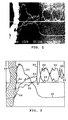
- FIG. 1 For example, a SEM photograph of a cross section of a diffusion layer having the thickness of about 10 ⁇ m is shown in FIG. 1.
- EPMA Electro Probe Micro Analysis
- FIG. 2 The point D 0 corresponds to the outer surface of the diffusion layer.
- the EPMA profile of Al designated by the numeral 21 shows that the diffusion layer has a surface region with a high concentration of Al, and the Al concentration in the diffusion layer gradually decreases from the surface region toward the depth of about 10 ⁇ m.
- the EPMA profiles of Fe and Cr are designated by the numerals 22 and 23 , respectively. The Fe and Cr concentrations gradually increase from the outer surface of the diffusion layer toward the depth of about 10 ⁇ m.
- the numeral 24 designates a Ni coating formed on the diffusion layer to take the SEM photograph.
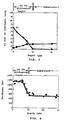
- FIG. 3 shows the variations of the Al and Cr contents in the depth from the outer surface of the diffusion layer, which were quantitatively analyzed by means of an X-ray micro analysis.
- the curve of the Al content shows that the Al content included within a depth of about 2 ⁇ m from the outer surface of the diffusion layer is in the range of 45 to 60 % by weight based upon total weight of a region of the diffusion layer ranging up to the thickness of about 2 ⁇ m. Since the Al content of 60 wt% corresponds to about 76 atom%, it could be presumed that Al 3 Fe is formed in the outer surface of the diffusion layer.
- the variation of Vickers hardness in the depth from the outer surface of the diffusion layer is shown in FIG. 4.
- the hardness was measured under the load of 2 gf. From the curve of FIG. 4, it is readily understood that the high hardness (Hv) of about 1140 is stably obtained over the range of the diffusion layer from the outer surface to the depth of about 6 ⁇ m.
- This range of the diffusion layer substantially corresponds to the range of the Al content of 35 to 60 wt%, as shown in FIG. 3.
- the hardness gradually decreases from the range toward the depth of about 10 ⁇ m, and finally reaches about 500 of the substrate hardness.
- the diffusion layer can be identified by an X-ray diffraction.
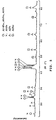
- an X-ray diffraction profile of the diffusion layer is shown in FIG. 5.
- This X-ray profile was taken by using an X-ray diffraction apparatus with conventional Cu-k ⁇ X-ray source and 2 ⁇ - ⁇ goniometer at accelerating voltage and current of 40 kV and 200mA.
- the X ray was irradiated to the outer surface of the diffusion layer.
- the X-ray profile shows that the diffusion layer contains a plurality of intermetallic compounds of Fe and Al. Since the peaks of Al 3 Fe overlap with the peaks of Al 13 Fe 4 and Al 5 Fe 2 , they can not be separately identified.
- the peaks designated by the symbol ⁇ in the X-ray profile of FIG. 5 mean the presence of at least one selected from the group consisting of Al 13 Fe 4 , Al 5 Fe 2 , and Al 3 Fe.
- some peaks of Al 2 Fe designated by the symbol ⁇ in the X-ray profile overlap with the peaks of the intermetallic compound designated by the symbol ⁇ .
- the peaks of AlFe designated by the symbol ⁇ overlap with the peaks of AlFe 3 designated by the symbol ⁇ .
- the diffusion layer of this X-ray profile contains Al 2 Fe, AlFe 3 and at least one of Al 5 Fe 2 , Al 3 Fe and Al 13 Fe 4 .
- the diffusion layer contains at least 90 vol% of an intermetallic compound of Al and Fe relative to a total volume of the diffusion layer.
- the volume ratio of the diffusion layer is 100 vol%.
- the X-ray profile of FIG. 5 does not show any peak of the substrate. However, as the thickness of the diffusion layer is thinner, some peaks of the substrate may appear. On the other hand, when the Al content at the outer surface of the diffusion layer is more than 65 wt%, some peaks of pure Al may be identified. In addition, it should be noted that no peak of Al 2 O 3 is identified in the X-ray profile. In other words, any Al 2 O 3 layer is not formed in the outer surface of the diffusion layer of the present invention. Moreover, the diffusion layer contains a small amount of Cr, as shown in FIG. 3. However, any intermetallic compound of Al and Cr is not identified in the X-ray profile of FIG. 5. Even if a small amount of Al-Cr intermetallic compound is formed in the diffusion layer, there is no problem because the hardness of the diffusion layer is not lowered.
- the P1 and P2 can be observed from an X-ray diffraction profile obtained through an X-ray diffraction at the outer surface of the diffusion layer. In the X-ray profile of FIG. 5, the peak ratio can be determined according to the main peak height P1 observed at about 43.3° and the main peak height P2 observed at about 43.7°. The peak ratio is about 90 %.
- the ferrous alloy is made by the following method. That is, an Al layer is formed on a surface of the substrate to provide an Al-coated substrate.
- the Al layer may be formed by means of hot dipping, electro-plating, vacuum deposition, cladding, or sandwich rolling.
- the Al-coated substrate is heated at a temperature of 450 to 600 °C for a keeping time of 0.5 to 4 hours, to thereby mutually diffuse Al atoms and Fe atoms respectively into the substrate and the Al layer in such a manner as to form the above-explained diffusion layer in the surface of the coated substrate.
- the precipitation hardening of the substrate is caused by the heat treatment, so that the hardness of the substrate reaches at least 400 of Vickers hardness. Since the diffusion layer is formed through the mutual diffusion between metal elements of the substrate, e.g., Fe and Cr, and Al of the Al layer, it is possible to provide excellent adhesion between the diffusion layer and substrate.
- the temperature is less than 450 °C or the keeping time is less than 0.5 hours, the mutual diffusion is insufficient to form the diffusion layer, and also it is difficult to achieve the precipitation hardening of the substrate.
- the temperature is more than 600 °C or the keeping time is more than 4 hours, the precipitation hardening is excessively proceeded, so that the hardness of the substrate is lowered. Therefore, it is preferred that as the heat-treatment temperature is increased between 450 and 600 °C, the keeping time is decreased in the range of 0.5 to 4 hours.
- the ferrous alloy is made by the following method. That is, an Al layer is formed on a surface of the substrate to provide an Al-coated substrate.
- the Al-coated substrate is heated at a temperature of 900 to 1100°C for a keeping time of 15 to 180 seconds, to thereby mutually diffuse Al atoms and Fe atoms respectively into the substrate and the Al layer in such a manner as to form the above-explained diffusion layer in the surface of the coated substrate.
- the coated substrate is cooled from the temperature at a cooling rate of 10 °C/sec or more.
- a quench hardening of the substrate is caused by the cooling step, so that the hardness of the substrate reaches at least 400 of Vickers hardness.
- the cooling rate is less than 10 °C/sec, the hardness of the substrate can be not improved by the quench hardening.
- the temperature is less than 900 °C, the effect of the quench hardening is not enough.
- the temperature is more than 1100 °C, or the keeping time is more than 180 seconds, the hardness of the diffusion layer or the hardness of the substrate adjacent to the diffusion layer is lowered because of a rapid diffusion of Al atoms into the substrate.
- the keeping time is less than 15 seconds, the mutual diffusion between metal elements of the substrate and Al of the Al layer is insufficient to form the diffusion layer, rind also the quench hardening is not uniformly performed to the substrate. Therefore, it is preferred that as the heat-treatment temperature is increased between 900 and 1100 °C, the keeping time is decreased in the range of 15 to 180 seconds.
- a high carbon stainless steel sheet having the thickness of 3 mm was used as a substrate.
- the stainless steel consists of 13.5 wt% of Cr, 1.2 wt% of Mo, 0.4 wt% of C, and the balance of Fe.
- Al layers having the thickness of 45 ⁇ m were formed on opposite surfaces of the substrate by means of electric-plating to obtain an Al-coated substrate having the thickness of 3.09 mm.
- the Al-coated substrate was heated at 1050 °C for 180 seconds in the air, and then cooled at the rate of 60 °C/sec to obtain a ferrous alloy of Example 1.
- the ferrous alloy has an Fe-Al diffusion layer having the thickness of 45 ⁇ m.
- the Vickers hardness of the substrate is 600.
- the surface hardness of the diffusion layer is 900.
- the hardness was measured under the load of 2 gf.
- V (vol%) 100 x S1 / (S1 + S2) where S1 is a total of the peak-areas of all Al-Fe intermetallic compounds identified on the X-ray profile, and S2 is a total of the peak-areas of pure Al, and/or an Al alloy in which Fe mainly forms a solid solution with Al, except for the Al-Fe intermetallic compounds on the X-ray profile.
- the volume ratio is 97 vol%.
- the Al content included within the depth of about 2 ⁇ m from the outer surface of the diffusion layer was determined by means of X-ray micro analysis.
- the Al content is 45 % by weight based upon total weight of a region of the diffusion layer ranging up to the thickness of about 2 ⁇ m.
- Example 1 The same analysises and measurements as Example 1 were performed in Examples and Comparative Examples described below.
- a high carbon stainless steel sheet having the thickness of 0.2 mm was used as a substrate.
- the stainless steel consists of 13.5 wt% of Cr, 1.2 wt% of Mo, 0.4 wt% of C, and the balance of Fe.
- the substrate with Al foils was rolled to obtain an Al-cladded substrate having Al layers of 20 ⁇ m thickness.
- the cladded substrate was heated at 975 °C for 120 seconds in the air, and then cooled at the rate of 15 °C/sec to obtain a ferrous alloy of Example 2.
- the ferrous alloy has an Fe-Al diffusion layer having the thickness of 20 ⁇ m.
- the Vickers hardness of the substrate is 480.
- the surface hardness of the diffusion layer is 1020.
- a high carbon stainless steel sheet having the thickness of 0.1 mm was used as a substrate.
- the stainless steel consists of 16.5 wt% of Cr, 0.9 wt% of C, 0.4 wt% of Mo, and the balance of Fe.
- Al foils having the thickness of 15 ⁇ m were placed on opposite surfaces of the substrate, the substrate with Al foils was rolled to obtain an Al-cladded substrate having the thickness of 0.12 mm.
- the cladded substrate was heated at 1000 °C for 30 seconds in the air, and then cooled at the rate of 10 °C/sec to obtain a ferrous alloy of Example 3.
- the ferrous alloy has an Fe-Al diffusion layer having the thickness of 13 ⁇ m.
- the Vickers hardness of the substrate is 500.
- the surface hardness of the diffusion layer is 1000.
- a high carbon stainless steel sheet having the thickness of 0.2 mm was used as a substrate.
- the stainless steel consists of 12.5 wt% of Cr, 0.7 wt% of C, and the balance of Fe.
- the substrate with Al foils was rolled to obtain an Al-cladded substrate having Al layers of 8 ⁇ m thickness.
- the cladded substrate was heated at 900 °C for 180 seconds in the air, and then cooled at the rate of 30 °C/sec to obtain a ferrous alloy of Example 4.
- the ferrous alloy has an Fe-Al diffusion layer having the thickness of 8 ⁇ m.
- the Vickers hardness of the substrate is 420.
- the surface hardness of the diffusion layer is 1100.
- a high carbon stainless steel sheet having the thickness of 0.3 mm was used as a substrate.
- the stainless steel consists of 14 wt% of Cr, 1.1 wt% of C, and the balance of Fe.
- the substrate with Al foils was rolled to obtain an Al-cladded substrate having Al layers of 15 ⁇ m thickness.
- the cladded substrate was heated at 1100 °C for 15 seconds in the air, and then cooled at the rate of 20 °C/sec to obtain a ferrous alloy of Example 5.
- the ferrous alloy has an Fe-Al diffusion layer having the thickness of 15 ⁇ m.
- the Vickers hardness of the substrate is 550.
- the surface hardness of the diffusion layer is 810.
- a high carbon stainless steel sheet having the thickness of 0.18 mm was used as a substrate.
- the stainless steel consists of 14 wt% of Cr, 1.0 wt% of C, and the balance of Fe.
- After Al layers having the thickness of 3 ⁇ m were formed on opposite surfaces of the substrate by a vacuum deposition of Al to obtain an Al-coated substrate.
- the coated substrate was heated at 1000 °C for 15 seconds in a mixture gas of Ar and N 2 , and then cooled at the rate of 10 °C/sec to obtain a ferrous alloy of Example 6.
- the ferrous alloy has an Fe-Al diffusion layer having the thickness of 3 ⁇ m.
- the Vickers hardness of the substrate is 550.
- the surface hardness of the diffusion layer is 700.
- a high carbon stainless steel sheet having the thickness of 0.15 mm was used as a substrate.
- the stainless steel consists of 13.5 wt% of Cr, 1.2 wt% of Mo, 0.4 wt% of C and the balance of Fe.
- the substrate with Al foils was rolled to obtain an Al-cladded substrate having Al layers of 10 ⁇ m thickness.
- the cladded substrate was heated at 975 °C for 30 seconds in the air, and then cooled at the rate of 15 °C/sec to obtain a ferrous alloy of Example 7.
- the ferrous alloy has an Fe-Al diffusion layer having the thickness of 10 ⁇ m.
- the Vickers hardness of the substrate is 500.
- the surface hardness of the diffusion layer is 1140.
- a high carbon stainless steel sheet having the thickness of 0.5 mm was used as a substrate.
- the stainless steel consists of 13.5 wt% of Cr, 1.2 wt% of Mo, 0.4 wt% of C, and the balance of Fe.
- Al foils having the thickness of 6 ⁇ m were placed on opposite surfaces of the substrate, the substrate with Al foils was rolled to obtain an Al-cladded substrate.
- the cladded substrate was heated at 925 °C for 60 seconds in the air, and then cooled at the rate of 30 °C/sec to obtain a ferrous alloy of Example 8.
- the ferrous alloy has an Fe-Al diffusion layer having the thickness of 5 ⁇ m.
- the Vickers hardness of the substrate is 450.
- the surface hardness of the diffusion layer is 1150.
- a high carbon stainless steel sheet having the thickness of 2 mm was used as a substrate.
- the stainless steel consists of 13.5 wt% of Cr, 1.2 wt% of Mo, 0.4 wt% of C, and the balance of Fe.
- Al layers having the thickness of 30 ⁇ m were formed on opposite surfaces of the substrate by a vacuum deposition of Al to obtain an Al-coated substrate.
- the coated substrate was heated at 1100 °C for 90 seconds in a mixture gas of Ar and N 2 , and then cooled at the rate of 20 °C/sec to obtain a ferrous alloy of Example 9.
- the ferrous alloy has an Fe-Al diffusion layer having the thickness of 30 ⁇ m.
- the Vickers hardness of the substrate is 550.
- the surface hardness of the diffusion layer is 630.
- a precipitation-hardening stainless steel sheet having the thickness of 0.5 mm was used as a substrate.
- the stainless steel consists of 18 wt% of Cr, 12 wt% of Ni, 0.1 wt% of (C +N), and the balance of Fe.
- Al foils having the thickness of 13 ⁇ m were placed on opposite surfaces of the substrate, the substrate with Al foils was rolled to obtain an Al-cladded substrate having the thickness of 0.48 mm.
- the cladded substrate was cold-rolled to have the thickness of 0.2 mm.
- the cladded substrate was then heated at 550 °C for 2 hours in Ar gas to obtain a ferrous alloy of Example 10.
- the ferrous alloy has an Fe-Al diffusion layer having the thickness of 5 ⁇ m.
- the Vickers hardness of the substrate is 550.
- the surface hardness of the diffusion layer is 1100.
- a precipitation-hardening stainless steel sheet having the thickness of 0.5 mm was used as a substrate.
- the stainless steel consists of 18 wt% of Cr, 12 wt% of Ni, 0.1 wt% of (C +N), and the balance of Fe.
- Al foils having the thickness of 9 ⁇ m were placed on opposite surfaces of the substrate, the substrate with Al foils was rolled to obtain an Al-cladded substrate having the thickness of 0.48 mm.
- the cladded substrate was cold-rolled to have the thickness of 0.2 mm.
- the cladded substrate was then heated at 500 °C for 4 hours in Ar gas to obtain a ferrous alloy of Example 11.
- the ferrous alloy has an Fe-Al diffusion layer having the thickness of 3 ⁇ m.
- the Vickers hardness of the substrate is 450.
- the surface hardness of the diffusion layer is 1100.
- a precipitation-hardening stainless steel sheet having the thickness of 0.5 mm was used as a substrate.
- the stainless steel consists of 18 wt% of Cr, 12 wt% of Ni, 0.05 wt% of (C +N), and the balance of Fe.
- Al foils having the thickness of 9 ⁇ m were placed on opposite surfaces of the substrate, the substrate with Al foils was rolled to obtain an Al-cladded substrate having the thickness of 0.48 mm.
- the cladded substrate was cold-rolled to have the thickness of 0.2 mm.
- the cladded substrate was then heated at 600 °C for 2 hours in Ar gas to obtain a ferrous alloy of Example 12.
- the ferrous alloy has an Fe-Al diffusion layer having the thickness of 3 ⁇ m.
- the Vickers hardness of the substrate is 500.
- the surface hardness of the diffusion layer is 850.
- a precipitation-hardening stainless steel sheet having the thickness of 1 mm was used as a substrate.
- the stainless steel consists of 16 wt% of Cr, 4 wt% of Ni, 4 wt% of Cu, and the balance of Fe.
- a pre-treatment for forming solid solutions was performed to the substrate at 1050 °C. After Al foils having the thickness of 6 ⁇ m were placed on opposite surfaces of the treated substrate, the substrate with Al foils was rolled to obtain an Al-cladded substrate. As listed on Table 1, the cladded substrate was heated at 490 °C for 4 hours in the air to obtain a ferrous alloy of Example 13.
- the ferrous alloy has an Fe-Al diffusion layer having the thickness of 5 ⁇ m.
- the Vickers hardness of the substrate is 400.
- the surface hardness of the diffusion layer is 1150.
- a precipitation-hardening stainless steel sheet having the thickness of 0.2 mm was used as a substrate.
- the stainless steel consists of 17 wt% of Cr, 7 wt% of Ni, 1 wt% of Al, and the balance of Fe.
- a pre-treatment for forming solid solutions was performed to the substrate at 1000 °C. After Al foils having the thickness of 6 ⁇ m were placed on opposite surfaces of the treated substrate, the substrate with Al foils was rolled to obtain an Al-cladded substrate. As listed on Table 1, the cladded substrate was heated at 575 °C for 1.5 hours in the air to obtain a ferrous alloy of Example 14.
- the ferrous alloy has an Fe-Al diffusion layer having the thickness of 6 ⁇ m.
- the Vickers hardness of the substrate is 400.
- the surface hardness of the diffusion layer is 1100.
- a precipitation-hardening stainless steel sheet having the thickness of 0.2 mm was used as a substrate.
- the stainless steel consists of 17 wt% of Cr, 7 wt% of Ni, 1 wt% of Al, and the balance of Fe.
- a pre-treatment for forming solid solutions was performed to the substrate at 1050 °C.
- Al layers having the thickness of 3 ⁇ m were formed on opposite surfaces of the treated substrate by a vacuum deposition of Al to obtain an Al-coated substrate. As listed on Table 1, the coated substrate was heated at 575 °C for 1.5 hours in the air to obtain a ferrous alloy of Example 15.
- the ferrous alloy has an Fe-Al diffusion layer having the thickness of 3 ⁇ m.
- the Vickers hardness of the substrate is 410.
- the surface hardness of the diffusion layer is 950.
- a high carbon stainless steel sheet having the thickness of 0.15 mm was used as a substrate.
- the stainless steel consists of 13.5 wt% of Cr, 12 wt% of Mo, 0.4 wt% of C, and the balance of Fe.
- the substrate with Al foils was rolled to obtain an Al-cladded substrate having the thickness of 10 ⁇ m.
- the cladded substrate was heated at 1150 °C for 120 seconds in the air, and then cooled at the rate of 20 °C/sec to obtain a ferrous alloy of Comparative Example 1.
- the ferrous alloy has an Fe-Al diffusion layer having the thickness of 10 ⁇ m.
- the Vickers hardness of the substrate is 300.
- the surface hardness of the diffusion layer is 400. It was identified by an X-ray diffraction analysis that the diffusion layer does not contain Al-rich intermetallic compounds of Al 2 Fe, Al 13 Fe 4 , Al 3 Fe and Al 5 Fe 2 . However, since it was identified that the diffusion layer contains another intermetallic compounds of AlFe and AlFe 3 , the volume ratio was determined.
- a high carbon stainless steel sheet having the thickness of 0.18 mm was used as a substrate.
- the stainless steel consists of 13.5 wt% of Cr, 1.2 wt% of Mo, 0.4 wt% of C, and the balance of Fe.
- the substrate with Al foils was rolled to obtain an Al-cladded substrate having the thickness of 10 ⁇ m.
- the cladded substrate was heated at 850 °C for 60 seconds in the air, and then cooled at the rate of 30 °C/sec to obtain a ferrous alloy of Comparative Example 2.
- the ferrous alloy has an Fe-Al diffusion layer having the thickness of 10 ⁇ m.
- the Vickers hardness of the substrate is 350.
- the surface hardness of the diffusion layer is 1200.
- a high carbon stainless steel sheet having the thickness of 0.15 mm was used as a substrate.
- the stainless steel consists of 13.5 wt% of Cr, 1.2 wt% of Mo, 0.4 wt% of C, and the balance of Fe.
- the substrate with Al foils was rolled to obtain an Al-cladded substrate having the thickness of 10 ⁇ m.
- the cladded substrate was heated at 975 °C for 5 seconds in the air, and then cooled at the rate of 15 °C/sec to obtain a ferrous alloy of Comparative Example 3.
- the ferrous alloy has an Fe-Al diffusion layer having the thickness of 10 ⁇ m.
- the Vickers hardness of the substrate is 350.
- the surface hardness of the diffusion layer is 350. It was identified by an X-ray diffraction analysis that the diffusion layer does not contain Al-rich intermetallic compounds of Al 2 Fe, Al 13 Fe 4 , Al 3 Fe and Al 5 Fe 2 . However, since it was identified that the diffusion layer contains another intermetallic compounds of AlFe and AlFe 3 , the volume ratio was determined. In addition, it was identified that the diffusion layer contains pure Al.
- a high carbon stainless steel sheet having the thickness of 0.15 mm was used as a substrate.
- the stainless steel consists of 13.5 wt% of Cr, 1.2 wt% of Mo, 0.4 wt% of C, and the balance of Fe.
- the substrate with Al foils was rolled to obtain an Al-cladded substrate having the thickness of 10 ⁇ m.
- the cladded substrate was heated at 975 °C for 240 seconds in the air, and then cooled at the rate of 15 °C/sec to obtain a ferrous alloy of Comparative Example 4.
- the ferrous alloy has an Fe-Al diffusion layer having the thickness of 10 ⁇ m.
- the Vickers hardness of the substrate is 400.
- the surface hardness of the diffusion layer is 450. It was identified by an X-ray diffraction analysis that the diffusion layer does not contain Al-rich intermetallic compounds of Al 2 Fe, Al 13 Fe 4 , Al 3 Fe and Al 5 Fe 2 . However, since it was identified that the diffusion layer contains another intermetallic compounds of AlFe and AlFe 3 , the volume ratio was determined.
- a high carbon stainless steel sheet having the thickness of 0.15 mm was used as a substrate.
- the stainless steel consists of 13.5 wt% of Cr, 1.2 wt% of Mo, 0.4 wt% of C, and the balance of Fe.
- the substrate with Al foils was rolled to obtain an Al-cladded substrate having the thickness of 10 ⁇ m.
- the cladded substrate was heated at 975 °C for 30 seconds in the air, and then cooled at the rate of 3 °C/sec to obtain a ferrous alloy of Comparative Example 5.
- the ferrous alloy has an Fe-Al diffusion layer having the thickness of 10 ⁇ m.
- the Vickers hardness of the substrate is 380.
- the surface hardness of the diffusion layer is 1150.
- a high carbon stainless steel sheet having the thickness of 3 mm was used as a substrate.
- the stainless steel consists of 14 wt% of Cr, 0.2 wt% of C, and the balance of Fe.
- Al layers having the thickness of 60 ⁇ m were formed on opposite surfaces of the substrate by an electric-plating of Al to obtain an Al-coated substrate.
- the coated substrate was heated at 1100 °C for 150 seconds in the air, and then cooled at the rate of 60 °C/sec to obtain a ferrous alloy of Comparative Example 6.
- the ferrous alloy has an Fe-Al diffusion layer having the thickness of 60 ⁇ m.
- the Vickers hardness of the substrate is 460.
- the surface hardness of the diffusion layer is 950.
- a high carbon stainless steel sheet having the thickness of 0.27 mm was used as a substrate.
- the stainless steel consists of 9 wt% of Cr, 0.5 wt% of C, and the balance of Fe.
- Al layers having the thickness of 1 ⁇ m were formed on opposite surfaces of the substrate by a vacuum deposition of Al to obtain an Al-coated substrate. As listed on Table 1, the coated substrate was heated at 950 °C for 15 seconds in the air, and then cooled at the rate of 10 °C/sec to obtain a ferrous alloy of Comparative Example 7.
- the ferrous alloy has an Fe-Al diffusion layer having the thickness of 1 ⁇ m.
- the Vickers hardness of the substrate is 450.
- the surface hardness of the diffusion layer, Al content, peak ratio and volume ratio could not be determined because the thickness of the diffusion layer is very thin.
- a precipitation-hardening stainless steel sheet having the thickness of 0.5 mm was used as a substrate.
- the stainless steel consists of 18 wt% of Cr, 12 wt% of Ni, 0.05 wt% of (C +N), and the balance of Fe.
- the substrate was cold-rolled to have the thickness of 0.2 mm.
- Al layers having the thickness of 1 ⁇ m were then formed on opposite surfaces of the substrate by a vacuum deposition of Al to obtain an Al-coated substrate. As listed on Table 1, the coated substrate was heated at 600 °C for 2 hours in Ar gas to obtain a ferrous alloy of Comparative Example 8.
- the ferrous alloy has an Fe-Al diffusion layer having the thickness of 1 ⁇ m.
- the Vickers hardness of the substrate is 500.
- the surface hardness of the diffusion layer, Al content, peak ratio and volume ratio could not be determined because the thickness of the diffusion layer is very thin.
- a precipitation-hardening stainless steel sheet having the thickness of 0.5 mm was used as a substrate.
- the stainless steel consists of 18 wt% of Cr, 12 wt% of Ni, 0.05 wt% of (C +N), and the balance of Fe.
- Al foils having the thickness of 9 ⁇ m were placed on opposite surfaces of the substrate, the substrate with Al foils was cladded to obtain an Al-cladded substrate having the thickness of 0.48 mm.
- the cladded substrate was cold-rolled to have the thickness of 0.2 mm.
- the cladded substrate was then heated at 600 °C for 0.3 hours in Ar gas to obtain a ferrous alloy of Comparative Example 9.
- the ferrous alloy has an Fe-Al diffusion layer having the thickness of 3 ⁇ m.
- the Vickers hardness of the substrate is 400.
- the surface hardness of the diffusion layer is 300. It was identified by an X-ray diffraction analysis that the diffusion layer does not contain Al-rich intermetallic compounds of Al 2 Fe, Al 13 Fe 4 , Al 3 Fe and Al 5 Fe 2 . However, since it was identified that the diffusion layer contains another intermetallic compounds of AlFe and AlFe 3 , the volume ratio was determined. In addition, it was identified that the diffusion layer contains pure Al.
- a precipitation-hardening stainless steel sheet having the thickness of 0.5 mm was used as a substrate.
- the stainless steel consists of 18 wt% of Cr, 12 wt% of Ni, 0.05 wt% of (C +N), and the balance of Fe.
- Al foils having the thickness of 9 ⁇ m were placed on opposite surfaces of the substrate, the substrate with Al foils was cladded to obtain an Al-cladded substrate having the thickness of 0.48 mm.
- the cladded substrate was cold-rolled to have the thickness of 0.2 mm.
- the cladded substrate was then heated at 600 °C for 6 hours in Ar gas to obtain a ferrous alloy of Comparative Example 10.
- the ferrous alloy has an Fe-Al diffusion layer having the thickness of 3 ⁇ m.
- the Vickers hardness of the substrate is 450.
- the surface hardness of the diffusion layer is 450. It was identified by an X-ray diffraction analysis that the diffusion layer does not contain Al-rich intermetallic compounds of Al 2 Fe, Al 13 Fe 4 , Al 3 Fe and Al 5 Fe 2 . However, since it was identified that the diffusion layer contains another intermetallic compounds of AlFe and AlFe 3 , the volume ratio was determined.
- a precipitation-hardening stainless steel sheet having the thickness of 0.5 mm was used as a substrate.
- the stainless steel consists of 18 wt% of Cr, 12 wt% of Ni, 0.05 wt% of (C +N), and the balance of Fe.
- Al foils having the thickness of 9 ⁇ m were placed on opposite surfaces of the substrate, the substrate with Al foils was cladded to obtain an Al-cladded substrate having the thickness of 0.48 mm.
- the cladded substrate was cold-rolled to have the thickness of 0.2 mm.
- the cladded substrate was then heated at 650 °C for 2 hours in Ar gas to obtain a ferrous alloy of Comparative Example 11.
- the ferrous alloy has an Fe-Al diffusion layer having the thickness of 3 ⁇ m.
- the Vickers hardness of the substrate is 450.
- the surface hardness of the diffusion layer is 500.
- a precipitation-hardening stainless steel sheet having the thickness of 1 mm was used as a substrate.
- the stainless steel consists of 16 wt% of Cr, 4 wt% of Ni, 4 wt% of Cu, and the balance of Fe.
- a pre-treatment for forming solid solutions was performed to the substrate at 1050 °C. After Al foils having the thickness of 6 ⁇ m were placed on opposite surfaces of the treated substrate, the substrate with Al foils was rolled to obtain an Al-cladded substrate. As listed on Table 1, the cladded substrate was heated at 400 °C for 4 hours in Ar gas to obtain a ferrous alloy of Comparative Example 12.
- the ferrous alloy has an Fe-Al diffusion layer having the thickness of 5 ⁇ m.
- the Vickers hardness of the substrate is 300.
- the surface hardness of the diffusion layer is 250. It was identified by an X-ray diffraction analysis that the diffusion layer contains pure Al.
- the composition of the substrate and heat-treatment conditions are listed on Table. 1.
- the thickness ( ⁇ m) and Vickers hardness (Hv) of the diffusion layer, Al content (wt%) included within a depth of about 2 ⁇ m from the outer surface of the diffusion layer, volume ratio (vol%) of Al-Fe intermetallic compounds relative to a total volume of the diffusion layer, X-ray peak ratio (%) of the Al-Fe intermetallic compounds, and Vickers hardness (Hv) of the substrate are listed on Table 2.
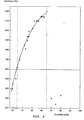
- FIG. 6 shows the relation between the surface hardness (Hv) of the diffusion layer and the Al content (wt%), which is determined according to the results of the above-explained Examples and Comparative Examples. From the curve of FIG. 6, it could be understood that when the Al content is in the range of 35 to 65 wt%, it is possible to obtain the diffusion layer having a higher hardness between 600 and 1200. On the contrary, when the Al content is less than 35 wt% or more than 65 wt%, the hardness of the diffusion layer is considerably lowered.
- the diffusion layer and the substrate have 950 and 460 of the hardness, respectively.
- FIG. 7 shows the relation between the surface hardness (Hv) of the diffusion layer and the peak ratio (P %), which is determined according to the results of the above-explained Examples and Comparative Examples. From the curve of FIG. 7, it could be understood that when the peak ratio is 10 % or more, it is possible to obtain the diffusion layer having a high hardness between 600 and 1200.
- the ferrous alloy of the present invention can provide a high hardness of the diffusion layer while keeping the substrate hardness of 400 or more, it will be preferably used for sliding parts such as gears or bearings, and blades of electric shavers or hair clippers.
- Substrate Heat Treatment Composition wt% Temp. (°C) Keeping Time Cooling Rate (°C/sec)
- Example 1 Fe-13.5Cr-1.2Mo-0.4C 1050 180 sec. 60
- Example 6 Fe-14Cr-1.0C 1000 15 sec. 10
- Example 7 Fe-13.5Cr-1.2Mo-0.4C 975 30 sec. 15
- Example 8 Fe-13.5Cr-1.2Mo-0.4C 925 60 sec. 30
- Example 9 Fe-13.5Cr-1.2Mo-0.4C 1100 90 sec. 20
- Example 10 Fe-18Cr-12Ni-0.1(C+N) 550 2 hrs. -- Example 11 Fe-18Cr-12Ni-0.1(C+N) 500 4 hrs. -- Example 12 Fe-18Cr-12Ni-0.05(C+N) 600 2 hrs. -- Example 13 Fe-16Cr-4Ni-4Cu 490 4 hrs. --
- Example 14 Fe-17Cr-7Ni-1Al 575 1.5 hrs.
- Example 1 45 900 45 97 40 600
- Example 2 20 1020 50 98 50 480
- Example 3 13 1000 47 98 55 500
- Example 4 8 1100 54 100 75 420
- Example 5 15 810 43 95 25 550
- Example 6 3 700 37 92 15 550
- Example 7 10 1140 62 100
- Example 8 5 1150 59 100 80 450
- Example 9 30 630 35
- Example 10 550 Example 10 5 1100 55 100 70 550
- Example 11 3 1100 52 100 65 450
- Example 13 60 100 80 400
- Example 15 3 950 47 97 42 410 Comparative Example 1 10 400 30 100 0 300
- Comparative Example 2 10 1200 65 95 95 95 350
- Comparative Example 3 10 350 80 85 0 350
Landscapes
- Chemical & Material Sciences (AREA)
- Chemical Kinetics & Catalysis (AREA)
- Engineering & Computer Science (AREA)
- Materials Engineering (AREA)
- Mechanical Engineering (AREA)
- Metallurgy (AREA)
- Organic Chemistry (AREA)
- Solid-Phase Diffusion Into Metallic Material Surfaces (AREA)
- Other Surface Treatments For Metallic Materials (AREA)
Claims (8)
- Alliage de fer comportant une couche de diffusion Fe-Al d'une dureté améliorée, ledit alliage de fer comprenant :un substrat d'acier inoxydable Fe-Cr présentant une dureté Vickers de 400 ou davantage,ladite couche de diffusion Fe-Al formée sur une surface dudit substrat,dans lequel ladite couche de diffusion Fe-Al présente une épaisseur de 2 à 50 µm et est constituée d'au moins 90 % en volume d'un composé intermétallique de Al et de Fe par rapport à un volume total de ladite couche de diffusion, etdans lequel la teneur en Al compris à l'intérieur d'une épaisseur d'au moins 2 µm de ladite couche de diffusion Fe-Al est de 35 à 65 % en poids sur la base du poids total d'une région de ladite couche de diffusion Fe-Al s'étendant jusqu'à l'épaisseur d'au moins lesdits 2 µm.
- Alliage de fer selon la revendication 1, dans lequel
ledit composé intermétallique contient au moins un composé choisi parmi le groupe constitué de Al2Fe, Al13Fe4, Al3Fe et Al5Fe2. - Alliage de fer selon la revendication 2, dans lequel
ladite couche de diffusion comprend ledit composé intermétallique à un niveau de concentration tel que ladite couche de diffusion Fe-Al présente au moins 10 % d'un rapport de pic qui est défini par 100 × P1(P1 + P2) où P1 est la hauteur d'un pic principal dudit composé intermétallique et P2 est la hauteur d'un pic principal de AlFe, et AlFe3, lesdits pics P1 et P2 étant observés à partir d'un profil de diffraction des rayons X obtenu par l'intermédiaire d'une diffraction des rayons X au niveau de la surface externe de ladite couche de diffusion. - Alliage de fer selon la revendication 1, dans lequel
ladite couche de diffusion Fe-Al présente une épaisseur de 5 à 15 µm. - Alliage de fer selon la revendication 1, dans lequel
ledit substrat comprend de 66 à 81,9 % en poids de Fe, de 15 à 20 % en poids de Cr, de 3 à 13 % en poids de Ni, et un élément sélectionné à partir de 3 à 6 % en poids de Cu, 0,5 à 2 % en poids de Al, et 0,01 à 0,2 % en poids d'un total de C et de N. - Alliage de fer selon la revendication 1, dans lequel
ledit substrat comprend 73 à 89,9 % en poids de Fe, 10 à 19 % en poids de Cr, 0,1 à 1,2 % en poids de C, et moins de 3 % en poids de Ni. - Procédé de fabrication d'un alliage de fer comportant une couche de diffusion Fe-Al d'une dureté améliorée, ledit procédé comprenant les étapes consistant à :recouvrir un substrat d'une couche de surface de Al afin de fournir un substrat revêtu résultant, ledit substrat comprenant 66 à 81,9 % en poids de Fe, 15 à 20 % en poids de Cr, 3 à 13 % en poids de Ni, et un élément sélectionné parmi 3 à 6 % en poids de Cu, 0,5 à 2 % en poids de Al, et 0,01 à 0,2 % en poids d'un total de C et de N,chauffer ledit substrat revêtu à une température de 450 à 600° C pendant 0,5 à 4 heures, en procurant ainsi une dureté Vickers de 400 ou davantage audit substrat, et en même temps diffuser mutuellement des atomes d'aluminium et des atomes de fer respectivement à l'intérieur dudit substrat et de ladite couche de Al de manière à former, dans la surface dudit substrat revêtu, ladite couche de surface d'alliage Fe-Al qui présente une épaisseur de 2 à 50 µm et comprend au moins 90 % en volume d'un composé intermétallique de Al et de Fe par rapport à un volume total de ladite couche de diffusion.
- Procédé de fabrication d'un alliage de fer comportant une couche de diffusion de Fe-Al d'une dureté améliorée, ledit procédé comprenant les étapes consistant à :revêtir un substrat d'une couche de surface de Al afin de fournir un substrat revêtu résultant, ledit substrat comprenant 73 à 89,9 % en poids de Fe, 10 à 19 % en poids de Cr, 0,1 à 1,2 % en poids de C, et moins de 3 % en poids de Ni,chauffer ledit substrat revêtu à une température de 900 à 1 100° C pendant 15 à 180 secondes, en faisant ainsi diffuser mutuellement des atomes d'aluminium et des atomes de fer respectivement à l'intérieur dudit substrat et de ladite couche de Al de manière à former dans la surface dudit substrat revêtu ladite couche de surface d'alliage de Fe-Al qui présente une épaisseur de 2 à 50 µm et comprend au moins 90 % en volume d'un composé intermétallique de Al et de Fe par rapport à un volume total de ladite couche de diffusion,refroidir ledit substrat revêtu depuis ladite température à une vitesse de 10° C par seconde ou davantage afin de procurer une dureté Vickers de 400 ou plus audit substrat.
Applications Claiming Priority (2)
| Application Number | Priority Date | Filing Date | Title |
|---|---|---|---|
| JP12181095 | 1995-05-19 | ||
| JP121810/95 | 1995-05-19 |
Publications (2)
| Publication Number | Publication Date |
|---|---|
| EP0743374A1 EP0743374A1 (fr) | 1996-11-20 |
| EP0743374B1 true EP0743374B1 (fr) | 1999-04-28 |
Family
ID=14820496
Family Applications (1)
| Application Number | Title | Priority Date | Filing Date |
|---|---|---|---|
| EP96107915A Expired - Lifetime EP0743374B1 (fr) | 1995-05-19 | 1996-05-17 | Alliage ferreux avec couche de diffusion Fe-Al et procédé de sa fabrication |
Country Status (5)
| Country | Link |
|---|---|
| US (1) | US5981089A (fr) |
| EP (1) | EP0743374B1 (fr) |
| CN (1) | CN1063496C (fr) |
| DE (1) | DE69602226T2 (fr) |
| HK (1) | HK1000894A1 (fr) |
Families Citing this family (18)
| Publication number | Priority date | Publication date | Assignee | Title |
|---|---|---|---|---|
| CN1165668C (zh) | 1999-05-14 | 2004-09-08 | 西门子公司 | 构件和在构件上制造保护层的方法 |
| FR2807069B1 (fr) * | 2000-03-29 | 2002-10-11 | Usinor | Tole en acier inoxydable ferritique revetue utilisable dans le domaine de l'echappement d'un moteur de vehicule automobile |
| JP2009061500A (ja) * | 2007-08-10 | 2009-03-26 | Nissan Motor Co Ltd | 異種金属接合部材及び異種金属接合方法 |
| US8795845B2 (en) * | 2008-11-10 | 2014-08-05 | Wisconsin Alumni Research Foundation | Low-temperature synthesis of integrated coatings for corrosion resistance |
| CN102597297A (zh) * | 2009-04-30 | 2012-07-18 | 雪佛龙美国公司 | 非晶涂层的表面处理 |
| WO2012067146A1 (fr) * | 2010-11-17 | 2012-05-24 | 新日鉄マテリアルズ株式会社 | Feuille de métal pour matériau de base |
| US9902134B2 (en) * | 2010-11-17 | 2018-02-27 | Nippon Steel & Sumikin Materials Co., Ltd. | Metal foil for base material and producing method thereof |
| JP2016514240A (ja) * | 2013-03-13 | 2016-05-19 | フェデラル−モーグル コーポレイション | 耐摩耗ピストンリングコーティング |
| CN103343613B (zh) * | 2013-07-08 | 2015-09-30 | 湖北交投四优钢科技有限公司 | 一种渗铝钢扣件式脚手架钢管及制备方法 |
| CN103342012B (zh) * | 2013-07-08 | 2015-12-02 | 湖北交投四优钢科技有限公司 | 一种渗铝钢板网及制备方法 |
| CN103334547B (zh) * | 2013-07-08 | 2015-09-30 | 湖北交投四优钢科技有限公司 | 一种渗铝波纹瓦及制备方法 |
| CN103320745B (zh) * | 2013-07-08 | 2014-01-08 | 湖北交投四优钢科技有限公司 | 一种渗铝钢及制备方法 |
| CA2882788C (fr) | 2014-02-26 | 2019-01-22 | Endurance Technologies, Inc. | Compositions de revetement, methodes et articles ainsi produits |
| US11674212B2 (en) * | 2014-03-28 | 2023-06-13 | Kubota Corporation | Cast product having alumina barrier layer |
| CN112703264B (zh) * | 2018-09-13 | 2022-03-04 | 杰富意钢铁株式会社 | 铁素体类不锈钢板及其制造方法、以及Al系镀敷不锈钢板 |
| JP7251011B2 (ja) | 2018-11-30 | 2023-04-04 | ポスコ カンパニー リミテッド | 水素遅延破壊特性及びスポット溶接性に優れた熱間プレス用鉄-アルミニウム系めっき鋼板及びその製造方法 |
| EP3889315A4 (fr) * | 2018-11-30 | 2021-11-24 | Posco | Tôle d'acier plaquée à base de fer-aluminium pour formage à chaud ayant d'excellentes propriétés de fracture retardée à l'hydrogène et propriétés de soudage par points, et son procédé de fabrication |
| CN115735023B (zh) | 2020-07-01 | 2025-06-10 | 杰富意钢铁株式会社 | 带Al涂层的不锈钢钢板 |
Family Cites Families (12)
| Publication number | Priority date | Publication date | Assignee | Title |
|---|---|---|---|---|
| GB992321A (en) * | 1962-01-23 | 1965-05-19 | Deutsche Edelstahlwerke Ag | Oxidation resistant chromium steels and the production thereof |
| ES371810A1 (es) * | 1968-09-26 | 1971-11-16 | Japan Gasoline | Un metodo de preparar un acero recubierto por difusion de aluminio, que tiene propiedad de resistencia a la sulfura- cion. |
| US3640755A (en) * | 1969-02-13 | 1972-02-08 | Du Pont | Coatings for automotive exhaust gas reactors |
| US4141760A (en) * | 1972-11-06 | 1979-02-27 | Alloy Surfaces Company, Inc. | Stainless steel coated with aluminum |
| US3762885A (en) * | 1972-02-07 | 1973-10-02 | Chromalloy American Corp | Diffusion coating of metals |
| US4535034A (en) * | 1983-12-30 | 1985-08-13 | Nippon Steel Corporation | High Al heat-resistant alloy steels having Al coating thereon |
| US4655852A (en) * | 1984-11-19 | 1987-04-07 | Rallis Anthony T | Method of making aluminized strengthened steel |
| JPS62185865A (ja) * | 1986-02-13 | 1987-08-14 | Nippon Steel Corp | 耐食性にすぐれた溶融アルミメツキ鋼板の製造法 |
| EP0318864B1 (fr) * | 1987-11-30 | 1993-09-01 | Nippon Yakin Kogyo Co., Ltd. | Procédé pour la fabrication d'acier ferritique inoxydable pourvu d'un revêtement de whiskers oxydes |
| US4931421A (en) * | 1988-06-27 | 1990-06-05 | Motonobu Shibata | Catalyst carriers and a method for producing the same |
| JP2932700B2 (ja) * | 1991-01-08 | 1999-08-09 | 大同特殊鋼株式会社 | 刃物材とその製造方法 |
| JPH05283149A (ja) * | 1992-03-31 | 1993-10-29 | Nisshin Steel Co Ltd | 表面絶縁性に優れたヒーター材料とその製造方法 |
-
1996
- 1996-05-17 EP EP96107915A patent/EP0743374B1/fr not_active Expired - Lifetime
- 1996-05-17 DE DE69602226T patent/DE69602226T2/de not_active Expired - Lifetime
- 1996-05-20 CN CN96106654A patent/CN1063496C/zh not_active Expired - Fee Related
- 1996-05-20 US US08/650,520 patent/US5981089A/en not_active Expired - Lifetime
-
1997
- 1997-12-19 HK HK97102513A patent/HK1000894A1/xx not_active IP Right Cessation
Also Published As
| Publication number | Publication date |
|---|---|
| DE69602226T2 (de) | 1999-08-19 |
| CN1156764A (zh) | 1997-08-13 |
| US5981089A (en) | 1999-11-09 |
| EP0743374A1 (fr) | 1996-11-20 |
| DE69602226D1 (de) | 1999-06-02 |
| HK1000894A1 (en) | 2001-08-24 |
| CN1063496C (zh) | 2001-03-21 |
Similar Documents
| Publication | Publication Date | Title |
|---|---|---|
| EP0743374B1 (fr) | Alliage ferreux avec couche de diffusion Fe-Al et procédé de sa fabrication | |
| FI82844C (fi) | Oxidationsbestaendig metallfolie baserad pao jaern och foerfarande foer dess framstaellning. | |
| EP1811048B1 (fr) | FEUILLE D ACIER DE FORTE TENEUR EN Al ET PRÉSENTANT UNE EXCELLENTE USINABILITÉ ET PROCÉDÉ DE FABRICATION IDOINE | |
| US6194088B1 (en) | Stainless steel coated with intermetallic compound and process for producing the same | |
| EP2312005B1 (fr) | Tôle d' acier plaquée d' aluminium pour estampage à chaud à chauffage rapide, procédé de celle-ci et procédé d'estampage à chaud à chauffage rapide en utilisant ladite tôle | |
| EP0730045B1 (fr) | Tôle d'acier avec un revêtement binaire en Zn-Mg résistant à la corrosion et méthode pour sa fabrication | |
| EP1767286A1 (fr) | MÉTHODE D'EMBOUTISSAGE À CHAUD POUR ÉLÉMENT HAUTE RÉSISTANCE PARTANT DE TÔLE D'ACIER ET DE PIÉCES EMBOUTIES À CHAUD<sb> </sb> | |
| EP0149655B1 (fr) | Acier revetu d'aluminium par galvanisation a chaud et traite par diffusion, et son procede de traitement | |
| US4624895A (en) | Aluminum coated low-alloy steel foil | |
| EP3851550B1 (fr) | Tôle d'acier inoxydable ferritique, procédé pour la produire et tôle d'acier inoxydable plaquée d'al | |
| Pourmajidian et al. | Effect of process atmosphere dew point and tin addition on oxide morphology and growth for a medium-Mn third generation advanced steel during intercritical annealing | |
| US4837091A (en) | Diffusion alloy steel foil | |
| JP3523415B2 (ja) | Fe−Al拡散層を有する鉄基合金部材およびその製造方法 | |
| EP0201910B1 (fr) | Feuille en acier allié par diffusion | |
| Glasbrenner et al. | The influence of alloying elements on the hot-dip aluminizing process and on the subsequent high-temperature oxidation | |
| EP4116457B1 (fr) | Élément pressé à chaud et procédé pour sa fabrication, et tôle d'acier revêtue pour un pressage à chaud | |
| EP0480404A2 (fr) | Matériau métallique composite résistant à la corrosion et à la chaleur et son procédé de fabrication | |
| EP3988680A1 (fr) | Tôle d'acier inoxydable plaquée à l'aluminium et procédé de fabrication d'acier inoxydable ferritique | |
| JP2023147432A (ja) | ホットスタンプ成形体 | |
| KR100830116B1 (ko) | 고강도 용융아연도금강판의 제조방법 | |
| US4666794A (en) | Diffusion treated hot-dip aluminum coated steel | |
| KR102859054B1 (ko) | 핫 스탬프 성형체 | |
| EP1230429B1 (fr) | Procede de realisation d'un element recouvert d'une couche | |
| Yamada et al. | Fabrication of 13Cr stainless steel blade material with hardness gradient using cladding and diffusion of Al | |
| DE2110339A1 (de) | Legierung und daraus hergestellte Gegenstaende |
Legal Events
| Date | Code | Title | Description |
|---|---|---|---|
| PUAI | Public reference made under article 153(3) epc to a published international application that has entered the european phase |
Free format text: ORIGINAL CODE: 0009012 |
|
| AK | Designated contracting states |
Kind code of ref document: A1 Designated state(s): DE GB |
|
| 17P | Request for examination filed |
Effective date: 19970228 |
|
| GRAG | Despatch of communication of intention to grant |
Free format text: ORIGINAL CODE: EPIDOS AGRA |
|
| GRAG | Despatch of communication of intention to grant |
Free format text: ORIGINAL CODE: EPIDOS AGRA |
|
| GRAH | Despatch of communication of intention to grant a patent |
Free format text: ORIGINAL CODE: EPIDOS IGRA |
|
| 17Q | First examination report despatched |
Effective date: 19980901 |
|
| GRAH | Despatch of communication of intention to grant a patent |
Free format text: ORIGINAL CODE: EPIDOS IGRA |
|
| GRAA | (expected) grant |
Free format text: ORIGINAL CODE: 0009210 |
|
| AK | Designated contracting states |
Kind code of ref document: B1 Designated state(s): DE GB |
|
| REF | Corresponds to: |
Ref document number: 69602226 Country of ref document: DE Date of ref document: 19990602 |
|
| PLBE | No opposition filed within time limit |
Free format text: ORIGINAL CODE: 0009261 |
|
| STAA | Information on the status of an ep patent application or granted ep patent |
Free format text: STATUS: NO OPPOSITION FILED WITHIN TIME LIMIT |
|
| 26N | No opposition filed | ||
| REG | Reference to a national code |
Ref country code: GB Ref legal event code: IF02 |
|
| REG | Reference to a national code |
Ref country code: GB Ref legal event code: 732E |
|
| PGFP | Annual fee paid to national office [announced via postgrant information from national office to epo] |
Ref country code: DE Payment date: 20120510 Year of fee payment: 17 |
|
| PGFP | Annual fee paid to national office [announced via postgrant information from national office to epo] |
Ref country code: GB Payment date: 20120516 Year of fee payment: 17 |
|
| GBPC | Gb: european patent ceased through non-payment of renewal fee |
Effective date: 20130517 |
|
| PG25 | Lapsed in a contracting state [announced via postgrant information from national office to epo] |
Ref country code: DE Free format text: LAPSE BECAUSE OF NON-PAYMENT OF DUE FEES Effective date: 20131203 |
|
| REG | Reference to a national code |
Ref country code: DE Ref legal event code: R119 Ref document number: 69602226 Country of ref document: DE Effective date: 20131203 |
|
| PG25 | Lapsed in a contracting state [announced via postgrant information from national office to epo] |
Ref country code: GB Free format text: LAPSE BECAUSE OF NON-PAYMENT OF DUE FEES Effective date: 20130517 |