EP0743847B1 - Composition cosmetique capillaire - Google Patents
Composition cosmetique capillaire Download PDFInfo
- Publication number
- EP0743847B1 EP0743847B1 EP95906518A EP95906518A EP0743847B1 EP 0743847 B1 EP0743847 B1 EP 0743847B1 EP 95906518 A EP95906518 A EP 95906518A EP 95906518 A EP95906518 A EP 95906518A EP 0743847 B1 EP0743847 B1 EP 0743847B1
- Authority
- EP
- European Patent Office
- Prior art keywords
- acid
- cosmetic composition
- hair cosmetic
- hair
- composition according
- Prior art date
- Legal status (The legal status is an assumption and is not a legal conclusion. Google has not performed a legal analysis and makes no representation as to the accuracy of the status listed.)
- Expired - Lifetime
Links
- 0 Cc(c(*)c(*)c(*)c1C(c2c(*)c(*)c(*)c(*)c2*)=O)c1[Ag] Chemical compound Cc(c(*)c(*)c(*)c1C(c2c(*)c(*)c(*)c(*)c2*)=O)c1[Ag] 0.000 description 2
Classifications
-
- A—HUMAN NECESSITIES
- A61—MEDICAL OR VETERINARY SCIENCE; HYGIENE
- A61Q—SPECIFIC USE OF COSMETICS OR SIMILAR TOILETRY PREPARATIONS
- A61Q5/00—Preparations for care of the hair
- A61Q5/12—Preparations containing hair conditioners
-
- A—HUMAN NECESSITIES
- A61—MEDICAL OR VETERINARY SCIENCE; HYGIENE
- A61K—PREPARATIONS FOR MEDICAL, DENTAL OR TOILETRY PURPOSES
- A61K8/00—Cosmetics or similar toiletry preparations
- A61K8/18—Cosmetics or similar toiletry preparations characterised by the composition
- A61K8/30—Cosmetics or similar toiletry preparations characterised by the composition containing organic compounds
- A61K8/33—Cosmetics or similar toiletry preparations characterised by the composition containing organic compounds containing oxygen
- A61K8/34—Alcohols
-
- A—HUMAN NECESSITIES
- A61—MEDICAL OR VETERINARY SCIENCE; HYGIENE
- A61K—PREPARATIONS FOR MEDICAL, DENTAL OR TOILETRY PURPOSES
- A61K8/00—Cosmetics or similar toiletry preparations
- A61K8/18—Cosmetics or similar toiletry preparations characterised by the composition
- A61K8/30—Cosmetics or similar toiletry preparations characterised by the composition containing organic compounds
- A61K8/33—Cosmetics or similar toiletry preparations characterised by the composition containing organic compounds containing oxygen
- A61K8/34—Alcohols
- A61K8/342—Alcohols having more than seven atoms in an unbroken chain
-
- A—HUMAN NECESSITIES
- A61—MEDICAL OR VETERINARY SCIENCE; HYGIENE
- A61K—PREPARATIONS FOR MEDICAL, DENTAL OR TOILETRY PURPOSES
- A61K8/00—Cosmetics or similar toiletry preparations
- A61K8/18—Cosmetics or similar toiletry preparations characterised by the composition
- A61K8/30—Cosmetics or similar toiletry preparations characterised by the composition containing organic compounds
- A61K8/33—Cosmetics or similar toiletry preparations characterised by the composition containing organic compounds containing oxygen
- A61K8/37—Esters of carboxylic acids
-
- A—HUMAN NECESSITIES
- A61—MEDICAL OR VETERINARY SCIENCE; HYGIENE
- A61K—PREPARATIONS FOR MEDICAL, DENTAL OR TOILETRY PURPOSES
- A61K8/00—Cosmetics or similar toiletry preparations
- A61K8/18—Cosmetics or similar toiletry preparations characterised by the composition
- A61K8/30—Cosmetics or similar toiletry preparations characterised by the composition containing organic compounds
- A61K8/33—Cosmetics or similar toiletry preparations characterised by the composition containing organic compounds containing oxygen
- A61K8/39—Derivatives containing from 2 to 10 oxyalkylene groups
-
- A—HUMAN NECESSITIES
- A61—MEDICAL OR VETERINARY SCIENCE; HYGIENE
- A61K—PREPARATIONS FOR MEDICAL, DENTAL OR TOILETRY PURPOSES
- A61K8/00—Cosmetics or similar toiletry preparations
- A61K8/18—Cosmetics or similar toiletry preparations characterised by the composition
- A61K8/30—Cosmetics or similar toiletry preparations characterised by the composition containing organic compounds
- A61K8/46—Cosmetics or similar toiletry preparations characterised by the composition containing organic compounds containing sulfur
- A61K8/466—Cosmetics or similar toiletry preparations characterised by the composition containing organic compounds containing sulfur containing sulfonic acid derivatives; Salts
-
- A—HUMAN NECESSITIES
- A61—MEDICAL OR VETERINARY SCIENCE; HYGIENE
- A61K—PREPARATIONS FOR MEDICAL, DENTAL OR TOILETRY PURPOSES
- A61K8/00—Cosmetics or similar toiletry preparations
- A61K8/18—Cosmetics or similar toiletry preparations characterised by the composition
- A61K8/30—Cosmetics or similar toiletry preparations characterised by the composition containing organic compounds
- A61K8/49—Cosmetics or similar toiletry preparations characterised by the composition containing organic compounds containing heterocyclic compounds
- A61K8/4906—Cosmetics or similar toiletry preparations characterised by the composition containing organic compounds containing heterocyclic compounds with one nitrogen as the only hetero atom
- A61K8/4913—Cosmetics or similar toiletry preparations characterised by the composition containing organic compounds containing heterocyclic compounds with one nitrogen as the only hetero atom having five membered rings, e.g. pyrrolidone carboxylic acid
-
- A—HUMAN NECESSITIES
- A61—MEDICAL OR VETERINARY SCIENCE; HYGIENE
- A61K—PREPARATIONS FOR MEDICAL, DENTAL OR TOILETRY PURPOSES
- A61K8/00—Cosmetics or similar toiletry preparations
- A61K8/18—Cosmetics or similar toiletry preparations characterised by the composition
- A61K8/72—Cosmetics or similar toiletry preparations characterised by the composition containing organic macromolecular compounds
- A61K8/73—Polysaccharides
- A61K8/731—Cellulose; Quaternized cellulose derivatives
-
- A—HUMAN NECESSITIES
- A61—MEDICAL OR VETERINARY SCIENCE; HYGIENE
- A61K—PREPARATIONS FOR MEDICAL, DENTAL OR TOILETRY PURPOSES
- A61K8/00—Cosmetics or similar toiletry preparations
- A61K8/18—Cosmetics or similar toiletry preparations characterised by the composition
- A61K8/72—Cosmetics or similar toiletry preparations characterised by the composition containing organic macromolecular compounds
- A61K8/81—Cosmetics or similar toiletry preparations characterised by the composition containing organic macromolecular compounds obtained by reactions involving only carbon-to-carbon unsaturated bonds
- A61K8/8141—Compositions of homopolymers or copolymers of compounds having one or more unsaturated aliphatic radicals, each having only one carbon-to-carbon double bond, and at least one being terminated by only one carboxyl radical, or of salts, anhydrides, esters, amides, imides or nitriles thereof; Compositions of derivatives of such polymers
- A61K8/8152—Homopolymers or copolymers of esters, e.g. (meth)acrylic acid esters; Compositions of derivatives of such polymers
-
- A—HUMAN NECESSITIES
- A61—MEDICAL OR VETERINARY SCIENCE; HYGIENE
- A61K—PREPARATIONS FOR MEDICAL, DENTAL OR TOILETRY PURPOSES
- A61K8/00—Cosmetics or similar toiletry preparations
- A61K8/18—Cosmetics or similar toiletry preparations characterised by the composition
- A61K8/72—Cosmetics or similar toiletry preparations characterised by the composition containing organic macromolecular compounds
- A61K8/81—Cosmetics or similar toiletry preparations characterised by the composition containing organic macromolecular compounds obtained by reactions involving only carbon-to-carbon unsaturated bonds
- A61K8/8141—Compositions of homopolymers or copolymers of compounds having one or more unsaturated aliphatic radicals, each having only one carbon-to-carbon double bond, and at least one being terminated by only one carboxyl radical, or of salts, anhydrides, esters, amides, imides or nitriles thereof; Compositions of derivatives of such polymers
- A61K8/8158—Homopolymers or copolymers of amides or imides, e.g. (meth) acrylamide; Compositions of derivatives of such polymers
-
- A—HUMAN NECESSITIES
- A61—MEDICAL OR VETERINARY SCIENCE; HYGIENE
- A61K—PREPARATIONS FOR MEDICAL, DENTAL OR TOILETRY PURPOSES
- A61K8/00—Cosmetics or similar toiletry preparations
- A61K8/18—Cosmetics or similar toiletry preparations characterised by the composition
- A61K8/72—Cosmetics or similar toiletry preparations characterised by the composition containing organic macromolecular compounds
- A61K8/81—Cosmetics or similar toiletry preparations characterised by the composition containing organic macromolecular compounds obtained by reactions involving only carbon-to-carbon unsaturated bonds
- A61K8/817—Compositions of homopolymers or copolymers of compounds having one or more unsaturated aliphatic radicals, each having only one carbon-to-carbon double bond, and at least one being terminated by a single or double bond to nitrogen or by a heterocyclic ring containing nitrogen; Compositions or derivatives of such polymers, e.g. vinylimidazol, vinylcaprolactame, allylamines (Polyquaternium 6)
-
- A—HUMAN NECESSITIES
- A61—MEDICAL OR VETERINARY SCIENCE; HYGIENE
- A61K—PREPARATIONS FOR MEDICAL, DENTAL OR TOILETRY PURPOSES
- A61K8/00—Cosmetics or similar toiletry preparations
- A61K8/18—Cosmetics or similar toiletry preparations characterised by the composition
- A61K8/72—Cosmetics or similar toiletry preparations characterised by the composition containing organic macromolecular compounds
- A61K8/81—Cosmetics or similar toiletry preparations characterised by the composition containing organic macromolecular compounds obtained by reactions involving only carbon-to-carbon unsaturated bonds
- A61K8/817—Compositions of homopolymers or copolymers of compounds having one or more unsaturated aliphatic radicals, each having only one carbon-to-carbon double bond, and at least one being terminated by a single or double bond to nitrogen or by a heterocyclic ring containing nitrogen; Compositions or derivatives of such polymers, e.g. vinylimidazol, vinylcaprolactame, allylamines (Polyquaternium 6)
- A61K8/8182—Copolymers of vinyl-pyrrolidones. Compositions of derivatives of such polymers
-
- A—HUMAN NECESSITIES
- A61—MEDICAL OR VETERINARY SCIENCE; HYGIENE
- A61Q—SPECIFIC USE OF COSMETICS OR SIMILAR TOILETRY PREPARATIONS
- A61Q5/00—Preparations for care of the hair
-
- A—HUMAN NECESSITIES
- A61—MEDICAL OR VETERINARY SCIENCE; HYGIENE
- A61K—PREPARATIONS FOR MEDICAL, DENTAL OR TOILETRY PURPOSES
- A61K2800/00—Properties of cosmetic compositions or active ingredients thereof or formulation aids used therein and process related aspects
- A61K2800/40—Chemical, physico-chemical or functional or structural properties of particular ingredients
- A61K2800/54—Polymers characterized by specific structures/properties
- A61K2800/542—Polymers characterized by specific structures/properties characterized by the charge
- A61K2800/5426—Polymers characterized by specific structures/properties characterized by the charge cationic
Definitions
- the present invention relates to a hair cosmetic composition which imparts satisfactory firmness/elasticity to hair fibers in a short time, which holds the firmness/elasticity for a long time, and which at the same time provides the hair with conditioning effects.
- Hair treatment compositions proposed by EP-A-0529437 comprise an organic solvent and an aromatic sulfonic acid.
- this composition imparts firmness/elasticity to hair fibers in a short time and the effects of the composition are long-lasting, the conditioning effects of the composition such as providing moistness, smoothness, etc. to hair fibers are still unsatisfactory.
- US-A-5,240 695 discloses a process for protecting the elasticity of hair, wherein a cosmetic composition is used comprising in a cosmetically acceptable vehicle 2-hydroxy-4-methoxy-benzophenone-5-sulphonic acid or a salt thereof and said vehicle being an aqueous alcoholic or an aqueous alcoholic medium.
- EP-A-0 330 193 discloses a cosmetic composition for hair care, characterized in that it contains in a cosmetically acceptable medium the oxazoline polymer and 2-hydroxybenzophenone-5-sulphonic acid or the cosmetically acceptable salt thereof.
- hair cosmetic compositions capable of imparting firmness/elasticity to hair fibers in a short time, holding the firmness/elasticity for a long time, and providing the hair with satisfactory conditioning effects are still desired.
- the present invention provides a hair cosmetic composition which comprises the following components (A), (B), (C) , and (D):
- satisfactory firmness/elasticity can be given to hair fibers through a short-term treatment due to the incorporation of an organic solvent, a naphthalene sulfonic acid and/or a benzophenone sulfonic acid, an anionic surfactant and/or an amphoteric surfactant, and an oily agent, and the effects obtained are long-lasting.
- conditioning effects can also be given to the hair.
- the organic solvent which is used in the present invention as component (A) is compatible with water.
- examples of the organic solvent (A) include the compounds of the following formula (1), N-alkylpyrrolidones of the following formula (2), and C1-C4 alkylene carbonates.
- R 4 represents C1-C18 linear or branched alkyl.
- aromatic alcohols of the following formula (3) are especially preferred. wherein R 5 is hydrogen or methyl, s is an integer from 0 to 5 inclusive, and R 2 and R 3 have the same meaning as described above with the exception that R 3 is not a direct bond if s is equal to 0.
- organic solvent (A) examples include ethanol, isopropanol, n-propanol, n-butanol, isobutanol, ethylene glycol, propylene glycol, 1,3-butanediol, benzyl alcohol, cinnamyl alcohol, phenethyl alcohol, p-anisyl alcohol, p-methylbenzyl alcohol, phenoxy ethanol, phenoxy isopropanol, 2-benzyloxyethanol, methyl carbitol, ethyl carbitol, propyl carbitol, butyl carbitol, triethylene glycol monoethylether, triethylene glycol monobutyl ether, glycerol, N-methylpyrrolidone, N-octylpyrrolidone, N-laurylpyrrolidone, ethylene carbonate(1,3-dioxolan-2-one), propylene carbonate(4-methyl-1,3-diox
- aromatic alcohols of formula (3) are especially preferred. Specifically, benzyl alcohol, cinnamyl alcohol, phenethyl alcohol, p-anisyl alcohol, p-methylbenzyl alcohol, phenoxy ethanol, phenoxy isopropanol, 2-benzyloxyethanol are preferred with benzyl alcohol, p-methylbenzyl alcohol, 2-benzyloxyethanol, phenoxy ethanol, and phenoxy isopropanol being particularly preferred.
- the organic solvent (A) is preferably incorporated in the hair cosmetic composition of the invention in an amount of from 0.5 to 50% by weight (hereinafter simply referred to as %) based on the total amount of the composition. If the amount of the organic solvent (A) is in the range from 2 to 30%, or particularly from 5 to 25%, prominent effects can be obtained with favorable sensation and thus preferable.
- the proportion between water and the organic solvent depends on the solubility of the solvent in water. Generally, the proportion of the amount of the organic solvent to that of water is preferably from 10:90 to 50:50.
- examples of the naphthalene sulfonic acid include the compounds represented by the following formula (4): wherein one or more of A 1 to A 8 represent a sulfonic group or a salt thereof, and the remaining group(s) represent(s) hydrogen, halogen, hydroxy, nitro, carboxy, lower alkoxycarbonyl, alkyl, alkenyl, lower alkoxy, formyl, acyl, phenylazo or substituted phenylazo, or a group wherein R' and R" represent hydrogen, lower alkyl, lower alkenyl, phenyl, benzyl, or acyl.
- examples of the alkyl include C1-C18 alkyl
- examples of the alkenyl include C2-C18 alkenyl
- examples of the lower alkyl and lower alkoxy include those of C1-C6, and examples of the lower alkenyl include C2-C6 alkenyl.
- examples of the acyl include C2-C6 alkanoyl
- examples of substituted or unsubstituted phenylazo include phenylazo, carboxyphenylazo, etc
- examples of the halogen include fluorine, chlorine, bromine, and iodine. It is preferred that one or two of the A 1 to A 8 of the formula (4) be sulfonic acid or a salt thereof.
- the salt of sulfonic acid include alkaline metal salts such as a sodium salt, potassium salt, etc., ammonium salts, and quaternary ammonium salts.
- naphthalene sulfonic acid examples include 1- or 2- naphthalene sulfonic acid, 1,3-naphthalenedisulfonic acid, 1,7-naphthalenedisulfonic acid, 2,7-naphthalenedisulfonic acid, 1,5-naphthalenedisulfonic acid, 2,6-naphthalenedisulfonic acid, 1,3,6-naphthalenetrisulfonic acid, 1-naphthol-2-sulfonic acid, 1-naphthol-4-sulfonic acid, 2-naphthol-6-sulfonic acid, 2-naphthol-7-sulfonic acid, 1-naphthol-3,6-disulfonic acid, 2-naphthol-3,6-disulfonic acid, 2-naphthol-6,8-disulfonic acid, 2,3-dihydroxynaphthalene-6-sulfonic acid, 1,7-dihydroxynaphthal
- 1-naphthalenesulfonic acid 2-naphthalenesulfonic acid, 1,5-naphthalenedisulfonic acid, 2,6-naphthalenedisulfonic acid, 2,7-naphthalenedisulfonic acid, 1,3-naphthalenedisulfonic acid, H acid (l-amino-8-naphthol-3,6-disulfonic acid), 1,3,6-naphthalenetrisulfonic acid, chromotoropic acid, and naphthalenesulfonic acid - formalin polycondensation product (weight-average degree of polycondensation: 2-100), and their salts.
- examples of the benzophenonesulfonic acid include those of the following formula (5): wherein one or more of A 9 to A 18 represent a sulfonic group or a salt thereof, and the remaining group(s) represent(s) hydrogen, halogen, hydroxy, carboxy, lower alkyl, lower alkenyl, lower alkoxy, or acyl.
- the lower alkyl and the lower alkoxy include those having 1 to 6 carbon atoms; and the lower alkenyl includes those having 2 to 6 carbon atoms.
- the acyl include a C2-C6 alkanoyl.
- the halogen include fluorine, chlorine, bromine, and iodine. It is particularly preferred that one or two of the A 9 to A18 of the formula (5) be sulfonic acid or a salt thereof.
- the salt of sulfonic acid include alkaline metal salts such as a sodium salt, potassium salt, etc., alkaline earth metal salts such as a calcium salt, ammonium salts, and quaternary ammonium salts.
- benzophenonesulfonic acid examples include oxybenzonesulfonic acid, dihydroxydimethoxybenzophenonedisulfonic acid, dihydroxy-dimethoxybenzophenonesulfonic acid, dihydroxy-dimethoxybenzophenonedisulfonic acid, o-chlorobenzo-phenonesulfonic acid, p-chlorobenzophenone-sulfonic acid, 4,4'-dichlorobenzophenonesulfonic acid, 2,4-dichlorobenzophenonesulfonic acid, 2,4-dichlorobenzophenonesulfonic acid, 2-hydroxybenzophenonesulfonic acid, 4-hydroxybenzophenonesulfonic acid, 2-aminobenzophenone-sulfonic acid, 4-aminobenzophenonesulfonic acid, 2-methylbenzophenonesulfonic acid, 4-methoxybenzophenone-sulfonic acid, 4,4'-dimethylbenzophenonesulfonic
- oxybenzonesulfonic acid dihydroxymethoxybenzophenonedisulfonic acid, dihydroxy-dimethoxybenzophenonesulfonic acid, dihydroxy-dimethoxybenzophenonedisulfonic acid, and their salts.
- naphthalenesulfonic acids and the benzosulfonic acids which are component (B), are used singly or in combinations of two or more. They are preferably incorporated in the hair cosmetic composition of the invention in an amount from 0.1 to 10% by weight based on the total amount of the composition. If the amount is in the range from 0.5 to 5%, or particularly from 1.0 to 3.0%, excellent firmness/elasticity can be imparted to the hair without impeding the feel to the touch of the hair, and thus preferable.
- examples of the anionic surfactant include the following compounds.
- amphoteric surfactant examples include the following compounds.
- the compounds (a) to (f) below are particularly preferred.
- anionic and amphoteric surfactants are used singly or in combinations of two or more. They are preferably incorporated in an amount of from 0.1 to 25% based on the total amount of the composition. If the amount falls in a range from 0.5 to 15%, and in particular from 1.0 to 10%, excellent feel to the touch can be obtained and thus preferable.
- oily agent component (D)
- examples of the oily agent, component (D) include various oils and fats and hydrocarbons which are either liquid or solid.
- oils and fats examples include C12-C30 saturated or unsaturated alcohols; ethers of these alcohols and polyhydric alcohols; esters of these alcohols and C1-C11 fatty acids; C12-C30 saturated or unsaturated fatty acids; esters of these fatty acids and monohydric or polyhydric alcohols; amides of these fatty acids and amines; sterols; squalenes; phospholipids; glycolipids; oils or fats of animal origin; and oils or fats of vegetable origin.
- Examples of the C12-C30 saturated or unsaturated alcohols include n-dodecal, myristyl alcohol, cetyl alcohol, stearyl alcohol, oleyl alcohol, octyldodecanol, behenyl alcohol, ceryl alcohol, myricyl alcohol, caranabyl alcohol, arachin alcohol, and the like.
- polyhydric alcohols which can form ethers with these alcohols include glycerol and polyalkylene glycol, and examples the formed ethers include alpha-monoisostearyl glyceryl ether, polyoxyethylene polyoxypropylene stearyl ether, polyoxyethylene cetyl ether, polyoxyethylene octyldodecyl ether, and the like.
- the esters of these alcohols and C1-C11 fatty acids include cetyl 2-ethylhexanoate, diisostearyl malate, and the like.
- Examples of the C12-C30 saturated or unsaturated fatty acids include lauric acid, myristic acid, 18-methyleicosanoic acid, palmitic acid, stearic acid, isostearic acid, behenic acid, cerotic acid, palm oil fatty acid, oleic acid, etc.
- Examples of the monohydric or polyhydric alcohols which can form esters with these fatty acids include the aforementioned C12-C30 saturated or unsaturated alcohols, glycerols, sterols, and fat-soluble vitamins, and examples of the formed esters include oleic monoglycerides, palmitic monoglycerides, behenic monoglycerides, myristic monoglycerides, isostearic monoglycerides, isostearic diglycerides, polyoxyethylene glyceryl monoisostearates, isopropyl myristates, cholesteryl ester isostearates, dipentaerythritol fatty acid esters.
- amides of these fatty acids and amines include aliphatic dialkylaminoalkylamides (long chain amideamines), and specifically, diethylaminoethylamide stearate (Amideamine S by Kao Corp.).
- phospholipids include soybean phospholipids
- glycolipids include sophorose lipids (Glycolipid PSL by Kao Corp.).
- oils and fats of animal or vegetable origin include mink oil, olive oil (the major component is glycerol oleate), beeswax (the major component is myricyl alcohol palmitate), palm oil (the major component is glycerol myristate), whale wax (the major component is ceryl alcohol palmitate), and lanolin.
- hydrocarbons examples include Vaseline, liquid paraffin, solid paraffin, etc.
- oily agents especially preferred are higher alcohols having C12-C26 linear or branched alkyl or alkenyl groups.
- oily agents are used singly or in combinations of two or more. They are preferably incorporated in an amount of from 1 to 25% based on the total amount of the composition. If the amount falls in a range of from 3 to 20%, and in particular from 5 to 15%, remarkably satisfactory results can be obtained with excellent feel to the touch of the hair and thus preferable.
- cationic polymers examples include polymers or copolymers of dimethyldiallylammonium chloride; polymers or copolymers of methacrylamide alkyl trimethyl ammonium; cationic cellulose; amino-modified silicone polymers.
- the unit structure of the polymers of dimethyldiallyl ammonium chloride is represented by the following formula (16).
- Preferable examples of monomers which form copolymers along with dimethyldiallylammonium chloride include acrylates, acrylamides, hydroxyethylcellulose, etc.
- a copolymer of dimethyldiallylammonium chloride and hydroxyethylcellulose which is registered under the name, Polyquaternium-4, in a dictionary of CTFA (The Cosmetic, Toiletry and Fragrance Association, Inc.); a polymer of dimethyldiallylammonium chloride known as Polyquaternium-6; a copolymer of dimethyldiallylammonium chloride with acrylic amide known as Polyquaternium-7; a copolymer of dimethyldiallylammonium chloride with sodium acrylate known as Polyquaternium-22; and a three component-copolymer of dimethyldiallylammonium chloride/acrylic amide/sodium acrylate known as Polyquaternium-39.
- CTFA Cosmetic, Toiletry and Fragrance Association, Inc.
- the unit structure of the polymers of methacrylamide alkyl trimethyl ammonium is represented by the following formula (17).
- vinylpyrrolidone is particularly preferred. wherein m is an integer of from 1 to 6, and A - represents an anion).
- a copolymer of an ethyl sulfuric salt of quaternarized dimethylaminoethyl methacrylate and vinylpyrrolidone which is registered under the name, Polyquaternium-11, in the dictionary of CTFA; a copolymer of methacrylamide propyl trimethyl ammonium with vinylpyrrolidone known as Polyquaternium-28; and a methacrylamide propyl trimethyl ammonium polymer.
- Examples of the cationic cellulose include compounds having the unit structure represented by the following formula (18): wherein 1 is an integer of from 0 to 10 (preferably from 0 to 5), R 11 is C1-C18 alkyl, and A is an anion.
- hydroxyethylcellulose registered under the name, Polyquaternium-10, in the dictionary of CTFA; and 2-hydroxypropyl triethyl ammonium chloride ether.
- amino-modified silicone polymers include polymers of an organosiloxane having at least one aminoalkyl group in the molecule.
- the organosiloxane generally contains a methyl group as a functional group in addition to the aminoalkyl group.
- the functional group is not limited only to methyl, and other functional groups may be contained including alkyl groups such as ethyl, propyl, etc.; alkenyl groups such as vinyl, allyl, etc.; aryl groups such as phenyl, naphthyl, etc.; cycloalkyl groups such as cyclohexyl; and other groups such as hydroxy, hydroxyalkyl, hydroxyalkylene, and polyoxyalkylene, etc.
- Typical examples of the aminoalkyl groups contained in the amino-modified silicone polymers are those represented by the following formulas (19) or (20): wherein R 12 represents a divalent hydrocarbon group, R 13 represents R 14 and R 15 represent hydrogen or a monovalent hydrocarbon group, and d and e are integers of from 0 to 6. wherein R 12 represents a divalent hydrocarbon group, R 13 represents R 14 represents hydrogen or a monovalent hydrocarbon group, d and e are integers of from 0 to 6, and Z is a halogen ion or an organic anion.
- Examples of the divalent hydrocarbon group represented by R 12 in formulas (19) and (20) include C1-C6 alkylene groups such as methylene, ethylene, propylene, butylene, and -CH 2 CH(CH 3 )CH 2 -; and C7-C10 alkylenearylene groups such as -(CH 2 ) 2 -C 6 H 4 -. Of these, alkylene groups, particularly propylene, are preferred.
- hydroxyalkyl group is represented by the following formula: wherein R 12 has the same meaning as defined above.
- the oxyalkyene group and polyoxyalkylene group are represented by the following formula (21): wherein R 12 has the same meaning as defined above, f is an integer 0 or 1, g is an integer from 1 to 100 inclusive, and h is an integer from 1 to 5 inclusive.
- oxyalkylene group and polyoxyalkylene group represented by the following formula (21) preferable ones are those in which f is equal to 1, g is an integer of from 3 to 70, and h is 2 or 3. Those in which h is 2 or 3 may be linked in blocks or at random, and the same applies to other cases where h is an integer other than 2 or 3.
- the amino-modified silicone polymers are represented by the following formulas (22) or (23): wherein R 16 represents methyl or hydroxy, R 17 represents methyl or hydrogen, R 18 represents the aforementioned aminoalkyl (formula (19) or (20)), R 19 represents hydroxy, hydroxyalkyl, oxyalkylene, or polyoxyalkylene, and j and k are integers which vary depending on the molecular weight.
- R 16 , R 17 , R 18 , and R 19 have the same meaning as defined above, and i, j, and k are integers which vary depending on the molecular weight.
- Typical examples of the amino-modified silicone polymers in the present invention are those represented by the following formula (25) and having an average molecular weight of from about 3,000 to 100,000.
- This polymer is described in the aforementioned dictionary of CTFA (3rd ed.) under the name, Amodimethicone. wherein s and t are integers which vary depending on the molecular weight ranging from 3,000 to 100,000.
- the above-described cationic polymers are used singly or in combinations of two or more. They are preferably incorporated in an amount of from 0.05 to 10% based on the total amount of the composition. If the amount falls in a range of from 0.05 to 5%, particularly from 0.05 to 3%, an effect providing excellent feel to the touch of the hair is expected without impeding the firmness/elasticity-imparting effect and thus preferable.
- the pH of the hair cosmetic composition of the present invention is preferably adjusted to fall in the range from 2 to 5, more preferably from 2.5 to 4.5, by adding thereto a compound capable of forming a buffer system such as an organic carboxylic acid or a salt thereof in order to allow the hair fibers sufficiently to swell for accelerating permeation of the firmness/elasticity-imparting components, naphthalenesulfonic acids and/or benzophenonesulfonic acids into the hair fibers.
- a buffer system such as an organic carboxylic acid or a salt thereof
- the compounds which are capable of forming the buffer system include organic carboxylic acids such as citric acid, glycolic acid, succinic acid, tartaric acid, lactic acid, acetic acid, fumaric acid, malic acid, levulinic acid, butyric acid, valeric acid, oxalic acid, maleic acid, phthalic acid, mandelic acid, isethionic acid and their salts.
- organic carboxylic acids such as citric acid, glycolic acid, succinic acid, tartaric acid, lactic acid, acetic acid, fumaric acid, malic acid, levulinic acid, butyric acid, valeric acid, oxalic acid, maleic acid, phthalic acid, mandelic acid, isethionic acid and their salts.
- Preferable salts of these carboxylic acids include sodium salts, potassium salts, and ammonium salts.
- carboxylic acids are used singly or in combinations of two or more. They are incorporated in such amounts that make the pH of the composition to fall within the above-indicated pH range. Generally, they are incorporated from 0.3 to 50%, especially from 0.5 to 30%, based on the total amount of the composition.
- the hair cosmetic composition of the present invention may further contain optional components as long as the effects of the invention are not impeded.
- the optional components include thickeners such as hydroxyethylcellulose, anionic, amphoteric, and other types of setting polymers, perfumes, pearl-hue imparting agents, colorants, UV absorbers, antioxidants, preservatives, etc.
- thickeners such as hydroxyethylcellulose, anionic, amphoteric, and other types of setting polymers
- perfumes pearl-hue imparting agents, colorants, UV absorbers, antioxidants, preservatives, etc.
- silicone derivatives such as dimethylpolysiloxanes, polyether-modified silicones, alkyl-modified silicones, alkoxy-modified silicones, and aliphatic modified silicones.
- the balance of the above-described components is water.
- the hair cosmetic composition of the present invention can be prepared by a method generally known in the art into various products such as hair treatments, hair conditioners, and other products which are used outside the bath such as hair treatment foams, hair setting foams, hair sprays, and hair creams.
- the hair cosmetic composition of the present invention may, for example, be applied to hair fibers in the bath, be allowed to stand for 5 to 30 minutes, and then rinsed off. During the standing period, the hair may be heated to a suitable temperature which is preferably from 30 to 50°C.
- a suitable temperature which is preferably from 30 to 50°C.
- the hair cosmetic compositions shown in Tables 1, 2, 3, 4, and 5 were prepared, and the hair treatment effects of the compositions were investigated.
- a hair treatment composition of the following formula was prepared by a routine method. It had excellent properties in both the firmness/elasticity of hair fibers and the conditioning effects (moistness, smoothness).
- Formula (%) (1) 2-Naphthalenesulfonic acid ⁇ Na 1.0 (2) Oxybenzonesulfonic acid 1.0 (3) 95% 8-Acetylated sucrose-modified ethanol 10.0 (4) Benzyloxy ethanol 3.0 (5) Dimethyldiallyl ammonium chloride .
- a hair treatment composition of the following formula was prepared by a routine method. It had excellent properties in both the firmness/elasticity of hair fibers and the conditioning effects.
- Formula (%) (1) 1-Naphthalenesulfonic acid ⁇ Na 2.0 (2) 95% 8-Acetylated sucrose-modified ethanol 5.0 (3) Diethylene glycol monoethyl ether 5.0 (4) Benzyl alcohol 4.0 (5) Hydroxyethylcellulose hydroxypropyl- trimethylammonium chloride ether 0.5 (6) Aqueous citric acid solution (50%) 1.0 (7) Lauryldimethylamine oxide (35%) 1.0 (8) Amideamino acid triethanolamine (34%) 5.0 (9) Cetanol 4.0 (10) Behenyl alcohol 1.5 (11) Polyoxyethylene cetyl ether (40 E.O.) 2.0 (12) Aqueous NaOH solution (48%) suitable amount for adjusting pH to 3.5 (13) Purified water balance Total 100
- a hair foam composition of the following formula was prepared by a routine method. It had excellent properties in both the firmness/elasticity of hair fibers and the conditioning effects (moistness, smoothness).
- a hair foam composition of the following formula was prepared by a routine method. It had excellent properties in both the firmness/elasticity of hair fibers and the conditioning effects.
- Formula (%) (1) 2-Naphthalenesulfonic acid ⁇ Na 0.5 (2) 95% 8-Acetylated sucrose-modified ethanol 10.0 (3) Benzyl alcohol 0.5 (5) Amideamino acid triethanolamine (34%) 0.5 (6) Polyoxyethylene-sec-tetradecyl ether (9 E.O.) 0.5 (7) Octyl dodecanol 0.5 (8) Propylene glycol 1.0 (9) Lauryl acrylate ⁇ vinyl acetate copolymer dispersion (20%) 4.0 (10) Vinylpyrrolidone ⁇ N,N-dimethylaminoethyl methacrylic acid copolymer, diethyl sulfate 2.5 (11) Aqueous NaOH solution (48%) suitable amount for adjusting pH to 3.5 (13) Purified water balance (14) Propellant (LPG 4.5 kg) 7.0
- the hair cosmetic composition according to the present invention imparts satisfactory firmness/elasticity to hair fibers in a short time, holds the firmness/elasticity for a long time, and provides the hair fibers with excellent conditioning effects.
Landscapes
- Health & Medical Sciences (AREA)
- Life Sciences & Earth Sciences (AREA)
- Animal Behavior & Ethology (AREA)
- General Health & Medical Sciences (AREA)
- Public Health (AREA)
- Veterinary Medicine (AREA)
- Birds (AREA)
- Epidemiology (AREA)
- Emergency Medicine (AREA)
- Dermatology (AREA)
- Cosmetics (AREA)
Abstract
Claims (9)
- Composition cosmétique pour cheveux qui comprend les composants suivants (A), (B), (C), et (D):dans laquelle les quantités des composants (A),(B), (C), et(D) sont respectivement de 0,5 à 50 % en poids, de 0,1 à 10 % en poids, de 0,1 à 25 % en poids, et de 1 à 25 % en poids sur base du poids total de la composition.(A) un solvant organique,(B) un acide naphtalène sulfonique et/ou un acide benzophénone sulfonique,(C) un agent tensioactif anionique et/ou un agent tensioactif amphotère.(D) un agent oléagineux.
- Composition cosmétique pour cheveux selon la revendication 1, dans laquelle le composant (A) est sélectionné parmi des alkylpyrrolidones possédant un N-alkyle en C1 à C18, des carbonates d'alkylène en C1 à C4, et les alcools représentés par la formule suivante (1):dans laquelle R1 représente l'hydrogène, un groupement alkyle en C1 à C4, ou un groupement
 (dans lequel R2 représente l'hydrogène, un groupement méthyle ou un groupement méthoxy, R3 représente une liaison directe ou un groupement hydrocarboné bivalent saturé ou insaturé en C1 à C3), Y et Z représentent chacun l'hydrogène ou un groupement hydroxy, p, q et r sont des entiers de 0 à 5, avec l'exception des cas dans lesquels p=q=r=0 et Z=H; et p=q=r=0, R1=H et Z=OH.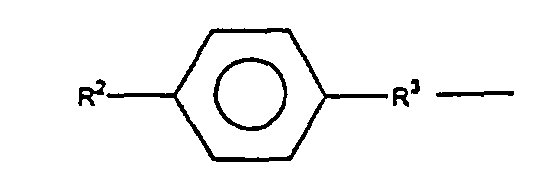
- Composition cosmétique pour cheveux selon la revendication 1, dans laquelle le composant (A) est représenté par la formule (3) suivante:dans laquelle R2 représente l'hydrogène, un groupement méthyle ou un groupement méthoxy, R3 représente une liaison directe ou un groupement hydrocarboné bivalent, saturé ou insaturé, en C1 à C3, R5 représente l'hydrogène ou un groupement méthyle, s est un entier de 0 à 5, avec la condition que R ne soit pas une liaison directe si s vaut 0.

- Composition cosmétique pour cheveux selon la revendication 1, dans laquelle le composant (D) est sélectionné parmi des alcools saturés ou insaturés en C12 à C30, des éthers de ces alcools avec des poly-alcools, des esters desdits alcools avec des acides gras en C1 à C11, des acides gras saturés ou insaturés en C12 à C30, des esters de ces acides gras et de mono-alcools ou polyalcools, des amides desdits acides gras et des amines, des stérols, des squalènes, des phospholipides, des glycolipides, des huiles et graisses d'origine végétale ou animale et des hydrocarbures.
- Composition cosmétique pour cheveux selon la revendication 1, dans laquelle le composant (D) est un alcool supérieur possédant des groupements alkyle ou alcényle linéaires ou ramifiés en C12 à C26.
- Composition cosmétique pour cheveux selon la revendication 1, qui comprend de plus un polymère cationique.
- Composition cosmétique pour cheveux selon la revendication 6, dans laquelle le polymère cationique est sélectionné dans le groupe consistant en polymères ou copolymères possédant un motif structurel de chlorure de diméthyldiallylammonium, polymères ou copolymères possédant un motif structurel de méthacrylamide alkyl triméthyl ammonium, cellulose cationique, et polymères silicone amino-modifiés.
- Composition cosmétique pour cheveux selon la revendication 6, dans laquelle le polymère cationique est sélectionné parmi un polymère de chlorure de diméthyldiallyl ammonium, un copolymère de chlorure de diméthyldiallyl ammonium avec de l'acrylate, un copolymère de chlorure de diméthyldiallyl ammonium avec de l'amide acrylique, un copolymère à trois composants de chlorure de diméthyldiallyl ammonium/amide acrylique /acrylate, un copolymère de chlorure de diméthyldiallyl ammonium avec de l'hydroxyéthylcellulose, un polymère de méthacrylamide propyl triméthyl ammonium, un copolymère de méthacrylamide propyl triméthyl ammonium avec de la vinyl pyrrolidone, un copolymère de diméthylaminoéthyl méthacrylate avec de la vinyl pyrrolidone et l'éther chlorure d'hyroxythylcellulose-2- hydroxypropyl triéthylammonium.
- Composition cosmétique pour cheveux selon la revendication 1, dans laquelle le pH de la composition est ajusté pour tomber dans un domaine de 2 à 5 à l'aide d'un composé capable de former un système tamponné.
Applications Claiming Priority (4)
| Application Number | Priority Date | Filing Date | Title |
|---|---|---|---|
| JP745994 | 1994-01-27 | ||
| JP7459/94 | 1994-01-27 | ||
| JP745994 | 1994-01-27 | ||
| PCT/JP1995/000084 WO1995020375A1 (fr) | 1994-01-27 | 1995-01-25 | Composition cosmetique capillaire |
Publications (2)
| Publication Number | Publication Date |
|---|---|
| EP0743847A1 EP0743847A1 (fr) | 1996-11-27 |
| EP0743847B1 true EP0743847B1 (fr) | 2001-05-30 |
Family
ID=11666411
Family Applications (1)
| Application Number | Title | Priority Date | Filing Date |
|---|---|---|---|
| EP95906518A Expired - Lifetime EP0743847B1 (fr) | 1994-01-27 | 1995-01-25 | Composition cosmetique capillaire |
Country Status (4)
| Country | Link |
|---|---|
| US (1) | US5683685A (fr) |
| EP (1) | EP0743847B1 (fr) |
| DE (1) | DE69521116T2 (fr) |
| WO (1) | WO1995020375A1 (fr) |
Families Citing this family (27)
| Publication number | Priority date | Publication date | Assignee | Title |
|---|---|---|---|---|
| EP0819422B1 (fr) * | 1996-07-15 | 1999-10-27 | Kao Corporation | Composition de teinture des cheveux humains |
| EP0884044B1 (fr) * | 1996-10-08 | 2004-12-22 | Kao Corporation | Composition de traitement capillaire |
| DE19845276C1 (de) * | 1998-10-01 | 2000-01-05 | Kao Corp | Verwendung einer Zusammensetzung zur Verhinderung des Zusammenklebens und Verbesserung der Textur von naturgrauen menschlichen Haaren |
| DE69939658D1 (de) | 1998-11-12 | 2008-11-13 | Croda Inc | Fettsäurehaltige quaternärammonium zusammensetzungen |
| US6808701B2 (en) | 2000-03-21 | 2004-10-26 | Johnson & Johnson Consumer Companies, Inc. | Conditioning compositions |
| US6562328B2 (en) | 2000-03-29 | 2003-05-13 | Croda, Inc. | Fatty quat based on ante-iso compounds |
| AU2001261690A1 (en) * | 2000-05-19 | 2001-12-03 | General Electric Company | Organosiloxane containing modified groups in agricultural compositions |
| ES2344680T3 (es) * | 2000-11-16 | 2010-09-03 | THE PROCTER & GAMBLE COMPANY | Siliconas curables hidrofilas. |
| DE10056909A1 (de) * | 2000-11-16 | 2001-05-17 | Wella Ag | Verwendung von auf den isoelektrischen Punkt von Haaren eingestellten Zubereitungen zur Konditionierung von oxidativ gefärbten Haaren |
| US6608011B2 (en) * | 2001-06-11 | 2003-08-19 | Colgate-Palmolive Company | Shampoos with behenyl-alcohol |
| JP3686044B2 (ja) * | 2002-03-01 | 2005-08-24 | 花王株式会社 | 毛髪洗浄剤 |
| JP3683537B2 (ja) * | 2002-03-01 | 2005-08-17 | 花王株式会社 | 毛髪洗浄剤 |
| WO2003084489A1 (fr) * | 2002-04-10 | 2003-10-16 | Mnemoscience Gmbh | Procede pour creer des effets a memoire de forme sur des cheveux par combinaison de polymeres a memoire de forme et d'agents actifs cationiques |
| AU2003284595A1 (en) * | 2002-11-26 | 2004-06-18 | Kao Corporation | Cosmetic hair preparation |
| JP3779679B2 (ja) * | 2002-12-25 | 2006-05-31 | 花王株式会社 | 毛髪洗浄剤 |
| JP4185467B2 (ja) * | 2004-03-25 | 2008-11-26 | 花王株式会社 | 毛髪化粧料 |
| JP4210614B2 (ja) * | 2004-03-25 | 2009-01-21 | 花王株式会社 | 毛髪化粧料 |
| JP2005272377A (ja) * | 2004-03-25 | 2005-10-06 | Kao Corp | 毛髪化粧料 |
| US20070264218A1 (en) * | 2004-07-08 | 2007-11-15 | Yuji Hirano | Reducing Composition for Permanent Wave or Straight Permanent |
| EP1676562B2 (fr) † | 2004-12-16 | 2016-03-02 | Kao Germany GmbH | Compositions pour les cheveux contenant des filtres uv |
| DE602004011797T2 (de) * | 2004-12-16 | 2009-02-05 | Kpss-Kao Professional Salon Services Gmbh | Mild reinigende Zusammensetzung |
| US20080124293A1 (en) * | 2006-11-24 | 2008-05-29 | Kpss-Kao Professional Salon Services Gmbh | Composition for keratin fibres |
| JP2018193366A (ja) | 2017-05-17 | 2018-12-06 | 花王株式会社 | 多剤式毛髪処理剤 |
| EP3741352B1 (fr) | 2018-01-16 | 2025-08-20 | Kao Corporation | Composition cosmétique capillaire |
| JP7475821B2 (ja) * | 2019-06-25 | 2024-04-30 | ロレアル | バイオサーファクタント及びカルボキシベタインポリマーを含む組成物 |
| JP7381231B2 (ja) | 2019-07-08 | 2023-11-15 | 花王株式会社 | 毛髪化粧料 |
| EP4267094A1 (fr) * | 2020-12-22 | 2023-11-01 | L V M H Recherche | Composition cosmétique de type savon à acide gras stable |
Family Cites Families (3)
| Publication number | Priority date | Publication date | Assignee | Title |
|---|---|---|---|---|
| US5240695A (en) * | 1988-02-11 | 1993-08-31 | L'oreal | Use of 2-hydroxy-4-methoxybenzophenone-5-sulphonic acid or its salts for protecting the hair against environmental attacking agents, and especially against light and process for protecting the hair using the compound |
| LU87142A1 (fr) * | 1988-02-25 | 1989-09-20 | Oreal Societe Anonyme Francais | Composition cosmetique pour le maintien de la coiffure contenant un polymere d'oxazoline et un acide 2-hydroxy 4-methoxy benzophenone 5-sulfonique salifie ou non |
| ATE140382T1 (de) * | 1991-08-14 | 1996-08-15 | Kao Corp | Haarpflegemittel |
-
1995
- 1995-01-25 EP EP95906518A patent/EP0743847B1/fr not_active Expired - Lifetime
- 1995-01-25 US US08/676,225 patent/US5683685A/en not_active Expired - Lifetime
- 1995-01-25 WO PCT/JP1995/000084 patent/WO1995020375A1/fr not_active Ceased
- 1995-01-25 DE DE69521116T patent/DE69521116T2/de not_active Expired - Lifetime
Also Published As
| Publication number | Publication date |
|---|---|
| WO1995020375A1 (fr) | 1995-08-03 |
| DE69521116D1 (de) | 2001-07-05 |
| US5683685A (en) | 1997-11-04 |
| EP0743847A1 (fr) | 1996-11-27 |
| DE69521116T2 (de) | 2001-10-25 |
Similar Documents
| Publication | Publication Date | Title |
|---|---|---|
| US5683685A (en) | Hair cosmetic composition | |
| JPH08198732A (ja) | 毛髪処理剤組成物 | |
| RU2184522C2 (ru) | Композиция, содержащая матирующий агент или перламутровый краситель и по меньшей мере один жирный спирт | |
| EP3741352B1 (fr) | Composition cosmétique capillaire | |
| EP2994102B1 (fr) | Procédé de coloration en une étape et défrisage des cheveux | |
| JPH06172131A (ja) | 毛髪化粧料 | |
| US5271926A (en) | Two-pack hair treatment composition and process for treating hair | |
| RU2116065C1 (ru) | Косметическая детергентная композиция для волос | |
| EP0672405A1 (fr) | Composition pour le traitement des cheveux | |
| EP3458018B2 (fr) | Composition cosmétique comprenant des tensioactifs anioniques, des tensioactifs amphotères, des polymères cationiques et des substances grasses liquides choisies parmi les alcools gras et les esters gras, et procédé de traitement cosmétique | |
| CN110327257B (zh) | 一种透明氨基酸调理洗发水 | |
| JP2019094328A (ja) | 毛髪処理方法 | |
| EP0449133A1 (fr) | Composition cosmétique pour cheveux | |
| RU2204985C2 (ru) | Моющая косметическая композиция и ее применение | |
| JPH0971517A (ja) | 毛髪化粧料 | |
| JP2010285397A (ja) | 毛髪用処理剤 | |
| JPWO2018164164A1 (ja) | 毛髪処理剤 | |
| JPH0558848A (ja) | 乳化毛髪化粧料 | |
| EP0547790B1 (fr) | Composition tinctoriale pour fibres kératiniques | |
| JP5176827B2 (ja) | 洗浄剤組成物 | |
| JP2021143156A (ja) | シャンプー組成物 | |
| KR102402933B1 (ko) | 스핑고모나스발효추출물을 포함하는 모발 세정제 조성물 | |
| AU2015293674A1 (en) | Hair conditioning compositions | |
| JPH0971516A (ja) | 毛髪化粧料 | |
| US20250000765A1 (en) | Composition for cleansing the hair |
Legal Events
| Date | Code | Title | Description |
|---|---|---|---|
| PUAI | Public reference made under article 153(3) epc to a published international application that has entered the european phase |
Free format text: ORIGINAL CODE: 0009012 |
|
| 17P | Request for examination filed |
Effective date: 19960724 |
|
| AK | Designated contracting states |
Kind code of ref document: A1 Designated state(s): DE GB |
|
| 17Q | First examination report despatched |
Effective date: 19991129 |
|
| GRAG | Despatch of communication of intention to grant |
Free format text: ORIGINAL CODE: EPIDOS AGRA |
|
| GRAG | Despatch of communication of intention to grant |
Free format text: ORIGINAL CODE: EPIDOS AGRA |
|
| GRAH | Despatch of communication of intention to grant a patent |
Free format text: ORIGINAL CODE: EPIDOS IGRA |
|
| GRAG | Despatch of communication of intention to grant |
Free format text: ORIGINAL CODE: EPIDOS AGRA |
|
| GRAH | Despatch of communication of intention to grant a patent |
Free format text: ORIGINAL CODE: EPIDOS IGRA |
|
| GRAH | Despatch of communication of intention to grant a patent |
Free format text: ORIGINAL CODE: EPIDOS IGRA |
|
| GRAA | (expected) grant |
Free format text: ORIGINAL CODE: 0009210 |
|
| AK | Designated contracting states |
Kind code of ref document: B1 Designated state(s): DE GB |
|
| REF | Corresponds to: |
Ref document number: 69521116 Country of ref document: DE Date of ref document: 20010705 |
|
| REG | Reference to a national code |
Ref country code: GB Ref legal event code: IF02 |
|
| PLBE | No opposition filed within time limit |
Free format text: ORIGINAL CODE: 0009261 |
|
| STAA | Information on the status of an ep patent application or granted ep patent |
Free format text: STATUS: NO OPPOSITION FILED WITHIN TIME LIMIT |
|
| 26N | No opposition filed | ||
| PGFP | Annual fee paid to national office [announced via postgrant information from national office to epo] |
Ref country code: GB Payment date: 20130123 Year of fee payment: 19 Ref country code: DE Payment date: 20130123 Year of fee payment: 19 |
|
| REG | Reference to a national code |
Ref country code: DE Ref legal event code: R119 Ref document number: 69521116 Country of ref document: DE |
|
| GBPC | Gb: european patent ceased through non-payment of renewal fee |
Effective date: 20140125 |
|
| PG25 | Lapsed in a contracting state [announced via postgrant information from national office to epo] |
Ref country code: DE Free format text: LAPSE BECAUSE OF NON-PAYMENT OF DUE FEES Effective date: 20140801 |
|
| PG25 | Lapsed in a contracting state [announced via postgrant information from national office to epo] |
Ref country code: GB Free format text: LAPSE BECAUSE OF NON-PAYMENT OF DUE FEES Effective date: 20140125 |
|
| REG | Reference to a national code |
Ref country code: DE Ref legal event code: R079 Ref document number: 69521116 Country of ref document: DE Free format text: PREVIOUS MAIN CLASS: A61K0007080000 Ipc: A61K0008340000 |
|
| REG | Reference to a national code |
Ref country code: DE Ref legal event code: R119 Ref document number: 69521116 Country of ref document: DE Effective date: 20140801 Ref country code: DE Ref legal event code: R079 Ref document number: 69521116 Country of ref document: DE Free format text: PREVIOUS MAIN CLASS: A61K0007080000 Ipc: A61K0008340000 Effective date: 20141128 |