EP0748215B1 - Compositions biologiques bioadhesives contenant une colle de fibrine et des liposomes, leur preparation et leur utilisation - Google Patents
Compositions biologiques bioadhesives contenant une colle de fibrine et des liposomes, leur preparation et leur utilisation Download PDFInfo
- Publication number
- EP0748215B1 EP0748215B1 EP95910985A EP95910985A EP0748215B1 EP 0748215 B1 EP0748215 B1 EP 0748215B1 EP 95910985 A EP95910985 A EP 95910985A EP 95910985 A EP95910985 A EP 95910985A EP 0748215 B1 EP0748215 B1 EP 0748215B1
- Authority
- EP
- European Patent Office
- Prior art keywords
- liposomes
- fibrin glue
- fibrinogen
- thrombin
- liposome
- Prior art date
- Legal status (The legal status is an assumption and is not a legal conclusion. Google has not performed a legal analysis and makes no representation as to the accuracy of the status listed.)
- Expired - Lifetime
Links
- 239000002502 liposome Substances 0.000 title claims abstract description 430
- 108010080379 Fibrin Tissue Adhesive Proteins 0.000 title claims abstract description 242
- 239000000203 mixture Substances 0.000 title claims abstract description 182
- 239000000227 bioadhesive Substances 0.000 title claims abstract description 32
- 238000000034 method Methods 0.000 title claims description 68
- 238000002360 preparation method Methods 0.000 title description 35
- 108010049003 Fibrinogen Proteins 0.000 claims abstract description 123
- 102000008946 Fibrinogen Human genes 0.000 claims abstract description 123
- 229940012952 fibrinogen Drugs 0.000 claims abstract description 122
- 108090000190 Thrombin Proteins 0.000 claims abstract description 93
- 229960004072 thrombin Drugs 0.000 claims abstract description 92
- 239000012528 membrane Substances 0.000 claims abstract description 25
- 239000003292 glue Substances 0.000 claims abstract description 22
- 239000003814 drug Substances 0.000 claims abstract description 18
- 238000001727 in vivo Methods 0.000 claims abstract description 15
- 230000000975 bioactive effect Effects 0.000 claims abstract description 14
- 239000000565 sealant Substances 0.000 claims abstract description 9
- 230000015572 biosynthetic process Effects 0.000 claims abstract description 7
- 230000015271 coagulation Effects 0.000 claims abstract description 6
- 238000005345 coagulation Methods 0.000 claims abstract description 6
- 238000000576 coating method Methods 0.000 claims abstract description 6
- 238000000338 in vitro Methods 0.000 claims abstract description 6
- 239000010408 film Substances 0.000 claims description 49
- 150000001875 compounds Chemical class 0.000 claims description 37
- HVYWMOMLDIMFJA-DPAQBDIFSA-N cholesterol Chemical compound C1C=C2C[C@@H](O)CC[C@]2(C)[C@@H]2[C@@H]1[C@@H]1CC[C@H]([C@H](C)CCCC(C)C)[C@@]1(C)CC2 HVYWMOMLDIMFJA-DPAQBDIFSA-N 0.000 claims description 32
- 239000000463 material Substances 0.000 claims description 22
- 230000007935 neutral effect Effects 0.000 claims description 21
- 239000011575 calcium Substances 0.000 claims description 19
- 150000002632 lipids Chemical class 0.000 claims description 19
- 239000008346 aqueous phase Substances 0.000 claims description 18
- 210000002381 plasma Anatomy 0.000 claims description 17
- 235000012000 cholesterol Nutrition 0.000 claims description 16
- PTFCDOFLOPIGGS-UHFFFAOYSA-N Zinc dication Chemical compound [Zn+2] PTFCDOFLOPIGGS-UHFFFAOYSA-N 0.000 claims description 15
- 210000004369 blood Anatomy 0.000 claims description 15
- 239000008280 blood Substances 0.000 claims description 15
- 239000013543 active substance Substances 0.000 claims description 13
- IIZPXYDJLKNOIY-JXPKJXOSSA-N 1-palmitoyl-2-arachidonoyl-sn-glycero-3-phosphocholine Chemical compound CCCCCCCCCCCCCCCC(=O)OC[C@H](COP([O-])(=O)OCC[N+](C)(C)C)OC(=O)CCC\C=C/C\C=C/C\C=C/C\C=C/CCCCC IIZPXYDJLKNOIY-JXPKJXOSSA-N 0.000 claims description 12
- 210000004027 cell Anatomy 0.000 claims description 12
- 108090000623 proteins and genes Proteins 0.000 claims description 12
- 102000004169 proteins and genes Human genes 0.000 claims description 11
- OYPRJOBELJOOCE-UHFFFAOYSA-N Calcium Chemical compound [Ca] OYPRJOBELJOOCE-UHFFFAOYSA-N 0.000 claims description 10
- 229910052791 calcium Inorganic materials 0.000 claims description 10
- 239000012634 fragment Substances 0.000 claims description 10
- 238000002156 mixing Methods 0.000 claims description 10
- 239000000758 substrate Substances 0.000 claims description 10
- CIWBSHSKHKDKBQ-JLAZNSOCSA-N Ascorbic acid Chemical compound OC[C@H](O)[C@H]1OC(=O)C(O)=C1O CIWBSHSKHKDKBQ-JLAZNSOCSA-N 0.000 claims description 8
- 241000283690 Bos taurus Species 0.000 claims description 8
- 150000001412 amines Chemical class 0.000 claims description 8
- 150000001732 carboxylic acid derivatives Chemical class 0.000 claims description 8
- 239000003102 growth factor Substances 0.000 claims description 8
- 108090000790 Enzymes Proteins 0.000 claims description 7
- 102000004190 Enzymes Human genes 0.000 claims description 7
- 125000003277 amino group Chemical group 0.000 claims description 7
- 230000035602 clotting Effects 0.000 claims description 7
- 229940079593 drug Drugs 0.000 claims description 7
- 229940088598 enzyme Drugs 0.000 claims description 7
- 229940106780 human fibrinogen Drugs 0.000 claims description 7
- -1 neuroleptics Substances 0.000 claims description 7
- 206010053567 Coagulopathies Diseases 0.000 claims description 6
- 239000003242 anti bacterial agent Substances 0.000 claims description 6
- 229940088710 antibiotic agent Drugs 0.000 claims description 6
- 125000002843 carboxylic acid group Chemical group 0.000 claims description 6
- 239000000787 lecithin Substances 0.000 claims description 6
- 235000010445 lecithin Nutrition 0.000 claims description 6
- 125000002924 primary amino group Chemical group [H]N([H])* 0.000 claims description 6
- 239000000470 constituent Substances 0.000 claims description 5
- 239000006260 foam Substances 0.000 claims description 5
- 238000002513 implantation Methods 0.000 claims description 5
- 229940067606 lecithin Drugs 0.000 claims description 5
- 102000004196 processed proteins & peptides Human genes 0.000 claims description 5
- 108090000765 processed proteins & peptides Proteins 0.000 claims description 5
- 229920006395 saturated elastomer Polymers 0.000 claims description 5
- 108060003951 Immunoglobulin Proteins 0.000 claims description 4
- REYJJPSVUYRZGE-UHFFFAOYSA-N Octadecylamine Chemical compound CCCCCCCCCCCCCCCCCCN REYJJPSVUYRZGE-UHFFFAOYSA-N 0.000 claims description 4
- 229940053200 antiepileptics fatty acid derivative Drugs 0.000 claims description 4
- 102000018358 immunoglobulin Human genes 0.000 claims description 4
- 239000007788 liquid Substances 0.000 claims description 4
- 150000003431 steroids Chemical class 0.000 claims description 4
- 239000002691 unilamellar liposome Substances 0.000 claims description 4
- 229940088594 vitamin Drugs 0.000 claims description 4
- 229930003231 vitamin Natural products 0.000 claims description 4
- 239000011782 vitamin Substances 0.000 claims description 4
- 235000013343 vitamin Nutrition 0.000 claims description 4
- 102000003886 Glycoproteins Human genes 0.000 claims description 3
- 108090000288 Glycoproteins Proteins 0.000 claims description 3
- 108090001030 Lipoproteins Proteins 0.000 claims description 3
- 102000004895 Lipoproteins Human genes 0.000 claims description 3
- 229940035674 anesthetics Drugs 0.000 claims description 3
- 230000000844 anti-bacterial effect Effects 0.000 claims description 3
- 230000000843 anti-fungal effect Effects 0.000 claims description 3
- 239000002260 anti-inflammatory agent Substances 0.000 claims description 3
- 229940121363 anti-inflammatory agent Drugs 0.000 claims description 3
- 230000003110 anti-inflammatory effect Effects 0.000 claims description 3
- 230000002141 anti-parasite Effects 0.000 claims description 3
- 230000000840 anti-viral effect Effects 0.000 claims description 3
- 229940121375 antifungal agent Drugs 0.000 claims description 3
- 239000003096 antiparasitic agent Chemical class 0.000 claims description 3
- 235000010323 ascorbic acid Nutrition 0.000 claims description 3
- 239000011668 ascorbic acid Substances 0.000 claims description 3
- 230000003385 bacteriostatic effect Effects 0.000 claims description 3
- 239000011248 coating agent Substances 0.000 claims description 3
- 239000000975 dye Substances 0.000 claims description 3
- 239000002532 enzyme inhibitor Substances 0.000 claims description 3
- 239000003193 general anesthetic agent Substances 0.000 claims description 3
- 150000004676 glycans Chemical class 0.000 claims description 3
- 229940072221 immunoglobulins Drugs 0.000 claims description 3
- 239000002955 immunomodulating agent Substances 0.000 claims description 3
- 229940121354 immunomodulator Drugs 0.000 claims description 3
- 229910052500 inorganic mineral Inorganic materials 0.000 claims description 3
- 239000011707 mineral Substances 0.000 claims description 3
- 230000002911 mydriatic effect Effects 0.000 claims description 3
- 239000002858 neurotransmitter agent Substances 0.000 claims description 3
- 102000039446 nucleic acids Human genes 0.000 claims description 3
- 108020004707 nucleic acids Proteins 0.000 claims description 3
- 150000007523 nucleic acids Chemical class 0.000 claims description 3
- 229920001282 polysaccharide Polymers 0.000 claims description 3
- 239000005017 polysaccharide Substances 0.000 claims description 3
- 108020003175 receptors Proteins 0.000 claims description 3
- 102000005962 receptors Human genes 0.000 claims description 3
- 239000003053 toxin Substances 0.000 claims description 3
- 231100000765 toxin Toxicity 0.000 claims description 3
- 108700012359 toxins Proteins 0.000 claims description 3
- 230000002476 tumorcidal effect Effects 0.000 claims description 3
- 230000002229 tumoristatic effect Effects 0.000 claims description 3
- 229940072107 ascorbate Drugs 0.000 claims description 2
- 210000004623 platelet-rich plasma Anatomy 0.000 claims description 2
- 102000040430 polynucleotide Human genes 0.000 claims description 2
- 108091033319 polynucleotide Proteins 0.000 claims description 2
- 239000002157 polynucleotide Substances 0.000 claims description 2
- 239000007787 solid Substances 0.000 claims description 2
- 239000007921 spray Substances 0.000 claims description 2
- 125000003178 carboxy group Chemical group [H]OC(*)=O 0.000 claims 4
- 125000003636 chemical group Chemical group 0.000 claims 3
- 150000003722 vitamin derivatives Chemical class 0.000 claims 2
- 125000001931 aliphatic group Chemical group 0.000 claims 1
- MNOIOAHRVYPSPE-UHFFFAOYSA-N n,n-diethyloctadecan-1-amine Chemical compound CCCCCCCCCCCCCCCCCCN(CC)CC MNOIOAHRVYPSPE-UHFFFAOYSA-N 0.000 claims 1
- 239000006072 paste Substances 0.000 claims 1
- WTJKGGKOPKCXLL-RRHRGVEJSA-N phosphatidylcholine Chemical compound CCCCCCCCCCCCCCCC(=O)OC[C@H](COP([O-])(=O)OCC[N+](C)(C)C)OC(=O)CCCCCCCC=CCCCCCCCC WTJKGGKOPKCXLL-RRHRGVEJSA-N 0.000 claims 1
- 208000027418 Wounds and injury Diseases 0.000 abstract description 34
- 206010052428 Wound Diseases 0.000 abstract description 31
- 238000009472 formulation Methods 0.000 abstract description 15
- 230000035876 healing Effects 0.000 abstract description 11
- 238000001356 surgical procedure Methods 0.000 abstract description 10
- 239000000126 substance Substances 0.000 abstract description 8
- 238000011065 in-situ storage Methods 0.000 abstract description 5
- 230000023597 hemostasis Effects 0.000 abstract description 4
- 241000124008 Mammalia Species 0.000 abstract description 3
- 230000006378 damage Effects 0.000 abstract description 3
- 208000014674 injury Diseases 0.000 abstract description 3
- 238000004519 manufacturing process Methods 0.000 abstract description 3
- 230000005923 long-lasting effect Effects 0.000 abstract description 2
- 238000011084 recovery Methods 0.000 abstract description 2
- 230000001225 therapeutic effect Effects 0.000 abstract description 2
- 239000000243 solution Substances 0.000 description 42
- 239000000306 component Substances 0.000 description 31
- BWGVNKXGVNDBDI-UHFFFAOYSA-N Fibrin monomer Chemical compound CNC(=O)CNC(=O)CN BWGVNKXGVNDBDI-UHFFFAOYSA-N 0.000 description 25
- 108010073385 Fibrin Proteins 0.000 description 22
- 102000009123 Fibrin Human genes 0.000 description 22
- 229950003499 fibrin Drugs 0.000 description 22
- LFQSCWFLJHTTHZ-UHFFFAOYSA-N Ethanol Chemical compound CCO LFQSCWFLJHTTHZ-UHFFFAOYSA-N 0.000 description 21
- 239000000872 buffer Substances 0.000 description 21
- 239000011780 sodium chloride Substances 0.000 description 20
- 241001465754 Metazoa Species 0.000 description 16
- HCHKCACWOHOZIP-UHFFFAOYSA-N Zinc Chemical compound [Zn] HCHKCACWOHOZIP-UHFFFAOYSA-N 0.000 description 16
- 210000000988 bone and bone Anatomy 0.000 description 16
- 210000001519 tissue Anatomy 0.000 description 16
- 229910052725 zinc Inorganic materials 0.000 description 16
- 239000011701 zinc Substances 0.000 description 16
- 239000000654 additive Substances 0.000 description 14
- FAPWRFPIFSIZLT-UHFFFAOYSA-M Sodium chloride Chemical compound [Na+].[Cl-] FAPWRFPIFSIZLT-UHFFFAOYSA-M 0.000 description 11
- 230000008569 process Effects 0.000 description 10
- 230000003612 virological effect Effects 0.000 description 10
- 241000700605 Viruses Species 0.000 description 9
- 239000008350 hydrogenated phosphatidyl choline Substances 0.000 description 9
- 230000002779 inactivation Effects 0.000 description 9
- HEDRZPFGACZZDS-UHFFFAOYSA-N Chloroform Chemical compound ClC(Cl)Cl HEDRZPFGACZZDS-UHFFFAOYSA-N 0.000 description 8
- 229960003766 thrombin (human) Drugs 0.000 description 8
- 230000029663 wound healing Effects 0.000 description 8
- JIAARYAFYJHUJI-UHFFFAOYSA-L zinc dichloride Chemical compound [Cl-].[Cl-].[Zn+2] JIAARYAFYJHUJI-UHFFFAOYSA-L 0.000 description 8
- 230000015556 catabolic process Effects 0.000 description 7
- 238000006731 degradation reaction Methods 0.000 description 7
- 239000003599 detergent Substances 0.000 description 7
- 238000005194 fractionation Methods 0.000 description 7
- 238000001879 gelation Methods 0.000 description 7
- 239000002245 particle Substances 0.000 description 7
- 239000006228 supernatant Substances 0.000 description 7
- 238000011282 treatment Methods 0.000 description 7
- 241000282412 Homo Species 0.000 description 6
- 230000003213 activating effect Effects 0.000 description 6
- 238000004132 cross linking Methods 0.000 description 6
- 238000005516 engineering process Methods 0.000 description 6
- 108010071289 Factor XIII Proteins 0.000 description 5
- 239000007983 Tris buffer Substances 0.000 description 5
- 239000012062 aqueous buffer Substances 0.000 description 5
- 238000011161 development Methods 0.000 description 5
- 230000018109 developmental process Effects 0.000 description 5
- 230000000694 effects Effects 0.000 description 5
- 229940012444 factor xiii Drugs 0.000 description 5
- 230000001965 increasing effect Effects 0.000 description 5
- 239000011159 matrix material Substances 0.000 description 5
- 150000003904 phospholipids Chemical class 0.000 description 5
- 235000018102 proteins Nutrition 0.000 description 5
- 238000007789 sealing Methods 0.000 description 5
- 238000003860 storage Methods 0.000 description 5
- LENZDBCJOHFCAS-UHFFFAOYSA-N tris Chemical compound OCC(N)(CO)CO LENZDBCJOHFCAS-UHFFFAOYSA-N 0.000 description 5
- 238000005406 washing Methods 0.000 description 5
- 102000004506 Blood Proteins Human genes 0.000 description 4
- 108010017384 Blood Proteins Proteins 0.000 description 4
- 102000016359 Fibronectins Human genes 0.000 description 4
- 108010067306 Fibronectins Proteins 0.000 description 4
- 241000699670 Mus sp. Species 0.000 description 4
- 108010094028 Prothrombin Proteins 0.000 description 4
- 102100027378 Prothrombin Human genes 0.000 description 4
- 208000007536 Thrombosis Diseases 0.000 description 4
- 229910052782 aluminium Inorganic materials 0.000 description 4
- XAGFODPZIPBFFR-UHFFFAOYSA-N aluminium Chemical compound [Al] XAGFODPZIPBFFR-UHFFFAOYSA-N 0.000 description 4
- 230000008901 benefit Effects 0.000 description 4
- 239000012867 bioactive agent Substances 0.000 description 4
- 238000005119 centrifugation Methods 0.000 description 4
- 239000003153 chemical reaction reagent Substances 0.000 description 4
- 239000003795 chemical substances by application Substances 0.000 description 4
- 238000012377 drug delivery Methods 0.000 description 4
- 238000001556 precipitation Methods 0.000 description 4
- 229940039716 prothrombin Drugs 0.000 description 4
- 230000008439 repair process Effects 0.000 description 4
- 239000000725 suspension Substances 0.000 description 4
- 238000012360 testing method Methods 0.000 description 4
- XLYOFNOQVPJJNP-UHFFFAOYSA-N water Substances O XLYOFNOQVPJJNP-UHFFFAOYSA-N 0.000 description 4
- 239000011592 zinc chloride Substances 0.000 description 4
- 235000005074 zinc chloride Nutrition 0.000 description 4
- 108010088751 Albumins Proteins 0.000 description 3
- 102000009027 Albumins Human genes 0.000 description 3
- 235000021355 Stearic acid Nutrition 0.000 description 3
- 230000003872 anastomosis Effects 0.000 description 3
- 239000012141 concentrate Substances 0.000 description 3
- 238000013270 controlled release Methods 0.000 description 3
- 230000003247 decreasing effect Effects 0.000 description 3
- 238000009826 distribution Methods 0.000 description 3
- 230000002255 enzymatic effect Effects 0.000 description 3
- 238000002474 experimental method Methods 0.000 description 3
- 239000011888 foil Substances 0.000 description 3
- 208000015181 infectious disease Diseases 0.000 description 3
- 230000002452 interceptive effect Effects 0.000 description 3
- 230000007246 mechanism Effects 0.000 description 3
- QIQXTHQIDYTFRH-UHFFFAOYSA-N octadecanoic acid Chemical compound CCCCCCCCCCCCCCCCCC(O)=O QIQXTHQIDYTFRH-UHFFFAOYSA-N 0.000 description 3
- OQCDKBAXFALNLD-UHFFFAOYSA-N octadecanoic acid Natural products CCCCCCCC(C)CCCCCCCCC(O)=O OQCDKBAXFALNLD-UHFFFAOYSA-N 0.000 description 3
- 150000008105 phosphatidylcholines Chemical class 0.000 description 3
- 230000035479 physiological effects, processes and functions Effects 0.000 description 3
- 235000004252 protein component Nutrition 0.000 description 3
- 239000008117 stearic acid Substances 0.000 description 3
- 239000010414 supernatant solution Substances 0.000 description 3
- 238000009281 ultraviolet germicidal irradiation Methods 0.000 description 3
- 238000004876 x-ray fluorescence Methods 0.000 description 3
- GVJHHUAWPYXKBD-UHFFFAOYSA-N (±)-α-Tocopherol Chemical compound OC1=C(C)C(C)=C2OC(CCCC(C)CCCC(C)CCCC(C)C)(C)CCC2=C1C GVJHHUAWPYXKBD-UHFFFAOYSA-N 0.000 description 2
- IPVPZVIAIGSFKC-UHFFFAOYSA-N 18-ethylicosan-1-amine Chemical compound CCC(CC)CCCCCCCCCCCCCCCCCN IPVPZVIAIGSFKC-UHFFFAOYSA-N 0.000 description 2
- SLXKOJJOQWFEFD-UHFFFAOYSA-N 6-aminohexanoic acid Chemical compound NCCCCCC(O)=O SLXKOJJOQWFEFD-UHFFFAOYSA-N 0.000 description 2
- 208000010392 Bone Fractures Diseases 0.000 description 2
- 108010044316 Cohn fraction III Proteins 0.000 description 2
- 241000701022 Cytomegalovirus Species 0.000 description 2
- AOJJSUZBOXZQNB-TZSSRYMLSA-N Doxorubicin Chemical compound O([C@H]1C[C@@](O)(CC=2C(O)=C3C(=O)C=4C=CC=C(C=4C(=O)C3=C(O)C=21)OC)C(=O)CO)[C@H]1C[C@H](N)[C@H](O)[C@H](C)O1 AOJJSUZBOXZQNB-TZSSRYMLSA-N 0.000 description 2
- KCXVZYZYPLLWCC-UHFFFAOYSA-N EDTA Chemical compound OC(=O)CN(CC(O)=O)CCN(CC(O)=O)CC(O)=O KCXVZYZYPLLWCC-UHFFFAOYSA-N 0.000 description 2
- ULGZDMOVFRHVEP-RWJQBGPGSA-N Erythromycin Chemical compound O([C@@H]1[C@@H](C)C(=O)O[C@@H]([C@@]([C@H](O)[C@@H](C)C(=O)[C@H](C)C[C@@](C)(O)[C@H](O[C@H]2[C@@H]([C@H](C[C@@H](C)O2)N(C)C)O)[C@H]1C)(C)O)CC)[C@H]1C[C@@](C)(OC)[C@@H](O)[C@H](C)O1 ULGZDMOVFRHVEP-RWJQBGPGSA-N 0.000 description 2
- 108010000196 Factor XIIIa Proteins 0.000 description 2
- 239000000232 Lipid Bilayer Substances 0.000 description 2
- 208000025865 Ulcer Diseases 0.000 description 2
- 230000009471 action Effects 0.000 description 2
- 230000006978 adaptation Effects 0.000 description 2
- 239000000853 adhesive Substances 0.000 description 2
- 230000001070 adhesive effect Effects 0.000 description 2
- 230000009286 beneficial effect Effects 0.000 description 2
- 230000004071 biological effect Effects 0.000 description 2
- 239000010836 blood and blood product Substances 0.000 description 2
- 229940125691 blood product Drugs 0.000 description 2
- 230000010261 cell growth Effects 0.000 description 2
- 239000000839 emulsion Substances 0.000 description 2
- 239000004023 fresh frozen plasma Substances 0.000 description 2
- 238000002682 general surgery Methods 0.000 description 2
- 229960004956 glycerylphosphorylcholine Drugs 0.000 description 2
- 238000010438 heat treatment Methods 0.000 description 2
- 208000006454 hepatitis Diseases 0.000 description 2
- 239000005556 hormone Substances 0.000 description 2
- 229940088597 hormone Drugs 0.000 description 2
- 230000005661 hydrophobic surface Effects 0.000 description 2
- 230000001939 inductive effect Effects 0.000 description 2
- 239000003112 inhibitor Substances 0.000 description 2
- 238000002347 injection Methods 0.000 description 2
- 239000007924 injection Substances 0.000 description 2
- 230000000670 limiting effect Effects 0.000 description 2
- 238000005259 measurement Methods 0.000 description 2
- 239000003960 organic solvent Substances 0.000 description 2
- 239000012071 phase Substances 0.000 description 2
- 230000000704 physical effect Effects 0.000 description 2
- 239000004033 plastic Substances 0.000 description 2
- 229920003023 plastic Polymers 0.000 description 2
- 235000010482 polyoxyethylene sorbitan monooleate Nutrition 0.000 description 2
- 229920000053 polysorbate 80 Polymers 0.000 description 2
- ZMRUPTIKESYGQW-UHFFFAOYSA-N propranolol hydrochloride Chemical compound [H+].[Cl-].C1=CC=C2C(OCC(O)CNC(C)C)=CC=CC2=C1 ZMRUPTIKESYGQW-UHFFFAOYSA-N 0.000 description 2
- 230000017854 proteolysis Effects 0.000 description 2
- 230000002797 proteolythic effect Effects 0.000 description 2
- 238000012552 review Methods 0.000 description 2
- 239000002904 solvent Substances 0.000 description 2
- 239000007858 starting material Substances 0.000 description 2
- 238000013268 sustained release Methods 0.000 description 2
- 239000012730 sustained-release form Substances 0.000 description 2
- 229960000707 tobramycin Drugs 0.000 description 2
- NLVFBUXFDBBNBW-PBSUHMDJSA-S tobramycin(5+) Chemical compound [NH3+][C@@H]1C[C@H](O)[C@@H](C[NH3+])O[C@@H]1O[C@H]1[C@H](O)[C@@H](O[C@@H]2[C@@H]([C@@H]([NH3+])[C@H](O)[C@@H](CO)O2)O)[C@H]([NH3+])C[C@@H]1[NH3+] NLVFBUXFDBBNBW-PBSUHMDJSA-S 0.000 description 2
- 230000000699 topical effect Effects 0.000 description 2
- 231100000419 toxicity Toxicity 0.000 description 2
- 230000001988 toxicity Effects 0.000 description 2
- 231100000397 ulcer Toxicity 0.000 description 2
- 239000003981 vehicle Substances 0.000 description 2
- 230000003253 viricidal effect Effects 0.000 description 2
- GVJHHUAWPYXKBD-IEOSBIPESA-N α-tocopherol Chemical compound OC1=C(C)C(C)=C2O[C@@](CCC[C@H](C)CCC[C@H](C)CCCC(C)C)(C)CCC2=C1C GVJHHUAWPYXKBD-IEOSBIPESA-N 0.000 description 2
- PGOHTUIFYSHAQG-LJSDBVFPSA-N (2S)-6-amino-2-[[(2S)-5-amino-2-[[(2S)-2-[[(2S)-2-[[(2S)-2-[[(2S)-4-amino-2-[[(2S)-2-[[(2S)-2-[[(2S)-2-[[(2S)-2-[[(2S)-5-amino-2-[[(2S)-5-amino-2-[[(2S)-2-[[(2S)-2-[[(2S)-2-[[(2S,3R)-2-[[(2S)-5-amino-2-[[(2S)-2-[[(2S)-2-[[(2S,3R)-2-[[(2S)-2-[[(2S)-2-[[(2S)-2-[[(2S)-2-[[(2S)-5-amino-2-[[(2S)-1-[(2S,3R)-2-[[(2S)-2-[[(2S)-2-[[(2R)-2-[[(2S)-2-[[(2S)-2-[[2-[[(2S)-2-[[(2S)-2-[[(2S)-2-[[(2S)-1-[(2S)-2-[[(2S)-2-[[(2S)-2-[[(2S)-2-amino-4-methylsulfanylbutanoyl]amino]-3-(1H-indol-3-yl)propanoyl]amino]-5-carbamimidamidopentanoyl]amino]propanoyl]pyrrolidine-2-carbonyl]amino]-3-methylbutanoyl]amino]-4-methylpentanoyl]amino]-4-methylpentanoyl]amino]acetyl]amino]-3-hydroxypropanoyl]amino]-4-methylpentanoyl]amino]-3-sulfanylpropanoyl]amino]-4-methylsulfanylbutanoyl]amino]-5-carbamimidamidopentanoyl]amino]-3-hydroxybutanoyl]pyrrolidine-2-carbonyl]amino]-5-oxopentanoyl]amino]-3-hydroxypropanoyl]amino]-3-hydroxypropanoyl]amino]-3-(1H-imidazol-5-yl)propanoyl]amino]-4-methylpentanoyl]amino]-3-hydroxybutanoyl]amino]-3-(1H-indol-3-yl)propanoyl]amino]-5-carbamimidamidopentanoyl]amino]-5-oxopentanoyl]amino]-3-hydroxybutanoyl]amino]-3-hydroxypropanoyl]amino]-3-carboxypropanoyl]amino]-3-hydroxypropanoyl]amino]-5-oxopentanoyl]amino]-5-oxopentanoyl]amino]-3-phenylpropanoyl]amino]-5-carbamimidamidopentanoyl]amino]-3-methylbutanoyl]amino]-4-methylpentanoyl]amino]-4-oxobutanoyl]amino]-5-carbamimidamidopentanoyl]amino]-3-(1H-indol-3-yl)propanoyl]amino]-4-carboxybutanoyl]amino]-5-oxopentanoyl]amino]hexanoic acid Chemical compound CSCC[C@H](N)C(=O)N[C@@H](Cc1c[nH]c2ccccc12)C(=O)N[C@@H](CCCNC(N)=N)C(=O)N[C@@H](C)C(=O)N1CCC[C@H]1C(=O)N[C@@H](C(C)C)C(=O)N[C@@H](CC(C)C)C(=O)N[C@@H](CC(C)C)C(=O)NCC(=O)N[C@@H](CO)C(=O)N[C@@H](CC(C)C)C(=O)N[C@@H](CS)C(=O)N[C@@H](CCSC)C(=O)N[C@@H](CCCNC(N)=N)C(=O)N[C@@H]([C@@H](C)O)C(=O)N1CCC[C@H]1C(=O)N[C@@H](CCC(N)=O)C(=O)N[C@@H](CO)C(=O)N[C@@H](CO)C(=O)N[C@@H](Cc1cnc[nH]1)C(=O)N[C@@H](CC(C)C)C(=O)N[C@@H]([C@@H](C)O)C(=O)N[C@@H](Cc1c[nH]c2ccccc12)C(=O)N[C@@H](CCCNC(N)=N)C(=O)N[C@@H](CCC(N)=O)C(=O)N[C@@H]([C@@H](C)O)C(=O)N[C@@H](CO)C(=O)N[C@@H](CC(O)=O)C(=O)N[C@@H](CO)C(=O)N[C@@H](CCC(N)=O)C(=O)N[C@@H](CCC(N)=O)C(=O)N[C@@H](Cc1ccccc1)C(=O)N[C@@H](CCCNC(N)=N)C(=O)N[C@@H](C(C)C)C(=O)N[C@@H](CC(C)C)C(=O)N[C@@H](CC(N)=O)C(=O)N[C@@H](CCCNC(N)=N)C(=O)N[C@@H](Cc1c[nH]c2ccccc12)C(=O)N[C@@H](CCC(O)=O)C(=O)N[C@@H](CCC(N)=O)C(=O)N[C@@H](CCCCN)C(O)=O PGOHTUIFYSHAQG-LJSDBVFPSA-N 0.000 description 1
- PORPENFLTBBHSG-MGBGTMOVSA-N 1,2-dihexadecanoyl-sn-glycerol-3-phosphate Chemical compound CCCCCCCCCCCCCCCC(=O)OC[C@H](COP(O)(O)=O)OC(=O)CCCCCCCCCCCCCCC PORPENFLTBBHSG-MGBGTMOVSA-N 0.000 description 1
- TZCPCKNHXULUIY-RGULYWFUSA-N 1,2-distearoyl-sn-glycero-3-phosphoserine Chemical compound CCCCCCCCCCCCCCCCCC(=O)OC[C@H](COP(O)(=O)OC[C@H](N)C(O)=O)OC(=O)CCCCCCCCCCCCCCCCC TZCPCKNHXULUIY-RGULYWFUSA-N 0.000 description 1
- FPIPGXGPPPQFEQ-UHFFFAOYSA-N 13-cis retinol Natural products OCC=C(C)C=CC=C(C)C=CC1=C(C)CCCC1(C)C FPIPGXGPPPQFEQ-UHFFFAOYSA-N 0.000 description 1
- 208000030507 AIDS Diseases 0.000 description 1
- 206010067484 Adverse reaction Diseases 0.000 description 1
- 229920000936 Agarose Polymers 0.000 description 1
- 108010039627 Aprotinin Proteins 0.000 description 1
- 108010027612 Batroxobin Proteins 0.000 description 1
- 241000537222 Betabaculovirus Species 0.000 description 1
- JMGZEFIQIZZSBH-UHFFFAOYSA-N Bioquercetin Natural products CC1OC(OCC(O)C2OC(OC3=C(Oc4cc(O)cc(O)c4C3=O)c5ccc(O)c(O)c5)C(O)C2O)C(O)C(O)C1O JMGZEFIQIZZSBH-UHFFFAOYSA-N 0.000 description 1
- UXVMQQNJUSDDNG-UHFFFAOYSA-L Calcium chloride Chemical compound [Cl-].[Cl-].[Ca+2] UXVMQQNJUSDDNG-UHFFFAOYSA-L 0.000 description 1
- 101100007328 Cocos nucifera COS-1 gene Proteins 0.000 description 1
- 108010035369 Cohn fraction I Proteins 0.000 description 1
- 102000008186 Collagen Human genes 0.000 description 1
- 108010035532 Collagen Proteins 0.000 description 1
- RYGMFSIKBFXOCR-UHFFFAOYSA-N Copper Chemical compound [Cu] RYGMFSIKBFXOCR-UHFFFAOYSA-N 0.000 description 1
- 229920001651 Cyanoacrylate Polymers 0.000 description 1
- 102000004127 Cytokines Human genes 0.000 description 1
- 108090000695 Cytokines Proteins 0.000 description 1
- ZZZCUOFIHGPKAK-UHFFFAOYSA-N D-erythro-ascorbic acid Natural products OCC1OC(=O)C(O)=C1O ZZZCUOFIHGPKAK-UHFFFAOYSA-N 0.000 description 1
- FBPFZTCFMRRESA-ZXXMMSQZSA-N D-iditol Chemical compound OC[C@@H](O)[C@H](O)[C@@H](O)[C@H](O)CO FBPFZTCFMRRESA-ZXXMMSQZSA-N 0.000 description 1
- 229920002271 DEAE-Sepharose Polymers 0.000 description 1
- 102000010834 Extracellular Matrix Proteins Human genes 0.000 description 1
- 108010037362 Extracellular Matrix Proteins Proteins 0.000 description 1
- 108010088842 Fibrinolysin Proteins 0.000 description 1
- 206010016717 Fistula Diseases 0.000 description 1
- JZNWSCPGTDBMEW-UHFFFAOYSA-N Glycerophosphorylethanolamin Natural products NCCOP(O)(=O)OCC(O)CO JZNWSCPGTDBMEW-UHFFFAOYSA-N 0.000 description 1
- ZWZWYGMENQVNFU-UHFFFAOYSA-N Glycerophosphorylserin Natural products OC(=O)C(N)COP(O)(=O)OCC(O)CO ZWZWYGMENQVNFU-UHFFFAOYSA-N 0.000 description 1
- 241000701044 Human gammaherpesvirus 4 Species 0.000 description 1
- 208000034693 Laceration Diseases 0.000 description 1
- 102000008072 Lymphokines Human genes 0.000 description 1
- 108010074338 Lymphokines Proteins 0.000 description 1
- MWCLLHOVUTZFKS-UHFFFAOYSA-N Methyl cyanoacrylate Chemical compound COC(=O)C(=C)C#N MWCLLHOVUTZFKS-UHFFFAOYSA-N 0.000 description 1
- 241000699666 Mus <mouse, genus> Species 0.000 description 1
- 241000724832 Non-A, non-B hepatitis virus Species 0.000 description 1
- 241001494479 Pecora Species 0.000 description 1
- 101000882917 Penaeus paulensis Hemolymph clottable protein Proteins 0.000 description 1
- 229930182555 Penicillin Natural products 0.000 description 1
- JGSARLDLIJGVTE-MBNYWOFBSA-N Penicillin G Chemical compound N([C@H]1[C@H]2SC([C@@H](N2C1=O)C(O)=O)(C)C)C(=O)CC1=CC=CC=C1 JGSARLDLIJGVTE-MBNYWOFBSA-N 0.000 description 1
- 102100038124 Plasminogen Human genes 0.000 description 1
- 108010051456 Plasminogen Proteins 0.000 description 1
- 206010067268 Post procedural infection Diseases 0.000 description 1
- URWAJWIAIPFPJE-UHFFFAOYSA-N Rickamicin Natural products O1CC(O)(C)C(NC)C(O)C1OC1C(O)C(OC2C(CC=C(CN)O2)N)C(N)CC1N URWAJWIAIPFPJE-UHFFFAOYSA-N 0.000 description 1
- 229920002684 Sepharose Polymers 0.000 description 1
- 241000700584 Simplexvirus Species 0.000 description 1
- 229930192786 Sisomicin Natural products 0.000 description 1
- 208000002847 Surgical Wound Diseases 0.000 description 1
- 108010000499 Thromboplastin Proteins 0.000 description 1
- 102000002262 Thromboplastin Human genes 0.000 description 1
- 102000004887 Transforming Growth Factor beta Human genes 0.000 description 1
- 108090001012 Transforming Growth Factor beta Proteins 0.000 description 1
- 229920004890 Triton X-100 Polymers 0.000 description 1
- 239000013504 Triton X-100 Substances 0.000 description 1
- FPIPGXGPPPQFEQ-BOOMUCAASA-N Vitamin A Natural products OC/C=C(/C)\C=C\C=C(\C)/C=C/C1=C(C)CCCC1(C)C FPIPGXGPPPQFEQ-BOOMUCAASA-N 0.000 description 1
- 229930003270 Vitamin B Natural products 0.000 description 1
- 229930003268 Vitamin C Natural products 0.000 description 1
- 229930003316 Vitamin D Natural products 0.000 description 1
- QYSXJUFSXHHAJI-XFEUOLMDSA-N Vitamin D3 Natural products C1(/[C@@H]2CC[C@@H]([C@]2(CCC1)C)[C@H](C)CCCC(C)C)=C/C=C1\C[C@@H](O)CCC1=C QYSXJUFSXHHAJI-XFEUOLMDSA-N 0.000 description 1
- 229930003427 Vitamin E Natural products 0.000 description 1
- JLPULHDHAOZNQI-JLOPVYAASA-N [(2r)-3-hexadecanoyloxy-2-[(9e,12e)-octadeca-9,12-dienoyl]oxypropyl] 2-(trimethylazaniumyl)ethyl phosphate Chemical compound CCCCCCCCCCCCCCCC(=O)OC[C@H](COP([O-])(=O)OCC[N+](C)(C)C)OC(=O)CCCCCCC\C=C\C\C=C\CCCCC JLPULHDHAOZNQI-JLOPVYAASA-N 0.000 description 1
- ATBOMIWRCZXYSZ-XZBBILGWSA-N [1-[2,3-dihydroxypropoxy(hydroxy)phosphoryl]oxy-3-hexadecanoyloxypropan-2-yl] (9e,12e)-octadeca-9,12-dienoate Chemical compound CCCCCCCCCCCCCCCC(=O)OCC(COP(O)(=O)OCC(O)CO)OC(=O)CCCCCCC\C=C\C\C=C\CCCCC ATBOMIWRCZXYSZ-XZBBILGWSA-N 0.000 description 1
- 238000010521 absorption reaction Methods 0.000 description 1
- 230000004913 activation Effects 0.000 description 1
- 239000004480 active ingredient Substances 0.000 description 1
- 230000000996 additive effect Effects 0.000 description 1
- 229940009456 adriamycin Drugs 0.000 description 1
- 230000002411 adverse Effects 0.000 description 1
- 230000006838 adverse reaction Effects 0.000 description 1
- 150000007824 aliphatic compounds Chemical class 0.000 description 1
- SHGAZHPCJJPHSC-YCNIQYBTSA-N all-trans-retinoic acid Chemical compound OC(=O)\C=C(/C)\C=C\C=C(/C)\C=C\C1=C(C)CCCC1(C)C SHGAZHPCJJPHSC-YCNIQYBTSA-N 0.000 description 1
- FPIPGXGPPPQFEQ-OVSJKPMPSA-N all-trans-retinol Chemical compound OC\C=C(/C)\C=C\C=C(/C)\C=C\C1=C(C)CCCC1(C)C FPIPGXGPPPQFEQ-OVSJKPMPSA-N 0.000 description 1
- 229940087168 alpha tocopherol Drugs 0.000 description 1
- AWUCVROLDVIAJX-UHFFFAOYSA-N alpha-glycerophosphate Natural products OCC(O)COP(O)(O)=O AWUCVROLDVIAJX-UHFFFAOYSA-N 0.000 description 1
- 229960002684 aminocaproic acid Drugs 0.000 description 1
- 238000004458 analytical method Methods 0.000 description 1
- 238000010171 animal model Methods 0.000 description 1
- 230000000603 anti-haemophilic effect Effects 0.000 description 1
- 239000000427 antigen Substances 0.000 description 1
- 108091007433 antigens Proteins 0.000 description 1
- 102000036639 antigens Human genes 0.000 description 1
- 239000004599 antimicrobial Substances 0.000 description 1
- 229960004405 aprotinin Drugs 0.000 description 1
- 239000007864 aqueous solution Substances 0.000 description 1
- 229960005070 ascorbic acid Drugs 0.000 description 1
- 230000031018 biological processes and functions Effects 0.000 description 1
- 229940088623 biologically active substance Drugs 0.000 description 1
- 230000000740 bleeding effect Effects 0.000 description 1
- 239000012503 blood component Substances 0.000 description 1
- 230000036760 body temperature Effects 0.000 description 1
- 230000008468 bone growth Effects 0.000 description 1
- 210000002805 bone matrix Anatomy 0.000 description 1
- 239000006227 byproduct Substances 0.000 description 1
- 239000001110 calcium chloride Substances 0.000 description 1
- 229910001628 calcium chloride Inorganic materials 0.000 description 1
- 239000001506 calcium phosphate Substances 0.000 description 1
- 229910000389 calcium phosphate Inorganic materials 0.000 description 1
- 235000011010 calcium phosphates Nutrition 0.000 description 1
- 238000004364 calculation method Methods 0.000 description 1
- 150000001735 carboxylic acids Chemical class 0.000 description 1
- 238000013130 cardiovascular surgery Methods 0.000 description 1
- 239000000969 carrier Substances 0.000 description 1
- 210000000845 cartilage Anatomy 0.000 description 1
- 210000000170 cell membrane Anatomy 0.000 description 1
- 230000008859 change Effects 0.000 description 1
- 238000006243 chemical reaction Methods 0.000 description 1
- 229920001436 collagen Polymers 0.000 description 1
- 238000007796 conventional method Methods 0.000 description 1
- 229910052802 copper Inorganic materials 0.000 description 1
- 239000010949 copper Substances 0.000 description 1
- 238000002316 cosmetic surgery Methods 0.000 description 1
- 230000003111 delayed effect Effects 0.000 description 1
- 230000036425 denaturation Effects 0.000 description 1
- 238000004925 denaturation Methods 0.000 description 1
- 230000001419 dependent effect Effects 0.000 description 1
- 230000008021 deposition Effects 0.000 description 1
- 238000010586 diagram Methods 0.000 description 1
- 201000010099 disease Diseases 0.000 description 1
- 208000037265 diseases, disorders, signs and symptoms Diseases 0.000 description 1
- ZGSPNIOCEDOHGS-UHFFFAOYSA-L disodium [3-[2,3-di(octadeca-9,12-dienoyloxy)propoxy-oxidophosphoryl]oxy-2-hydroxypropyl] 2,3-di(octadeca-9,12-dienoyloxy)propyl phosphate Chemical compound [Na+].[Na+].CCCCCC=CCC=CCCCCCCCC(=O)OCC(OC(=O)CCCCCCCC=CCC=CCCCCC)COP([O-])(=O)OCC(O)COP([O-])(=O)OCC(OC(=O)CCCCCCCC=CCC=CCCCCC)COC(=O)CCCCCCCC=CCC=CCCCCC ZGSPNIOCEDOHGS-UHFFFAOYSA-L 0.000 description 1
- 238000004090 dissolution Methods 0.000 description 1
- 230000029036 donor selection Effects 0.000 description 1
- 239000003937 drug carrier Substances 0.000 description 1
- 238000001035 drying Methods 0.000 description 1
- 210000005069 ears Anatomy 0.000 description 1
- 238000005538 encapsulation Methods 0.000 description 1
- IVTMALDHFAHOGL-UHFFFAOYSA-N eriodictyol 7-O-rutinoside Natural products OC1C(O)C(O)C(C)OC1OCC1C(O)C(O)C(O)C(OC=2C=C3C(C(C(O)=C(O3)C=3C=C(O)C(O)=CC=3)=O)=C(O)C=2)O1 IVTMALDHFAHOGL-UHFFFAOYSA-N 0.000 description 1
- 210000003743 erythrocyte Anatomy 0.000 description 1
- 229960003276 erythromycin Drugs 0.000 description 1
- 238000011156 evaluation Methods 0.000 description 1
- 210000002744 extracellular matrix Anatomy 0.000 description 1
- 230000001815 facial effect Effects 0.000 description 1
- 210000003195 fascia Anatomy 0.000 description 1
- 230000020764 fibrinolysis Effects 0.000 description 1
- 239000012467 final product Substances 0.000 description 1
- 230000003890 fistula Effects 0.000 description 1
- 238000004108 freeze drying Methods 0.000 description 1
- 230000006870 function Effects 0.000 description 1
- WIGCFUFOHFEKBI-UHFFFAOYSA-N gamma-tocopherol Natural products CC(C)CCCC(C)CCCC(C)CCCC1CCC2C(C)C(O)C(C)C(C)C2O1 WIGCFUFOHFEKBI-UHFFFAOYSA-N 0.000 description 1
- 231100000283 hepatitis Toxicity 0.000 description 1
- 239000012729 immediate-release (IR) formulation Substances 0.000 description 1
- 230000028993 immune response Effects 0.000 description 1
- 238000011534 incubation Methods 0.000 description 1
- 230000002458 infectious effect Effects 0.000 description 1
- ZPNFWUPYTFPOJU-LPYSRVMUSA-N iniprol Chemical compound C([C@H]1C(=O)NCC(=O)NCC(=O)N[C@H]2CSSC[C@H]3C(=O)N[C@@H](CCCCN)C(=O)N[C@@H](C)C(=O)N[C@@H](CCCNC(N)=N)C(=O)N[C@H](C(N[C@H](C(=O)N[C@@H](CCCNC(N)=N)C(=O)N[C@@H](CC=4C=CC(O)=CC=4)C(=O)N[C@@H](CC=4C=CC=CC=4)C(=O)N[C@@H](CC=4C=CC(O)=CC=4)C(=O)N[C@@H](CC(N)=O)C(=O)N[C@@H](C)C(=O)N[C@@H](CCCCN)C(=O)N[C@@H](C)C(=O)NCC(=O)N[C@@H](CC(C)C)C(=O)N[C@@H](CSSC[C@H](NC(=O)[C@H](CC(O)=O)NC(=O)[C@H](CCC(O)=O)NC(=O)[C@H](C)NC(=O)[C@H](CO)NC(=O)[C@H](CCCCN)NC(=O)[C@H](CC=4C=CC=CC=4)NC(=O)[C@H](CC(N)=O)NC(=O)[C@H](CC(N)=O)NC(=O)[C@H](CCCNC(N)=N)NC(=O)[C@H](CCCCN)NC(=O)[C@H](C)NC(=O)[C@H](CCCNC(N)=N)NC2=O)C(=O)N[C@@H](CCSC)C(=O)N[C@@H](CCCNC(N)=N)C(=O)N[C@@H]([C@@H](C)O)C(=O)N[C@@H](CSSC[C@H](NC(=O)[C@H](CC=2C=CC=CC=2)NC(=O)[C@H](CC(O)=O)NC(=O)[C@H]2N(CCC2)C(=O)[C@@H](N)CCCNC(N)=N)C(=O)N[C@@H](CC(C)C)C(=O)N[C@@H](CCC(O)=O)C(=O)N2[C@@H](CCC2)C(=O)N2[C@@H](CCC2)C(=O)N[C@@H](CC=2C=CC(O)=CC=2)C(=O)N[C@@H]([C@@H](C)O)C(=O)NCC(=O)N2[C@@H](CCC2)C(=O)N3)C(=O)NCC(=O)NCC(=O)N[C@@H](C)C(O)=O)C(=O)N[C@@H](CCC(N)=O)C(=O)N[C@H](C(=O)N[C@@H](CC=2C=CC=CC=2)C(=O)N[C@H](C(=O)N1)C(C)C)[C@@H](C)O)[C@@H](C)CC)=O)[C@@H](C)CC)C1=CC=C(O)C=C1 ZPNFWUPYTFPOJU-LPYSRVMUSA-N 0.000 description 1
- 230000003993 interaction Effects 0.000 description 1
- 210000004185 liver Anatomy 0.000 description 1
- 230000004807 localization Effects 0.000 description 1
- 230000007774 longterm Effects 0.000 description 1
- 210000004072 lung Anatomy 0.000 description 1
- 230000002101 lytic effect Effects 0.000 description 1
- 239000003550 marker Substances 0.000 description 1
- 229910052751 metal Inorganic materials 0.000 description 1
- 239000002184 metal Substances 0.000 description 1
- 238000002406 microsurgery Methods 0.000 description 1
- 235000010755 mineral Nutrition 0.000 description 1
- 230000017074 necrotic cell death Effects 0.000 description 1
- 210000005036 nerve Anatomy 0.000 description 1
- 230000000399 orthopedic effect Effects 0.000 description 1
- 230000036961 partial effect Effects 0.000 description 1
- 244000052769 pathogen Species 0.000 description 1
- 229940049954 penicillin Drugs 0.000 description 1
- 239000000137 peptide hydrolase inhibitor Substances 0.000 description 1
- 230000000144 pharmacologic effect Effects 0.000 description 1
- 150000008104 phosphatidylethanolamines Chemical class 0.000 description 1
- 150000003905 phosphatidylinositols Chemical class 0.000 description 1
- 239000002504 physiological saline solution Substances 0.000 description 1
- 229940012957 plasmin Drugs 0.000 description 1
- 229920000642 polymer Polymers 0.000 description 1
- 239000000843 powder Substances 0.000 description 1
- 239000002244 precipitate Substances 0.000 description 1
- 239000000047 product Substances 0.000 description 1
- 230000000069 prophylactic effect Effects 0.000 description 1
- FDRQPMVGJOQVTL-UHFFFAOYSA-N quercetin rutinoside Natural products OC1C(O)C(O)C(CO)OC1OCC1C(O)C(O)C(O)C(OC=2C(C3=C(O)C=C(O)C=C3OC=2C=2C=C(O)C(O)=CC=2)=O)O1 FDRQPMVGJOQVTL-UHFFFAOYSA-N 0.000 description 1
- 230000005855 radiation Effects 0.000 description 1
- 238000010188 recombinant method Methods 0.000 description 1
- 230000000717 retained effect Effects 0.000 description 1
- 229930002330 retinoic acid Natural products 0.000 description 1
- IKGXIBQEEMLURG-BKUODXTLSA-N rutin Chemical compound O[C@H]1[C@H](O)[C@@H](O)[C@H](C)O[C@@H]1OC[C@H]1[C@H](O)[C@@H](O)[C@H](O)[C@@H](OC=2C(C3=C(O)C=C(O)C=C3OC=2C=2C=C(O)C(O)=CC=2)=O)O1 IKGXIBQEEMLURG-BKUODXTLSA-N 0.000 description 1
- ALABRVAAKCSLSC-UHFFFAOYSA-N rutin Natural products CC1OC(OCC2OC(O)C(O)C(O)C2O)C(O)C(O)C1OC3=C(Oc4cc(O)cc(O)c4C3=O)c5ccc(O)c(O)c5 ALABRVAAKCSLSC-UHFFFAOYSA-N 0.000 description 1
- 235000005493 rutin Nutrition 0.000 description 1
- 229960004555 rutoside Drugs 0.000 description 1
- 231100000241 scar Toxicity 0.000 description 1
- 238000012216 screening Methods 0.000 description 1
- 229960005456 sisomicin Drugs 0.000 description 1
- URWAJWIAIPFPJE-YFMIWBNJSA-N sisomycin Chemical compound O1C[C@@](O)(C)[C@H](NC)[C@@H](O)[C@H]1O[C@@H]1[C@@H](O)[C@H](O[C@@H]2[C@@H](CC=C(CN)O2)N)[C@@H](N)C[C@H]1N URWAJWIAIPFPJE-YFMIWBNJSA-N 0.000 description 1
- NRHMKIHPTBHXPF-TUJRSCDTSA-M sodium cholate Chemical compound [Na+].C([C@H]1C[C@H]2O)[C@H](O)CC[C@]1(C)[C@@H]1[C@@H]2[C@@H]2CC[C@H]([C@@H](CCC([O-])=O)C)[C@@]2(C)[C@@H](O)C1 NRHMKIHPTBHXPF-TUJRSCDTSA-M 0.000 description 1
- 210000004872 soft tissue Anatomy 0.000 description 1
- 239000002195 soluble material Substances 0.000 description 1
- 210000000952 spleen Anatomy 0.000 description 1
- 230000002269 spontaneous effect Effects 0.000 description 1
- 238000012453 sprague-dawley rat model Methods 0.000 description 1
- 238000005507 spraying Methods 0.000 description 1
- 230000006641 stabilisation Effects 0.000 description 1
- 238000011105 stabilization Methods 0.000 description 1
- 230000001954 sterilising effect Effects 0.000 description 1
- 238000004659 sterilization and disinfection Methods 0.000 description 1
- 238000005728 strengthening Methods 0.000 description 1
- 230000002459 sustained effect Effects 0.000 description 1
- 210000002435 tendon Anatomy 0.000 description 1
- ZRKFYGHZFMAOKI-QMGMOQQFSA-N tgfbeta Chemical compound C([C@H](NC(=O)[C@H](C(C)C)NC(=O)CNC(=O)[C@H](CCC(O)=O)NC(=O)[C@H](CCCNC(N)=N)NC(=O)[C@H](CC(N)=O)NC(=O)[C@H](CC(C)C)NC(=O)[C@H]([C@@H](C)O)NC(=O)[C@H](CCC(O)=O)NC(=O)[C@H]([C@@H](C)O)NC(=O)[C@H](CC(C)C)NC(=O)CNC(=O)[C@H](C)NC(=O)[C@H](CO)NC(=O)[C@H](CCC(N)=O)NC(=O)[C@@H](NC(=O)[C@H](C)NC(=O)[C@H](C)NC(=O)[C@@H](NC(=O)[C@H](CC(C)C)NC(=O)[C@@H](N)CCSC)C(C)C)[C@@H](C)CC)C(=O)N[C@@H]([C@@H](C)O)C(=O)N[C@@H](C(C)C)C(=O)N[C@@H](CC=1C=CC=CC=1)C(=O)N[C@@H](C)C(=O)N1[C@@H](CCC1)C(=O)N[C@@H]([C@@H](C)O)C(=O)N[C@@H](CC(N)=O)C(=O)N[C@@H](CCC(O)=O)C(=O)N[C@@H](C)C(=O)N[C@@H](CC=1C=CC=CC=1)C(=O)N[C@@H](CCCNC(N)=N)C(=O)N[C@@H](C)C(=O)N[C@@H](CC(C)C)C(=O)N1[C@@H](CCC1)C(=O)N1[C@@H](CCC1)C(=O)N[C@@H](CCCNC(N)=N)C(=O)N[C@@H](CCC(O)=O)C(=O)N[C@@H](CCCNC(N)=N)C(=O)N[C@@H](CO)C(=O)N[C@@H](CCCNC(N)=N)C(=O)N[C@@H](CC(C)C)C(=O)N[C@@H](CC(C)C)C(O)=O)C1=CC=C(O)C=C1 ZRKFYGHZFMAOKI-QMGMOQQFSA-N 0.000 description 1
- 229940124597 therapeutic agent Drugs 0.000 description 1
- 238000002560 therapeutic procedure Methods 0.000 description 1
- 210000000115 thoracic cavity Anatomy 0.000 description 1
- 229960000984 tocofersolan Drugs 0.000 description 1
- 231100000331 toxic Toxicity 0.000 description 1
- 230000002588 toxic effect Effects 0.000 description 1
- 239000011573 trace mineral Substances 0.000 description 1
- 235000013619 trace mineral Nutrition 0.000 description 1
- 229960001727 tretinoin Drugs 0.000 description 1
- STCOOQWBFONSKY-UHFFFAOYSA-N tributyl phosphate Chemical compound CCCCOP(=O)(OCCCC)OCCCC STCOOQWBFONSKY-UHFFFAOYSA-N 0.000 description 1
- QORWJWZARLRLPR-UHFFFAOYSA-H tricalcium bis(phosphate) Chemical compound [Ca+2].[Ca+2].[Ca+2].[O-]P([O-])([O-])=O.[O-]P([O-])([O-])=O QORWJWZARLRLPR-UHFFFAOYSA-H 0.000 description 1
- 210000000689 upper leg Anatomy 0.000 description 1
- 230000002792 vascular Effects 0.000 description 1
- 239000013598 vector Substances 0.000 description 1
- 231100000611 venom Toxicity 0.000 description 1
- 239000002435 venom Substances 0.000 description 1
- 210000001048 venom Anatomy 0.000 description 1
- 230000035899 viability Effects 0.000 description 1
- 235000019155 vitamin A Nutrition 0.000 description 1
- 239000011719 vitamin A Substances 0.000 description 1
- 235000019156 vitamin B Nutrition 0.000 description 1
- 239000011720 vitamin B Substances 0.000 description 1
- 235000019154 vitamin C Nutrition 0.000 description 1
- 239000011718 vitamin C Substances 0.000 description 1
- 235000019166 vitamin D Nutrition 0.000 description 1
- 239000011710 vitamin D Substances 0.000 description 1
- 150000003710 vitamin D derivatives Chemical class 0.000 description 1
- 235000019165 vitamin E Nutrition 0.000 description 1
- 229940046009 vitamin E Drugs 0.000 description 1
- 239000011709 vitamin E Substances 0.000 description 1
- 229940045997 vitamin a Drugs 0.000 description 1
- 229940046008 vitamin d Drugs 0.000 description 1
- 239000011534 wash buffer Substances 0.000 description 1
- 230000003313 weakening effect Effects 0.000 description 1
- 238000004846 x-ray emission Methods 0.000 description 1
- 235000004835 α-tocopherol Nutrition 0.000 description 1
- 239000002076 α-tocopherol Substances 0.000 description 1
Images





Classifications
-
- A—HUMAN NECESSITIES
- A61—MEDICAL OR VETERINARY SCIENCE; HYGIENE
- A61L—METHODS OR APPARATUS FOR STERILISING MATERIALS OR OBJECTS IN GENERAL; DISINFECTION, STERILISATION OR DEODORISATION OF AIR; CHEMICAL ASPECTS OF BANDAGES, DRESSINGS, ABSORBENT PADS OR SURGICAL ARTICLES; MATERIALS FOR BANDAGES, DRESSINGS, ABSORBENT PADS OR SURGICAL ARTICLES
- A61L24/00—Surgical adhesives or cements; Adhesives for colostomy devices
- A61L24/04—Surgical adhesives or cements; Adhesives for colostomy devices containing macromolecular materials
- A61L24/10—Polypeptides; Proteins
- A61L24/106—Fibrin; Fibrinogen
-
- A—HUMAN NECESSITIES
- A61—MEDICAL OR VETERINARY SCIENCE; HYGIENE
- A61K—PREPARATIONS FOR MEDICAL, DENTAL OR TOILETRY PURPOSES
- A61K47/00—Medicinal preparations characterised by the non-active ingredients used, e.g. carriers or inert additives; Targeting or modifying agents chemically bound to the active ingredient
- A61K47/30—Macromolecular organic or inorganic compounds, e.g. inorganic polyphosphates
- A61K47/42—Proteins; Polypeptides; Degradation products thereof; Derivatives thereof, e.g. albumin, gelatin or zein
-
- A—HUMAN NECESSITIES
- A61—MEDICAL OR VETERINARY SCIENCE; HYGIENE
- A61K—PREPARATIONS FOR MEDICAL, DENTAL OR TOILETRY PURPOSES
- A61K9/00—Medicinal preparations characterised by special physical form
- A61K9/10—Dispersions; Emulsions
- A61K9/127—Synthetic bilayered vehicles, e.g. liposomes or liposomes with cholesterol as the only non-phosphatidyl surfactant
-
- A—HUMAN NECESSITIES
- A61—MEDICAL OR VETERINARY SCIENCE; HYGIENE
- A61L—METHODS OR APPARATUS FOR STERILISING MATERIALS OR OBJECTS IN GENERAL; DISINFECTION, STERILISATION OR DEODORISATION OF AIR; CHEMICAL ASPECTS OF BANDAGES, DRESSINGS, ABSORBENT PADS OR SURGICAL ARTICLES; MATERIALS FOR BANDAGES, DRESSINGS, ABSORBENT PADS OR SURGICAL ARTICLES
- A61L24/00—Surgical adhesives or cements; Adhesives for colostomy devices
- A61L24/001—Use of materials characterised by their function or physical properties
- A61L24/0015—Medicaments; Biocides
-
- A—HUMAN NECESSITIES
- A61—MEDICAL OR VETERINARY SCIENCE; HYGIENE
- A61L—METHODS OR APPARATUS FOR STERILISING MATERIALS OR OBJECTS IN GENERAL; DISINFECTION, STERILISATION OR DEODORISATION OF AIR; CHEMICAL ASPECTS OF BANDAGES, DRESSINGS, ABSORBENT PADS OR SURGICAL ARTICLES; MATERIALS FOR BANDAGES, DRESSINGS, ABSORBENT PADS OR SURGICAL ARTICLES
- A61L24/00—Surgical adhesives or cements; Adhesives for colostomy devices
- A61L24/04—Surgical adhesives or cements; Adhesives for colostomy devices containing macromolecular materials
- A61L24/043—Mixtures of macromolecular materials
-
- A—HUMAN NECESSITIES
- A61—MEDICAL OR VETERINARY SCIENCE; HYGIENE
- A61P—SPECIFIC THERAPEUTIC ACTIVITY OF CHEMICAL COMPOUNDS OR MEDICINAL PREPARATIONS
- A61P17/00—Drugs for dermatological disorders
- A61P17/02—Drugs for dermatological disorders for treating wounds, ulcers, burns, scars, keloids, or the like
-
- A—HUMAN NECESSITIES
- A61—MEDICAL OR VETERINARY SCIENCE; HYGIENE
- A61P—SPECIFIC THERAPEUTIC ACTIVITY OF CHEMICAL COMPOUNDS OR MEDICINAL PREPARATIONS
- A61P7/00—Drugs for disorders of the blood or the extracellular fluid
- A61P7/04—Antihaemorrhagics; Procoagulants; Haemostatic agents; Antifibrinolytic agents
-
- A—HUMAN NECESSITIES
- A61—MEDICAL OR VETERINARY SCIENCE; HYGIENE
- A61L—METHODS OR APPARATUS FOR STERILISING MATERIALS OR OBJECTS IN GENERAL; DISINFECTION, STERILISATION OR DEODORISATION OF AIR; CHEMICAL ASPECTS OF BANDAGES, DRESSINGS, ABSORBENT PADS OR SURGICAL ARTICLES; MATERIALS FOR BANDAGES, DRESSINGS, ABSORBENT PADS OR SURGICAL ARTICLES
- A61L2300/00—Biologically active materials used in bandages, wound dressings, absorbent pads or medical devices
- A61L2300/10—Biologically active materials used in bandages, wound dressings, absorbent pads or medical devices containing or releasing inorganic materials
- A61L2300/102—Metals or metal compounds, e.g. salts such as bicarbonates, carbonates, oxides, zeolites, silicates
-
- A—HUMAN NECESSITIES
- A61—MEDICAL OR VETERINARY SCIENCE; HYGIENE
- A61L—METHODS OR APPARATUS FOR STERILISING MATERIALS OR OBJECTS IN GENERAL; DISINFECTION, STERILISATION OR DEODORISATION OF AIR; CHEMICAL ASPECTS OF BANDAGES, DRESSINGS, ABSORBENT PADS OR SURGICAL ARTICLES; MATERIALS FOR BANDAGES, DRESSINGS, ABSORBENT PADS OR SURGICAL ARTICLES
- A61L2300/00—Biologically active materials used in bandages, wound dressings, absorbent pads or medical devices
- A61L2300/40—Biologically active materials used in bandages, wound dressings, absorbent pads or medical devices characterised by a specific therapeutic activity or mode of action
- A61L2300/404—Biocides, antimicrobial agents, antiseptic agents
- A61L2300/406—Antibiotics
-
- A—HUMAN NECESSITIES
- A61—MEDICAL OR VETERINARY SCIENCE; HYGIENE
- A61L—METHODS OR APPARATUS FOR STERILISING MATERIALS OR OBJECTS IN GENERAL; DISINFECTION, STERILISATION OR DEODORISATION OF AIR; CHEMICAL ASPECTS OF BANDAGES, DRESSINGS, ABSORBENT PADS OR SURGICAL ARTICLES; MATERIALS FOR BANDAGES, DRESSINGS, ABSORBENT PADS OR SURGICAL ARTICLES
- A61L2300/00—Biologically active materials used in bandages, wound dressings, absorbent pads or medical devices
- A61L2300/40—Biologically active materials used in bandages, wound dressings, absorbent pads or medical devices characterised by a specific therapeutic activity or mode of action
- A61L2300/412—Tissue-regenerating or healing or proliferative agents
- A61L2300/414—Growth factors
-
- A—HUMAN NECESSITIES
- A61—MEDICAL OR VETERINARY SCIENCE; HYGIENE
- A61L—METHODS OR APPARATUS FOR STERILISING MATERIALS OR OBJECTS IN GENERAL; DISINFECTION, STERILISATION OR DEODORISATION OF AIR; CHEMICAL ASPECTS OF BANDAGES, DRESSINGS, ABSORBENT PADS OR SURGICAL ARTICLES; MATERIALS FOR BANDAGES, DRESSINGS, ABSORBENT PADS OR SURGICAL ARTICLES
- A61L2300/00—Biologically active materials used in bandages, wound dressings, absorbent pads or medical devices
- A61L2300/40—Biologically active materials used in bandages, wound dressings, absorbent pads or medical devices characterised by a specific therapeutic activity or mode of action
- A61L2300/428—Vitamins, e.g. tocopherol, riboflavin
-
- A—HUMAN NECESSITIES
- A61—MEDICAL OR VETERINARY SCIENCE; HYGIENE
- A61L—METHODS OR APPARATUS FOR STERILISING MATERIALS OR OBJECTS IN GENERAL; DISINFECTION, STERILISATION OR DEODORISATION OF AIR; CHEMICAL ASPECTS OF BANDAGES, DRESSINGS, ABSORBENT PADS OR SURGICAL ARTICLES; MATERIALS FOR BANDAGES, DRESSINGS, ABSORBENT PADS OR SURGICAL ARTICLES
- A61L2300/00—Biologically active materials used in bandages, wound dressings, absorbent pads or medical devices
- A61L2300/60—Biologically active materials used in bandages, wound dressings, absorbent pads or medical devices characterised by a special physical form
- A61L2300/62—Encapsulated active agents, e.g. emulsified droplets
- A61L2300/626—Liposomes, micelles, vesicles
-
- Y—GENERAL TAGGING OF NEW TECHNOLOGICAL DEVELOPMENTS; GENERAL TAGGING OF CROSS-SECTIONAL TECHNOLOGIES SPANNING OVER SEVERAL SECTIONS OF THE IPC; TECHNICAL SUBJECTS COVERED BY FORMER USPC CROSS-REFERENCE ART COLLECTIONS [XRACs] AND DIGESTS
- Y10—TECHNICAL SUBJECTS COVERED BY FORMER USPC
- Y10T—TECHNICAL SUBJECTS COVERED BY FORMER US CLASSIFICATION
- Y10T428/00—Stock material or miscellaneous articles
- Y10T428/29—Coated or structually defined flake, particle, cell, strand, strand portion, rod, filament, macroscopic fiber or mass thereof
- Y10T428/2982—Particulate matter [e.g., sphere, flake, etc.]
- Y10T428/2984—Microcapsule with fluid core [includes liposome]
Definitions
- compositions containing fibrin glue comprising human-source components in combination or admixture with liposomes, and methods for making the compositions.
- Compositions and methods of the invention are suitable for accelerating and ameliorating the healing process after various types of surgical and nonsurgical procedures or wound healing in mammals, including humans, and for maintaining hemostasis.
- fibrin glue is an effective bioadhesive.
- fibrin glue rather than synthetic plastics (e.g., cyanoacrylate) or sutures is that fibrin glue promotes local coagulation, thereby preventing bleeding even in hemophiliacs. Fibrin glue also appears to support regrowth of new tissue and the extracellular matrix.
- Fibrin glue is formed by mixing two components, human fibrinogen (or a source of fibrinogen, such as a freeze-dried plasma protein concentrate of fibrinogen/factor XIII/fibronectin) and an activating enzyme such as thrombin.
- human fibrinogen or a source of fibrinogen, such as a freeze-dried plasma protein concentrate of fibrinogen/factor XIII/fibronectin
- an activating enzyme such as thrombin.
- the plasma protein concentrates Prior to use, the plasma protein concentrates are conventionally solubilized in the presence of calcium chloride. Thrombin-induced activation of fibrinogen results in the formation of fibrin.
- Factor XIII and calcium participate in the cross-linking and stabilization of fibrin to become a tight mesh of polymeric fibrin glue.
- the fibrin clot adheres to the site of application. The rate of coagulation and mechanical properties of the clot are dependent on the concentration of fibrinogen as well as thrombin.
- Thrombin is a common physiological instigator of clotting. Thrombin from a number of mammalian sources, most commonly bovine, is routinely used in commercially-available fibrin glues. Human thrombin can be employed in the formulation of the liposome-containing fibrin glue bioadhesive, as can other appropriate catalyzing enzymes, such as reptilase or select venoms (Fenton II, J.W. et al., 1977, J. Biol. Chem. , 252:3587-3598; Gaffney P.J. et al., 1992, Thrombos. Haemostas. , 67:424-427; European Patent Application No.
- Fibrinogen may be in an intimate admixture with other proteins that are typically found in anti-coagulated whole blood, in platelet-rich plasma, in plasma, in cryoprecipitate, or in precipitates of plasma obtained by a method such as Cohn precipitation of plasma.
- additional protein components may include fibronectin, immunoglobulin, particularly IgG, factor XIII, plasminogen, and albumin.
- fibrinogen preparations used in the fibrin glue and liposome compositions can be virally inactivated by one or more methods prior to their employment in the invention (e.g. Examples 1-3).
- fibrinogen made by recombinant techniques could also be employed in the fibrin glue and liposome composition.
- Molecular techniques available for the production of recombinant fibrinogen include the use of COS-1 or Hep G2 cells transfected with DNA vectors containing isolated genes encoding normal or mutant human fibrinogen (Roy S.N. et al., 1991, J. Biol. Chem. , 266:4758-4763; Roy S.N. et al., 1994, J. Biol. Chem. , 269:691-695). It is expected that future developments will lead to the ability to produce usable amounts of fibrinogen by such techniques in other types of cells. Normal or mutant recombinant fibrinogens may be employed in fibrin glue compositions formulated with the types of liposomes as described herein.
- fibrin glue nor its essential component fibrinogen is widely used in the United States at the present time because of the general risks and problems of infection from pooled blood products contaminated with lipid-enveloped viruses such as HIV, associated with AIDS, and the hepatitis-causing viruses such as HBV and HCV (also known as non A-non B hepatitis virus), as well as cytomegalovirus (CMV), Epstein-Barr virus, and the herpes simplex viruses in fibrinogen preparations.
- HBV and HCV also known as non A-non B hepatitis virus
- CMV cytomegalovirus
- Epstein-Barr virus Epstein-Barr virus
- herpes simplex viruses in fibrinogen preparations.
- human thrombin is not currently authorized for human use in the United States.
- Bovine thrombin which is licensed for human use in the United States, is obtained from bovine sources which do not appear to carry significant risks for HIV and hepatitis, although other bovine pathogens
- Both human fibrinogen and human thrombin can be virally inactivated against lipid coat viruses by treatment with organic solvent and detergent (SD process)
- SD process organic solvent and detergent
- Liposomes are unilamellar or multilamellar lipid vesicles which entrap a significant fraction of aqueous solution.
- the vesicular microneservoirs of liposomes can contain a variety of water-soluble materials, which are thus suspended within the emulsion (reviewed in G. Gregorius (Ed.), 1991, Liposome Technology , Vols. I, II, III, CRC Press, Boca Raton, Florida; M.J. Ostro (Ed.), 1983, Liposome Preparations: Methods & Mechanisms, Marcel Dekker Inc. New York; Davis S.S. and Walker I.M., 1987, Methods in Enzymology , 149:51-64; Mayhew E.
- Liposomes are formed by mixing long chain carboxylic acids, amines, and cholesterol, as well as phospholipids, in aqueous buffers.
- the organic components spontaneously form multilamellar bilayer structures (i.e. liposomes).
- liposomes Depending on their composition and storage conditions, liposomes exhibit varying stabilities. Liposomes serve as models of cell membranes and also have been used as drug delivery systems (M. Schafer-Korting et al., 1989, J. Am. Acad. Dermatol. , 21:1271-1275).
- liposomes are used as drug delivery vehicles.
- liposomes as entities which circulate in blood, to be taken up by certain cells or tissues in which their degradation would slowly release their internal aqueous drug-containing contents.
- some liposomes have been "tailored” by binding specific antibodies or antigens to the outer surface.
- Liposomes have also been devised as controlled release systems for delivery of their contents in vivo (H. M. Patel, 1985, Biochem. Soc. Transactions , 13:513-516).
- compositions in which liposomes containing biologically active agents are maintained and immobilized in polymer matrices, such as methycellulose, collagen, and agarose, for sustained release of the liposome contents are described in U.S. Patent No. 4,708,861 to M.C.ffy et al.
- Fibrin glue has the potential to be prepared in virally sterilized form by treating the fibrinogen and thrombin by viral inactivation processes, such as the solvent-detergent or SD process.
- viral inactivation processes such as the solvent-detergent or SD process.
- fibrin glue, fibrin glue compositions, and the utility of fibrin glue in wound healing Various strategies have been used in attempts to improve the effectiveness of existing and commercially available fibrin glues by adding water soluble components to the fibrin glue preparation.
- Selective additives such as antibiotics (e.g. tobramycin or sisomicin), growth factors (e.g. EGF, TGF- ⁇ ), peptides, proteins, fatty acid derivatives, vitamins, hormones, steroids, and trace elements (e.g.
- Patent document US-A-5 270 300 discloses a bioadhesive composition comprising fibrin glue, in admixture with liposomes, said composition comprising fibrinogen at a concentration up to 5 mg/mL, thrombin at a concentration up to 500 U/mL and calcium.
- the present invention affords a new generation of virally inactivated bioadhesive sealant compositions comprising fibrin glue and liposomes whose advantages and uses will become apparent from the following objectives of the invention and disclosure.
- the present invention establishes a safe and unique fibrin glue and liposome formulation for widespread use and numerous surgical and nonsurgical applications.
- topical therapies call for a need for drug delivery systems in order to more effectively deliver active ingredients to the site of disease.
- the present invention provides a solution for several problems in the realm of drug delivery and improves upon extant methods.
- the present invention provides a wholly biologically compatible bioadhesive system while concurrently providing efficient and sustained delivery of therapeutic agents directly at and around the required site of administration.
- the final fibrin glue and liposome bioadhesive formulation may be achieved in a number of different ways, such as by premixing at least one of the fibrin glue components with liposomes prior to application or administration, and then adding the remaining component(s) to form in situ the final liposome-containing fibrin glue.
- a fibrinogen solution can be mixed with liposomes and stored in the cold (i.e., at 4°C), or frozen (i.e., at -30°C), or lyophilized.
- the fibrinogen/liposome mixture is thawed or reconstituted with buffer, and then mixed with thrombin at the site of a surgical or non-surgical opening or wound, thereby forming liposome-containing fibrin glue.
- liposomes can be pre-mixed with a solution of thrombin and stored cold, frozen, or lyophilized.
- thawed, warmed, or reconstituted fibrinogen is mixed with a thrombin and liposome mixture at the site of administration, thereby forming liposome-containing fibrin glue.
- the fibrin glue and liposome formulation remains at the site of application long enough to promote and protect the healing process.
- the fibrin glue is generally metabolized during wound healing and does not trigger an adverse reaction, toxicity, or an immune response in the recipient animal.
- the liposomes serve as vehicles or carriers of the medicaments and additives at an injury site, surgical or nonsurgical opening, or wound. The contents of the liposomes are released at the site after application, either in a spontaneous or controlled fashion.
- Another object of the invention is to provide a novel method for formulating fibrin glues to improve upon existing methods for better protection and treatment of surface wounds and surgical and nonsurgical openings.
- Yet another object of the invention is to provide fibrin glue and liposome bioadhesive compositions in which the liposomes add desirable properties to the glue components.
- the storage characteristics of both thrombin and fibrinogen may be modulated and significantly improved by liposome components.
- Biophysical properties of the fibrin glue composition such as rate of gelation, viscoelasticity, and tensile strength, may be modulated and further improved by the liposome components of the composition.
- Another object of the invention is to provide a biologically compatible sealing agent comprising fibrin glue combined with liposomes to favor and maintain hemostasis following its use, even in heparinized individuals and in individuals suffering from coagulopathies.
- the fibrin glue and liposome-containing bioadhesive system of the invention promises to reduce the incidence of fistula formation and to decrease postoperative infections, tissue necrosis, and toxicity.
- Yet another object of the invention is to provide fibrin glue compositions containing virally inactivated fibrinogen and thrombin preparations admixed with liposomes and other glue components from human and animal sources to yield a virally inactivated fibrin glue and liposome preparation.
- Such virally inactivated fibrin glue and liposome compositions afford safer and contaminant-free preparations which can be admixed and employed in accordance with the invention.
- the fibrinogen for use in producing the fibrin glue-containing liposome composition of the invention may be prepared by employing starting materials of varying purities and by following a number of procedures known to those skilled in the art (Blomback, B. and M. Blomback, 1956, Ark. Kemi. , 10:415-443; Stryker, M.H. and Waldman, A.A., 1978, Kirk-Othmer Encyclopedia of Chemical Technology , Vol. 4, 3rd ed., John Wiley, pp 25-61; Lowe G.D.O.
- Fibrinogen may be purified from human plasma as a by-product of anti-coagulated red blood cell concentrates from one individual or pooled from many individuals. Cryoprecipitate from fresh frozen plasma is frequently the source of concentrated fibrinogen (A.
- fibrinogen is prepared from the fractionation of plasma by an adaptation of the Cohn technique (Blomback, B. and M. Blomback, 1956, Ark. Kemi. , 10:415-443; Stryker, M.H. and Waldman, A.A., 1978, Kirk-Othmer Encyclopedia of Chemical Technology , Vol. 4, 3rd ed., John Wiley, pp 25-61).
- the adaptation comprises viral inactivation using solvent-detergent or other techniques, such as UV irradiation, lyophilization, or heating (U.S. Patent No. 5,116,950 to Miyano, K. et al.).
- Lipid coat viruses which are insidiously present in human plasma protein samples are effectively inactivated by treating the plasma or the blood component with organic solvent and detergent mixtures (i.e., SD mixtures), (U.S. Patent No. 4,540,573 to Neurath A.R. and Horowitz B., 1985; Horowitz, B. et al., 1985, Transfusion , 25:516-522; Horowitz, B. et al., 1992, Blood , 79:826-831; Piet, M.P.J.
- fibrinogen or thrombin sterilized by the SD process may be subjected to additional virucidal procedures and sterilization techniques, such as high temperature treatment (i.e dry heat at about 60°C to 68°C for up to 96 hours) or treatment with quenchers (e.g., ⁇ -propriolactone or flavinoids such as rutin) and ultraviolet radiation.
- high temperature treatment i.e dry heat at about 60°C to 68°C for up to 96 hours
- quenchers e.g., ⁇ -propriolactone or flavinoids such as rutin
- non-lipid coat viruses may also be used to treat the fibrinogen, thrombin, and blood protein components.
- the SD process is highly effective, it is cautioned that not all virucidal treatments are equally effective; nonkilled or non-inactivated viruses are a threat to the safety of the final product. Care must also be taken to ensure that minimal protein degradation occurs during viral inactivation, since the physical properties of the fibrin glue depend upon the absence of degradation or denaturation of the very protein components responsible for its clotting activity (e.g. fibrinogen and thrombin).
- human-derived virally inactivated fibrin glue is prepared from several integral and interactive components, which include human fibrinogen and thrombin components that are virtually free from active lipid coat viruses.
- fibrin glue for use in the invention, virally inactivated, (VI) fibrinogen and thrombin from human sources are present in the fibrin glue composition in appropriate concentrations.
- Table 1 describes the range of amounts, and the preferred and more preferred amounts of fibrinogen and thrombin (or other activating enzymes), liposomes, and calcium used to formulate fibrin glue in which liposomes are embedded.
- the resulting concentration of fibrinogen in the final fibrin glue composition is about 10-90 mg/mL, preferably about 30-60 mg/mL, and more preferably about 40 mg/mL, while the concentration of thrombin or other enzyme in the final glue composition is about 1-200 U/mL, preferably about 5-20 U/mL, and more preferably about 10 U/mL.
- the fibrin glue and liposome bioadhesive composition of the invention constitutes a new generation of biological and bioactive sealants, adhesives, or material for fabricating films or coatings. As a result, there is less risk of contaminating agents (e.g. viruses and the like) found in the final composition. In addition, the production of the present fibrin glue containing liposomes is economical to make and use.
- Liposomes for use in fibrin glues in general, and in the mixture with fibrinogen in particular, may be formed by a variety of techniques. It is important that the liposomes, however they are produced, do not adversely modify the physical properties of the fibrin glue once they are embedded in the glue. As will be clear from the present invention, the fibrin glue-containing liposome composition is designed not to deter from the clot forming and bioadhesive attributes of the fibrin glue. In fact, the liposomes themselves may favorably modulate the biophysical properties of the fibrin glue by increasing or decreasing the rate of clot formation and gelation, by strengthening or weakening the clot, or by improving the viscoelasticity of the fibrin clot as needed or desired.
- the liposomes for use in the fibrin glue composition of the invention may be prepared to contain aprotinin or other anti-proteases, such as ⁇ -amino caproic acid (EACA) in their aqueous phase compartment, which, when released at the site of fibrin glue-liposome composition during glue degradation, would slow the rate of protein degradation, thus prolonging the lifetime and viability of the fibrin glue sealant.
- aprotinin or other anti-proteases such as ⁇ -amino caproic acid (EACA) in their aqueous phase compartment
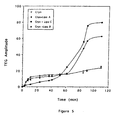
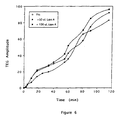
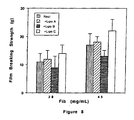
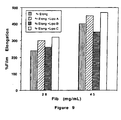
- the fibrin glue formulated in the presence of liposomes maintains its mechanical properties as determined by breaking strength or tensile strength studies and viscoelasticity studies (e.g., Figs. 2-6).
- the quality of the biophysical parameters is not significantly modified by the liposomes in the bioactive composition. Indeed, the liposomes are even suitable for improving the quality of the fibrin glue formulated to include such liposomes.
- the basic constituents of liposomes are various saturated or unsaturated lipids or phospholipids, with or without the addition of cholesterol and other constituents, such as aliphatic compounds having either amino or carboxylic acid groups.
- Nonlimiting examples of phospholipids that are suitable for use in formulating liposomes are phosphotidylcholine or lecithin, phosphatidyl ethanolamine, phosphatidic acid, phosphatidylserine, phosphatidylinositol, phosphatidylglycerol, sphingomyelin, cardiolipin, and hydrogenated products thereof.
- Liposomes of several types suitable for use in the present invention may be prepared by a variety of techniques that may ultimately influence liposome morphology, type, and size. Many techniques for preparing liposomes have been described (Szoka Jr. and Papahaddjopoulos, D. (1980), Ann. Rev. Biophys. Bioengineering , 9:467-508; Gregorius G. (Ed). (1983) Liposome Technology , Vols. I, II, III. , CRC Press, Boca Raton, FL. (1991); Ostro (Ed)., Liposome Preparations : Methods & Mechanisms , Marcel Dekker Inc. NY; Davis, S.S.
- a technique for producing liposomes for use in the invention is by ethanol injection.
- equimolar quantities of cholesterol and hydrogenated lecithin are mixed and warmed to 60°C in ethanol to form a solution, and the solution is injected in an aqueous buffer at 60°C containing the material to be encapsulated.
- the emulsion is incubated 60°C for one hour, centrifuged at 2000 x g for 5 minutes, and the supernatant is removed.
- the liposomes are suspended in Tris-saline buffer and stored at 4°C.
- Liposomes of several types are suitable for use in the present invention.
- neutral liposomes designated as Type A are formulated with equimolar amounts of cholesterol and hydrogenated lecithin and are referred to as neutral liposomes.
- Type B liposomes are formulated with 50% cholesterol, 40% hydrogenated lecithin, and 10% stearyl amine on a molar basis.
- Type B liposomes have free amine groups on their surfaces; such groups on Type B liposomes are potentially capable of affecting certain biophysical parameters of the fibrin glue composition.
- Type C liposomes described in Example 7, are formulated with 50% cholesterol, 40% hydrogenated lecithin, and 10% stearic acid on a molar basis.
- Type D liposomes are formulated with 50% cholesterol, 40% hydrogenated lecithin, and 10% diethylstearylamine on a molar basis.
- exemplary liposomes of the B and C types contain electrically-charged chemical moieties on their surfaces.
- Large liposomes e.g. multilamellar vesicles having a diameter size range of 0.1 to 5 to > 10 ⁇ m, and large unilamellar vesicles having a diameter size of ⁇ 0.06 ⁇ m
- small liposomes e.g. small unilamellar vesicles having a diameter size of about 0.02 to 0.05 ⁇ m
- Liposomes may be employed in the present invention and may be produced by conventional methods as previously indicated.
- some liposome types may have particular properties which make them especially conducive to forming a stable and effective fibrin glue-liposome bioadhesive.
- neutral liposomes of 5 ⁇ m diameter with a good load capacity may be preferred so as to provide adequate amounts of entrapped materials at the site of action and so as not to interfere substantially with the crosslinking properties of the fibrin glue after application at the site.
- the contents of the liposomes are routinely entrapped in the aqueous phase, rather than within the membrane bilayer of the liposome.
- the amount of aqueous phase containing bioactive material incorporated into the aqueous interior compartments of the liposomes for effective use in the invention was tested by forming Type A liposomes in Tris buffer (Tris-saline buffer, pH 7.4) containing 2 mM Zn 2+ .
- the Zn 2+ which remained after washing the liposomes was measured by X-ray fluorescence (Gorodetsky, R., Mou, X., Blankenfeld, A., and Marx, G., 1993, Amer. J. Hematol.
- the liposomes contained, on a volume per volume basis, about 10% to 20% aqueous phase, which is indicative of the "load" of the liposomes.
- the loaded liposomes were stable at both 4°C and 22°C, and they retained their aqueous phases quite well over a period of several weeks.
- Such Zn 2+ containing liposomes were used in in vivo studies in accordance with the invention (Example 10).
- Knowing the liposome load allows the calculation of the effective concentration or fraction of reagent(s) entrapped (i.e., contained) within the aqueous phase for effecting delivery and deposit of the load at the site of a wound or opening.
- a typical load is calculated on the basis of the orginal amount of the aqueous starting material used and the final amount of material that is contained in the liposome.
- the Zn 2+ solution served as a quantifiable marker for the entrapped contents of the liposomes.
- the amount of Zn 2+ in the starting solution is determined (e.g., 130 ppm).
- the liposomes are formulated to entrap a portion of the Zn 2+ solution.
- the fractional liposome volume is determined from a particle counter.
- the liposomes so formulated are washed in buffer. After washing, the aqueous phase is removed and the amount of Zn 2+ that has been entrapped into the liposome is measured.
- liposomes containing 2 mM Zn 2+ solution in their interiors would translate overall into 60 ⁇ M Zn 2+ in 1 mL of fibrin glue at and around the site of the wound.
- the liposomes can fuse with cells at the site of the wound and thereby merge their aqueous contents with the contents of cells.
- the aqueous phase of the liposome is delivered to the wound site where it subsequently diffuses into and around the site of application.
- Another aspect of the invention involves the use of fibrin glue containing light sensitive or photoactivatable liposomes (LSL), which may provide more controlled release of their contents into the environment over time.
- LSL light sensitive or photoactivatable liposomes
- Such liposomes can also be prepared to contain bioactive materials, additives, and medicaments, and are kept in a light-protected (e.g. filtered) container until use.
- a light source e.g., ultraviolet light or laser
- Light sensitive and photoactivatable liposomes are prepared essentially as described for non-light sensitive liposomes; they are virtually identical, but they provide for manipulated, light-controlled release of their contents.
- Light sensitive liposomes may be prepared by formulating liposomes to contain on their surfaces compounds having at least one light sensitive chemical double bond, which predisposes the compounds to undergo conformational change when exposed to light, thereby resulting in photoactivatible liposomes.
- Such light-sensitive liposomes are prepared, for example, by using lecithins of retinoic acid (such as 1,2-diretinoyl-sn-3-glycerophosphocholine (DRPC), 2-retinoylysolectin (LRPC) or 1-palmitoyl-2-retinoyl-sn-3-glycerophosphocholine (PRPC) in the lipid and cholesterol mixture, as described (Pidgeon, C.
- retinoic acid such as 1,2-diretinoyl-sn-3-glycerophosphocholine (DRPC), 2-retinoylysolectin (LRPC) or 1-palmitoyl-2-retinoyl-sn-3-glycerophospho
- DRPC/LKPC in ratio ranges of about 70:30 to about 30:70 are used to formulate light sensitive liposomes.
- Some formulations might include up to 40% added ⁇ -tocopherol ( ⁇ -T) to help in forming the light-sensitive liposomes.
- Preparations of LSL would necessarily be kept in the dark to prevent light induced degradation of the liposome structures and the release of their aqueous compartments.
- the light-sensitive liposomes are mixed with fibrin glue components (i.e., fibrinogen or thrombin) of the fibrin glue and liposome composition to allow their compartments to be released when desired by exposure to the chosen light source.
- the glue component thrombin
- thrombin is incorporated into the LSL.
- Such thrombin-containing liposomes are then mixed directly with fibrinogen in a light filtered container.
- the release of thrombin would be instigated by exposing the mixture to the appropriate light source.
- a single-compartment delivery system could be devised for fibrin glue application, with clotting only initiated by exposure to the activating light source.
- Bioactive agents contained in liposomes of the fibrin glue-containing liposome composition are Bioactive agents contained in liposomes of the fibrin glue-containing liposome composition
- the liposomes of the invention are designed to contain, carry, and release biologically active agents in accordance with the internal load or capacity of the liposomes. It is envisioned that liposomes containing biologically active substances and medicaments and embedded in the fibrin glue will carry and release their contents at a wound site or surgical or nonsurgical opening in animals, including humans, to aid in the healing and protection process following all types of surgical or wound healing procedures and applications.
- Examples of applications for the "loaded" liposomes in fibrin glue include, but are not limited to, partial or complete replacement of sutures in skin grafts, burns or ulcers, or surgical and nonsurgical openings; nerve and vessel anastomoses; surgery of soft tissues, such as parenchymal tissues of liver, lung, or spleen; microsurgeries in all areas of the body; orthopedic surgeries for tendon repair and bone or cartilage grafting, general surgeries, such as cuts and laceration repair; cardiovascular surgery for vascular grafts and anastomoses; thoracic surgery to seal duct leaks and esophageal anastomoses; otolaryngology-head and neck surgery; ophalmological surgeries, general dental use and surgeries; general surgeries in various anatomical body parts and sites.
- a wide variety of biologically active agents as well as medicines and pharmaceuticals may be contained within the liposomes of the fibrin glue-liposome formulation.
- agents to be entrapped in the liposomes include, but are not limited to, drugs, neuroleptics, vitamins (e.g. Vitamin C, (i.e. ascorbic acid or ascorbate), Vitamin A, Vitamin E, Vitamin D, Vitamin B, or derivatives thereof), growth factors (e.g. lymphokines, cytokines), hormones, steroids, glucocorticosteroids, antibiotics (e.g.
- antibacterial compounds including bacteriocidal and bacteriostatic compounds, antiviral compounds, antifungal compounds, antiparasitic compounds, tumoricidal compounds, tumoristatic compounds, toxins, enzymes, enzyme inhibitors, proteins, peptides, minerals (such as zinc or copper), neurotransmitters, lipoproteins, glycoproteins, immunomodulators, immunoglobulins and fragments thereof, dyes, radiolabels, radiopaque compounds, fluorescent compounds, fatty acid derivatives, polysaccharides, cell receptor binding molecules, anti-inflammatories, antiglaucomic compounds, mydriatic compounds, anesthetics, nucleic acids (e.g.
- RNA and DNA fragments RNA and DNA fragments
- polynucleotides RNA and DNA fragments
- selected fragments, portions, derivatives, or analogues of some or all of the above may be used, when practical, as additives in the aqueous phase of the liposomes of the invention.
- lipophilic drugs or other compounds may be incorporated into the phospholipid membrane of the liposomes.
- the invention is suitable for multiple bioactive agents to be contained in liposomes used in the fibrin glue bioadhesive composition. Should such a utility be desired, two or more bioactive agents may be entrapped in one liposome type which forms an integral part of the fibrin glue, and becomes subsequently embedded or deposited in the glue clot. Alternatively, two or more different types of liposomes or mixtures of liposome populations, each of which entraps the same or different bioactive agents, may be embedded in the fibrin glue-liposome composition. Different preparations of liposomes may comprise monophasic lipid vesicles (i.e. those having unilamellar lipid bilayers) or plurilamellar vesicles (i.e.
- one type of lipsomes e.g. neutral liposomes
- a second type of liposomes is formulated to entrap another bioactive material.
- Both types of liposomes containing their respective bioactive contents are mixed with the components comprising fibrin glue, and the resulting fibrin glue and liposome composition contains two types of liposomes capable of delivering their respective bioactive contents at the incision or wound or opening site. It is apparent that mixtures of different types of liposomes containing a variety of bioactive materials may be formulated and embedded in the composition.
- liposomes may be suspended in either a fibrinogen or thrombin solution and stored at temperatures from about 4°C to about 37°C prior to use.
- individual mixtures of liposomes and either fibrinogen or thrombin preparations may be frozen at -70°C or lyophilized by drying in vacuo at about -30°C.
- the mixtures Prior to use, the mixtures are reconstituted in water or buffer such as Tris-saline. All of the methods of storage result in viable, long-lasting liposome glue compositions following reconstitution of the stored materials.
- liposomes formulated with fibrin glue in a variety of modes result in liposome-containing fibrin glue in which liposomes are embedded and deposited in the clotted fibrin glue bioadhesive. Because fibrin glue forms the environment for deposition of the liposomes, the glue localizes the liposomes at the site or sites of application.
- fibrin glue of the invention is physiologically compatible with biological systems for in vivo use, such that both it and the liposomes contained therein, provide beneficial effects for the recipient animal without being toxic.
- another advantage of the fibrin glue-liposome compositions is that the liposome-glue will remain in clotted form in the environment in which it is administered or applied due to the formulations of present compositions of the invention, and will withstand physiological body temperatures and the conditions of the host environment in vivo . Because they comprise phospholipids and cholesterol, the liposomes of the composition will also be naturally metabolized over time by absorption by cells and tissue (reviewed by Schater-Korting M., Korting HC.
- fibrin glue allows for controlled localization and the release of the contents of the embedded liposomes into the desired tissue site.
- fibrinogen, thrombin, and liposomes are each stored separately, and then are mixed together when desired, for use to form the fibrin glue-liposome composition.
- lyophilized fibrinogen about 50-70 mg
- thrombin about 20-40 U
- an appropriate buffer e.g., about 1 milliliter of 10 mM Tris-saline, pH 7.4
- liposomes were added to the fibrinogen solution which was mixed gently to form a fibrinogen-liposome suspension.
- the above solutions were formulated in syringes and the steps to mix the component solutions were carried out in syringes.
- the fibrinogen and liposome suspension were applied simultaneously, along with the thrombin solution.
- the fibrin glue that formed within minutes contained about 10% embedded liposomes and provided a liposome-containing bioadhesive at the wound site.
- about 1 % to about 20% (by volume), more preferably about 2 % to about 15 % (by volume), and most preferably, about 5% to about 10% (by volume) of liposomes were embedded in the fibrin glue to produce the fibrin glue and liposome bioadhesive of the invention.
- the amount of liposomes in the composition represent the volume per volume percentage of liposomes in the final fibrin glue and liposome formulation.
- liposomes are pre-mixed with a solution of fibrinogen, and stored at 4°C.
- the liposome and fibrinogen mixture can be lyophilized, if desired, prior to storage.
- the mixture of liposomes and fibrinogen Prior to or at the time of use, is warmed to 37°C and mixed with thrombin solution, thereby forming the fibrin glue composition in which the liposomes are entrapped.
- liposomes are pre-mixed with a solution of thrombin, and stored at 4°C. Prior to or at the time of use, the mixture of liposomes and thrombin is mixed with reconstituted fibrinogen solution , thereby forming liposome-containing fibrin glue.
- the fibrinogen and thrombin solutions are each stored in separate receptacles or containers (e.g. syringes) prior to use or mixing in the fibrin glue-liposome composition.
- Liposomes may be suspended in a fibrinogen solution in a first syringe, and then mixed with the thrombin solution from a second syringe.
- liposomes may be suspended in a thrombin solution in a first syringe, and then mixed with fibrinogen solution from a second syringe.
- fibrin glue-containing liposome composition In vivo and other uses of fibrin glue-containing liposome composition
- the fibrin glue-liposome composition of the present invention may be used for immediate or sustained release of a biologically active substance or medicament both in vitro and in vivo .
- the fibrin glue-liposome composition may be formulated in the number of ways elucidated above.
- the fibrin glue components and liposomes may be added together at or over the wound site at the desired time of use. Consequently, the fibrin glue-liposome bioadhesive is formed in situ following the admixture and administration of all of the components at the site.
- Administration is preferably topical and includes, but is not limited to, application on, at, around, or near areas such as eyes, skin, ears, or on afflictions such as wounds, burns, surgical and nonsurgical openings, fissures, ulcers, blisters, bone breaks, and the like.
- the present invention is particularly useful for such treatments in which the release over time of antibiotics or healing, prophylactic, or therapeutic medicaments would assist in the healing and recovery process.
- the fibrin glue-liposome composition may be used to promote hemostasis by controlling hemorrhaging, to seal and bond tissue, and to support wound healing.
- the fibrin glue-containing liposome compositian may be topically administered at the site of burns in which the release of antimicrobials, cell growth factors, and/or medicaments is also of critical importance in the promotion and speed of the healing process.
- Fibrin glue containing liposomes can be also be used to bind bone fragments.
- the bone-binding ability of the fibrin glue and liposome composition is very useful in bone reconstruction, as in plastic surgery or the repair of major bone breaks.
- a bone fracture can be sealed with the fibrin glue and liposome composition so that the glue both seals the break and entraps and localizes the liposomes which are formulated to contain bone-specific growth factors.
- the liposomes Upon slow dissolution of the fibrin glue at the site of the bone fracture, the liposomes release their entrapped growth factors and thus improve the rate and quality of the healing bone.
- autologous bone from a patient can be ground or made into powder or the like, added to fibrinogen mixed with liposomes, and mixed into a paste.
- Thrombin is then mixed with the fibrinogen and liposome paste in an amount sufficient (i.e., 1 U/mL) to allow the paste to be applied to the desired locale, where the fibrin glue and liposome composition finally congeals.
- the amount of time for the congealing of the composition to occur can be controlled by adjusting the level of thrombin used.
- the liposomes can be formulated to contain bone growth factors (for example, as described in Sampath T.K. et al., 1992, J. Biol. Chem. , 267 :20352 and Wang E.
- Fibrin glue containing liposomes can also be fabricated as a film or membrane. Such films or membranes are advantageous to cover large surface areas.
- the fibrin glue and liposome compositions can be employed to fabricate implantable devices which include not only films, but also foams or chunks of the congealed fibrin glue and liposome composition.
- the films and devices may be formed ex vivo by application as liquids or sprays for subsequent implantation or use in vivo after gelation.
- Such fibrin glue-containing liposome compositions may be also be used to coat devices, such as prosthethic devices, catheters, or valves, and the like, which would be temporarily inserted or permanently implanted into an animal or human patient.
- the fibrin glue film (or membrane) is defined as a thin layer whose thickness can range between 0.1 mm to 5 mm.
- Such fibrin glue films exhibit a high degree of viscoelasticity and can be reversibly twisted and stretched up to 4 times their initial dimensions before breaking.
- Fibrin glue films containing Type A, B, or C liposomes which entrap biologically active compounds within their aqueous phases, are suitable for use in the invention.
- fibrin glue film containing Type A, B, or C liposomes can be sprayed onto a hydrophobic surface, such as Parafilm (American Can Co.) to form a fibrin glue and liposome film or membrane, which does not adhere permanently to the surface.
- the fibrin glue film formulated with its entrapped liposomes is peeled away from the parafilm surface and exhibits physical characteristics virtually identical to fibrin glue film formulated without liposomes.
- the combination of fibrin glue film and liposomes can impart beneficial biological effects to such films used as described above for formation in situ .
- the results of producing a film comprising the fibrin glue and liposome compositions is described in Example 12.
- Fibrin glue film containing liposomes can also be used to coat or to layer over a variety of materials used to make prosthetic devices for implantation.
- fibrin glue containing liposomes can be sprayed or applied as liquid onto a metal surface or other substrate onto which the composition adheres tightly.
- the film could be formed by layering the fibrin glue and liposome mixture onto the surface or substrate.
- the film about 1 mm thick
- the film (about 1 mm thick) could not be easily peeled or removed from the aluminum surface (Fig. 10), while the same film deposited on the a hydrophobic surface was easily removed.
- fibrinogen for use in the bioadhesive composition of the invention may be prepared by several techniques as disclosed above, specific and non-limiting examples of fibrinogen preparation are provided. Using cryoprecipitate as a source of fibrinogen is suitable for formulating the fibrin glue and liposome composition of the invention. Alternatively and oftentimes more preferably, fibrinogen is desired in a more purified or concentrated form, and thus is prepared in accordance with the Cohn fractionation method described in Example 2.
- Cryoprecipitate was prepared according to the American Association of Blood Bank (AABB) protocol as published in Walker, R.H. et al., 1990, Technical Manual, American Association of Blood Banks, 10th Edition, Arlington, VA.. Briefly, a unit of fresh-frozen human plasma was placed in a 0-4°C water bath for 1 to 11 ⁇ 2 hours (or until thawed). The thawed plasma was centrifuged at 5000 x g for 5 minutes 4°C. The supernatant was removed, leaving about 10 to 20 mL of plasma mixed with the cryoprecipitate, or concentrated fraction containing a complex mixture of clotting proteins, including fibrinogen, albumin, antihemophilic factors, and other proteins (see Table 2). The cryoprecipitate was warmed to 37°C for 15 minutes prior to use in the fibrin glue and liposome composition.
- AABB American Association of Blood Bank
- cryoprecipitate prepared from fresh-frozen plasma is suitable for use in the bioadhesive composition containing liposomes, as is a more purified preparation of fibrinogen such as that obtained from, but not limited to, the Fraction I paste of the Cohen fractionation method as described above and known to those in the art.
- Fibrinogen was prepared from Fraction I paste cold ethanol plasma fractionation (Blomback, B. and Blomback, M., 1956, Ark Kemi , 10:415-443; Stryker, M.H. & Waldman, A.A., 1978, Kirk-Othmer Encyclopedia of Chemical Technology , Vol 4, 3rd ed., pp 25-61, John Wiley; Lowe G.D.O. et al., 1987, Fibrinogen 2: Biochemistry, Physiology and Clinical Relevance. Exceipta Medicus, Elsevier Science Publishers).
- Fraction I paste was slurried in cold (4°C) Tris-saline buffer containing 2 mM EDTA, pH 6.5, and the supernatant discarded.
- the residual paste was dissolved in warm (37°C) Tris-saline buffer containing 2 mM EDTA to form a solution, and the solution was either filtered or centrifuged at 5000 x g for 15 minutes.
- the solution was cooled to 14°C.
- Cold 50% ethanol was then added slowly and the ethanol-containing mixture was cooled to 4°C over a 1 hour period.
- the precipitated fibrinogen was collected by centrifugation at 3000 x g for 15 minutes, and was dissolved in Tris-saline buffer, pH 7.4.
- the purified fibrinogen was either stored at -30°C or was lyophilized. Thawed fibrinogen or fibrinogen reconstituted by adding water or buffer was mixed with liposomes of Types A, B, C, or D, as desired, without precipitation or gelling of the resulting fibrinogen and liposome mixture.
- Viral inactivation of lipid-coat viruses was achieved by employing the solvent detergent (SD) method.
- SD viral inactivation 1 % Tween 80 (Triton X-100, sodium cholate, or other nonionic detergents may also be used) and 0.3% tri(n-butyl)phosphate (TNBP) were added to the fibrinogen preparation and kept at 24-30 °C for 4 hours to result in SD fibrinogen.
- Tween 80 Triton X-100, sodium cholate, or other nonionic detergents may also be used
- TNBP tri(n-butyl)phosphate
- the TNBP solvent and Tween 80 detergent reagents were removed by repeated (2 times) precipitation of the fibrinogen with 7-10%, by volume, of cold ethanol (Burnouf-Radosevich et al., 1990, Vox Sang , 58:77-84) and resolubilized in a buffer of physiologic pH and ionic strength.
- the complete SD procedure resulted in acceptable viral kill (on the order of greater than 10 5 logs) and low amounts of residual viral inactivating-reagents in the final SD fibrinogen preparation.
- fibrinogen for use in the bioadhesive liposome and fibrin glue compositions typically contained the following constituents as indicated.
- the fibrinogen constituents are provided as a guide and are not meant to limit the invention in any way.
- Fibrinogen (Fib) 20-80 mg/mL
- Factor XIII (FXIII) 2-12 U/mL
- Fibronectin (FN) ⁇ 1%
- Albumin (Alb) ⁇ 1%.
- Bovine or human thrombin were employed for inducing gelation or clotting of fibrin glue.
- bovine thrombin is commercially available and is the type of thrombin that is licensed for clinical use in the U.S.
- human thrombin sources are also suitable for use in the invention provided that the human thrombin is appropriately purified and virally inactivated.
- the human thrombin used for instigating cross-linking of the components of the fibrin glue in the invention was obtained by activating prothrombin from Cohn Fraction III paste by established techniques (Fenton II, J.W. et al., 1977, J. Biol. Chem. , 252:3587-98; Crowley, C., European Patent Application No. 0 439 156 A1; U.S. Patent No. 4,696,812 to Silbering S.B. et al. (1987); U.S. Patent No. 4,965,023 to Silbering S.B. et al., (1990)).
- prothrombin prepared from Cohn fraction III paste, was activated by incubation with 20-30 mM Ca(II) and a prothrombin activating amount of thromboplastin.
- the resulting solution was filtered and passed over a DEAE-Sepharose column to remove contaminating proteins.
- the eluate was then passed over a CM-Sepharose column and the eluate was discarded.
- the bound thrombin was eluted with higher ionic strength buffer (e.g. 0.5 N NaCl in PBS, pH 6.5 to 8.0).
- higher ionic strength buffer e.g. 0.5 N NaCl in PBS, pH 6.5 to 8.0.
- the resulting purified thrombin can be vitally inactivated by a variety of methods including SD, heat, or UV irradiation, with or without quenchers.
- the purified thrombin maintained its enzymatic activity, even following viral inactivation treatment.
- mixing purified thrombin alone with liposomes of Types A-C as disclosed herein did not significantly alter its enzymatic or clot-inducing activity.
- liposomes containing a different lipids and cholesterol via the ethanol injection technique, equimolar quantities of cholesterol (Chol) and hydrogenated lecithin (HL) were dissolved in 100 ⁇ L of absolute ethanol 100 ⁇ L chloroform and mixed at 60°C for 10 minutes and then injected into a 10-fold larger concentration of Tris-saline buffer, pH 7.4, containing the material to be entrapped in the aqueous phase of the liposome.
- Some liposomes were also made with stearyl amine (B) or stearic acid (C) or diethylstearylamine added to the alcohol phase in one-tenth molar quantities relative to the amounts of Chol and HL used.
- the mixture was incubated an additional 1 hour at 60°C, and then treated in an ultrasonic bath for 5 minutes. After ultrasonification, liposomes were cooled to 22°C for 1 hour, centrifuged at 2000 x g for 10 minutes, washed in Tris-saline buffer, pH 7.4, and re-centrifuged two times more before storage at 4°C. Evaluation of the prepared liposomes in a Coulter particle sizer (the Coulter Company) showed unimodal distribution of particles with a diameter range of from about 0.9 to 10 microns, with a mean diameter of about 2.5 microns (Fig. 1)
- HPC hydrogenated phosphatidylcholine
- L- ⁇ -lecithin Avanti Polar Lipids, Birmingham, AL
- a solution of 5 mL of aqueous buffer e.g. Tris-saline buffer: 20 mM Tris, 0.15 N NaCl pH 7.4
- aqueous buffer e.g. Tris-saline buffer: 20 mM Tris, 0.15 N NaCl pH 7.4
- liposome volume in terms of liposome volume was in the range of about 4 to about 12 fL, with an mean of about 7 fL.
- the washed liposome zinc content was determined by x-ray fluorescence spectrometry.
- the prepared neutral liposomes were stored at 4°C until use.
- HPC hydrogenated phosphatidylcholine
- lecithin Avanti Polar Lipids, Birmingham, AL
- 2.7 mg of stearyl amine, absolute ethanol (100 ⁇ L), and chloroform 100 ⁇ L
- the resulting mixture was incubated at 60°C for 15 minutes.
- a solution of 5 mL of aqueous buffer e.g. 20 mM Tris, 0.15 N NaCl, pH 7.4
- aqueous buffer e.g. 20 mM Tris, 0.15 N NaCl, pH 7.4
- HPC hydrogenated phosphatidylcholine
- lecithin Avanti Polar Lipids, Birmingham, AL
- 2.7 mg of stearic acid, absolute ethanol (100 ⁇ L), and chloroform 100 ⁇ L
- the resulting mixture was incubated at 60°C for 15 minutes.
- a solution of 5 mL of aqueous buffer e.g.
- Tris-saline buffer 20 mM Tris, 0.15 N NaCl, pH 7.4) containing the material to be entrapped (e.g. 2 mM zinc chloride) was warmed to 60°C. While this solution was stirred with a magnetic stir-bar, the HPC and Chol solution mixture was added and vortexed for about 1 minute. The final mixture was incubated at 60°C for about 1 hour, cooled to 22°C, and centrifuged at 2000 x g for 5 minutes to settle the liposomes to the bottom of the tube. The supernatant solution was removed after centrifugation and the liposomes were washed in Tris/saline pH 7.4 buffer.
- the material to be entrapped e.g. 2 mM zinc chloride
- the liposomes were again centrifuged and the wash supernatant was removed.
- the prepared liposomes were analyzed in a cell counter or particle analyzer to determine that their size (i.e. in terms of liposome volume) was in the range of about 4 to about 12 fL, with an mean of about 7 fL.
- the prepared carboxylic acid liposomes were stored at 4°C until use.
- the breaking strength of the fibrin glue in the present fibrin glue and liposome composition was measured by mixing fibrin glue components in a plastic test tube and pipeting the still-liquid mixture into the interface of two pieces of coarse synthetic mesh (0.4 thick by 1 cm wide), (Fig. 2).
- the fibrin glue was allowed to gel, such that the resulting glue as formulated was totally interwoven between the two pieces of coarse mesh (Marx, G. and Blankenfeld, A., 1993, Blood Coag. Fibrin. , 4:73-78).
- the Factor XIIIa-induced cross-linking reaction had occurred and the mesh-fibrin-mesh ensemble was pulled apart.
- the breaking strength was measured as grams per 0.4 cm 2 cross-section.
- fibrin glue develops viscoelastic properties which can be monitored in a thromboelastograph as TEG amplitude.
- Types A, B and C liposomes did not significantly increase the early phase of the development of viscoelasticnty.
- Type A and Type C liposomes increased the final viscoelasticity of the fibrin glue, while Type B liposomes had no significant effect (Fig. 5).
- the results indicate that the amine groups on the surfaces of Type B liposomes may diminish the mechanical properties of the fibrin glue, probably by interfering with the cross-linking of fibrin instigated by factor XIIIa.
- thrombin e.g.
- liposomes to modulate or not interfere with the viscoelastic properties of fibrin glue can be advantageous, such as when the fibrin glue and liposome composition is used to prepare films or membranes that need to remain flexible during use, or when the composition is used to coat the surface of a prosthetic device which itself flexes or changes shape during its intended use. Often, it is desired that such devices, coatings, or membranes be resident in vivo for long periods of time. However, normal lytic processes could degrade the fibrin glue rather rapidly. For such uses, liposomes could be prepared with proteolytic inhibitors encapsulated within their aqueous compartments. With the onset of degradation of the glue, liposomes would be exposed and slowly release their entrapped proteolytic inhibitors. This process would thereby decrease the rate of degradation of the fibrin glue and liposome film or membrane. Thus, liposomes would minimally affect and even augment the desired mechanical properties of fibrin glue and would ultimately increase the effective lifetime of the fibrin glue membrane, coating, or film.
- Liposome and fibrin glue composition used in wound healing of skin incisions
- Type A liposomes i.e., neutral
- Tris-saline buffer, pH 7.4 which contained 2 mM Zn(II) salt
- a Zn(II) solution entrapped in liposomes was used as an exemplary bioadditive in the aqueous compartment of the liposome.
- bioadditives, and solutions containing such additives are equally and particularly suitable for entrapment in the liposomes of the composition, as described in the Detailed Description of the Invention.
- the Zn(II)-loaded liposomes were analyzed by X-ray fluorescence and found to have encapsulated about 10-20% aqueous phase of their total volume.
- the Zn(II)-loaded liposomes were added to fibrinogen in cryoprecipitate (10% by volume) prior to mixing with thrombin at the site of incision, i.e., forming a fibrin glue and Zn(II)-loaded liposome matrix at the wound site.
- the animals were allowed to heal and were sacrificed after 14 days.
- the skin incisions that had been sealed either with the fibrin glue and liposome-containing composition or with staples were excised and analyzed.
- the incision area was analyzed for the presence of zinc in the scar area utilizing the x-ray fluorescence technique exactly as described in the reference by Gorodetsky R., Sheskin J., and Weinreb, 1986, Int. J. Determatol. 25:440-445.
- the wound tissue to which fibrin glue with zinc-entrapped liposomes had been applied contained double the zinc level (i.e., 15 ⁇ 2 ppm).
- the level of zinc found at the site of the stapled wound and at the site of application of the fibrin glue and zinc-containing liposome composition was compared with the level of zinc normally present in a non-cut region of the animal's skin or tissue. The results showed that a significantly increased level of zinc was released from liposomes relative to that of the normal controls and of normal undamaged skin.
- fibrin glue was also formulated in the absence of liposomes and used to seal the incision.
- the contents of the syringes were released at the site of the incision to formulate the fibrin glue with or without added liposomes in situ .
- an incision was made as above, and the wound was closed with 4 surgical staples which were removed after 3 days. All of the mice were sacrificed after 3 days.
- a square of skin around the healed wound or control incision was excised immediately after sacrifice and was sliced perpendicular to the wound into 8 equivalent sections with a multiblade razor apparatus.
- the wound tensile strength (WTS) of the strips was measured in an Accuforce M 100 Tensile Strength Apparatus (Ametek), with the values expressed in grams per 2 mm wide strip. Each point generally represented the mean of about 28 to 42 measurements (e.g. 7 wound strips in 4 to 6 mice) with error bars representing the standard error of the mean (SEM).
- SEM standard error of the mean
- liposomes to fibrin glue can significantly and advantageously modify the physical characteristics of the film or membrane formed from the fibrin glue and liposome composition as described herein.
- a 2 mm thick by 1 cm wide fibrin glue film made from fibrin glue containing 28 mg/mL fibrinogen, 10 U/mL thrombin, 15 mM Ca(II) solution, and liposomes (10% by volume) exhibited a breaking strength of 11 grams and became elongated by more than 200%.
- the components used to formulate the fibrin glue and liposome composition were placed in an appropriate receptacle or container and sprayed onto the film or membrane; the spraying process mixed the components prior to their application to the substrate.
- the film or membrane of fibrin glue and liposomes was cleanly peeled away from the substrate film or membrane without the problems of sticking to the substrate or breakage during removal.
- the mechanism of adherence has not been completely elucidated, although ionic interactions are presumably involved.
- films formulated with 45 mg/mL fibrinogen, 10 U/mL thrombin, and 15 mM Ca(II) an increase in film breaking strength is noted (e.g., to 18 g) (Fig. 8).
- Type A liposomes (i.e., neutral) and Type C liposomes (i.e., carboxylic acid) formulated in the fibrin glue composition increased the relative breaking strength and percent or degree of elongation
- Type B liposomes (i.e., amine) decreased the relative breaking strength and the percent of elongation before breaking (Figs. 8 and 9).
- This example demonstrates that liposomes incorporated into fibrin glue films can modulate its physical parameters in a controlled manner, and also indicates that films to be used as wound dressings or membrane devices can be fabricated from fibrin glue films which contain liposomes.
Landscapes
- Health & Medical Sciences (AREA)
- Life Sciences & Earth Sciences (AREA)
- Veterinary Medicine (AREA)
- Public Health (AREA)
- Chemical & Material Sciences (AREA)
- General Health & Medical Sciences (AREA)
- Animal Behavior & Ethology (AREA)
- Epidemiology (AREA)
- Surgery (AREA)
- Medicinal Chemistry (AREA)
- Pharmacology & Pharmacy (AREA)
- Engineering & Computer Science (AREA)
- Materials Engineering (AREA)
- Proteomics, Peptides & Aminoacids (AREA)
- Chemical Kinetics & Catalysis (AREA)
- Inorganic Chemistry (AREA)
- General Chemical & Material Sciences (AREA)
- Nuclear Medicine, Radiotherapy & Molecular Imaging (AREA)
- Bioinformatics & Cheminformatics (AREA)
- Organic Chemistry (AREA)
- Dispersion Chemistry (AREA)
- Dermatology (AREA)
- Diabetes (AREA)
- Hematology (AREA)
- Medicinal Preparation (AREA)
- Medicines That Contain Protein Lipid Enzymes And Other Medicines (AREA)
- Materials For Medical Uses (AREA)
Claims (32)
- Composition bioadhésive comprenant de la colle à base de fibrine, ou des composants de celle-ci, et des liposomes, ladite composition comprenant :mélangée avec 1 % à 20 % en volume de liposomes, lesdits liposomes étant incorporés dans ladite colle après la coagulation de ladite colle de façon à localiser lesdits liposomes au niveau ou à proximité d'un site d'administration de ladite composition bioadhésive comprenant de la colle à base de fibrine et des liposomes.(i) 10 à 90 mg/ml de fibrinogène ;(ii) 1 à 200 U/ml de thrombine ; et(iii) 1 à 30 mM de calcium ;
- Composition de colle à base de fibrine contenant des liposomes, comprenant de 1 % à 20 % en volume de liposomes combinés avec 10 à 90 mg/ml de fibrinogène, 1 à 200 U/ml de thrombine et 1 à 30 mM de calcium pour former un caillot ou un gel bioadhésif comportant de la colle à base de fibrine, lesdits liposomes étant incorporés et séquestrés dans ledit caillot ou gel formé de colle à base de fibrine.
- Composition selon la revendication 1 ou 2, ladite composition comprenant du fibrinogène à une concentration de 30-60 mg/ml, de la thrombine à une concentration de 5-100 U/ml, des liposomes à raison de 5 %-15 % en volume et du calcium à une concentration de 10-15 mM.
- Composition selon l'une des revendications 1 à 3, dans laquelle le fibrinogène est du fibrinogène humain purifié et inactivé du point de vue viral.
- Composition selon l'une des revendications 1 à 3, dans laquelle la thrombine est de la thrombine humaine ou bovine purifiée et inactivée du point de vue viral.
- Composition selon la revendication 1 ou 2, dans laquelle le fibrinogène est mélangé avec d'autres protéines choisies dans l'ensemble constitué de protéines de sang total anticoagulé, de protéines de plasma et de plasma riche en plaquettes et de protéines dérivées de cryoprécipités de plasma.
- Composition selon la revendication 1 ou 2, dans laquelle un ou plusieurs agents biologiquement actifs sont contenus dans la phase aqueuse desdits liposomes.
- Composition selon la revendication 7, dans laquelle ledit agent biologiquement actif est au moins un agent choisi dans l'ensemble constitué de médicaments, de neuroleptiques, de vitamines, de dérivés vitaminiques, de facteurs de croissance, de glucocorticostéroïdes, de stéroïdes, d'antibiotiques, de composés antibactériens, comprenant des composés bactériocides et bactériostatiques, de composés antifongiques, de composés antiviraux, de composés antiparasitiques, de composés tumoricides, de composés tumoristatiques, de toxines, d'enzymes, d'inhibiteurs d'enzymes, de protéines, de peptides, de minéraux, de neurotransmetteurs, de lipoprotéines, de glycoprotéines, d'immunomodulateurs, d'immunoglobulines et de fragments de celles-ci, de colorants, de radiomarqueurs, de composés radio-opaques, de composés fluorescents, de dérivés d'acides gras, de polysaccharides, de molécules liant des récepteurs cellulaires, d'anti-inflammatoires, de composés antiglaucomiques, de composés mydriatiques, d'anesthésiques, d'acides nucléiques, de polynucléotides, d'ascorbate et de Zn2+.
- Composition selon la revendication 7, dans laquelle lesdits liposomes sont des vésicules unilamellaires neutres, des vésicules unilamellaires chargés, ou sont constitués d'un mélange de lipides saturés et de lipides insaturés, et peuvent comprendre, en outre, des constituants aliphatiques ayant des groupes amino ou des groupes carboxyle.
- Composition selon la revendication 1 ou 2, dans laquelle un agent biologiquement actif est contenu dans le compartiment aqueux d'un premier type de liposome, et un autre agent biologiquement actif est contenu dans le compartiment aqueux d'un second type de liposome, lesdits deux types de liposomes étant mélangés et séquestrés dans la colle à base de fibrine pour former ladite composition, dans laquelle les agents biologiquement actifs sont libérés.
- Composition selon la revendication 10, dans laquelle lesdits agents biologiquement actifs sont choisis dans l'ensemble constitué de médicaments, de neuroleptiques, de vitamines, de dérivés de vitamines, de facteurs de croissance, de glucocorticostéroïdes, de stéroïdes, d'antibiotiques, de composés antibactériens, comprenant des composés bactéricides et des composés bactériostatiques, de composés antiviraux, de composés antifongiques, de composés antiparasitiques, de composés tumoricides, de composés tumoristatiques, de toxines, d'enzymes, d'inhibiteurs d'enzymes, de protéines, de peptides, de minéraux, de neurotransmetteurs, de lipoprotéines, de glycoprotéines, d'immunomodulateurs, d'immunoglobulines et des fragments de celles-ci, de colorants, de radiomarqueurs, de composés radio-opaques, de composés fluorescents, de dérivés d'acides gras, de polysaccharides, de molécules de liaison de récepteurs cellulaires, d'anti-inflammatoires, de composés antiglaucomiques, de composés mydriatiques, d'anesthésiques, d'acides nucléiques, et de polynucléotides.
- Composition selon la revendication 10, dans laquelle ledit premier type de liposomes comprend des liposomes neutres formulés de façon à contenir des groupes chimiques non chargés exposés à leur surface, et ledit second type de liposomes comprend au moins l'un des liposomes neutres formulés de façon à contenir des groupes chimiques non chargés exposés à leur surface, ou des liposomes aminés formulés de façon à contenir des groupes aminés exposés à leur surface, ou des liposomes carboxylés formulés de façon à contenir des groupes d'acides carboxyliques exposés à leur surface.
- Composition selon la revendication 10, dans laquelle ledit premier type de liposomes comprend des liposomes aminés formulés de façon à contenir des groupes aminés exposés à leur surface, et ledit second type de liposomes comprend des liposomes carboxylés formulés de façon à contenir des groupes d'acides carboxyliques exposés à leur surface.
- Composition selon la revendication 1 ou 2, dans laquelle lesdits liposomes sont des liposomes photosensibles ou photo-activables.
- Composition selon l'une des revendications 1 à 14, ladite composition étant appliquée sous la forme d'un liquide ou d'une pâte ou d'une pulvérisation pour former un film, une membrane ou une mousse de liposomes contenant une colle à base de fibrine.
- Composition selon la revendication 15, dans laquelle ledit film, membrane ou mousse est formé ex vivo et est implanté chez un sujet.
- Composition selon la revendication 15, dans laquelle ledit film, membrane ou mousse comprend un dispositif implantable pour une implantation temporaire ou permanente.
- Composition selon la revendication 15, dans laquelle ledit film, membrane ou mousse revêt la surface d'un dispositif implantable pour une implantation temporaire ou permanente.
- Composition selon la revendication 9, dans laquelle lesdits liposomes sont un mélange de lipides saturés et de lipides non saturés et sont formulés de façon à contenir des lipides non chargés ou neutres exposés sur leur membrane superficielle, ce qui aboutit à l'obtention de liposomes neutres.
- Composition selon la revendication 19, dans laquelle lesdits lipides non chargés ou neutres sont de la lécithine ou de la phosphatidylcholine.
- Composition selon la revendication 9, dans laquelle lesdits liposomes sont un mélange de lipides saturés et de lipides non saturés et sont formulés de façon à contenir des groupes aminés exposés à la surface des liposomes, ce qui aboutit à des liposomes aminés.
- Composition selon la revendication 21, dans laquelle lesdits liposomes sont formulés avec 50 % de cholestérol, 40 % de lécithine hydrogénée et 10 % de stéarylamine ou de diéthylstéarylamine sur une base molaire.
- Composition selon la revendication 9, dans laquelle lesdits liposomes sont un mélange de lipides saturés et de lipides non saturés et sont formulés de façon à contenir des groupes d'acides carboxyliques exposés à la surface des liposomes, ce qui aboutit à l'obtention de liposomes d'acide carboxylique.
- Procédé de préparation d'un agent d'étanchéité bioadhésif comprenant une colle à base de fibrine et contenant des liposomes, in vitro, comprenant :a) la fourniture de :i) une source de fibrinogène inactivé du point de vue viral ;ii) une source de thrombine inactivée du point de vue viral ; etiii) des liposomes contenant un ou plusieurs agents biologiquement actifs ; etb) le mélange dudit fibrinogène avec ladite thrombine et lesdits liposomes de l'étape a) pour former un mélange dans lequel ladite thrombine est présente dans le mélange à une concentration de 1-200 U/ml, ledit fibrinogène est présent dans ledit mélange à une concentration de 10-90 mg/ml, et lesdits liposomes sont présents à raison de 1-20 % en volume, et en outre, dans lequel ladite thrombine catalyse la formation d'un caillot de colle à base de fibrine dans lequel lesdits liposomes sont incorporés, lesdits liposomes incorporés libérant leur contenu biologiquement actif in vivo.
- Procédé de préparation d'un agent d'étanchéité bioadhésif comprenant une colle à base de fibrine contenant des liposomes, in vitro, comprenant :a) la fourniture de :i) une source de fibrinogène inactivé du point de vue viral ;ii) une source de thrombine inactivée du point de vue viral ; etiii) des liposomes contenant un ou plusieurs agents biologiquement actifs ; etb) le mélange dudit fibrinogène de l'étape a) i) avec lesdits liposomes de l'étape a) iii) pour former un premier mélange de fibrinogène et de liposomes ; etc) l'addition de ladite thrombine de l'étape a) ii) audit premier mélange de l'étape b) pour former un second mélange comprenant du fibrinogène et des liposomes et de la thrombine ; dans lequel ladite thrombine est présente dans le second mélange à une concentration de 1-200 U/ml, ledit fibrinogène est présent dans ledit second mélange à une concentration de 10-90 mg/ml, et lesdits liposomes sont présents à raison de 1-20 % en volume, et, en outre, dans lequel ladite thrombine facilite la coagulation et la formation dudit agent d'étanchéité comprenant une colle à base de fibrine, dans lequel lesdits liposomes sont incorporés, lesdits liposomes libérant leur contenu biologiquement actif in vivo.
- Procédé selon la revendication 25, comprenant, en outre, la fourniture de calcium dans l'étape a).
- Procédé de préparation d'un agent d'étanchéité bioadhésif comprenant une colle à base de fibrine et: contenant des liposomes, in vitro, comprenant :a) la fourniture de :i) une source de thrombine inactivée du point de vue viral ;ii) une source de fibrinogène inactivé du point de vue viral ; etiii) des liposomes contenant un ou plusieurs agents biologiquement actifs ; etb) le mélange d'une quantité efficace de ladite thrombine avec lesdits liposomes de l'étape a) pour former un premier mélange de thrombine et de liposomes ; etc) l'addition d'une quantité efficace dudit fibrinogène de l'étape a) audit premier mélange de l'étape b) pour former un second mélange comprenant de la thrombine et des liposomes et du fibrinogène, ladite thrombine étant présente dans le second mélange à une concentration de 1-200 U/ml, ledit fibrinogène étant présent dans le second mélange à une concentration de 10-90 mg/ml, et lesdits liposomes étant présents à raison de 1-20 % en volume, et, en outre, ladite thrombine facilitant la formation d'un caillot de colle à base de fibrine, dans lequel lesdits liposomes sont incorporés, lesdits liposomes incorporés libérant leur contenu biologiquement actif in vivo.
- Procédé selon la revendication 27, comprenant, en outre, la fourniture de calcium dans l'étape a) à une concentration de 1-30 mM.
- Procédé selon l'une des revendications 24 à 28, dans lequel ledit fibrinogène est du fibrinogène humain purifié, ladite thrombine est de la thrombine humaine ou bovine purifiée, et lesdits liposomes sont choisis au moins parmi des liposomes neutres formulés de façon à contenir des groupes chimiques non chargés exposés à leur surface ou des liposomes formulés de façon à contenir des groupes aminés exposés à leur surface ou des liposomes formulés de façon à contenir des groupes d'acides carboxyliques exposés à leur surface.
- Procédé de formation d'une composition souple à base de colle de fibrine et de liposomes sous la forme d'un film ou d'une membrane, ledit film ou ladite membrane utilisé(e) pour une application ou une implantation in vitro comprenant :a) la fourniture de composants comprenant :i) du fibrinogène inactivé du point de vue viral ;ii) de la thrombine inactivée du point de vue viral ; etiii) des liposomes choisis dans l'ensemble constitué de liposomes neutres, de liposomes aminés et de liposomes carboxylés, ou d'un mélange de ceux-ci ;b) l'addition des composants de l'étape a) ;c) l'application par pulvérisation des composants sur un substrat ou sur un support solide, le substrat fournissant une surface à laquelle les composants adhèrent de façon temporaire et se gélifient pour former un film ou une membrane souple comprenant une colle à base de fibrine et des liposomes ; etd) le retrait du film ou de la membrane comprenant une colle à base de fibrine et des liposomes à partir de la surface du substrat après la gélification.
- Procédé selon la revendication 30, dans lequel l'étape de fourniture a) comprend, en outre, du calcium.
- Procédé selon la revendication 30, dans lequel les liposomes de l'étape de fourniture a) iii) sont formulés de façon à contenir des matières bioactives dans leurs phases aqueuses.
Applications Claiming Priority (3)
| Application Number | Priority Date | Filing Date | Title |
|---|---|---|---|
| US19815894A | 1994-02-17 | 1994-02-17 | |
| US198158 | 1994-02-17 | ||
| PCT/US1995/001792 WO1995022316A1 (fr) | 1994-02-17 | 1995-02-08 | Compositions biologiques bioadhesives contenant une colle de fibrine et des liposomes, leur preparation et leur utilisation |
Publications (3)
| Publication Number | Publication Date |
|---|---|
| EP0748215A1 EP0748215A1 (fr) | 1996-12-18 |
| EP0748215A4 EP0748215A4 (fr) | 1998-08-12 |
| EP0748215B1 true EP0748215B1 (fr) | 2003-05-28 |
Family
ID=22732219
Family Applications (1)
| Application Number | Title | Priority Date | Filing Date |
|---|---|---|---|
| EP95910985A Expired - Lifetime EP0748215B1 (fr) | 1994-02-17 | 1995-02-08 | Compositions biologiques bioadhesives contenant une colle de fibrine et des liposomes, leur preparation et leur utilisation |
Country Status (6)
| Country | Link |
|---|---|
| US (3) | US5607694A (fr) |
| EP (1) | EP0748215B1 (fr) |
| JP (1) | JP3591837B2 (fr) |
| AT (1) | ATE241340T1 (fr) |
| DE (1) | DE69530914T2 (fr) |
| WO (1) | WO1995022316A1 (fr) |
Cited By (1)
| Publication number | Priority date | Publication date | Assignee | Title |
|---|---|---|---|---|
| WO2017210267A3 (fr) * | 2016-05-31 | 2018-02-15 | Ericson Daniel Grant | Films à base de plasma et procédés pour les fabriquer et les utiliser |
Families Citing this family (129)
| Publication number | Priority date | Publication date | Assignee | Title |
|---|---|---|---|---|
| US7229959B1 (en) * | 1990-11-27 | 2007-06-12 | The American National Red Cross | Supplemented fibrin matrix delivery systems |
| US6117425A (en) | 1990-11-27 | 2000-09-12 | The American National Red Cross | Supplemented and unsupplemented tissue sealants, method of their production and use |
| US6197325B1 (en) | 1990-11-27 | 2001-03-06 | The American National Red Cross | Supplemented and unsupplemented tissue sealants, methods of their production and use |
| US6054122A (en) * | 1990-11-27 | 2000-04-25 | The American National Red Cross | Supplemented and unsupplemented tissue sealants, methods of their production and use |
| US5853746A (en) * | 1991-01-31 | 1998-12-29 | Robert Francis Shaw | Methods and compositions for the treatment and repair of defects or lesions in cartilage or bone using functional barrier |
| US5762955A (en) * | 1994-02-04 | 1998-06-09 | Smith; Stephen Jay | Method for application and maintenance of medication on body tissue |
| US6780425B1 (en) * | 1994-02-04 | 2004-08-24 | Stephen J. Smith | Method for application and maintenance of medication on body tissue |
| US7091008B1 (en) | 1994-07-01 | 2006-08-15 | The Board Of Regents Of The University Of Oklahoma | Hyaluronan synthase genes and expression thereof in Bacillus hosts |
| US6455304B1 (en) * | 1994-07-01 | 2002-09-24 | The Board Of Regents Of The University Of Oklahoma | Hyaluronate synthase gene and uses thereof |
| US6911216B1 (en) | 1994-10-12 | 2005-06-28 | Genzyme Corporation | Targeted delivery via biodegradable polymers |
| JPH10509696A (ja) * | 1994-10-12 | 1998-09-22 | フォーカル, インコーポレイテッド | 生分解性ポリマーを介する標的化送達 |
| GB9501579D0 (en) * | 1995-01-27 | 1995-03-15 | Univ Loughborough | Effecting reactions |
| US5658588A (en) * | 1995-03-31 | 1997-08-19 | University Of Cincinnati | Fibrinogen-coated liposomes |
| US6528483B2 (en) | 1995-06-07 | 2003-03-04 | André Beaulieu | Method of producing concentrated non-buffered solutions of fibronectin |
| US7112320B1 (en) | 1995-06-07 | 2006-09-26 | Andre Beaulieu | Solid wound healing formulations containing fibronectin |
| AU7398196A (en) * | 1995-10-11 | 1997-04-30 | Fusion Medical Technologies, Inc. | Device and method for sealing tissue |
| WO2000062828A1 (fr) | 1996-04-30 | 2000-10-26 | Medtronic, Inc. | Fibrine autologue d'obturation et ses methodes de fabrication |
| WO1997040864A1 (fr) * | 1996-04-30 | 1997-11-06 | Medtronic, Inc. | Procede pour fabriquer une substance de scellage autologue en fibrine |
| US5914121A (en) * | 1997-02-12 | 1999-06-22 | The United States Of America As Represented By The Secretary Of The Department Of Health And Human Services | Formation of human bone in vivo using ceramic powder and human marrow stromal fibroblasts |
| US5911165A (en) * | 1997-05-29 | 1999-06-08 | Bayer Corporation | Method and device for mechanical testing of fibrin glue strength |
| US6162241A (en) * | 1997-08-06 | 2000-12-19 | Focal, Inc. | Hemostatic tissue sealants |
| US6168788B1 (en) | 1997-09-26 | 2001-01-02 | Leon Wortham | Fibrin glue without fibrinogen and biosealant compositions and methods |
| CN101113436B (zh) * | 1997-10-31 | 2013-02-06 | 俄克拉何马大学董事会 | 透明质酸合酶基因及其应用 |
| CN1322121C (zh) * | 1997-10-31 | 2007-06-20 | 俄克拉何马大学董事会 | 透明质酸合酶基因及其应用 |
| US6979456B1 (en) | 1998-04-01 | 2005-12-27 | Jagotec Ag | Anticancer compositions |
| US6987023B2 (en) * | 1998-04-02 | 2006-01-17 | The Board Of Regents Of The University Of Oklahoma | DNA encoding hyaluronan synthase from Pasteurella multocida and methods of use |
| US20080108110A1 (en) * | 1998-04-02 | 2008-05-08 | Deangelis Paul L | Targeted glycosaminoglycan polymers by polymer grafting and methods of making and using same |
| US7060469B2 (en) * | 1998-04-02 | 2006-06-13 | The Board Of Regents Of The University Of Oklahoma | Polymer grafting by polysaccharide synthases |
| US20060188966A1 (en) * | 1998-04-02 | 2006-08-24 | Deangelis Paul L | Natural, chimeric and hybrid glycosaminoglycan polymers and methods of making and using same |
| US7223571B2 (en) * | 1998-04-02 | 2007-05-29 | The Board Of Regents Of The Universtiy Of Oklahoma | Targeted glycosaminoglycan polymers by polymer grafting and methods of making and using same |
| US6524568B2 (en) * | 1998-06-22 | 2003-02-25 | Cytomedix, Inc. | Enriched platelet wound healant |
| AU768543B2 (en) * | 1998-06-22 | 2003-12-18 | Nuo Therapeutics, Inc. | Improved enriched platelet wound healant |
| WO1999066797A1 (fr) * | 1998-06-22 | 1999-12-29 | Worden Charles E | Agent de cicatrisation enrichi en plaquettes |
| US20020022588A1 (en) * | 1998-06-23 | 2002-02-21 | James Wilkie | Methods and compositions for sealing tissue leaks |
| US6274090B1 (en) | 1998-08-05 | 2001-08-14 | Thermogenesis Corp. | Apparatus and method of preparation of stable, long term thrombin from plasma and thrombin formed thereby |
| ES2211151T3 (es) | 1998-08-19 | 2004-07-01 | Skyepharma Canada Inc. | Dispersiones acuosas inyectables de propofol. |
| US7241730B2 (en) * | 1998-08-27 | 2007-07-10 | Universitat Zurich | Enzyme-mediated modification of fibrin for tissue engineering: fibrin formulations with peptides |
| US7094581B2 (en) * | 1998-10-26 | 2006-08-22 | The Board Of Regents Of The University Of Oklahoma | Hyaluronan synthases and methods of making and using same |
| US20060105431A1 (en) * | 1998-11-11 | 2006-05-18 | Deangelis Paul L | Polymer grafting by polysaccharide synthases using artificial sugar acceptors |
| DE69940353D1 (en) * | 1998-11-11 | 2009-03-12 | Univ Oklahoma | Polymerpfropfung mittels polysaccharide-synthase |
| AU3862900A (en) | 1999-03-01 | 2000-09-21 | Uab Research Foundation | Porous tissue scaffolding materials and uses thereof |
| US7642071B2 (en) | 1999-04-01 | 2010-01-05 | The Board Of Regents Of The University Of Oklahoma | Methods of expressing gram-negative glycosaminoglycan synthase genes in gram-positive hosts |
| US6472162B1 (en) | 1999-06-04 | 2002-10-29 | Thermogenesis Corp. | Method for preparing thrombin for use in a biological glue |
| JP2003502350A (ja) * | 1999-06-22 | 2003-01-21 | リサーチ ディベロップメント ファンデーション | 傷癒合促進用促進傷被覆材 |
| US7654998B1 (en) | 1999-08-23 | 2010-02-02 | Aeris Therapeutics, Inc. | Tissue volume reduction |
| US6610043B1 (en) | 1999-08-23 | 2003-08-26 | Bistech, Inc. | Tissue volume reduction |
| US7534589B2 (en) * | 1999-11-10 | 2009-05-19 | The Board Of Regents Of The University Of Oklahoma | Polymer grafting by polysaccharide synthases |
| US6337076B1 (en) * | 1999-11-17 | 2002-01-08 | Sg Licensing Corporation | Method and composition for the treatment of scars |
| US6248353B1 (en) | 1999-12-10 | 2001-06-19 | Dade Behring Inc. | Reconstitution of purified membrane proteins into preformed liposomes |
| JP2003520830A (ja) | 2000-01-25 | 2003-07-08 | エドワーズ ライフサイエンシーズ コーポレイション | 再狭窄および吻合内膜過形成処置のための送達系 |
| US20050287638A1 (en) * | 2000-04-25 | 2005-12-29 | Weigel Paul H | Hyaluronan receptor for endocytosis, variants thereof, and methods of making and using same |
| JP2004513676A (ja) * | 2000-06-22 | 2004-05-13 | オースティン,サム,エル | 生体接着剤組成物及びその製造と使用 |
| US6921532B1 (en) * | 2000-06-22 | 2005-07-26 | Spinal Restoration, Inc. | Biological Bioadhesive composition and methods of preparation and use |
| US20020082222A1 (en) | 2000-11-30 | 2002-06-27 | Shapira Nathan Andrew | Treatments for neurogenetic disorders, impulse control disorder, and wound healing |
| US7769078B2 (en) * | 2000-12-22 | 2010-08-03 | Telefonaktiebolaget Lm Ericsson (Publ) | Apparatus, methods and computer program products for delay selection in a spread-spectrum receiver |
| US7041657B2 (en) | 2001-02-12 | 2006-05-09 | Marine Polymer Technologies Inc. | Compositions and methods for modulation of vascular structure and/or function |
| JP4680483B2 (ja) | 2001-02-23 | 2011-05-11 | ユニバーシティ オブ ピッツバーグ オブ ザ コモンウェルス システム オブ ハイヤー エデュケイション | 組織および臓器の治療および修復に用いるための幹細胞マトリックスの迅速な調製方法 |
| US6942880B1 (en) * | 2001-04-09 | 2005-09-13 | Medtronic, Inc. | Autologous platelet gel having beneficial geometric shapes and methods of making the same |
| WO2002081095A1 (fr) | 2001-04-09 | 2002-10-17 | Medtronic, Inc. | Microcentrifugeuse et dispositif d'entrainement associe |
| US7795218B2 (en) | 2001-04-12 | 2010-09-14 | Bioaxone Therapeutique Inc. | ADP-ribosyl transferase fusion variant proteins |
| US20030152639A1 (en) * | 2001-07-03 | 2003-08-14 | Calvin Britton | Novel wound healing composition not containing bovine-derived activating reagents |
| US7135189B2 (en) | 2001-08-23 | 2006-11-14 | Boston Scientific Scimed, Inc. | Compositions and techniques for localized therapy |
| CA2458753A1 (fr) * | 2001-08-27 | 2003-03-06 | The Cleveland Clinic Foundation | Compositions, methodes et appareil destines a des interventions chirurgicales |
| WO2003028743A1 (fr) * | 2001-10-03 | 2003-04-10 | Woolverton Christopher J | Solution de fibrinogenes stables au stockage |
| US20070020737A1 (en) * | 2001-12-03 | 2007-01-25 | Pummill Philip E | Hyaluronan synthases and methods of making and using same |
| US8728510B1 (en) | 2002-03-15 | 2014-05-20 | Advanced Cardiovascular Systems, Inc. | Biocompatible carrier containing a bioadhesive material |
| US7361368B2 (en) | 2002-06-28 | 2008-04-22 | Advanced Cardiovascular Systems, Inc. | Device and method for combining a treatment agent and a gel |
| IL152609A0 (en) * | 2002-11-03 | 2003-06-24 | Hapto Biotech Inc | Liposomal compositions comprising haptotactic peptides and uses thereof |
| US8821473B2 (en) | 2003-04-15 | 2014-09-02 | Abbott Cardiovascular Systems Inc. | Methods and compositions to treat myocardial conditions |
| US8383158B2 (en) | 2003-04-15 | 2013-02-26 | Abbott Cardiovascular Systems Inc. | Methods and compositions to treat myocardial conditions |
| US7785584B2 (en) * | 2003-08-13 | 2010-08-31 | Healthpoint, Ltd. | Ointment wound spray |
| US20050075720A1 (en) | 2003-10-06 | 2005-04-07 | Nguyen Tuoc Tan | Minimally invasive valve replacement system |
| CA2545874C (fr) | 2003-10-06 | 2012-02-21 | 3F Therapeutics, Inc. | Systeme de remplacement valvulaire minimalement effractif |
| US20050186256A1 (en) * | 2004-02-20 | 2005-08-25 | Dihel Deborah L. | Dissolvable film comprising an active ingredient and method of manufacture |
| US8403923B2 (en) * | 2004-10-29 | 2013-03-26 | Spinal Restoration, Inc. | Injection of fibrin sealant in the absence of corticosteroids in spinal applications |
| US8419722B2 (en) * | 2004-10-29 | 2013-04-16 | Spinal Restoration, Inc. | Apparatus and method for injection of fibrin sealant in spinal applications |
| US8206448B2 (en) * | 2004-10-29 | 2012-06-26 | Spinal Restoration, Inc. | Injection of fibrin sealant using reconstituted components in spinal applications |
| US7597687B2 (en) * | 2004-10-29 | 2009-10-06 | Spinal Restoration, Inc. | Injection of fibrin sealant including an anesthetic in spinal applications |
| US20090181093A1 (en) * | 2004-07-16 | 2009-07-16 | Spinal Restoration, Inc. | Methods for treating soft tissue damage associated with a surgical procedure |
| US8124075B2 (en) * | 2004-07-16 | 2012-02-28 | Spinal Restoration, Inc. | Enhanced biological autologous tissue adhesive composition and methods of preparation and use |
| US7718167B2 (en) * | 2004-09-13 | 2010-05-18 | Hynes Richard A | Method for treating wounds exposing the dura using PPP and PRP |
| US20110213464A1 (en) * | 2004-10-29 | 2011-09-01 | Whitlock Steven I | Injection of fibrin sealant in the absence of corticosteroids in spinal applications |
| US20060127437A1 (en) * | 2004-12-13 | 2006-06-15 | Misty Anderson Kennedy | Semisolid system and combination semisolid, multiparticulate system for sealing tissues and/or controlling biological fluids |
| US8535709B2 (en) * | 2004-12-13 | 2013-09-17 | Southeastern Medical Technologies, Llc | Agents for controlling biological fluids and methods of use thereof |
| US20070059350A1 (en) * | 2004-12-13 | 2007-03-15 | Kennedy John P | Agents for controlling biological fluids and methods of use thereof |
| WO2006099137A1 (fr) * | 2005-03-10 | 2006-09-21 | Uab Research Foundation | Structure pour la guerison des plaies ensemencee de cellules endotheliales predecesseurs |
| WO2006108229A1 (fr) | 2005-04-12 | 2006-10-19 | Angioblast Systems, Inc. | Isolation de cellules multipotentielles adultes au moyen d’une phosphatase alcaline non specifique de tissu |
| US8828433B2 (en) | 2005-04-19 | 2014-09-09 | Advanced Cardiovascular Systems, Inc. | Hydrogel bioscaffoldings and biomedical device coatings |
| US8187621B2 (en) * | 2005-04-19 | 2012-05-29 | Advanced Cardiovascular Systems, Inc. | Methods and compositions for treating post-myocardial infarction damage |
| US9539410B2 (en) | 2005-04-19 | 2017-01-10 | Abbott Cardiovascular Systems Inc. | Methods and compositions for treating post-cardial infarction damage |
| US20080125745A1 (en) | 2005-04-19 | 2008-05-29 | Shubhayu Basu | Methods and compositions for treating post-cardial infarction damage |
| US20090186077A1 (en) * | 2006-02-15 | 2009-07-23 | Ying Jackie Y | Thermo-responsive materials |
| DE102006015271A1 (de) * | 2006-04-01 | 2007-10-11 | Lohmann & Rauscher Gmbh & Co. Kg | Biguanidhaltige Liposomen |
| US9096839B2 (en) * | 2006-04-26 | 2015-08-04 | Arteriocyte Medical Systems, Inc. | Compositions and methods of preparation thereof |
| US9242005B1 (en) | 2006-08-21 | 2016-01-26 | Abbott Cardiovascular Systems Inc. | Pro-healing agent formulation compositions, methods and treatments |
| US20100076092A1 (en) * | 2006-08-22 | 2010-03-25 | Jayanth Panyam | Lipid-derived nanoparticles for brain-targeted drug delivery |
| WO2008036763A2 (fr) * | 2006-09-20 | 2008-03-27 | Pneumrx, Inc. | Compositions adhesives pour tissu et methodes associees |
| US8741326B2 (en) | 2006-11-17 | 2014-06-03 | Abbott Cardiovascular Systems Inc. | Modified two-component gelation systems, methods of use and methods of manufacture |
| US9005672B2 (en) | 2006-11-17 | 2015-04-14 | Abbott Cardiovascular Systems Inc. | Methods of modifying myocardial infarction expansion |
| US8192760B2 (en) | 2006-12-04 | 2012-06-05 | Abbott Cardiovascular Systems Inc. | Methods and compositions for treating tissue using silk proteins |
| US20100015218A1 (en) * | 2007-02-16 | 2010-01-21 | Vasant Jadhav | Compositions and methods for potentiated activity of biologically active molecules |
| US8449520B2 (en) * | 2007-03-19 | 2013-05-28 | HemCon Medical Technologies Inc. | Apparatus and methods for making, storing, and administering freeze-dried materials such as freeze-dried plasma |
| US20090107001A1 (en) * | 2007-03-19 | 2009-04-30 | Hemcon Medical Technologies, Inc. | Apparatus and methods for making, storing, and administering freeze-dried materials such as freeze-dried plasma |
| US20090223080A1 (en) * | 2007-03-19 | 2009-09-10 | Hemcon Medical Technologies, Inc. | Apparatus and methods for making, storing, and administering freeze-dried materials such as freeze-dried plasma |
| US7776022B2 (en) * | 2007-03-19 | 2010-08-17 | Hemcon Medical Technologies | Apparatus and methods for making, storing, and administering freeze-dried materials such as freeze-dried plasma |
| EP3424514B1 (fr) | 2007-08-06 | 2022-05-11 | Mesoblast, Inc. | Cellules précurseurs mésenchymales tnap+ pour l'utilisation dans le traitement de maladies tissulaires conjonctives |
| US20090155197A1 (en) * | 2007-12-14 | 2009-06-18 | Smith Molly K | Goniochromic indicator for skin sealant |
| JP5264545B2 (ja) * | 2008-06-16 | 2013-08-14 | テルモ株式会社 | 液体混合方法 |
| JP2011526892A (ja) | 2008-06-30 | 2011-10-20 | アンジオブラスト システムズ,インコーポレーテッド | 併用療法を使用した眼疾患及び過剰血管新生の治療 |
| EP2324359B1 (fr) | 2008-08-18 | 2018-10-31 | Mesoblast, Inc. | Utilisation de la protéine de choc thermique 90-beta comme marqueur pour l'identification et l'enrichissement de cellules précurseures mésenchymateuses multipotentielles adultes |
| EP3246038B1 (fr) | 2008-09-30 | 2021-04-07 | The Regents of the University of California | Compositions comprenant décellularisé matrice extracellulaire obtenu à partir de tissu cardiaque |
| US9271925B2 (en) | 2013-03-11 | 2016-03-01 | Bioinspire Technologies, Inc. | Multi-layer biodegradable device having adjustable drug release profile |
| EP2477617B1 (fr) | 2009-09-18 | 2018-01-31 | Bioinspire Technologies Inc. | Timbre biodégradable autonome |
| CA2808225C (fr) | 2010-08-24 | 2019-02-12 | The Regents Of The University Of California | Compositions et methodes utilisees pour le traitement cardiaque |
| WO2012038410A1 (fr) | 2010-09-20 | 2012-03-29 | Octapharma Ag | Procédé de production de fibrinogène |
| US9555171B2 (en) | 2010-09-30 | 2017-01-31 | Depuy Mitek, Llc | Methods and devices for collecting separate components of whole blood |
| ITMI20101849A1 (it) * | 2010-10-11 | 2012-04-12 | Antonio Battista | Composizione emostatica e suoi usi |
| CN104114572A (zh) * | 2011-12-16 | 2014-10-22 | 现代治疗公司 | 经修饰的核苷、核苷酸和核酸组合物 |
| MX351340B (es) | 2012-03-13 | 2017-10-11 | Octapharma Ag | Proceso mejorado para la produccion de fibrinogeno y fibrinogeno producido por este. |
| CA2880808C (fr) | 2012-08-01 | 2023-01-24 | United Therapeutics Corporation | Traitement de l'hypertension arterielle pulmonaire avec des cellules souches mesenchymateuses |
| ES2869701T3 (es) | 2012-08-01 | 2021-10-25 | United Therapeutics Corp | Tratamiento de hipertensión arterial pulmonar con células progenitoras endoteliales tratadas con prostaciclina |
| EP2745852A1 (fr) * | 2012-12-21 | 2014-06-25 | Thrombotargets Europe, S.L. | Compositions d'agent d'étanchéité |
| JP6431850B2 (ja) | 2013-01-09 | 2018-11-28 | ユナイテッド セラピューティクス コーポレイション | プロスタサイクリンおよび間葉系幹細胞による脈管障害の処置 |
| US20140220136A1 (en) * | 2013-02-05 | 2014-08-07 | Bordoloi Biotech, Llc | System and method for delivering protease inhibitors |
| KR102650472B1 (ko) * | 2015-10-19 | 2024-03-21 | 씨랜티움 메디컬 리미티드 | 개선된 피브로노겐-기재의 조직 접착 패치 |
| US11471556B2 (en) | 2015-10-19 | 2022-10-18 | Sealantium Medical Ltd. | Fibrinogen-based tissue adhesive patch |
| WO2017205895A1 (fr) * | 2016-06-03 | 2017-12-07 | Embryogenesis Pty Ltd | Formulation de produit de soin cutané |
| ES2927406T3 (es) | 2016-10-24 | 2022-11-04 | United Therapeutics Corp | Potenciación de las propiedades inmunomoduladoras de las MSC mediante treprostinil |
| CN113438928B (zh) * | 2019-03-06 | 2024-10-29 | 甘布罗伦迪亚股份公司 | 用于递送凝血酶激活的纤维蛋白密封剂的装置和方法 |
Family Cites Families (14)
| Publication number | Priority date | Publication date | Assignee | Title |
|---|---|---|---|---|
| US4351337A (en) * | 1973-05-17 | 1982-09-28 | Arthur D. Little, Inc. | Biodegradable, implantable drug delivery device, and process for preparing and using the same |
| CH624011A5 (fr) * | 1977-08-05 | 1981-07-15 | Battelle Memorial Institute | |
| US4235871A (en) * | 1978-02-24 | 1980-11-25 | Papahadjopoulos Demetrios P | Method of encapsulating biologically active materials in lipid vesicles |
| MX9203290A (es) * | 1983-09-19 | 1992-08-01 | Liposome Co Inc | Suministro localizado usando conjugados de fibronectina. |
| US4708861A (en) * | 1984-02-15 | 1987-11-24 | The Liposome Company, Inc. | Liposome-gel compositions |
| JPS60231609A (ja) * | 1984-04-28 | 1985-11-18 | Terumo Corp | リポソ−ム製剤 |
| JPS61353A (ja) * | 1984-06-13 | 1986-01-06 | テルモ株式会社 | 薬剤投与装置 |
| US4900556A (en) * | 1985-04-26 | 1990-02-13 | Massachusetts Institute Of Technology | System for delayed and pulsed release of biologically active substances |
| DE3542972A1 (de) * | 1985-12-05 | 1987-06-11 | Merck Patent Gmbh | Pharmakadepot |
| US5290552A (en) * | 1988-05-02 | 1994-03-01 | Matrix Pharmaceutical, Inc./Project Hear | Surgical adhesive material |
| US5209776A (en) * | 1990-07-27 | 1993-05-11 | The Trustees Of Columbia University In The City Of New York | Tissue bonding and sealing composition and method of using the same |
| US5206023A (en) * | 1991-01-31 | 1993-04-27 | Robert F. Shaw | Method and compositions for the treatment and repair of defects or lesions in cartilage |
| US5270300A (en) * | 1991-09-06 | 1993-12-14 | Robert Francis Shaw | Methods and compositions for the treatment and repair of defects or lesions in cartilage or bone |
| US5246452A (en) * | 1992-04-13 | 1993-09-21 | Impra, Inc. | Vascular graft with removable sheath |
-
1995
- 1995-02-08 DE DE69530914T patent/DE69530914T2/de not_active Expired - Fee Related
- 1995-02-08 EP EP95910985A patent/EP0748215B1/fr not_active Expired - Lifetime
- 1995-02-08 JP JP52186995A patent/JP3591837B2/ja not_active Expired - Fee Related
- 1995-02-08 AT AT95910985T patent/ATE241340T1/de not_active IP Right Cessation
- 1995-02-08 WO PCT/US1995/001792 patent/WO1995022316A1/fr not_active Ceased
- 1995-06-02 US US08/459,345 patent/US5607694A/en not_active Expired - Fee Related
- 1995-06-02 US US08/460,534 patent/US5631019A/en not_active Expired - Fee Related
- 1995-06-06 US US08/465,888 patent/US5651982A/en not_active Expired - Fee Related
Cited By (1)
| Publication number | Priority date | Publication date | Assignee | Title |
|---|---|---|---|---|
| WO2017210267A3 (fr) * | 2016-05-31 | 2018-02-15 | Ericson Daniel Grant | Films à base de plasma et procédés pour les fabriquer et les utiliser |
Also Published As
| Publication number | Publication date |
|---|---|
| JP3591837B2 (ja) | 2004-11-24 |
| US5607694A (en) | 1997-03-04 |
| DE69530914T2 (de) | 2004-03-11 |
| US5631019A (en) | 1997-05-20 |
| US5651982A (en) | 1997-07-29 |
| JP2001508666A (ja) | 2001-07-03 |
| EP0748215A4 (fr) | 1998-08-12 |
| ATE241340T1 (de) | 2003-06-15 |
| WO1995022316A1 (fr) | 1995-08-24 |
| EP0748215A1 (fr) | 1996-12-18 |
| DE69530914D1 (de) | 2003-07-03 |
Similar Documents
| Publication | Publication Date | Title |
|---|---|---|
| EP0748215B1 (fr) | Compositions biologiques bioadhesives contenant une colle de fibrine et des liposomes, leur preparation et leur utilisation | |
| US7196054B1 (en) | Methods for treating wound tissue and forming a supplemented fibrin matrix | |
| US6054122A (en) | Supplemented and unsupplemented tissue sealants, methods of their production and use | |
| US6117425A (en) | Supplemented and unsupplemented tissue sealants, method of their production and use | |
| AU717906B2 (en) | Supplemented and unsupplemented tissue sealants, methods of their production and use | |
| US6197325B1 (en) | Supplemented and unsupplemented tissue sealants, methods of their production and use | |
| US6559119B1 (en) | Method of preparing a tissue sealant-treated biomedical material | |
| US4442655A (en) | Fibrinogen-containing dry preparation, manufacture and use thereof | |
| US6410260B2 (en) | Fibrin glue without fibrinogen and biosealant compositions and methods | |
| CA2158134C (fr) | Scellants pour tissus avec complement | |
| JPH11507277A (ja) | 補足された及び補足されていない組織シーラント、その製造法及び使用法 | |
| JPH11507697A (ja) | キチンヒドロゲル、それらの製造方法及び利用 | |
| CA2175203A1 (fr) | Tampon hemostatique | |
| WO1996017633A9 (fr) | Colles tissulaires adjuventees et non adjuventees, procedes de production et d'utilisation | |
| Reiss et al. | Autologous fibrin glue: production and clinical use | |
| JP2003517997A (ja) | 急速な血液凝集及び止血に有用な止血ポリマー | |
| JPH04231961A (ja) | コラーゲン医療用接着剤およびその用途 | |
| CA2183430C (fr) | Compositions biologiques bioadhesives contenant une colle de fibrine et des liposomes, leur preparation et leur utilisation | |
| Featherstone | Fibrin sealants for haemostasis and drug delivery | |
| BUGARSKI et al. | The use of single-donor brin glue prepared by recycled cryoprecipitation in experimental liver surgery | |
| CA2103728A1 (fr) | Adhesif medical derive de produits biologiques et ses utilisations | |
| AU733471B2 (en) | Supplemented and unsupplemented tissue sealants, methods of their production and use | |
| AU5053200A (en) | Supplemented and unsupplemented tissue sealants, methods of their production and use | |
| AU3708601A (en) | Supplemented and unsupplemented tissue sealants, methods of their production and use |
Legal Events
| Date | Code | Title | Description |
|---|---|---|---|
| PUAI | Public reference made under article 153(3) epc to a published international application that has entered the european phase |
Free format text: ORIGINAL CODE: 0009012 |
|
| 17P | Request for examination filed |
Effective date: 19960913 |
|
| AK | Designated contracting states |
Kind code of ref document: A1 Designated state(s): AT BE CH DE DK ES FR GB GR IE IT LI LU MC NL PT SE |
|
| A4 | Supplementary search report drawn up and despatched | ||
| AK | Designated contracting states |
Kind code of ref document: A4 Designated state(s): AT BE CH DE DK ES FR GB GR IE IT LI LU MC NL PT SE |
|
| 17Q | First examination report despatched |
Effective date: 20010515 |
|
| GRAG | Despatch of communication of intention to grant |
Free format text: ORIGINAL CODE: EPIDOS AGRA |
|
| GRAG | Despatch of communication of intention to grant |
Free format text: ORIGINAL CODE: EPIDOS AGRA |
|
| GRAH | Despatch of communication of intention to grant a patent |
Free format text: ORIGINAL CODE: EPIDOS IGRA |
|
| GRAH | Despatch of communication of intention to grant a patent |
Free format text: ORIGINAL CODE: EPIDOS IGRA |
|
| RIC1 | Information provided on ipc code assigned before grant |
Ipc: 7A 61L 26/00 B Ipc: 7A 61K 47/42 B Ipc: 7A 61K 9/127 A |
|
| GRAA | (expected) grant |
Free format text: ORIGINAL CODE: 0009210 |
|
| AK | Designated contracting states |
Designated state(s): AT BE CH DE DK ES FR GB GR IE IT LI LU MC NL PT SE |
|
| PG25 | Lapsed in a contracting state [announced via postgrant information from national office to epo] |
Ref country code: NL Free format text: LAPSE BECAUSE OF FAILURE TO SUBMIT A TRANSLATION OF THE DESCRIPTION OR TO PAY THE FEE WITHIN THE PRESCRIBED TIME-LIMIT Effective date: 20030528 Ref country code: LI Free format text: LAPSE BECAUSE OF FAILURE TO SUBMIT A TRANSLATION OF THE DESCRIPTION OR TO PAY THE FEE WITHIN THE PRESCRIBED TIME-LIMIT Effective date: 20030528 Ref country code: IT Free format text: LAPSE BECAUSE OF FAILURE TO SUBMIT A TRANSLATION OF THE DESCRIPTION OR TO PAY THE FEE WITHIN THE PRESCRIBED TIME-LIMIT;WARNING: LAPSES OF ITALIAN PATENTS WITH EFFECTIVE DATE BEFORE 2007 MAY HAVE OCCURRED AT ANY TIME BEFORE 2007. THE CORRECT EFFECTIVE DATE MAY BE DIFFERENT FROM THE ONE RECORDED. Effective date: 20030528 Ref country code: CH Free format text: LAPSE BECAUSE OF FAILURE TO SUBMIT A TRANSLATION OF THE DESCRIPTION OR TO PAY THE FEE WITHIN THE PRESCRIBED TIME-LIMIT Effective date: 20030528 Ref country code: BE Free format text: LAPSE BECAUSE OF FAILURE TO SUBMIT A TRANSLATION OF THE DESCRIPTION OR TO PAY THE FEE WITHIN THE PRESCRIBED TIME-LIMIT Effective date: 20030528 Ref country code: AT Free format text: LAPSE BECAUSE OF FAILURE TO SUBMIT A TRANSLATION OF THE DESCRIPTION OR TO PAY THE FEE WITHIN THE PRESCRIBED TIME-LIMIT Effective date: 20030528 |
|
| REG | Reference to a national code |
Ref country code: GB Ref legal event code: FG4D |
|
| REG | Reference to a national code |
Ref country code: CH Ref legal event code: EP |
|
| REG | Reference to a national code |
Ref country code: IE Ref legal event code: FG4D |
|
| REF | Corresponds to: |
Ref document number: 69530914 Country of ref document: DE Date of ref document: 20030703 Kind code of ref document: P |
|
| PG25 | Lapsed in a contracting state [announced via postgrant information from national office to epo] |
Ref country code: SE Free format text: LAPSE BECAUSE OF FAILURE TO SUBMIT A TRANSLATION OF THE DESCRIPTION OR TO PAY THE FEE WITHIN THE PRESCRIBED TIME-LIMIT Effective date: 20030828 Ref country code: PT Free format text: LAPSE BECAUSE OF FAILURE TO SUBMIT A TRANSLATION OF THE DESCRIPTION OR TO PAY THE FEE WITHIN THE PRESCRIBED TIME-LIMIT Effective date: 20030828 Ref country code: GR Free format text: LAPSE BECAUSE OF FAILURE TO SUBMIT A TRANSLATION OF THE DESCRIPTION OR TO PAY THE FEE WITHIN THE PRESCRIBED TIME-LIMIT Effective date: 20030828 Ref country code: DK Free format text: LAPSE BECAUSE OF FAILURE TO SUBMIT A TRANSLATION OF THE DESCRIPTION OR TO PAY THE FEE WITHIN THE PRESCRIBED TIME-LIMIT Effective date: 20030828 |
|
| PG25 | Lapsed in a contracting state [announced via postgrant information from national office to epo] |
Ref country code: ES Free format text: LAPSE BECAUSE OF FAILURE TO SUBMIT A TRANSLATION OF THE DESCRIPTION OR TO PAY THE FEE WITHIN THE PRESCRIBED TIME-LIMIT Effective date: 20030908 |
|
| NLV1 | Nl: lapsed or annulled due to failure to fulfill the requirements of art. 29p and 29m of the patents act | ||
| REG | Reference to a national code |
Ref country code: CH Ref legal event code: PL |
|
| PG25 | Lapsed in a contracting state [announced via postgrant information from national office to epo] |
Ref country code: LU Free format text: LAPSE BECAUSE OF NON-PAYMENT OF DUE FEES Effective date: 20040208 |
|
| PG25 | Lapsed in a contracting state [announced via postgrant information from national office to epo] |
Ref country code: IE Free format text: LAPSE BECAUSE OF NON-PAYMENT OF DUE FEES Effective date: 20040209 |
|
| PG25 | Lapsed in a contracting state [announced via postgrant information from national office to epo] |
Ref country code: MC Free format text: LAPSE BECAUSE OF NON-PAYMENT OF DUE FEES Effective date: 20040228 |
|
| ET | Fr: translation filed | ||
| PLBE | No opposition filed within time limit |
Free format text: ORIGINAL CODE: 0009261 |
|
| STAA | Information on the status of an ep patent application or granted ep patent |
Free format text: STATUS: NO OPPOSITION FILED WITHIN TIME LIMIT |
|
| 26N | No opposition filed |
Effective date: 20040302 |
|
| REG | Reference to a national code |
Ref country code: IE Ref legal event code: MM4A |
|
| PGFP | Annual fee paid to national office [announced via postgrant information from national office to epo] |
Ref country code: GB Payment date: 20080107 Year of fee payment: 14 Ref country code: DE Payment date: 20080221 Year of fee payment: 14 |
|
| PGFP | Annual fee paid to national office [announced via postgrant information from national office to epo] |
Ref country code: FR Payment date: 20080118 Year of fee payment: 14 |
|
| GBPC | Gb: european patent ceased through non-payment of renewal fee |
Effective date: 20090208 |
|
| REG | Reference to a national code |
Ref country code: FR Ref legal event code: ST Effective date: 20091030 |
|
| PG25 | Lapsed in a contracting state [announced via postgrant information from national office to epo] |
Ref country code: DE Free format text: LAPSE BECAUSE OF NON-PAYMENT OF DUE FEES Effective date: 20090901 |
|
| PG25 | Lapsed in a contracting state [announced via postgrant information from national office to epo] |
Ref country code: GB Free format text: LAPSE BECAUSE OF NON-PAYMENT OF DUE FEES Effective date: 20090208 Ref country code: FR Free format text: LAPSE BECAUSE OF NON-PAYMENT OF DUE FEES Effective date: 20090302 |