EP0749999B1 - Verfahren zum Polymerisieren von macrozyklischen Polyester-Oligomeren - Google Patents
Verfahren zum Polymerisieren von macrozyklischen Polyester-Oligomeren Download PDFInfo
- Publication number
- EP0749999B1 EP0749999B1 EP96302451A EP96302451A EP0749999B1 EP 0749999 B1 EP0749999 B1 EP 0749999B1 EP 96302451 A EP96302451 A EP 96302451A EP 96302451 A EP96302451 A EP 96302451A EP 0749999 B1 EP0749999 B1 EP 0749999B1
- Authority
- EP
- European Patent Office
- Prior art keywords
- accordance
- oligomers
- group
- poly
- macrocyclic polyester
- Prior art date
- Legal status (The legal status is an assumption and is not a legal conclusion. Google has not performed a legal analysis and makes no representation as to the accuracy of the status listed.)
- Expired - Lifetime
Links
- 0 **1C(*)(*)CC(*)(*)*(*)(*)*1* Chemical compound **1C(*)(*)CC(*)(*)*(*)(*)*1* 0.000 description 1
Classifications
-
- C—CHEMISTRY; METALLURGY
- C08—ORGANIC MACROMOLECULAR COMPOUNDS; THEIR PREPARATION OR CHEMICAL WORKING-UP; COMPOSITIONS BASED THEREON
- C08G—MACROMOLECULAR COMPOUNDS OBTAINED OTHERWISE THAN BY REACTIONS ONLY INVOLVING UNSATURATED CARBON-TO-CARBON BONDS
- C08G63/00—Macromolecular compounds obtained by reactions forming a carboxylic ester link in the main chain of the macromolecule
- C08G63/02—Polyesters derived from hydroxycarboxylic acids or from polycarboxylic acids and polyhydroxy compounds
- C08G63/12—Polyesters derived from hydroxycarboxylic acids or from polycarboxylic acids and polyhydroxy compounds derived from polycarboxylic acids and polyhydroxy compounds
- C08G63/40—Polyesters derived from ester-forming derivatives of polycarboxylic acids or of polyhydroxy compounds, other than from esters thereof
- C08G63/42—Cyclic ethers; Cyclic carbonates; Cyclic sulfites; Cyclic orthoesters
-
- C—CHEMISTRY; METALLURGY
- C08—ORGANIC MACROMOLECULAR COMPOUNDS; THEIR PREPARATION OR CHEMICAL WORKING-UP; COMPOSITIONS BASED THEREON
- C08G—MACROMOLECULAR COMPOUNDS OBTAINED OTHERWISE THAN BY REACTIONS ONLY INVOLVING UNSATURATED CARBON-TO-CARBON BONDS
- C08G63/00—Macromolecular compounds obtained by reactions forming a carboxylic ester link in the main chain of the macromolecule
- C08G63/91—Polymers modified by chemical after-treatment
- C08G63/914—Polymers modified by chemical after-treatment derived from polycarboxylic acids and polyhydroxy compounds
- C08G63/916—Dicarboxylic acids and dihydroxy compounds
Definitions
- the instant invention is directed to a process for making polyesters.
- the process employs epoxides or episulfides which unexpectedly result in improved polymerization of molten macrocyclic polyester oligomers.
- Polyesters such as poly(alkylene terephthalates) are well known commercially available polymers. They have valuable characteristics including strength, toughness, high gloss and solvent resistance. Polyesters are commercially prepared by the reaction of diols with functional derivatives of dicarboxylic acids, diacid halides or esters. Further, the above-described polyesters may be fabricated into articles by a number of well known techniques including injection and roto molding and extrusion.
- macrocyclic polyester oligomers have been developed and desired since they have unique properties which make them attractive as matrices for polymer composites.
- the desired properties stem from the fact that macrocyclic polyester oligomers exhibit low viscosities when compared to those of corresponding polymers. Such low viscosities allow them to easily impregnate dense fibrous preforms.
- polyesters are prepared by contacting macrocyclic polyester oligomers and a polymerization catalyst at a temperature within the range of about 160-300°C.
- the instant invention is directed to a process for making polyesters comprising the step of contacting in the presence of at least one compound selected from the group consisting of epoxides and episulfides:
- the macrocyclic polyester oligomers which may be employed in this invention are preferably macrocyclic poly(alkylene dicarboxylate) oligomers comprising structural units of the formula wherein R is an alkylene or mono- or polyoxyalkylene radical containing a straight chain of about 2-8 atoms and A is a m- or plinked monocyclic aromatic or alicyclic radical.
- R is an alkylene or mono- or polyoxyalkylene radical containing a straight chain of about 2-8 atoms
- A is a m- or plinked monocyclic aromatic or alicyclic radical.
- the macrocyclic polyester oligomers are of the family consisting of polymeric glycol terephthalates or isophthalates and mixtures thereof including copolyesters of terephthalic and isophthalic acids. They are typically characterized by an Mn value of less than about 1500 but preferably about 300 to about 800.
- oligomers employed in the instant invention are macrocyclic poly(1,2-ethylene 2,6-naphthalenedicarboxylate) (PEN), poly(ethylene terephthalate) (PET) and poly(1,4-butylene terephthalate) (PBT) oligomers and copolyesters comprising the same.
- PEN macrocyclic poly(1,2-ethylene 2,6-naphthalenedicarboxylate)
- PET poly(ethylene terephthalate)
- PBT poly(1,4-butylene terephthalate)
- the oligomers may be prepared by a method which comprises contacting at least one diol of the formula HO-R-OH and at least one diacid chloride of the formula under substantially anhydrous conditions and in the presence of a substantially water immiscible organic solvent, with at least one unhindered tertiary amine; said contact being conducted at a temperature from about -25° to about +25°C.
- reagents used to synthesize the macrocyclic poly(alkylene dicarboxylate) oligomers employed in the instant invention include unhindered tertiary amines and substantially water-immiscible organic solvents.
- a detailed description for the preparation of the above-mentioned macrocyclic polyester oligomers employed in this invention may be found in commonly assigned U.S. Patent 5,039,783, the disclosure of which is incorporated herein by reference.
- Illustrative titanate catalysts include isopropyl titanate, and tetrakis-(2-ethylhexyl) titanate.
- Epoxides which may be employed in this invention include, for example, non-halogenated and halogenated alkylene oxides like oxirane, propylene oxide, epichloro-, epifluoro- and epibromohydrin, compounds with epoxy groups attached to cyclic residues like cyclohexane oxide and related cycloaliphatic resins, terminal epoxides like glycidyl compounds and epoxides of ⁇ -olefins and compounds with non-terminal epoxy groups attached to noncyclic carbon chains.
- epoxides which may be employed in this invention include aliphatic diepoxides such as dodecatriene dioxide, dipentene dioxide and 1,2,7,8-diepoxyoctane; bis-glycidyl ethers/esters such as the bisglycidyl ether of bisphenol A and its condensation products; alicyclic diepoxides such as 3,4-epoxycyclohexyl 3,4-epoxycyclohexanecarboxylate and bis(3,4-epoxycyclohexylmethyl) adipate; mixed aliphatic/alicyclic diepoxides such as vinylcyclobutene diepoxide, vinylcyclopentadiene diepoxide and butenylcyclopentene diepoxide; glycidyl ethers of novolak resins; epoxidized heterocycles such as triglycidyl isocyanurate; and epoxidized oils such as epoxidized tall oil
- Still other epoxides which may be employed in this invention include, for example, alicyclic epoxides which may be hindered, less-hindered or unhindered as defined in The Determination of Epoxide Groups , B. Dobinson et al., Pergamon Press, 1969.
- thio analogs of the epoxides described above wherein thio analog is defined herein to mean the oxygen of the epoxide is replaced with sulfur.
- epoxidation cocatalysts like tetrabutylphosphonium bromide in this invention.
- the preferred epoxides and episulfides employed in this invention often have the formula A-B-A , wherein each A is independently or and each R is independently a hydrogen, halogen, hydroxy group, alkoxy group, C 1-10 hydrocarbon or substituted or unsubstituted aromatic radical and Z is oxygen or sulfur.
- B is a divalent bridging radical or group, wherein the divalent bridging radical is not limited and often a substituted or unsubstituted -C- or alicyclic or aromatic radical and the bridging group is not limited and often a substituted or unsubstituted polycyclic, polyaromatic or aliphatic group.
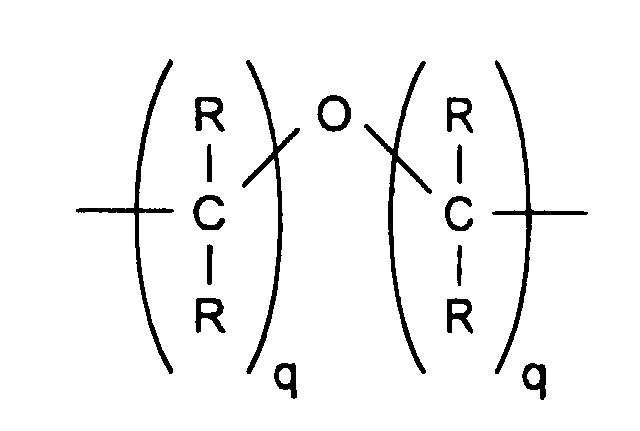
- Said bridging group may also be a member having the formulae or wherein R is as previously defined and each q is independently about 0 to about 30 and often 0 or 1.
- the often preferred epoxide employed in this invention is commercially available and is 3,4-epoxycyclohexyl 3,4-epoxycyclohexanecarboxylate.
- a reaction vessel When conducting the instant novel method, a reaction vessel may be charged with the macrocyclic polyester oligomers, polymerization catalysts and epoxide and/or episulfide and their order of addition is not material. Heat is supplied to melt the oligomers (about 135°C to about 250°C) for polymerization and stirring may be employed under an inert gas in order to enhance the polymerization of the oligomers to produce the desired polymer. Additionally, the epoxides and polymerization catalysts employed in this invention may first be dissolved in a solvent such as o-dichlorobenzene in order to enhance mixing.
- a solvent such as o-dichlorobenzene
- the amount of epoxides and/or thioepoxides employed in this invention are often about 0.01 to about 3.0 mole % and preferably about 0.02 to about 1.0 mole % and most preferably about 0.1 to about 0.25 mole % based on total moles of monomer units of oligomer.
- the amount of polymerization catalyst employed in this invention is often about 0.01 to about 5.0 mole % and preferably about 0.02 to about 2.0 mole % and most preferably about 0.2 to about 0.5 mole % based on total moles of monomer units of oligomer.
- the desired polyesters produced in this invention often include poly(ethylene terephthalate), poly(1,4-butylene terephthalate), poly(1,2-ethylene 2,6-naphthalenedicarboxylate) and copolyesters comprising the same.
- a 25 mL flask was charged with 5.0 g of macrocyclic copolyester oligomer (PET/PBT, 5% by wt. PET).
- the oligomer was heated at 100°C in an oil bath under vacuum for about 10 minutes and at 190°C for an additional 10 minutes. Vacuum was released, and the oligomer was completely molten.
- To the molten oligomer was added 46 ⁇ L of a 1.0 M solution of 3,4-epoxycyclohexyl 3,4-epoxycyclohexanecarboxylate in o-dichlorobenzene (0.20 mole % epoxy).
- the resulting mixture was stirred for about 5 minutes after which 69 ⁇ L of a 1 M solution of tetrakis-(2-ethylhexyl) titanate in 0-dichlorobenzene (0.30 mole % titanate) were added.
- the mixtrure with titanate was stirred and crystalline polymer formed within 10 seconds.
- the flask was removed from the oil bath and was broken to retrieve a sample of polymer.
- the polymer was dissolved in a solution of 15% hexafluoroisopropanol and 85% chloroform. GPC analysis of the resulting solution unexpectedly showed 96.4% polymerization.
- Example 2 was prepared in a manner similar to the one described in Example 1 except that 23 ⁇ L of a 1.0M epoxy solution (0.10% epoxy) was used and the co-polyester oligomer/epoxy mixture was stirred for 24 hours at 190°C after which the polymerization catalyst was added. Heating continued for an additional 40 minutes after which the catalyst addition and GPC analysis of the resulting polymer unexpectedly showed 97.0% polymerization of macrocyclic oligomer.
Landscapes
- Chemical & Material Sciences (AREA)
- Health & Medical Sciences (AREA)
- Chemical Kinetics & Catalysis (AREA)
- Medicinal Chemistry (AREA)
- Polymers & Plastics (AREA)
- Organic Chemistry (AREA)
- General Chemical & Material Sciences (AREA)
- Polyesters Or Polycarbonates (AREA)
Claims (10)
- Verfahren zum Polymerisieren makrozyklischer Polyester-Oligomere, welches den Kontaktierungsschritt bei Vorliegen von mindestens einer Verbindung umfasst, die aus der Gruppe ausgewählt wird, die aus Epoxiden und Episulfiden besteht:(a) Makrozyklischen Polyester-Oligomeren und(b) einem Titanat-Polymerisationskatalysator.
- Verfahren nach Anspruch 1, worin genannte makrozyklische Polyester-Oligomere Poly(alkylendicarboxylat)-Oligomere sind.
- Verfahren nach Anspruch 2, worin genannte Poly(alkylendicarboxylat)-Oligomere makrozyklisches Poly-(1,2-ethylenterephthalat), Poly-(1,4-butylenterephthalat), Poly-(1,2-ethylen-2,6-naphthalendicarboxylat) oder Copolyester-Oligomere sind, welche das Gleiche umfassen.
- Verfahren nach Anspruch 1, worin genannter Titanat-Polymerisationskatalysator Isopropyltitanat oder Tetrakis(2-ethylhexyl)titanat ist.
- Verfahren nach Anspruch 1, worin genannte Epoxide und Thioepoxide die folgende Formeloder
 ist und jedes R unabhängig ein Wasserstoff, ein Halogen, eine Hydroxy-Gruppe, eine Alkoxy-Gruppe, ein C1-10-Kohlenwasserstoff oder ein substituiertes oder nicht substituiertes aromatisches Radikal ist und Z Sauerstoff oder Schwefel ist und b ein brückenbildendes Radikal oder eine brückenbildende Gruppe ist.
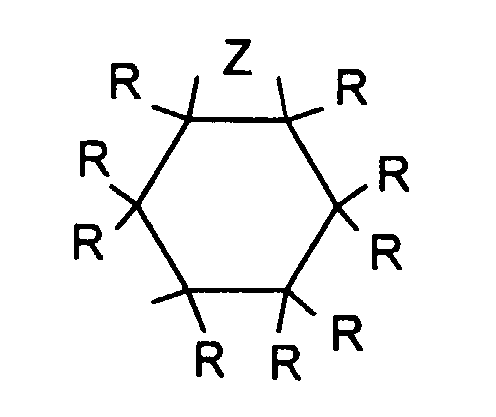
- Verfahren nach Anspruch 5, worin genanntes brückenbildendes Radikal ein substituiertes oder nicht substituiertes -C-, alizyklisches oder aromatisches Radikal ist und genannte brückenbildende Gruppe eine substituierte oder nicht substituierte polyzyklische, polyaromatische oder aliphatische Gruppe ist.
- Verfahren nach Anspruch 6, worin genannte brückenbildende Gruppe ein Mitglied ist, das die folgenden Formeln aufweist:oder
 und jedes q unabhängig 0 bis circa 30 ist.
- Verfahren nach Anspruch 5, worin genanntes Epoxid 3,4-Epoxycyclohexyl-3,4-epoxycyclohexancarboxylat ist.
- Verfahren nach Anspruch 1, worin genannte mindestens eine Verbindung, die aus der Gruppe ausgewählt wird, die aus Epoxiden und Episulfiden besteht, in einer Menge von circa 0,01 Mol-% bis circa 3,0 Mol-% bezogen auf die Gesamtmole der Monomereinheiten von makrozyklischen Polyester-Oligomeren vorliegt.
- Verfahren nach Anspruch 1, worin genanntes Verfahren darüber hinaus die Schritte des Erhitzens und Rührens umfasst.
Applications Claiming Priority (2)
| Application Number | Priority Date | Filing Date | Title |
|---|---|---|---|
| US497694 | 1995-06-19 | ||
| US08/497,694 US5498651A (en) | 1995-06-19 | 1995-06-19 | Method for polymerizing macrocyclic polyester oligomers |
Publications (3)
| Publication Number | Publication Date |
|---|---|
| EP0749999A2 EP0749999A2 (de) | 1996-12-27 |
| EP0749999A3 EP0749999A3 (de) | 1997-07-30 |
| EP0749999B1 true EP0749999B1 (de) | 2000-12-20 |
Family
ID=23977932
Family Applications (1)
| Application Number | Title | Priority Date | Filing Date |
|---|---|---|---|
| EP96302451A Expired - Lifetime EP0749999B1 (de) | 1995-06-19 | 1996-04-04 | Verfahren zum Polymerisieren von macrozyklischen Polyester-Oligomeren |
Country Status (5)
| Country | Link |
|---|---|
| US (1) | US5498651A (de) |
| EP (1) | EP0749999B1 (de) |
| JP (1) | JP3510952B2 (de) |
| DE (1) | DE69611269T2 (de) |
| ES (1) | ES2153937T3 (de) |
Families Citing this family (35)
| Publication number | Priority date | Publication date | Assignee | Title |
|---|---|---|---|---|
| DE19622445C1 (de) * | 1996-06-05 | 1997-07-24 | Siemens Ag | Näherungsschalter mit mechanischer Entkopplung von Anschlußstiften und Steckereinsatz |
| US6599991B1 (en) * | 1999-12-30 | 2003-07-29 | Eastman Kodak Company | In-situ blending of polyesters with poly(ether imide) |
| US6960626B2 (en) * | 2000-01-21 | 2005-11-01 | Cyclics Corporation | Intimate physical mixtures containing macrocyclic polyester oligomer and filler |
| US7256241B2 (en) * | 2000-01-21 | 2007-08-14 | Cyclics Corporation | Methods for polymerizing macrocyclic polyester oligomers using catalyst promoters |
| US6906147B2 (en) * | 2002-03-20 | 2005-06-14 | Cyclics Corporation | Catalytic systems |
| US6420047B2 (en) * | 2000-01-21 | 2002-07-16 | Cyclics Corporation | Macrocyclic polyester oligomers and processes for polymerizing the same |
| US6369157B1 (en) | 2000-01-21 | 2002-04-09 | Cyclics Corporation | Blend material including macrocyclic polyester oligomers and processes for polymerizing the same |
| US7151143B2 (en) * | 2000-01-21 | 2006-12-19 | Cyclics Corporation | Blends containing macrocyclic polyester oligomer and high molecular weight polymer |
| US20050282952A1 (en) * | 2000-01-21 | 2005-12-22 | Cyclics Corporation | Graphite-polyester composites made from macrocyclic polyester oligomers |
| US7767781B2 (en) * | 2000-09-01 | 2010-08-03 | Cyclics Corporation | Preparation of low-acid polyalkylene terephthalate and preparation of macrocyclic polyester oligomer therefrom |
| AU2001288663A1 (en) | 2000-09-01 | 2002-03-13 | Cyclics Corporation | Methods for converting linear polyesters to macrocyclic oligoester compositions and macrocyclic oligoesters |
| US7750109B2 (en) | 2000-09-01 | 2010-07-06 | Cyclics Corporation | Use of a residual oligomer recyclate in the production of macrocyclic polyester oligomer |
| US6436548B1 (en) | 2000-09-12 | 2002-08-20 | Cyclics Corporation | Species modification in macrocyclic polyester oligomers, and compositions prepared thereby |
| US6420048B1 (en) | 2001-06-05 | 2002-07-16 | Cyclics Corporation | High molecular weight copolyesters from macrocyclic oligoesters and cyclic esters |
| JP2002363301A (ja) * | 2001-06-11 | 2002-12-18 | Toyobo Co Ltd | ポリエステル成形品 |
| JP3952706B2 (ja) * | 2001-06-14 | 2007-08-01 | 富士ゼロックス株式会社 | 高分子化合物及びその製造方法、成形体及びその製造方法 |
| JP2005515965A (ja) * | 2001-06-27 | 2005-06-02 | サイクリクス コーポレイション | 大環状オリゴエステルの単離、処方、および成形 |
| US7304123B2 (en) * | 2001-06-27 | 2007-12-04 | Cyclics Corporation | Processes for shaping macrocyclic oligoesters |
| US6436549B1 (en) | 2001-07-16 | 2002-08-20 | Cyclics Corporation | Block copolymers from macrocyclic oligoesters and dihydroxyl-functionalized polymers |
| US6787632B2 (en) * | 2001-10-09 | 2004-09-07 | Cyclics Corporation | Organo-titanate catalysts for preparing pure macrocyclic oligoesters |
| US6831138B2 (en) | 2002-01-07 | 2004-12-14 | Cyclics Corporation | Polymer-containing organo-metal catalysts |
| US20040106713A1 (en) * | 2002-12-03 | 2004-06-03 | Avakian Roger W. | Use of additives in compounds containing macrocyclic poly(alkylene dicarboxylate) oligomers |
| US6962968B2 (en) * | 2002-12-20 | 2005-11-08 | Cyclics Corporation | Purification of macrocyclic oligoesters |
| BR0316915A (pt) * | 2002-12-20 | 2005-10-18 | Dow Global Technologies Inc | Composição de manocompósito, método para prepará-lo e seu uso |
| US20060148963A1 (en) * | 2002-12-23 | 2006-07-06 | Dion Robert P | Electrically conductive polymerized macrocyclic oligomer carbon nanofiber compositions |
| US20050095415A1 (en) * | 2003-10-30 | 2005-05-05 | Raghavendran Venkat K. | Glass mat thermoplastic composite |
| WO2005063882A1 (en) * | 2003-12-19 | 2005-07-14 | Cyclics Corporation | Processes for dispersing an impact modifier in a macrocyclic polyester oligomer |
| EP1580246A1 (de) * | 2004-03-24 | 2005-09-28 | The Dow Chemical Company | Reaktiver Schmelzkleber |
| WO2006009803A1 (en) * | 2004-06-18 | 2006-01-26 | Dow Global Technologies, Inc. | Catalyst-containing clay materials for composites in polymer of macrocyclic oligomers |
| US20050288420A1 (en) * | 2004-06-18 | 2005-12-29 | Paquette Michael S | Method for preparing reactive formulations of macrocyclic oligomers |
| WO2006028541A1 (en) * | 2004-06-18 | 2006-03-16 | Dow Global Technologies, Inc. | Polymerizable macrocyclic oligomer masterbatches containing dispersed fillers |
| WO2006047433A1 (en) * | 2004-10-25 | 2006-05-04 | Dow Global Technologies, Inc. | Polyurethanes made from hydroxy-methyl containing fatty acids or alkyl esters of such fatty acids |
| EP1679341A1 (de) * | 2005-01-11 | 2006-07-12 | Sika Technology AG | Schlagzähe Zusammensetzung |
| CN102803340B (zh) * | 2009-06-19 | 2014-10-22 | 普立万公司 | 清除氧的三元共聚物 |
| CN108350145B (zh) | 2015-09-04 | 2021-06-22 | 卡本有限公司 | 用于增材制造的氰酸酯双重固化树脂 |
Family Cites Families (3)
| Publication number | Priority date | Publication date | Assignee | Title |
|---|---|---|---|---|
| AT265646B (de) * | 1965-02-25 | 1968-10-25 | Metallgesellschaft Ag | Verfahren zur Erhöhung des Molekulargewichtes eines faser- und filmbildenden Polyesters |
| US5039783A (en) * | 1990-11-05 | 1991-08-13 | General Electric Company | Method for preparing and polymerizing macrocyclic poly(alkylene discarboxylate) oligomers |
| US5387666A (en) * | 1994-06-20 | 1995-02-07 | General Electric Company | Branched polyesters prepared from macrocyclic poly(Alkylene Dicarboxylate) oligomers |
-
1995
- 1995-06-19 US US08/497,694 patent/US5498651A/en not_active Expired - Lifetime
-
1996
- 1996-04-04 EP EP96302451A patent/EP0749999B1/de not_active Expired - Lifetime
- 1996-04-04 ES ES96302451T patent/ES2153937T3/es not_active Expired - Lifetime
- 1996-04-04 DE DE69611269T patent/DE69611269T2/de not_active Expired - Fee Related
- 1996-04-15 JP JP09162096A patent/JP3510952B2/ja not_active Expired - Fee Related
Also Published As
| Publication number | Publication date |
|---|---|
| EP0749999A2 (de) | 1996-12-27 |
| US5498651A (en) | 1996-03-12 |
| ES2153937T3 (es) | 2001-03-16 |
| DE69611269T2 (de) | 2001-04-26 |
| EP0749999A3 (de) | 1997-07-30 |
| JPH093178A (ja) | 1997-01-07 |
| DE69611269D1 (de) | 2001-01-25 |
| JP3510952B2 (ja) | 2004-03-29 |
Similar Documents
| Publication | Publication Date | Title |
|---|---|---|
| US5498651A (en) | Method for polymerizing macrocyclic polyester oligomers | |
| EP0699701B1 (de) | Verfahren zur Darstellung macrocyclischer Polyester-Oligomeren | |
| EP1406943B1 (de) | Block-co-polymere aus makrozyklischen oligoestern und dihydroxyfunktionalisierten polymeren | |
| US6617418B1 (en) | Hyperbranched dendritic polyether and process for manufacture thereof | |
| US5648454A (en) | Process for producing high ductile polyesters | |
| EP0725098B1 (de) | Verfahren zur Polymerisation von monocyclischen Polyalkylendicarboxylat-Oligomeren | |
| US6472500B2 (en) | Crystalline polyester resins and processes for their preparation | |
| US5710086A (en) | Titanate catalysts | |
| US6737481B1 (en) | Ester-modified dicarboxylate polymers | |
| US5446122A (en) | Process for preparing macrocyclic polyesters | |
| CN101208370A (zh) | 低酸聚对苯二甲酸亚烷基酯的制备方法及其大环聚酯低聚物的制备方法 | |
| EP0859021A2 (de) | Epoxidierte Zusammensetzungen | |
| KR100620665B1 (ko) | 폴리에스테르 수지의 제조방법 | |
| US7767781B2 (en) | Preparation of low-acid polyalkylene terephthalate and preparation of macrocyclic polyester oligomer therefrom | |
| EP3448908A1 (de) | Verfahren zur herstellung dynamischer vernetzter polymerzusammensetzungen mit verlängerern von funktionellen monomeren ketten in einem chargenverfahren | |
| CA1262992A (en) | Branched polyesters | |
| US4220753A (en) | Alkyl alkoxymethylbenzoates | |
| US3385835A (en) | Curable mixtures comprising cycloaliphatic polyepoxy compounds, curing agents, and metal accelerators | |
| EP1373361B1 (de) | Polyesterionomerzusammensetzung | |
| AU692035B2 (en) | Epoxy-functional ethers or polyethers | |
| US20040254337A1 (en) | Process for the polymerisation of epoxy resins | |
| Fischer | Polyesters from epoxides and anhydrides | |
| AU694601B2 (en) | Novel epoxy-functional polyethers | |
| JP4693784B2 (ja) | アミド結合を含むポリエステル共重合体の製造方法 | |
| USH1669H (en) | Copolyester-ether polymers |
Legal Events
| Date | Code | Title | Description |
|---|---|---|---|
| PUAI | Public reference made under article 153(3) epc to a published international application that has entered the european phase |
Free format text: ORIGINAL CODE: 0009012 |
|
| AK | Designated contracting states |
Kind code of ref document: A2 Designated state(s): DE ES FR GB IT NL |
|
| PUAL | Search report despatched |
Free format text: ORIGINAL CODE: 0009013 |
|
| AK | Designated contracting states |
Kind code of ref document: A3 Designated state(s): DE ES FR GB IT NL |
|
| 17P | Request for examination filed |
Effective date: 19980130 |
|
| 17Q | First examination report despatched |
Effective date: 19990122 |
|
| GRAG | Despatch of communication of intention to grant |
Free format text: ORIGINAL CODE: EPIDOS AGRA |
|
| RAP1 | Party data changed (applicant data changed or rights of an application transferred) |
Owner name: CYCLICS CORPORATION |
|
| GRAG | Despatch of communication of intention to grant |
Free format text: ORIGINAL CODE: EPIDOS AGRA |
|
| GRAG | Despatch of communication of intention to grant |
Free format text: ORIGINAL CODE: EPIDOS AGRA |
|
| GRAH | Despatch of communication of intention to grant a patent |
Free format text: ORIGINAL CODE: EPIDOS IGRA |
|
| GRAH | Despatch of communication of intention to grant a patent |
Free format text: ORIGINAL CODE: EPIDOS IGRA |
|
| GRAA | (expected) grant |
Free format text: ORIGINAL CODE: 0009210 |
|
| ITF | It: translation for a ep patent filed | ||
| AK | Designated contracting states |
Kind code of ref document: B1 Designated state(s): DE ES FR GB IT NL |
|
| REF | Corresponds to: |
Ref document number: 69611269 Country of ref document: DE Date of ref document: 20010125 |
|
| REG | Reference to a national code |
Ref country code: ES Ref legal event code: FG2A Ref document number: 2153937 Country of ref document: ES Kind code of ref document: T3 |
|
| ET | Fr: translation filed | ||
| PLBE | No opposition filed within time limit |
Free format text: ORIGINAL CODE: 0009261 |
|
| STAA | Information on the status of an ep patent application or granted ep patent |
Free format text: STATUS: NO OPPOSITION FILED WITHIN TIME LIMIT |
|
| 26N | No opposition filed | ||
| REG | Reference to a national code |
Ref country code: GB Ref legal event code: IF02 |
|
| PGFP | Annual fee paid to national office [announced via postgrant information from national office to epo] |
Ref country code: ES Payment date: 20080428 Year of fee payment: 13 Ref country code: DE Payment date: 20080602 Year of fee payment: 13 |
|
| PGFP | Annual fee paid to national office [announced via postgrant information from national office to epo] |
Ref country code: IT Payment date: 20080428 Year of fee payment: 13 |
|
| PGFP | Annual fee paid to national office [announced via postgrant information from national office to epo] |
Ref country code: NL Payment date: 20080424 Year of fee payment: 13 |
|
| PGFP | Annual fee paid to national office [announced via postgrant information from national office to epo] |
Ref country code: FR Payment date: 20080417 Year of fee payment: 13 |
|
| PGFP | Annual fee paid to national office [announced via postgrant information from national office to epo] |
Ref country code: GB Payment date: 20080429 Year of fee payment: 13 |
|
| GBPC | Gb: european patent ceased through non-payment of renewal fee |
Effective date: 20090404 |
|
| NLV4 | Nl: lapsed or anulled due to non-payment of the annual fee |
Effective date: 20091101 |
|
| REG | Reference to a national code |
Ref country code: FR Ref legal event code: ST Effective date: 20091231 |
|
| PG25 | Lapsed in a contracting state [announced via postgrant information from national office to epo] |
Ref country code: DE Free format text: LAPSE BECAUSE OF NON-PAYMENT OF DUE FEES Effective date: 20091103 |
|
| PG25 | Lapsed in a contracting state [announced via postgrant information from national office to epo] |
Ref country code: NL Free format text: LAPSE BECAUSE OF NON-PAYMENT OF DUE FEES Effective date: 20091101 |
|
| PG25 | Lapsed in a contracting state [announced via postgrant information from national office to epo] |
Ref country code: GB Free format text: LAPSE BECAUSE OF NON-PAYMENT OF DUE FEES Effective date: 20090404 Ref country code: FR Free format text: LAPSE BECAUSE OF NON-PAYMENT OF DUE FEES Effective date: 20091222 |
|
| REG | Reference to a national code |
Ref country code: ES Ref legal event code: FD2A Effective date: 20090406 |
|
| PG25 | Lapsed in a contracting state [announced via postgrant information from national office to epo] |
Ref country code: ES Free format text: LAPSE BECAUSE OF NON-PAYMENT OF DUE FEES Effective date: 20090406 |
|
| PG25 | Lapsed in a contracting state [announced via postgrant information from national office to epo] |
Ref country code: IT Free format text: LAPSE BECAUSE OF NON-PAYMENT OF DUE FEES Effective date: 20090404 |