EP0750406A2 - Satelliten- und erdgebundenes, zellulär integriertes Mobilübertragungssystem - Google Patents
Satelliten- und erdgebundenes, zellulär integriertes Mobilübertragungssystem Download PDFInfo
- Publication number
- EP0750406A2 EP0750406A2 EP96109874A EP96109874A EP0750406A2 EP 0750406 A2 EP0750406 A2 EP 0750406A2 EP 96109874 A EP96109874 A EP 96109874A EP 96109874 A EP96109874 A EP 96109874A EP 0750406 A2 EP0750406 A2 EP 0750406A2
- Authority
- EP
- European Patent Office
- Prior art keywords
- satellite
- communication system
- mobile communication
- terrestrial
- base station
- Prior art date
- Legal status (The legal status is an assumption and is not a legal conclusion. Google has not performed a legal analysis and makes no representation as to the accuracy of the status listed.)
- Withdrawn
Links
Images





Classifications
-
- H—ELECTRICITY
- H04—ELECTRIC COMMUNICATION TECHNIQUE
- H04B—TRANSMISSION
- H04B7/00—Radio transmission systems, i.e. using radiation field
- H04B7/14—Relay systems
- H04B7/15—Active relay systems
- H04B7/185—Space-based or airborne stations; Stations for satellite systems
- H04B7/1853—Satellite systems for providing telephony service to a mobile station, i.e. mobile satellite service
- H04B7/18563—Arrangements for interconnecting multiple systems
Definitions
- the present invention relates to a satellite and terrestrial cellular integrated mobile communication system which uses a mobile station capable of making accesses to both a satellite mobile communication system and a terrestrial mobile communication system.
- the terrestrial mobile communication system has been developed around major cities and roads, and in Japan, the service area currently covers more than 30 % in area and more than 70 % in population. However, it is quite ineconomical to try to cover the entire area of Japan by means of the terrestrial mobile communication system alone because of the required costs for base stations and transmission paths.
- the satellite mobile communication system is not suitable for handling concentrated large capacity traffic such as that of the urban area, but economically advantageous for handling low density traffic distributed over wide areas, so that its characteristics are complementary to those of the terrestrial mobile communication system.
- a conventionally proposed dual mode mobile terminal for use in the satellite and terrestrial cellular integrated mobile communication system has a configuration as shown in Fig. 1, where a dual mode mobile terminal 28 generally comprises a satellite mobile terminal section 29, a terrestrial mobile terminal section 30, and a common section 33.
- the satellite mobile terminal section 29 includes an antenna unit 13, an RF unit 17 connected with the antenna unit 13, a modem unit 18 connected with the RF unit 17, a signal assembling/disassembling unit 19 connected with the modem unit 18, and a control unit 35 connected with the signal assembling/disassembllng unit 19, while the terrestrial mobile terminal section 30 includes an antenna unit 34, an RF unit 36 connected with the antenna unit 34, a modem unit 37 connected with the RF unit 36, a signal assembling/disassembling unit 38 connected with the modem unit 37, and a control unit 39 connected with the signal assembling/disassembling unit 38, which are independently provided from the corresponding elements of the satellite mobile terminal section 29.
- the common section 33 includes a switch 40 for selectively connecting the signal assembling/disassembling unit 19 or 38 of the satellite mobile terminal section 29 or the terrestrial mobile terminal section 30, a selection control unit 42 for carrying out controls such as that of a system selection, a codec unit 41 connected with the switch 40, and a handset 43 connected with the codec unit 41.
- this dual mode mobile terminal 28 of Fig. 1 can be used for a communication with a terminal on a public network as follows.
- Fig. 2 shows a situation in which the dual mode mobile terminal 28 communicates with a terminal on a public network while being located outside of a terrestrial cellular service area.
- the system includes a satellite 1 covering a satellite service area 3, a satellite system base station 2, a cellular system base station 4 covering a terrestrial cellular service area 5, a mobile communication network 6 connected with the base stations 2 and 4, a public network 7 connected with the mobile communication network 6, and a terminal 8 provided on the public network 7.
- the dual mode mobile terminal 28 has the satellite mobile terminal section 29 and the terrestrial mobile terminal section 30 as in a configuration of Fig. 1.
- the dual mode mobile terminal 28 When the dual mode mobile terminal 28 is located outside of the terrestrial cellular service area 5 as shown in Fig. 2, the dual mode mobile terminal 28 communicates with the terminal 8 by means of the satellite mobile terminal section 29 which is connected with the terminal 8 through the satellite 1, the satellite system base station 2, the mobile communication network 6, and the public network 7, via a route 31 indicated in Fig. 2.
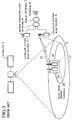
- Fig. 3 shows a situation in which the dual mode mobile terminal 28 communicates with the terminal 8 on the public network 7 while being located inside of the terrestrial cellular service area 5.
- the dual mode mobile terminal 28 communicates with the terminal 8 by means of the terrestrial mobile terminal section 30 which is connected with the terminal 8 through the cellular system base station 4, the mobile communication network 6 and the public network 7, via a route 32 indicated in Fig. 3.
- whether the dual mode mobile terminal 28 is located inside the terrestrial cellular service area 5 or not can be judged according to a reception level of the terrestrial mobile communication system.
- the introduction of the dual mode mobile terminal as described above which is capable of making accesses to both the satellite mobile communication system and the terrestrial mobile communication system is an effective measure for economically enlarging the service area from a point of view of a mobile communication system operator, but it is problematic from a point of view of a user as it requires a user to purchase a new mobile terminal and subscribe to a satellite service.
- the terrestrial mobile communication system is already well established in our society and a highly convenient portable terminal for the terrestrial mobile communication system is already in use, but it is expected that a certain technological breakthrough is needed in order to realize a similar portable terminal for the satellite mobile communication system to be introduced from now on.
- a satellite and terrestrial cellular integrated mobile communication system comprising: a satellite mobile communication system covering a satellite service area; a terrestrial mobile communication system covering a terrestrial cellular service area; and a dual mode mobile terminal formed by a child station capable of making communications through the terrestrial mobile communication system, and a parent station having a function for making communications through the satellite mobile communication system and a function of a base station for the terrestrial mobile communication system, wherein the child station makes communications directly through the terrestrial mobile communication system while being inside the terrestrial cellular service area and through the parent station using the satellite mobile communication system while being outside the terrestrial cellular service area and inside the satellite service area.
- a satellite and terrestrial cellular integrated mobile communication system comprising: a satellite mobile communication system covering a satellite service area; a terrestrial mobile communication system covering a terrestrial cellular service area; a satellite zone base station, located outside the terrestrial cellular service area and inside the satellite service area, having a function of a mobile terminal for the satellite mobile communication system and a function of a base station for the terrestrial mobile communication system; and a mobile terminal for making communications directly through the terrestrial mobile communication system while being inside the terrestrial cellular service area and through the satellite zone base station using the satellite mobile communication system while being outside the terrestrial cellular service area and inside the satellite service area.
- a dual mode mobile terminal device for a satellite and terrestrial cellular integrated mobile communication system formed by a satellite mobile communication system covering a satellite service area and a terrestrial mobile communication system covering a terrestrial cellular service area
- the device comprising: a child station capable of making communications through the terrestrial mobile communication system; and a parent station having a function for making communications through the satellite mobile communication system and a function of a base station for the terrestrial mobile communication system, wherein the child station makes communications directly through the terrestrial mobile communication system while being inside the terrestrial cellular service area and through the parent station using the satellite mobile communication system while being outside the terrestrial cellular service area and inside the satellite service area.
- a satellite zone base station device for a satellite and terrestrial cellular integrated mobile communication system formed by a satellite mobile communication system covering a satellite service area, a terrestrial mobile communication system covering a terrestrial cellular service area, and a mobile terminal
- the device comprising: a satellite mobile terminal section for realizing a function of a mobile terminal for the satellite mobile communication system; and a terrestrial base station section for realizing a function of a base station for the terrestrial mobile communication system; wherein the device is located outside the terrestrial cellular service area and inside the satellite service area, and the mobile terminal makes communications through the device using the satellite mobile communication system while being outside the terrestrial cellular service area and inside the satellite service area.
- Fig. 1 is a block diagram of a conventional dual mode mobile terminal for a satellite and terrestrial cellular integrated mobile communication system.
- Fig. 2 is a schematic diagram of a conventional satellite and terrestrial cellular integrated mobile communication system when a dual mode mobile terminal is located outside a terrestrial cellular service area.
- Fig. 3 is a schematic diagram of a conventional satellite and terrestrial cellular integrated mobile communication system when a dual mode mobile terminal is located inside a terrestrial cellular service area.
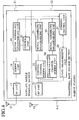
- Fig. 4 is a block diagram of a parent station of a dual mode mobile terminal in the first embodiment of a satellite and terrestrial cellular integrated mobile communication system according to the present invention.
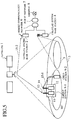
- Fig. 5 is a schematic diagram of the first embodiment of a satellite and terrestrial cellular integrated mobile communication system according to the present invention when a dual mode mobile terminal is located outside a terrestrial cellular service area.
- Fig. 6 is a schematic diagram of the first embodiment of a satellite and terrestrial cellular integrated mobile communication system when a dual mode mobile terminal is located inside a terrestrial cellular service area.
- Fig. 7 is a schematic diagram of the second embodiment of a satellite and terrestrial cellular integrated mobile communication system according to the present invention.
- Fig. 8 is a block diagram of a satellite zone base station in the second embodiment of a satellite and terrestrial cellular integrated mobile communication system according to the present invention.
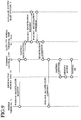
- Fig. 9 is a sequence chart for a position registration operation in the second embodiment of a satellite and terrestrial cellular integrated mobile communication system according to the present invention.
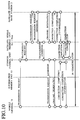
- Fig. 10 is a sequence chart for a transmission operation in the second embodiment of a satellite and terrestrial cellular integrated mobile communication system according to the present invention.
- Fig. 11 is a sequence chart for a reception operation in the second embodiment of a satellite and terrestrial cellular integrated mobile communication system according to the present invention.
- a mobile station in a form of a dual mode mobile terminal formed by a child station capable of making communications through the terrestrial mobile communication system, and a parent station having a function for making communications through the satellite mobile communication system and a function of a base station of the terrestrial mobile communication system.
- the parent station forms a micro-service area for the terrestrial mobile communication system around itself, using the satellite mobile communication system as an entrance for the terrestrial base station function. A detailed configuration of this parent station will be described below.
- the child station makes communications either directly through the terrestrial mobile communication system when it is located inside the cellular service area of the terrestrial mobile communication system, or by using the micro-service area provided by the parent station when it is located outside the cellular service area of the terrestrial mobile communication system.
- This child station can be provided by a conventionally used portable terminal for the usual terrestrial mobile communication system.
- the parent station of the dual mode mobile terminal to be used as a mobile station in this satellite and terrestrial cellular integrated mobile communication system of the first embodiment has a configuration as shown in Fig. 4, where a parent station 9-1 generally comprises a satellite mobile terminal section 11 and a terrestrial base station section 12.
- the satellite mobile terminal section 11 includes an antenna unit 13, an RF unit 17 connected with the antenna unit 13, a modem unit 18 connected with the RF unit 17, a signal assembling/disassembling unit 19 connected with the modem unit 18, and a control unit 20 connected with the signal assembling/disassembling unit 19.
- the terrestrial base station section 12 includes an antenna unit 14, an RF unit 21 connected with the antenna unit 14, a modem unit 22 and a signal assembling/disassembling unit 23 for control channel which are connected with the RF unit 21, a modem unit 24 and a signal assembling/disassembling unit 25 for a communication channel which are also connected with the RF unit 21, a level measurement unit 26 connected with the RF unit 21 for measuring reception levels of radio channels used by the terrestrial mobile communication system around this parent station 9-1, and a common control unit 27 connected with the level measurement unit 26 and the control unit 20 of the satellite mobile terminal section 11 for carrying out a control of the operation in the terrestrial base station section 12 as well as a timing control with respect to the satellite mobile terminal section 11.
- the signal assembling/disassembling unit 19 of the satellite mobile terminal section 11 is also connected with the control channel signal assembling/disassembling unit 23 of the terrestrial base station section 12, while the signal assembling/disassembling units 23 and 25 are also connected with the common control unit 27 in the terrestrial base station section 12.
- the terrestrial base station section 12 of the parent station 9-1 monitors the reception levels of radio channels used by the terrestrial mobile communication system around itself at a prescribed time interval by means of the level measurement unit 26, and autonomously determines a radio channel that can be used by this parent station 9-1 without causing any radio interference with other systems located around.
- Fig. 5 shows an overall configuration of the satellite and terrestrial cellular integrated mobile communication system of this first embodiment for a case of making communication with a terminal provided on a public network using the parent station 9-1 of Fig. 4.
- FIG. 5 shows a situation in which the dual mode mobile terminal communicates with a terminal on a public network while being located outside of a terrestrial cellular service area.
- the system includes a satellite 1 covering a satellite service area 3, a satellite system base station 2, a cellular system base station 4 covering a terrestrial cellular service area 5, a mobile communication network 6 connected with the base stations 2 and 4, a public network 7 connected with the mobile communication network 6, and a terminal 8 provided on the public network 7.
- the parent station 9-1 has the satellite mobile terminal section 11 and the terrestrial base station section 12 as in a configuration of Fig. 4.
- a child station 9-2 is provided within a micro-service area 10 provided by the terrestrial base station section 12 of the parent station 9-1.
- the terrestrial base station section 12 of the parent station 9-1 provides the micro-service area 10 around itself using the satellite mobile terminal section 11 as an entrance. Consequently, the child station 9-2 communicates with the terminal 8 by being connected with the terminal 8 through the satellite 1, the satellite system base station 2, the mobile communication network 6, and the public network 7, using the micro-service area 10 provided by the parent station 9-1 via routes 15-1 and 15-2 indicated in Fig. 5.
- Fig. 6 shows an overall configuration of the satellite and terrestrial cellular integrated mobile communication system of this first embodiment for a case of making communication with a terminal provided on a public network without using the parent station 9-1.
- This Fig. 6 shows a situation in which the dual mode mobile terminal communicates with the terminal 8 on a public network 7 while being located inside of the terrestrial cellular service area 5.
- the child station 9-2 communicates with the terminal 8 by making an access to the cellular system base station 4 directly, so as to be connected with the terminal 8 through the cellular system base station 4, the mobile communication network 6, and the public network 7, via a route 16 indicated in Fig. 6.
- the parent station 9-1 when the parent station 9-1 moves to inside of the terrestrial cellular service area 5 as in Fig. 6, the parent station 9-1 can recognize the entry into the terrestrial cellular service area 5 as it becomes possible to receive the control channel of the cellular system base station 4 located around.
- the parent station notifies the control channel of the cellular system base station 4 by means of a notification information, while changing a frequency of the currently transmitted control channel and a position information, so as to urge the channel scan to the child station 9-2.
- the child station 9-2 loses the control channel that has been hunted up until then, so that the child station 9-2 carries out the channel scan to hunt the control channel of the terrestrial mobile communication system according to the notification information received up until then, and carries out the position registration. At this point, the child station 9-2 becomes capable of making directly transmission and reception with respect to the terrestrial mobile communication system.
- the parent station 9-1 changes the position information in addition to the frequency of the control channel in order to detect an erroneous case in which the child station 9-2 hunts the control channel of the parent station 9-1 again by mistake. Namely, as the position information is changed, the position registration is carried out, so that it is possible to recognize such an erroneous case in which the child station 9-2 does not shift to the terrestrial mobile communication system. In such a case, the same operation is to be repeated again.
- parent station 9-1 can be connected with a terminal on a public network, similarly as in a case of the conventional dual mode mobile terminal described above, as follows.
- the parent station 9-1 when the parent station 9-1 is located outside of the terrestrial cellular service area 5 as shown in Fig. 5, the parent station 9-1 can be connected with the terminal 8 by means of the satellite mobile terminal section 11 which is connected with the terminal 8 through the satellite 1, the satellite system base station 2, the mobile communication network 6, and the public network 7, via a route 15-2 indicated in Fig. 5.
- a mobile station is provided in a form of a dual mode mobile terminal formed by a child station capable of making communications through the terrestrial mobile communication system, and a parent station having a function for making communications through the satellite mobile communication system and a function of a base station of the terrestrial mobile communication system, and the child station makes communications either directly through the terrestrial mobile communication system when it is located inside the cellular service area of the terrestrial mobile communication system, or by using the micro-service area provided by the parent station when it is located outside the cellular service area of the terrestrial mobile communication system.
- the system for mobile communications outside the terrestrial cellular service area of the terrestrial mobile communication system, includes a satellite zone base station having a function of a mobile terminal in the satellite mobile communication system and a function of a base station of the terrestrial mobile communication system.
- the system also includes a mobile terminal which is capable of making communications using either the terrestrial mobile communication system through the cellular system base station, or the satellite mobile communication system through the satellite zone base station and the satellite system base station.
- Fig. 7 shows an overall configuration of the satellite and terrestrial cellular integrated mobile communication system of this second embodiment.
- the system includes a satellite 1 covering a satellite service area 3, a satellite system base station 2, a cellular system base station 4 covering a terrestrial cellular service area 5, a mobile communication network 6 connected with the base stations 2 and 4, a public network 7 connected with the mobile communication network 6, and a terminal 8 provided on the public network 7.
- the system includes the satellite zone base station 90 located outside of the terrestrial cellular service area 5 and covering a satellite zone service area 70, and the mobile terminal 71 located within the satellite zone service area 70.
- This Fig. 7 shows a situation in which the mobile terminal 71 communicates with the terminal 8 on the public network 7 while being located outside of the terrestrial cellular service area 5, through the satellite zone base station 90, using the satellite mobile communication system as an entrance.
- the cellular system base station 4 can be provided only in an area populated by many users, so that it is difficult to expand the terrestrial cellular service area 5 to cover all the areas to which the service should be provided.
- it is possible to form an additional service area of the terrestrial mobile communication system by providing a satellite zone base station 90 which requires no terrestrial entrance communication channel.
- the satellite zone base station 90 in the satellite and terrestrial cellular integrated mobile communication system of the second embodiment has a configuration as shown in Fig. 8, where the satellite zone base station 90 generally comprises a satellite mobile terminal section 91 for using the satellite mobile communication system as an entrance, a terrestrial base station section 92 for making communications with the mobile terminal 71, and a common control section 93.
- the satellite mobile terminal section 91 includes a satellite system antenna 74, a satellite system RF unit 75 connected with the satellite system antenna 74, and a plurality of satellite mobile terminal units 76-1 to 76-m connected with the satellite system RF unit 75. Note here that, when each of the satellite mobile terminal units 76-1 to 76-m has its own satellite system antenna and satellite system RF unit, there is no need to provide the satellite system antenna 74 and the satellite system RF unit 75 separately as shown in Fig. 8.
- the terrestrial base station section 92 includes a terrestrial system antenna 77, a terrestrial system RF unit 78 connected with the terrestrial system antenna 77, a control channel transmission and reception unit 79, and a plurality of communication channel transmission and reception units 80-1 to 80-n connected with the terrestrial system RF unit 78.
- the common control section 93 includes an m ⁇ n switch 81 for switching and connecting communication paths of the satellite mobile terminal units 76-1 to 76-m and the communication channel transmission and reception units 80-1 to 80-n, an information memory unit 83 for storing information on the mobile terminal 71 which makes a position registration to this satellite zone base station 90, and a common control unit 82 connected with the satellite mobile terminal units 76-1 to 76-m, the control channel transmission and reception unit 79, the communication channel transmission and reception units 80-1 to 80-n, the m ⁇ n switch 81, and the information memory unit 83, for carrying out a sequence control of the terrestrial base station section 92, a management of utilization states of the satellite mobile terminal units 76-1 to 76-m, and a control of the m ⁇ n switch 81.
- the common control unit 82 of the satellite zone base station 90 selects one satellite mobile terminal unit 76-i among the satellite mobile terminal units 76-1 to 76-m which is currently not in use, and transmits the "position registration request" to the satellite system base station 2 via the satellite 1 by using this selected satellite mobile terminal unit 76-i.
- This "position registration request” is then transmitted from the satellite system base station 2 to the mobile communication network 6, and when the position registration is admitted by the mobile communication network 6, a “position registration admission” is returned via the satellite 1.
- the common control unit 82 of the satellite zone base station 90 returns the "position registration admission” to the mobile terminal 71 which sent the "position registration request”, and outputs a writing command to the information memory unit 83, so that the information memory unit 83 stores the mobile terminal information for this mobiel terminal 71.
- the common control unit 82 of the satellite zone base station 90 selects one satellite mobile terminal unit 76-i among the satellite mobile terminal units 76-1 to 76-m which is currently not in use, activates this selected satellite mobile terminal unit 76-i, and transmits the "transmission request" to the satellite system base station 2 via the satellite 1 by using this selected satellite mobile terminal unit 76-i, so as to start a transmission sequence in the satellite mobile communication system.
- the common control unit 82 of the satellite zone base station 90 returns the "transmission request admission” to the mobile terminal 71 which sent the "transmission request”, and then executes a transmission sequence in the terrestrial base station section 92.
- the common control unit 82 of the satellite zone base station 90 controls the m ⁇ n switch 81 to connect the communication paths of the satellite mobile terminal unit 76-i and the communication channel transmission and reception unit 80-i, so as to set the system in communication state.
- the reception information which is a necessary part of the "reception signal” is entered into the common control unit 82 of the satellite zone base station 90 from all the satellite mobile terminal units 76 which are currently not in use among the satellite mobile terminal units 76-1 to 76-m.
- the common control unit 82 then commands a search of a receiving mobile terminal to the information memory unit 83 according to the received reception information, and when a corresponding mobile terminal is found by the information memory unit 83, the "reception signal" is transmitted to this found mobile terminal 71 by using the control channel transmission and reception unit 79.
- the common control unit 82 continues the reception sequence with respect to this mobile terminal 71, while selecting one satellite mobile terminal unit 76-i among the satellite mobile terminal units 76-1 to 76-m which is currently not in use, and continuing the reception sequence in the satellite mobile communication system by using this selected satellite mobile terminal unit 76-i.
- the common control unit 82 of the satellite zone base station 90 controls the m ⁇ n switch 81 to connect the communication paths of the satellite mobile terminal unit 76-i and the communication channel transmission and reception unit 80-i, so as to set the system in communication state.
- the satellite zone base station 90 makes the position registration of the mobile terminal 71 to the satellite mobile communication system and the response to the reception from the satellite mobile communication system with respect to the mobile terminal 71, by using the satellite mobile terminal section 91, while also relays the reception from the satellite mobile communication system to the mobile terminal 71 by using the terrestrial base station section 92, and connects the transmission from the mobile terminal 71 within the satellite zone service area 70 via the satellite mobile communication system by using the satellite mobile terminal section 91.
- the satellite mobile communication system as an entrance for the base station of the terrestrial mobile communication system, and this entrance can be used efficiently in a manner of demand assign for each call, so that it is possible to suppress the cost for entrance low, while there is no need to newly develop a system for an entrance so that there is no need for a development cost.
- this second emodiment can make it practically plausible to introduce the base stations for the terrestrial mobile communication system into areas with relatively small traffic, and thereby realize a satellite and terrestrial cellular integrated mobile communication system which can provide an effective measure for economically enlarging the service area to a mobile communication system operator, without causing any inconveniences to users.
Landscapes
- Engineering & Computer Science (AREA)
- Physics & Mathematics (AREA)
- Astronomy & Astrophysics (AREA)
- Aviation & Aerospace Engineering (AREA)
- General Physics & Mathematics (AREA)
- Computer Networks & Wireless Communication (AREA)
- Signal Processing (AREA)
- Mobile Radio Communication Systems (AREA)
- Radio Relay Systems (AREA)
Applications Claiming Priority (6)
| Application Number | Priority Date | Filing Date | Title |
|---|---|---|---|
| JP15146895 | 1995-06-19 | ||
| JP151468/95 | 1995-06-19 | ||
| JP15146895 | 1995-06-19 | ||
| JP16498395 | 1995-06-30 | ||
| JP16498395 | 1995-06-30 | ||
| JP164983/95 | 1995-06-30 |
Publications (2)
| Publication Number | Publication Date |
|---|---|
| EP0750406A2 true EP0750406A2 (de) | 1996-12-27 |
| EP0750406A3 EP0750406A3 (de) | 2002-01-02 |
Family
ID=26480710
Family Applications (1)
| Application Number | Title | Priority Date | Filing Date |
|---|---|---|---|
| EP96109874A Withdrawn EP0750406A3 (de) | 1995-06-19 | 1996-06-19 | Satelliten- und erdgebundenes, zellulär integriertes Mobilübertragungssystem |
Country Status (1)
| Country | Link |
|---|---|
| EP (1) | EP0750406A3 (de) |
Cited By (17)
| Publication number | Priority date | Publication date | Assignee | Title |
|---|---|---|---|---|
| DE19748899A1 (de) * | 1997-11-05 | 1999-05-06 | Rohde & Schwarz | System zum Betreiben von Mobiltelefonen in Verkehrsflugzeugen |
| WO2001050728A1 (en) * | 1999-12-29 | 2001-07-12 | Volvo Teknisk Utveckling Ab | System and method for communication between a central station and remote objects |
| WO2002021726A3 (en) * | 2000-09-05 | 2002-08-01 | Sky Station International Inc | High altitude linked wireless local loop system and method |
| US6441222B1 (en) | 2000-05-22 | 2002-08-27 | Eastman Chemical Company | Vapor phase carbonylation process using iridium-gold co-catalysts |
| US6506933B1 (en) | 2000-05-22 | 2003-01-14 | Eastman Chemical Company | Vapor phase carbonylation process using gold catalysts |
| US6509293B1 (en) | 2000-05-22 | 2003-01-21 | Eastman Chemical Company | Gold based heterogeneous carbonylation catalysts |
| WO2003017581A1 (en) * | 2001-08-07 | 2003-02-27 | Hrl Laboratories, Llc | A method and apparatus for determining position and trajectory of gateways to optimize performance in hybrid non-terrestrial multi-hop mobile networks |
| EP0996241A4 (de) * | 1998-04-22 | 2004-05-19 | Mitsubishi Electric Corp | Mobile kommunikationsanordnung |
| US7031945B1 (en) | 2000-07-24 | 2006-04-18 | Donner Irah H | System and method for reallocating and/or upgrading and/or rewarding tickets, other event admittance means, goods and/or services |
| WO2006080795A1 (en) | 2005-01-26 | 2006-08-03 | Asia Pacific Satellite Industries Co., Ltd. | Apparatus and method for satellite communication installed in terrestrial portable phone and similar ground terminal |
| US7162454B1 (en) | 2000-07-24 | 2007-01-09 | Donner Irah H | System and method for reallocating and/or upgrading and/or selling tickets, other even admittance means, goods and/or services |
| US7216109B1 (en) | 2000-07-24 | 2007-05-08 | Donner Irah H | System and method for reallocating and/or upgrading and/or selling tickets, other event admittance means, goods and/or services |
| US7280975B1 (en) | 2000-07-24 | 2007-10-09 | Donner Irah H | System and method for determining and/or transmitting and/or establishing communication with a mobile device user for providing, for example, concessions, tournaments, competitions, matching, reallocating, upgrading, selling tickets, other event admittance means, goods and/or services |
| US7386517B1 (en) | 2000-07-24 | 2008-06-10 | Donner Irah H | System and method for determining and/or transmitting and/or establishing communication with a mobile device user for providing, for example, concessions, tournaments, competitions, matching, reallocating, upgrading, selling tickets, other event admittance means, goods and/or services |
| US7562051B1 (en) | 2000-07-24 | 2009-07-14 | Donner Irah H | System and method for reallocating and/or upgrading and/or selling tickets, other event admittance means, goods and/or services |
| US7562028B1 (en) | 2000-07-24 | 2009-07-14 | Donner Irah H | System and method for determining and/or transmitting and/or establishing communication with a mobile device user for providing, for example, concessions, tournaments, competitions, matching, reallocating, upgrading, selling tickets, and other event admittance mean |
| US10361802B1 (en) | 1999-02-01 | 2019-07-23 | Blanding Hovenweep, Llc | Adaptive pattern recognition based control system and method |
Families Citing this family (6)
| Publication number | Priority date | Publication date | Assignee | Title |
|---|---|---|---|---|
| US8352400B2 (en) | 1991-12-23 | 2013-01-08 | Hoffberg Steven M | Adaptive pattern recognition based controller apparatus and method and human-factored interface therefore |
| US8364136B2 (en) | 1999-02-01 | 2013-01-29 | Steven M Hoffberg | Mobile system, a method of operating mobile system and a non-transitory computer readable medium for a programmable control of a mobile system |
| US7966078B2 (en) | 1999-02-01 | 2011-06-21 | Steven Hoffberg | Network media appliance system and method |
| US6859652B2 (en) | 2000-08-02 | 2005-02-22 | Mobile Satellite Ventures, Lp | Integrated or autonomous system and method of satellite-terrestrial frequency reuse using signal attenuation and/or blockage, dynamic assignment of frequencies and/or hysteresis |
| EP1316233B1 (de) | 2000-08-02 | 2011-10-05 | ATC Technologies, LLC | Koordinierte Wiederverwendung von Frequenzen von einem irdischen System und einem Satellitensystem. |
| US7792488B2 (en) | 2000-12-04 | 2010-09-07 | Atc Technologies, Llc | Systems and methods for transmitting electromagnetic energy over a wireless channel having sufficiently weak measured signal strength |
Family Cites Families (2)
| Publication number | Priority date | Publication date | Assignee | Title |
|---|---|---|---|---|
| US5081703A (en) * | 1990-06-27 | 1992-01-14 | Pactel Corporation | Satellite mobile communication system for rural service areas |
| JP2901170B2 (ja) * | 1993-05-27 | 1999-06-07 | ケイディディ株式会社 | 衛星/陸上移動体通信システム統合方式 |
-
1996
- 1996-06-19 EP EP96109874A patent/EP0750406A3/de not_active Withdrawn
Cited By (32)
| Publication number | Priority date | Publication date | Assignee | Title |
|---|---|---|---|---|
| DE19748899B4 (de) * | 1997-11-05 | 2006-10-26 | Rohde & Schwarz Gmbh & Co. Kg | System zum Betreiben von Mobiltelefonen in Verkehrsflugzeugen |
| DE19748899A1 (de) * | 1997-11-05 | 1999-05-06 | Rohde & Schwarz | System zum Betreiben von Mobiltelefonen in Verkehrsflugzeugen |
| EP0996241A4 (de) * | 1998-04-22 | 2004-05-19 | Mitsubishi Electric Corp | Mobile kommunikationsanordnung |
| US10361802B1 (en) | 1999-02-01 | 2019-07-23 | Blanding Hovenweep, Llc | Adaptive pattern recognition based control system and method |
| WO2001050728A1 (en) * | 1999-12-29 | 2001-07-12 | Volvo Teknisk Utveckling Ab | System and method for communication between a central station and remote objects |
| US7809367B2 (en) | 1999-12-29 | 2010-10-05 | Volvo Teknisk Utveckling Ab | System and method for prioritized communication between a central station and remote objects |
| EP1975902A3 (de) * | 1999-12-29 | 2008-12-17 | Volvo Technology Corporation | System und Verfahren zur Kommunikation zwischen einer Zentralstation und entfernten Objekten |
| US6441222B1 (en) | 2000-05-22 | 2002-08-27 | Eastman Chemical Company | Vapor phase carbonylation process using iridium-gold co-catalysts |
| US6506933B1 (en) | 2000-05-22 | 2003-01-14 | Eastman Chemical Company | Vapor phase carbonylation process using gold catalysts |
| US6509293B1 (en) | 2000-05-22 | 2003-01-21 | Eastman Chemical Company | Gold based heterogeneous carbonylation catalysts |
| US7565328B1 (en) | 2000-07-24 | 2009-07-21 | Donner Irah H | System and method for determining and/or transmitting and/or establishing communication with a mobile device user for providing, for example, concessions, tournaments, competitions, matching, reallocating, upgrading, selling tickets, and other event admittance means, goods and/or services |
| US7529713B1 (en) | 2000-07-24 | 2009-05-05 | Irah Donner | System and method for interactive messaging and/or allocating and/or upgrading and/or rewarding tickets, other event admittance means, goods and/or services |
| US7162454B1 (en) | 2000-07-24 | 2007-01-09 | Donner Irah H | System and method for reallocating and/or upgrading and/or selling tickets, other even admittance means, goods and/or services |
| US7203665B2 (en) | 2000-07-24 | 2007-04-10 | Donner Irah H | System and method for interactive messaging and/or allocating and/or upgrading and/or rewarding tickets, other event admittance means, goods and/or services |
| US7216109B1 (en) | 2000-07-24 | 2007-05-08 | Donner Irah H | System and method for reallocating and/or upgrading and/or selling tickets, other event admittance means, goods and/or services |
| US7280975B1 (en) | 2000-07-24 | 2007-10-09 | Donner Irah H | System and method for determining and/or transmitting and/or establishing communication with a mobile device user for providing, for example, concessions, tournaments, competitions, matching, reallocating, upgrading, selling tickets, other event admittance means, goods and/or services |
| US7343350B1 (en) | 2000-07-24 | 2008-03-11 | Donner Irah H | System and method for interactive messaging and/or allocating and/or upgrading and/or rewarding tickets, other event admittance means, goods and/or services |
| US7379891B1 (en) | 2000-07-24 | 2008-05-27 | Donner Irah H | System and method for reallocating and/or upgrading and/or selling tickets, other event admittance means, goods and/or services |
| US7386517B1 (en) | 2000-07-24 | 2008-06-10 | Donner Irah H | System and method for determining and/or transmitting and/or establishing communication with a mobile device user for providing, for example, concessions, tournaments, competitions, matching, reallocating, upgrading, selling tickets, other event admittance means, goods and/or services |
| US7415424B1 (en) | 2000-07-24 | 2008-08-19 | Donner Irah H | System and method for reallocating and/or upgrading and/or selling tickets, other event admittance means, goods and/or services |
| US7031945B1 (en) | 2000-07-24 | 2006-04-18 | Donner Irah H | System and method for reallocating and/or upgrading and/or rewarding tickets, other event admittance means, goods and/or services |
| US7617159B1 (en) | 2000-07-24 | 2009-11-10 | Donner Irah H | System and method for interactive messaging and/or allocating and/or upgrading and/or rewarding tickets, other event admittance means, goods and/or services |
| US7562051B1 (en) | 2000-07-24 | 2009-07-14 | Donner Irah H | System and method for reallocating and/or upgrading and/or selling tickets, other event admittance means, goods and/or services |
| US7562028B1 (en) | 2000-07-24 | 2009-07-14 | Donner Irah H | System and method for determining and/or transmitting and/or establishing communication with a mobile device user for providing, for example, concessions, tournaments, competitions, matching, reallocating, upgrading, selling tickets, and other event admittance mean |
| US7577619B1 (en) | 2000-07-24 | 2009-08-18 | Donner Irah H | System method reallocating and/or upgrading and/or selling tickets, other event admittance means, goods and/or services |
| US7577575B1 (en) | 2000-07-24 | 2009-08-18 | Donner Irah H | System method reallocating and/or upgrading and/or selling tickets, other event admittance means, goods and/or services |
| US7577620B1 (en) | 2000-07-24 | 2009-08-18 | Donner Irah H | System and method for reallocating and/or upgrading and/or selling tickets, other event admittance means, goods and/or services |
| WO2002021726A3 (en) * | 2000-09-05 | 2002-08-01 | Sky Station International Inc | High altitude linked wireless local loop system and method |
| US6807158B2 (en) | 2001-08-07 | 2004-10-19 | Hrl Laboratories, Llc | Method and apparatus for determining position and trajectory of gateways to optimize performance in hybrid non-terrestrial-terrestrial multi-hop mobile networks |
| WO2003017581A1 (en) * | 2001-08-07 | 2003-02-27 | Hrl Laboratories, Llc | A method and apparatus for determining position and trajectory of gateways to optimize performance in hybrid non-terrestrial multi-hop mobile networks |
| WO2006080795A1 (en) | 2005-01-26 | 2006-08-03 | Asia Pacific Satellite Industries Co., Ltd. | Apparatus and method for satellite communication installed in terrestrial portable phone and similar ground terminal |
| EP2050198A4 (de) * | 2005-01-26 | 2011-04-27 | Asia pacific satellite ind co ltd | In mobiltelefon und ähnlichen bodenendgeräten installierte vorrichtung und verfahren für satellitenkommunikation |
Also Published As
| Publication number | Publication date |
|---|---|
| EP0750406A3 (de) | 2002-01-02 |
Similar Documents
| Publication | Publication Date | Title |
|---|---|---|
| EP0750406A2 (de) | Satelliten- und erdgebundenes, zellulär integriertes Mobilübertragungssystem | |
| US4903320A (en) | Apparatus for selecting control channel in mobile communication system | |
| US5497505A (en) | Call set-up and spectrum sharing in radio communication on systems with dynamic channel allocation | |
| US5243641A (en) | Extended range cordless telephone system | |
| EP0731621B1 (de) | Verfahren zum Berechnen der aktuellen Ortszeit in einem zellularen Mobilfunksystem | |
| US6181952B1 (en) | Unit and system for mobile communications | |
| EP0898847A2 (de) | Übertragunsbetriebssystem und entsprechendes verfahren | |
| JP3048137B2 (ja) | デュアルバンド携帯電話機及び移動電話システム切替方法 | |
| US20030040306A1 (en) | Wireless communication system | |
| GB2254523A (en) | Mixed-mode transceiver system | |
| GB2284964A (en) | Radiotelephone operable on a plurality of radio systems | |
| EP0188322A2 (de) | Totales Kommunikationssystem und Kommunikationsgerät für die Verwendung in einem solchen System | |
| EP0661837A1 (de) | Mobiles funkkommunikationssystem, feste und mobile einrichtungen dafür | |
| EP0734191B1 (de) | Mobiles kommunikationssystem, mobilstation, kommunikationsverfahren und anordnung zur mitteilung eines kanals | |
| JP2000278735A (ja) | 移動無線装置 | |
| EP1130799A1 (de) | Mobiles kommunikationssystem | |
| US5826197A (en) | Mobile communication system using base station frequency correction scheme | |
| AU633444B2 (en) | Extended range cordless telephone system | |
| US6675023B1 (en) | Stand-by system | |
| JPH11196454A (ja) | 地理情報サービスシステム及びその方法 | |
| JP3053383B2 (ja) | 移動体通信システム | |
| JP3053402B2 (ja) | 移動体通信システム | |
| JP2820087B2 (ja) | 通信モード切替装置を備えたデジタルコードレス電話方式 | |
| JP2890967B2 (ja) | ページング携帯無線機の位置登録方法 | |
| KR100444236B1 (ko) | 무선 팩시밀리에서 자국의 전화번호를 등록/변경하는 방법 |
Legal Events
| Date | Code | Title | Description |
|---|---|---|---|
| PUAI | Public reference made under article 153(3) epc to a published international application that has entered the european phase |
Free format text: ORIGINAL CODE: 0009012 |
|
| 17P | Request for examination filed |
Effective date: 19960619 |
|
| AK | Designated contracting states |
Kind code of ref document: A2 Designated state(s): DE GB SE |
|
| PUAL | Search report despatched |
Free format text: ORIGINAL CODE: 0009013 |
|
| AK | Designated contracting states |
Kind code of ref document: A3 Designated state(s): DE GB SE |
|
| RIC1 | Information provided on ipc code assigned before grant |
Free format text: 7H 04B 7/15 A, 7H 04B 7/26 B, 7H 04B 7/185 B, 7H 04Q 7/38 B |
|
| 17Q | First examination report despatched |
Effective date: 20021031 |
|
| STAA | Information on the status of an ep patent application or granted ep patent |
Free format text: STATUS: THE APPLICATION IS DEEMED TO BE WITHDRAWN |
|
| 18D | Application deemed to be withdrawn |
Effective date: 20030311 |