EP0752638A2 - Opérations de reprise dans un système de traitement d'information - Google Patents
Opérations de reprise dans un système de traitement d'information Download PDFInfo
- Publication number
- EP0752638A2 EP0752638A2 EP96304839A EP96304839A EP0752638A2 EP 0752638 A2 EP0752638 A2 EP 0752638A2 EP 96304839 A EP96304839 A EP 96304839A EP 96304839 A EP96304839 A EP 96304839A EP 0752638 A2 EP0752638 A2 EP 0752638A2
- Authority
- EP
- European Patent Office
- Prior art keywords
- power saving
- user
- time
- input
- predetermined time
- Prior art date
- Legal status (The legal status is an assumption and is not a legal conclusion. Google has not performed a legal analysis and makes no representation as to the accuracy of the status listed.)
- Withdrawn
Links
Images


Classifications
-
- G—PHYSICS
- G06—COMPUTING OR CALCULATING; COUNTING
- G06F—ELECTRIC DIGITAL DATA PROCESSING
- G06F21/00—Security arrangements for protecting computers, components thereof, programs or data against unauthorised activity
- G06F21/30—Authentication, i.e. establishing the identity or authorisation of security principals
- G06F21/31—User authentication
-
- G—PHYSICS
- G06—COMPUTING OR CALCULATING; COUNTING
- G06F—ELECTRIC DIGITAL DATA PROCESSING
- G06F1/00—Details not covered by groups G06F3/00 - G06F13/00 and G06F21/00
- G06F1/26—Power supply means, e.g. regulation thereof
- G06F1/32—Means for saving power
- G06F1/3203—Power management, i.e. event-based initiation of a power-saving mode
Definitions
- the present invention relates to an information processing system, such as a personal computer, in particular to a technique for resuming system operations when such a system is in power-saving mode.
- PCs personal computers
- systems such as desktop and notebook computers
- the notebook PCs are being manufactured compact and light, since portability and outdoor use are taken into consideration.
- Almost all the notebook PCs, including those sold by IBM Japan, Ltd. have "a structure with a cover” that comprises a body, which incorporates a system board and peripheral devices and has a keyboard on its top face, and a cover that has an LCD panel provided substantially at the center of the internal face.
- the cover is so hinged with the body at the rear edge as to be rotatable. A user opens the cover to use the PC and closes it when the PC is not in use or is to be carried.
- notebook PCs are battery operated.
- the system being operated by incorporated battery, can be used at sites where there are no power sources available.
- a battery that is used into a notebook PC is commonly formed as a "battery pack", which is a package that is comprised of a plurality of rechargeable battery cells, such as Ni-Cd, NiMH, or Li-Ion. Although such a battery pack is reusable by being recharged, the charge capacity is sufficient to last only for two to three hours for the system operation time.
- battery pack is a package that is comprised of a plurality of rechargeable battery cells, such as Ni-Cd, NiMH, or Li-Ion.
- Power saving in a PC can be realized not only by reducing the power consumption by the individual electric circuits, but also by halting, as needed, the power supply to electric circuits (or peripheral devices) that fall into low activity states.
- the latter method can especially be called "power management".
- the power management modes for the PC are modes, which halts the power supply to individual devices, such as the backlight of an LCD (Liquid Crystal Display device), and an HDD (Hard Disk Drive), that account for the greatest share of the total power consumption by a full system. These modes are also called an "LCD backlight-off” mode and an “HDD-off” mode respectively.
- a "Suspend” mode In which the power supply to all the electric circuits, except for a main memory, is halted.
- the power management is triggered by the elapse of a predetermined time (a time out value that is set for the suspend timer) since a last user input or a last system operation (e.g., a disk access of the HDD).
- the system may enter a power management mode in response to an instruction by a user, such as the depression of a predetermined function key (a suspend key).
- a power management mode such as the suspend mode
- the power supply is resumed and a suspended task is begun again at a point just before the transition to the power management mode.
- ThinkPad computer models 700/750/755 ThiinkPad is a trademark of IBM Corp.
- IBM Japan, Ltd. have a suspend function.
- the expression “Suspend” more specifically means a function for halting the power supply to all the electric circuits, except for a main memory in which are stored data (hardware context data, such as the I/O setup state and the status of a CPU, and the contents of a VRAM) that are required for the resumption of a task.
- the recovery operation from the suspend mode is performed substantially in an inverse sequence, by restarting the power supply to the individual electric circuits and restoring the saved data to its original locations.
- a suspended task can be begun at a point just before the mode transition.
- the recovery from the suspend mode is called "Resume”.
- a trigger for entering the suspend mode may be the selection of a suspend icon (by double clicking on it), the closing of the cover (the LCD panel) of a notebook PC, or some other operation, in addition to the depression of a suspend key (previously described).
- the system prompts a user to input a password.
- the password prompt function may be necessary for the purpose of protecting the security of the system. However, such password input operation may be sometimes troublesome for a user.
- the transition to the suspend mode is occurred upon the request by user (for example, depression of a suspend key), it can be assumed that the user agrees with the password input operation in recovering from the suspend mode.
- the password input operation may be irksome for the user. It is because the system enters the suspend mode while the user is simply relaxing and resting from a job (or when the user is thinking, has halted data input operation by being engaged in a sudden telephone conversation, or is talking to another person while sitting in front of the PC).
- a system enters the suspend mode against a user's will, he tends to request to resume from the suspend mode because he is irritated the mode transition.
- the user becomes even more exasperated.
- the useability of the PCs is deteriorated, in other words.
- the easiest method to resolve the problem of useability is to obviate the password input operation in resume from the suspend mode. It takes about 5 seconds to restore the data, that was stored in the main memory, to the original locations. So, if a password input operation is eliminated, the resuming operation can be completed in a moment and the task can be instantaneously recovered. It is, however, improbable that the requirement for the input of a password will be removed under the present conditions where the need for improved system security is constantly stressed. The irritation, that a user feels when the system suddenly enters the suspend mode and then prompted to input a password, may be eliminated by determining the time out value of the suspend timer to be relatively greater value.
- an aim of the present invention to provide an improved information processing system that has a power management function for reducing, as needed, the power supply to electric circuits of the system during a low activity state, or for halting the power supply to the electronic circuits thereof.
- an information processing system of the type which enters a power saving mode when a predetermined time has elapsed since a last user or system operation characterised in that the system comprises: means for measuring the elapsed time since the system entered said power saving mode; means responsive to a request to resume system operation to compare the time elapsed since the system entered said power-saving mode with a second predetermined time; and means responsive to a determination that said elapsed time is greater than said predetermined time to prompt the system user to input a password in order to continue resumption of system operation.
- an information processing system of the type which enters a power saving mode when a first predetermined time has elapsed since a last system operation is characterized in that the system doesn't prompt a password input when it resumes from the power saving mode within a second predetermined time following the transition to the power saving mode, or do prompts a password input after the second predetermined time following the transition to the power saving mode.
- an information processing system comprises: a processor; a memory; user input means; a display unit; first means for producing a periodic signal; second means for detecting and reporting that a predetermined time has elapsed since a last user input or a last processing operation; third means for starting a power saving operation responsive to the report from the second means; fourth means for measuring a time period of the power saving operation from the start of the power saving operation to the next user input; fifth means for prompting a user to input password in accordance with the time period of the power saving operation; and sixth means for halting the power management operation.
- an information processing system comprises: a processor; a memory; user input means; a display unit; first means for producing a periodic signal; second means for detecting and reporting that a first predetermined time has elapsed since a last user input or a last processing operation; third means for starting a power saving operation responsive to the report from the second means; fourth means for measuring a time period of the power saving operation from the start of the power saving operation to the next user input; fifth means for not prompting a user to input a password when the time period of the power saving operation is shorter than a second predetermined time, and for prompting a user to input a password when the time period of the power saving operation is longer than the second predetermined time; and sixth means for immediately halting the power saving operation when the fifth means does not prompt a password input, and for halting the power saving operation in accordance with the result of the password comparison.
- a method of controlling an information processing system of the type which enters a power saving mode when a predetermined time has elapsed since a last system operation including the step of requesting a password input from a user to resume system operation only on expiry of a predetermined time period following the transition to the power saving mode.
- a control method for an information processing system of the type which enters a power saving mode when a first predetermined time has elapsed since a last system operation, is characterized in that the method has a step of not prompting a password input when the system resumes from the power saving mode within a second predetermined time following the transition to the power saving mode, or prompting a password input after the second predetermined time following the transition to the power saving mode.
- a method of controlling an information processing system of the type which enters a power management mode when a first predetermined time has elapsed since a last system operation comprising: starting the power saving operation when said first predetermined time has elapsed since a last user input or a last processing operation; measuring a time period of the power saving operation from the start of the power saving operation to the next user input; comparing the time period of the power saving operation with a second predetermined time; prompting a user to input a password on a determination that said time period of the power saving operation is greater than said second predetermined time.
- a control method for an information processing system of the type which enters a power saving mode when a first predetermined time has elapsed since a last system operation, comprises: a first step of starting the power saving operation when the first predetermined time has elapsed since a last user input or a last processing operation; a second step of measuring a time period of the power saving operation from the start of the power saving operation to the next user input; a third step of comparing the time period of the power saving operation with a second predetermined time; a fourth step of not prompting a password input when the time period of the power saving operation is shorter than the second predetermined time, and of prompting a password input when the time period of the power saving operation is longer than the second predetermined time; and a fifth step of immediately halting the power saving operation when a password input is not prompted at the fourth step, and of halting the power management operation in accordance with the result of the password comparison at the fourth step.
- the second predetermined time is a reference period of time for determining whether or not a password input should be requested before the recovering the task, and is called a "security time" in the following description.
- the security time may be either a default value which is predetermined in advance at the time of manufacturing or shipping, or a user programmable value which can be altered afterwards.
- a password input is not required in resuming process if the reaction of a user, such as key input, occurs within a relatively short period of time. Even when the system has entered the suspend mode against a user's will, a task can begin instantaneously, as long as the user reacts in a hurry so that the user experiences minimum irritation. In addition, when the suspend mode continues only short time, the probability that a user is absent is very low, so that, even though the comparison of the password is omitted, there is very little risk that the security of a system will be jeopardized.
- a resume request such as key input
- a resume request occurs only after a sufficiently long period of time has elapsed since the system enters the suspend mode
- a user is requested to input a password.
- the suspend mode continues for a long time, the probability of a user being absent from the PC is relatively high, and thus, the a password input is requisite for keeping the security of the system.
- Even if a user is requested to input a password to resume a job he will experience very little irritation because he has done no key input operation for a long time and has been resting from his work.
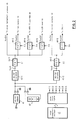
- Fig. 1 is a schematic diagram illustrating the hardware arrangement of a personal computer (PC) 100 according to one embodiment of the present invention.
- Fig. 2 is a detailed diagram illustrating the power supply system of the PC 100.
- Fig. 3 is a schematic diagram illustrating the hierarchical software system that can be employed by the PC 100 according to the embodiment of the present invention.
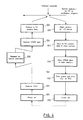
- Fig. 4 is a flowchart showing a routine for shifting a mode to a suspend mode and a routine (resume routine) for returning from the suspend mode and resuming a task.
- Fig. 5 is a detailed flowchart of the procedure at step S30, in the flowchart in Fig. 4, for requesting a resume password.
- Fig. 1 is a diagram illustrating the hardware arrangement of a personal computer (PC) 100, according to one embodiment of the present invention.
- a CPU Central Processing Unit
- OS operating system
- the CPU 11 communicates with the individual sections across a common signal transfer path (also called a "bus") 12 that consists of data signal lines, address signal lines, and control signal lines.
- the CPU 11 may be an x86 processor (e.g., a "P54C-75 (Pentium)") manufactured by Intel Corp.
- the bus 12 may be an ISA (Industry Standard Architecture) bus.
- a main memory 13 is a volatile memory (RAM) that is employed to load the programs (OS and application programs: see the division C) that are executed by the CPU 11, and that serves as a work area for the CPU 11.
- Dynamic RAM (DRAM) with which the construction of a relatively large memory capacity can be effected at a low price, can be used as the main memory 13.
- a memory controller 14 controls the access to the main memory 13.
- a ROM 15 is a nonvolatile memory for which written data are determined during the manufacturing process, and is employed to semi-permanently store a coded test program which is performed at the time of activation of the system 100 (POST), and programs for controlling hardware components of the system 100 (BIOS).
- a video controller 16 which is a peripheral controller for actually handling a drawing command from the CPU 11, first writes the processed drawing data into a screen buffer (VRAM) 17, and then reads the drawing data from the VRAM 17 and outputs the data to a liquid crystal display device (LCD) 18.
- An audio controller 19 is a peripheral controller for processing the input/output of an audio signal. An audio signal that is produced by the audio controller 19 is amplified by, for example, an amplifier 20 and the amplified signal is released through a loudspeaker 21.
- a hard disk drive (HDD) 22 and a floppy disk drive (FDD) 24 are so-called auxiliary storage devices (direct access storage devices: DASDs).
- a floppy disk controller (FDC) 23 is an FDD 24 driving controller.
- a DMA (Direct Memory Access) controller 25 is a peripheral controller for transferring data between the main memory 13 and peripheral devices (e.g., the FDD 24) without the involvement of the CPU 11.
- An interrupt controller 26 constantly monitors the bus 12. When interrupt controller 26 detects the occurrence of an interrupt, it reports this to the CPU 11 (more specifically, to a BIOS that handles such an interrupt).
- An I/O controller 27 is a peripheral controller for controlling the data input/output, which is performed with an external device, such as a modem or a printer, via a serial port or a parallel port.
- a keyboard/mouse controller (KMC) 29 converts the matrix input via a keyboard (KBD) 30 or the coordinates pointed by a mouse 31, into a format that matches the definition of an operating system, and transmits the converted value to the bus 12.
- An oscillator (OSC) 32 transmits a clock signal to a device, such as a power management processor 45 (which will be described later) or the CPU 11, that is synchronously operated or that has a timer function.
- a device such as a power management processor 45 (which will be described later) or the CPU 11, that is synchronously operated or that has a timer function.
- a real time clock (RTC) 33 is a device for generating a periodic signal that may be used for measuring the real time.
- the system 100 has a function for time-stamping the time at the RTC 33 in a predetermined area among the main memory 13. With this function, a period of time between the occurrence of two phenomena (e.g., an interval from a point at which the system 100 enters the suspend mode to a point at which it resumes from the suspend mode) can be calculated.
- a CMOS RAM 34 is a storage device with a CMOS structure and is employed to temporarily store system configuration data.
- the RTC 33 and the CMOS RAM 34 in this embodiment are mounted on a single chip, and are backed up by a coin battery 35, so that the RTC 33 can continue counting the real time and the data can be maintained in the CMOS RAM 34 even while the system 100 is powered off.
- An EEPROM (Electrically Erasable PROM) 36 is a nonvolatile semiconductor memory into which overwriting of data is possible, and is employed to store necessary data for the security of secret information concerning the system 100: a password; the serial number of an installed PC card; part of the system configuration data.
- the secret information can also be stored in the CMOS RAM 34. It should be noted that, since data (e.g., a password) stored in the CMOS RAM 34 is erased by removing the coil battery 35, the storing of data in the EEPROM 36 provides greater security.
- the system 100 is driven by the power supply from an external commercially available power source, which is obtained via an AC/DC adaptor 41, or from an incorporated battery pack 42.
- the output voltages of the power sources 41 and 42 are sent in parallel to a DC/DC converter 43.
- the DC/DC converter 43 drops these voltages to levels (e.g., 5 V and 3.3 V) that are appropriate for driving the system 100, and outputs a constant power voltage.
- the start and stop of the power supply id performed by the closing and the opening of an FET switch 44.
- the gate terminal of the FET switch 44 is electrically connected to a corresponding bit cell in a power control register 46.
- the power management processor 45 is a peripheral controller that is provided mainly to manage the power supply to the individual sections in the system 100, and is preferably one chip controller IC "330/H8" that is manufactured by Hitachi Ltd.
- This IC includes a 16-bit CPU, a RAM, a ROM, a timer, eight analog input pins and 16 digital input/output pins, and its functions are programmable.
- the power management processor 45 in this embodiment communicates with the individual sections via the bus 12, so that it can monitor the user input operation occurred at the keyboard 30 or the mouse 31.
- the processor 45 also can detect the operating conditions of the system 100 and the open/closed state of the cover (the LCD), and can rewrite the contents of the bit cells in the power control register 46 (see the division B).
- the power management processor 45 also has the functions of power management timers, such as an LCD-off timer and a suspend timer. Each time the determined time for each power management timer has elapsed following a last user access (or each time the low activity state of the system 100 continues for a determined time or longer), or when the cover is closed, an interrupt is generated across the bus 12.
- power management timers such as an LCD-off timer and a suspend timer.
- Fig. 2 is a detailed diagram showing a power supply system for the PC 100 according to the embodiment of the present invention.
- the DC/DC converter 43 which is shown as a single block 43 in Fig. 1 and which supplies power to components that require different drive voltages, is actually constituted by two blocks: a DC/DC converter 43-1 for supplying a voltage of 5 V and a DC/DC converter 43-2 for supplying a voltage of 3.3 V.
- the FET switch 44 in Fig. 1 that is employed to halt the power supply is actually constituted by six FET switches 44-1 through 44-6.
- a power feed line V cc5 that extends from the DC/DC converter 43-1 is branched via the FET switch 44-1 to provide four sub-power feed lines V cc5G , V cc5A , V cc5B and V cc5P .
- the sub-power feed line V cc5G is connected to the power management processor 45, etc.; the V cc5A is connected to the main memory 13; the V cc5B is connected to the DASD, such as the HDD 22 and the FDD 24; and the V cc5P is connected to the LCD panel 18.
- the FET switches 44-3, 44-4, and 44-5 are inserted between the sub-power feed lines V cc5A , V cc5B , and V cc5P and the supplied power destinations in order to halt the power supply.
- a power feed line V cc3 that extends from the DC/DC converter 43-2 is branched via the FET switch 44-2 to provide two sub-power feed lines V cc3A and V cc3B .
- the sub-power feed line V cc3A is connected to the memory controller 14 and the V cc3B is connected to the CPU 11, etc.
- the FET switch 44-6 is inserted between the sub-power feed line V cc3B and the supplied power destination in order to halt the power supply.
- the gate terminals of the six FET switches 44-1 through 44-6 are electrically connected to the corresponding bit cells in the power control register 46.
- the power management processor 45 can access the bit cells of the power control register 46 via the bus 12, and can set or reset these bit cells to control the power supply to the system 100 for each sub-power feed line.
- the personal computer that has the power supply system as is shown in Fig. 2 can perform power management operations, such as an LCD-off and a suspend operation.
- power management operations such as an LCD-off and a suspend operation.
- the FET switch 44-5 may be rendered inactive
- the FET switches other than the switches 44-1 and 44-3, may be rendered inactive.
- the technique that relates to the power management processor 45 and the power control register 46 is well known.
- a hardware block that is the equivalent of the power management processor 45 and the power control register 46 is described in, for example, the specifications for Japanese Patent Application No. Hei 04-54955 (Japanese Unexamined Patent Publication No. Hei 05-28978: our company reference No. JA9-92-004) and for Japanese Patent Application No. Hei 05-184186 (Japanese Unexamined Patent Publication No. Hei 07-84848: our company reference No. JA9-93-020).
- IBM ThinkPads 700/750/755 that are sold by IBM Japan, Ltd., include hardware components that are the equivalent of the components 45 and 46.
- Fig. 3 is a schematic diagram illustrating the hierarchial software arrangement that can be employed by the PC 100 according to the embodiment of the present invention.
- BIOS Basic Input/Output System
- the BIOS is a program group which includes a collection of basic commands for controlling the hardware components, such as the video controller 16, the keyboard 30, the HDD 22 and the FDD 24, in the system 100, and is coded and stored in the ROM 15.
- the BIOS also has a function for the handling of interrupts generated on the bus 12.
- An operating system is basic software for the total management of the hardware and the software of the system 100, and provides a hardware resource management functions, such as file management, memory management, task management and data input/output management, and a user interface (a system command and a system call) for handling a screen display and the manipulation of a mouse.
- OS/2 a trademark of IBM Corp.
- Windows a trademark of Microsoft Corp.
- the operating system in this embodiment includes, as one module, a PM (power management) program for executing a power management operation (see the division D).
- APs application programs
- Word processing software, database software, software for calculation for tables, and communication software correspond to these application programs.
- the application programs are loaded as needed from the DASDs, such as the HDD 22 and the FDD 24, into the main memory 13 as desired by a user.
- Fig. 4 is a flowchart showing a routine (suspend routine) for entering a suspend mode and a routine (resume routine) for recovering from the suspend mode and restarting a task.
- the power management processor 45 monitors the user input at the keyboard 30 or by means of the mouse 31, the operating state of the system 100, and the open/close state of the cover (LCD).
- an internal suspend timer detects that a predetermined time T SUS has elapsed since a last user input or that the inactive state of the system 100 has continued more than the predetermined time T SUS
- the power management processor 45 generates an interrupt request on the bus 12 (see the division A).
- the power management processor 45 also generates an interrupt request on the bus 12.
- the interrupt controller 26 detects this interrupt request and reports it to the BIOS.
- the BIOS searches for the source that generated the interrupt request and determines that it originated at the power management processor 45. With the result as a trigger, the right to control the system 100 is transferred to the PM (power management) program, and the suspend routine is begun.
- a check is performed to determine whether or not there is any I/O device activity (step S10).
- the check for the presence of I/O activity is again performed after a certain period (e.g., 10 msec) has elapsed.
- Program control goes on standby until no I/O device activity is detected.
- the PM program saves hardware context data in the main memory 13 (step S12). Then, VRAM original data are saved in the main memory 13 (step S14).
- Specific examples of hardware context data are the register values of individual chips, such as the CPU 11, the interrupt controller 26, the DMA controller 25 and the video controller 16, and the count values for the timers.
- the hardware context data and the VRAM data are required in order for a task to be resumed at the same point at which it is halted.
- the PM program time-stamps real time (T 1 ) of the RTC 33, at a point at which the system 100 enters the suspend mode, into a predetermined area of the main memory 13 (step S16). It is convenient, when the following resume routine is performed, to write in a predetermined area of the main memory 13 a symbol (called a "suspend signature") indicating that the system 100 is powered off after the above described suspend routine is performed.
- the suspend signature consists, for example, of about 2 bytes of data.
- the PM program requests the power management processor 45 to halt the power supply across specific power feed lines (sub-power feed lines other than V cc5A ). Upon the receipt of this request, the power management processor 45 alters the contents of the bit cells in the power control register 46. In this manner, the power supply to all the electric circuits, except for the main memory 13, is halted, and the system 100 thereafter enters a suspend mode (step S18).
- the power management processor 45 is activated periodically during the suspend mode, and makes an examination to determine whether any user input (or a resume request) has been effected by means of the keyboard 30 or with the mouse 31.
- the power supply across the power feed lines that were inactive is restarted (step S20).
- the CPU 11 executes the POST program in the ROM 15 (step S22).
- a check is performed to determine whether the system 100 executes either a normal power-on operation (POR) or a resume operation. This determination is made by determining, for example, whether or not a suspend signature is set in a predetermined area of the main memory 13.
- POR normal power-on operation
- resume routine is begun.
- step 30 the procedure at step 30 is performed to prompt a user to input a password (a resume password).
- a resume password a password
- the actual request for a resume password greatly influences the useability and the security of the system 100 (as previously described).
- a detailed explanation for step S30 will be given in the division D-2. By reading the division D-2, it would be fully understood that the present invention realizes an optimal suspend/resume operation, while maintaining a balance between useability and security.
- the PM program restores the original VRAM data and the hardware context data, which had been saved in the main memory 13, to their original locations (steps S24 and S26).
- the system 100 when the stored data are completely restored, becomes almost the same state as the previous state at which the interrupt request was generated. Then the system 100 can restart the OS or a task for an application program at the point where it was halted.
- Fig. 5 is a detailed flowchart of the procedure at step S30 in Fig. 4 for requesting a resume password.
- time ⁇ T(T 2 - T 1 ), during which the system 100 was in the suspend mode is calculated and is compared with security time T sec (step S42).
- the security time T sec is a threshold value for determining whether or not the input of a password should be requested, and 10 minutes is an optimal time according to the empirical rule.
- the security time may be a default value or a user programmable value, and is stored in, for example, the CMOS RAM 34.
- a password input is actually requested to maintain the security of the system 100 (step S44). Since a user probably has been absent from the PC during the suspend mode, a resume password is a requisite for security maintenance. In that case a password input operation may not irritate a user, because he has stopped working and has rested for a long time. When the inputted password does not match the registered password, the password input may be prompted again. Further, when the password input process has been repeated and has failed a predetermined number of times (e.g., three times), further password input may not be permitted and recovery to the resume mode may be inhibited.
- a predetermined number of times e.g., three times
- step S44 When the suspend time ⁇ T is shorter than the security time, in order not to adversely affect useability, program control skips step S44, so that a password input is not prompted. Then the program control advances directly to step S24 for restoring of the data.
- the transition to the suspend mode occurs suddenly against a user's will, the user tends to react quickly and to request to immediately resume the task (i.e., ⁇ T is shortened).
- the procedure at step S44 is skipped, and as a result, the resume operation can be completed within a relatively short time (about 5 seconds). Further, since it is less probable that a user has been absent during the short suspend mode, the security of the system 100 is not jeopardized even if a request for a resume password is omitted.
- the present invention provides an optimal suspend/resume operation while maintaining a balance between useability and security.
- the present invention has been described in detail while referring to a specific embodiment. However, it should be obvious to one having ordinary skill in the art that various modifications or revisions of the embodiment are possible within the scope of the present invention.
- the present invention can be employed to perform power management operations, such as a suspend operation, for information processing systems that have hardware arrangements that differ from that in Figs. 1 and 2. That is, although the present invention has been disclosed by using an example, it should not be limited to that example.
- a power saving function also called a power management function
- a password (resume password) input is not required when the reaction of a user, such as key input, occurs within a relatively short period of time after entering the suspend mode. Since a task can be re-started instantaneously even when the system has entered the suspend mode against a user's will, the user experiences minimum irritation. In addition, when the suspend mode continues only short time, the probability that a user is absent is very low, so that, even though a password input is omitted, there is very little risk that the security of a system will be jeopardized.
- a resume request such as key input
- a power management mode such as the suspend mode
- a user is to be requested to input a password.
- the suspend mode or the standby state
- the probability of a user being absent is relatively high, and thus, a password input is requisite to the maintenance of the security of the system.
- the user will experience no irritation because he has performed no key input for a long time and has been resting from his work.
Landscapes
- Engineering & Computer Science (AREA)
- Theoretical Computer Science (AREA)
- Physics & Mathematics (AREA)
- General Engineering & Computer Science (AREA)
- General Physics & Mathematics (AREA)
- Computer Security & Cryptography (AREA)
- Computer Hardware Design (AREA)
- Software Systems (AREA)
- Power Sources (AREA)
Applications Claiming Priority (2)
| Application Number | Priority Date | Filing Date | Title |
|---|---|---|---|
| JP7169797A JP3045948B2 (ja) | 1995-07-05 | 1995-07-05 | 情報処理装置及びその制御方法 |
| JP169797/95 | 1995-07-05 |
Publications (2)
| Publication Number | Publication Date |
|---|---|
| EP0752638A2 true EP0752638A2 (fr) | 1997-01-08 |
| EP0752638A3 EP0752638A3 (fr) | 1998-03-04 |
Family
ID=15893073
Family Applications (1)
| Application Number | Title | Priority Date | Filing Date |
|---|---|---|---|
| EP96304839A Withdrawn EP0752638A3 (fr) | 1995-07-05 | 1996-07-01 | Opérations de reprise dans un système de traitement d'information |
Country Status (3)
| Country | Link |
|---|---|
| US (1) | US5875345A (fr) |
| EP (1) | EP0752638A3 (fr) |
| JP (1) | JP3045948B2 (fr) |
Cited By (4)
| Publication number | Priority date | Publication date | Assignee | Title |
|---|---|---|---|---|
| EP0905646A1 (fr) * | 1997-09-30 | 1999-03-31 | Compaq Computer Corporation | Dispositif pour l'identification automatique d'empreintes digitales et de pointage dans un système d'ordinateur |
| EP1302843A4 (fr) * | 2000-06-16 | 2004-04-21 | Clarion Co Ltd | Unite de lecture de disque |
| EP1580643A3 (fr) * | 2004-03-23 | 2006-10-11 | International Business Machines Corporation | Protection d'accès aux ordinateurs |
| US7870376B2 (en) | 2004-03-23 | 2011-01-11 | International Business Machines Corporation | System, method and program product for controlling access to computer system |
Families Citing this family (30)
| Publication number | Priority date | Publication date | Assignee | Title |
|---|---|---|---|---|
| US6285406B1 (en) * | 1997-03-28 | 2001-09-04 | Compaq Computer Corporation | Power management schemes for apparatus with converged functionalities |
| KR100521252B1 (ko) * | 1997-06-16 | 2006-01-12 | 삼성전자주식회사 | 화면출력상태 제어기능을 갖는 컴퓨터 시스템 및 그 제어방법 |
| KR19990079584A (ko) * | 1998-04-07 | 1999-11-05 | 윤종용 | 사용자 감지 장치를 갖는 저소비 전력용 컴퓨터 시스템 및 그의전원 공급 제어 방법 |
| JP4194172B2 (ja) * | 1998-05-18 | 2008-12-10 | キヤノン株式会社 | 画像表示装置及び機器間通信方法 |
| US6178517B1 (en) * | 1998-07-24 | 2001-01-23 | International Business Machines Corporation | High bandwidth DRAM with low operating power modes |
| US6360326B1 (en) * | 1998-09-09 | 2002-03-19 | Compaq Information Technologies Group, L.P. | Password delay |
| KR100342021B1 (ko) * | 1999-03-12 | 2002-06-27 | 윤종용 | 원격 조정되는 컴퓨터 시스템 및 그것의 작동 방법 |
| US6715086B1 (en) | 1999-06-30 | 2004-03-30 | International Business Machines Corporation | Data processing system and method having time-span support for input device driver |
| US7100203B1 (en) * | 2000-04-19 | 2006-08-29 | Glenayre Electronics, Inc. | Operating session reauthorization in a user-operated device |
| US7231531B2 (en) * | 2001-03-16 | 2007-06-12 | Dualcor Technologies, Inc. | Personal electronics device with a dual core processor |
| US20030074590A1 (en) * | 2001-10-12 | 2003-04-17 | Fogle Steven L. | Computer system with improved entry into powersave and lock modes and method of use therefor |
| US7348957B2 (en) * | 2003-02-14 | 2008-03-25 | Intel Corporation | Real-time dynamic design of liquid crystal display (LCD) panel power management through brightness control |
| US7424740B2 (en) * | 2003-05-05 | 2008-09-09 | Microsoft Corporation | Method and system for activating a computer system |
| GB2404305B (en) * | 2003-07-22 | 2005-07-06 | Research In Motion Ltd | Security for mobile communications device |
| US7353413B2 (en) * | 2003-08-18 | 2008-04-01 | Intel Corporation | Computer system power policy adjustment in response to an affirmative indication from a user |
| US7111182B2 (en) * | 2003-08-29 | 2006-09-19 | Texas Instruments Incorporated | Thread scheduling mechanisms for processor resource power management |
| US20050057485A1 (en) * | 2003-09-15 | 2005-03-17 | Diefenbaugh Paul S. | Image color transformation to compensate for register saturation |
| US20050057484A1 (en) * | 2003-09-15 | 2005-03-17 | Diefenbaugh Paul S. | Automatic image luminance control with backlight adjustment |
| JP4262637B2 (ja) | 2004-06-11 | 2009-05-13 | インターナショナル・ビジネス・マシーンズ・コーポレーション | 持ち運び可能で蓋体を開いて使用される電子機器、電子機器の制御方法、およびプログラム |
| US8358262B2 (en) | 2004-06-30 | 2013-01-22 | Intel Corporation | Method and apparatus to synchronize backlight intensity changes with image luminance changes |
| US7412596B2 (en) * | 2004-10-16 | 2008-08-12 | Lenovo (Singapore) Pte. Ltd. | Method for preventing system wake up from a sleep state if a boot log returned during the system wake up cannot be authenticated |
| JP4403222B2 (ja) * | 2004-11-11 | 2010-01-27 | レノボ シンガポール プライヴェート リミテッド | 電子機器、センサ、電子機器を制御するための方法、プログラム |
| JP4143082B2 (ja) * | 2005-08-23 | 2008-09-03 | 株式会社東芝 | 情報処理装置および認証制御方法 |
| JP2007220025A (ja) * | 2006-02-20 | 2007-08-30 | Ricoh Co Ltd | 画像処理装置、画像表示方法及びコンピュータプログラム |
| JP4563314B2 (ja) * | 2005-12-14 | 2010-10-13 | 富士通株式会社 | ストレージシステム制御装置、ストレージシステム制御プログラム、ストレージシステム制御方法 |
| KR20090044872A (ko) * | 2007-11-01 | 2009-05-07 | 엘지전자 주식회사 | 휴대용 컴퓨터 및 휴대용 컴퓨터의 절전모드 제어방법 |
| JP2010282285A (ja) * | 2009-06-02 | 2010-12-16 | Konica Minolta Holdings Inc | 情報処理装置、情報処理装置の制御方法、および情報処理装置の制御プログラム |
| US8464083B1 (en) | 2010-06-20 | 2013-06-11 | Google Inc. | Exiting low-power state without requiring user authentication |
| JP2012118891A (ja) * | 2010-12-03 | 2012-06-21 | Lenovo Singapore Pte Ltd | コンピュータの消費電力の低減方法およびコンピュータ |
| CN102411424A (zh) * | 2011-10-28 | 2012-04-11 | 北京天地融科技有限公司 | 一种电子设备的节电管理方法及装置 |
Family Cites Families (6)
| Publication number | Priority date | Publication date | Assignee | Title |
|---|---|---|---|---|
| US4907150A (en) * | 1986-01-17 | 1990-03-06 | International Business Machines Corporation | Apparatus and method for suspending and resuming software applications on a computer |
| JPH01279312A (ja) * | 1988-04-30 | 1989-11-09 | Toshiba Corp | コンピュータシステム |
| JP2728724B2 (ja) * | 1989-04-28 | 1998-03-18 | 株式会社東芝 | コンピュータシステムおよびそのシステム立ち上げ方法 |
| KR0155558B1 (ko) * | 1990-11-30 | 1998-11-16 | 구자홍 | 휴대용 데이타 터미널의 절전 방법 및 그 장치 |
| US5548763A (en) * | 1993-07-26 | 1996-08-20 | International Business Machines Corporation | Desk top computer system having multi-level power management |
| DE9409987U1 (de) * | 1994-06-21 | 1994-08-11 | Soe Oppermann & Elna Gmbh | Automatische Abschalteinrichtung für Computermonitore |
-
1995
- 1995-07-05 JP JP7169797A patent/JP3045948B2/ja not_active Expired - Lifetime
-
1996
- 1996-06-28 US US08/673,412 patent/US5875345A/en not_active Expired - Lifetime
- 1996-07-01 EP EP96304839A patent/EP0752638A3/fr not_active Withdrawn
Cited By (5)
| Publication number | Priority date | Publication date | Assignee | Title |
|---|---|---|---|---|
| EP0905646A1 (fr) * | 1997-09-30 | 1999-03-31 | Compaq Computer Corporation | Dispositif pour l'identification automatique d'empreintes digitales et de pointage dans un système d'ordinateur |
| EP1302843A4 (fr) * | 2000-06-16 | 2004-04-21 | Clarion Co Ltd | Unite de lecture de disque |
| US7345962B2 (en) | 2000-06-16 | 2008-03-18 | Clarion Co., Ltd. | Disk drive device |
| EP1580643A3 (fr) * | 2004-03-23 | 2006-10-11 | International Business Machines Corporation | Protection d'accès aux ordinateurs |
| US7870376B2 (en) | 2004-03-23 | 2011-01-11 | International Business Machines Corporation | System, method and program product for controlling access to computer system |
Also Published As
| Publication number | Publication date |
|---|---|
| US5875345A (en) | 1999-02-23 |
| JPH0934577A (ja) | 1997-02-07 |
| EP0752638A3 (fr) | 1998-03-04 |
| JP3045948B2 (ja) | 2000-05-29 |
Similar Documents
| Publication | Publication Date | Title |
|---|---|---|
| US5875345A (en) | Information processing system having dual power saving modes | |
| US5822597A (en) | Power management apparatus and method for an information processing system | |
| JP2769082B2 (ja) | ポータブル・コンピュータの電力配分管理システム | |
| EP0819999B1 (fr) | Temps d'hibernation dynamique d'un système d'ordinateur | |
| US5241680A (en) | Low-power, standby mode computer | |
| US6523125B1 (en) | System and method for providing a hibernation mode in an information handling system | |
| US5163153A (en) | Low-power, standby mode computer | |
| US5041964A (en) | Low-power, standby mode computer | |
| EP1306758B1 (fr) | Système d'ordinateur avec fonction de reprise et méthode associée | |
| KR100368079B1 (ko) | 컴퓨터 및 컴퓨터의 전원 제어 방법 | |
| EP0973086B1 (fr) | Démarrage d'un ordinateur à distance | |
| US20030159076A1 (en) | Keyboard controller providing power management for a portable computer system | |
| US7315955B2 (en) | Circuit for turning off charging function to a battery of a system based on information set by user during the system in power-off state | |
| JPH0458047B2 (fr) | ||
| US5978924A (en) | Computer system with an advanced power saving function and an operating method therefor | |
| JP3253881B2 (ja) | コンピュータシステムおよびそのシステムにおけるハイバネーション制御方法 | |
| US6408397B1 (en) | Using RTC wake-up to enable recovery from power failures | |
| US6272630B1 (en) | Method and device for reserving wake-up functions of computer system after power loss | |
| US20040103343A1 (en) | Method and related computer for processing suspend to ram during power failure | |
| JP5281625B2 (ja) | コンピュータのリセット方法およびコンピュータ | |
| US20040123057A1 (en) | Method for backing up data | |
| JPH0628267A (ja) | 情報処理装置 | |
| JPH11102238A (ja) | コンピュータシステムおよびそのシステムにおけるサスペンド制御方法 | |
| US20060221751A1 (en) | Memory power supply backup system | |
| JP3861616B2 (ja) | 携帯端末の電源管理装置 |
Legal Events
| Date | Code | Title | Description |
|---|---|---|---|
| PUAI | Public reference made under article 153(3) epc to a published international application that has entered the european phase |
Free format text: ORIGINAL CODE: 0009012 |
|
| AK | Designated contracting states |
Kind code of ref document: A2 Designated state(s): DE FR GB |
|
| 17P | Request for examination filed |
Effective date: 19970521 |
|
| PUAL | Search report despatched |
Free format text: ORIGINAL CODE: 0009013 |
|
| AK | Designated contracting states |
Kind code of ref document: A3 Designated state(s): DE FR GB |
|
| 17Q | First examination report despatched |
Effective date: 20021107 |
|
| STAA | Information on the status of an ep patent application or granted ep patent |
Free format text: STATUS: THE APPLICATION IS DEEMED TO BE WITHDRAWN |
|
| 18D | Application deemed to be withdrawn |
Effective date: 20030920 |