EP0753576A2 - Trehalose-Phosphorylase und deren Herstellung - Google Patents
Trehalose-Phosphorylase und deren Herstellung Download PDFInfo
- Publication number
- EP0753576A2 EP0753576A2 EP96111306A EP96111306A EP0753576A2 EP 0753576 A2 EP0753576 A2 EP 0753576A2 EP 96111306 A EP96111306 A EP 96111306A EP 96111306 A EP96111306 A EP 96111306A EP 0753576 A2 EP0753576 A2 EP 0753576A2
- Authority
- EP
- European Patent Office
- Prior art keywords
- trehalose
- glucose
- ifo
- phosphorylase
- trehalose phosphorylase
- Prior art date
- Legal status (The legal status is an assumption and is not a legal conclusion. Google has not performed a legal analysis and makes no representation as to the accuracy of the status listed.)
- Withdrawn
Links
Images


Classifications
-
- C—CHEMISTRY; METALLURGY
- C12—BIOCHEMISTRY; BEER; SPIRITS; WINE; VINEGAR; MICROBIOLOGY; ENZYMOLOGY; MUTATION OR GENETIC ENGINEERING
- C12N—MICROORGANISMS OR ENZYMES; COMPOSITIONS THEREOF; PROPAGATING, PRESERVING, OR MAINTAINING MICROORGANISMS; MUTATION OR GENETIC ENGINEERING; CULTURE MEDIA
- C12N9/00—Enzymes; Proenzymes; Compositions thereof; Processes for preparing, activating, inhibiting, separating or purifying enzymes
- C12N9/10—Transferases (2.)
- C12N9/1048—Glycosyltransferases (2.4)
- C12N9/1051—Hexosyltransferases (2.4.1)
-
- C—CHEMISTRY; METALLURGY
- C12—BIOCHEMISTRY; BEER; SPIRITS; WINE; VINEGAR; MICROBIOLOGY; ENZYMOLOGY; MUTATION OR GENETIC ENGINEERING
- C12P—FERMENTATION OR ENZYME-USING PROCESSES TO SYNTHESISE A DESIRED CHEMICAL COMPOUND OR COMPOSITION OR TO SEPARATE OPTICAL ISOMERS FROM A RACEMIC MIXTURE
- C12P19/00—Preparation of compounds containing saccharide radicals
- C12P19/12—Disaccharides
Definitions
- This invention relates to processes for preparation of trehalose phosphorylases and uses thereof. Particularly, this invention relates to novel thermally stable trehalose phosphorylases, and processes for preparation and uses thereof.
- a trehalose phosphorylase derived from Euglena gracilis has been reported as EC 2.4.1.64 in Enzyme Nomenclature 1992 (Academic Press). Also, an enzyme derived from Flammulina velutipes which produces trehalose from ⁇ -glucose 1-phosphate and glucose has been reported as a trehalose phosphorylase [FEMS Microbiology Letters, 55 , 147-150 (1988)].
- the trehalose phosphorylase disclosed as EC 2.4.1.64 in Enzyme Nomenclature 1992 (Academic Press) is a trehalose phosphorylase which produces trehalose from ⁇ -D-glucose 1-phosphate and D-glucose.
- the inventors have been investigating to find a novel thermally stable trehalose phosphorylase which produces trehalose from ⁇ -D-glucose 1-phosphate and D-glucose and found an enzyme which produces trehalose from ⁇ -D-glucose 1-phosphate and D-glucose and having quite different substrate specificity from that of above mentioned known enzymes.
- the inventors have been eagerly investigated to find a heretofore unknown new thermally stable trehalose phosphorylase producing microorganism which produces trehalose from ⁇ -D-glucose 1-phosphate and D-glucose and found that culture of microorganisms of Acremonium , Byssochlamys , Cercospora , Chaetomium , Glomerella , Humicola , Myceliophthora , Rhizomucor , Rhizopus , Rosellinia , Sclerotinia , Sporidiobolus , Sterigmatomyces , Thermoascus , Thielavia and Tyromyces genera produce trehalose phosphorylases, and found that the trehalose phosphorylases obtained from the above mentioned cultured microorganisms are thermally stable and accomplished the present invention.
- the trehalose phosphorylases of the present invention hereinbelow described can produce trehalose from ⁇ -D-glucose 1-phosphate and D-glucose.
- One object of the present invention is to provide processes for the preparation of trehalose phosphorylases by culture of microorganisms which have not been known the productivity of trehalose phosphorylase.
- the other object of the present invention is to provide two novel thermally stable trehalose phosphorylases which maintain the activity at higher temperatures than those of conventional microorganisms.
- One further object of the present invention is to provide processes for the production of trehalose or ⁇ -D-glucose 1-phosphate by the trehalose phosphorylases produced by trehalose phosphorylase producing microorganisms or novel thermally stable trehalose phosphorylases.
- the object of the present invention is to provide processes for the production of trehalose phosphorylases by culture of microorganisms which have not been known the productivity of trehalose phosphorylase.
- the object of the present invention is to provide processes for the production of trehalose phosphorylases by culture of microorganisms having trehalose phosphorylase productivity and belonging to Acremonium , Byssochlamys , Cercospora , Chaetomium , Glomerella , Humicola , Myceliophthora , Rhizomucor , Rhizopus , Rosellinia , Sclerotinia , Sporidiobolus , Sterigatomyces , Thermoascus , Thielavia and Tyromyces genera, and harvesting trehalose phosphorylases from cultured mixture.
- the other object of the present invention is to provide novel thermally stable trehalose phosphorylases which exert their activity at higher temperatures than those of known trehalose phosphorylases.
- the other further object of the present invention is to provide processes for the production of a trehalose phosphorylases by culture of microorganisms belonging to Rhizopus and Chaetomium genera and harvesting the novel trehalose phosphorylases from the cultured mixture.
- One further object of the present invention is to provide processes for the production of trehalose from ⁇ -D-glucose 1-phosphate and D-glucose by the trehalose phosphorylases produced by above mentioned trehalose phosphorylases producing microorganisms and/or novel thermally stable trehalose phosphorylases.
- Still another object of the present invention is to provide a process for the production of ⁇ -D-glucose 1-phosphate from trehalose with the novel trehalose phosphorylases produced by above mentioned trehalose phosphorylase producing microorganisms and/or novel thermally stable trehalose phosphorylases.
- Fig. 1 shows the optimal pH range of trehalose phosphorylase C of the present invention.
- Fig. 2 shows the optimal pH range of trehalose phosphorylase R of the present invention.
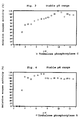
- Fig. 3 shows the stable pH range of trehalose phosphorylase C of the present invention.
- Fig. 4 shows the stable pH range of trehalose phosphorylase R of the present invention.
- Fig. 5 shows the optimal temperature ranges of trehalose phosphorylase C and trehalose phosphorylase R of the present invention.
- Fig. 6 shows the stable temperature ranges of trehalose phosphorylase C and trehalose phosphorylase R of the present invention.
- Improved strains prepared by integrating the trehalose phosphorylase cDNA derived from these trehalose phosphorylase producing microorganisms in an expression vector of the other microorganisms to make trehalose phosphorylase expressible in microorganisms of the other species can also be used.
- 'trehalose phosphorylase R' has following physicochemical properties.
- 'trehalose phosphorylase C' has the following physicochemical properties.
- Trehalose phosphorylases which can produce trehalose from ⁇ -D-glucose 1-phosphate and D-glucose, having the above mentioned physicochemical properties have not been known and first reported by the present invention.
- microorganisms belonging to Rhizopus and Chaetomium genera produce these novel trehalose phosphorylases. These enzymes have not been found in the above mentioned genera of microorganisms.
- Microorganisms which produce said novel trehalose phosphorylases belong to Rhizopus and Chaetomium genera and any strain which has productivity of trehalose phosphorylase including variants thereof can be used.
- any microorganism which can produce trehalose phosphorylases having above mentioned physicochemical properties can be used.
- novel trehalose phosphorylases of the present invention can also be prepared by integrating a gene encoding for the trehalose phosphorylases having above mentioned physicochemical properties or their modified trehalose phosphorylases in a suitable host, followed by culture of the resultant variant host.
- microorganisms which produce the novel trehalose phosphorylases having the above mentioned physicochemical properties and having the same or partially same immunochemical properties can also be used.
- the trehalose phosphorylase having the same or partially same immunochemical properties means a trehalose phosphorylase which give wholly or partially fused precipitin line with trehalose phosphorylase having physicochemical properties of the present invention by the known Ouchterlony double immunodiffusion method (Immunobiochemical Study Method, p.40, 1986, Pub. by Tokyo Kagaku Dozin Co., Ltd.).
- the trehalose phosphorylases produced by the above mentioned novel trehalose phosphorylase producing microorganisms and the processes for the production of trehalose or ⁇ -D-glucose 1-phosphate with the novel trehalose phosphorylases having above mentioned physicochemical properties and favorable thermal stability has not been known.
- Any synthetic or natural medium composed of carbon and nitrogen sources, inorganic salts, vitamins and the other nutrients can be used for the culture of microorganisms of the present invention.
- Conventional sources such as glucose, sucrose, lactose, fructose, glycerol, starch and wasted molasses can be used as carbon sources, and trehalose may be used also for inducible strains.
- Inorganic nitrogen compounds such as ammonium sulfate, ammonium nitrate, ammonium chloride, diammonium hydrogen-phosphate and urea, and organic nitrogen sources such as yeast extract, meat extract, peptone, casamino acid. corn steep liquor and soy bean meal can be used.
- inorganic salts such as potassium, sodium, magnesium, phosphate, and iron salts and a minute amount of metal salts can be used.
- Various surface active agents may be used as antifoamers.
- the culture is aerobically carried out at about 20-70°C, preferably at 25-60°C and at initial pH 4.0-9.0, preferably 5.0-8.0 by liquid shaking culture or aeration-agitation culture in a jar fermenter. Furthermore, stand culture or solid culture may be applied.
- Preparation of trehalose phosphorylases from enzyme sources is performed as follows.
- the enzymes generally exist within cells, thus cultured cells are preferably collected by centrifugation or filtration.
- the isolation and purification of trehalose phosphorylases from the cells is performed by collection of cells with centrifugation, washing of the collected cells with a buffer, suspension of washed cells in a suitable amount of buffer and followed by disruption of cells.
- the cell disruption is performed with conventional sonication, Waring BlendorTM (Dynamics Corp. of America, U.S.A.), rotation with glass beads in Dynomill Crusher, or decomposition of cell membrane with an enzyme such as lysozyme or an organic solvent such as toluene.
- After cell disruption, insoluble matters are separated and removed to give a crude enzyme solution.
- the crude enzyme solution can be used for the preparation of trehalose or ⁇ -D-glucose 1-phosphate as it is, but further isolation and purification may be performed.
- Methods for isolation and purification of the crude enzyme solution are performed with those of common isolation and purification procedures for protein, such as salting out with ammonium sulfate or solvent precipitation, adsorption on an ion exchange resin, separation through a dialysis membrane, condensation with an ultrafiltration membrane, adsorption on hydroxyapatite, isolation with a hydrophobic carrier, or affinity chromatography.
- the resultant purified enzyme or crude enzyme may be used as it is, but immobilized enzyme prepared by known methods such as binding with a carrier, crosslinking, and gel entrapment, micro-encapsulation may also be used.
- immobilized living microorganisms by entrapment using polyacrylamide, ⁇ -carrageenan, alginic acid, and photo-crosslinking resin prepolymer may be applied as biocatalysts.
- the activity of the enzymes is determined by the following procedure. That is, a buffer solution of 57 mM potassium phosphate containing 10.8 g of trehalose, 860 mg of glutathione, 17.2 mg of EDTA ⁇ 2Na and purified water for the rest to make 100 ml in total, pH 7.0, is prepared.
- trehalose from ⁇ -D-glucose 1-phosphate and D-glucose with the trehalose phosphorylase of the present invention 5 mM to 4 M, preferably 50 mM to 3 M of ⁇ -D-glucose 1-phosphate and 5 mM to 4 M, preferably 50 mM to 3 M of D-glucose are caused to react in the presence of the trehalose phosphorylase of the present invention at pH 2-10, preferably at pH 4-9, more preferably at pH 5-8 and at reaction temperature of 10-80°C, preferably 15-60°C, more preferably 20-55°C.
- trehalose phosphorylase 0.01 Unit or over, preferably 0.1-1,000, more preferably 1-100 Unit of the trehalose phosphorylase is used for one gram of substrate D-glucose.
- 5 mM to 4 M preferably 50 mM to 3 M of sucrose
- 5 mM to 4 M preferably 50 mM to 3M of D-glucose
- 5 mM to 4 M preferably 50 mM to 3M of D-glucose
- 5 mM to 4 M preferably 50 mM to 3M of D-glucose
- 5 mM to 4 M preferably 50 mM to 3M of D-glucose are caused to react in the presence of the trehalose phosphorylase, sucrose phosphorylase and an inorganic phosphoric acid and/or its salt, at pH 2-10, preferably pH 4-9, more preferably at pH 5-8 and at reaction temperature of 10-80°C, preferably 15-60°C, more preferably 20-55°C.
- the trehalose phosphorylase is used at 0.01 Unit or over, preferably 0.1-1,000 Unit, more preferably 1-100 Unit for one gram of substrate sucrose.
- Sucrose phosphorylase is used at 0.01 Unit or over, preferably 0.1-1,000 Unit, more preferably 1-100 Unit for one gram of substrate sucrose.
- trehalose from sucrose with the trehalose phosphorylases of the present invention 5 mM to 4 M, preferably 50 mM to 3 M of sucrose, is caused to react in the presence of trehalose phosphorylases of the present invention, sucrose phosphorylase, glucose isomerase and an inorganic phosphoric acid and/or its salt at pH 2-10, preferably pH 4-9, more preferably pH 5-8 and at reaction temperature of 10-80°C, preferably 15-60°C, more preferably 20-55°C.
- the trehalose phosphorylase is used at 0.01 Unit or over, preferably 0.1-1,000 Unit, more preferably 1-100 Unit for one gram of substrate sucrose.
- Sucrose phosphorylase is used at 0.01 Unit or over, preferably 0.1-1,000 Unit, more preferably 1-100 Unit for one gram of substrate sucrose.
- Glucose isomerase is used at 0.01 Unit or over, preferably 0.1-1,000 Unit, more preferably 1-100 Unit for one gram of substrate sucrose.
- Sucrose phosphorylase is a known enzyme and any enzyme which forms ⁇ -glucose 1-phosphate and fructose from sucrose and an inorganic phosphoric acid and/or a salt thereof can be used regardless of the origin.
- Commercial sucrose phosphorylase and cultured microorganisms which produce these enzymes can be used.
- sucrose phosphorylases produced by microorganisms such as Leuconostoc mesenteroides and Pseudomonas saccharophila can be used.
- Any glucose isomerase which forms glucose from fructose can be used regardless of the origin.
- Commercial glucose isomerase and cultured microorganisms which produce the enzyme can be used.
- Practically, glucose isomerase produced by microorganisms such as Streptomyces and Arthrobacter can be used.
- ⁇ -D-glucose 1-phosphate from trehalose with trehalose phosphorylases of the present invention 5 mM to 3 M, preferably 50 mM to 2 M of trehalose and 5 mM to 3 M, preferably 50 mM to 2 M of an inorganic phosphoric acid and a salt thereof are caused to react in the presence of the trehalose phosphorylases of the present invention at pH 2-10, preferably at pH 4-9, more preferably at pH 5-8 and at reaction temperature of 10-80°C, preferably 15-60°C, more preferably 20-55°C.
- trehalose phosphorylase 0.01 Unit or over, preferably 0.1-1,000 Unit, more preferably 1-100 Unit of the trehalose phosphorylase is used for one gram of substrate trehalose.
- Inorganic phosphoric acids and/or salts thereof used in the present invention include common inorganic phosphoric acids and salts thereof such as orthophosphoric acid, sodium phosphate, potassium phosphate, sodium dihydrogenphosphate and potassium dihydrogenphosphate, are preferably used as a phosphate buffer solution.
- Trehalose or inorganic phosphoric acids can be quantitatively determined using the enzymes of the present invention. As shown by the Reaction formula 1, ⁇ -D-glucose 1-phosphate and glucose are formed from trehalose and an inorganic phosphoric acid in the presence of trehalose phosphorylase prepared according to the present invention.
- Reaction formulae 2 and 3 a combination of phosphoglucomutase [EC 2.7.5.1, Enzyme Handbook, Asakura Pub. Co., Ltd. (1982), similar hereinafter] and D-glucose-6-phosphate dehydrogenase (EC 1.1.1.49) is used.
- ⁇ -D-Glucose 1-phosphate formed by the Reaction formula 1 is converted into D-glucose 6-phosphate by the reaction shown by Reaction formula 2.
- the resultant D-glucose 6-phosphate is converted into 6-phospho-D-gluconic acid by the reaction shown by Reaction formula 3.
- the reaction shown by the Reaction formula 3 requires a coenzyme and NAD + and NADP + are converted into NADH and NADPH, respectively. Measurement of formation of NADH or NADPH by the increased absorption rate at 340 nm determines the amount of trehalose or an inorganic phosphoric acid. Furthermore, the formed glucose in Reaction formula 1 is measured by a known method using a combination of mutarotase (EC 5.1.3.3), glucose oxidase (EC 1.1.3.4) and peroxidase (EC 1.11.1.7) to determine trehalose or the inorganic phosphoric acid.
- mutarotase EC 5.1.3.3
- glucose oxidase EC 1.1.3.4
- peroxidase EC 1.11.1.7
- the present invention processes for the preparation of trehalose phosphorylases by heretofore unknown microorganisms having productivity of trehalose phosphorylase.
- the present invention provides novel trehalose phosphorylases which can be used at higher temperatures than those of conventional trehalose phosphorylases.
- the present invention provides processes for the preparation of novel trehalose phosphorylases by culture of microorganisms belonging to Chaetomium or Rhizopus genus.
- the present invention provides a process for the production of ⁇ -D-glucose 1-phosphate and trehalose using these trehalose phosphorylases.
- the collected cells were washed with a 20 mM Tris buffer, pH 7.5, containing 1 mM EDTA, 1 mM dithiothreitol and 20% glycerol (similar hereinafter).
- the washed cells were suspended in 20 mM Tris buffer, disrupted with a homogenizer HG-30TM (Hitachi Ltd.) for 2 minutes and centrifuged to give 286 ml of a supernatant of crude enzyme.
- the crude enzyme solution was charged to a 50 ml of DEAE-ToyopearlTM 650C (TOSOH Corp.) ion exchange column equilibrated with 20 mM Tris buffer, washed with 160 ml of the same buffer, and eluted with 600 ml linear gradient of 20-500mM potassium chloride in 20 mM Tris buffer to give 121 ml of an active enzymatic solution in total. Ammonium sulfate added to the solution and dissolved to make 30% saturation.
- DEAE-ToyopearlTM 650C TOSOH Corp.
- the obtained solution was charged to a 25 ml of Butyl-ToyopearlTM (TOSOH Corp.) ion exchange column equilibrated with 20 mM Tris buffer containing 30% saturated ammonium sulfate.
- the column was washed with 70 ml of 20 mM Tris buffer containing 30% saturated ammonium sulfate, eluted with 400 ml linear gradient of 30-0% saturated ammonium sulfate in 20 mM Tris buffer, and collected into 10 ml each fractions.
- the enzymic activity was found in fraction Nos. 26-39 and 150 ml in total.
- the active eluate was concentrated with a hollow fiber ultrafiltration apparatus to give 3.6 ml of partially purified enzyme solution. Trehalose phosphorylase activity and total activity of the partially purified enzyme solution was 1.7 unit/ml and 6.1 unit, respectively.
- One strain selected from those listed in Table 1 was inoculated in YM medium (Defco Co., Ltd.) and cultured to give a seed culture.
- YM medium Defco Co., Ltd.
- 1,000 ml of purified water 6 g of an yeast extract and 6 g of a malt extract, 10 g of peptone, 10 g of glucose and 20 g of trehalose were dissolved and adjusted to pH 6.2 to give a medium.
- 100 ml each of the medium was poured, pasteurized, inoculated with the seed culture, and cultured according to the culture temperature and period shown in Table 1.
- Cultured cells were harvested from the resultant cultured mixture and washed with 20 mM Tris buffer containing 1 mM EDTA, 1 mM dithiothreitol and 20% glycerol at pH 7.5 (similar hereinafter). The washed cells were suspended in 20 mM Tris buffer, disrupted with a homogenizer HG-30TM (Hitachi Ltd.) for 2 minutes and centrifuged to give a crude enzyme solution. The trehalose phosphorylase activity and total activity of strains are shown in Table 1.
- the cultured mixture was centrifuged to separate supernatant and cultured cells and the collected cells were washed with 20 mM Tris buffer containing 1 mM EDTA, 1 mM dithiothreitol and 20% glycerol, at pH 7.5, similar hereinafter.
- the washed cells were suspended in 20 mM Tris buffer, disrupted with a high speed shaking disrupting apparatus (Michael Co., Ltd.) for 15 minutes and centrifuged to separate insoluble matters and to give 20 ml and 34 ml supernatant, respectively.
- the trehalose phosphorylase activity and total activity of the crude enzyme solutions were 0.46 unit/ml and 9.3 unit for S poridiobolus johnsonii IFO 6903 and 0.14 unit/ml and 4.6 unit for Sterigmatomyces halophilus IFO 1488, respectively.
- Tyromyces palustris IFO 30339 was seed cultured.
- 1,000 ml of purified water 7.5 g of an yeast extract and 2 g of malt extract, 0.5 g of potassium dihydrogenphosphate, 0.5 g of magnesium sulfate heptahydrate and 40 g of glucose were dissolved and adjusted to pH 5.5.
- 300 ml volume Erlenmeyer flasks 100 ml each of the medium was poured and pasteurized.
- the prepared seed culture was inoculated and cultured at 25°C for 7 days with shaking.
- a crude enzyme solution was prepared in a similar manner with that of Example 1.
- the trehalose phosphorylase activity and total activity of the crude enzyme solution was 0.16 unit/ml and 7.3 unit, respectively.
- Strains enumerated in Table 2 were cultured and crude enzyme solutions were prepared. The crude solutions were partially purified to give the partially purified enzyme solutions as shown below. In 1,000 ml of purified water, 6 g of an yeast extract, 6 g of a malt extract, 10 g of peptone, 5 g of glucose and 20 g of trehalose were dissolved, adjusted to pH 6.2 and pasteurized to give a seed culture medium. Strains enumerated in Table 2 were inoculated and cultured to give seed cultures.
- crude enzyme solutions were prepared in a similar manner with that in Example 1.
- the trehalose phosphorylase activity and total activity of the crude enzyme solutions are shown in Table 2.
- the crude enzyme solutions were partially purified with DEAE-ToyopearlTM (TOSOH Corp.) chromatography and Butyl-ToyopearlTM (TOSOH Corp.) chromatography, and concentrated with ultrafiltration using hollow fiber to give partially purified enzyme solutions.
- the trehalose phosphorylase activity and total activity of the crude enzyme solutions are shown in Table 2. All activities were determined at 50°C.
- Glomerella cingulata IFO 7478 was cultured at 28°C for 4 days with shaking to give a seed culture.
- 1,000 ml of purified water 20 g of an yeast extract, 0.5 g of sodium dihydrogen phosphate, 1 g of potassium chloride, 0.2 g of magnesium sulfate heptahydrate and 30 g of trehalose were dissolved, adjusted to pH 6.3 to give a medium.
- the seed culture was inoculated and cultured at 28°C for 4 days with shaking.
- a crude enzyme solution was prepared in a similar manner with that of Example 1 by collecting cultured cells by centrifugation, washing, cell disruption with a homogenizer HG-30TM (Hitachi Ltd.), and centrifugation.
- Trehalose phosphorylase activity and total activity of the crude enzyme solution derived from Glomerella cingulata IFO 7478 was 0.014 unit/ml and 1.5 unit, respectively.
- the cultured mixture was centrifuged with a high speed centrifuge to separate into supernatant and cultured cells.
- the collected cells were washed with 20 mM Tris buffer containing 1 mM EDTA, 1 mM dithiothreitol, and 20% glycerol, at pH 7.5 (similar hereinafter).
- the washed cells were suspended in 20 mM Tris buffer, disrupted with a homogenizer HG-30TM (Hitachi Ltd.) for 2 minutes and centrifuged to remove insoluble matters and to give 275 ml of a supernatant of crude enzyme solution.
- Trehalose phosphorylase activity and total activity of the crude enzyme solution were 0.05 unit/ml and 14 unit, respectively.
- the crude enzyme solution was charged to a 50 ml of DEAE-ToyopearlTM 650C (TOSOH Corp.) ion exchange column equilibrated with 20 mM Tris buffer, washed with 160 ml of the same buffer, and eluted with linear gradient of 0-500 mM potassium chloride in Tris buffer to-give 215 ml of an active enzyme solution. Ammonium sulfate added to the active solution to give 30% saturation. The obtained solution was charged to a 25 ml of Butyl-ToyopearlTM (TOSOH Corp.) ion exchange column equilibrated with 20 mM Tris buffer containing 30% saturated ammonium sulfate.
- the column was washed with Tris buffer containing 30% saturated ammonium sulfate, eluted with 400 ml linear gradient of 30-0% saturated ammonium sulfate in 20 mM Tris buffer, and collected into 9.7 ml each fractions.
- the enzymic activity was found in fraction Nos. 31-46 and 154 ml in total.
- the active eluate was concentrated with a hollow fiber ultrafiltration apparatus to give 3.6 ml of a partially purified enzyme solution. Trehalose phosphorylase activity and total activity of the partially purified enzyme solution was 3.1 unit/ml and 11 unit, respectively.
- the active fractions were purified by high performance liquid chromatography (HPLC) using TSK gelTM G3000SW (TOSOH Corp.) column, 7.5 mm ⁇ x 300 mm equilibrated with 20 mM phosphate buffer at a flow rate of 0.5 ml/minute. Detection with UV 280 nm revealed one active peak at elution time of 9.5 minutes. The molecular weight of the peak estimated from comparison of retention time with that of a standard protein sample showed molecular weight of about 380,000.
- the cultured mixture was centrifuged with a high speed centrifuge to separate into supernatant and cultured cells.
- the collected cells were washed with 20 mM Tris buffer containing 1 mM EDTA, 1 mM dithiothreitol and 20% glycerol, at pH 7.5 (similar hereinafter).
- the washed cells were suspended in 20 mM Tris buffer, disrupted with a homogenizer HG-30TM (Hitachi Ltd.) for 2 minutes and centrifuged to remove insoluble matters and to give 385 ml of supernatant of crude enzyme solution.
- the trehalose phosphorylase activity and total activity of the crude enzyme solution were 0.56 unit/ml and 217 unit, respectively. Determination of activities were performed in a similar manner to that of the preceding Example except for the reaction was carried out at a temperature of 50°C.
- the crude enzyme solution was charged to a 50 ml of DEAE-ToyopearlTM 650C (TOSOH Corp.) ion exchange column equilibrated with 20 mM Tris buffer, washed with 160 ml of the same buffer, and eluted with 600 ml linear gradient of 20-500 mM saturated sulfate of 20 mM Tris buffer to give 130 ml of an active enzyme fraction. Ammonium sulfate added to the active solution to give 30% saturation. The obtained solution was charged to a 25 ml of Butyl-ToyopearlTM (TOSOH Corp.) ion exchange column equilibrated with 20 mM Tris buffer containing 30% saturated ammonium sulfate.
- DEAE-ToyopearlTM 650C TOSOH Corp.
- the column was washed with Tris buffer containing 30% saturated ammonium sulfate, eluted with 400 ml linear gradient of 30-0% saturated ammonium sulfate in 20 mM Tris buffer to give 103 ml of an active enzyme solution.
- the active fraction was dialyzed and further purified with a SuperQ ToyopearlTM column to give partially purified enzyme solution having activity of 12 unit/ml and total activity of 113 unit.
- the enzyme solution was purified by high performance liquid chromatography (HPLC) using TSK gelTM G3000SW (TOSOH Corp.) column, 7.5 mm ⁇ x 300 mm, equilibrated with 20 mM phosphate buffer, at a flow rate of 0.5 ml/min. Detection with UV 280 nm revealed one active peak at elution time of 10.3 minutes.
- the molecular weight estimated from comparison of retention time with that of standard protein sample showed molecular weight of about 230,000.
- Substrate specificity, optimal pH, pH stability, optimal temperature, and thermal stability of the enzymes were determined using purified enzymes obtained by Examples 7 and 8.
- Quantitative determination of trehalose was carried out as follows.
- the retention time of trehalose under these HPLC conditions was 15.7 min.
- Trehalose gave ⁇ -D-glucose 1-phosphate and D-glucose.
- Disaccharide synthetic reaction from various monosaccharides and ⁇ -D-glucose 1-phosphate was performed with the enzymes of the present invention. No reaction was observed in L-glucose, D-galactose, D-mannose, D-xylose, D-fructose, D-sorbitol, D-mannitol or D-fucose except for D-glucose.
- Acetate buffer pH 3.0-5.5
- MES buffer pH 5.0-7.0
- HEPES buffer pH 7.0-8.0
- Tris-HCl buffer pH 7.5-9.0
- glycine-NaOH buffer pH 8.5-12.0
- Acetate buffer pH 3.0-5.5
- MES buffer pH 5.0-7.0
- HEPES buffer pH 7.0-8.0
- Tris-HCl buffer pH 7.5-9.0
- glycine-NaOH buffer pH 8.5-12.0
- Trehalose phosphorylase was added to these buffers and allowed to stand at 30°C for 1 hr. at these pHs, further caused to react at 45°C for 12 hrs., and the quantity of trehalose formed was determined by the HPLC method shown above to give the enzymic activity at various pHs.
- the obtained pH stability ranges of trehalose phosphorylase C and R are shown in Fig. 3 and 4, respectively.
- MES buffer pH 5.5
- the reaction was carried out at selected temperatures between 30 and 55°C for 5 hrs. and the enzyme was inactivated by heating. Then, the amount of trehalose formed was determined by the HPLC method shown above to give the enzymic activity.
- the obtained optimal temperature ranges of trehalose phosphorylase C and R are shown in Fig. 5.
- trehalose phosphorylase was added and allowed to stand at selected temperatures between 42.5 and 55°C for 30 min. and further at 45°C for 5 hrs. and the enzyme was inactivated by heating.
- the amount of the formed trehalose was determined by the HPLC method shown above to give the enzymic activity at temperatures tested.
- the obtained stable temperature ranges of trehalose phosphorylase C and R are shown in Fig. 6.
- ⁇ -D-glucose 1-phosphate from trehalose and an inorganic phosphoric acid was investigated using partially purified enzymes obtained by Examples 7 and 8.
- 100 mM phosphate buffer, pH 7.0 100 mM trehalose and 4 unit/ml of the partially purified enzyme were used for ⁇ -D-glucose 1-phosphate synthetic reaction at 45°C for 24 hrs.
- Partially purified trehalose phosphorylases derived from Chaetomium thermophilus IFO 9679 and Rhizopus azygosporus IFO 31989 formed ⁇ -D-glucose 1-phosphate at a rate of 60 mM and 54 mM, respectively.
- the determination of ⁇ -D-glucose 1-phosphate was carried out according to the below mentioned method.
- test sample solution Fifty ⁇ l of the test sample solution was mixed with 120 ⁇ l of 0.5 M phosphate buffer (pH 7.0), 150 ⁇ l of 1.0 M HEPES buffer (pH 7.0), 50 ⁇ l of 14.8 mM NADP + aqueous solution, 50 ⁇ l of 26 mM magnesium chloride aqueous solution, 50 ⁇ l of 1.34 mM ⁇ -D-glucose 1,6-diphosphate aqueous solution, 25 ⁇ l of 31 unit/ml aqueous solution of phosphoglucomutase (0.78 unit), 25 ⁇ l of 35 unit/ml aqueous solution of glucose-6-phosphate dehydrogenase (0.88 unit) and 980 ⁇ l of purified water, and incubated at 30°C for 30 min., then the amount of NADPH formed was determined by absorption at 340 nm to give the amount of ⁇ -D-glucose 1-phosphate.
- Trehalose synthetic reaction was carried out using a partially purified trehalose phosphorylase derived from Chaetomium thermophilum IFO 9679 obtained by Example 7, and partially purified trehalose phosphorylases derived from Acremonium alabamense IFO 32241 and Thielavia arenaria IFO 31060 obtained by Example 5.
Landscapes
- Chemical & Material Sciences (AREA)
- Organic Chemistry (AREA)
- Life Sciences & Earth Sciences (AREA)
- Engineering & Computer Science (AREA)
- Health & Medical Sciences (AREA)
- Zoology (AREA)
- Wood Science & Technology (AREA)
- Genetics & Genomics (AREA)
- Bioinformatics & Cheminformatics (AREA)
- General Health & Medical Sciences (AREA)
- Biochemistry (AREA)
- General Engineering & Computer Science (AREA)
- Microbiology (AREA)
- Biotechnology (AREA)
- Chemical Kinetics & Catalysis (AREA)
- General Chemical & Material Sciences (AREA)
- Medicinal Chemistry (AREA)
- Molecular Biology (AREA)
- Biomedical Technology (AREA)
- Enzymes And Modification Thereof (AREA)
- Preparation Of Compounds By Using Micro-Organisms (AREA)
Applications Claiming Priority (2)
| Application Number | Priority Date | Filing Date | Title |
|---|---|---|---|
| JP201770/95 | 1995-07-14 | ||
| JP20177095A JP3635133B2 (ja) | 1995-07-14 | 1995-07-14 | トレハロースホスホリラーゼおよびその調製法 |
Publications (1)
| Publication Number | Publication Date |
|---|---|
| EP0753576A2 true EP0753576A2 (de) | 1997-01-15 |
Family
ID=16446653
Family Applications (1)
| Application Number | Title | Priority Date | Filing Date |
|---|---|---|---|
| EP96111306A Withdrawn EP0753576A2 (de) | 1995-07-14 | 1996-07-12 | Trehalose-Phosphorylase und deren Herstellung |
Country Status (2)
| Country | Link |
|---|---|
| EP (1) | EP0753576A2 (de) |
| JP (1) | JP3635133B2 (de) |
Cited By (3)
| Publication number | Priority date | Publication date | Assignee | Title |
|---|---|---|---|---|
| EP0841397B1 (de) * | 1996-11-08 | 2006-01-18 | Kabushiki Kaisha Hayashibara Seibutsu Kagaku Kenkyujo | Trehalose phosphorylase, deren Herstellung und Verwendung |
| CN110106157A (zh) * | 2019-04-17 | 2019-08-09 | 华南理工大学 | 一种经优化的能在黑曲霉中高效表达的高温海藻糖酶MS-Tre及其编码基因与应用 |
| CN117414465A (zh) * | 2023-11-03 | 2024-01-19 | 珠海市雅莎医疗器械有限公司 | 一种具有修复功效的医用海藻糖凝胶及其制备方法 |
Families Citing this family (3)
| Publication number | Priority date | Publication date | Assignee | Title |
|---|---|---|---|---|
| JPH10276785A (ja) * | 1997-03-31 | 1998-10-20 | Kureha Chem Ind Co Ltd | 組換え型トレハロースホスホリラーゼをコードする遺伝子、その遺伝子を含むベクター、その遺伝子で形質転換された形質転換体及びこの形質転換体を用いて組換え型トレハロースホスホリラーゼを製造する方法 |
| US11421207B2 (en) * | 2017-11-28 | 2022-08-23 | C-Lecta Gmbh | Method for producing trehalose employing a trehalose phosphorylase variant |
| CN114875093B (zh) * | 2022-05-20 | 2024-07-19 | 浙江海正药业股份有限公司 | 一种提高pf1022a发酵产量的方法 |
-
1995
- 1995-07-14 JP JP20177095A patent/JP3635133B2/ja not_active Expired - Fee Related
-
1996
- 1996-07-12 EP EP96111306A patent/EP0753576A2/de not_active Withdrawn
Cited By (4)
| Publication number | Priority date | Publication date | Assignee | Title |
|---|---|---|---|---|
| EP0841397B1 (de) * | 1996-11-08 | 2006-01-18 | Kabushiki Kaisha Hayashibara Seibutsu Kagaku Kenkyujo | Trehalose phosphorylase, deren Herstellung und Verwendung |
| CN110106157A (zh) * | 2019-04-17 | 2019-08-09 | 华南理工大学 | 一种经优化的能在黑曲霉中高效表达的高温海藻糖酶MS-Tre及其编码基因与应用 |
| CN117414465A (zh) * | 2023-11-03 | 2024-01-19 | 珠海市雅莎医疗器械有限公司 | 一种具有修复功效的医用海藻糖凝胶及其制备方法 |
| CN117414465B (zh) * | 2023-11-03 | 2024-04-19 | 珠海市雅莎医疗器械有限公司 | 一种具有修复功效的医用海藻糖凝胶及其制备方法 |
Also Published As
| Publication number | Publication date |
|---|---|
| JP3635133B2 (ja) | 2005-04-06 |
| JPH0928375A (ja) | 1997-02-04 |
Similar Documents
| Publication | Publication Date | Title |
|---|---|---|
| EP0707062B1 (de) | Maltose Phospharylase, Trehalose Phophorylase, Plesiomonasstamm, und Herstellung von Trehalose | |
| EP0012446B1 (de) | Saure Uricase, Verfahren zu ihrer Herstellung und ihre Verwendung zur Bestimmung von Harnsäure | |
| US4683198A (en) | Novel maltose dehydrogenase, process for its production, and analytical method using the same | |
| US4770997A (en) | Thermostable bilirubin oxidase and production process thereof | |
| US5565341A (en) | Process for producing trehalose | |
| US4778760A (en) | Thermostable α-amylase-producing, thermophilic anaerobic bacteria, thermostable α-amylase and process for producing the same | |
| US4748122A (en) | 2,5-diketo-D-gluconic acid reductase | |
| US5643775A (en) | Trehalose phosphorylase and preparation thereof | |
| US4877733A (en) | Glucose dehydrogenase and its production | |
| Allenza et al. | Conversion of mannose to fructose by immobilized mannose isomerase from Pseudomonas cepacia | |
| US4420562A (en) | Method for producing creatinase | |
| JP3635133B2 (ja) | トレハロースホスホリラーゼおよびその調製法 | |
| US4283496A (en) | Preparation and use of glucose isomerase | |
| Hasunuma et al. | Control of the production and partial characterization of repressible extracellular 5′-nucleotidase and alkaline phosphatase in Neurospora crassa | |
| US4061539A (en) | Preparation and use of glucose isomerase | |
| Ohta et al. | Purification and properties of neuraminidase isozymes in Arthrobacter ureafaciens mutant | |
| Markwell et al. | Pathway of galactitol catabolism in Klebsiella pneumoniae | |
| Kinoshita et al. | Purification and properties of aldose 1-epimerase from Aspergillus niger | |
| US4593001A (en) | High temperature isomerization process | |
| US4579822A (en) | Process for producing dihydroxyacetone kinase | |
| CN1518594B (zh) | 维生素b6磷酸盐磷酸酶 | |
| CA2094398A1 (en) | Isomerization enzyme | |
| US5426034A (en) | Process for the production and use of a stable 6-phosphogluconolactonase | |
| US4605619A (en) | Process for preparing fructose from starch | |
| INouE et al. | Purification and characterization of maltose phosphorylase from Bacillus sp. RK-1 |
Legal Events
| Date | Code | Title | Description |
|---|---|---|---|
| PUAI | Public reference made under article 153(3) epc to a published international application that has entered the european phase |
Free format text: ORIGINAL CODE: 0009012 |
|
| 17P | Request for examination filed |
Effective date: 19960712 |
|
| AK | Designated contracting states |
Kind code of ref document: A2 Designated state(s): BE DE FR GB NL |
|
| STAA | Information on the status of an ep patent application or granted ep patent |
Free format text: STATUS: THE APPLICATION HAS BEEN WITHDRAWN |
|
| 18W | Application withdrawn |
Withdrawal date: 19980727 |