EP0759670A2 - Méthode de transmission de messages entre réseaux de télécommunications - Google Patents
Méthode de transmission de messages entre réseaux de télécommunications Download PDFInfo
- Publication number
- EP0759670A2 EP0759670A2 EP96112783A EP96112783A EP0759670A2 EP 0759670 A2 EP0759670 A2 EP 0759670A2 EP 96112783 A EP96112783 A EP 96112783A EP 96112783 A EP96112783 A EP 96112783A EP 0759670 A2 EP0759670 A2 EP 0759670A2
- Authority
- EP
- European Patent Office
- Prior art keywords
- protocol
- geid
- identifier
- extension
- message
- Prior art date
- Legal status (The legal status is an assumption and is not a legal conclusion. Google has not performed a legal analysis and makes no representation as to the accuracy of the status listed.)
- Granted
Links
- 238000000034 method Methods 0.000 title claims description 15
- 230000005540 biological transmission Effects 0.000 claims abstract description 47
- 238000001514 detection method Methods 0.000 abstract 2
- 238000011156 evaluation Methods 0.000 description 4
- 238000011161 development Methods 0.000 description 3
- 230000018109 developmental process Effects 0.000 description 3
- 101001098529 Homo sapiens Proteinase-activated receptor 1 Proteins 0.000 description 2
- 101000713169 Homo sapiens Solute carrier family 52, riboflavin transporter, member 2 Proteins 0.000 description 2
- 102100036862 Solute carrier family 52, riboflavin transporter, member 2 Human genes 0.000 description 2
- 230000001413 cellular effect Effects 0.000 description 2
- 101000603877 Homo sapiens Nuclear receptor subfamily 1 group I member 2 Proteins 0.000 description 1
- 101001098560 Homo sapiens Proteinase-activated receptor 2 Proteins 0.000 description 1
- 101000713170 Homo sapiens Solute carrier family 52, riboflavin transporter, member 1 Proteins 0.000 description 1
- 101100082120 Oryza sativa subsp. japonica PAIR1 gene Proteins 0.000 description 1
- 101100082121 Oryza sativa subsp. japonica PAIR2 gene Proteins 0.000 description 1
- 102100036863 Solute carrier family 52, riboflavin transporter, member 1 Human genes 0.000 description 1
- 238000013461 design Methods 0.000 description 1
- 238000010586 diagram Methods 0.000 description 1
- 238000010295 mobile communication Methods 0.000 description 1
- 230000011664 signaling Effects 0.000 description 1
- 238000012360 testing method Methods 0.000 description 1
- 238000012795 verification Methods 0.000 description 1
Images

Classifications
-
- H—ELECTRICITY
- H04—ELECTRIC COMMUNICATION TECHNIQUE
- H04L—TRANSMISSION OF DIGITAL INFORMATION, e.g. TELEGRAPHIC COMMUNICATION
- H04L9/00—Cryptographic mechanisms or cryptographic arrangements for secret or secure communications; Network security protocols
- H04L9/40—Network security protocols
Definitions
- the invention relates to a method for the transmission of messages between telecommunication networks with open interfaces according to a standardized transmission protocol according to the preamble of claim 1.
- Telecommunication networks with open interfaces, between which messages are exchanged according to a usually standardized transmission protocol, are becoming increasingly widespread.
- protocol extensions that are to be used beyond network boundaries can cause conflicts between the requirements of different network operators.
- One way to avoid the conflicts that can lead to protocol errors or misinterpretation of the messages is to either ignore or reject the protocol extension when the messages are received.
- a distinction must also be made at the receiving end between an unknown protocol extension and a protocol error.
- At least one additional protocol identifier for identifying an individual protocol extension of this transmission protocol is transmitted in an extended part of the message.
- the protocol identifier together with the individual additional protocol identifier permits the unique identification of protocol extensions for a specific transmission protocol with very simple means. In the dialog for the exchange of messages between telecommunications networks, if the protocol identifier is accepted, individual protocol extensions can be reliably recognized in the same message by means of corresponding additional protocol identifiers, and their use can thus be mutually agreed.
- extension type of the protocol extension with the additional protocol identifier is transmitted in the extended part of the message.
- a recipient of the message checks the protocol identifier of the transmission protocol and the knowledge of the additional protocol identifier is evaluated.
- the extension type of the protocol extension is checked and if the result of the test is positive, the extension type of the protocol extension is rejected or ignored if the additional protocol identifier is not known.
- the additional protocol identifier contains an extension identifier for determining the type of extension and an operator identifier for identifying the network operator of a telecommunications network who initiated the protocol extension.
- the protocol identification identifies the basic transmission protocol of a cross-border mobile radio network and the operator identification of the network operators of the mobile radio network in the respective country.
- the additional protocol identifier is preferably a simple integer code that comprises several digits. As a result, several protocol extensions in the extended part of the message can be transferred and clearly differentiated with particularly little effort.
- FIG. 1 shows in a block diagram the structure of an extended message EXOP, which has a basic part BAP and an extended part EXP.
- the EXOP message is transmitted between telecommunications networks with open interfaces in accordance with a standardized transmission protocol, which consists, for example, of the basic transmission protocol for the transmission of voice and data in a cross-border digital cellular cellular network based on the GSM standard (Global System for Mobile Communication).
- the basic transmission protocol (Mobile Application Part, MAP) is identified by a protocol identifier OBID, which precedes the EXOP message.
- This protocol identifier OBID is sent before the EXOP message or together with the EXOP message, in order to be able to agree on a shared basic transmission protocol for each dialog between telecommunications networks.
- the protocol identifier OBID also defines its owner, for example a standardization body such as ETSI (European Telecommunication Standard Institute) for standardizing the transmission protocol for the GSM mobile radio network.
- ETSI European T
- the basic part (BAP) of the EXOP message has a message identifier OPID and message parameters PAR1, PAR2 ....
- the individual extensions within the message EXOP are expanded in the Part EXP clearly identified by appropriate additional protocol identifiers.
- By sending your own additional protocol identifiers in the respective message to identify individual extensions of the standardized transmission protocol mutual agreements between network operators to agree on a jointly understandable transmission protocol including the individual extensions are unnecessary.
- an additional protocol identifier GEID for identifying a first extension of the transmission protocol and an additional protocol identifier GEID 'for identifying a second extension of the transmission protocol are entered.
- Each additional protocol identifier GEID, GEID ' has an identifier that describes the owner of the individual protocol extension. In the present example, this identifier consists of an operator identifier OID or OID ', which identifies the network operator of the cross-border mobile radio network in the respective country as the author of the protocol extension.
- an extension identifier EID or EID ' is transmitted in the additional protocol identifier GEID or GEID', which defines the extension type of the respective protocol extension.
- the additional protocol identifier GEID, GEID ' can thus be understood as a universal identifier which is composed of a simple extension identifier EID, EID' and an individual operator identifier OID, OID '.
- the extension type EXTY or EXTY 'of the first or second protocol extension is also in the extended part EXP of the message EXOP together with the additional protocol identifier GEID or GEID 'transmitted.
- the extension identifier EID or EID' is uniquely assigned to an extension type EXTY or EXTY '.
- the additional protocol identifier GEID, GEID ' has a simple structure due to the use of an integer value consisting of several digits of a code, so that several individual protocol extensions of the standardized transmission protocol can be inserted into a single message and transmitted simultaneously.
- the simple structure is given, for example, by a binary code which is composed of three bit positions of a mobile country code (Mobile Country Code) and two bit positions of a mobile network code (Mobile Network Code).
- the operator identification OID or OID ' also consists of a code. It comprises, for example, two bit positions, which means that each individual network operator has additional identifiers in the network for assignment to service providers who want individual protocol extensions.
- the recipient of the EXOP message with one or more individual protocol extensions can make a decision on the basis of the additional protocol identifiers GEID, GEID ', which of the protocol extensions are known and can therefore be used by both the sender and the recipient of the message in addition to the basic protocol. Unknown extensions to the protocol can be rejected or rejected by the recipient of the EXOP message.
- the receiver first checks the OBID of the basic transmission protocol (MAP) before the actual message arrives. If the OBID protocol identifier is known, the message parameters PAIR1, PAIR2 ..., which contain parts of the basic transmission protocol, can be processed.
- MAP basic transmission protocol
- the recipient evaluates the incoming message EXOP for the presence of the expanded part EXP and compares the additional protocol identifiers GEID, GEID 'transmitted therein with protocol identifiers, which are known for this basic transmission protocol.
- the identifiers known for the standardized transmission protocol are entered in a list or table which is available for comparison. If the received additional protocol identifier GEID, GEID 'is known, the extension type EXTY, EXTY' of the protocol extension is also clearly recognized and accepted after checking. If the additional protocol identifier GEID, GEID 'is unknown, the extension type EXTY, EXTY' is rejected or optionally also ignored.
- This process is repeated by the recipient of the EXOP message until the entire content of the received EXOP message and all of the protocol extensions contained in the expanded part EXP of the EXOP message and identified by the additional protocol identifiers have been checked. The process ends prematurely if the check shows that an individual protocol extension has been rejected for the reasons mentioned above.
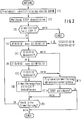
- FIG. 2 shows a flowchart for handling a message arriving at a recipient with an expanded part in which individual extensions of the transmission protocol are identified.
- the standardized transmission protocol (MAP) used for transmission between telecommunications networks with open interfaces is first identified by the protocol identifier OBID (1) before the EXOP message can be decoded (2).
- the decoded message EXOP is checked for the presence of the expanded part EXP (3). In the event that the message EXOP does not have the expanded part EXP, the evaluation of the message is ended.
- MAP standardized transmission protocol
- the extended part EXP is evaluated for the presence of one or more additional protocol identifiers.
- the operator identification OID which identifies the network operator of the international mobile network in a specific country that caused the protocol extension.
- the operator identifier OID consists of an integer (integer) decimal code 12345.
- the operator identifier OID is obtained by evaluating the first five digits of the additional protocol identifier GEID (4).
- the extension identifier EID has the integer (integer) decimal code 12 (6). Then it is checked whether the determined extension identifier EID is known. If the extension identifier EID is known, the extension type EXTY of the protocol extension is decoded, which was transmitted together with the additional protocol identifier in the extended part of the message (8). In the event that one of the two checks in (5) and (7) shows that either the operator identifier OID or the extension identifier EID is unknown, the protocol extension contained in the message is rejected or ignored (6 ' ). Subsequently, a query is made as to whether the entire EXOP message should be rejected (7 ' ). If it is rejected, the treatment of the received message is ended.
- the received message is checked for the presence of an additional protocol extension (9). If this is not the case, the handling of the message is ended. However, if there is still an individual extension of the transmission protocol, the evaluation of the received message continues.
- the associated extension type EXTY ' of the individual protocol extension is decoded (8).
- the evaluation of the extended part of the received message for the presence of further additional protocol identifiers for identifying further individual extensions of the transmission protocol is carried out repeatedly in accordance with steps (4) to (8) or steps (6 ' ) and (7 ' ), until all individual protocol extensions contained in the message have been checked. The evaluation ends prematurely if the individual protocol extension is rejected on the basis of an unknown operator identification or an unknown extension identification. If the operator identifier and the extension identifier in the additional protocol identifier are known, the individual protocol extension is accepted, so that the extension type transmitted together with the additional protocol identifier between the sender and recipient of the message is deemed to be agreed.
- FIG. 3 shows a table with values for the additional protocol identifiers for identifying the individual protocol extensions according to the example in FIG. 2.
- the additional protocol identifier for identifying the first individual protocol extension contains the value 12345 as operator identifier OID and the value 12 as extension identifier EID.
- a type 6 for the extension type EXTY According to the table a type 6 for the extension type EXTY.
- Other extension IDs EID are assigned other extension types EXTY in the table.
- the extension types with which protocol elements or protocol sections of the respective transmission protocol are described include characters (character string) as well as numbers (integer) or any other simple or constructed types (choice, sequence, set) permitted in the basic transmission protocol.
- the transmission protocol including its protocol extensions with the specified extension types is defined in the form of an abstract syntax, of which the ASN.1 syntax (Abstract Syntax Notation One) is a known form of representation. A description of this basic notation is known, for example, from " Specification of abstract syntax notation one (ASN.1) " , ITU-T Recommendations X.680 to X.683 (1994).
Landscapes
- Engineering & Computer Science (AREA)
- Computer Security & Cryptography (AREA)
- Computer Networks & Wireless Communication (AREA)
- Signal Processing (AREA)
- Mobile Radio Communication Systems (AREA)
- Telephonic Communication Services (AREA)
- Communication Control (AREA)
Applications Claiming Priority (2)
| Application Number | Priority Date | Filing Date | Title |
|---|---|---|---|
| DE19530675 | 1995-08-21 | ||
| DE19530675 | 1995-08-21 |
Publications (3)
| Publication Number | Publication Date |
|---|---|
| EP0759670A2 true EP0759670A2 (fr) | 1997-02-26 |
| EP0759670A3 EP0759670A3 (fr) | 2004-02-04 |
| EP0759670B1 EP0759670B1 (fr) | 2005-10-26 |
Family
ID=7769979
Family Applications (1)
| Application Number | Title | Priority Date | Filing Date |
|---|---|---|---|
| EP96112783A Expired - Lifetime EP0759670B1 (fr) | 1995-08-21 | 1996-08-07 | Méthode de transmission de messages entre réseaux de télécommunications |
Country Status (3)
| Country | Link |
|---|---|
| EP (1) | EP0759670B1 (fr) |
| DE (1) | DE59611285D1 (fr) |
| ES (1) | ES2247595T3 (fr) |
Cited By (1)
| Publication number | Priority date | Publication date | Assignee | Title |
|---|---|---|---|---|
| DE19831407C2 (de) * | 1998-07-13 | 2002-01-31 | Ericsson Telefon Ab L M | Mobilkommunikationsvorrichtung und Mobilkommunikationssystem |
-
1996
- 1996-08-07 EP EP96112783A patent/EP0759670B1/fr not_active Expired - Lifetime
- 1996-08-07 ES ES96112783T patent/ES2247595T3/es not_active Expired - Lifetime
- 1996-08-07 DE DE59611285T patent/DE59611285D1/de not_active Expired - Fee Related
Non-Patent Citations (4)
| Title |
|---|
| EUROPEAN TELECOMMUNICATIONS STANDARDS INSTITUTE: "ETS 300 374-1; Intelligent Network (IN); Intelligent Network Capability Set 1 (CS1); Core Intelligent Network Application Protocol (INAP); Part 1: Protocol Specification" XX, September 1994 (1994-09), Seite 1-56, 180-191 XP002262947 * |
| INTERNATIONAL TELECOMMUNICATION UNION: "ITU-T Recommendation Q.771 - Signaling System No. 7 - Functional Description of Transaction Capabilities " XX, M{rz 1993 (1993-03), Seiten 1-33, XP002262948 * |
| INTERNATIONAL TELECOMMUNICATION UNION: "ITU-T Recommendation Q.772 - Signaling System No. 7 - Transaction Capabilities Information Element Definitions" XX, M{rz 1993 (1993-03), Seite 1-7 XP002262949 * |
| SKOLT E ET AL: "INTELLIGENT NETWORKS AS A PLATFORM FOR PROVISION OF SERVICE IN GSM AND DECT" TELEKTRONIKK, XX, XX, Bd. 91, Nr. 4, 1995, Seiten 82-87, XP000605908 ISSN: 0085-7130 * |
Cited By (1)
| Publication number | Priority date | Publication date | Assignee | Title |
|---|---|---|---|---|
| DE19831407C2 (de) * | 1998-07-13 | 2002-01-31 | Ericsson Telefon Ab L M | Mobilkommunikationsvorrichtung und Mobilkommunikationssystem |
Also Published As
| Publication number | Publication date |
|---|---|
| EP0759670A3 (fr) | 2004-02-04 |
| DE59611285D1 (de) | 2005-12-01 |
| EP0759670B1 (fr) | 2005-10-26 |
| ES2247595T3 (es) | 2006-03-01 |
Similar Documents
| Publication | Publication Date | Title |
|---|---|---|
| DE60111511T2 (de) | Verfahren zum blockieren der benutzung eines dienstes in einem telekommunikationssystem | |
| DE69633701T2 (de) | Netzübergreifende Einrichtung zum Umherstreifen in verschiedenen mobilen Netzwerken | |
| DE69202682T2 (de) | System und Verfahren zur Detektieren der unerlaubten Benutzung von Identifizierern für Rechnerzugriff. | |
| DE69127514T2 (de) | Elektronische Postbearbeitung in einer Mehrbenützer-Umgebung | |
| DE69929898T3 (de) | Eine methode zur kontrolle von übertragungseigenschaften | |
| DE69509828T2 (de) | Gekoppelte rufaufzeichnungen | |
| DE69635577T2 (de) | Verkehrsleitweglenkung in einem knoten eines telekommunikationsnetzwerks | |
| EP0899979A2 (fr) | Terminal, carte d'authentication SIM et réseau de télécommunication pour l'abonné ansi que procédé de changement du profil de service d'abonnée | |
| WO2002021350A1 (fr) | Systeme de commande par un service d'envoi de messages courts | |
| DE4033352A1 (de) | Verzweigungseinheiten und kommunikationsverfahren fuer ein lokales netzwerk | |
| DE69820807T2 (de) | Mobil-Station und Registrierungsverfahren der Station in einem Telekommunikationnetzwerk | |
| EP1557002B1 (fr) | Procede et dispositif pour selectionner un acces a un ou a plusieurs reseaux de donnees par l'intermediaire d'un terminal de telecommunication | |
| EP1484930B1 (fr) | Trame de transmission et unité radio pour la transmission de messages courts avec différent format de données | |
| DE69433103T2 (de) | Verfahren zur Signalisierung in einem Telekommunikationssystem | |
| WO2003088611A1 (fr) | Representation d'expressions booleennes pour la specification de filtres par xml | |
| DE60206592T2 (de) | Offset Sicherheitsverfahren zum Datenaustausch | |
| DE60301854T2 (de) | Nachrichtentransfer-teilepunktcodeabbildungsverfahren | |
| CH697691B1 (de) | Verfahren für das Verbinden eines entfernten Servers mit einem Kurznachrichtenserverzentrum (SMSC) über das Internet. | |
| DE60313814T2 (de) | Vorrichtung zum verhandeln von managementaufgaben | |
| DE19533546C1 (de) | Verfahren zur Unterstützung von Diensten in Netzknoten von Telekommunikationsnetzen | |
| EP0759670A2 (fr) | Méthode de transmission de messages entre réseaux de télécommunications | |
| DE10046343B4 (de) | Verfahren zum Registrieren eines Endgerätes in einem Paketdatennetzwerk | |
| EP0655870A2 (fr) | Exécution de services dans un système de communications | |
| DE3620407C2 (fr) | ||
| DE60301057T2 (de) | System zum erreichen von auf einem gprs-netz basierten echtzeitmehrwertdiensten |
Legal Events
| Date | Code | Title | Description |
|---|---|---|---|
| PUAI | Public reference made under article 153(3) epc to a published international application that has entered the european phase |
Free format text: ORIGINAL CODE: 0009012 |
|
| AK | Designated contracting states |
Kind code of ref document: A2 Designated state(s): DE ES FR GB IT |
|
| PUAL | Search report despatched |
Free format text: ORIGINAL CODE: 0009013 |
|
| RIC1 | Information provided on ipc code assigned before grant |
Ipc: 7H 04Q 7/24 B Ipc: 7H 04L 29/06 A |
|
| AK | Designated contracting states |
Kind code of ref document: A3 Designated state(s): DE ES FR GB IT |
|
| 17P | Request for examination filed |
Effective date: 20040322 |
|
| 17Q | First examination report despatched |
Effective date: 20040525 |
|
| GRAP | Despatch of communication of intention to grant a patent |
Free format text: ORIGINAL CODE: EPIDOSNIGR1 |
|
| GRAS | Grant fee paid |
Free format text: ORIGINAL CODE: EPIDOSNIGR3 |
|
| GRAA | (expected) grant |
Free format text: ORIGINAL CODE: 0009210 |
|
| AK | Designated contracting states |
Kind code of ref document: B1 Designated state(s): DE ES FR GB IT |
|
| REG | Reference to a national code |
Ref country code: GB Ref legal event code: FG4D Free format text: NOT ENGLISH |
|
| REF | Corresponds to: |
Ref document number: 59611285 Country of ref document: DE Date of ref document: 20051201 Kind code of ref document: P |
|
| GBT | Gb: translation of ep patent filed (gb section 77(6)(a)/1977) |
Effective date: 20051111 |
|
| REG | Reference to a national code |
Ref country code: ES Ref legal event code: FG2A Ref document number: 2247595 Country of ref document: ES Kind code of ref document: T3 |
|
| ET | Fr: translation filed | ||
| PGFP | Annual fee paid to national office [announced via postgrant information from national office to epo] |
Ref country code: GB Payment date: 20060808 Year of fee payment: 11 |
|
| PGFP | Annual fee paid to national office [announced via postgrant information from national office to epo] |
Ref country code: FR Payment date: 20060809 Year of fee payment: 11 |
|
| PGFP | Annual fee paid to national office [announced via postgrant information from national office to epo] |
Ref country code: IT Payment date: 20060831 Year of fee payment: 11 |
|
| PLBE | No opposition filed within time limit |
Free format text: ORIGINAL CODE: 0009261 |
|
| STAA | Information on the status of an ep patent application or granted ep patent |
Free format text: STATUS: NO OPPOSITION FILED WITHIN TIME LIMIT |
|
| 26N | No opposition filed |
Effective date: 20060727 |
|
| PGFP | Annual fee paid to national office [announced via postgrant information from national office to epo] |
Ref country code: DE Payment date: 20061023 Year of fee payment: 11 |
|
| GBPC | Gb: european patent ceased through non-payment of renewal fee |
Effective date: 20070807 |
|
| REG | Reference to a national code |
Ref country code: FR Ref legal event code: ST Effective date: 20080430 |
|
| PG25 | Lapsed in a contracting state [announced via postgrant information from national office to epo] |
Ref country code: DE Free format text: LAPSE BECAUSE OF NON-PAYMENT OF DUE FEES Effective date: 20080301 |
|
| PG25 | Lapsed in a contracting state [announced via postgrant information from national office to epo] |
Ref country code: FR Free format text: LAPSE BECAUSE OF NON-PAYMENT OF DUE FEES Effective date: 20070831 |
|
| REG | Reference to a national code |
Ref country code: ES Ref legal event code: FD2A Effective date: 20070808 |
|
| PG25 | Lapsed in a contracting state [announced via postgrant information from national office to epo] |
Ref country code: GB Free format text: LAPSE BECAUSE OF NON-PAYMENT OF DUE FEES Effective date: 20070807 |
|
| PG25 | Lapsed in a contracting state [announced via postgrant information from national office to epo] |
Ref country code: ES Free format text: LAPSE BECAUSE OF NON-PAYMENT OF DUE FEES Effective date: 20070808 |
|
| PG25 | Lapsed in a contracting state [announced via postgrant information from national office to epo] |
Ref country code: IT Free format text: LAPSE BECAUSE OF NON-PAYMENT OF DUE FEES Effective date: 20070807 |