EP0761018B1 - A modified cation exchange membrane for electrochemical cells and method for the preparation of such membrane - Google Patents
A modified cation exchange membrane for electrochemical cells and method for the preparation of such membrane Download PDFInfo
- Publication number
- EP0761018B1 EP0761018B1 EP95912354A EP95912354A EP0761018B1 EP 0761018 B1 EP0761018 B1 EP 0761018B1 EP 95912354 A EP95912354 A EP 95912354A EP 95912354 A EP95912354 A EP 95912354A EP 0761018 B1 EP0761018 B1 EP 0761018B1
- Authority
- EP
- European Patent Office
- Prior art keywords
- membrane
- sulfide
- water insoluble
- salt
- chamber
- Prior art date
- Legal status (The legal status is an assumption and is not a legal conclusion. Google has not performed a legal analysis and makes no representation as to the accuracy of the status listed.)
- Expired - Lifetime
Links
Images



Classifications
-
- H—ELECTRICITY
- H01—ELECTRIC ELEMENTS
- H01M—PROCESSES OR MEANS, e.g. BATTERIES, FOR THE DIRECT CONVERSION OF CHEMICAL ENERGY INTO ELECTRICAL ENERGY
- H01M50/00—Constructional details or processes of manufacture of the non-active parts of electrochemical cells other than fuel cells, e.g. hybrid cells
- H01M50/40—Separators; Membranes; Diaphragms; Spacing elements inside cells
- H01M50/409—Separators, membranes or diaphragms characterised by the material
- H01M50/446—Composite material consisting of a mixture of organic and inorganic materials
-
- H—ELECTRICITY
- H01—ELECTRIC ELEMENTS
- H01M—PROCESSES OR MEANS, e.g. BATTERIES, FOR THE DIRECT CONVERSION OF CHEMICAL ENERGY INTO ELECTRICAL ENERGY
- H01M10/00—Secondary cells; Manufacture thereof
- H01M10/36—Accumulators not provided for in groups H01M10/05-H01M10/34
- H01M10/365—Zinc-halogen accumulators
-
- B—PERFORMING OPERATIONS; TRANSPORTING
- B60—VEHICLES IN GENERAL
- B60L—PROPULSION OF ELECTRICALLY-PROPELLED VEHICLES; SUPPLYING ELECTRIC POWER FOR AUXILIARY EQUIPMENT OF ELECTRICALLY-PROPELLED VEHICLES; ELECTRODYNAMIC BRAKE SYSTEMS FOR VEHICLES IN GENERAL; MAGNETIC SUSPENSION OR LEVITATION FOR VEHICLES; MONITORING OPERATING VARIABLES OF ELECTRICALLY-PROPELLED VEHICLES; ELECTRIC SAFETY DEVICES FOR ELECTRICALLY-PROPELLED VEHICLES
- B60L50/00—Electric propulsion with power supplied within the vehicle
- B60L50/50—Electric propulsion with power supplied within the vehicle using propulsion power supplied by batteries or fuel cells
- B60L50/60—Electric propulsion with power supplied within the vehicle using propulsion power supplied by batteries or fuel cells using power supplied by batteries
- B60L50/64—Constructional details of batteries specially adapted for electric vehicles
-
- C—CHEMISTRY; METALLURGY
- C08—ORGANIC MACROMOLECULAR COMPOUNDS; THEIR PREPARATION OR CHEMICAL WORKING-UP; COMPOSITIONS BASED THEREON
- C08J—WORKING-UP; GENERAL PROCESSES OF COMPOUNDING; AFTER-TREATMENT NOT COVERED BY SUBCLASSES C08B, C08C, C08F, C08G or C08H
- C08J5/00—Manufacture of articles or shaped materials containing macromolecular substances
- C08J5/20—Manufacture of shaped structures of ion-exchange resins
- C08J5/22—Films, membranes or diaphragms
- C08J5/2206—Films, membranes or diaphragms based on organic and/or inorganic macromolecular compounds
- C08J5/2218—Synthetic macromolecular compounds
- C08J5/2231—Synthetic macromolecular compounds based on macromolecular compounds obtained by reactions involving unsaturated carbon-to-carbon bonds
- C08J5/2243—Synthetic macromolecular compounds based on macromolecular compounds obtained by reactions involving unsaturated carbon-to-carbon bonds obtained by introduction of active groups capable of ion-exchange into compounds of the type C08J5/2231
- C08J5/225—Synthetic macromolecular compounds based on macromolecular compounds obtained by reactions involving unsaturated carbon-to-carbon bonds obtained by introduction of active groups capable of ion-exchange into compounds of the type C08J5/2231 containing fluorine
-
- C—CHEMISTRY; METALLURGY
- C25—ELECTROLYTIC OR ELECTROPHORETIC PROCESSES; APPARATUS THEREFOR
- C25B—ELECTROLYTIC OR ELECTROPHORETIC PROCESSES FOR THE PRODUCTION OF COMPOUNDS OR NON-METALS; APPARATUS THEREFOR
- C25B13/00—Diaphragms; Spacing elements
- C25B13/04—Diaphragms; Spacing elements characterised by the material
- C25B13/08—Diaphragms; Spacing elements characterised by the material based on organic materials
-
- H—ELECTRICITY
- H01—ELECTRIC ELEMENTS
- H01M—PROCESSES OR MEANS, e.g. BATTERIES, FOR THE DIRECT CONVERSION OF CHEMICAL ENERGY INTO ELECTRICAL ENERGY
- H01M50/00—Constructional details or processes of manufacture of the non-active parts of electrochemical cells other than fuel cells, e.g. hybrid cells
- H01M50/40—Separators; Membranes; Diaphragms; Spacing elements inside cells
- H01M50/403—Manufacturing processes of separators, membranes or diaphragms
-
- H—ELECTRICITY
- H01—ELECTRIC ELEMENTS
- H01M—PROCESSES OR MEANS, e.g. BATTERIES, FOR THE DIRECT CONVERSION OF CHEMICAL ENERGY INTO ELECTRICAL ENERGY
- H01M50/00—Constructional details or processes of manufacture of the non-active parts of electrochemical cells other than fuel cells, e.g. hybrid cells
- H01M50/40—Separators; Membranes; Diaphragms; Spacing elements inside cells
- H01M50/409—Separators, membranes or diaphragms characterised by the material
- H01M50/411—Organic material
- H01M50/414—Synthetic resins, e.g. thermoplastics or thermosetting resins
-
- H—ELECTRICITY
- H01—ELECTRIC ELEMENTS
- H01M—PROCESSES OR MEANS, e.g. BATTERIES, FOR THE DIRECT CONVERSION OF CHEMICAL ENERGY INTO ELECTRICAL ENERGY
- H01M50/00—Constructional details or processes of manufacture of the non-active parts of electrochemical cells other than fuel cells, e.g. hybrid cells
- H01M50/40—Separators; Membranes; Diaphragms; Spacing elements inside cells
- H01M50/409—Separators, membranes or diaphragms characterised by the material
- H01M50/411—Organic material
- H01M50/414—Synthetic resins, e.g. thermoplastics or thermosetting resins
- H01M50/426—Fluorocarbon polymers
-
- H—ELECTRICITY
- H01—ELECTRIC ELEMENTS
- H01M—PROCESSES OR MEANS, e.g. BATTERIES, FOR THE DIRECT CONVERSION OF CHEMICAL ENERGY INTO ELECTRICAL ENERGY
- H01M50/00—Constructional details or processes of manufacture of the non-active parts of electrochemical cells other than fuel cells, e.g. hybrid cells
- H01M50/40—Separators; Membranes; Diaphragms; Spacing elements inside cells
- H01M50/409—Separators, membranes or diaphragms characterised by the material
- H01M50/431—Inorganic material
-
- H—ELECTRICITY
- H01—ELECTRIC ELEMENTS
- H01M—PROCESSES OR MEANS, e.g. BATTERIES, FOR THE DIRECT CONVERSION OF CHEMICAL ENERGY INTO ELECTRICAL ENERGY
- H01M50/00—Constructional details or processes of manufacture of the non-active parts of electrochemical cells other than fuel cells, e.g. hybrid cells
- H01M50/40—Separators; Membranes; Diaphragms; Spacing elements inside cells
- H01M50/489—Separators, membranes, diaphragms or spacing elements inside the cells, characterised by their physical properties, e.g. swelling degree, hydrophilicity or shut down properties
-
- H—ELECTRICITY
- H01—ELECTRIC ELEMENTS
- H01M—PROCESSES OR MEANS, e.g. BATTERIES, FOR THE DIRECT CONVERSION OF CHEMICAL ENERGY INTO ELECTRICAL ENERGY
- H01M50/00—Constructional details or processes of manufacture of the non-active parts of electrochemical cells other than fuel cells, e.g. hybrid cells
- H01M50/40—Separators; Membranes; Diaphragms; Spacing elements inside cells
- H01M50/489—Separators, membranes, diaphragms or spacing elements inside the cells, characterised by their physical properties, e.g. swelling degree, hydrophilicity or shut down properties
- H01M50/497—Ionic conductivity
-
- H—ELECTRICITY
- H01—ELECTRIC ELEMENTS
- H01M—PROCESSES OR MEANS, e.g. BATTERIES, FOR THE DIRECT CONVERSION OF CHEMICAL ENERGY INTO ELECTRICAL ENERGY
- H01M8/00—Fuel cells; Manufacture thereof
- H01M8/02—Details
- H01M8/0289—Means for holding the electrolyte
-
- H—ELECTRICITY
- H01—ELECTRIC ELEMENTS
- H01M—PROCESSES OR MEANS, e.g. BATTERIES, FOR THE DIRECT CONVERSION OF CHEMICAL ENERGY INTO ELECTRICAL ENERGY
- H01M8/00—Fuel cells; Manufacture thereof
- H01M8/18—Regenerative fuel cells, e.g. redox flow batteries or secondary fuel cells
- H01M8/184—Regeneration by electrochemical means
-
- H—ELECTRICITY
- H01—ELECTRIC ELEMENTS
- H01M—PROCESSES OR MEANS, e.g. BATTERIES, FOR THE DIRECT CONVERSION OF CHEMICAL ENERGY INTO ELECTRICAL ENERGY
- H01M8/00—Fuel cells; Manufacture thereof
- H01M8/18—Regenerative fuel cells, e.g. redox flow batteries or secondary fuel cells
- H01M8/184—Regeneration by electrochemical means
- H01M8/188—Regeneration by electrochemical means by recharging of redox couples containing fluids; Redox flow type batteries
-
- C—CHEMISTRY; METALLURGY
- C08—ORGANIC MACROMOLECULAR COMPOUNDS; THEIR PREPARATION OR CHEMICAL WORKING-UP; COMPOSITIONS BASED THEREON
- C08J—WORKING-UP; GENERAL PROCESSES OF COMPOUNDING; AFTER-TREATMENT NOT COVERED BY SUBCLASSES C08B, C08C, C08F, C08G or C08H
- C08J2327/00—Characterised by the use of homopolymers or copolymers of compounds having one or more unsaturated aliphatic radicals, each having only one carbon-to-carbon double bond, and at least one being terminated by a halogen; Derivatives of such polymers
- C08J2327/02—Characterised by the use of homopolymers or copolymers of compounds having one or more unsaturated aliphatic radicals, each having only one carbon-to-carbon double bond, and at least one being terminated by a halogen; Derivatives of such polymers not modified by chemical after-treatment
- C08J2327/12—Characterised by the use of homopolymers or copolymers of compounds having one or more unsaturated aliphatic radicals, each having only one carbon-to-carbon double bond, and at least one being terminated by a halogen; Derivatives of such polymers not modified by chemical after-treatment containing fluorine atoms
- C08J2327/18—Homopolymers or copolymers of tetrafluoroethylene
-
- H—ELECTRICITY
- H01—ELECTRIC ELEMENTS
- H01M—PROCESSES OR MEANS, e.g. BATTERIES, FOR THE DIRECT CONVERSION OF CHEMICAL ENERGY INTO ELECTRICAL ENERGY
- H01M12/00—Hybrid cells; Manufacture thereof
- H01M12/08—Hybrid cells; Manufacture thereof composed of a half-cell of a fuel-cell type and a half-cell of the secondary-cell type
-
- H—ELECTRICITY
- H01—ELECTRIC ELEMENTS
- H01M—PROCESSES OR MEANS, e.g. BATTERIES, FOR THE DIRECT CONVERSION OF CHEMICAL ENERGY INTO ELECTRICAL ENERGY
- H01M8/00—Fuel cells; Manufacture thereof
- H01M8/22—Fuel cells in which the fuel is based on materials comprising carbon or oxygen or hydrogen and other elements; Fuel cells in which the fuel is based on materials comprising only elements other than carbon, oxygen or hydrogen
-
- Y—GENERAL TAGGING OF NEW TECHNOLOGICAL DEVELOPMENTS; GENERAL TAGGING OF CROSS-SECTIONAL TECHNOLOGIES SPANNING OVER SEVERAL SECTIONS OF THE IPC; TECHNICAL SUBJECTS COVERED BY FORMER USPC CROSS-REFERENCE ART COLLECTIONS [XRACs] AND DIGESTS
- Y02—TECHNOLOGIES OR APPLICATIONS FOR MITIGATION OR ADAPTATION AGAINST CLIMATE CHANGE
- Y02E—REDUCTION OF GREENHOUSE GAS [GHG] EMISSIONS, RELATED TO ENERGY GENERATION, TRANSMISSION OR DISTRIBUTION
- Y02E60/00—Enabling technologies; Technologies with a potential or indirect contribution to GHG emissions mitigation
- Y02E60/10—Energy storage using batteries
-
- Y—GENERAL TAGGING OF NEW TECHNOLOGICAL DEVELOPMENTS; GENERAL TAGGING OF CROSS-SECTIONAL TECHNOLOGIES SPANNING OVER SEVERAL SECTIONS OF THE IPC; TECHNICAL SUBJECTS COVERED BY FORMER USPC CROSS-REFERENCE ART COLLECTIONS [XRACs] AND DIGESTS
- Y02—TECHNOLOGIES OR APPLICATIONS FOR MITIGATION OR ADAPTATION AGAINST CLIMATE CHANGE
- Y02P—CLIMATE CHANGE MITIGATION TECHNOLOGIES IN THE PRODUCTION OR PROCESSING OF GOODS
- Y02P70/00—Climate change mitigation technologies in the production process for final industrial or consumer products
- Y02P70/50—Manufacturing or production processes characterised by the final manufactured product
-
- Y—GENERAL TAGGING OF NEW TECHNOLOGICAL DEVELOPMENTS; GENERAL TAGGING OF CROSS-SECTIONAL TECHNOLOGIES SPANNING OVER SEVERAL SECTIONS OF THE IPC; TECHNICAL SUBJECTS COVERED BY FORMER USPC CROSS-REFERENCE ART COLLECTIONS [XRACs] AND DIGESTS
- Y02—TECHNOLOGIES OR APPLICATIONS FOR MITIGATION OR ADAPTATION AGAINST CLIMATE CHANGE
- Y02T—CLIMATE CHANGE MITIGATION TECHNOLOGIES RELATED TO TRANSPORTATION
- Y02T10/00—Road transport of goods or passengers
- Y02T10/60—Other road transportation technologies with climate change mitigation effect
- Y02T10/70—Energy storage systems for electromobility, e.g. batteries
Definitions
- the present invention relates to improvements in or relating to cation exchange membranes for use in electrochemical cells and, in particular, to strongly cationic selective membranes which combine a low electrolytic resistivity with a high permselectivity, and to a method for the production thereof.
- Cation exchange membranes have been proposed for use in various electrochemical applications, including chlor-alkali cells, fuel cells and energy storage/power delivery devices.
- the cation exchange membrane serves to separate the compartments of the cells, whilst providing a conducting pathway for cations through the cell.
- the membranes may also have metallic catalytic electrodes formed on the surface thereof. Proposals for the preparation of such membrane/electrode composites include the process as disclosed in US Patent No. 4959132 whereby a metallic catalytic film is formed on the surface of the membrane by the reduction of a water soluble metallic salt impregnated into the membrane to form the metal.
- a cation exchange membrane For use in electrochemical applications, a cation exchange membrane requires a high voltage efficiency, i.e. a low resistance. Low resistance membranes generally have a high water content and are not very selective, i.e. have a low current efficiency. What is required is a membrane with both low resistance and high selectivity.
- bi-layer membranes in which a low resistance membrane is surfaced on one side with an anion rejection layer of lower water content.
- This bi-layer membrane has a low resistance bulk portion with a surface layer which is highly cationically selective.
- examples of such membranes are those in which a low ion exchange capacity (high equivalent weight) membrane provides the anion rejection surface layer (DuPont Nafion 300 series) and those in which a carboxylic acid membrane provides the anion rejection surface layer (DuPont Nafion 900 Series).
- These bi-layer membranes are surfaced on one side only for anion rejection in a specified direction. In both cases (300 and 900) anion rejection is achieved by reducing the water content of the surface of the membrane.
- the present invention provides a modified polymeric cation exchange membrane for use in an electrochemical cell, the said membrane having a water insoluble ionic salt which is a silver, tungsten or molybdenum salt or a mixture thereof, deposited within the polymer matrix, the said salt being insoluble in the electrolytes which, in use, contact either side of the membrane.
- the water insoluble ionic salt which is deposited within the polymer matrix of the membrane is preferably a bromide, chloride, sulfide or hydroxide of silver, tungsten or molybdenum, or mixtures thereof. It will be understood that, if desired, different water insoluble salts may be deposited in the membrane at either side thereof.
- One membrane which may be modified according to the present invention is a cation exchange membrane formed from a fluorocarbon polymer grafted with styrene via gamma irradiation and subsequently sulfonated to give sulfonic acid pendant chains or grafted via gamma irradiation with an unsaturated carboxylic acid, such as acrylic or methacrylic acid, to give carboxylic acid pendant chains.
- the fluorocarbon is preferably polytetrafluoroethylene, or a fluorinated ethylene-propylene copolymer.
- the membrane is prepared by grafting the styrene onto the fluorocarbon polymer using gamma irradiation and then sulfonating the grafted polymer, for example by using chlorosulfonic acid, or grafting an unsaturated carboxylic acid onto the fluorocarbon polymer using gamma irradiation.
- the modified membrane of the present invention is preferably from 0.005 to 0.0175cm (0.002 to 0.007 inches) thick, more preferably about 0.0125cm (0.005 inches) thick.
- the membranes which are modified are made from a polytetrafluoro-ethylene or an ethylene-propylene copolymer base film of the desired thickness which is grafted with styrene via gamma irradiation, for example from a cobalt-60 source.
- the radiation grafting of vinyl-substituted monomers to polytetrafluoroethylene and polyolefin films is known in the art and reference is made to US Patents Nos. 4230549 and 4339473.
- the gamma irradiation of the fluorocarbon polymer forms free radical sites which are then available for reaction with an unsaturated monomer, such as styrene.
- the electrolytic resistance of the ion exchange membrane is related to the percentage of styrene grafted thereon when subsequently sulfonated, the electrolytic resistance decreasing as the percent graft increases. In general the useful range of the percent graft is from 10 to 50 percent, more preferably 10 to 20 percent. Percent graft is defined as the weight increase due to grafting divided by the initial weight of the polymer film multiplied by 100.
- Another membrane which may be modified according to the present invention is a cation exchange membrane formed from a copolymer of tetrafluoroethylene and a sulfonated or carboxylated vinyl ether, such as those sold under the trade names of Nafion (Du Pont), for example Nafion 112,115 or 117, and Flemion (Asahi Glass).
- a cation exchange membrane formed from a copolymer of tetrafluoroethylene and a sulfonated or carboxylated vinyl ether, such as those sold under the trade names of Nafion (Du Pont), for example Nafion 112,115 or 117, and Flemion (Asahi Glass).
- a cation exchange membrane which is a polystyrene sulfonate membrane from Tokuyama Soda sold as Neosepta CM1, Neosepta CM2, Neosepta CMH and Neosepta CMS, and Selemion (Asahi Glass).
- membranes which may be used in the present invention are heterogeneous membranes such as those based on polystyrene sulfonate ion exchange resin blended with another polymer such as polyethylene.
- Another type of membrane which may be used is a post-irradiation grafted membrane.
- Yet another type of membrane which may be used is a cross-linked aromatic polyamide, for example of the Kelvar type.
- the cation exchange membranes may be modified by a method which comprises the steps of
- the membrane is dehydrated prior to the treatment in step (i) above.
- the dehydration assists in the membrane absorbing the solution of the water soluble salt in a uniform manner.
- the preferred water soluble salts for use in the method described above are the nitrates, although other salts may be used, such as the perchlorates or fluorides.
- the water soluble salt absorbed into the membrane is generally converted into a water insoluble salt by precipitation from solution in the membrane matrix.
- the preferred water insoluble salts are the bromides, chlorides, sulfides and hydroxides of the said metals which may be precipitated in the polymer matrix of the membrane by treating the membrane with suitable bromide, chloride, sulfide or hydroxyl ion containing solutions, such as sodium or potassium bromide, chloride, sulfide or hydroxide.
- suitable bromide, chloride, sulfide or hydroxyl ion containing solutions such as sodium or potassium bromide, chloride, sulfide or hydroxide.
- the bromides may be formed by precipitation using bromine gas.
- the bromine gas may be used in admixture with an inert gas such as nitrogen.
- a modified cation exchange membrane which has dissimilar water insoluble salts deposited within the membrane at either side thereof. This may be achieved by placing the membrane from step (i) in a reactor cell and exposing one surface to treatment with one reagent and the other surface to treatment with another reagent, whereby two different water insoluble salts are precipitated within the polymer matrix of the membrane.
- one surface of the membrane may be exposed to a bromide containing solution or bromine gas to form a water insoluble bromide and the other surface of the membrane may be exposed to a sulfide containing solution to form a water insoluble sulfide.
- the water insoluble ionic salt or salts which is/are precipitated into the polymeric matrix of the membrane must be chemically resistant to the anolyte and the catholyte to which they will be exposed in use.
- the ionic salt is not only insoluble in the electrolytes, but also is not reduced, oxidised or modified in any other way by the electrolyte to which it is exposed during use.
- the membrane can be tailored to the anolyte and catholyte individually.
- the present invention includes within its scope an electrochemical apparatus which comprises a single cell or an array of cells, each cell with a chamber (+ ve chamber) containing a + ve electrode and an electrolyte and a chamber (- ve chamber) containing a - ve electrode and an electrolyte, the said + ve chamber(s) and - ve chamber(s) being separated from one another by a modified cation exchange membrane.
- the electrochemical apparatus into which the modified membrane of the present invention is incorporated is preferably an apparatus for energy storage and/or power delivery.
- the electrolyte in the - ve chamber of the electrochemical apparatus preferably contains a sulfide during power delivery, whilst the electrolyte in the + ve chamber of the electrochemical apparatus preferably contains bromine, iron, air or oxygen.
- the chemical reactions which are involved in these three systems are as follows: The above reaction actually occurs in separate but dependent bromine and sulfur reactions, the bromine reaction taking place on the + ve side of the membrane and the sulfur reaction on the - ve side of the membrane.
- this reaction actually occurs in separate but dependent iron and sulfur reactions, the iron reaction taking place on the + ve side of the membrane and the sulfur reaction on the - ve side of the membrane.
- This reaction also actually occurs in separate but dependent oxygen and sulfur reactions, the oxygen reaction taking place on the + ve side of the membrane and the sulfur reaction on the - ve side of the membrane.
- a modified membrane is preferred which is bifunctional, the side of the membrane facing the bromine side of the cell having silver, tungsten or molybdenum bromide, or a mixture thereof, precipitated therein and the side of the membrane facing the sulfide side of the cell having silver, tungsten or molybdenum sulfide, or a mixture thereof, precipitated therein.
- FIG. 1A shows a cell 10 with a + ve electrode 12 and a - ve electrode 14 and a cation membrane 16 formed from a fluorocarbon polymer with styrene sulfonic acid functional groups to provide charge carriers which is modified by incorporating silver bromide into the polymer matrix on the side facing compartment 22C and silver sulfide into the polymer matrix on the side facing compartment 24C.
- the membrane 16 acts to separate the + ve and - ve sides of the cell 10 and is selected to minimize migration of bromine from the + ve side to the - ve side and to minimize migration of S 2- ions from the - ve side to the + ve side.
- An aqueous solution 22 of NaBr is provided in a chamber 22C formed between the + ve electrode 12 and the membrane 16 and an aqueous Na 2 S x solution 24 is provided in a chamber 24C formed between the - ve electrode 14 and the membrane 16.
- Na+ ions are transported through the cation membrane 16, as shown in FIG. 1A, from the + ve to the - ve side of the cell.
- Free bromine is produced via oxidation of the bromide ions at the + ve electrode and dissolves as a tribromide or pentabromide ion.
- Sulfur is reduced at the - ve electrode and the pentasulfide, Na 2 S 5 , salt eventually becomes the monosulfide as the charging proceeds to completion.
- 2Br - ⁇ Br 2 + 2e - and at the - ve side the following reaction occurs, S + 2e - ⁇ S 2- .
- the membrane separates the two electrolytes and prevents bulk mixing and also retards the migration of S 2- ions from the - ve side, and the migration (diffusion) of Br - and Br 2 from the + ve to the - ve side. Diffusion of S 2- results in coulombic loss as well as suspended precipitates in the + ve electrolyte. Any S 2- ions present in the + ve side will be oxidized by the Br 2 produced during charge. The sulfur is not soluble in water or NaBr solution and will come out as a fine powder suspension or precipitate.
- the cell When providing power, the cell is discharging. During this action reversible reactions occur at the two electrodes.
- bromine is reduced to Br -
- the S -2 ion is oxidized to molecular S.
- the electrons produced at the - ve electrode form the current through a load .
- the chemical reaction at the + ve electrode produces 1.06 to 1.09 volts and the chemical reaction at the - ve electrode produces 0.48 to 0.52 volts.
- the combined chemical reactions produce an open circuit voltage of 1.54 to 1.61 volts per cell.
- FIG. 1B shows a cell array 20 of multiple cells connected in electrical series and fluid parallel.
- Multiple mid-electrodes 13 (each one having a + ve electrode side 12A and - ve electrode side 14A) and end electrodes 12E (+ ve ) and 14E (- ve ) are spaced out from each other by membranes 16 and screen or mesh spacers (22D,24D) in all the cell chambers 22C, 24C, (portions of two of which 22D, 24D are shown by way of example) to form end cells C E1 and C E2 and an array of n# of mid cells c M (typically 10-20; but note much smaller and much higher numbers of cells can be accommodated).
- the membranes 16 are of the type as hereinbefore described with reference to FIG. 1A.
- the end electrodes 12E (+ ve ) and 14E (- ve ) have internal conductors 12F and 14F (typically copper screens) encapsulated therein and leading to external terminals 12G, 14G which are connected to external loads (e.g. to motor(s) via a control circuit (CONT), the motor(s) driving a vehicle) or power sources (e.g. a utility power grid when used as a load-levelling device).
- loads e.g. to motor(s) via a control circuit (CONT), the motor(s) driving a vehicle
- power sources e.g. a utility power grid when used as a load-levelling device.
- a polytetrafluoroethylene film radiation grafted with about 15% styrene and functionalised to contain about 17% sulfonic acid groups was obtained from RAI Corporation.
- the film had a thickness of about 0.0125cm (0.005 inches).
- a sample of this membrane was dried in a drying oven at 40°C for ten minutes. After drying, the dried membrane, together with a sample of the original membrane which had not been subjected to the drying procedure, were immersed in an aqueous silver nitrate solution comprising 20g AgNO 3 per litre for ten minutes. After immersion, both membrane samples were allowed to drip for 30 seconds before being immersed in an aqueous sodium sulfide solution comprising 30.0g Na 2 S.9H 2 O per litre at 60°C for ten minutes. After this treatment the membrane samples which were black were then dried.
- the membrane resistances for the membranes in which silver sulfide was deposited and for an untreated sample of the membrane from RAI Corporation were measured in a two compartment cell containing platinum electrodes immersed in the solutions in both compartments of the cell. The membrane under investigation was used to separate the compartments of the cell.
- the platinum electrodes were connected to a Philips Digital Conductivity Meter PW 9527 allowing measurements to be made at 80 and 4000 Hz.
- the solutions in the cell were thermostatted to 25°C, the conductivity meter was calibrated before any measurements were taken and the value of the conductivity was read.
- the membrane resistances were determined as the differences between values measured with and without the membrane in the cell.
- Table 1 gives the ionic AC resistivity of membranes in 0.1M NaBr, Na 2 S and Na 2 S x solutions. Area resistances R A are in ⁇ /cm 2 , specific resistances R S are in ⁇ cm. Mean values are given. The various membrane samples on which measurements were made are
- a Nafion 117 membrane was pretreated by boiling in a 50/50 mixture of nitric acid (s.g. 1.42) and high purity water for 30 minutes. The membrane was rinsed and then boiled in high purity water for 30 minutes. The membrane was dried with paper towels and immersed in 0.1M HCl at room temperature with stirring for 48 hours to give the hydrogen (H + ) form of the membrane.
- the membrane was immersed in an aqueous solution of silver nitrate (5 X 10 -3 M), stirred continuously and kept in the dark for approximately 4 weeks.
- the membrane impregnated with the silver salt was rinsed in high purity water, dried with paper towels and immersed in a concentrated solution of sodium sulfide (2.4M) for 24 hours at room temperature. The membrane was then rinsed several times with high purity water and stored wet.
- the ion exchange capacity of the treated Nafion 117 membrane was 0.95 meq/g as compared to 0.96 meq/g for the untreated Nafion 117 membrane.
- the membrane resistances for the treated Nafion 117 membrane and the untreated Nafion 117 membrane were measured at different concentrations of sodium bromide by the method as described in Example 1.
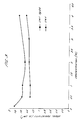
- the comparative results are given in Figure 2 of the accompanying drawings from which it can be seen that the resistivity of the treated Nafion 117 membrane is not concentration dependent, whereas the resistivity of the untreated Nafion 117 membrane increases significantly with concentration.
- a polyethylene tetrafluoride film radiation grafted with about 15% styrene and functionalised to contain about 17% sulfonic acid groups was obtained from RAI Corporation.
- the film had a thickness of about 0.0125 cm (0.005 inches).
- This film was subjected to the same processing conditions as described in Example 2 in order to produce a treated film impregnated with a silver sulfide salt.
- the ion exchange capacity of the treated RAI membrane was 0.74 meq/g as compared to 0.77 meq/g for the untreated RAI membrane.
- Neosepta CM1 membrane was pretreated by washing in high purity water using an ultrasonic bath for two hours. The membrane was then rinsed in high purity water. The membrane was then in the hydrogen (H + ) form.
- the membrane was immersed in an aqueous solution of silver nitrate (5 X 10 -3 M), stirred continuously and kept in the dark for approximately 2 weeks.
- the membrane impregnated with the silver salt was rinsed in high purity water, dried with paper towels and immersed in a concentrated solution of sodium sulfide (2.4M) for 24 hours at room temperature.
- the membrane was then rinsed several times with high purity water and the surfaces wiped clean to remove any excess precipitate.
- the membrane was then stored wet.
- the membrane resistances for the treated Neosepta CM1 membrane and the untreated Neosepta CM1 membrane were measured at different concentrations of sodium bromide by the method as described in Example 1.
- the comparative results are given in Figure 3 of the accompanying drawings from which it can be seen that the resistivity of the treated Neosepta CM1 membrane does not vary significantly with concentration.
- Example 4 The procedure of Example 4 was repeated using a Neosepta CM2 membrane.
- a membrane having similar bromide precipitated within the polymer matrix was prepared according to the general procedures of Example 1 but substituting a solution of sodium bromide (30g per litre solution) for the aqueous sodium sulfide solution. The immersion was effected for 10 minutes at 60°C. After this treatment the membrane was dried and it was noted that the membrane had a light brown colour, as compared to the black colouration of the membranes of Example 1.
- a Nafion 117 membrane was pretreated according to the procedure as described in Example 2 and then immersed in a 5mM aqueous solution of molybdenum trichloride (MoCl 3 ), stirred continuously and kept in the dark for 4 days.
- MoCl 3 molybdenum trichloride
- the membrane was rinsed with high purity water, dried with paper towels and immersed in a concentrated solution of sodium sulfide (2.4M) for 1 hour. The membrane was then rinsed several times with high purity water to remove excess sulfide.
- Neosepta CM1 membrane was pretreated according to the procedure as described in Example 4. The membrane was then immersed in a 5mM aqueous solution of tungsten tetrachloride (WCl 4 ), stirred continuously and kept in the dark for 8 days.
- WCl 4 tungsten tetrachloride
- the membrane was rinsed with high purity water, dried with paper towels and immersed in a concentrated solution of sodium sulfide (2.4M) for 1 hour. The membrane was then rinsed several times with high purity water to remove excess sulfide.
- Neosepta CM1 membrane darkened on immersion in the Na 2 S solution.
- the selectivity of the treated and untreated membranes of Examples 2, 3, 4 and 5 was compared by measuring the diffusion coefficients of the membranes.
- the diffusion coefficients were measured dynamically in a redox cell comprising the sodium bromide/sodium polysulfide system as described with reference to Figure 1A of the accompanying drawings.
Landscapes
- Chemical & Material Sciences (AREA)
- Chemical Kinetics & Catalysis (AREA)
- Electrochemistry (AREA)
- Engineering & Computer Science (AREA)
- General Chemical & Material Sciences (AREA)
- Manufacturing & Machinery (AREA)
- Life Sciences & Earth Sciences (AREA)
- Sustainable Development (AREA)
- Sustainable Energy (AREA)
- Materials Engineering (AREA)
- Organic Chemistry (AREA)
- Inorganic Chemistry (AREA)
- Power Engineering (AREA)
- Metallurgy (AREA)
- Transportation (AREA)
- Mechanical Engineering (AREA)
- Health & Medical Sciences (AREA)
- Medicinal Chemistry (AREA)
- Polymers & Plastics (AREA)
- Composite Materials (AREA)
- Manufacture Of Macromolecular Shaped Articles (AREA)
- Electrolytic Production Of Non-Metals, Compounds, Apparatuses Therefor (AREA)
- Fuel Cell (AREA)
- Hybrid Cells (AREA)
- Separation Using Semi-Permeable Membranes (AREA)
- Compositions Of Macromolecular Compounds (AREA)
- Graft Or Block Polymers (AREA)
- Cell Separators (AREA)
- Secondary Cells (AREA)
- Primary Cells (AREA)
Abstract
Description



- A -
- as received from RA1
- B -
- modified by AgNO3 doping without dehydration
- CI -
- modified by AgNO3 doping with dehydration (first sample)
- CII -
- modified by AgNO3 doping with dehydration (second sample)
| Membrane | Frequence | NaBr | Na2S | Na2Sx | |||
| RA | RS | RA | RS | RA | RS | ||
| A | 80Hz | 3.08 | 175.9 | 2.30 | 179.8 | 1.90 | 108.8 |
| 4 kHz | 2.73 | 156.2 | 2.18 | 170.0 | 1.89 | 107.7 | |
| B | 80Hz | 1.57 | 87.0 | 1.56 | 85.4 | 4.70 | 255.8 |
| 4 kHz | 1.78 | 98.7 | 2.16 | 118.0 | 4.85 | 265.0 | |
| CI | 80Hz | 3.39 | 180.1 | 4.25 | 235.8 | 3.59 | 190.9 |
| 4 kHz | 3.01 | 159.9 | 4.16 | 221.0 | 3.14 | 167.2 | |
| CII | 80Hz | 2.98 | 160.9 | 3.16 | 170.7 | 1.77 | 95.7 |
| 4 kHz | 2.84 | 153.7 | 2.93 | 158.5 | 1.97 | 106.2 |
| Change in vol. | Change in weight | |||||
| Membrane | Initial vol. x 100(%) | Initial weight x 100(%) | ||||
| D1 | D2 | D3 | D1 | D2 | D3 | |
| A | 41.0 | 46.2 | * | 22.0 | 27.0 | 28.5 |
| CI | 18.5 | 21.6 | * | 12.2 | 14.6 | 17.0 |
| CII | 21.6 | 27.0 | * | 12.5 | 15.0 | 16.2 |
| D1 - drying, T = 25°C, air | ||||||
| D2 - drying, T = 25°C, over P2O5 | ||||||
| D3 - drying, T = 105°C, 13 Pa | ||||||
| * - deformation of samples |
| Membrane | Ion exchange capacity (meq/g dry membrane) |
| A | 0.943 |
| B | 0.936 |
| CI | 0.917 |
| CII | 0.936 |
| Nafion | 1.035 |
| Membrane | Diffusion Coefficient (m2s-1 x 10¹²) | |
| Standard untreated | AgS doped | |
| Nafion | ||
| 117 | 4.55 | 3.19 |
| RAI | 9.97 | 7.71 |
| CM1 | 7.77 | 7.79 |
| CM2 | 4.81 | 1.33 |
Claims (22)
- A modified polymeric cation exchange membrane for use in an electrochemical cell, the said membrane having a water insoluble ionic salt which is a silver, tungsten or molybdenum salt or a mixture thereof deposited within the polymer matrix, the said salt being insoluble in the electrolytes which, in use, contact either side of the membrane.
- A membrane as claimed in claim 1 wherein the water insoluble salt is the sulfide, chloride, bromide or hydroxide.
- A membrane as claimed in claim 1 or claim 2 which comprises a fluorocarbon polymer grafted with styrene via gamma irradiation and functionalised with sulfonic acid or carboxylic acid groups.
- A membrane as claimed in claim 3 which comprises polytetrafluoroethylene having styrene sulfonic acid grafted chains.
- A membrane as claimed in claim 3 which comprises a fluorinated ethylene-propylene copolymer having styrene sulfonic acid grafted chains.
- A membrane as claimed in claim 1 or claim 2 which comprises a copolymer of tetrafluoroethylene and a sulfonated or carboxylated vinyl ether.
- A membrane as claimed in claim 1 or claim 2 which comprises polystyrene sulfonate.
- An electrochemical apparatus which comprises a single cell or an array of cells, each cell with a chamber (+ve chamber) containing a +ve electrode and an electrolyte and a chamber (-ve chamber) containing a-ve electrode and an electrolyte, the said +ve chamber(s) and -ve chamber(s) being separated from one another by a modified cation exchange membrane as claimed in any one of the preceding claims.
- An electrochemical apparatus as claimed in claim 8 which is apparatus for energy storage and/or power delivery.
- An electrochemical apparatus as claimed in claim 9 wherein the electrolyte in the +ve chamber during power delivery contains bromine and the electrolyte in the -ve chamber during power delivery contains a sulfide.
- An electrochemical apparatus as claimed in claim 9 wherein the electrolyte in the +ve chamber during power delivery contains air or oxygen and the electrolyte in the -ve chamber during power delivery contains a sulfide.
- An electrochemical apparatus as claimed in claim 9 wherein the electrolyte in the +ve chamber during power delivery contains iron and the electrolyte in the -ve chamber during power delivery contains a sulfide.
- An electrochemical apparatus as claimed in claim 8 wherein the membrane has a thickness in the range of from 0.005 to 0.018cm (0.002 to 0.007 inches).
- A method for the preparation of a modified cation exchange membrane which comprises the steps ofi) contacting a cation exchange membrane with an aqueous solution of a water soluble salt of silver, tungsten, molybdenum or a mixture thereof, andii) converting the water soluble salt from step (i) into a water insoluble salt.
- A method as claimed in claim 14 wherein the membrane is dehydrated prior to step (i).
- A method as claimed in claim 14 or claim 15 wherein the water soluble salt from step (i) is converted into a water insoluble bromide, chloride, sulfide or hydroxide salt.
- A method as claimed in claim 16 wherein the conversion is effected by contacting the membrane from step (i) with a solution which is a bromide, chloride, sulfide or hydroxyl ion containing solution.
- A method as claimed in claim 16 wherein the water insoluble salt is a bromide and the conversion is effected by contacting the membrane from step (i) with bromine gas.
- A method as claimed in any one of claims 14 to 18 wherein dissimilar water insoluble salts are formed on either side of the membrane.
- A method as claimed in claim 19 wherein the dissimilar water insoluble salts are formed by placing the membrane from step (i) in a reactor cell and exposing one surface to one reagent and the other surface to a different reagent, thereby to precipitate the water insoluble salts.
- A method as claimed in claim 20 wherein one surface of the membrane is exposed to a bromide containing solution to form a water insoluble bromide and the other surface of the membrane is exposed to a sulfide containing solution to form a water insoluble sulfide.
- A method as claimed in claim 20 wherein one surface of the membrane is exposed to bromine gas to form a water insoluble bromide and the other surface of the membrane is exposed to a sulfide containing solution to form a water insoluble sulfide.
Applications Claiming Priority (3)
| Application Number | Priority Date | Filing Date | Title |
|---|---|---|---|
| US22682594A | 1994-04-13 | 1994-04-13 | |
| US226825 | 1994-04-13 | ||
| PCT/GB1995/000668 WO1995028745A1 (en) | 1994-04-13 | 1995-03-24 | A modified cation exchange membrane for electrochemical cells and method for the preparation of such membrane |
Publications (2)
| Publication Number | Publication Date |
|---|---|
| EP0761018A1 EP0761018A1 (en) | 1997-03-12 |
| EP0761018B1 true EP0761018B1 (en) | 1998-03-04 |
Family
ID=22850570
Family Applications (1)
| Application Number | Title | Priority Date | Filing Date |
|---|---|---|---|
| EP95912354A Expired - Lifetime EP0761018B1 (en) | 1994-04-13 | 1995-03-24 | A modified cation exchange membrane for electrochemical cells and method for the preparation of such membrane |
Country Status (31)
| Country | Link |
|---|---|
| US (2) | US5626731A (en) |
| EP (1) | EP0761018B1 (en) |
| JP (1) | JPH10503046A (en) |
| KR (1) | KR100350840B1 (en) |
| CN (1) | CN1076880C (en) |
| AT (1) | ATE163804T1 (en) |
| AU (1) | AU697796B2 (en) |
| BG (1) | BG62790B1 (en) |
| BY (1) | BY4523C1 (en) |
| CA (1) | CA2187529A1 (en) |
| CZ (1) | CZ285782B6 (en) |
| DE (1) | DE69501741T2 (en) |
| DK (1) | DK0761018T3 (en) |
| DZ (1) | DZ1871A1 (en) |
| EG (1) | EG20510A (en) |
| ES (1) | ES2113191T3 (en) |
| FI (1) | FI964088A0 (en) |
| GR (1) | GR3026366T3 (en) |
| HK (1) | HK1005350A1 (en) |
| HU (1) | HUT75023A (en) |
| IL (1) | IL113166A (en) |
| MY (1) | MY111828A (en) |
| NO (1) | NO315018B1 (en) |
| NZ (1) | NZ282459A (en) |
| PH (1) | PH31389A (en) |
| PL (1) | PL178377B1 (en) |
| RU (1) | RU2143159C1 (en) |
| SK (1) | SK131896A3 (en) |
| TW (1) | TW293185B (en) |
| WO (1) | WO1995028745A1 (en) |
| ZA (1) | ZA952384B (en) |
Families Citing this family (29)
| Publication number | Priority date | Publication date | Assignee | Title |
|---|---|---|---|---|
| SK282612B6 (en) * | 1995-09-22 | 2002-10-08 | Regenesys Technologies Limited | Process for preparing a modified cation exchange membrane |
| US5705534A (en) * | 1995-09-22 | 1998-01-06 | National Power Plc | Method for the preparation of cation exchange membranes doped with insoluble metal salts |
| US5883762A (en) * | 1997-03-13 | 1999-03-16 | Calhoun; Robert B. | Electroplating apparatus and process for reducing oxidation of oxidizable plating anions and cations |
| DE19854728B4 (en) * | 1997-11-27 | 2006-04-27 | Aisin Seiki K.K., Kariya | Polymer electrolyte fuel cell |
| US6780935B2 (en) * | 2000-02-15 | 2004-08-24 | Atofina Chemicals, Inc. | Fluoropolymer resins containing ionic or ionizable groups and products containing the same |
| US20060177720A1 (en) * | 2001-08-20 | 2006-08-10 | Hae-Kyoung Kim | Reinforced composite ionic conductive polymer membrane, fuel cell adopting the same, and method of making the same |
| DE10154366A1 (en) * | 2001-11-06 | 2003-05-22 | Zsw | Single phase alternating current generation system |
| DK1905117T3 (en) * | 2005-06-20 | 2019-08-19 | Newsouth Innovations Pty Ltd | IMPROVED PERFLUORATED MEMBRANES AND IMPROVED ELECTROLYTS FOR REDOX CELLS AND BATTERIES |
| KR100994124B1 (en) * | 2006-01-19 | 2010-11-15 | 삼성에스디아이 주식회사 | Polymer membrane, its manufacturing method and fuel cell employing the same |
| US20100158983A1 (en) * | 2006-02-07 | 2010-06-24 | Davis Thomas A | Method for increasing the permeability of polymer film |
| WO2012048276A2 (en) | 2010-10-08 | 2012-04-12 | Caridianbct, Inc. | Customizable methods and systems of growing and harvesting cells in a hollow fiber bioreactor system |
| US20140107237A1 (en) * | 2012-10-09 | 2014-04-17 | University Of Delaware | Cation-strung side chain polymers useful in hydroxide/anion exchange membranes |
| RU2523464C2 (en) * | 2012-10-22 | 2014-07-20 | Федеральное государственное бюджетное образовательное учреждение высшего профессионального образования "Национальный исследовательский Томский политехнический университет" | Method of manufacturing polymer ion-exchange membrane by radiation-chemical method |
| WO2014099874A1 (en) | 2012-12-17 | 2014-06-26 | E. I. Du Pont De Nemours And Company | Flow battery having a separator membrane comprising an ionomer |
| WO2015073913A1 (en) | 2013-11-16 | 2015-05-21 | Terumo Bct, Inc. | Expanding cells in a bioreactor |
| WO2015148704A1 (en) | 2014-03-25 | 2015-10-01 | Terumo Bct, Inc. | Passive replacement of media |
| EP3198006B1 (en) | 2014-09-26 | 2021-03-24 | Terumo BCT, Inc. | Scheduled feed |
| WO2017004592A1 (en) | 2015-07-02 | 2017-01-05 | Terumo Bct, Inc. | Cell growth with mechanical stimuli |
| AU2016384671B2 (en) * | 2016-01-07 | 2019-10-31 | Kd Innovation Ltd. | Electrochemical systems for direct generation of electricity and heat pumping |
| US11965175B2 (en) | 2016-05-25 | 2024-04-23 | Terumo Bct, Inc. | Cell expansion |
| US11685883B2 (en) | 2016-06-07 | 2023-06-27 | Terumo Bct, Inc. | Methods and systems for coating a cell growth surface |
| US11104874B2 (en) | 2016-06-07 | 2021-08-31 | Terumo Bct, Inc. | Coating a bioreactor |
| US11624046B2 (en) | 2017-03-31 | 2023-04-11 | Terumo Bct, Inc. | Cell expansion |
| CN117247899A (en) | 2017-03-31 | 2023-12-19 | 泰尔茂比司特公司 | cell expansion |
| US12234441B2 (en) | 2017-03-31 | 2025-02-25 | Terumo Bct, Inc. | Cell expansion |
| JP7039660B2 (en) * | 2020-07-22 | 2022-03-22 | ケーディー イノヴェイション リミテッド | Electrochemical system for direct power generation and thermal pumping |
| EP4314244B1 (en) | 2021-03-23 | 2025-07-23 | Terumo BCT, Inc. | Cell capture and expansion |
| US12209689B2 (en) | 2022-02-28 | 2025-01-28 | Terumo Kabushiki Kaisha | Multiple-tube pinch valve assembly |
| USD1099116S1 (en) | 2022-09-01 | 2025-10-21 | Terumo Bct, Inc. | Display screen or portion thereof with a graphical user interface for displaying cell culture process steps and measurements of an associated bioreactor device |
Family Cites Families (15)
| Publication number | Priority date | Publication date | Assignee | Title |
|---|---|---|---|---|
| US3787309A (en) * | 1972-05-30 | 1974-01-22 | Beckman Instruments Inc | Specific ion electrode and method of making said electrode |
| US4166014A (en) * | 1973-12-27 | 1979-08-28 | Tokuyama Soda Kabushiki Kaisha | Electrolytic diaphragms, and method of electrolysis using the same |
| AU535261B2 (en) * | 1979-11-27 | 1984-03-08 | Asahi Glass Company Limited | Ion exchange membrane cell |
| JPS57172927A (en) * | 1981-03-20 | 1982-10-25 | Asahi Glass Co Ltd | Cation exchange membrane for electrolysis |
| DE3271961D1 (en) * | 1981-01-16 | 1986-08-21 | Du Pont | Sacrificial reinforcement in cation exchange membrane |
| US4485154A (en) * | 1981-09-08 | 1984-11-27 | Institute Of Gas Technology | Electrically rechargeable anionically active reduction-oxidation electrical storage-supply system |
| EP0096991B1 (en) * | 1982-06-09 | 1987-04-08 | Imperial Chemical Industries Plc | Porous diaphragm for electrolytic cell |
| US4650730A (en) * | 1985-05-16 | 1987-03-17 | W. R. Grace & Co. | Battery separator |
| US4959132A (en) * | 1988-05-18 | 1990-09-25 | North Carolina State University | Preparing in situ electrocatalytic films in solid polymer electrolyte membranes, composite microelectrode structures produced thereby and chloralkali process utilizing the same |
| SU1717676A1 (en) * | 1988-09-07 | 1992-03-07 | Предприятие П/Я В-2287 | Method of regeneration of perfluorated cation-exchange membranes |
| US5192401A (en) * | 1988-12-14 | 1993-03-09 | Ppg Industries, Inc. | Diaphragm for use in chlor-alkali cells |
| US4923426A (en) * | 1989-07-20 | 1990-05-08 | K & A Design | Bubble beard toy |
| US5242597A (en) * | 1992-07-24 | 1993-09-07 | Eastman Kodak Company | Fixed cycle time ultrafiltration process |
| US5545492A (en) * | 1992-10-14 | 1996-08-13 | National Power Plc | Electrochemical apparatus for power delivery utilizing an air electrode |
| US5496659A (en) * | 1992-10-14 | 1996-03-05 | National Power Plc | Electrochemical apparatus for energy storage and/or power delivery comprising multi-compartment cells |
-
1995
- 1995-03-23 ZA ZA952384A patent/ZA952384B/en unknown
- 1995-03-24 RU RU96121568A patent/RU2143159C1/en not_active IP Right Cessation
- 1995-03-24 HU HU9602816A patent/HUT75023A/en unknown
- 1995-03-24 CN CN95193613A patent/CN1076880C/en not_active Expired - Fee Related
- 1995-03-24 KR KR1019960705809A patent/KR100350840B1/en not_active Expired - Fee Related
- 1995-03-24 DE DE69501741T patent/DE69501741T2/en not_active Expired - Fee Related
- 1995-03-24 DK DK95912354T patent/DK0761018T3/en active
- 1995-03-24 CZ CZ962983A patent/CZ285782B6/en not_active IP Right Cessation
- 1995-03-24 SK SK1318-96A patent/SK131896A3/en unknown
- 1995-03-24 WO PCT/GB1995/000668 patent/WO1995028745A1/en not_active Ceased
- 1995-03-24 PL PL95316788A patent/PL178377B1/en not_active IP Right Cessation
- 1995-03-24 EP EP95912354A patent/EP0761018B1/en not_active Expired - Lifetime
- 1995-03-24 AU AU19566/95A patent/AU697796B2/en not_active Ceased
- 1995-03-24 FI FI964088A patent/FI964088A0/en not_active IP Right Cessation
- 1995-03-24 JP JP7526783A patent/JPH10503046A/en not_active Ceased
- 1995-03-24 AT AT95912354T patent/ATE163804T1/en not_active IP Right Cessation
- 1995-03-24 NZ NZ282459A patent/NZ282459A/en unknown
- 1995-03-24 CA CA002187529A patent/CA2187529A1/en not_active Abandoned
- 1995-03-24 HK HK98104451A patent/HK1005350A1/en not_active IP Right Cessation
- 1995-03-24 ES ES95912354T patent/ES2113191T3/en not_active Expired - Lifetime
- 1995-03-28 IL IL11316695A patent/IL113166A/en not_active IP Right Cessation
- 1995-03-28 PH PH50211A patent/PH31389A/en unknown
- 1995-04-06 EG EG27495A patent/EG20510A/en active
- 1995-04-07 US US08/418,997 patent/US5626731A/en not_active Expired - Fee Related
- 1995-04-12 MY MYPI95000946A patent/MY111828A/en unknown
- 1995-04-12 TW TW084103585A patent/TW293185B/zh active
- 1995-04-12 DZ DZ950039A patent/DZ1871A1/en active
-
1996
- 1996-02-11 BY BY960792A patent/BY4523C1/en unknown
- 1996-10-08 BG BG100895A patent/BG62790B1/en unknown
- 1996-10-10 NO NO19964314A patent/NO315018B1/en not_active IP Right Cessation
- 1996-12-12 US US08/764,303 patent/US5830921A/en not_active Expired - Fee Related
-
1998
- 1998-03-13 GR GR980400551T patent/GR3026366T3/en unknown
Also Published As
Similar Documents
| Publication | Publication Date | Title |
|---|---|---|
| EP0761018B1 (en) | A modified cation exchange membrane for electrochemical cells and method for the preparation of such membrane | |
| HK1005350B (en) | A modified cation exchange membrane for electrochemical cells and method for the preparation of such membrane | |
| EP0664929B1 (en) | ELECTROCHEMICAL ENERGY STORAGE AND/OR POWER DELIVERY CELL WITH pH CONTROL | |
| FI108685B (en) | Electrochemical apparatus for emitting electrical current using air electrode | |
| EP0664932B1 (en) | Electrochemical apparatus for energy storage and/or power delivery comprising multi-compartment cells | |
| EP1290068B1 (en) | Polymer membrane composition | |
| US4797190A (en) | Ionic semiconductor materials and applications thereof | |
| US5612148A (en) | Process for energy storage and/or power delivery with means for restoring electrolyte balance | |
| JP3506213B2 (en) | Highly durable solid polymer electrolyte | |
| US4166014A (en) | Electrolytic diaphragms, and method of electrolysis using the same | |
| EP1518289B1 (en) | Fuel cell incorporating a polymer electrolyte membrane grafted by irradiation | |
| WO2024018451A1 (en) | Energy storage devices | |
| JP2008516066A (en) | Ion exchange membranes structured in the thickness direction and methods for producing these membranes | |
| Assink et al. | Preparation of ionic membranes for zinc/bromine storage batteries | |
| Sata | Cation-exchange reaction with accompanying current discharge | |
| Pan | Polymer supported zinc-iodine rechargeable cells |
Legal Events
| Date | Code | Title | Description |
|---|---|---|---|
| PUAI | Public reference made under article 153(3) epc to a published international application that has entered the european phase |
Free format text: ORIGINAL CODE: 0009012 |
|
| 17P | Request for examination filed |
Effective date: 19961021 |
|
| AK | Designated contracting states |
Kind code of ref document: A1 Designated state(s): AT BE CH DE DK ES FR GB GR IE IT LI LU MC NL PT SE |
|
| GRAG | Despatch of communication of intention to grant |
Free format text: ORIGINAL CODE: EPIDOS AGRA |
|
| 17Q | First examination report despatched |
Effective date: 19970404 |
|
| GRAG | Despatch of communication of intention to grant |
Free format text: ORIGINAL CODE: EPIDOS AGRA |
|
| GRAH | Despatch of communication of intention to grant a patent |
Free format text: ORIGINAL CODE: EPIDOS IGRA |
|
| GRAH | Despatch of communication of intention to grant a patent |
Free format text: ORIGINAL CODE: EPIDOS IGRA |
|
| GRAA | (expected) grant |
Free format text: ORIGINAL CODE: 0009210 |
|
| AK | Designated contracting states |
Kind code of ref document: B1 Designated state(s): AT BE CH DE DK ES FR GB GR IE IT LI LU MC NL PT SE |
|
| REF | Corresponds to: |
Ref document number: 163804 Country of ref document: AT Date of ref document: 19980315 Kind code of ref document: T |
|
| ITF | It: translation for a ep patent filed | ||
| REG | Reference to a national code |
Ref country code: CH Ref legal event code: EP |
|
| REF | Corresponds to: |
Ref document number: 69501741 Country of ref document: DE Date of ref document: 19980409 |
|
| ET | Fr: translation filed | ||
| REG | Reference to a national code |
Ref country code: ES Ref legal event code: FG2A Ref document number: 2113191 Country of ref document: ES Kind code of ref document: T3 |
|
| REG | Reference to a national code |
Ref country code: CH Ref legal event code: NV Representative=s name: E. BLUM & CO. PATENTANWAELTE |
|
| REG | Reference to a national code |
Ref country code: PT Ref legal event code: SC4A Free format text: AVAILABILITY OF NATIONAL TRANSLATION Effective date: 19980406 |
|
| REG | Reference to a national code |
Ref country code: IE Ref legal event code: FG4D Free format text: 79230 |
|
| REG | Reference to a national code |
Ref country code: DK Ref legal event code: T3 |
|
| PLBE | No opposition filed within time limit |
Free format text: ORIGINAL CODE: 0009261 |
|
| STAA | Information on the status of an ep patent application or granted ep patent |
Free format text: STATUS: NO OPPOSITION FILED WITHIN TIME LIMIT |
|
| 26N | No opposition filed | ||
| REG | Reference to a national code |
Ref country code: GB Ref legal event code: 732E |
|
| REG | Reference to a national code |
Ref country code: CH Ref legal event code: PUE Owner name: INTERNATIONAL POWER PLC TRANSFER- REGENESYS TECHNO Ref country code: CH Ref legal event code: PFA Free format text: NATIONAL POWER PLC TRANSFER- INTERNATIONAL POWER PLC |
|
| BECN | Be: change of holder's name |
Effective date: 20011130 |
|
| REG | Reference to a national code |
Ref country code: GB Ref legal event code: IF02 |
|
| REG | Reference to a national code |
Ref country code: PT Ref legal event code: PD4A Free format text: REGENESYS TECHNOLOGIES LIMITED GB Effective date: 20011026 Ref country code: PT Ref legal event code: PC4A Free format text: INNOGY LIMITED GB Effective date: 20011026 |
|
| NLS | Nl: assignments of ep-patents |
Owner name: REGENESYS TECHNOLOGIES LIMITED |
|
| NLT1 | Nl: modifications of names registered in virtue of documents presented to the patent office pursuant to art. 16 a, paragraph 1 |
Owner name: INTERNATIONAL POWER PLC |
|
| REG | Reference to a national code |
Ref country code: FR Ref legal event code: TP Ref country code: FR Ref legal event code: CD |
|
| PGFP | Annual fee paid to national office [announced via postgrant information from national office to epo] |
Ref country code: PT Payment date: 20030303 Year of fee payment: 9 |
|
| PGFP | Annual fee paid to national office [announced via postgrant information from national office to epo] |
Ref country code: GR Payment date: 20030305 Year of fee payment: 9 |
|
| PGFP | Annual fee paid to national office [announced via postgrant information from national office to epo] |
Ref country code: IE Payment date: 20030306 Year of fee payment: 9 |
|
| PGFP | Annual fee paid to national office [announced via postgrant information from national office to epo] |
Ref country code: MC Payment date: 20030307 Year of fee payment: 9 |
|
| PGFP | Annual fee paid to national office [announced via postgrant information from national office to epo] |
Ref country code: SE Payment date: 20030311 Year of fee payment: 9 Ref country code: CH Payment date: 20030311 Year of fee payment: 9 |
|
| PGFP | Annual fee paid to national office [announced via postgrant information from national office to epo] |
Ref country code: ES Payment date: 20030312 Year of fee payment: 9 |
|
| PGFP | Annual fee paid to national office [announced via postgrant information from national office to epo] |
Ref country code: GB Payment date: 20030314 Year of fee payment: 9 |
|
| PGFP | Annual fee paid to national office [announced via postgrant information from national office to epo] |
Ref country code: DK Payment date: 20030317 Year of fee payment: 9 |
|
| PGFP | Annual fee paid to national office [announced via postgrant information from national office to epo] |
Ref country code: FR Payment date: 20030319 Year of fee payment: 9 |
|
| PGFP | Annual fee paid to national office [announced via postgrant information from national office to epo] |
Ref country code: LU Payment date: 20030321 Year of fee payment: 9 |
|
| PGFP | Annual fee paid to national office [announced via postgrant information from national office to epo] |
Ref country code: BE Payment date: 20030325 Year of fee payment: 9 |
|
| PGFP | Annual fee paid to national office [announced via postgrant information from national office to epo] |
Ref country code: AT Payment date: 20030328 Year of fee payment: 9 |
|
| PGFP | Annual fee paid to national office [announced via postgrant information from national office to epo] |
Ref country code: NL Payment date: 20030331 Year of fee payment: 9 |
|
| PGFP | Annual fee paid to national office [announced via postgrant information from national office to epo] |
Ref country code: DE Payment date: 20030522 Year of fee payment: 9 |
|
| PG25 | Lapsed in a contracting state [announced via postgrant information from national office to epo] |
Ref country code: LU Free format text: LAPSE BECAUSE OF NON-PAYMENT OF DUE FEES Effective date: 20040324 Ref country code: IE Free format text: LAPSE BECAUSE OF NON-PAYMENT OF DUE FEES Effective date: 20040324 Ref country code: GB Free format text: LAPSE BECAUSE OF NON-PAYMENT OF DUE FEES Effective date: 20040324 Ref country code: AT Free format text: LAPSE BECAUSE OF NON-PAYMENT OF DUE FEES Effective date: 20040324 |
|
| PG25 | Lapsed in a contracting state [announced via postgrant information from national office to epo] |
Ref country code: SE Free format text: LAPSE BECAUSE OF NON-PAYMENT OF DUE FEES Effective date: 20040325 Ref country code: ES Free format text: LAPSE BECAUSE OF NON-PAYMENT OF DUE FEES Effective date: 20040325 |
|
| PG25 | Lapsed in a contracting state [announced via postgrant information from national office to epo] |
Ref country code: MC Free format text: LAPSE BECAUSE OF NON-PAYMENT OF DUE FEES Effective date: 20040331 Ref country code: LI Free format text: LAPSE BECAUSE OF NON-PAYMENT OF DUE FEES Effective date: 20040331 Ref country code: DK Free format text: LAPSE BECAUSE OF NON-PAYMENT OF DUE FEES Effective date: 20040331 Ref country code: CH Free format text: LAPSE BECAUSE OF NON-PAYMENT OF DUE FEES Effective date: 20040331 Ref country code: BE Free format text: LAPSE BECAUSE OF NON-PAYMENT OF DUE FEES Effective date: 20040331 |
|
| BERE | Be: lapsed |
Owner name: *REGENESYS TECHNOLOGIES LTD Effective date: 20040331 |
|
| PG25 | Lapsed in a contracting state [announced via postgrant information from national office to epo] |
Ref country code: NL Free format text: LAPSE BECAUSE OF NON-PAYMENT OF DUE FEES Effective date: 20041001 Ref country code: DE Free format text: LAPSE BECAUSE OF NON-PAYMENT OF DUE FEES Effective date: 20041001 |
|
| PG25 | Lapsed in a contracting state [announced via postgrant information from national office to epo] |
Ref country code: GR Free format text: LAPSE BECAUSE OF NON-PAYMENT OF DUE FEES Effective date: 20041006 |
|
| PG25 | Lapsed in a contracting state [announced via postgrant information from national office to epo] |
Ref country code: PT Free format text: LAPSE BECAUSE OF NON-PAYMENT OF DUE FEES Effective date: 20041015 |
|
| EUG | Se: european patent has lapsed | ||
| REG | Reference to a national code |
Ref country code: CH Ref legal event code: PL |
|
| GBPC | Gb: european patent ceased through non-payment of renewal fee |
Effective date: 20040324 |
|
| PG25 | Lapsed in a contracting state [announced via postgrant information from national office to epo] |
Ref country code: FR Free format text: LAPSE BECAUSE OF NON-PAYMENT OF DUE FEES Effective date: 20041130 |
|
| REG | Reference to a national code |
Ref country code: PT Ref legal event code: MM4A Free format text: LAPSE DUE TO NON-PAYMENT OF FEES Effective date: 20040930 |
|
| NLV4 | Nl: lapsed or anulled due to non-payment of the annual fee |
Effective date: 20041001 |
|
| REG | Reference to a national code |
Ref country code: FR Ref legal event code: ST |
|
| REG | Reference to a national code |
Ref country code: IE Ref legal event code: MM4A |
|
| PG25 | Lapsed in a contracting state [announced via postgrant information from national office to epo] |
Ref country code: IT Free format text: LAPSE BECAUSE OF NON-PAYMENT OF DUE FEES;WARNING: LAPSES OF ITALIAN PATENTS WITH EFFECTIVE DATE BEFORE 2007 MAY HAVE OCCURRED AT ANY TIME BEFORE 2007. THE CORRECT EFFECTIVE DATE MAY BE DIFFERENT FROM THE ONE RECORDED. Effective date: 20050324 |
|
| REG | Reference to a national code |
Ref country code: ES Ref legal event code: FD2A Effective date: 20040325 |