EP0762122A1 - Biocapteur optique en phase solide à base de streptavidine et biotine - Google Patents
Biocapteur optique en phase solide à base de streptavidine et biotine Download PDFInfo
- Publication number
- EP0762122A1 EP0762122A1 EP96112608A EP96112608A EP0762122A1 EP 0762122 A1 EP0762122 A1 EP 0762122A1 EP 96112608 A EP96112608 A EP 96112608A EP 96112608 A EP96112608 A EP 96112608A EP 0762122 A1 EP0762122 A1 EP 0762122A1
- Authority
- EP
- European Patent Office
- Prior art keywords
- streptavidin
- biotinylated
- antibodies
- bound
- analyte
- Prior art date
- Legal status (The legal status is an assumption and is not a legal conclusion. Google has not performed a legal analysis and makes no representation as to the accuracy of the status listed.)
- Withdrawn
Links
- 230000003287 optical effect Effects 0.000 title claims abstract description 14
- 239000007790 solid phase Substances 0.000 title claims abstract description 10
- YBJHBAHKTGYVGT-ZKWXMUAHSA-N (+)-Biotin Chemical compound N1C(=O)N[C@@H]2[C@H](CCCCC(=O)O)SC[C@@H]21 YBJHBAHKTGYVGT-ZKWXMUAHSA-N 0.000 title description 17
- 229960002685 biotin Drugs 0.000 title description 8
- 235000020958 biotin Nutrition 0.000 title description 8
- 239000011616 biotin Substances 0.000 title description 8
- 108010090804 Streptavidin Proteins 0.000 claims abstract description 38
- 239000012491 analyte Substances 0.000 claims abstract description 24
- 238000012546 transfer Methods 0.000 claims abstract description 22
- 239000007850 fluorescent dye Substances 0.000 claims abstract description 19
- 125000002091 cationic group Chemical group 0.000 claims abstract description 6
- 229920000447 polyanionic polymer Polymers 0.000 claims abstract description 6
- 229920000831 ionic polymer Polymers 0.000 claims abstract description 3
- 102000004169 proteins and genes Human genes 0.000 claims description 33
- 108090000623 proteins and genes Proteins 0.000 claims description 33
- 230000027455 binding Effects 0.000 claims description 18
- -1 polyethylene terephthalate Polymers 0.000 claims description 9
- 239000000975 dye Substances 0.000 claims description 7
- 230000006287 biotinylation Effects 0.000 claims description 6
- 238000007413 biotinylation Methods 0.000 claims description 6
- 230000009870 specific binding Effects 0.000 claims description 4
- 238000004458 analytical method Methods 0.000 claims description 3
- 239000005329 float glass Substances 0.000 claims description 3
- 239000007787 solid Substances 0.000 claims description 3
- VYPSYNLAJGMNEJ-UHFFFAOYSA-N Silicium dioxide Chemical compound O=[Si]=O VYPSYNLAJGMNEJ-UHFFFAOYSA-N 0.000 claims description 2
- 230000008859 change Effects 0.000 claims description 2
- 229920000515 polycarbonate Polymers 0.000 claims description 2
- 239000004417 polycarbonate Substances 0.000 claims description 2
- 229920000728 polyester Polymers 0.000 claims description 2
- 229920000139 polyethylene terephthalate Polymers 0.000 claims description 2
- 239000005020 polyethylene terephthalate Substances 0.000 claims description 2
- 101710120037 Toxin CcdB Proteins 0.000 claims 1
- 239000012876 carrier material Substances 0.000 claims 1
- 238000011895 specific detection Methods 0.000 claims 1
- 238000006467 substitution reaction Methods 0.000 abstract 1
- 238000000034 method Methods 0.000 description 23
- 239000000427 antigen Substances 0.000 description 20
- 108091007433 antigens Proteins 0.000 description 20
- 102000036639 antigens Human genes 0.000 description 20
- 239000000243 solution Substances 0.000 description 15
- 239000000872 buffer Substances 0.000 description 13
- 229920001467 poly(styrenesulfonates) Polymers 0.000 description 12
- 238000012360 testing method Methods 0.000 description 12
- FAPWRFPIFSIZLT-UHFFFAOYSA-M Sodium chloride Chemical compound [Na+].[Cl-] FAPWRFPIFSIZLT-UHFFFAOYSA-M 0.000 description 11
- 238000005259 measurement Methods 0.000 description 10
- 238000002360 preparation method Methods 0.000 description 10
- 230000003993 interaction Effects 0.000 description 8
- 238000001179 sorption measurement Methods 0.000 description 8
- 108091006004 biotinylated proteins Proteins 0.000 description 7
- 108091003079 Bovine Serum Albumin Proteins 0.000 description 6
- 229940098773 bovine serum albumin Drugs 0.000 description 6
- 238000003018 immunoassay Methods 0.000 description 6
- 239000011159 matrix material Substances 0.000 description 6
- 230000008569 process Effects 0.000 description 6
- 229920002518 Polyallylamine hydrochloride Polymers 0.000 description 5
- 108010039918 Polylysine Proteins 0.000 description 5
- 229920001213 Polysorbate 20 Polymers 0.000 description 5
- XUIMIQQOPSSXEZ-UHFFFAOYSA-N Silicon Chemical compound [Si] XUIMIQQOPSSXEZ-UHFFFAOYSA-N 0.000 description 5
- 238000006243 chemical reaction Methods 0.000 description 5
- 238000010790 dilution Methods 0.000 description 5
- 239000012895 dilution Substances 0.000 description 5
- 239000007788 liquid Substances 0.000 description 5
- 229920000656 polylysine Polymers 0.000 description 5
- 229920000642 polymer Polymers 0.000 description 5
- 239000000256 polyoxyethylene sorbitan monolaurate Substances 0.000 description 5
- 235000010486 polyoxyethylene sorbitan monolaurate Nutrition 0.000 description 5
- 239000000523 sample Substances 0.000 description 5
- 229910052710 silicon Inorganic materials 0.000 description 5
- 239000011780 sodium chloride Substances 0.000 description 5
- 238000004448 titration Methods 0.000 description 5
- IJGRMHOSHXDMSA-UHFFFAOYSA-N Atomic nitrogen Chemical compound N#N IJGRMHOSHXDMSA-UHFFFAOYSA-N 0.000 description 4
- 238000002965 ELISA Methods 0.000 description 4
- 108090000790 Enzymes Proteins 0.000 description 4
- 102000004190 Enzymes Human genes 0.000 description 4
- 241001657081 Karos Species 0.000 description 4
- 229920002873 Polyethylenimine Polymers 0.000 description 4
- 239000003795 chemical substances by application Substances 0.000 description 4
- 229920001577 copolymer Polymers 0.000 description 4
- 230000008878 coupling Effects 0.000 description 4
- 238000010168 coupling process Methods 0.000 description 4
- 238000005859 coupling reaction Methods 0.000 description 4
- 238000005516 engineering process Methods 0.000 description 4
- 150000002148 esters Chemical class 0.000 description 4
- 239000000178 monomer Substances 0.000 description 4
- 229920000083 poly(allylamine) Polymers 0.000 description 4
- 229920000867 polyelectrolyte Polymers 0.000 description 4
- 239000010703 silicon Substances 0.000 description 4
- 239000000758 substrate Substances 0.000 description 4
- 108010001336 Horseradish Peroxidase Proteins 0.000 description 3
- 241000283973 Oryctolagus cuniculus Species 0.000 description 3
- WCUXLLCKKVVCTQ-UHFFFAOYSA-M Potassium chloride Chemical compound [Cl-].[K+] WCUXLLCKKVVCTQ-UHFFFAOYSA-M 0.000 description 3
- OHDRQQURAXLVGJ-HLVWOLMTSA-N azane;(2e)-3-ethyl-2-[(e)-(3-ethyl-6-sulfo-1,3-benzothiazol-2-ylidene)hydrazinylidene]-1,3-benzothiazole-6-sulfonic acid Chemical compound [NH4+].[NH4+].S/1C2=CC(S([O-])(=O)=O)=CC=C2N(CC)C\1=N/N=C1/SC2=CC(S([O-])(=O)=O)=CC=C2N1CC OHDRQQURAXLVGJ-HLVWOLMTSA-N 0.000 description 3
- 239000000969 carrier Substances 0.000 description 3
- 238000000576 coating method Methods 0.000 description 3
- 239000012228 culture supernatant Substances 0.000 description 3
- 238000001514 detection method Methods 0.000 description 3
- 238000006073 displacement reaction Methods 0.000 description 3
- 239000011521 glass Substances 0.000 description 3
- 238000011534 incubation Methods 0.000 description 3
- 238000002372 labelling Methods 0.000 description 3
- 229960002796 polystyrene sulfonate Drugs 0.000 description 3
- 239000011970 polystyrene sulfonate Substances 0.000 description 3
- 230000035945 sensitivity Effects 0.000 description 3
- XLYOFNOQVPJJNP-UHFFFAOYSA-N water Chemical compound O XLYOFNOQVPJJNP-UHFFFAOYSA-N 0.000 description 3
- YMXHPSHLTSZXKH-RVBZMBCESA-N (2,5-dioxopyrrolidin-1-yl) 5-[(3as,4s,6ar)-2-oxo-1,3,3a,4,6,6a-hexahydrothieno[3,4-d]imidazol-4-yl]pentanoate Chemical compound C([C@H]1[C@H]2NC(=O)N[C@H]2CS1)CCCC(=O)ON1C(=O)CCC1=O YMXHPSHLTSZXKH-RVBZMBCESA-N 0.000 description 2
- LSNNMFCWUKXFEE-UHFFFAOYSA-M Bisulfite Chemical compound OS([O-])=O LSNNMFCWUKXFEE-UHFFFAOYSA-M 0.000 description 2
- LYCAIKOWRPUZTN-UHFFFAOYSA-N Ethylene glycol Chemical compound OCCO LYCAIKOWRPUZTN-UHFFFAOYSA-N 0.000 description 2
- QAOWNCQODCNURD-UHFFFAOYSA-L Sulfate Chemical compound [O-]S([O-])(=O)=O QAOWNCQODCNURD-UHFFFAOYSA-L 0.000 description 2
- 239000007825 activation reagent Substances 0.000 description 2
- 230000008901 benefit Effects 0.000 description 2
- 150000001615 biotins Chemical class 0.000 description 2
- 150000001720 carbohydrates Chemical class 0.000 description 2
- 235000014633 carbohydrates Nutrition 0.000 description 2
- 150000001768 cations Chemical class 0.000 description 2
- 239000003153 chemical reaction reagent Substances 0.000 description 2
- 239000007979 citrate buffer Substances 0.000 description 2
- 238000004140 cleaning Methods 0.000 description 2
- 239000011248 coating agent Substances 0.000 description 2
- BNIILDVGGAEEIG-UHFFFAOYSA-L disodium hydrogen phosphate Chemical compound [Na+].[Na+].OP([O-])([O-])=O BNIILDVGGAEEIG-UHFFFAOYSA-L 0.000 description 2
- 238000001035 drying Methods 0.000 description 2
- 230000005284 excitation Effects 0.000 description 2
- MHMNJMPURVTYEJ-UHFFFAOYSA-N fluorescein-5-isothiocyanate Chemical compound O1C(=O)C2=CC(N=C=S)=CC=C2C21C1=CC=C(O)C=C1OC1=CC(O)=CC=C21 MHMNJMPURVTYEJ-UHFFFAOYSA-N 0.000 description 2
- 230000002209 hydrophobic effect Effects 0.000 description 2
- 230000001900 immune effect Effects 0.000 description 2
- 239000003446 ligand Substances 0.000 description 2
- 229910052757 nitrogen Inorganic materials 0.000 description 2
- 229920000724 poly(L-arginine) polymer Polymers 0.000 description 2
- 229920002401 polyacrylamide Polymers 0.000 description 2
- 108010011110 polyarginine Proteins 0.000 description 2
- 108010052780 polyasparagine Proteins 0.000 description 2
- 108010040003 polyglutamine Proteins 0.000 description 2
- 229920000155 polyglutamine Polymers 0.000 description 2
- 239000012460 protein solution Substances 0.000 description 2
- 230000009467 reduction Effects 0.000 description 2
- 238000011160 research Methods 0.000 description 2
- 238000012552 review Methods 0.000 description 2
- 239000012488 sample solution Substances 0.000 description 2
- 238000001338 self-assembly Methods 0.000 description 2
- 239000011734 sodium Substances 0.000 description 2
- 239000000126 substance Substances 0.000 description 2
- 229920002554 vinyl polymer Polymers 0.000 description 2
- WYTZZXDRDKSJID-UHFFFAOYSA-N (3-aminopropyl)triethoxysilane Chemical compound CCO[Si](OCC)(OCC)CCCN WYTZZXDRDKSJID-UHFFFAOYSA-N 0.000 description 1
- IITIZHOBOIBGBW-UHFFFAOYSA-N 3-ethyl-2h-1,3-benzothiazole Chemical compound C1=CC=C2N(CC)CSC2=C1 IITIZHOBOIBGBW-UHFFFAOYSA-N 0.000 description 1
- CPOBTYJRKAJERX-UHFFFAOYSA-N 3-ethyl-n-[(3-ethyl-1,3-benzothiazol-2-ylidene)amino]-1,3-benzothiazol-2-imine Chemical compound S1C2=CC=CC=C2N(CC)C1=NN=C1SC2=CC=CC=C2N1CC CPOBTYJRKAJERX-UHFFFAOYSA-N 0.000 description 1
- FRNXMYZILGILLT-NETIQJCGSA-N 5-[(3aS,4S,6aR)-2-oxo-1,3,3a,4,6,6a-hexahydrothieno[3,4-d]imidazol-4-yl]-N-[6-(1-hydroxy-2,5-dioxopyrrolidin-3-yl)-6-oxohexyl]pentanamide Chemical compound C(CCCC[C@@H]1SC[C@@H]2NC(=O)N[C@H]12)(=O)NCCCCCC(=O)C1C(=O)N(C(C1)=O)O FRNXMYZILGILLT-NETIQJCGSA-N 0.000 description 1
- QTBSBXVTEAMEQO-UHFFFAOYSA-M Acetate Chemical compound CC([O-])=O QTBSBXVTEAMEQO-UHFFFAOYSA-M 0.000 description 1
- BVKZGUZCCUSVTD-UHFFFAOYSA-M Bicarbonate Chemical compound OC([O-])=O BVKZGUZCCUSVTD-UHFFFAOYSA-M 0.000 description 1
- CPELXLSAUQHCOX-UHFFFAOYSA-M Bromide Chemical compound [Br-] CPELXLSAUQHCOX-UHFFFAOYSA-M 0.000 description 1
- VEXZGXHMUGYJMC-UHFFFAOYSA-M Chloride anion Chemical compound [Cl-] VEXZGXHMUGYJMC-UHFFFAOYSA-M 0.000 description 1
- YASYEJJMZJALEJ-UHFFFAOYSA-N Citric acid monohydrate Chemical compound O.OC(=O)CC(O)(C(O)=O)CC(O)=O YASYEJJMZJALEJ-UHFFFAOYSA-N 0.000 description 1
- 241000233756 Fabriciana elisa Species 0.000 description 1
- BDAGIHXWWSANSR-UHFFFAOYSA-M Formate Chemical compound [O-]C=O BDAGIHXWWSANSR-UHFFFAOYSA-M 0.000 description 1
- SXRSQZLOMIGNAQ-UHFFFAOYSA-N Glutaraldehyde Chemical compound O=CCCCC=O SXRSQZLOMIGNAQ-UHFFFAOYSA-N 0.000 description 1
- CPELXLSAUQHCOX-UHFFFAOYSA-N Hydrogen bromide Chemical compound Br CPELXLSAUQHCOX-UHFFFAOYSA-N 0.000 description 1
- 108060003951 Immunoglobulin Proteins 0.000 description 1
- TWRXJAOTZQYOKJ-UHFFFAOYSA-L Magnesium chloride Chemical compound [Mg+2].[Cl-].[Cl-] TWRXJAOTZQYOKJ-UHFFFAOYSA-L 0.000 description 1
- NQTADLQHYWFPDB-UHFFFAOYSA-N N-Hydroxysuccinimide Chemical compound ON1C(=O)CCC1=O NQTADLQHYWFPDB-UHFFFAOYSA-N 0.000 description 1
- 229910002651 NO3 Inorganic materials 0.000 description 1
- NHNBFGGVMKEFGY-UHFFFAOYSA-N Nitrate Chemical compound [O-][N+]([O-])=O NHNBFGGVMKEFGY-UHFFFAOYSA-N 0.000 description 1
- IOVCWXUNBOPUCH-UHFFFAOYSA-M Nitrite anion Chemical compound [O-]N=O IOVCWXUNBOPUCH-UHFFFAOYSA-M 0.000 description 1
- 229910019142 PO4 Inorganic materials 0.000 description 1
- NBIIXXVUZAFLBC-UHFFFAOYSA-L Phosphate ion(2-) Chemical compound OP([O-])([O-])=O NBIIXXVUZAFLBC-UHFFFAOYSA-L 0.000 description 1
- 229920002845 Poly(methacrylic acid) Polymers 0.000 description 1
- 239000002262 Schiff base Substances 0.000 description 1
- 150000004753 Schiff bases Chemical class 0.000 description 1
- 229920002125 Sokalan® Polymers 0.000 description 1
- 241000191967 Staphylococcus aureus Species 0.000 description 1
- DTQVDTLACAAQTR-UHFFFAOYSA-M Trifluoroacetate Chemical compound [O-]C(=O)C(F)(F)F DTQVDTLACAAQTR-UHFFFAOYSA-M 0.000 description 1
- 229930003756 Vitamin B7 Natural products 0.000 description 1
- 238000000560 X-ray reflectometry Methods 0.000 description 1
- 239000002250 absorbent Substances 0.000 description 1
- 230000002745 absorbent Effects 0.000 description 1
- 230000004913 activation Effects 0.000 description 1
- 230000000274 adsorptive effect Effects 0.000 description 1
- 150000001299 aldehydes Chemical class 0.000 description 1
- 125000003277 amino group Chemical group 0.000 description 1
- QGZKDVFQNNGYKY-UHFFFAOYSA-O ammonium group Chemical group [NH4+] QGZKDVFQNNGYKY-UHFFFAOYSA-O 0.000 description 1
- 125000000129 anionic group Chemical group 0.000 description 1
- 229920006318 anionic polymer Polymers 0.000 description 1
- 239000012062 aqueous buffer Substances 0.000 description 1
- 239000007864 aqueous solution Substances 0.000 description 1
- 239000002585 base Substances 0.000 description 1
- 230000015572 biosynthetic process Effects 0.000 description 1
- 238000011138 biotechnological process Methods 0.000 description 1
- 230000000903 blocking effect Effects 0.000 description 1
- 238000011088 calibration curve Methods 0.000 description 1
- 229920006317 cationic polymer Polymers 0.000 description 1
- 210000002421 cell wall Anatomy 0.000 description 1
- 239000001913 cellulose Substances 0.000 description 1
- 229920002678 cellulose Polymers 0.000 description 1
- 229960002303 citric acid monohydrate Drugs 0.000 description 1
- 238000003776 cleavage reaction Methods 0.000 description 1
- 230000001427 coherent effect Effects 0.000 description 1
- 239000007822 coupling agent Substances 0.000 description 1
- 238000004132 cross linking Methods 0.000 description 1
- 238000004925 denaturation Methods 0.000 description 1
- 230000036425 denaturation Effects 0.000 description 1
- 230000001419 dependent effect Effects 0.000 description 1
- 239000003599 detergent Substances 0.000 description 1
- 229960000633 dextran sulfate Drugs 0.000 description 1
- 238000000502 dialysis Methods 0.000 description 1
- 239000012153 distilled water Substances 0.000 description 1
- 230000000694 effects Effects 0.000 description 1
- 238000005538 encapsulation Methods 0.000 description 1
- 238000001506 fluorescence spectroscopy Methods 0.000 description 1
- 238000007306 functionalization reaction Methods 0.000 description 1
- 150000004820 halides Chemical class 0.000 description 1
- 239000005556 hormone Substances 0.000 description 1
- 229940088597 hormone Drugs 0.000 description 1
- 150000007857 hydrazones Chemical class 0.000 description 1
- 229910052739 hydrogen Inorganic materials 0.000 description 1
- 125000004435 hydrogen atom Chemical group [H]* 0.000 description 1
- QAOWNCQODCNURD-UHFFFAOYSA-M hydrogensulfate Chemical compound OS([O-])(=O)=O QAOWNCQODCNURD-UHFFFAOYSA-M 0.000 description 1
- WGCNASOHLSPBMP-UHFFFAOYSA-N hydroxyacetaldehyde Natural products OCC=O WGCNASOHLSPBMP-UHFFFAOYSA-N 0.000 description 1
- 102000018358 immunoglobulin Human genes 0.000 description 1
- 229940072221 immunoglobulins Drugs 0.000 description 1
- 230000002427 irreversible effect Effects 0.000 description 1
- DHRRIBDTHFBPNG-UHFFFAOYSA-L magnesium dichloride hexahydrate Chemical compound O.O.O.O.O.O.[Mg+2].[Cl-].[Cl-] DHRRIBDTHFBPNG-UHFFFAOYSA-L 0.000 description 1
- 239000012528 membrane Substances 0.000 description 1
- 239000000203 mixture Substances 0.000 description 1
- 150000004682 monohydrates Chemical class 0.000 description 1
- 229910000403 monosodium phosphate Inorganic materials 0.000 description 1
- 235000019799 monosodium phosphate Nutrition 0.000 description 1
- 125000004433 nitrogen atom Chemical group N* 0.000 description 1
- 102000039446 nucleic acids Human genes 0.000 description 1
- 108020004707 nucleic acids Proteins 0.000 description 1
- 150000007523 nucleic acids Chemical class 0.000 description 1
- 239000011368 organic material Substances 0.000 description 1
- 229920000620 organic polymer Polymers 0.000 description 1
- 230000008520 organization Effects 0.000 description 1
- 239000002831 pharmacologic agent Substances 0.000 description 1
- 230000005501 phase interface Effects 0.000 description 1
- NBIIXXVUZAFLBC-UHFFFAOYSA-K phosphate Chemical compound [O-]P([O-])([O-])=O NBIIXXVUZAFLBC-UHFFFAOYSA-K 0.000 description 1
- 239000010452 phosphate Substances 0.000 description 1
- 238000004375 physisorption Methods 0.000 description 1
- 229920000075 poly(4-vinylpyridine) Polymers 0.000 description 1
- 229920000729 poly(L-lysine) polymer Polymers 0.000 description 1
- 229920001798 poly[2-(acrylamido)-2-methyl-1-propanesulfonic acid] polymer Polymers 0.000 description 1
- 239000004584 polyacrylic acid Substances 0.000 description 1
- 239000001103 potassium chloride Substances 0.000 description 1
- 235000011164 potassium chloride Nutrition 0.000 description 1
- 238000011002 quantification Methods 0.000 description 1
- 230000002285 radioactive effect Effects 0.000 description 1
- 229940043267 rhodamine b Drugs 0.000 description 1
- 230000007017 scission Effects 0.000 description 1
- 238000011896 sensitive detection Methods 0.000 description 1
- 229910000033 sodium borohydride Inorganic materials 0.000 description 1
- 239000012279 sodium borohydride Substances 0.000 description 1
- AJPJDKMHJJGVTQ-UHFFFAOYSA-M sodium dihydrogen phosphate Chemical compound [Na+].OP(O)([O-])=O AJPJDKMHJJGVTQ-UHFFFAOYSA-M 0.000 description 1
- 159000000000 sodium salts Chemical class 0.000 description 1
- 238000010561 standard procedure Methods 0.000 description 1
- 238000006557 surface reaction Methods 0.000 description 1
- 230000003746 surface roughness Effects 0.000 description 1
- 238000010998 test method Methods 0.000 description 1
- 239000003053 toxin Substances 0.000 description 1
- 231100000765 toxin Toxicity 0.000 description 1
- 108700012359 toxins Proteins 0.000 description 1
- 229940066528 trichloroacetate Drugs 0.000 description 1
- YNJBWRMUSHSURL-UHFFFAOYSA-N trichloroacetic acid Chemical compound OC(=O)C(Cl)(Cl)Cl YNJBWRMUSHSURL-UHFFFAOYSA-N 0.000 description 1
- 229910021642 ultra pure water Inorganic materials 0.000 description 1
- 239000012498 ultrapure water Substances 0.000 description 1
- 239000011735 vitamin B7 Substances 0.000 description 1
- 235000011912 vitamin B7 Nutrition 0.000 description 1
- 238000009736 wetting Methods 0.000 description 1
Images


Classifications
-
- G—PHYSICS
- G01—MEASURING; TESTING
- G01N—INVESTIGATING OR ANALYSING MATERIALS BY DETERMINING THEIR CHEMICAL OR PHYSICAL PROPERTIES
- G01N33/00—Investigating or analysing materials by specific methods not covered by groups G01N1/00 - G01N31/00
- G01N33/48—Biological material, e.g. blood, urine; Haemocytometers
- G01N33/50—Chemical analysis of biological material, e.g. blood, urine; Testing involving biospecific ligand binding methods; Immunological testing
- G01N33/53—Immunoassay; Biospecific binding assay; Materials therefor
- G01N33/543—Immunoassay; Biospecific binding assay; Materials therefor with an insoluble carrier for immobilising immunochemicals
- G01N33/54366—Apparatus specially adapted for solid-phase testing
- G01N33/54373—Apparatus specially adapted for solid-phase testing involving physiochemical end-point determination, e.g. wave-guides, FETS, gratings
Definitions
- the present invention relates to an optical biosensor for the detection of dissolved molecules (hereinafter referred to as analytes) which can be labeled with a fluorescent dye and for which a biomolecule specifically recognizing them (referred to below as the receptor) exists.
- analytes dissolved molecules
- the receptor a biomolecule specifically recognizing them
- This is a solid phase sensor with fluorescent dye, which allows the determination of its presence and amount via an energy transfer process to a molecule to be detected and labeled with a second fluorescent dye.
- the determination of unlabeled analytes is also possible via a displacement or a sandwich reaction.
- Immunoassays are generally based on the ability of a receptor molecule, for example an antibody, to specifically recognize the structure and molecular organization of a ligand molecule, be it defined by non-polar and / or polar interactions, and to bind this molecule very specifically in such a way.
- Immunoassays are carried out using various methods. These include the use of various labeling techniques, which are often aimed at quantifying the analyte using radioactive, enzyme-coupled and fluorescent markers (EF Ulman, PL Khanna, Methods in Enzymology, 74 (1981) 28-60).
- a special case of the latter method is the radiationless fluorescence energy transfer (Förster energy transfer or resonant energy transfer, RET), with which the relative geometric position of two fluorescent dyes can be measured, provided the mutual distance is at most a few nm.
- RET radiationless fluorescence energy transfer
- the direct interaction of a receptor / ligand pair can therefore be demonstrated directly (L. Stryer, Annual Reviews in Biochemistry 47 (1978) 819-846). This principle has been mentioned several times in the technology of immunoassays and biosensors (SM Barnard, DR Walt, Science 251 , 927 (1991), EP 150 905, DE 3938598).
- the present invention relates to the immobilization of biomolecules in molecularly thin, well-ordered layer structures which are particularly suitable for an optical biosensor with the Förster energy transfer as the detection principle.
- the immobilization of receptors on a solid phase is of crucial importance for biosensors.
- proteins are mostly bound to surfaces by adsorption or ionic or hydrophobic interactions, or they are coupled via covalent bonds using auxiliary reagents.
- the activation of glass by 3-aminopropyl-triethoxysilane and the subsequent binding of protein with glutardialdehyde with reduction of the resulting Schiff base by sodium borohydride should be mentioned as a classic example of the latter procedure.
- the reproducibility of the immobilization is also very bad.
- Förster energy transfer it has an unfavorable effect that the distance between the energy donor and the acceptor varies irregularly depending on the local surface condition, which generally leads to an increase in the system-related measurement inaccuracy.
- One way to solve the system-related problems mentioned above is to coat the support with molecularly well-defined films. This can be done by coating the support with a thin film-forming copolymer which, in addition to structure-forming units, contains comonomers with reactive groups in the side chain which are capable of covalently binding the protein to be immobilized, such as e.g. described in DE 43 19 037.
- a disadvantage of this process is that the number of reactive groups is generally limited by the limited proportion of reactive monomers in the polymer. As a result, the occupancy density of the receptors on the surface is often too low.
- biotinylated receptors are bound to the layer described under c), which in turn can immobilize antibodies by means of a specific recognition reaction.
- the present invention accordingly relates to the immobilization of biomolecules, in particular receptors or antibodies, onto a solid phase, the immobilization being permanent and directed in nature and a high occupancy density of the surface being achieved with the receptor.
- the binding of the analyte is detected by Förster energy transfer and is reproducible by a molecularly well-defined mutual arrangement of energy donor and acceptor and its concentration dependence is regular.
- the surface is passivated at the same time against unspecific adsorption of proteins. Accordingly, these requirements are met in the present invention and the above-mentioned problems are solved by the immobilization of organic and biological components in molecularly well-defined layers using the natural system biotin / streptavidin.
- Streptavidin is a protein with four binding sites for biotin (vitamin H). It can therefore serve as a matrix for coupling biotinylated biomolecules. Since the binding constant of biotin with streptavidin is ⁇ 10 15 M -1 , the binding of biotin to streptavidin is almost irreversible.
- the invention is characterized above all by the use of polycations and polyanions to build up the multilayer.
- This invention is realized by covering a transparent solid support, usually float glass or quartz glass or organic polymers such as polyester, polycarbonate or polyethylene terephthalate or other transparent, non-fluorescent solids, with a multilayer by means of the self-assembly (SA) technique consecutive physisorption of anionic and cationic polymers.
- SA self-assembly
- the polycations are biotinylated with biotin-N-hydroxysuccinimide ester or other reactive esters at 20-80 mol%, preferably 30-70 mol%, particularly preferably 40-60 Mol%, based on the number of equivalents of cationic groups, according to the process described in EP-A 0 472 990.
- Polycations which are suitable for the invention are, for example, polylysine, polyallylamine, polyvinylamine, poly (4-vinylpyridine), polyacrylamide, polymethacrylamide, polyarginine, polyasparagine, polyglutamine, polyethyleneimine and copolymers of the underlying monomers, preferably polylysine and polyallylamine.
- N atoms are present as ammonium groups and carry 2 or 3 H atoms
- biotinylatable polycations polylysine, polyarginine, polyglutamine, polyasparagine, polyacrylamide, polymethacrylamide, polyallylamine and copolymers of the underlying monomers, preferably polylysine and polyallylamine.
- polyanions examples include polystyrene sulfonate (PSS), polyacrylic acid, polymethacrylic acid, poly (2-acrylamido-2-methyl-1-propanesulfonic acid), polyvinyl sulfonic acid, polyvinyl sulfate, dextran sulfate, cellulose sulfate and copolymers of the underlying monomers, preferably polystyrene sulfonate.
- Counter cations in the polyanions are, for example, H + , Na + , K + , NH 4 + , preferably Na + or K + .
- the proportion of the biotinylated cation equivalents can be adapted to the desired requirements via the stoichiometry.
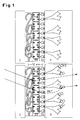
- the streptavidin After the streptavidin has been immobilized on the biotinylated polymer surface, the streptavidin with its as yet unoccupied binding sites now serves as a matrix for the connection of further biotinylated biomolecules as receptors, in particular for the connection of antibodies.
- biotinylated protein A or biotinylated protein G to the streptavidin matrix.
- the biotinylation of protein A using N-hydroxysuccinimide or via other reactive esters is easily possible and familiar to the person skilled in the art.
- Protein A is a protein from the cell wall of the bacterium Staphylococcus aureus.
- Optical solid phase biosensors of this type can be used, for example, in the form of test strips.
- Another embodiment of the immunosensor involves the connection of biotinylated antibodies to the streptavidin matrix.
- the antibodies can be biotinylated using biotin-N-hydroxysuccinimide or other reactive esters.
- biotinylation of antibodies which is well known to the person skilled in the art, has the disadvantage that the biotinylation is not region-specific.
- Some of the IgG molecules are also biotinylated at or near the antigen binding site, so that they are sterically blocked and the immunological activity of the antibodies and thus the sensitivity of the sensor decrease.
- biotin derivatives with hydrazide reactive groups are used which react with oxidized antibodies.
- the carbohydrates located on the F c part of the IgGs are cleaved in a reaction known to the person skilled in the art (glycol cleavage) and aldehydes are generated.
- the biotin groups are thus linked region-specifically to the F c part of the antibodies.
- the biotinylated antibodies are coupled to the streptavidin matrix and complete the test strip surface of the immunosensor without the need for coupling via biotinylated protein A.
- the test strip is now able to recognize and quantify the analyte provided with a suitable acceptor dye F2 (e.g. rhodamine isothiocyanate) by interaction of the receptor, in particular the antibody, with the analyte.
- F2 e.g. rhodamine isothiocyanate
- the analyte is detected by simply bringing the coated carrier into contact with the solution in which a molecule is suspected to be an analyte (sample solution) and subsequent fluorescence measurement.
- the fluorescence of the donor (F1) and the acceptor (F2) dye is measured.
- the intensity of the acceptor fluorescence will increase due to the Förster energy transfer and that of the donor will decrease compared to the unbound state.
- the test strip is first equilibrated with an acceptably labeled analog of the analyte in question. In this state, the acceptor fluorescence of F2 then outweighs the donor fluorescence of F1.
- the Förster energy transfer will be interrupted after the displacement reaction, so that an increase in the donor fluorescence of F1 and a decrease in the acceptor fluorescence of F2 signalize the binding of the unlabeled analyte. In both cases, the change in acceptor and donor fluorescence is clearly related to the concentration of the analyte.
- the Förster energy transfer can be measured in conventional fluorescence spectrometers, but also in specially designed devices for an energy transfer immunosensor. The concentration of the analyte in the analysis liquid can then be determined by means of suitable calibration curves.
- a specifically binding molecule labeled with the fluorescent dye F2 is added in known amount to an analysis solution in which the analyte to be detected is suspected competed.
- the concentration of the analyte to be detected is then measured by the dependence of the fluorescence intensities on F2 or on F1 or the ratio of the two intensities.
- Another embodiment of the immunosensor according to the invention includes the connection of the donor dye F1 to the receptor, preferably the antibody, preferably via hydrazide reactive groups to oxidized antibodies in the form described above.
- the efficiency of Förster energy transfer by reducing the average distance between donor (F1) and acceptor (F2) dye, which can be used to increase the sensitivity of the test method.
- the measurement shows that the surface is covered with an interface layer of organic material that has grown regularly in the various preparation steps and that the preparation remains molecularly smooth in each step.
- the carrier cleaning was carried out according to a standard procedure (W. Kern, DA Puotinen, RCA Review, 31 (1970), 187)
- the carrier was placed in a solution of biotinylated polylysine hydrobromide (PLB) (5 mg / 10 ml in 0.4 M NaCl) for 20 minutes and then washed and dried again.
- PLB biotinylated polylysine hydrobromide
- the carrier coated with protein A was immersed in a rabbit IgG solution (specificity: anti-mouse IgG, 5 10 -7 mol / l, PBS buffer as above) and washed three times with the pure buffer. The carrier was kept in PBS buffer until the antigen was bound.
- FIG. 2 shows X-ray reflectograms which were measured between the different adsorption steps during the preparation of a test strip (silicon substrate) (dry sample).
- FIG. 3 shows a representative result for a preparation which was produced using the technology presented here.
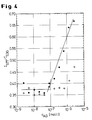
- Samples were prepared on float glass as described above. 10 mg / ml BSA was dissolved in PBS buffer. This protein solution was used to prepare a dilution series of the RITC-labeled antigen. In this series of dilutions the concentration of the antigen was between 2.5 10 -9 and 5 10 -6 mol / l.
- the carriers were placed in the solution of a specific antigen concentration for about 40 minutes and then washed 5 times for about 1 minute in a PBS buffer (buffer composition as above) mixed with 0.1% TWEEN-20. The carriers were blown dry in a stream of nitrogen and stored in the dark at 4 ° C. until measured.
- supports were coated in the same sequence up to and including the streptavidin layer (but without protein A and IgG layers) and placed in an antigen-containing solution of the dilution series for about 40 minutes and, as above described, washed and dried.
- sample and reference carriers were measured both in a conventional fluorescence spectrometer and in a specially designed device for measuring the fluorescence energy transfer in the dry state.
- Figure 4 shows representative results.
Landscapes
- Health & Medical Sciences (AREA)
- Immunology (AREA)
- Life Sciences & Earth Sciences (AREA)
- Engineering & Computer Science (AREA)
- Molecular Biology (AREA)
- Biomedical Technology (AREA)
- Chemical & Material Sciences (AREA)
- Hematology (AREA)
- Urology & Nephrology (AREA)
- Biotechnology (AREA)
- Microbiology (AREA)
- Cell Biology (AREA)
- Food Science & Technology (AREA)
- Medicinal Chemistry (AREA)
- Physics & Mathematics (AREA)
- Analytical Chemistry (AREA)
- Biochemistry (AREA)
- General Health & Medical Sciences (AREA)
- General Physics & Mathematics (AREA)
- Pathology (AREA)
- Investigating, Analyzing Materials By Fluorescence Or Luminescence (AREA)
- Investigating Or Analysing Materials By The Use Of Chemical Reactions (AREA)
Applications Claiming Priority (2)
| Application Number | Priority Date | Filing Date | Title |
|---|---|---|---|
| DE1995130078 DE19530078A1 (de) | 1995-08-16 | 1995-08-16 | Optischer Festphasenbiosensor auf Basis von Streptavidin und Biotin |
| DE19530078 | 1995-08-16 |
Publications (1)
| Publication Number | Publication Date |
|---|---|
| EP0762122A1 true EP0762122A1 (fr) | 1997-03-12 |
Family
ID=7769594
Family Applications (1)
| Application Number | Title | Priority Date | Filing Date |
|---|---|---|---|
| EP96112608A Withdrawn EP0762122A1 (fr) | 1995-08-16 | 1996-08-05 | Biocapteur optique en phase solide à base de streptavidine et biotine |
Country Status (4)
| Country | Link |
|---|---|
| EP (1) | EP0762122A1 (fr) |
| JP (1) | JPH0954094A (fr) |
| CA (1) | CA2183204A1 (fr) |
| DE (1) | DE19530078A1 (fr) |
Cited By (10)
| Publication number | Priority date | Publication date | Assignee | Title |
|---|---|---|---|---|
| WO1998055864A3 (fr) * | 1997-06-06 | 1999-03-04 | Biotez Berlin Buch Gmbh | Surfaces revetues de streptavidine/avidine |
| WO1999045142A3 (fr) * | 1998-03-03 | 1999-10-28 | November Ag Molekulare Medizin | Agent et procede pour mettre la presence de substances chimiques en evidence |
| WO2000065352A1 (fr) * | 1999-04-28 | 2000-11-02 | Eidgenossisch Technische Hochschule Zurich | Revetements polyioniques dans des dispositifs d'analyse et de detection |
| WO2000077496A1 (fr) * | 1999-06-14 | 2000-12-21 | November Aktiengesellschaft Gesellschaft Fuer Molekulare Medizin | Procede et dispositif d'identification d'un polymere |
| DE10035451A1 (de) * | 2000-07-19 | 2002-02-07 | November Ag Molekulare Medizin | Verfahren und Vorrichtung zur Identifizierung einer Polymersequenz |
| CN100339712C (zh) * | 2002-09-13 | 2007-09-26 | 日立化成工业株式会社 | 固定化载体和固相 |
| US7316845B2 (en) | 1997-04-21 | 2008-01-08 | California Institute Of Technology | Multifunctional polymeric tissue coatings |
| US7855068B2 (en) * | 2002-04-25 | 2010-12-21 | Semibio Holdings Limited | Methods and kits for detecting a target cell |
| WO2020095083A1 (fr) | 2018-11-05 | 2020-05-14 | Toray Films Europe | Procédé spectroscopique de fluorescence |
| CN113533282A (zh) * | 2021-07-15 | 2021-10-22 | 中国科学院苏州生物医学工程技术研究所 | 一种基于均相时间分辨荧光的生物素定量测定方法 |
Families Citing this family (10)
| Publication number | Priority date | Publication date | Assignee | Title |
|---|---|---|---|---|
| GB2335490B (en) * | 1998-03-20 | 2003-05-14 | Ortho Clinical Diagnostics | An assay surface that permits an analyte releasiing step |
| NL1014816C2 (nl) * | 2000-03-31 | 2001-10-02 | Tno | Werkwijze voor het bepalen van binding met natuurlijke receptoren. |
| WO2001079848A1 (fr) * | 2000-03-31 | 2001-10-25 | Nederlandse Organisatie Voor Toegepast-Natuurwetenschappelijk Onderzoek Tno | Procede pour determiner la liaison avec des recepteurs naturels |
| DE10148102B4 (de) * | 2001-09-28 | 2006-03-30 | Biotez Berlin-Buch Gmbh | Biochip zum quantitativen fotometrischen Nachweis von Biomolekülen, seine Verwendung und Verfahren zum quantitativen Nachweis von Biomolekülen durch fotometrisches Erfassen einer Farbreaktion |
| JP2009265062A (ja) * | 2008-04-30 | 2009-11-12 | Yasuro Niitome | 分析用チップとその製造方法およびその分析方法 |
| JP2013120120A (ja) * | 2011-12-07 | 2013-06-17 | Konica Minolta Medical & Graphic Inc | ラテラルフロー型クロマト法用テストストリップ、およびそれを用いたアナライトの検出または定量方法 |
| WO2014132692A1 (fr) * | 2013-02-28 | 2014-09-04 | 株式会社村田製作所 | Dispositif de mesure et son procédé de fabrication |
| JP6422075B2 (ja) * | 2014-09-24 | 2018-11-14 | 太陽誘電株式会社 | 組成物及び組成物を利用したモーター蛋白デバイス |
| US10527614B2 (en) | 2015-11-09 | 2020-01-07 | Bio-Rad Laboratories, Inc. | Assays using avidin and biotin |
| CN121762450B (zh) * | 2026-03-03 | 2026-05-29 | 德路通(石家庄)生物科技有限公司 | 一种回音壁模式传感器及其制备方法和应用 |
Citations (4)
| Publication number | Priority date | Publication date | Assignee | Title |
|---|---|---|---|---|
| WO1989009408A1 (fr) * | 1988-03-29 | 1989-10-05 | Ares-Serono Research & Development Limited Partner | Procede d'analyse |
| EP0405578A2 (fr) * | 1989-06-29 | 1991-01-02 | Nippon Shoji Kabushiki Kaisha | Immunoessai enzymatique pour détecter les antigènes et phase solide pour sa mise en oeuvre |
| EP0429907A2 (fr) * | 1989-11-21 | 1991-06-05 | Bayer Ag | Biocapteur optique |
| EP0561239A1 (fr) * | 1992-03-18 | 1993-09-22 | Bayer Ag | Biocapteur optique en phase solide, avec des couches polyioniques fluorescentes |
-
1995
- 1995-08-16 DE DE1995130078 patent/DE19530078A1/de not_active Withdrawn
-
1996
- 1996-08-05 EP EP96112608A patent/EP0762122A1/fr not_active Withdrawn
- 1996-08-13 JP JP22945496A patent/JPH0954094A/ja active Pending
- 1996-08-13 CA CA 2183204 patent/CA2183204A1/fr not_active Abandoned
Patent Citations (4)
| Publication number | Priority date | Publication date | Assignee | Title |
|---|---|---|---|---|
| WO1989009408A1 (fr) * | 1988-03-29 | 1989-10-05 | Ares-Serono Research & Development Limited Partner | Procede d'analyse |
| EP0405578A2 (fr) * | 1989-06-29 | 1991-01-02 | Nippon Shoji Kabushiki Kaisha | Immunoessai enzymatique pour détecter les antigènes et phase solide pour sa mise en oeuvre |
| EP0429907A2 (fr) * | 1989-11-21 | 1991-06-05 | Bayer Ag | Biocapteur optique |
| EP0561239A1 (fr) * | 1992-03-18 | 1993-09-22 | Bayer Ag | Biocapteur optique en phase solide, avec des couches polyioniques fluorescentes |
Cited By (15)
| Publication number | Priority date | Publication date | Assignee | Title |
|---|---|---|---|---|
| US7316845B2 (en) | 1997-04-21 | 2008-01-08 | California Institute Of Technology | Multifunctional polymeric tissue coatings |
| WO1998055864A3 (fr) * | 1997-06-06 | 1999-03-04 | Biotez Berlin Buch Gmbh | Surfaces revetues de streptavidine/avidine |
| US6468752B1 (en) | 1998-03-03 | 2002-10-22 | November Aktiengesellschaft Gesellschaft Fur Molekulare Medizin | Agent and method for detecting chemical substances |
| WO1999045142A3 (fr) * | 1998-03-03 | 1999-10-28 | November Ag Molekulare Medizin | Agent et procede pour mettre la presence de substances chimiques en evidence |
| WO2000065352A1 (fr) * | 1999-04-28 | 2000-11-02 | Eidgenossisch Technische Hochschule Zurich | Revetements polyioniques dans des dispositifs d'analyse et de detection |
| WO2000077496A1 (fr) * | 1999-06-14 | 2000-12-21 | November Aktiengesellschaft Gesellschaft Fuer Molekulare Medizin | Procede et dispositif d'identification d'un polymere |
| US7067253B1 (en) | 1999-06-14 | 2006-06-27 | november Aktiengesellschaft Gesellschaft für Molekulare Medizin | Method and device for identifying a polymer |
| DE10035451C2 (de) * | 2000-07-19 | 2002-12-05 | November Ag Molekulare Medizin | Verfahren und Vorrichtung zur Identifizierung einer Polymersequenz |
| DE10035451A1 (de) * | 2000-07-19 | 2002-02-07 | November Ag Molekulare Medizin | Verfahren und Vorrichtung zur Identifizierung einer Polymersequenz |
| US7855068B2 (en) * | 2002-04-25 | 2010-12-21 | Semibio Holdings Limited | Methods and kits for detecting a target cell |
| CN100339712C (zh) * | 2002-09-13 | 2007-09-26 | 日立化成工业株式会社 | 固定化载体和固相 |
| WO2020095083A1 (fr) | 2018-11-05 | 2020-05-14 | Toray Films Europe | Procédé spectroscopique de fluorescence |
| US11733097B2 (en) | 2018-11-05 | 2023-08-22 | Toray Films Europe | Fluorescence spectroscopic method using polyester composition containing additive to prevent oxidative degradation, and substrate, optical filter, security document, and sensor device containing the polyester composition |
| CN113533282A (zh) * | 2021-07-15 | 2021-10-22 | 中国科学院苏州生物医学工程技术研究所 | 一种基于均相时间分辨荧光的生物素定量测定方法 |
| CN113533282B (zh) * | 2021-07-15 | 2024-05-28 | 中国科学院苏州生物医学工程技术研究所 | 一种基于均相时间分辨荧光的生物素定量测定方法 |
Also Published As
| Publication number | Publication date |
|---|---|
| DE19530078A1 (de) | 1997-02-20 |
| CA2183204A1 (fr) | 1997-02-17 |
| JPH0954094A (ja) | 1997-02-25 |
Similar Documents
| Publication | Publication Date | Title |
|---|---|---|
| DE19530078A1 (de) | Optischer Festphasenbiosensor auf Basis von Streptavidin und Biotin | |
| DE69121021T2 (de) | Bindungsnachweisverfahren mit Konjugatrückgewinnung | |
| EP0561239B1 (fr) | Biocapteur optique en phase solide, avec des couches polyioniques fluorescentes | |
| EP0429907B1 (fr) | Biocapteur optique | |
| Di Nardo et al. | A fluorescent immunochromatographic strip test using Quantum Dots for fumonisins detection | |
| DE69731306T2 (de) | Verfahren und kit zur bestimmung eines analyts mittels massenbestimmung | |
| DE69635607T2 (de) | Liposom-verstärkter immunoaggregations-test und testvorrichtung | |
| DE69719742T2 (de) | Biosensor-vorrichtung und verfahren | |
| EP0397113B1 (fr) | Méthode de détection de substances capables de se lier spécifiquement dans les fluides corporels | |
| DE69412137T2 (de) | Sensoreinrichtung zum sandwichtest | |
| EP0363942B1 (fr) | Procédé pour la détermination d'une substance liante spécifique | |
| DE69116236T2 (de) | Bestimmung von Analyten, die Bindungsstellen für mindestens zwei Bindungsgruppen haben | |
| DE69930404T2 (de) | Methode zum nachweis von analyten | |
| US5650333A (en) | Immunoassay method and kit using superaggregated complex | |
| JPH05209886A (ja) | 同時較正不均質イムノアツセイ | |
| Nilsson et al. | Thin-layer immunoaffinity chromatography with bar code quantitation of C-reactive protein | |
| Garcinuno et al. | Development of a fluoroimmunosensor for theophylline using immobilised antibody | |
| EP2167965B1 (fr) | Procédé de détection d'analytes | |
| DE69328727T2 (de) | Immunologisches nachweisverfahren unter verwendung von zwei bestimmbaren markern | |
| EP1512010B1 (fr) | Biocapteur universel et procedes d'utilisation | |
| JP4545869B2 (ja) | 多孔性フィルタを用いる生理活性試料物質の測定方法 | |
| DE69220080T2 (de) | Reagenzzusammensetzung in form von benutzer-einheiten für spezifische bindungstests | |
| DE69332454T2 (de) | Trennverfahren | |
| CN103353523B (zh) | 磷光二氧化硅纳米颗粒标记的免疫层析方法及其检测试纸 | |
| DE69127628T2 (de) | Hochempfindlicher optischer Immunoassay durch Gebrauch von Enzymmarkierten Reagenz |
Legal Events
| Date | Code | Title | Description |
|---|---|---|---|
| PUAI | Public reference made under article 153(3) epc to a published international application that has entered the european phase |
Free format text: ORIGINAL CODE: 0009012 |
|
| AK | Designated contracting states |
Kind code of ref document: A1 Designated state(s): BE DE FR GB IT LU NL SE |
|
| STAA | Information on the status of an ep patent application or granted ep patent |
Free format text: STATUS: THE APPLICATION HAS BEEN WITHDRAWN |
|
| 18W | Application withdrawn |
Withdrawal date: 19970821 |