EP0762796A2 - Système et méthode d'authentification pour prévenir la fraude dans les communications "sans fil" - Google Patents
Système et méthode d'authentification pour prévenir la fraude dans les communications "sans fil" Download PDFInfo
- Publication number
- EP0762796A2 EP0762796A2 EP96306105A EP96306105A EP0762796A2 EP 0762796 A2 EP0762796 A2 EP 0762796A2 EP 96306105 A EP96306105 A EP 96306105A EP 96306105 A EP96306105 A EP 96306105A EP 0762796 A2 EP0762796 A2 EP 0762796A2
- Authority
- EP
- European Patent Office
- Prior art keywords
- usage
- wireless communication
- data
- subscriber
- wireless
- Prior art date
- Legal status (The legal status is an assumption and is not a legal conclusion. Google has not performed a legal analysis and makes no representation as to the accuracy of the status listed.)
- Withdrawn
Links
Images



Classifications
-
- H—ELECTRICITY
- H04—ELECTRIC COMMUNICATION TECHNIQUE
- H04W—WIRELESS COMMUNICATION NETWORKS
- H04W12/00—Security arrangements; Authentication; Protecting privacy or anonymity
- H04W12/12—Detection or prevention of fraud
- H04W12/126—Anti-theft arrangements, e.g. protection against subscriber identity module [SIM] cloning
Definitions
- the present invention relates generally to communication networks, and more particularly to an authentication system and method for preventing wireless communication fraud.
- FIG. 1 depicts a schematic diagram of a portion of a typical wireless communications system in the prior art designated generally as 10, which system serves a number of wireless terminals that are situated within a geographic area.
- the heart of a typical wireless system is known as a Wireless Switching Center ("WSC") 12.
- WSC 12 is connected to a number of base stations 14, which are distributed throughout the geographic area serviced by system 10, and the local and long distance telephone networks 16.
- WSC 12 routes or "switches” calls between wireless terminals 22 or between a wireless terminal 22 and a wireline terminal (not shown) which are commonly connected to system 10 via the local and/or long distance networks 16.
- each cell 20 is schematically represented by a hexagon; in practice, however, each cell 20 usually has an irregular shape that depends on the topography of the terrain serviced by system 10.
- each cell 20 contains a base station 14, which includes the antennas and radios that base station 14 uses to communicate with wireless terminals 22 and also includes the transmission equipment that base station 14 uses to communicate with WSC 12.
- base station 14 includes the antennas and radios that base station 14 uses to communicate with wireless terminals 22 and also includes the transmission equipment that base station 14 uses to communicate with WSC 12.
- Fraudulent use or theft of service is one of the principal business and technical problems faced by wireless communication service companies today. "Fraudulent user" denotes anyone who seeks to obtain or does in fact obtain unauthorized wireless service. Fraudulent use can take several forms. A first example of such fraudulent use involves the theft of a wireless terminal and subsequent unauthorized use in the same or different geographic area. Second, cloning or duplicating a valid mobile telephone by securing authorization data of a valid subscriber is another such fraudulent use. Third, fraudulent use of wireless services may involve the use of random, unauthorized Electronic Serial Number - Mobile Identification Number (ESN-MIN) data. This data can be randomly generated by a data sequence generator to attempt to gain fraudulent access to wireless services. Finally, hijacker or subscription fraud schemes generally involve an increase in the transmitted power level of the fraudulent user's wireless terminals. This often enables the fraudulent user to take over a legitimate mobile radio traffic channel assigned by the service provider company to another mobile subscriber.
- ESN-MIN Electronic Serial Number - Mobile Identification Number
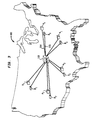
- wireless networks N 1 , N 2 ,...N j ,...N n each under the control of a wireless service provider, provide wireless communications service to subscribers within assigned geographical areas.
- the wireless networks N 1 -N n also automatically transfer calls to other segments of the nationwide telephone system, for example, through network switches.
- prior art wireless telephone systems have utilized clearinghouse type service centers 52. While wireless networks N 1 -N n and commercial clearinghouse 52 exchange substantial data, fraud cannot be detected before or during service due to lack of an appropriate protocol.
- Some switch manufacturers use proprietary protocols which operate only between switches of that manufacturer. Where implemented, these protocols have stopped some fraud, but not cloning. This practice and inability to identify fraudulent service requests before and during service has resulted in increasingly costly losses for the wireless telephone industry.
- an improved wireless process and system which incorporates a fraud prevention apparatus that detects fraudulent use in a wireless communication system before or during the time in which service is initially granted to an unauthorized user.
- An embodiment of the present invention relates to a fraud prevention apparatus which includes a central database capable of storing usage threshold data of wireless communications subscribers.
- the usage threshold data may, for example, consist of: calling duration data; call frequency data; exclusion geographical site data or any combination thereof.
- the central database communicates with at least one wireless communication network and with at least one paging network. Further, a processor determines when current subscriber usage exceeds the usage threshold data stored within the database.
- An interface connects the processor to at least one paging system.
- the paging system may page the subscriber when fraudulent activity is detected.
- the processor may automatically initiate termination of wireless service once fraudulent use is detected. Alternately, the subscriber may initiate the termination.
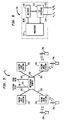
- Wireless system 100 includes a National Calling Profile Database (NCPD) 110.
- NCPD 110 has processing capability in addition to the storage capacity of a database in the conventional sense.
- NCPD 110 communicates with conventional wireless communication networks A 1 , A 2 , ...A j ,... A n , under the control of a common wireless service provider.
- NCPD 110 may also communicate with other wireless networks (not shown) under the control of different service providers.
- Each of the wireless networks A 1 -A n provides telecommunication services to subscribers calling from a local region associated with that wireless network.
- Each subscriber serviced by the common service provider can wirelessly communicate via any one of the networks A 1 -A n , from anywhere within a larger geographical region, such as within the continental United States. This larger geographical region encompasses all of the local regions serviced by the networks A 1 -A n .
- Wireless system 100 further includes conventional paging networks B 1 , B 2 ,...B j ,...B n , each providing paging service within the same local regions as wireless networks A 1 -A n , respectively.
- the paging networks B 1 -B n which may be under the control of the same service provider associated with the wireless networks A 1 -A n , provide paging services to the same subscribers serviced by the wireless networks A 1 -A n .
- Paging networks B 1 -B n are also in communication with NCPD 110.
- Other paging networks (not shown) under the control of different service providers may also communicate with NCPD 110.
- NCPD 110 may communicate with wireless networks A 1 -A n and paging networks B 1 -B n through conventional low cost data communication links 114 and 116, respectively, which may be fiber optic or coaxial cabling. Alternatively, NCPD 110 can transmit data to the service providers A 1 -A n via microwave antenna and orbital satellite systems, both of which are well known in the art. NCPD 110 may communicate with service providers A 1 -A n and paging networks B 1 -B n with any other appropriate communication scheme.
- Wireless network A i may be configured, for example, with protocols used in a conventional cellular network, with the added capability of being able to communicate with NCPD 110. It is understood that other protocols may alternatively be employed, such as those used for the relatively new Personal Communications Networks (PCNs), and that the invention is not limited to cellular networks.
- PCNs Personal Communications Networks
- Network A i includes a wireless switching center 130 that switches numerous communication messages to and from the Public Switched Telephone Network (PSTN) and wireless base stations 135. Communications messages are transceived between the PSTN and switching center 130 on communication link 124 which may be trunked fiber optic cables. These communication messages may be audio messages as in standard telephone calls, or electronic data as in facsimile or computer to computer communications.
- PSTN Public Switched Telephone Network
- wireless base stations 135. Communications messages are transceived between the PSTN and switching center 130 on communication link 124 which may be trunked fiber optic cables.
- These communication messages may be audio messages as in standard telephone calls, or electronic data as in facsimile or computer to computer communications.
- Base station 135 then wirelessly transceives the communication messages to and from the wireless terminal 140.
- a communication link 132 between each base station 135 and switching center 130 carries the communication messages therebetween.
- Link 132 may be a wireline link if the base stations 135 and switching center 130 are ground based. If switching center 130 and /or base stations 135 are satellite-based as for example, in spot beam systems, then links 132 are typically time domain multiplied (TDM) microwave links.
- TDM time domain multiplied
- Paging network B i includes a messaging center 200 that interfaces with the PSTN and NCPD via communication links 126 and 116, respectively.
- Messaging center 200 is also coupled to each one of a number of paging base stations 210 by means of communication links 202.
- Each paging base station 210 operates to send wireless paging messages to pagers 250 generally within a predetermined distance of that paging base station 210.
- Each pager 250 is intended to page an associated subscriber of the wireless networks A 1 -A n .
- a page is initiated by NCPD 110 when fraudulent use of the subscriber's wireless terminal is suspected.
- a telephone number may be displayed on pager 250 corresponding to a telephone phone number of the messaging center 200.
- the subscriber can then retrieve the message by telephoning the messaging center 200.
- pager 250 may also function to provide standard paging services.
- NCPD 110 includes a processor 112 that monitors current usage patterns for subscribers to determine if a threshold is exceeded for any subscriber. As will be described in further detail below, when a subscriber exceeds the threshold value, NCPD 110 may alert the subscriber to possible fraudulent usage. If the subscriber confirms fraudulent usage, wireless service may then be terminated at the option of the subscriber by contacting the service provider. Alternatively, NCPD 110 may initiate automatic termination of service to a wireless terminal when fraudulent usage is suspected. This is accomplished by the NCPD 110 sending an appropriate command to one or more of the wireless networks A 1 -A n to effectuate service termination.
- the expected usage pattern data for the subscribers may be stored within a database 118 coupled to processor 112.
- This usage pattern data includes usage pattern information such as, for example: the typical or average duration of a subscriber's wireless telephone calls; the frequency of calls; and geographic locations of the wireless networks from which calls originate and the locations to which the outgoing calls are placed.
- Usage pattern data can also be recorded for particular periods of time such as time-of-day and time-of-year. This data may reflect changes in any given subscriber's typical daily wireless terminal telephone activity and changes during certain periods of the year. For example, subscribers may increase their usage during peak periods.
- Usage pattern data can be determined in a number of ways, for example, by having the subscriber complete a detailed questionnaire regarding anticipated wireless telephone usage using criteria such as that described above. Another method for determining usage pattern data entails the service provider reviewing past individual subscriber usage patterns. Usage patterns can be studied at regular intervals to periodically update the stored usage pattern data. Once usage pattern data is established, usage thresholds can be determined, which, if exceeded, raise a flag of fraudulent use.
- NCPD 110 includes processor 112 which is operational to constantly compare incoming data from the various wireless networks A 1 -A n with information stored in database 118 of NCPD 110.
- NCPD 110 also includes an input/output (I/O) interface 120 for interfacing NCPD 110 with paging networks B 1 -B n and wireless networks A 1 -A n .
- Interface 120 may be a multi-channel modem using an appropriate protocol for data communication with the networks A 1 -A n and B 1 -B n .
- modems may be used for interface 120, each for communication with a separate wireless network A 1 -A n or a separate paging network B 1 -B n .
- database 118 when a stored usage threshold is exceeded for a particular call at a wireless terminal, database 118, via interface 120, automatically initiates a paging message regarding suspected fraudulent activity via one of the paging networks B 1 -B n .
- This message may notify the subscriber associated with that wireless terminal of the outgoing telephone number to which the call was placed.
- the paging message is received by the subscriber on an individual pager 250, mentioned above.
- the paging message may be an alert signal such as an audible tone, whereupon the subscriber could then call the messaging center 200 (FIG. 5) to obtain a detailed message concerning the suspected fraudulent activity.
- a process for preventing wireless communications fraud will be described below.
- the subscriber when a subscriber of the wireless networks A 1 -A n initially subscribes to the authentication process offered by NCPD 110, the subscriber must set up a caller profile, block 510. This may be done by the subscriber programming an expected calling pattern into database 118 of NCPD 110. (Programming may be effectuated automatically by the subscriber responding on a touch-tone telephone to voice prompts initiated by NCPD 110). As mentioned above, the expected calling pattern takes into account, for example: the expected duration of calls; frequency of calls; geographic locations from which calls are placed and /or of the call destinations, and expected time patterns of calls.
- subscriber usage threshold data is computed by processor 112 using predetermined criteria, block 520.
- the threshold data is then stored in database 118. When this threshold data is exceeded by subsequent usage of the associated wireless terminal, fraudulent activity is suspected.
- the subscriber may program the usage threshold data itself into the processor 112 rather than the expected calling pattern data, thus obviating the need for processor 112 to compute the thresholds.
- Table 1 exemplary data relating to the usage threshold data of a subscriber.
- the usage threshold data stored in database 118, when a wireless terminal associated with that subscriber is engaged in activity which exceeds the stored usage threshold data (e.g., Table 1), processor 112 is instructed to notify the subscriber of the fraudulent usage, via paging network B 1 -B n .
- the usage threshold data may be exceeded when the wireless telephone associated with the subscriber is a) engaged in a call of longer than 30 minutes; or, b) initiates more than 4 calls a day; or, c) is used in a geographic region outside of New York, New Jersey or Pennsylvania; or when a predetermined combination of (a), (b) or (c) occurs.
- the information pertaining to that call is relayed from the wireless network A 1 -A n which received the call to NCPD 110, via transmission channel 114, block 530.
- the received calling information is then processed in processor 112 so as to analyze the calling pattern, block 540. If the analyzed calling pattern exceeds the threshold values established in block 520, NCPD 110 sends a paging message, via transmission channel 116, to the paging network B 1 -B n in which the subscriber is located, block 550.
- the subscriber then receives the paged message from NCPD 110 in block 560. After the subscriber receives this paged message and if the subscriber confirms it is fraudulent activity, the subscriber then reports the fraudulent activity to the subscriber's service provider, block 570. Rather than imposing penalties to subscribers who fail to notify the service provider of the fraudulent activity, the service provider may provide incentives such as rewards including credits to the subscriber's wireless telephone account, or an allotment of "free" wireless telephone calls or air time for subscribers who promptly notify the service provider of the fraudulent activity.
- incentives such as rewards including credits to the subscriber's wireless telephone account, or an allotment of "free" wireless telephone calls or air time for subscribers who promptly notify the service provider of the fraudulent activity.
- NCPD 110 may further automatically deny wireless communications service during the occurrence of suspected fraudulent activity by an unauthorized user.
- a subscriber is notified of the suspected fraudulent activity through one of the paging networks B 1 -B n and must contact the subscriber's service provider so as to resume wireless communications activity.
- the service provider may then deny wireless service to the wireless terminal associated with the subscriber's account, in block 580.
- the service provider may then issue a new identifying code to the subscriber's wireless terminal, block 590, so as to prevent future fraudulent use.
- identifying code may include for example, the Electronic Serial Number (ESN) and/or Mobile Identification Number (MIN).
- the fraud prevention system disclosed herein provides rapid discovery and feedback regarding suspected fraudulent activity in contrast to existing methods of wireless telephone fraud prevention, as mentioned above, which only provide information regarding wireless telephone activity to subscribers in a billing statement which is received by the subscriber on a monthly basis.
Landscapes
- Engineering & Computer Science (AREA)
- Computer Security & Cryptography (AREA)
- Computer Networks & Wireless Communication (AREA)
- Signal Processing (AREA)
- Mobile Radio Communication Systems (AREA)
- Small-Scale Networks (AREA)
Applications Claiming Priority (2)
| Application Number | Priority Date | Filing Date | Title |
|---|---|---|---|
| US08/522,897 US5839063A (en) | 1995-09-01 | 1995-09-01 | Authentication system and method for preventing wireless communication fraud |
| US522897 | 1995-09-01 |
Publications (2)
| Publication Number | Publication Date |
|---|---|
| EP0762796A2 true EP0762796A2 (fr) | 1997-03-12 |
| EP0762796A3 EP0762796A3 (fr) | 1999-06-16 |
Family
ID=24082831
Family Applications (1)
| Application Number | Title | Priority Date | Filing Date |
|---|---|---|---|
| EP96306105A Withdrawn EP0762796A3 (fr) | 1995-09-01 | 1996-08-21 | Système et méthode d'authentification pour prévenir la fraude dans les communications "sans fil" |
Country Status (5)
| Country | Link |
|---|---|
| US (1) | US5839063A (fr) |
| EP (1) | EP0762796A3 (fr) |
| JP (1) | JPH09116957A (fr) |
| CN (1) | CN1087565C (fr) |
| RU (1) | RU2168871C2 (fr) |
Families Citing this family (48)
| Publication number | Priority date | Publication date | Assignee | Title |
|---|---|---|---|---|
| US7747243B2 (en) | 1992-03-24 | 2010-06-29 | Boatwright John T | Call security system |
| FI101031B (fi) * | 1995-05-12 | 1998-03-31 | Nokia Telecommunications Oy | Tilaajalaitteen käyttöoikeuden tarkistus |
| US6501950B1 (en) * | 1996-03-14 | 2002-12-31 | Bellsouth Intellectual Property Corporation | Systems and methods for monitoring data signals on a communications network |
| US7096003B2 (en) * | 1996-08-08 | 2006-08-22 | Raymond Anthony Joao | Transaction security apparatus |
| US6473404B1 (en) | 1998-11-24 | 2002-10-29 | Connect One, Inc. | Multi-protocol telecommunications routing optimization |
| US6016307A (en) | 1996-10-31 | 2000-01-18 | Connect One, Inc. | Multi-protocol telecommunications routing optimization |
| US6754181B1 (en) | 1996-11-18 | 2004-06-22 | Mci Communications Corporation | System and method for a directory service supporting a hybrid communication system architecture |
| US7145898B1 (en) | 1996-11-18 | 2006-12-05 | Mci Communications Corporation | System, method and article of manufacture for selecting a gateway of a hybrid communication system architecture |
| US6690654B2 (en) | 1996-11-18 | 2004-02-10 | Mci Communications Corporation | Method and system for multi-media collaboration between remote parties |
| US6335927B1 (en) | 1996-11-18 | 2002-01-01 | Mci Communications Corporation | System and method for providing requested quality of service in a hybrid network |
| US6058301A (en) | 1996-11-27 | 2000-05-02 | Airtouch Communications, Inc. | Cellular fraud prevention using selective roaming |
| US6731625B1 (en) | 1997-02-10 | 2004-05-04 | Mci Communications Corporation | System, method and article of manufacture for a call back architecture in a hybrid network with support for internet telephony |
| US5995823A (en) * | 1997-07-09 | 1999-11-30 | Nortel Networks Corporation | Method and system in a wireless communications network for providing toll restrictions based on the geographic location of an originator |
| US6064990A (en) * | 1998-03-31 | 2000-05-16 | International Business Machines Corporation | System for electronic notification of account activity |
| US6266525B1 (en) * | 1998-12-17 | 2001-07-24 | Lucent Technologies Inc. | Method for detecting fraudulent use of a communications system |
| US6542729B1 (en) * | 1999-04-27 | 2003-04-01 | Qualcomm Inc. | System and method for minimizing fraudulent usage of a mobile telephone |
| JP2002077390A (ja) * | 2000-08-31 | 2002-03-15 | Fujitsu Ltd | 携帯電話管理方法、装置及び携帯電話装置 |
| KR20020048047A (ko) * | 2000-12-15 | 2002-06-22 | 박성진 | 이동통신 단말기를 이용한 성인 인증 및 실명 확인을 위한운영 방법 및 그 시스템. |
| JP2003163959A (ja) * | 2001-11-28 | 2003-06-06 | Nec Corp | 移動通信機及び移動通信システム |
| US8031059B2 (en) * | 2002-05-31 | 2011-10-04 | Motorola Mobility, Inc. | Communication system |
| US7774842B2 (en) * | 2003-05-15 | 2010-08-10 | Verizon Business Global Llc | Method and system for prioritizing cases for fraud detection |
| US7971237B2 (en) * | 2003-05-15 | 2011-06-28 | Verizon Business Global Llc | Method and system for providing fraud detection for remote access services |
| US7783019B2 (en) * | 2003-05-15 | 2010-08-24 | Verizon Business Global Llc | Method and apparatus for providing fraud detection using geographically differentiated connection duration thresholds |
| US7817791B2 (en) * | 2003-05-15 | 2010-10-19 | Verizon Business Global Llc | Method and apparatus for providing fraud detection using hot or cold originating attributes |
| JP2006025374A (ja) * | 2004-07-09 | 2006-01-26 | Fujitsu Ltd | ワイヤレス通信不正使用検証システム |
| EP1713241A4 (fr) * | 2004-08-11 | 2007-04-25 | Huawei Tech Co Ltd | Systeme de reseau de communication et procede d'obtention de service mixte |
| US7349690B2 (en) * | 2004-11-19 | 2008-03-25 | Research In Motion Limited | Out-of-coverage service termination using proxy |
| US9245270B2 (en) | 2005-07-22 | 2016-01-26 | Gtj Ventures, Llc | Transaction security apparatus and method |
| US9911124B2 (en) | 2005-07-22 | 2018-03-06 | Gtj Ventures, Llc | Transaction security apparatus and method |
| US9235841B2 (en) | 2005-07-22 | 2016-01-12 | Gtj Ventures, Llc | Transaction security apparatus and method |
| NO324315B1 (no) * | 2005-10-03 | 2007-09-24 | Encap As | Metode og system for sikker brukerautentisering ved personlig dataterminal |
| WO2007057887A2 (fr) * | 2005-11-15 | 2007-05-24 | Sandisk Il Ltd. | Procede de detection d'etablissement d'appel usurpe |
| US8274884B1 (en) | 2006-05-05 | 2012-09-25 | At&T Mobility Ii Llc | Prevention of bandwidth abuse of a communications system |
| US8411833B2 (en) * | 2006-10-03 | 2013-04-02 | Microsoft Corporation | Call abuse prevention for pay-per-call services |
| DE102006062210A1 (de) * | 2006-12-22 | 2008-06-26 | Deutsche Telekom Ag | Verfahren zur Frauderkennung bei Roamingverbindungen in mobilen Kommunikationsnetzen |
| US8255971B1 (en) | 2008-03-03 | 2012-08-28 | Jpmorgan Chase Bank, N.A. | Authentication system and method |
| US9246899B1 (en) | 2008-03-03 | 2016-01-26 | Jpmorgan Chase Bank, N.A. | Authentication and interaction tracking system and method |
| US20090265177A1 (en) * | 2008-04-16 | 2009-10-22 | Gte.Net Llc (D/B/A Verizon Internet Solutions) | Scheduled telecommunication service suspension |
| US8725083B2 (en) * | 2008-05-13 | 2014-05-13 | Qualcomm Incorporated | Self calibration of downlink transmit power |
| US8737317B2 (en) * | 2008-05-13 | 2014-05-27 | Qualcomm Incorporated | Autonomous carrier selection for femtocells |
| US8718696B2 (en) | 2008-05-13 | 2014-05-06 | Qualcomm Incorporated | Transmit power selection for user equipment communicating with femto cells |
| US8711786B2 (en) * | 2008-05-13 | 2014-04-29 | Qualcomm Incorporated | Autonomous downlink code selection for femto cells |
| RU2450284C2 (ru) * | 2010-05-26 | 2012-05-10 | Государственное казенное образовательное учреждение высшего профессионального образования Академия Федеральной службы охраны Российской Федерации (Академия ФСО России) | Способ определения местоположения vsat-станции в спутниковой сети |
| US8559926B1 (en) * | 2011-01-07 | 2013-10-15 | Sprint Communications Company L.P. | Telecom-fraud detection using device-location information |
| US10165495B1 (en) | 2017-06-22 | 2018-12-25 | Microsoft Technology Licensing, Llc | Connectivity using a geographic phone number |
| US10524086B2 (en) * | 2017-06-23 | 2019-12-31 | Microsoft Technology Licensing, Llc | Use condition for a geographic phone number |
| US10368225B2 (en) | 2017-06-30 | 2019-07-30 | Microsoft Technology Licensing, Llc | Location determination for a service request |
| CN110210653B (zh) * | 2019-05-15 | 2021-11-16 | 中国移动通信集团内蒙古有限公司 | 电信诈骗演变分析预测方法、装置、设备及介质 |
Family Cites Families (11)
| Publication number | Priority date | Publication date | Assignee | Title |
|---|---|---|---|---|
| EP0193316B1 (fr) * | 1985-02-18 | 1989-09-27 | Nec Corporation | Système de téléphonie mobile pour l'appel automatique d'un abonné mobile absent |
| SE500289C2 (sv) * | 1989-08-11 | 1994-05-30 | Ericsson Telefon Ab L M | Metod att övervaka telefonabonnemang i ett mobiltelefonsystem |
| SU1709545A1 (ru) * | 1989-12-29 | 1992-01-30 | Войсковая Часть 25871 | Устройство управлени доступом к каналу св зи |
| WO1993009640A1 (fr) * | 1991-11-08 | 1993-05-13 | Electronic Data Systems Corporation | Appareil de detection et de prevention du clonage d'un numero d'abonne dans un systeme de telephone cellulaire mobile |
| US5335278A (en) * | 1991-12-31 | 1994-08-02 | Wireless Security, Inc. | Fraud prevention system and process for cellular mobile telephone networks |
| US5337345A (en) * | 1992-07-29 | 1994-08-09 | Novatel Communications | System for securing mobile telephones from unauthorized transmission |
| US5345595A (en) * | 1992-11-12 | 1994-09-06 | Coral Systems, Inc. | Apparatus and method for detecting fraudulent telecommunication activity |
| US5555192A (en) * | 1993-02-26 | 1996-09-10 | Motorola, Inc. | Detection of duplicate identification codes in communication units |
| US5420910B1 (en) * | 1993-06-29 | 1998-02-17 | Airtouch Communications Inc | Method and apparatus for fraud control in cellular telephone systems utilizing rf signature comparison |
| US5535431A (en) * | 1994-04-05 | 1996-07-09 | Grube; Gary W. | Method of detecting unauthorized use of a communication unit |
| US5440758A (en) * | 1994-04-12 | 1995-08-08 | Motorola, Inc. | Method of preventing unauthorized access to a wireless communication system |
-
1995
- 1995-09-01 US US08/522,897 patent/US5839063A/en not_active Expired - Lifetime
-
1996
- 1996-08-21 EP EP96306105A patent/EP0762796A3/fr not_active Withdrawn
- 1996-08-26 CN CN96111938A patent/CN1087565C/zh not_active Expired - Fee Related
- 1996-08-27 RU RU96117240/09A patent/RU2168871C2/ru active
- 1996-08-30 JP JP8229757A patent/JPH09116957A/ja active Pending
Also Published As
| Publication number | Publication date |
|---|---|
| JPH09116957A (ja) | 1997-05-02 |
| US5839063A (en) | 1998-11-17 |
| CN1151099A (zh) | 1997-06-04 |
| EP0762796A3 (fr) | 1999-06-16 |
| RU2168871C2 (ru) | 2001-06-10 |
| CN1087565C (zh) | 2002-07-10 |
Similar Documents
| Publication | Publication Date | Title |
|---|---|---|
| US5839063A (en) | Authentication system and method for preventing wireless communication fraud | |
| US6125275A (en) | Cellular communications device for communicating data via a cellular network control channel | |
| CA2185230C (fr) | Methodes et appareil de transmission de donnees via un canal de controle de reseau cellulaire | |
| US5467382A (en) | Method and apparatus for clone detection in a communication system | |
| US5797097A (en) | Method and apparatus for identifying the location of a roaming pager | |
| US5274368A (en) | Method and apparatus for controlling access to a communication system | |
| US20110171977A1 (en) | Method and system for exploiting location-dependent services in a cellular radio system | |
| US6738647B1 (en) | Method and system for expanding the data payload of data messages transported via a cellular network control channel | |
| WO1998037709A2 (fr) | Arrangements et procedes de telecommunications | |
| EP0712563B1 (fr) | Procede d'etablissement de communications | |
| US5890075A (en) | Method for remotely updating data stored in a mobile terminal by a wireless telecommunications system | |
| US5970404A (en) | System and method of detecting and preventing fraudulent telephone calls in a radio telecommunications network | |
| WO1999020064A1 (fr) | Systeme de radio cellulaire avec definition de zone de rattachement | |
| CA2129665A1 (fr) | Confirmation d'adresses dans les systemes de radiocommunication cellulaires | |
| AU2001257054B2 (en) | Method and system for expanding the data payload of data messages transported via a cellular network control channel | |
| WO1998031175A2 (fr) | Detection de fraude assistee par l'utilisateur dans un systeme de telecommunication cellulaire | |
| CA2389189C (fr) | Detection d'une station mobile frauduleuse dans un systeme de communication mobile a partir des donnees de position de la station mobile | |
| US20010053706A1 (en) | Method and system for generating information-bearing audible tones | |
| WO2001022757A1 (fr) | Procede de traitement des informations de taxation | |
| WO1992015056A1 (fr) | Procede et appareil pour controler l'acces a un systeme de transmission | |
| MXPA99003731A (es) | Sistema y metodo para detectar y evitar llamadastelefonicas fraudalentas en una red de radiocomunicaciones | |
| GB2318484A (en) | Mobile communication systems |
Legal Events
| Date | Code | Title | Description |
|---|---|---|---|
| PUAI | Public reference made under article 153(3) epc to a published international application that has entered the european phase |
Free format text: ORIGINAL CODE: 0009012 |
|
| AK | Designated contracting states |
Kind code of ref document: A2 Designated state(s): DE GB |
|
| PUAL | Search report despatched |
Free format text: ORIGINAL CODE: 0009013 |
|
| AK | Designated contracting states |
Kind code of ref document: A3 Designated state(s): DE GB |
|
| 17P | Request for examination filed |
Effective date: 19991201 |
|
| STAA | Information on the status of an ep patent application or granted ep patent |
Free format text: STATUS: THE APPLICATION HAS BEEN WITHDRAWN |
|
| 18W | Application withdrawn |
Withdrawal date: 20020521 |