EP0762859B1 - Wärmedecke zur verwendung bei ärztlichen operationen - Google Patents
Wärmedecke zur verwendung bei ärztlichen operationen Download PDFInfo
- Publication number
- EP0762859B1 EP0762859B1 EP95934608A EP95934608A EP0762859B1 EP 0762859 B1 EP0762859 B1 EP 0762859B1 EP 95934608 A EP95934608 A EP 95934608A EP 95934608 A EP95934608 A EP 95934608A EP 0762859 B1 EP0762859 B1 EP 0762859B1
- Authority
- EP
- European Patent Office
- Prior art keywords
- heating cover
- air
- blank
- cover according
- textile
- Prior art date
- Legal status (The legal status is an assumption and is not a legal conclusion. Google has not performed a legal analysis and makes no representation as to the accuracy of the status listed.)
- Expired - Lifetime
Links
- 238000010438 heat treatment Methods 0.000 title claims abstract description 15
- 239000004753 textile Substances 0.000 claims abstract description 15
- 239000004744 fabric Substances 0.000 claims abstract description 14
- 239000000463 material Substances 0.000 claims abstract description 10
- 239000011248 coating agent Substances 0.000 claims abstract description 9
- 238000000576 coating method Methods 0.000 claims abstract description 9
- 229920000742 Cotton Polymers 0.000 claims abstract description 7
- 229920000728 polyester Polymers 0.000 claims abstract description 6
- 229920002635 polyurethane Polymers 0.000 claims abstract description 5
- 239000004814 polyurethane Substances 0.000 claims abstract description 5
- 239000005871 repellent Substances 0.000 claims abstract description 3
- 238000009835 boiling Methods 0.000 claims abstract 2
- 230000035699 permeability Effects 0.000 claims description 4
- 229920001971 elastomer Polymers 0.000 claims description 2
- 239000000806 elastomer Substances 0.000 claims description 2
- 239000011796 hollow space material Substances 0.000 claims 4
- 229920002994 synthetic fiber Polymers 0.000 claims 2
- 230000015572 biosynthetic process Effects 0.000 claims 1
- 239000004033 plastic Substances 0.000 abstract description 3
- 229920003023 plastic Polymers 0.000 abstract description 3
- 150000001875 compounds Chemical class 0.000 abstract description 2
- 239000004745 nonwoven fabric Substances 0.000 abstract 1
- 239000000645 desinfectant Substances 0.000 description 8
- 238000005406 washing Methods 0.000 description 8
- 238000004659 sterilization and disinfection Methods 0.000 description 6
- 238000010411 cooking Methods 0.000 description 3
- 230000001954 sterilising effect Effects 0.000 description 3
- 238000007792 addition Methods 0.000 description 2
- 238000000034 method Methods 0.000 description 2
- 238000010792 warming Methods 0.000 description 2
- 101100008046 Caenorhabditis elegans cut-2 gene Proteins 0.000 description 1
- 239000004952 Polyamide Substances 0.000 description 1
- 230000003187 abdominal effect Effects 0.000 description 1
- 239000002253 acid Substances 0.000 description 1
- 238000004026 adhesive bonding Methods 0.000 description 1
- 230000000172 allergic effect Effects 0.000 description 1
- 208000010668 atopic eczema Diseases 0.000 description 1
- 210000001124 body fluid Anatomy 0.000 description 1
- 239000010839 body fluid Substances 0.000 description 1
- 229920002678 cellulose Polymers 0.000 description 1
- 239000001913 cellulose Substances 0.000 description 1
- 239000013043 chemical agent Substances 0.000 description 1
- 239000000356 contaminant Substances 0.000 description 1
- 238000005520 cutting process Methods 0.000 description 1
- 239000003599 detergent Substances 0.000 description 1
- 150000002148 esters Chemical class 0.000 description 1
- 230000002349 favourable effect Effects 0.000 description 1
- 239000012530 fluid Substances 0.000 description 1
- 208000015181 infectious disease Diseases 0.000 description 1
- 238000004519 manufacturing process Methods 0.000 description 1
- 239000002906 medical waste Substances 0.000 description 1
- 230000003287 optical effect Effects 0.000 description 1
- 229920002647 polyamide Polymers 0.000 description 1
- 229920001296 polysiloxane Polymers 0.000 description 1
- 230000002265 prevention Effects 0.000 description 1
- 239000010865 sewage Substances 0.000 description 1
- 239000000126 substance Substances 0.000 description 1
- 238000001356 surgical procedure Methods 0.000 description 1
- 239000000725 suspension Substances 0.000 description 1
- 231100000331 toxic Toxicity 0.000 description 1
- 230000002588 toxic effect Effects 0.000 description 1
- XLYOFNOQVPJJNP-UHFFFAOYSA-N water Substances O XLYOFNOQVPJJNP-UHFFFAOYSA-N 0.000 description 1
- 238000003466 welding Methods 0.000 description 1
- 239000002759 woven fabric Substances 0.000 description 1
Images

Classifications
-
- A—HUMAN NECESSITIES
- A61—MEDICAL OR VETERINARY SCIENCE; HYGIENE
- A61F—FILTERS IMPLANTABLE INTO BLOOD VESSELS; PROSTHESES; DEVICES PROVIDING PATENCY TO, OR PREVENTING COLLAPSING OF, TUBULAR STRUCTURES OF THE BODY, e.g. STENTS; ORTHOPAEDIC, NURSING OR CONTRACEPTIVE DEVICES; FOMENTATION; TREATMENT OR PROTECTION OF EYES OR EARS; BANDAGES, DRESSINGS OR ABSORBENT PADS; FIRST-AID KITS
- A61F7/00—Heating or cooling appliances for medical or therapeutic treatment of the human body
- A61F7/0097—Blankets with active heating or cooling sources
-
- A—HUMAN NECESSITIES
- A61—MEDICAL OR VETERINARY SCIENCE; HYGIENE
- A61B—DIAGNOSIS; SURGERY; IDENTIFICATION
- A61B46/00—Surgical drapes
-
- A—HUMAN NECESSITIES
- A61—MEDICAL OR VETERINARY SCIENCE; HYGIENE
- A61G—TRANSPORT, PERSONAL CONVEYANCES, OR ACCOMMODATION SPECIALLY ADAPTED FOR PATIENTS OR DISABLED PERSONS; OPERATING TABLES OR CHAIRS; CHAIRS FOR DENTISTRY; FUNERAL DEVICES
- A61G13/00—Operating tables; Auxiliary appliances therefor
- A61G13/10—Parts, details or accessories
-
- A—HUMAN NECESSITIES
- A61—MEDICAL OR VETERINARY SCIENCE; HYGIENE
- A61B—DIAGNOSIS; SURGERY; IDENTIFICATION
- A61B90/00—Instruments, implements or accessories specially adapted for surgery or diagnosis and not covered by any of the groups A61B1/00 - A61B50/00, e.g. for luxation treatment or for protecting wound edges
- A61B90/08—Accessories or related features not otherwise provided for
- A61B2090/0813—Accessories designed for easy sterilising, i.e. re-usable
-
- A—HUMAN NECESSITIES
- A61—MEDICAL OR VETERINARY SCIENCE; HYGIENE
- A61F—FILTERS IMPLANTABLE INTO BLOOD VESSELS; PROSTHESES; DEVICES PROVIDING PATENCY TO, OR PREVENTING COLLAPSING OF, TUBULAR STRUCTURES OF THE BODY, e.g. STENTS; ORTHOPAEDIC, NURSING OR CONTRACEPTIVE DEVICES; FOMENTATION; TREATMENT OR PROTECTION OF EYES OR EARS; BANDAGES, DRESSINGS OR ABSORBENT PADS; FIRST-AID KITS
- A61F7/00—Heating or cooling appliances for medical or therapeutic treatment of the human body
- A61F2007/0059—Heating or cooling appliances for medical or therapeutic treatment of the human body with an open fluid circuit
- A61F2007/006—Heating or cooling appliances for medical or therapeutic treatment of the human body with an open fluid circuit of gas
-
- A—HUMAN NECESSITIES
- A61—MEDICAL OR VETERINARY SCIENCE; HYGIENE
- A61F—FILTERS IMPLANTABLE INTO BLOOD VESSELS; PROSTHESES; DEVICES PROVIDING PATENCY TO, OR PREVENTING COLLAPSING OF, TUBULAR STRUCTURES OF THE BODY, e.g. STENTS; ORTHOPAEDIC, NURSING OR CONTRACEPTIVE DEVICES; FOMENTATION; TREATMENT OR PROTECTION OF EYES OR EARS; BANDAGES, DRESSINGS OR ABSORBENT PADS; FIRST-AID KITS
- A61F7/00—Heating or cooling appliances for medical or therapeutic treatment of the human body
- A61F7/02—Compresses or poultices for effecting heating or cooling
- A61F2007/0225—Compresses or poultices for effecting heating or cooling connected to the body or a part thereof
- A61F2007/0231—Compresses or poultices for effecting heating or cooling connected to the body or a part thereof hook and loop-type fastener
-
- A—HUMAN NECESSITIES
- A61—MEDICAL OR VETERINARY SCIENCE; HYGIENE
- A61F—FILTERS IMPLANTABLE INTO BLOOD VESSELS; PROSTHESES; DEVICES PROVIDING PATENCY TO, OR PREVENTING COLLAPSING OF, TUBULAR STRUCTURES OF THE BODY, e.g. STENTS; ORTHOPAEDIC, NURSING OR CONTRACEPTIVE DEVICES; FOMENTATION; TREATMENT OR PROTECTION OF EYES OR EARS; BANDAGES, DRESSINGS OR ABSORBENT PADS; FIRST-AID KITS
- A61F7/00—Heating or cooling appliances for medical or therapeutic treatment of the human body
- A61F7/02—Compresses or poultices for effecting heating or cooling
- A61F2007/0244—Compresses or poultices for effecting heating or cooling with layers
- A61F2007/0257—Compresses or poultices for effecting heating or cooling with layers with a fluid impermeable layer
Definitions
- the invention relates to a thermal blanket for use for medical operations that are part of a to lay down the patient and the with tempered Air can be fed.
- the thermal blanket consists of two blanks connected at the edge to form a cavity Made of flexible material, the top of which Cut from an airtight plastic coated textile web and the lower one, the patient facing blank from a dense, however, still air-permeable textile fabric, in which when there is light air in the cavity Overpressure, this from the bottom of the thermal blanket, d. H. the lower cut, distributed over the entire area emerges, and with at least one, preferably two spaced, mutually lockable air inlet connection for connection an air blower is provided.
- thermal blankets instead of one for single use from a cellulose fleece web and an applied, air-impermeable paper web to manufacture (utility model 93 19 969).
- thermal blankets on the market but are very expensive because they are made from one relatively large amount of material are made, respectively have to be delivered over longer distances and one require relatively expensive processing. The costs increase because the thermal blankets through special hospital waste disposal companies must be disposed of.
- reusable thermal blanket a disinfectable washable airtight fabric used.
- a polyurethane and / or silicone-coated polyamide fabric is used ("Spinnaker cloth").
- the well-known ceiling is equipped in the disinfectant washing process, d. H. in the so-called disinfection washing process, treated too will.
- thermal Disinfection washing processes are liquor and Wash by exposure to a temperature of 85 ° disinfected up to 90 ° C.
- the additions to the fleet serve to unlock the contaminants from the textile detach and in suspension during heating hold. Disinfection is carried out with this procedure by the action of a chemical disinfectant on the laundry. The fleet and the laundry will warmed to increase the effectiveness of the chemical agent amplify and accelerate.
- a disadvantage of the disinfection washing process is that high amounts of disinfectant-containing water incurred who are allergic or to the washing staff can cause toxic reactions that are very difficult to be processed in a sewage treatment plant and the relative high costs due to the addition of disinfectants require.
- the task is to create a thermal blanket to indicate who is better in hospital operations can be inserted without the use of disinfectants is disinfectable and preferably so easy and can be made cuddly, that they neither the Patients still hindered the surgical team.
- This task is done by a thermal blanket at the beginning mentioned type according to the invention in that they without destroying the airtight coating washable at cooking temperatures and / or using superheated steam is sterilizable.
- the lower blank preferably consists of a Cotton or linen fabric and the top cut out a water-repellent coated with plastic Textile web made of cotton and / or polyester.
- plastic Textile web made of cotton and / or polyester.
- the textile webs from a woven, a knitted fabric or consist of a fleece.
- the lower blank should preferably consist of a cotton or linen fabric that has a basis weight between 80 and 250 g / m 2 . It has been found that such a material ensures sufficient air outlet from the cavity without additional perforations. It is possible to use simple weaves, for example a plain weave or twill weave.
- the weave of the fabric can be adjusted so that the air permeability at a pressure of 2 mbar in the cavity is between 30,000 and 200,000 cm 3 air per dm 2 web area and minute.
- a fabric, knitted fabric or fleece is also used for the upper blank, the air passage of course not being present here, since the upper blank is coated. Polyester, polyurethane or highly heat-resistant elastomer compounds are particularly suitable here.
- the weight per unit area of the textile web for the upper cut is preferably between 60 and 120 g / m 2 without a coating and between 100 and 300 g / m 2 with a coating.
- the air inlet ports should also be the entrance mentioned washing and sterilization conditions are sufficient.
- the air inlet nozzle as Cuffs are designed in which a hose end a hot air fan is slidable.
- the cuff ends have one in a hem of the cuff located drawstring so that there is sufficient fixed connection of the hose to the air inlet connection can be made.
- the edge connection of the two blanks should preferably done over a tight yarn seam.
- the thermal blanket 100 shown in Figure 1 for use in medical operations has an axial extent, which corresponds to its purpose, namely that in outstretched arm position including lying arms Covering a patient's chest.
- the upper Cutout 3 leaves the neck and head area free while the lower cutout 4 ends approximately at the level of the navel, to release the abdominal area. But it was on it noted that other configurations like them are known per se in the surgical technique for which Thermal blankets can be selected.
- the thermal blanket consists of two edges on one Seam 9 connected, essentially the same textile Blanks 1 and 2, which have a cavity 17 between them span if, for example, warm air over a Blower is blown into the cavity 17, the under is an excess pressure of 0.1 to 2 mbar.
- the blanks 1 and 2 are made of flexible material, here, for example, the lower one facing the patient Cut 2 from a cotton or linen fabric, while the top blank 1 is a polyester-soaked or coated nonwoven material or a Polyurethane coated polyterephthalic acid ester ("Polyester”) - knitted or woven fabric.
- Polyurethane coated polyterephthalic acid ester (“Polyester”) - knitted or woven fabric.
- the material is as light and smooth as possible is. It shouldn't burden the patient, however nevertheless be such that the thermal blanket 100 without destroying the airtight coating can be washed at cooking temperatures and / or at Temperatures up to 150 ° C when using superheated steam is sterilizable. The latter usually happens in an autoclave.
- the material of the lower blank 2 has a defined air permeability in order to allow the warm air to be evenly distributed downwards.
- An air permeability has proven itself here, which allows an air pressure of 2 mbar between 30,000 and 200,000 cm 3 of air per dm 2 of web area per minute at an overpressure prevailing in the cavity 17.
- the warming blanket 100 can optionally be supplied with air To be able to, this is with two air inlet connectors 8, 8 '.
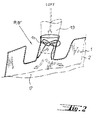
- the air inlet ports 8, 8 ' are, as Figure 2 shows in detail, as cuffs 11, 12 designed, which are surrounded by a hemstitch 14 are.
- a cord 16 is inserted into the hemstitch 14, which makes it possible for a fan (not shown) coming hose 19, the room temperature or warm air at around 46 ° C is sufficient tightly enclose.
- the two blanks 1, 2 are colored differently, for example light violet and dark violet, so that it is easy to ensure that the correct one Side is placed facing the patient's body.
- the Warming blanket 100 with stitching 13, 13 ', 13' ' provided that structure the cavity 17 so that the Air evenly distributed.
- the blanks 1, 2 can also be welded to be stapled together.
- Fig. 1 in the right corner is a part of knocked away the upper blank 1, so that the lower Cutting 2 can be seen.
- this impact over the circumferential seam 9 with the lower blank 2 is connected.
Landscapes
- Health & Medical Sciences (AREA)
- Life Sciences & Earth Sciences (AREA)
- Public Health (AREA)
- Engineering & Computer Science (AREA)
- Biomedical Technology (AREA)
- Veterinary Medicine (AREA)
- Animal Behavior & Ethology (AREA)
- General Health & Medical Sciences (AREA)
- Surgery (AREA)
- Heart & Thoracic Surgery (AREA)
- Vascular Medicine (AREA)
- Medical Informatics (AREA)
- Molecular Biology (AREA)
- Thermotherapy And Cooling Therapy Devices (AREA)
- Control Of Resistance Heating (AREA)
- Treatment Of Fiber Materials (AREA)
- Treatments For Attaching Organic Compounds To Fibrous Goods (AREA)
- Laminated Bodies (AREA)
- Bedding Items (AREA)
- Materials For Medical Uses (AREA)
Description
- Fig. 1
- eine Draufsicht auf eine Wärmedecke im ausgebreiteten Zustand und
- Fig. 2
- ein Detail im Bereich der Lufteintrittsstutzen.
- 1
- oberer Zuschnitt
- 2
- unterer Zuschnitt
- 3
- oberer Ausschnitt
- 4
- unterer Auschnitt
- 8
- Lufteintrittsstutzen
- 8'
- Lufteintrittsstutzen
- 9
- Naht
- 11
- Manschette
- 12
- Manschette
- 13
- Steppnaht
- 13'
- Steppnaht
- 13''
- Steppnaht
- 14
- Hohlsaum
- 16
- Kordel
- 17
- Hohlraum
- 19
- Schlauch
- 100
- Wärmedecke
Claims (10)
- Wärmedecke (100) zur Verwendung bei ärztlichen Operationen, die auf einen Teil eines liegenden Patienten aufzulegen und die mit temperierter Luft beschickbar ist, bestehend aus zwei randseitig zu einem Hohlraum (17) verbundenen Zuschnitten (1, 2) aus flexiblem Material,dadurch gekennzeichnet, daß der untere Zuschnitt (2) aus einem Baumwoll- oder Leinengewebe und der obere Zuschnitt (1) aus einer wasserabweisenden, kunststoffbeschichteten textilen Bahn aus Polyester und/oder Baumwolle besteht, so daß die Wärmedecke (100) ohne Beeinträchtigung der Funktion der luftdicht-machenden Beschichtung bei Kochtemperaturen waschbar und/oder unter Heißdampfeinsatz sterilisierbar ist.von denen der oben liegende Zuschnitt (1) aus einer luftdicht mit Kunststoff beschichteten textilen Bahn,und der dem Patienten zugewandte untere Zuschnitt (2) aus einem dichten, jedoch noch luftdurchlässigem textilen Gewebe besteht, wobei die im Hohlraum (17) unter leichtem Überdruck befindliche Luft aus der Unterseite der Wärmedecke (100), d. h. dem unteren Zuschnitt (2), flächenhaft verteilt austritt,und die mit wenigstens einem, vorzugsweise zwei im Abstand angeordneten, wechselseitig verschließbaren Lufteintrittsstutzen (8, 8') zum Anschluß an ein Luftgebläse versehen ist,
- Wärmedecke nach Anspruch 1, dadurch gekennzeichnet, daß die Textilbahnen des unteren Zuschnitts (2) und/oder des oberen Zuschnitts (1) aus einem Gewebe, Gewirke oder Vlies bestehen.
- Wärmedecke nach Anspruch 1, dadurch gekennzeichnet, daß die Beschichtung des oberen Zuschnitts (1) aus einem Polyester, einem Polyurethan oder einem Elastomer besteht.
- Wärmedecke nach einem der Ansprüche 1 bis 3, dadurch gekennzeichnet, daß das Flächengewicht der textilen Bahn für den oberen Zuschnitt (1) ohne Beschichtung zwischen 60 und 120 g/m2 und mit Beschichtung zwischen 100 und 300 g/m2 liegt.
- Wärmedecke nach einem der Ansprüche 1 bis 4, dadurch gekennzeichnet, daß das Flächengewicht des Materials des unteren Zuschnitts (2) zwischen 80 und 250 g/m2 liegt.
- Wärmedecke nach einem der Ansprüche 1 bis 5, dadurch gekennzeichnet, daß der untere Zuschnitt (2) in Leinwand- oder Köperbindung gewebt ist.
- Wärmedecke nach einem der Ansprüche 1 bis 6, dadurch gekennzeichnet, daß die Luftdurchlässigkeit bei einem im Hohlraum (17) herrschenden Druck von 2 mbar zwischen 30.000 und 200.000 cm3 Luft pro min und dm2 Bahnfläche liegt.
- Wärmedecke nach einem der Ansprüche 1 bis 7, dadurch gekennzeichnet, daß die Lufteintrittsstutzen (8, 8') als Manschetten (11, 12) gestaltet und mit einer Kordel (16) verschließbar sind.
- Wärmedecke nach einem der Ansprüche 1 bis 8, dadurch gekennzeichnet, daß die beiden Zuschnitte (1, 2) im Bereich des Hohlraums (17) zu dessen Gliederung miteinander verbunden sind.
- Wärmedecke nach einem der Ansprüche 1 bis 9, dadurch gekennzeichnet, daß der obere und der untere Zuschnitt (1, 2) optisch und/oder haptisch unterscheidbar sind.
Applications Claiming Priority (5)
| Application Number | Priority Date | Filing Date | Title |
|---|---|---|---|
| DE9416787U | 1994-10-19 | ||
| DE9416787U DE9416787U1 (de) | 1994-10-19 | 1994-10-19 | Wärmedecke zur Verwendung bei ärztlichen Operationen |
| DE29516246U | 1995-10-12 | ||
| DE29516246U DE29516246U1 (de) | 1994-10-19 | 1995-10-12 | Wärmedecke zur Verwendung bei ärztlichen Operationen |
| PCT/DE1995/001434 WO1996012454A1 (de) | 1994-10-19 | 1995-10-17 | Wärmedecke zur verwendung bei ärztlichen operationen |
Publications (2)
| Publication Number | Publication Date |
|---|---|
| EP0762859A1 EP0762859A1 (de) | 1997-03-19 |
| EP0762859B1 true EP0762859B1 (de) | 1998-01-07 |
Family
ID=25962550
Family Applications (1)
| Application Number | Title | Priority Date | Filing Date |
|---|---|---|---|
| EP95934608A Expired - Lifetime EP0762859B1 (de) | 1994-10-19 | 1995-10-17 | Wärmedecke zur verwendung bei ärztlichen operationen |
Country Status (5)
| Country | Link |
|---|---|
| EP (1) | EP0762859B1 (de) |
| AT (1) | ATE161705T1 (de) |
| AU (1) | AU3697595A (de) |
| ES (1) | ES2113214T3 (de) |
| WO (1) | WO1996012454A1 (de) |
Families Citing this family (6)
| Publication number | Priority date | Publication date | Assignee | Title |
|---|---|---|---|---|
| DE29719907U1 (de) | 1997-11-08 | 1999-04-01 | Zentralwäscherei Basel - Adrett AG, Basel | Wärmedecke |
| US6913745B1 (en) | 1997-12-02 | 2005-07-05 | Neuralab Limited | Passive immunization of Alzheimer's disease |
| EP1408898B1 (de) * | 2001-07-25 | 2004-12-01 | ZIMMER ELEKTROMEDIZIN GmbH | Thermischer applikator und applikatorsystem |
| RU2191856C1 (ru) * | 2001-12-25 | 2002-10-27 | Открытое акционерное общество "Научно-исследовательский институт нетканых материалов" | Нетканый материал для медицинских изделий краткосрочного пользования |
| US7497870B2 (en) * | 2005-02-18 | 2009-03-03 | Smiths Medical Asd, Inc. | System for providing optimal inflation to multiple temperature regulated blankets and method therefor |
| EP1941817A1 (de) * | 2007-01-05 | 2008-07-09 | Lidia Moeck | Wärmedecke |
Family Cites Families (3)
| Publication number | Priority date | Publication date | Assignee | Title |
|---|---|---|---|---|
| US5384924A (en) * | 1992-08-03 | 1995-01-31 | Mallinckrodt Medical, Inc. | Warming blanket having multiple inlets |
| DE9319969U1 (de) * | 1993-12-24 | 1994-04-21 | Löhlein, Christian, Dr., 52074 Aachen | Wiederverwendbare Warmluftdecke zum Schutz von Patienten vor Auskühlung und zur Wiedererwärmung bereits ausgekühlter Patienten |
| WO1995020371A1 (en) * | 1994-01-26 | 1995-08-03 | Mallinckrodt Medical, Inc. | Warming blanket for pediatric use |
-
1995
- 1995-10-17 EP EP95934608A patent/EP0762859B1/de not_active Expired - Lifetime
- 1995-10-17 AU AU36975/95A patent/AU3697595A/en not_active Abandoned
- 1995-10-17 ES ES95934608T patent/ES2113214T3/es not_active Expired - Lifetime
- 1995-10-17 AT AT95934608T patent/ATE161705T1/de not_active IP Right Cessation
- 1995-10-17 WO PCT/DE1995/001434 patent/WO1996012454A1/de not_active Ceased
Also Published As
| Publication number | Publication date |
|---|---|
| ES2113214T3 (es) | 1998-04-16 |
| ATE161705T1 (de) | 1998-01-15 |
| EP0762859A1 (de) | 1997-03-19 |
| AU3697595A (en) | 1996-05-15 |
| WO1996012454A1 (de) | 1996-05-02 |
Similar Documents
| Publication | Publication Date | Title |
|---|---|---|
| US5222507A (en) | Surgical drapes and methods of making same | |
| EP0560376B1 (de) | Bekleidungsstück | |
| DE69930631T2 (de) | Aufblasbares heizkissen mit entwässerung | |
| US4736467A (en) | Operating room clothing system | |
| DE202020101979U1 (de) | Gesichtsschutz, insbesondere Schutzmaske | |
| DE4219686A1 (de) | Verfahren zum Beseitigen von in heißem Wasser löslicher Kleidung und ähnlichen Stoffen | |
| DE3343236A1 (de) | Verfahren und vorrichtung zum trocknen und sterilisieren von geweben, insbesondere von empflindlichen geweben | |
| CN106343635B (zh) | 防感染手术衣 | |
| CN106388088B (zh) | 一种手术衣 | |
| EP0762859A1 (de) | Wärmedecke zur verwendung bei ärztlichen operationen | |
| WO2018090522A1 (zh) | 教学用手术衣 | |
| DE29516246U1 (de) | Wärmedecke zur Verwendung bei ärztlichen Operationen | |
| CN108754862A (zh) | 防水透气敷料用无纺布的制备方法 | |
| USRE26759E (en) | Gynecology or lithotomy drape | |
| RU106086U1 (ru) | Наматрасник влагонепроницаемый | |
| EP0600459A1 (de) | Verwendung eines Spinnvlieses aus Polyethylenfasern für verschliessbare Behälter zur Aufnahme von mit Allergenen kontaminierten Gegenständen | |
| DE60209828T2 (de) | Chirurgisches Abdecktuch | |
| DE69329625T2 (de) | Verbundvliesstoff | |
| EP3500121A1 (de) | Medizinisches bekleidungsoberteil | |
| Nagai et al. | Studies on the bacterial permeability of non-woven fabrics and cotton fabrics | |
| DE9319969U1 (de) | Wiederverwendbare Warmluftdecke zum Schutz von Patienten vor Auskühlung und zur Wiedererwärmung bereits ausgekühlter Patienten | |
| CN217723513U (zh) | 一种便于更换的采血用垫巾 | |
| DE9109638U1 (de) | Textile Warenbahn | |
| JP5818696B2 (ja) | ドレープユニット | |
| DE29514463U1 (de) | Waschbare, anatomisch geformte Inkontinenz-Penis-Hülle |
Legal Events
| Date | Code | Title | Description |
|---|---|---|---|
| PUAI | Public reference made under article 153(3) epc to a published international application that has entered the european phase |
Free format text: ORIGINAL CODE: 0009012 |
|
| 17P | Request for examination filed |
Effective date: 19961204 |
|
| AK | Designated contracting states |
Kind code of ref document: A1 Designated state(s): AT BE CH DE ES FR GB IT LI NL SE |
|
| GRAG | Despatch of communication of intention to grant |
Free format text: ORIGINAL CODE: EPIDOS AGRA |
|
| GRAH | Despatch of communication of intention to grant a patent |
Free format text: ORIGINAL CODE: EPIDOS IGRA |
|
| 17Q | First examination report despatched |
Effective date: 19970325 |
|
| GRAH | Despatch of communication of intention to grant a patent |
Free format text: ORIGINAL CODE: EPIDOS IGRA |
|
| GRAA | (expected) grant |
Free format text: ORIGINAL CODE: 0009210 |
|
| AK | Designated contracting states |
Kind code of ref document: B1 Designated state(s): AT BE CH DE ES FR GB IT LI NL SE |
|
| REF | Corresponds to: |
Ref document number: 161705 Country of ref document: AT Date of ref document: 19980115 Kind code of ref document: T |
|
| REG | Reference to a national code |
Ref country code: CH Ref legal event code: EP |
|
| GBT | Gb: translation of ep patent filed (gb section 77(6)(a)/1977) |
Effective date: 19980108 |
|
| ET | Fr: translation filed | ||
| REF | Corresponds to: |
Ref document number: 59501225 Country of ref document: DE Date of ref document: 19980212 |
|
| ITF | It: translation for a ep patent filed | ||
| REG | Reference to a national code |
Ref country code: CH Ref legal event code: NV Representative=s name: PATENTANWAELTE GEORG ROEMPLER UND ALDO ROEMPLER |
|
| REG | Reference to a national code |
Ref country code: ES Ref legal event code: FG2A Ref document number: 2113214 Country of ref document: ES Kind code of ref document: T3 |
|
| PLBQ | Unpublished change to opponent data |
Free format text: ORIGINAL CODE: EPIDOS OPPO |
|
| PLBI | Opposition filed |
Free format text: ORIGINAL CODE: 0009260 |
|
| PLBF | Reply of patent proprietor to notice(s) of opposition |
Free format text: ORIGINAL CODE: EPIDOS OBSO |
|
| 26 | Opposition filed |
Opponent name: MALLINCKRODT MEDICAL GMBH Effective date: 19981007 |
|
| NLR1 | Nl: opposition has been filed with the epo |
Opponent name: MALLINCKRODT MEDICAL GMBH |
|
| PLBF | Reply of patent proprietor to notice(s) of opposition |
Free format text: ORIGINAL CODE: EPIDOS OBSO |
|
| PLBF | Reply of patent proprietor to notice(s) of opposition |
Free format text: ORIGINAL CODE: EPIDOS OBSO |
|
| PLBO | Opposition rejected |
Free format text: ORIGINAL CODE: EPIDOS REJO |
|
| PLBN | Opposition rejected |
Free format text: ORIGINAL CODE: 0009273 |
|
| STAA | Information on the status of an ep patent application or granted ep patent |
Free format text: STATUS: OPPOSITION REJECTED |
|
| 27O | Opposition rejected |
Effective date: 20000407 |
|
| NLR2 | Nl: decision of opposition | ||
| REG | Reference to a national code |
Ref country code: GB Ref legal event code: IF02 |
|
| PGFP | Annual fee paid to national office [announced via postgrant information from national office to epo] |
Ref country code: ES Payment date: 20030929 Year of fee payment: 9 |
|
| PGFP | Annual fee paid to national office [announced via postgrant information from national office to epo] |
Ref country code: FR Payment date: 20031030 Year of fee payment: 9 |
|
| PGFP | Annual fee paid to national office [announced via postgrant information from national office to epo] |
Ref country code: BE Payment date: 20031121 Year of fee payment: 9 |
|
| PG25 | Lapsed in a contracting state [announced via postgrant information from national office to epo] |
Ref country code: ES Free format text: LAPSE BECAUSE OF NON-PAYMENT OF DUE FEES Effective date: 20041018 |
|
| PG25 | Lapsed in a contracting state [announced via postgrant information from national office to epo] |
Ref country code: BE Free format text: LAPSE BECAUSE OF NON-PAYMENT OF DUE FEES Effective date: 20041031 |
|
| BERE | Be: lapsed |
Owner name: *JOHN CHRISTINE Effective date: 20041031 |
|
| PG25 | Lapsed in a contracting state [announced via postgrant information from national office to epo] |
Ref country code: FR Free format text: LAPSE BECAUSE OF NON-PAYMENT OF DUE FEES Effective date: 20050630 |
|
| REG | Reference to a national code |
Ref country code: FR Ref legal event code: ST |
|
| PG25 | Lapsed in a contracting state [announced via postgrant information from national office to epo] |
Ref country code: IT Free format text: LAPSE BECAUSE OF NON-PAYMENT OF DUE FEES;WARNING: LAPSES OF ITALIAN PATENTS WITH EFFECTIVE DATE BEFORE 2007 MAY HAVE OCCURRED AT ANY TIME BEFORE 2007. THE CORRECT EFFECTIVE DATE MAY BE DIFFERENT FROM THE ONE RECORDED. Effective date: 20051017 |
|
| REG | Reference to a national code |
Ref country code: ES Ref legal event code: FD2A Effective date: 20041018 |
|
| PGFP | Annual fee paid to national office [announced via postgrant information from national office to epo] |
Ref country code: GB Payment date: 20061026 Year of fee payment: 12 |
|
| PGFP | Annual fee paid to national office [announced via postgrant information from national office to epo] |
Ref country code: SE Payment date: 20061027 Year of fee payment: 12 |
|
| PGFP | Annual fee paid to national office [announced via postgrant information from national office to epo] |
Ref country code: AT Payment date: 20061030 Year of fee payment: 12 |
|
| PGFP | Annual fee paid to national office [announced via postgrant information from national office to epo] |
Ref country code: NL Payment date: 20061031 Year of fee payment: 12 |
|
| PGFP | Annual fee paid to national office [announced via postgrant information from national office to epo] |
Ref country code: DE Payment date: 20061130 Year of fee payment: 12 |
|
| PGFP | Annual fee paid to national office [announced via postgrant information from national office to epo] |
Ref country code: CH Payment date: 20061229 Year of fee payment: 12 |
|
| BERE | Be: lapsed |
Owner name: *JOHN CHRISTINE Effective date: 20041031 |
|
| EUG | Se: european patent has lapsed | ||
| GBPC | Gb: european patent ceased through non-payment of renewal fee |
Effective date: 20071017 |
|
| REG | Reference to a national code |
Ref country code: CH Ref legal event code: PL |
|
| NLV4 | Nl: lapsed or anulled due to non-payment of the annual fee |
Effective date: 20080501 |
|
| PG25 | Lapsed in a contracting state [announced via postgrant information from national office to epo] |
Ref country code: LI Free format text: LAPSE BECAUSE OF NON-PAYMENT OF DUE FEES Effective date: 20071031 Ref country code: DE Free format text: LAPSE BECAUSE OF NON-PAYMENT OF DUE FEES Effective date: 20080501 Ref country code: CH Free format text: LAPSE BECAUSE OF NON-PAYMENT OF DUE FEES Effective date: 20071031 |
|
| PG25 | Lapsed in a contracting state [announced via postgrant information from national office to epo] |
Ref country code: AT Free format text: LAPSE BECAUSE OF NON-PAYMENT OF DUE FEES Effective date: 20071017 |
|
| PG25 | Lapsed in a contracting state [announced via postgrant information from national office to epo] |
Ref country code: SE Free format text: LAPSE BECAUSE OF NON-PAYMENT OF DUE FEES Effective date: 20071018 Ref country code: NL Free format text: LAPSE BECAUSE OF NON-PAYMENT OF DUE FEES Effective date: 20080501 |
|
| PG25 | Lapsed in a contracting state [announced via postgrant information from national office to epo] |
Ref country code: GB Free format text: LAPSE BECAUSE OF NON-PAYMENT OF DUE FEES Effective date: 20071017 |