EP0763754B1 - Lentille de contact à base d'acide hyaluronique photoréticulé - Google Patents
Lentille de contact à base d'acide hyaluronique photoréticulé Download PDFInfo
- Publication number
- EP0763754B1 EP0763754B1 EP96114728A EP96114728A EP0763754B1 EP 0763754 B1 EP0763754 B1 EP 0763754B1 EP 96114728 A EP96114728 A EP 96114728A EP 96114728 A EP96114728 A EP 96114728A EP 0763754 B1 EP0763754 B1 EP 0763754B1
- Authority
- EP
- European Patent Office
- Prior art keywords
- hyaluronic acid
- contact lens
- photoreactive
- group
- lens according
- Prior art date
- Legal status (The legal status is an assumption and is not a legal conclusion. Google has not performed a legal analysis and makes no representation as to the accuracy of the status listed.)
- Expired - Lifetime
Links
- 229920002674 hyaluronan Polymers 0.000 title claims description 114
- 229960003160 hyaluronic acid Drugs 0.000 title claims description 114
- KIUKXJAPPMFGSW-DNGZLQJQSA-N (2S,3S,4S,5R,6R)-6-[(2S,3R,4R,5S,6R)-3-Acetamido-2-[(2S,3S,4R,5R,6R)-6-[(2R,3R,4R,5S,6R)-3-acetamido-2,5-dihydroxy-6-(hydroxymethyl)oxan-4-yl]oxy-2-carboxy-4,5-dihydroxyoxan-3-yl]oxy-5-hydroxy-6-(hydroxymethyl)oxan-4-yl]oxy-3,4,5-trihydroxyoxane-2-carboxylic acid Chemical compound CC(=O)N[C@H]1[C@H](O)O[C@H](CO)[C@@H](O)[C@@H]1O[C@H]1[C@H](O)[C@@H](O)[C@H](O[C@H]2[C@@H]([C@@H](O[C@H]3[C@@H]([C@@H](O)[C@H](O)[C@H](O3)C(O)=O)O)[C@H](O)[C@@H](CO)O2)NC(C)=O)[C@@H](C(O)=O)O1 KIUKXJAPPMFGSW-DNGZLQJQSA-N 0.000 claims description 98
- 238000004132 cross linking Methods 0.000 claims description 60
- XLYOFNOQVPJJNP-UHFFFAOYSA-N water Substances O XLYOFNOQVPJJNP-UHFFFAOYSA-N 0.000 claims description 59
- 210000001508 eye Anatomy 0.000 claims description 38
- 150000001875 compounds Chemical class 0.000 claims description 28
- QVGXLLKOCUKJST-UHFFFAOYSA-N atomic oxygen Chemical compound [O] QVGXLLKOCUKJST-UHFFFAOYSA-N 0.000 claims description 22
- 229910052760 oxygen Inorganic materials 0.000 claims description 22
- 239000001301 oxygen Substances 0.000 claims description 22
- 125000003178 carboxy group Chemical group [H]OC(*)=O 0.000 claims description 21
- 230000035699 permeability Effects 0.000 claims description 20
- WBYWAXJHAXSJNI-UHFFFAOYSA-N methyl p-hydroxycinnamate Natural products OC(=O)C=CC1=CC=CC=C1 WBYWAXJHAXSJNI-UHFFFAOYSA-N 0.000 claims description 18
- 230000000694 effects Effects 0.000 claims description 17
- WBYWAXJHAXSJNI-VOTSOKGWSA-M .beta-Phenylacrylic acid Natural products [O-]C(=O)\C=C\C1=CC=CC=C1 WBYWAXJHAXSJNI-VOTSOKGWSA-M 0.000 claims description 16
- 229930016911 cinnamic acid Natural products 0.000 claims description 16
- 235000013985 cinnamic acid Nutrition 0.000 claims description 16
- 238000000465 moulding Methods 0.000 claims description 16
- 210000005252 bulbus oculi Anatomy 0.000 claims description 15
- WBYWAXJHAXSJNI-SREVYHEPSA-N Cinnamic acid Chemical compound OC(=O)\C=C/C1=CC=CC=C1 WBYWAXJHAXSJNI-SREVYHEPSA-N 0.000 claims description 14
- 125000000524 functional group Chemical group 0.000 claims description 13
- 230000015572 biosynthetic process Effects 0.000 claims description 12
- 210000004087 cornea Anatomy 0.000 claims description 12
- 150000001414 amino alcohols Chemical class 0.000 claims description 8
- 125000003277 amino group Chemical group 0.000 claims description 8
- 239000000470 constituent Substances 0.000 claims description 7
- 125000001995 cyclobutyl group Chemical group [H]C1([H])C([H])([H])C([H])(*)C1([H])[H] 0.000 claims description 7
- 230000002633 protecting effect Effects 0.000 claims description 7
- 239000000126 substance Substances 0.000 claims description 5
- 230000001678 irradiating effect Effects 0.000 claims description 4
- 230000000007 visual effect Effects 0.000 claims description 4
- KAFWCKOMHCHXFE-UHFFFAOYSA-N 1-aminododecan-1-ol Chemical compound CCCCCCCCCCCC(N)O KAFWCKOMHCHXFE-UHFFFAOYSA-N 0.000 claims description 3
- NPEIGRBGMUJNFE-UHFFFAOYSA-N 1-aminohexan-1-ol Chemical compound CCCCCC(N)O NPEIGRBGMUJNFE-UHFFFAOYSA-N 0.000 claims description 3
- JZWFTEAZEZDCLV-UHFFFAOYSA-N 1-aminooctan-1-ol Chemical compound CCCCCCCC(N)O JZWFTEAZEZDCLV-UHFFFAOYSA-N 0.000 claims description 3
- WGAOZGUUHIBABN-UHFFFAOYSA-N 1-aminopentan-1-ol Chemical compound CCCCC(N)O WGAOZGUUHIBABN-UHFFFAOYSA-N 0.000 claims description 3
- HZAXFHJVJLSVMW-UHFFFAOYSA-N 2-Aminoethan-1-ol Chemical compound NCCO HZAXFHJVJLSVMW-UHFFFAOYSA-N 0.000 claims description 3
- MXZROAOUCUVNHX-UHFFFAOYSA-N 2-Aminopropanol Chemical compound CCC(N)O MXZROAOUCUVNHX-UHFFFAOYSA-N 0.000 claims description 3
- JCBPETKZIGVZRE-UHFFFAOYSA-N 2-aminobutan-1-ol Chemical compound CCC(N)CO JCBPETKZIGVZRE-UHFFFAOYSA-N 0.000 claims description 3
- 239000013543 active substance Substances 0.000 claims description 2
- 238000004519 manufacturing process Methods 0.000 claims description 2
- 125000000600 disaccharide group Chemical group 0.000 claims 1
- 239000000463 material Substances 0.000 description 39
- 238000000034 method Methods 0.000 description 26
- 239000008186 active pharmaceutical agent Substances 0.000 description 22
- LFQSCWFLJHTTHZ-UHFFFAOYSA-N Ethanol Chemical compound CCO LFQSCWFLJHTTHZ-UHFFFAOYSA-N 0.000 description 21
- -1 spacer compound Chemical class 0.000 description 17
- 150000002016 disaccharides Chemical group 0.000 description 14
- 229940079593 drug Drugs 0.000 description 14
- 239000003814 drug Substances 0.000 description 14
- 230000007794 irritation Effects 0.000 description 14
- 239000007864 aqueous solution Substances 0.000 description 13
- 210000001747 pupil Anatomy 0.000 description 13
- 239000000243 solution Substances 0.000 description 13
- 238000002834 transmittance Methods 0.000 description 13
- 239000000047 product Substances 0.000 description 12
- 239000006210 lotion Substances 0.000 description 11
- 238000002360 preparation method Methods 0.000 description 11
- 230000008961 swelling Effects 0.000 description 11
- 210000001519 tissue Anatomy 0.000 description 11
- 238000012360 testing method Methods 0.000 description 9
- 230000001225 therapeutic effect Effects 0.000 description 9
- 241000283973 Oryctolagus cuniculus Species 0.000 description 8
- 239000002994 raw material Substances 0.000 description 8
- 238000005259 measurement Methods 0.000 description 7
- 230000002911 mydriatic effect Effects 0.000 description 7
- 238000001035 drying Methods 0.000 description 6
- 125000002887 hydroxy group Chemical group [H]O* 0.000 description 6
- 239000002244 precipitate Substances 0.000 description 6
- 238000013268 sustained release Methods 0.000 description 6
- 239000012730 sustained-release form Substances 0.000 description 6
- 241001465754 Metazoa Species 0.000 description 5
- 208000006550 Mydriasis Diseases 0.000 description 5
- 229920000642 polymer Polymers 0.000 description 5
- RYHBNJHYFVUHQT-UHFFFAOYSA-N 1,4-Dioxane Chemical compound C1COCCO1 RYHBNJHYFVUHQT-UHFFFAOYSA-N 0.000 description 4
- 102000008186 Collagen Human genes 0.000 description 4
- 108010035532 Collagen Proteins 0.000 description 4
- RTZKZFJDLAIYFH-UHFFFAOYSA-N Diethyl ether Chemical compound CCOCC RTZKZFJDLAIYFH-UHFFFAOYSA-N 0.000 description 4
- 229920002683 Glycosaminoglycan Polymers 0.000 description 4
- VEXZGXHMUGYJMC-UHFFFAOYSA-N Hydrochloric acid Chemical compound Cl VEXZGXHMUGYJMC-UHFFFAOYSA-N 0.000 description 4
- 239000004743 Polypropylene Substances 0.000 description 4
- FAPWRFPIFSIZLT-UHFFFAOYSA-M Sodium chloride Chemical compound [Na+].[Cl-] FAPWRFPIFSIZLT-UHFFFAOYSA-M 0.000 description 4
- 238000005119 centrifugation Methods 0.000 description 4
- 238000006243 chemical reaction Methods 0.000 description 4
- 229920001436 collagen Polymers 0.000 description 4
- 239000013078 crystal Substances 0.000 description 4
- 239000002158 endotoxin Substances 0.000 description 4
- 238000001879 gelation Methods 0.000 description 4
- IXCSERBJSXMMFS-UHFFFAOYSA-N hydrogen chloride Substances Cl.Cl IXCSERBJSXMMFS-UHFFFAOYSA-N 0.000 description 4
- 229910000041 hydrogen chloride Inorganic materials 0.000 description 4
- 238000002347 injection Methods 0.000 description 4
- 239000007924 injection Substances 0.000 description 4
- 230000000704 physical effect Effects 0.000 description 4
- 239000002504 physiological saline solution Substances 0.000 description 4
- 229920001155 polypropylene Polymers 0.000 description 4
- 238000012545 processing Methods 0.000 description 4
- 238000003786 synthesis reaction Methods 0.000 description 4
- 230000004304 visual acuity Effects 0.000 description 4
- XEKOWRVHYACXOJ-UHFFFAOYSA-N Ethyl acetate Chemical compound CCOC(C)=O XEKOWRVHYACXOJ-UHFFFAOYSA-N 0.000 description 3
- WOBHKFSMXKNTIM-UHFFFAOYSA-N Hydroxyethyl methacrylate Chemical compound CC(=C)C(=O)OCCO WOBHKFSMXKNTIM-UHFFFAOYSA-N 0.000 description 3
- OKKJLVBELUTLKV-UHFFFAOYSA-N Methanol Chemical compound OC OKKJLVBELUTLKV-UHFFFAOYSA-N 0.000 description 3
- ZMXDDKWLCZADIW-UHFFFAOYSA-N N,N-Dimethylformamide Chemical compound CN(C)C=O ZMXDDKWLCZADIW-UHFFFAOYSA-N 0.000 description 3
- NQTADLQHYWFPDB-UHFFFAOYSA-N N-Hydroxysuccinimide Chemical compound ON1C(=O)CCC1=O NQTADLQHYWFPDB-UHFFFAOYSA-N 0.000 description 3
- ZMANZCXQSJIPKH-UHFFFAOYSA-N Triethylamine Chemical compound CCN(CC)CC ZMANZCXQSJIPKH-UHFFFAOYSA-N 0.000 description 3
- BGDKAVGWHJFAGW-UHFFFAOYSA-N Tropicamide Chemical compound C=1C=CC=CC=1C(CO)C(=O)N(CC)CC1=CC=NC=C1 BGDKAVGWHJFAGW-UHFFFAOYSA-N 0.000 description 3
- 238000010521 absorption reaction Methods 0.000 description 3
- 230000009471 action Effects 0.000 description 3
- 125000003118 aryl group Chemical group 0.000 description 3
- KRKNYBCHXYNGOX-UHFFFAOYSA-N citric acid Chemical compound OC(=O)CC(O)(C(O)=O)CC(O)=O KRKNYBCHXYNGOX-UHFFFAOYSA-N 0.000 description 3
- 238000001816 cooling Methods 0.000 description 3
- 238000006471 dimerization reaction Methods 0.000 description 3
- 239000012153 distilled water Substances 0.000 description 3
- 210000003560 epithelium corneal Anatomy 0.000 description 3
- 238000001914 filtration Methods 0.000 description 3
- 238000002695 general anesthesia Methods 0.000 description 3
- 239000011521 glass Substances 0.000 description 3
- 239000007788 liquid Substances 0.000 description 3
- 229910001507 metal halide Inorganic materials 0.000 description 3
- 150000005309 metal halides Chemical class 0.000 description 3
- VLKZOEOYAKHREP-UHFFFAOYSA-N n-Hexane Chemical compound CCCCCC VLKZOEOYAKHREP-UHFFFAOYSA-N 0.000 description 3
- OCYSGIYOVXAGKQ-FVGYRXGTSA-N phenylephrine hydrochloride Chemical compound [H+].[Cl-].CNC[C@H](O)C1=CC=CC(O)=C1 OCYSGIYOVXAGKQ-FVGYRXGTSA-N 0.000 description 3
- 229960003733 phenylephrine hydrochloride Drugs 0.000 description 3
- 125000006850 spacer group Chemical group 0.000 description 3
- 238000006467 substitution reaction Methods 0.000 description 3
- 230000002459 sustained effect Effects 0.000 description 3
- 229960004791 tropicamide Drugs 0.000 description 3
- LMDZBCPBFSXMTL-UHFFFAOYSA-N 1-Ethyl-3-(3-dimethylaminopropyl)carbodiimide Substances CCN=C=NCCCN(C)C LMDZBCPBFSXMTL-UHFFFAOYSA-N 0.000 description 2
- 238000005160 1H NMR spectroscopy Methods 0.000 description 2
- VZSRBBMJRBPUNF-UHFFFAOYSA-N 2-(2,3-dihydro-1H-inden-2-ylamino)-N-[3-oxo-3-(2,4,6,7-tetrahydrotriazolo[4,5-c]pyridin-5-yl)propyl]pyrimidine-5-carboxamide Chemical compound C1C(CC2=CC=CC=C12)NC1=NC=C(C=N1)C(=O)NCCC(N1CC2=C(CC1)NN=N2)=O VZSRBBMJRBPUNF-UHFFFAOYSA-N 0.000 description 2
- FPQQSJJWHUJYPU-UHFFFAOYSA-N 3-(dimethylamino)propyliminomethylidene-ethylazanium;chloride Chemical compound Cl.CCN=C=NCCCN(C)C FPQQSJJWHUJYPU-UHFFFAOYSA-N 0.000 description 2
- UPXRTVAIJMUAQR-UHFFFAOYSA-N 4-(9h-fluoren-9-ylmethoxycarbonylamino)-1-[(2-methylpropan-2-yl)oxycarbonyl]pyrrolidine-2-carboxylic acid Chemical compound C1C(C(O)=O)N(C(=O)OC(C)(C)C)CC1NC(=O)OCC1C2=CC=CC=C2C2=CC=CC=C21 UPXRTVAIJMUAQR-UHFFFAOYSA-N 0.000 description 2
- VHYFNPMBLIVWCW-UHFFFAOYSA-N 4-Dimethylaminopyridine Chemical compound CN(C)C1=CC=NC=C1 VHYFNPMBLIVWCW-UHFFFAOYSA-N 0.000 description 2
- TYJOQICPGZGYDT-UHFFFAOYSA-N 4-methylsulfonylbenzenesulfonyl chloride Chemical compound CS(=O)(=O)C1=CC=C(S(Cl)(=O)=O)C=C1 TYJOQICPGZGYDT-UHFFFAOYSA-N 0.000 description 2
- SQDAZGGFXASXDW-UHFFFAOYSA-N 5-bromo-2-(trifluoromethoxy)pyridine Chemical compound FC(F)(F)OC1=CC=C(Br)C=N1 SQDAZGGFXASXDW-UHFFFAOYSA-N 0.000 description 2
- DLFVBJFMPXGRIB-UHFFFAOYSA-N Acetamide Chemical compound CC(N)=O DLFVBJFMPXGRIB-UHFFFAOYSA-N 0.000 description 2
- RZVAJINKPMORJF-UHFFFAOYSA-N Acetaminophen Chemical compound CC(=O)NC1=CC=C(O)C=C1 RZVAJINKPMORJF-UHFFFAOYSA-N 0.000 description 2
- HEDRZPFGACZZDS-UHFFFAOYSA-N Chloroform Chemical compound ClC(Cl)Cl HEDRZPFGACZZDS-UHFFFAOYSA-N 0.000 description 2
- 229920001287 Chondroitin sulfate Polymers 0.000 description 2
- 208000006069 Corneal Opacity Diseases 0.000 description 2
- 206010011013 Corneal erosion Diseases 0.000 description 2
- 208000028006 Corneal injury Diseases 0.000 description 2
- 206010020565 Hyperaemia Diseases 0.000 description 2
- YQEZLKZALYSWHR-UHFFFAOYSA-N Ketamine Chemical compound C=1C=CC=C(Cl)C=1C1(NC)CCCCC1=O YQEZLKZALYSWHR-UHFFFAOYSA-N 0.000 description 2
- JUJWROOIHBZHMG-UHFFFAOYSA-N Pyridine Chemical compound C1=CC=NC=C1 JUJWROOIHBZHMG-UHFFFAOYSA-N 0.000 description 2
- PMZURENOXWZQFD-UHFFFAOYSA-L Sodium Sulfate Chemical compound [Na+].[Na+].[O-]S([O-])(=O)=O PMZURENOXWZQFD-UHFFFAOYSA-L 0.000 description 2
- UIIMBOGNXHQVGW-UHFFFAOYSA-M Sodium bicarbonate Chemical compound [Na+].OC([O-])=O UIIMBOGNXHQVGW-UHFFFAOYSA-M 0.000 description 2
- 229920002385 Sodium hyaluronate Polymers 0.000 description 2
- HEDRZPFGACZZDS-MICDWDOJSA-N Trichloro(2H)methane Chemical compound [2H]C(Cl)(Cl)Cl HEDRZPFGACZZDS-MICDWDOJSA-N 0.000 description 2
- 206010064996 Ulcerative keratitis Diseases 0.000 description 2
- 150000001412 amines Chemical class 0.000 description 2
- 150000001413 amino acids Chemical class 0.000 description 2
- 239000012752 auxiliary agent Substances 0.000 description 2
- 230000037396 body weight Effects 0.000 description 2
- OSASVXMJTNOKOY-UHFFFAOYSA-N chlorobutanol Chemical compound CC(C)(O)C(Cl)(Cl)Cl OSASVXMJTNOKOY-UHFFFAOYSA-N 0.000 description 2
- 229940059329 chondroitin sulfate Drugs 0.000 description 2
- 238000003776 cleavage reaction Methods 0.000 description 2
- 238000009833 condensation Methods 0.000 description 2
- 230000005494 condensation Effects 0.000 description 2
- 208000021921 corneal disease Diseases 0.000 description 2
- 231100000269 corneal opacity Toxicity 0.000 description 2
- 201000007717 corneal ulcer Diseases 0.000 description 2
- 238000012937 correction Methods 0.000 description 2
- 230000007812 deficiency Effects 0.000 description 2
- 238000011161 development Methods 0.000 description 2
- 150000004985 diamines Chemical class 0.000 description 2
- 230000002708 enhancing effect Effects 0.000 description 2
- 210000000744 eyelid Anatomy 0.000 description 2
- 238000005227 gel permeation chromatography Methods 0.000 description 2
- 230000001965 increasing effect Effects 0.000 description 2
- NOESYZHRGYRDHS-UHFFFAOYSA-N insulin Chemical compound N1C(=O)C(NC(=O)C(CCC(N)=O)NC(=O)C(CCC(O)=O)NC(=O)C(C(C)C)NC(=O)C(NC(=O)CN)C(C)CC)CSSCC(C(NC(CO)C(=O)NC(CC(C)C)C(=O)NC(CC=2C=CC(O)=CC=2)C(=O)NC(CCC(N)=O)C(=O)NC(CC(C)C)C(=O)NC(CCC(O)=O)C(=O)NC(CC(N)=O)C(=O)NC(CC=2C=CC(O)=CC=2)C(=O)NC(CSSCC(NC(=O)C(C(C)C)NC(=O)C(CC(C)C)NC(=O)C(CC=2C=CC(O)=CC=2)NC(=O)C(CC(C)C)NC(=O)C(C)NC(=O)C(CCC(O)=O)NC(=O)C(C(C)C)NC(=O)C(CC(C)C)NC(=O)C(CC=2NC=NC=2)NC(=O)C(CO)NC(=O)CNC2=O)C(=O)NCC(=O)NC(CCC(O)=O)C(=O)NC(CCCNC(N)=N)C(=O)NCC(=O)NC(CC=3C=CC=CC=3)C(=O)NC(CC=3C=CC=CC=3)C(=O)NC(CC=3C=CC(O)=CC=3)C(=O)NC(C(C)O)C(=O)N3C(CCC3)C(=O)NC(CCCCN)C(=O)NC(C)C(O)=O)C(=O)NC(CC(N)=O)C(O)=O)=O)NC(=O)C(C(C)CC)NC(=O)C(CO)NC(=O)C(C(C)O)NC(=O)C1CSSCC2NC(=O)C(CC(C)C)NC(=O)C(NC(=O)C(CCC(N)=O)NC(=O)C(CC(N)=O)NC(=O)C(NC(=O)C(N)CC=1C=CC=CC=1)C(C)C)CC1=CN=CN1 NOESYZHRGYRDHS-UHFFFAOYSA-N 0.000 description 2
- 238000010253 intravenous injection Methods 0.000 description 2
- 206010023332 keratitis Diseases 0.000 description 2
- 229940039412 ketalar Drugs 0.000 description 2
- 229960004184 ketamine hydrochloride Drugs 0.000 description 2
- 229910052751 metal Inorganic materials 0.000 description 2
- 239000002184 metal Substances 0.000 description 2
- 239000000203 mixture Substances 0.000 description 2
- 239000002637 mydriatic agent Substances 0.000 description 2
- 238000005498 polishing Methods 0.000 description 2
- 238000003825 pressing Methods 0.000 description 2
- 108090000765 processed proteins & peptides Proteins 0.000 description 2
- 102000004196 processed proteins & peptides Human genes 0.000 description 2
- 230000001179 pupillary effect Effects 0.000 description 2
- 239000005297 pyrex Substances 0.000 description 2
- 230000007017 scission Effects 0.000 description 2
- 238000002791 soaking Methods 0.000 description 2
- 239000011780 sodium chloride Substances 0.000 description 2
- 229940010747 sodium hyaluronate Drugs 0.000 description 2
- YWIVKILSMZOHHF-QJZPQSOGSA-N sodium;(2s,3s,4s,5r,6r)-6-[(2s,3r,4r,5s,6r)-3-acetamido-2-[(2s,3s,4r,5r,6r)-6-[(2r,3r,4r,5s,6r)-3-acetamido-2,5-dihydroxy-6-(hydroxymethyl)oxan-4-yl]oxy-2-carboxy-4,5-dihydroxyoxan-3-yl]oxy-5-hydroxy-6-(hydroxymethyl)oxan-4-yl]oxy-3,4,5-trihydroxyoxane-2- Chemical compound [Na+].CC(=O)N[C@H]1[C@H](O)O[C@H](CO)[C@@H](O)[C@@H]1O[C@H]1[C@H](O)[C@@H](O)[C@H](O[C@H]2[C@@H]([C@@H](O[C@H]3[C@@H]([C@@H](O)[C@H](O)[C@H](O3)C(O)=O)O)[C@H](O)[C@@H](CO)O2)NC(C)=O)[C@@H](C(O)=O)O1 YWIVKILSMZOHHF-QJZPQSOGSA-N 0.000 description 2
- 239000007787 solid Substances 0.000 description 2
- 239000002904 solvent Substances 0.000 description 2
- 238000004528 spin coating Methods 0.000 description 2
- 238000003756 stirring Methods 0.000 description 2
- 238000013269 sustained drug release Methods 0.000 description 2
- 230000029663 wound healing Effects 0.000 description 2
- 229960004175 xylazine hydrochloride Drugs 0.000 description 2
- LUEWUZLMQUOBSB-FSKGGBMCSA-N (2s,3s,4s,5s,6r)-2-[(2r,3s,4r,5r,6s)-6-[(2r,3s,4r,5s,6s)-4,5-dihydroxy-2-(hydroxymethyl)-6-[(2r,4r,5s,6r)-4,5,6-trihydroxy-2-(hydroxymethyl)oxan-3-yl]oxyoxan-3-yl]oxy-4,5-dihydroxy-2-(hydroxymethyl)oxan-3-yl]oxy-6-(hydroxymethyl)oxane-3,4,5-triol Chemical compound O[C@H]1[C@@H](O)[C@H](O)[C@@H](CO)O[C@H]1O[C@@H]1[C@@H](CO)O[C@@H](O[C@@H]2[C@H](O[C@@H](OC3[C@H](O[C@@H](O)[C@@H](O)[C@H]3O)CO)[C@@H](O)[C@H]2O)CO)[C@H](O)[C@H]1O LUEWUZLMQUOBSB-FSKGGBMCSA-N 0.000 description 1
- TWBNMYSKRDRHAT-RCWTXCDDSA-N (S)-timolol hemihydrate Chemical compound O.CC(C)(C)NC[C@H](O)COC1=NSN=C1N1CCOCC1.CC(C)(C)NC[C@H](O)COC1=NSN=C1N1CCOCC1 TWBNMYSKRDRHAT-RCWTXCDDSA-N 0.000 description 1
- WOGITNXCNOTRLK-VOTSOKGWSA-N (e)-3-phenylprop-2-enoyl chloride Chemical compound ClC(=O)\C=C\C1=CC=CC=C1 WOGITNXCNOTRLK-VOTSOKGWSA-N 0.000 description 1
- ASOKPJOREAFHNY-UHFFFAOYSA-N 1-Hydroxybenzotriazole Chemical compound C1=CC=C2N(O)N=NC2=C1 ASOKPJOREAFHNY-UHFFFAOYSA-N 0.000 description 1
- LSIXBBPOJBJQHN-UHFFFAOYSA-N 2,3-Dimethylbicyclo[2.2.1]hept-2-ene Chemical compound C1CC2C(C)=C(C)C1C2 LSIXBBPOJBJQHN-UHFFFAOYSA-N 0.000 description 1
- PHUXIBJBOCQQRM-VOTSOKGWSA-N 2-aminoethyl (e)-3-phenylprop-2-enoate Chemical compound NCCOC(=O)\C=C\C1=CC=CC=C1 PHUXIBJBOCQQRM-VOTSOKGWSA-N 0.000 description 1
- AGSKWMRPXWHSPF-UHFFFAOYSA-M 3-(ethyliminomethylideneamino)propyl-trimethylazanium;iodide Chemical compound [I-].CCN=C=NCCC[N+](C)(C)C AGSKWMRPXWHSPF-UHFFFAOYSA-M 0.000 description 1
- SUTWPJHCRAITLU-UHFFFAOYSA-N 6-aminohexan-1-ol Chemical compound NCCCCCCO SUTWPJHCRAITLU-UHFFFAOYSA-N 0.000 description 1
- SLXKOJJOQWFEFD-UHFFFAOYSA-N 6-aminohexanoic acid Chemical compound NCCCCCC(O)=O SLXKOJJOQWFEFD-UHFFFAOYSA-N 0.000 description 1
- 208000028048 Accommodation disease Diseases 0.000 description 1
- APKFDSVGJQXUKY-KKGHZKTASA-N Amphotericin-B Natural products O[C@H]1[C@@H](N)[C@H](O)[C@@H](C)O[C@H]1O[C@H]1C=CC=CC=CC=CC=CC=CC=C[C@H](C)[C@@H](O)[C@@H](C)[C@H](C)OC(=O)C[C@H](O)C[C@H](O)CC[C@@H](O)[C@H](O)C[C@H](O)C[C@](O)(C[C@H](O)[C@H]2C(O)=O)O[C@H]2C1 APKFDSVGJQXUKY-KKGHZKTASA-N 0.000 description 1
- OBSKAFMCKVJUNG-RNQHSHRISA-N BrC=CC([C@@H]1[C@H]([C@@H](C(O1)C=1C(NC(NC=1)=O)=O)O)O)O Chemical compound BrC=CC([C@@H]1[C@H]([C@@H](C(O1)C=1C(NC(NC=1)=O)=O)O)O)O OBSKAFMCKVJUNG-RNQHSHRISA-N 0.000 description 1
- 208000002177 Cataract Diseases 0.000 description 1
- 229920002101 Chitin Polymers 0.000 description 1
- 229920001661 Chitosan Polymers 0.000 description 1
- 108010078777 Colistin Proteins 0.000 description 1
- 206010010741 Conjunctivitis Diseases 0.000 description 1
- 206010015946 Eye irritation Diseases 0.000 description 1
- 108010022355 Fibroins Proteins 0.000 description 1
- IAJILQKETJEXLJ-UHFFFAOYSA-N Galacturonsaeure Natural products O=CC(O)C(O)C(O)C(O)C(O)=O IAJILQKETJEXLJ-UHFFFAOYSA-N 0.000 description 1
- CEAZRRDELHUEMR-URQXQFDESA-N Gentamicin Chemical compound O1[C@H](C(C)NC)CC[C@@H](N)[C@H]1O[C@H]1[C@H](O)[C@@H](O[C@@H]2[C@@H]([C@@H](NC)[C@@](C)(O)CO2)O)[C@H](N)C[C@@H]1N CEAZRRDELHUEMR-URQXQFDESA-N 0.000 description 1
- 229930182566 Gentamicin Natural products 0.000 description 1
- DNYGXMICFMACRA-XHEDQWPISA-N Gentamicin C2b Chemical compound O1[C@H](CNC)CC[C@@H](N)[C@H]1O[C@H]1[C@H](O)[C@@H](O[C@@H]2[C@@H]([C@@H](NC)[C@@](C)(O)CO2)O)[C@H](N)C[C@@H]1N DNYGXMICFMACRA-XHEDQWPISA-N 0.000 description 1
- 208000010412 Glaucoma Diseases 0.000 description 1
- 102400000321 Glucagon Human genes 0.000 description 1
- 108060003199 Glucagon Proteins 0.000 description 1
- 229920002581 Glucomannan Polymers 0.000 description 1
- XQFRJNBWHJMXHO-RRKCRQDMSA-N IDUR Chemical compound C1[C@H](O)[C@@H](CO)O[C@H]1N1C(=O)NC(=O)C(I)=C1 XQFRJNBWHJMXHO-RRKCRQDMSA-N 0.000 description 1
- 206010061218 Inflammation Diseases 0.000 description 1
- 102000004877 Insulin Human genes 0.000 description 1
- 108090001061 Insulin Proteins 0.000 description 1
- 206010022998 Irritability Diseases 0.000 description 1
- 241001272720 Medialuna californiensis Species 0.000 description 1
- BYBLEWFAAKGYCD-UHFFFAOYSA-N Miconazole Chemical compound ClC1=CC(Cl)=CC=C1COC(C=1C(=CC(Cl)=CC=1)Cl)CN1C=NC=C1 BYBLEWFAAKGYCD-UHFFFAOYSA-N 0.000 description 1
- SECXISVLQFMRJM-UHFFFAOYSA-N N-Methylpyrrolidone Chemical compound CN1CCCC1=O SECXISVLQFMRJM-UHFFFAOYSA-N 0.000 description 1
- WHNWPMSKXPGLAX-UHFFFAOYSA-N N-Vinyl-2-pyrrolidone Chemical compound C=CN1CCCC1=O WHNWPMSKXPGLAX-UHFFFAOYSA-N 0.000 description 1
- AFCARXCZXQIEQB-UHFFFAOYSA-N N-[3-oxo-3-(2,4,6,7-tetrahydrotriazolo[4,5-c]pyridin-5-yl)propyl]-2-[[3-(trifluoromethoxy)phenyl]methylamino]pyrimidine-5-carboxamide Chemical compound O=C(CCNC(=O)C=1C=NC(=NC=1)NCC1=CC(=CC=C1)OC(F)(F)F)N1CC2=C(CC1)NN=N2 AFCARXCZXQIEQB-UHFFFAOYSA-N 0.000 description 1
- 239000004698 Polyethylene Substances 0.000 description 1
- 108010093965 Polymyxin B Proteins 0.000 description 1
- 239000004793 Polystyrene Substances 0.000 description 1
- 239000004372 Polyvinyl alcohol Substances 0.000 description 1
- 206010037508 Punctate keratitis Diseases 0.000 description 1
- 241000251539 Vertebrata <Metazoa> Species 0.000 description 1
- OIRDTQYFTABQOQ-UHTZMRCNSA-N Vidarabine Chemical compound C1=NC=2C(N)=NC=NC=2N1[C@@H]1O[C@H](CO)[C@@H](O)[C@@H]1O OIRDTQYFTABQOQ-UHTZMRCNSA-N 0.000 description 1
- 206010052428 Wound Diseases 0.000 description 1
- 208000027418 Wounds and injury Diseases 0.000 description 1
- 229960004150 aciclovir Drugs 0.000 description 1
- MKUXAQIIEYXACX-UHFFFAOYSA-N aciclovir Chemical compound N1C(N)=NC(=O)C2=C1N(COCCO)C=N2 MKUXAQIIEYXACX-UHFFFAOYSA-N 0.000 description 1
- 239000002253 acid Substances 0.000 description 1
- 229920001284 acidic polysaccharide Polymers 0.000 description 1
- 150000004805 acidic polysaccharides Chemical class 0.000 description 1
- 125000002252 acyl group Chemical group 0.000 description 1
- 239000000654 additive Substances 0.000 description 1
- 230000000996 additive effect Effects 0.000 description 1
- 150000001298 alcohols Chemical class 0.000 description 1
- 229960004821 amikacin Drugs 0.000 description 1
- LKCWBDHBTVXHDL-RMDFUYIESA-N amikacin Chemical compound O([C@@H]1[C@@H](N)C[C@H]([C@@H]([C@H]1O)O[C@@H]1[C@@H]([C@@H](N)[C@H](O)[C@@H](CO)O1)O)NC(=O)[C@@H](O)CCN)[C@H]1O[C@H](CN)[C@@H](O)[C@H](O)[C@H]1O LKCWBDHBTVXHDL-RMDFUYIESA-N 0.000 description 1
- 229960002684 aminocaproic acid Drugs 0.000 description 1
- APKFDSVGJQXUKY-INPOYWNPSA-N amphotericin B Chemical compound O[C@H]1[C@@H](N)[C@H](O)[C@@H](C)O[C@H]1O[C@H]1/C=C/C=C/C=C/C=C/C=C/C=C/C=C/[C@H](C)[C@@H](O)[C@@H](C)[C@H](C)OC(=O)C[C@H](O)C[C@H](O)CC[C@@H](O)[C@H](O)C[C@H](O)C[C@](O)(C[C@H](O)[C@H]2C(O)=O)O[C@H]2C1 APKFDSVGJQXUKY-INPOYWNPSA-N 0.000 description 1
- 229960003942 amphotericin b Drugs 0.000 description 1
- 238000010171 animal model Methods 0.000 description 1
- 239000003242 anti bacterial agent Substances 0.000 description 1
- 230000001387 anti-histamine Effects 0.000 description 1
- 229940124599 anti-inflammatory drug Drugs 0.000 description 1
- 230000000884 anti-protozoa Effects 0.000 description 1
- 230000002421 anti-septic effect Effects 0.000 description 1
- 229940088710 antibiotic agent Drugs 0.000 description 1
- 229940065524 anticholinergics inhalants for obstructive airway diseases Drugs 0.000 description 1
- 229940121375 antifungal agent Drugs 0.000 description 1
- 239000003429 antifungal agent Substances 0.000 description 1
- 239000000030 antiglaucoma agent Substances 0.000 description 1
- 239000000739 antihistaminic agent Substances 0.000 description 1
- 229940125715 antihistaminic agent Drugs 0.000 description 1
- 229940064004 antiseptic throat preparations Drugs 0.000 description 1
- 239000003443 antiviral agent Substances 0.000 description 1
- 229960001192 bekanamycin Drugs 0.000 description 1
- 229960000686 benzalkonium chloride Drugs 0.000 description 1
- CADWTSSKOVRVJC-UHFFFAOYSA-N benzyl(dimethyl)azanium;chloride Chemical compound [Cl-].C[NH+](C)CC1=CC=CC=C1 CADWTSSKOVRVJC-UHFFFAOYSA-N 0.000 description 1
- 239000002876 beta blocker Substances 0.000 description 1
- AEMOLEFTQBMNLQ-QIUUJYRFSA-N beta-D-glucuronic acid Chemical compound O[C@@H]1O[C@H](C(O)=O)[C@@H](O)[C@H](O)[C@H]1O AEMOLEFTQBMNLQ-QIUUJYRFSA-N 0.000 description 1
- 239000012620 biological material Substances 0.000 description 1
- 238000007664 blowing Methods 0.000 description 1
- KGBXLFKZBHKPEV-UHFFFAOYSA-N boric acid Chemical compound OB(O)O KGBXLFKZBHKPEV-UHFFFAOYSA-N 0.000 description 1
- 239000004327 boric acid Substances 0.000 description 1
- 229960002645 boric acid Drugs 0.000 description 1
- 125000004432 carbon atom Chemical group C* 0.000 description 1
- 230000015556 catabolic process Effects 0.000 description 1
- 238000009750 centrifugal casting Methods 0.000 description 1
- 239000003153 chemical reaction reagent Substances 0.000 description 1
- 239000003795 chemical substances by application Substances 0.000 description 1
- 229960005091 chloramphenicol Drugs 0.000 description 1
- WIIZWVCIJKGZOK-RKDXNWHRSA-N chloramphenicol Chemical compound ClC(Cl)C(=O)N[C@H](CO)[C@H](O)C1=CC=C([N+]([O-])=O)C=C1 WIIZWVCIJKGZOK-RKDXNWHRSA-N 0.000 description 1
- 229960004926 chlorobutanol Drugs 0.000 description 1
- 239000000812 cholinergic antagonist Substances 0.000 description 1
- 150000001851 cinnamic acid derivatives Chemical class 0.000 description 1
- 229960003346 colistin Drugs 0.000 description 1
- 238000010276 construction Methods 0.000 description 1
- 230000001595 contractor effect Effects 0.000 description 1
- 239000002537 cosmetic Substances 0.000 description 1
- 239000000850 decongestant Substances 0.000 description 1
- 229940124581 decongestants Drugs 0.000 description 1
- 238000007872 degassing Methods 0.000 description 1
- 238000006731 degradation reaction Methods 0.000 description 1
- 230000003111 delayed effect Effects 0.000 description 1
- 238000003745 diagnosis Methods 0.000 description 1
- 150000002009 diols Chemical class 0.000 description 1
- 238000004049 embossing Methods 0.000 description 1
- 125000005678 ethenylene group Chemical group [H]C([*:1])=C([H])[*:2] 0.000 description 1
- 239000000284 extract Substances 0.000 description 1
- 231100000013 eye irritation Toxicity 0.000 description 1
- 208000027993 eye symptom Diseases 0.000 description 1
- 230000004438 eyesight Effects 0.000 description 1
- 239000000706 filtrate Substances 0.000 description 1
- 239000012467 final product Substances 0.000 description 1
- 238000007667 floating Methods 0.000 description 1
- 229960002518 gentamicin Drugs 0.000 description 1
- DNYGXMICFMACRA-UHFFFAOYSA-N gentamicin C1A Natural products O1C(CNC)CCC(N)C1OC1C(O)C(OC2C(C(NC)C(C)(O)CO2)O)C(N)CC1N DNYGXMICFMACRA-UHFFFAOYSA-N 0.000 description 1
- MASNOZXLGMXCHN-ZLPAWPGGSA-N glucagon Chemical compound C([C@@H](C(=O)N[C@H](C(=O)N[C@@H](CCC(N)=O)C(=O)N[C@@H](CC=1C2=CC=CC=C2NC=1)C(=O)N[C@@H](CC(C)C)C(=O)N[C@@H](CCSC)C(=O)N[C@@H](CC(N)=O)C(=O)N[C@@H]([C@@H](C)O)C(O)=O)C(C)C)NC(=O)[C@H](CC(O)=O)NC(=O)[C@H](CCC(N)=O)NC(=O)[C@H](C)NC(=O)[C@H](CCCNC(N)=N)NC(=O)[C@H](CCCNC(N)=N)NC(=O)[C@H](CO)NC(=O)[C@H](CC(O)=O)NC(=O)[C@H](CC(C)C)NC(=O)[C@H](CC=1C=CC(O)=CC=1)NC(=O)[C@H](CCCCN)NC(=O)[C@H](CO)NC(=O)[C@H](CC=1C=CC(O)=CC=1)NC(=O)[C@H](CC(O)=O)NC(=O)[C@H](CO)NC(=O)[C@@H](NC(=O)[C@H](CC=1C=CC=CC=1)NC(=O)[C@@H](NC(=O)CNC(=O)[C@H](CCC(N)=O)NC(=O)[C@H](CO)NC(=O)[C@@H](N)CC=1NC=NC=1)[C@@H](C)O)[C@@H](C)O)C1=CC=CC=C1 MASNOZXLGMXCHN-ZLPAWPGGSA-N 0.000 description 1
- 229960004666 glucagon Drugs 0.000 description 1
- 229940046240 glucomannan Drugs 0.000 description 1
- 230000035876 healing Effects 0.000 description 1
- 229940088597 hormone Drugs 0.000 description 1
- 239000005556 hormone Substances 0.000 description 1
- 150000001261 hydroxy acids Chemical class 0.000 description 1
- NPZTUJOABDZTLV-UHFFFAOYSA-N hydroxybenzotriazole Substances O=C1C=CC=C2NNN=C12 NPZTUJOABDZTLV-UHFFFAOYSA-N 0.000 description 1
- 229960004716 idoxuridine Drugs 0.000 description 1
- 238000005470 impregnation Methods 0.000 description 1
- 230000006872 improvement Effects 0.000 description 1
- 230000004054 inflammatory process Effects 0.000 description 1
- 238000003780 insertion Methods 0.000 description 1
- 230000037431 insertion Effects 0.000 description 1
- 229940125396 insulin Drugs 0.000 description 1
- 239000002085 irritant Substances 0.000 description 1
- 231100000021 irritant Toxicity 0.000 description 1
- 229960000318 kanamycin Drugs 0.000 description 1
- 229930027917 kanamycin Natural products 0.000 description 1
- SBUJHOSQTJFQJX-NOAMYHISSA-N kanamycin Chemical compound O[C@@H]1[C@@H](O)[C@H](O)[C@@H](CN)O[C@@H]1O[C@H]1[C@H](O)[C@@H](O[C@@H]2[C@@H]([C@@H](N)[C@H](O)[C@@H](CO)O2)O)[C@H](N)C[C@@H]1N SBUJHOSQTJFQJX-NOAMYHISSA-N 0.000 description 1
- 229930182823 kanamycin A Natural products 0.000 description 1
- SKKLOUVUUNMCJE-FQSMHNGLSA-N kanamycin B Chemical compound N[C@@H]1[C@@H](O)[C@H](O)[C@@H](CN)O[C@@H]1O[C@H]1[C@H](O)[C@@H](O[C@@H]2[C@@H]([C@@H](N)[C@H](O)[C@@H](CO)O2)O)[C@H](N)C[C@@H]1N SKKLOUVUUNMCJE-FQSMHNGLSA-N 0.000 description 1
- 229930182824 kanamycin B Natural products 0.000 description 1
- SKKLOUVUUNMCJE-UHFFFAOYSA-N kanendomycin Natural products NC1C(O)C(O)C(CN)OC1OC1C(O)C(OC2C(C(N)C(O)C(CO)O2)O)C(N)CC1N SKKLOUVUUNMCJE-UHFFFAOYSA-N 0.000 description 1
- 231100000053 low toxicity Toxicity 0.000 description 1
- 229920002521 macromolecule Polymers 0.000 description 1
- 238000002844 melting Methods 0.000 description 1
- 230000008018 melting Effects 0.000 description 1
- 239000012528 membrane Substances 0.000 description 1
- QSHDDOUJBYECFT-UHFFFAOYSA-N mercury Chemical compound [Hg] QSHDDOUJBYECFT-UHFFFAOYSA-N 0.000 description 1
- 229910052753 mercury Inorganic materials 0.000 description 1
- 125000002496 methyl group Chemical group [H]C([H])([H])* 0.000 description 1
- 229960002509 miconazole Drugs 0.000 description 1
- 229960004744 micronomicin Drugs 0.000 description 1
- 230000003547 miosis Effects 0.000 description 1
- 239000003604 miotic agent Substances 0.000 description 1
- 238000002156 mixing Methods 0.000 description 1
- 238000012986 modification Methods 0.000 description 1
- 230000004048 modification Effects 0.000 description 1
- 150000002772 monosaccharides Chemical class 0.000 description 1
- 210000003097 mucus Anatomy 0.000 description 1
- ORSBYYWOQGYWPJ-UHFFFAOYSA-N n'-cyclohexyl-n-(2-morpholin-4-ylethyl)methanediimine;hydrochloride Chemical compound Cl.C1CCCCC1N=C=NCCN1CCOCC1 ORSBYYWOQGYWPJ-UHFFFAOYSA-N 0.000 description 1
- JORAUNFTUVJTNG-BSTBCYLQSA-N n-[(2s)-4-amino-1-[[(2s,3r)-1-[[(2s)-4-amino-1-oxo-1-[[(3s,6s,9s,12s,15r,18s,21s)-6,9,18-tris(2-aminoethyl)-3-[(1r)-1-hydroxyethyl]-12,15-bis(2-methylpropyl)-2,5,8,11,14,17,20-heptaoxo-1,4,7,10,13,16,19-heptazacyclotricos-21-yl]amino]butan-2-yl]amino]-3-h Chemical compound CC(C)CCCCC(=O)N[C@@H](CCN)C(=O)N[C@H]([C@@H](C)O)CN[C@@H](CCN)C(=O)N[C@H]1CCNC(=O)[C@H]([C@@H](C)O)NC(=O)[C@H](CCN)NC(=O)[C@H](CCN)NC(=O)[C@H](CC(C)C)NC(=O)[C@@H](CC(C)C)NC(=O)[C@H](CCN)NC1=O.CCC(C)CCCCC(=O)N[C@@H](CCN)C(=O)N[C@H]([C@@H](C)O)CN[C@@H](CCN)C(=O)N[C@H]1CCNC(=O)[C@H]([C@@H](C)O)NC(=O)[C@H](CCN)NC(=O)[C@H](CCN)NC(=O)[C@H](CC(C)C)NC(=O)[C@@H](CC(C)C)NC(=O)[C@H](CCN)NC1=O JORAUNFTUVJTNG-BSTBCYLQSA-N 0.000 description 1
- 231100000956 nontoxicity Toxicity 0.000 description 1
- 229920001542 oligosaccharide Polymers 0.000 description 1
- 150000002482 oligosaccharides Chemical class 0.000 description 1
- 230000003287 optical effect Effects 0.000 description 1
- 239000003960 organic solvent Substances 0.000 description 1
- 230000002445 parasympatholytic effect Effects 0.000 description 1
- 238000005192 partition Methods 0.000 description 1
- 230000000144 pharmacologic effect Effects 0.000 description 1
- 125000001997 phenyl group Chemical group [H]C1=C([H])C([H])=C(*)C([H])=C1[H] 0.000 description 1
- 238000011907 photodimerization Methods 0.000 description 1
- 239000004033 plastic Substances 0.000 description 1
- 229920003023 plastic Polymers 0.000 description 1
- 229920000573 polyethylene Polymers 0.000 description 1
- 229920000024 polymyxin B Polymers 0.000 description 1
- XDJYMJULXQKGMM-UHFFFAOYSA-N polymyxin E1 Natural products CCC(C)CCCCC(=O)NC(CCN)C(=O)NC(C(C)O)C(=O)NC(CCN)C(=O)NC1CCNC(=O)C(C(C)O)NC(=O)C(CCN)NC(=O)C(CCN)NC(=O)C(CC(C)C)NC(=O)C(CC(C)C)NC(=O)C(CCN)NC1=O XDJYMJULXQKGMM-UHFFFAOYSA-N 0.000 description 1
- KNIWPHSUTGNZST-UHFFFAOYSA-N polymyxin E2 Natural products CC(C)CCCCC(=O)NC(CCN)C(=O)NC(C(C)O)C(=O)NC(CCN)C(=O)NC1CCNC(=O)C(C(C)O)NC(=O)C(CCN)NC(=O)C(CCN)NC(=O)C(CC(C)C)NC(=O)C(CC(C)C)NC(=O)C(CCN)NC1=O KNIWPHSUTGNZST-UHFFFAOYSA-N 0.000 description 1
- 229960005266 polymyxin b Drugs 0.000 description 1
- 229920002223 polystyrene Polymers 0.000 description 1
- 229920002451 polyvinyl alcohol Polymers 0.000 description 1
- 230000008569 process Effects 0.000 description 1
- 230000002035 prolonged effect Effects 0.000 description 1
- 230000001681 protective effect Effects 0.000 description 1
- 108090000623 proteins and genes Proteins 0.000 description 1
- 102000004169 proteins and genes Human genes 0.000 description 1
- UMJSCPRVCHMLSP-UHFFFAOYSA-N pyridine Natural products COC1=CC=CN=C1 UMJSCPRVCHMLSP-UHFFFAOYSA-N 0.000 description 1
- 230000008707 rearrangement Effects 0.000 description 1
- 230000009467 reduction Effects 0.000 description 1
- 230000002040 relaxant effect Effects 0.000 description 1
- 238000009877 rendering Methods 0.000 description 1
- 230000028327 secretion Effects 0.000 description 1
- 235000017557 sodium bicarbonate Nutrition 0.000 description 1
- 229910000030 sodium bicarbonate Inorganic materials 0.000 description 1
- HPALAKNZSZLMCH-UHFFFAOYSA-M sodium;chloride;hydrate Chemical class O.[Na+].[Cl-] HPALAKNZSZLMCH-UHFFFAOYSA-M 0.000 description 1
- 210000005070 sphincter Anatomy 0.000 description 1
- 150000003431 steroids Chemical class 0.000 description 1
- 230000004936 stimulating effect Effects 0.000 description 1
- 230000003746 surface roughness Effects 0.000 description 1
- 238000001356 surgical procedure Methods 0.000 description 1
- 230000001975 sympathomimetic effect Effects 0.000 description 1
- IYRULVWLVRRRIS-UHFFFAOYSA-N tert-butyl 3-amino-2-hydroxypropanoate Chemical compound CC(C)(C)OC(=O)C(O)CN IYRULVWLVRRRIS-UHFFFAOYSA-N 0.000 description 1
- 229960004605 timolol Drugs 0.000 description 1
- 229960003636 vidarabine Drugs 0.000 description 1
- 238000005406 washing Methods 0.000 description 1
Images



Classifications
-
- G—PHYSICS
- G02—OPTICS
- G02B—OPTICAL ELEMENTS, SYSTEMS OR APPARATUS
- G02B1/00—Optical elements characterised by the material of which they are made; Optical coatings for optical elements
- G02B1/04—Optical elements characterised by the material of which they are made; Optical coatings for optical elements made of organic materials, e.g. plastics
- G02B1/041—Lenses
- G02B1/043—Contact lenses
Definitions
- the present invention relates to contact lenses comprising a photocured crosslinked-hyaluronic acid derivative.
- the present invention relates to contact lenses which have hyaluronic acid itself-inherent tissue affinity and hold high water holding property.
- Contact lenses are roughly divided into hard contact lenses (HCL) and soft contact lenses (SCL) depending on the flexibility of their materials.
- HCL hard contact lenses
- SCL soft contact lenses
- HCL those materials which are possessed of high oxygen permeability and therefore can be worn continuously
- SCL hydrous high polymers are used, and those materials which are possessed of oxygen permeability have also been developed.
- Collagen has been known as a CL material which aims at tissue affinity (JP-B-62-42487 (the term "JP-B” as used herein means an "examined Japanese patent publication”), U.S. Patents 4,223,984, 4,260,228 and 4,264,155), and such a type of CL has been put into practical use as collagen lenses (manufactured by Bausch & Lomb, U.S.A.).
- JP-B-62-42487 discloses CL which is molded after mixing collagen with mucopolysaccharide (glycosaminoglycan) such as chondroitin sulfate or the like.
- mucopolysaccharide glycosaminoglycan
- collagen since collagen is a protein, it has a disadvantage of possessing antigenicity. Furthermore, since the eye is highly sensitive to foreign substances, it is apt to cause inflammations especially when the substances have antigenicity.
- acidic polysaccharide such as chondroitin sulfate or the like
- Patent 4,532,267, JP-A-63-50816, JP-A-4-176459, JP-A-4-275346, EP-A2-486,294), glucomannan (JP-A-5-163384), silk fibroin (JP-A-5-313105) and the like have been known.
- the main raw material thereof is not a component of biological materials (vertebrate) origin and therefore has a problem in terms of tissue compatibility.
- a material which contains a glycosaminoglycan as a raw material of CL
- the conventional photocured crosslinked-hyaluronic acid contact lens described in the above reference mostly has the following properties. Degree of cinnamic acid substitution (substituted numbers per disaccharide unit) 1.7 2.9 Degree of cinnamic acid substitution (mole% per disaccharide unit) 170% 290% Water content 11.3% 8.4% Linear swelling ratio 3.1% 2.1% Contact angle 32.2° 40.1°
- EP-A-0 713 859 prior art pursuant to Article 54(3) EPC only, discloses cured articles formed by crosslinking cinnamic acid-hyaluronic acid derivatives.
- WO-A-95 25287 also prior art pursuant to Article 54(3) EPC only, discloses a contact lens comprising a photocured crosslinked-hyaluronic acid derivative produced by the formation of a crosslinked cyclobutane ring by light irradiation from mutual photoreactive crosslinking groups directly linked to hydroxyl groups of hyaluronic acid.
- First object of the present invention is to provide a photocured crosslinked-hyaluronic acid contact lens which is excellent in bioaffinity, biocompatibility and shape compatibility with eyeball and has markedly high water holding property and oxygen permeability.
- Second object of the present invention is to provide a contact lens which comprises a crosslinked hyaluronic acid derivative obtained by photocrosslinking a photoreactive hyaluronic acid derivative into which a photoreactive crosslinking group linked to carboxyl groups of hyaluronic acid via a bridging moiety is introduced, which is effective for achieving the first object.
- Third object of the present invention is to provide these contact lenses as contact lenses for therapeutic use, cornea-protecting materials (corneal bandage, corneal shield), ultraviolet ray-protecting contact lenses, controlled drag release contact lenses and visual acuity-correcting contact lenses.
- Hyaluronic acid is present in tissues of animals including human, which has a repeating structure of a disaccharide consisting of ⁇ -D-N-acetylglucosamine and ⁇ -D-glucuronic acid, shows non-antigenicity, non-toxicity, bio-reabsorbability which are essential for bioaffinity and biocompatibility and is used by itself as drugs and cosmetics. Also, hyaluronic acid has such a markedly high water holding property that it can hold water in nearly 1,000 times larger amount than its own weight, and the resulting solution has high viscosity.
- the photocured crosslinked-hyaluronic acid derivative used as materials for the contact lens of the present invention uses hyaluronic acid as its base compound, it can hold the excellent bioaffinity and biocompatibility and high water holding property of hyaluronic acid even after its molding and processing into shape of contact lenses. And since a photoreactive hyaluronic acid derivative in liquid form can be molded and processed into any shape and then insolubilized by its crosslinking through ultraviolet ray irradiation, it is easy to mold into a shape which fits to the eyeball. Thus it is possible to provide contact lenses having excellent tissue affinity and shape compatibility with the eyeball and high water holding property and high oxygen permeability.
- the photocured crosslinked-hyaluronic acid contact lens of the present invention is prepared as a crosslinked hyaluronic acid contact lens by molding photoreactive hyaluronic acid derivatives comprising photoreactive crosslinking groups linked to groups of hyaluronic acid via a bridging moiety into a contact lens-like shape by an appropriate means and then irradiating the molded product with light, specifically ultraviolet rays.
- the molding into a contact lens-like shape may be effected after photocrosslinking.
- Hyaluronic acid may have an average molecular weight of preferably from about 100,000 to about 5,000,000, more preferably from 600,000 to 3,000,000.
- Preferred examples of the photoreactive crosslinking group include those which have a vinylene group capable of undergoing dimerization by light irradiation.
- a compound having such photoreactive crosslinking group hereinafter, sometimes expressed as photoreactive compound
- a photoreactive hyaluronic acid derivative can be obtained by linking the photoreactive crosslinking group into carboxyl groups of hyaluronic acid via a bridging moiety.
- the bridging moiety may have two functional groups which can couple a carboxyl group of cinnamic acid or derivatives thereof with a carboxyl group of hyaluronic acid.
- Examples of the bridging moiety include those having an amino group and a hydroxyl group, those having an amino group and a carboxyl group, those having a carboxyl group and a hydroxyl group, those having two amino groups, and those having two hydroxyl groups; and those having two different functional groups are particularly preferable in view of the selectivity of the reaction.
- the number of functional groups of the bridging moiety is not limited to two, and a bridging moiety having more than two functional groups can also be used, with the proviso that it has at least two functional groups which can link to both the photoreactive group and hyaluronic acid.
- bridging moiety examples include those which are originated from compounds such as amino acids or derivatives thereof, peptides, amino alcohols, diamines, oligosaccharides, diols, or hydroxy acids.
- Preferred examples include those which are originated from amino acids or derivatives thereof, peptides, amino alcohols or diamines. More preferred examples include those which are originated from amino alcohols.
- the amino alcohols are not particularly limited with regard to their structures such as the number of carbon atoms, the presence or absence of branching and the like, provided that they have function as spacer compound, and they are selected preferably from the group consisting of aminoethanol, aminopropanol, aminobutanol, aminopentanol, aminohexanol, aminooctanol and aminododecanol.
- a bonding mode of a bridging moiety with a carboxyl group of hyaluronic acid or an introducing method of a bridging moiety-linked photoreactive crosslinking group varies depending on whether the photoreactive crosslinking group is introduced via the bridging moiety into a carboxyl group of hyaluronic acid, it is preferable to introduce a photoreactive crosslinking group-linked bridging moiety into a carboxyl group of hyaluronic acid, and it is more preferable that the functional group of the bridging moiety to be linked to hyaluronic acid is an amino group and its bonding mode is an amide bond.
- the preparation method of the photoreactive hyaluronic acid derivative it is preferable to couple such photoreactive compound as cinnamic acid, or a cinnamic acid derivative with a spacer compound (which gives rise to the bridging moiety) in advance, react the obtained compound having photoreactive crosslinking group-linked spacer group with hyaluronic acid, and thus introduce the photo-reactive crosslinking group-linked bridging moiety into functional groups of hyaluronic acid.
- the photoreactive hyaluronic acid derivative for example in a case that the photoreactive crosslinking group-linked bridging moiety has an amino group to be coupled with a carboxyl group of hyaluronic acid by an amide bond, it can be prepared by dissolving hyaluronic acid in water alone or an aqueous solution containing a water soluble organic solvent (for example, dioxane, dimethylformamide, N-methylpyrrolidone, acetamide, alcohols (e.g.
- a water soluble carbodiimide for example, 1-ethyl-3-(3-dimethylaminopropyl)carbodiimide hydrochloride (EDC•HCl), 1-ethyl-3-(3-dimethylaminopropyl)carbodiimide methiodide, 1-cyclohexyl-3-(2-morpholinoethyl)carbodiimide hydrochloride and the like
- a condensation auxiliary agent examples include N-hydroxysuccinimide, N-hydroxybenzotriazole which not only activate carboxyl group but also have a function to prevent unnecessary O ⁇ N acyl rearrangement.
- photoreactive hyaluronic acid derivative having very low content of endotoxin (for example, 1.2 pg/mg or lesser).
- photoreactive hyaluronic acid derivative Using such photoreactive hyaluronic acid derivative, molding and photocrosslinking as described later, it is possible to prepare photocured crosslinked-hyaluronic acid contact lens having markedly low irritability.
- a water soluble photoreactive hyaluronic acid derivative can be synthesized by controlling the introduction ratio of photoreactive crosslinking groups
- the said derivative can be molded into a desirable shape which fits to the shape of the eyeball (for example, a shape having spherical surface like the case of a contact lens). And then the molded derivative is irradiated with light such as ultraviolet rays and the like resulting in dimerization of the mutual crosslinking groups and formation of a three dimensional network structure of the hyaluronic acid chains, so that the contact lens of the present invention which comprises a water insoluble crosslinked hyaluronic acid derivative can be prepared.
- the contact lens of the present invention may be prepared by molding a photoreactive hyaluronic acid derivative into an appropriate shape, irradiating with ultraviolet rays to effect crosslinking, thereby preparing an insoluble crosslinked hyaluronic acid, and then processing into a shape which fits to the shape of eyeball by cut polishing, embossing (pressing).
- the introduction ratio of the photoreactive crosslinking group (degree of substitution, to be referred to as "DS” hereinafter) is expressed by introduced mole% per constituent disaccharide unit.
- DS 100% means that one photoreactive crosslinking group is introduced per one constituent disaccharide
- DS 1% means that one photoreactive crosslinking group is introduced per 100 constituent disaccharides, namely 200 monosaccharides.
- the photoreactive hyaluronic acid derivative may have a DS value of preferably from 0.2 to 5 mole%, more preferably from 0.5 to 2 mole%, and most preferably from 0.7 to 1.5 mole%.
- an extremely high DS value is required in order to obtain an insoluble photocured crosslinked-hyaluronic acid derivative (DS 100 mole% or more; in the case of a known photocured crosslinked-hyaluronic acid contact lens in which cinnamic acid is introduced into a hydroxyl group of hyaluronic acid, its DS value is 170% or 290%).
- the insoluble photocured crosslinked-hyaluronic acid derivative can be formed by ultraviolet ray irradiation from a photoreactive hyaluronic acid derivative having a markedly low DS value when the bridging moiety is introduced, thereby rendering possible sufficient holding of the characteristics of hyaluronic acid as the base high polymer.
- the photocured crosslinked-hyaluronic acid derivative to be used as the contact lens material of the present invention is obtained through the formation of a three dimensional network structure of hyaluronic acid chains due to crosslinked cyclobutane ring formed by the irradiation of the photoreactive hyaluronic acid derivative with light such as ultraviolet rays, and the material derivative forms a macromolecule because of the network structure and becomes insoluble in solvents such as water.
- Ultraviolet rays which are irradiated to effect photocrosslinking are not particularly limited, provided that they have a wavelength by which photodimerization can be effected and its wavelength, energy and light source do not exert bad influences such as degradation to smaller molecule due to cleavage of hyaluronic acid chain, and the wavelength may be within the range of from 200 to 600 nm, preferably from 200 to 450 nm, and more preferably from 250 to 300 nm, and the light source may be preferably a high pressure mercury lamp or a metal halide lamp, The irradiation time may be approximately from 1 to 30 minutes, preferably from 2 to 10 minutes.
- Irradiation method is not particularly limited. For example, by moving at an appropriate speed of the molded photoreactive hyaluronic acid derivative on conveyer, it is possible to irradiate with light such as ultraviolet rays and to photocrosslink continuously.
- Crosslinking ratio (%) (number of moles of dimerized product) ⁇ 2 / (number of moles of introduced photoreactive compound) ⁇ 100
- photoreactive compound such as cinnamic acid and/or its dimerized product are cleaved and extracted from the photocured crosslinked-hyaluronic acid derivative by chemical method, the extracts are analyzed by a gel permeation chromatography (GPC) to separate cinnamic acid and its dimerized product from each other based on the difference in their molecular weights and then their respective numbers of moles are obtained to calculate the crosslinking ratio based on the above formula.
- GPC gel permeation chromatography
- crosslinking extent can be calculated based on the following formula.
- Crosslinking extent (%) crosslinking ratio ⁇ DS/100
- the crosslinking ratio is a percentage based on the introduced photoreactive compound such as cinnamic acid , and the crosslinking extent can be expressed as mole% of dimerized product per repeating disaccharide unit of hyaluronic acid by the above formula. For example, when a photoreactive hyaluronic acid derivative having a DS value of 1.0% (introduction of one photoreactive compound per 100 disaccharide units) is crosslinked with a crosslinking ratio of 10%, its crosslinking extent can be expressed as 0.1% (dimerization of one photoreactive compound per 1,000 constituent disaccharide units).
- Molding of the material into a spherical surface shape which fits to the shape of eyeball, for example the usual shape of contact lens, may be carried out either before or after the photocrosslinking by light irradiation, but it is easy to process a photoreactive hyaluronic acid derivative before irradiation while it is soluble in solvents such as water.
- Molding and processing of the CL of the present invention can be effected by applying generally used known methods such as a cut polishing method, a spin casting method (centrifugal casting), a pressing method, a molding method and the like (U.S. Patent 4,532,267, JP-A-63-50816, JP-A-5-93889).
- a molding method and a spin casting method are preferable, and a molding method is particularly preferable because of its simple and easy workability.
- the molding method for example when molded into a shape of a partially cut off spherical surface as shown in Fig. 1, it can be effected simply and easily by a method in which an aqueous solution of photoreactive hyaluronic acid derivative is poured into a container having an inner wall shape of interest (for example, a container having a test tube like bottom, a watch glass or the like) and then dried by allowing it to stand at a certain temperature.
- a container having an inner wall shape of interest for example, a container having a test tube like bottom, a watch glass or the like
- a container having a semi-spherical inner wall bottom shape such as a test tube is particularly suited for the molding into a contact lens like shape.
- a contact lens having a shape which fits to the eyeball can be molded by controlling its size, particularly diameter of its semi-spherical part.
- base curve of a contact lens (radius (r) of the outer wall surface of Fig. 1) is determined by the container diameter (corresponding to the base curve of lens in dry state) and swelling ratio in wet state.
- curvature radius of the frontal portion of the eye (cornea) of human is considered to be about 6 to 9 mm, more limitatively about 7 to 8.5 mm.
- Raw materials of the above-mentioned container are not particularly limited, but a material having too high affinity for water is not desirable because a large amount of the aqueous solution of photoreactive hyaluronic acid derivative is adhered to its outer wall; on the other hand, a material having too high water repellency will make the lens an undesirable shape when dried.
- plastics which can be processed easily are preferred. Specifically, polypropylene, polystyrene and polyethylene are preferred, and polypropylene is particularly preferred.
- a thickness of the lens can be controlled at an appropriate thickness by adjusting concentration and liquid volume of the aqueous solution of photoreactive hyaluronic acid derivative.
- the thickness of contact lens in dry state may be within the range of generally from 50 to 300 ⁇ m, preferably from 100 to 150 ⁇ m.
- concentration of the aqueous solution of photoreactive hyaluronic acid derivative may be adjusted to about 3 to 20 mg/ml, preferably about 5 to 15 mg/ml, and more preferably about 10 mg/ml.
- a bubble-free uniform lens can be molded by thoroughly degassing after injection of the aqueous solution of the said derivative into a container.
- Temperature at the time of drying may be within such a range that it does not exert bad influences upon properties of the material, such as cleavage (reduction of molecular weight) of hyaluronic acid chain, and is preferably 35 to 50°C in general. It is desirable to control the temperature at a constant level in order to effect uniform drying. Also, it is desirable to carry out the drying slowly and gradually, so that rapid forced drying under reduced pressure or by blowing is not desirable.
- the resulting product on the mold or after releasing from the mold is exposed to ultraviolet rays to obtain a photocured crosslinked-hyaluronic acid contact lens which, if necessary, is further cut into a shape of interest.
- the term "re-dried weight of contact lens” means a weight measured after soaking the contact lens in 10,000 times larger amount of water than the dry weight of contact lens, collecting it by filtration 24 hours thereafter and then drying it under a reduced pressure
- dry weight of contact lens means a weight measured after drying it under a reduced pressure before its soaking.
- a water content is obtained by measuring weights of contact lens at room temperature after equilibrium water absorption (Ww) and before swelling (Wd) and calculating based on a formula (Ww - Wd)/Ww ⁇ 100.
- the photocured crosslinked-hyaluronic acid contact lens of the present invention uses a photocured crosslinked-hyaluronic acid derivative having a markedly low DS value as its material, it has still sufficient strength and simultaneously keeps high water holding property which is a characteristic feature of its base high polymer hyaluronic acid. Since its water content can be held at 80 to 99% by controlling the molecular weight of hyaluronic acid, DS value, irradiation time of light and the like, the inventive contact lens is possessed of flexibility and softness and keeps properties of SCL.
- the photocured crosslinked-hyaluronic acid contact lens having a base curve close to the corneal curvature radius of the eyeball obtained processed by the above molding method and processing shows high bioaffinity for tissues of the eye due to its flexibility and softness originated from its high water holding property and moreover high oxygen permeability, so that irritant actions originated from conjunctivitis, lamellar keratitis, corneal erosion and the like, are not observed after 4 days to 1 week of its wearing.
- holding capacity of the lens on the eye is improved when the base curve of CL is slightly larger than the corneal curvature radius, and such a base curve is preferably about 6 to 9 mm, more preferably about 7 to 8.5 mm.
- CL should have transparency, water wettability, oxygen permeability, appropriate refractive index.
- the transparency may have such a minimum transparency that it does not obscure the field of vision, provided that it is not used for visual acuity correction. It is preferable that its light transmittance at a wavelength of 550 nm is about 50% or more, or about 80% or more when a colorless and transparent lens is particularly required.
- the light transmittance is a value obtained by measuring visual light transmittance at the aforementioned wavelength at room temperature using Shimadzu Self-registering Spectrophotometer UV-2200 (manufactured by Shimadzu Corp.).
- Water wettability relates to surface physical affinity (it means that the material surface has high water wettability) and can be expressed by a contact angle.
- the low contact angle of the photocured crosslinked-hyaluronic acid contact lens shows high hydrophilic property of the lens surface. Roughness of the inside surface can be controlled at a desired value for example by adjusting surface roughness of the mold.
- the contact angle is a value measured by a water droplet method using a film of the same material of the contact lens and using FACE Contact Angle Meter (Model CA-A, manufactured by Kyowa Surface Science Co., Ltd.).
- a swelling ratio when dried contact lens is moistened is an index of shape stability, and the range of linear swelling ratio, though it varies depending on each use, is generally from about 1 to 80%. More illustratively, the linear swelling ratio is within an approximate range of from about 1 to 10%, preferably from about 2 to 5%, in the case of a relatively hard lens, and from about 10 to 80%, preferably from about 15 to 75%, in the case of a relatively soft lens. Since the present invention mainly aims at a relatively soft lens, it may preferably have a linear swelling ratio of about 10 to 80%.
- the linear swelling ratio is a value obtained by measuring diameter (Dw) of a film of the same material of contact lens after equilibrium water absorption and its diameter (Dd) before swelling at room temperature and calculating the value based on a formula (Dw - Dd)/Dd ⁇ 100.
- the photocured crosslinked-hyaluronic acid contact lens of the present invention does not induce serious anterior eye symptoms such as corneal erosion and the like even after one week of continuous wearing, it seems that it has excellent oxygen permeability and that such an improvement of oxygen permeability is due to the increased water content in comparison with those of known contact lenses.
- oxygen permeability was observed and calculated by an electrode method at 35°C using an improved device for contact lens consisting of a dissolved oxygen meter DU-25A type (TOA Electronics Ltd.) and an electrode OE-2111 type (TOA Electronics Ltd.) as an oxygen permeability coefficient (Dk value).
- the Dk value of the known SCL water content about 38%) of polymer of 2-hydroxyethyl methacrylate is about 9 ⁇ 10 -11 (cm 2 /sec)•(ml O 2 /ml•mmHg).
- its Dk value may be preferably 40 ⁇ 10 -11 to 100 ⁇ 10 -11 (cm 2 /sec)•(ml O 2 /ml•mmHg), more preferably and particularly 60 ⁇ 10 -11 to 90 ⁇ 10 -11 (cm 2 /sec)•(ml O 2 /ml•mmHg).
- a specified refractive index is not always required when the lens is used for therapeutic purpose, but it is desirable that it has a refractive index similar to that of generally used corrective CL when used for the purpose of visual acuity correction.
- the index may be generally about 1.3 to 1.6, preferably about 1.3 to 1.5.
- the refractive index was measured using a film of the same material of the contact lens and using Abbe's refractometer (manufactured by Atago Co., Ltd.).
- the photoreactive crosslinking group of the photocured crosslinked-hyaluronic acid contact lens of the present invention can absorb light of ultraviolet region, the lens can cut off ultraviolet rays which exert bad influences upon the eye.
- the photoreactive hyaluronic acid derivative when photocrosslinked, all of the photoreactive crosslinking groups do not always form crosslinked cyclobutane rings, and some of them remain un-crosslinked and show sufficient ultraviolet ray absorbing capacity.
- Shape of the photocured crosslinked-hyaluronic acid contact lens of the present invention is not particularly limited and can be changed into not only so-called contact lens shape but also any shapes depending on its use.
- it may be a half moon or elliptic shape suitable for inserting under lower eyelid, which has such shape and size that it fits to the partial shape of the eyeball in the inserting area.
- its length in the major axis direction is 4 to 10 mm and its length in the minor axis direction is 2 to 5 mm.
- Such a type of lens is not expected to have a refraction correcting effect or a cornea protecting effect but can be used as a base material for sustained release of various drugs included therein.
- the lens of the present invention can be fully applied to a therapeutic CL, because hyaluronic acid which is the base high molecular compound of the photocured crosslinked-hyaluronic acid derivative to be used as the material of the present invention by itself has actions and effects such as tissue non-adhesiveness, biodegradability, moisture keeping effect (water holding effect), corneal epithelium wound healing enhancing action (corneal epithelium layer extension enhancing action) (see JP-B-7-23317 and JP-A-1-238530 for such functions of hyaluronic acid).
- hyaluronic acid which is the base high molecular compound of the photocured crosslinked-hyaluronic acid derivative to be used as the material of the present invention by itself has actions and effects such as tissue non-adhesiveness, biodegradability, moisture keeping effect (water holding effect), corneal epithelium wound healing enhancing action (corneal epithelium layer extension enhancing action) (see JP-B-7-23317 and J
- the photocured crosslinked-hyaluronic acid contact lens of the present invention by itself has high affinity for and compatibility with the eyeball, high water holding property and high oxygen permeability, it can be fully used as a cornea protecting material.
- the photocured crosslinked-hyaluronic acid contact lens of the present invention can be used satisfactorily as a cornea protecting material because of its softness and flexibility in addition to its high bioaffinity and biocompatibility.
- the photocured crosslinked-hyaluronic acid contact lens of the present invention When physiologically useful and active compounds (compounds having pharmacological effects; medicines) are contained in the photocured crosslinked-hyaluronic acid contact lens of the present invention, it exerts a sustained release function to release these compounds at a constant rate for a certain period of time, so that it can be used for therapeutic purposes such as treatment of corneal disorders (e.g., corneal damage and corneal ulcer), protection of cornea after operation, administration of drugs into the eye and transmucosal administration of drugs into the body.
- corneal disorders e.g., corneal damage and corneal ulcer
- protection of cornea after operation e.g., administration of drugs into the eye
- administration of drugs into the eye e.g., transmucosal administration of drugs into the body.
- corneal epithelium disorders such as superficial punctate keratitis, keratitis superficialis diffusa (KSD), delayed corneal epithelium deficiency, corneal ulcer and the like
- enhancement of corneal treatment after surgery such as refractive keratoplasty, cataract operation, ophthalmic wound operation, glaucoma operation and the like
- symptomatic relaxation of tear secretion deficiency and sustained release of drugs contained in the material such as hyaluronic acid (not crosslinked, not modified), antiviral agents (e.g., acyclovir, idoxuridine, 5-bromovinylarabinofuranosyl uracil, adenine arabinoside, poly IC), antibiotics (e.g., kanamycin, bekanamycin, amikacin, gentamicin, micronomicin, chloramphenicol, colistin, polymyxin B), antifungal agents (e.g., kanamycin, bekanamycin, amika
- the obtained precipitate was washed three times with 1.8 l of 80% ethanol and then once with ethanol, Thereafter, the resulting precipitate was dried in a vacuum desiccator to obtain 7.49 g of the photoreactive hyaluronic acid derivative in a white cotton-like form. Its DS value was 1.21% and its endotoxin content was 1.2 pg/mg.
- a 300 mg portion of the photoreactive hyaluronic acid derivative obtained in Example 1-1 was dissolved in 30 ml of distilled water for injection use, and the solution was dispensed in 1 ml portions into 27 polypropylene tubes ( ⁇ 1.6 cm ⁇ 15 cm). Each of the dispensed solution was degassed in a vacuum desiccator, molded by a centrifugation method and then dried at 50°C for 2 days. Each of the samples thus made into a lens-like shape was taken out from the tube, held between Pyrex glass plates and then exposed to ultraviolet rays (light source, 3 kW metal halide lamp; irradiation distance, 125 mm; conveyor speed, 1 m/min) for 4 minutes for each side.
- ultraviolet rays light source, 3 kW metal halide lamp; irradiation distance, 125 mm; conveyor speed, 1 m/min
- the obtained lens was swelled in physiological saline and cut with a metal cylinder of 1.4 cm in diameter to obtain a photocured crosslinked-hyaluronic acid contact lens having a sectional structure shown in Fig. 1.
- a 10 g portion of sodium hyaluronate (manufactured by Seikagaku Corporation; molecular weight, about 1,000,000) (25 mmol disaccharide unit) was dissolved in 1.5 l of water, and the solution was mixed with 750 ml of 1,4-dioxane.
- the formed precipitate of interest was subjected to centrifugation (4,000 rpm ⁇ 15 min), and the collected precipitate was washed three times with 80% ethanol and then once with ethanol. Thereafter, the resulting precipitate was dried to obtain 9.73 g of the photoreactive hyaluronic acid derivative as a white solid (DS value, 0.53%; endotoxin content, 0.8 pg/mg).
- a 300 mg portion of the photoreactive hyaluronic acid derivative obtained in Example 2-1 was dissolved in 30 ml of distilled water for injection use, and the solution was dispensed in 1 ml portions into 27 polypropylene tubes ( ⁇ 1.6 cm ⁇ 15 cm). Each of the dispensed solution was degassed in a vacuum desiccator, molded by a centrifugation method and then dried at 50°C for 2 days. Each of the samples thus made into a lens-like shape was taken out from the tube, held between Pyrex glass plates and then exposed to ultraviolet rays (light source, 3 kW metal halide lamp; irradiation distance, 125 mm; conveyor speed, 1 m/min) for 4 minutes for each side. After the irradiation, the obtained lens was swelled in physiological saline and cut with a metal cylinder of 1.4 cm in diameter to obtain a photocured crosslinked-hyaluronic acid contact lens.
- ultraviolet rays light source, 3 kW
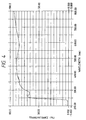
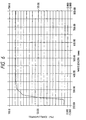
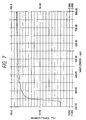
- the photocured croeslinked-hyaluronic acid contact lenses of the present invention have apparently high absorption rate of light at the ultraviolet region (300 to 200 nm) which exerts bad influences upon the eye, in comparison with the four commercial products.
- the photocured crosslinked-hyaluronic acid contact lens of Example 1 (DS 1.21%, Fig. 2) absorbed 85% or more of ultraviolet rays under wet conditions, and even the low DS contact lens of Example 2 (DS 0.53%, Fig. 3) absorbed 35% or more of ultraviolet rays under wet conditions.
- Oxygen permeability coefficient of the photocured crosslinked-hyaluronic acid contact lens prepared in Example 1 was measured by an electrode method.
- Example 2 Three pieces of the photocured crosslinked-hyaluronic acid contact lenses prepared in Example 1 were used. Until measurement, the lenses were preserved in physiological saline. The thickness of the photocured crosslinked-hyaluronic acid contact lens (DS 1.21%) was adjusted to 0.2 mm.
- contact lens of Bausch & Lomb PLANO-T central thickness: 0.18 mm, water content: 39%) was used as a control.
- the photocured crosslinked-hyaluronic acid contact lens was set in a measurement chamber, and measured at 35°C by an electrode method.
- an improved device for contact lens consisting of a dissolved oxygen meter (DU-25A type, TOA Electronics Ltd.) and an electrode (OE-2111 type, TOA Electronics Ltd.) was used.
- the oxygen permeability coefficient of the photocured crosslinked-hyaluronic acid contact lens with high water content was about 7 times as that of PLANO-T.
- Number of test sample Water content (%) Oxygen permeability coefficient ( ⁇ 10 -11 (cm 2 /sec)•(ml O 2 /ml•mmHg)) No. 1 81 68.5 No. 2 81 69.5 No. 3 82 71.2 Mean value 81.3 69.7 Standard deviation 0.577 1.37 PLANO-T 39 9.7
- a total of 8 pieces of the photocured crosslinked-hyaluronic acid contact lens prepared in Example 1 were used. They were preserved in physiological saline until their use.
- Results of the wearing and irritation tests are shown in Table 4. Results of wearing and irritation tests Animal No. No. 1 No. 2 No. 3 No. 4 Day Eyes R L R L R L R L Fitness p.f. float cut float p.f. p.f.
- Wearing performance of the photocured crosslinked-hyaluronic acid contact lens was excellent, with no falling off of the lens after 4 days and only one case of falling off after 5 days in which a cut line was formed at the time of the insertion of lens. Two more lenses were fallen off after 6 days of the wearing. In consequence, wearing period of the contact lens examined this time seems to be 5 days at the most, but it is possible to prolong the wearing period by improving its compatibility with the cornea. In addition, though irritation was observed in one eye, this was considered to be due to breakage of the membrane or irritation caused by the floating of the edge of the lens, so that it seemed that no irritation would occur if the contact lens had a perfectly fitted shape.
- the contact lens after impregnation with a mydriatic preparation Mydrin P (trade name, manufactured by Santen Pharmaceutical), was worn on the rabbit eye to compare duration of its mydriatic effect with that of an eye lotion.
- Mydrin P is a drug which contains tropicamide having parasympatholytic action and phenylephrine hydrochloride having sympathomimetic action and causes mydriasis by the pupillary sphincter relaxing action of tropicamide and the pupillary dilator contracting action of phenylephrine hydrochloride. It also contains epsilon-aminocaproic acid, benzalkonium chloride, chlorobutanol, boric acid and the like antiseptics.
- the photocured crosslinked-hyaluronic acid contact lens prepared in Example 1 was used.
- a total of 12 female rabbits of JW line (body weight, 2.79 to 3.22 kg) were used.
- a mydriatic preparation was selected as a drug for use in the examination of sustained release effect, because its sustained release effect can be examined easily by periodically measuring pupil diameter.
- the mydriatic preparation, Mydrin P is a colorless or slightly yellow and transparent water soluble eye lotion which contains 0.5% of tropicamide (molecular weight, 284) and 0.5% of phenylephrine hydrochloride (molecular weight, 204) and is used in mydriasis for diagnosis and therapeutic purposes and in accommodation paralysis.
- Each sample of the photocured crosslinked-hyaluronic acid contact lens was soaked in 1 ml of Mydrin P (tropicamidephenylephrine eye lotion) for 20 hours, and excess liquid was drained when used.
- Mydrin P tropicamidephenylephrine eye lotion
- each anterior eye portion was observed by fixing each rabbit on a fixing apparatus.
- the eye was shone with a hand slit lamp to observe changes in the pupil diameter, position of the contact lens and irritation and then the anterior eye portion was photographed.
- the photographs were taken just before wearing of the contact lens or application of the eye lotion and 1 and 20 hours thereafter.
- Pupil diameter in the major axis direction was measured from the photograph. Pupil diameters measured after 1 and 20 hours wearing of the contact lens or application of the eye lotion were compared to be used as the index of sustained drug release effect.
- Pupil diameters are shown in Table 5. Pupil diameters at the time of application of Mydrin P and wearing of Mydrin P-containing photocured crosslinked-hyaluronic acid contact lens Group Just before After 1 hr After 20 hrs (mm) (mm) (mm) Eye lotion 2.55 ⁇ 0.412 10.6 ⁇ 0.863 4.12 ⁇ 0.690 Contact lens 2.50 ⁇ 0.354 11.3 ⁇ 0.413 7.73 ⁇ 0.569 ,
- a pupil diameter of 10 mm or more was measured after 1 hour of the treatment, which was close to the maximum mydriasis. Even after 20 hours of the treatment, the pupil diameter was significantly larger than the value just before the treatment.
- pupil diameter of the eye lotion group was compared with that of the contact lens group, significant differences were not observed just before and 1 hour after the treatment, but pupil diameter in the contact lens group after 20 hours was significantly large in comparison with the eye lotion group.
- the contact lens was impregnated with a mydriatic preparation, Mydrin P, worn on the rabbit eye and its mydriasis effect was compared with a case of the application of an eye lotion.
- the mydriasis condition was maintained after 20 hours in both groups, but the pupil diameter in the contact lens group was significantly larger than that in the eye lotion-applied group.
- the iris hyperemia and corneal opacity observed in this case were considered to be due to the nervous action or additive agents of Mydrin P.
- the photocured crosslinked-hyaluronic acid contact lens was fully useful as a base material for use in the sustained release of drugs.
- a photocured crosslinked-hyaluronic acid contact lens having markedly low DS value can be obtained because of the use of a raw material prepared by using hyaluronic acid that exists in a living body such as animal tissues and the like including human as the main constituent material, binding thereto a spacer group-introduced photoreactive crosslinking group and photocrosslinking the resulting product, so that the present invention can provide a contact lens which is possessed of the intrinsic characteristic features of hyaluronic acid such as tissue affinity, biocompatibility and bioaffinity, high water holding property, and high oxygen permeability, can find versatile use in such applications as a visual acuity correcting contact lens, a therapeutic contact lens, a cornea protecting material, a sustained drug releasing contact lens, an ultraviolet ray protecting contact lens and the like according to use purposes.
Landscapes
- Physics & Mathematics (AREA)
- General Physics & Mathematics (AREA)
- Optics & Photonics (AREA)
- Polysaccharides And Polysaccharide Derivatives (AREA)
- Eyeglasses (AREA)
- Materials For Medical Uses (AREA)
Claims (11)
- Lentille de contact ayant une teneur en eau allant de 80 à 99% en poids, et une compatibilité de forme et une affinité de tissus pour un globe oculaire, la lentille de contact comprenant un dérivé de l'acide hyaluronique photoréticulé produit par la formation d'un cycle cyclobutane réticulé par irradiation à la lumière à partir de groupes réticulants photoréactifs communs liés à des groupes carboxyles de l'acide hyaluronique grâce à un groupe caractéristique pontant.
- Lentille de contact selon la revendication 1, ayant un coefficient de perméabilité à l'oxygène (valeur Dk) allant de 40x10-11 à 100x10-11 (cm2/sec).(ml O2/ml mmHg).
- Lentille de contact selon la revendication 1 ou la revendication 2, dans laquelle ledit groupe réticulant photoréactif est l'acide cinnamique ou un dérivé de celui-ci ;
le dérivé de l'acide hyaluronique est formé par l'introduction du groupe réticulant photoréactif dans l'acide hyaluronique grâce à la liaison d'un groupe carboxyle de l'acide hyaluronique avec un groupe caractéristique pontant lié à un groupe réticulant photoréactif dans lequel le groupe réticulant photoréactif et un groupe fonctionnel d'un composé ayant deux groupes fonctionnels et duquel le groupe caractéristique pontant est dérivé, sont liés ensemble ;
le groupe fonctionnel du groupe caractéristique pontant qui doit être lié à l'acide hyaluronique est un radical aminé ; et
le groupe caractéristique pontant lié à un groupe réticulant photoréactif est introduit dans l'acide hyaluronique pour former ledit dérivé de l'acide hyaluronique photoréactif en formant une liaison amide avec le groupe carboxyle de l'acide hyaluronique. - Lentille de contact selon la revendication 3, dans laquelle ledit composé est un alcool aminé.
- Lentille de contact selon la revendication 4, dans laquelle ledit alcool aminé est l'aminoéthanol, l'aminopropanol, l'aminobutanol, l'aminopentanol, l'amino-hexanol, l'aminooctanol ou l'aminododécanol.
- Lentille de contact selon l'une quelconque des revendications précédentes, dans laquelle ledit groupe réticulant photoréactif est introduit pour former ledit dérivé de l'acide hyaluronique photoréactif en un rapport moyen allant de 0,2 à 5% molaire par unité de disaccharide, un constituant dudit acide hyaluronique.
- Lentille de contact selon l'une quelconque des revendications précédentes, qui a un effet protégeant la cornée.
- Lentille de contact selon l'une quelconque des revendications précédentes, qui absorbe et coupe les rayons ultraviolets qui sont nocifs pour l'oeil.
- Lentille de contact selon l'une quelconque des revendications précédentes, dans laquelle une substance physiologiquement utile et active est ajoutée dans la lentille, et ladite substance est libérée progressivement lors du port de la lentille.
- Lentille de contact selon l'une quelconque des revendications précédentes, qui a un effet corrigeant l'acuité visuelle.
- Procédé pour préparer une lentille de contact à base d'acide hyaluronique photoréticulé comme définie dans la revendication 1, qui comprend le moulage d'un dérivé de l'acide hyaluronique photoréactif comprenant des groupes réticulants photoréactifs liés à des groupes carboxyles de l'acide hyaluronique grâce à un groupe caractéristique pontant en une forme qui correspond au globe oculaire, et ultérieurement l'irradiation du produit modelé avec de la lumière pour obtenir la réticulation par formation d'un cycle cyclobutane entre les groupes réticulants photoréactifs communs.
Applications Claiming Priority (3)
| Application Number | Priority Date | Filing Date | Title |
|---|---|---|---|
| JP26068295 | 1995-09-13 | ||
| JP260682/95 | 1995-09-13 | ||
| JP26068295 | 1995-09-13 |
Publications (3)
| Publication Number | Publication Date |
|---|---|
| EP0763754A2 EP0763754A2 (fr) | 1997-03-19 |
| EP0763754A3 EP0763754A3 (fr) | 1997-10-29 |
| EP0763754B1 true EP0763754B1 (fr) | 2003-01-08 |
Family
ID=17351318
Family Applications (1)
| Application Number | Title | Priority Date | Filing Date |
|---|---|---|---|
| EP96114728A Expired - Lifetime EP0763754B1 (fr) | 1995-09-13 | 1996-09-13 | Lentille de contact à base d'acide hyaluronique photoréticulé |
Country Status (3)
| Country | Link |
|---|---|
| US (1) | US5789462A (fr) |
| EP (1) | EP0763754B1 (fr) |
| DE (1) | DE69625658T2 (fr) |
Cited By (4)
| Publication number | Priority date | Publication date | Assignee | Title |
|---|---|---|---|---|
| AU2004272432B2 (en) * | 2003-09-12 | 2011-01-06 | Seikagaku Corporation | Polysaccharide pseudo-sponge |
| US10816822B2 (en) | 2010-04-13 | 2020-10-27 | Johnson & Johnson Vision Care, Inc. | Pupil-only photochromic contact lenses displaying desirable optics and comfort |
| US10894374B2 (en) | 2010-04-13 | 2021-01-19 | Johnson & Johnson Vision Care, Inc. | Process for manufacture of a thermochromic contact lens material |
| US11724471B2 (en) | 2019-03-28 | 2023-08-15 | Johnson & Johnson Vision Care, Inc. | Methods for the manufacture of photoabsorbing contact lenses and photoabsorbing contact lenses produced thereby |
Families Citing this family (51)
| Publication number | Priority date | Publication date | Assignee | Title |
|---|---|---|---|---|
| GB2347858A (en) * | 1999-03-18 | 2000-09-20 | Lovesgrove Res Ltd | Anti-viral compounds |
| US6473232B2 (en) * | 2000-03-08 | 2002-10-29 | Canon Kabushiki Kaisha | Optical system having a diffractive optical element, and optical apparatus |
| DE60117502T2 (de) * | 2000-12-19 | 2006-08-24 | Seikagaku Corp. | Photohärtbare Derivate von Hyaluronsäure, Verfahren zu deren Herstellung, vernetztes und photogehärtetes Derivat der Hyaluronsäure und diese enthaltendes medizinisches Material |
| JP4135502B2 (ja) * | 2001-01-31 | 2008-08-20 | 生化学工業株式会社 | 架橋多糖スポンジ |
| US7998699B2 (en) | 2002-08-15 | 2011-08-16 | University Of South Florida | Early detection of pathogens in blood |
| EP2103694B1 (fr) | 2003-08-15 | 2011-05-25 | University of South Florida | Matériaux et procédés de capture des pathogènes et suppression de l'acide aurintricarboxylique d'un échantillon |
| CN101921347B (zh) * | 2004-01-07 | 2014-07-30 | 生化学工业株式会社 | 透明质酸衍生物及含有其的药剂 |
| US7118213B2 (en) * | 2004-06-01 | 2006-10-10 | Johnson & Johnson Vision Care, Inc. | Promotional aid |
| US9804295B2 (en) * | 2005-05-05 | 2017-10-31 | Novartis Ag | Ophthalmic devices for sustained delivery of active compounds |
| KR101411067B1 (ko) * | 2005-10-12 | 2014-06-27 | 세이가가쿠 고교 가부시키가이샤 | 점막에 적용하는 작용제 및 그것의 제조 방법 |
| US9377569B2 (en) | 2006-03-20 | 2016-06-28 | High Performance Optics, Inc. | Photochromic ophthalmic systems that selectively filter specific blue light wavelengths |
| US8882267B2 (en) | 2006-03-20 | 2014-11-11 | High Performance Optics, Inc. | High energy visible light filter systems with yellowness index values |
| US20120075577A1 (en) | 2006-03-20 | 2012-03-29 | Ishak Andrew W | High performance selective light wavelength filtering providing improved contrast sensitivity |
| US7674781B2 (en) * | 2006-04-28 | 2010-03-09 | Heather Sheardown | Hyaluronic acid-retaining polymers |
| CZ2008705A3 (cs) | 2008-11-06 | 2010-04-14 | Cpn S. R. O. | Zpusob prípravy DTPA sítovaných derivátu kyseliny hyaluronové a jejich modifikace |
| USD813421S1 (en) | 2009-08-28 | 2018-03-20 | Progress Profiles Spa | Floor underlayment |
| US9188348B2 (en) | 2009-08-28 | 2015-11-17 | Progress Profiles Spa | Method and apparatus for positioning heating elements |
| CZ302503B6 (cs) | 2009-12-11 | 2011-06-22 | Contipro C A.S. | Zpusob prípravy derivátu kyseliny hyaluronové oxidovaného v poloze 6 glukosaminové cásti polysacharidu selektivne na aldehyd a zpusob jeho modifikace |
| CZ302504B6 (cs) | 2009-12-11 | 2011-06-22 | Contipro C A.S. | Derivát kyseliny hyaluronové oxidovaný v poloze 6 glukosaminové cásti polysacharidu selektivne na aldehyd, zpusob jeho prípravy a zpusob jeho modifikace |
| ES2980213T3 (es) | 2010-07-30 | 2024-09-30 | Alcon Inc | Lentes de hidrogel de silicona con superficies ricas en agua |
| CA2851668C (fr) | 2011-10-12 | 2016-08-16 | Novartis Ag | Procede de fabrication de lentilles ophtalmiques absorbant les uv par revetement |
| CZ2012136A3 (cs) | 2012-02-28 | 2013-06-05 | Contipro Biotech S.R.O. | Deriváty na bázi kyseliny hyaluronové schopné tvorit hydrogely, zpusob jejich prípravy, hydrogely na bázi techto derivátu, zpusob jejich prípravy a pouzití |
| CZ304512B6 (cs) | 2012-08-08 | 2014-06-11 | Contipro Biotech S.R.O. | Derivát kyseliny hyaluronové, způsob jeho přípravy, způsob jeho modifikace a použití |
| CZ304267B6 (cs) | 2012-11-27 | 2014-02-05 | Contipro Biotech S.R.O. | Fotoreaktivní derivát kyseliny hyaluronové, způsob jeho přípravy, 3D síťovaný derivát kyseliny hyaluronové, způsob jeho přípravy a použití |
| CZ2012842A3 (cs) | 2012-11-27 | 2014-08-20 | Contipro Biotech S.R.O. | Nanomicelární kompozice na bázi C6-C18-acylovaného hyaluronanu, způsob přípravy C6-C18-acylovaného hyaluronanu, způsob přípravy nanomicelární kompozice a stabilizované nanomicelární kompozice a použití |
| HUE031702T2 (en) | 2012-12-17 | 2017-07-28 | Novartis Ag | A method for producing improved UV absorbing ophthalmic lenses |
| US9798163B2 (en) | 2013-05-05 | 2017-10-24 | High Performance Optics, Inc. | Selective wavelength filtering with reduced overall light transmission |
| MY180543A (en) | 2013-12-17 | 2020-12-01 | Novartis Ag | A silicone hydrogel lens with a crosslinked hydrophilic coating |
| CZ2014150A3 (cs) | 2014-03-11 | 2015-05-20 | Contipro Biotech S.R.O. | Konjugáty oligomeru kyseliny hyaluronové nebo její soli, způsob jejich přípravy a použití |
| US9683102B2 (en) | 2014-05-05 | 2017-06-20 | Frontier Scientific, Inc. | Photo-stable and thermally-stable dye compounds for selective blue light filtered optic |
| CZ2014451A3 (cs) | 2014-06-30 | 2016-01-13 | Contipro Pharma A.S. | Protinádorová kompozice na bázi kyseliny hyaluronové a anorganických nanočástic, způsob její přípravy a použití |
| CA3073539C (fr) | 2014-08-18 | 2021-09-28 | Progress Profiles Spa | Procede et appareil pour le positionnement d'elements chauffants |
| US10215423B2 (en) | 2014-08-18 | 2019-02-26 | Progress Profiles S.P.A. | Method and apparatus for positioning heating elements |
| EP3186070B1 (fr) | 2014-08-26 | 2019-09-25 | Novartis AG | Procédé pour appliquer un revêtement stable sur des lentilles de contact en hydrogel de silicone |
| CN107106594A (zh) | 2014-12-26 | 2017-08-29 | 生化学工业株式会社 | 改善眼的自觉症状的制剂和方法 |
| CZ309295B6 (cs) | 2015-03-09 | 2022-08-10 | Contipro A.S. | Samonosný, biodegradabilní film na bázi hydrofobizované kyseliny hyaluronové, způsob jeho přípravy a použití |
| USD806911S1 (en) | 2015-03-17 | 2018-01-02 | Silcart S.P.A. | Floor underlayment |
| CZ306479B6 (cs) | 2015-06-15 | 2017-02-08 | Contipro A.S. | Způsob síťování polysacharidů s využitím fotolabilních chránicích skupin |
| CZ306662B6 (cs) | 2015-06-26 | 2017-04-26 | Contipro A.S. | Deriváty sulfatovaných polysacharidů, způsob jejich přípravy, způsob jejich modifikace a použití |
| HUE051613T2 (hu) | 2015-12-15 | 2021-03-01 | Alcon Inc | Eljárás szilíciumhidrogél-kontaktlencsékre stabil kivonat felvitelére |
| US20170208825A1 (en) * | 2016-01-21 | 2017-07-27 | Alan Backus | Gaseous transfer device |
| US10859274B2 (en) | 2016-04-01 | 2020-12-08 | Progress Profiles S.P.A. | Support for radiant covering and floor heating elements |
| US9726383B1 (en) | 2016-06-17 | 2017-08-08 | Progress Profiles S.P.A. | Support for radiant covering and floor heating elements |
| CZ308106B6 (cs) | 2016-06-27 | 2020-01-08 | Contipro A.S. | Nenasycené deriváty polysacharidů, způsob jejich přípravy a jejich použití |
| SG11202003456VA (en) | 2017-12-13 | 2020-07-29 | Alcon Inc | Method for producing mps-compatible water gradient contact lenses |
| BR112021010815A2 (pt) * | 2018-12-21 | 2021-08-31 | Advanced Aesthetic Technologies, Inc. | Polissacarídeos reticulados e métodos relacionados |
| CN114269397A (zh) | 2019-08-30 | 2022-04-01 | 寺雅凝胶有限责任公司 | 一种获得用于眼部治疗的离子交换聚合物水凝胶的方法及其水凝胶镜片 |
| USD1036979S1 (en) | 2020-04-06 | 2024-07-30 | Progress Profiles S.P.A. | Floor underlayment |
| USD1036242S1 (en) | 2020-04-22 | 2024-07-23 | Progress Profiles S.P.A. | Floor underlayment |
| USD1036243S1 (en) | 2020-10-09 | 2024-07-23 | Progress Profiles S.P.A. | Floor underlayment |
| USD1101979S1 (en) | 2023-02-07 | 2025-11-11 | Progress Profiles S.P.A. | Floor underlayment |
Family Cites Families (25)
| Publication number | Priority date | Publication date | Assignee | Title |
|---|---|---|---|---|
| JPS5235860B2 (fr) * | 1974-07-18 | 1977-09-12 | ||
| US4223984A (en) * | 1979-04-04 | 1980-09-23 | Opticol Corporation | Collagen soft contact lens |
| US4264155A (en) * | 1979-07-09 | 1981-04-28 | Opticol Corporation | Collagen contact lens |
| JPS5694322A (en) * | 1979-12-27 | 1981-07-30 | Mitsubishi Rayon Co Ltd | Contact lens |
| US4260228A (en) * | 1980-01-21 | 1981-04-07 | Opticol Corporation | Collagen gel contact lens and method of preparation |
| US4532267A (en) * | 1984-02-15 | 1985-07-30 | Board Of Regents, University Of Washington | Vision correction lens made from an aminopolysaccharide compound or an ether or ester thereof |
| SE442820B (sv) * | 1984-06-08 | 1986-02-03 | Pharmacia Ab | Gel av tverbunden hyaluronsyra for anvendning som glaskroppssubstitut |
| SE8501022L (sv) * | 1985-03-01 | 1986-09-02 | Pharmacia Ab | Format alster och forfarande for dess framstellning |
| US4774093A (en) * | 1985-06-25 | 1988-09-27 | Fmc Corporation | Polysaccharide compositions, preparation and uses |
| JP2564520B2 (ja) * | 1986-08-21 | 1996-12-18 | ユニチカ株式会社 | コンタクトレンズの製造方法 |
| JPH0723317B2 (ja) * | 1988-03-17 | 1995-03-15 | 生化学工業株式会社 | 角膜上皮層障害症治療剤 |
| JPH01279836A (ja) * | 1988-04-30 | 1989-11-10 | Kiyoshi Kita | 角膜治療剤 |
| US5510418A (en) * | 1988-11-21 | 1996-04-23 | Collagen Corporation | Glycosaminoglycan-synthetic polymer conjugates |
| US5077033A (en) * | 1990-08-07 | 1991-12-31 | Mediventures Inc. | Ophthalmic drug delivery with thermo-irreversible gels of polxoxyalkylene polymer and ionic polysaccharide |
| US5143731A (en) * | 1990-08-07 | 1992-09-01 | Mediventures Incorporated | Body cavity drug delivery with thermo-irreversible polyoxyalkylene and ionic polysaccharide gels |
| US5376693A (en) * | 1990-08-07 | 1994-12-27 | Mediventures Inc. | Thermo-irreversible gel corneal contact lens formed in situ |
| JPH04176459A (ja) * | 1990-11-09 | 1992-06-24 | Unitika Ltd | キチンフイルムからなる眼部の創傷治療材料 |
| NZ240451A (en) * | 1990-11-15 | 1993-03-26 | Iolab Corp | Mixture of a water-soluble polymer and a chitosan having 30-60% n-acetylation; corneal bandage lenses |
| JP3085480B2 (ja) * | 1991-10-02 | 2000-09-11 | セイコーエプソン株式会社 | ホルモン徐放性コンタクトレンズ |
| JPH05163384A (ja) * | 1991-12-12 | 1993-06-29 | Asahi Chem Ind Co Ltd | コンタクトレンズ用材料 |
| JP2855307B2 (ja) * | 1992-02-05 | 1999-02-10 | 生化学工業株式会社 | 光反応性グリコサミノグリカン、架橋グリコサミノグリカン及びそれらの製造方法 |
| JP2740822B2 (ja) * | 1992-04-08 | 1998-04-15 | 工業技術院長 | コンタクトレンズ及びその製造方法 |
| TW328535B (en) * | 1993-07-02 | 1998-03-21 | Novartis Ag | Functional photoinitiators and their manufacture |
| CN1128065A (zh) * | 1994-03-14 | 1996-07-31 | 生化学工业株式会社 | 戴在眼球上的材料 |
| CA2162957C (fr) * | 1994-11-17 | 2011-08-02 | Michinori Waki | Derive de l'acide cinnamique |
-
1996
- 1996-09-13 EP EP96114728A patent/EP0763754B1/fr not_active Expired - Lifetime
- 1996-09-13 DE DE69625658T patent/DE69625658T2/de not_active Expired - Lifetime
- 1996-09-13 US US08/712,515 patent/US5789462A/en not_active Expired - Lifetime
Cited By (8)
| Publication number | Priority date | Publication date | Assignee | Title |
|---|---|---|---|---|
| AU2004272432B2 (en) * | 2003-09-12 | 2011-01-06 | Seikagaku Corporation | Polysaccharide pseudo-sponge |
| US10816822B2 (en) | 2010-04-13 | 2020-10-27 | Johnson & Johnson Vision Care, Inc. | Pupil-only photochromic contact lenses displaying desirable optics and comfort |
| US10894374B2 (en) | 2010-04-13 | 2021-01-19 | Johnson & Johnson Vision Care, Inc. | Process for manufacture of a thermochromic contact lens material |
| US11391965B2 (en) | 2010-04-13 | 2022-07-19 | Johnson & Johnson Vision Care, Inc. | Pupil-only photochromic contact lenses displaying desirable optics and comfort |
| US11724472B2 (en) | 2010-04-13 | 2023-08-15 | Johnson & Johnson Vision Care, Inc. | Process for manufacture of a thermochromic contact lens material |
| US11789291B2 (en) | 2010-04-13 | 2023-10-17 | Johnson & Johnson Vision Care, Inc. | Pupil-only photochromic contact lenses displaying desirable optics and comfort |
| US11724471B2 (en) | 2019-03-28 | 2023-08-15 | Johnson & Johnson Vision Care, Inc. | Methods for the manufacture of photoabsorbing contact lenses and photoabsorbing contact lenses produced thereby |
| US12128641B2 (en) | 2019-03-28 | 2024-10-29 | Johnson & Johnson Vision Care, Inc. | Methods for the manufacture of photoabsorbing contact lenses and photoabsorbing contact lenses produced thereby |
Also Published As
| Publication number | Publication date |
|---|---|
| EP0763754A3 (fr) | 1997-10-29 |
| EP0763754A2 (fr) | 1997-03-19 |
| DE69625658T2 (de) | 2003-07-17 |
| US5789462A (en) | 1998-08-04 |
| DE69625658D1 (de) | 2003-02-13 |
Similar Documents
| Publication | Publication Date | Title |
|---|---|---|
| US5789462A (en) | Photocured crosslinked-hyaluronic acid contact lens | |
| AU697739B2 (en) | Material to be worn on the eyeball | |
| JP4006039B2 (ja) | 光架橋ヒアルロン酸コンタクトレンズ | |
| ES2328009T3 (es) | Lente de contacto blanda con capacidad de ser utilizada a largo plazo. | |
| Deng et al. | “Click” chemistry-tethered hyaluronic acid-based contact lens coatings improve lens wettability and lower protein adsorption | |
| JP4043789B2 (ja) | 表面を修飾するための方法 | |
| Kita et al. | Evaluation of polyvinyl alcohol hydrogel as a soft contact lens material | |
| CN102803998B (zh) | 生物医学装置、高分子材料及包括其的接触镜 | |
| JP5568096B2 (ja) | 湿潤性の向上したハイドロゲルコンタクトレンズ | |
| KR20010013074A (ko) | 콜라겐을 주성분으로 하는 생체적합성, 광학 투명성 및자외선 흡수성이 있는 중합체 물질 및 그 제조 방법 | |
| US4532267A (en) | Vision correction lens made from an aminopolysaccharide compound or an ether or ester thereof | |
| TW201531734A (zh) | 具有親水層的隱形眼鏡 | |
| JPH0352842B2 (fr) | ||
| Hajirasouliha et al. | Ocular contact lenses: smart materials for biomedical applications | |
| US7832857B2 (en) | Microbial cellulose contact lens | |
| US11034801B2 (en) | Transparent hydrogel membrane including hyaluronic acid, and contact lens including same | |
| CN100568056C (zh) | 一种具自抗菌性的软性角膜接触镜及其制备方法和应用 | |
| CN1394875A (zh) | 一种丝素蛋白的提取方法 | |
| KR101802305B1 (ko) | 광변색 하이드로겔 콘텍트 렌즈 및 그 제조 방법 | |
| Ayran et al. | Design and Characterization of HEMA‐Based 3D‐Printed Hydrogel Networks for Optical Biomaterial Applications | |
| KR20230080853A (ko) | pH감응성 이민결합 히알루론산을 이용한 약물전달용 하이드로겔 콘택트렌즈와 이의 제조방법 | |
| Sheikholeslami | Highly Shear-Thinning Mucoadhesive Hydrogels for Ophthalmic Applications | |
| Lee | Biomaterials in Ophthalmology A Generalist's Overview | |
| JPH01262860A (ja) | 角膜保護剤 | |
| HK40042667B (en) | Anionic drug-containing ophthalmic device |
Legal Events
| Date | Code | Title | Description |
|---|---|---|---|
| PUAI | Public reference made under article 153(3) epc to a published international application that has entered the european phase |
Free format text: ORIGINAL CODE: 0009012 |
|
| AK | Designated contracting states |
Kind code of ref document: A2 Designated state(s): DE FR GB IT SE |
|
| PUAL | Search report despatched |
Free format text: ORIGINAL CODE: 0009013 |
|
| AK | Designated contracting states |
Kind code of ref document: A3 Designated state(s): DE FR GB IT SE |
|
| 17P | Request for examination filed |
Effective date: 19980225 |
|
| 17Q | First examination report despatched |
Effective date: 20001121 |
|
| GRAG | Despatch of communication of intention to grant |
Free format text: ORIGINAL CODE: EPIDOS AGRA |
|
| GRAG | Despatch of communication of intention to grant |
Free format text: ORIGINAL CODE: EPIDOS AGRA |
|
| GRAH | Despatch of communication of intention to grant a patent |
Free format text: ORIGINAL CODE: EPIDOS IGRA |
|
| GRAH | Despatch of communication of intention to grant a patent |
Free format text: ORIGINAL CODE: EPIDOS IGRA |
|
| GRAA | (expected) grant |
Free format text: ORIGINAL CODE: 0009210 |
|
| AK | Designated contracting states |
Kind code of ref document: B1 Designated state(s): DE FR GB IT SE |
|
| REG | Reference to a national code |
Ref country code: GB Ref legal event code: FG4D |
|
| REF | Corresponds to: |
Ref document number: 69625658 Country of ref document: DE Date of ref document: 20030213 Kind code of ref document: P |
|
| REG | Reference to a national code |
Ref country code: SE Ref legal event code: TRGR |
|
| ET | Fr: translation filed | ||
| PLBE | No opposition filed within time limit |
Free format text: ORIGINAL CODE: 0009261 |
|
| STAA | Information on the status of an ep patent application or granted ep patent |
Free format text: STATUS: NO OPPOSITION FILED WITHIN TIME LIMIT |
|
| 26N | No opposition filed |
Effective date: 20031009 |
|
| REG | Reference to a national code |
Ref country code: FR Ref legal event code: CA |
|
| PGFP | Annual fee paid to national office [announced via postgrant information from national office to epo] |
Ref country code: DE Payment date: 20140911 Year of fee payment: 19 |
|
| PGFP | Annual fee paid to national office [announced via postgrant information from national office to epo] |
Ref country code: SE Payment date: 20140911 Year of fee payment: 19 Ref country code: GB Payment date: 20140910 Year of fee payment: 19 |
|
| PGFP | Annual fee paid to national office [announced via postgrant information from national office to epo] |
Ref country code: IT Payment date: 20140912 Year of fee payment: 19 |
|
| PGFP | Annual fee paid to national office [announced via postgrant information from national office to epo] |
Ref country code: FR Payment date: 20140906 Year of fee payment: 19 |
|
| REG | Reference to a national code |
Ref country code: DE Ref legal event code: R119 Ref document number: 69625658 Country of ref document: DE |
|
| PG25 | Lapsed in a contracting state [announced via postgrant information from national office to epo] |
Ref country code: IT Free format text: LAPSE BECAUSE OF NON-PAYMENT OF DUE FEES Effective date: 20150913 |
|
| REG | Reference to a national code |
Ref country code: SE Ref legal event code: EUG |
|
| GBPC | Gb: european patent ceased through non-payment of renewal fee |
Effective date: 20150913 |
|
| PG25 | Lapsed in a contracting state [announced via postgrant information from national office to epo] |
Ref country code: SE Free format text: LAPSE BECAUSE OF NON-PAYMENT OF DUE FEES Effective date: 20150914 |
|
| REG | Reference to a national code |
Ref country code: FR Ref legal event code: ST Effective date: 20160531 |
|
| PG25 | Lapsed in a contracting state [announced via postgrant information from national office to epo] |
Ref country code: DE Free format text: LAPSE BECAUSE OF NON-PAYMENT OF DUE FEES Effective date: 20160401 Ref country code: GB Free format text: LAPSE BECAUSE OF NON-PAYMENT OF DUE FEES Effective date: 20150913 |
|
| PG25 | Lapsed in a contracting state [announced via postgrant information from national office to epo] |
Ref country code: FR Free format text: LAPSE BECAUSE OF NON-PAYMENT OF DUE FEES Effective date: 20150930 |