EP0765082A2 - Kodierung/Dekodierung eines Untertitelsignals - Google Patents
Kodierung/Dekodierung eines Untertitelsignals Download PDFInfo
- Publication number
- EP0765082A2 EP0765082A2 EP96306901A EP96306901A EP0765082A2 EP 0765082 A2 EP0765082 A2 EP 0765082A2 EP 96306901 A EP96306901 A EP 96306901A EP 96306901 A EP96306901 A EP 96306901A EP 0765082 A2 EP0765082 A2 EP 0765082A2
- Authority
- EP
- European Patent Office
- Prior art keywords
- subtitle
- signal
- data
- coded
- address
- Prior art date
- Legal status (The legal status is an assumption and is not a legal conclusion. Google has not performed a legal analysis and makes no representation as to the accuracy of the status listed.)
- Withdrawn
Links
Images









Classifications
-
- H—ELECTRICITY
- H04—ELECTRIC COMMUNICATION TECHNIQUE
- H04N—PICTORIAL COMMUNICATION, e.g. TELEVISION
- H04N21/00—Selective content distribution, e.g. interactive television or video on demand [VOD]
- H04N21/40—Client devices specifically adapted for the reception of or interaction with content, e.g. set-top-box [STB]; Operations thereof
- H04N21/43—Processing of content or additional data, e.g. demultiplexing additional data from a digital video stream; Elementary client operations, e.g. monitoring of home network or synchronising decoder's clock; Client middleware
- H04N21/434—Disassembling of a multiplex stream, e.g. demultiplexing audio and video streams, extraction of additional data from a video stream; Remultiplexing of multiplex streams; Extraction or processing of SI; Disassembling of packetised elementary stream
- H04N21/4348—Demultiplexing of additional data and video streams
-
- H—ELECTRICITY
- H04—ELECTRIC COMMUNICATION TECHNIQUE
- H04N—PICTORIAL COMMUNICATION, e.g. TELEVISION
- H04N7/00—Television systems
- H04N7/025—Systems for the transmission of digital non-picture data, e.g. of text during the active part of a television frame
-
- H—ELECTRICITY
- H04—ELECTRIC COMMUNICATION TECHNIQUE
- H04N—PICTORIAL COMMUNICATION, e.g. TELEVISION
- H04N19/00—Methods or arrangements for coding, decoding, compressing or decompressing digital video signals
- H04N19/42—Methods or arrangements for coding, decoding, compressing or decompressing digital video signals characterised by implementation details or hardware specially adapted for video compression or decompression, e.g. dedicated software implementation
-
- H—ELECTRICITY
- H04—ELECTRIC COMMUNICATION TECHNIQUE
- H04N—PICTORIAL COMMUNICATION, e.g. TELEVISION
- H04N21/00—Selective content distribution, e.g. interactive television or video on demand [VOD]
- H04N21/20—Servers specifically adapted for the distribution of content, e.g. VOD servers; Operations thereof
- H04N21/23—Processing of content or additional data; Elementary server operations; Server middleware
- H04N21/236—Assembling of a multiplex stream, e.g. transport stream, by combining a video stream with other content or additional data, e.g. inserting a URL [Uniform Resource Locator] into a video stream, multiplexing software data into a video stream; Remultiplexing of multiplex streams; Insertion of stuffing bits into the multiplex stream, e.g. to obtain a constant bit-rate; Assembling of a packetised elementary stream
- H04N21/23614—Multiplexing of additional data and video streams
-
- H—ELECTRICITY
- H04—ELECTRIC COMMUNICATION TECHNIQUE
- H04N—PICTORIAL COMMUNICATION, e.g. TELEVISION
- H04N21/00—Selective content distribution, e.g. interactive television or video on demand [VOD]
- H04N21/20—Servers specifically adapted for the distribution of content, e.g. VOD servers; Operations thereof
- H04N21/23—Processing of content or additional data; Elementary server operations; Server middleware
- H04N21/242—Synchronisation processes, e.g. processing of PCR [Programme Clock References]
-
- H—ELECTRICITY
- H04—ELECTRIC COMMUNICATION TECHNIQUE
- H04N—PICTORIAL COMMUNICATION, e.g. TELEVISION
- H04N21/00—Selective content distribution, e.g. interactive television or video on demand [VOD]
- H04N21/40—Client devices specifically adapted for the reception of or interaction with content, e.g. set-top-box [STB]; Operations thereof
- H04N21/41—Structure of client; Structure of client peripherals
- H04N21/426—Internal components of the client ; Characteristics thereof
-
- H—ELECTRICITY
- H04—ELECTRIC COMMUNICATION TECHNIQUE
- H04N—PICTORIAL COMMUNICATION, e.g. TELEVISION
- H04N21/00—Selective content distribution, e.g. interactive television or video on demand [VOD]
- H04N21/40—Client devices specifically adapted for the reception of or interaction with content, e.g. set-top-box [STB]; Operations thereof
- H04N21/41—Structure of client; Structure of client peripherals
- H04N21/426—Internal components of the client ; Characteristics thereof
- H04N21/42646—Internal components of the client ; Characteristics thereof for reading from or writing on a non-volatile solid state storage medium, e.g. DVD, CD-ROM
-
- H—ELECTRICITY
- H04—ELECTRIC COMMUNICATION TECHNIQUE
- H04N—PICTORIAL COMMUNICATION, e.g. TELEVISION
- H04N21/00—Selective content distribution, e.g. interactive television or video on demand [VOD]
- H04N21/40—Client devices specifically adapted for the reception of or interaction with content, e.g. set-top-box [STB]; Operations thereof
- H04N21/43—Processing of content or additional data, e.g. demultiplexing additional data from a digital video stream; Elementary client operations, e.g. monitoring of home network or synchronising decoder's clock; Client middleware
- H04N21/4302—Content synchronisation processes, e.g. decoder synchronisation
- H04N21/4307—Synchronising the rendering of multiple content streams or additional data on devices, e.g. synchronisation of audio on a mobile phone with the video output on the TV screen
- H04N21/43074—Synchronising the rendering of multiple content streams or additional data on devices, e.g. synchronisation of audio on a mobile phone with the video output on the TV screen of additional data with content streams on the same device, e.g. of EPG data or interactive icon with a TV programme
-
- H—ELECTRICITY
- H04—ELECTRIC COMMUNICATION TECHNIQUE
- H04N—PICTORIAL COMMUNICATION, e.g. TELEVISION
- H04N21/00—Selective content distribution, e.g. interactive television or video on demand [VOD]
- H04N21/40—Client devices specifically adapted for the reception of or interaction with content, e.g. set-top-box [STB]; Operations thereof
- H04N21/43—Processing of content or additional data, e.g. demultiplexing additional data from a digital video stream; Elementary client operations, e.g. monitoring of home network or synchronising decoder's clock; Client middleware
- H04N21/433—Content storage operation, e.g. storage operation in response to a pause request, caching operations
- H04N21/4331—Caching operations, e.g. of an advertisement for later insertion during playback
-
- H—ELECTRICITY
- H04—ELECTRIC COMMUNICATION TECHNIQUE
- H04N—PICTORIAL COMMUNICATION, e.g. TELEVISION
- H04N21/00—Selective content distribution, e.g. interactive television or video on demand [VOD]
- H04N21/40—Client devices specifically adapted for the reception of or interaction with content, e.g. set-top-box [STB]; Operations thereof
- H04N21/47—End-user applications
-
- H—ELECTRICITY
- H04—ELECTRIC COMMUNICATION TECHNIQUE
- H04N—PICTORIAL COMMUNICATION, e.g. TELEVISION
- H04N21/00—Selective content distribution, e.g. interactive television or video on demand [VOD]
- H04N21/40—Client devices specifically adapted for the reception of or interaction with content, e.g. set-top-box [STB]; Operations thereof
- H04N21/47—End-user applications
- H04N21/488—Data services, e.g. news ticker
- H04N21/4884—Data services, e.g. news ticker for displaying subtitles
-
- H—ELECTRICITY
- H04—ELECTRIC COMMUNICATION TECHNIQUE
- H04N—PICTORIAL COMMUNICATION, e.g. TELEVISION
- H04N7/00—Television systems
- H04N7/08—Systems for the simultaneous or sequential transmission of more than one television signal, e.g. additional information signals, the signals occupying wholly or partially the same frequency band, e.g. by time division
- H04N7/087—Systems for the simultaneous or sequential transmission of more than one television signal, e.g. additional information signals, the signals occupying wholly or partially the same frequency band, e.g. by time division with signal insertion during the vertical blanking interval only
- H04N7/088—Systems for the simultaneous or sequential transmission of more than one television signal, e.g. additional information signals, the signals occupying wholly or partially the same frequency band, e.g. by time division with signal insertion during the vertical blanking interval only the inserted signal being digital
- H04N7/0884—Systems for the simultaneous or sequential transmission of more than one television signal, e.g. additional information signals, the signals occupying wholly or partially the same frequency band, e.g. by time division with signal insertion during the vertical blanking interval only the inserted signal being digital for the transmission of additional display-information, e.g. menu for programme or channel selection
- H04N7/0885—Systems for the simultaneous or sequential transmission of more than one television signal, e.g. additional information signals, the signals occupying wholly or partially the same frequency band, e.g. by time division with signal insertion during the vertical blanking interval only the inserted signal being digital for the transmission of additional display-information, e.g. menu for programme or channel selection for the transmission of subtitles
Definitions
- the present invention relates to apparatus for and methods of encoding and/or decoding a subtitle signal, such that subtitle data may be efficiently encoded/decoded to provide a subtitle signal representing one or more subtitles to be displayed on a video image.
- a picture and subtitle encoding apparatus includes a picture encoding apparatus 20 and a subtitle coding apparatus 26.
- Picture encoding apparatus 20 is comprised of an encoder unit 22 and a buffer memory 24, wherein a video image (i.e., a picture signal) is supplied to encoder unit 22, which may be an MPEG encoder, and which encodes the video signal in a manner well known in the art, and which supplies the encoded signal to buffer memory 24 which temporarily stores the encoded signal therein.
- the encoded signal is read from buffer memory 24 and is supplied as a "picture stream" to a multiplexer 38.
- Buffer memory 24 also supplies a signal representing the amount of memory remaining in the buffer (i.e., unused memory) to encoder unit 22 which encodes the video signal in a particular manner (e.g., intraframe or interframe encodes the video signal) in response thereto.
- a signal representing the amount of memory remaining in the buffer i.e., unused memory
- encoder unit 22 which encodes the video signal in a particular manner (e.g., intraframe or interframe encodes the video signal) in response thereto.
- Subtitle coding apparatus 26 is comprised of a coder 28, a multiplexer 30, a buffer memory 32 and an address controller 34.
- a subtitle signal which represents a subtitle to be displayed on a video image, along with display time data and display position data, are supplied to coder 28 which encodes each pixel of the subtitle represented by the subtitle signal as a two-bit data code and supplies each of the data codes as a coded signal, along with the time and display position data, to multiplexer 30.
- coder 28 converts each pixel of the subtitle to one of four different colors as represented by the two-bit data code.
- Coder 28 additionally supplies a signal representing the amount of data of the subtitle signal to multiplexer 30 and further supplies the amount of data signal, along with the coded signal and the display and position data to address controller 34.
- Multiplexer 30 multiplexes the supplied signals into a multiplexed coded signal and supplies the multiplexed coded signal to buffer memory 32 which stores the supplied signal therein.
- Address controller 34 in response to the data amount signal and the display and position data, generates appropriate write and read control signals, and supplies the write and read control signals to buffer memory 32 which stores the supplied multiplexed coded signal at a memory address as indicated in the write address control signal and reads therefrom data stored at a memory address as indicated in the read address control signal.
- Buffer memory 32 additionally supplies to coder 28 a buffer remaining amount signal representing the amount of unused memory remaining in the buffer so as to control the type of coding of the subtitle signal in coder 28.
- the coded signal stored in buffer memory 32 is read therefrom and supplied as a subtitle stream to multiplexer 30 which multiplexes the picture stream and the subtitle stream to produce a combined picture and subtitle signal.
- the combined signal is transmitted over a transmission path or recorded on a record medium 40 by a recording device (not shown).
- the picture and subtitle coding apparatus shown in Fig. 1 further includes a system clock generator 36 which generates time information (i.e., a system clock signal) and supplies the time information to encoder unit 22, coder 28, address controller 34 and multiplexer 38, and these devices utilize the time information so that they operate in a synchronous manner.
- a system clock generator 36 which generates time information (i.e., a system clock signal) and supplies the time information to encoder unit 22, coder 28, address controller 34 and multiplexer 38, and these devices utilize the time information so that they operate in a synchronous manner.
- a picture and subtitle decoding apparatus is shown as comprising a picture decoding apparatus 44 and a subtitle decoding apparatus 50, wherein the picture decoding apparatus 44 is comprised of a buffer memory 46 and a decoder unit 48, and the subtitle decoding apparatus 50 is comprised of a buffer memory 52, a demultiplexer 54, a decoder 56 and an address controller 58.
- the video and subtitle data (i.e., the combined picture and subtitle signal) is read from record medium 40 (or received over a transmission path) and supplied to a demultiplexer 42 which demultiplexes the supplied signal and supplies the video signal (i.e., the picture stream) to picture decoding apparatus 44 and supplies the subtitle data (i.e., the subtitle stream) to subtitle decoding apparatus 50.
- a demultiplexer 42 which demultiplexes the supplied signal and supplies the video signal (i.e., the picture stream) to picture decoding apparatus 44 and supplies the subtitle data (i.e., the subtitle stream) to subtitle decoding apparatus 50.
- the video signal supplied to picture decoding apparatus 44 is temporarily stored in buffer memory 46 before being supplied to decoder unit 48 which decodes the video data at a time as indicated by the time information supplied by a system clock generator 60.
- Decoder 48 decodes the video data in a manner well known in the art and supplies the decoded video signal as an output for display on a monitor (not shown).
- the subtitle data supplied to subtitle decoding apparatus 50 is stored in buffer memory 52 at an address as indicated by a write address control signal supplied from address controller 58, and buffer memory 52 reads the stored subtitle data therefrom from an address as indicated by a read address control signal also supplied from address controller 58.
- the read-out subtitle data is supplied to demultiplexer 54 which demultiplexes the coded signal, display time and position data, and data amount information therein and supplies the coded signal (i.e., the subtitle signal) to decoder 56, supplies the display and position data to decoder 56 and to address controller 58, and supplies the data amount information also to decoder 56 and to address controller 58.
- Address controller 58 establishes the write and read address control signals that are supplied to buffer memory 52 from the display time, position data and the data amount information, and in response to a control signal supplied from demultiplexer 42.
- Decoder 56 decodes the coded subtitle signal in a manner well know in the art and supplies the decoded signal at a time as indicated by the display start and end time information as well as from the display position data and time information supplied from system clock generator 60.
- the decoded subtitle signal is combined with the video signal that is output from picture decoding apparatus 44 in a combining device (not shown) such that the subtitle represented by the subtitle signal is superimposed on the video image.
- Fig. 3 schematically illustrates the data stored in buffer memory 52 and the superimposition of a subtitle on a video image displayed on a monitor (i.e., a screen), wherein only one subtitle is stored in buffer memory 52 and represented by "DATA 1".
- buffer memory 52 of the decoding apparatus and buffer memory 32 of the encoding apparatus each operates as a FIFO (first-in-first-out) memory.
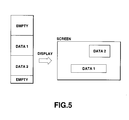
- Figs. 4 and 5 schematically illustrate when data of two subtitles are stored in buffer memory 52 and simultaneously superimposed on a video image.
- a first subtitle represented by "DATA 1”
- a second subtitle represented by "DATA 2”
- Both subtitles are displayed from time t2 to time t1'. If the data "DATA 1" of the first subtitle is supplied with the video signal before the data "DATA 2" of the second subtitle is supplied, then buffer memory 52 has the data structure as shown in Fig.
- address controller 58 when only the first subtitle is displayed (from time t1 to time t2), address controller 58 generates a read address control signal corresponding to the location in buffer memory 52 whereat DATA 1 resides. Similarly, when only the second subtitle is displayed (from time t1' to time t2'), address controller 58 generates a read address control signal corresponding to the location in buffer memory 52 whereat DATA 2 resides. However, since the second subtitle is located above the first subtitle when both subtitles are displayed (from time t2 to time t1'), it is necessary for address controller 58 to generate a read address control signal that first corresponds to the location of DATA 2 in buffer memory 52 and then to the location of DATA 1 in buffer memory 52. Thus, DATA 2 is read from buffer memory 52 before DATA 1 is read therefrom for the time period occurring between time t2 and time t1' and, thus, buffer memory 52 is not operating as a FIFO memory.
- FIG. 6A and 6B a schematic illustration of the data structure of buffer memory 52, as well as a schematic illustration of the times and positions at which four different subtitles are displayed.
- a first subtitle "DATA 1" is stored in buffer memory 52 and displayed at an upper portion of the video image
- a second subtitle "DATA 2" is stored after DATA 1 in buffer memory 52 and is displayed at a middle portion of the video image at a time when the first subtitle is still being displayed.
- subtitle data DATA 1 corresponding thereto is erased from buffer memory 52
- a third subtitle DATA 3 is stored after DATA 2 in buffer memory 52 and displayed above the second subtitle in the video image.
- DATA 3 is read from buffer memory 52 before DATA 2 is read therefrom.
- a fourth subtitle DATA 4 subsequently is stored after DATA 3 in buffer memory 52 and DATA 3 is read from memory, then DATA 2 is read from memory, and then DATA 4 is read from memory for each frame until the termination of the display of the third subtitle DATA 3, at which time the third subtitle DATA 3 is erased from buffer memory 52, as shown.
- the display of the second subtitle DATA 2 then is terminated and DATA 2 is erased from buffer memory 52 and, subsequently, the display of the fourth subtitle DATA 4 is terminated and DATA 4 is erased from buffer memory 52.
- buffer memory 52 cannot be controlled to operate as a FIFO type memory.
- subtitle data are not consecutively stored in buffer memory 52 at each instance in time as shown in Fig. 6B. Still further, due to the complex control of buffer memory 52 and since subtitle data are not consecutively stored therein, the control of buffer memory 32 of the coding apparatus shown in Fig. 1 does not coincide with the control of buffer memory 52 of the decoding apparatus shown in Fig. 2. Thus, overflow and/or underflow of data stored in buffer memories 32 and 52 is possible, which results in the inherent limiting of the number of subtitles that can be displayed on a video image and the arrangement thereof.
- apparatus and method for receiving a subtitle signal which represents a subtitle to be superimposed on a video image, encoding the subtitle signal, generating an address list from the display time and display position data which are included in the subtitle signal and which represent a time and position at which the subtitle is to be superimposed on the video image, generating a write address signal, generating a read address signal in accordance with the generated address list, storing the coded subtitle signal in a memory in accordance with the write address signal, reading the stored coded subtitle signal from the memory in accordance with the read address signal, and supplying as an output signal the coded subtitle signal read from the memory.
- a data node is added to the address list each time a new subtitle (i.e., subtitle signal) is received, wherein the added data node includes data that corresponds to the display time and position data included in the newly received subtitle signal and also includes memory location data which represents a location in the memory at which the newly received subtitle signal is stored.
- a new subtitle i.e., subtitle signal
- each data node in the address list further includes respective pointer data that identifies another data node in the address list that corresponds to a subtitle that is to be superimposed positionally after the subtitle that corresponds to the respective data node.
- Read address signals may be generated that correspond to each coded subtitle that is to be read from the memory in an order as indicated by the respective pointer data of each data node in the address list.
- a coded subtitle signal including display time data which represents an end time that is earlier than a current time and which is stored in the memory is erased therefrom only if there is no coded subtitle signals that precede this coded subtitle signal in the memory.
- apparatus and method for receiving a coded subtitle signal, generating an address list from the display time data and the display position data included in the coded subtitle signal, generating a write address signal, generating a read address signal in accordance with the generated address list, storing the coded subtitle signal in a memory in accordance with the write address signal, reading the stored coded subtitle signal from the memory in accordance with the read address signal, and decoding the read out coded subtitle signal to produce a decoded subtitle signal.
- Embodiments of the present invention provide apparatus and a method for encoding and decoding a subtitle signal which can overcome the shortcomings of the previously-described devices.
- control of a buffer memory which stores subtitle data is simplified.
- the preferred apparatus includes a respective buffer memory which is controlled to operate as a FIFO type memory device.
- the picture and subtitle coding apparatus is comprised of a picture encoding apparatus 70, which includes therein an encoder unit 72 and a buffer memory 74, and a subtitle coding apparatus, which includes therein a coder 78, a multiplexer 80, a buffer memory 82, an address controller 84 and an address list memory 86.
- Picture encoding apparatus 70 operates in a manner similar to that of picture encoding apparatus 20, previously discussed with reference to Fig. 1, and, thus, further description thereof is removed herein except where necessary for an understanding of the present invention.
- a subtitle signal representing a subtitle to be superimposed on the video image is supplied to coder 78 of subtitle coding apparatus 76 which operates to encode each pixel of the subtitle into a four bit data code thus corresponding to one of 16 colors.
- the coded subtitle data, along with a signal indicating the amount of data in the coded signal and display time and display position data are supplied to multiplexer 80 which multiplexes the supplied signals and which supplies the multiplexed signal to buffer memory 82 which temporarily stores the multiplexed signal therein.
- Coder 78 further supplies the data amount signal and the time and position data to address controller 84 which generates an address list therefrom (to be discussed) and stores the address list in address list memory 86.
- Address controller 84 further generates write and read address control signals from the address list stored in memory 86 (also to be discussed) and supplies the write and read address control signals to buffer memory 82.
- Buffer memory 82 stores the multiplexed coded signal supplied thereto at a memory address therein as indicated in the write address control signal and reads data from an address as indicated in the read address control signal and supplies the read out data as a subtitle stream to multiplexer 90.
- Buffer memory 82 further supplies a control signal representing the amount of unused memory in the buffer to encoder 78 which, in response thereto, codes the subtitle signal in a manner well known in the art to prevent overflow or underflow of data in buffer memory 82.
- System clock generator 88 supplies time information (i.e., a system clock signal) to encoder unit 72, coder 78, address control 84 and multiplexer 90 and these devices are controlled to operate in a synchronous manner.
- Multiplexer 90 multiplexes the picture stream signal supplied from picture encoding apparatus 70 and a subtitle stream supplied from subtitle coding apparatus 76, and supplies the multiplexed signal for transmission thereof over a transmission path or, alternatively, to a recording device (not shown) which records the multiplexed signal on a record medium 92.
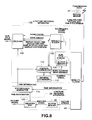
- Fig. 8 is a block diagram of a decoding apparatus which is comprised of a picture decoding apparatus 96 and a subtitle decoding apparatus 102 in accordance with the present invention.
- Picture decoding apparatus 96 is comprised of a buffer memory 98 and a decoder unit 100, and operates in a manner similar to that of picture decoding apparatus 44 shown in Fig. 2 and, thus, further description thereof is omitted herein except where necessary for an understanding of the present invention.
- Subtitle decoding apparatus 102 is comprised of a buffer memory 104, a demultiplexer 106, a decoder 108, an address controller 110 and an address list memory 112.
- the coded multiplexed picture and subtitle signal is received over a transmission path, or alternatively, is reproduced from record medium 92 in a reproducing device (not shown), and the coded multiplexed signal is supplied to a demultiplexer 94 which demultiplexes the signal into its coded picture and coded subtitle components.
- the coded picture signal is supplied as a picture stream to picture decoding apparatus 96 which temporarily stores the picture stream in buffer memory 98 and decodes in decoder unit 100 the coded signal in a manner well known in the art.
- the decoded picture signal is supplied as an output signal at a time as controlled by a time information signal supplied from a system clock generator 114.
- Demultiplexer 94 supplies the coded subtitle signal to buffer memory 104 in subtitle decoding apparatus 102 which stores the supplied signal at a memory address therein as indicated in a write address control signal supplied from address controller 110.
- Buffer memory 104 reads the stored subtitled data from a memory address as indicated in a read address control signal supplied from address controller 110 and supplies the read out signal to demultiplexer 106 which demultiplexes the subtitle data into its respective coded subtitle signal, data amount signal, and time and position signal components.
- the coded subtitle signal, data amount signal and time and position signals are supplied to decoder 108 which decodes the respectively supplied signals in a manner well known in the art and which supplies a decoded subtitle signal representing a subtitle to be superimposed on a video image at an appropriate time as indicated by the time and position data supplied thereto.
- Address controller 110 generates from the supplied time and position data an address list (to be discussed) and supplies the generated address list to address list memory 112 which stores the address list therein. Address controller 110 further generates the write and read address control signals from the address list stored in memory 112 as well as from the time information supplied from system clock generator 114, and supplies the generated write and read address control signals to buffer memory 104.
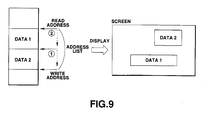
- a first subtitle represented by "DATA 1" is stored in buffer memory 104 at a first memory address therein, as shown in the left hand portion of Fig. 9.
- Address controller 110 generates appropriate write address control signals so that buffer memory 104 successively stores the subtitle data of the first subtitle (DATA 1) at a top memory address (or first memory address) of buffer memory 104.
- address controller 110 Upon receipt of the first subtitle data (and storage thereof in buffer memory 104), address controller 110 generates a first data "node" which contains various data including the first and last addresses (start address and end address) of buffer memory 104 at which the first subtitle DATA 1 is stored, the display start and end times at which the first subtitle is to be superimposed on the video image, and the display start and end positions at which the first subtitle is to be superimposed on the video image.
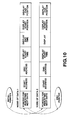
- the first node is illustrated in Fig. 10 as the "node of DATA 1".
- the DATA 1 node (as well as all other nodes, as will be seen) further includes "pointer" data which identifies (or “points” to) the node of the next subtitle to be positionally displayed (i.e., superimposed) on the video image. If only one subtitle, e.g., subtitle DATA 1, is stored in buffer memory 104, then the DATA 1 node includes a pointer that indicates that this node is the last node in the address list or, alternatively, includes a pointer that identifies (points to) an "end pointer" (or "end” node), such as shown in Fig. 11A. The end pointer represents the end of the address list.
- the pointer of each node may identify a particular memory address of address list memory 112 at which the successive node is located or may identify an assigned node value, for example, node 1, node 2, etc., whereat the location of a given node value in the address list is known or predetermined.
- address controller 110 For each video image (e.g., field or frame) that is to be output from picture decoding apparatus 96, address controller 110 "cycles" through the address list wherein the first node of the address list is read (or pre-read) from address list memory 112, and which location may be identified by an "initial" pointer (see Fig. 11A), and based on the data of the first node (in this case, the first node represents the first subtitle DATA 1), the first subtitled data is or is not read from buffer memory 104 (as controlled by the read address control signal).
- the time information represents a time between the display start and end times of the first subtitle
- the first subtitle is read from memory 104 from the locations therein as indicated by the start and end address data included in the node and at an appropriate time during the output of a given frame as indicated by the display start and end position data stored in the node.
- the node includes all of the information that is necessary to determine if and when the subtitle stored in buffer memory 104 is to be read therefrom, decoded in decoder 108 and subsequently superimposed on the video image.
- the next node that is identified by the pointer of the first node is read (or pre-read) from the address list stored in memory 112, and this next node then is processed.
- the next node that is identified by the pointer of the first node is read (or pre-read) from the address list stored in memory 112, and this next node then is processed.
- no other nodes except perhaps an END node, exists in the address list.
- a second subtitle for example, subtitle "DATA 2”
- a second data node is generated in address controller 110 and includes data pertaining to the start and end addresses of buffer memory 104 at which the second subtitle is stored, display start and end times at which the second subtitle is to be superimposed on the video image, and display start and end positions of the second subtitle in the video image.
- the pointer of each node in the address list is established to reflect the read-out order of the subtitles stored in buffer memory 104 and which depends solely on the display start and end positions of each of the subtitles.
- the pointer of the "initial node” or “initial pointer” is established (i.e., modified) to point to the second node since the second subtitle is located positionally before (i.e., above) the first subtitle in the video image, as shown in the right hand portion of Fig. 9.
- the pointer of the second node is established to point to the first node of the address list since the first subtitle occurs after (positionally) the second subtitle.
- the pointer of the first node is established (if not already) to point to the "end pointer" since the first subtitle DATA 1 is the positionally last subtitle.
- Fig. 10 illustrates the data structure of the address list when the first and second subtitles DATA 1 and DATA 2, shown in Fig. 9, are stored in buffer memory 104.
- address controller 110 for each frame processes node 2 and then processes node 1, and for each node controls the buffer memory to read out the respective subtitle when the system clock represents a time between the display start and end times of that subtitle. Assuming that display start time t1 occurs before display start time t2, and that time t2 occurs before display end time t1', and that time t1' occurs before display end time t2' (see Fig.
- the second subtitle DATA 2 is not read from buffer memory 104 when the second node is processed, but the first subtitle DATA 1 is reproduced, decoded and output from the subtitle decoding apparatus of the present invention when the first node is processed and, thus, only the first subtitle is superimposed on the video image between times t1 and t2.
- the system clock represents a time between time t2 and t1'
- the second subtitle is read from buffer memory 104, decoded and superimposed on the video image and the first subtitle DATA 1 is read from buffer memory 104, decoded and superimposed on the video image.
- the system clock represents a time between time t1' and time t2'
- only the second subtitle is read from buffer memory 104, decoded and superimposed on the video image.
- the first subtitle is erased from buffer memory 104 (to be discussed) and the first node corresponding to the first subtitle is erased from the address list, and the pointers of each of the remaining nodes in the address list are re-established, such as shown in Fig. 11C.
- Only the second subtitle now is stored in buffer memory 104, and, therefore, the initial pointer points to the second node and the pointer of the second node points to the end pointer.
- Fig. 12A the first subtitle DATA 1 is supplied to and stored in buffer memory 104.
- Fig. 12B illustrates the data structure of buffer memory 104, wherein the first subtitle DATA 1 is stored at a beginning memory location therein.
- address controller 110 which includes a first node corresponding to the first subtitle DATA 1, and at the display start time of the first subtitle, the first subtitle is superimposed on the video image.
- the second subtitle DATA 2 subsequently is supplied to and stored in buffer memory 104, and a second node corresponding to the second subtitle is added to the address list, wherein the pointer of the first node points to the second node since the second subtitle positionally occurs after the first subtitle in the video image. Then, both the first and second subtitles are superimposed on the video image at the display start time of the second subtitle.
- the display end time t1' of the first subtitle is reached (not shown in Fig. 12B)
- the first subtitle DATA 1 is erased from buffer memory 104 and the first node is removed from the address list, and the initial pointer is set to point to the second node of the address list.
- a third subtitle DATA 3 is supplied to buffer memory 104, it is stored immediately after the second subtitle therein, and a third node corresponding to the third subtitle is added to the address list. Also, and as previously discussed, the pointers of each of the nodes (i.e., nodes 2 and 3) are established such that the initial pointer points to the third node and the pointer of the third node points to the second node. When the display start time t3 of the third subtitle is reached, both the third and second subtitles are superimposed on the video image.
- a fourth subtitle DATA 4 When a fourth subtitle DATA 4 is supplied to buffer memory 104, it is stored after the third subtitle therein and a fourth node is added to the address list. Further, since the fourth subtitle positionally occurs after the second subtitle in the video image, the pointer of the second node is established to point to the fourth node, and the pointer of the fourth node is established to point to the end pointer.
- the display start time t4 of the fourth subtitle is reached, the third, second and fourth subtitles each are read from buffer memory 104 (in this order), decoded and superimposed on the video image.
- the superimposition of the third subtitle on the display is terminated, but the third subtitle is not erased from buffer memory 104 and the third node is not removed from the address list for reasons to be discussed.
- the display end time t2' of the second subtitle is reached, both the second and third subtitles are erased from buffer memory 104 and the second and third nodes are removed from the address list, as shown in Fig. 12B.
- the initial pointer is established to point to the fourth node.
- the display end time t4' of the fourth subtitle is reached, the fourth subtitle is removed from buffer memory 104 and the fourth node is removed from the address list (not shown in Fig. 12B).
- the third subtitle is not erased from buffer memory 104 and the third node is not removed from the address list.
- the "current" subtitle is not removed from memory and the node corresponding to the "current” subtitle is not removed from the address list.
- the present invention seeks to operate buffer memory 104 as a FIFO type memory device which provides several advantageous features to the present invention.
- overflow or underflow of data in the buffer is prevented by the aforementioned operation since a signal representing the amount of unused memory in the buffer memory (produced thereby) represents a true value of useable space that is available for other subtitle data.
- a signal representing the amount of unused memory in the buffer memory (produced thereby) represents a true value of useable space that is available for other subtitle data.
- leaving the above-discussed subtitle data in buffer memory 104 even after the termination of the display of the subtitle simplifies the control of the buffer memory.
- a subtitle is erased from buffer memory 104 upon termination of the display thereof if no data precedes that subtitle in memory.
- data i.e., subtitle data
- both of these subtitles are erased from buffer memory 104 and the nodes corresponding thereto are removed from the address list.
- Fig. 13 is a flow chart of the operation of both address controller 84 of subtitle coding apparatus 76 (Fig. 7) and address controller 110 of subtitle decoding apparatus 102 (Fig. 8) when one or more subtitles are supplied thereto.
- the operation begins at instruction S1 and, at inquiry S2, it is determined whether a new subtitle is received.
- a new subtitle is received when it is provided to coder 78, and in subtitle decoding apparatus 102, it is determined that a subtitle is received when demultiplexer 94 supplies an appropriate control signal to address controller 110 which indicates the receipt of a new subtitle.
- a new data node is generated from the header information at instruction S4 and, at instruction S5, the position data of each node in the address list is read and, at instruction S6, it is decided where in the address list the new node is to be inserted depending on the respective values of the position data of each of the nodes.
- the node is inserted at the appropriate location in the address list at instruction S7 and the operation is terminated.
- Fig. 14 is a flow chart of the operation of address controller 110 of subtitle decoding apparatus 102 when two subtitles are supplied subtitle decoding apparatus 102
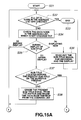
- Figs. 15A and 15B represent a flow chart of the operation of address controller 110 when three or more subtitles are supplied to subtitle decoding apparatus 102.
- the process begins at instruction S21 and, at inquiry S22, it is determined whether each and every node in the address list has been processed for a video image (i.e., field or frame) of the video picture. If so, the operation is terminated at instruction S23, but, if not, the next node (i.e., the first node or the second node) is read from the address list in the order specified by the pointers, previously discussed, at instruction S24.
- the next node i.e., the first node or the second node
- the status of the display of the subtitle of the currently processed node (herein, called the "current" subtitle) is determined at inquiry S25. If the present time, as indicated by the system clock, is before the display start time of the current subtitle, then the operation proceeds back to instruction S22 at which point the next node is processed. If, however, it is determined that the current subtitle is to be displayed, as when the system clock is between the start and end times of the current subtitle, then, at instruction S26, the subtitle is read from buffer memory 104 from a location therein as indicated by the start and end addresses of the node, and the read-out subtitle data is decoded and displayed (i.e., superimposed on the video image).
- Figs. 15A-15B The operation of address controller 110 when three or more subtitles are supplied to the subtitle decoding apparatus of the present invention is shown in Figs. 15A-15B, wherein for each video image (frame), the process begins at instruction S31 and, at inquiry S32, it is determined whether all of the data nodes in the address list have been processed. If so, the process of Figs. 15A-15B is terminated at instruction S33. But, if not, the next node in the address list (starting with the node pointed to by the initial pointer) is read from memory 112 at instruction S34. Similar to inquiry S25 (Fig. 14), the status of the subtitle of the current node is determined at inquiry S35, and if it is determined that the subtitle is not yet to be displayed, then the process proceeds back to inquiry S32. However, if it is determined that the current subtitle is to be displayed, then the subtitle is read from buffer memory 104, decoded and displayed (i.e., superimposed on the video image) at instruction S36, and the process then
- inquiry S35 If it is determined at inquiry S35 that the display of the current subtitle is or already is terminated, then the process proceeds to inquiry S37 whereat it is determined if any subtitle data exists before the current subtitle in buffer memory 104. If no data precedes the current subtitle in buffer memory 104, then the current subtitle is erased from buffer memory 104 and the current node is removed from the address list at instruction S38, and the process proceeds back to inquiry S32. However, if data exists before the currently processed subtitle in buffer memory 74, then it is determined, at inquiry S39 (Fig. 15B) if the subtitle that precedes the current subtitle in buffer memory 104 is currently being displayed.
- the current subtitle is not read from buffer memory 104 (i.e., not displayed, but also not removed from memory) and the process proceeds back to inquiry S32.
- the subtitle that precedes the current subtitle is not being displayed anymore (i.e., the system clock has exceeded the display end time of the preceding subtitle)
- both the preceding and current subtitles are erased from buffer memory 104 and the nodes corresponding to the preceeding and current subtitles are removed from the address list at instruction S41.
- inquiry S42 it is determined if a subtitle exists after the current subtitle (which has just been erased) in buffer memory 104. If so, the process proceeds to inquiry S43, but, if not, the process proceeds back to inquiry S32.
- inquiry S43 it is determined if the display of the succeeding subtitle is terminated, as indicated by time data of the node of the successive subtitle. If so, then the successive subtitle is erased from buffer memory 104 and the node corresponding to that subtitle is removed from the address list at instruction S44. Then, or if the display of the successive subtitle is not terminated, the process proceeds back to inquiry S32.
- Fig. 16 is a flow chart of the operation of address controller 84 of subtitle coding apparatus 76 when two subtitles are supplied thereto.
- the flow chart of Fig. 16 is substantially similar to the flow chart of Fig. 14, which represents the operation of address controller 110 of subtitle decoding apparatus 102 when two subtitles are supplied, in that inquiry S52, instructions S53-S54, inquiry S55 and instruction 58 are the same as inquiry S22, instructions S23-S24, inquiry S25 and instruction S27, respectively. Therefore, a description thereof is omitted herein.
- address controller 84 determines that a currently processed subtitle (i.e., node) is to currently displayed, then it is determined at inquiry S56, if the current time, as indicated by the system clock signal, represents the display start time of the current subtitle. If so, the subtitle is read from buffer memory 82 and subsequently multiplexed with the video image for recording or transmission thereof. If not, the process proceeds back to inquiry S52.
- address controller 84 operates to control buffer memory 82 in subtitle coding apparatus 76 to supply a subtitle for multiplexing with the video signal at the time when that subtitle is to be superimposed on the video image.
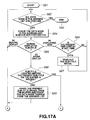
- Figs. 17A and 17B a flow chart of the operation of address controller 84 when three or more subtitles are provided is shown.
- the flow chart of Figs. 17A - 17B is substantially the same as the flow chart of Figs. 15A - 15B and, thus, a description of those instructions and inquiries that are the same therein are omitted herein.
- inquiry S65 when it is determined at inquiry S65 that a current subtitle is to be displayed, the process proceeds to inquiry S66 at which time it is determined whether the current time, as indicated by the system clock signal, is equal to the display start time of the subtitle.
- the current subtitle is read from buffer memory 82 in a manner similar to that discussed above with reference to the flow chart of Fig. 16. If not, the process proceeds to inquiry S62. In addition, it is determined, at inquiry S70, if the preceeding subtitle in buffer memory 82 is being displayed, and if so, the current subtitle is not displayed (and not erase from memory), at instruction S71.
- both buffer memories 82 and 104 are controlled to operate as first-in-first-out memory devices so that the control thereof may be simplified and, further, so as to prevent the underflow/overflow of data therein.
- an address list which includes nodes which each corresponds to a respective subtitle stored in the buffer memories, and by providing in each node various subtitle data including the display start and end time data, the display start and end position data, and the start and end addresses at which the subtitle data is stored, as well as a pointer which points to a successive subtitle that is to be displayed positionally on the video image, allows for the simplified processing and control of a multiple number of subtitles.
Landscapes
- Engineering & Computer Science (AREA)
- Multimedia (AREA)
- Signal Processing (AREA)
- Human Computer Interaction (AREA)
- Compression Or Coding Systems Of Tv Signals (AREA)
- Studio Circuits (AREA)
Applications Claiming Priority (2)
| Application Number | Priority Date | Filing Date | Title |
|---|---|---|---|
| JP24627895 | 1995-09-25 | ||
| JP246278/95 | 1995-09-25 |
Publications (2)
| Publication Number | Publication Date |
|---|---|
| EP0765082A2 true EP0765082A2 (de) | 1997-03-26 |
| EP0765082A3 EP0765082A3 (de) | 1999-04-07 |
Family
ID=17146166
Family Applications (1)
| Application Number | Title | Priority Date | Filing Date |
|---|---|---|---|
| EP96306901A Withdrawn EP0765082A3 (de) | 1995-09-25 | 1996-09-23 | Kodierung/Dekodierung eines Untertitelsignals |
Country Status (3)
| Country | Link |
|---|---|
| US (1) | US5847770A (de) |
| EP (1) | EP0765082A3 (de) |
| KR (1) | KR970019656A (de) |
Cited By (9)
| Publication number | Priority date | Publication date | Assignee | Title |
|---|---|---|---|---|
| WO1999003267A1 (en) * | 1997-07-10 | 1999-01-21 | Thomson Consumer Electronics, Inc. | A system for forming and processing text data for use in program specific information for broadcast |
| WO1999003266A1 (en) * | 1997-07-10 | 1999-01-21 | Thomson Consumer Electronics, Inc. | A system for forming and processing program specific information containing text data for terrestrial, cable or satellite broadcast |
| FR2781327A1 (fr) * | 1998-07-17 | 2000-01-21 | Thomson Multimedia Sa | Procede pour gerer temporellement l'exploitation de donnees et dispositif mettant en oeuvre le procede |
| EP0899950A4 (de) * | 1996-05-16 | 2000-04-05 | Infocity Kk | Verfahren zur übertragung und anzeige von informationen sowie informationsanzeigevorrichtung |
| EP1420580A1 (de) * | 2002-11-18 | 2004-05-19 | Deutsche Thomson-Brandt GmbH | Verfahren und Gerät zur Kodierung/Dekodierung von Datenelementen mit Untertiteln |
| US6760539B2 (en) | 1999-07-09 | 2004-07-06 | Matsushita Electric Industrial Co., Ltd. | Optical disc, a recorder, a player, a recording method, and a reproducing method that are all used for the optical disc |
| EP1447978A4 (de) * | 2001-11-09 | 2005-11-16 | Matsushita Electric Industrial Co Ltd | Videosynthesizer |
| US7158715B2 (en) | 1999-07-09 | 2007-01-02 | Matsushita Electric Industrial Co., Ltd. | Optical disc, a recorder, a player, a recording method, and a reproducing method that are all used for the optical disc |
| EP2271089A3 (de) * | 2003-02-21 | 2011-08-03 | Panasonic Corporation | Vorrichtung und Verfahren zur simultanen verwendung von audiovisuellen Daten |
Families Citing this family (36)
| Publication number | Priority date | Publication date | Assignee | Title |
|---|---|---|---|---|
| JPH10126750A (ja) | 1996-10-23 | 1998-05-15 | Matsushita Electric Ind Co Ltd | 番組情報放送システム、放送装置、及び受信端末装置 |
| US6628677B1 (en) * | 1998-02-28 | 2003-09-30 | Sony Corporation | Coding and multiplexing apparatus and method |
| KR20030036160A (ko) * | 2000-05-22 | 2003-05-09 | 가부시키가이샤 소니 컴퓨터 엔터테인먼트 | 정보 처리 장치, 그래픽 처리 유닛, 그래픽 처리 방법,저장 매체 및 컴퓨터 프로그램 |
| TW519840B (en) * | 2000-06-02 | 2003-02-01 | Sony Corp | Image coding apparatus and method, image decoding apparatus and method, and recording medium |
| US7982796B2 (en) * | 2001-03-21 | 2011-07-19 | Apple Inc. | Track for improved video compression |
| US7030934B2 (en) * | 2002-10-18 | 2006-04-18 | Huaya Microelectronics, Ltd. | Video system for combining multiple video signals on a single display |
| KR100939711B1 (ko) * | 2002-12-12 | 2010-02-01 | 엘지전자 주식회사 | 텍스트 기반의 서브타이틀 재생장치 및 방법 |
| KR100619053B1 (ko) * | 2003-11-10 | 2006-08-31 | 삼성전자주식회사 | 서브 타이틀을 기록한 정보저장매체 및 그 처리장치 |
| KR20050072255A (ko) | 2004-01-06 | 2005-07-11 | 엘지전자 주식회사 | 고밀도 광디스크의 서브타이틀 구성방법 및 재생방법과기록재생장치 |
| JP2007518205A (ja) * | 2004-01-06 | 2007-07-05 | エルジー エレクトロニクス インコーポレーテッド | テキスト・サブタイトル・ストリームの再生・記録のための記録媒体、方法及び装置 |
| KR20050078907A (ko) * | 2004-02-03 | 2005-08-08 | 엘지전자 주식회사 | 고밀도 광디스크의 서브타이틀 재생방법과 기록재생장치 |
| WO2005076273A1 (en) * | 2004-02-10 | 2005-08-18 | Lg Electronic Inc. | Recording medium having a data structure for managing font information for text subtitles and recording and reproducing methods and apparatuses |
| BRPI0418524A (pt) * | 2004-02-10 | 2007-05-15 | Lg Electronics Inc | meio fìsico de gravação, método e aparelho para gravar e reproduzir um estrutura de dados |
| BRPI0507542A (pt) * | 2004-02-10 | 2007-07-03 | Lg Electronics Inc | meio fìsico de gravação para reprodução de fluxos de subtìtulo de texto, método e aparelho para decodificar um fluxo de subtìtulo de texto |
| WO2005076601A1 (en) * | 2004-02-10 | 2005-08-18 | Lg Electronic Inc. | Text subtitle decoder and method for decoding text subtitle streams |
| BRPI0507596A (pt) * | 2004-02-10 | 2007-07-03 | Lg Electronics Inc | meio fìsico de gravação, método e aparelho para decodificar um fluxo de subtìtulo de texto |
| US20050196146A1 (en) * | 2004-02-10 | 2005-09-08 | Yoo Jea Y. | Method for reproducing text subtitle and text subtitle decoding system |
| RU2367036C2 (ru) * | 2004-02-10 | 2009-09-10 | ЭлДжи ЭЛЕКТРОНИКС ИНК. | Носитель записи, имеющий структуру данных для управления текстовыми субтитрами, и способы и устройства для записи и воспроизведения |
| WO2005076278A1 (en) * | 2004-02-10 | 2005-08-18 | Lg Electronic Inc. | Recording medium having a data structure for managing data streams associated with different languages and recording and reproducing methods and apparatuses |
| RU2377669C2 (ru) * | 2004-02-10 | 2009-12-27 | ЭлДжи ЭЛЕКТРОНИКС ИНК. | Носитель записи, имеющий структуру данных для управления различными данными, и способ и устройство записи и воспроизведения |
| EP1721453A2 (de) * | 2004-02-26 | 2006-11-15 | LG Electronics, Inc. | Aufzeichnungsmedium und verfahren und vorrichtung zum wiedergeben und aufzeichnen von textuntertitelströmen |
| EP1733385B1 (de) * | 2004-03-26 | 2009-12-09 | LG Electronics Inc. | Aufzeichnungsmedium und verfahren und vorrichtung zum wiedergeben und aufzeichnen von textuntertitelströmen |
| WO2005091722A2 (en) | 2004-03-26 | 2005-10-06 | Lg Electronics Inc. | Recording medium and method and apparatus for reproducing text subtitle stream recorded on the recording medium |
| DE602005023285D1 (de) * | 2004-03-26 | 2010-10-14 | Lg Electronics Inc | Speichermedium,verfahren, und gerät zum wiedergeben von untertiteldatenströmen |
| TWI248762B (en) * | 2004-11-10 | 2006-02-01 | Realtek Semiconductor Corp | Video processing device and method thereof |
| JP2007004896A (ja) * | 2005-06-23 | 2007-01-11 | Toshiba Corp | 情報記憶媒体、情報転送方法、情報再生方法、及び情報記録方法 |
| KR100985454B1 (ko) * | 2005-11-29 | 2010-10-05 | 파이오니아 가부시키가이샤 | 정보 재생 장치, 정보 재생 방법, 및 컴퓨터 프로그램 |
| US7826714B2 (en) * | 2006-01-18 | 2010-11-02 | International Business Machines Corporation | Controlling movie subtitles and captions |
| TWI372562B (en) * | 2006-09-15 | 2012-09-11 | Himax Tech Ltd | Method of displaying characters and display device thereof |
| US7563015B2 (en) * | 2007-02-16 | 2009-07-21 | Tsai Tzung-Shiun | Back light module |
| US8130319B2 (en) * | 2008-12-02 | 2012-03-06 | Himax Media Solutions, Inc. | Signal processing device and method |
| CN102511047A (zh) * | 2010-05-14 | 2012-06-20 | 联发科技(新加坡)私人有限公司 | 视频节目的字幕消除方法以及相关视频显示系统 |
| US9013631B2 (en) * | 2011-06-22 | 2015-04-21 | Google Technology Holdings LLC | Method and apparatus for processing and displaying multiple captions superimposed on video images |
| CN105744346A (zh) * | 2014-12-12 | 2016-07-06 | 深圳Tcl数字技术有限公司 | 字幕切换方法及装置 |
| TWM508350U (zh) * | 2015-04-24 | 2015-09-11 | Aten Int Co Ltd | 遊戲錄製裝置 |
| CN114650424A (zh) * | 2020-12-21 | 2022-06-21 | 西安诺瓦星云科技股份有限公司 | 数据处理方法、装置和系统 |
Family Cites Families (6)
| Publication number | Priority date | Publication date | Assignee | Title |
|---|---|---|---|---|
| FR2541478A1 (fr) * | 1983-02-22 | 1984-08-24 | France Etat | Recepteur de teletexte a moyens de decision d'acquisition anticipee |
| JP2776934B2 (ja) * | 1990-01-10 | 1998-07-16 | 株式会社日立製作所 | 映像信号処理装置 |
| US5684542A (en) * | 1993-12-21 | 1997-11-04 | Sony Corporation | Video subtitle processing system |
| JPH07231435A (ja) * | 1993-12-21 | 1995-08-29 | Sony Corp | 字幕データ符号化装置、その復号化装置、並びに記録媒体 |
| KR100491771B1 (ko) * | 1994-12-14 | 2006-05-02 | 코닌클리케 필립스 일렉트로닉스 엔.브이. | 인코딩된데이터를전송하는전송기및그전송방법,인코딩된데이터를수신하는수신기및그수신방법,영상신호,및저장매체 |
| JPH08322046A (ja) * | 1995-03-20 | 1996-12-03 | Sony Corp | データ符号化/復号化方法および装置、および符号化データ記録媒体 |
-
1996
- 1996-09-23 EP EP96306901A patent/EP0765082A3/de not_active Withdrawn
- 1996-09-24 KR KR1019960041825A patent/KR970019656A/ko not_active Withdrawn
- 1996-09-24 US US08/718,779 patent/US5847770A/en not_active Expired - Fee Related
Cited By (21)
| Publication number | Priority date | Publication date | Assignee | Title |
|---|---|---|---|---|
| EP0899950A4 (de) * | 1996-05-16 | 2000-04-05 | Infocity Kk | Verfahren zur übertragung und anzeige von informationen sowie informationsanzeigevorrichtung |
| US6788709B1 (en) | 1996-05-16 | 2004-09-07 | Kabushiki Kaisha Infocity | Method for transmitting and displaying information and device for displaying information |
| KR100609337B1 (ko) * | 1997-07-10 | 2006-08-04 | 톰슨 콘슈머 일렉트로닉스, 인코포레이티드 | 지상, 케이블 또는 위성 방송을 위한 문자 데이터를 보유하는 프로그램 고유 정보를 형성 및 처리하기 위한 장치와 저장매체 및 방법 |
| WO1999003266A1 (en) * | 1997-07-10 | 1999-01-21 | Thomson Consumer Electronics, Inc. | A system for forming and processing program specific information containing text data for terrestrial, cable or satellite broadcast |
| US6031577A (en) * | 1997-07-10 | 2000-02-29 | Thomson Consumer Electronics, Inc. | System for forming and processing program specific information containing text data for terrestrial, cable or satellite broadcast |
| KR100609338B1 (ko) * | 1997-07-10 | 2006-08-04 | 톰슨 콘슈머 일렉트로닉스, 인코포레이티드 | 방송용 프로그램 고유 정보에서의 사용을 위한 문자 데이터를 형성 및 처리하기 위한 방법 |
| US6111612A (en) * | 1997-07-10 | 2000-08-29 | Thomson Consumer Electronics | System for forming and processing text data for use in program specific information for broadcast |
| AU737150B2 (en) * | 1997-07-10 | 2001-08-09 | Thomson Consumer Electronics, Inc | A system for forming and processing text data for use in program specific information for broadcast |
| WO1999003267A1 (en) * | 1997-07-10 | 1999-01-21 | Thomson Consumer Electronics, Inc. | A system for forming and processing text data for use in program specific information for broadcast |
| WO2000004724A1 (fr) * | 1998-07-17 | 2000-01-27 | Thomson Multimedia | Procede pour gerer temporellement l'exploitation de donnees et dispositif mettant en oeuvre le procede |
| US6977689B1 (en) | 1998-07-17 | 2005-12-20 | Thomson Licensing | Method for timing data processing and implementing device |
| FR2781327A1 (fr) * | 1998-07-17 | 2000-01-21 | Thomson Multimedia Sa | Procede pour gerer temporellement l'exploitation de donnees et dispositif mettant en oeuvre le procede |
| US6760539B2 (en) | 1999-07-09 | 2004-07-06 | Matsushita Electric Industrial Co., Ltd. | Optical disc, a recorder, a player, a recording method, and a reproducing method that are all used for the optical disc |
| EP1161091B1 (de) * | 1999-07-09 | 2005-09-28 | Matsushita Electric Industrial Co., Ltd. | Eine optische Platte, ein Aufnehmer, ein Abspieler, ein Aufnahmeverfahren, und ein Wiedergabeverfahren die alle für die optische Platte benutzt werden |
| US7155113B2 (en) | 1999-07-09 | 2006-12-26 | Matsushita Electric Industrial Co., Ltd. | Optical disc, a recorder, a player, a recording method, and a reproducing method that are all used for the optical disc |
| US7158715B2 (en) | 1999-07-09 | 2007-01-02 | Matsushita Electric Industrial Co., Ltd. | Optical disc, a recorder, a player, a recording method, and a reproducing method that are all used for the optical disc |
| EP1447978A4 (de) * | 2001-11-09 | 2005-11-16 | Matsushita Electric Industrial Co Ltd | Videosynthesizer |
| US7280158B2 (en) | 2001-11-09 | 2007-10-09 | Matsushita Electric Industrial Co., Ltd. | Video synthesizing apparatus |
| WO2004047431A1 (en) * | 2002-11-18 | 2004-06-03 | Thomson Licensing S.A. | Method and apparatus for coding/decoding items of subtitling data |
| EP1420580A1 (de) * | 2002-11-18 | 2004-05-19 | Deutsche Thomson-Brandt GmbH | Verfahren und Gerät zur Kodierung/Dekodierung von Datenelementen mit Untertiteln |
| EP2271089A3 (de) * | 2003-02-21 | 2011-08-03 | Panasonic Corporation | Vorrichtung und Verfahren zur simultanen verwendung von audiovisuellen Daten |
Also Published As
| Publication number | Publication date |
|---|---|
| US5847770A (en) | 1998-12-08 |
| KR970019656A (ko) | 1997-04-30 |
| EP0765082A3 (de) | 1999-04-07 |
Similar Documents
| Publication | Publication Date | Title |
|---|---|---|
| US5847770A (en) | Apparatus and method for encoding and decoding a subtitle signal | |
| US5504585A (en) | Apparatus and method for providing plural pictures while searching a recording medium whereon a compressed picture signal is recorded | |
| US5719982A (en) | Apparatus and method for decoding data | |
| US6009229A (en) | Data coding/decoding method and apparatus and coded data recording medium | |
| KR100405249B1 (ko) | 디코딩및리버스재생장치및방법 | |
| US5799129A (en) | Method and apparatus for reproducing coded data in which the coded data is decoded in reverse order of display | |
| EP0757492A2 (de) | Gerät und Verfahren zur Kodierung und Dekodierung von digitalen Videodaten | |
| JP4676331B2 (ja) | コード変換方法及びその装置 | |
| EP0735780A2 (de) | Wiedergabe von kodierten Daten bei Rückwärtswiedergabebetrieb | |
| WO1995008823A1 (en) | Method and device for transmitting data, data decoder, and data recording medium | |
| JPH0918829A (ja) | データ再生装置 | |
| JP2006520986A (ja) | ストリームバッファチャネル用のcpiデータ | |
| US6526217B1 (en) | Method and apparatus for after recording of digital recording medium and method and apparatus for reproducing digital recording medium | |
| US7333711B2 (en) | Data distribution apparatus and method, and data distribution system | |
| US5917438A (en) | Data storing and outputting apparatus | |
| JPH10285548A (ja) | 符号化装置及び方法、復号装置及び方法、編集方法 | |
| JP2000083215A (ja) | 再生方法及び再生装置 | |
| JP3301274B2 (ja) | 符号化映像データの復号装置 | |
| JP3191856B2 (ja) | 情報蓄積出力装置 | |
| US20050152667A1 (en) | Method for establishing recording quality in digital recording device | |
| JP3301695B2 (ja) | 符号化信号復号装置 | |
| JP3036579B2 (ja) | Vodシステムにおける特殊再生方式 | |
| JPH09154063A (ja) | 字幕信号符号化装置及び方法、並びに字幕信号復号装置及び方法 | |
| JP3651479B2 (ja) | 記録媒体へのビデオデータの記録方法、ビデオデータを記録した記録媒体の生産方法 | |
| JP3651480B2 (ja) | 記録媒体へのビデオデータの記録方法、ビデオデータを記録した記録媒体の生産方法 |
Legal Events
| Date | Code | Title | Description |
|---|---|---|---|
| PUAI | Public reference made under article 153(3) epc to a published international application that has entered the european phase |
Free format text: ORIGINAL CODE: 0009012 |
|
| AK | Designated contracting states |
Kind code of ref document: A2 Designated state(s): DE FR GB |
|
| PUAL | Search report despatched |
Free format text: ORIGINAL CODE: 0009013 |
|
| AK | Designated contracting states |
Kind code of ref document: A3 Designated state(s): DE FR GB |
|
| 17P | Request for examination filed |
Effective date: 19990907 |
|
| STAA | Information on the status of an ep patent application or granted ep patent |
Free format text: STATUS: THE APPLICATION HAS BEEN WITHDRAWN |
|
| 18W | Application withdrawn |
Withdrawal date: 20020925 |