EP0765663A2 - Utilisation du diénogest pour la fabrication d'un médicament pour le traitement de la peau par application topique - Google Patents
Utilisation du diénogest pour la fabrication d'un médicament pour le traitement de la peau par application topique Download PDFInfo
- Publication number
- EP0765663A2 EP0765663A2 EP96114619A EP96114619A EP0765663A2 EP 0765663 A2 EP0765663 A2 EP 0765663A2 EP 96114619 A EP96114619 A EP 96114619A EP 96114619 A EP96114619 A EP 96114619A EP 0765663 A2 EP0765663 A2 EP 0765663A2
- Authority
- EP
- European Patent Office
- Prior art keywords
- dienogest
- skin
- treatment
- active ingredient
- combination
- Prior art date
- Legal status (The legal status is an assumption and is not a legal conclusion. Google has not performed a legal analysis and makes no representation as to the accuracy of the status listed.)
- Withdrawn
Links
Images


Classifications
-
- A—HUMAN NECESSITIES
- A61—MEDICAL OR VETERINARY SCIENCE; HYGIENE
- A61K—PREPARATIONS FOR MEDICAL, DENTAL OR TOILETRY PURPOSES
- A61K31/00—Medicinal preparations containing organic active ingredients
- A61K31/56—Compounds containing cyclopenta[a]hydrophenanthrene ring systems; Derivatives thereof, e.g. steroids
- A61K31/565—Compounds containing cyclopenta[a]hydrophenanthrene ring systems; Derivatives thereof, e.g. steroids not substituted in position 17 beta by a carbon atom, e.g. estrane, estradiol
- A61K31/567—Compounds containing cyclopenta[a]hydrophenanthrene ring systems; Derivatives thereof, e.g. steroids not substituted in position 17 beta by a carbon atom, e.g. estrane, estradiol substituted in position 17 alpha, e.g. mestranol, norethandrolone
-
- A—HUMAN NECESSITIES
- A61—MEDICAL OR VETERINARY SCIENCE; HYGIENE
- A61K—PREPARATIONS FOR MEDICAL, DENTAL OR TOILETRY PURPOSES
- A61K8/00—Cosmetics or similar toiletry preparations
- A61K8/18—Cosmetics or similar toiletry preparations characterised by the composition
- A61K8/30—Cosmetics or similar toiletry preparations characterised by the composition containing organic compounds
- A61K8/63—Steroids; Derivatives thereof
-
- A—HUMAN NECESSITIES
- A61—MEDICAL OR VETERINARY SCIENCE; HYGIENE
- A61Q—SPECIFIC USE OF COSMETICS OR SIMILAR TOILETRY PREPARATIONS
- A61Q19/00—Preparations for care of the skin
-
- A—HUMAN NECESSITIES
- A61—MEDICAL OR VETERINARY SCIENCE; HYGIENE
- A61Q—SPECIFIC USE OF COSMETICS OR SIMILAR TOILETRY PREPARATIONS
- A61Q5/00—Preparations for care of the hair
-
- A—HUMAN NECESSITIES
- A61—MEDICAL OR VETERINARY SCIENCE; HYGIENE
- A61Q—SPECIFIC USE OF COSMETICS OR SIMILAR TOILETRY PREPARATIONS
- A61Q7/00—Preparations for affecting hair growth
Definitions
- the invention relates to the use of dienogest exclusively or in combination with a synthetic or natural estrogen or phytestrogen for the manufacture of a medicament for the treatment of the skin, particularly in the case of acne vulgaris, seborrhea and androgenetically-related alopecia and androgenic symptoms of women, by means of topical application, with systemic side effects can be avoided by preventing the permeation of the active ingredient through the skin.
- the sebum gland activity is significantly influenced by hormones. Testosterone and dihydrotestosterone are responsible for sebocyte proliferation and sebogenesis and are therefore the engine for sebogenesis.
- Testosterone and dihydrotestosterone are responsible for sebocyte proliferation and sebogenesis and are therefore the engine for sebogenesis.
- Patent specification DE-PS DE 36 15 396 A1 describes cyproterone acetate as a combination preparation for the treatment of the scalp and for promoting hair growth using the example of hair lotions.
- the progestogens cyproterone acetate and chloromadinone acetate are used therapeutically, the effect on the sebaceous glands or hair follicles is based on a centrally mediated antigonadotropic effect.
- a disadvantage here is acne therapy or treatment of alopecia in men with these active ingredients. After Luderschmidt, Ch. (1995): The acne of women, gynecol. prax., 19, 479-488, cyproterone acetate and chlormadinone acetate cause peripheral competitive androgen receptor block in acne treatment of women.
- Patent specification EP 0 582 458 B1 describes a pharmaceutical formulation of aldactone, 3- (3-oxo-7- ⁇ -acetylthio-17 ⁇ -hydroxy-androst-4-en-17 ⁇ - ⁇ 1), as spironolactone for the topical treatment of acne Vulgaris, seborrhea and hirsutism shown.
- a penetration enhancer and providing therapeutically useful concentrations at the site of action, the sebaceous glands, an excess of the drug in the bloodstream is to be kept at a low level, thereby avoiding systemic side effects.
- the invention has for its object to provide a means of treating the skin by topical application, particularly in the case of acne or alopecia, the permeation of the active ingredient through the skin should be prevented in order to avoid undesirable systemic side effects.
- the object is achieved according to the invention by using dienogest (17-hydroxy-3-oxo-19-nor-17 ⁇ -pregna-4,9-diene-21-nitrile corresponding to 17 ⁇ -cyanomethyl-17 ⁇ -hydroxy-13 ⁇ -methyl-gona- 4,9 (10) -dien-3-one) dissolved exclusively or in combination with a synthetic or natural estrogen or phytestrogen.
- the natural estrogen has, for example, a component from the group of estradiol, estran, estrone, estriol and other natural estrogens or at least one compound which quickly cleaves one of the aforementioned estrogen components after ingestion.
- the synthetic estrogen has, for example, a constituent from the group of ethinylestradiol, mestranol and other synthetic estrogens or at least one compound which rapidly cleaves one of the abovementioned estrogen constituents after ingestion.
- the pharmaceutically acceptable carrier comprises one or more buffers, preservatives, aroma additives and active substance carriers in order to achieve a cream, an ointment, a lotion, a liniment, a facial tonic, a hair tonic with a cosmetic appearance.
- the present pharmaceutical preparations promote the penetration of the active ingredient or combination of active ingredients, but restrict its passage through the skin and absorption.
- the pharmaceutical preparations release the active ingredient or combination of active ingredients quickly and completely, promote the transfer into the tissue, while avoiding absorption, and do not enter into any undesired interactions (interactions) with the biological tissue, as is the case, for example, for certain solvents and surfactants are known.
- Topical dienogest has been found to induce significant sebosuppression, which causes a reduction in androstandiol glucuronide concentration and moderate competitive inhibition of androgen receptors.
- Androstandiol glucuronide is a marker for the peripheral conversion of testosterone to dihydrotestesterone.
- dienogest is more anti-androgenic at this level than cyproterone acetate (which can also be associated with a peripheral competitive androgen receptor block in acne treatment).
- the topical application of a combination of dienogest and an estrogen in a corresponding galenic form is advantageous, since with a combination of dienogest / estrogen, e.g. B. 17 ⁇ -estradiol or estriol, potentiates the suppressive effect.
- a combination of dienogest / estrogen e.g. B. 17 ⁇ -estradiol or estriol
- the direct effect of the estrogens on the sebum production leads to a reduction in the sebum flow.
- Androgen receptors are rarely or no longer detectable in the shrunken sebum glands.
- the acne improves.
- Figure 1 shows the serum concentration of 10 mg transdermally administered dienogest in comparison to 2mg orally or intravenously administered dienogest in concentration-time curves.
- the detected serum dieno values are in the range of the quantification limit (1 ng / ml).
- the first signs of systemic effects of dienogest to be expected from overcoming the skin barrier and concludingly the effect on the sebaceous glands or hair follicles would only be present at serum concentrations from 10 ng / ml.
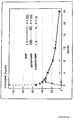
- Figure 2 shows the transdermal flux (permeation rate F x based on the same amount of active ingredient) with transdermal application of dienogest, dienogest in a preparation of dienogest and estriol and dienogest in a preparation of dienogest and mestranol compared to progesterone.
- transdermal application of the preparations shown is possible in both female and male patients through direct action on the end organ skin.
- the active ingredient is present in a hydrophilic or refatting base in a thermodynamic state adapted to the preparation.
- the active ingredient is provided in such a way that it is molecularly dispersed in the refatting or hydrophilic base.
- a preparation based on a lipid-replenishing base it also stimulates overproduction of fat counteracted by offering a certain amount of fat necessary for the reconstitution of the skin.
- a hydrophilic preparation aqueous solution, hydrogel, lotion or O / W emulsion
- it is sufficient to dissolve the gestagen in ethanol or a similar vehicle and add it to this form.
- the active ingredient is combined with a hydrophilic component (H) and is distributed together with it in a molecularly disperse manner.
- a hydrophilic component (H) Sugar or sugar-like substances such as sucrose, lactose, mannitol, sugar alcohol, urea or another N-containing compound are preferably used as the hydrophilic component (H).
- the hydrophilic component (H) ensures that the active ingredient dissolves very quickly and penetrates the skin.
- a stabilizer can also be added to the solution of the active ingredient.
- the stabilizer ensures sufficient resistance of the active ingredient, especially in the case of a solution.
- the basically known antioxidants, such as tocopherol, but also complexing agents, reducing agents and / or UV absorbers are suitable as stabilizers.
- a permeation promoter can also be added to the solution of the active ingredient.
- the permeation promoter also promotes the penetration of the active ingredient into the skin.
- a nitrogen-containing compound is used as the permeation promoter, for example an acid amide, an amine or an alkaloid.
- urea is particularly suitable as a permeation promoter.
- Carriers / auxiliaries for the locally applicable preparations with dienogest include, for example, oils (e.g. peanut oil and / or castor oil), waxes (e.g. beeswax, hard wax, liquid wax), hydrogels, ethanol, water, benzyl benzoate, isopropyl myristate, Lecithin, glycerol, lanolin, boric acid, sodium tetraborate, lactic acid, viscous paraffin, propylene glycol, deionized water or mixtures of these compounds are used together.
- oils e.g. peanut oil and / or castor oil
- waxes e.g. beeswax, hard wax, liquid wax
- hydrogels ethanol, water, benzyl benzoate, isopropyl myristate, Lecithin, glycerol, lanolin, boric acid, sodium tetraborate, lactic acid, viscous paraffin, propylene glyco
- the cutaneous pharmacological effect of the antiandrogenic gestagen dienogest and, in combination with estrogens, the reduction of sebum production (estrogen effect) in the skin can be ensured to a sufficient extent.
- the main priority is sebosuppression, which leads to a reduction in the surface area of the sebaceous glands and the elimination of comedones.
- a closed system is suitable in which the active ingredient, protected from light, is combined in a balanced ratio with the permeation promoter and the stabilizer, at most briefly warmed up and dispersed in a lipophilic or hydrophilic vehicle in the same process using a high-speed mixer .
- auxiliaries customary in dermatology are presented.
- the auxiliaries are entered in liquid or solid form.
- the active ingredient or combination of active ingredients is dissolved as a substance or in a hydrophilic vehicle fed.
- a stabilizer can be added together with the active substance / active substance combination or after the active substance / active substance combination has been completely dispersed in the mixture of auxiliary substances.
- the entire mixture is then homogenized. Depending on the stiffness of the mixture, heating is usually only brief. Most of the time, however, cooling is carried out right from the start of homogenization. The cooling rate is essential for stabilizing the thermodynamic state of the active substance / combination of active substances in the finished preparation.
- the cooling and stirring speed are decisive for the effectiveness of the active ingredient / combination of active ingredients in the resulting preparation.
- the stability of the active substance / combination of active substances in the preparation essentially depends on the temperatures prevailing in the preparation. It has proven to be advantageous if the temperature in the boiler and also the rotational speed of the agitators are infinitely variable and are in a defined ratio to the heating / cooling rate of the jacket surrounding the boiler. Air or a liquid (water) can flow through the jacket.
- the pharmaceutical active ingredient / combination of active ingredients is first mixed separately with a hydrophilic component. This mixture is heated to the at least partial melting with the exclusion of water, other solvents and / or surfactants and then dispersed into a gas with rapid cooling. The intermediate product thus created is then added to the prepared mixture of auxiliaries customary in dermatology and homogeneously distributed in the galenic preparation. A stabilizer can be added either together with the active substance / active substance combination or after the active substance / active substance combination has been completely dispersed. The temperature is increased so that a creamy mixture is guaranteed. After that The temperature of the preparation is continuously reduced with stirring. The cooling rate is preferably about 1 ° C / min.
- Dienogest and benzyl benzoate or isopropyl myristate are dissolved in the specified amount of ethanol.
- the mixture can be briefly heated to 50 ° C.
- the mixture must then be quickly cooled to 20 ° C.
- the necessary colors and flavors are added to the solution in the specified amount of castor oil.
- Composition solution 2 (facial toner) Dienogest 0.2 g Peanut oil 0.4 g Lecithin 2.5g Isopropyl myristate 2.0 g Ethanol 96% ad 100.0 g Dyes, perfumes q.s.
- the dienogest and isopropyl myristate are dissolved in the stated amount of ethanol.
- the mixture can be briefly heated to 50 ° C. Then it is rapidly cooled to 20 ° C.
- the required colors and flavors which have previously been solubilized with lecithin in the peanut oil, are added as a mixture with the oil and lecithin.
- Skin cream composition A Beeswax 4.5 g Hard wax 9.5 g lanolin 3.5 g Isopropyl myristate 8.0 g liquid wax 8.0 g Glycerol 4.0 g 37.5 g B Dienogest 2.2 g Sucrose 4.4 g C. deionized water 55.6 g Sodium tetraborate 0.2 g Boric acid 1.5g Lactic acid 0.7 g 62.2 g D Dyes Preservatives Perfumes q.s.
- the substances of batch A are heated to 90 ° C., thereby being melted and mixed.
- a solid dispersion of dienogest and sucrose produced 1: 2 by the production process described is homogeneously distributed.
- the boiler is operated under the following conditions: Boiler temperature when adding the solid dispersion: 40 ° C Rotation speed scraper: 1 rpm Rotational speed slow stirrer: 50 rpm Rotation speed of the homogenizer: 3450 rpm Cooling rate: 1 ° C / min
- Skin ointment composition A Beeswax 4.0 g Glycerol monostearate 9.5 g lanolin 4.0 g Isopropyl myristate 8.0 g Paraffin (viscous) 8.0 g Propylene glycol 4.0 g B deionized water 20.0 g Sodium tetraborate 0.2 g C. Dienogest 0.16 g Ethanol 19.84 g D Dyes Preservatives Perfumes q.s.
- the substances listed under A are heated to 90 ° C, melted and mixed.
- the melt is mixed with the borax solution (batch B), which is also heated to 90 ° C. (partial saponification).
- the mixture of A and B is then cooled to below 50 ° C. with stirring before the ethanolic dienogest solution (batch C) is mixed in.
- the mixture of A, B and C is added with the required color, preservative and flavoring substances from batch D.
- the mixture is cooled to 20 ° C. with stirring.
- Skin lotion composition A Dienogest 0.5 kg Ethanol 9.45 kg Glycerol 0.05 kg B Sorbitan monostearate 1.0 kg Macrogol stearate 1.5 kg Medium chain triglycerides 2.5 kg Potassium sorbate 0.05 kg Anhydrous citric acid 0.025 kg purified water 40.0 kg
- Solution A is homogeneously distributed in mixture B. It works in the boiler explained in the description of the general method of manufacture under the following conditions: Boiler temperature when adding solution A: 30 ° C Rotation speed scraper: 1 rpm Rotational speed slow stirrer: 90 rpm Rotation speed of the homogenizer: 3850 rpm Cooling rate: 1 ° C / min
- micronized dienogest is homogeneously distributed in the specified amount of wool wax alcohol ointment.
- a solid dispersion of dienogest and lactose 1: 9 is produced according to the manufacturing process described. This solid dispersion is distributed homogeneously in the wool wax alcohol ointment according to DAB 10. The process is carried out in a similarly smaller boiler, as explained in the description of the general method of production, under the following conditions: Boiler temperature when adding the solid dispersion: 40 ° C Rotation speed scraper: 2 rpm Rotational speed slow stirrer: 10 rpm Rotation speed of the homogenizer: 2050 rpm Cooling rate: 1 ° C / min
- the specified amount of dienogest is dissolved in the ethanol and mixed homogeneously with the aqueous methylhydroxyethylcellulose gel as described above.
- dienogest and 17 ⁇ -estradiol are dissolved in the ethanol and mixed homogeneously with the aqueous methylhydroxyethyl cellulose gel as described above.
- the dienogest and estriol are homogeneously distributed in the specified amount in wool wax alcohol ointment.
- Composition solution 1 (hair tonic, hair spray) Dienogest 0.2 g castor oil 0.4 g Benzyl benzoate 0.6 g Ethanol 96% ad 100.0 g Dyes, perfumes q.s.
- Dienogest and benzyl benzoate or isopropyl myristate are dissolved in the specified amount of ethanol.
- the mixture can be briefly heated to 50 ° C. Then it is rapidly cooled to 20 ° C. Finally, the required colors and flavors are added to the solution in the specified amount of castor oil.
- composition of Dienogest hair balm with hair-setting effect A Cetyl lactate 2.0g Isopropyl myristate 2.0 g Glycerol monostearate polyethylene glycol (PEG) - 4.0 g 40 stearate 1.0g Cetyl stearyl alcohol 2.0 g Cetyl alcohol 1.0 g B Aloe vera as a colorless gel 30.0 g deionized water 33.9 g Hydroxypropylmethyl cellulose (HPMC) 0.3 g Quat's 3.4 g Mixture of Quat-22 and Quat-26 (2: 5) lactic acid 0.3 g C. Dienogest 0.23 g Ethanol 19.75 g D Dyes Preservatives Perfumes q.s.
- a slime is made from HPMC and water.
- the remaining components of batch B are added to the slime.
- the mixture is homogenized and then heated to 80 ° C (water bath).
- Batch B is obtained by mixing the constituents at 80 ° C. (water bath). This approach is mixed with the same warm approach A.
- the mixture A + B is cooled to 50 ° C. with stirring.
- the ethanolic solution C is added to the mixture A + B, which has cooled below 50 ° C., while stirring. Cooling continues.
- the mixture A + B + C the required colorants, preservatives and flavorings of batch D are added.
- the mixture is cooled to 20 ° C. with stirring.
- composition of Dienogest hair tonic A Cetyl lactate 1.0g Isopropyl myristate 1.0 g Emulsifier 2.0 g Thickener 0.5 g Refatting agent 0.5 g B Extr.Sabalae e fruct.spir.oleos 30.0g water 30.0 g Thickener 0.5 g Emulsifier 3.0 g Lactic acid 0.5 g Ethanol 1.0 g C. Dienogest 0.3 g Ethanol 19.7 g D dye 0.2 g Preservative 0.7 g Perfumes 0.1 g Ethanol 9.0 g
- Components A to D are each manufactured separately by mixing the specified components. Components A and B should be warmed up slightly. Then the previously cooled mixtures are combined in a suitable vessel and the resulting hair tonic is homogenized for a further 30 minutes. The hair tonic is filtered before bottling.
- composition Dienogest hair cream A Beeswax 4.0 g Hard wax 10.0 g lanolin 3.5 g Isopropyl myristate 8.0 g liquid wax 8.0 g Glycerol 4.0 g 37.5 g B Dienogest (micronized) 0.2 g C. deionized water 60.0 g Sodium tetraborate 0.2 g Boric acid 1.5g Lactic acid 0.7 g 62.2 g D Dyes Preservatives Perfumes q.s.
- batch A The components of batch A are heated to 90 ° C., thereby being melted and mixed.
- the micronized dienogest is homogeneously distributed in the melt (light protection!).
- the mixture is under Stirring cooled to at least 50 ° C.
- the water phase C is added to the mixture A + B, which has cooled below 50 ° C., with stirring. Cooling continues.
- the mixture A + B + C the required colorants, preservatives and flavorings of batch D are added.
- the mixture is cooled to 20 ° C. with stirring.
- Figure 3 shows the serum concentration of dienogest as a function of time using the example of a hydrogel (hydrogel with dienogest), a lipogel + H (lipogel with dienogest and hydrophilic additive) and lipogel with dienogest without a hydrophilic additive.
- the pharmaceutical preparations were applied to 3 male subjects each under the following conditions: Applied mass: 2 g (10 mg dienogest) Area: forehead Exposure time: 3 h
- the serum dienogest levels were then determined using RIA.
- Diene-containing pharmaceutical compositions for transdermal application can be used for the treatment of the skin, particularly in the case of clinical pictures such as acne vulgaris, seborrhea, androgenetic alopecia as well as symptoms of androgenization in women and vasomotor headache.
- Tests 1-5 show examples of the use of compositions according to the invention for the treatment of acne and seborrhea:
- a 0.25% diene-containing facial toner was used to treat seborrhea. If there is an increased production of sebum in the face area, it is recommended to treat the affected skin areas twice a day. The agent was used over eight weeks and showed pronounced sebosuppression.
- a 3% dieno-containing skin cream was applied twice a day to the skin areas affected by acne.
- the cream was administered over 3 months and showed a very good therapeutic effect after 4 weeks of treatment with all degrees of severity of the acne.
- a skin ointment containing 0.2% dienogest was applied at least once a day to treat excessive sebum production in the sebaceous glands of the skin.
- the ointment was absorbed into the skin within a few minutes. The effect corresponded to the effect shown in test 1.
- a 0.5% diene-containing lotion has been used as a preparation for the treatment of acne.
- the lotion was applied to the acne areas at least twice a day. Due to the rapid penetration into the skin, a very good therapeutic effect of the preparation, as shown in test 2, was demonstrated.
- a 0.5% diene-containing hydrogel containing 5 mg of 17 ⁇ -estradiol in 1000 g of gel has been used to treat acne. The gel was applied once a day for 3 months. A clear sebo suppression with partial removal of comedones was already present after 4 weeks of treatment.
- Tests 6-8 show an example of the use of pharmaceutical compositions according to the invention for the treatment of hair loss and for promoting hair growth:
- Tests 6 - 8 showed therapeutic success in the form of increased hair growth after 3 months of treatment.
Landscapes
- Health & Medical Sciences (AREA)
- Life Sciences & Earth Sciences (AREA)
- Veterinary Medicine (AREA)
- Animal Behavior & Ethology (AREA)
- General Health & Medical Sciences (AREA)
- Public Health (AREA)
- Dermatology (AREA)
- Epidemiology (AREA)
- Birds (AREA)
- Chemical & Material Sciences (AREA)
- Medicinal Chemistry (AREA)
- Pharmacology & Pharmacy (AREA)
- Cosmetics (AREA)
- Pharmaceuticals Containing Other Organic And Inorganic Compounds (AREA)
- Medicinal Preparation (AREA)
Applications Claiming Priority (2)
| Application Number | Priority Date | Filing Date | Title |
|---|---|---|---|
| DE19534209A DE19534209A1 (de) | 1995-09-15 | 1995-09-15 | Hormonales Mittel zur Behandlung der Haut |
| DE19534209 | 1995-09-15 |
Publications (2)
| Publication Number | Publication Date |
|---|---|
| EP0765663A2 true EP0765663A2 (fr) | 1997-04-02 |
| EP0765663A3 EP0765663A3 (fr) | 1997-11-12 |
Family
ID=7772237
Family Applications (1)
| Application Number | Title | Priority Date | Filing Date |
|---|---|---|---|
| EP96114619A Withdrawn EP0765663A3 (fr) | 1995-09-15 | 1996-09-12 | Utilisation du diénogest pour la fabrication d'un médicament pour le traitement de la peau par application topique |
Country Status (4)
| Country | Link |
|---|---|
| US (1) | US5910493A (fr) |
| EP (1) | EP0765663A3 (fr) |
| CA (1) | CA2185616C (fr) |
| DE (1) | DE19534209A1 (fr) |
Cited By (4)
| Publication number | Priority date | Publication date | Assignee | Title |
|---|---|---|---|---|
| WO1999008654A1 (fr) * | 1997-08-21 | 1999-02-25 | Johnson & Johnson Consumer Companies, Inc. | UTILISATION DU 17-α-ESTRADIOL POUR TRAITER LES PEAUX VIEILLIES OU ABIMEES PAR LE SOLEIL ET/OU L'ATROPHIE DE LA PEAU |
| WO2000062753A1 (fr) * | 1999-04-16 | 2000-10-26 | Jenapharm Gmbh & Co. Kg | Preparations pharmaceutiques ou cosmetiques pour l'application locale intradermique d'hormones |
| US6488940B2 (en) | 1997-08-21 | 2002-12-03 | Johnson & Johnson Consumer Companies, Inc. | Use of 17-α-estradiol for the treatment of aged or sundamaged skin and/or skin atrophy |
| US8465763B2 (en) | 2006-12-22 | 2013-06-18 | Richter Gedeon Nyrt. | 3-hydroxychlormadinone acetate for the topical treatment of androgen-dependent skin diseases |
Families Citing this family (15)
| Publication number | Priority date | Publication date | Assignee | Title |
|---|---|---|---|---|
| AU6434999A (en) * | 1998-09-28 | 2000-04-17 | Gavin Deon Petersen | Hair growth stimulant |
| DE19916384A1 (de) * | 1999-03-31 | 2000-10-05 | Schering Ag | Cyproteronacetat, Chlormadinonacetat oder 17alpha-Propylmesterolon enthaltende, bioerosive Mikropartikeln, Verfahren zu deren Herstellung, therapeutische Verwendung dieser in topischen Arzneiformen |
| DE19918644A1 (de) * | 1999-04-16 | 2000-10-26 | Jenapharm Gmbh | Pharmazeutische Zusammensetzungen zur lokalen, intradermalen Applikation von Estrogenen |
| DE10141443B4 (de) * | 2001-08-23 | 2007-02-01 | Christos C. Prof. Dr. Zouboulis | Verwendung von molekularbiologisch hergestellten, nicht-viralen Wirkstoffen zur Behandlung der Akne |
| DE50213170D1 (de) * | 2002-09-04 | 2009-02-12 | Fraunhofer Ges Forschung | Verwendung eines Mittel zur Therapie der Herzhypertrophie |
| EA009902B1 (ru) * | 2004-02-13 | 2008-04-28 | УОРНЕР-ЛАМБЕРТ КОМПАНИ Эл-Эл-Си | Модуляторы рецепторов андрогенов |
| JP2007532621A (ja) * | 2004-04-13 | 2007-11-15 | ワーナー−ランバート カンパニー リミテッド ライアビリティー カンパニー | アンドロゲンモジュレータ |
| BRPI0509980A (pt) * | 2004-04-22 | 2007-10-16 | Warner Lambert Co | moduladores de androgênio |
| MXPA06015169A (es) * | 2004-07-08 | 2007-08-21 | Warner Lambert Co | Moduladores de androgenos. |
| US20080064745A1 (en) * | 2004-08-18 | 2008-03-13 | Warner-Lambert Company Llc | Androgen Modulators |
| US20060118002A1 (en) * | 2004-12-03 | 2006-06-08 | Sud-Chemie Inc. | Organoclay composition containing quat mixtures |
| TW200724139A (en) * | 2005-05-05 | 2007-07-01 | Warner Lambert Co | Androgen modulators |
| US20090170886A1 (en) * | 2005-08-08 | 2009-07-02 | Pfizer Inc | Androgen modulators |
| US8288366B2 (en) | 2006-06-20 | 2012-10-16 | Chochinov Ronald H | Formulation for hair growth |
| US8846063B2 (en) * | 2008-12-16 | 2014-09-30 | Kimberly-Clark Worldwide, Inc. | Personal care composition containing a volatile and a terpene alcohol |
Family Cites Families (6)
| Publication number | Priority date | Publication date | Assignee | Title |
|---|---|---|---|---|
| DE2257223A1 (de) * | 1972-11-22 | 1974-06-12 | Fouad Dr Med Talabani | Pharmazeutisches mittel als haarwuchsmittel und gegen haarausfall |
| DE4229820C2 (de) * | 1992-09-07 | 1998-12-03 | Jenapharm Gmbh | Pharmazeutische Zubereitung auf Gestagen-Basis |
| DE4308406C1 (de) * | 1993-03-12 | 1994-06-16 | Jenapharm Gmbh | Kombinationspräparat zur Kontrazeption |
| DE4313926A1 (de) * | 1993-04-28 | 1994-11-03 | Jenapharm Gmbh | Pharmazeutisches Mehrphasenpräparat zur hormonalen Kontrazeption |
| DE4321957C2 (de) * | 1993-07-01 | 1995-09-28 | Marika Dr Med Ehrlich | Verwendung eines hormonalen Mittels zur Therapie der Akne |
| DE4406462C2 (de) * | 1994-02-24 | 1997-05-28 | Jenapharm Gmbh | Verfahren und Vorrichtung zur Herstellung fester Dispersionen |
-
1995
- 1995-09-15 DE DE19534209A patent/DE19534209A1/de not_active Withdrawn
-
1996
- 1996-09-12 EP EP96114619A patent/EP0765663A3/fr not_active Withdrawn
- 1996-09-16 CA CA002185616A patent/CA2185616C/fr not_active Expired - Fee Related
- 1996-09-16 US US08/714,463 patent/US5910493A/en not_active Expired - Fee Related
Cited By (4)
| Publication number | Priority date | Publication date | Assignee | Title |
|---|---|---|---|---|
| WO1999008654A1 (fr) * | 1997-08-21 | 1999-02-25 | Johnson & Johnson Consumer Companies, Inc. | UTILISATION DU 17-α-ESTRADIOL POUR TRAITER LES PEAUX VIEILLIES OU ABIMEES PAR LE SOLEIL ET/OU L'ATROPHIE DE LA PEAU |
| US6488940B2 (en) | 1997-08-21 | 2002-12-03 | Johnson & Johnson Consumer Companies, Inc. | Use of 17-α-estradiol for the treatment of aged or sundamaged skin and/or skin atrophy |
| WO2000062753A1 (fr) * | 1999-04-16 | 2000-10-26 | Jenapharm Gmbh & Co. Kg | Preparations pharmaceutiques ou cosmetiques pour l'application locale intradermique d'hormones |
| US8465763B2 (en) | 2006-12-22 | 2013-06-18 | Richter Gedeon Nyrt. | 3-hydroxychlormadinone acetate for the topical treatment of androgen-dependent skin diseases |
Also Published As
| Publication number | Publication date |
|---|---|
| CA2185616C (fr) | 2001-02-27 |
| EP0765663A3 (fr) | 1997-11-12 |
| DE19534209A1 (de) | 1997-03-20 |
| US5910493A (en) | 1999-06-08 |
| CA2185616A1 (fr) | 1997-03-17 |
Similar Documents
| Publication | Publication Date | Title |
|---|---|---|
| DE68914365T2 (de) | Topische metronidazol-formulationen und deren verwendung als arzneimittel. | |
| EP1912624B1 (fr) | Systeme gel-multiphase anhydre | |
| DE19534209A1 (de) | Hormonales Mittel zur Behandlung der Haut | |
| EP0367103B1 (fr) | Onguent topique | |
| US20040081668A1 (en) | Topical skin care composition | |
| DD159736A5 (de) | Verfahren zur herstellung eines pharmazeutischen steroidpraeparates | |
| DE3411225C2 (fr) | ||
| DE60133038T2 (de) | Hypoallergenisches nichtreizendes hautpflegemittel | |
| DE2601489A1 (de) | Tretinoin enthaltende gelpraeparate | |
| DE4018995C2 (de) | Corticoidsteroidhaltiges Mittel und Verfahren zur Verbesserung der therapeutischen Wirksamkeit von lipidlöslichen Corticosteroiden | |
| DE3486090T2 (de) | Haarwuchsmodifikation. | |
| DE69228814T2 (de) | Verfahren zur vorbeugung und behandlung von durch chemotherapie ausgelöster alopezie | |
| DE4038385C2 (de) | Sitosterol und seine Glykoside mit verbesserter Bioverfügbarkeit | |
| DE69408294T2 (de) | Pharmazeutische Zusammensetzung enthaltend Diphenhydramin, Talc, Zinkoxid und Haferextrakt in Emulsionsträger, sowie deren Verwendung | |
| EP1063998B1 (fr) | Medicament contenant un inhibiteur steroidien de l'aromatase pour la prophylaxie et/ou le traitement du carcinome du sein | |
| DE2840144A1 (de) | Topisch applizierbares arzneimittel mit antiandrogener wirkung | |
| DE69300854T2 (de) | Mittel zur topischen Verabreichung von Spironolakton. | |
| WO1986001402A1 (fr) | Moyens de traitement du phenomene d'androgenisation et utilisation d'antiandrogenes pour leur production | |
| DE69330429T2 (de) | Verfahren zur behandlung von haarausfall | |
| DE60110897T2 (de) | Der duale inhibitor der cholesterylester und wachsester synthese avasimibe zur behandlung von erkrankungen des talgdrüse | |
| US6225299B1 (en) | Hormonal agent for skin treatment | |
| DE2529149A1 (de) | Topisch anwendbare mittel gegen akne vulgaris | |
| DE69433669T2 (de) | Mittel für VERBESSERTE Durchblutung UND KOSMETISCHE MITTEL | |
| EP1171091A1 (fr) | Preparations pharmaceutiques ou cosmetiques pour l'application locale intradermique d'hormones | |
| DE3020616C2 (fr) |
Legal Events
| Date | Code | Title | Description |
|---|---|---|---|
| PUAI | Public reference made under article 153(3) epc to a published international application that has entered the european phase |
Free format text: ORIGINAL CODE: 0009012 |
|
| AK | Designated contracting states |
Kind code of ref document: A2 Designated state(s): AT BE CH DE DK ES FI FR GB GR IE IT LI LU MC NL PT SE |
|
| AX | Request for extension of the european patent |
Free format text: LT PAYMENT 960919;LV PAYMENT 960919;SI PAYMENT 960919 |
|
| PUAL | Search report despatched |
Free format text: ORIGINAL CODE: 0009013 |
|
| RAP1 | Party data changed (applicant data changed or rights of an application transferred) |
Owner name: JENAPHARM GMBH & CO. KG |
|
| AK | Designated contracting states |
Kind code of ref document: A3 Designated state(s): AT BE CH DE DK ES FI FR GB GR IE IT LI LU MC NL PT SE |
|
| AX | Request for extension of the european patent |
Free format text: LT PAYMENT 960919;LV PAYMENT 960919;SI PAYMENT 960919 |
|
| 17P | Request for examination filed |
Effective date: 19980223 |
|
| 17Q | First examination report despatched |
Effective date: 20011024 |
|
| RAP1 | Party data changed (applicant data changed or rights of an application transferred) |
Owner name: SCHERING AG |
|
| STAA | Information on the status of an ep patent application or granted ep patent |
Free format text: STATUS: THE APPLICATION HAS BEEN WITHDRAWN |
|
| 18W | Application withdrawn |
Effective date: 20041112 |