EP0767447A2 - Machine d'amusement - Google Patents
Machine d'amusement Download PDFInfo
- Publication number
- EP0767447A2 EP0767447A2 EP96307083A EP96307083A EP0767447A2 EP 0767447 A2 EP0767447 A2 EP 0767447A2 EP 96307083 A EP96307083 A EP 96307083A EP 96307083 A EP96307083 A EP 96307083A EP 0767447 A2 EP0767447 A2 EP 0767447A2
- Authority
- EP
- European Patent Office
- Prior art keywords
- coin
- coins
- playfield
- machine
- user
- Prior art date
- Legal status (The legal status is an assumption and is not a legal conclusion. Google has not performed a legal analysis and makes no representation as to the accuracy of the status listed.)
- Withdrawn
Links
Images


Classifications
-
- G—PHYSICS
- G07—CHECKING-DEVICES
- G07F—COIN-FREED OR LIKE APPARATUS
- G07F17/00—Coin-freed apparatus for hiring articles; Coin-freed facilities or services
- G07F17/32—Coin-freed apparatus for hiring articles; Coin-freed facilities or services for games, toys, sports, or amusements
- G07F17/3286—Type of games
- G07F17/3297—Fairground games, e.g. Tivoli, coin pusher machines, cranes
Definitions
- This invention relates to an amusement machine. More particularly, it relates to an amusement machine of the "coin pusher” type, in which a large number of coins on a horizontal playfield are periodically disturbed by a sweeping mechanism, such as a reciprocating stage. The user of the machine can project additional coins onto the playfield, with the hope that some coins will be pushed off an edge of the playfield and pass to a point where they can be retrieved by the user.
- the term "coin” also includes coin-like tokens.
- the machines may be subjected to tilting or to sharp blows in an attempt to dishonestly cause additional coins to fall off the edge of the playfield. Furthermore, as such machines have parts which are constantly in motion, vibrations can cause coins to be dislodged from the playfield even when a user is not operating the machine.
- GB-A-1 152 755 describes a tilt-detection mechanism which can be used in such machines.
- Coins falling off the edge of the playfield pass down a chute, which incorporates a movable diverter flap.
- the flap can adopt one of two positions, a first position which permits coins to pass to a point where they can be recovered by the user of the machine, and a second position which diverts the coins to a cash box within the machine, which is not accessible to the user.
- the machine incorporates a pendulum bob which hangs within a small opening. Tilting of the machine causes the bob to swing to one side and come into contact with the side of the opening. This completes an electrical circuit which actuates the diverter flap, causing it to move from the first position to the second position.
- Another known machine includes a coin-in sensor which causes a signal to be generated for a predetermined time following the insertion of a coin into the machine by a user.
- Coins falling off the edge of the play field are received by a count hopper which, when running, counts coins received from the playfield.
- the count hopper is associated with a pay out hopper which will pay out to the user of the machine a fixed number of coins or tokens for each coin counted by the count hopper.
- a control means receives a signal from the coin-in sensor and causes the count hopper to run only for the length of such signal.
- GB-A-2 250 368 A combination of the preceding two approaches with only a slight modification is described in GB-A-2 250 368.
- This incorporates a coin-in sensor and a diverter flap in the coin chute which receives coins falling off the edge of the playfield.
- the diverter flap is normally in the position which diverts coins falling off the playfield into the internal cash box.
- the coin-in sensor indicates that a legitimate user is putting coins into the machine
- the diverter flap is moved to the position which permits coins passing down the coin chute to reach a point where they can be recovered by the user. After a predetermined time, the flap then returns to the original position.
- the problem addressed by the present invention is to provide an improved security system for such machines.
- the prior art security methods are prospective in that they look for a tilt situation rather than an actual fraudulent pay out of coins.
- the present invention provides an amusement machine comprising a substantially horizontal playfield adapted in use to support a plurality of coins; means for periodically disturbing the coins on the playfield, whereby some coins may be pushed over an edge of the playfield; user actuator means whereby a user of the machine can cause further coins to be added to those on the playfield, to increase the chance of coins being pushed over the edge; use detector means in communication with the actuator means, capable of generating a signal for a predetermined time following use of the actuator means; a coin chute for receiving coins pushed over the edge of the playfield; coin director means capable of receiving coins from the coin chute and adapted to operate in two alternative modes, an open first mode in which coins received are permitted to pass to a point where they may be recovered by a user of the machine or in which coins received are permitted to trigger a prize-giving mechanism, and a closed second mode in which coins received are retained within the machine and without triggering the prize-giving mechanism; a coin fall detector associated with the coin chute and adapted to give a signal when a coin is
- the invention is applicable to coin pusher machines of the type in which coins entered by a user pass directly or indirectly to the playfield, and coins which are pushed off the playfield during legitimate use of the game can be directly recovered by the user.
- the invention is also applicable to "closed loop" machines in which coins on the playfield are isolated from the user. The user is able to operate the machine by inserting coins or by other payment means, such as a magnetic card, or even without payment. Coins falling off the playfield are counted and actuate a mechanism which releases a prize or similar benefit to the user.
- the use detector means may be a coin-in sensor of the type known in the art. In the case where the user actuates the machine by some means other than inserting coins, the use detector is any other suitable sensor means which detects when the machine is being legitimately used.
- the coin director means may be a diverter flap of the type known in the art. It may also be a combination of a count hopper and a pay out hopper of the type also known in the art.
- the open first mode of the coin director means is constituted by running the count hopper whereas the closed second mode is constituted by stopping the count hopper.
- the coin director means may be constituted by hoppers as described above.
- the coin director means may be constituted by a diverter flap, with a count hopper being positioned to receive coins when the diverter tlap is in the open position.
- the coin fall detector is preferably an impact sensor which detects when a coin falls from the edge of the playfield onto an internal surface of the coin chute. It preferably operates by detecting mechanical vibration. However, a micro-switch, infra-red sensor or the like can also be used.
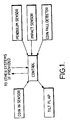
- the machine will preferably incorporate other conventional security devices, such as a pendulum bob sensor ("bob tilt”), to detect tilting, and an impact sensor (“slam tilt”), to detect a sharp blow to the machine. Actuation of such security devices sends a signal to the control means, causing the coin director means to switch to the closed second mode.
- bob tilt pendulum bob sensor
- shock tilt impact sensor
- the machine is of the type in which coins entered by the user pass directly or indirectly to the playfield, and coins which are pushed off the edge of the playfield during legitimate use of the machine pass down the coin chute to a pay tray, where they can be recovered by the user.
- the user is encouraged to play the machine in the hope that he will recover more coins from the machine than those which he puts into the machine.
- Coins entered by the user are detected by a coin-in sensor.
- a signal from the coin-in sensor passes to the control which initiates a timer (typically 40 seconds). This time period is restarted every time a coin is put into the machine. This time period constitutes a "game”.
- the control communicates with a diverter flap in the coin chute.
- the diverter flap is movable between an open first mode (default mode) in which coins passing down the coin chute are directed to the pay tray, and a closed second mode in which coins passing down the coin chute are diverted to an internal cash box.
- the control also communicates with a coin fall detector which is mounted on the coin chute, and which detects a mechanical vibration caused by a coin falling off the playfield and landing on an internal surface of the coin chute.
- the coin fall detector generates a signal in response to the impact of such coin.
- the signal is passed to the control, which determines whether or not there is a current "game” (see Figure 2). If the signal is received during a game, then the coin is considered to be legitimately won and the diverter flap remains in the default position, so that the coin passes to the pay tray. If the control receives the signal from the coin fall detector when a "game” is not current, then the coin is considered to be won illegitimately. This causes the control to actuate the diverter flap and move it to the closed second position. The coin is thus diverted into the cash box.
- the electronic systems of the coin fall detector and the control, and the mechanical operation of the diverter flap operate within a fraction of a second, sufficiently quickly to divert an illegitimately won coin
- the machine incorporates a pendulum sensor and an impact sensor.
- the pendulum sensor is of the type described in GB-A-1 152 755.
- a signal is passed to the control which actuates the diverter flap, moving it to the closed second position.
- the impact sensor comprises a pair of contacts mounted on the inside of a side wall of the machine. If the machine is given a sharp blow, the contacts close and a signal is sent to the control. As a result, the control causes the diverter flap to move to the closed second position.
- the control may be connected by directional link to other systems on the same machine, or to similar machines within a single unit.
- This link can be used to signal to other sections of a unit whether a fraudulent or non-fraudulent win has been detected.
- the other sections can act upon this information accordingly.
- the circuit consists of two main parts, the microprocessor (MPU) and the impact sensor.
- MPU microprocessor
- impact sensor the impact sensor
- a piezo disc is used to detect coins hitting a chute.
- a voltage is developed across the piezo element.
- This voltage is passed to a variable attenuator to adjust the sensitivity of the detection.
- the attenuated signal is passed to the non-inverting input of a comparitor.
- On the inverting input is a reference voltage of approximately 1/100 of Vdd.
- a voltage of 1/100 Vdd is present on the non-inverting input of IC2A the output goes low and discharges Cl.
- the diverter output is high turning on the solid state relay and holding the diverter solenoid operated.
- the power LED is lit.
- the MPU monitors the coin in, slam tilt, bob tilt and impact sensor inputs. Inputs are acted as detailed in the flow chart ( Figure 2).
- the busy line is a bi-directional communications link between sections of the same machine. It ensures that, when a diverter solenoid is operated or released (a mechanically noisy event), other sections within the machine are not seeing this noise as a tilt or coin impact event.
- the MPU can read this line as an input and drive it low as an output via T2 open collector.
Landscapes
- Physics & Mathematics (AREA)
- General Physics & Mathematics (AREA)
- Control Of Vending Devices And Auxiliary Devices For Vending Devices (AREA)
- Slot Machines And Peripheral Devices (AREA)
Applications Claiming Priority (2)
| Application Number | Priority Date | Filing Date | Title |
|---|---|---|---|
| GB9520109A GB2305866B (en) | 1995-10-03 | 1995-10-03 | Amusement machine |
| GB9520109 | 1995-10-03 |
Publications (2)
| Publication Number | Publication Date |
|---|---|
| EP0767447A2 true EP0767447A2 (fr) | 1997-04-09 |
| EP0767447A3 EP0767447A3 (fr) | 1998-04-15 |
Family
ID=10781646
Family Applications (1)
| Application Number | Title | Priority Date | Filing Date |
|---|---|---|---|
| EP96307083A Withdrawn EP0767447A3 (fr) | 1995-10-03 | 1996-09-27 | Machine d'amusement |
Country Status (2)
| Country | Link |
|---|---|
| EP (1) | EP0767447A3 (fr) |
| GB (1) | GB2305866B (fr) |
Cited By (4)
| Publication number | Priority date | Publication date | Assignee | Title |
|---|---|---|---|---|
| EP0764926A3 (fr) * | 1995-09-22 | 1998-03-18 | Cromptons Leisure Machines Limited | Détecteur de choc |
| EP0965963A3 (fr) * | 1998-06-12 | 2000-12-20 | Konami Co., Ltd. | Machine de jeu à poussoir |
| WO2001088868A1 (fr) * | 2000-05-18 | 2001-11-22 | Brandmakers, Inc. | Machine de divertissement du type poussoir |
| EP1310926A3 (fr) * | 2001-09-07 | 2004-04-21 | Bell-Fruit Games Limited | Machine de divertissement |
Families Citing this family (1)
| Publication number | Priority date | Publication date | Assignee | Title |
|---|---|---|---|---|
| GB2381757A (en) * | 2001-11-09 | 2003-05-14 | Bell Fruit Games Ltd | A prize giving entertainment machine |
Family Cites Families (7)
| Publication number | Priority date | Publication date | Assignee | Title |
|---|---|---|---|---|
| BE839117A (nl) * | 1976-03-03 | 1976-07-01 | Automatisch schuifspel | |
| US4303248A (en) * | 1978-12-04 | 1981-12-01 | Shoemaker Stephen P Jr | Manually directed coin game |
| GB2183881A (en) * | 1985-11-29 | 1987-06-10 | Crompton Machine Company Ltd | Security device |
| GB8928256D0 (en) * | 1989-12-14 | 1990-02-21 | Maygay Machines | Coin release verification |
| GB9020326D0 (en) * | 1990-09-18 | 1990-10-31 | Levy Harold J | Security device |
| GB2272383B (en) * | 1992-11-12 | 1995-09-06 | Crompton Leisure Machines Limi | Amusement machine |
| GB2297698B (en) * | 1995-02-09 | 1998-10-14 | Cromptons Leisure Mach Ltd | Amusement machine |
-
1995
- 1995-10-03 GB GB9520109A patent/GB2305866B/en not_active Expired - Fee Related
-
1996
- 1996-09-27 EP EP96307083A patent/EP0767447A3/fr not_active Withdrawn
Cited By (8)
| Publication number | Priority date | Publication date | Assignee | Title |
|---|---|---|---|---|
| EP0764926A3 (fr) * | 1995-09-22 | 1998-03-18 | Cromptons Leisure Machines Limited | Détecteur de choc |
| EP0965963A3 (fr) * | 1998-06-12 | 2000-12-20 | Konami Co., Ltd. | Machine de jeu à poussoir |
| WO2001088868A1 (fr) * | 2000-05-18 | 2001-11-22 | Brandmakers, Inc. | Machine de divertissement du type poussoir |
| GB2381115A (en) * | 2000-05-18 | 2003-04-23 | Brandmakers Inc | Pusher amusement machine |
| US6565086B2 (en) | 2000-05-18 | 2003-05-20 | Brandmakers, Inc. | Pusher amusement machine |
| GB2381115B (en) * | 2000-05-18 | 2004-10-20 | Brandmakers Inc | Pusher amusement machine |
| EP1310926A3 (fr) * | 2001-09-07 | 2004-04-21 | Bell-Fruit Games Limited | Machine de divertissement |
| US7172197B2 (en) | 2001-09-07 | 2007-02-06 | Bell-Fruit Games Limited | Entertainment machine |
Also Published As
| Publication number | Publication date |
|---|---|
| EP0767447A3 (fr) | 1998-04-15 |
| GB2305866A (en) | 1997-04-23 |
| GB9520109D0 (en) | 1995-12-06 |
| GB2305866B (en) | 1999-06-23 |
Similar Documents
| Publication | Publication Date | Title |
|---|---|---|
| US5226520A (en) | Coin detector system | |
| US4298116A (en) | String detector for a coin-selecting device | |
| JP7505774B2 (ja) | 遊技機 | |
| JP2002000901A (ja) | 遊技機および遊技機用情報処理装置 | |
| EP0767447A2 (fr) | Machine d'amusement | |
| US8727094B2 (en) | Apparatus and method for rejecting jammed coins | |
| US3279574A (en) | Coin chute guard means | |
| JP2557322B2 (ja) | パチンコ機の不正防止装置 | |
| JP7505771B2 (ja) | 遊技機 | |
| JP7505772B2 (ja) | 遊技機 | |
| JP7505773B2 (ja) | 遊技機 | |
| JP7505770B2 (ja) | 遊技機 | |
| JPH0229984Y2 (fr) | ||
| JP2640112B2 (ja) | 弾球遊技機 | |
| JP4777144B2 (ja) | 遊技機 | |
| JP2005342161A (ja) | 遊技機のメダル投入装置 | |
| JP3763757B2 (ja) | 遊技機 | |
| JP2802432B2 (ja) | 不正検出装置 | |
| JP7510688B2 (ja) | 遊技機 | |
| JP7510689B2 (ja) | 遊技機 | |
| JP3645488B2 (ja) | メダル遊技設備の不正検出方法 | |
| EP4396796A1 (fr) | Dispositif de divertissement à poussoir avec bras pivotant et élément de propulsion de morceau de jeu | |
| JPH0246878A (ja) | 弾球遊技機 | |
| JP3320917B2 (ja) | コイン選別装置 | |
| JP2007061331A (ja) | 遊技機 |
Legal Events
| Date | Code | Title | Description |
|---|---|---|---|
| PUAI | Public reference made under article 153(3) epc to a published international application that has entered the european phase |
Free format text: ORIGINAL CODE: 0009012 |
|
| AK | Designated contracting states |
Kind code of ref document: A2 Designated state(s): BE DE ES FR IT |
|
| PUAL | Search report despatched |
Free format text: ORIGINAL CODE: 0009013 |
|
| AK | Designated contracting states |
Kind code of ref document: A3 Designated state(s): BE DE ES FR IT |
|
| 17P | Request for examination filed |
Effective date: 19980805 |
|
| GRAG | Despatch of communication of intention to grant |
Free format text: ORIGINAL CODE: EPIDOS AGRA |
|
| 17Q | First examination report despatched |
Effective date: 20000922 |
|
| GRAG | Despatch of communication of intention to grant |
Free format text: ORIGINAL CODE: EPIDOS AGRA |
|
| GRAH | Despatch of communication of intention to grant a patent |
Free format text: ORIGINAL CODE: EPIDOS IGRA |
|
| GRAH | Despatch of communication of intention to grant a patent |
Free format text: ORIGINAL CODE: EPIDOS IGRA |
|
| STAA | Information on the status of an ep patent application or granted ep patent |
Free format text: STATUS: THE APPLICATION IS DEEMED TO BE WITHDRAWN |
|
| 18D | Application deemed to be withdrawn |
Effective date: 20020401 |