EP0770449B1 - Articles comprenant un alliage pour soudage tendre à bas point de fusion - Google Patents
Articles comprenant un alliage pour soudage tendre à bas point de fusion Download PDFInfo
- Publication number
- EP0770449B1 EP0770449B1 EP19960307637 EP96307637A EP0770449B1 EP 0770449 B1 EP0770449 B1 EP 0770449B1 EP 19960307637 EP19960307637 EP 19960307637 EP 96307637 A EP96307637 A EP 96307637A EP 0770449 B1 EP0770449 B1 EP 0770449B1
- Authority
- EP
- European Patent Office
- Prior art keywords
- alloy
- melting
- weight
- article
- solder
- Prior art date
- Legal status (The legal status is an assumption and is not a legal conclusion. Google has not performed a legal analysis and makes no representation as to the accuracy of the status listed.)
- Expired - Lifetime
Links
Images


Classifications
-
- B—PERFORMING OPERATIONS; TRANSPORTING
- B23—MACHINE TOOLS; METAL-WORKING NOT OTHERWISE PROVIDED FOR
- B23K—SOLDERING OR UNSOLDERING; WELDING; CLADDING OR PLATING BY SOLDERING OR WELDING; CUTTING BY APPLYING HEAT LOCALLY, e.g. FLAME CUTTING; WORKING BY LASER BEAM
- B23K35/00—Rods, electrodes, materials, or media, for use in soldering, welding, or cutting
- B23K35/22—Rods, electrodes, materials, or media, for use in soldering, welding, or cutting characterised by the composition or nature of the material
- B23K35/24—Selection of soldering or welding materials proper
- B23K35/26—Selection of soldering or welding materials proper with the principal constituent melting at less than 400°C
- B23K35/262—Sn as the principal constituent
Definitions
- This invention relates to Sn-Pb-Bi based solder alloys and to articles bonded therewith.
- solder bonds are critical to the performance and reliability of many electronic devices.
- the most widely used solder alloy is the eutectic 63%Sn-37%Pb alloy (all compositional percentages in this disclosure are by weight) with a melting point of 183°C.
- a certain amount of superheating above the melting point is required in order to form bonds with solder alloys.
- surface mount soldering operations using the currently prevalent Pb-Sn solder alloy typically have temperature peaks in the thermal profile of the reflow oven of approximately 210-220°C, and wave soldering operations using the same alloy have pot temperatures of approximately 240-260°C.
- wave soldering operations using the same alloy have pot temperatures of approximately 240-260°C.
- There is a trend in the manufacturing of electronic devices to use less expensive polymer materials for packaging electronic components and making printed circuit boards.
- the three solders are high Bi content such as 58Bi-42 Sn, high In content, such as 52In-48Sn, and Sn-Pb-Bi alloy such as the 43Sn-43Pb-14Bi. With respect to the high Bi and high In content alloys, they are rarely used because they are incompatible with the industry standard Sn-Pb alloy component lead finishes.
- the 43Sn-43Pb-14Bi alloy As for the 43Sn-43Pb-14Bi alloy, it is not used with great frequency throughout the industry due to its extremely wide melting range (approximately 137-170°C with residual amounts of about 5-10% melting at approximately 178°C).
- a tin-bismuth-lead solder alloy is described in Tanaka, H., et al., "Tin-bismuth-lead alloy solder", Chemical Abstracts , Vol. 77, No. 24 (December 11, 1972) and JP-A-46 036 446. Solder alloys having a wide melting range are undesirable as their use can introduce manufacturing difficulties and reliability problems.
- the 43Sn-43Pb-14Bi alloy's solidus temperature of 137°C can cause reliability problems.
- the temperature level of the products when in use can approach about 100°C or greater.
- the proximity of alloy's solidus temperature to the upper service temperature levels is detrimental to thermal fatigue resistance.
- solder alloys with a wide melting range beginning at temperatures which are in such close proximity to service environments subjects the solder bonds to conditions that accelerate thermal fatigue.
- a ternary compound comprising between about 48-52% Sn by weight, 41-43% Pb, and from about 7-9% Bi yields an alloy which has a narrow melting range of about 169-175°C.
- the composition comprises approximately 49.75% Sn, 41.75% Pb, 8% Bi, and 0.5% Ag.
- alloys with lower melting temperatures than that of the eutectic Sn-Pb alloy based on the Sn-Pb-Bi system.
- the novel alloys in addition to having lower melting temperatures, have narrow melting ranges of ⁇ about 20°C and as narrow as ⁇ about 10°C.
- Melting range refers to the range from when melting of the alloy initiates (solidus temperature) unit at least 95 weight % of the alloy is melted (liquidus temperature).
- Compositions in accordance with the invention yield alloys having melting ranges from about 166-175°C. A very a small percentage of the alloy ( ⁇ 2-3%) does not completely melt until several degrees Celsius beyond the liquidus temperature.
- this residual amount should melt below 190 °C, preferably at or below 185 °C, and more preferably at or below 183 °C.
- operating temperatures of processes using the alloy of the invention can be reduced about 5-20°C below that of current processes using eutectic Sn-Pb alloy.
- Residual solids which have melting temperatures equal to or beyond 190 °C tend to interfere with fillet formation when soldered at the lower temperatures, thus resulting in solder joints which are susceptible to accelerated thermal fatigue.
- Desirable composition ranges for the Sn-Pb-Bi containing alloy are: Sn between about 48-52%, preferably from about 49-51%, and more preferably about 50%, Pb between about 41-44%, preferably from about 41-43%, more preferably about 41.5-42.5%, and even more preferably about 42%, and Bi from about 7-9%, preferably from about 7.5-8.5%, and more preferably about 8%. All percentages herein are weight percent.
- the resulting ternary Sn-Pb-Bi alloy has a melting range of about 169-175°C. Compositional percentages of Bi greater than about 9% cause a portion of the alloy to melt at about 137°C; percentages of Bi below about 7% do not sufficiently reduce the melting point.
- compositional percentages of Sn ⁇ about 52% or Pb ⁇ about 41% tend to result in a portion of the alloy melting at about 137°C and/or residual solids melting at temperatures exceeding 190°C.
- elements such as Au, Cu, In, Ni, Pd, Sb, and/or Zn may be present in small amounts of ⁇ about 0.5% and preferably from about 0.2-0.5% with no significant deleterious effect. Additionally, P, Se, and/or Te may also be present in small amounts of ⁇ about 0.5%. The aggregate amount of these elements should be ⁇ about 0.5% and preferably from 0.2-0.5%.
- the alloys of the invention are prepared by any number of different ways known to those skilled in the art, such as by melting a mixture of elemental or partially alloyed metals.
- the alloys are also prepared by mechanical alloying or by deposition into thin or thick films by electrochemical processes such as electroplating, electroless plating, and electrophoresis. Chemical processes such as chemical vapor deposition or physical vapor deposition, i.e., evaporation or sputtering, are also useful.
- compositions according to the invention are shaped by any appropriate technique into articles in the form of wires, ribbons, bars, preforms, solder paste or cream containing alloy powder, suitable flux material, and other chemical constituents.
- the solder alloys are useful in the manufacture of articles such as through-holes, surface mounted circuit boards by conventional techniques such as, for example, wave soldering, dip soldering, laser soldering, reflow soldering of solder paste, deposited and patterned solder layers, and melting of preforms. Additionally, the solder alloys are useful in mechanically bonding two bodies, such as a laser chip solder-bonded to a sub-mount or other application where soldering at a lower temperature is required or desirable.
- An application of the present invention is to conductively interconnect electronic components at relatively lower temperatures, for example, about 5-20°C lower than the conventional Pb-Sn processes.
- a component such as a resistor, capacitor, transistor, integrated circuit, or other electronic component, having one or more leads is bonded to one or more solder-wettable bonding pads of a second component, such as a printed wiring board by any of the alloys of the present invention.
- the leads of the first component are in one embodiment a wire lead made from conductive metal, such as copper, silver, nickel, gold, aluminum, or other leads such as a conductive layer located on the bottom of the component.
- solder-wettable bonding pads are typically layers of Cu, Cu coated with Sn containing solder alloy, Cu-Ni-Au, or Cu-Ni-Pd.
- the Cu bonding pads are, for example, coated with an organic preservative such as imidazole or benzotriazole.
- a Sn-Pb-Bi alloy comprising of 43% Sn, 43% Pb, and 14% Bi was prepared from high purity elemental Sn, Pb, and Bi.
- the alloy was formed by melting under argon atmosphere, within a sealed quartz having an inside diameter of 14 mm, and being held at 800°C for 1 hour before allowing to solidify at room temperature. The molten alloy was vigorously and repeatedly shaken at this elevated temperature to ensure compositional homogeneity.
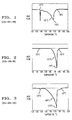
- Fig. 1 shows a differential scanning calorimetry profile of the alloy upon heating at a scanning rate of 5 °C/min. The profile shows at least two separate regions of heat extraction. These regions indicate different melting composition phases, i.e., distinctly different temperatures at which separate portions of the alloy undergo melting.
- An alloy composition comprising of 52% Sn, 40% Pb, and 8% Bi was prepared as in Example 1.
- a differential scanning calorimetry profile of the alloy upon heating at a scanning rate of of 5°C/min is shown in Fig. 2.
- the 52Sn-40Pb-8Bi alloy also exhibits at least two distinct regions of heat extraction, one at about 137°C and the other having solidus and liquidus occurring at about 172°C and 176°C, respectively.
- the region at 137°C indicates that a small amount of about 0.05% of the alloy melts at 137°C. Even such a small amount can adversely affect the mechanical properties of the solder alloy because that portion of the alloy will solidify at alloy grain boundaries, thus accelerating thermal fatigue.
- Example 2 An alloy composition comprising of 50% Sn, 40% Pb, and 10% Bi was prepared as in Example 1.
- a differential scanning calorimetry profile of the alloy upon heating at a scanning rate of 5 °C/min is shown in Fig. 3.
- a portion of the alloy melts at about 137°C, the majority of the remaining alloy melts between about 168°C and 173°C, and a residual portion of about 5% melts at approximately 187°C.
- An alloy composition comprising of 51.5% Sn, 40% Pb, and 9% Bi was prepared as in Example 1.
- a differential scanning calorimetry profile of the alloy upon heating at a scanning rate of 5 °C/min is shown in Fig. 4.
- the solidus and liquidus temperatures, as indicated by the profile, is about 168°C and 174°C, respectively.
- a small residual portion of the alloy equaling about 2-3% completely melts at about 183°C.
- Example 1 An alloy composition comprising of 48% Sn, 44% Pb, and 8% Bi was prepared as in Example 1.
- a thermal profile of the alloy measured by differential scanning calorimetry scanned at a rate of 5°C/min is shown in Fig. 5.
- the alloy has similar melting characteristics as the alloy of Example 4 with the exception that the residual amount of the alloy equaling about 7% melts at about 191°C. As previously discussed, melting phases occurring beyond 190 °C do not effectively reduce soldering temperatures.
- An alloy composition comprising of 49% Sn, 43% Pb, and 8.0% Bi was prepared as in Example 1.
- a differential scanning calorimetry profile of the alloy upon heating at a scanning rate of 5°C/min is shown in Fig. 6. The profile indicates that by increasing the contents of Sn to an amount greater than 48%, the melting temperature of the residual amount of the alloy is reduced from 191°C to about 185°C, thus effectively reducing the soldering temperature.
- Example 1 An alloy composition comprising of 49.75% Sn, 41.75% Pb, 8% Bi, and 0.5% Ag was prepared as in Example 1.
- a differential scanning calorimetry profile of the alloy upon heating at a scanning rate of 5 °C/min is shown in Fig. 7. From the profile, the majority of the 49.75Sn-41.75Pb-8Bi-0.5Ag alloy has a solidus temperature of about 166°C and a liquidus temperature of about 172°C. The remaining portion, which amounts to less than about 2-3%, melts at about 179°C.
- the addition of silver in an amount ⁇ 0.9% effectively reduces the melting range of the alloy several degrees Celsius.
- the thermal profile of the test samples is shown in Fig. 10.
- the thermal profile shows that the peak top-side temperature in this experiment is about 179°C, which is below that of eutectic 63Sn-37Pb.
- Figs. 11a-b are copies of photographs respectively showing 63Sn-37Pb and 49.75Sn-41.75Pb-8Bi-0.5Ag samples after cooling.
- the 49.75Sn-41.75Pb-8Bi-0.5Ag alloy exhibits excellent paste reflow that is free of solder balls, whereas the eutectic 63Sn-37Pb alloy did not reflow at all.
Landscapes
- Engineering & Computer Science (AREA)
- Mechanical Engineering (AREA)
- Electric Connection Of Electric Components To Printed Circuits (AREA)
Claims (11)
- Article comprenant au moins un premier et un second composants liés ensemble par un alliage comprenant du Sn dans l'intervalle de 48-52% en poids, du Pb dans l'intervalle de 41-44% en poids, du Bi dans l'intervalle de 7-9% en poids et dans lequel, le restant, s'il y en a, est choisi parmi le groupe constitué de Au, Cu, In, Ni, Pd, Sb, Zn dans la quantité de 0,2-0,5% en poids et Ag dans la quantité de 0,3 à 0,9% en poids et dans lequel l'intervalle de fusion de l'alliage pour brasure sans argent est 169°C à 175°C et l'intervalle de fusion de l'alliage pour soudure avec l'Ag restant est 166°C à 172°C, dans lequel l'intervalle de fusion est l'intervalle de la température du solidus à la température du liquidus, la température du liquidus étant la température à laquelle au moins 95% en poids de l'alliage sont fondus.
- Article selon la revendication 1, dans lequel l'alliage comprend 49-51% en poids de Sn et 41,5-42,5% en poids de Pb.
- Article selon la revendication 2, dans lequel l'alliage comprend 7,5-8,5% en poids de Bi.
- Article selon la revendication 2, dans lequel l'alliage comprend 50% en poids de Sn, 42% en poids de Pb et 8% en poids de Bi.
- Article selon la revendication 1, dans lequel le premier et le second composants sont des composants électriques liés ensemble de façon conductrice par l'alliage.
- Article selon la revendication 5, dans lequel l'alliage est formé en une pâte ou crème, et dans lequel la pâte ou crème est utilisée pour la liaison du premier composant au second composant par brasage de montage en surface.
- Article selon la revendication 5, dans lequel le premier composant électrique est lié au second composant électrique par brasage à la vague.
- Article selon la revendication 7, dans lequel l'alliage est formé en une pâte ou crème, et dans lequel la pâte ou crème est utilisée pour la liaison du premier composant au second composant par brasage de montage en surface.
- Article selon la revendication 8, dans lequel l'alliage est brasé par refusion à des températures de 5-20°C inférieures à celles utilisées pour le brasage d'alliage eutectique de Sn-Pb.
- Article selon la revendication 5, dans lequel l'alliage est formé en une pâte, une crème, une préforme, un fil, un ruban ou une barre pour brasure.
- Article selon la revendication 3 sans Ag dans le restant.
Applications Claiming Priority (2)
| Application Number | Priority Date | Filing Date | Title |
|---|---|---|---|
| US55014595A | 1995-10-30 | 1995-10-30 | |
| US550145 | 1995-10-30 |
Publications (2)
| Publication Number | Publication Date |
|---|---|
| EP0770449A1 EP0770449A1 (fr) | 1997-05-02 |
| EP0770449B1 true EP0770449B1 (fr) | 2001-03-28 |
Family
ID=24195933
Family Applications (1)
| Application Number | Title | Priority Date | Filing Date |
|---|---|---|---|
| EP19960307637 Expired - Lifetime EP0770449B1 (fr) | 1995-10-30 | 1996-10-22 | Articles comprenant un alliage pour soudage tendre à bas point de fusion |
Country Status (4)
| Country | Link |
|---|---|
| EP (1) | EP0770449B1 (fr) |
| JP (1) | JP3305596B2 (fr) |
| DE (1) | DE69612258T2 (fr) |
| MX (1) | MX9605015A (fr) |
Cited By (3)
| Publication number | Priority date | Publication date | Assignee | Title |
|---|---|---|---|---|
| US8122833B2 (en) | 2005-10-04 | 2012-02-28 | Alliant Techsystems Inc. | Reactive material enhanced projectiles and related methods |
| US8361258B2 (en) | 2004-03-15 | 2013-01-29 | Alliant Techsystems Inc. | Reactive compositions including metal |
| USRE45899E1 (en) | 2000-02-23 | 2016-02-23 | Orbital Atk, Inc. | Low temperature, extrudable, high density reactive materials |
Families Citing this family (5)
| Publication number | Priority date | Publication date | Assignee | Title |
|---|---|---|---|---|
| US7977420B2 (en) | 2000-02-23 | 2011-07-12 | Alliant Techsystems Inc. | Reactive material compositions, shot shells including reactive materials, and a method of producing same |
| US20050199323A1 (en) | 2004-03-15 | 2005-09-15 | Nielson Daniel B. | Reactive material enhanced munition compositions and projectiles containing same |
| CN105870238B (zh) * | 2015-01-23 | 2018-05-08 | 比亚迪股份有限公司 | 一种光伏焊带和一种光伏组件 |
| CN105127611A (zh) * | 2015-09-28 | 2015-12-09 | 苏州龙腾万里化工科技有限公司 | 一种低温锡膏 |
| CN117900691A (zh) * | 2024-03-08 | 2024-04-19 | 云南锡业新材料有限公司 | 一种低熔点高强度焊料合金、光伏焊料及其制备方法 |
Family Cites Families (6)
| Publication number | Priority date | Publication date | Assignee | Title |
|---|---|---|---|---|
| FR939104A (fr) * | 1944-03-11 | 1948-11-04 | Philips Nv | Soudure douce |
| FR2496525A1 (fr) * | 1980-12-18 | 1982-06-25 | Alliages Etain Derives | Procede d'elaboration de soudure mate, notamment destinee a l'electronique ainsi que soudure obtenue par la mise en oeuvre de ce procede |
| DE3730764C1 (de) * | 1987-09-12 | 1988-07-14 | Demetron | Verwendung von Legierungen aus Zinn und/oder Blei als Weichlote zum Aufbringen von Halbleitern auf metallische Traeger |
| SU1500455A1 (ru) * | 1987-11-24 | 1989-08-15 | Институт Электросварки Им.Е.О.Патона | Припой дл низкотемпературной пайки |
| JPH0636446A (ja) * | 1992-07-20 | 1994-02-10 | Csk Corp | プリペイドカード検査装置及び検査方式 |
| JPH07336043A (ja) * | 1994-04-15 | 1995-12-22 | Hitachi Ltd | はんだ、はんだ接続方法および電子部品の実装構造体 |
-
1996
- 1996-10-22 MX MX9605015A patent/MX9605015A/es unknown
- 1996-10-22 DE DE1996612258 patent/DE69612258T2/de not_active Expired - Lifetime
- 1996-10-22 EP EP19960307637 patent/EP0770449B1/fr not_active Expired - Lifetime
- 1996-10-22 JP JP27926196A patent/JP3305596B2/ja not_active Expired - Fee Related
Cited By (3)
| Publication number | Priority date | Publication date | Assignee | Title |
|---|---|---|---|---|
| USRE45899E1 (en) | 2000-02-23 | 2016-02-23 | Orbital Atk, Inc. | Low temperature, extrudable, high density reactive materials |
| US8361258B2 (en) | 2004-03-15 | 2013-01-29 | Alliant Techsystems Inc. | Reactive compositions including metal |
| US8122833B2 (en) | 2005-10-04 | 2012-02-28 | Alliant Techsystems Inc. | Reactive material enhanced projectiles and related methods |
Also Published As
| Publication number | Publication date |
|---|---|
| JP3305596B2 (ja) | 2002-07-22 |
| MX9605015A (es) | 1997-04-30 |
| EP0770449A1 (fr) | 1997-05-02 |
| DE69612258D1 (de) | 2001-05-03 |
| JPH09122968A (ja) | 1997-05-13 |
| DE69612258T2 (de) | 2001-11-15 |
Similar Documents
| Publication | Publication Date | Title |
|---|---|---|
| EP0629463B1 (fr) | Soudure tendre à base d'étain, exempte de plomb et comportant plusieurs composants pour applications à haute température | |
| US5411703A (en) | Lead-free, tin, antimony, bismtuh, copper solder alloy | |
| EP0629467B1 (fr) | Alliage à base d'étain-bismuth pour soudure tendre exempt de plomb | |
| US5344607A (en) | Lead-free, high tin, ternary solder alloy of tin, bismuth, and indium | |
| US6010060A (en) | Lead-free solder process | |
| JP3221640B2 (ja) | 改良された力学的性質を持つPbを含まない半田 | |
| EP0711629B1 (fr) | Soudure sans plomb à bas point de fusion ayant des propriéteés mécaniques améliorées et articles liés à l'aide de ladite soudure | |
| US5393489A (en) | High temperature, lead-free, tin based solder composition | |
| JP3232963B2 (ja) | 有機基板接続用鉛レスはんだ及びそれを用いた実装品 | |
| GB2319039A (en) | Solder alloy | |
| KR20010012083A (ko) | 무연 땜납 | |
| US6596094B2 (en) | Solder paste and electronic device | |
| EP0770449B1 (fr) | Articles comprenant un alliage pour soudage tendre à bas point de fusion | |
| CN100589918C (zh) | 焊锡及使用它的电路基板装置 | |
| EP0753374B1 (fr) | Alliage à basse température de fusion et pâte de soudure fabriquée à partir d'une poudre dudit alliage | |
| JPH0985484A (ja) | 鉛フリーはんだとそれを用いた実装方法及び実装品 | |
| JP2910527B2 (ja) | 高温はんだ | |
| JP2686548B2 (ja) | ロウ付け用材料 | |
| JPH02165895A (ja) | ロウ付け用材料 |
Legal Events
| Date | Code | Title | Description |
|---|---|---|---|
| PUAI | Public reference made under article 153(3) epc to a published international application that has entered the european phase |
Free format text: ORIGINAL CODE: 0009012 |
|
| AK | Designated contracting states |
Kind code of ref document: A1 Designated state(s): DE FR GB |
|
| 17P | Request for examination filed |
Effective date: 19971016 |
|
| 17Q | First examination report despatched |
Effective date: 19990507 |
|
| GRAG | Despatch of communication of intention to grant |
Free format text: ORIGINAL CODE: EPIDOS AGRA |
|
| RTI1 | Title (correction) |
Free format text: ARTICLES COMPRISING LOW TEMPERATURE SOLDER ALLOY |
|
| GRAG | Despatch of communication of intention to grant |
Free format text: ORIGINAL CODE: EPIDOS AGRA |
|
| GRAH | Despatch of communication of intention to grant a patent |
Free format text: ORIGINAL CODE: EPIDOS IGRA |
|
| GRAH | Despatch of communication of intention to grant a patent |
Free format text: ORIGINAL CODE: EPIDOS IGRA |
|
| GRAA | (expected) grant |
Free format text: ORIGINAL CODE: 0009210 |
|
| AK | Designated contracting states |
Kind code of ref document: B1 Designated state(s): DE FR GB |
|
| REF | Corresponds to: |
Ref document number: 69612258 Country of ref document: DE Date of ref document: 20010503 |
|
| ET | Fr: translation filed | ||
| REG | Reference to a national code |
Ref country code: GB Ref legal event code: IF02 |
|
| PLBE | No opposition filed within time limit |
Free format text: ORIGINAL CODE: 0009261 |
|
| STAA | Information on the status of an ep patent application or granted ep patent |
Free format text: STATUS: NO OPPOSITION FILED WITHIN TIME LIMIT |
|
| 26N | No opposition filed | ||
| REG | Reference to a national code |
Ref country code: FR Ref legal event code: TP Owner name: ALCATEL-LUCENT USA INC., US Effective date: 20130823 Ref country code: FR Ref legal event code: CD Owner name: ALCATEL-LUCENT USA INC., US Effective date: 20130823 |
|
| REG | Reference to a national code |
Ref country code: GB Ref legal event code: 732E Free format text: REGISTERED BETWEEN 20140102 AND 20140108 |
|
| REG | Reference to a national code |
Ref country code: GB Ref legal event code: 732E Free format text: REGISTERED BETWEEN 20140109 AND 20140115 |
|
| REG | Reference to a national code |
Ref country code: FR Ref legal event code: GC Effective date: 20140410 |
|
| REG | Reference to a national code |
Ref country code: FR Ref legal event code: RG Effective date: 20141015 |
|
| PGFP | Annual fee paid to national office [announced via postgrant information from national office to epo] |
Ref country code: GB Payment date: 20141021 Year of fee payment: 19 Ref country code: FR Payment date: 20141022 Year of fee payment: 19 Ref country code: DE Payment date: 20141022 Year of fee payment: 19 |
|
| REG | Reference to a national code |
Ref country code: DE Ref legal event code: R119 Ref document number: 69612258 Country of ref document: DE |
|
| GBPC | Gb: european patent ceased through non-payment of renewal fee |
Effective date: 20151022 |
|
| PG25 | Lapsed in a contracting state [announced via postgrant information from national office to epo] |
Ref country code: DE Free format text: LAPSE BECAUSE OF NON-PAYMENT OF DUE FEES Effective date: 20160503 Ref country code: GB Free format text: LAPSE BECAUSE OF NON-PAYMENT OF DUE FEES Effective date: 20151022 |
|
| REG | Reference to a national code |
Ref country code: FR Ref legal event code: ST Effective date: 20160630 |
|
| PG25 | Lapsed in a contracting state [announced via postgrant information from national office to epo] |
Ref country code: FR Free format text: LAPSE BECAUSE OF NON-PAYMENT OF DUE FEES Effective date: 20151102 |