EP0771148B1 - Obturation de l'oesophage - Google Patents
Obturation de l'oesophage Download PDFInfo
- Publication number
- EP0771148B1 EP0771148B1 EP96911870A EP96911870A EP0771148B1 EP 0771148 B1 EP0771148 B1 EP 0771148B1 EP 96911870 A EP96911870 A EP 96911870A EP 96911870 A EP96911870 A EP 96911870A EP 0771148 B1 EP0771148 B1 EP 0771148B1
- Authority
- EP
- European Patent Office
- Prior art keywords
- plug
- oesophagus
- clamp
- ring
- tissues
- Prior art date
- Legal status (The legal status is an assumption and is not a legal conclusion. Google has not performed a legal analysis and makes no representation as to the accuracy of the status listed.)
- Expired - Lifetime
Links
Images

Classifications
-
- A—HUMAN NECESSITIES
- A22—BUTCHERING; MEAT TREATMENT; PROCESSING POULTRY OR FISH
- A22B—SLAUGHTERING
- A22B5/00—Accessories for use during or after slaughtering
- A22B5/14—Clips for the tongue; Arrangements for closing the throat
Definitions
- This invention relates to sealing of the oesophagus in a slaughtered animal.
- the sealing of the oesophagus in a slaughtered animal is needed to contain the contents of the rumen and prevent contamination of the surfaces of edible organs and tissues during the dressing process. Of particular concern is the tongue and head meat and also preventing cross contamination of other carcasses.
- Presently used techniques or apparatus used for sealing or closing the oesophagus include:
- Patent specification DE 1100499 shows a system in which a retainer holds the plug sealing the oesophagus in position by piercing and engaging the surrounding tissues with a sharp, wire screw.
- an oesophagus seal for sealing the oesophagus in a slaughtered animal, comprising a plug for insertion into the oesophagus to a point where sealing of the oesophagus is desired, characterised by further comprising a retainer associated with the plug, which comprises a clamp operative to clamp the internal lining mucosa of the oesophageal tunica muscularis, by pinching internally but without the mucosa being pierced or perforated, and in that the retainer resists disengagement of the plug by holding or retaining the plug in position to seal the oesophagus.
- an oesophagus seal By providing an oesophagus seal according to the present invention, it is possible to insert and apply the sealing device internally in the oesophagus, e.g. through the animal's oral cavity, thereby eliminating the need for knife work on the neck to gain access to the oesophagus as required in the past for externally applied closures.
- the clamp enables the oesophagus to be reliably sealed and to remain sealed during handling and processing of the carcass.
- the oesophagus of the animal comprises the tunica muscularis and its associated internal lining mucosa, the clamp being preferably operative to clamp the mucosa by pinching internally so that the mucosa separate from the tunica muscularis in the region where the clamp pinches but without the mucosa being pierced or perforated.
- the clamp is in the form of a clamp ring which is operative to clamp the internal tissues of the oesophagus between the clamp ring and the outside clamp surface of the plug.
- the clamp ring is operative to clamp the tissues by pinching the tissues between the clamp ring and the outside clamp surface of the plug and resisting disengagement by a tight interference fit.
- the outer clamp surface may be cylindrical so that the clamp ring in use surrounds the cylindrical outer clamp surface and pinches tissues of the oesophagus between the clamp ring and the cylindrical outer clamp surface.
- the plug may have a closed inner end and a reduced diameter neck portion located further from the closed inner end than the outer clamp surface, the neck portion having a conical ramped outer surface leading to the clamp surface, the clamp ring having an inside diameter greater than the outside diameter of the neck portion, the clamp ring initially being located beyond the neck portion and being advanceable towards the inner end of the plug when the plug has been inserted into the oesophagus to the point where sealing of the oesophagus is desired whereby tissues surrounding and projecting into the neck portion will be pinched between the advancing clamp ring and the conical ramped outside surface of the neck portion and, upon further advance of the clamp ring the tissues of the oesophagus will be clamped between the clamp ring and the outer clamp surface of the plug.
- the clamp ring may be formed integrally with the plug, the connection between the clamp ring and the plug having a weakened area which can rupture when an axial force is applied to the clamp ring so as to separate the clamp ring from the plug and advance it towards the closed inner end of the plug to effect clamping of the tissues.
- the plug may be adapted to be mounted to the end of an applicator rod which in use is to be inserted along the oesophagus and wherein the integral formation of the clamp ring with the plug includes gas passages enabling a vacuum applied behind the plug when located in the oesophagus to be communicated through the gas passages to the neck portion whereby tissues of the oesophagus can be drawn into the neck portion before advancement of the clamp ring to clamp the tissues drawn into the neck portion.
- the present invention also provides an oesophagus sealing system comprising an oesophagus seal according to the first aspect of the invention and an applicator rod having an end for mounting of the oesophagus seal, the applicator rod having an associated actuator which is selectively moveable axially to move the clamp so as to engage and clamp the tissues of the oesophagus between the clamp and the plug.
- the applicator rod preferably has a vacuum passage extending therethrough, the vacuum passage opening outwardly immediately behind the end where the plug is use mounted whereby in use a vacuum can be applied immediately behind the plug when it has been moved to the point where sealing of the oesophagus is desired, the application of the vacuum drawing tissues of the oesophagus into closer relationship with the plug to facilitate clamping thereof.
- an oesophagus sealing system comprising an oesophagus seal according to the first aspect of the invention and an applicator for mounting of the oesophagus seal, the applicator comprising a plug holder having a front end to which the plug is in use mounted and which is selectively disconnectable from the plug when the plug is installed at the desired point in the oesophagus, the ring holder arranged to receive and hold the clamp ring, and a ring holder being selectively axially movable relative to the plug whereby in use the clamp ring can be relatively advanced into operative relationship with the plug so as to clamp tissues of the oesophagus between the clamp ring and the plug.
- the plug holder may have an intermediate section behind the front end thereof to which the plug is in use mounted, the intermediate section being of reduced diameter compared to the outside clamp surface of the plug, the applicator having a vacuum passage leading to the intermediate section, the ring holder in use locating the clamp ring beyond the intermediate section relative to the plug whereby the application of vacuum through the vacuum passage to the intermediate section draws tissues of the oesophagus inwardly constrict around the intermediate section, whereafter axial advancement of the ring holder and the clamp ring past the intermediate section and into operative relationship with the plug causes pinching and hence clamping of the tissues between the clamp ring and the outside clamp surface of the plug.
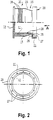
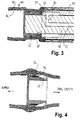
- the oesophagus seal comprises a plug 10 which has a generally cylindrical body 11 and a closed inner end 12.
- a plug 10 which has a generally cylindrical body 11 and a closed inner end 12.
- a generally cylindrical clamp surface 13 Around the outside of the body 11 is a generally cylindrical clamp surface 13 having circumferential grooves 14 to resist disengagement of the clamping effect described later.
- the plug 10 also has a reduced diameter neck portion 15 which has a conical ramped outside surface 16 leading to the cylindrical surface 13 which has a diameter slightly less than the diameter of the closed end 12.
- the plug 10 has an open ended socket 18 so that the plug can be mounted to the end of a rod or shaft 30 for insertion into the oesophagus 40 through the oral cavity of the animal while mounted on the end of the rod.
- the rod 30 can be inserted into the open ended socket 18 of the plug 10 and any suitable releasable connection for the plug 10 can be used, such as a bayonet connection or screwthread connection, enabling the plug 10 to be released from the end of the rod and the rod 30 to be withdrawn from the oesophagus 40 leaving the plug in the desired position sealing the oesophagus 40.
- any suitable releasable connection for the plug 10 can be used, such as a bayonet connection or screwthread connection, enabling the plug 10 to be released from the end of the rod and the rod 30 to be withdrawn from the oesophagus 40 leaving the plug in the desired position sealing the oesophagus 40.
- a retainer in the form of a clamp 20 comprises a clamp ring 21 having an inside diameter greater than the outside diameter of the neck portion 15.
- the inside diameter of the clamp ring 21 may be slightly greater than the outside diameter of the cylindrical clamp surface 13 although it could be substantially equal to or slightly less than the outside diameter of the surface 13 since the clamp ring and/or the plug may be made of a resilient plastics material to enable the clamp ring 21 to be fitted around the outside of the clamp surface 13 to clamp tissues of the oesophagus 40 between the clamp ring 21 and the surface 13.
- the clamp ring 21 is initially located beyond the neck portion 15.
- the clamp ring 21 is formed integrally with the plug 10 and is initially mounted by a connecting web 25.
- the point of connection of the web 25 to the clamp ring 21 defines a weakened area 26 which can rupture when an axial force is applied to the ring 21 thereby enabling the ring 21 to move towards the surface 13 past the neck 15.
- Holes 27 are provided through the connecting web 25 for a purpose described later.
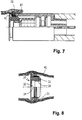
- the assembly comprising the plug 10 and integral clamp ring 21 is mounted on the end of an applicator rod 30.
- Extending through the rod 30 is a vacuum passage 31 which opens out through passage 32 immediately behind the plug 10.
- an actuator sleeve 35 Coaxial with the rod 30 is an actuator sleeve 35 which is selectively movable coaxially with the rod 30 to push the clamp ring 21 past the neck 15 onto the clamp surface 13.
- the rod 30 with the oesophagus seal mounted on the end is inserted down the oesophagus 40 of the animal for a suitable distance, e.g. approximately 800 mm in the case of a beef carcass, e.g. to a point approximately adjacent to the eighth rib where the oesophagus is to be sealed.
- a suitable distance e.g. approximately 800 mm in the case of a beef carcass, e.g. to a point approximately adjacent to the eighth rib where the oesophagus is to be sealed.
- a vacuum is applied through the vacuum passage 31 causing a negative pressure relative to the carcass immediately behind the plug 10.
- the withdrawal of air through the passages 32 and 31 and through the holes 27 communicating with the neck portion 15 causes the oesophagus 40 including the mucosa lining 41 to draw tightly around the oesophagus seal and particularly into the neck 15 as shown in Fig. 3.
- the operator can operate the actuator sleeve 35 which slides forwardly on the rod 30 applying an axial force to the clamp ring 21.
- This causes rupture of the weakened zones 26 so that the clamp ring 21 is advanced over the neck 15.
- This causes pinching of the mucosa 41 which is lining the tunica muscularis 42 and the mucosa 41 separates from the tunica muscularis 42 as the clamp ring 21 is further advanced past the neck 15 and to a position around the outside of the clamp surface 13 until a position approximately as shown in Fig. 4 is reached.
- the capture and clamping of the mucosa membrane 41 as shown in Fig. 4 provides an effective seal of the oesophagus 40 and strongly resists dislodgment.
- the oesophagus seal can be made of any suitable materials such as suitable plastics materials and may be formed, for example, by injection moulding.
- suitable materials such as suitable plastics materials and may be formed, for example, by injection moulding.
- the materials enable the clamp ring 21 and/or the plug 10 to resiliently deform to a limited extent during advancement of the clamp ring 21 and clamping of the mucosa 41 although the elastic clamping force applied during clamping needs to be sufficient to apply a strong clamping force so that when applied as shown in Fig. 4, the oesophagus seal will resist forces applied by contents of the rumen and normal handling forces encountered in processing the carcass and viscera.
- the materials need not be resilient since by suitable dimensions of the inside diameter of the clamp ring 21 and outside diameter of the clamp surface 13, the compressible tissues of the mucosa 41 can ensure the tight sealing effect is achieved.
- the material of the seal may be biodegradable to enable the seal to be passed through the "rendering" process for the viscera without needing to retrieve and discard the seal.
- the clamp ring 21 is a separate integer from the plug 10 although the plug is similar, having a cylindrical body 11 having a generally cylindrical outer clamp surface 13 with grooves 14 and a closed end 12.
- the seal in this second embodiment is applied by an applicator 50 comprising a plug holder 52 and a ring holder 60.
- the plug holder 52 has a front end 53 which fits within and connects to the open ended socket 18 of the plug 10 so as to mount the plug 10 but which can be selective disconnected from the plug when the plug is installed at the desired point in the oesophagus 40.
- This can be achieved by the illustrated screw threaded interconnection 19 between the front end 53 and the socket 18, but a quick release connection such as a bayonet connection may be provided in a commercial embodiment.
- the plug holder 52 has an intermediate section 54 which is of reduced diameter compared to the cylindrical clamp surface 13 of the plug 10 but which is joined to the cylindrical surface 13 by the conical ramped surface 16 when the plug 10 is mounted on the front end 53.
- the intermediate section 54 is provided with multiple holes 55 to provide communication for the vacuum applied to draw the tissues of the oesophagus 40 in towards the intermediate section 54 as described later.
- the plug holder 52 also includes a rear piston section 56 which locates the plug holder 52 within the ring holder 60 and guides movement of the plug holder 52 out of and back into the ring holder 60 as further described below.
- the piston section 56 is mounted on the end of a rod 57 which extends rearwardly from the plug holder 52 through a tubular applicator shaft 51 which extends completely out from the animal's oesophagus through the oral cavity when in use.
- the ring holder 60 comprises a cylindrical sleeve 61 which accommodates therein the plug holder 52 and which has an internal cavity or bore 62 which receives the piston section 56 for axial movement therein.
- the outer end 63 of the sleeve 61 has an internally stepped recess 64 for receiving the clamp ring 21.
- the ring holder 60 is mounted at the end of the applicator shaft 51. Vacuum passage 31 provides a communication path for vacuum applied to the bore 68 of the applicator shaft 51 into the cylindrical bore 62 of the sleeve 61 and thereby into the centre of the intermediate section 54 of the plug holder 52.
- the ring 21 is initially loaded into the recess 64 at the outer end 63 of the sleeve 61 and the plug 10 is mounted to the front end 53 of the plug holder 52.
- the plug holder 52 is retracted into the ring holder 60 as shown in Fig. 5 for initial insertion of the seal into the oesophagus 40.
- the applicator 50 is inserted down the oesophagus 40 by insertion of the applicator shaft 51 to the point where sealing is desired, approximately adjacent to the eighth rib.
- the operator When the assembly is in position, the operator operates the central rod 57, e.g. by movement of a control lever or the like (not shown) provided at the outside end of the applicator shaft 51, thereby extending the plug holder 52 with the plug 10 mounted on the end to a position as shown in Fig. 6.
- the clamp ring 21 remains in place at the outer end 63 of the sleeve 61.
- suction is applied through the bore 68 in the applicator shaft 51 through the vacuum passage 31 and thence to the inside of the plug holder 52, particularly to the inside of the intermediate section 54 provided with the holes 55.
- This suction draws the mucous membrane 41 inwards around the outside surface 13 of the plug 10 and around the intermediate section 54 as shown in broken line and indicated by the numeral 41a in Fig. 6.
- the rod 57 is then retracted again while suction continues to be applied so as to draw the plug 10 back towards the clamp ring 21.
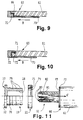
- the mucous membrane 41 is pinched between the plug 10 and the clamp ring 21 as the conical ramped surface 16 is retracted back through the clamp ring 21 and as the cylindrical outer surface 13 is also retracted back through the clamp ring 21. This effectively clamps the mucous membrane between the ring 21 and the surface 13 as shown in Fig. 7, thus installing the seal in the oesophagus.
- connection between the front end 53 of the plug holder 52 and the plug 10 is released, e.g. by rotating the rod 57 to unscrew the threaded connection 19 in the embodiment illustrated.
- the applicator 50 comprising the applicator shaft 51, ring holder 60, and plug holder 52, is then retracted out through the animal's oral cavity leaving the seal in place and sealing the oesophagus as shown in Fig. 8.
- the retracted assembly can be placed in a cleaning unit for washing and sterilising before the next carcass is processed.
- the application of suction to the bore 68 provided axially through the applicator shalt 51 may be achieved by the connection of a vacuum source to the outside end of the applicator shaft 51 and by providing an associated valve which the operator can selectively open to apply the vacuum at the desired point in the sequence of operations.
- an associated partial vacuum generator provided as part of the applicator.
- a piston and cylinder arrangement there may be provided a piston and cylinder arrangement, the cylinder being in communication with the bore 68 provided through the applicator shaft 51 and means for selectively retracting the piston within the cylinder to create a partial vacuum within the cylinder behind the piston and which is communicated through the bore 68 in the shaft 51.
- the back end 65 of the ring holder 60 may be closed except for a central bore through which the rod 57 passes, with a sealing ring being provided between the rod 57 and the bore through which is passes.
- the clamp ring 21 is L-shaped in cross section and is located in the recess 64 in the end 63 of the sleeve 61.
- the ring 21 can be pushed off the end 63 of the sleeve by movement of the ejector arm 70 in the direction of arrow B.
- the ejector arm 70 can be remotely operated by the user, e.g. by suitable linkages and through a rod or cable extending through the shaft 51.
- the modified clamp ring 21 snap fits onto the end 63 of the sleeve 61 by means of the projection 71 fitting into groove 72 around the sleeve 61.
- the ejector arm 70 is operated as described in reference to Fig. 9.
- the resilient material of which the ring 21 is composed allows a more positive retention of the ring 21 until the desired point of the operational sequence of installation is reached.
- the system in Fig. 11 has a plug 10 with an outside clamp surface 13 provided with steps or serrations 75 to resist displacement of the clamp ring 21 when located with mucous tissues clamped against the clamp surface.
- the slightly projecting bead 76 has a diameter sized to retain the clamp ring between the enlarged diameter closed end 12 and the bead 76, e.g. during packing and storage, but to allow the ring 21 to be retracted past the bead 76 during use.
- the plug holder 52 has a number of fingers 80 provided with external grooves, knurling 81 or the like to grip and hold the inside surface of the socket 18 in the plug 10.
- the fingers 80 when in their relaxed state fit inside the socket 18, but can be expanded outwardly to hold the plug 10 by retraction of the conical head 82 by any suitable means in the direction of arrow C.
- the plug 10 is thus held by the plug holder 52 during insertion into the oesophagus until the conical head 82 is later advanced again enabling the fingers 80 to relax and release the plug in its desired position in the oesophagus.
- the clamp ring 21 has an internal groove 79 and projection 71 which, like the embodiment of Fig. 10, fits into groove 72 at the end 63 of sleeve 61 constituting the ring holder 60.
- the oesophagus seal and system as herein described and illustrated enables the oesophagus to be effectively sealed internally without need for cutting open of the carcass, e.g. in the neck region.
- the seal and system enable the elimination of the rodding operation which is a strenuous operation and which involves substantial risks of contamination of tissues of commercial value.
Landscapes
- Health & Medical Sciences (AREA)
- General Health & Medical Sciences (AREA)
- Otolaryngology (AREA)
- Life Sciences & Earth Sciences (AREA)
- Engineering & Computer Science (AREA)
- Food Science & Technology (AREA)
- Orthopedics, Nursing, And Contraception (AREA)
- Surgical Instruments (AREA)
- Processing Of Meat And Fish (AREA)
- Prostheses (AREA)
- Dental Tools And Instruments Or Auxiliary Dental Instruments (AREA)
Claims (13)
- Obturateur oesophagien pour obturer l'oesophage chez un animal de boucherie, comprenant un bouchon (10) pour l'insertion à l'intérieur de l'oesophage (40) en un point où l'obturation de l'oesophage est souhaitée, caractérisé en ce qu'il comprend en outre un dispositif de retenue (20) associé avec le bouchon (10), qui comprend une bride de fixation (20) fonctionnant pour fixer la muqueuse interne (41) de la tunique musculeuse oesophagienne (42), en la pinçant de façon interne mais sans que la muqueuse soit percée ou perforée et en ce que le dispositif de retenue résiste au désaccouplement du bouchon en maintenant ou en retenant le bouchon dans la position d'obturation de l'oesophage.
- Obturateur oesophagien tel que revendiqué dans la revendication 1, dans lequel la bride de fixation (20) fonctionne pour fixer la muqueuse (41) en la pinçant de façon interne, de sorte que la muqueuse se sépare de la tunique musculeuse (42) dans la région où la bride de fixation pince.
- Obturateur oesophagien tel que revendiqué dans l'une quelconque des revendications précédentes, dans lequel le bouchon (10) a une surface extérieure de fixation (13) s'étendant complètement autour de la périphérie du bouchon et voisine des tissus internes et la bride de fixation fonctionne pour fixer les tissus internes (41) contre la surface extérieure de fixation (13) tout autour de sa circonférence, de sorte que cela empêche le passage d'un fluide entre les tissus internes (41) et le bouchon (10), à n'importe quel endroit de la circonférence de la surface de fixation.
- Obturateur oesophagien tel que revendiqué dans la revendication 3, dans lequel la bride de fixation (20) a la forme d'un anneau de fixation (21) qui fonctionne pour fixer les tissus internes (41) de l'oesophage (40) entre l'anneau de fixation (21) et la surface extérieure de fixation (13) du bouchon.
- Obturateur oesophagien tel que revendiqué dans la revendication 4, dans lequel l'anneau de fixation (21) fonctionne pour fixer les tissus (41) en pinçant les tissus entre l'anneau de fixation (21) et la surface extérieure de fixation (13) du bouchon et en résistant au désaccouplement par un ajustement serré.
- Obturateur oesophagien tel que revendiqué dans la revendication 4 ou 5, dans lequel la surface extérieure de fixation (13) est cylindrique et l'anneau de fixation (21) entoure la surface cylindrique extérieure de fixation durant l'utilisation et pince les tissus (41) de l'oesophage (40) entre l'anneau de fixation et la surface cylindrique extérieure de fixation.
- Obturateur oesophagien tel que revendiqué dans la revendication 4, 5 ou 6, dans lequel le bouchon (10) possède une extrémité interne fermée (12) et une portion de col de diamètre réduit (15) située plus loin de l'extrémité interne fermée (12) que la surface extérieure de fixation (13), la portion de col (15) ayant une surface extérieure inclinée conique (16) conduisant à la surface de fixation, l'anneau de fixation (21) ayant un diamètre intérieur plus grand que le diamètre extérieur de la portion de col (15), l'anneau de fixation (21) étant situé initialement au delà de la portion de col (15) et étant susceptible d'être avancé vers l'extrémité interne (12) du bouchon, lorsque le bouchon a été inséré à l'intérieur de l'oesophage (40) vers le point où l'obturation de l'oesophage est souhaitée, de sorte que les tissus (41) entourant et faisant saillie à l'intérieur de la portion de col (15) seront pincés entre l'anneau de fixation (21) avançant et la surface extérieure inclinée conique (16) de la portion de col (15) et, lors d'une avance supplémentaire de l'anneau de fixation (21), les tissus (41) de l'oesophage seront fixés entre l'anneau de fixation (21) et la surface extérieure de fixation (13) du bouchon (10).
- Obturateur oesophagien tel que revendiqué dans la revendication 7, dans lequel l'anneau de fixation (21) est formé d'une seule pièce avec le bouchon, la liaison (25) entre l'anneau de fixation (21) et le bouchon (10) ayant une zone affaiblie (26) qui peut se rompre lorsqu'une force axiale est appliquée à l'anneau de fixation, de façon à séparer l'anneau de fixation (21), du bouchon (10) et à l'avancer vers l'extrémité interne fermée (12) du bouchon pour effectuer la fixation des tissus (41).
- Obturateur oesophagien tel que revendiqué dans la revendication 8, dans lequel le bouchon (10) est adapté pour être monté à l'extrémité d'une tige d'applicateur (30) qui durant l'utilisation, est insérée le long de l'oesophage (40) et dans lequel la formation d'une seule pièce de l'anneau de fixation (21) avec le bouchon (10) inclut des passages (27) pour les gaz, permettant de communiquer l'aspiration appliquée derrière le bouchon lorsqu'il est situé dans l'oesophage, à travers les passages (27) pour les gaz, à la portion de col (15), de sorte que les tissus de l'oesophage (41) peuvent être entraínés à l'intérieur de la portion de col (15), avant l'avancement de l'anneau de fixation (21), pour fixer les tissus (41) entraínés à l'intérieur de la portion de col.
- Système d'obturation de l'oesophage comprenant un obturateur oesophagien tel que revendiqué dans l'une quelconque des revendications précédentes et une tige d'applicateur (30) ayant une extrémité pour le montage de l'obturateur oesophagien, la tige d'applicateur (30) ayant un dispositif de commande (35) associé qui est mobile de façon axiale sélectivement, pour déplacer la bride de fixation (20) de façon à l'accoupler avec les tissus (41) de l'oesophage (40) et à les fixer entre la bride de fixation (20) et le bouchon (10).
- Système d'obturation de l'oesophage tel que revendiqué en revendication 10, dans lequel la tige d'applicateur (30) possède un passage d'aspiration (31) s'étendant à travers elle, le passage d'aspiration (31) s'ouvrant vers l'extérieur immédiatement derrière l'extrémité où le bouchon est monté durant l'utilisation, de sorte que durant l'utilisation, une aspiration peut être appliquée immédiatement derrière le bouchon (10) lorsqu'il a été déplacé vers le point où l'obturation de l'oesophage (40) est souhaitée, l'application de l'aspiration entraínant les tissus (41) de l'oesophage (40) en relation plus étroite avec le bouchon pour faciliter la fixation de ceux-ci.
- Système d'obturation de l'oesophage comprenant un obturateur oesophagien tel que revendiqué dans l'une quelconque des revendications 4 à 7 et un applicateur (50) pour le montage de l'obturateur oesophagien, l'applicateur (50) comprenant un porte-bouchon (52) ayant une extrémité avant (53) sur laquelle le bouchon (10) est monté durant l'utilisation et qui est susceptible d'être séparé sélectivement, du bouchon (10), lorsque le bouchon (10) est installé au point désiré de l'oesophage (40), et un porte-anneau (60) disposé pour recevoir et maintenir l'anneau de fixation (21), le porte-anneau (60) étant mobile de façon axiale sélectivement par rapport au bouchon (10), de sorte que durant l'utilisation, l'anneau de fixation (21) peut être avancé respectivement en relation fonctionnelle avec le bouchon (10), de façon à fixer les tissus (41) de l'oesophage (40) entre l'anneau de fixation (21) et le bouchon (10).
- Système d'obturation de l'oesophage tel que revendiqué en revendication 12, dans lequel le porte-bouchon (52) possède une section intermédiaire (54) derrière l'extrémité avant de celui-ci, sur laquelle le bouchon (10) est monté durant l'utilisation, la section intermédiaire (54) étant de diamètre réduit par comparaison à la surface extérieure de fixation (13) du bouchon, l'applicateur (50) ayant un passage d'aspiration (31) conduisant à la section intermédiaire (54), le porte-anneau (60) positionnant, durant l'utilisation, l'anneau de fixation (21) au delà de la section intermédiaire (54) par rapport au bouchon (10), de sorte que l'application d'une aspiration, à travers le passage d'aspiration (31), vers la section intermédiaire (54) entraíne les tissus (41) de l'oesophage vers l'intérieur, pour se resserter autour de la section intermédiaire (54), où ensuite l'avancement axial du porte-anneau (60) et de l'anneau de fixation (21) au delà de la section intermédiaire (54) et en relation fonctionnelle avec le bouchon (10) provoque le pincement et renforce la fixation des tissus (41) entre l'anneau de fixation (21) et la surface extérieure de fixation (13) du bouchon (10).
Applications Claiming Priority (5)
| Application Number | Priority Date | Filing Date | Title |
|---|---|---|---|
| AUPN2910/95 | 1995-05-11 | ||
| AUPN2910A AUPN291095A0 (en) | 1995-05-11 | 1995-05-11 | Oesophagus sealing |
| AUPN5322A AUPN532295A0 (en) | 1995-09-08 | 1995-09-08 | Oesophagus sealing |
| AUPN5322/95 | 1995-09-08 | ||
| PCT/AU1996/000287 WO1996035332A1 (fr) | 1995-05-11 | 1996-05-10 | Obturation de l'oesophage |
Publications (3)
| Publication Number | Publication Date |
|---|---|
| EP0771148A1 EP0771148A1 (fr) | 1997-05-07 |
| EP0771148A4 EP0771148A4 (fr) | 1997-07-30 |
| EP0771148B1 true EP0771148B1 (fr) | 1998-12-02 |
Family
ID=25644954
Family Applications (1)
| Application Number | Title | Priority Date | Filing Date |
|---|---|---|---|
| EP96911870A Expired - Lifetime EP0771148B1 (fr) | 1995-05-11 | 1996-05-10 | Obturation de l'oesophage |
Country Status (7)
| Country | Link |
|---|---|
| US (1) | US5830053A (fr) |
| EP (1) | EP0771148B1 (fr) |
| CA (1) | CA2195000C (fr) |
| DE (1) | DE69601065T2 (fr) |
| DK (1) | DK0771148T3 (fr) |
| NZ (1) | NZ306381A (fr) |
| WO (1) | WO1996035332A1 (fr) |
Cited By (1)
| Publication number | Priority date | Publication date | Assignee | Title |
|---|---|---|---|---|
| WO2022251331A1 (fr) * | 2021-05-26 | 2022-12-01 | Cargill, Incorporated | Dispositifs solubles de traitement du bétail et procédés d'utilisation de tels dispositifs |
Families Citing this family (3)
| Publication number | Priority date | Publication date | Assignee | Title |
|---|---|---|---|---|
| US6190249B1 (en) | 2000-02-23 | 2001-02-20 | Ralph K. Karubian | Weasand clip |
| NL2003787C2 (nl) * | 2009-11-11 | 2011-05-12 | Kuziba B V | Afsluiter, samenstellende delen van de afsluiter, inrichting en werkwijze voor het aanbrengen van een dergelijke afsluiter. |
| NL2006676C2 (nl) * | 2011-04-28 | 2012-10-30 | Kuziba B V | Afsluiter, samenstellende delen van de afsluiter, inrichting en werkwijze voor het aanbrengen van een dergelijke afsluiter. |
Family Cites Families (9)
| Publication number | Priority date | Publication date | Assignee | Title |
|---|---|---|---|---|
| DE1100499B (de) * | 1956-08-10 | 1961-02-23 | Ludwig Schmidt | Lungenverschluss fuer Schlachtschweine |
| AU521563B2 (en) * | 1978-04-10 | 1982-04-08 | W.A. Deutsher Pty Ltd | Tube clamp |
| AU525928B2 (en) * | 1979-01-02 | 1982-12-09 | Elastrator Co. Ltd. | Elastic ring expanders |
| AU4623179A (en) * | 1979-04-19 | 1980-10-23 | Ian Paul Davis | Improvements in carcass dressing |
| US4343066A (en) * | 1979-10-15 | 1982-08-10 | Illinois Tool Works | Tube clamp |
| US4320557A (en) * | 1979-12-21 | 1982-03-23 | Illinois Tool Works Inc. | Tube clamp |
| NZ223600A (en) * | 1988-02-23 | 1990-06-26 | Elastrator Co Ltd | Gun for internally sealing body conduit of animal carcass by application of sealing ring: vacuum applied |
| EP0403623B1 (fr) * | 1988-12-19 | 1993-08-04 | Georges Aubert | Dispositif d'evisceration automatique de carcasses d'animaux de boucherie apres abattage |
| NL9301700A (nl) * | 1993-02-08 | 1994-09-01 | Erwin Herman Gerardus Heurman | Prop voor het afsluiten van de slokdarm van een geslacht dier en inrichting voor het positioneren daarvan. |
-
1996
- 1996-05-10 EP EP96911870A patent/EP0771148B1/fr not_active Expired - Lifetime
- 1996-05-10 DK DK96911870T patent/DK0771148T3/da active
- 1996-05-10 DE DE69601065T patent/DE69601065T2/de not_active Expired - Fee Related
- 1996-05-10 US US08/765,986 patent/US5830053A/en not_active Expired - Fee Related
- 1996-05-10 CA CA002195000A patent/CA2195000C/fr not_active Expired - Fee Related
- 1996-05-10 NZ NZ306381A patent/NZ306381A/en unknown
- 1996-05-10 WO PCT/AU1996/000287 patent/WO1996035332A1/fr not_active Ceased
Cited By (1)
| Publication number | Priority date | Publication date | Assignee | Title |
|---|---|---|---|---|
| WO2022251331A1 (fr) * | 2021-05-26 | 2022-12-01 | Cargill, Incorporated | Dispositifs solubles de traitement du bétail et procédés d'utilisation de tels dispositifs |
Also Published As
| Publication number | Publication date |
|---|---|
| WO1996035332A1 (fr) | 1996-11-14 |
| DK0771148T3 (da) | 1999-08-16 |
| EP0771148A4 (fr) | 1997-07-30 |
| US5830053A (en) | 1998-11-03 |
| NZ306381A (en) | 1997-04-24 |
| CA2195000C (fr) | 2003-04-15 |
| CA2195000A1 (fr) | 1996-11-14 |
| DE69601065D1 (de) | 1999-01-14 |
| EP0771148A1 (fr) | 1997-05-07 |
| DE69601065T2 (de) | 1999-08-19 |
Similar Documents
| Publication | Publication Date | Title |
|---|---|---|
| JPH03125092A (ja) | ホース用クイックレリースコネクタ | |
| EP0771148B1 (fr) | Obturation de l'oesophage | |
| AU699115B2 (en) | Oesophagus sealing | |
| EP1024705B1 (fr) | Scellage anal de carcasses | |
| KR101826446B1 (ko) | 내시경용 클립처치기구 | |
| DK2962810T3 (en) | Pipe applicator | |
| US5660583A (en) | Method and apparatus for removing meat from bones | |
| CN108367131B (zh) | 用于将管状装置牢固地装填并安装在柔性壁中的装置 | |
| US7367877B1 (en) | Big game field dressing tool and method | |
| EP0682475B1 (fr) | Bouchon d'obturation de l'oesophage d'un animal abattu, dispositif de positionnement de ce bouchon et procede de traitement de la surface du bouchon | |
| EP3700438B1 (fr) | Joint de fil-guide pour un système d'alésoir d'aspiration et d'irrigation | |
| AU735096B2 (en) | Anal sealing of carcasses | |
| JP2024536042A (ja) | 切断装置、切断装置を含むシステム、及び動物の屠体の直腸端部を切り離す方法 | |
| EP0630185B1 (fr) | Procede et dispositif de detourage et d'obturation de l'orifice anal des animaux de boucherie apres abattage | |
| JP2023519838A (ja) | バングホルダを備えたバング穿孔機 | |
| MXPA00002951A (en) | Anal sealing of carcasses | |
| GB2149669A (en) | Blood extraction device | |
| CN219323472U (zh) | 一种颅脑硬通道导管组件 | |
| HU193102B (en) | Method and device for preventing the damage of pig lights resulting at pig-killing |
Legal Events
| Date | Code | Title | Description |
|---|---|---|---|
| PUAI | Public reference made under article 153(3) epc to a published international application that has entered the european phase |
Free format text: ORIGINAL CODE: 0009012 |
|
| AK | Designated contracting states |
Kind code of ref document: A1 Designated state(s): DE DK FR GB NL SE |
|
| 17P | Request for examination filed |
Effective date: 19970512 |
|
| A4 | Supplementary search report drawn up and despatched |
Effective date: 19970613 |
|
| AK | Designated contracting states |
Kind code of ref document: A4 Designated state(s): DE DK FR GB NL SE |
|
| 17Q | First examination report despatched |
Effective date: 19970729 |
|
| GRAG | Despatch of communication of intention to grant |
Free format text: ORIGINAL CODE: EPIDOS AGRA |
|
| GRAG | Despatch of communication of intention to grant |
Free format text: ORIGINAL CODE: EPIDOS AGRA |
|
| GRAH | Despatch of communication of intention to grant a patent |
Free format text: ORIGINAL CODE: EPIDOS IGRA |
|
| GRAH | Despatch of communication of intention to grant a patent |
Free format text: ORIGINAL CODE: EPIDOS IGRA |
|
| GRAA | (expected) grant |
Free format text: ORIGINAL CODE: 0009210 |
|
| AK | Designated contracting states |
Kind code of ref document: B1 Designated state(s): DE DK FR GB NL SE |
|
| REF | Corresponds to: |
Ref document number: 69601065 Country of ref document: DE Date of ref document: 19990114 |
|
| REG | Reference to a national code |
Ref country code: GB Ref legal event code: 732E |
|
| ET | Fr: translation filed | ||
| RAP2 | Party data changed (patent owner data changed or rights of a patent transferred) |
Owner name: MEAT & LIVESTOCK AUSTRALIA LIMITED |
|
| REG | Reference to a national code |
Ref country code: DK Ref legal event code: T3 |
|
| PLBE | No opposition filed within time limit |
Free format text: ORIGINAL CODE: 0009261 |
|
| STAA | Information on the status of an ep patent application or granted ep patent |
Free format text: STATUS: NO OPPOSITION FILED WITHIN TIME LIMIT |
|
| 26N | No opposition filed | ||
| REG | Reference to a national code |
Ref country code: GB Ref legal event code: IF02 |
|
| PGFP | Annual fee paid to national office [announced via postgrant information from national office to epo] |
Ref country code: GB Payment date: 20060510 Year of fee payment: 11 |
|
| PGFP | Annual fee paid to national office [announced via postgrant information from national office to epo] |
Ref country code: SE Payment date: 20060512 Year of fee payment: 11 |
|
| PGFP | Annual fee paid to national office [announced via postgrant information from national office to epo] |
Ref country code: DK Payment date: 20060526 Year of fee payment: 11 |
|
| PGFP | Annual fee paid to national office [announced via postgrant information from national office to epo] |
Ref country code: NL Payment date: 20060530 Year of fee payment: 11 |
|
| PGFP | Annual fee paid to national office [announced via postgrant information from national office to epo] |
Ref country code: FR Payment date: 20060531 Year of fee payment: 11 |
|
| PGFP | Annual fee paid to national office [announced via postgrant information from national office to epo] |
Ref country code: DE Payment date: 20060731 Year of fee payment: 11 |
|
| EUG | Se: european patent has lapsed | ||
| REG | Reference to a national code |
Ref country code: DK Ref legal event code: EBP |
|
| GBPC | Gb: european patent ceased through non-payment of renewal fee |
Effective date: 20070510 |
|
| PG25 | Lapsed in a contracting state [announced via postgrant information from national office to epo] |
Ref country code: NL Free format text: LAPSE BECAUSE OF NON-PAYMENT OF DUE FEES Effective date: 20071201 |
|
| NLV4 | Nl: lapsed or anulled due to non-payment of the annual fee |
Effective date: 20071201 |
|
| REG | Reference to a national code |
Ref country code: FR Ref legal event code: ST Effective date: 20080131 |
|
| PG25 | Lapsed in a contracting state [announced via postgrant information from national office to epo] |
Ref country code: DK Free format text: LAPSE BECAUSE OF NON-PAYMENT OF DUE FEES Effective date: 20070531 Ref country code: DE Free format text: LAPSE BECAUSE OF NON-PAYMENT OF DUE FEES Effective date: 20071201 |
|
| PG25 | Lapsed in a contracting state [announced via postgrant information from national office to epo] |
Ref country code: GB Free format text: LAPSE BECAUSE OF NON-PAYMENT OF DUE FEES Effective date: 20070510 |
|
| PG25 | Lapsed in a contracting state [announced via postgrant information from national office to epo] |
Ref country code: SE Free format text: LAPSE BECAUSE OF NON-PAYMENT OF DUE FEES Effective date: 20070511 |
|
| PG25 | Lapsed in a contracting state [announced via postgrant information from national office to epo] |
Ref country code: FR Free format text: LAPSE BECAUSE OF NON-PAYMENT OF DUE FEES Effective date: 20070531 |