EP0771444B1 - Procede de commande d'operations ou de processus techniques - Google Patents
Procede de commande d'operations ou de processus techniques Download PDFInfo
- Publication number
- EP0771444B1 EP0771444B1 EP95924185A EP95924185A EP0771444B1 EP 0771444 B1 EP0771444 B1 EP 0771444B1 EP 95924185 A EP95924185 A EP 95924185A EP 95924185 A EP95924185 A EP 95924185A EP 0771444 B1 EP0771444 B1 EP 0771444B1
- Authority
- EP
- European Patent Office
- Prior art keywords
- task
- subtask
- priority
- pointer
- execution
- Prior art date
- Legal status (The legal status is an assumption and is not a legal conclusion. Google has not performed a legal analysis and makes no representation as to the accuracy of the status listed.)
- Expired - Lifetime
Links
Images





Classifications
-
- G—PHYSICS
- G06—COMPUTING OR CALCULATING; COUNTING
- G06F—ELECTRIC DIGITAL DATA PROCESSING
- G06F9/00—Arrangements for program control, e.g. control units
- G06F9/06—Arrangements for program control, e.g. control units using stored programs, i.e. using an internal store of processing equipment to receive or retain programs
- G06F9/46—Multiprogramming arrangements
- G06F9/48—Program initiating; Program switching, e.g. by interrupt
- G06F9/4806—Task transfer initiation or dispatching
- G06F9/4843—Task transfer initiation or dispatching by program, e.g. task dispatcher, supervisor, operating system
- G06F9/4881—Scheduling strategies for dispatcher, e.g. round robin, multi-level priority queues
- G06F9/4887—Scheduling strategies for dispatcher, e.g. round robin, multi-level priority queues involving deadlines, e.g. rate based, periodic
-
- B—PERFORMING OPERATIONS; TRANSPORTING
- B60—VEHICLES IN GENERAL
- B60T—VEHICLE BRAKE CONTROL SYSTEMS OR PARTS THEREOF; BRAKE CONTROL SYSTEMS OR PARTS THEREOF, IN GENERAL; ARRANGEMENT OF BRAKING ELEMENTS ON VEHICLES IN GENERAL; PORTABLE DEVICES FOR PREVENTING UNWANTED MOVEMENT OF VEHICLES; VEHICLE MODIFICATIONS TO FACILITATE COOLING OF BRAKES
- B60T2260/00—Interaction of vehicle brake system with other systems
- B60T2260/08—Coordination of integrated systems
Definitions
- the invention is based on a method of the generic type of the main claim. It is a generic one Procedure from the article by Bernd Ackermann, "Requirements for a real time operating system for "embedded systems", Electronics No. 18, 1992, pp. 120-128 known. It contains important features of Real-time operating systems for microcomputers containing Control units explained.
- For the sequence control is an as Process manager designated program responsible. This controls the allocation of the CPU and coordinates all running Task programs.
- the process manager allows that quasi parallel processing of several task programs (Multitasking).
- the process manager is designed that he is currently processing (calculating) Interrupt the program at any time and a task program, its processing is currently more important for the entire system (higher prior), can start.
- the interrupted program is from the process manager at the interrupted point continued when processing higher priorities Programs has ended. It is considered essential in this Type of sequential control means that a straight computing task program can be interrupted at any time can. This procedure is also called “preemptives Scheduling or preemptive multitasking ".
- sequence control described is particularly for Real-time systems, i.e. for tax systems that certain Control processes within specified time limits must have made, interesting, because with it a quick response to certain events is possible.
- a task program at any point can be interrupted, but a large one arises Administrative and storage overhead. Because an interrupted Task program later at the interrupted point To be continued must be for the interrupted Task program a number of the processing status characteristic information in a stack can be saved. These include the Program counter reading, the content of the status register, the Contents of the computation register, etc. In addition, the on the Temporary data stored in the stack interrupted task program are retained during for temporary data of the interrupting task program additional space can be reserved on the stack got to. Since in the sequential control system, it can also be used several times nested interruptions can occur Memory requirements for the stack in this method correspondingly high.
- features of the main claim have the advantage that the flexibility of the processing is increased without the administrative and storage overhead for interruptions from Task programs are increased considerably.
- task programs from a set Priority area divided into subtask programs be the same for task programs Priority area are uninterruptible and thus mutual interruptions of the task programs only must be able to take place between the subtask programs with such interruptions only little information in the Stack memory are stored.
- the memory requirement for this Information is independent of the number in the Subtask programs used temporary Stack variables and the nesting depth of the Interruptions and thus in particular regardless of the Number of priority levels of the concerned Priority area.
- the memory requirement for the Stack memory is thus less than in the process of preemptive multitasking.
- each subtask is only so extensive that the time for the Processing of the subtask by the microcomputer does not exceed a predetermined limit.
- This measure causes the procedure within the above Time limit can also be used for control processes where tough real-time conditions have to be considered.
- the measures according to claim 4 allow to run at runtime simple order of execution To change subtask programs. All you need is this the table pointer with the address of a Subtask program pointer from a Subtask program pointer table are loaded, causing that selected by this subtask program pointer Subtask at the next one Sub-task program change is called. Also change between task programs are so easily realized by the table pointer with the address of the first Subtask program pointer from the associated Subtask program pointer table of the task program is loaded.
- the method of claim 15 provides is such a mixed form, with the special advantage that the Response times of higher priority preemptives Task programs not by the terms of the Sub-task programs of lower-priority task programs be affected. According to this procedure, a small number of the highest priority task programs after the Principle of the known from the prior art Sequence control (preemptive multitasking) can be managed and hard real-time requirements (very short required Response times) while the lower priorities Task programs according to that in claims 1 to 13 claimed principle of sequence control can be managed.
- the method according to claim 15 is always advantageous apply if on the one hand for certain task programs very high, however, lower for other task programs Real-time requirements apply.
- the task programs for the lesser Real time requirements apply to a priority group are summarized within which the Processor allocation exclusively on the principle of cooperative multitasking.
- the rest Task programs with the hard real-time requirements apply the restriction to the specified points of interruption the lower priority task programs, i.e. she can do any lower priority task from any Interrupt groups preemptively. So is one differentiated treatment of task programs Application with regard to the sequence control accordingly their different real-time requirements possible. In order to can then also the need for computer resources by the optimally matched combination of both mentioned Flow control procedures are minimized, with the specified real-time requirements are always met.
- reference number 10 denotes a Fuel injection control unit for one Internal combustion engine.
- reference number 11 is the Microcomputer of the fuel injection control unit designated.
- the reference number 12 refers to the Read / write memory (RAM) of the control unit 10.
- Die Reference number 13 denotes the read-only memory (EPROM) and the reference number 22 a non-volatile Read / write memory (EEPROM) of the control unit 10.
- Reference number 14 is an input / output unit of the control device Designated 10.
- Reference numeral 23 denotes a time counter of the control unit.
- the concrete structure of such Control device is sufficient from the prior art known, so that this is not discussed in more detail below becomes.
- An engine temperature sensor is connected to the control unit 10 15, an intake air temperature sensor 16 Throttle valve potentiometer 17 and an oxygen probe 18 connected.
- the reference number 19 is a signal input designated, from the speed and crankshaft angle can be calculated. This signal is from a Ignition control unit to the injection control unit delivered.
- the further input 20 is with the ignition lock coupled.
- the control unit 10 stands with a electromagnetic injection valve 21 in connection.
- the function of the fuel injection control unit is like follows:
- the fuel injection control unit processes the input signals and calculates the Injection time as a measure of the amount to be injected Amount of fuel.
- the control unit 10 triggers the Injection pulses with those calculated in advance Injection times.
- the exact functioning of the Injection control unit is the book Car electronics / car electronics on gasoline engine, VDI-Verlag, 1987, Pp. 258 to 261 removable. It will be added later discussed in more detail how this works.
- Fuel injection control unit is a complex one Control program required.
- This is usually complex Control program in a number of different Task programs divided. It turned out to be proven advantageous, the division into task programs according to procedural considerations. Because there is Program parts within a fixed time grid must be completed, often several different time slots can be used. Furthermore there there program parts that are only within a certain Operating state or in response to an external or internal event, such as the program start, the Program end, the full load operation, the idle operation, the Warm up operation, etc. should be processed. Farther are certain program parts within a fixed Angle grid depending on the crankshaft angle to process. Usually all program parts, to be processed within the same time / angle grid are combined into a task program.
- the task program is then an additional one Activation event characteristic of the call of the Task program initiated.
- E.g. can call a Task program within a fixed time frame of the Time counter 23 cause that in the interrupt service routine one periodically from the hardware e.g. every millisecond generated interrupts is incremented.
- this Interrupt service routine is checked whether the current counter reading of the time counter a new one Task program is to be activated or not.
- For Coordination of task program calls has turned out to be proven to be advantageous to the individual task programs assign certain priority to the urgency of the Completion of the task program indicates.
- For the administration The processing of the individual task programs becomes frequent an operating system is used. This then decides based on a corresponding program Task schedule at a given time from that Microcomputer to be processed.
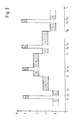
- Task program E has the lowest priority 0 and should always be processed independently of a fixed time grid if no more urgent task program is available for processing.
- Task program F is to be processed every 100 ms.
- Priority 1 is assigned to it.
- Task program G is to be processed within a fixed angular grid of 180 degrees crankshaft angle. It has priority 2.
- the task program H should finally be processed in a fixed time grid of every 10 ms. It has the highest priority 3.
- an operating system is used for sequence control in which the individual task programs can be interrupted at any time due to the request to process a higher priority task program.
- Such a sequence control corresponds to that of preemptive multitasking.
- task program E is interrupted and processing of task program H is started.
- time t 2 the execution of the task program H is ended. Processing of task E is then continued at the point of interruption.
- the further interruption points of the individual task programs can be seen in FIG. 2. All task programs can still be interrupted by interrupt service routines of interrupt requests that have occurred. However, this is not shown in FIG. 2 for the sake of clarity.
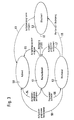
- the individual task programs can have different states accept. In Figure 3 are the possible states shown, often for operating systems, the preemptives Use multitasking. There are four possible States shown. In state 51 is "at rest” a task program that does not occupy the processor and also currently has nothing to expect. A task program in State 51 "ready for calculation” has something to calculate, but is not in the possession of the processor because it is being replaced by another the same or higher priority task program is occupied. Out a task program passes through state 50 "dormant” "Activate task program” 54 in state 51 "ready for calculation”. A calculable task program can by "stop task program” 55 again in the dormant State 50 to be reset.
- Ready to compute State 51 passes a task program through the "processor assign "56 to state 52" computing "in which the Task program occupied the processor.
- An arithmetic Task program can be through a higher priority Task program in state 51 "ready for calculation” displaced turn 57, or it can be done by "schedule task” 58 are ended and thus returns to the dormant Condition 50.
- Another example of a condition that a Task program in case of failure in a blocked State can be in the allocation of memory given. If e.g. a task program for execution a complex calculation an additional one Memory area needed, but not currently Is not a condition either fulfilled the task schedule in its further Continuation blocked. Only if from another Task program can free memory again these are assigned to the blocked task program, which is then continued in its processing.
- Task A contains all the instructions of the complex Control program that is timed with a period of 200 ms should be processed.
- Task A is assigned priority 1.
- Task program A is according to the invention in three sub-task programs A1, A2, A3 assigned.
- the signal of the Engine temperature sensor 15 evaluated and in a Converted engine temperature.
- the subtask program A2 is a mixture enrichment factor depending on the Motor temperature calculated. This mixture enrichment factor is after a cold start of the internal combustion engine for the Warm-up phase of the internal combustion engine is required.
- Sub-task program A3 becomes the intake air temperature detected.
- the engine speed is calculated in subtask B3.
- the speed signal present at input 19 is evaluated.
- Task C is all appropriate for the crankshaft angle 180 degrees crankshaft angle with respect to a reference point processed the crankshaft. This applies to one Four-cylinder internal combustion engine. Task C is assigned priority 4. In the subtask C1 the engine load is calculated. This results from the current engine speed and the position of the throttle valve, which is detected with the help of the throttle valve potentiometer 17 as well as the current intake air temperature.
- the basic fuel requirement is made up of one Basic map, which is determined by the engine parameters engine speed and engine load is removed.
- Task program D is event-driven only at Ignition switched off activated. He is the highest Priority 5 assigned. It is in the subtask programs D1, D2 and D3 divided. In the subtask D1 becomes the injector and the fuel pump switched off. In the subtask D2 the in the correction map entered in the correction values non-volatile memory 22 programmed.
- All shown task programs and Subtask programs are through interrupt programs interruptible, unless there are no special locks for Interrupt requests have been programmed.
- the Time control of task programs A and B then takes place also with the help of interrupt requests.
- the Time counter 23 used in the control unit 10 in the Interrupt service routine one periodically from the hardware e.g. generated interrupts are incremented every millisecond becomes.
- this interrupt service routine there is a list with the activation times for task programs A and B searched. Does an entry in this list match the current counter reading of the time counter 23, then the corresponding task program is activated. This will however, discussed in more detail below.
- the list with the entries of the activation times for the programs A and B is a linked list. It needs usually only the first element of the linked list to be compared to the current meter reading. Just for that Case that the first list element with the current Counter reading, the following must also List elements are compared with the list counter reading, until there is no longer a match.
- Subtask program pointer table is for each Subtask of the respective task program Pointer entered which points to the beginning of the program code of the shows the respective subtask.
- Table 33 for Task C called.
- a subtask program pointer ZC1 is provided in the table, the at the beginning of the program code for the Subtask C1 shows.
- a Sub-task program pointer ZC2 provided that the Beginning of subtask C2 shows.
- a subtask program pointer ZC3 provided that shows the beginning of subtask C3.
- each subtask program pointer table 31 through 34 is still a pointer ZAE to a subtask program AE provided that is important for the sequence control. His Function will be explained in more detail later.
- 13 are descriptive in the read-only memory Data structures 35 through 38 (task program descriptors) intended.
- the individual status words SWA up to SWD of the task programs are in the read / write memory 12 of the control unit 10 is stored.
- the status words of the Task programs are therefore in the read / write memory 12 of the control unit 10 stored because they during the Find out about program changes in the program flow.
- Example of entries in a task descriptor 35 to 38 will be task C again considered.
- the pointer ZZC1 points to the first entry in of table 33, i.e. on the subtask program pointer ZC1.
- the pointer ZSWC points to the status word of the Task program SWC.
- the Task program descriptor 37 for task program C entered that the task C the priority level 4 comes.
- the entries in the task program descriptors 35, 36 and 38 can be seen in FIG. 6 without explanation become.
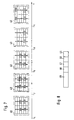
- Sequence control table 40 is provided. In it is after Priority levels ordered for each activated, i.e. in the Condition "ready for calculation” or "calculating" Task program a pointer ZDA to ZDD entered that on the beginning of the associated task descriptor shows and also a pointer that points to the pointer ZA1 to ZD3 of the subtask A1 to D3 shows with a task program ready for calculation after a Interruption between subtask programs continued shall be. So when a task program is interrupted is in the flow control table 40 is a pointer entered on the subtask program pointer shows the next subtask after the Interruption.
- the read / write memory 12 of the Control unit 10 also a table pointer 39 is provided.
- This table pointer 39 is always set so that it is on the subtask program pointer of the next one to be processed Subtask shows.
- the table pointer 39 points to the Subtask program pointer ZB3.
- the subtask B3 will be processed next.
- Of the Table pointer 39 becomes a after each processing Subtask program incremented.
- a "dispatcher" mentioned program part which after each completed Execution of a subtask program is run through, is the next subtask to be worked through selected the one to which the table pointer before the Increment showed. This procedure will subsequently again based on the program sequence in FIG. 5 explained in more detail.
- the microcomputer 11 begins processing the subtask A 1 .
- an entry ZZA2 is present in the table pointer 39.
- the next subtask to be worked through is subtask A2.
- the subtask A1 ends at time t 2 .
- the table pointer 39 is incremented so that it receives the entry ZZA3 and, at time t 3 , the subtask program is called, which the table pointer 39 selected by means of pointer chaining (ZZA2 ⁇ ZA2 ⁇ A2) before it was incremented. This is the subtask program A2.
- the interrupt service routine of time counter 23 determines that task program B is to be activated at this time.
- the subtask program A2 is only then completely processed.
- processing of subtask A2 ends.
- the dispatcher which increments the table pointer 39 is then run through again. After the incrementation, the table pointer 39 thus points to the value ZZB2.
- Task program A thus changes from the status "computing" to the status "ready for calculation”.
- Processing of the subtask B1 begins at time t 6 .
- an interrupt request is made to the microcomputer 11 on the basis of the applied speed signal.
- This interrupt signal indicates that the angular interval of 180 ° crankshaft angle has ended.
- the operating system service is called, which activates the task program C and updates the sequence control table 40 accordingly.
- the pointer ZDC to the start of the task program descriptor 37 and the pointer ZZC1 to the subtask program pointer ZC1 of the task program C are entered.
- Task C is now activated. Since task program B is interrupted after sub-task program B2 has been processed, pointer ZZB3 is entered in priority level 3. The entries described can be found in FIG. 7.
- the table pointer 39 is set to the value ZZC1 corresponding to the highest entry in the sequence control table 40.
- the subtask C1 will be processed next.
- the change between these sub-task programs takes place in the same way as described for the change between the sub-task programs A2 and B2.
- the subtask C1 is processed at time t 8 .
- Task C is completed without requesting another task in the meantime.
- the dispatcher is run through again, which increments the table pointer 39 and calls the subtask program to be processed subsequently, which is selected by the value of the table pointer 39 before it is incremented. It is the sub-task program AE, which is called up to end a task program.
- the flow control table 40 is updated therein. Since the task program C has ended, 4 pointers are entered in the sequence control table 40 under the priority level 4. The pointer ZZB3 is then removed from the sequence control table 40 and entered in the table pointer 39. At this point in time, task program B has the highest priority of all task programs in the "ready to compute" state. Sub-task program B3 is then processed at time t 10 . After it has been processed, the subtask program AE is called up again. Zero pointers are entered in sequence control table 40 under priority level 3. In the table pointer 39, the pointer ZZA3 is entered on the subtask program pointer ZA3.
- microcomputer 11 of the control device is signaled by turning the ignition key to the "off" position via input 20 that the ignition is to be switched off and the control program is to be ended.
- the operating system service responsible for task program activations is then called again, which enters the sequence control table 40 for the priority level 5 the pointer ZDD to the beginning of the task program descriptor 38 and the pointer ZZD1 to the first subtask program pointer ZD1. This is done in the same way as described above for activating task programs B and C.
- Sub-task program pointer ZD1 is the change to now highest priority, prepare task program D prepared. Of the Bills will be processed after completion of the existing subtask A3.
- the task programs D1, D2 and D3 are processed one after the other, as described above. There is no longer a change of task program.
- the sequence control table 40 is also no longer updated.
- the program run is completely finished; the fuel injection control unit is switched off.
- Figure 8 is the general structure of a status word presented for a task program. If in the Memory location 45 a 1 is entered, this means that the associated task program is in the state is "dormant”. If a "1" in memory location 46 is entered, this means that the associated Task program is in the "ready for calculation” state. If a "1" is entered in the storage location 47, then this means that the associated task program is in the state "computing”. If in the storage location 48 a "1" is entered, it means that the associated task program was interrupted. The Storage locations 49 are for a waiting list index entry intended.
- the priority group G1 consists only of task programs, which all have the same priority level 1.
- the Priority group G2 consists of the task programs, which have one of the priority levels 2 - 6.
- the Priority group G3 consists of the task programs, which have priority level 7.
- the priority group G4 consists of the task programs to which the Priority level 8 applies.
- the priority group concerns G5 all task programs to which one of the priority levels 9 - 11 comes. For the process control in this division
- the task programs then apply the following: a Task group of priority group G2 can be a Low priority task program of the same priority group G2 only between two completed sub-task programs interrupt.
- FIG. 9b shows an equivalent representation for the Figure 9a.
- These special Cases correspond to a "degenerate" priority group G1, G3, G4 with only one element.
- FIG. 10 shows a very practical division of the Task programs of a typical complex control program in priority groups.
- the priority group G6 consists of all task programs of priority levels 1 - 7. Es are all in the priority group G6 Task programs summarized to the moderate to low real-time requirements are made. For this For this reason, these task programs also have the lowest Priorities. All task programs with very hard Real-time requirements and accordingly high priorities are involved in degenerate priority groups G7 and G8 only summarized one priority level at a time. It there is a priority threshold in this representation PS so that all task programs, their priority is equal to or higher than this threshold, others lower priority task programs at any point (preemptive) may interrupt. Because only a few Task programs have permission from others Task programs at any point (preemptive) interrupt, the RAM requirements for the stack and the effort for the task program synchronization and Data consistency assurance kept to an acceptable level.
- the mixed flow control for the division of the Task programs according to Figure 10 can be in one Realize the operating system for the control unit so that Sequence control method as for FIGS. 6 and 7 described, on the lowest priority one from the stand the preemptive sequence control system known in the art expires.
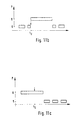
- FIG. 11 shows three possible cases of interrupt requests in connection with the division of the task programs according to FIG. 10.
- a task program from the priority group G6 is processed in FIG. 11a.
- This task program is divided into sub-task programs.
- time t U the processing of a task program with priority level 6 is requested.
- this task program cannot immediately interrupt the task program currently being calculated, so that the partial task program of the computing task program is completed before the task program with priority level 6 is processed.
- FIG. 11b shows the case in which a task program of priority level 6 is being processed.
- the request for processing a task program from priority level 8 is issued.
- This task program immediately interrupts the task program currently being calculated and is processed immediately. The interrupted subtask is then continued.
- Figure 11c the case is considered that a task program of priority level 8 is processed.
- the request to process a task program with priority level 5 is issued.
- the computing task program is not interrupted.
- the computing task program is only fully processed and then the task program from priority group G6 is processed.
- the invention is not based on that described here Embodiment limited. In particular, it is not limited to applications in motor vehicle control units.
- An operating system according to the invention can e.g. also in computer systems for process control (e.g. chemical processes), for industrial control systems (Machine tools, robots, etc.) or in Control systems for household appliances (washing machines, etc.) be used.
- process control e.g. chemical processes
- industrial control systems e.g.
- Control systems for household appliances washing machines, etc.
- the division of the complex control program into a number of task programs and the division of Task programs at least in part in a number of Subtask programs depend on the respective application dependent and can vary greatly in type and number.
- pointers as references to data objects is for the implementation of the method according to the invention not necessarily.
- the data objects can also be in Tables are stored so that the Table index of the data object can serve.
Landscapes
- Engineering & Computer Science (AREA)
- Software Systems (AREA)
- Theoretical Computer Science (AREA)
- Physics & Mathematics (AREA)
- General Engineering & Computer Science (AREA)
- General Physics & Mathematics (AREA)
- Combined Controls Of Internal Combustion Engines (AREA)
- Programmable Controllers (AREA)
- Debugging And Monitoring (AREA)
Claims (16)
- Procédé de commande d'opérations techniques ou de procédés notamment dans des véhicules automobiles, selon lequel, un microcalculateur d'un appareil de commande traite un programme de commande,caractérisé en ce quele programme de commande étant subdivisé en un certain nombre de programmes de tâchesles programmes de tâches se voyant attribué une priorité et un événement d'activation,le traitement d'un programme de tâches étant interrompu par une requête ultérieure de traitement d'un programme de tâches de priorité plus élevée et le traitement du programme de tâches interrompu, se poursuivant après le traitement du programme de tâches de priorité plus élevée,au moins un programme de tâches (A, B, C, D) étant subdivisé en une suite de programmes partiels de tâches (1A, A2, A3 ; B1, B2, B3 ; C1, C2, C3 ; D1, D2, D3),le traitement d'un programme de tâches de priorité plus élevée, requis (A, B, C, D), ne commençant que si le traitement du programme de tâches partiel (1A, A2, A3 ; B1, B2, B3 ; C1, C2, C3 ; D1, D2, D3), pendant lequel est arrivée la requête de traitement du programme de tâches de priorité plus élevée (A, B, C, D), a été exécuté jusqu'à la fin,il est prévu un index de tableau (39) qui contient une information relative au programme de tâches, partiels suivant à traiter (1A, A2, A3 ; B1, B2, B3 ; C1, C2, C3 ; D1, D2, D3),et à l'arrivée d'une requête de traitement d'un programme de tâches de priorité plus élevée (A, B, C, D) dans l'afficheur de tableau (39), on enregistre une information concernant le premier programme de tâches partiel (1A, A2, A3 ; B1, B2, B3 ; C1, C2, C3 ; D1, D2, D3), du programme de tâches de priorité plus élevée (A, B, C, D), età la fin d'un programme de tâches partiel (1A, A2, A3 ; B1, B2, B3 ; C1, C2, C3 ; D1, D2, D3), on poursuit le traitement du programme de commande avec le programme de tâches partiel (1A, A2, A3 ; B1, B2, B3 ; C1, C2, C3 ; D1, D2, D3), pour lequel on a enregistré les informations dans l'index de tableau (39).
- Procédé selon la revendication 1,
caractérisé en ce quela suite des programmes de tâches partiels (1A...D3), d'au moins un programme de tâches (A-D) est composé suivant les points de vue de déroulement,et comme points de vue de déroulement on tient compte de l'occurrence d'une requête de traitement de programme de tâches notamment du programme de démarrage, de la fin de programme, du déroulement d'une période de temps, du déroulement d'une période angulaire ou de l'arrivée d'un élément externe ou interne pour tenir compte de l'urgence correspondante ainsi que des conditions de synchronisation entre les programmes de tâches partiels (A1-A3). - Procédé selon la revendication 1 ou 2,
caractérisé en ce que
chaque programme de tâches partiel (A1-D3) n'est développé que jusqu'à ce que le temps nécessaire à son traitement, du côté du microcalculateur (11), ne dépasse pas une limite prédéterminée. - Procédé selon l'une des revendications précédentes,
caractérisé en ce que
pour un programme de tâches (A-D), il est prévu au moins un tableau d'index de programmes de tâches partiels (31-34) dans lequel, pour chaque programme de tâches partiel (A1-D3), il est prévu un afficheur de programme de tâches partiel (ZA1-ZD3), qui indique le début du programme de tâches partiel qui lui est associé (A1-D3),l'index de tableau (39) indique dans le tableau d'afficheur de programme de tâches partiel (31-34), chaque fois l'index de programme de tâches partiel (A1-D3) qui indique de son côté le programme de tâches partiel (A1-D3) qui est valable à cet instant comme programme de tâches partiel devant être exécuté ensuite, etl'index de tableau (39) après le traitement d'un programme de tâches partiel (A1-D3), est incrémenté d'une valeur prédéterminée pour indiquer de nouveau l'index de programme de tâches partiel (A1-D3) du programme de tâches partiel (A1-D3), qui est valable à cet instant comme programme de tâches partiel suivant à traiter,et en outre on traite le programme de tâches partiel (A1-D3), vers lequel était dirigé l'index de programme de tâches partiel (ZA1-ZD3) de l'index de tableau (39) avant l'incrémentation. - Procédé selon la revendication 4,
caractérisé en ce que
chaque index de programme de tâches partiel, le dernier (ZAE-ZDE) d'un tableau d'index de programme de tâches partiel (31-34) est dirigé pour indiquer un certain programme de tâches partiel (AE) et pendant son traitement, l'index de tableau (39) est de nouveau aligné correctement sur un indicateur de programme de tâches partiel valable (ZA1-ZD2). - Procédé selon l'une des revendications précédentes,
caractérisé en ce qu'
on attribue à au moins un programme de tâches (A-D), une structure de données de description (35-38), qui contient la priorité du programme de tâches (A-D), un index (ZZA1-ZZD1) du début d'un tableau d'index de programme de tâches partiel correspondant (31-34) et les informations relatives à l'état de traitement du programme de tâches (A-D) et dont l'adresse sert de référence et d'identificateur du programme de tâches correspondant (A-D). - Procédé selon l'une des revendications précédentes,
caractérisé en ce que
pour un programme de tâches (A-D), il n'y a que trois états « repos » (50), « prêt pour le calcul » (51) et « calcul en cours » (52). - Procédé selon l'une des revendications précédentes,
caractérisé en ce qu'
il est prévu un tableau de commande de déroulement (40) pour gérer le traitement des programmes de tâches (A-D) requis, et qui sont ordonnés selon leur priorité, et contenant des informations relatives au programme de tâches (A-D) requis pour le traitement ou se trouvant en cours de traitement,et notamment ce tableau de commande de déroulement (40) contient pour chaque priorité, un index (ZDA-ZDD) de la structure de données (35-38) à décrire, du programme de tâches (A-D) requis pour le traitement par ce niveau de priorité, et un index (ZZA1-ZZD3) pour l'index (ZA1-ZD3) du tableau d'index de programme de tâche partiel (31-34), enregistré en mémoire, qui caractérise pour le programme de tâches (A-D), requis pour le traitement, ce niveau de priorité pour le programme de tâches partiel (A1-D3), avec lequel on démarre le programme de tâches (A-D) requis pour le traitement, lors du changement de programme de tâches ultérieur ou qui doit être poursuivi après une interruption, et lorsqu'en outre des index zéro sont enregistrés dans le tableau se commande de déroulement (40) si pour le niveau de priorité correspondant aucun programme de tâches (A-D) n'est requis pour être traité. - Procédé selon la revendication 8,
caractérisé en ce qu'
à chaque requête de traitement d'un programme de tâches (A-D), dont la priorité est inférieure à celle de la priorité la plus élevée du programme de tâches (A-D) requis à cet instant pour le traitement, un index (ZDA-ZDD) est enregistré dans la structure de données (35-38) de description correspondant à ce programme de tâches (A-D), ainsi qu'un index (ZZA1-ZZD1) pour le début du tableau d'index de programme de tâches partiel correspondant (31-34) est enregistré dans tableau de commande de déroulement (40) sous le niveau de priorité correspondant, et à chaque requête de traitement d'un programme de déroulement (B) dont la priorité est supérieure à la priorité la plus élevée du programme de tâches (A) requis à cet instant (t4) traité, la valeur actuelle de l'index de tableau (39) est mise en mémoire dans le tableau de commande de déroulement (40) sous le niveau de priorité correspondant et,un index (ZDB) est mis en mémoire sur la structure de données de description correspondante (36) et un index (ZZB1) est mis sur le début du tableau d'index de programme de tâches partiel correspondant (32) du programme de tâches (B) requis pour le traitement, sous le niveau de priorité correspondant,l'index de tableau (39) est dirigé sur le premier index (ZB1) du tableau d'index de programme de tâches partiel (32) du programme de tâches (B) requis pour le traitement, pour ainsi préparer un changement de programme de tâches après le traitement du programme de tâches partiel (A2) en cours précisément de calcul. - Procédé selon la revendication 9,
caractérisé en ce qu'
à chaque fin de programme de tâches (C, B), les enregistrements correspondants du niveau de priorité concerné du tableau de commande de déroulement (40) sont effacés et le tableau de commande de déroulement (40) est examiné dans le sens des priorités décroissantes après le programme de tâches (B, A) qui présente maintenant la priorité la plus élevée, et l'index de tableau (39) est chargé avec la nouvelle valeur enregistrée du niveau de priorité dans le tableau de commande de déroulement (40), et ainsi est aligné sur un index de programme de tâches partiel (ZB3, ZA3) du tableau d'index de programme de tâches partiel (32, 33) du programme de tâches (B, A) qui présente maintenant la priorité la plus élevée,si bien que cela conduit à l'état de calcul (52) au cours du changement de programme de tâches partiel suivant. - Procédé selon l'une des revendications 8 à 10,
caractérisé en ce que
le tableau de commande de déroulement (40) est étendu pour chaque niveau de priorité, d'une mémoire First-In-First-Out (FIFO), qui permet de requérir encore d'autres programmes de tâches (A-D) d'un niveau de priorité pour le traitement, si déjà un programme de tâches (A-D) de même niveau de priorité a été requis pour le traitement, en ce que lors d'une requête suivante pour le traitement d'un programme de tâches (A-D), un index (ZDA-ZDD) pour ce niveau de priorité, est enregistré dans la structure de données de description correspondantes (35-38) dans la mémoire FIFO, et à la fin d'un programme de tâches (A-D), pour ce niveau de priorité, on efface l'index pour la structure de données de description (35-38) du programme de tâches (A-D) ayant le temps d'attente le plus long, pris dans la mémoire FIFO, eton enregistre dans le tableau de commande de déroulement (40) et,on fait passer le programme de tâches correspondant (A-D), dans la mesure où entre temps il n'y a pas eu de requête de traitement d'un programme de tâches de priorité plus élevée, lors du changement de programme de tâches partiel suivant passant à l'état de calcul, du fait que l'index de tableau (39) est aligné sur le premier index (ZA1-ZD1) des tableaux d'index de programme partiel (31-34) correspondant à ce programme de tâches (A-D). - Procédé selon l'une des revendications précédentes,
caractérisé en ce que
dans un programme de tâches (A-D), même à l'intérieur d'un programme de tâches partiel (A1-D3), que l'on ne peut interrompre pour d'autres programmes de tâches (A-D), on crée un point d'interruption pour d'autres programmes de tâches (A-D) en ce qu'à ce point on appelle un sous-programme du système de fonctionnement conçu à cet effet, qui produit le traitement de programme de tâches requis, de priorité plus élevée, puis revient au programme de tâches partiel interrompu, et les données temporaires du programme de tâches partiel interrompu (A1-D3) reste en mémoire dans une pile. - Procédé selon la revendication 12,
caractérisé en ce que
le point d'interruption est conçu pour que le temps de traitement de la partie d'un programme de tâches partiel (A1-D3) séparé par le sous-programme du système de fonctionnement, ne dépasse pas la limite prédéterminée. - Procédé selon l'une des revendications précédentes,
caractérisé en ce qu'
à côté du programme de tâches (A-D), on peut interrompre les autres programmes de tâches (A-C) de priorité inférieure seulement entre les programmes de tâches partiels, terminés (A1-C3) ou aux points d'interruption selon la revendication 12, en gérant un certain nombre de programmes de tâches (E-H) autorisés à interrompre à un endroit quelconque des programmes de tâches de priorité inférieure (A-G). - Procédé selon la revendication 14,
caractérisé en ce que
les programmes de tâches sont réunis en groupes de priorité (G1-G8) qui ne se chevauchent pas et un groupe de priorité (G1-G8) se compose d'au moins un programme de tâches distinct ou d'un nombre de programmes de tâches avec des niveaux de priorité voisins et la commande de déroulement respecte les règles suivantes :a) un programme de tâches du groupe de priorité (G2, G5, G6) peut interrompre un autre programme de tâches de priorité inférieure appartenant au même groupe de priorité (G2, G5, G6), uniquement entre deux programmes de tâches partiels et/ou aux points d'interruption insérés suivant la revendication 12,b) un programme de tâches d'un groupe de priorité (G2-G8) ne peut interrompre un autre programme de tâches de priorité inférieure appartenant à un autre groupe de priorités (G1-G7) à un endroit quelconque,c) un programme de tâches d'un groupe de priorité (G1-G8) ne peut pas interrompre un programme de déroulement du même groupe de priorité (G1-G8) ou d'un autre groupe de priorité ayant une priorité plus élevée ou une priorité égale. - Procédé selon la revendication 15,
caractérisé en ce que
la répartition des programmes de tâches en groupes de priorité (G6-G8) se fait de façon que tous les programmes de tâches dont la priorité est inférieure à un seuil de priorité prédéterminé (PS), sont réunis en un groupe de priorité (G6) et tous les autres programmes de tâches forment chaque fois des groupes de priorité séparés (G7-G8) avec seulement un ou plusieurs programmes de tâches de même niveau de priorité.
Applications Claiming Priority (5)
| Application Number | Priority Date | Filing Date | Title |
|---|---|---|---|
| DE4425431 | 1994-07-19 | ||
| DE4425431 | 1994-07-19 | ||
| DE19500957 | 1995-01-14 | ||
| DE19500957A DE19500957A1 (de) | 1994-07-19 | 1995-01-14 | Verfahren zur Steuerung von technischen Vorgängen oder Prozessen |
| PCT/DE1995/000903 WO1996002883A1 (fr) | 1994-07-19 | 1995-07-11 | Procede de commande d'operations ou de processus techniques |
Publications (2)
| Publication Number | Publication Date |
|---|---|
| EP0771444A1 EP0771444A1 (fr) | 1997-05-07 |
| EP0771444B1 true EP0771444B1 (fr) | 1999-02-17 |
Family
ID=25938470
Family Applications (1)
| Application Number | Title | Priority Date | Filing Date |
|---|---|---|---|
| EP95924185A Expired - Lifetime EP0771444B1 (fr) | 1994-07-19 | 1995-07-11 | Procede de commande d'operations ou de processus techniques |
Country Status (5)
| Country | Link |
|---|---|
| US (1) | US6260058B1 (fr) |
| EP (1) | EP0771444B1 (fr) |
| JP (1) | JP3801630B2 (fr) |
| DE (2) | DE19500957A1 (fr) |
| WO (1) | WO1996002883A1 (fr) |
Cited By (1)
| Publication number | Priority date | Publication date | Assignee | Title |
|---|---|---|---|---|
| CN112286097A (zh) * | 2020-10-28 | 2021-01-29 | 湖南汽车工程职业学院 | 智能驾驶单片机控制方法、系统及计算机存储介质 |
Families Citing this family (110)
| Publication number | Priority date | Publication date | Assignee | Title |
|---|---|---|---|---|
| JP3832517B2 (ja) * | 1996-07-05 | 2006-10-11 | セイコーエプソン株式会社 | ロボット用コントローラ及びその制御方法 |
| GB2315888A (en) | 1996-07-31 | 1998-02-11 | Ibm | Controlling the degree of parallelism when performing parallel processing on an inherently serial computer program |
| US5957985A (en) * | 1996-12-16 | 1999-09-28 | Microsoft Corporation | Fault-resilient automobile control system |
| US6637032B1 (en) | 1997-01-06 | 2003-10-21 | Microsoft Corporation | System and method for synchronizing enhancing content with a video program using closed captioning |
| US6535878B1 (en) * | 1997-05-02 | 2003-03-18 | Roxio, Inc. | Method and system for providing on-line interactivity over a server-client network |
| DE19731116A1 (de) | 1997-07-19 | 1999-01-28 | Bosch Gmbh Robert | Steuergerät für ein System und Verfahren zum Betrieb eines Steuergerätes |
| DE19744230B4 (de) * | 1997-10-07 | 2007-10-25 | Robert Bosch Gmbh | Steuergeräte für ein System und Verfahren zum Betrieb eines Steuergeräts |
| FR2779595B1 (fr) * | 1998-06-08 | 2000-07-21 | Thomson Multimedia Sa | Procede de gestion de priorites d'acces a des ressources dans un reseau domestique et appareil de mise en oeuvre |
| US7370325B1 (en) * | 1999-02-19 | 2008-05-06 | Lucent Technologies Inc. | Eager evaluation of tasks in a workflow system |
| DE19915850C1 (de) * | 1999-04-08 | 2000-06-21 | Siemens Ag | Verfahren zum Abarbeiten mehrerer Befehlslisten in einer Datenverarbeitungsanlage |
| US6662364B1 (en) * | 1999-11-05 | 2003-12-09 | Hewlett-Packard Company, L.P. | System and method for reducing synchronization overhead in multithreaded code |
| US7099855B1 (en) | 2000-01-13 | 2006-08-29 | International Business Machines Corporation | System and method for electronic communication management |
| US20010034558A1 (en) * | 2000-02-08 | 2001-10-25 | Seagate Technology Llc | Dynamically adaptive scheduler |
| US8290768B1 (en) | 2000-06-21 | 2012-10-16 | International Business Machines Corporation | System and method for determining a set of attributes based on content of communications |
| US9699129B1 (en) | 2000-06-21 | 2017-07-04 | International Business Machines Corporation | System and method for increasing email productivity |
| US6408277B1 (en) | 2000-06-21 | 2002-06-18 | Banter Limited | System and method for automatic task prioritization |
| DE10044319A1 (de) | 2000-09-07 | 2002-03-21 | Bosch Gmbh Robert | Elektronisches System für ein Fahrzeug und Systemschicht für Betriebsfunktionen |
| DE10061001B4 (de) | 2000-12-08 | 2005-05-04 | Robert Bosch Gmbh | Verfahren und Steuergerät zur Steuerung von technischen Vorgängen in einem Kraftfahrzeug, sowie Speicherelement und Steuerprogramm hierfür |
| JP3578082B2 (ja) * | 2000-12-20 | 2004-10-20 | 株式会社デンソー | 処理実行装置及び記録媒体 |
| DE10065419B4 (de) * | 2000-12-27 | 2011-01-20 | Siemens Ag | Industrielle Steuerung mit taktsynchronem Ablaufebenenmodell |
| US6941175B2 (en) * | 2000-12-27 | 2005-09-06 | Siemens Aktiengesellschaft | Method of operating an industrial controller |
| DE10065417B4 (de) * | 2000-12-27 | 2011-07-21 | Siemens AG, 80333 | Programmierung von zyklischen Maschinen |
| DE10065498B4 (de) | 2000-12-28 | 2005-07-07 | Robert Bosch Gmbh | Verfahren und Vorrichtung zur Rekonstruktion des Prozessablaufs eines Steuerprogramms |
| US7644057B2 (en) | 2001-01-03 | 2010-01-05 | International Business Machines Corporation | System and method for electronic communication management |
| EP1243987B1 (fr) * | 2001-03-19 | 2011-10-05 | Siemens Enterprise Communications GmbH & Co. KG | Procédé et appareil pour la commande de la mise en oeuvre de tâches partielles d'un procédé |
| KR100429551B1 (ko) * | 2002-01-03 | 2004-04-29 | 삼성전자주식회사 | 통신장비에서 계층 구조를 가지는 이벤트들을 처리하는 방법 |
| DE10228064B4 (de) * | 2002-06-17 | 2005-08-11 | Robert Bosch Gmbh | Verfahren, Echtzeit-Rechengerät und Initialisierungs-Programm zur Teilinitialisierung eines auf dem Rechengerät ablauffähigen Computerprogramms |
| DE10229686A1 (de) * | 2002-06-27 | 2004-01-22 | Robert Bosch Gmbh | Verfahren und Steuergerät zur Steuerung des Ablaufs eines multitaskingfähigen Computerprogramms |
| DE10229676B4 (de) * | 2002-06-27 | 2013-05-29 | Robert Bosch Gmbh | Verfahren zur Steuerung des Ablaufs eines multitaskingfähigen Computerprogramms |
| DE10234050A1 (de) * | 2002-07-26 | 2004-02-05 | Abb Patent Gmbh | System und Verfahren zum Erzeugen eines Steuerprogramms |
| US20040128700A1 (en) * | 2002-12-30 | 2004-07-01 | Ming-Da Pan | Viewing selection management system |
| JP2004220326A (ja) * | 2003-01-15 | 2004-08-05 | Denso Corp | 制御ソフトウエア構造およびこの構造を用いた制御装置 |
| US7389230B1 (en) | 2003-04-22 | 2008-06-17 | International Business Machines Corporation | System and method for classification of voice signals |
| FR2854263A1 (fr) * | 2003-04-24 | 2004-10-29 | St Microelectronics Sa | Procede d'execution de taches concurrentes par un sous-systeme gere par un processeur central |
| US8495002B2 (en) | 2003-05-06 | 2013-07-23 | International Business Machines Corporation | Software tool for training and testing a knowledge base |
| JP2005005909A (ja) * | 2003-06-10 | 2005-01-06 | Sony Ericsson Mobilecommunications Japan Inc | 競合管理プログラム,競合管理プログラムが記憶された記憶媒体,競合管理方法及び電子機器 |
| EP1653354A4 (fr) * | 2003-08-04 | 2008-03-26 | Hitachi Ltd | Systeme de commande en temps reel |
| JP3816497B2 (ja) * | 2004-02-13 | 2006-08-30 | 株式会社東芝 | 情報処理装置 |
| JP2005301812A (ja) * | 2004-04-14 | 2005-10-27 | Hitachi Ltd | デジタル制御装置およびこれを用いたエンジン制御装置 |
| DE102004045189B4 (de) * | 2004-09-17 | 2007-04-12 | Siemens Ag | Verfahren und Anordnung zur Erzeugung motorsynchroner digitaler Signale |
| KR100621091B1 (ko) * | 2004-09-24 | 2006-09-19 | 삼성전자주식회사 | 의존성 관리 장치 및 방법 |
| DE102004051758A1 (de) * | 2004-10-23 | 2006-04-27 | Daimlerchrysler Ag | Planung von Prozessabläufen in Fahrsystemeinrichtungen |
| US8214844B2 (en) * | 2005-04-29 | 2012-07-03 | Hewlett-Packard Development Company, L.P. | Systems and methods for adjusting service queue capacity |
| FR2889329B1 (fr) * | 2005-07-29 | 2007-10-19 | Airbus France Sas | Procede de sequencement automatique des specifications d'un calculateur, notamment pour aeronef |
| CN1940858B (zh) * | 2005-09-26 | 2011-06-15 | 深圳市朗科科技股份有限公司 | 媒体播放装置上实现多任务的方法 |
| US20070226536A1 (en) * | 2006-02-06 | 2007-09-27 | Crawford Timothy J | Apparatus, system, and method for information validation in a heirarchical structure |
| US8056083B2 (en) * | 2006-10-10 | 2011-11-08 | Diskeeper Corporation | Dividing a computer job into micro-jobs for execution |
| US9588809B2 (en) * | 2006-10-10 | 2017-03-07 | Invistasking LLC | Resource-based scheduler |
| EP2413240A1 (fr) * | 2006-06-19 | 2012-02-01 | Diskeeper Corporation | Micro-tâches informatiques |
| US8239869B2 (en) * | 2006-06-19 | 2012-08-07 | Condusiv Technologies Corporation | Method, system and apparatus for scheduling computer micro-jobs to execute at non-disruptive times and modifying a minimum wait time between the utilization windows for monitoring the resources |
| EP1878783A1 (fr) * | 2006-07-14 | 2008-01-16 | BIOeCON International Holding N.V. | Biomasse modifiée comprenant des fibres de carbone synthétiques |
| US20090293072A1 (en) * | 2006-07-21 | 2009-11-26 | Sony Service Centre (Europe) N.V. | System having plurality of hardware blocks and method of operating the same |
| US8212805B1 (en) | 2007-01-05 | 2012-07-03 | Kenneth Banschick | System and method for parametric display of modular aesthetic designs |
| US7950014B2 (en) * | 2007-06-01 | 2011-05-24 | Microsoft Corporation | Detecting the ready state of a user interface element |
| US20090165009A1 (en) * | 2007-12-19 | 2009-06-25 | Three Palm Software | Optimal scheduling for cad architecture |
| EP2302516B1 (fr) * | 2008-05-13 | 2012-07-18 | dspace digital signal processing and control engineering GmbH | Procédé d'exécution de tâches destinée au calcul d'un signal devant être simulé en temps réel |
| US9772887B2 (en) * | 2008-06-02 | 2017-09-26 | Microsoft Technology Learning, LLC | Composable and cancelable dataflow continuation passing |
| CN103797235B (zh) * | 2011-09-12 | 2017-02-15 | 丰田自动车株式会社 | 内燃机的控制装置 |
| US10095526B2 (en) * | 2012-10-12 | 2018-10-09 | Nvidia Corporation | Technique for improving performance in multi-threaded processing units |
| EA201301239A1 (ru) * | 2013-10-28 | 2015-04-30 | Общество С Ограниченной Ответственностью "Параллелз" | Способ размещения сетевого сайта с использованием виртуального хостинга |
| JP6117120B2 (ja) * | 2014-01-17 | 2017-04-19 | 株式会社東芝 | イベント管理装置、イベント管理方法およびモータシステム |
| US9348645B2 (en) * | 2014-05-30 | 2016-05-24 | Apple Inc. | Method and apparatus for inter process priority donation |
| US9600312B2 (en) | 2014-09-30 | 2017-03-21 | Amazon Technologies, Inc. | Threading as a service |
| US9146764B1 (en) | 2014-09-30 | 2015-09-29 | Amazon Technologies, Inc. | Processing event messages for user requests to execute program code |
| US9678773B1 (en) | 2014-09-30 | 2017-06-13 | Amazon Technologies, Inc. | Low latency computational capacity provisioning |
| US9830193B1 (en) | 2014-09-30 | 2017-11-28 | Amazon Technologies, Inc. | Automatic management of low latency computational capacity |
| US9413626B2 (en) | 2014-12-05 | 2016-08-09 | Amazon Technologies, Inc. | Automatic management of resource sizing |
| US9588790B1 (en) | 2015-02-04 | 2017-03-07 | Amazon Technologies, Inc. | Stateful virtual compute system |
| US9733967B2 (en) | 2015-02-04 | 2017-08-15 | Amazon Technologies, Inc. | Security protocols for low latency execution of program code |
| US9368026B1 (en) | 2015-05-26 | 2016-06-14 | Google Inc. | Fallback requests for autonomous vehicles |
| US10901415B1 (en) | 2015-05-26 | 2021-01-26 | Waymo Llc | Non-passenger requests for autonomous vehicles |
| DE102015212709B4 (de) * | 2015-07-07 | 2020-03-05 | Mtu Friedrichshafen Gmbh | Verfahren zum Betreiben einer Brennkraftmaschine, Steuereinrichtung für eine Brennkraftmaschine und Brennkraftmaschine |
| KR102079499B1 (ko) | 2015-10-20 | 2020-02-21 | 엘에스산전 주식회사 | Plc 위치 결정 시스템의 축별 제어주기 독립 할당 방법 |
| US9910713B2 (en) | 2015-12-21 | 2018-03-06 | Amazon Technologies, Inc. | Code execution request routing |
| US11132213B1 (en) | 2016-03-30 | 2021-09-28 | Amazon Technologies, Inc. | Dependency-based process of pre-existing data sets at an on demand code execution environment |
| CN113687941B (zh) * | 2016-06-13 | 2025-07-15 | 阿里巴巴集团控股有限公司 | 一种基于优先级的资源分配方法、装置和设备 |
| US10102040B2 (en) | 2016-06-29 | 2018-10-16 | Amazon Technologies, Inc | Adjusting variable limit on concurrent code executions |
| US10725826B1 (en) * | 2017-06-21 | 2020-07-28 | Amazon Technologies, Inc. | Serializing duration-limited task executions in an on demand code execution system |
| DE102018207175A1 (de) * | 2018-05-08 | 2019-11-14 | Robert Bosch Gmbh | Verfahren und Vorrichtung zum Aktivieren von Tasks in einem Betriebssystem |
| US10853115B2 (en) | 2018-06-25 | 2020-12-01 | Amazon Technologies, Inc. | Execution of auxiliary functions in an on-demand network code execution system |
| US11146569B1 (en) | 2018-06-28 | 2021-10-12 | Amazon Technologies, Inc. | Escalation-resistant secure network services using request-scoped authentication information |
| US10949237B2 (en) | 2018-06-29 | 2021-03-16 | Amazon Technologies, Inc. | Operating system customization in an on-demand network code execution system |
| US11099870B1 (en) | 2018-07-25 | 2021-08-24 | Amazon Technologies, Inc. | Reducing execution times in an on-demand network code execution system using saved machine states |
| US11243953B2 (en) | 2018-09-27 | 2022-02-08 | Amazon Technologies, Inc. | Mapreduce implementation in an on-demand network code execution system and stream data processing system |
| US11099917B2 (en) | 2018-09-27 | 2021-08-24 | Amazon Technologies, Inc. | Efficient state maintenance for execution environments in an on-demand code execution system |
| DE102018125090A1 (de) * | 2018-10-10 | 2020-04-16 | Beckhoff Automation Gmbh | Verfahren zur Datenverarbeitung und speicherprogrammierbare Steuerung |
| US11943093B1 (en) | 2018-11-20 | 2024-03-26 | Amazon Technologies, Inc. | Network connection recovery after virtual machine transition in an on-demand network code execution system |
| US11010188B1 (en) | 2019-02-05 | 2021-05-18 | Amazon Technologies, Inc. | Simulated data object storage using on-demand computation of data objects |
| US12327133B1 (en) | 2019-03-22 | 2025-06-10 | Amazon Technologies, Inc. | Application gateways in an on-demand network code execution system |
| US11861386B1 (en) | 2019-03-22 | 2024-01-02 | Amazon Technologies, Inc. | Application gateways in an on-demand network code execution system |
| US11119809B1 (en) | 2019-06-20 | 2021-09-14 | Amazon Technologies, Inc. | Virtualization-based transaction handling in an on-demand network code execution system |
| US11190609B2 (en) | 2019-06-28 | 2021-11-30 | Amazon Technologies, Inc. | Connection pooling for scalable network services |
| US11115404B2 (en) | 2019-06-28 | 2021-09-07 | Amazon Technologies, Inc. | Facilitating service connections in serverless code executions |
| US11159528B2 (en) | 2019-06-28 | 2021-10-26 | Amazon Technologies, Inc. | Authentication to network-services using hosted authentication information |
| US11119826B2 (en) | 2019-11-27 | 2021-09-14 | Amazon Technologies, Inc. | Serverless call distribution to implement spillover while avoiding cold starts |
| US11714682B1 (en) | 2020-03-03 | 2023-08-01 | Amazon Technologies, Inc. | Reclaiming computing resources in an on-demand code execution system |
| US11188391B1 (en) | 2020-03-11 | 2021-11-30 | Amazon Technologies, Inc. | Allocating resources to on-demand code executions under scarcity conditions |
| US11305810B2 (en) | 2020-04-24 | 2022-04-19 | Steering Solutions Ip Holding Corporation | Method and system to synchronize non-deterministic events |
| US11550713B1 (en) | 2020-11-25 | 2023-01-10 | Amazon Technologies, Inc. | Garbage collection in distributed systems using life cycled storage roots |
| US11593270B1 (en) | 2020-11-25 | 2023-02-28 | Amazon Technologies, Inc. | Fast distributed caching using erasure coded object parts |
| EP4012516A1 (fr) | 2020-12-10 | 2022-06-15 | Schneider Electric Industries SAS | Environnement d'exécution pour un automate programmable industriel |
| US11388210B1 (en) | 2021-06-30 | 2022-07-12 | Amazon Technologies, Inc. | Streaming analytics using a serverless compute system |
| US11968280B1 (en) | 2021-11-24 | 2024-04-23 | Amazon Technologies, Inc. | Controlling ingestion of streaming data to serverless function executions |
| US12015603B2 (en) | 2021-12-10 | 2024-06-18 | Amazon Technologies, Inc. | Multi-tenant mode for serverless code execution |
| JP7241989B1 (ja) * | 2022-06-07 | 2023-03-17 | 三菱電機株式会社 | プログラム作成装置、プログラム作成方法及びプログラム |
| EP4293437A1 (fr) * | 2022-06-15 | 2023-12-20 | Schneider Electric Industries SAS | Procédé et dispositif de commande du déroulement des parties de programme, procédé de programmation, dispositif de programmation |
| US12381878B1 (en) | 2023-06-27 | 2025-08-05 | Amazon Technologies, Inc. | Architecture for selective use of private paths between cloud services |
| US12476978B2 (en) | 2023-09-29 | 2025-11-18 | Amazon Technologies, Inc. | Management of computing services for applications composed of service virtual computing components |
| CN120216110A (zh) * | 2023-12-27 | 2025-06-27 | 华为技术有限公司 | 任务处理方法、装置及相关设备 |
| CN119248512B (zh) * | 2024-12-03 | 2025-03-21 | 恒生电子股份有限公司 | 一种数据分治计算方法、装置以及程序产品 |
Family Cites Families (16)
| Publication number | Priority date | Publication date | Assignee | Title |
|---|---|---|---|---|
| JPS56105507A (en) * | 1980-01-25 | 1981-08-22 | Hitachi Ltd | Control method of engine |
| US4736318A (en) * | 1985-03-01 | 1988-04-05 | Wang Laboratories, Inc. | Data processing system having tunable operating system means |
| US4954948A (en) * | 1986-12-29 | 1990-09-04 | Motorola, Inc. | Microprocessor operating system for sequentially executing subtasks |
| JPH0789350B2 (ja) * | 1987-02-23 | 1995-09-27 | 日本電気ホームエレクトロニクス株式会社 | 実時間多重処理方式 |
| US5193189A (en) * | 1987-10-07 | 1993-03-09 | Allen-Bradley Company, Inc. | Programmable controller with multiple priority level task processing |
| US5012409A (en) * | 1988-03-10 | 1991-04-30 | Fletcher Mitchell S | Operating system for a multi-tasking operating environment |
| JP2793993B2 (ja) * | 1990-04-05 | 1998-09-03 | 株式会社ゼクセル | マイクロコンピュータにおけるプログラム暴走検出方法 |
| US5247675A (en) * | 1991-08-09 | 1993-09-21 | International Business Machines Corporation | Preemptive and non-preemptive scheduling and execution of program threads in a multitasking operating system |
| FR2696259A1 (fr) * | 1992-09-30 | 1994-04-01 | Apple Computer | Organisation en tâches et en modules d'une exécution dans un processeur. |
| US5428779A (en) * | 1992-11-09 | 1995-06-27 | Seiko Epson Corporation | System and method for supporting context switching within a multiprocessor system having functional blocks that generate state programs with coded register load instructions |
| JP2597283B2 (ja) * | 1992-12-18 | 1997-04-02 | エルグ株式会社 | 割込みにおけるスケジューリング方式 |
| FR2705804B1 (fr) * | 1993-05-27 | 1995-08-11 | Sgs Thomson Microelectronics | Architecture de processeur multi-tâches. |
| US5632032A (en) * | 1994-02-07 | 1997-05-20 | International Business Machines Corporation | Cross address space thread control in a multithreaded environment |
| US5636124A (en) * | 1995-03-08 | 1997-06-03 | Allen-Bradley Company, Inc. | Multitasking industrial controller |
| US5594905A (en) * | 1995-04-12 | 1997-01-14 | Microsoft Corporation | Exception handler and method for handling interrupts |
| US5627745A (en) * | 1995-05-03 | 1997-05-06 | Allen-Bradley Company, Inc. | Parallel processing in a multitasking industrial controller |
-
1995
- 1995-01-14 DE DE19500957A patent/DE19500957A1/de not_active Withdrawn
- 1995-07-11 DE DE59505125T patent/DE59505125D1/de not_active Expired - Lifetime
- 1995-07-11 US US08/776,469 patent/US6260058B1/en not_active Expired - Lifetime
- 1995-07-11 WO PCT/DE1995/000903 patent/WO1996002883A1/fr not_active Ceased
- 1995-07-11 EP EP95924185A patent/EP0771444B1/fr not_active Expired - Lifetime
- 1995-07-11 JP JP50458696A patent/JP3801630B2/ja not_active Expired - Fee Related
Cited By (2)
| Publication number | Priority date | Publication date | Assignee | Title |
|---|---|---|---|---|
| CN112286097A (zh) * | 2020-10-28 | 2021-01-29 | 湖南汽车工程职业学院 | 智能驾驶单片机控制方法、系统及计算机存储介质 |
| CN112286097B (zh) * | 2020-10-28 | 2022-07-26 | 湖南汽车工程职业学院 | 智能驾驶单片机控制方法、系统及计算机存储介质 |
Also Published As
| Publication number | Publication date |
|---|---|
| US6260058B1 (en) | 2001-07-10 |
| WO1996002883A1 (fr) | 1996-02-01 |
| EP0771444A1 (fr) | 1997-05-07 |
| JPH10502751A (ja) | 1998-03-10 |
| DE59505125D1 (de) | 1999-03-25 |
| DE19500957A1 (de) | 1996-01-25 |
| JP3801630B2 (ja) | 2006-07-26 |
Similar Documents
| Publication | Publication Date | Title |
|---|---|---|
| EP0771444B1 (fr) | Procede de commande d'operations ou de processus techniques | |
| DE4410775C2 (de) | Steuergerät und Arbeitsverfahren eines Betriebssystems für dieses Steuergerät | |
| DE69031233T2 (de) | Adaptive Arbeitsfolgeplanung für Mehrfachverarbeitungssysteme | |
| EP2504738B1 (fr) | Commande de programmes en parallèle | |
| DE2423194C2 (de) | Vorrichtung zum Berechnen einer absoluten Hauptspeicheradresse in einer Datenverarbeitungsanlage | |
| EP0333123B1 (fr) | Système de communication RNIS à structure modulaire | |
| DE10110504B4 (de) | Verfahren und Computersystem zur Verwaltung von Threads | |
| DE69514444T2 (de) | Verfahren für die Ablauffolgeplanung von aufeinanderfolgenden Aufgaben mit Zeitzwangsbedingungen | |
| DE4227345A1 (de) | Cachescheduler | |
| EP1831786B1 (fr) | Procede pour distribuer un temps de calcul dans un systeme informatique | |
| DE3033526A1 (de) | Elektronisches steuerverfahren fuer brennkraftmaschinen | |
| DE102016221526A1 (de) | Vorrichtung und Verfahren zum Bearbeiten einer Mehrzahl Aufgaben | |
| EP0799441B1 (fr) | Procede de commande de processus techniques | |
| DE69202688T2 (de) | Verfahren zum Testen und gegebenenfalls zur Bewertung von Primitiven eines Echtzeitsteuerprogrammes. | |
| EP1514180A2 (fr) | Limitation du temps de reaction d'un processus logiciel | |
| DE102017130552B3 (de) | Verfahren zur Datenverarbeitung und speicherprogrammierbare Steuerung | |
| EP0499213B1 (fr) | Système de communication RNIS à structure modulaire | |
| EP2126700B1 (fr) | Régulation du comportement de processus en cours d'exploitation | |
| DE69911461T2 (de) | Verfahren zur organisation der produktion einer montagelinie von unterschiedlich ausgestatteten einheiten wie kraftfahrzeugen | |
| DE3687159T2 (de) | Multiprozessor-datenverarbeitungssystem. | |
| DE10061001A1 (de) | Verfahren und Steuergerät zur Steuerung von technischen Vorgängen in einem Kraftfahrzeug | |
| DE10065498A1 (de) | Verfahren und Vorrichtung zur Rekonstruktion des Prozessablaufs eines Steuerprogramms | |
| EP0991995B1 (fr) | Procedure d'interruption dans un systeme information a commande des interruptions | |
| EP0586847B1 (fr) | Procédé pour la commande d'interruption de processus dans des systèmes de communication | |
| DE4007998A1 (de) | Prozess-planungsverfahren und mehrfach-rechner |
Legal Events
| Date | Code | Title | Description |
|---|---|---|---|
| PUAI | Public reference made under article 153(3) epc to a published international application that has entered the european phase |
Free format text: ORIGINAL CODE: 0009012 |
|
| 17P | Request for examination filed |
Effective date: 19970219 |
|
| AK | Designated contracting states |
Kind code of ref document: A1 Designated state(s): DE FR GB IT SE |
|
| 17Q | First examination report despatched |
Effective date: 19971128 |
|
| GRAG | Despatch of communication of intention to grant |
Free format text: ORIGINAL CODE: EPIDOS AGRA |
|
| GRAG | Despatch of communication of intention to grant |
Free format text: ORIGINAL CODE: EPIDOS AGRA |
|
| GRAH | Despatch of communication of intention to grant a patent |
Free format text: ORIGINAL CODE: EPIDOS IGRA |
|
| GRAH | Despatch of communication of intention to grant a patent |
Free format text: ORIGINAL CODE: EPIDOS IGRA |
|
| GRAA | (expected) grant |
Free format text: ORIGINAL CODE: 0009210 |
|
| AK | Designated contracting states |
Kind code of ref document: B1 Designated state(s): DE FR GB IT SE |
|
| REF | Corresponds to: |
Ref document number: 59505125 Country of ref document: DE Date of ref document: 19990325 |
|
| ITF | It: translation for a ep patent filed | ||
| ET | Fr: translation filed | ||
| GBT | Gb: translation of ep patent filed (gb section 77(6)(a)/1977) |
Effective date: 19990420 |
|
| PLBE | No opposition filed within time limit |
Free format text: ORIGINAL CODE: 0009261 |
|
| STAA | Information on the status of an ep patent application or granted ep patent |
Free format text: STATUS: NO OPPOSITION FILED WITHIN TIME LIMIT |
|
| 26N | No opposition filed | ||
| REG | Reference to a national code |
Ref country code: GB Ref legal event code: IF02 |
|
| PGFP | Annual fee paid to national office [announced via postgrant information from national office to epo] |
Ref country code: SE Payment date: 20130723 Year of fee payment: 19 |
|
| PGFP | Annual fee paid to national office [announced via postgrant information from national office to epo] |
Ref country code: FR Payment date: 20130719 Year of fee payment: 19 Ref country code: GB Payment date: 20130723 Year of fee payment: 19 |
|
| PGFP | Annual fee paid to national office [announced via postgrant information from national office to epo] |
Ref country code: IT Payment date: 20130730 Year of fee payment: 19 |
|
| PGFP | Annual fee paid to national office [announced via postgrant information from national office to epo] |
Ref country code: DE Payment date: 20140925 Year of fee payment: 20 |
|
| REG | Reference to a national code |
Ref country code: SE Ref legal event code: EUG |
|
| GBPC | Gb: european patent ceased through non-payment of renewal fee |
Effective date: 20140711 |
|
| REG | Reference to a national code |
Ref country code: FR Ref legal event code: ST Effective date: 20150331 |
|
| PG25 | Lapsed in a contracting state [announced via postgrant information from national office to epo] |
Ref country code: IT Free format text: LAPSE BECAUSE OF NON-PAYMENT OF DUE FEES Effective date: 20140711 |
|
| PG25 | Lapsed in a contracting state [announced via postgrant information from national office to epo] |
Ref country code: FR Free format text: LAPSE BECAUSE OF NON-PAYMENT OF DUE FEES Effective date: 20140731 Ref country code: GB Free format text: LAPSE BECAUSE OF NON-PAYMENT OF DUE FEES Effective date: 20140711 Ref country code: SE Free format text: LAPSE BECAUSE OF NON-PAYMENT OF DUE FEES Effective date: 20140712 |
|
| REG | Reference to a national code |
Ref country code: DE Ref legal event code: R071 Ref document number: 59505125 Country of ref document: DE |