EP0784268B1 - Allgemeines Fernprozeduraufrufsystem und allgemeines Fernprozeduraufrufverfahren - Google Patents
Allgemeines Fernprozeduraufrufsystem und allgemeines Fernprozeduraufrufverfahren Download PDFInfo
- Publication number
- EP0784268B1 EP0784268B1 EP96120614A EP96120614A EP0784268B1 EP 0784268 B1 EP0784268 B1 EP 0784268B1 EP 96120614 A EP96120614 A EP 96120614A EP 96120614 A EP96120614 A EP 96120614A EP 0784268 B1 EP0784268 B1 EP 0784268B1
- Authority
- EP
- European Patent Office
- Prior art keywords
- client
- argument
- server
- remote procedure
- procedure call
- Prior art date
- Legal status (The legal status is an assumption and is not a legal conclusion. Google has not performed a legal analysis and makes no representation as to the accuracy of the status listed.)
- Expired - Lifetime
Links
Images


Classifications
-
- G—PHYSICS
- G06—COMPUTING OR CALCULATING; COUNTING
- G06F—ELECTRIC DIGITAL DATA PROCESSING
- G06F9/00—Arrangements for program control, e.g. control units
- G06F9/06—Arrangements for program control, e.g. control units using stored programs, i.e. using an internal store of processing equipment to receive or retain programs
- G06F9/46—Multiprogramming arrangements
- G06F9/54—Interprogram communication
- G06F9/547—Remote procedure calls [RPC]; Web services
Definitions
- the present inventions relates to client-server distributed computing systems generally, and more particularly, to systems providing multiple remote procedure call mechanisms dynamically selected at runtime to provide client-server interprocess communication and data transfer.
- Kessler P.B. "A Client-side Stub Interpreter", ACM Signplan Notices: Vol. 29, No. 8, August 1994, IDL Workshop, New York (Pages 94-100) describes a computer system for executing in a server application a remote procedure call by a client application.
- client remote procedure call engines that invoke marshalling routines and that are or are not including properties as additional monitoring and debugging code.
- the corresponding client-side stub interpreter is dynamically loaded.
- the article also describes a plurality of marshalling routines, wherein each of these routines is relevant for either all client-side stub interpreters or only one of them, dependent on whether the marshalling routine relates to a "basic type" or "object”.
- Client-server computing has become the predominant model of distributed computing, paralleling the increasing performance of desktop computers and workstations.
- client-server distributed computing environment multiple computers are connected in a network, and a computer may operate both as client, a consumer of resources and data, and a server, a producer of resources and data for the clients.
- server a producer of resources and data for the clients.
- client-server systems there has been a move away from the homogenous networks common in the past, where there was typically a single or very few vendors providing all the computers, to heterogeneous networks with computers, software, and peripheral devices from multiple vendors.
- integration of client-server operation becomes a critical requirement.
- a client requests operations of a server through a remote procedure call (RPC).
- RPC remote procedure call
- a process on a local computer the client, invokes a process, the server, on a remote computer.
- the idea was to perform the remote procedure call with a single thread of control held by the client, so that the RPC behaved in the same manner as a local procedure call.
- marshalling Conversion and construction of data for transmission between the client and server is called marshalling .
- explicit typing is necessary, since implicit typing cannot be used unless a single RPC mechanism is chosen.
- marshalling routines are specific to each RPC mechanism, since they designed to construct the data for a particular and machine architecture RPC mechanism.
- the client holds an interface to the server in the form of a client stub.
- the server has a server stub that provides the linkage to the server application.
- These stubs are created by the application developer by using the interface definition language (IDL) to specify the interface, and then compiled by an IDL compiler.
- IDL interface definition language
- the IDL is used to specify the interface between the client and the server.
- the client-server interface is conventionally defined as a set of procedures with specifically defined input and output arguments.
- the semantics of each remote procedure call are implemented when the stubs are compiled by the IDL compiler.
- the IDL compiler determines the specific marshalling routines for use the arguments in a given procedure, and links these routines into the object code of the interface.
- the stub is then compiled into the application binary.
- the resulting, executable binary application code thus, can only be used with the particular RPC mechanism that uses the linked-in marshalling routines. At runtime, there is no ability to select which RPC mechanism to use when several are available, since the marshalling routines are already part of the application.
- RPC mechanisms With conventional RPC mechanisms, this is not possible because conventional RPC systems are incompatible and have incompatible APIs. While the individual RPC, mechanisms in and of themselves support heterogeneous environments for different machine architectures, clients and servers do not support heterogeneous operating environments for different RPC mechanisms. More specifically, there are numerous distinct interface definitions languages, each with its own semantics, and with distinct compilers. Each IDL compiler is exclusively tied to distinct RPC mechanism, and each RPC mechanism has its own particular set of marshalling routines for servers using the RPC mechanism. Marshalling routines of one RPC system cannot be used with another. Thus, existing applications that are compiled for use with a specific RPC mechanism cannot be used with other RPC mechanism. This prevent an application selecting an RPC mechanism at runtime.
- a mechanism that isolates the interface definition of the client-server interface from the RPC mechanism and marshalling routines so that the RPC mechanism can be dynamically selected when the client is about to use the RPC mechanism on the server. Since the selection is performed at runtime, the client and server can select the RPC mechanism that best suits the operating environment on a per invocation basis. This allows the selection of RPC mechanism to be made at runtime, rather than at compile time, resulting in the desired heterogeneous system flexibility. Deferring selection of marshalling routines to invocation also makes clients and server more portable between hardware platforms and operating systems and allows the addition of new RPC mechanism to an installed base without change to such mechanism.
- the present invention provides an interface definition language compiler according to claim 1, a computer system for executing in a server application a remote procedure call according to claim 12, a computer-implemented method of creating an application stub according to claim 16, a computer readable memory for a client computer according to claim 21, and a computer implemented method of providing a remote procedure call from a client application according to claim 24.
- the present invention overcomes the limitations of conventional RPC systems by creating a canonical specification of a procedure interface at the time that the client or server stub is compiled.
- this canonical specification is passed to a selected RPC engine which in turn determines how to marshall the arguments used in the interface and invoke the call. Only when the RPC engine is selected are the marshalling and invocation routines determined.
- Interpreting the canonical specification at runtime allows for the most optimal implementation of the specification, rather than fixing any form of the implementation at compile time.
- the resulting implementations from the invention because they derive directly from the canonical specification, they will offer higher performance than implementations derived from predetermined set of marshalling and invocation routines.
- RPC engine marshalls the interface arguments (if and when necessary) and transmits them to the server by invoking the server stub.
- the server stub then unmarshalls data, interprets the canonical interface specification to determine the actual arguments and data types, executes the call, and returns the result arguments.
- This process provides a "virtual" remote procedure call (“VRPC") system.
- the remote procedure call is "virtual" because the client stub does not have the specific implementation that marshalls the argument at the time of the call.
- the virtual remote procedure call system separates out the semantics of the procedure call, which are important to the RPC mechanism, from the syntax, which is important to the application developer.
- the canonical specification may be optimized where the client and server computers are of the same architecture, by using opaque data types rather than marshalling into machine independent representations. This optimization further improves the performance of the RPC mechanism.
- the canonical specification is created by an interface definitional language compiler when the stubs are generated.
- the canonical specification describes the number of arguments, the data type and at least one argument mode in a machine independent manner.
- the specification of data type is provided using an agreed set of bytecodes that define the representation format of the canonical specification. Complex data types are specified recursively. The actual data values for the interface arguments are not included in the canonical specification, but determined at runtime.
- the use of bytecodes enables the VRPC system to be independent of specific RPC mechanisms since the bytecodes define the argument datatypes independently of the machine architecture on which an arbitrary RPC mechanism is implemented.
- a bytecode specifying an integer datatype may define it to be precisely two bytes in length.
- the programmer can define a variable to be an integer, but cannot specify that all integers are two bytes.
- the computer on which the program is compiled has its own internal format for storing the data and stores the integer in that predetermined format, and that storage format may be different from other integer formats on other computer architectures, even for the exact same program.
- the bytecode specification of the present invention regardless of how the client or server computer internally define an integer, it is stored in the same memory format.
- VRPC backends corresponds to a specific RPC system and includes a virtual remote procedure call engine that performs that actual transfer of data across the network, and a set of marshalling routines.
- the VRPC library facilitates communication between a client stub and a server, o and enables the selection of VRPC backend by a client stub.
- the use of the VRPC system on a given client machine can be used to select any available RPC mechanism without the need for the VRPC system to be present on other server machines on the network.
- This provides various advantages, such as allowing any arbitrary RPC mechanism to work with the VRPC system, and thus allowing the client program to use any RPC mechanism without upgrading the server or recompiling the client program.
- the VRPC system allows individuals client machines to be upgraded over time, without requiring all clients on a network to use the VRPC system. This reduces the cost and difficulty of migrating a large network to the VRPC system.
- canonical specifications enables the generation of wire-compatible protocols with existing and unmodified RPC servers of various types.
- existing interface definition language compilers can be modified to produce VRPC stubs without requiring any change in the underlying programming language.
- existing network and RPC-specific libraries may be used to guarantee RPC protocol compatibility.
- the VRPC system 100 is a distributed client-server system capable of operating with heterogeneous machine architectures.
- System 100 includes client computers 110 (one client computer 110 is illustrated), coupled to server computers 160 through a network 150.
- the client computers 110 may be conventional personal computers or workstations, such as Sun Microsystems Inc. SPARCstations, Intel-based x86 computers, IBM 390 or 400 series microcomputers, or the like.
- the client and server computers use Sun Microsystems' Solaris 2.x operating system, including the Open Network Computing Plus (ONC+) networking environment.
- the client computers 110 provide both an application development and execution environment for developing application programs in accordance with the present invention.
- the application development environment 112 includes application programming tools such a code editor, a source code compiler, a linker, a syntax checker, and the like.
- an IDL compiler 114 is also provided.
- the IDL compiler 114 generates client and server stubs that are independent of any rpc mechanism. More particularly, a client stub has no dependencies on interface or network services that defines the marshalling of the input and output arguments of the client stub.
- the client stub 120 and server stub 164 both include a canonical specification of their interfaces.
- the canonical specification defines in a machine and RPC-independent manner the data structures and interface routines for the client and server interfaces.
- the canonical specification uses explicit typing of data structures and interface routines.
- the explicit typing is provided by a bytecode specification that is understood by a variety of VRPC backends 140 and marshalling routines 142.
- the canonical specification is machine readable and can be executed by any VRPC engine 144 to communicate a data stream containing the arguments and data types of the interface between the client and server for a given remote procedure call.
- a type dictionary 123 created by the IDL compiler 114 and provided in the client 116 and server applications 161 stores the specific types used in the client and server stubs.
- the bytecode specification in the client and server stubs are conventionally compiled with main application source code routines to generate client applications 116 and server applications 161. As compiled, stubs are executable by the application in a normal manner since the stubs have the appropriate syntax for interfacing with their applications.
- the VRPC library 122 provides the communication linkage between the individual client stubs 120 and the server stubs 164 and one of the VRPC backends 140.
- the VRPC library 122 includes various routines that are invoked by either the client stub or server stub, as necessary to select a VRPC backend 140 and establish a connection therebetween.
- the routines dynamically select an available VRPC backend 140, passing to it the canonical representation of the interface and the data used by the stub. The selection process is determined at runtime, rather than during compilation of the stubs, as is done conventionally.
- the VRPC library 122 includes a service provider interface for the VRPC backends 140, so that any VRPC backend 140 can be substituted for any other.
- Each VRPC backend 140 includes a VRPC engine 144 and marshalling routines 146.
- the VRPC engine 144 receives the canonical specification of the interface provided in the client 120 or server stub 164, along with handles to the data being passed, and calls the appropriate marshalling routines 142 to format the data structures and interface routines according to the bytecode specification in the canonical specification, passing the data values to the marshalling routine 142 since the marshalling routines 142 on the client share the same address space.
- the bytecode specification only defines the data structures of the interface, it does not specify how these are to be marshalled. Rather, each VRPC engine 144 is responsible for determining which marshalling routines 142 are used.
- there are multiple different VRPC backends 140 each specific to a single rpc mechanism, such as ONC-RPC supported by Sun Microsystems, or DCE-RPC, or the like.
- the marshalling routines 142 marshall and unmarshall the passed in arguments, and return them to the VRPC engine 144. These routines are dynamically determined and invoked at runtime, rather than linked into the application binary itself. In this manner, the VRPC engine 144 is selected only when the client is invoked, not when the client stub 120 is generated by the IDL compiler 114 as in conventional systems.
- a naming service 190 provides name to address translation for server applications 161 on the network 150.
- Each server application 161 on the network 150 has an address, maintained in the naming service 190, and optionally including a specification of which VRPC backend 140 is to be used with the server 161.
- the server applications 161 are preferably responsible for registering themselves with the naming service 190.
- the naming service 190 provides the name or address of a server in response to requests from other entities, such as the VRPC library 122 or client application 116.
- any number of different VRPC engines 144 and marshalling routines 142 can be used with the same client 116 and server stubs 161, without having to recompile the stubs and application for the new rpc mechanism.
- This allows a single application binary to be distributed and be known to be compatible with current or future rpc mechanisms available on the network, thereby eliminating the cost and difficulty of converting each application to each specific rpc mechanism.
- FIG. 2 there is shown a data flow diagram of the process of generating client 120 and server stubs 164.
- the present invention is described with respect to a development and execution of a single client stub 120 for a single application. Application to the general case will be understood by those of skill in the art.
- the application developer using the application development environment 112 produces a client application 116 and server application 161 generally as follows.
- the developer writes a client code 206 and server procedure code 202 in a conventional manner.
- the developer further writes an interface specification for the client and server applications in an IDL language compatible with the IDL compiler.
- the interface specification defines a set of functions or procedures of the client and server, along with their input and output arguments.
- IDL compiler 114 is independent of the RPC mechanism, and so any IDL language compiler is acceptable. Suitable IDL languages includes DCE/RPC IDL, Microsoft's MIDL, CORBA IDL, Sun Microsystems ONC-RPC IDL.
- the interface specification file is illustrated generally by the file foo.x (204).
- the IDL compiler 114 compiles the IDL specification file to produce a client stub 120, here foo_client.c and separately a server stub 164, foo_server.c.
- the stubs are source code files in a target source language and provide the source code level interfaces for the client and server.
- the IDL compiler 114 provides three functions. First, it parses a client-server interface specification described in the input IDL file.
- the typical IDL language is similar to procedural programming languages, but general provides only structure declarations, function prototypes, and constant expressions.
- the IDL compiler 114 may include a number of different front end parsers, each one adapted for handling a different interface definition language.
- the IDL compiler 114 generates programming language specific bindings for the interface specification. This involve mapping parsed interface definitions to the specific programming language and operating system constraints of the execution environment.
- the language binding of an IDL describes how a particular function or data structure is translated from the IDL language to the target programming language.
- the output of the IDL compiler 114 is a source file providing a specification of the interface in a form that can be compiled with, and executed by the client and server applications.
- the preferred target source languages are C and C++.
- the IDL compiler 114 generates the actual client and server stub code for the language bindings that performs the actual remote procedure calls. Unlike conventional IDL compilers 114 that produce stub code that includes calls to specific marshalling routines for marshalling the data structures of the interface, the stubs produced by the IDL compiler 114 do not specify the marshalling routines to be used for passing the input and output arguments. Rather, the stubs include the canonical specification of the data structures being passed between the client and the server.
- the canonical representation is maintained in a first data structure, an interface definition structure.
- the interface definition structure provides an abstract description of the format of the interface, including the data types of the number of input and output arguments, their number, and an identification of the remote procedure.
- the specification of the data types is provided by a bytecode; each of the VRPC engines 144 is capable of interpreting the bytecodes and determining the proper marshalling routines.
- a separate data structure or set of data structures is used to point to the argument values
- the IDL compiler 114 further includes in the client stubs 120 calls to the VRPC library 122 and an abstract VRPC engine 144. These calls pass the interface specification to the VRPC library 122 and VRPC engine 144. Rather, the VRPC library 122 calls a selected VRPC engine 144 in one of the VRPC backends 140, to interpret or compile the implementation of the client interface, and the VRPC engine 144 performs the transformation of the specification into its implementation using its associated marshalling routines.
- the IDL compiler 114 also includes in a header file for the client stub 120 calls to establish and terminate a connection with the server 161.
- the IDL compiler 114 further produces in the client stub 120 and the server stub 164 a type dictionary 123 that contains all of the data types used in the interface definition.
- Each data type in the type dictionary 123 is a defined by a series of bytecode sequences. This allows complex data types in the procedure interface to be represented by references to entries in the type dictionary 123.
- the type dictionary 123 is used by the server stub 164 to reconstruct the data types of the raw data received during the remote procedure call.
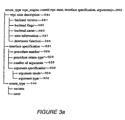
- Figure 3a illustrates the type hierarchy of a preferred embodiment of the interface specification 324.
- the interface specification 324 is illustrated abstractly as an argument to an invocation of a send method of a VRPC engine 144. This invocation is used by the client stub 120 to invoke a selected VRPC engine 144 to make the actual remote procedure call to the server 161.
- the interface specification 304 includes a description of the remote procedure interface and a description of the arguments to be supplied to the remote procedure.
- the description of the remote procedure interface includes:
- Appendix A includes an exemplary implementation of the type hierarchy of Figure 3a.
- the interface specification 324 is provided in the VRPC_proc_spec_t structure definition.
- the canonical description of the arguments is an argument specification 332 that includes a set of elements that describe each argument.
- the actual values of the arguments are not included in the argument specification 332, but only their form.
- An argument mode 334 specifies the semantics for handling the arguments between the client and server.
- the modes define whether an argument is an input or output argument.
- the modes are refined to handle different types of relationships and optimization between the client and server.
- the argument is provided to the server 161, which modifies it and returns the modified value back to the client 120.
- the server 161 receives a copy of the argument, and may use that value during the invocation of the remote procedure, and subsequently deallocates memory for that use. The client must still maintain the argument locally.
- a copy of the argument is sent to the server 161, which must free its copy upon completion.
- the client 116 does not send data to the server 161, but rather receives data having the defined data type.
- the argument held by the client 116 is deleted after being sent to the server 161, and the server 161 frees this copy after use.
- the server 161 passes data to the client 116 and deleted by the server, and the client 116 frees this instance after use.
- An argument type 336 specifies data type for the argument(s).
- the data type is provided by a bytecode value.
- the bytecode is used to specify both primitive types, such as ints, chars, and the like, and more complex types that are recursively defined.
- Appendix A, Section 3.4 includes an exemplary list of bytecodes for representing primitive, pointer, and composed (complex) data types. Other bytecode specifications may also be used. These bytecodes are recognized by the VRPC engines 144, and used by the VRPC engines to select marshalling routines to marshall the arguments into the proper representation for transmission to the server, and then reconstruction by the server.
- the argument specification structure 332 is included in the procedure interface specification 324, however, in alternate embodiment, the argument specification structure 332 may be separated from the procedure interface specification.
- Figure 3a illustrates this relationship.
- Appendix A provides an exemplary implementation of the argument specification 332, in the VRPC_args_spec_t structure.
- the bytecode specification may be optimized on a per-connection basis to take advantage of the architecture of the client and server computers. More particularly, if both the client and server computers are of the same architecture, such as both Sun Microsystems SPARCstations, then selected data type specific opcodes can be replaced with opaque data types, thereby eliminating the need to marshall the data into a machine independent format. For example, if the data type specified by an opcode is a double, it may be replaced by eight opaque bytes of data.
- the interface specification including the argument specification are passed to an VRPC engine 144 by invoking its send method.
- the VRPC engine 144 traverses the argument specification 332, and determines from the bytecode specification of the argument types 336 the appropriate marshalling routines.
- the VRPC engine 144 also separately receives the actual argument values 338.
- the VRPC engine 144 then calls the marshalling routines to marshall the arguments for transmission to the server 161. This process is further described below with respect to Figure 4.
- the client stub 120 further passes to the VRPC engine 144 a state description 380 ( Figure 3) defining the transport parameters for the remote procedure call, and other information, such as the version number 381 of VRPC engine, the name 385 of the VRPC engine, flags 383 for controlling the backend, a handle to the state data 387, and a handle 389 to a destructor function for freeing this state information.
- a state description 380 Figure 3
- FIG. 3 An exemplary implementation of the VRPC state description is provided in Appendix A, ⁇ 4.1.
- a simplified example of a client stub 120 created by an IDL compiler 114 illustrating the canonical form of the interface definition is as follows. Assume that the client stub is to contain a function for summing two variables, A and B. In the IDL file foo.x this function is represented as:
- the IDL compiler 114 creates a canonical specification of this interface in the client stub in the file client.c:
- Line 2 defines the interface to the client stub seen by the client application.
- the interface is consistent with the application's interface as defined in the IDL file. This allows the application to invoke the client stub without the applications developer having to provided any further interfaces between the application and the stub.
- the body of the stub is hidden from the application, and the application has no information that the sum procedure is being remotely handled.
- Line 1 specifies the header file which includes the calls for establishing and terminating a connection with a VRPC engine 144. The header file is further described below.
- Line 3 defines the output variable, tmp. This allows the client to have a local handle to a variable for returning the result from the remote procedure to the application.
- Line 4 defines an array arg_addr that is sized to contain pointers to the two input and one output arguments.
- the argument array contains a pointer for each input and output argument. More generally, in the preferred embodiment, the client stub receives all arguments as pass by reference, including arrays and non-arrays.
- the argument array corresponds to the argument list 338 in Figure 3a.
- Lines 5 through 7 define the contents of the arg_addr array, with pointers to the passed in variables a and b , and a pointer to the output variable tmp.
- the client stub accepts all arguments as pass by reference, whether these are array or non-array arguments.
- This arguments array will be passed to one of the VRPC engines and selected marshalling routines. Since these components all reside in the same address space as the client stub, they will be able to access the data values of the argument as need when the data structures of the interface are marshalled at runtime.
- Line 8 performs the remote procedure call itself.
- This call corresponds to the server interface 302 in Figure 3a.
- the canonical specification of the interface is provided as an input argument inter_descr to the send_call function, with inter_descr being an interface specification 324, be is a function pointer to one of the VRPC engines, any of which provide a send_call function.
- the send_call function passes down the interface specification 324, inter_descr , which here contains a description of the sum function.
- the send_call further passes the data that accompanies the interface definition, the arg_addr array.
- the remote procedure call When the remote procedure call is completed, the result will be in the temporary variable tmp .
- the remote procedure call has a return type 340 that indicates whether the remote procedure call was successful or whether there was an error.
- arg_spec is a structure that implements the argument specification described above.
- the mode values of "IN” and "OUT” are merely illustrative here, and other argument mode values may be used, as described above. Exemplary mode values are described in Appendix A, ⁇ 3.2, in the VRPC_param_mode_t structure definition.
- the procedure number, return type, type, and number arguments are determined by the IDL compiler 114.
- the interface specification 324 does not contain any of the data being passed between the client and server, but merely the form of that data. Because the data are not included in the canonical representation, this representation can be provided to any VRPC engine 144 for marshalling. Only when the marshalling at runtime is actually performed is the data accessed from the arguments array.
- the client stub described here is a simplified representation of the interface of the client.
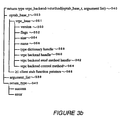
- Figure 3b illustrates an abstract representation of the interface for this invocation.
- the invocation 340 of the VRPC library 122 passes in a data structure, here called optab_base_t 353, that encapsulates both the interface specification and argument specification, and an argument list.
- the VRPC library 122 receives arguments specifying the version 350 for the client stub 120, flags 352 for setting switches in the library if necessary, the size 354 of the encapsulating structure, for use in marshalling the arguments, a handle 358 to the type dictionary used for the interface, and handles to call the VRPC engine 144 directly for state information (360), its send method 362, and its control method 364.
- the control method 364 is a general function which the VRPC library 122 uses to instruct the VRPC backend 140 to perform additional functionality.
- the control method 364 may be used to instruct a VRPC backend 140 to select the security level for a connection between the client and server.
- a set of function pointers 368 to the client stub 120 are also provided for main routine 118 to call.
- the VRPC engine 144 also receives the argument list 338 with the actual arguments references for the VRPC engine 144 to marshall.
- the VRPC engine 144 returns a value 340 indicating whether the remote procedure was successful, or whether an error resulted.
- the client invokes the VRPC library 122 to establish a connection and select a VRPC engine 144.
- the VRPC library 122 initializes the be handle with the address for a selected VRPC engine 144, and client stub function pointers to interface routines. Accordingly, when the client stub 120 is subsequently invoked, it is provided a handle to the VRPC engine 144 which can then marshall the data structures of the interface according to the interface specification structure. The selection process for choosing a VRPC engine 144 at runtime is further described below.
- the client 116 invokes the VRPC library 122 using interfaces provided in a header file incorporated in all client stubs 120.
- the VRPC library 122 provides two basic functions to the clients: initiation/termination of a connection between client/server and selection of a VRPC engine 144.
- the interfaces to these functions are provided to a client stub 120 in the VRPC header file 209. More particularly, there is a function to establish a connection to the server using a selected VRPC engine 144.
- This function takes as an input the name of a server to be conducted, generally provided on the server computer 160, and a handle to the client/server interface being accessed.
- This function invokes the VRPC library 122 on the client computer 110, which obtains from naming service 190 the name and address of a server 161 including a VRPC engine 144 specified for use by the server application 161 having the server interface.
- the VRPC library 122 then initializes state variable handle be for contacting the server using that VRPC engine 144. Otherwise, the VRPC library 122 returns a error value.
- the VRPC library 122 returns the handle to the VRPC backend 140 to the client stub 120.
- An exemplary interface for this function is VRPC_begin() function described in Appendix A, ⁇ 1.1. Note that the call to VRPC_begin() takes an optab_base_t 353 as an argument, thereby providing to the VRPC library 122 the handle to the interface specification and the argument specification in the client sub 116.
- a complementary function terminates a remote procedure call connection through the VRPC engine 144 specified the handle obtained from initiation function. This function is called by the application 166 at the end of its execution.
- An exemplary interface is shown in Appendix A, ⁇ 1.1 as VRFC_end().
- the client application 116 containing the remote procedure call is executed on a client computer 110 in a conventional manner.
- the application 116 includes a call to initialize the handle in the client stub 120 to the VRPC backend 140 used to invoke the backend's send_call method.
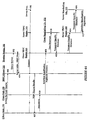
- the application 116 invokes 400 this initialization method, for example VRPC_begin(), on the VRPC library 122, passing in an identification of a server interface being accessed.
- the VRPC library 122 is responsible determining the VRPC engine 144 to be used and establishing a connection to the server application 161 using the VRPC engine 144.
- the VRPC library 122 queries 402 the naming service 190 for the server address and name of the VRPC backend 140.
- the naming service 190 returns 404 the address of the server 161 and the name of the VRPC backend 140, which the VRPC library 122 then uses to select the VRPC engine 144.
- the selection of the VRPC engine 144 is based on the address of the server or the backend name before the connection to the server is established.
- the address, or the name retrieved from the naming service 190 identifies the specific RPC mechanism to use, and the library 122 knows how to interpret the address from the naming service 190.
- the client 116 then connects 406 to the server 161 by calling the VRPC library 122, which then establishes the connection to the server 161 with the selected VRPC engine 144 on the client computer 110, and correspondingly with a VRPC engine 144 on the server computer 160.
- the library 122 will load in the ONC-RPC backend, and so on.
- the VRPC engine 144 is loaded by the client computer 110.
- the VRPC library 122 will obtain a handle to the VRPC engine 144 once the VRPC engine 144 is loaded.
- the VRPC library 122 returns 407 this handle to the client stub 120 so that future invocations of send_call will be made directly on the selected VRPC engine144.
- the main routine 118 invokes 409 the client stub 120 by calling one of the procedures defined therein, and passing in some number of arguments.
- the client stub 120 packages the actual arguments and the argument specification to create the procedure call, specifying the argument mode(s) and type of each argument, and the procedure description, specifying the procedure number, number of arguments, return type.
- the client stub 120 then invokes 408 the send_call method. This call is forwarded by the VRPC library 122 to the selected VRPC engine 144 on the client computer 110.
- the VRPC engine's 144 on the client computer 110 interprets the interface specification to determine the form of each argument, including its mode(s) and data type according to the bytecode specification. The interpretation further determines from the procedure number the appropriate procedure to invoke on the server 161. From this information, the client's VRPC engine 144 selects the appropriate marshalling routines from the client computer 110 marshalling library 122 for marshalling the arguments into a form that can be transmitted across the network to the server application 161. The VRPC engine 144 invokes 410 these marshalling routines as needed to create the proper representation of an input data structure. Each marshalling routine returns 412 a transport specific data representation for the input data structure. The invocation of the marshalling routines is specific to the VRPC engine 144.
- the marshalling routines use the data representation specified in XDR: External Data Representation Standard RFC 1104, June 1987.
- the VRPC engine 144 invokes a function clnt_call() of the ONC-RPC mechanism that performs the client side of the remote procedure call for any application:
- This marshalling call specifies the procedure number for the procedure being serviced, and provides pointers to data structures and the marshalling and unmarshalling functions.
- the client VRPC engine 144 may optimize the bytecodes by using opaque data types, rather than marshalling with the marshalling routines.
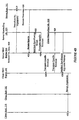
- the VRPC engine 144 on the client computer 110 then sends 414 the marshalled data and arguments to the instance of the VRPC engine 144 on the server computer 160.
- the VRPC engine 144 on the server computer 160 unmarshalls 416 the arguments using the marshalling library 122 on the server computer 160.
- the marshalling library 122 returns 417 original interface specification to the server's VRPC engine 144.
- the VRPC engine 144 on the server computer 160 interprets 418 the interface specification, using its type dictionary 123, which corresponds to the type dictionary used by the client side VRPC engine 144. This allows the server's VRPC engine 144 to reconstruct the specific data structures of the original arguments, along with identifying the specific procedure to be invoked in the server application.
- the VRPC engine 144 passes 419 the arguments in the form specified by the interface specification, and procedure number to the server application 161.
- the server 161 executes 420 the remote procedure on these arguments to obtain the desired result.
- the server 161 returns 421 the result to the server VRPC engine 144.
- the server VRPC engine 144 again marshalls 422, 424 the result according to the interface specification, and sends 426 the marshalled data back to the client VRPC engine 144.
- the client VRPC engine 144 unmarshalls 428, 430 the data with the client marshalling library 122, and forwards 432 the return arguments to the client stub 120, which passes the result to the client
Landscapes
- Engineering & Computer Science (AREA)
- Software Systems (AREA)
- Theoretical Computer Science (AREA)
- Physics & Mathematics (AREA)
- General Engineering & Computer Science (AREA)
- General Physics & Mathematics (AREA)
- Computer And Data Communications (AREA)
- Stored Programmes (AREA)
Claims (25)
- Schnittstellen-Definitionssprache-Compiler (114) zur Nutzung mit einem Computersystem (100), welches wenigstens ein mechanismus-unabhängiges Femprozedur-Aufrufsystem (140) zum Ausführen einer Prozedur in einem Server (160) umfaßt, wobei die Prozedur von einem Client (110) aufgerufen wird und Null oder mehr Argumente aufnimmt, wobei der Schnittstellen-Definitionssprachen-Compiler (114) eine Schnittstellendefinitionsdatei mit einer Vereinbarung der Schnittstelle (324) der Prozedur empfängt und einen Client-Programmrohling (120) sowie in dem Client-Programmrohling (120) einen Aufruf an eine Client-Fernprozedur-Aufrufmaschine (144) erzeugt, um eine korrespondierende, mechanismus-unabhängige, kanonische Spezifikation zu liefern, welche eine Beschreibung der Schnittstelle (324) spezifiziert, so daß ein Prozeduraufruf, der an irgendeinen beliebigen Fernprozedur-Aufrufmechanismus angepaßst ist, hiervon zur gleichen Zeit wie der Aufruf der Prozedur durch den Client (110) gebildet werden kann, wobei die kanonische Spezifikation eine Identifizierung der Prozedur in dem Server (160), für jedes von der Schnittstelle (324) umfaßte Argument eine implementations- und maschinen-unabhängige Argument-Spezifikation (332) eines Datentyps des Arguments und wenigsten eine Argument-Betriebsart (334) zum Übergeben des Arguments und zum Definieren der Semantik zur Nutzung des Arguments in der Prozedur umfaßt, wobei der Client-Programmrohling (120) angepaßt ist, um hierdurch zur Ausführung in den Client (110) kompiliert zu werden, und wobei der Client-Programmrohling (120) weiterhin angepaßt ist, um das Bestimmen der Client-Fernprozedur-Aufrufmaschine (144) zur gleichen Zeit zu erlauben, zu der die Client-Anwendung ausgeführt wird.
- Schnittstellen-Definitionssprache-Compiler nach Anspruch 1, dadurch gekennzeichnet, daß der Schnittstellen-Definitionssprache-Compiler (114) einen Server-Programmrohling (164) erzeugt, der angepaßt ist, um die kanonische Spezifikation der Schnittstelle (324) der Prozedur zu empfangen und hieraus zum Liefern der Argumente an die Server-Prozedur für jedes Argument einen Datentyp (336) und wenigstens eine Argument-Betriebsart (334) für das Argument zu bestimmen und um ein Ausgangsargument an den Client-Programmrohling (120) zurückzugeben.
- Schnittstellen-Definitionssprache-Compiler nach Anspruch 1 oder 2, dadurch gekennzeichnet, daß die Argument-Betriebsarten (334) eine Eingabe-Betriebsart und eine Ausgabe-Betriebsart umfassen.
- Schnittstellen-Definitionssprache-Compiler nach einem der vorangehenden Ansprüche, dadurch gekennzeichnet, daß die Argument-Betriebsarten (334) eine Betriebsart "Verleihen" und eine Betriebsart "Verleihen an" umfassen, wobei in der Betriebsart "Verleihen" das Argument an den Server (161) geliefert wird, welcher es modifiziert und den modifizierten Wert zu dem Client (120) zurück überträgt, wobei in der Betriebsart "Verleihen an" der Server (161) eine Kopie des Arguments empfängt, diesen Wert während des Aufrufs der Fernprozedur nutzen kann und darauf eine Zuweisung von Speicher für diese Nutzung aufhebt, und wobei der Client nach wie vor das Argument lokal halten muß.
- Schnittstellen-Definitionssprache-Compiler nach einem der vorangehenden Ansprüche, dadurch gekennzeichnet, daß die Argument-Bertriebsarten (334) eine Betriebsart "Bewegen zu" und eine Betriebsart "Bewegen von" umfassen, wobei in der Betriebsart "Bewegen zu" das von dem Client (116) gehaltene Argument nach dem Senden an den Server (161) gelöscht wird und der Server (161) diese Kopie nach der Nutzung freigibt, und wobei in der Betriebsart "Bewegen von" der Server (161) Daten an den Client (116) übergibt und mittels des Servers löscht, wobei der Client (116) dieses Objekt nach der Nutzung freigibt.
- Schnittstellen-Definitionssprache-Compiler nach einem der vorangehenden Ansprüche, dadurch gekennzeichnet, daß die Argument-Betriebsarten eine Betriebsart "Kopieren nach" und eine Betriebsart "Kopieren von" umfassen, wobei in der Betriebsart "Kopieren nach" eine Kopie des Arguments an den Server (161) gesendet wird, welcher seine Kopie nach Beendigung freigeben muß, und wobei in der Betriebsart "Kopieren von" der Client (160) keine Daten an den Server (161) sendet, sondern Daten empfängt, die den definierten Datentyp aufweisen.
- Schnittstellen-Definitionssprache-Compiler nach einem der vorangehenden Ansprüche, dadurch gekennzeichnet, daß die kanonische Spezifikation einer Schnittstellen-Spezifikation (324) mit den folgenden Merkmalen umfaßt:eine Spezifikation eines Prozedur-Identifizierers, der die Prozedur im Server eindeutig identifiziert;eine Spezifikation der Anzahl der Argumente (330); undeine Spezifikation eines Rücktyps (340) für das Ausgangsargument der Server-Prozedur.
- Schnittstellen-Definitionsspräche-Compiler nach Anspruch 7, dadurch gekennzeichnet, daß die kanonische Spezifikation eine Argument-Spezifikation (332) umfaßt, welche für jedes der Anzahl der Argumente wenigstens eine Argument-Betriebsart (334) und den Datentyp (336) des Arguments identifiziert.
- Schnittstellen-Definitionssprache-Compiler nach Anspruch 8, dadurch gekennzeichnet, daß der Datentyp (336) jedes Arguments mittels einer Byte-Code-Repräsentation spezifiziert ist.
- Schnittstellen-Definitionssprache-Compiler nach Anspruch 9, gekennzeichnet durch die folgenden Merkmale:der Schnittstellen-Definitionssprache-Compiler (114) erzeugt eine Typ-Dateiliste (123) mit einem Eintrag für jeden eindeutigen Datentyp, wobei der Eintrag eine Byte-Code-Repräsentation umfaßt, die den Datentyp spezifiziert; unddie Argument-Spezifikation (332) umfaßt für den Datentyp (336) jedes Arguments eine Referenz auf einen Eintrag in der Typ-Dateiliste (123).
- Schnittstellen-Definitionssprache-Compiler nach einem der vorangehenden Ansprüche beim Betrieb in einem Computersystem (100) mit:wobei der Schnittstellen-Definitionssprache-Compiler (114) in dem Client-Programmrohling (120) einen Aufruf an die Client-Fernprozedur-Aufrufinaschine (144) erzeugt, um die kanonische Spezifikation zu liefern, wobei die Client-Fernprozdur-Aufrufmaschine (144) angepaßt ist, um ausgewählte Sortierroutinen (142) gemäß den Datentypen (336) der in der kanonischen Spezifikation spezifizierten Argumente aufzurufen, um Werte für die Argumente in die transportspezifischen Strukturen einzusortieren, wobei die Client-Fernprozedur-Aufrufmaschine (144) darüber hinaus angepaßt ist, um die transportspezifischen Strukturen an die Server-Fernprozedur-Maschine (144) zu liefern, welche zum Erhalt des Argumentwerts und der Datentypen ausgewählte Sortierroutinen (142) aufruft und die Argumentwerte und die Datentypen an den Server-Programmrohling (164) liefert.mehreren Sortierroutinen (142);einer Client-Femprozedur-Aufrufmaschine (144) und einer Server-Fernprozedur-Maschine (144), wobei die Fernprozedur-Maschinen (144) einen Transport-Mechanismus zwischen dem Client-Programmrohling (120) und einem Server-Programmrohling (164) der Server-Prozedur liefern;
- Computersystem zum Ausführen einer Server-Anwendung eines Fernprozedur-Aufrufs durch eine Client-Anwendung, das Computersystem die folgenden Merkmale aufweisend:einen clientseitigen Computer (110) mit:einer Client-Anwendung (116) mit einem Client-Programmrohling (120) der Fernprozedur, wobei der Client-Programmrohling (120) null oder mehr Argumente von der Client-Anwendung(116) empfängt, und wobei die Client-Anwendung (116) einen Aufruf umfaßt, der eine mechanismus-unabhängige, kanonische Spezifikation der Schnittstelle (324) der Fernprozedur an eine Client-Fernprozedur-Aufrufmaschine (144) liefert, wobei die kanonische Spezifikation eine Beschreibung der Schnittstelle (324) spezifiziert, so daß ein Prozedur-Aufruf, welcher an irgendeinen beliebigen Fernprozedur-Aufrufmechanismus angepaßt ist, hiervon zur gleichen Zeit wie der Aufruf der Prozedur durch den Client (110) gebildet werden kann, die kanonischen Spezifikation aufweisend:einen Prozedur-Indentifizierer, der die Fernprozedur in einer Server-Schnittstelle eines Servers eindeutig identifiziert;für jedes Argument, das in der Schnittstelle der Fernprozedur spezifiziert ist, eine implementations- und maschinen-unabhängige Argument-Spezifikation (332) eines Datentyps (336) des Arguments und wenigstens eine Argument-Betriebsart (334) zum Übergeben des Arguments und zum Definieren der Semantik zur Nutzung des Arguments in der Prozedur; undeine Folge von Referenzen, wobei jede Referenz zum Erhalten eines Werts für ein Argument dient;erste Sortierroutinen, wobei jede Sortierroutine mit einer speziellen Client-Fernprozedur-Aufrufmaschine (144) in Verbindung steht und angepaßt ist, um einen Argumentwert mittels des Bildens einer Repräsentation des Argumentwerts für den Argumentwert, die für die Client-Fernprozedur-Aufrufmaschine (144) spezifisch ist und durch den Datentyp (336) des Arguments bestimmt ist, einzusortieren;mehrere Client-Fernprozedur-Aufrufinaschinen (144), wobei jede Client-Fernprozedur-Aufrufmaschine in der Lage ist, die kanonische Spezifikation zu empfangen und von der Argument-Spezifikation (332) den Datentyp (336) jedes Argument zu der Zeit bestimmen kann, zu der der Fernprozedur-Aufruf ausgeführt wird, wobei die Client-Fernprozedur-Aufrufmaschine (144) angepaßt ist, um für jedes Argument in der kanonischen Spezifikation wenigstens eine mit der Client-Femprozedur-Aufrufmaschine (144) in Verbindung stehende Sortierroutine zum Sortieren des Arguments aufzurufen, und wobei die Client-Femprozedur-Aufrufmaschine (144) die Sortierroutine nur zu einer Zeit aufruft,wenn die Client-Femprozedur-Aufrufmaschine durch den Client-Programmrohling (120) und die Client-Femprozedur-Aufrufmaschine (144) aufgerufen wird, die zur gleichen Zeit bestimmt wird, wenn die Client-Anwendung (116) ausgeführt wird.
- Computersystem nach Anspruch 12, gekennzeichnet durch
einen serverseitigen Computer (160) mit:eine Server-Anwendung (161) mit der Fernprozedur;einen Server-Programmrohling (164), welcher die Schnittstelle an die Fernprozedur liefert;mehreren zweiten Sortierroutinen, wobei jede Sortierroutine mit einer spezifischen Server-Femprozedur-Aufrufmaschine in Verbindung steht, die hierdurch aufzurufen ist und angepaßt ist, ein Argument zum Bestimmen seines Argumentwerts und seines Datentyps auszusortieren;wenigstens eine Server-Fernprozedur-Aufrufmaschine (144), die angepaßt ist, von einer Client-Fernprozedur-Aufrufmaschine (144) jedes einsortierte Argument zu empfangen, wobei die Server-Femprozedur-Aufrufmaschine (144) wenigstens eine Sortierroutine der mehreren zweiten Sortierroutinen aufruft, um das Argument zum Bestimmen des Argument-Datentyps (336) und des Argumentwerts auszusortieren, und wobei die Server-Fernprozedur-Aufrufmaschine (144) den Argumentwert und den Datentyp jedes Arguments an den Server-Programmrohling (164) liefert. - Computersystem nach Anspruch 13, gekennzeichnet durch eine Schnittstellen-Definitionssprache-Compiler (114), der aus der Schnittstelle der Server-Prozedur den Client-Programmrohling (120) und den Server-Programmrohling (164) erzeugt.
- Computersystem nach Anspruch 13 oder 14, gekennzeichnet durch eine Typ-Dateiliste (123) mit einem Eintrag für jeden eindeutigen Datentyp in jeder kanonischen Spezifikation der Serverschnittstellen (302), wobei der Eintrag eine den Datentyp spezifizierendere Byte-Code-Repräsentation umfaßt und wobei die kanonische Spezifikation der Server-Schnittstellen für den Argumenttyp (336) jedes Arguments eine Referenz auf einen Eintrag in der Typ-Dateiliste (123) umfaßt.
- Computer-implementiertes Verfahren zum Erzeugen eines Anwendung-Programmrohlings (120) zum Kompilieren einer Anwendung, wobei der Anwendung-Programmrohling die Anwendung an einen Fernprozedur-Aufrufmechanismus (144) zum Ausführen einer in dem Anwendung-Programmrohling (120) definierten Prozedur-Aufrufs übergibt, das Verfahren die folgenden Schritte aufweisend:wobei der Anwendung-Rohling (120) angepaßt ist, um in die Anwendung zum Ausführen kompiliert zu werden, und wobei der Anwendung-Rohling (120) darüber hinaus angepaßt ist, um zu erlauben, daß die Client-Fernprozedur-Aufrufmaschine (144) zur gleichen Zeit bestimmt wird, wenn die Anwendung (116) ausgeführt wird.Empfangen einer Schnittstellendefinition der Prozedur, wobei die Schnittstellendefinition (324) null oder mehr Eingabe- oder Ausgabe-Argumente umfaßt;Konvertieren der Schnittstellendefinition (324) in einer mechanismus-unabhängigen kanonischen Spezifikation, welche eine Beschreibung der Schnittstelle (324) spezifiziert, so daß hiervon ein Prozeduraufruf, welcher an irgendeinen beliebigen Fernprozedur-Aufrufmechanismus angepaßt ist, zur gleichen Zeit wie der Aufruf der Prozedur durch den Client (110) gebildet werden kann, wobei die kanonische Spezifikation eine Identifizierung in der Prozedur in dem Server (160) und für jedes von der Schnittstelle (324) umfaßte Argument eine implementations- und maschinen-unabhängige Argument-Spezifikation (332) des Datentyps (336) des Arguments und wenigstens eine Argument-Betriebsart (334) zum Übergeben des Arguments und zum Definieren der Semantik zur Nutzung des Arguments in der Prozedur umfaßt; undErzeugen eines Anwendung-Programmrohlings (120) und eines Aufrufs an eine Client-Fernprozedur-Aufrufmaschine (144) in dem Anwendung-Rohling (120) zum Liefern der kanonischen Spezifikation;
- Verfahren nach Anspruch 16, dadurch gekennzeichnet, daß ein Server-Programmrohling (164) gebildet wird, um die in dem Anwendung-Rohling (120) spezifizierten Argumente zu empfangen und die Argumente an eine die Server-Prozedur umfassende Server-Anwendung (161) zu liefern.
- Verfahren nach Anspruch 16 oder 17, dadurch gekennzeichnet, daß eine Typ-Dateiliste (123) erzeugt wird, welches einen Eintrag für jeden eindeutigen Datentyp in der kanonischen Spezifikation umfaßt, wobei der Eintrag eine Byte-Code-Repräsentation des Datentyps so umfaßt, daß die kanonische Spezifikation für den Datentyp (336) jedes Arguments eine Referenz auf einen Eintrag in der Typ-Dateiliste (123) aufweist.
- Verfahren nach Anspruch 18, dadurch gekennzeichnet, daß die Typ-Dateiliste (123) an die Client-Anwendung (116) mit dem Client-Programmrohling (120) und an eine Server-Anwendung (161) mit der Server-Prozedur (164) geliefert wird.
- Computerlesbarer Speicher für einen Client-Computer (110), der konfiguriert ist, einen Fernprozedur-Aufruf zwischen dem Client-Computer (110) und einem Server-Computer (160) zu vermitteln, in einem Computersystem mit dem Cliet-Computer (110) und dem Server-Coputer (160), der computerlesbare Speicher aufweisend:wobei die Client-Fernprozedur-Aufrufmaschine (144) die Sortierroutine nur zu einer Zeit aufruft, wenn die Client-Fernprozedur-Aufrufmaschine von dem Client-Programmrohling (120) und der Client-Fernprozedur-Aufrufmaschine (144) aufgerufen wird, die zur gleichen Zeit bestimmt wird, wenn die Client-Anwendung (116) ausgeführt wird.eine Client-Anwendnung (116) mit einem Client-Programmrohling (120) für die Fernprozedur, wobei der Client-Programmrohling (120) null oder mehr Argumente für die Client-Anwendung (116) empfängt und einen Aufruf umfaßt, der einen mechanismus-unabhängige kanonische Spezifikation der Schnittstelle (324) der Fernprozedur an eine Client-Fernprozedur-Aufrufmaschine (144) weiterleitet, wobei die kanonische Spezifikation eine Beschreibung der Schnittstelle (324) so spezifiziert, daß ein Prozedur-Aufruf, der an irgendeinen beliebigen Femprozedur-Aufrufmechanismus angepaßt ist, hiervon zur gleichen Zeit wie der Aufruf der Prozedur durch den Client (110) gebildet werden kann, die kanonische Spezifikation aufweisend:einen Prozedur-Identifizierer, der die Fernprozedur in einer Server-Schnittstelle auf einem Server eindeutig identifiziert;für jedes in der Schnittstelle der Fernprozedur spezifizierte Argument eine implementations- und maschinen-unabhängige Argument-Spezifikation (332) eines Datentyps (336) des Arguments und wenigstens eine Argument-Betriebsart (334) zum Weiterleiten des Arguments und zum Definieren der Semantik zum Nutzen des Arguments in der Prozedur;eine Folge von Referenzen, wobei jede Referenz zum Erhalten eines Werts eines Arguments dient;mehrere erste Sortierroutinen, wobei jede Sortierroutine mit einer spezifischen Client-Fernprozedur-Aufrufmaschine (144) in Verbindung steht und angepaßt ist, um einen Argumentwert mittels des Bildens einer Repräsentation des Argumentwerts für den Argumentwert einzusortieren, der für die Client-Fernprozedur-Aufrufmaschine (144) spezifisch ist und durch den Datentyp (336) des Arguments bestimmt ist;mehrere Client-Fernprozedur-Aufrufmaschinen (144), wobei jede Client-Fernprozedur-Aufrufmaschine in der Lage ist, die kanonische Spezifikation zu empfangen und von der Argument-Spezifikation (332) des Datentyps (336) jedes Arguments zu der Zeit, zu der der Fernprozedur-Aufruf ausgeführt wird, jeden Client-Fernprozedur-Aufrufmaschine (144) zu bestimmen, die angepaßt ist, um für jedes Argument in der kanonischen Spezifikation wenigstens eine Sortierroutine, welche mit der Client-Fernprozedur-Aufrufmaschine (144) in Verbindung steht, zum Einsortieren des Arguments aufzurufen,
- Computerlesbarer Speicher nach Anspruch 20, gekennzeichnet durch einen Schnittstellen-Definitionssprache-Compiler (114), der den Client-Programmrohling (120) aus der Schnittstelle (324) der Server-Prozedur erzeugt.
- Computerlesbarer Speicher nach Anspruch 20 oder 21, gekennzeichnet durch eine Typ-Dateiliste (123) mit einem Eintrag für jeden eindeutigen Datentyp in jeder kanonischen Spezifikation der Server-Schnittstellen, wobei der Eintrag eine Byte-Code-Repräsentation zum Spezifizieren des Datentyps umfaßt, und
wobei die kanonische Spezifikation der Serverschnittstellen für den Argumenttyp (336) jedes Arguments eine Referenz auf einen Eintrag in der Typ-Dateiliste (123) aufweist. - Computer-implementiertes Verfahren zum Liefern eines Fernprozedur-Aufrufs von einer Client-Anwendung (116) an eine Server-Prozedur (161) in einem Computersystem mit einem Client-Computer (110), welcher die Client-Anwendung (116) liefert, und einem Server-Computer (160), welcher die Server-Prozedur (161) liefert, das Computersystem aufweisend:wobei das Liefern des Fernprozedur-Aufrufs den Schritt umfaßt, daß der Client-Programmrohling (120) einen Aufruf umfaßt, der die kanonische Spezifikation an eine Client-Femprozedur-Aufrufmaschine (144), welche aus den mehreren Client-Fernprozedur-Aufrufmaschinen (144) bestimmt wird, zur gleichen Zeit weiterleitet, wenn die Client-Anwendung (116) ausgeführt wird.den clientseitigen Computer (110) mit:der Client-Anwendung (116) mit einem Client-Programmrohling (120) für die Fernprozedur, wobei der Client-Programmrohling (120) null oder mehr Argumente für die Client-Anwendung (116) empfängt und einen Aufruf umfaßt, der eine mechanismus-unabhängige, kanonische Spezifikation der Schnittstelle (324) der Fernprozedur an eine Client-Fernprozedur-Aufrufmaschine (144) weiterleitet, wobei die kanonische Spezifikation eine Beschreibung der Schnittstelle (324) spezifiziert, so daß ein Prozedur-Aufruf, der an irgendeinen beliebigen Fernprozedur-Aufrufmechanismus angepaßt ist, hiervon zur gleichen Zeit wie der Aufruf der Prozedur durch den Client (110) gebildet werden kann, die kanonische Spezifikation umfassend:einen Prozedur-Identifizierer, der die Fernprozedur in einer Server-Schnittstelle eines Servers eindeutig identifiziert;für jedes in der Schnittstelle der Fernprozedur spezifiziertes Argument eine implementation- und maschinen-unabhängige Argument-Spezifikation (332) eines Datentyps (336) des Arguments und wenigstens eine Argument-Betriebsart (334) zum Weiterleiten des Arguments und zum Definieren der Symantik zum Nutzen des Arguments in der Prozedur; undeine Folge von Referenzen, wobei jede Referenz zum Erhalten eines Werts eines Arguments dient;mehrere erste Sortierroutinen, wobei jede Sortierroutine mit einer spezifischen Client-Fernprozedur-Aufrufmaschine (144) in Verbindung steht und angepaßt ist, um einen Argumentwert einzusortieren, indem für den Argumentwert eine Repräsentation des Argumentwerts gebildet wird, die für die Client-Femprozedur-Abrufmaschine (144) spezifisch und durch den Datentyp (386) des Arguments bestimmt ist;mehrere Client-Fernprozedur-Aufrufmaschinen (144), wobei jede Client-Fernprozedur-Aufrufmaschine in der Lage ist, die kanonische Spezifikation zu empfangen und aus der Argument-Spezifikation (232) des Datentyps (336) jedes Arguments zu der Zeit, zu der der Fernprozedur-Aufruf ausgeführt wird, jede Client-Fernprozedur-Aufrufmaschine (144) zu bestimmen, die angepaßt ist, um für jedes Argument in der kanonischen Spezifikation wenigstens eine mit der Client-Fernprozedur-Aufrufmaschine (144) verbundene Sortierroutine zum Sortieren des Arguments aufzurufen, wobei die Client-Fernprozedur-Aufrufmaschine (144) die Sortierroutine nur zu einer Zeit aufruft, wenn die Client-Fernprozedur-Aufrufmaschine durch den Client-Programmrohling (120) und die Client-Femprozedur-Aufrufmaschine (144) aufgerufen wird, die zur gleichen Zeit bestimmt wird, wie die Client-Anwendung (116) ausgeführt wird,
- Verfahren nach Anspruch 23, dadurch gekennzeichnet, daß die Fernprozedur-Aufrufmaschine (144) im wesentlichen zu einer gleichen Zeit wie der Aufruf der Server-Prozedur aus mehreren Fernprozedur-Aufrufmaschinen (144) gemäß einer Bezeichnung einer mit der Server-Prozedur (161) in Verbindung stehenden Fernprozedur-Aufrufmaschine (144) ausgewählt wird.
- Verfahren nach Anspruch 23 oder 24, gekennzeichnet durch die folgenden Schritte:Bestimmen, ob der Server-Computer (160) und der Client-Computer (110) eine gemeinsame Architektur aufweisen;Auswählen von Argumenten durch die Client-Fernprozedur-Aufrufmaschine (144) aus dem Aufruf und Liefern von undurchsichtigen Datentypen (336) für die Argumente anstelle des Sortierens der Argumente mit den ausgewählten Sortierroutinen; undLiefern der undurchsichtigen Datentypen an die Server-Prozedur (161).
Applications Claiming Priority (2)
| Application Number | Priority Date | Filing Date | Title |
|---|---|---|---|
| US08/585,364 US5887172A (en) | 1996-01-10 | 1996-01-10 | Remote procedure call system and method for RPC mechanism independent client and server interfaces interoperable with any of a plurality of remote procedure call backends |
| US585364 | 1996-01-10 |
Publications (3)
| Publication Number | Publication Date |
|---|---|
| EP0784268A2 EP0784268A2 (de) | 1997-07-16 |
| EP0784268A3 EP0784268A3 (de) | 2000-05-31 |
| EP0784268B1 true EP0784268B1 (de) | 2002-07-03 |
Family
ID=24341136
Family Applications (1)
| Application Number | Title | Priority Date | Filing Date |
|---|---|---|---|
| EP96120614A Expired - Lifetime EP0784268B1 (de) | 1996-01-10 | 1996-12-20 | Allgemeines Fernprozeduraufrufsystem und allgemeines Fernprozeduraufrufverfahren |
Country Status (4)
| Country | Link |
|---|---|
| US (2) | US5887172A (de) |
| EP (1) | EP0784268B1 (de) |
| JP (2) | JP2978807B2 (de) |
| DE (1) | DE69622144T2 (de) |
Cited By (1)
| Publication number | Priority date | Publication date | Assignee | Title |
|---|---|---|---|---|
| US12505056B2 (en) | 2023-05-19 | 2025-12-23 | Textron Systems Corporation | Communicating between heterogenous endpoints of an electronic system via generalized data messaging |
Families Citing this family (108)
| Publication number | Priority date | Publication date | Assignee | Title |
|---|---|---|---|---|
| KR100287045B1 (ko) * | 1992-07-06 | 2001-04-16 | 존 비. 메이슨 | 객체의 명명 및 결합들 위한 방법 및 시스템 |
| US6718399B1 (en) * | 1993-05-21 | 2004-04-06 | Candle Distributed Solutions, Inc. | Communications on a network |
| US5887172A (en) * | 1996-01-10 | 1999-03-23 | Sun Microsystems, Inc. | Remote procedure call system and method for RPC mechanism independent client and server interfaces interoperable with any of a plurality of remote procedure call backends |
| US6272559B1 (en) * | 1997-10-15 | 2001-08-07 | Sun Microsystems, Inc. | Deferred reconstruction of objects and remote loading for event notification in a distributed system |
| US6938263B2 (en) * | 1996-04-23 | 2005-08-30 | Sun Microsystems, Inc. | System and method for facilitating dynamic loading of “stub” information to enable a program operating in one address space to invoke processing of a remote method or procedure in another address space |
| US6185611B1 (en) * | 1998-03-20 | 2001-02-06 | Sun Microsystem, Inc. | Dynamic lookup service in a distributed system |
| US6393497B1 (en) * | 1998-03-20 | 2002-05-21 | Sun Microsystems, Inc. | Downloadable smart proxies for performing processing associated with a remote procedure call in a distributed system |
| US6446070B1 (en) * | 1998-02-26 | 2002-09-03 | Sun Microsystems, Inc. | Method and apparatus for dynamic distributed computing over a network |
| US6212578B1 (en) * | 1996-09-09 | 2001-04-03 | Oracle Corporation | Method and apparatus for managing dependencies in a distributed computing environment for ensuring the safety of remote procedure calls |
| US5832529A (en) * | 1996-10-11 | 1998-11-03 | Sun Microsystems, Inc. | Methods, apparatus, and product for distributed garbage collection |
| JPH10171701A (ja) * | 1996-12-10 | 1998-06-26 | Fuji Xerox Co Ltd | 手続実行装置及び方法 |
| US6408342B1 (en) * | 1997-03-28 | 2002-06-18 | Keith E. Moore | Communications framework for supporting multiple simultaneous communications protocols in a distributed object environment |
| US7162519B2 (en) | 1998-05-01 | 2007-01-09 | Stratum Technologies Corporation | Structure and method for providing customized web pages-therefor |
| US6401114B1 (en) | 1997-05-01 | 2002-06-04 | Stratum Technologies Corporation | Method and apparatus for dynamic programming across a computer network |
| US6006278A (en) * | 1997-07-18 | 1999-12-21 | Electronic Data Systems Corporation | Method and system for importing remote functions to a network computer |
| US6405264B1 (en) * | 1997-12-18 | 2002-06-11 | Sun Microsystems, Inc. | Marshaling and unmarshaling framework for supporting filters in a distributed object system |
| JP2002501230A (ja) * | 1998-01-02 | 2002-01-15 | エイコス インターナショナル リミテッド | プログラム・フロー方法及びプログラム・コンポーネント・システム拡張方法 |
| US6167565A (en) * | 1998-01-08 | 2000-12-26 | Microsoft Corporation | Method and system of custom marshaling of inter-language parameters |
| EP1057107A1 (de) * | 1998-02-26 | 2000-12-06 | Sun Microsystems, Inc. | Dynamischer nachschlagedienst in einem verteilten system |
| US6298391B1 (en) * | 1998-03-13 | 2001-10-02 | Microsoft Corporation | Remote procedure calling with marshaling and unmarshaling of arbitrary non-conformant pointer sizes |
| US6728771B2 (en) * | 1998-03-20 | 2004-04-27 | Siemens Information And Communication Networks, Inc. | Generic transport option for transporting messages in relay or broadcast mode via combinations of ISDN B-channels or D-channels |
| US20020046228A1 (en) * | 1998-03-20 | 2002-04-18 | Sun Microsystems, Inc. | Method and system for facilitating access to a lookup service |
| JP2000099332A (ja) | 1998-09-25 | 2000-04-07 | Hitachi Ltd | 遠隔手続き呼び出し最適化方法とこれを用いたプログラム実行方法 |
| US6219835B1 (en) * | 1998-10-15 | 2001-04-17 | International Business Machines Corporation | Multi-language DCE remote procedure call |
| US20060034275A1 (en) | 2000-05-03 | 2006-02-16 | At&T Laboratories-Cambridge Ltd. | Data transfer, synchronising applications, and low latency networks |
| GB2349717A (en) * | 1999-05-04 | 2000-11-08 | At & T Lab Cambridge Ltd | Low latency network |
| JP2000322288A (ja) * | 1999-05-06 | 2000-11-24 | Fujitsu Ltd | 分散オブジェクト開発システム、および、分散オブジェクト開発をコンピュータに実行させるためのプログラムを記録したコンピュータ読み取り可能な記録媒体 |
| US6728788B1 (en) * | 1999-12-16 | 2004-04-27 | International Business Machines Corporation | Method and system for converting a remote procedure call to a local procedure call when the service is on the same device as the calling client |
| US6772418B1 (en) * | 2000-02-15 | 2004-08-03 | Ipac Acquisition Subsidiary, Llc | Method and system for managing subscriptions using a publisher tree |
| US7159041B2 (en) * | 2000-03-07 | 2007-01-02 | Microsoft Corporation | Method and system for defining and controlling algorithmic elements in a graphics display system |
| US6941549B1 (en) * | 2000-03-31 | 2005-09-06 | International Business Machines Corporation | Communicating between programs having different machine context organizations |
| CA2306974A1 (en) * | 2000-04-28 | 2001-10-28 | Ibm Canada Limited-Ibm Canada Limitee | Management of application programming interface interoperability |
| US6981267B1 (en) * | 2000-06-16 | 2005-12-27 | Microsoft Corporation | System and method for parallel asynchronous execution of commands |
| US6954751B2 (en) * | 2000-09-06 | 2005-10-11 | Oracle International Corporation | Accessing data stored at an intermediary from a service |
| US20020138617A1 (en) * | 2000-09-06 | 2002-09-26 | Jacob Christfort | Providing content from multiple services |
| US7089295B2 (en) * | 2000-09-06 | 2006-08-08 | Oracle International Corporation | Customizing content provided by a service |
| US7127705B2 (en) * | 2000-09-06 | 2006-10-24 | Oracle International Corporation | Developing applications online |
| US6721945B1 (en) * | 2000-09-18 | 2004-04-13 | International Business Machines Corporation | Optimization of calls in programming languages using pointers for passing reference parameters |
| US6804773B1 (en) * | 2000-10-03 | 2004-10-12 | Dell Products L.P. | System and method for transferring information over a network |
| US6874150B2 (en) * | 2001-03-01 | 2005-03-29 | Microsoft Corporation | Method and system for maintaining connections between surfaces and objects in a graphics display system |
| US6828975B2 (en) * | 2001-03-01 | 2004-12-07 | Microsoft Corporation | Method and system for managing graphics objects in a graphics display system |
| US7320141B2 (en) * | 2001-03-21 | 2008-01-15 | International Business Machines Corporation | Method and system for server support for pluggable authorization systems |
| US6862600B2 (en) * | 2001-05-22 | 2005-03-01 | Silicon Metrics Corporation | Rapid parameter passing between multiple program portions for efficient procedural interaction with minimum calls and/or call backs |
| US7134122B1 (en) | 2001-05-31 | 2006-11-07 | Oracle International Corporation | One click deployment |
| US7089561B2 (en) * | 2001-06-01 | 2006-08-08 | Microsoft Corporation | Methods and systems for creating and communicating with computer processes |
| AU2002324286A1 (en) * | 2001-06-27 | 2003-03-03 | Compumedics Limited | Distributed event notification system |
| US7454746B2 (en) * | 2001-07-24 | 2008-11-18 | The Mathworks, Inc. | Function call translation |
| US7756969B1 (en) | 2001-09-07 | 2010-07-13 | Oracle America, Inc. | Dynamic provisioning of identification services in a distributed system |
| US7146617B2 (en) | 2001-09-29 | 2006-12-05 | Siebel Systems, Inc. | Method, apparatus, and system for implementing view caching in a framework to support web-based applications |
| US7203948B2 (en) | 2001-09-29 | 2007-04-10 | Siebel Systems, Inc. | Method, apparatus, and system for implementing caching of view custom options in a framework to support web-based applications |
| US8359335B2 (en) | 2001-09-29 | 2013-01-22 | Siebel Systems, Inc. | Computing system and method to implicitly commit unsaved data for a world wide web application |
| US7885996B2 (en) | 2001-09-29 | 2011-02-08 | Siebel Systems, Inc. | Method, apparatus, and system for implementing notifications in a framework to support web-based applications |
| US6907451B1 (en) | 2001-09-29 | 2005-06-14 | Siebel Systems, Inc. | Method, apparatus, and system for immediate posting of changes in a client server environment |
| US7870492B2 (en) * | 2001-10-02 | 2011-01-11 | Siebel Systems, Inc. | Method, apparatus, and system for managing commands in a client server environment |
| US7392505B2 (en) * | 2001-11-09 | 2008-06-24 | Microsoft Corporation | Task tracing in a distributed computing environment |
| US6976263B2 (en) * | 2001-11-19 | 2005-12-13 | Lsi Logic Corporation | Mechanism for encoding and decoding upgradeable RPC/XDR structures |
| US7162721B2 (en) * | 2001-12-03 | 2007-01-09 | Sun Microsystems, Inc. | Application-independent API for distributed component collaboration |
| US7290267B2 (en) * | 2002-01-23 | 2007-10-30 | International Business Machines Corporation | Multi-protocol object distribution |
| JP2004021562A (ja) | 2002-06-14 | 2004-01-22 | Fujitsu Ltd | クライアント文字コード変換プログラムおよびサーバ文字コード変換プログラム |
| US7222332B2 (en) * | 2002-10-24 | 2007-05-22 | International Business Machines Corporation | Method and apparatus for overlay management within an integrated executable for a heterogeneous architecture |
| US7213123B2 (en) * | 2002-10-24 | 2007-05-01 | International Business Machines Corporation | Method and apparatus for mapping debugging information when debugging integrated executables in a heterogeneous architecture |
| US7243333B2 (en) * | 2002-10-24 | 2007-07-10 | International Business Machines Corporation | Method and apparatus for creating and executing integrated executables in a heterogeneous architecture |
| US7225431B2 (en) * | 2002-10-24 | 2007-05-29 | International Business Machines Corporation | Method and apparatus for setting breakpoints when debugging integrated executables in a heterogeneous architecture |
| US7200840B2 (en) * | 2002-10-24 | 2007-04-03 | International Business Machines Corporation | Method and apparatus for enabling access to global data by a plurality of codes in an integrated executable for a heterogeneous architecture |
| US20040098703A1 (en) * | 2002-11-15 | 2004-05-20 | Kondur Sankar Narayana | Integration of multiple software tools under a single site |
| US8775649B2 (en) * | 2002-11-26 | 2014-07-08 | Oracle America, Inc. | Optimizing client code through automated server specialization |
| WO2004081725A2 (en) * | 2003-03-11 | 2004-09-23 | Gtv Solutions, Inc. | Communications interchange system |
| US7487510B1 (en) * | 2003-04-30 | 2009-02-03 | Sun Microsystems, Inc. | Method and apparatus to isolate changes in remoting system clients |
| US20050132334A1 (en) * | 2003-11-14 | 2005-06-16 | Busfield John D. | Computer-implemented systems and methods for requirements detection |
| US7792874B1 (en) | 2004-01-30 | 2010-09-07 | Oracle America, Inc. | Dynamic provisioning for filtering and consolidating events |
| US7779086B1 (en) * | 2004-05-04 | 2010-08-17 | Oracle America, Inc. | Methods and apparatus for performing a remote procedure call |
| EP1766921B1 (de) * | 2004-05-21 | 2018-07-25 | CA, Inc. | Verfahren und vorrichtung zur fernverwaltung |
| KR100695390B1 (ko) | 2004-09-20 | 2007-03-15 | 에스케이 텔레콤주식회사 | 이동통신 단말기에서 프로시져 콜 스탠다드에 독립적으로어플리케이션을 실행하는 방법 |
| US7317990B2 (en) * | 2004-10-25 | 2008-01-08 | Schlumberger Technology Corporation | Distributed processing system for subsurface operations |
| US7219279B2 (en) * | 2005-01-18 | 2007-05-15 | International Business Machines Corporation | Software testing |
| KR100763177B1 (ko) * | 2005-04-21 | 2007-10-04 | 삼성전자주식회사 | 자바 가상 머신의 명령어 수행 방법 및 그 장치 |
| US7574710B1 (en) | 2005-04-28 | 2009-08-11 | Sun Microsystems, Inc. | Method and apparatus for determining data encoding format in RMI-IIOP messages |
| US7533156B1 (en) | 2005-04-28 | 2009-05-12 | Sun Microsystems, Inc. | Method and apparatus for RMI-IIOP implementation with java serialization |
| US20060282523A1 (en) * | 2005-06-09 | 2006-12-14 | Frank Earl | System and method for non-obtrusive monitoring and control of remote services and control gateways |
| US8495664B2 (en) * | 2005-07-06 | 2013-07-23 | International Business Machines Corporation | System, method and program product for invoking a remote method |
| US8032657B2 (en) * | 2005-09-12 | 2011-10-04 | Microsoft Corporation | Preservation of type information between a client and a server |
| US8065690B2 (en) * | 2005-12-01 | 2011-11-22 | Cisco Technology, Inc. | Method and system for event-based remote procedure call implementation in a distributed computing system |
| WO2007088581A1 (ja) * | 2006-01-31 | 2007-08-09 | Fujitsu Limited | 共有メモリ型マルチプロセッサにおける手続き呼び出し方法、手続き呼び出しプログラムおよび記録媒体 |
| US20080201481A1 (en) * | 2007-02-20 | 2008-08-21 | Microsoft Corporation | Remote interface marshalling |
| US20090106781A1 (en) * | 2007-10-23 | 2009-04-23 | Reed Benjamin C | Remote call handling methods and systems |
| JP5222103B2 (ja) * | 2008-11-12 | 2013-06-26 | キヤノン株式会社 | 情報処理装置、情報処理方法、通信システム、プログラム |
| US9417938B2 (en) | 2009-03-17 | 2016-08-16 | Microsoft Technology Licensing, Llc | Remote procedure call chains |
| US8615750B1 (en) * | 2009-06-12 | 2013-12-24 | Adobe Systems Incorporated | Optimizing application compiling |
| US10089119B2 (en) | 2009-12-18 | 2018-10-02 | Microsoft Technology Licensing, Llc | API namespace virtualization |
| US9934079B2 (en) | 2010-05-27 | 2018-04-03 | International Business Machines Corporation | Fast remote communication and computation between processors using store and load operations on direct core-to-core memory |
| US20110314256A1 (en) * | 2010-06-18 | 2011-12-22 | Microsoft Corporation | Data Parallel Programming Model |
| US8589867B2 (en) | 2010-06-18 | 2013-11-19 | Microsoft Corporation | Compiler-generated invocation stubs for data parallel programming model |
| US9131011B1 (en) | 2011-08-04 | 2015-09-08 | Wyse Technology L.L.C. | Method and apparatus for communication via fixed-format packet frame |
| US8776094B2 (en) | 2011-08-11 | 2014-07-08 | Microsoft Corporation | Runtime system |
| US8695021B2 (en) * | 2011-08-31 | 2014-04-08 | Microsoft Corporation | Projecting native application programming interfaces of an operating system into other programming languages |
| US8584105B1 (en) * | 2011-12-12 | 2013-11-12 | Google Inc. | Javascript application programming interfaces for independently compiled javascript binaries |
| CA2793154C (en) * | 2012-06-29 | 2021-05-18 | Cyril PERRIN | Methods and systems for bandwidth-efficient remote procedure calls |
| US9378073B2 (en) * | 2012-08-14 | 2016-06-28 | International Business Machines Corporation | Remote procedure call for a distributed system |
| US9117177B1 (en) * | 2013-05-30 | 2015-08-25 | Amazon Technologies, Inc. | Generating module stubs |
| KR102218995B1 (ko) | 2013-06-18 | 2021-02-25 | 시암벨라 리미티드 | 코드 가상화 및 원격 프로세스 호출 생성을 위한 방법 및 장치 |
| US9619122B2 (en) | 2014-01-10 | 2017-04-11 | Ciambella Ltd. | Method and apparatus for automatic device program generation |
| US10635504B2 (en) | 2014-10-16 | 2020-04-28 | Microsoft Technology Licensing, Llc | API versioning independent of product releases |
| CN107750356B (zh) | 2015-05-08 | 2020-02-14 | 西安姆贝拉有限公司 | 用于一组基于控制器的装置的自动软件开发的方法和设备 |
| US10067490B2 (en) | 2015-05-08 | 2018-09-04 | Ciambella Ltd. | Method and apparatus for modifying behavior of code for a controller-based device |
| US10409562B2 (en) | 2017-03-14 | 2019-09-10 | Ciambella Ltd. | Method and apparatus for automatically generating and incorporating code in development environments |
| CN110489323B (zh) * | 2019-07-09 | 2023-04-25 | 北京字节跳动网络技术有限公司 | 可视化的rpc api调试方法、装置、介质和设备 |
| US11734054B2 (en) | 2019-09-03 | 2023-08-22 | Netflix, Inc. | Techniques for interfacing between media processing workflows and serverless functions |
| US12547483B2 (en) * | 2022-09-07 | 2026-02-10 | Red Hat, Inc. | Automatically generating a translation engine for facilitating remote procedure calls between a client program and a server program |
Family Cites Families (16)
| Publication number | Priority date | Publication date | Assignee | Title |
|---|---|---|---|---|
| US5430876A (en) * | 1989-06-27 | 1995-07-04 | Digital Equipment Corporation | Remote procedure callback system and method |
| JPH03266064A (ja) * | 1990-03-16 | 1991-11-27 | Hitachi Ltd | プログラム構成方法およびそのための装置 |
| DE69228621T2 (de) * | 1991-02-25 | 1999-07-22 | Hewlett-Packard Co., Palo Alto, Calif. | Objektorientiertes verteiltes Rechnersystem |
| JP2587164B2 (ja) * | 1992-05-14 | 1997-03-05 | 住友軽金属工業株式会社 | ろう付けサンドイッチパネルの製造方法及び製造用治具 |
| US5526491A (en) * | 1992-09-22 | 1996-06-11 | International Business Machines Corporation | System and method for calling selected service procedure remotely by utilizing conditional construct switch statement to determine the selected service procedure in common stub procedure |
| US5497463A (en) * | 1992-09-25 | 1996-03-05 | Bull Hn Information Systems Inc. | Ally mechanism for interconnecting non-distributed computing environment (DCE) and DCE systems to operate in a network system |
| WO1994011810A1 (en) * | 1992-11-13 | 1994-05-26 | Microsoft Corporation | A method and system for marshalling interface pointers for remote procedure calls |
| US5452459A (en) * | 1993-01-08 | 1995-09-19 | Digital Equipment Corporation | Method and apparatus for allocating server access in a distributed computing environment |
| JPH06301526A (ja) * | 1993-04-12 | 1994-10-28 | Nec Corp | クライアント/サーバモデルのプログラム開発支援方式 |
| JPH06332830A (ja) * | 1993-05-21 | 1994-12-02 | Matsushita Electric Ind Co Ltd | アプリケーション管理装置および遠隔手続呼び出しシス テム |
| US5499343A (en) * | 1993-12-17 | 1996-03-12 | Taligent, Inc. | Object-oriented networking system with dynamically configurable communication links |
| JPH07282017A (ja) * | 1994-04-12 | 1995-10-27 | Hitachi Ltd | インタフェース定義ファイル生成装置 |
| US5778228A (en) | 1994-08-16 | 1998-07-07 | International Business Machines Corporation | Method and system for transferring remote procedure calls and responses over a network |
| JP3682888B2 (ja) * | 1995-06-20 | 2005-08-17 | サンゴバン・ティーエム株式会社 | 高ジルコニア電鋳煉瓦 |
| US5737607A (en) * | 1995-09-28 | 1998-04-07 | Sun Microsystems, Inc. | Method and apparatus for allowing generic stubs to marshal and unmarshal data in object reference specific data formats |
| US5887172A (en) | 1996-01-10 | 1999-03-23 | Sun Microsystems, Inc. | Remote procedure call system and method for RPC mechanism independent client and server interfaces interoperable with any of a plurality of remote procedure call backends |
-
1996
- 1996-01-10 US US08/585,364 patent/US5887172A/en not_active Expired - Lifetime
- 1996-12-20 DE DE69622144T patent/DE69622144T2/de not_active Expired - Fee Related
- 1996-12-20 EP EP96120614A patent/EP0784268B1/de not_active Expired - Lifetime
-
1997
- 1997-01-10 JP JP9002870A patent/JP2978807B2/ja not_active Expired - Fee Related
-
1999
- 1999-03-12 US US09/267,518 patent/US6446137B1/en not_active Expired - Lifetime
- 1999-05-06 JP JP12560799A patent/JP3264656B2/ja not_active Expired - Fee Related
Cited By (1)
| Publication number | Priority date | Publication date | Assignee | Title |
|---|---|---|---|---|
| US12505056B2 (en) | 2023-05-19 | 2025-12-23 | Textron Systems Corporation | Communicating between heterogenous endpoints of an electronic system via generalized data messaging |
Also Published As
| Publication number | Publication date |
|---|---|
| DE69622144D1 (de) | 2002-08-08 |
| DE69622144T2 (de) | 2003-02-20 |
| JPH11353199A (ja) | 1999-12-24 |
| US6446137B1 (en) | 2002-09-03 |
| EP0784268A3 (de) | 2000-05-31 |
| EP0784268A2 (de) | 1997-07-16 |
| JP3264656B2 (ja) | 2002-03-11 |
| JP2978807B2 (ja) | 1999-11-15 |
| JPH09305419A (ja) | 1997-11-28 |
| US5887172A (en) | 1999-03-23 |
Similar Documents
| Publication | Publication Date | Title |
|---|---|---|
| US5887172A (en) | Remote procedure call system and method for RPC mechanism independent client and server interfaces interoperable with any of a plurality of remote procedure call backends | |
| USRE43375E1 (en) | System and method for communications in a distributed computing environment | |
| US6629128B1 (en) | System and method for distributed processing in a computer network | |
| US6993774B1 (en) | System and method for remote enabling classes without interfaces | |
| US6931455B1 (en) | System and method for communications between a CORBA object request broker and a non-CORBA object request broker | |
| US6951021B1 (en) | System and method for server-side communication support in a distributed computing environment | |
| EP0766172B1 (de) | Verfahren und Vorrichtung zum Verpackung und Entpackung von Daten in objectreferenzspezifischen Datenformaten anhand generischen Stubs | |
| Vinoski | Distributed object computing with CORBA | |
| US7171672B2 (en) | Distributed application proxy generator | |
| EP0752674B1 (de) | System und Verfahren,um verschiedenen Anbietern von Namen zu ermöglichen,sich dynamisch einer Namensföderation anzuschliessen | |
| US7000238B2 (en) | Development system providing extensible remoting architecture | |
| EP0657047B1 (de) | Verfahren und system zur durchführung von fernprozeduranrufen in einem verteilten rechnersystem. | |
| US8359570B2 (en) | Adaptive scripting tool | |
| Oberleitner et al. | The Vienna component framework enabling composition across component models | |
| Chiang | The use of adapters to support interoperability of components for reusability | |
| JP3881704B2 (ja) | クライアント側スタブインタプリタ | |
| WO2003065206A2 (en) | Dynamic distribution and integration of computer code objects | |
| Pautet et al. | CORBA & DSA: Divorce or marriage? | |
| Hucka et al. | Systems Biology Workbench JavaTM Programmer’s Manual | |
| Selamat et al. | Software component models from a technical perspective | |
| Gokhale et al. | Software Tools for Automating the Migration from DCE to CORBA | |
| Kim et al. | A bridge for heterogeneous communication between CORBA and DCE | |
| Zhang | A comparative study of DCOM/CORBA and. NET/J2EE | |
| Karlsson | Orbix versus TAO | |
| Kim et al. | Design and Implementation of a Bridge between CORBA and DCE |
Legal Events
| Date | Code | Title | Description |
|---|---|---|---|
| PUAI | Public reference made under article 153(3) epc to a published international application that has entered the european phase |
Free format text: ORIGINAL CODE: 0009012 |
|
| 17P | Request for examination filed |
Effective date: 19970131 |
|
| AK | Designated contracting states |
Kind code of ref document: A2 Designated state(s): DE FR GB NL SE |
|
| RIN1 | Information on inventor provided before grant (corrected) |
Inventor name: JALALI, CAVEH Inventor name: VASUDEVAN, RANGASWAMY |
|
| PUAL | Search report despatched |
Free format text: ORIGINAL CODE: 0009013 |
|
| AK | Designated contracting states |
Kind code of ref document: A3 Designated state(s): DE FR GB NL SE |
|
| 17Q | First examination report despatched |
Effective date: 20001211 |
|
| GRAG | Despatch of communication of intention to grant |
Free format text: ORIGINAL CODE: EPIDOS AGRA |
|
| RTI1 | Title (correction) |
Free format text: GENERIC REMOTE PROCEDURE CALL SYSTEM AND METHOD |
|
| GRAG | Despatch of communication of intention to grant |
Free format text: ORIGINAL CODE: EPIDOS AGRA |
|
| GRAH | Despatch of communication of intention to grant a patent |
Free format text: ORIGINAL CODE: EPIDOS IGRA |
|
| GRAH | Despatch of communication of intention to grant a patent |
Free format text: ORIGINAL CODE: EPIDOS IGRA |
|
| GRAA | (expected) grant |
Free format text: ORIGINAL CODE: 0009210 |
|
| AK | Designated contracting states |
Kind code of ref document: B1 Designated state(s): DE FR GB NL SE |
|
| REF | Corresponds to: |
Ref document number: 69622144 Country of ref document: DE Date of ref document: 20020808 |
|
| ET | Fr: translation filed | ||
| PLBE | No opposition filed within time limit |
Free format text: ORIGINAL CODE: 0009261 |
|
| STAA | Information on the status of an ep patent application or granted ep patent |
Free format text: STATUS: NO OPPOSITION FILED WITHIN TIME LIMIT |
|
| 26N | No opposition filed |
Effective date: 20030404 |
|
| PGFP | Annual fee paid to national office [announced via postgrant information from national office to epo] |
Ref country code: SE Payment date: 20031204 Year of fee payment: 8 |
|
| PGFP | Annual fee paid to national office [announced via postgrant information from national office to epo] |
Ref country code: NL Payment date: 20031205 Year of fee payment: 8 |
|
| PGFP | Annual fee paid to national office [announced via postgrant information from national office to epo] |
Ref country code: FR Payment date: 20031210 Year of fee payment: 8 |
|
| PGFP | Annual fee paid to national office [announced via postgrant information from national office to epo] |
Ref country code: GB Payment date: 20031217 Year of fee payment: 8 |
|
| PGFP | Annual fee paid to national office [announced via postgrant information from national office to epo] |
Ref country code: DE Payment date: 20040102 Year of fee payment: 8 |
|
| PG25 | Lapsed in a contracting state [announced via postgrant information from national office to epo] |
Ref country code: GB Free format text: LAPSE BECAUSE OF NON-PAYMENT OF DUE FEES Effective date: 20041220 |
|
| PG25 | Lapsed in a contracting state [announced via postgrant information from national office to epo] |
Ref country code: SE Free format text: LAPSE BECAUSE OF NON-PAYMENT OF DUE FEES Effective date: 20041221 |
|
| PG25 | Lapsed in a contracting state [announced via postgrant information from national office to epo] |
Ref country code: NL Free format text: LAPSE BECAUSE OF NON-PAYMENT OF DUE FEES Effective date: 20050701 Ref country code: DE Free format text: LAPSE BECAUSE OF NON-PAYMENT OF DUE FEES Effective date: 20050701 |
|
| EUG | Se: european patent has lapsed | ||
| GBPC | Gb: european patent ceased through non-payment of renewal fee |
Effective date: 20041220 |
|
| PG25 | Lapsed in a contracting state [announced via postgrant information from national office to epo] |
Ref country code: FR Free format text: LAPSE BECAUSE OF NON-PAYMENT OF DUE FEES Effective date: 20050831 |
|
| NLV4 | Nl: lapsed or anulled due to non-payment of the annual fee |
Effective date: 20050701 |
|
| REG | Reference to a national code |
Ref country code: FR Ref legal event code: ST |