EP0787016B1 - Verwendung des sekretorischen leukozytaren protease inhibitors (slpi) als tryptase-inhibitor - Google Patents
Verwendung des sekretorischen leukozytaren protease inhibitors (slpi) als tryptase-inhibitor Download PDFInfo
- Publication number
- EP0787016B1 EP0787016B1 EP95933760A EP95933760A EP0787016B1 EP 0787016 B1 EP0787016 B1 EP 0787016B1 EP 95933760 A EP95933760 A EP 95933760A EP 95933760 A EP95933760 A EP 95933760A EP 0787016 B1 EP0787016 B1 EP 0787016B1
- Authority
- EP
- European Patent Office
- Prior art keywords
- lys
- slpi
- cys
- leu
- arg
- Prior art date
- Legal status (The legal status is an assumption and is not a legal conclusion. Google has not performed a legal analysis and makes no representation as to the accuracy of the status listed.)
- Expired - Lifetime
Links
- 102000001400 Tryptase Human genes 0.000 title claims abstract description 126
- 108060005989 Tryptase Proteins 0.000 title claims abstract description 126
- 239000003112 inhibitor Substances 0.000 title abstract description 24
- 102000004002 Secretory Leukocyte Peptidase Inhibitor Human genes 0.000 title description 140
- 108010082545 Secretory Leukocyte Peptidase Inhibitor Proteins 0.000 title description 140
- 101000615334 Homo sapiens Antileukoproteinase Proteins 0.000 claims abstract description 65
- 239000012634 fragment Substances 0.000 claims abstract description 60
- 208000006673 asthma Diseases 0.000 claims abstract description 18
- 230000001404 mediated effect Effects 0.000 claims abstract description 18
- 210000003630 histaminocyte Anatomy 0.000 claims abstract description 17
- 241000124008 Mammalia Species 0.000 claims abstract description 15
- 206010039085 Rhinitis allergic Diseases 0.000 claims abstract description 7
- 201000010105 allergic rhinitis Diseases 0.000 claims abstract description 7
- 102100021253 Antileukoproteinase Human genes 0.000 claims abstract 16
- 101000879712 Streptomyces lividans Protease inhibitor Proteins 0.000 claims abstract 16
- 102000051410 human SLPI Human genes 0.000 claims description 49
- 210000004899 c-terminal region Anatomy 0.000 claims description 29
- 210000004072 lung Anatomy 0.000 claims description 21
- 239000003814 drug Substances 0.000 claims description 20
- 108090000765 processed proteins & peptides Proteins 0.000 claims description 20
- 239000013598 vector Substances 0.000 claims description 18
- 230000028327 secretion Effects 0.000 claims description 16
- 238000004519 manufacturing process Methods 0.000 claims description 8
- 238000002360 preparation method Methods 0.000 claims description 7
- 241000701161 unidentified adenovirus Species 0.000 claims description 7
- 239000002502 liposome Substances 0.000 claims description 5
- 210000003855 cell nucleus Anatomy 0.000 claims description 4
- 241001430294 unidentified retrovirus Species 0.000 claims description 4
- 241000702421 Dependoparvovirus Species 0.000 claims description 3
- 125000003275 alpha amino acid group Chemical group 0.000 claims 8
- 238000000034 method Methods 0.000 abstract description 34
- 230000002401 inhibitory effect Effects 0.000 abstract description 12
- 108090000623 proteins and genes Proteins 0.000 description 37
- 150000001413 amino acids Chemical class 0.000 description 34
- VBUWHHLIZKOSMS-RIWXPGAOSA-N invicorp Chemical compound C([C@@H](C(=O)N[C@@H](CC(C)C)C(=O)N[C@@H](CC(N)=O)C(=O)N[C@@H](CO)C(=O)N[C@@H]([C@@H](C)CC)C(=O)N[C@@H](CC(C)C)C(=O)N[C@@H](CC(N)=O)C(O)=O)NC(=O)[C@H](CCCCN)NC(=O)[C@H](CCCCN)NC(=O)[C@@H](NC(=O)[C@H](C)NC(=O)[C@H](CCSC)NC(=O)[C@H](CCC(N)=O)NC(=O)[C@H](CCCCN)NC(=O)[C@H](CCCNC(N)=N)NC(=O)[C@H](CC(C)C)NC(=O)[C@H](CCCNC(N)=N)NC(=O)[C@@H](NC(=O)[C@H](CC=1C=CC(O)=CC=1)NC(=O)[C@H](CC(N)=O)NC(=O)[C@H](CC(O)=O)NC(=O)[C@@H](NC(=O)[C@H](CC=1C=CC=CC=1)NC(=O)[C@@H](NC(=O)[C@H](C)NC(=O)[C@H](CC(O)=O)NC(=O)[C@H](CO)NC(=O)[C@@H](N)CC=1NC=NC=1)C(C)C)[C@@H](C)O)[C@@H](C)O)C(C)C)C1=CC=C(O)C=C1 VBUWHHLIZKOSMS-RIWXPGAOSA-N 0.000 description 34
- 108020004707 nucleic acids Proteins 0.000 description 30
- 102000039446 nucleic acids Human genes 0.000 description 30
- 150000007523 nucleic acids Chemical class 0.000 description 30
- 102000004169 proteins and genes Human genes 0.000 description 30
- 235000001014 amino acid Nutrition 0.000 description 29
- 229940024606 amino acid Drugs 0.000 description 29
- 235000018102 proteins Nutrition 0.000 description 29
- FAPWRFPIFSIZLT-UHFFFAOYSA-M Sodium chloride Chemical compound [Na+].[Cl-] FAPWRFPIFSIZLT-UHFFFAOYSA-M 0.000 description 28
- 108010003205 Vasoactive Intestinal Peptide Proteins 0.000 description 28
- 102400000015 Vasoactive intestinal peptide Human genes 0.000 description 28
- 238000003556 assay Methods 0.000 description 23
- 230000005764 inhibitory process Effects 0.000 description 23
- 230000000694 effects Effects 0.000 description 21
- 239000000523 sample Substances 0.000 description 20
- DTQVDTLACAAQTR-UHFFFAOYSA-N trifluoroacetic acid Substances OC(=O)C(F)(F)F DTQVDTLACAAQTR-UHFFFAOYSA-N 0.000 description 20
- 241000282693 Cercopithecidae Species 0.000 description 19
- 238000003752 polymerase chain reaction Methods 0.000 description 18
- 239000000872 buffer Substances 0.000 description 16
- 239000000758 substrate Substances 0.000 description 16
- PEDCQBHIVMGVHV-UHFFFAOYSA-N Glycerine Chemical compound OCC(O)CO PEDCQBHIVMGVHV-UHFFFAOYSA-N 0.000 description 15
- 239000007983 Tris buffer Substances 0.000 description 15
- 239000000427 antigen Substances 0.000 description 15
- 108091007433 antigens Proteins 0.000 description 15
- 102000036639 antigens Human genes 0.000 description 15
- 238000002474 experimental method Methods 0.000 description 15
- LENZDBCJOHFCAS-UHFFFAOYSA-N tris Chemical compound OCC(N)(CO)CO LENZDBCJOHFCAS-UHFFFAOYSA-N 0.000 description 15
- 108020004414 DNA Proteins 0.000 description 14
- HTTJABKRGRZYRN-UHFFFAOYSA-N Heparin Chemical compound OC1C(NC(=O)C)C(O)OC(COS(O)(=O)=O)C1OC1C(OS(O)(=O)=O)C(O)C(OC2C(C(OS(O)(=O)=O)C(OC3C(C(O)C(O)C(O3)C(O)=O)OS(O)(=O)=O)C(CO)O2)NS(O)(=O)=O)C(C(O)=O)O1 HTTJABKRGRZYRN-UHFFFAOYSA-N 0.000 description 14
- 238000004458 analytical method Methods 0.000 description 14
- 230000000692 anti-sense effect Effects 0.000 description 14
- 238000006243 chemical reaction Methods 0.000 description 14
- 229960002897 heparin Drugs 0.000 description 14
- 229920000669 heparin Polymers 0.000 description 14
- 239000011780 sodium chloride Substances 0.000 description 14
- 101100335652 Autographa californica nuclear polyhedrosis virus GP64 gene Proteins 0.000 description 13
- 101150010917 GP67 gene Proteins 0.000 description 13
- 230000015572 biosynthetic process Effects 0.000 description 12
- 238000004128 high performance liquid chromatography Methods 0.000 description 12
- 239000000463 material Substances 0.000 description 12
- XLYOFNOQVPJJNP-UHFFFAOYSA-N water Chemical compound O XLYOFNOQVPJJNP-UHFFFAOYSA-N 0.000 description 12
- 210000004027 cell Anatomy 0.000 description 11
- 238000010828 elution Methods 0.000 description 11
- 239000000284 extract Substances 0.000 description 11
- 239000000047 product Substances 0.000 description 11
- 239000011347 resin Substances 0.000 description 11
- 229920005989 resin Polymers 0.000 description 11
- SEQKRHFRPICQDD-UHFFFAOYSA-N N-tris(hydroxymethyl)methylglycine Chemical compound OCC(CO)(CO)[NH2+]CC([O-])=O SEQKRHFRPICQDD-UHFFFAOYSA-N 0.000 description 10
- 238000003776 cleavage reaction Methods 0.000 description 10
- 229940079593 drug Drugs 0.000 description 10
- 238000001415 gene therapy Methods 0.000 description 10
- 238000000746 purification Methods 0.000 description 10
- 230000007017 scission Effects 0.000 description 10
- 239000000243 solution Substances 0.000 description 10
- 229920002684 Sepharose Polymers 0.000 description 9
- 239000000203 mixture Substances 0.000 description 9
- RGCLLPNLLBQHPF-HJWRWDBZSA-N phosphamidon Chemical compound CCN(CC)C(=O)C(\Cl)=C(/C)OP(=O)(OC)OC RGCLLPNLLBQHPF-HJWRWDBZSA-N 0.000 description 9
- IAZDPXIOMUYVGZ-UHFFFAOYSA-N Dimethylsulphoxide Chemical compound CS(C)=O IAZDPXIOMUYVGZ-UHFFFAOYSA-N 0.000 description 8
- 229920004890 Triton X-100 Polymers 0.000 description 8
- 239000013504 Triton X-100 Substances 0.000 description 8
- 241000700605 Viruses Species 0.000 description 8
- 208000037265 diseases, disorders, signs and symptoms Diseases 0.000 description 8
- BDAGIHXWWSANSR-UHFFFAOYSA-N methanoic acid Natural products OC=O BDAGIHXWWSANSR-UHFFFAOYSA-N 0.000 description 8
- 230000002797 proteolythic effect Effects 0.000 description 8
- 150000003839 salts Chemical class 0.000 description 8
- 210000001519 tissue Anatomy 0.000 description 8
- UXVMQQNJUSDDNG-UHFFFAOYSA-L Calcium chloride Chemical compound [Cl-].[Cl-].[Ca+2] UXVMQQNJUSDDNG-UHFFFAOYSA-L 0.000 description 7
- 108090000631 Trypsin Proteins 0.000 description 7
- 102000004142 Trypsin Human genes 0.000 description 7
- 238000013459 approach Methods 0.000 description 7
- 239000001110 calcium chloride Substances 0.000 description 7
- 229910001628 calcium chloride Inorganic materials 0.000 description 7
- 238000004587 chromatography analysis Methods 0.000 description 7
- 201000010099 disease Diseases 0.000 description 7
- 230000014759 maintenance of location Effects 0.000 description 7
- 238000002415 sodium dodecyl sulfate polyacrylamide gel electrophoresis Methods 0.000 description 7
- 239000006228 supernatant Substances 0.000 description 7
- 239000012588 trypsin Substances 0.000 description 7
- 241000701447 unidentified baculovirus Species 0.000 description 7
- 229910001868 water Inorganic materials 0.000 description 7
- WEVYAHXRMPXWCK-UHFFFAOYSA-N Acetonitrile Chemical compound CC#N WEVYAHXRMPXWCK-UHFFFAOYSA-N 0.000 description 6
- OKKJLVBELUTLKV-UHFFFAOYSA-N Methanol Chemical compound OC OKKJLVBELUTLKV-UHFFFAOYSA-N 0.000 description 6
- PXIPVTKHYLBLMZ-UHFFFAOYSA-N Sodium azide Chemical compound [Na+].[N-]=[N+]=[N-] PXIPVTKHYLBLMZ-UHFFFAOYSA-N 0.000 description 6
- 238000002835 absorbance Methods 0.000 description 6
- 230000001154 acute effect Effects 0.000 description 6
- 239000012131 assay buffer Substances 0.000 description 6
- 230000003247 decreasing effect Effects 0.000 description 6
- 230000008034 disappearance Effects 0.000 description 6
- 239000000499 gel Substances 0.000 description 6
- -1 t-butyloxycarbonyl group Chemical group 0.000 description 6
- DGVVWUTYPXICAM-UHFFFAOYSA-N β‐Mercaptoethanol Chemical compound OCCS DGVVWUTYPXICAM-UHFFFAOYSA-N 0.000 description 6
- 241000244186 Ascaris Species 0.000 description 5
- 241000244188 Ascaris suum Species 0.000 description 5
- KDXKERNSBIXSRK-UHFFFAOYSA-N Lysine Natural products NCCCCC(N)C(O)=O KDXKERNSBIXSRK-UHFFFAOYSA-N 0.000 description 5
- 241000282567 Macaca fascicularis Species 0.000 description 5
- 101150064785 SLPI gene Proteins 0.000 description 5
- 238000012300 Sequence Analysis Methods 0.000 description 5
- DBMJMQXJHONAFJ-UHFFFAOYSA-M Sodium laurylsulphate Chemical compound [Na+].CCCCCCCCCCCCOS([O-])(=O)=O DBMJMQXJHONAFJ-UHFFFAOYSA-M 0.000 description 5
- 239000002253 acid Substances 0.000 description 5
- LOKCTEFSRHRXRJ-UHFFFAOYSA-I dipotassium trisodium dihydrogen phosphate hydrogen phosphate dichloride Chemical compound P(=O)(O)(O)[O-].[K+].P(=O)(O)([O-])[O-].[Na+].[Na+].[Cl-].[K+].[Cl-].[Na+] LOKCTEFSRHRXRJ-UHFFFAOYSA-I 0.000 description 5
- 230000014509 gene expression Effects 0.000 description 5
- 239000008188 pellet Substances 0.000 description 5
- 239000012071 phase Substances 0.000 description 5
- 239000002953 phosphate buffered saline Substances 0.000 description 5
- 238000004366 reverse phase liquid chromatography Methods 0.000 description 5
- 239000002750 tryptase inhibitor Substances 0.000 description 5
- OSWFIVFLDKOXQC-UHFFFAOYSA-N 4-(3-methoxyphenyl)aniline Chemical compound COC1=CC=CC(C=2C=CC(N)=CC=2)=C1 OSWFIVFLDKOXQC-UHFFFAOYSA-N 0.000 description 4
- 102000004190 Enzymes Human genes 0.000 description 4
- 108090000790 Enzymes Proteins 0.000 description 4
- UZMAPBJVXOGOFT-UHFFFAOYSA-N Syringetin Natural products COC1=C(O)C(OC)=CC(C2=C(C(=O)C3=C(O)C=C(O)C=C3O2)O)=C1 UZMAPBJVXOGOFT-UHFFFAOYSA-N 0.000 description 4
- 239000007997 Tricine buffer Substances 0.000 description 4
- ZYGHJZDHTFUPRJ-UHFFFAOYSA-N coumarin Chemical compound C1=CC=C2OC(=O)C=CC2=C1 ZYGHJZDHTFUPRJ-UHFFFAOYSA-N 0.000 description 4
- 239000000287 crude extract Substances 0.000 description 4
- 125000001295 dansyl group Chemical group [H]C1=C([H])C(N(C([H])([H])[H])C([H])([H])[H])=C2C([H])=C([H])C([H])=C(C2=C1[H])S(*)(=O)=O 0.000 description 4
- KCFYHBSOLOXZIF-UHFFFAOYSA-N dihydrochrysin Natural products COC1=C(O)C(OC)=CC(C2OC3=CC(O)=CC(O)=C3C(=O)C2)=C1 KCFYHBSOLOXZIF-UHFFFAOYSA-N 0.000 description 4
- 235000019253 formic acid Nutrition 0.000 description 4
- 229910052737 gold Inorganic materials 0.000 description 4
- 230000007062 hydrolysis Effects 0.000 description 4
- 238000006460 hydrolysis reaction Methods 0.000 description 4
- 230000035772 mutation Effects 0.000 description 4
- 238000000926 separation method Methods 0.000 description 4
- 241000894007 species Species 0.000 description 4
- GUPXYSSGJWIURR-UHFFFAOYSA-N 3-octoxypropane-1,2-diol Chemical compound CCCCCCCCOCC(O)CO GUPXYSSGJWIURR-UHFFFAOYSA-N 0.000 description 3
- QTBSBXVTEAMEQO-UHFFFAOYSA-N Acetic acid Chemical compound CC(O)=O QTBSBXVTEAMEQO-UHFFFAOYSA-N 0.000 description 3
- HRPVXLWXLXDGHG-UHFFFAOYSA-N Acrylamide Chemical compound NC(=O)C=C HRPVXLWXLXDGHG-UHFFFAOYSA-N 0.000 description 3
- 206010006482 Bronchospasm Diseases 0.000 description 3
- 108090000932 Calcitonin Gene-Related Peptide Proteins 0.000 description 3
- 239000012981 Hank's balanced salt solution Substances 0.000 description 3
- NNJVILVZKWQKPM-UHFFFAOYSA-N Lidocaine Chemical compound CCN(CC)CC(=O)NC1=C(C)C=CC=C1C NNJVILVZKWQKPM-UHFFFAOYSA-N 0.000 description 3
- 241001465754 Metazoa Species 0.000 description 3
- BZLVMXJERCGZMT-UHFFFAOYSA-N Methyl tert-butyl ether Chemical compound COC(C)(C)C BZLVMXJERCGZMT-UHFFFAOYSA-N 0.000 description 3
- 102000007079 Peptide Fragments Human genes 0.000 description 3
- 108010033276 Peptide Fragments Proteins 0.000 description 3
- ISWSIDIOOBJBQZ-UHFFFAOYSA-N Phenol Chemical compound OC1=CC=CC=C1 ISWSIDIOOBJBQZ-UHFFFAOYSA-N 0.000 description 3
- 208000002200 Respiratory Hypersensitivity Diseases 0.000 description 3
- 229940122598 Tryptase inhibitor Drugs 0.000 description 3
- 238000001261 affinity purification Methods 0.000 description 3
- 230000010085 airway hyperresponsiveness Effects 0.000 description 3
- BFNBIHQBYMNNAN-UHFFFAOYSA-N ammonium sulfate Chemical compound N.N.OS(O)(=O)=O BFNBIHQBYMNNAN-UHFFFAOYSA-N 0.000 description 3
- 229910052921 ammonium sulfate Inorganic materials 0.000 description 3
- 235000011130 ammonium sulphate Nutrition 0.000 description 3
- 238000010171 animal model Methods 0.000 description 3
- 230000008901 benefit Effects 0.000 description 3
- 230000007885 bronchoconstriction Effects 0.000 description 3
- 230000015556 catabolic process Effects 0.000 description 3
- 238000005119 centrifugation Methods 0.000 description 3
- 235000013351 cheese Nutrition 0.000 description 3
- 210000001072 colon Anatomy 0.000 description 3
- 238000006731 degradation reaction Methods 0.000 description 3
- 238000011161 development Methods 0.000 description 3
- 238000000502 dialysis Methods 0.000 description 3
- 239000003623 enhancer Substances 0.000 description 3
- 230000002255 enzymatic effect Effects 0.000 description 3
- 238000000605 extraction Methods 0.000 description 3
- 239000004744 fabric Substances 0.000 description 3
- 239000012145 high-salt buffer Substances 0.000 description 3
- 238000001727 in vivo Methods 0.000 description 3
- 238000010348 incorporation Methods 0.000 description 3
- 229960004194 lidocaine Drugs 0.000 description 3
- 238000005259 measurement Methods 0.000 description 3
- 239000012528 membrane Substances 0.000 description 3
- 238000002156 mixing Methods 0.000 description 3
- 210000004898 n-terminal fragment Anatomy 0.000 description 3
- 239000002245 particle Substances 0.000 description 3
- 239000008194 pharmaceutical composition Substances 0.000 description 3
- 230000003389 potentiating effect Effects 0.000 description 3
- 230000008569 process Effects 0.000 description 3
- 239000011541 reaction mixture Substances 0.000 description 3
- 238000011160 research Methods 0.000 description 3
- 230000004044 response Effects 0.000 description 3
- 239000012723 sample buffer Substances 0.000 description 3
- 239000007787 solid Substances 0.000 description 3
- 238000012360 testing method Methods 0.000 description 3
- MTCFGRXMJLQNBG-REOHCLBHSA-N (2S)-2-Amino-3-hydroxypropansäure Chemical compound OC[C@H](N)C(O)=O MTCFGRXMJLQNBG-REOHCLBHSA-N 0.000 description 2
- DIJBMZDENKBEIQ-HNNXBMFYSA-N (2s)-2-[[5-(dimethylamino)naphthalen-1-yl]sulfonylamino]-3-(1h-imidazol-5-yl)propanoic acid Chemical compound C([C@H](NS(=O)(=O)C1=C2C=CC=C(C2=CC=C1)N(C)C)C(O)=O)C1=CN=CN1 DIJBMZDENKBEIQ-HNNXBMFYSA-N 0.000 description 2
- 125000003088 (fluoren-9-ylmethoxy)carbonyl group Chemical group 0.000 description 2
- DHBXNPKRAUYBTH-UHFFFAOYSA-N 1,1-ethanedithiol Chemical compound CC(S)S DHBXNPKRAUYBTH-UHFFFAOYSA-N 0.000 description 2
- QFVHZQCOUORWEI-UHFFFAOYSA-N 4-[(4-anilino-5-sulfonaphthalen-1-yl)diazenyl]-5-hydroxynaphthalene-2,7-disulfonic acid Chemical compound C=12C(O)=CC(S(O)(=O)=O)=CC2=CC(S(O)(=O)=O)=CC=1N=NC(C1=CC=CC(=C11)S(O)(=O)=O)=CC=C1NC1=CC=CC=C1 QFVHZQCOUORWEI-UHFFFAOYSA-N 0.000 description 2
- WCKQPPQRFNHPRJ-UHFFFAOYSA-N 4-[[4-(dimethylamino)phenyl]diazenyl]benzoic acid Chemical compound C1=CC(N(C)C)=CC=C1N=NC1=CC=C(C(O)=O)C=C1 WCKQPPQRFNHPRJ-UHFFFAOYSA-N 0.000 description 2
- FWMNVWWHGCHHJJ-SKKKGAJSSA-N 4-amino-1-[(2r)-6-amino-2-[[(2r)-2-[[(2r)-2-[[(2r)-2-amino-3-phenylpropanoyl]amino]-3-phenylpropanoyl]amino]-4-methylpentanoyl]amino]hexanoyl]piperidine-4-carboxylic acid Chemical compound C([C@H](C(=O)N[C@H](CC(C)C)C(=O)N[C@H](CCCCN)C(=O)N1CCC(N)(CC1)C(O)=O)NC(=O)[C@H](N)CC=1C=CC=CC=1)C1=CC=CC=C1 FWMNVWWHGCHHJJ-SKKKGAJSSA-N 0.000 description 2
- XKRFYHLGVUSROY-UHFFFAOYSA-N Argon Chemical compound [Ar] XKRFYHLGVUSROY-UHFFFAOYSA-N 0.000 description 2
- 208000002109 Argyria Diseases 0.000 description 2
- DCXYFEDJOCDNAF-UHFFFAOYSA-N Asparagine Chemical compound OC(=O)C(N)CC(N)=O DCXYFEDJOCDNAF-UHFFFAOYSA-N 0.000 description 2
- 241000894006 Bacteria Species 0.000 description 2
- 102100038518 Calcitonin Human genes 0.000 description 2
- 108010079245 Cystic Fibrosis Transmembrane Conductance Regulator Proteins 0.000 description 2
- 201000003883 Cystic fibrosis Diseases 0.000 description 2
- KCXVZYZYPLLWCC-UHFFFAOYSA-N EDTA Chemical compound OC(=O)CN(CC(O)=O)CCN(CC(O)=O)CC(O)=O KCXVZYZYPLLWCC-UHFFFAOYSA-N 0.000 description 2
- 241000282412 Homo Species 0.000 description 2
- VEXZGXHMUGYJMC-UHFFFAOYSA-N Hydrochloric acid Chemical compound Cl VEXZGXHMUGYJMC-UHFFFAOYSA-N 0.000 description 2
- 239000007836 KH2PO4 Substances 0.000 description 2
- YQEZLKZALYSWHR-UHFFFAOYSA-N Ketamine Chemical compound C=1C=CC=C(Cl)C=1C1(NC)CCCCC1=O YQEZLKZALYSWHR-UHFFFAOYSA-N 0.000 description 2
- CKLJMWTZIZZHCS-REOHCLBHSA-N L-aspartic acid Chemical compound OC(=O)[C@@H](N)CC(O)=O CKLJMWTZIZZHCS-REOHCLBHSA-N 0.000 description 2
- AYFVYJQAPQTCCC-GBXIJSLDSA-N L-threonine Chemical compound C[C@@H](O)[C@H](N)C(O)=O AYFVYJQAPQTCCC-GBXIJSLDSA-N 0.000 description 2
- OUYCCCASQSFEME-QMMMGPOBSA-N L-tyrosine Chemical compound OC(=O)[C@@H](N)CC1=CC=C(O)C=C1 OUYCCCASQSFEME-QMMMGPOBSA-N 0.000 description 2
- MQUQNUAYKLCRME-INIZCTEOSA-N N-tosyl-L-phenylalanyl chloromethyl ketone Chemical compound C1=CC(C)=CC=C1S(=O)(=O)N[C@H](C(=O)CCl)CC1=CC=CC=C1 MQUQNUAYKLCRME-INIZCTEOSA-N 0.000 description 2
- 101100404023 Neurospora crassa (strain ATCC 24698 / 74-OR23-1A / CBS 708.71 / DSM 1257 / FGSC 987) arg-14 gene Proteins 0.000 description 2
- 102000012479 Serine Proteases Human genes 0.000 description 2
- 108010022999 Serine Proteases Proteins 0.000 description 2
- VMHLLURERBWHNL-UHFFFAOYSA-M Sodium acetate Chemical compound [Na+].CC([O-])=O VMHLLURERBWHNL-UHFFFAOYSA-M 0.000 description 2
- UIIMBOGNXHQVGW-UHFFFAOYSA-M Sodium bicarbonate Chemical compound [Na+].OC([O-])=O UIIMBOGNXHQVGW-UHFFFAOYSA-M 0.000 description 2
- BLGXFZZNTVWLAY-CCZXDCJGSA-N Yohimbine Natural products C1=CC=C2C(CCN3C[C@@H]4CC[C@@H](O)[C@H]([C@H]4C[C@H]33)C(=O)OC)=C3NC2=C1 BLGXFZZNTVWLAY-CCZXDCJGSA-N 0.000 description 2
- 238000010521 absorption reaction Methods 0.000 description 2
- 238000010306 acid treatment Methods 0.000 description 2
- 230000009471 action Effects 0.000 description 2
- 238000001042 affinity chromatography Methods 0.000 description 2
- 210000001552 airway epithelial cell Anatomy 0.000 description 2
- 125000003295 alanine group Chemical group N[C@@H](C)C(=O)* 0.000 description 2
- 108010003510 anhydrotrypsin Proteins 0.000 description 2
- BLGXFZZNTVWLAY-UHFFFAOYSA-N beta-Yohimbin Natural products C1=CC=C2C(CCN3CC4CCC(O)C(C4CC33)C(=O)OC)=C3NC2=C1 BLGXFZZNTVWLAY-UHFFFAOYSA-N 0.000 description 2
- 239000012472 biological sample Substances 0.000 description 2
- 210000004369 blood Anatomy 0.000 description 2
- 239000008280 blood Substances 0.000 description 2
- 239000000969 carrier Substances 0.000 description 2
- 239000002299 complementary DNA Substances 0.000 description 2
- 239000003636 conditioned culture medium Substances 0.000 description 2
- 239000000356 contaminant Substances 0.000 description 2
- 229960000956 coumarin Drugs 0.000 description 2
- 235000001671 coumarin Nutrition 0.000 description 2
- ATDGTVJJHBUTRL-UHFFFAOYSA-N cyanogen bromide Chemical compound BrC#N ATDGTVJJHBUTRL-UHFFFAOYSA-N 0.000 description 2
- 238000007405 data analysis Methods 0.000 description 2
- 230000007812 deficiency Effects 0.000 description 2
- 239000007857 degradation product Substances 0.000 description 2
- 239000008367 deionised water Substances 0.000 description 2
- 229910021641 deionized water Inorganic materials 0.000 description 2
- 238000001514 detection method Methods 0.000 description 2
- 239000010432 diamond Substances 0.000 description 2
- BNIILDVGGAEEIG-UHFFFAOYSA-L disodium hydrogen phosphate Chemical compound [Na+].[Na+].OP([O-])([O-])=O BNIILDVGGAEEIG-UHFFFAOYSA-L 0.000 description 2
- 229910000397 disodium phosphate Inorganic materials 0.000 description 2
- 239000002552 dosage form Substances 0.000 description 2
- 238000001035 drying Methods 0.000 description 2
- 230000005284 excitation Effects 0.000 description 2
- 230000029142 excretion Effects 0.000 description 2
- 239000012530 fluid Substances 0.000 description 2
- 238000010438 heat treatment Methods 0.000 description 2
- 230000000977 initiatory effect Effects 0.000 description 2
- 238000002347 injection Methods 0.000 description 2
- 239000007924 injection Substances 0.000 description 2
- 230000003993 interaction Effects 0.000 description 2
- 238000007918 intramuscular administration Methods 0.000 description 2
- 238000001990 intravenous administration Methods 0.000 description 2
- 229960003299 ketamine Drugs 0.000 description 2
- 230000004048 modification Effects 0.000 description 2
- 238000012986 modification Methods 0.000 description 2
- 229910000402 monopotassium phosphate Inorganic materials 0.000 description 2
- 239000006199 nebulizer Substances 0.000 description 2
- 231100000252 nontoxic Toxicity 0.000 description 2
- 230000003000 nontoxic effect Effects 0.000 description 2
- 230000003204 osmotic effect Effects 0.000 description 2
- 238000010647 peptide synthesis reaction Methods 0.000 description 2
- 239000013612 plasmid Substances 0.000 description 2
- 229920000058 polyacrylate Polymers 0.000 description 2
- GNSKLFRGEWLPPA-UHFFFAOYSA-M potassium dihydrogen phosphate Chemical compound [K+].OP(O)([O-])=O GNSKLFRGEWLPPA-UHFFFAOYSA-M 0.000 description 2
- 239000000843 powder Substances 0.000 description 2
- 102000004196 processed proteins & peptides Human genes 0.000 description 2
- 238000012545 processing Methods 0.000 description 2
- 230000002035 prolonged effect Effects 0.000 description 2
- 230000002685 pulmonary effect Effects 0.000 description 2
- 239000013014 purified material Substances 0.000 description 2
- 238000011084 recovery Methods 0.000 description 2
- 238000004007 reversed phase HPLC Methods 0.000 description 2
- 230000002441 reversible effect Effects 0.000 description 2
- 239000003001 serine protease inhibitor Substances 0.000 description 2
- 239000002002 slurry Substances 0.000 description 2
- 239000001632 sodium acetate Substances 0.000 description 2
- 235000017281 sodium acetate Nutrition 0.000 description 2
- 238000007920 subcutaneous administration Methods 0.000 description 2
- 239000000126 substance Substances 0.000 description 2
- 230000008685 targeting Effects 0.000 description 2
- HNKJADCVZUBCPG-UHFFFAOYSA-N thioanisole Chemical compound CSC1=CC=CC=C1 HNKJADCVZUBCPG-UHFFFAOYSA-N 0.000 description 2
- 230000014616 translation Effects 0.000 description 2
- 230000003612 virological effect Effects 0.000 description 2
- BPICBUSOMSTKRF-UHFFFAOYSA-N xylazine Chemical compound CC1=CC=CC(C)=C1NC1=NCCCS1 BPICBUSOMSTKRF-UHFFFAOYSA-N 0.000 description 2
- 229960001600 xylazine Drugs 0.000 description 2
- BLGXFZZNTVWLAY-SCYLSFHTSA-N yohimbine Chemical compound C1=CC=C2C(CCN3C[C@@H]4CC[C@H](O)[C@@H]([C@H]4C[C@H]33)C(=O)OC)=C3NC2=C1 BLGXFZZNTVWLAY-SCYLSFHTSA-N 0.000 description 2
- 229960000317 yohimbine Drugs 0.000 description 2
- AADVZSXPNRLYLV-UHFFFAOYSA-N yohimbine carboxylic acid Natural products C1=CC=C2C(CCN3CC4CCC(C(C4CC33)C(O)=O)O)=C3NC2=C1 AADVZSXPNRLYLV-UHFFFAOYSA-N 0.000 description 2
- SXGZJKUKBWWHRA-UHFFFAOYSA-N 2-(N-morpholiniumyl)ethanesulfonate Chemical compound [O-]S(=O)(=O)CC[NH+]1CCOCC1 SXGZJKUKBWWHRA-UHFFFAOYSA-N 0.000 description 1
- QKNYBSVHEMOAJP-UHFFFAOYSA-N 2-amino-2-(hydroxymethyl)propane-1,3-diol;hydron;chloride Chemical compound Cl.OCC(N)(CO)CO QKNYBSVHEMOAJP-UHFFFAOYSA-N 0.000 description 1
- 101710169336 5'-deoxyadenosine deaminase Proteins 0.000 description 1
- 102100036664 Adenosine deaminase Human genes 0.000 description 1
- 229920000936 Agarose Polymers 0.000 description 1
- GUBGYTABKSRVRQ-XLOQQCSPSA-N Alpha-Lactose Chemical compound O[C@@H]1[C@@H](O)[C@@H](O)[C@@H](CO)O[C@H]1O[C@@H]1[C@@H](CO)O[C@H](O)[C@H](O)[C@H]1O GUBGYTABKSRVRQ-XLOQQCSPSA-N 0.000 description 1
- ATRRKUHOCOJYRX-UHFFFAOYSA-N Ammonium bicarbonate Chemical compound [NH4+].OC([O-])=O ATRRKUHOCOJYRX-UHFFFAOYSA-N 0.000 description 1
- 229910000013 Ammonium bicarbonate Inorganic materials 0.000 description 1
- 206010002091 Anaesthesia Diseases 0.000 description 1
- 239000004475 Arginine Substances 0.000 description 1
- 241000283690 Bos taurus Species 0.000 description 1
- 101150029409 CFTR gene Proteins 0.000 description 1
- 102000004414 Calcitonin Gene-Related Peptide Human genes 0.000 description 1
- 206010009137 Chronic sinusitis Diseases 0.000 description 1
- 206010053567 Coagulopathies Diseases 0.000 description 1
- FBPFZTCFMRRESA-KVTDHHQDSA-N D-Mannitol Chemical compound OC[C@@H](O)[C@@H](O)[C@H](O)[C@H](O)CO FBPFZTCFMRRESA-KVTDHHQDSA-N 0.000 description 1
- 108010054576 Deoxyribonuclease EcoRI Proteins 0.000 description 1
- 241001269524 Dura Species 0.000 description 1
- 108091029865 Exogenous DNA Proteins 0.000 description 1
- 101710089384 Extracellular protease Proteins 0.000 description 1
- 101000834253 Gallus gallus Actin, cytoplasmic 1 Proteins 0.000 description 1
- 241001427367 Gardena Species 0.000 description 1
- 208000015872 Gaucher disease Diseases 0.000 description 1
- WQZGKKKJIJFFOK-GASJEMHNSA-N Glucose Natural products OC[C@H]1OC(O)[C@H](O)[C@@H](O)[C@@H]1O WQZGKKKJIJFFOK-GASJEMHNSA-N 0.000 description 1
- 102000004269 Granulocyte Colony-Stimulating Factor Human genes 0.000 description 1
- 108010017080 Granulocyte Colony-Stimulating Factor Proteins 0.000 description 1
- 241001622557 Hesperia Species 0.000 description 1
- 102000003839 Human Proteins Human genes 0.000 description 1
- 108090000144 Human Proteins Proteins 0.000 description 1
- 206010020751 Hypersensitivity Diseases 0.000 description 1
- 125000000899 L-alpha-glutamyl group Chemical group [H]N([H])[C@]([H])(C(=O)[*])C([H])([H])C([H])([H])C(O[H])=O 0.000 description 1
- FFEARJCKVFRZRR-BYPYZUCNSA-N L-methionine Chemical compound CSCC[C@H](N)C(O)=O FFEARJCKVFRZRR-BYPYZUCNSA-N 0.000 description 1
- LRQKBLKVPFOOQJ-YFKPBYRVSA-N L-norleucine Chemical compound CCCC[C@H]([NH3+])C([O-])=O LRQKBLKVPFOOQJ-YFKPBYRVSA-N 0.000 description 1
- GUBGYTABKSRVRQ-QKKXKWKRSA-N Lactose Natural products OC[C@H]1O[C@@H](O[C@H]2[C@H](O)[C@@H](O)C(O)O[C@@H]2CO)[C@H](O)[C@@H](O)[C@H]1O GUBGYTABKSRVRQ-QKKXKWKRSA-N 0.000 description 1
- 239000004472 Lysine Substances 0.000 description 1
- 229930195725 Mannitol Natural products 0.000 description 1
- SECXISVLQFMRJM-UHFFFAOYSA-N N-Methylpyrrolidone Chemical compound CN1CCCC1=O SECXISVLQFMRJM-UHFFFAOYSA-N 0.000 description 1
- 125000001429 N-terminal alpha-amino-acid group Chemical group 0.000 description 1
- 102100022365 NAD(P)H dehydrogenase [quinone] 1 Human genes 0.000 description 1
- 108091028043 Nucleic acid sequence Proteins 0.000 description 1
- 102000035195 Peptidases Human genes 0.000 description 1
- 108091005804 Peptidases Proteins 0.000 description 1
- 108010084214 Peptide PHI Proteins 0.000 description 1
- 239000000132 Peptide PHI Substances 0.000 description 1
- BELBBZDIHDAJOR-UHFFFAOYSA-N Phenolsulfonephthalein Chemical compound C1=CC(O)=CC=C1C1(C=2C=CC(O)=CC=2)C2=CC=CC=C2S(=O)(=O)O1 BELBBZDIHDAJOR-UHFFFAOYSA-N 0.000 description 1
- 229920000148 Polycarbophil calcium Polymers 0.000 description 1
- 241000288906 Primates Species 0.000 description 1
- 239000004365 Protease Substances 0.000 description 1
- 229940124158 Protease/peptidase inhibitor Drugs 0.000 description 1
- 206010057190 Respiratory tract infections Diseases 0.000 description 1
- MTCFGRXMJLQNBG-UHFFFAOYSA-N Serine Natural products OCC(N)C(O)=O MTCFGRXMJLQNBG-UHFFFAOYSA-N 0.000 description 1
- 229940122055 Serine protease inhibitor Drugs 0.000 description 1
- 101710102218 Serine protease inhibitor Proteins 0.000 description 1
- 229930006000 Sucrose Natural products 0.000 description 1
- CZMRCDWAGMRECN-UGDNZRGBSA-N Sucrose Chemical compound O[C@H]1[C@H](O)[C@@H](CO)O[C@@]1(CO)O[C@@H]1[C@H](O)[C@@H](O)[C@H](O)[C@@H](CO)O1 CZMRCDWAGMRECN-UGDNZRGBSA-N 0.000 description 1
- FKMJXALNHKIDOD-LBPRGKRZSA-N TAMe Chemical compound NC(=N)NCCC[C@@H](C(=O)OC)NS(=O)(=O)C1=CC=C(C)C=C1 FKMJXALNHKIDOD-LBPRGKRZSA-N 0.000 description 1
- AYFVYJQAPQTCCC-UHFFFAOYSA-N Threonine Natural products CC(O)C(N)C(O)=O AYFVYJQAPQTCCC-UHFFFAOYSA-N 0.000 description 1
- 239000004473 Threonine Substances 0.000 description 1
- CLZISMQKJZCZDN-UHFFFAOYSA-N [benzotriazol-1-yloxy(dimethylamino)methylidene]-dimethylazanium Chemical compound C1=CC=C2N(OC(N(C)C)=[N+](C)C)N=NC2=C1 CLZISMQKJZCZDN-UHFFFAOYSA-N 0.000 description 1
- 238000009825 accumulation Methods 0.000 description 1
- 239000004480 active ingredient Substances 0.000 description 1
- 239000011149 active material Substances 0.000 description 1
- 239000013543 active substance Substances 0.000 description 1
- 208000026935 allergic disease Diseases 0.000 description 1
- 230000007815 allergy Effects 0.000 description 1
- 125000000539 amino acid group Chemical group 0.000 description 1
- 235000012538 ammonium bicarbonate Nutrition 0.000 description 1
- 239000001099 ammonium carbonate Substances 0.000 description 1
- 238000012870 ammonium sulfate precipitation Methods 0.000 description 1
- 230000037005 anaesthesia Effects 0.000 description 1
- ODKSFYDXXFIFQN-UHFFFAOYSA-N arginine Natural products OC(=O)C(N)CCCNC(N)=N ODKSFYDXXFIFQN-UHFFFAOYSA-N 0.000 description 1
- 125000000637 arginyl group Chemical group N[C@@H](CCCNC(N)=N)C(=O)* 0.000 description 1
- 229910052786 argon Inorganic materials 0.000 description 1
- 235000009582 asparagine Nutrition 0.000 description 1
- 229960001230 asparagine Drugs 0.000 description 1
- 235000003704 aspartic acid Nutrition 0.000 description 1
- 229940090047 auto-injector Drugs 0.000 description 1
- 108010066657 azoreductase Proteins 0.000 description 1
- 230000001580 bacterial effect Effects 0.000 description 1
- OQFSQFPPLPISGP-UHFFFAOYSA-N beta-carboxyaspartic acid Natural products OC(=O)C(N)C(C(O)=O)C(O)=O OQFSQFPPLPISGP-UHFFFAOYSA-N 0.000 description 1
- 239000011230 binding agent Substances 0.000 description 1
- 239000000227 bioadhesive Substances 0.000 description 1
- 230000004071 biological effect Effects 0.000 description 1
- 230000008033 biological extinction Effects 0.000 description 1
- 239000013060 biological fluid Substances 0.000 description 1
- 230000033228 biological regulation Effects 0.000 description 1
- 238000004820 blood count Methods 0.000 description 1
- 230000003523 bronchorelaxing effect Effects 0.000 description 1
- 238000011088 calibration curve Methods 0.000 description 1
- 239000002775 capsule Substances 0.000 description 1
- 125000002091 cationic group Chemical group 0.000 description 1
- 230000001364 causal effect Effects 0.000 description 1
- 238000004113 cell culture Methods 0.000 description 1
- 239000006285 cell suspension Substances 0.000 description 1
- 239000001913 cellulose Substances 0.000 description 1
- 229920002678 cellulose Polymers 0.000 description 1
- 210000003679 cervix uteri Anatomy 0.000 description 1
- 229960001927 cetylpyridinium chloride Drugs 0.000 description 1
- YMKDRGPMQRFJGP-UHFFFAOYSA-M cetylpyridinium chloride Chemical compound [Cl-].CCCCCCCCCCCCCCCC[N+]1=CC=CC=C1 YMKDRGPMQRFJGP-UHFFFAOYSA-M 0.000 description 1
- 230000008859 change Effects 0.000 description 1
- 238000012512 characterization method Methods 0.000 description 1
- 239000003153 chemical reaction reagent Substances 0.000 description 1
- 239000003795 chemical substances by application Substances 0.000 description 1
- 238000011210 chromatographic step Methods 0.000 description 1
- 208000027157 chronic rhinosinusitis Diseases 0.000 description 1
- 230000035602 clotting Effects 0.000 description 1
- 230000002860 competitive effect Effects 0.000 description 1
- 150000001875 compounds Chemical class 0.000 description 1
- 239000000470 constituent Substances 0.000 description 1
- 238000013270 controlled release Methods 0.000 description 1
- 229920006037 cross link polymer Polymers 0.000 description 1
- 238000010511 deprotection reaction Methods 0.000 description 1
- 230000029087 digestion Effects 0.000 description 1
- 108091007735 digestive proteases Proteins 0.000 description 1
- 239000003085 diluting agent Substances 0.000 description 1
- 238000010790 dilution Methods 0.000 description 1
- 239000012895 dilution Substances 0.000 description 1
- 208000035475 disorder Diseases 0.000 description 1
- 239000003937 drug carrier Substances 0.000 description 1
- 238000012377 drug delivery Methods 0.000 description 1
- 238000001962 electrophoresis Methods 0.000 description 1
- 238000005538 encapsulation Methods 0.000 description 1
- 230000012202 endocytosis Effects 0.000 description 1
- 210000001163 endosome Anatomy 0.000 description 1
- 230000006862 enzymatic digestion Effects 0.000 description 1
- 239000013604 expression vector Substances 0.000 description 1
- 239000003885 eye ointment Substances 0.000 description 1
- 210000003191 femoral vein Anatomy 0.000 description 1
- 239000000945 filler Substances 0.000 description 1
- 239000000706 filtrate Substances 0.000 description 1
- 238000001914 filtration Methods 0.000 description 1
- 238000009472 formulation Methods 0.000 description 1
- 230000006870 function Effects 0.000 description 1
- 239000007789 gas Substances 0.000 description 1
- 230000002068 genetic effect Effects 0.000 description 1
- 239000008103 glucose Substances 0.000 description 1
- 238000003306 harvesting Methods 0.000 description 1
- 230000003301 hydrolyzing effect Effects 0.000 description 1
- 238000004191 hydrophobic interaction chromatography Methods 0.000 description 1
- 230000002631 hypothermal effect Effects 0.000 description 1
- 230000002163 immunogen Effects 0.000 description 1
- 238000011534 incubation Methods 0.000 description 1
- 239000002198 insoluble material Substances 0.000 description 1
- 238000002955 isolation Methods 0.000 description 1
- 239000008101 lactose Substances 0.000 description 1
- 239000003446 ligand Substances 0.000 description 1
- 150000002632 lipids Chemical class 0.000 description 1
- 229960003666 liquefied phenol Drugs 0.000 description 1
- 230000004199 lung function Effects 0.000 description 1
- 229920002521 macromolecule Polymers 0.000 description 1
- 239000000594 mannitol Substances 0.000 description 1
- 235000010355 mannitol Nutrition 0.000 description 1
- 238000004949 mass spectrometry Methods 0.000 description 1
- 239000002609 medium Substances 0.000 description 1
- 229930182817 methionine Natural products 0.000 description 1
- 239000004005 microsphere Substances 0.000 description 1
- 238000010369 molecular cloning Methods 0.000 description 1
- 210000004877 mucosa Anatomy 0.000 description 1
- 230000007935 neutral effect Effects 0.000 description 1
- 229940069265 ophthalmic ointment Drugs 0.000 description 1
- 238000007911 parenteral administration Methods 0.000 description 1
- 230000036961 partial effect Effects 0.000 description 1
- 230000008506 pathogenesis Effects 0.000 description 1
- 229950000964 pepstatin Drugs 0.000 description 1
- 108010091212 pepstatin Proteins 0.000 description 1
- FAXGPCHRFPCXOO-LXTPJMTPSA-N pepstatin A Chemical compound OC(=O)C[C@H](O)[C@H](CC(C)C)NC(=O)[C@H](C)NC(=O)C[C@H](O)[C@H](CC(C)C)NC(=O)[C@H](C(C)C)NC(=O)[C@H](C(C)C)NC(=O)CC(C)C FAXGPCHRFPCXOO-LXTPJMTPSA-N 0.000 description 1
- YLBIOQUUAYXLJJ-WZUUGAJWSA-N peptide histidine methionine Chemical compound C([C@@H](C(=O)N[C@@H](CC(C)C)C(=O)N[C@@H](CCC(O)=O)C(=O)N[C@@H](CO)C(=O)N[C@@H](CC(C)C)C(=O)N[C@@H](CCSC)C(N)=O)NC(=O)[C@H](CCCCN)NC(=O)[C@H](CCCCN)NC(=O)[C@H](C)NC(=O)[C@H](CO)NC(=O)[C@H](CC(C)C)NC(=O)[C@H](CCC(N)=O)NC(=O)CNC(=O)[C@H](CC(C)C)NC(=O)[C@H](CC(C)C)NC(=O)[C@H](CCCCN)NC(=O)[C@H](CO)NC(=O)[C@H](CC=1C=CC=CC=1)NC(=O)[C@H](CC(O)=O)NC(=O)[C@H](CO)NC(=O)[C@@H](NC(=O)[C@H](CC=1C=CC=CC=1)NC(=O)[C@@H](NC(=O)CNC(=O)[C@H](CC(O)=O)NC(=O)[C@H](C)NC(=O)[C@@H](N)CC=1N=CNC=1)C(C)C)[C@@H](C)O)C1=CC=C(O)C=C1 YLBIOQUUAYXLJJ-WZUUGAJWSA-N 0.000 description 1
- 239000000137 peptide hydrolase inhibitor Substances 0.000 description 1
- 239000000546 pharmaceutical excipient Substances 0.000 description 1
- 230000000144 pharmacologic effect Effects 0.000 description 1
- 229960003742 phenol Drugs 0.000 description 1
- 229960003531 phenolsulfonphthalein Drugs 0.000 description 1
- 150000003904 phospholipids Chemical class 0.000 description 1
- 230000000704 physical effect Effects 0.000 description 1
- 239000000902 placebo Substances 0.000 description 1
- 229940068196 placebo Drugs 0.000 description 1
- 210000002381 plasma Anatomy 0.000 description 1
- 230000036470 plasma concentration Effects 0.000 description 1
- 230000008488 polyadenylation Effects 0.000 description 1
- 229950005134 polycarbophil Drugs 0.000 description 1
- 229920000642 polymer Polymers 0.000 description 1
- 239000002243 precursor Substances 0.000 description 1
- 230000002265 prevention Effects 0.000 description 1
- 239000003380 propellant Substances 0.000 description 1
- 125000006239 protecting group Chemical group 0.000 description 1
- 230000006337 proteolytic cleavage Effects 0.000 description 1
- 230000009325 pulmonary function Effects 0.000 description 1
- 230000000541 pulsatile effect Effects 0.000 description 1
- 125000006853 reporter group Chemical group 0.000 description 1
- 108091008146 restriction endonucleases Proteins 0.000 description 1
- 210000000582 semen Anatomy 0.000 description 1
- 210000003491 skin Anatomy 0.000 description 1
- 229910000030 sodium bicarbonate Inorganic materials 0.000 description 1
- 239000002904 solvent Substances 0.000 description 1
- 210000001082 somatic cell Anatomy 0.000 description 1
- 238000001228 spectrum Methods 0.000 description 1
- 239000007921 spray Substances 0.000 description 1
- 238000010186 staining Methods 0.000 description 1
- 238000003860 storage Methods 0.000 description 1
- 239000005720 sucrose Substances 0.000 description 1
- 238000013269 sustained drug release Methods 0.000 description 1
- 230000002459 sustained effect Effects 0.000 description 1
- 230000008961 swelling Effects 0.000 description 1
- 125000000999 tert-butyl group Chemical group [H]C([H])([H])C(*)(C([H])([H])[H])C([H])([H])[H] 0.000 description 1
- 238000010998 test method Methods 0.000 description 1
- 230000001225 therapeutic effect Effects 0.000 description 1
- 238000002627 tracheal intubation Methods 0.000 description 1
- 238000013519 translation Methods 0.000 description 1
- 125000002221 trityl group Chemical group [H]C1=C([H])C([H])=C([H])C([H])=C1C([*])(C1=C(C(=C(C(=C1[H])[H])[H])[H])[H])C1=C([H])C([H])=C([H])C([H])=C1[H] 0.000 description 1
- OUYCCCASQSFEME-UHFFFAOYSA-N tyrosine Natural products OC(=O)C(N)CC1=CC=C(O)C=C1 OUYCCCASQSFEME-UHFFFAOYSA-N 0.000 description 1
- 210000002700 urine Anatomy 0.000 description 1
- 210000004291 uterus Anatomy 0.000 description 1
- 239000012808 vapor phase Substances 0.000 description 1
- 239000013603 viral vector Substances 0.000 description 1
- 239000011800 void material Substances 0.000 description 1
- 238000003260 vortexing Methods 0.000 description 1
- 238000005406 washing Methods 0.000 description 1
- 238000005303 weighing Methods 0.000 description 1
- 238000001262 western blot Methods 0.000 description 1
Images


Classifications
-
- C—CHEMISTRY; METALLURGY
- C12—BIOCHEMISTRY; BEER; SPIRITS; WINE; VINEGAR; MICROBIOLOGY; ENZYMOLOGY; MUTATION OR GENETIC ENGINEERING
- C12N—MICROORGANISMS OR ENZYMES; COMPOSITIONS THEREOF; PROPAGATING, PRESERVING, OR MAINTAINING MICROORGANISMS; MUTATION OR GENETIC ENGINEERING; CULTURE MEDIA
- C12N9/00—Enzymes; Proenzymes; Compositions thereof; Processes for preparing, activating, inhibiting, separating or purifying enzymes
- C12N9/14—Hydrolases (3)
- C12N9/48—Hydrolases (3) acting on peptide bonds (3.4)
- C12N9/50—Proteinases, e.g. Endopeptidases (3.4.21-3.4.25)
- C12N9/64—Proteinases, e.g. Endopeptidases (3.4.21-3.4.25) derived from animal tissue
- C12N9/6421—Proteinases, e.g. Endopeptidases (3.4.21-3.4.25) derived from animal tissue from mammals
- C12N9/6424—Serine endopeptidases (3.4.21)
-
- A—HUMAN NECESSITIES
- A61—MEDICAL OR VETERINARY SCIENCE; HYGIENE
- A61P—SPECIFIC THERAPEUTIC ACTIVITY OF CHEMICAL COMPOUNDS OR MEDICINAL PREPARATIONS
- A61P11/00—Drugs for disorders of the respiratory system
-
- A—HUMAN NECESSITIES
- A61—MEDICAL OR VETERINARY SCIENCE; HYGIENE
- A61P—SPECIFIC THERAPEUTIC ACTIVITY OF CHEMICAL COMPOUNDS OR MEDICINAL PREPARATIONS
- A61P11/00—Drugs for disorders of the respiratory system
- A61P11/02—Nasal agents, e.g. decongestants
-
- A—HUMAN NECESSITIES
- A61—MEDICAL OR VETERINARY SCIENCE; HYGIENE
- A61P—SPECIFIC THERAPEUTIC ACTIVITY OF CHEMICAL COMPOUNDS OR MEDICINAL PREPARATIONS
- A61P11/00—Drugs for disorders of the respiratory system
- A61P11/06—Antiasthmatics
-
- A—HUMAN NECESSITIES
- A61—MEDICAL OR VETERINARY SCIENCE; HYGIENE
- A61P—SPECIFIC THERAPEUTIC ACTIVITY OF CHEMICAL COMPOUNDS OR MEDICINAL PREPARATIONS
- A61P27/00—Drugs for disorders of the senses
- A61P27/16—Otologicals
-
- A—HUMAN NECESSITIES
- A61—MEDICAL OR VETERINARY SCIENCE; HYGIENE
- A61P—SPECIFIC THERAPEUTIC ACTIVITY OF CHEMICAL COMPOUNDS OR MEDICINAL PREPARATIONS
- A61P37/00—Drugs for immunological or allergic disorders
- A61P37/08—Antiallergic agents
-
- A—HUMAN NECESSITIES
- A61—MEDICAL OR VETERINARY SCIENCE; HYGIENE
- A61P—SPECIFIC THERAPEUTIC ACTIVITY OF CHEMICAL COMPOUNDS OR MEDICINAL PREPARATIONS
- A61P43/00—Drugs for specific purposes, not provided for in groups A61P1/00-A61P41/00
-
- C—CHEMISTRY; METALLURGY
- C07—ORGANIC CHEMISTRY
- C07K—PEPTIDES
- C07K14/00—Peptides having more than 20 amino acids; Gastrins; Somatostatins; Melanotropins; Derivatives thereof
- C07K14/435—Peptides having more than 20 amino acids; Gastrins; Somatostatins; Melanotropins; Derivatives thereof from animals; from humans
- C07K14/575—Hormones
- C07K14/57563—Vasoactive intestinal peptide [VIP]; Related peptides
-
- C—CHEMISTRY; METALLURGY
- C07—ORGANIC CHEMISTRY
- C07K—PEPTIDES
- C07K14/00—Peptides having more than 20 amino acids; Gastrins; Somatostatins; Melanotropins; Derivatives thereof
- C07K14/81—Protease inhibitors
- C07K14/8107—Endopeptidase (E.C. 3.4.21-99) inhibitors
- C07K14/811—Serine protease (E.C. 3.4.21) inhibitors
-
- A—HUMAN NECESSITIES
- A61—MEDICAL OR VETERINARY SCIENCE; HYGIENE
- A61K—PREPARATIONS FOR MEDICAL, DENTAL OR TOILETRY PURPOSES
- A61K38/00—Medicinal preparations containing peptides
-
- A—HUMAN NECESSITIES
- A61—MEDICAL OR VETERINARY SCIENCE; HYGIENE
- A61K—PREPARATIONS FOR MEDICAL, DENTAL OR TOILETRY PURPOSES
- A61K48/00—Medicinal preparations containing genetic material which is inserted into cells of the living body to treat genetic diseases; Gene therapy
Definitions
- This invention relates to inhibition of proteases, and more particularly, to inhibition of tryptase by secretory leukocyte protease inhibitor (SLPI).
- SLPI secretory leukocyte protease inhibitor
- Vasoactive intestinal peptide is a bronchorelaxant which is absent from or present only at relatively low levels in the lungs of asthmatics, but present in lungs of nonasthmatics. See Ollerenshaw et al., N. Engl. J. Med., 320, 1244-1248 (1989). This implies that VIP is a factor in normal lung function and that its depletion may play a causal role in the pathogenesis of asthma. VIP is degraded by tryptase, a serine protease which is found in large quantities in mast cells and is released upon mast cell degranulation. See Tam and Caughey, Am. J. Respir. Cell Mol.
- Tryptase inhibition logically provides a method of treatment for mast-cell mediated diseases, e.g., asthma.
- SLPI secretory leukocyte protease inhibitor
- HUSI-I human seminal inhibitor-I
- ALP-1 antileukoprotease-1
- tryptase inhibitors It would be desirable to have tryptase inhibitors, a procedure for identifying such inhibitors, and means for treating mast cell- and/or tryptase related disorders. Such advances in the art are the subject of the present invention.
- SLPI is a potent inhibitor of the proteolytic activity of tryptase. SLPI inhibits tryptase degradation of VIP with a K i value of approximately 8 nM, indicating that there is a tight, pharmacologically useful interaction between SLPI and tryptase. This is the first identification of a naturally- occurring human protein that can inhibit tryptase.
- the invention relates to the use of a pharmacologically active fragment of SLPI or mutein thereof for the manufacture of a medicament to treat mast cell-mediated conditions in mammals.
- the invention relates to the manufacture of a medicament for use in a method for treating the conditions of asthma and allergic rhinitis in a mammal, which comprises administering to such mammal an amount of SLPI or a pharmacologically active fragment or mutein thereof which is effective to treat the condition.
- the invention relates to the manufacture of a pharmaceutical composition for inhibiting tryptase, which comprises contacting tryptase with an amount of SLPI or a pharmacologically active fragment or mutein thereof which is effective to inhibit the proteolytic activity of the tryptase.
- Yet another aspect of the invention involves the manufacture of a medicament for use in a "gene therapy" method of treating a mast cell-mediated condition in a mammal, which comprises introducing DNA coding for SLPI or a pharmacologically active fragment thereof into the mammal, by means of a vector capable of delivering DNA to the cell nucleus, resulting in secretion of SLPI or an active fragment thereof.
- This invention is based on the discovery that SLPI inhibits tryptase, a serine protease which is a major protein constituent of mast cells.
- tryptase a serine protease which is a major protein constituent of mast cells.
- a number of fragments which retain tryptase-inhibiting properties have been identified.
- mast cell- or tryptase-mediated conditions may be treated by administering SLPI or pharmacologically active fragments or muteins thereof.
- the conditions which may be treated with medicaments manufactured according to the invention include, e.g., asthma and allergic rhinitis.
- Both the SLPI and the active SLPI fragments which are useful in the invention may be of natural, synthetic, or recombinant origin.
- Full-length SLPI may be purchased commercially; alternatively, SLPI may be isolated from natural sources such as seminal plasma, cervical secretions, and bronchial secretions by methods well-known to those skilled in the art, see, e.g. Thompson et al., Proc. Natl. Acad. Sci. USA, 83 , 6692-6696 (1986); Klasen and Kramps, Biochem. Biophys. Res. Commun., 128 , 285-289 (1985).
- SLPI DNA sequence of full-length SLPI is known, see, e.g., Heinzel et al., Eur. J. Biochem., 160 , 61-67 (1987) and accordingly, SLPI can be cloned according to methods well-known to those skilled in the art; see, e.g., Heinzel, above.
- the SLPI fragments may be the SLPI N-terminal domain of amino acids 1-49, the C-terminal domain of amino acids 50-107, smaller but still active portions of these fragments, or SLPI fragments which encompass some part of both the N- and C- terminal domains of SLPI, and muteins thereof.
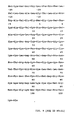
- Examples of particular peptides which may be used are the amino acid sequences 57-107, 57-102, and 5-49 of human SLPI (see Fig. 9), the Leu-72-Arg and Leu-72-Lys muteins of the 57-107 and 57-102 sequences of human SLPI, the Leu-19-Arg and Leu-19-Lys muteins of the 5-49 sequence of human SLPI, and muteins of a fragment of human SLPI having the amino acid sequence: Ser-Gly-Lys-Ser-Phe-Lys-Ala-Gly-Val-Cys-Pro-Lys-Lys-Ser-Ala-Gln-Cys-Xa a-Leu-Arg-Tyr-Lys-Lys-Pro-Glu-Cys-Gln-Ser-Asp-Trp-Gln-Cys-Pro-Gly-Lys-Lys-Arg-C
- Preparation of the N- and C-terminal domains of the SLPI molecule is accomplished by hydrolyzing full-length SLPI under mild acid conditions, as exemplified below.
- Other fragments of the SLPI molecule may be prepared as disclosed in the following text.
- Fragments of the SLPI protein can be synthesized or produced either in bacteria, from the pET-3d vector, or in baculovirus vectors such as pVL1392 or pAc-GP67.
- DNA fragments coding for the 57-107 and 57-102 sequences of the C-terminal domain of SLPI can be produced using the polymerase chain reaction using primers 4/5 and 4/7, respectively, in Table I.
- the Leu-72-Arg mutation of 57-107 can be made using primers 5/6 and the Leu-72-Lys version can be prepared with primers 5/10.
- the Leu-72-Arg mutation of 57-102 can be prepared using primers 6/7 and the Leu-72-Lys version can be prepared with primers 7/10. (Engineered restriction sites are indicated in bold face type.)
- genes are then expressed in bacteria with an extra methionine and an extra alanine residue at the N-terminus to allow for the initiation of translation.
- these SLPI fragments can be expressed in the baculovirus system with a naturally-occurring baculovirus leader sequence to allow for proper processing and excretion of the expressed protein in an active state.
- the baculovirus-expressed material contains seven additional amino acids derived from the leader sequence.
- the Leu-72-Arg and Leu-72-Lys mutations should result in a substantial decrease in the K i value for the inhibition of tryptase compared to the wild type SLPI sequence.
- DNA fragments coding for the 5-49 sequence of the N-terminal domain of SLPI can be produced using the polymerase chain reaction and primers 8/9. These fragments can be expressed in the baculovirus system using the native SLPI leader sequence to allow for proper processing and excretion of the active protein. Further, the Leu-19-Arg and Leu-19-Lys mutations can be made within the 5-49 sequence using primers 9/14 and 9/15, respectively. Two novel sequences derived from the N-terminus of SLPI can be constructed using primers 9/11 and 9/12 producing (SEQ ID No:1). A fragment of SLPI, 5-102 containing parts of both the N- and C-terminal domains of SLPI can be produced by the polymerase chain reaction using primers 8/13.
- SLPI or pharmacologically active fragments or muteins thereof may be by any suitable mode known to those skilled in the art.
- suitable parenteral administration include intravenous, subcutaneous and intramuscular routes.
- Intravenous administration can be used to obtain acute regulation of peak plasma concentrations of the drug as might be needed for example to treat acute episodes of airway hyperresponsiveness.
- Improved half-life and targeting of the drug to the airway epithelia may be aided by entrapment of the drug in liposomes. It may be possible to improve the selectivity of liposomal targeting to the airways by incorporation of ligands into the outside of the liposomes that bind to airway-specific macromolecules.
- intramuscular or subcutaneous depot injection with or without encapsulation of the drug into degradable microspheres e.g comprising poly(DL-lactide-co-glycolide) may be used to obtain prolonged sustained drug release as may be necessary to suppress the development of airway hyperresponsiveness.
- degradable microspheres e.g comprising poly(DL-lactide-co-glycolide)
- an i.p. implanted reservoir and septum such as the Percuseal system available from Pharmacia.
- injector pens e.g. the Novo Pin or Q-pen
- needle-free jet injectors e.g. from Bioject, Mediject or Becton Dickinson
- Prolonged zero-order or other precisely controlled release such as pulsatile release can also be achieved as needed using implantable pumps. Examples include the subcutaneously implanted osmotic pumps available from ALZA, such as the ALZET osmotic pump.
- Nasal delivery may be achieved by incorporation of the protein drug into bioadhesive particulate carriers ( ⁇ 200 ⁇ m) such as those comprising cellulose, polyacrylate or polycarbophil, in conjunction with suitable absorption enhancers such as phospholipids or acylcarnitines.
- bioadhesive particulate carriers ⁇ 200 ⁇ m
- suitable absorption enhancers such as phospholipids or acylcarnitines.
- Available systems include those developed by DanBiosys and Scios Nova.
- Oral delivery may be achieved by incorporation of the drug into enteric coated capsules designed to release the drug into the colon where digestive protease activity is low. Examples include the OROS-CT/OsmetTM and PULSINCAPTM systems from ALZA and Scherer Drug Delivery Systems respectively.
- the lower airway epithelia are highly permeable to wide range of proteins of molecular sizes up to 20 kDa (e.g granulocyte colony stimulating factor). It is possible to spray dry proteins in suitable carriers such as mannitol, sucrose or lactose. Micron-sized particles may be delivered to the distal alveolar surface using dry powder inhalers similar in principle to those designed by Inhale, Dura, Fisons (Spinhaler), Glaxo (Rotahaler) or Astra (Turbohaler) propellant-based metered dose inhalers.
- dry powder inhalers similar in principle to those designed by Inhale, Dura, Fisons (Spinhaler), Glaxo (Rotahaler) or Astra (Turbohaler) propellant-based metered dose inhalers.
- Solution formulations with or without liposomes may be delivered using ultrasonic nebulizers. See the following references for further discussion of this topic: McElvaney, et al., J. Clin. Invest., 90 , 1296-1301 (1992); and Vogelmeier et al., J. Appl. Physiol., 69 , 1843-1848 (1990).
- the in vivo concentration of SLPI can be increased via a gene therapy approach.
- a synthetic or natural gene that codes for SLPI or a pharmacologically active fragment of SLPI can be inserted into an appropriate vector and used to transfect cells in vivo to permit production of the SLPI protein or an active fragment thereof.
- One advantage of such a gene therapy approach is sustained expression of SLPI within the tissue of interest. Less frequent administration of the gene as compared to the protein may lead to increased patient compliance.
- retrovirus-based vectors have been used for the treatment of genetic deficiencies such as adenosine deaminase, Gaucher's Disease, and clotting deficiencies, while adeno and adeno-associated viral vectors are being used for expression of the cystic fibrosis transmembrane conductance regulator gene in airway epithelial cells in cystic fibrosis patients.
- These viruses bind to specific receptors on the cell surface and are brought into the cell by endocytosis. Subsequently, the virus is able to disrupt the endosome and gain entry into the cell nucleus, allowing for expression of the gene of interest.
- Another method for delivery of a gene for a therapeutic protein uses lipophilic vesicles.
- the lipophilic vesicles are designed such that they contain the exogenous DNA of interest. Besides the DNA, they occasionally contain molecules that target the vesicle to particular target cell (see Felgner et al., Proc. Natl. Acad. Sci. USA, 84 , 7413, (1987)). Experimental details of the preparations are known to those skilled in the art and require no further elaboration here.
- SLPI gene therapy using the SLPI gene for the treatment of asthma is outlined below.
- the cystic fibrosis transmembrane conductance regulator gene is administered to the lungs of cystic fibrosis patients using an E1 deleted adenovirus vector (see Wilson et al. Human Gene Therapy 5 , 501-519 (1994)).
- Adenovirus is a 35 kb double stranded, nonenveloped DNA virus that is responsible for many types of respiratory infections in humans.
- the SLPI gene must be targeted to airway epithelial cells. In the vector described by Wilson et al.
- the E1 region of the adenovirus genome was removed, which results in a virus that is unable to replicate.
- This vector will be used here to deliver the SLPI gene to the lungs of asthmatics.
- the gene for SLPI will be made using PCR on human lung RNA using primers 1 and 2 listed in table I.
- the SLPI gene would be purified and cloned into pUC 21 using techniques known to those skilled in the art. This construct will be digested with the restriction enzymes Not I and Eco RI and the SLPI gene purified, blunted and then inserted into the plasmid pAd.CB-CFTR in place of the CFTR gene.
- This new construct contains a minigene consisting of the CMV enhancer region, the chicken ⁇ -actin promoter, the SLPI cDNA and the SV40 late gene polyadenylation site.
- This plasmid is used to make recombinant SLPI adenovirus using the procedures as described by Wilson et al. (ibid.). Also, virus is produced according to their protocols. The patient will be transfected by administering the recombinant virus to the lung in normal saline given through a bronchoscope. The exact dose of virus would have to be experimentally determined by performing a dose escalation starting at approximately 5 x 10 5 plaque forming units and going up to 2 x 10 10 plaque forming units.
- the mast cell-mediated condition to be treated' with a medicament manufactured according to the invention is asthma and the DNA-containing vector is introducable into the lung, as discussed above.
- the mast cell-mediated condition is allergic rhinitis and the DNA-containing vector is introducable into the nose.
- the vector may be selected from the group consisting of adenovirus, adeno-associated virus, a retrovirus, and neutral or cationic liposomes.
- the DNA which is to be employed in the gene therapy treatment may be DNA which codes for SLPI, or DNA which codes for a pharmacologically active fragment of SLPI.
- the pharmacologically active fragment of SLPI may comprise the N-terminal domain of the SLPI molecule, the C-terminal domain of the SLPI molecule, or portions of both the N-terminal and C-terminal domains of the SLPI molecule.
- the amount of the pharmaceutical composition to be employed will depend on the recipient and the condition being treated. The requisite amount may be determined without undue experimentation by protocols known to those skilled in the art. Alternatively, the requisite amount may be calculated, based on a determination of the amount of tryptase which must be inhibited in order to treat the condition. As the active materials contemplated in this invention are deemed to be nontoxic, treatment preferably involves administration of an excess of the optimally required amount of active agent.
- tryptase is purified from a homogenate of human lung using a series of chromatographic steps. This purification procedure is complex, time consuming, provides poor yields, and can result in tryptase which is not completely homogeneous. Further, to determine the role of tryptase in the development of disease, it is necessary to be able to determine conveniently the concentration of tryptase in various biological samples.
- the present invention answers these needs by providing 1) an improved method for purifying tryptase, and 2) an improved method for determining tryptase in biological fluids and extracts. Both of these improved procedures are based on applicants' discovery that SLPI is an inhibitor of tryptase.
- the method of purification is simpler, more convenient, faster, and results in higher yields and more highly purified enzyme than the prior art purification procedure.
- the procedure for determining tryptase allows the concentration of active tryptase in a sample to be determined, as opposed to a determination of total tryptase, some of which may be inactive or complexed with an inhibitor.
- the tryptase or tryptase-containing material having an assayable amount of enzymatic activity is purified or commercially-obtained tryptase, or tryptase-containing tissue such as lung or skin. Preparation of tissue samples involves extraction as discussed below.
- test substance to be assayed for its ability to modulate tryptase activity is a natural or synthetic compound.
- examples include commercially available proteins, conditioned media from cell lines, and various tissue extracts.
- the tryptase substrate is a labeled peptide or protein.
- examples of naturally occurring tryptase substrates are the VIP employed in this application, CGRP, PHM, and muteins thereof.
- suitable labels are the dansyl, dabcyl, Abz, and fluorsceinyl groups.
- Detection of the unreacted labeled substrate or the cleavage product of the reaction between tryptase and the labeled substrate is a function of the particular label used.
- the reaction mixtures are separated by HPLC, and the fluorescence of the labeled materials is monitored at an appropriate wavelength.
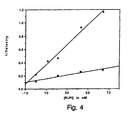
- the inhibitory effect of a range of test substance concentrations is determined by measuring the reaction rates at a minimum of two different substrate concentrations, and constructing a Dixon plot (1/velocity vs inhibitor concentration), from which the type of inhibitor and the K i value are obtained.
- Acetonitrile (HPLC grade) was purchased from J.T. Baker (Philadelphia, PA).
- ACN stands for acetonitrile
- Anhydrotrypsin-Sepharose was obtained from Takara Biochemical, Inc., Berkeley, CA.
- Anti-tryptase monoclonal antibody was obtained from Dako (U.K.).
- Ascaris suum extract was obtained from Greer Labs (Lenoir, N.C.).
- Baculovirus vector pVL 1392 is available from Invitrogen, San Diego, CA; pAc GP67 is available from Pharmingen, San Diego, CA.
- BAL stands for bronchoalveolar lavage.
- the Bird respirator was from Bird Products, Corp, Palm Springs, CA.
- BOC stands for the t-butyloxycarbonyl group.
- CGRP stands for calcitonin gene-related peptide.
- Cyanogen bromide-activated sepharose is obtained from Pharmacia, Piscataway, NJ.
- Cynomolgus monkeys were obtained from Biomedical Research Foundation (Houston, Tx).
- Dabcyl stands for the 4-(4-dimethylamino phenylazo)- benzoyl group.
- Dansyl histidine was purchased from Research Plus (Bayonne, NJ).
- DMSO dimethylsulfoxide, available from the Aldrich Chemical Co. (Milwaukee, WI).
- E-64 is N-[N-(L-3-trans-carboxyoxiran-2-carbonyl)-L-leucyl-agmatine and is available from Sigma Chemical Co. (St. Louis, MO).
- Ethanedithiol was purchased from the Aldrich Chemical Co. (Milwaukee, WI).
- GPK-AMC stands for Gly-Pro-Lys-Aminomethylcoumarin.
- HBSS stands for Hank's balanced salt solution, which is 0.4 g/L KCl, 0.06 g/L KH 2 PO 4 , 8.0 g/L NaCl, 0.35 g/L NaHCO 3 , 0.048 g/L Na 2 HPO 4 , 1.0 g/L glucose, and 0.01 g/L phenol red.
- Heparin procine mucosal was obtained from Sigma Chemical Co., St. Louis, MO.
- Heparin-sepharose was obtained from Pharmacia (Piscataway, NJ).
- High salt buffer is 10 mM MES at pH 6.1, 2.0 M NaCl, and 0.02 % sodium azide.
- Ketamine was obtained from Henry Schein, Port Washington, NY.
- Lidocaine was obtained from Henry Schein, Port Washington, NY.
- Low salt buffer is 20 mM MES at pH 6.1, 150 mM NaCl, and 0.02 % sodium azide.
- MES 2-(N-morpholino)ethanesulfonic acid and is obtained from Sigma Chemical Co. (St. Louis, MO).
- Micro-vials for the auto-injector on the HP1090 were obtained from SunBrokers (Wilmington, NC).
- MWCO molecular weight cut off
- NMP-IIBTU Fmoc chemistry is chemistry based on N-methylpyrrolidone /2-(1H-benzotriazole-1-yl)-1,1,3,3-tetramethyl-uronium hexafluorophosphate/9-fluorenylmethoxy- carbonyl .
- Octyl-sepharose was obtained from Pharmacia (Piscataway, NJ).
- PBS stands for phosphate buffered saline, and consists of 0.21 g/L KH 2 PO 4 , 9.0 g/L NaCl, and 0.726 g/L Na 2 HPO 4 •7H 2 O.
- pET 3d vector is available from Novagen, Madison, WI by license.
- PHM stands for peptide histidine-methionine and is available from Sigma Chemical Co. (St. Louis, MO).
- PMC stands for the 2,2,5,7,8-pentamethylchroman-6-sulfonyl group.
- Pneumotachometer is from Hans Rudolph, Inc., Kansas City, MO.
- PTC amino acid analysis (where PTC stands for phenylthiocarbamoyl) was carried out in accordance with the procedure of Dupont, D. R., Keim, P. S., Chui, A. H., Bello, R., Bozzini, M., and Wilson, K. J. in Techniques in Protein Chemistry: A comprehensive approach to amino acid analysis (Hugli, T. E., Ed) pp. 284-294, Academic Press, San Diego, (1989).
- pVL 1392 is a baculovirus vector available from Invitrogen, San Diego, CA.
- Rink resin was obtained from Novabiochem (La Jolla, CA).
- Sample buffer (1X) is 0.45 M Tris (pH 8.5), 2.25% SDS, 10% glycerol plus 2.5% BME, where SDS stands for sodium dodecyl sulfate, and BME stands for beta-mercaptoethanol.
- SDS-PAGE tricine buffered gels were obtained from Novex, San Diego, CA.
- SDS-PAGE stands for sodium dodecyl sulfate - polyacrylamide gel electrophoresis and tricine stands for N-[tris-(hydroxymethyl)-methyl]glycine.
- SLPI secretory leukocyte protease inhibitor. This material is also known by other names, including the following: bronchial inhibitor, human seminal inhibitor-1 (HUSI-1), antileucoprotease-1 (ALP-1), cervix-uterus-secretion inhibitor (CUSI-1), and bronchial-secretion inhibitor (BSI). Recombinant SLPI was purchased from R + D Systems (Minneapolis, MN).
- TAME assay employs p-tosyl-L-arginine methyl ester.
- t-Butyl methyl ether was purchased from Aldrich Chemical Co. (Milwaukee, WI).
- TFA trifluoroacetic acid and was purchased from Pierce (Rockford, II).
- Thioanisole was purchased from Aldrich Chemical Co. (Milwaukee, WI).
- TPCK stands for L-1-chloro-3-[4-tosylamido]-4-phenyl-2-butanone and is available from Sigma Chemical Co. (St. Louis, MO).
- Tris stands for tris-(hydroxymethyl)aminomethane and was purchased from the Sigma Chemical Co. (St. Louis, MO).
- Triton X-100 was purchased from the Sigma Chemical Co. (St. Louis, MO).
- TRT stands for the trityl group.
- Turbochrome Chromatography Software is used with the amino acid analyzer, peptide synthesizer, and protein sequencer and is available from P.E. Nelson (Cuppertino, CA).
- Vydac C-18 reverse phase HPLC column (2.2 x 25 cm) was obtained from Vydac, Hesperia, CA.
- Xylazine was obtained from Henry Schein, Port Washington, NY.
- Yohimbine was obtained from Henry Schein, Port Washington, NY.
- Dansylated VIP (28 amino acids) was synthesized on an Applied Biosystems model 430A peptide synthesizer using NMP-HBTU Fmoc chemistry.
- the side chain protecting groups used were: TRT for asparagine and aspartic acid; t-butyl for serine, tyrosine, and threonine; BOC for lysine; and PMC for arginine.
- the peptide was synthesized on rink resin, with the dansyl-histidine coupled as the final N-terminal amino acid.
- Mast cell tryptase was purified to homogeneity from fresh human lung samples with minor modifications to the published procedure of Smith, T. J., Hougland, M. W., and Johnson, D. A., J. Biol. Chem., 259 , 11046-11051 (1984). All steps were performed at 4°C. Briefly, 400 g of frozen or fresh human lung was cut into approximately 1 cm square pieces, placed in a Waring blender with 500 ml of ice-cold water, blended for 1 min. on a setting of 1, then centrifuged for 20 min. at 10,000 x g. The resulting pellet was then blended in 500 ml of low salt buffer, then centrifuged again as above. This procedure was repeated 5 times to remove blood and other contaminants.
- tryptase was extracted from the pellet by blending in 500 ml of high salt buffer for 2 x 2 min. on a blender setting of 7. The sample was then centrifuged as above and the high salt extraction was repeated. The resulting supernatants, containing the tryptase, were pooled and filtered through cheese cloth to remove fat particles. Cetylpyridinium chloride 0.09 % (wt/vol) was added after the high salt extraction. Next, an ammonium sulfate precipitation was performed. Solid ammonium sulfate was added to the crude high salt extract to a final concentration of 45% saturation (on ice). After 20 min. the sample was centrifuged at 20,000 x g for 30 min.
- the resin was poured into a column (5 x 10 cm), washed with 10 column volumes of Buffer A (2 ml/min.) and eluted with a linear gradient (200 ml each) into 10 mM MES (pH 6.1)(Buffer B). Tryptase activity was monitored using the GPK-AMC assay as described below. The active fractions were pooled and diluted with ice-cold water to a conductivity of 29 mmho. The sample was immediately loaded onto a heparin agarose column (20 ml) prepared according to Schwartz, L. B., J.
- Protein purity was determined by silver staining of reducing 10-20% SDS-PAGE tricine buffered gels that were run according to the manufacturer's specifications.
- the purified tryptase was homogeneous as judged by silver staining.
- the band appeared diffuse with a molecular weight centered around 31,000 g/mole.
- This same band reacted in a Western blot analysis using the A2 anti-tryptase monoclonal antibody (from Dako Inc.) at a 1:500 dilution according to the manufacturer's specifications.
- Tryptase activity was measured according to the procedure of Schwartz, et al., J. Biol. Chem., 261 , 7372-7379 (1986), with minor modifications, using Gly-Pro-Lys-Aminomethylcoumarin (GPK-AMC) as a substrate.
- the reaction was performed in assay buffer (0.1 M Tris, pH 8.0, 10 ⁇ g/ml heparin) at room temperature in a 96-well microtiter plate (Perkin-Elmer, Norwalk, CT).
- % inhibition 100 x [1- F0/F1] where F0 is the fluorescence of the unknown and F1 is the fluorescence of the tryptase-only control.
- One unit of activity for the inhibitors is defined as the amount needed to achieve 50% inhibition in the assay using the conditions as described.
- a reaction mixture consisting of 0.5 mg of dansyl-VIP, 0.6 ⁇ g tryptase in 100 mM Tris-HCI, pH 7.8, containing 10 ⁇ g/ml heparin was incubated at 37°C for 30 minutes. The reaction was stopped by the addition of TFA to a final concentration of 3% (v/v). Approximately 95% of the full length peptide was cleaved at this time and the products were purified using C-18 reverse-phase chromatography (Vydac column, 5 micron, 0.46 x 25 cm) by elution with a linear gradient of 20-35 % ACN (plus 0.1% TFA) over 20 minutes (25°C, 1 ml/min).
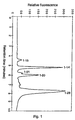
- Fig.1 shows that incubation of Dns-VIP with human lung tryptase results in the formation of two major and two minor peptide fragments, which were subjected to amino acid analysis and mass spectrometry.
- the major peptide fragments were identified as Dns-VIP-(1-14) and Dns-VIP-(1-20) respectively, and the two minor peptide fragments were identified as Dns-VIP-(1-15) and Dns-VIP-(1-21) respectively.
- the Dns-VIP-(1-21) material elutes as a shoulder on the Dns-VIP-(1-20) material.
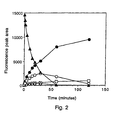
- Fig. 2 shows the time course of the formation/disappearance of Dns-VIP-(1-14) (closed circles), Dns-VIP-(1-15) (open squares), Dns-VIP-(1-20) (open circles), Dns-VIP-(1-21) (open triangles), and Dns-VIP (closed triangles).
- the data show that the product-precursor kinetics for the accumulation of the VIP fragments was consistent with initial cleavage of VIP occurring after Arg-14 and Lys-20, with similar rates. Once the full-length Dns-VIP was exhausted, the Dns-VIP-(1-20) was further degraded to the Dns-VIP-(1-14).
- the final (stable) dansyl product was predominantly Dns-VIP-(1-14), with some Dns-VIP-(1-15), and a small amount of Dns-VIP-(1-20) also present. No fragments derived from cleavage after the arginine residue at position 12 were detected. No measurable N-Dansylated products were formed in the absence of added enzyme over a two hour period.
- mast cell tryptase (12.5 pM) was incubated at 37°C with dansyl-VIP (0.2-2 ⁇ M) in 100 mM Tris-HCl (pH 8.0) containing 1 ⁇ g/ml porcine mucosal heparin and 0.02% Triton X-100 in a final volume of 2.0 ml.
- secretory leukocyte protease inhibitor was added to a final concentration of between 0 and 107 nM.
- the tryptase was pre-incubated with the SLPI, if added, for 5 min. at 37°C before initiating the reaction by the addition of Dns-VIP.
- the kinetic parameters K m , kcat, and Vmax for the initial rate of formation of Dns-VIP-(1-14) and Dns-VIP-(1-20), as well as the initial rate of disappearance of full-length Dns-VIP were determined. Results are shown in Table III.
- the initial velocity for the formation of Dns-VIP-(1-20) also contains the rate for the formation of Dns-VIP-(1-21) since it appears as a shoulder on the Dns-VIP-(1-20) peak within the elution profile.
- a K m value of 0.1 ⁇ M was observed for the formation of both Dns-VIP-(1-14) and Dns-VIP-(1-20) while a K m value of 0.5 ⁇ M was observed for the disappearance of Dns-VIP. Tryptase was shown to have a slight preference for hydrolysis after Arg-14 over Lys-20, demonstrating a kcat/K m that is almost two-fold higher. The effect of salt concentration on the initial rates of cleavage of Dns-VIP was measured in 150 mM NaCl and 10 mM CaCl 2 . In all cases, the kcat/K m values decreased with increasing salt concentration.
- Nasal secretions were isolated from a person with chronic sinusitis. Samples (usually 2-15 ml) were frozen at -20°C immediately after harvesting and stored frozen until needed (less than 6 months). For analysis, approximately 5 ml of frozen nasal secretions were thawed and subsequently extracted with 10 volumes of 0.1% TFA (at room temperature) by vortexing intermittently over a 5 minute period. Insoluble material was removed by centrifugation at 10,000 x g for 30 min. The supernatant was then filtered through a 0.45 ⁇ M filter.
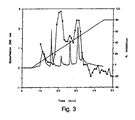
- the pooled fractions corresponding to the peak of Fig. 3 having a retention time of 20 min. were subjected to affinity chromatography on anhydrotrypsin sepharose.
- the samples were lyophilized and then resuspended in 0.1% TFA.
- the pH of the sample was raised to 8.0 with the addition of solid Tris base.
- CaCl 2 was added to a final concentration of 20 mM.
- the sample was then loaded onto the anhydrotrypsin-sepharose column equilibrated in 0.1 M Tris buffer (pH 8.0) plus 20 mM CaCl 2 at a flow rate of 1 ml/min, and then washed with 10 ml of the same buffer.
- the column was then eluted with 200 mM NaAc (pH 4.0) plus 20 mM CaCl 2 .
- the eluted material was concentrated in a Centricon-3 concentrator at 5,000 x g (Amicon, Beverly, MA).
- the sample was diluted 10 fold with 10 mM Tris (pH 8.0) and again concentrated to 100 ⁇ L.
- the sample was dialyzed vs. 0.01% SDS using dialysis tubing (Spectrum, Gardena, CA) with a 1 kD MWCO.
- the pellet was resuspended in 40 ⁇ l of 3X sample buffer (Novex, San Diego, CA) plus 2-mercaptoethanol, heated at 100°C for 5 min.
- tryptase inhibitory activity that was identified in crude nasal secretions was also purified on a tryptase affinity column. Tryptase was purified to homogeneity from human lung as described above. To immobilize the tryptase for the affinity chromatography, heparin sepharose was used. 80 ⁇ L of a 1 mg/ml solution of tryptase was made 2 M NaCl to dissociate the heparin already bound to the molecule. Heparin-sepharose was prepared by swelling enough powder in deionized water to make 4 ml of resin.
- the swelled resin was equilibrated in column buffer consisting of 10 mM MES (pH 6.1), 10% glycerol, and 0.02% Triton X-100.
- the tryptase solution 80 ⁇ l was added to the resin and the total volume adjusted to 10 ml by addition of more column buffer.
- the sample was mixed overnight at 4°C to allow the tryptase to bind to the heparin on the resin.
- a one ml column was prepared from an aliquot of this slurry and washed with 10 ml. of column buffer.
- Crude nasal secretions were prepared as described above. 12 ml of crude extract (in 0.1% TFA) was adjusted to a pH of 8.05 by the addition of Tris base. All steps were performed at room temperature. The sample was centrifuged at 10,000 X g for 30 min. and the supernatant filtered through a 0.22 ⁇ m filter. 10.5 ml of a 2.62 mg/ml solution of the filtered extract was loaded onto the one ml tryptase affinity column at less than 1 ml/min. The column was washed with 75 ml of column buffer until the O.D. at 280 nm of the effluent was less than 0.01. Bound proteins were eluted with 0.1 M formic acid at pH 1.7.
- the proteins that were affinity purified on a tryptase column were subjected to SDS-PAGE analysis using 10-20 % acrylamide gels (Novex) and run according to the manufacturer's directions.
- the Problott membrane was stained with Coomassie blue and revealed four species with molecular weights of approximately 55, 13, 9.5, and 9 kD by comparison with Bethesda Research Labs' low molecular weight standards.
- the bands were excised from the membrane and subjected to N-terminal sequence analysis as described above.
- the sequence of the N-terminus of the 13 kD species was determined to be 1°: Xaa-Gly-Lys-Xaa-Phe-Lys-Ala-Gly-Xaa-Xaa- (SEQ ID NO:19). This sequence corresponds to the N-terminus of secretory leukocyte protease inhibitor (SLPI).
- Fig. 4 shows inhibition by SLPI of the proteolytic activity of tryptase using Dns-VIP as a substrate. From this Dixon plot, tryptase appears to be a competitive inhibitor and the K i value for the inhibition of the degradation of the full length peptide was determined to be 8 nM.
- SLPI is a potent inhibitor of tryptase and is the first demonstration of tryptase inhibition by a biological serine protease inhibitor. Accordingly, SLPI provides a non-toxic, non-immunogenic tryptase inhibitor for prevention or amelioration of mast-cell mediated diseases.
- the novel fragments and muteins of SLPI which retain the inhibitory activity of SLPI will provide similar advantages and can be engineered to have advantages such as extended half-life, increased potency, and improved pharmacological profiles.
- SLPI was cleaved into two separate domains using acid cleavage of the Asp-Pro bond located at position 49-50.
- Recombinant SLPI was cleaved by reacting 1.3 mg of SLPI in 0.26 ml 70% formic acid for 1 week at 40°C. The mixture was then dried in a Speed Vac concentrator. Any residual acid was removed by dissolving the sample in 0.25 ml deionized water and drying in the Speed Vac and then repeating this process. The final dried product was resuspended in 0.1 ml of 0.1% TFA in water.
- the N-terminal and C-terminal domains of SLPI were separated using C-8 reverse-phase chromatography (Vydac, 5 micron, 0.46 x 25 cm). Protein was eluted with a linear gradient of 20-40% ACN in 0.1% TFA over 30 minutes (25°C, 1 ml/min). Chromatography was performed using a Beckman HPLC equipped with a model 168 diode array detector and System Gold software. The separation yielded 3 major peaks, shown in Fig. 5. The first peak (peak 1) eluted in the void fractions (20% ACN) and the second peak (peak 2) eluted at 31% ACN.
- Peak 1 from Fig. 5 (the C-8 elution, 4.6 ml) was diluted 1:1 with 0.1% TFA in water and loaded directly onto the C-18 column (Vydac, 5 micron, 0.46 x 25 cm). The protein was eluted in a single major peak at 23% ACN using a linear gradient of 10 to 40% ACN in 0.1% TFA over 40 minutes (Fig. 6A).
- Peak 2 from Fig. 5 (C-8 column) was lyophilized and resuspended in 0.1 ml of 0.1% TFA prior to chromatography on C-18 under identical elution conditions as for peak 1.
- the major peak (215 nm) from this sample eluted from the C-18 column at 29% ACN (Fig. 6B), and was collected and lyophilized.
- the experimentally determined composition of the material from Fig. 6B matched the C-terminal domain of SLPI with an accuracy of 90%, as shown in Table IV.
- the amino acid analysis shows 190 ⁇ g of the N-terminal domain (from Fig. 6A) and 47 ⁇ g of the C-terminal domain (from Fig. 6B) were obtained, for yields of 29% and 7%, respectively.
- Inhibitory activity against tryptase and bovine trypsin was measured using Gly-Pro-Lys-aminomethylcoumarin as a substrate.
- the reaction was performed in assay buffer that consisted of 0.1 M Tris (pH 8.0), 1 ⁇ g/ml heparin, 0.02% Triton X-100, with 20 mM CaCl 2 included only in the trypsin assays.
- tryptase activity 12 ⁇ l of a 1 nM solution of tryptase (tetramer) was incubated with either the N- (34 to 650 nM final) or the C- terminal (7-150 nM final) domain of SLPI in 1.0 ml of assay buffer for 5 minutes at 37°C. The reaction was started by the addition of the substrate GPK-AMC (20 or 40 ⁇ M final) and the increase in fluorescence was measured over a 2 minute period.
- N- and C-terminal domains of SLPI are potent inhibitors of tryptase activity as measured by both the GPK and VIP assays. Therefore, these fragments of SLPI should be useful for the treatment of asthma and other mast-cell mediated conditions.
- SLPI 10 mg.
- recombinant human SLPI is coupled to 5 ml of cyanogen bromide-activated sepharose prepared according to the manufacturer's specifications.
- the slurry is equilibrated by washing with at least 50 ml of 0.1 M Tris (pH 8.0), 100 mM NaCl, 0.02% Triton X-100 (Buffer C).
- the resulting immobilized SLPI resin is then ready for use.
- 100 g of frozen or fresh human lung is cut into 1 cm square pieces, placed in a Waring blender with 100 ml of ice-cold water, and blended for 1 min. on a setting of 1.
- the material is next centrifuged for 20 min. at 10,000 x g, then subjected to blending in 100 ml of low salt buffer and centrifuged again as above.
- Tryptase is extracted from the resulting pellet by blending in 100 ml of high salt buffer for 2 x 2 min. on a setting of 7, then centrifuging as above.
- the supernatant, containing the tryptase is filtered through cheese cloth to remove fat particles.
- the filtrate is then mixed with 5 ml of immobilized SLPI resin (above).
- the sample is gently mixed for one hour at room temperature.
- the resin is poured into a column and washed with 100 ml of Buffer C at a flow rate of 1 ml/min.
- the tryptase is then eluted with 0.2 M acetic acid (pH 4.0) at a flow rate of 0.5 ml/min.
- the pH of the eluted material is immediately raised to 7.0 by the addition of Tris base.
- Fractions containing tryptase activity are pooled and dialyzed vs. 10 mM MES (pH 6.1), 10% glycerol, 10 ⁇ g/ml heparin, 0.02% Triton X-100, and stored at -80°C until used.
- the purity and activity of the enzyme are determined as discussed below.
- the sample to be analyzed for tryptase is diluted appropriately in buffer containing 0.1 M Tris (pH 8.0), 0.02% Triton X-100, and 10 ⁇ g/ml heparin.
- a protease inhibitor cocktail is added including final concentrations of 0.5 mg/ml EDTA, 0.5 mg/ml E-64, 100 ⁇ g/ml TPCK, and 0.7 ⁇ g/ml pepstatin.
- Various known concentrations of SLPI, dissolved in the same buffer, are added to the unknown and incubated at 37°C for 10 min. in a total volume of 1 ml.
- the peptide substrate Abz-His-Lys-Ala-Arg-Val-Leu-p-Nitro-Phe-Glu-Ala-Nle-Ser-NH 2 (SEQ ID NO:20), is added to a final concentration of 14 ⁇ M.
- the increase in fluorescence at 420 nm is monitored with an excitation wavelength of 330 nm and 5 nm slit widths.
- the velocity of the reaction is measured over a 2 minute period.
- a plot of fractional tryptase activity remaining vs. the concentration of added SLPI is constructed.
- the least squares fit to the data allows the determination of the tryptase concentration.
- This method allows the determination of tryptase levels in such samples as bronchoalveolar lavage fluid, nasal secretions, blister fluid, urine, plasma, cell culture conditioned media and various tissue extracts.
- monkeys A, B, C, and D Four male cynomolgus monkeys, each weighing 4-8 kg and identified as monkeys A, B, C, and D, respectively, were fasted for 8-10 hours prior to undergoing any test procedures. Each was then treated as follows.
- the monkey was anesthetized with a combination of Ketamine (7 mg/kg) and Xylazine (1.2 mg/kg) solution administered intramuscularly. After being anesthetized, it was placed in a supine position on a heated table.
- a blood sample (approximately 2.5 ml in EDTA) was collected from the femoral vein and placed on ice. Later the same day a complete blood count analysis was performed using a Serono 2000 cell counter.
- a small amount of 2% lidocaine solution was sprayed onto the back of the monkey's throat to aid intubation.
- the monkey was intubated (5.0 Low-Pro tracheal tube cut to 18 cm, with Lidocaine gel on the tip) and placed in a primate pulmonary function chair. Ophthalmic ointment was placed in its eyes to prevent drying. Water jacket heating pads were placed around it and a knit cap placed on its head to prevent hypothermia. It was given a deep breath (30 cm H 2 O) of air using a one liter syringe with an attached pressure gauge, then connected to a linear pneumotachometer with attached pressure transducers. Data were collected and analyzed by computer (Modular Instruments).
- Baseline readings of airway resistance were measured at 25 minutes prior to antigen challenge.
- a bronchoalveolar lavage sample (BAL) was taken at 20 minutes prior to antigen challenge.
- BAL bronchoalveolar lavage sample
- each monkey received phosphate buffered saline (PBS) buffer.
- PBS phosphate buffered saline
- rhSLPI recombinant human SLPI
- the dose of SLPI or Ascaris suum extract was given using a Bird respirator connected to a nebulizer.
- rhSLPI was given for 2 minutes at 15 breaths/minute, over which approximately 500 ⁇ l of an 18.5 mg/ml solution was delivered to each animal.
- each animal received approximately 9.25 mg of rhSLPI, or 1.2-2.3 mg/kg.
- Antigen challenge using an Ascaris suum extract was also given using a Bird respirator connected to a nebulizer and administered at 15 breaths/minute for 2 minutes.
- the dose of Ascaris antigen was the same for all three experiments and for each monkey was as follows: monkey A, 1 mg/ml; monkey B, 1 mg/ml; monkey C, 0.5 mg/ml; and monkey D, 0.5 mg/ml.
- airway resistance was again monitored and the peak percent increase in resistance was calculated compared to the second baseline reading taken immediately after administration of placebo or drug (SLPI).
- a second lavage sample was taken at 15 minutes post antigen challenge. All lavage samples (1 x 20 ml saline in the right lung for BAL-1 and in the left lung for BAL-2) were immediately centrifuged (1,100 rpm for 10 minutes) and then placed on ice. After centrifugation the cells were resuspended in 2 mls of HBSS and cell counts recorded using a hemocytometer. Cytospin slides were made from the cell suspension and later stained for cell differential counts. After the final lavage the monkeys were weaned from the respirator and placed on a heating pad for recovery.
- SLPI was given to the animals prior to the antigen challenge the peak increase in airway resistance was only 140 %. Therefore SLPI was able to reduce the acute bronchoconstriction in the cynomolgus monkeys.
- this monkey model is generally viewed in the field as being an acceptable model of the human disease process, these data indicate that SLPI would be useful for the treatment of asthma in humans.
Landscapes
- Health & Medical Sciences (AREA)
- Chemical & Material Sciences (AREA)
- Life Sciences & Earth Sciences (AREA)
- Organic Chemistry (AREA)
- Engineering & Computer Science (AREA)
- Medicinal Chemistry (AREA)
- General Health & Medical Sciences (AREA)
- Bioinformatics & Cheminformatics (AREA)
- Genetics & Genomics (AREA)
- Zoology (AREA)
- General Chemical & Material Sciences (AREA)
- Animal Behavior & Ethology (AREA)
- Nuclear Medicine, Radiotherapy & Molecular Imaging (AREA)
- Public Health (AREA)
- Veterinary Medicine (AREA)
- Pharmacology & Pharmacy (AREA)
- Molecular Biology (AREA)
- Chemical Kinetics & Catalysis (AREA)
- Biochemistry (AREA)
- Pulmonology (AREA)
- Wood Science & Technology (AREA)
- Proteomics, Peptides & Aminoacids (AREA)
- Gastroenterology & Hepatology (AREA)
- Biophysics (AREA)
- Biomedical Technology (AREA)
- Biotechnology (AREA)
- General Engineering & Computer Science (AREA)
- Vascular Medicine (AREA)
- Endocrinology (AREA)
- Toxicology (AREA)
- Microbiology (AREA)
- Immunology (AREA)
- Otolaryngology (AREA)
- Medicines That Contain Protein Lipid Enzymes And Other Medicines (AREA)
- Peptides Or Proteins (AREA)
- Heat Sensitive Colour Forming Recording (AREA)
- Non-Silver Salt Photosensitive Materials And Non-Silver Salt Photography (AREA)
- Medicines Containing Material From Animals Or Micro-Organisms (AREA)
- Pharmaceuticals Containing Other Organic And Inorganic Compounds (AREA)
- Measuring Or Testing Involving Enzymes Or Micro-Organisms (AREA)
Claims (14)
- Verwendung eines pharmakologisch aktiven Fragments von SLPI oder eines Muteins davon, wobei das genannte Fragment oder Mutein aus der Gruppe ausgewählt sind, bestehend aus:zur Herstellung eines Medikaments zur Behandlung eines Mastzell-mediierten Bedingungszustands in einem Säuger.(I) den Aminosäure-Sequenzen 57-102 und 5-49 von Human-SLPI,(II) den Leu-72-Arg- und Leu-72-Lys-Muteinen der 57-107- und 57-102-Sequenzen von Human-SLPI,(III) den Leu-19-Arg- und Leu-19-Lys-Muteinen der 5-49-Sequenz von Human-SLPI,(IV) der 5-102-Sequenz von Human-SLPI und Muteinen davon und aus(V) Muteinen eines Fragments von Human-SLPI, worin das genannte Mutein die Aminosäure-Sequenz Ser-Gly-Lys-Ser-Phe-Lys-Ala-Gly-Val-Cys-Pro-Lys-Lys-Ser-Ala-Gln-Cys-Xaa-Leu-Arg-Tyr-Lys-Lys-Pro-Glu-Cys-Gln-Ser-Asp-Trp-Gln-Cys-Pro-Gly-Lys-Lys-Arg-Cys-Cys-Pro-Asp-Thr-Gys-Gly-Ile-Lys-Cys-Leu-Asp aufweist, worin Xaa Arg oder Lys ist [SEQ ID NO: 1],
- Verwendung eines pharmakologisch aktiven Fragments von SLPI oder eines Muteins davon, wobei das genannte Fragment oder Mutein aus der Gruppe ausgewählt sind, bestehend aus:zur Herstellung eines Medikaments zur Behandlung von Asthma oder allergischer Rhinitis in einem Säuger.(I) den Aminosäure-Sequenzen 57-102 und 5-49 von Human-SLPI,(II) den Leu-72-Arg- und Leu-72-Lys-Muteinen der 57-107- und 57-102-Sequenzen von Human-SLPI,(III) den Leu-19-Arg- und Leu-19-Lys-Muteinen der 5-49-Sequenz von Human-SLPI,(IV) der 5-102-Sequenz von Human-SLPI und Muteinen davon und aus(V) Muteinen eines Fragments von Human-SLPI, worin das genannte Mutein die Aminosäure-Sequenz Ser-Gly-Lys-Ser-Phe-Lys-Ala-Gly-Val-Cys-Pro-Lys-Lys-Ser-Ala-Gln-Cys-Xaa-Leu-Arg-Tyr-Lys-Lys-Pro-Glu-Cys-Gln-Ser-Asp-Trp-Gln-Cys-Pro-Gly-Lys-Lys-Arg-Cys-Cys-Pro-Asp-Thr-Gys-Gly-Ile-Lys-Cys-Leu-Asp aufweist, worin Xaa Arg oder Lys ist [SEQ ID NO: 1],
- Verwendung eines pharmakologisch aktiven Fragments von SLPI oder eines Muteins davon, wobei das genannte Fragment oder Mutein aus der Gruppe ausgewählt sind, bestehend aus:zur Herstellung eines Medikaments zum Zweck der Behandlung einer Tryptase-mediierten Bedingung.(I) den Aminosäure-Sequenzen 57-102 und 5-49 von Human-SLPI,(II) den Leu-72-Arg- und Leu-72-Lys-Muteinen der 57-107- und 57-102-Sequenzen von Human-SLPI,(III) den Leu-19-Arg- und Leu-19-Lys-Muteinen der 5-49-Sequenz von Human-SLPI,(IV) der 5-102-Sequenz von Human-SLPI und Muteinen davon und aus(V) Muteinen eines Fragments von Human-SLPI, worin das genannte Mutein die Aminosäure-Sequenz Ser-Gly-Lys-Ser-Phe-Lys-Ala-Gly-Val-Cys-Pro-Lys-Lys-Ser-Ala-Gln-Cys-Xaa-Leu-Arg-Tyr-Lys-Lys-Pro-Glu-Cys-Gln-Ser-Asp-Trp-Gln-Cys-Pro-Gly-Lys-Lys-Arg-Cys-Cys-Pro-Asp-Thr-Gys-Gly-Ile-Lys-Cys-Leu-Asp aufweist, worin Xaa Arg oder Lys ist [SEQ ID NO: 1],
- Verwendung gemäß Anspruch 3, worin die genannte Tryptase-mediierte Bedingung eine der folgenden ist: Asthma und allergische Rhinitis.
- Peptid, ausgewählt aus der Gruppe, bestehend aus:(I) den Aminosäure-Sequenzen 57-102 und 5-49 von Human-SLPI,(II) den Leu-72-Arg- und Leu-72-Lys-Muteinen der 57-107- und 57-102-Sequenzen von Human-SLPI,(III) den Leu-19-Arg- und Leu-19-Lys-Muteinen der 5-49-Sequenz von Human-SLPI,(IV) der 5-102-Sequenz von Human-SLPI und Muteinen davon und aus(V) Muteinen eines Fragments von Human-SLPI, worin das genannte Mutein die Aminosäure-Sequenz Ser-Gly-Lys-Ser-Phe-Lys-Ala-Gly-Val-Cys-Pro-Lys-Lys-Ser-Ala-Gln-Cys-Xaa-Leu-Arg-Tyr-Lys-Lys-Pro-Glu-Cys-Gln-Ser-Asp-Trp-Gln-Cys-Pro-Gly-Lys-Lys-Arg-Cys-Cys-Pro-Asp-Thr-Gys-Gly-Ile-Lys-Cys-Leu-Asp aufweist, worin Xaa Arg oder Lys ist [SEQ ID NO: 1].
- Verwendung einer DNA, die für SLPI oder für ein pharmakologisch aktives Fragment davon kodiert, und eines Vektors mit der Befähigung zur DNA-Lieferung an den Zellkern zur Herstellung eines Medikaments zur Behandlung einer Mastzell-mediierten Bedingung in einem Säuger, wobei die Behandlung die Lieferung von DNA an den Zellkern umfasst, was zu einer Sekretion von SLPI oder eines aktiven Fragments davon führt.
- Verwendung gemäß Anspruch 6, worin die Mastzellmediierte Bedingung Asthma und der DNA-haltige Vektor in die Lunge verabreichbar sind.
- Verwendung gemäß Anspruch 6, worin die Mastzellmediierte Bedingung allergische Rhinitis und der DNA-haltige Vektor in die Nase verabreichbar sind.
- Verwendung gemäß Anspruch 6, worin der Vektor aus der Gruppe ausgewählt ist, bestehend aus Adenovirus, Adenobezogenem Virus, Retroviren und aus Liposomen.
- Verwendung gemäß Anspruch 6, worin die genannte DNA für SLPI kodiert.
- Verwendung gemäß Anspruch 6, worin die genannte DNA für ein pharmakologisch aktives Fragment von SLPI kodiert.
- Verwendung gemäß Anspruch 11, worin das genannte pharmakologisch aktive Fragment von SLPI die N-terminale Domäne des SLPI-Moleküls umfasst.
- Verwendung gemäß Anspruch 11, worin das genannte pharmakologisch aktive Fragment von SLPI die C-terminale Domäne des SLPI-Moleküls umfasst.
- Verwendung gemäß Anspruch 11, worin das genannte pharmakologisch aktive Fragment von SLPI Teile von sowohl den N-terminalen als auch den C-terminalen Domänen des SLPI-Moleküls umfasst.
Applications Claiming Priority (3)
| Application Number | Priority Date | Filing Date | Title |
|---|---|---|---|
| US08/304,051 US5633227A (en) | 1994-09-12 | 1994-09-12 | Secretory leukocyte protease inhibitor as an inhibitor of tryptase |
| PCT/US1995/011445 WO1996008275A1 (en) | 1994-09-12 | 1995-09-11 | Secretory leukocyte protease inhibitor as an inhibitor of tryptase |
| US304051 | 1999-05-04 |
Publications (3)
| Publication Number | Publication Date |
|---|---|
| EP0787016A1 EP0787016A1 (de) | 1997-08-06 |
| EP0787016A4 EP0787016A4 (de) | 1998-02-04 |
| EP0787016B1 true EP0787016B1 (de) | 2003-03-12 |
Family
ID=23174847
Family Applications (1)
| Application Number | Title | Priority Date | Filing Date |
|---|---|---|---|
| EP95933760A Expired - Lifetime EP0787016B1 (de) | 1994-09-12 | 1995-09-11 | Verwendung des sekretorischen leukozytaren protease inhibitors (slpi) als tryptase-inhibitor |
Country Status (9)
| Country | Link |
|---|---|
| US (1) | US5633227A (de) |
| EP (1) | EP0787016B1 (de) |
| JP (1) | JPH10505833A (de) |
| AT (1) | ATE234117T1 (de) |
| CA (1) | CA2199746A1 (de) |
| DE (1) | DE69529912T2 (de) |
| ES (1) | ES2194057T3 (de) |
| MX (1) | MX9701869A (de) |
| WO (1) | WO1996008275A1 (de) |
Families Citing this family (33)
| Publication number | Priority date | Publication date | Assignee | Title |
|---|---|---|---|---|
| HUT75660A (en) * | 1994-03-23 | 1997-05-28 | Tokyo Tanabe Co | Novel remedy for respiratory-tract viral disease |
| US20010006939A1 (en) * | 1997-10-03 | 2001-07-05 | Ralph W. Niven | Secretory leukocyte protease inhibitor dry powder pharmaceutical compositions |
| ATE298251T1 (de) | 1998-08-06 | 2005-07-15 | Mountain View Pharmaceuticals | Peg-uricase konjugate und verwendung davon |
| WO2000044390A1 (en) * | 1999-02-01 | 2000-08-03 | John Lezdey | Treatment of bladder and gastrointestinal mastocytosis |
| GB9916913D0 (en) * | 1999-07-19 | 1999-09-22 | Natural Enviromental Research | Inhibitor proteins |
| AU7627200A (en) * | 1999-07-29 | 2001-02-19 | Johns Hopkins University, The | Activation of peptide prodrugs by hk2 |
| EP1234581B1 (de) * | 1999-10-26 | 2005-12-28 | Japan Tissue Engineering Co., Ltd. | Verwendung des sekretorischen leukozytären Proteasehemmers für Keloide und Narben |
| CN1310679C (zh) * | 1999-12-28 | 2007-04-18 | 诺瓦提斯公司 | 获得持续的转基因表达的方法 |
| AU2001231030A1 (en) * | 2000-01-20 | 2001-07-31 | Amgen Inc | Inhibitors of protease-activated receptor-2 (par-2) as novel asthma therapeutics |
| WO2001090421A2 (en) * | 2000-05-25 | 2001-11-29 | Curagen Corporation | Method of detecting inflammatory lung disorders |
| EP2357478A3 (de) * | 2000-11-30 | 2011-11-16 | Crawford Healthcare Holdings Limited | Krankheitsdiagnose |
| US7247704B2 (en) | 2000-12-18 | 2007-07-24 | Arriva Pharmaceuticals, Inc. | Multifunctional protease inhibitors and their use in treatment of disease |
| JP4426179B2 (ja) * | 2000-12-18 | 2010-03-03 | アライバ ファーマシューティカルズ,インコーポレイティド | 多機能性プロテアーゼインヒビターおよびそれらの疾患治療における使用 |
| DE10101793A1 (de) * | 2001-01-17 | 2002-08-01 | Manfred Nilius | Verwendung von SLPI zur Behandlung chronisch-entzündlicher Darmerkrankungen |
| DE10101792B4 (de) * | 2001-01-17 | 2004-03-18 | Vivotec Biomedical Technologies Gmbh | Verfahren zum Nachweis von Pankreaskarzinom oder chronischer Pankreatitis und Verwendung von Antikörpern |
| TR201809678T4 (tr) | 2001-06-26 | 2018-07-23 | Amgen Fremont Inc | Opgl ye karşi antikorlar. |
| AU2002316384A1 (en) * | 2001-06-26 | 2003-03-03 | Photomed Technologies, Inc. | Multiple wavelength illuminator |
| US20070098635A1 (en) * | 2003-04-08 | 2007-05-03 | Genova Ltd. | Secreted polypeptide species associatedwith cardiovascular disorders |
| KR20070041781A (ko) * | 2004-08-11 | 2007-04-19 | 트루비온 파마슈티칼스, 인코포레이티드 | 결합 도메인 융합 단백질 |
| MX2007012548A (es) | 2005-04-11 | 2008-03-11 | Savient Pharmaceuticals Inc | Formas variantes de urato oxidasa y uso de las mismas. |
| US8148123B2 (en) | 2005-04-11 | 2012-04-03 | Savient Pharmaceuticals, Inc. | Methods for lowering elevated uric acid levels using intravenous injections of PEG-uricase |
| KR20080009111A (ko) | 2005-04-11 | 2008-01-24 | 새비언트 파마수티컬즈 인크. | 유레이트 옥시다아제의 변이형 및 이의 용도 |
| US20080159976A1 (en) * | 2005-04-11 | 2008-07-03 | Jacob Hartman | Methods for lowering elevated uric acid levels using intravenous injections of PEG-uricase |
| EP1883425A1 (de) * | 2005-05-23 | 2008-02-06 | Universite De Geneve | Injizierbare superparamagnetische nanoteilchen zur behandlung von hyperthermie und verwendung zur bildung eines hyperthermischen implantats |
| AR056806A1 (es) | 2005-11-14 | 2007-10-24 | Amgen Inc | Moleculas quimericas de anticuerpo rankl- pth/ pthrp |
| CA2636774A1 (en) * | 2006-01-12 | 2007-07-26 | Janssen Pharmaceutica N.V. | Processing of slpi by chymase |
| KR101288027B1 (ko) | 2006-04-12 | 2013-07-22 | 새비언트 파마수티컬즈 인크. | 양이온 계면활성제를 이용한 단백질 정제 방법 |
| WO2009045508A1 (en) * | 2007-10-02 | 2009-04-09 | Research Foundation Of City University Of New York | Novel protein transduction domains derived from secretory leukocyte protease inhibitor |
| JP2012531596A (ja) | 2009-06-25 | 2012-12-10 | サヴィエント・ファーマシューティカルズ・インコーポレイテッド | Peg化ウリカーゼ療法における血清尿酸をモニタリングすることにより注入反応の危険性および抗体媒介性効果消失を予測するための方法およびキット |
| CN116637177A (zh) | 2016-11-11 | 2023-08-25 | 好利恩治疗美国公司 | 泼尼松和尿酸酶分子的组合疗法及其用途 |
| WO2020160325A1 (en) | 2019-01-30 | 2020-08-06 | Horizon Pharma Rheumatology Llc | Reducing immunogenicity to pegloticase |
| US12121566B2 (en) | 2019-01-30 | 2024-10-22 | Horizon Therapeutics Usa, Inc. | Methods for treating gout |
| US12269875B2 (en) | 2023-08-03 | 2025-04-08 | Jeff R. Peterson | Gout flare prevention methods using IL-1BETA blockers |
Family Cites Families (16)
| Publication number | Priority date | Publication date | Assignee | Title |
|---|---|---|---|---|
| DE3175699D1 (en) * | 1980-04-02 | 1987-01-22 | Fisons Plc | Salts and aqueous solutions of 6-methylamino-4-oxo-10-propyl-4h-pyrano(3,2-g)-quinoline-2,8-di-carboxylic acid and pharmaceutical compositions containing such salts and solutions |
| US5089634A (en) * | 1984-08-20 | 1992-02-18 | Georgia Tech Research Corporation | Isocoumarins with cationic substituents |
| US4845242A (en) * | 1987-04-28 | 1989-07-04 | Georgia Tech Research Corporation | Isocoumarins with basic substituents as serine proteases inhibitors, anticoagulants and anti-inflammatory agents |
| HU204563B (en) * | 1984-12-06 | 1992-01-28 | Synergen Biolog Inc | Process for producing recombinant serine-protease inhibitors and dns sequencyes for them |
| DE3587526T3 (de) * | 1984-12-06 | 2002-08-08 | Amgen Inc.(N.D.Ges D. Staates Delaware), Thousand Oaks | Serinproteaseinhibitoren und isolierungsverfahren dazu. |
| US4760130A (en) * | 1984-12-06 | 1988-07-26 | Synergen Biologicals, Inc. | Serine protease inhibitors and methods for isolation of same |
| DE3600571A1 (de) * | 1986-01-10 | 1987-08-06 | Gruenenthal Gmbh | Dna-sequenzen, die fuer proteine mit der biologischen aktivitaet der husi-typi-inhibitoren codieren, gentechnologische verfahren zur herstellung dieser proteine und diese proteine enthaltende arzneimittel |
| US5166134A (en) * | 1986-12-24 | 1992-11-24 | John Lezdey | Treatment of allergic rhinitis |
| US5217951A (en) * | 1986-12-24 | 1993-06-08 | John Lezdey | Treatment of inflammation |
| US4916117A (en) * | 1986-12-24 | 1990-04-10 | John Lezdey | Treatment of inflammation using alpha 1-antichymotrypsin |
| US5190917A (en) * | 1986-12-24 | 1993-03-02 | John Lezdey | Treatment of psoriasis |
| US5290762A (en) * | 1986-12-24 | 1994-03-01 | John Lezdey | Treatment of inflammation |
| CA1340877C (en) * | 1987-12-28 | 2000-01-18 | Takashi Sugiyama | Elastase inhibitory polypeptide and process for production thereof by recombinant gene technology |
| WO1990010066A1 (en) * | 1989-02-22 | 1990-09-07 | Mitsui Toatsu Chemicals, Inc. | New protease inhibitor and production thereof |
| US5215965A (en) * | 1990-10-02 | 1993-06-01 | John Lezdey | Treatment of inflammation |
| EP0503203A1 (de) * | 1991-03-15 | 1992-09-16 | Merrell Dow Pharmaceuticals Inc. | Neue Thrombin-Inhibitoren |
-
1994
- 1994-09-12 US US08/304,051 patent/US5633227A/en not_active Expired - Fee Related
-
1995
- 1995-09-11 MX MX9701869A patent/MX9701869A/es not_active IP Right Cessation
- 1995-09-11 EP EP95933760A patent/EP0787016B1/de not_active Expired - Lifetime
- 1995-09-11 WO PCT/US1995/011445 patent/WO1996008275A1/en not_active Ceased
- 1995-09-11 ES ES95933760T patent/ES2194057T3/es not_active Expired - Lifetime
- 1995-09-11 DE DE69529912T patent/DE69529912T2/de not_active Expired - Fee Related
- 1995-09-11 AT AT95933760T patent/ATE234117T1/de not_active IP Right Cessation
- 1995-09-11 JP JP8510259A patent/JPH10505833A/ja not_active Ceased
- 1995-09-11 CA CA002199746A patent/CA2199746A1/en not_active Abandoned
Also Published As
| Publication number | Publication date |
|---|---|
| JPH10505833A (ja) | 1998-06-09 |
| ATE234117T1 (de) | 2003-03-15 |
| US5633227A (en) | 1997-05-27 |
| EP0787016A4 (de) | 1998-02-04 |
| DE69529912D1 (de) | 2003-04-17 |
| MX9701869A (es) | 1997-06-28 |
| ES2194057T3 (es) | 2003-11-16 |
| WO1996008275A1 (en) | 1996-03-21 |
| DE69529912T2 (de) | 2003-11-06 |
| CA2199746A1 (en) | 1996-03-21 |
| EP0787016A1 (de) | 1997-08-06 |
Similar Documents
| Publication | Publication Date | Title |
|---|---|---|
| WO1996008275A1 (en) | Secretory leukocyte protease inhibitor as an inhibitor of tryptase | |
| US7019123B2 (en) | Human bikunin | |
| CN110446501A (zh) | 组织激肽释放酶1的剂型 | |
| EP1140150B1 (de) | Verwendung eines serinproteaseinhibitors vom kunitz-typ zur beschleunigung der schleimauflöserate | |
| CA2315976C (en) | Serine protease inhibitors | |
| US7223731B2 (en) | Thrombospondin-1 type 1 repeat polypeptides | |
| AU772186B2 (en) | A novel anti-angiogenic agent comprising at least one kringle region and an upstream pre-activation domain of plasminogen | |
| US6939851B1 (en) | Serine proteinase inhibitors | |
| US20070140979A1 (en) | Method for accelerating the rate of mucociliary clearance | |
| EP0817839A1 (de) | Menschliche dnase | |
| MXPA01006510A (en) | Method for accelerating the rate of mucociliary clearance by using a kunitz-type serine protease inhibitor | |
| EP1752538A1 (de) | Menschlicher Bikunin | |
| WO2025007838A1 (zh) | Klk1融合蛋白的制备方法 | |
| MXPA98007060A (en) | Bikunina hum | |
| CA2407668A1 (en) | Human bikunin | |
| Lin | Purification and characterization of a protease inhibitory peptide from leeches |
Legal Events
| Date | Code | Title | Description |
|---|---|---|---|
| PUAI | Public reference made under article 153(3) epc to a published international application that has entered the european phase |
Free format text: ORIGINAL CODE: 0009012 |
|
| 17P | Request for examination filed |
Effective date: 19970407 |
|
| AK | Designated contracting states |
Kind code of ref document: A1 Designated state(s): AT BE CH DE DK ES FR GB GR IE IT LI LU MC NL PT SE |
|
| A4 | Supplementary search report drawn up and despatched |
Effective date: 19971216 |
|
| AK | Designated contracting states |
Kind code of ref document: A4 Designated state(s): AT BE CH DE DK ES FR GB GR IE IT LI LU MC NL PT SE |
|
| 17Q | First examination report despatched |
Effective date: 20001121 |
|
| GRAH | Despatch of communication of intention to grant a patent |
Free format text: ORIGINAL CODE: EPIDOS IGRA |
|
| RIC1 | Information provided on ipc code assigned before grant |
Free format text: 7A 61K 48/00 A, 7A 61K 38/00 B, 7C 07K 14/00 B, 7C 07K 14/81 B, 7A 61P 11/02 B, 7A 61P 11/06 B |
|
| RTI1 | Title (correction) |
Free format text: SECRETORY LEUKOCYTE PROTEASE INHIBITOR (SLPI) AS AN INHIBITOR OF TRYPTASE |
|
| GRAH | Despatch of communication of intention to grant a patent |
Free format text: ORIGINAL CODE: EPIDOS IGRA |
|
| GRAA | (expected) grant |
Free format text: ORIGINAL CODE: 0009210 |
|
| AK | Designated contracting states |
Designated state(s): AT BE CH DE DK ES FR GB GR IE IT LI LU MC NL PT SE |
|
| PG25 | Lapsed in a contracting state [announced via postgrant information from national office to epo] |
Ref country code: NL Free format text: LAPSE BECAUSE OF FAILURE TO SUBMIT A TRANSLATION OF THE DESCRIPTION OR TO PAY THE FEE WITHIN THE PRESCRIBED TIME-LIMIT Effective date: 20030312 Ref country code: LI Free format text: LAPSE BECAUSE OF FAILURE TO SUBMIT A TRANSLATION OF THE DESCRIPTION OR TO PAY THE FEE WITHIN THE PRESCRIBED TIME-LIMIT Effective date: 20030312 Ref country code: GR Free format text: LAPSE BECAUSE OF FAILURE TO SUBMIT A TRANSLATION OF THE DESCRIPTION OR TO PAY THE FEE WITHIN THE PRESCRIBED TIME-LIMIT Effective date: 20030312 Ref country code: CH Free format text: LAPSE BECAUSE OF FAILURE TO SUBMIT A TRANSLATION OF THE DESCRIPTION OR TO PAY THE FEE WITHIN THE PRESCRIBED TIME-LIMIT Effective date: 20030312 Ref country code: BE Free format text: LAPSE BECAUSE OF FAILURE TO SUBMIT A TRANSLATION OF THE DESCRIPTION OR TO PAY THE FEE WITHIN THE PRESCRIBED TIME-LIMIT Effective date: 20030312 Ref country code: AT Free format text: LAPSE BECAUSE OF FAILURE TO SUBMIT A TRANSLATION OF THE DESCRIPTION OR TO PAY THE FEE WITHIN THE PRESCRIBED TIME-LIMIT Effective date: 20030312 |
|
| REG | Reference to a national code |
Ref country code: GB Ref legal event code: FG4D |
|
| REG | Reference to a national code |
Ref country code: CH Ref legal event code: EP |
|
| REG | Reference to a national code |
Ref country code: IE Ref legal event code: FG4D |
|
| REF | Corresponds to: |
Ref document number: 69529912 Country of ref document: DE Date of ref document: 20030417 Kind code of ref document: P |
|
| PG25 | Lapsed in a contracting state [announced via postgrant information from national office to epo] |
Ref country code: SE Free format text: LAPSE BECAUSE OF FAILURE TO SUBMIT A TRANSLATION OF THE DESCRIPTION OR TO PAY THE FEE WITHIN THE PRESCRIBED TIME-LIMIT Effective date: 20030612 Ref country code: PT Free format text: LAPSE BECAUSE OF FAILURE TO SUBMIT A TRANSLATION OF THE DESCRIPTION OR TO PAY THE FEE WITHIN THE PRESCRIBED TIME-LIMIT Effective date: 20030612 Ref country code: DK Free format text: LAPSE BECAUSE OF FAILURE TO SUBMIT A TRANSLATION OF THE DESCRIPTION OR TO PAY THE FEE WITHIN THE PRESCRIBED TIME-LIMIT Effective date: 20030612 |
|
| NLV1 | Nl: lapsed or annulled due to failure to fulfill the requirements of art. 29p and 29m of the patents act | ||
| PGFP | Annual fee paid to national office [announced via postgrant information from national office to epo] |
Ref country code: MC Payment date: 20030825 Year of fee payment: 9 |
|
| ET | Fr: translation filed | ||
| PGFP | Annual fee paid to national office [announced via postgrant information from national office to epo] |
Ref country code: GB Payment date: 20030902 Year of fee payment: 9 |
|
| REG | Reference to a national code |
Ref country code: CH Ref legal event code: PL |
|
| PGFP | Annual fee paid to national office [announced via postgrant information from national office to epo] |
Ref country code: FR Payment date: 20030918 Year of fee payment: 9 |
|
| PGFP | Annual fee paid to national office [announced via postgrant information from national office to epo] |
Ref country code: IE Payment date: 20030922 Year of fee payment: 9 |
|
| PGFP | Annual fee paid to national office [announced via postgrant information from national office to epo] |
Ref country code: LU Payment date: 20030929 Year of fee payment: 9 |
|
| PGFP | Annual fee paid to national office [announced via postgrant information from national office to epo] |
Ref country code: ES Payment date: 20031008 Year of fee payment: 9 |
|
| PGFP | Annual fee paid to national office [announced via postgrant information from national office to epo] |
Ref country code: DE Payment date: 20031031 Year of fee payment: 9 |
|
| REG | Reference to a national code |
Ref country code: ES Ref legal event code: FG2A Ref document number: 2194057 Country of ref document: ES Kind code of ref document: T3 |
|
| PLBE | No opposition filed within time limit |
Free format text: ORIGINAL CODE: 0009261 |
|
| STAA | Information on the status of an ep patent application or granted ep patent |
Free format text: STATUS: NO OPPOSITION FILED WITHIN TIME LIMIT |
|
| 26N | No opposition filed |
Effective date: 20031215 |
|
| PG25 | Lapsed in a contracting state [announced via postgrant information from national office to epo] |
Ref country code: LU Free format text: LAPSE BECAUSE OF NON-PAYMENT OF DUE FEES Effective date: 20040911 Ref country code: GB Free format text: LAPSE BECAUSE OF NON-PAYMENT OF DUE FEES Effective date: 20040911 |
|
| PG25 | Lapsed in a contracting state [announced via postgrant information from national office to epo] |
Ref country code: IE Free format text: LAPSE BECAUSE OF NON-PAYMENT OF DUE FEES Effective date: 20040913 Ref country code: ES Free format text: LAPSE BECAUSE OF NON-PAYMENT OF DUE FEES Effective date: 20040913 |
|
| PG25 | Lapsed in a contracting state [announced via postgrant information from national office to epo] |
Ref country code: MC Free format text: LAPSE BECAUSE OF NON-PAYMENT OF DUE FEES Effective date: 20040930 |
|
| PG25 | Lapsed in a contracting state [announced via postgrant information from national office to epo] |
Ref country code: DE Free format text: LAPSE BECAUSE OF NON-PAYMENT OF DUE FEES Effective date: 20050401 |
|
| GBPC | Gb: european patent ceased through non-payment of renewal fee |
Effective date: 20040911 |
|
| PG25 | Lapsed in a contracting state [announced via postgrant information from national office to epo] |
Ref country code: FR Free format text: LAPSE BECAUSE OF NON-PAYMENT OF DUE FEES Effective date: 20050531 |
|
| REG | Reference to a national code |
Ref country code: IE Ref legal event code: MM4A |
|
| REG | Reference to a national code |
Ref country code: FR Ref legal event code: ST |
|
| PG25 | Lapsed in a contracting state [announced via postgrant information from national office to epo] |
Ref country code: IT Free format text: LAPSE BECAUSE OF NON-PAYMENT OF DUE FEES;WARNING: LAPSES OF ITALIAN PATENTS WITH EFFECTIVE DATE BEFORE 2007 MAY HAVE OCCURRED AT ANY TIME BEFORE 2007. THE CORRECT EFFECTIVE DATE MAY BE DIFFERENT FROM THE ONE RECORDED. Effective date: 20050911 |
|
| REG | Reference to a national code |
Ref country code: ES Ref legal event code: FD2A Effective date: 20040913 |