EP0790044A2 - Anneau de retenue en polyétheréther-cétone (PEEK) pour un coque acétabulaire - Google Patents
Anneau de retenue en polyétheréther-cétone (PEEK) pour un coque acétabulaire Download PDFInfo
- Publication number
- EP0790044A2 EP0790044A2 EP97200261A EP97200261A EP0790044A2 EP 0790044 A2 EP0790044 A2 EP 0790044A2 EP 97200261 A EP97200261 A EP 97200261A EP 97200261 A EP97200261 A EP 97200261A EP 0790044 A2 EP0790044 A2 EP 0790044A2
- Authority
- EP
- European Patent Office
- Prior art keywords
- ring
- retaining ring
- rings
- acetabular cup
- locking mechanism
- Prior art date
- Legal status (The legal status is an assumption and is not a legal conclusion. Google has not performed a legal analysis and makes no representation as to the accuracy of the status listed.)
- Withdrawn
Links
- 239000004696 Poly ether ether ketone Substances 0.000 title claims abstract description 37
- 229920002530 polyetherether ketone Polymers 0.000 title claims abstract description 37
- 230000007246 mechanism Effects 0.000 claims abstract description 69
- 239000000463 material Substances 0.000 claims abstract description 64
- 229920006260 polyaryletherketone Polymers 0.000 claims abstract description 54
- JUPQTSLXMOCDHR-UHFFFAOYSA-N benzene-1,4-diol;bis(4-fluorophenyl)methanone Chemical compound OC1=CC=C(O)C=C1.C1=CC(F)=CC=C1C(=O)C1=CC=C(F)C=C1 JUPQTSLXMOCDHR-UHFFFAOYSA-N 0.000 claims abstract description 40
- 210000000689 upper leg Anatomy 0.000 claims abstract description 14
- 210000001624 hip Anatomy 0.000 claims description 15
- 229920000049 Carbon (fiber) Polymers 0.000 claims description 11
- 210000000588 acetabulum Anatomy 0.000 claims description 11
- 239000004917 carbon fiber Substances 0.000 claims description 11
- VNWKTOKETHGBQD-UHFFFAOYSA-N methane Chemical compound C VNWKTOKETHGBQD-UHFFFAOYSA-N 0.000 claims description 11
- 239000012779 reinforcing material Substances 0.000 claims description 11
- 238000000034 method Methods 0.000 abstract description 24
- 239000002131 composite material Substances 0.000 abstract description 9
- 239000000203 mixture Substances 0.000 abstract description 4
- 238000000429 assembly Methods 0.000 description 22
- 230000000712 assembly Effects 0.000 description 22
- 238000002474 experimental method Methods 0.000 description 21
- 238000012360 testing method Methods 0.000 description 10
- 229910000771 Vitallium Inorganic materials 0.000 description 9
- 238000013461 design Methods 0.000 description 9
- 239000000602 vitallium Substances 0.000 description 9
- 238000001746 injection moulding Methods 0.000 description 8
- 238000004519 manufacturing process Methods 0.000 description 8
- -1 e.g. Substances 0.000 description 7
- 238000003780 insertion Methods 0.000 description 7
- 230000037431 insertion Effects 0.000 description 7
- 229910052751 metal Inorganic materials 0.000 description 7
- 239000002184 metal Substances 0.000 description 7
- 230000014759 maintenance of location Effects 0.000 description 6
- 239000004698 Polyethylene Substances 0.000 description 4
- 230000001939 inductive effect Effects 0.000 description 4
- 238000009434 installation Methods 0.000 description 4
- 238000003754 machining Methods 0.000 description 4
- 238000012986 modification Methods 0.000 description 4
- 230000004048 modification Effects 0.000 description 4
- 229920000573 polyethylene Polymers 0.000 description 4
- 229920000642 polymer Polymers 0.000 description 4
- 229920010741 Ultra High Molecular Weight Polyethylene (UHMWPE) Polymers 0.000 description 3
- 239000004699 Ultra-high molecular weight polyethylene Substances 0.000 description 2
- 238000010438 heat treatment Methods 0.000 description 2
- 239000011159 matrix material Substances 0.000 description 2
- 229920001296 polysiloxane Polymers 0.000 description 2
- 238000007493 shaping process Methods 0.000 description 2
- 229920000785 ultra high molecular weight polyethylene Polymers 0.000 description 2
- 229910000684 Cobalt-chrome Inorganic materials 0.000 description 1
- RTAQQCXQSZGOHL-UHFFFAOYSA-N Titanium Chemical compound [Ti] RTAQQCXQSZGOHL-UHFFFAOYSA-N 0.000 description 1
- 239000010952 cobalt-chrome Substances 0.000 description 1
- 238000011161 development Methods 0.000 description 1
- 238000011156 evaluation Methods 0.000 description 1
- 238000010348 incorporation Methods 0.000 description 1
- 230000007774 longterm Effects 0.000 description 1
- 238000012803 optimization experiment Methods 0.000 description 1
- 230000000704 physical effect Effects 0.000 description 1
- 239000010935 stainless steel Substances 0.000 description 1
- 229910001220 stainless steel Inorganic materials 0.000 description 1
- 239000010936 titanium Substances 0.000 description 1
- 229910052719 titanium Inorganic materials 0.000 description 1
Images


Classifications
-
- A—HUMAN NECESSITIES
- A61—MEDICAL OR VETERINARY SCIENCE; HYGIENE
- A61F—FILTERS IMPLANTABLE INTO BLOOD VESSELS; PROSTHESES; DEVICES PROVIDING PATENCY TO, OR PREVENTING COLLAPSING OF, TUBULAR STRUCTURES OF THE BODY, e.g. STENTS; ORTHOPAEDIC, NURSING OR CONTRACEPTIVE DEVICES; FOMENTATION; TREATMENT OR PROTECTION OF EYES OR EARS; BANDAGES, DRESSINGS OR ABSORBENT PADS; FIRST-AID KITS
- A61F2/00—Filters implantable into blood vessels; Prostheses, i.e. artificial substitutes or replacements for parts of the body; Appliances for connecting them with the body; Devices providing patency to, or preventing collapsing of, tubular structures of the body, e.g. stents
- A61F2/02—Prostheses implantable into the body
- A61F2/30—Joints
- A61F2/32—Joints for the hip
- A61F2/34—Acetabular cups
-
- A—HUMAN NECESSITIES
- A61—MEDICAL OR VETERINARY SCIENCE; HYGIENE
- A61L—METHODS OR APPARATUS FOR STERILISING MATERIALS OR OBJECTS IN GENERAL; DISINFECTION, STERILISATION OR DEODORISATION OF AIR; CHEMICAL ASPECTS OF BANDAGES, DRESSINGS, ABSORBENT PADS OR SURGICAL ARTICLES; MATERIALS FOR BANDAGES, DRESSINGS, ABSORBENT PADS OR SURGICAL ARTICLES
- A61L31/00—Materials for other surgical articles, e.g. stents, stent-grafts, shunts, surgical drapes, guide wires, materials for adhesion prevention, occluding devices, surgical gloves, tissue fixation devices
- A61L31/04—Macromolecular materials
- A61L31/06—Macromolecular materials obtained otherwise than by reactions only involving carbon-to-carbon unsaturated bonds
-
- A—HUMAN NECESSITIES
- A61—MEDICAL OR VETERINARY SCIENCE; HYGIENE
- A61F—FILTERS IMPLANTABLE INTO BLOOD VESSELS; PROSTHESES; DEVICES PROVIDING PATENCY TO, OR PREVENTING COLLAPSING OF, TUBULAR STRUCTURES OF THE BODY, e.g. STENTS; ORTHOPAEDIC, NURSING OR CONTRACEPTIVE DEVICES; FOMENTATION; TREATMENT OR PROTECTION OF EYES OR EARS; BANDAGES, DRESSINGS OR ABSORBENT PADS; FIRST-AID KITS
- A61F2/00—Filters implantable into blood vessels; Prostheses, i.e. artificial substitutes or replacements for parts of the body; Appliances for connecting them with the body; Devices providing patency to, or preventing collapsing of, tubular structures of the body, e.g. stents
- A61F2/02—Prostheses implantable into the body
- A61F2/30—Joints
- A61F2/3094—Designing or manufacturing processes
- A61F2/30965—Reinforcing the prosthesis by embedding particles or fibres during moulding or dipping
-
- A—HUMAN NECESSITIES
- A61—MEDICAL OR VETERINARY SCIENCE; HYGIENE
- A61F—FILTERS IMPLANTABLE INTO BLOOD VESSELS; PROSTHESES; DEVICES PROVIDING PATENCY TO, OR PREVENTING COLLAPSING OF, TUBULAR STRUCTURES OF THE BODY, e.g. STENTS; ORTHOPAEDIC, NURSING OR CONTRACEPTIVE DEVICES; FOMENTATION; TREATMENT OR PROTECTION OF EYES OR EARS; BANDAGES, DRESSINGS OR ABSORBENT PADS; FIRST-AID KITS
- A61F2/00—Filters implantable into blood vessels; Prostheses, i.e. artificial substitutes or replacements for parts of the body; Appliances for connecting them with the body; Devices providing patency to, or preventing collapsing of, tubular structures of the body, e.g. stents
- A61F2/02—Prostheses implantable into the body
- A61F2/30—Joints
- A61F2/46—Special tools for implanting artificial joints
- A61F2/468—Testing instruments for artificial joints
-
- A—HUMAN NECESSITIES
- A61—MEDICAL OR VETERINARY SCIENCE; HYGIENE
- A61F—FILTERS IMPLANTABLE INTO BLOOD VESSELS; PROSTHESES; DEVICES PROVIDING PATENCY TO, OR PREVENTING COLLAPSING OF, TUBULAR STRUCTURES OF THE BODY, e.g. STENTS; ORTHOPAEDIC, NURSING OR CONTRACEPTIVE DEVICES; FOMENTATION; TREATMENT OR PROTECTION OF EYES OR EARS; BANDAGES, DRESSINGS OR ABSORBENT PADS; FIRST-AID KITS
- A61F2/00—Filters implantable into blood vessels; Prostheses, i.e. artificial substitutes or replacements for parts of the body; Appliances for connecting them with the body; Devices providing patency to, or preventing collapsing of, tubular structures of the body, e.g. stents
- A61F2/02—Prostheses implantable into the body
- A61F2/30—Joints
- A61F2002/30001—Additional features of subject-matter classified in A61F2/28, A61F2/30 and subgroups thereof
- A61F2002/30108—Shapes
- A61F2002/3011—Cross-sections or two-dimensional shapes
- A61F2002/30112—Rounded shapes, e.g. with rounded corners
- A61F2002/30113—Rounded shapes, e.g. with rounded corners circular
-
- A—HUMAN NECESSITIES
- A61—MEDICAL OR VETERINARY SCIENCE; HYGIENE
- A61F—FILTERS IMPLANTABLE INTO BLOOD VESSELS; PROSTHESES; DEVICES PROVIDING PATENCY TO, OR PREVENTING COLLAPSING OF, TUBULAR STRUCTURES OF THE BODY, e.g. STENTS; ORTHOPAEDIC, NURSING OR CONTRACEPTIVE DEVICES; FOMENTATION; TREATMENT OR PROTECTION OF EYES OR EARS; BANDAGES, DRESSINGS OR ABSORBENT PADS; FIRST-AID KITS
- A61F2/00—Filters implantable into blood vessels; Prostheses, i.e. artificial substitutes or replacements for parts of the body; Appliances for connecting them with the body; Devices providing patency to, or preventing collapsing of, tubular structures of the body, e.g. stents
- A61F2/02—Prostheses implantable into the body
- A61F2/30—Joints
- A61F2002/30001—Additional features of subject-matter classified in A61F2/28, A61F2/30 and subgroups thereof
- A61F2002/30108—Shapes
- A61F2002/3011—Cross-sections or two-dimensional shapes
- A61F2002/30112—Rounded shapes, e.g. with rounded corners
- A61F2002/30113—Rounded shapes, e.g. with rounded corners circular
- A61F2002/30121—Rounded shapes, e.g. with rounded corners circular with lobes
-
- A—HUMAN NECESSITIES
- A61—MEDICAL OR VETERINARY SCIENCE; HYGIENE
- A61F—FILTERS IMPLANTABLE INTO BLOOD VESSELS; PROSTHESES; DEVICES PROVIDING PATENCY TO, OR PREVENTING COLLAPSING OF, TUBULAR STRUCTURES OF THE BODY, e.g. STENTS; ORTHOPAEDIC, NURSING OR CONTRACEPTIVE DEVICES; FOMENTATION; TREATMENT OR PROTECTION OF EYES OR EARS; BANDAGES, DRESSINGS OR ABSORBENT PADS; FIRST-AID KITS
- A61F2/00—Filters implantable into blood vessels; Prostheses, i.e. artificial substitutes or replacements for parts of the body; Appliances for connecting them with the body; Devices providing patency to, or preventing collapsing of, tubular structures of the body, e.g. stents
- A61F2/02—Prostheses implantable into the body
- A61F2/30—Joints
- A61F2002/30001—Additional features of subject-matter classified in A61F2/28, A61F2/30 and subgroups thereof
- A61F2002/30108—Shapes
- A61F2002/3011—Cross-sections or two-dimensional shapes
- A61F2002/30138—Convex polygonal shapes
- A61F2002/30143—Convex polygonal shapes hexagonal
-
- A—HUMAN NECESSITIES
- A61—MEDICAL OR VETERINARY SCIENCE; HYGIENE
- A61F—FILTERS IMPLANTABLE INTO BLOOD VESSELS; PROSTHESES; DEVICES PROVIDING PATENCY TO, OR PREVENTING COLLAPSING OF, TUBULAR STRUCTURES OF THE BODY, e.g. STENTS; ORTHOPAEDIC, NURSING OR CONTRACEPTIVE DEVICES; FOMENTATION; TREATMENT OR PROTECTION OF EYES OR EARS; BANDAGES, DRESSINGS OR ABSORBENT PADS; FIRST-AID KITS
- A61F2/00—Filters implantable into blood vessels; Prostheses, i.e. artificial substitutes or replacements for parts of the body; Appliances for connecting them with the body; Devices providing patency to, or preventing collapsing of, tubular structures of the body, e.g. stents
- A61F2/02—Prostheses implantable into the body
- A61F2/30—Joints
- A61F2002/30001—Additional features of subject-matter classified in A61F2/28, A61F2/30 and subgroups thereof
- A61F2002/30108—Shapes
- A61F2002/3011—Cross-sections or two-dimensional shapes
- A61F2002/30138—Convex polygonal shapes
- A61F2002/30149—Convex polygonal shapes pentagonal
-
- A—HUMAN NECESSITIES
- A61—MEDICAL OR VETERINARY SCIENCE; HYGIENE
- A61F—FILTERS IMPLANTABLE INTO BLOOD VESSELS; PROSTHESES; DEVICES PROVIDING PATENCY TO, OR PREVENTING COLLAPSING OF, TUBULAR STRUCTURES OF THE BODY, e.g. STENTS; ORTHOPAEDIC, NURSING OR CONTRACEPTIVE DEVICES; FOMENTATION; TREATMENT OR PROTECTION OF EYES OR EARS; BANDAGES, DRESSINGS OR ABSORBENT PADS; FIRST-AID KITS
- A61F2/00—Filters implantable into blood vessels; Prostheses, i.e. artificial substitutes or replacements for parts of the body; Appliances for connecting them with the body; Devices providing patency to, or preventing collapsing of, tubular structures of the body, e.g. stents
- A61F2/02—Prostheses implantable into the body
- A61F2/30—Joints
- A61F2002/30001—Additional features of subject-matter classified in A61F2/28, A61F2/30 and subgroups thereof
- A61F2002/30108—Shapes
- A61F2002/3011—Cross-sections or two-dimensional shapes
- A61F2002/30138—Convex polygonal shapes
- A61F2002/30153—Convex polygonal shapes rectangular
-
- A—HUMAN NECESSITIES
- A61—MEDICAL OR VETERINARY SCIENCE; HYGIENE
- A61F—FILTERS IMPLANTABLE INTO BLOOD VESSELS; PROSTHESES; DEVICES PROVIDING PATENCY TO, OR PREVENTING COLLAPSING OF, TUBULAR STRUCTURES OF THE BODY, e.g. STENTS; ORTHOPAEDIC, NURSING OR CONTRACEPTIVE DEVICES; FOMENTATION; TREATMENT OR PROTECTION OF EYES OR EARS; BANDAGES, DRESSINGS OR ABSORBENT PADS; FIRST-AID KITS
- A61F2/00—Filters implantable into blood vessels; Prostheses, i.e. artificial substitutes or replacements for parts of the body; Appliances for connecting them with the body; Devices providing patency to, or preventing collapsing of, tubular structures of the body, e.g. stents
- A61F2/02—Prostheses implantable into the body
- A61F2/30—Joints
- A61F2002/30001—Additional features of subject-matter classified in A61F2/28, A61F2/30 and subgroups thereof
- A61F2002/30108—Shapes
- A61F2002/3011—Cross-sections or two-dimensional shapes
- A61F2002/30138—Convex polygonal shapes
- A61F2002/30158—Convex polygonal shapes trapezoidal
-
- A—HUMAN NECESSITIES
- A61—MEDICAL OR VETERINARY SCIENCE; HYGIENE
- A61F—FILTERS IMPLANTABLE INTO BLOOD VESSELS; PROSTHESES; DEVICES PROVIDING PATENCY TO, OR PREVENTING COLLAPSING OF, TUBULAR STRUCTURES OF THE BODY, e.g. STENTS; ORTHOPAEDIC, NURSING OR CONTRACEPTIVE DEVICES; FOMENTATION; TREATMENT OR PROTECTION OF EYES OR EARS; BANDAGES, DRESSINGS OR ABSORBENT PADS; FIRST-AID KITS
- A61F2/00—Filters implantable into blood vessels; Prostheses, i.e. artificial substitutes or replacements for parts of the body; Appliances for connecting them with the body; Devices providing patency to, or preventing collapsing of, tubular structures of the body, e.g. stents
- A61F2/02—Prostheses implantable into the body
- A61F2/30—Joints
- A61F2002/30001—Additional features of subject-matter classified in A61F2/28, A61F2/30 and subgroups thereof
- A61F2002/30316—The prosthesis having different structural features at different locations within the same prosthesis; Connections between prosthetic parts; Special structural features of bone or joint prostheses not otherwise provided for
- A61F2002/30329—Connections or couplings between prosthetic parts, e.g. between modular parts; Connecting elements
- A61F2002/30476—Connections or couplings between prosthetic parts, e.g. between modular parts; Connecting elements locked by an additional locking mechanism
- A61F2002/30495—Connections or couplings between prosthetic parts, e.g. between modular parts; Connecting elements locked by an additional locking mechanism using a locking ring
-
- A—HUMAN NECESSITIES
- A61—MEDICAL OR VETERINARY SCIENCE; HYGIENE
- A61F—FILTERS IMPLANTABLE INTO BLOOD VESSELS; PROSTHESES; DEVICES PROVIDING PATENCY TO, OR PREVENTING COLLAPSING OF, TUBULAR STRUCTURES OF THE BODY, e.g. STENTS; ORTHOPAEDIC, NURSING OR CONTRACEPTIVE DEVICES; FOMENTATION; TREATMENT OR PROTECTION OF EYES OR EARS; BANDAGES, DRESSINGS OR ABSORBENT PADS; FIRST-AID KITS
- A61F2/00—Filters implantable into blood vessels; Prostheses, i.e. artificial substitutes or replacements for parts of the body; Appliances for connecting them with the body; Devices providing patency to, or preventing collapsing of, tubular structures of the body, e.g. stents
- A61F2/02—Prostheses implantable into the body
- A61F2/30—Joints
- A61F2/30767—Special external or bone-contacting surface, e.g. coating for improving bone ingrowth
- A61F2/30771—Special external or bone-contacting surface, e.g. coating for improving bone ingrowth applied in original prostheses, e.g. holes or grooves
- A61F2002/3082—Grooves
-
- A—HUMAN NECESSITIES
- A61—MEDICAL OR VETERINARY SCIENCE; HYGIENE
- A61F—FILTERS IMPLANTABLE INTO BLOOD VESSELS; PROSTHESES; DEVICES PROVIDING PATENCY TO, OR PREVENTING COLLAPSING OF, TUBULAR STRUCTURES OF THE BODY, e.g. STENTS; ORTHOPAEDIC, NURSING OR CONTRACEPTIVE DEVICES; FOMENTATION; TREATMENT OR PROTECTION OF EYES OR EARS; BANDAGES, DRESSINGS OR ABSORBENT PADS; FIRST-AID KITS
- A61F2/00—Filters implantable into blood vessels; Prostheses, i.e. artificial substitutes or replacements for parts of the body; Appliances for connecting them with the body; Devices providing patency to, or preventing collapsing of, tubular structures of the body, e.g. stents
- A61F2/02—Prostheses implantable into the body
- A61F2/30—Joints
- A61F2/32—Joints for the hip
- A61F2002/3241—Joints for the hip having a ring, e.g. for locking the femoral head into the acetabular cup
-
- A—HUMAN NECESSITIES
- A61—MEDICAL OR VETERINARY SCIENCE; HYGIENE
- A61F—FILTERS IMPLANTABLE INTO BLOOD VESSELS; PROSTHESES; DEVICES PROVIDING PATENCY TO, OR PREVENTING COLLAPSING OF, TUBULAR STRUCTURES OF THE BODY, e.g. STENTS; ORTHOPAEDIC, NURSING OR CONTRACEPTIVE DEVICES; FOMENTATION; TREATMENT OR PROTECTION OF EYES OR EARS; BANDAGES, DRESSINGS OR ABSORBENT PADS; FIRST-AID KITS
- A61F2230/00—Geometry of prostheses classified in groups A61F2/00 - A61F2/26 or A61F2/82 or A61F9/00 or A61F11/00 or subgroups thereof
- A61F2230/0002—Two-dimensional shapes, e.g. cross-sections
- A61F2230/0004—Rounded shapes, e.g. with rounded corners
- A61F2230/0006—Rounded shapes, e.g. with rounded corners circular
-
- A—HUMAN NECESSITIES
- A61—MEDICAL OR VETERINARY SCIENCE; HYGIENE
- A61F—FILTERS IMPLANTABLE INTO BLOOD VESSELS; PROSTHESES; DEVICES PROVIDING PATENCY TO, OR PREVENTING COLLAPSING OF, TUBULAR STRUCTURES OF THE BODY, e.g. STENTS; ORTHOPAEDIC, NURSING OR CONTRACEPTIVE DEVICES; FOMENTATION; TREATMENT OR PROTECTION OF EYES OR EARS; BANDAGES, DRESSINGS OR ABSORBENT PADS; FIRST-AID KITS
- A61F2230/00—Geometry of prostheses classified in groups A61F2/00 - A61F2/26 or A61F2/82 or A61F9/00 or A61F11/00 or subgroups thereof
- A61F2230/0002—Two-dimensional shapes, e.g. cross-sections
- A61F2230/0017—Angular shapes
-
- A—HUMAN NECESSITIES
- A61—MEDICAL OR VETERINARY SCIENCE; HYGIENE
- A61F—FILTERS IMPLANTABLE INTO BLOOD VESSELS; PROSTHESES; DEVICES PROVIDING PATENCY TO, OR PREVENTING COLLAPSING OF, TUBULAR STRUCTURES OF THE BODY, e.g. STENTS; ORTHOPAEDIC, NURSING OR CONTRACEPTIVE DEVICES; FOMENTATION; TREATMENT OR PROTECTION OF EYES OR EARS; BANDAGES, DRESSINGS OR ABSORBENT PADS; FIRST-AID KITS
- A61F2230/00—Geometry of prostheses classified in groups A61F2/00 - A61F2/26 or A61F2/82 or A61F9/00 or A61F11/00 or subgroups thereof
- A61F2230/0002—Two-dimensional shapes, e.g. cross-sections
- A61F2230/0017—Angular shapes
- A61F2230/0019—Angular shapes rectangular
-
- A—HUMAN NECESSITIES
- A61—MEDICAL OR VETERINARY SCIENCE; HYGIENE
- A61F—FILTERS IMPLANTABLE INTO BLOOD VESSELS; PROSTHESES; DEVICES PROVIDING PATENCY TO, OR PREVENTING COLLAPSING OF, TUBULAR STRUCTURES OF THE BODY, e.g. STENTS; ORTHOPAEDIC, NURSING OR CONTRACEPTIVE DEVICES; FOMENTATION; TREATMENT OR PROTECTION OF EYES OR EARS; BANDAGES, DRESSINGS OR ABSORBENT PADS; FIRST-AID KITS
- A61F2230/00—Geometry of prostheses classified in groups A61F2/00 - A61F2/26 or A61F2/82 or A61F9/00 or A61F11/00 or subgroups thereof
- A61F2230/0002—Two-dimensional shapes, e.g. cross-sections
- A61F2230/0017—Angular shapes
- A61F2230/0026—Angular shapes trapezoidal
-
- A—HUMAN NECESSITIES
- A61—MEDICAL OR VETERINARY SCIENCE; HYGIENE
- A61F—FILTERS IMPLANTABLE INTO BLOOD VESSELS; PROSTHESES; DEVICES PROVIDING PATENCY TO, OR PREVENTING COLLAPSING OF, TUBULAR STRUCTURES OF THE BODY, e.g. STENTS; ORTHOPAEDIC, NURSING OR CONTRACEPTIVE DEVICES; FOMENTATION; TREATMENT OR PROTECTION OF EYES OR EARS; BANDAGES, DRESSINGS OR ABSORBENT PADS; FIRST-AID KITS
- A61F2310/00—Prostheses classified in A61F2/28 or A61F2/30 - A61F2/44 being constructed from or coated with a particular material
- A61F2310/00005—The prosthesis being constructed from a particular material
- A61F2310/00011—Metals or alloys
- A61F2310/00029—Cobalt-based alloys, e.g. Co-Cr alloys or Vitallium
Definitions
- the invention relates generally to hip prosthesis assemblies for replacing a natural hip socket; the form and composition of locking mechanisms used in such assemblies to secure the attachment of assembly components; and to processes for fabricating specific types of locking mechanisms, including retaining rings per se, contemplated by the invention.
- a first aspect of the present invention relates to a prosthetic acetabular cup assembly for receiving a ball attached to a femur.
- the components of the assembly are, according to a preferred embodiment of the invention, interlocked via a locking mechanism that includes a retaining ring fabricated at least in part using polyaryletherketone material, such as PEEK.
- the locking mechanism used in such assemblies may take any one of a number of shapes that are useful for securing assembly components. Constraints influencing locking mechanism design include insuring that substantially all motion is eliminated between assembled parts, insuring further that push-in/pull-out forces of assembly are within generally accepted industry standards, etc.
- a further aspect of the invention is directed to the form and composition of the locking mechanism per se. More particularly, various specific locking mechanisms, fabricated using polyaryletherketone material, have been identified which have been found to have advantageous shapes for meeting the aforementioned constraints.
- the locking mechanism includes a hex-shaped retaining ring having an inside radial chamfer, where the retaining ring is a composite fabricated at least in part using PEEK combined with a reinforcing material, e.g., carbon fiber, with the reinforcing material being added to the PEEK matrix in order to reinforce the composite ring (e.g., to strengthen and add rigidity to the ring).
- Still further aspects of the invention are, as indicated hereinabove, directed to processes for fabricating specific types of retaining rings for use in securing the components of an acetabular cup assembly; and to locking rings per se made utilizing polyaryletherketone material.
- an acetabular cup assembly including a metal shell component for attachment to an acetabulum, to replace the natural socket; and to provide a polymer bearing component which is inserted into the shell to provide a hemispherical bearing surface for receiving a femur ball prosthesis element.
- the polymer bearing component also referred to herein as an "insert" component
- the polymer bearing component is nonsymmetrical and includes a built up lip around a portion of the hemispherical bearing surface to help prevent dislocation of an installed femur ball from the hemispherical bearing surface.
- the shell component is first secured to the acetabulum.
- the surgeon selects an orientation of the bearing with respect to the shell component to align the lip of the nonsymmetrical bearing component in the most advantageous position to reduce the likelihood of dislocation of the femur ball.
- an acetabular cup assembly in which (a) the bearing component can be easily attached to the shell component in a large number of selected orientations to provide the maximum degree of flexibility for the surgeon using only a push-in force within some predefined range; and (b) the retention mechanism (for interlocking the shell and insert, also referred to herein as the "locking mechanism") allows the bearing component to be easily oriented and easily installed (as indicated hereinbefore); and easily removed by the surgeon, if necessary, using only a pull-out force within some predefined range.
- the installed bearing component must also be secured to the shell component by a retention force (and associated means for inducing such force) that is strong enough to prevent rotation or dislocation of the bearing component from the shell component when the cup assembly is completed and being used as intended as a hip prosthesis device, i.e., after having been installed by the surgeon within the shell at the desired orientation.
- the objectives of the incorporated reference included (a) providing a retention mechanism for retaining a bearing component situated at any selected orientation inside a shell component which does not rely on the physical properties of the bearing component; (b) reducing the loading of forces on an outer lip or flange of the bearing component after the hip prosthesis is installed in a patient; (c) preventing rotation of the bearing component relative to the shell component after insertion of the bearing component into the shell component in a desired orientation; and (d) providing a self adjusting locking mechanism which retains the bearing component inside the shell component despite possible shrinkage of the bearing component after installation.
- a prosthetic acetabular cup assembly that includes a single piece bearing component having an inner bearing surface for receiving a ball attached to a femoral prosthesis and an outer surface.
- the assembly includes a shell component for attachment to an acetabulum to replace a natural hip socket and has an inner surface defining a cavity for receiving the bearing component therein.
- a formed wire is situated in an arcuate groove that is part of the shell component.
- the formed wire is configured so that a portion of the wire extends radially inwardly from the arcuate groove of the shell component to engage a corresponding, axially aligned, arcuate groove formed in the bearing component to retain the bearing component inside the shell component without the use of attachment screws or the like.
- anti-rotation lugs are formed on the inner surface of the shell component to cut into the outer surface of the bearing component as the bearing component is inserted into the shell component to prevent rotation of the bearing component relative to the shell component.
- the incorporated reference goes on to teach the use, according to a preferred embodiment of the invention taught, of a serpentine shaped lock wire to interconnect and lock together the aforementioned bearing and shell components; with the lock wire preferably being made of cobalt chrome material that is shaped by conventional wire forming techniques.
- the resulting metal wire is, according to the reference, optionally heat treated to increase its strength. Titanium is also suggested by Engelhardt et al. as an alternate metal for fabricating the lock wire.
- metal wire rings as part of a locking mechanism for interlocking components of an acetabular cup assembly, as taught in the prior art exemplified by the patents referred to hereinabove, is inherently problematic. For example, as those skilled in the art will readily appreciate, if the rings are made too thick they are stiff and not easy to work with; if the rings are made to thin they are "sloppy", that is they do not always retain their intended shape, spring capacity, etc.
- metallic wire lock rings such as the Vitallium rings preferred by the aforementioned Ramos reference, etc.
- process steps include those steps needed to perform the inherently difficult task of converting straight wire into a desired wavy structure; steps needed to heat treat metallic wire retaining rings to increase their strength, etc.
- this desire includes being able to provide: (a) an acetabular cup assembly in which the bearing component can be easily attached to the shell component in a large number of selected orientations to provide the maximum degree of flexibility for the surgeon using only a push-in force within some predefined range; (b) a locking mechanism for use in such assemblies (for interlocking the shell and insert), which allows the bearing component to be easily oriented, easily installed and be easily removed by the surgeon, if necessary, using only a pull-out force within some predefined range; and (c) an acetabular cup assembly in which the bearing component can be secured to the shell component by a retention force (and associated means for inducing such force) that is strong enough to prevent rotation or dislocation of the bearing component from the shell component when the cup assembly is completed (after insertion of the bearing component into the shell component in a desired orientation) and being used as intended as a hip prosthesis device.
- a retention force and associated means for inducing such force
- a locking mechanism for an acetabular cup assembly which includes a retaining ring that is made from a material that is strong, easy to machine and does not require the performance of the aforementioned wire shaping and/or heat treatment ring fabrication process steps.
- a locking mechanism for an acetabular cup assembly that includes a retaining ring that is made from a material that allows the rings to be mass produced by, for example, an injection molding process to realize objectives of being able to minimize locking mechanism fabrication costs, assure consistency in the locking mechanism fabrication process and assure the quality of the components produced by such processes, etc.
- an acetabular cup assembly and a locking mechanism therefore, for use in such assembly to retain the bearing component inside the shell component after installation, which includes a retaining ring that is formed using materials that exhibit consistent push-in and pull-out forces; and result in assemblies that do not experience shell/insert toggle.
- an object of the invention to provide an acetabular cup assembly in which the bearing component can be secured to the shell component by a retention force (and associated means for inducing such force) that is strong enough to prevent rotation or dislocation of the bearing component from the shell component when the cup assembly is completed (after insertion of the bearing component into the shell component in a desired orientation) and being used as intended as a hip prosthesis device.
- Yet another object of the invention is to provide means for retaining a polymeric (or composite) bearing component (the insert) inside an acetabular metal shell without the use of attachment screws or metallic lock rings.
- a locking mechanism for an acetabular cup assembly including a retaining ring therefore, that can be fabricated using a material that is strong, easy to machine and does not require the performance of the aforementioned wire shaping and/or heat treatment ring fabrication process steps.
- a locking mechanism for an acetabular cup assembly including a retaining ring therefore, that can be fabricated using an injection molding process on production quantities to reduce the cost, assuring the consistency and quality of the components produced, etc.
- Still another object of the invention is to provide an acetabular cup assembly and a locking mechanism therefore, for use in such assembly to retain the bearing component inside the shell component after installation, which includes a retaining ring that is formed using materials that exhibit consistent push-in and pull-out forces; and result in assemblies that do not experience shell/insert toggle.
- alternative materials have been identified for use in fabricating retaining rings, particularly retaining rings used as part of locking mechanisms that secure the components of an acetabular cup assembly.
- PEEK is a member of the polyaryletherketone polymer family.
- the polymer PEEK has excellent mechanical properties and machinability. Evaluations of this material, discussed in more detail hereinafter in the Detailed Description of the invention, have shown that PEEK retaining rings with tight tolerance can be easily machined to fit into the groove in the insert and the metal shell backing; and that no rocking motion was noticed in the assembly (presumably due to the better dimension fit between the ring, insert and shell).
- Composite materials such as PEEK reinforced with carbon fiber, have also been identified as being suitable for meeting the aforestated objectives.
- an acetabular cup assembly for a femur ball comprising: (a) an insert bearing component for receiving the femur ball;(b) an outer shell component, for attachment to an acetabulum to replace a natural hip socket, including a cavity for receiving the insert bearing component therein; and (c) a locking mechanism for interlocking the insert into the outer shell, the locking mechanism comprising a retaining ring that is fabricated at least in part using polyaryletherketone material.
- the polyaryletherketone material is PEEK and the ring is made entirely of PEEK (i.e., is a 100% PEEK ring).
- the PEEK may be reinforced using a material like carbon fiber.
- a prosthetic acetabular cup assembly for receiving a ball attached to a femur, comprises: (a) an insert bearing component, including an inner bearing surface for receiving the ball and an outer surface formed to include an arcuate groove therein; (b) an outer shell component for attachment to an acetabulum to replace a natural hip socket, the outer shell component including an inner surface defining a cavity for receiving the insert bearing component therein, the inner surface of the outer shell component being formed to include an arcuate groove therein at a location that is axially aligned with the arcuate groove formed in the insert bearing component; and (c) a locking mechanism that when located in the arcuate groove of the outer shell component will engage the insert bearing component, upon insertion of the insert bearing component into the outer shell component, by extending into the arcuate groove located on the outer surface of the insert bearing component to thereby retain the insert bearing component inside the outer shell component, the locking mechanism comprising a retaining ring that is fabricated at least in part using polyaryl
- a further aspect of the invention is directed to a locking mechanism per se for interlocking components of an acetabular cup assembly, the locking mechanism comprising a retaining ring that is fabricated at least in part using polyaryletherketone material (like PEEK); together with a reinforcing material (like carbon fiber).
- the locking mechanism is further defined, according to this aspect of the invention, to include a retaining ring formed (using the materials described hereinabove) to simultaneously fit into grooves located in the components being interlocked.
- the retaining rings used may be fabricated via a machining process using extruded polyaryletherketone stock; and as a preferred alternative, the rings are contemplated as being a product of an injection molding process.
- Another aspect of the invention is directed to a process per se for fabricating a locking mechanism to secure components of an acetabular cup assembly, the assembly including an insert bearing component for receiving a femur ball and an outer shell component, for attachment to an acetabulum to replace a natural hip socket, including a cavity for receiving the insert bearing component therein, comprising the steps of: (a) forming a first arcuate groove on the outer surface of the insert bearing component; (b) forming a second arcuate groove on the inner surface of the outer shell component at a location that is axially aligned with the arcuate groove formed in the insert bearing component; and (c) fabricating a retaining ring for interlocking the insert into the outer shell, the retaining ring being formed at least in part using polyaryletherketone.
- Alternative embodiments of this process contemplate utilizing a machining process to form the ring; and utilizing an injection molding process to form the ring.
- the locking mechanism fabrication process contemplated by this aspect of the invention further comprehends (again, by way of example without limitation except as expressly recited in the claims) using PEEK to form the retaining ring; forming the ring (according to one embodiment of the invention) such that the finished ring, when located simultaneously in the first arcuate groove and the second arcuate groove to thereby interlock the insert and outer shell, has a finite number of contact points on both the insert and on the outer shell; forming the ring (in an alternate embodiment of the invention) such that the finished ring is circular in shape; forming the retaining ring as a split ring; forming the retaining ring as a closed ring; combining the polyaryletherketone with a reinforcing material (such as carbon fiber), etc.
- a reinforcing material such as carbon fiber
- Yet another aspect of the invention is directed to a process for fabricating a retaining ring for an acetabular cup assembly that includes (a) an insert bearing component having an inner bearing surface for receiving the ball and an outer surface formed to include an arcuate groove therein and (b) an outer shell component for attachment to an acetabulum to replace a natural hip socket, the outer shell component including an inner surface defining a cavity for receiving the insert bearing component therein, the inner surface of the outer shell component being formed to include an arcuate groove therein at a location that is axially aligned with the arcuate groove formed in the insert bearing component, comprising the steps of: (a) creating a mold for the retaining ring having a predefined shaped which allows the ring, when formed, to be inserted into the arcuate groove of the outer shell component and simultaneously engage the insert bearing component, upon insertion of the insert bearing component into the outer shell component, by extending into the arcuate groove located on the outer surface of the insert bearing component; and (b) injecting a polyary
- Alternate embodiments of this aspect of the invention include processes where the polyaryletherketone is PEEK; forming the ring such that the finished ring is circular in shape; forming the retaining ring as a split ring; forming the retaining ring as a closed ring; combining the polyaryletherketone with a reinforcing material (such as carbon fiber), etc.
- Still another aspect of the invention is directed to a process for fabricating retaining rings used in acetabular cup assemblies for interlocking the components thereof, comprising the steps of: (a) forming a mold to create retaining rings having a predetermined shape enabling each such ring to extend simultaneously into a pair of grooves, each located in one of a pair of components being interlocked, using only a push-in force within a predefined range of push-in forces to combine the components and the ring; and (b) injecting polyaryletherketone material into the mold as part of an injection molding process to create the retaining rings having the predetermined shape.
- the predetermined shape is such that only a predetermined amount of pull-out force within a predefined range of pull-out forces is required to separate the combination of said pair of components and ring once joined.
- certain other specific aspects of the invention are directed to a retaining ring per se, fabricated at least in part using polyaryletherketone material (preferably reinforced PEEK), where one application of the ring is for use in an acetabular cup assembly; a PEEK retaining ring per se, used as part of a locking mechanism for interlocking components of an acetabular cup assembly; and a composite PEEK/carbon fiber retaining ring per se, used as part of a locking mechanism for interlocking components of an acetabular cup assembly.
- polyaryletherketone material preferably reinforced PEEK
- the invention features locking mechanisms including retaining rings and retaining rings per se, made from materials that can be easily machined; and are suitable for use in injection molding processes to lower ring production costs, etc. These locking mechanisms and retaining rings are particularly useful in acetabular cup assemblies.
- the invention features acetabular cup assemblies incorporating the aforementioned component locking mechanisms and/or retaining rings; and process for fabricating locking mechanisms and retaining rings meeting the aforestated objectives.
- the invention features acetabular cup assemblies in which the bearing component can be easily attached to the shell component in a large number of selected orientations to provide the maximum degree of flexibility for the surgeon; locking mechanisms (including retaining rings) for use in such assemblies for interlocking the shell and insert, which allow the bearing component to be easily oriented, easily installed and be easily removed by the surgeon; acetabular cup assemblies in which the bearing component can be secured to the shell component by a retention force (and associated means for inducing such force) that is strong enough to prevent rotation or dislocation of the bearing component from the shell component when the cup assembly is completed, without the use of attachment screws or metallic lock rings; and acetabular cup assemblies that include locking mechanisms (which further include retaining rings) formed using materials that exhibit consistent push-in and pull-out forces, prevent rotation of assembly components and substantially eliminate motion between assembly components without having to machine or otherwise form separate means intended to prevent such rotation and/or other motion.
- the object of the experiments conducted was to develop a suitable retaining ring for locking a composite acetabular cup (the aforementioned "insert” component), into an outer shell.
- the experiments were conducted using VitalockTM shells, commercially available from the assignee of the present invention.
- a 50mm/28mm P3 shell was used for this design.
- the insert used in combination with the shell had an o-ring type groove incorporated therein for locking the insert into the shell.
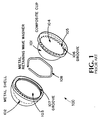
- FIG. 1 depicts a prosthetic acetabular cup assembly 100 for a femur ball that includes insert bearing component 101 for receiving the femur ball; and outer shell component 102 which may be attached to an acetabulum to replace a natural hip socket, with the depicted outer shell component 102 including cavity 103 for receiving insert bearing component 101.
- Insert bearing component 101 is further shown in FIG. 1 to include an inner bearing surface 104 for receiving the ball and an outer surface 105 formed to include arcuate groove 106 therein.
- Inner surface 103 of outer shell component 102 is also shown to include an arcuate groove (107) formed therein at a location that is axially aligned with arcuate groove 106 formed in insert bearing 101.
- the instant invention focuses on the form and composition of locking mechanisms that may be used to interlock acetabular cup assembly components, such as insert bearing component 101 and outer shell component 102 depicted in FIG. 1.
- An exemplary prior art mechanism used for this purpose (which sits, after assembly, simultaneously in arcuate grooves 106 and 107) is shown at 108 in FIG. 1, in the form of a metallic retaining ring wave washer.
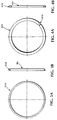
- FIG. 2A depicts a top view of a two versions of a circular Vitallium wire retaining ring; one version having six lobes (designated as the lobes between ring segments 200-1 to 200-2; 200-2 to 200-3; 200-3 to 200-4; 200-4 to 200-5; 200-5 to 200-6; and 200-6 to 200-1), as shown on the left hand side of FIG. 2A at 200; and the other version having three lobes (designated as the lobes between ring segments 201-1 to 201-2; 201-2 to 201-3; and 201-3 to 201-1), as shown on the right hand side of FIG. 2 at 201. Both rings are "closed" (i.e., form a continuous loop).
- Vitallium rings such as those depicted in FIG. 2A at 200 and 201, were designed and experiments conducted which verified Vitallium can be used as a spring lock mechanism.
- the ability for Vitallium rings to retain their springing capability on a long term basis remains unknown and is a concern for a lock mechanism being employed in the human body as part of an acetabular cup assembly.
- FIG. 3A depicts a top view of a closed circular polyethylene retaining ring (shown on the left hand side of FIG. 3A at 300); and an exemplary cross sectional view of the aforementioned ring (depicted in FIG. 3A at 301) showing an outside chamfer, 302.
- Rings made of polyethylene were tested and were found to be thin, dimensionally inconsistent and were not readily amenable for machining (i.e., machinability was poor). Insertion force requirements were low and a significant amount of shell/insert rocking was noted. As a result of these experiments work on additional polyethylene rings was stopped and a search for an alternate polymeric material lead to the consideration of a polyaryletherketone material, in particular PEEK, as a material from which to fabricate a retaining ring.
- PEEK polyaryletherketone material
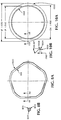
- FIG. 4A depicts a top view of an open (“split") circular retaining ring 400, fabricated at least in part using a polyaryletherketone material (e.g., PEEK), shown on the left hand side of FIG. 4; and an exemplary cross sectional view 401 of the aforementioned ring indicating no chamfer (indicated via reference numeral 402).
- a polyaryletherketone material e.g., PEEK
- FIG. 5A depicts a top view of an open (“split") circular retaining ring fabricated at least in part using a polyaryletherketone material (an example of such ring is shown at 500 on the left hand side of FIG. 5); and an exemplary cross sectional view of ring 500, shown at 501 in FIG. 5, indicates ring 500 is chamfered.
- This chamfer feature is depicted in cross sectional view 501 at 502; and is further depicted with reference to ring 500 at 503 (depicting an inside chamfer) and 504 (depicting an outside chamfer).
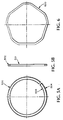
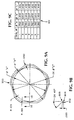
- the design of the new ring was a closed penta shaped retaining ring fabricated at least in part using a polyaryletherketone material.
- the penta shaped design which gives five points of contact on the insert and five on the shell.
- Two such rings were fabricated and tested with the test results showing push-in forces of 5 kg and 5.6 kg for the two tests respectively.
- the fit of the ring was good and a push-out force of 297 kg. was measured.
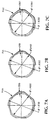
- FIGS. 7A to 7C depict a top view of the three rings.
- Each of the rings depicted in FIGS. 7A to 7C is a closed penta shaped retaining ring.
- Rings 700-702 having varying inner diameters and band widths (examples of which are illustrated in FIG. 7). All of the depicted rings were hand assembled and fabricated at least in part using a polyaryletherketone material for the experiments to be conducted; two of the rings were fabricated with inside chamfers.
- FIG. 8A depicts a top view of ring 800, which was fabricated at least in part using a polyaryletherketone material; and an exemplary cross sectional view 802 of ring 800 (with the section being taken along line A-A cut through ring 800) is shown on the left hand side of FIG. 8A.
- Chamfer 801 is illustrated as 803 and 804 in the cross section.
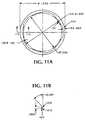
- FIGS. 9-12 depict several of the other types of rings that were designed and tested.
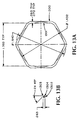
- FIG. 13A Such a ring is depicted in FIG. 13A where, as indicated hereinbefore, a top view of a closed hex shaped retaining ring 1300 with an inside radial chamfer 1301 is depicted.
- Ring 1300 is fabricated at least in part using a polyaryletherketone material and is shown on the right hand side of FIG. 13.
- rings made using composite materials are particularly well suited for meeting the aforestated objectives of then invention, including, without limitation, being able to fabricate such rings in mass using well known injection molding processes, etc. More particularly, it was found that by adding a reinforcing material to the PEEK matrix the composite ring was strengthened and exhibited increased rigidity when compared with rings that were not reinforced.
- an exemplary process for fabricating a locking mechanism to secure components of an acetabular cup assembly comprises the steps of: (a) forming a first arcuate groove on the outer surface of the insert bearing component; (b) forming a second arcuate groove on the inner surface of the outer shell component at a location that is axially aligned with the arcuate groove formed in the insert bearing component; and (c) fabricating a retaining ring for interlocking the insert into the outer shell, the retaining ring being formed at least in part using polyaryletherketone.
- the polyaryletherketone used in the aforementioned process is PEEK; and the finished ring (preferably 100% PEEK), when located simultaneously in the first arcuate groove and the second arcuate groove (to thereby interlock the insert and outer shell), has a finite number of contact points on both the insert and on the outer shell.
- the polyaryletherketone used is combined with a reinforcing material, like carbon fiber, when added strength is required.
- the invention also contemplates a process for fabricating a retaining ring for an acetabular cup assembly that includes (a) an insert bearing component having an inner bearing surface for receiving the ball and an outer surface formed to include an arcuate groove therein and (b) an outer shell component for attachment to an acetabulum to replace a natural hip socket, the outer shell component including an inner surface defining a cavity for receiving the insert bearing component therein, the inner surface of the outer shell component being formed to include an arcuate groove therein at a location that is axially aligned with the arcuate groove formed in the insert bearing component, comprising the steps of: (a) creating a mold for the retaining ring having a predefined shaped which allows the ring, when formed, to be inserted into the arcuate groove of the outer shell component and simultaneously engage the insert bearing component, upon insertion of the insert bearing component into the outer shell component, by extending into the arcuate groove located on the outer surface of the insert bearing component; and (b) injecting a polyaryletherket
Landscapes
- Health & Medical Sciences (AREA)
- Public Health (AREA)
- General Health & Medical Sciences (AREA)
- Veterinary Medicine (AREA)
- Orthopedic Medicine & Surgery (AREA)
- Animal Behavior & Ethology (AREA)
- Life Sciences & Earth Sciences (AREA)
- Heart & Thoracic Surgery (AREA)
- Vascular Medicine (AREA)
- Biomedical Technology (AREA)
- Cardiology (AREA)
- Engineering & Computer Science (AREA)
- Transplantation (AREA)
- Oral & Maxillofacial Surgery (AREA)
- Chemical & Material Sciences (AREA)
- Chemical Kinetics & Catalysis (AREA)
- Surgery (AREA)
- Epidemiology (AREA)
- Prostheses (AREA)
Applications Claiming Priority (2)
| Application Number | Priority Date | Filing Date | Title |
|---|---|---|---|
| US08/600,660 US5782930A (en) | 1996-02-13 | 1996-02-13 | Polyetheretherketone (PEEK) retaining ring for an acetabular cup assembly |
| US600660 | 1996-02-13 |
Publications (2)
| Publication Number | Publication Date |
|---|---|
| EP0790044A2 true EP0790044A2 (fr) | 1997-08-20 |
| EP0790044A3 EP0790044A3 (fr) | 1998-01-14 |
Family
ID=24404552
Family Applications (1)
| Application Number | Title | Priority Date | Filing Date |
|---|---|---|---|
| EP97200261A Withdrawn EP0790044A3 (fr) | 1996-02-13 | 1997-01-31 | Anneau de retenue en polyétheréther-cétone (PEEK) pour un coque acétabulaire |
Country Status (4)
| Country | Link |
|---|---|
| US (2) | US5782930A (fr) |
| EP (1) | EP0790044A3 (fr) |
| JP (1) | JP3001447B2 (fr) |
| AU (1) | AU705294B2 (fr) |
Cited By (6)
| Publication number | Priority date | Publication date | Assignee | Title |
|---|---|---|---|---|
| EP0917860A3 (fr) * | 1997-11-24 | 2002-08-14 | Helmut Purner | Dispositif pour prothèse dentaire |
| NL1018583C2 (nl) * | 2001-07-19 | 2003-01-21 | Gtg | Kunstmatige tussenwervelschijf alsmede werkwijzen voor het vervaardigen en aanbrengen daarvan. |
| CN106923939A (zh) * | 2015-12-29 | 2017-07-07 | 重庆润泽医药有限公司 | 一种组合式髋臼假体 |
| US10898336B2 (en) | 2006-03-21 | 2021-01-26 | Tornier, Inc. | Femoral and humeral stem geometry and implantation method for orthopedic joint reconstruction |
| US10987226B2 (en) | 2016-04-19 | 2021-04-27 | Imascap Sas | Pre-operatively planned humeral implant and planning method |
| US11679006B2 (en) | 2011-10-31 | 2023-06-20 | Tornier Orthopedics Ireland, Ltd. | Systems for shoulder prostheses |
Families Citing this family (36)
| Publication number | Priority date | Publication date | Assignee | Title |
|---|---|---|---|---|
| US5935175A (en) * | 1998-03-13 | 1999-08-10 | Johnson & Johnson Professional, Inc. | Acetabular prosthesis with ring lock mechanism |
| US6383519B1 (en) * | 1999-01-26 | 2002-05-07 | Vita Special Purpose Corporation | Inorganic shaped bodies and methods for their production and use |
| US6458162B1 (en) * | 1999-08-13 | 2002-10-01 | Vita Special Purpose Corporation | Composite shaped bodies and methods for their production and use |
| AU783205C (en) | 2000-03-15 | 2006-08-17 | Depuy Orthopaedics, Inc. | Prosthetic cup assembly which includes components possessing self-locking taper |
| GB0027210D0 (en) | 2000-11-07 | 2000-12-27 | Benoist Girard & Cie | Prosthesis bearing component |
| SE517535C2 (sv) * | 2000-12-21 | 2002-06-18 | Skf Ab | Rullningslager |
| ATE387161T1 (de) * | 2001-01-25 | 2008-03-15 | Smith & Nephew Inc | Rückhaltevorrichtung zum halten eines prosthetischen bestandteils |
| US20020120340A1 (en) | 2001-02-23 | 2002-08-29 | Metzger Robert G. | Knee joint prosthesis |
| US7497874B1 (en) | 2001-02-23 | 2009-03-03 | Biomet Manufacturing Corp. | Knee joint prosthesis |
| US7326253B2 (en) * | 2001-11-16 | 2008-02-05 | Depuy Products, Inc. | Prosthetic cup assembly having increased assembly congruency |
| US6916342B2 (en) * | 2002-04-01 | 2005-07-12 | Smith & Nephew, Inc. | Liner assembly for prosthetic components |
| US6923833B2 (en) * | 2002-04-09 | 2005-08-02 | Ray C. Wasielewski | Biologically reabsorbable acetabular constraining components and materials for use with a hip replacement prosthesis and bioreabsorbable materials to augment hip replacement stability and function |
| FR2841871B1 (fr) * | 2002-07-08 | 2004-10-01 | Look Cycle Int | Pedale de cycle a positionnement axial reglable |
| US7179297B2 (en) * | 2002-09-17 | 2007-02-20 | Smith & Nephew, Inc. | Combined bipolar and unipolar trials |
| US7189263B2 (en) * | 2004-02-03 | 2007-03-13 | Vita Special Purpose Corporation | Biocompatible bone graft material |
| AU2005221715B2 (en) * | 2004-03-11 | 2011-09-22 | Smith & Nephew, Inc. | Universal liner assembly for joint replacement |
| US9220595B2 (en) | 2004-06-23 | 2015-12-29 | Orthovita, Inc. | Shapeable bone graft substitute and instruments for delivery thereof |
| US20060206211A1 (en) * | 2005-02-22 | 2006-09-14 | Ortho Development Corporation | Bipolar hip prosthesis with free floating ring |
| WO2007079521A1 (fr) * | 2006-01-09 | 2007-07-19 | Silesco Pty Ltd | Prothèse articulaire implantable |
| AU2007265379B9 (en) | 2006-06-29 | 2014-05-29 | Orthovita, Inc. | Bioactive bone graft substitute |
| US8163028B2 (en) | 2007-01-10 | 2012-04-24 | Biomet Manufacturing Corp. | Knee joint prosthesis system and method for implantation |
| US8328873B2 (en) | 2007-01-10 | 2012-12-11 | Biomet Manufacturing Corp. | Knee joint prosthesis system and method for implantation |
| US8157869B2 (en) | 2007-01-10 | 2012-04-17 | Biomet Manufacturing Corp. | Knee joint prosthesis system and method for implantation |
| US8187280B2 (en) | 2007-10-10 | 2012-05-29 | Biomet Manufacturing Corp. | Knee joint prosthesis system and method for implantation |
| US8562616B2 (en) | 2007-10-10 | 2013-10-22 | Biomet Manufacturing, Llc | Knee joint prosthesis system and method for implantation |
| EP2200672B1 (fr) | 2007-09-11 | 2012-06-27 | Solvay Specialty Polymers USA, LLC. | Dispositifs prothétiques améliorés |
| DE102008047009B4 (de) * | 2008-07-11 | 2020-08-06 | Mathys Ag Bettlach | Gelenkpfanne mit physiologischer Lastübertragung |
| GB0818967D0 (en) * | 2008-10-16 | 2008-11-26 | Victrex Mfg Ltd | Polymeric materials |
| US8123815B2 (en) | 2008-11-24 | 2012-02-28 | Biomet Manufacturing Corp. | Multiple bearing acetabular prosthesis |
| US8308810B2 (en) | 2009-07-14 | 2012-11-13 | Biomet Manufacturing Corp. | Multiple bearing acetabular prosthesis |
| US8551525B2 (en) | 2010-12-23 | 2013-10-08 | Biostructures, Llc | Bone graft materials and methods |
| US20140023459A1 (en) * | 2012-07-23 | 2014-01-23 | GM Global Technology Operations LLC | Snap ring |
| JP6200803B2 (ja) * | 2013-12-27 | 2017-09-20 | 京セラ株式会社 | 人工関節用器具 |
| CN106460935B (zh) | 2014-06-06 | 2021-05-04 | 圣戈班性能塑料万科有限公司 | 公差环 |
| AU2018200701B2 (en) | 2017-02-02 | 2023-07-27 | Howmedica Osteonics Corp. | Constrained shell for modular dual mobility system |
| US20250116591A1 (en) | 2022-05-13 | 2025-04-10 | Aalto University Foundation Sr | Porosity and/or permeability measurement device and method |
Citations (2)
| Publication number | Priority date | Publication date | Assignee | Title |
|---|---|---|---|---|
| US4380090A (en) | 1981-07-24 | 1983-04-19 | Ramos Pedro A | Hip prosthesis |
| US5049158A (en) | 1990-04-20 | 1991-09-17 | Boehringer Mannheim Corporation | Acetabular cup assembly |
Family Cites Families (12)
| Publication number | Priority date | Publication date | Assignee | Title |
|---|---|---|---|---|
| DE442044C (de) | 1926-04-15 | 1927-03-22 | Voigt & Haeffner Akt Ges | UEberstromzeitausloesung |
| US3806960A (en) * | 1973-02-01 | 1974-04-30 | Sulzer Ag | Acetabulum implant |
| US4676798A (en) * | 1984-09-12 | 1987-06-30 | Joint Medical Products Corporation | Socket bearing assembly for a constrained ball and socket joint |
| US5219363A (en) * | 1988-03-22 | 1993-06-15 | Zimmer, Inc. | Bone implant |
| US5181930A (en) * | 1991-04-10 | 1993-01-26 | Pfizer Hospital Products Group, Inc. | Composite orthopedic implant |
| US5571193A (en) * | 1992-03-12 | 1996-11-05 | Kampner; Stanley L. | Implant with reinforced resorbable stem |
| DK0633754T3 (da) * | 1992-03-23 | 1998-04-14 | Howmedica | Ortopædisk kompositimplantat |
| DE4420044C2 (de) * | 1993-06-09 | 1998-11-26 | Helmut Purner | Vorrichtung zum Zahnersatz, für die Zahnregulierung oder dergleichen zahnmedizinische Behandlungen |
| US5549700A (en) * | 1993-09-07 | 1996-08-27 | Ortho Development Corporation | Segmented prosthetic articulation |
| CA2133718A1 (fr) * | 1993-10-18 | 1995-04-19 | Gene M. Farling | Cupule acetabulaire non spherique pour une prothese totale de hanche |
| GB9417288D0 (en) * | 1994-08-25 | 1994-10-19 | Howmedica | Prosthetic bearing element and process for making such an element |
| US5740893A (en) * | 1995-07-14 | 1998-04-21 | Ntn Corporation | One-way clutch and method of making bearing ring |
-
1996
- 1996-02-13 US US08/600,660 patent/US5782930A/en not_active Expired - Fee Related
-
1997
- 1997-01-31 EP EP97200261A patent/EP0790044A3/fr not_active Withdrawn
- 1997-02-12 AU AU12666/97A patent/AU705294B2/en not_active Ceased
- 1997-02-13 JP JP9028989A patent/JP3001447B2/ja not_active Expired - Fee Related
- 1997-08-06 US US08/907,147 patent/US5964809A/en not_active Expired - Fee Related
Patent Citations (3)
| Publication number | Priority date | Publication date | Assignee | Title |
|---|---|---|---|---|
| US4380090A (en) | 1981-07-24 | 1983-04-19 | Ramos Pedro A | Hip prosthesis |
| US4380090B1 (en) | 1981-07-24 | 1993-09-21 | A. Ramos Pedro | Hip prosthesis |
| US5049158A (en) | 1990-04-20 | 1991-09-17 | Boehringer Mannheim Corporation | Acetabular cup assembly |
Cited By (9)
| Publication number | Priority date | Publication date | Assignee | Title |
|---|---|---|---|---|
| EP0917860A3 (fr) * | 1997-11-24 | 2002-08-14 | Helmut Purner | Dispositif pour prothèse dentaire |
| NL1018583C2 (nl) * | 2001-07-19 | 2003-01-21 | Gtg | Kunstmatige tussenwervelschijf alsmede werkwijzen voor het vervaardigen en aanbrengen daarvan. |
| US10898336B2 (en) | 2006-03-21 | 2021-01-26 | Tornier, Inc. | Femoral and humeral stem geometry and implantation method for orthopedic joint reconstruction |
| US11679006B2 (en) | 2011-10-31 | 2023-06-20 | Tornier Orthopedics Ireland, Ltd. | Systems for shoulder prostheses |
| CN106923939A (zh) * | 2015-12-29 | 2017-07-07 | 重庆润泽医药有限公司 | 一种组合式髋臼假体 |
| US10987226B2 (en) | 2016-04-19 | 2021-04-27 | Imascap Sas | Pre-operatively planned humeral implant and planning method |
| AU2017253113B2 (en) * | 2016-04-19 | 2021-10-07 | Stryker European Operations Limited | Pre-operatively planned humeral implant and planning method |
| EP3445292B1 (fr) * | 2016-04-19 | 2022-12-21 | Imascap SAS | Implant humeral prépartielement préparé et procédé de planification |
| US12109120B2 (en) | 2016-04-19 | 2024-10-08 | Stryker European Operations Limited | Pre-operatively planned humeral implant and planning method |
Also Published As
| Publication number | Publication date |
|---|---|
| EP0790044A3 (fr) | 1998-01-14 |
| JP3001447B2 (ja) | 2000-01-24 |
| US5782930A (en) | 1998-07-21 |
| AU1266697A (en) | 1997-08-21 |
| US5964809A (en) | 1999-10-12 |
| JPH09224964A (ja) | 1997-09-02 |
| AU705294B2 (en) | 1999-05-20 |
Similar Documents
| Publication | Publication Date | Title |
|---|---|---|
| US5782930A (en) | Polyetheretherketone (PEEK) retaining ring for an acetabular cup assembly | |
| CA2213921C (fr) | Prothese acetabulaire a doublure a visser en place et bague de verrouillage | |
| US5049158A (en) | Acetabular cup assembly | |
| US20210145605A1 (en) | Acetabular cup assembly for multiple bearing materials | |
| EP1536741B1 (fr) | Prothese | |
| US5263988A (en) | Bipolar endoprosthesis | |
| US5507826A (en) | Prosthesis with shape memory locking element | |
| US7985259B2 (en) | Acetabular cup conversion ring | |
| EP1312323B1 (fr) | Assemblage de cupule prothétique avec congruence croissante de l'assemblage | |
| US20010037156A1 (en) | Acetabular bearing assembly for total hip joints | |
| US20040054411A1 (en) | Wear-resistant endoprosthetic devices | |
| EP1133958A1 (fr) | Cupule acetabulaire prothetique comprenant un cone autobloquant | |
| EP3405141B1 (fr) | Prothèse de hanche à mobilité double limitée | |
| EP2754420B1 (fr) | Composant de supports de hanche non sphériques | |
| EP0636353A1 (fr) | Prothèse totale du genou | |
| JP2010131398A (ja) | メタルオンメタルモジュール式ハイブリッドライナー | |
| GB2116847A (en) | Spherical kinematic joint | |
| WO1995022944A1 (fr) | Insert composite pour cupule acetabulaire et procede d'assemblage | |
| WO2001024741A1 (fr) | Inserts de supports composites pour rotule entiere | |
| JPH0550290B2 (fr) | ||
| EP0956835B1 (fr) | Prothèse acétabulaire oblongue | |
| WO1992022265A1 (fr) | Prothese de hanche | |
| US20160250027A1 (en) | System and method for improved constrained prosthetic acetabulum | |
| US12171666B2 (en) | Metal reinforced acetabular shell liner |
Legal Events
| Date | Code | Title | Description |
|---|---|---|---|
| PUAI | Public reference made under article 153(3) epc to a published international application that has entered the european phase |
Free format text: ORIGINAL CODE: 0009012 |
|
| 17P | Request for examination filed |
Effective date: 19970131 |
|
| AK | Designated contracting states |
Kind code of ref document: A2 Designated state(s): AT BE CH DE DK ES FI FR GB IE IT LI LU NL PT SE |
|
| PUAL | Search report despatched |
Free format text: ORIGINAL CODE: 0009013 |
|
| AK | Designated contracting states |
Kind code of ref document: A3 Designated state(s): AT BE CH DE DK ES FI FR GB IE IT LI LU NL PT SE |
|
| RAP1 | Party data changed (applicant data changed or rights of an application transferred) |
Owner name: STRYKER TECHNOLOGIES CORPORATION |
|
| STAA | Information on the status of an ep patent application or granted ep patent |
Free format text: STATUS: THE APPLICATION HAS BEEN WITHDRAWN |
|
| 18W | Application withdrawn |
Withdrawal date: 20011126 |