EP0794097A2 - Antriebssteuerung in Beziehung zur Relativ-Durchdrehgeschwindigkeit - Google Patents
Antriebssteuerung in Beziehung zur Relativ-Durchdrehgeschwindigkeit Download PDFInfo
- Publication number
- EP0794097A2 EP0794097A2 EP97101207A EP97101207A EP0794097A2 EP 0794097 A2 EP0794097 A2 EP 0794097A2 EP 97101207 A EP97101207 A EP 97101207A EP 97101207 A EP97101207 A EP 97101207A EP 0794097 A2 EP0794097 A2 EP 0794097A2
- Authority
- EP
- European Patent Office
- Prior art keywords
- spin
- axle
- speed
- unit
- wheel
- Prior art date
- Legal status (The legal status is an assumption and is not a legal conclusion. Google has not performed a legal analysis and makes no representation as to the accuracy of the status listed.)
- Granted
Links
Images




Classifications
-
- B—PERFORMING OPERATIONS; TRANSPORTING
- B60—VEHICLES IN GENERAL
- B60T—VEHICLE BRAKE CONTROL SYSTEMS OR PARTS THEREOF; BRAKE CONTROL SYSTEMS OR PARTS THEREOF, IN GENERAL; ARRANGEMENT OF BRAKING ELEMENTS ON VEHICLES IN GENERAL; PORTABLE DEVICES FOR PREVENTING UNWANTED MOVEMENT OF VEHICLES; VEHICLE MODIFICATIONS TO FACILITATE COOLING OF BRAKES
- B60T8/00—Arrangements for adjusting wheel-braking force to meet varying vehicular or ground-surface conditions, e.g. limiting or varying distribution of braking force
- B60T8/17—Using electrical or electronic regulation means to control braking
- B60T8/1701—Braking or traction control means specially adapted for particular types of vehicles
- B60T8/1703—Braking or traction control means specially adapted for particular types of vehicles for aircrafts
Definitions
- the present invention relates, in general, to railway propulsion systems and, more particularly, this invention relates to a propulsion system utilized on a passenger transit, or similar type railway vehicle and has as its primary purpose the modulation of the propulsion forces being applied to such railway vehicle to correct for wheel spin at both low and high speeds.
- the present invention uses a spin control logic which is similar to the slide control process taught in the co-pending application, which was mentioned above, entitled “SIMPLIFIED PATTERN RECOGNITION WHEEL SLIDE PROTECTION”. This application bears Serial Number 08/460,200 and was filed on June 2, 1995, and is also assigned to the assignee of the present invention.
- the present invention includes a combination of speed varying speed difference and a speed varying setpoint version of a relative spin speed level detection. The combination of both of these detection forms gives good detection throughout the speed range and allows a fine control of wheel spin so that acceleration efficiency can be optimized. Additionally, both the detection and correction methods are designed to minimize picking up false detections. These false detections are usually caused by noise on axle acceleration rate signals.
- the present invention provides an apparatus for a wheel spin/traction control process on a passenger transit railway type vehicle.
- This process is specifically designed to work with a variable per truck force modulation arrangement found on many of today's AC motor driven rail vehicle propulsion systems.
- This system is designed to at least receive externally generated signals representing the speed of the axle and the acceleration/deceleration rate of the axle being monitored with respect to wheel slippage and for generating and communicating a spin speed selection output signal representative of an actual spin speed value and for generating and communicating a respective axle's wheel spin detection signal.
- a wheel spin correction device is disposed on such railway vehicle and is connected to receive a second set of input signals.
- One of such input signals being an externally generated and communicated power/brake signal which represents when such vehicle is in one of a braking mode and a non braking mode.
- At least two of the other input signals being the spin speed selection output signal representative of an actual spin speed value and the other being the respective axle's wheel spin detection signal.
- the apparatus utilizes these signals to determine a wheel spin timeout value and an axle force command.
- the wheel spin timeout value is based on the spin speed selection input. A small spin detection will have a low spin speed and be given a short spin enable time out value. A severe spin will be given a longer timeout value.
- the apparatus' timer begins the countdown for the wheel spin correction. When the time reaches the timeout value the timer sends out a signal for ending such wheel spin correction.
- the wheel spin correction device determines and communicates an appropriate output force command signal selected from remove, hold or apply and also generates and communicates an output signal representative of one of a spin correction being in progress for a respective axle and an absence of a spin correction being in progress for such respective axle.
- the apparatus further includes a wheel spin axle force command module that is connected to receive an externally generated power/brake signal, an output force command signal selected from remove, hold and apply, and an output signal representative of spin correction being in progress on a respective axle or the absence of spin correction being in progress on such respective axle.
- This unit processes the input signals and generates a respective truck 1 and truck 2 reapplication jerk limiting output signal to respective truck 1 and truck 2 propulsion control units disposed on such railway vehicle.
- the unit also determines if a spin correction is occurring on any of the axles and generates an output signal to this effect for use by the other modules.
- a speed normalization means is utilized by this process and connected to receive each of the raw axle speed signals, a power/brake signal, axle rate signals from each of the axles and an output signal representative of car level spin indicative of whether a spin correction is occurring on any of the vehicles axles. These signals are processed and this unit generates and communicates an output signal representative of normalized axle speed and an output signal representative of highest axle speed.
- Yet another object of the present invention is to provide an improved wheel spin detection and correction arrangement which uses a combination of speed varying speed difference and a speed varying setpoint version of a spin speed level detection to give good detection throughout the speed range.
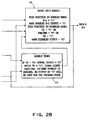
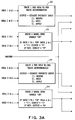
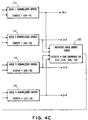
- FIG 1 through Figure 4 are block diagrams which define the presently preferred apparatus and control functions of the invention.
- a heavy rail transit vehicle wheel spin protection system using this process will be used as an example to aid in understanding the invention, however, the invention is not limited thereto or thereby.
- microprocessor control with a 20 millisecond program cycle and uses a per truck variable force modulation approach.
- microprocessor control the function of the blocks in these figures are accomplished by lines of code, and the conveyance of information from one block to another is accomplished by one block writing data to the microprocessor's memory, and another block accessing that data from such memory.
- the Modules A and B are duplicated as many times as there are axles on the railway vehicle.
- each logical or numeric quantity in these figures has as many storage locations as there are axles, one storage location being used for data from the corresponding axle.
- the present invention provides an improved wheel spin traction control arrangement designed to work with variable per truck force modulation systems found on many of today's AC motor driven rail vehicle propulsion systems on passenger railway type vehicles having a plurality of axles upon which wheels are disposed.
- variable per truck force modulation systems found on many of today's AC motor driven rail vehicle propulsion systems on passenger railway type vehicles having a plurality of axles upon which wheels are disposed.
- FIG. 1 Illustrated therein is an apparatus, generally designated 100, having a plurality of axle speed normalization factor units designated 104, 106, 108 and 110 and a plurality of axle normalized speed units designated 112, 114, 116 and 118, each of these units is connected to at least receive, respective, externally generated and communicated raw axle speed signals indicating the speeds of such respective axles.
- normalization factor signals are generated which compensate for differences in wheel diameters, that may be caused by wheel wear. From these normalization factor signals, normalized axle speeds are determined. These normalized speed signals for each respective axle are communicated as inputs on other modules as will be more fully described hereinafter.
- the normalized wheel axle speed signal is communicated to a relative speed constant unit 16, probable spin rate constant unit 20, and speed difference constant unit 24 illustrated in Figure 1. Respective constants are obtained from look up tables that are derived from the normalized axle speed. The axle speed of each of the respective axles is monitored and the lowest axle speed determined. The normalized wheel axle speed signal is also used as an input to axle speed to lowest axle speed determination unit 26 where it is compared to the lowest axle speed. This speed comparison along with the constant signals determined above are communicated as inputs to a relative speed detector unit 18 and spin speed selection unit 22 to enable a determination of whether a wheel spin is occurring.
- a spin rate band unit 12 is also provided to receive signals indicative of the acceleration/deceleration rate (i.e., speed pickup) of each of the respective axles.
- Spin rate band 12 compares the input axle rate of the respective axle to the output of the probable spin rate constant unit 20 which outputs a signal representative of the acceleration rate that the vehicle could actually produce without wheel spin and any acceleration rate that is in the wheel spin range.
- There is a relative speed summation unit 14 which receives as input signals the wheel spin enable unit 58 output signal B-1 from wheel spin correction module 50, an axle rate signal from the respective axle being monitored, the output signal from the spin rate band unit 12 and the output signal from the probable spin rate constant unit 20.
- the relative speed summation unit 14 From these signals the relative speed summation unit 14 generates and communicates an output signal which is provided to a relative speed spin detector unit 18 and a spin speed selection unit 22 for use in determining whether a spin is occurring and whether the axles relative spin speed or speed difference will be used as spin speed for spin control.
- the output from such relative spin speed unit 18 is communicated to the detection unit 30 as one of the inputs required to produce the respective axle's wheel spin detection signal.
- Signals from detection unit 30 and spin speed selection unit 22 are sent to other modules as output signals A-1 and A-2, respectively.
- wheel spin correction module 50 which includes means for processing as inputs the signals from normalized axle speed, outputs A-1 and A-2 from Module A, and an externally generated Power/Brake signal.
- a timer table unit 54 provides a timeout value based on the input signal from spin speed selection unit 22 (A-2 from Module A).
- Enable timer 56 receives as inputs the signals from timer table unit 54 and from wheel spin enable unit 58, and begins the timeout count down whenever the respective axle's wheel spin logic is enabled. This function permits the timeout value to increase while the function is counting down, but will not permit the timeout value to decrease while it is counting down. When the timer has counted down to zero a signal is communicated to the wheel spin enable unit 58. This signal is used as a wheel spin correction indication.
- Spin speed constant unit 62 receives the normalized axle speed as an input signal and determines a spin speed constant. This constant is derived from a look up table which gives a spin speed constant for various normalized axle speeds. This constant communicated as a signal, a signal from spin speed selection unit 22 (A-2) and the output signal from wheel spin enable unit 58 are communicated as input signals to spin speed disable unit 52 to determine the appropriate point that a spin has been corrected.
- Wheel spin enable unit 58 receives as inputs signals the outputs from detection unit 30 (signal A-1 from module 10), enable timer unit 56, spin speed disable unit 52 and an externally generated signal from the Power/Brake. Wheel spin enable unit 58 generates and communicates an output signal to the logic that a spin correction is or is not in process on the respective axle. This output signal is sent to other modules as a signal B-1.
- Axle force command unit 60 receives as inputs the output signals from the Power/Brake, spin speed selection unit 22 (A-2), and wheel spin enable unit 58 to determine the appropriate output force command best suited to control the spin on the respective axle and to communicate an appropriate output force command signal.
- the three possible command signals are "Remove”, “Apply” and “Hold”.
- the output signal of this function is sent to other modules as signal B-2.
- spin output force modulation module 80 provides the cascaded logic required to processes the input signals from the Power/Brake, axle force command unit 60 (B-2) and wheel spin enable 58 (B-1).
- This module 80 generates and communicates the respective Spin/Slide Limit (SSLIM) signal to the propulsion control system of the respective truck.
- SSLIM Spin/Slide Limit
- Truck 1 wheel spin enable “OR” unit 82 receives as inputs signals from wheel spin enable unit 58 (B-1) for the respective axles on truck 1 to determine and communicate if either of the axles are enabled to control a spin.
- Truck 1 per axle per truck determination unit 86 receives as inputs signals from axle force command unit 60 (B-2) for the respective axles on Truck 1 to determine the axle on Truck 1 which has the highest priority spin control force modulation command and then communicating that command to the truck 1 spin control interface unit 90.
- "Remove" has the highest priority, because if the axle's control logic is calling for a remove, it has the most severe spinning. At the other extreme, if the axle's control logic is calling for an "Apply", it is not in danger of spinning.
- Truck 2 wheel spin enable "OR" unit 84 and truck 2 per axle to per truck determination unit 88 perform the identical functions for truck 2 as described above for truck 1.
- Truck 1 spin control interface unit 90 receives as inputs signals from truck 1 wheel spin enable "OR" unit 82, truck 1 per axle per truck determination unit 86, and the externally generated Power/Brake signal and converts the wheel spin modulation command signals to a percentage of the propulsion demand signal from Truck 1 and communicates such signal.
- Truck 1 re-application jerk limit unit 94 receives as inputs signals from truck 1 wheel spin enable "OR" unit 82 and truck 1 spin control interface unit 90 and performs a re-application jerk limiting function on truck 1's SSLIM (Spin/Slide Limit) signal after completing a spin correction.
- the output signal of such re-application jerk limit unit 94 is sent to the Propulsion/Electric Brake interface for truck 1.
- Truck 2 spin control interface unit 92 and truck 2 re-application jerk limit unit 96 perform the same functions for truck 2 as the functions previously described with respect to units 90 and 94, respectively, for truck 1.
- Car level spin indication unit 98 receives as inputs the output signals from wheel spin enable "OR" units (82,84) from both trucks and determines if a spin correction is occurring on any of the vehicle's axles.
- the output of car level spin indication unit 98 is designated as C-1 Car Spin and communicated to normalization enable unit 102 of speed normalization unit 100.
- Figure 1 through Figure 4 are block diagrams of the wheel spin control arrangement which are provided for reference purposes during the detailed description of a presently preferred embodiment of this invention.
- the invention example makes use of the following process input signals:
- Module A includes the spin band rate unit, designated 12 in Figure 1, which is connected to receive the following as input signals thereto:
- the input axle rate is compared to an acceleration rate level provided by the probable spin rate constant function.
- This level is set to be indicative of the border line between an acceleration rate that the vehicle could actually produce without wheel spin and any acceleration rate that is in the wheel spin range.
- axle rate signal is greater than or equal to the probable spin rate constant then the output signal from the spin rate band unit 12 will be a logical "1". If the axle rate signal is less than the probable spin rate constant then the output signal from the spin rate band unit 12 will be a logical "0".
- Module A Further included in Module A is the relative speed summation unit, designated 14, which is connected to receive as inputs thereto:
- these input signals are processed such that there is computed a value that is the relative spin speed of the axle while it is in both the wheel spin detection range and the wheel spin correction range.
- the relative speed summation unit 14 has as an output signal:
- Wheel spin detection unit 10 -Module A illustrated in Figure 1, further includes a relative speed constant unit, designated 16, which has the following signal as an input thereto:
- This input signal is used to compute an axle speed varying constant, which is used to determine the relative spin speed level where a spin will be formally detected.
- the output of the relative speed constant unit 16 is determined by a look up table based on an input signal from the respective axles normalized speed. (With respect to the axle, this input signal may come from D-1, D-2, D-3, or D-4.)
- the input versus output table for this function is presented as follows: NORMALIZED SPEED RELATIVE SPEED CONSTANT 0 to 10 MPH 1.0 MPH 11 to 20 MPH 1.2 MPH 21 to 30 MPH 0.8 MPH 31 to 40 MPH 0.6 MPH 41 to 50 MPH 0.4 MPH 51 to 60 MPH 0.4 MPH 61 to 70 MPH 0.4 MPH
- Wheel spin detection unit 10 - Module A further includes a relative spin speed detector unit, designated 18 in Figure 1, which receives the following signals as inputs thereto:
- the relative spin speed detector unit 18 carries out a process therein which compares the output signal from the relative speed summation unit 14 to the relative speed constant, to make the actual relative spin speed detection indication.
- Such relative spin speed detector unit 18 provides an output signal as follows:
- the output signal from this relative spin speed detector unit 18 will be a logical "1". If, on the other hand, the input signal from the relative speed summation unit 14 is less than the input signal from the relative speed constant unit 16, then the output signal will be a logical "0".
- the wheel spin detection unit 10 further includes a probable spin rate constant unit, designated 20 in Figure 1, which receives the following signal as an input thereto:
- the probable spin rate constant unit 20 determines the axle acceleration rate range where wheel spin can be expected. This range varies with car speed.
- This probable spin rate constant unit 20 provides as an output a look up table based on an input signal from the respective axles normalized speed. (With respect to the axle, this input signal may come from D-1, D-2, D-3, or D-4.)
- the input versus output table for this function is presented as follows: NORMALIZED SPEED PROBABLE SPIN RATE CONSTANT 0 to 10 MPH 3.3 MPHPS 11 to 20 MPH 3.2 MPHPS 21 to 30 MPH 2.8 MPHPS 31 to 40 MPH 2.3 MPHPS 41 to 50 MPH 1.8 MPHPS 51 to 60 MPH 1.3 MPHPS 61 to 70 MPH 1.2 MPHPS
- the wheel spin detection unit 10 - Module A further includes a spin speed selection unit, designated 22, which receives the following signals as inputs thereto:
- These input signals to the spin speed selection unit 22 are processed in a manner so they may be used to determine whether the axle's relative spin speed or speed difference will be used as the spin speed for spin control.
- the output signal from such spin speed selection unit 22 is the actual spin speed value.
- the output signal of the spin speed selection unit 22 is as follows:
- Wheel spin detection unit 10 - Module A further includes a speed difference constant unit, designated 24.
- speed difference constant unit 24 receives the following as an input signal thereto:
- Such speed difference constant unit 24 processes this input signal to provide a speed varying value which is used to compare with the axle spin speed difference.
- this speed difference constant unit 24 is determined by a look up table based on an input signal from the respective axles normalized speed. (With respect to the axle this input signal may come from D-1, D-2, D-3, or D-4 of Module D.)
- the input signal versus output table for this function is presented as follows: NORMALIZED SPEED SPIN SPEED CONSTANT 0 to 10 MPH 3.0 MPH 11 to 20 MPH 3.0 MPH 21 to 30 MPH 2.8 MPH 31 to 40 MPH 2.8 MPH 41 to 50 MPH 2.5 MPH 51 to 60 MPH 2.6 MPH 61 to 70 MPH 3.0 MPH
- An axle speed to lowest axle speed comparison unit, designated 26, is provided in wheel spin detection unit 10 - Module A.
- Such axle speed to lowest axle speed comparison unit 26 receives the following signals as inputs thereto:
- Such axle speed to lowest axle speed comparison unit 26 utilizes these input signals to calculate the difference between the lowest axle speed on the vehicle and the respective axles normalized speed.
- the output signal from such axle speed to lowest axle speed comparison unit 26 is equal to the signal from the lowest axle speed unit 32 subtracted from the respective axles normalized speed (With respect to the axle this input signal may come from D-1, D-2, D-3, or D-4 of Module D).
- speed difference detection unit 28 in wheel spin detection unit 10 - Module A.
- speed difference detection unit 28 receives the following signals as inputs thereto:
- Such speed difference detection unit 28 compares the speed varying constant with the respective axles speed difference. Axle speed differences greater than the speed varying constant are considered a speed difference wheel spin detection.
- the output signal of the speed difference detection unit 28 will be a logical "1". If, however, the input signal from such axle speed to lowest axle speed comparison unit 26 is less than the input signal from the speed difference constant unit 24 then the output signal of this speed difference detection unit 28 will be a logical "0".
- wheel spin detection unit 10 - Module A includes a detection unit, designated 30.
- detection unit 30 receives the following signals as inputs thereto:
- the function of the detection unit 30 is a logical "OR" function. This function OR's the relative spin speed detector unit 18 with the speed difference wheel spin detection unit 28, producing the respective axle's wheel spin detection signal.
- Module A includes a lowest axle speed unit (LAS), designated 32.
- LAS lowest axle speed unit
- Such lowest axle speed unit 32 compares all of the vehicle's normalized axle speeds and selects the lowest for an output.
- the output signal of the lowest axle speed unit 32 is the lowest of the four normalized axle speed input signals from D-1, D-2, D-3, and D-4.
- FIG. 2 Illustrated therein is a presently preferred embodiment of a wheel spin correction unit, hereinafter referred to as Module B, which has been generally designated 50. It is important to note that the function of this wheel spin correction unit 50 - Module B will be performed for each individual axle on the vehicle.
- Module B Illustrated therein is a presently preferred embodiment of a wheel spin correction unit, hereinafter referred to as Module B, which has been generally designated 50. It is important to note that the function of this wheel spin correction unit 50 - Module B will be performed for each individual axle on the vehicle.
- Module B includes a spin speed disable unit, designated 52, which will receive the following signals as inputs thereto:
- the spin speed disable unit 52 processes these input signals to determine the appropriate point that a spin has been corrected.
- the output signal of the spin speed disable unit 52 is a speed value which varies with axle speed.
- the output signal of the spin speed disable unit 52 will be a logical "1" for one program cycle. For all other cases the output signal of this function will be a logical "0".
- wheel spin correction unit 50 Module B
- wheel spin correction unit 50 Module B
- timer table unit 54 which receives the following signal as an input thereto:
- the timer table unit 54 sets the wheel spin enable timeout value based on the spin speed selection. A small spin speed detection will have a low spin speed and be given a short spin enable timeout value. A severe spin detection will be given a long spin enable timeout value.
- the output signal of timer table unit 54 is determined by a look up table based on the input signal A-2 from the spin speed selection unit 22.
- the input signal versus output table is presented as follows: SPIN SPEED SELECTION TIMEOUT ⁇ 0.4 MPH O.2 SEC >0.4 to 0.62 MPH 0.3 SEC >0.62 to 0.83 MPH 0.4 SEC >0.83 to 1.06 MPH 0.5 SEC >1.06 to 1.27 MPH 0.6 SEC >1.27 to 1.48 MPH 0.7 SEC >1.48 to 1.70 MPH 0.8 SEC >1.70 to 1.91 MPH O.9 SEC >1.91 to 2.13 MPH 1.0 SEC >2.13 to 2.34 MPH 1.1 SEC >2.34 to 2.57 MPH 1.2 SEC >2.57 to 2.78 MPH 1.3 SEC >2.78 to 3.00 MPH 1.4 SEC > 3.0 MPH 1.5 SEC
- wheel spin correction 50 Module B Another component of wheel spin correction 50 Module B is an enable timer unit which is designated 56.
- the enable timer unit 56 receives the following as input signals thereto:
- the enable timer unit 56 begins the timeout count down, whenever the respective axle's wheel spin logic is enabled. This function will then allow the timeout value to increase while the function is counting down, but will not allow the timeout value to decrease while it is counting down. When the timer has counted down to zero a signal is sent out to the wheel spin enable unit 58. This signal is used as a wheel spin correction indication.
- a timer When the input signal from wheel spin enable unit 58 changes to a logical "1" a timer will begin counting down from the number of the input signal from the timer table unit 54. If the number of the input signal from the timer table unit 54 increases while the timer is counting down the timer value will be reset to the increased value. If the number of the input signal from the timer table unit 54 decreases, the timer value will continue to count down from the maximum value input from timer table unit 54. During the time when the timer is "Counting Down” the output signal of the enable timer unit 56 will be a logical "0". When the timer reaches "Timeout” the enable timer unit 56 will send out an output signal of a logical "1" for one program cycle.
- Wheel spin correction 50 Module B further includes a wheel spin enable unit, designated 58.
- wheel spin enable unit 58 receives the following signals as inputs thereto:
- the wheel spin enable unit 58 processes these signals and indicates to the logic that a spin correction is or is not in process, on the respective axle.
- the wheel spin enable unit 58 will become “Enabled” when the input signal A-1 of detection unit 30 from Module A is equal to a logical “1". This function will remain “Enabled” until one of the following occurrences “Disables” it:
- axle force command unit 60 is also included in wheel spin correction 50 Module B.
- This axle force command unit 60 receives signals from the following as input signals thereto:
- the axle force command unit 60 processes these input signals to determine the appropriate output force command best suited to controlling the spin on the respective axle.
- the three possible commands are "Remove”, “Hold”, and “Apply”.
- the output signal of the axle force command unit 60 is sent to other modules and is called B-2.
- wheel spin correction unit 50 Module B also includes a spin speed constant unit, designated 62, which receives a signal from the following as an input signal thereto:
- the spin speed constant unit 62 provides a speed varying value which is used by spin speed disable unit 52 to compare with the axle spin speed A-2.
- the output signal of spin speed constant unit 62 is determined by a look up table based on an input signal from the respective axles normalized speed. (With respect to the axle this input may come from D-1, D-2, D-3, or D-4 of Module D.)
- the input signal versus output table for this function is presented as follows: NORMALIZED SPEED SPIN SPEED CONSTANT 0 to 10 MPH O.5 MPH 11 to 20 MPH 1.1 MPH 21 to 30 MPH 0.6 MPH 31 to 40 MPH 0.4 MPH 41 to 50 MPH 0.3 MPH 51 to 60 MPH 0.3 MPH 61 to 70 MPH 0.3 MPH
- Module C Illustrated therein is a presently preferred embodiment of a spin output force modulation unit, generally designated 80, hereinafter will be referred to as Module C. It should noted that the function of this Module C will be performed on a per vehicle basis.
- Module C spin output force modulation unit 80, includes a truck 1 wheel spin enable "OR” unit, designated 82.
- truck 1 wheel spin enable "OR” unit 82 receives signals from the following as input signals thereto:
- spin output force modulation unit 80 also includes a truck 2 wheel spin enable "OR" unit, designated 84, which receives signals from the following as input signals thereto:
- spin output force modulation unit 80 Module C includes a truck 1 per axle to per truck determination unit, designated 86.
- truck 1 per axle to per truck determination unit 86 receives signals from the following as input signals thereto:
- the input signal from B-2 of Axle 1 is compared to the input signal from B-2 of Axle 2.
- the input signal with the highest priority will be the output signal of the truck 1 per axle to per truck determination 86.
- the priority ranking is as follows: PRIORITY FORCE COMMAND COMMENTS 1 "REMOVE” - FULL FORCE HIGHEST REDUCTION 2 "HOLD” - HOLD FORCE 3 "APPLY” - FULL FORCE LOWEST INCREASE
- the input signal from B-2 of Axle 3 is compared to the input signal from B-2 of Axle 4.
- the input signal with the highest priority will be the output signal of the truck 2 per axle to per truck determination unit 88.
- the priority ranking is as follows: PRIORITY FORCE COMMAND COMMENTS 1 "REMOVE” - FULL FORCE HIGHEST REDUCTION 2 "HOLD” - HOLD FORCE 3 "APPLY” - FULL FORCE LOWEST INCREASE
- spin output force modulation unit 80 Module C also includes a truck 1 spin control interface unit, designated 90.
- the truck 1 spin control interface unit 90 receives signals from the following as input signals thereto:
- This truck 1 spin control interface unit 90 is to convert the wheel truck spin modulation command signals to a percentage of the propulsion demand, for truck 1.
- spin output force modulation unit 80 also includes a duplicate unit for truck 2 to that previously described. This is truck 2 spin control interface unit designated 92. This truck 2 spin control interface unit 92 receives signals from the following as input signals thereto:
- This truck 2 spin control interface unit 92 is to convert the wheel truck spin modulation command signals to a percentage of the propulsion demand, for truck 2.
- spin output force modulation unit 80 Module C includes a truck 1 re-application jerk limit unit, designated 94, which receives signals from the following as input signals thereto:
- This truck 1 re-application jerk limit unit 94 performs a re-application jerk limiting function on the truck's SSLIM signal after completion of a spin correction.
- the output signal of this truck 1 re-application jerk limit unit 94 is sent to the truck 1 propulsion/electric brake interface.
- spin output force modulation unit 80 also includes a truck 2 re-application jerk limit unit, designated 96, which receives signals from the following as input signals thereto:
- This truck 2 re-application jerk limit unit 96 performs a re-application jerk limiting function on the truck's SSLIM signal after completion of a spin correction.
- the output signal of truck 2 re-application jerk limit unit 96 is sent to the truck 2 propulsion/electric brake interface.
- spin output force modulation unit 80 Module C has a car level spin indication unit, designated 98, which receives signals from the following as input signals thereto:
- This car level spin indication unit 98 determines if a spin correction is occurring on any of the vehicle's axles.
- Module D Illustrated therein is a presently preferred embodiment of a speed normalization unit, generally designated 100, hereinafter will be referred to as Module D. It should be noted that the function of this module will be performed on a per vehicle basis.
- Module D speed normalization unit 100, includes a normalization enable unit, designated 102.
- Such normalization enable unit 102 receives signals from the following as input signals thereto:
- Wheel speed normalization is used to remove the relative wheel speed difference found on the vehicle's axles due to differences in wheel diameter.
- the function of normalization enable unit 102 is to determine the optimum time to perform the wheel speed normalization process. A time when none of the axles are slipping or spinning is the optimum time.
- Module D speed normalization unit 100
- axle 1 normalization unit 104 which receives signals from the following as input signals thereto:
- This axle 1 normalization unit 104 calculates the wheel speed normalization factor for axle 1. When this factor is calculated, it is clamped so that it cannot change more than ⁇ 2% from its previous value. This is used to minimize the effect of an anomalous speed signal right at the moment the factor is being calculated.
- the output signal of axle 1 normalization factor unit 104 will be the previous program cycle's output signal from this function. If the input signal from normalization enable unit 102 is equal to a logical "1" then the output signal of the axle 1 normalization factor unit 104 is calculated in the following manner:
- the output signal from this function will be equal to the input signal from highest axle speed unit 120 divided by the raw axle speed of axle 1, provided that this calculation is within ⁇ 2% of this function's previous program cycle output signal. If the calculation is not within ⁇ 2% of this function's previous program cycle's output signal it will be limited to 102% or 98% respectively, of this function's previous program cycle's output signal.
- An axle 2 normalization factor unit designated 106, is also included in speed normalization unit 100, and receives signals from the following as input signals thereto:
- This axle 2 normalization factor unit 106 calculates the wheel speed normalization factor for axle 2. When this factor is calculated, it is clamped so that it cannot change more than ⁇ 2% from its previous value. This is used to minimize the effect of an anomalous speed signal right at the moment the factor is being calculated.
- the output signal of axle 2 normalization factor unit 106 will be the previous program cycle's output signal from this function. If the input signal from normalization enable unit 102 is equal to a logical "1" then the output signal of the axle 2 normalization factor unit 106 is calculated in the following manner:
- the output signal from this function will be equal to the input signal from highest axle speed unit 120 divided by the raw axle speed of axle 2, provided that this calculation is within ⁇ 2% of this function's previous program cycle's output signal. If the calculation is not within ⁇ 2% of this function's previous program cycle's output signal it will be limited to 102% or 98% respectively, of this function's previous program cycle's output signal.
- axle 3 normalization factor unit which receives signals from the following as input signals thereto:
- This axle 3 normalization factor unit 108 calculates the wheel speed normalization factor for axle 3. When this factor is calculated, it is clamped so that it cannot change more than ⁇ 2% from its previous value. This is used to minimize the effect of an anomalous speed signal right at the moment the factor is being calculated.
- the output signal of axle 3 normalization factor unit 108 will be the previous program cycle's output signal from this function. If the input signal from normalization enable unit 102 is equal to a logical "1" then the output signal of the axle 3 normalization factor unit 108 is calculated in the following manner:
- the output signal from this function will be equal to the input signal from highest axle speed unit 120 divided by the raw axle speed of axle 3, provided that this calculation is within ⁇ 2% of this function's previous program cycle's output signal. If the calculation is not within ⁇ 2% of this function's previous program cycle's output signal it will be limited to 102% or 98% respectively, of this function's previous program cycle's output signal.
- Module D speed normalization unit 100 also has an axle 4 normalization factor unit, designated 110, which receives signals from the following as input signals thereto:
- This axle 4 normalization factor unit 110 calculates the wheel speed normalization factor for axle 4. When this factor is calculated, it is clamped so that it cannot change more than ⁇ 2% from its previous value. This is used to minimize the effect of an anomalous speed signal right at the moment the factor is being calculated.
- the output signal of axle 4 normalization factor unit 110 will be the previous program cycle's output signal from this function. If the input signal from normalization enable unit 102 is equal to a logical "1" then the output signal of the axle 4 normalization factor unit 110 is calculated in the following manner:
- the output signal from this function will be equal to the input signal from highest axle speed unit 120 divided by the raw axle speed of axle 4, provided that this calculation is within ⁇ 2% of this function's previous program cycle's output signal. If the calculation is not within ⁇ 2% of this function's previous program cycle's output signal it will be limited to 102% or 98% respectively, of this function's previous program cycle's output signal.
- Module D speed normalization unit 100, also includes an axle 1 normalized speed unit, designated 112, which receives signals from the following as input signals thereto:
- This axle 1 normalized speed unit's function is to multiply the scale factor times the raw axle speed, producing a normalized axle speed for axle 1.
- the output signal of the axle 1 normalized speed unit 112 is the multiplication of the externally supplied input signal from raw axle speed 1 times the input signal from axle 1 normalization factor unit 104. This function produces output signal D-1 which is used by other modules.
- axle 2 normalized speed unit designated 114, which receives signals from the following as input signals thereto:
- This axle 2 normalized speed unit's function is to multiply the scale factor times the raw axle speed, producing a normalized axle speed for axle 2.
- the output signal of axle 2 normalized speed unit 114 is the multiplication of the externally supplied input signal from raw axle speed 2 times the input signal from axle 2 normalization factor unit 106. This function produces output signal D-2 which is used by other modules.
- speed normalization unit 100 Module D includes axle 3 normalized speed unit, designated 116, which receives signals from the following as input signals thereto:
- This axle 3 normalized speed unit's function is to multiply the scale factor times the raw axle speed, producing a normalized axle speed for axle 3.
- the output signal of axle 3 normalized speed unit 116 is the multiplication of the externally supplied input signal from raw axle speed 3 times the input signal from axle 3 normalization factor 108. This function produces output signal D-3 which is used by other modules.
- This axle 4 normalized speed unit's function is to multiply the scale factor times the raw axle speed, producing a normalized axle speed for axle 4.
- the output signal of axle 4 normalized speed unit 118 is the multiplication of the externally supplied input signal from raw axle speed 4 times the input signal from axle 4 normalization factor 110. This function produces output signal D-4 which is used by other modules.
- speed normalization unit 100 Module D also includes a highest axle speed unit, designated 120, which receives signals from the following as input signals thereto:
- This highest axle speed unit 120 is to compare all of the vehicle's normalized axle speed signals and select the highest for an output signal.
- the output signal of the highest axle speed unit 120 is the greatest of the four input signals from the axle 1, 2, 3 and 4 normalized speed units 112, 114, 116, and 118.
- the presently preferred embodiment presented above provides an improved wheel spin traction control arrangement designed to work with variable per truck force modulation systems found on many of today's AC motor driven rail vehicle propulsion systems on passenger type railway vehicles having a plurality of axles upon which wheels are disposed.
Landscapes
- Engineering & Computer Science (AREA)
- Aviation & Aerospace Engineering (AREA)
- Transportation (AREA)
- Mechanical Engineering (AREA)
- Regulating Braking Force (AREA)
- Electric Propulsion And Braking For Vehicles (AREA)
Applications Claiming Priority (2)
| Application Number | Priority Date | Filing Date | Title |
|---|---|---|---|
| US08/610,727 US5740043A (en) | 1996-03-04 | 1996-03-04 | Relative spin speed traction control |
| US610727 | 1996-03-04 |
Publications (3)
| Publication Number | Publication Date |
|---|---|
| EP0794097A2 true EP0794097A2 (de) | 1997-09-10 |
| EP0794097A3 EP0794097A3 (de) | 2000-05-31 |
| EP0794097B1 EP0794097B1 (de) | 2003-06-25 |
Family
ID=24446178
Family Applications (1)
| Application Number | Title | Priority Date | Filing Date |
|---|---|---|---|
| EP97101207A Expired - Lifetime EP0794097B1 (de) | 1996-03-04 | 1997-01-27 | Antriebssteuerung in Beziehung zur Relativ-Durchdrehgeschwindigkeit |
Country Status (5)
| Country | Link |
|---|---|
| US (1) | US5740043A (de) |
| EP (1) | EP0794097B1 (de) |
| JP (1) | JPH09240459A (de) |
| CA (1) | CA2176547C (de) |
| DE (1) | DE69722987T2 (de) |
Cited By (2)
| Publication number | Priority date | Publication date | Assignee | Title |
|---|---|---|---|---|
| RU2434761C1 (ru) * | 2007-09-18 | 2011-11-27 | Мицубиси Электрик Корпорейшн | Устройство управления вагоном электропоезда |
| US8280568B2 (en) | 2007-09-18 | 2012-10-02 | Mitsubishi Electric Corporation | Electric train car controlling device |
Families Citing this family (5)
| Publication number | Priority date | Publication date | Assignee | Title |
|---|---|---|---|---|
| US7548032B2 (en) * | 2005-08-23 | 2009-06-16 | General Electric Company | Locomotive speed determination |
| KR20130133414A (ko) * | 2012-05-29 | 2013-12-09 | 엘에스산전 주식회사 | 열차 주행속도 보정장치 |
| KR101583878B1 (ko) * | 2013-11-15 | 2016-01-08 | 엘에스산전 주식회사 | 열차속도 제어장치 |
| KR101866610B1 (ko) * | 2014-09-17 | 2018-06-11 | 엘에스산전 주식회사 | 철도 차량에서의 제한속도 초과 경고 장치 |
| CN217564154U (zh) * | 2021-09-29 | 2022-10-14 | 上海山科机器人有限公司 | 自主作业设备 |
Family Cites Families (6)
| Publication number | Priority date | Publication date | Assignee | Title |
|---|---|---|---|---|
| US4095147A (en) * | 1976-02-26 | 1978-06-13 | Mountz John M | Wheel slip correction method, system and apparatus |
| US4347569A (en) * | 1980-08-12 | 1982-08-31 | General Signal Corporation | Wheel slip system |
| US4941099A (en) * | 1988-05-16 | 1990-07-10 | American Standard Inc. | Electronic adhesion adaptive wheel slide protection arrangement function |
| US4896090A (en) * | 1988-10-31 | 1990-01-23 | General Electric Company | Locomotive wheelslip control system |
| US4987543A (en) * | 1989-02-21 | 1991-01-22 | American Standard Inc. | Wheel spin control system |
| US5471387A (en) * | 1994-04-18 | 1995-11-28 | Westinghouse Air Brake Company | Method of and apparatus for the combined detection of speed varying energy level wheel slip detection and determination of wheel slip intensity of a railway vehicle brake system |
-
1996
- 1996-03-04 US US08/610,727 patent/US5740043A/en not_active Expired - Fee Related
- 1996-05-14 CA CA002176547A patent/CA2176547C/en not_active Expired - Fee Related
-
1997
- 1997-01-27 DE DE69722987T patent/DE69722987T2/de not_active Expired - Fee Related
- 1997-01-27 EP EP97101207A patent/EP0794097B1/de not_active Expired - Lifetime
- 1997-03-04 JP JP9049382A patent/JPH09240459A/ja active Pending
Cited By (2)
| Publication number | Priority date | Publication date | Assignee | Title |
|---|---|---|---|---|
| RU2434761C1 (ru) * | 2007-09-18 | 2011-11-27 | Мицубиси Электрик Корпорейшн | Устройство управления вагоном электропоезда |
| US8280568B2 (en) | 2007-09-18 | 2012-10-02 | Mitsubishi Electric Corporation | Electric train car controlling device |
Also Published As
| Publication number | Publication date |
|---|---|
| CA2176547C (en) | 2000-11-07 |
| CA2176547A1 (en) | 1997-09-05 |
| US5740043A (en) | 1998-04-14 |
| DE69722987T2 (de) | 2004-05-19 |
| EP0794097B1 (de) | 2003-06-25 |
| EP0794097A3 (de) | 2000-05-31 |
| JPH09240459A (ja) | 1997-09-16 |
| DE69722987D1 (de) | 2003-07-31 |
Similar Documents
| Publication | Publication Date | Title |
|---|---|---|
| EP0489563B1 (de) | Verfahren zur Feststellung eines leeren Reifens an einem Fahrzeug | |
| JP3422566B2 (ja) | 4輪駆動車の車体速度算出方法 | |
| US4681185A (en) | Apparatus for the automatic engagement and disengagement of drive elements of a motor vehicle | |
| EP0270092B1 (de) | Radschlupf-Steuer-Vorrichtung | |
| EP0664249A2 (de) | Bremsenergieausgleichssystem für mehrere Bremseinheiten. | |
| EP0085394B1 (de) | Regelung für durch Induktionsmotore angetriebene elektrische Fahrzeuge | |
| EP0564285A1 (de) | Verfahren zum Erkennen eines leeren Reifens an einem Fahrzeug | |
| CA1193695A (en) | Synchronous wheel-slip protection system | |
| EP0794097B1 (de) | Antriebssteuerung in Beziehung zur Relativ-Durchdrehgeschwindigkeit | |
| JPH07149120A (ja) | 車輌における減圧タイヤを検出する方法 | |
| US20250249905A1 (en) | Energy Regeneration Method and Apparatus, Device, Readable Storage Medium, and Vehicle | |
| CN106809055B (zh) | 一种电机输出扭矩控制方法及装置 | |
| US4629259A (en) | Method and system to obtain a reference signal for a brake controlling system | |
| CA2123754C (en) | Method of and apparatus for the combined detection of speed varying energy level wheel slip detection and determination of wheel slip intensity of a railway vehicle brake system | |
| CN113696915A (zh) | 高速制动大蠕滑粘着控制方法及装置 | |
| JP3387542B2 (ja) | 鉄道車両用荷重設定器 | |
| CA2218574C (en) | Wheel slip control parameter variation process | |
| JP3112418B2 (ja) | 車輪滑り制御システム及び方法 | |
| US4885693A (en) | Wheel-slip detection system | |
| US5975656A (en) | Universal wheel slip force control logic | |
| US4719536A (en) | Wheel-slip detection system | |
| JPH0725303B2 (ja) | エネルギ蓄積車輪スピン推進制御装置 | |
| JP2670784B2 (ja) | アンチロックブレーキ制御装置 | |
| JPH01119464A (ja) | 鉄道車両の複数の車輪の周速度を制御する方法および装置 | |
| JPH0274105A (ja) | 鉄道車両用制御装置 |
Legal Events
| Date | Code | Title | Description |
|---|---|---|---|
| PUAI | Public reference made under article 153(3) epc to a published international application that has entered the european phase |
Free format text: ORIGINAL CODE: 0009012 |
|
| AK | Designated contracting states |
Kind code of ref document: A2 Designated state(s): DE GB IT SE |
|
| PUAL | Search report despatched |
Free format text: ORIGINAL CODE: 0009013 |
|
| AK | Designated contracting states |
Kind code of ref document: A3 Designated state(s): DE GB IT SE |
|
| 17P | Request for examination filed |
Effective date: 20000715 |
|
| 17Q | First examination report despatched |
Effective date: 20020416 |
|
| GRAH | Despatch of communication of intention to grant a patent |
Free format text: ORIGINAL CODE: EPIDOS IGRA |
|
| GRAH | Despatch of communication of intention to grant a patent |
Free format text: ORIGINAL CODE: EPIDOS IGRA |
|
| GRAA | (expected) grant |
Free format text: ORIGINAL CODE: 0009210 |
|
| AK | Designated contracting states |
Designated state(s): DE GB IT SE |
|
| REG | Reference to a national code |
Ref country code: GB Ref legal event code: FG4D |
|
| REF | Corresponds to: |
Ref document number: 69722987 Country of ref document: DE Date of ref document: 20030731 Kind code of ref document: P |
|
| REG | Reference to a national code |
Ref country code: SE Ref legal event code: TRGR |
|
| PGFP | Annual fee paid to national office [announced via postgrant information from national office to epo] |
Ref country code: GB Payment date: 20040121 Year of fee payment: 8 |
|
| PGFP | Annual fee paid to national office [announced via postgrant information from national office to epo] |
Ref country code: SE Payment date: 20040122 Year of fee payment: 8 |
|
| PGFP | Annual fee paid to national office [announced via postgrant information from national office to epo] |
Ref country code: DE Payment date: 20040301 Year of fee payment: 8 |
|
| PLBE | No opposition filed within time limit |
Free format text: ORIGINAL CODE: 0009261 |
|
| STAA | Information on the status of an ep patent application or granted ep patent |
Free format text: STATUS: NO OPPOSITION FILED WITHIN TIME LIMIT |
|
| 26N | No opposition filed |
Effective date: 20040326 |
|
| PG25 | Lapsed in a contracting state [announced via postgrant information from national office to epo] |
Ref country code: IT Free format text: LAPSE BECAUSE OF NON-PAYMENT OF DUE FEES Effective date: 20050127 Ref country code: GB Free format text: LAPSE BECAUSE OF NON-PAYMENT OF DUE FEES Effective date: 20050127 |
|
| PG25 | Lapsed in a contracting state [announced via postgrant information from national office to epo] |
Ref country code: SE Free format text: LAPSE BECAUSE OF NON-PAYMENT OF DUE FEES Effective date: 20050128 |
|
| PG25 | Lapsed in a contracting state [announced via postgrant information from national office to epo] |
Ref country code: DE Free format text: LAPSE BECAUSE OF NON-PAYMENT OF DUE FEES Effective date: 20050802 |
|
| EUG | Se: european patent has lapsed | ||
| GBPC | Gb: european patent ceased through non-payment of renewal fee |
Effective date: 20050127 |