EP0794511A2 - Schnelles Verfahren und Gerät zur Filterung von komprimierten Bilder in dem DCT-Bereich - Google Patents
Schnelles Verfahren und Gerät zur Filterung von komprimierten Bilder in dem DCT-Bereich Download PDFInfo
- Publication number
- EP0794511A2 EP0794511A2 EP96120683A EP96120683A EP0794511A2 EP 0794511 A2 EP0794511 A2 EP 0794511A2 EP 96120683 A EP96120683 A EP 96120683A EP 96120683 A EP96120683 A EP 96120683A EP 0794511 A2 EP0794511 A2 EP 0794511A2
- Authority
- EP
- European Patent Office
- Prior art keywords
- output
- submatrices
- sparse
- input
- vertical
- Prior art date
- Legal status (The legal status is an assumption and is not a legal conclusion. Google has not performed a legal analysis and makes no representation as to the accuracy of the status listed.)
- Withdrawn
Links
Images


Classifications
-
- G—PHYSICS
- G06—COMPUTING OR CALCULATING; COUNTING
- G06T—IMAGE DATA PROCESSING OR GENERATION, IN GENERAL
- G06T5/00—Image enhancement or restoration
- G06T5/20—Image enhancement or restoration using local operators
Definitions
- This invention relates generally to image processing and more particularly to filtering compressed digital video and images in the discrete cosine transform (DCT) domain.
- DCT discrete cosine transform
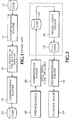
- FIG. 1 A flow chart of this approach is shown in FIG. 1.
- an image is stored on a disk 12.
- the image is stored in a compressed format using one of any number of industry standard compression schemes, for example, JPEG, MPEG, H.261 or H.263, in order to reduce the amount of memory space required to store the image.
- Many of these compression schemes use the so-called discrete cosine transform (DCT) to convert the original image data from the spatial domain to the compressed domain.
- DCT discrete cosine transform
- step 16 Once the data is returned to the spatial domain, conventional filtering techniques can be used in step 16 to produce a desired filtered image.
- the filtered data is then compressed again in step 18 using the same compression scheme and stored back to disk 20.
- disks 12 and 20 are shown separately, they can in fact be one and the same.
- the problem with this conventional approach is that it is computationally intensive. As described above, the compressed image data must be decompressed, filtered, and then recompressed each time the data is filtered. It is preferable if the filtering can be done in the compressed or DCT domain. In that case, the decompression and compression steps (i.e., 14 and 18) can be eliminated. This approach is only desirable, however, if the filtering in the DCT domain requires fewer operations than the combined number of operations required by the conventional approach.
- Martucci has derived a complete set of symmetrical convolution routines for a family of discrete cosine transforms (including the DCT).
- S.A. Martucci "Symmetric Convolution and Discrete Sine and Cosine Transforms," IEEE Trans. on Signal Processing , vol. SP-42, no. 5, pp. 1038-1051, May 1994.
- the method shown therein can be modified to obtain a linear convolution approach by appropriate zero padding in the convolution domain.
- these approaches cannot be used in many applications since the DCT domain data is already given without prior zero padding in the spatial domain.
- Lee and Lee have used a simple algebraic approach to derive a transform domain linear convolution filter and proposed a pipeline hardware architecture.
- J.B. Lee and B.G. Lee "Transform Domain Filtering Based on Pipelining Structure," IEEE Trans. On-Signal Processing , vol. SP-40, no. 8, pp. 2061-2064, August 1992.
- the Lee and Lee approach precomputes the product of the operator matrices corresponding to inverse DCT (IDCT), the convolution, and the DCT, and then uses this combined operator matrix directly in the DCT domain, where the contributions of neighboring DCT data blocks are incorporated similarly as in the overlap and add (OLA) method.
- IDCT inverse DCT
- OAA overlap and add
- Chang and Messerschmitt propose a similar approach by using the distributive property of the DCT with respect to matrix multiplication.
- S.F. Chang and D.G. Messerschmitt "Manipulation and Compositing of MC-DCT Compressed Video," IEEE J. Selected Areas in Communications , vol. 13, no. 1, pp. 1-11, January 1995.
- a more thorough study of this approach, in combination with down sampling, has been carried out by Neri et al., "Inter-Block Filtering and Down Sampling in DCT Domain," Signal Processing: Image Communication , vol. 6, pp. 303-317, 1994.
- the problem with each of these approaches is that they are still relatively computationally intensive. As a result, filtering in the DCT domain is slow.
- the filter according to the invention significantly reduces the computational requirements as compared to the conventional filtering approach in the spatial domain. In fact, the filter according to the invention requires 60-80% fewer computations than the straight forward filtering method.
- the filter achieves this result in several ways. First, the filter uses recursion so that some of the computations that are performed in filtering a previous DCT data block are used in the current DCT data block. Second, the filter is tailored to the standard format of 8x8 DCT data blocks. Third, by creating certain butterflies on the input data, the combined linear operator (IDCT-convolution-DCT) can be represented by a relatively sparse matrix. Finally, the typical sparseness of the DCT input data greatly reduces the number of arithmetic operations.
- FIG. 1 is a flow chart of a prior art method of filtering image data in the spatial domain.
- FIG. 2 is a system diagram for an image/video editor according to the invention.
- FIG. 3 is a block diagram of the image/video editor of FIG. 2.
- FIG. 4 is a block diagram of a filter according to the invention.
- FIG. 5 is a matrix representation of image data in the DCT domain.
- the system includes a disk 24 on which a preprocessed image 26 is stored.
- the image 26 is compressed by a compression engine 22 according to one of the DCT-based compression schemes (e.g., JPEG, MPEG, H.261 or H.263).
- the image for example, could be produced by a photoprocessing shop.
- the compressed image is then stored on disk 24 to allow the owner of the photograph to edit the photograph using an image/video editor 30.
- the image/video editor 30 includes a filter according to the invention that operates on the compressed image data stored on disk 24 to produce filter image data, which is also in the DCT domain, that is stored on disk 26 after filtering.
- the image/video editor 30 can include a plurality of predefined filters according to the invention and which allows the user to specify which one or more of these filters are desired.
- disk 26 is shown separately from disk 24, they need only be logically separate. In fact, disk 24 and disk 26 can be the same physical disk.
- the photoprocessing shop can then decompress the filtered image with decompression engine 32 to produce a filtered image 34, which can then be processed by the photoprocessing shop and sent to the owner.
- the editor includes a Huffman decoder 36 that decodes the data stored on disk 24 using the well-known Huffman decoding technique.
- the Huffman decoder 36 produces a serial stream of raster data that is buffered by buffer 38 to produce a matrix of DCT blocks such as shown in FIG. 5.
- Each of the blocks in FIG. 5 (e.g., X NE ) includes 64 DCT coefficients arranged as an 8x8 matrix. Although the following discussion assumes 8x8 DCT blocks, the invention is not limited thereto.
- the filter 40 includes three inputs for receiving the three DCT blocks.
- Filter 40 further includes a fourth input for receiving a SELECT input that is provided by the user.
- the SELECT input allows the user to select which of the plurality of filter functions the user desires. In the preferred embodiment discussed below, only a single filter function is included in filter 40, which obviates the need for the SELECT input. In other embodiments, however, the select input can be used to select more than one filter function.
- the filter 40 produces an output data block Y that is an 8x8 block of filtered DCT data.
- This output data block Y is provided to a buffer 42, which buffers the output data blocks.
- the filter 40 can overwrite the contents of buffer 38 thereby eliminating the second buffer 42. For ease of illustration, however, both are shown.
- the fast method of filtering the DCT data blocks implemented to filter 40 to produce the output DCT data block Y is discussed further below.
- the buffer 42 includes an output coupled to a Huffman encoder 44 that re-encodes the filtered output data (Y) using the well-known Huffman encoding technique.
- the output of the Huffman encoder 44 is then stored back on disk 26. As described above, disks 24 and 26 need not be separate.
- the filter 30 can be a dedicated hardware embodiment or, as in the preferred embodiment, a computer program executed by a microprocessor (not shown).
- a computer including a filter program which implements all of the steps described above including fetching, decoding filtering, encoding and storing.
- One of ordinary skill in the art could write the software required to implement these functions in a high level programming language (e.g., C or C ++ ) based on the description included herein. Accordingly, the program listing itself is omitted.
- the method is not limited to separable filters. In this case, eq.
- J(i,j) i' v i' j' h j' I(i-i', j-j'), namely, one can first perform a one-dimensional convolution on each row with the horizontal filter component (HFC) ⁇ h j ⁇ , and then another one-dimensional convolution on each resulting column with the vertical filter component (VFC) ⁇ v i ⁇ .
- HFC horizontal filter component
- VFC vertical filter component
- the filter is "isotropic" in the sense that rows and columns undergo the same convolution. We will not assume, however, that this property necessarily holds.
- the supports of ⁇ v i ⁇ and ⁇ h j ⁇ are
- ⁇ N, respectively, meaning that f(i,j) 0 outside a (2M + 1) x (2N + 1) rectangle centered at the origin.
- the input image ⁇ I(i,j) ⁇ is given in the compressed domain, that is, we are given a sequence of 8x8 matrices X 1 , X 2 , ... of DCT coefficients corresponding to spatial domain 8x8 spatial domain blocks x 1 , x 2 , ... that together form the input image ⁇ I(i,j) ⁇ .
- the filter computes a sequence of 8x8 matrices Y 1 , Y 2 , ... of DCT coefficients of the spatial domain blocks y 1 , y 2 , ... associated with the filtered image ⁇ J(i,j) ⁇ , directly from X 1 , X 2 , ... without going via the spatial domain and performing spatial domain convolution.
- the filter size is always smaller than 17 x 17, so that every DCT block Y (associated with the spatial domain block y) of the filtered image ⁇ J(i,j) ⁇ depends on the corresponding DCT block X (associated with the spatial domain block x) of the input image ⁇ I(i,j) ⁇ and the eight immediate neighbors of X.
- the input DCT blocks will be denoted by the appropriate subscript, i.e., X N , X NE , X E , and so on.
- the input DCT blocks 4 can be expressed as:
- the respective spatial domain blocks will be denoted x N , x NE , x E , etc.
- the filtering approach according to the invention provides an efficient filtering method that computes Y from X, X N , X NE , X E , X SE , X S , X SW , X W , and X NW .
- the matrices V ++ , V -+ , and V - are referred to herein as sparse vertical submatrices and H t ++ , H t -+ and H t - are similarly referred to as sparse horizontal transpose submatrices.
- the input data can then be rearranged in such a way by creating so-called “butterflies” that eq. (16) is expressed only in terms of the sparse matrices defined above.
- This means that the proposed approach is preferable for every L M + N ⁇ 5 .
- FIG. 4 a block diagram of a filter according to the invention is shown generally at 50.
- the filter 50 implements the filtering method derived above. In fact, the same parameters that are shown in the derivation above are used in FIG. 4.
- the filter 50 includes four main components: a first computational module 52, a second computational module 54, a first delay memory 56, and a second delay memory 58.
- the organization of the two computational modules 52 and 54 is identical. There are, however, two differences: the input data and the internal data that is used. These differences will become more apparent in a detailed discussion, which follows.
- the filter includes three inputs 58, 60 and 62 for receiving three DCT data blocks at X SE , X NE and X E , respectively. These three DCT blocks correspond to the right-most column of the matrix shown in FIG. 5. Each of these DCT blocks includes 64 elements organized as an 8x8 matrix.
- the computational module 52 includes a first summer circuit 64 that has two inputs and an output. The first of these inputs is coupled to input 58 to receive the DCT data block X SE and the second coupled to input 60 to receive the DCT data block X NE .
- the summer 64 sums the two DCT data blocks on an element-by-element basis to produce a sum matrix X E ⁇ that is equal to X N ⁇ E X SE .
- the output of summer 64 is coupled to a first matrix multiplier 66 that multiplies the matrix X E ⁇ by a first sparse vertical submatrix V - , which is stored internally in a first vertical matrix memory (not shown).
- the matrix multiplier 66 multiplies the two matrices (X - E V - ) according to the known formula for matrix multiplication.
- the product or result of this matrix multiplication corresponds to the right-most parameter in the equation for Z3 given above.
- the computational module 52 also includes a second summing circuit 68 that also includes two inputs.
- the first input is coupled to input 58 of the filter to receive the DCT data block X SE and the second input is coupled to input 60 of the filter to receive the DCT data block X NE .
- the summing circuit 68 adds these two matrices together in the known fashion to produce a sum X NSE (not shown).
- This sum is provided to a divider circuit 70, which divides each element in the matrix X NSE by two to produce a resulting matrix X + E . Because only a divide by two is required, which can be accomplished by a simple "shift" operation, the divider circuit 70 may be substantially reduced from a full divider. In fact, the divide and subsequent add can be accomplished in most compilers by a single "shift and add" operation.
- a third summing circuit 72 is included in the computational module 52 that adds together the matrices X + E and X E to produce a sum matrix X ++ E that is equal to the sum of these two matrices.
- the summing circuit 72 is identical to summing circuit 68.
- the output of summing circuit 72 is coupled to a second matrix multiplier 74.
- This matrix multiplier 74 is identical in organization to matrix multiplier 66.
- the matrix multiplier 74 includes a second vertical matrix memory for storing a second sparse vertical submatrix V ++ and which multiplies the second sparse vertical submatrix V ++ by the matrix X ++ E in the known fashion.
- the result of this matrix multiplication is the first parameter in the expression for Z 3 given above.
- the computational module 52 finally includes a fourth summing circuit 76 that, like summing circuit 64, 68 and 72, includes two inputs.
- the first input is coupled to the output of divider circuit 70 in order to receive the matrix X + E while the second input is coupled directly to input 62 of the filter to receive the DCT data block X E .
- the summing circuit 76 sums together X E+ and X E to produce a resulting matrix X +- E that is equal to X E+ . minus X E , on an element-by-element basis.
- the output of summing circuit 76 coupled to a third matrix multiplier 78.
- Matrix multiplier 78 multiplies the input matrix X E by a third sparse vertical submatrix V -+ . that is stored in a third vertical matrix memory residing therein.
- the result of this matrix multiplication is the second parameter (V -+ X E+- ) in the expression for Z 3 given above.
- the outputs of matrix multiplier 66, 74 and 78 are coupled to a summer 80, which sums together the resultant matrices from the three matrix multipliers.
- the resulting matrix Z 3 then has the relationship shown above.
- the filter uses recursion in that the partial results (i.e., Z 3 ) of two previous computations are stored.
- This storage is accomplished by first and second delay memories 56 and 58.
- the delay memory 56 stores the output produced by computational module 52 from one period ago, while the delay memory 58 stores the results of computational module 52 from two periods ago.
- a period is the time required to process the current set of input DCT data by the first computational module. The period is determined by the propagation delay through the first computational modules and the time required to properly latch the resulting data in the delay memories.
- the delay memories 56 and 58 thus allow the filter to be pipelined, as the term is used in the art.
- the output from one period ago corresponds to a different set of input DCT data blocks than that shown in FIG. 4.
- the input data would be the middle column of the matrix shown in FIG. 5 (X N , X, X S ).
- the output of the computational module from two periods ago corresponds to the left-most column of the matrix of FIG. 5 is input (i.e., X NW , X W , X SW ).
- the filter 50 also includes a second computational module 54, which is identical in organization to the first computational module 52.
- the module 54 includes three inputs 82, 84 and 86.
- the first input 82 is coupled to the output of the summer 80 to receive the matrix Z 3 .
- the second input 84 is coupled to an output of delay memory 58 to receive the matrix Z 1 , which is Z 3 delayed by two periods.
- the third input 86 is coupled to the output of delay memory 56 to receive matrix Z 2 , which is Z 3 delayed by only a single period.
- Matrix multiplier 88 includes a matrix memory that stores the first sparse horizontal submatrix H + - , whose elements can be described by a similar expression as that given above for the first sparse vertical submatrice (V - ).
- the matrix multiplier 90 similarly includes a matrix memory for storing a second sparse horizontal submatrice H t ++ , which again is described by a similar equation as that for the corresponding vertical sparse submatrice.
- matrix multiplier 92 includes a matrix memory for storing a third sparse horizontal submatrice H t -+ . These three matrix multipliers 88, 90 and 92 produce the three parameters of the output data block Y shown in the expression above. These products are summed together by a summer 94 and provided to a filter output 96 as an output data block Y, which is the filtered output data. This result can then be stored back to disk in either a separate memory location or can overwrite the current DC data block (X).
- the filter 50 assumes a single set of vertical and horizontal filter components. These components are stored, after being combined according to the invention in the matrix memories of the various matrix multipliers. If more than one filter is desired, such as in the system shown in FIG. 3, each matrix multiplier could include a plurality of matrix memories for storing a corresponding plurality of sparse submatrices. The set of sparse matrices could then be selected by the user depending upon the desired filter characteristics.
- the vertical and horizontal sparse matrices include a multiplicity of known zero values. Because the location of these zero values are known in advance, the matrix multipliers (66, 74, 78, 88, 90 and 92) need not multiply those elements by the respective multiplicant. This produces significant savings in the number of computations required to implement the filter.
- the DCT filter according to the invention takes advantage of the properties of the DCT coefficients. For real images, these DCT coefficient matrices are very sparse, especially after quantization. This is because most of the energy of the images concentrated on a relatively small number of coefficients, normally the ones corresponding to low spatial frequencies.
- the number of computations can be further reduced. Most of these savings are made in the first computational module, which is operating directly on the DCT data blocks.
- the input Z - matrices of the second computational module may have more nonzero elements than their DCT counterparts. As a result, not as much computational savings is achieved in the second computational module.
- Another advantage of the filtering method and apparatus described herein is that it uses recursion so that the results of previous computations can be saved (i.e., Z 3 ) and used over again. This produces significant computational savings. The result of Z 3 can be calculated once and used in the next two periods. This produces further savings over the conventional approach of filtering an image in the spatial domain. It has been shown above that the filter according to the invention produces 60-80% fewer computations than that required by the conventional approach.
- the filter can be implemented in dedicated hardware as shown in FIG. 4 or, alternatively and preferably, implemented in software executed by a general purpose computer. I claim all modifications and variation coming within the spirit and scope of the following claims.
Landscapes
- Physics & Mathematics (AREA)
- General Physics & Mathematics (AREA)
- Engineering & Computer Science (AREA)
- Theoretical Computer Science (AREA)
- Compression Or Coding Systems Of Tv Signals (AREA)
- Compression, Expansion, Code Conversion, And Decoders (AREA)
- Image Processing (AREA)
Applications Claiming Priority (2)
| Application Number | Priority Date | Filing Date | Title |
|---|---|---|---|
| US612513 | 1996-03-06 | ||
| US08/612,513 US5832135A (en) | 1996-03-06 | 1996-03-06 | Fast method and apparatus for filtering compressed images in the DCT domain |
Publications (1)
| Publication Number | Publication Date |
|---|---|
| EP0794511A2 true EP0794511A2 (de) | 1997-09-10 |
Family
ID=24453475
Family Applications (1)
| Application Number | Title | Priority Date | Filing Date |
|---|---|---|---|
| EP96120683A Withdrawn EP0794511A2 (de) | 1996-03-06 | 1996-12-20 | Schnelles Verfahren und Gerät zur Filterung von komprimierten Bilder in dem DCT-Bereich |
Country Status (3)
| Country | Link |
|---|---|
| US (1) | US5832135A (de) |
| EP (1) | EP0794511A2 (de) |
| JP (1) | JPH1013833A (de) |
Cited By (2)
| Publication number | Priority date | Publication date | Assignee | Title |
|---|---|---|---|---|
| EP1103918A3 (de) * | 1999-11-24 | 2003-05-14 | Xerox Corporation | Bildverbesserung von JPEG komprimierten Bilddaten |
| SG157954A1 (en) * | 2001-06-29 | 2010-01-29 | Qualcomm Inc | Dct compression using golomb-rice coding |
Families Citing this family (21)
| Publication number | Priority date | Publication date | Assignee | Title |
|---|---|---|---|---|
| US5986709A (en) * | 1996-11-18 | 1999-11-16 | Samsung Electronics Co., Ltd. | Adaptive lossy IDCT for multitasking environment |
| US6400680B1 (en) * | 1997-12-30 | 2002-06-04 | Koninklijke Philips Electronics N.V. | Data transformation of the inverse-fourier type |
| US6134571A (en) * | 1998-04-29 | 2000-10-17 | Hewlett-Packard Company | Implicit DST-based filter operating in the DCT domain |
| US6473534B1 (en) * | 1999-01-06 | 2002-10-29 | Hewlett-Packard Company | Multiplier-free implementation of DCT used in image and video processing and compression |
| US6490323B1 (en) | 1999-06-17 | 2002-12-03 | Hewlett-Packard Company | Fast compressed domain processing using orthogonality |
| US6300973B1 (en) | 2000-01-13 | 2001-10-09 | Meir Feder | Method and system for multimedia communication control |
| US7542068B2 (en) * | 2000-01-13 | 2009-06-02 | Polycom, Inc. | Method and system for controlling multimedia video communication |
| US7062098B1 (en) * | 2000-05-12 | 2006-06-13 | International Business Machines Corporation | Method and apparatus for the scaling down of data |
| US6970179B1 (en) | 2000-05-12 | 2005-11-29 | International Business Machines Corporation | Method and apparatus for the scaling up of data |
| JP2004514334A (ja) * | 2000-11-09 | 2004-05-13 | コーニンクレッカ フィリップス エレクトロニクス エヌ ヴィ | ビデオ信号処理 |
| US6891892B2 (en) * | 2001-03-30 | 2005-05-10 | Koninklijke Philips Electronics N.V. | MPEG-2 decoder with an embedded contrast enhancement function and methods therefor |
| US6823087B1 (en) * | 2001-05-15 | 2004-11-23 | Advanced Micro Devices, Inc. | Parallel edge filters in video codec |
| JP2005501490A (ja) * | 2001-08-24 | 2005-01-13 | コーニンクレッカ フィリップス エレクトロニクス エヌ ヴィ | ビデオフレームのフィールドの加算 |
| US6950473B2 (en) * | 2002-06-21 | 2005-09-27 | Seiko Epson Corporation | Hybrid technique for reducing blocking and ringing artifacts in low-bit-rate coding |
| US7376282B2 (en) * | 2003-11-20 | 2008-05-20 | Xerox Corporation | Method for designing nearly circularly symmetric descreening filters that can be efficiently implemented in VLIW (very long instruction word) media processors |
| US7634148B2 (en) * | 2005-01-07 | 2009-12-15 | Ntt Docomo, Inc. | Image signal transforming and inverse-transforming method and computer program product with pre-encoding filtering features |
| US20060190517A1 (en) * | 2005-02-02 | 2006-08-24 | Guerrero Miguel A | Techniques for transposition of a matrix arranged in a memory as multiple items per word |
| EP2145482A1 (de) * | 2007-04-19 | 2010-01-20 | Thomson Licensing | Adaptive referenzbilddatenerzeugung für intra-prädiktion |
| CN101080009B (zh) * | 2007-07-17 | 2011-02-23 | 智原科技股份有限公司 | 运用于图像编解码器中的去方块过滤方法与装置 |
| US8208745B2 (en) * | 2008-01-31 | 2012-06-26 | Analog Devices, Inc. | Spatial domain video enhancement/scaling system and method |
| CN102119401B (zh) * | 2008-08-08 | 2013-12-04 | 汤姆逊许可证公司 | 用于带状伪像检测的方法和设备 |
Family Cites Families (2)
| Publication number | Priority date | Publication date | Assignee | Title |
|---|---|---|---|---|
| US5168375A (en) * | 1991-09-18 | 1992-12-01 | Polaroid Corporation | Image reconstruction by use of discrete cosine and related transforms |
| US5708732A (en) * | 1996-03-06 | 1998-01-13 | Hewlett-Packard Company | Fast DCT domain downsampling and inverse motion compensation |
-
1996
- 1996-03-06 US US08/612,513 patent/US5832135A/en not_active Expired - Fee Related
- 1996-12-20 EP EP96120683A patent/EP0794511A2/de not_active Withdrawn
-
1997
- 1997-02-24 JP JP9038951A patent/JPH1013833A/ja active Pending
Non-Patent Citations (9)
Cited By (3)
| Publication number | Priority date | Publication date | Assignee | Title |
|---|---|---|---|---|
| EP1103918A3 (de) * | 1999-11-24 | 2003-05-14 | Xerox Corporation | Bildverbesserung von JPEG komprimierten Bilddaten |
| US6628843B1 (en) | 1999-11-24 | 2003-09-30 | Xerox Corporation | Image enhancement on JPEG compressed image data |
| SG157954A1 (en) * | 2001-06-29 | 2010-01-29 | Qualcomm Inc | Dct compression using golomb-rice coding |
Also Published As
| Publication number | Publication date |
|---|---|
| US5832135A (en) | 1998-11-03 |
| JPH1013833A (ja) | 1998-01-16 |
Similar Documents
| Publication | Publication Date | Title |
|---|---|---|
| EP0794511A2 (de) | Schnelles Verfahren und Gerät zur Filterung von komprimierten Bilder in dem DCT-Bereich | |
| US5708732A (en) | Fast DCT domain downsampling and inverse motion compensation | |
| US6263119B1 (en) | Method and apparatus for resizing images using the discrete trigonometric transform | |
| JPH09331532A5 (de) | ||
| KR101136770B1 (ko) | 스케일링 인터페이스 및 넌-스케일링 인터페이스를 갖는 변환 디자인 | |
| Feig | Fast scaled-DCT algorithm | |
| US6125212A (en) | Explicit DST-based filter operating in the DCT domain | |
| Kresch et al. | Fast DCT domain filtering using the DCT and the DST | |
| Hung et al. | A comparison of fast inverse discrete cosine transform algorithms | |
| US20070094320A1 (en) | Parallel Adder-Based DCT / IDCT Design Using Cyclic Convolution | |
| EP0884686A3 (de) | Verfahren und Gerät zur Durchführung der Diskreten-Cosinus-Transformation und inversen Diskreten-Cosinus-Transformation | |
| US6067384A (en) | Fast scaling of JPEG images | |
| US6611560B1 (en) | Method and apparatus for performing motion estimation in the DCT domain | |
| US6317767B2 (en) | Methods and systems for performing short integer chen IDCT algorithm with fused multiply/add | |
| US6134571A (en) | Implicit DST-based filter operating in the DCT domain | |
| JP2002500455A (ja) | 高速idct/ダウンサンプリング複合演算方法および装置 | |
| US7613759B2 (en) | Low-complexity nonlinear filters | |
| JPH09212484A (ja) | 離散コサイン変換方法 | |
| US6807310B1 (en) | Transformation of image parts in different domains to obtain resultant image size different from initial image size | |
| Smith et al. | Efficient algorithms for generating interpolated (zoomed) MR images | |
| Hung et al. | Compact inverse discrete cosine transform circuit for MPEG video decoding | |
| Merhav et al. | A transform domain approach to spatial domain image scaling | |
| Merhav et al. | A fast algorithm for DCT domain filtering | |
| US6021228A (en) | Integer-only short-filter length signal analysis/synthesis method and apparatus | |
| JP3136785B2 (ja) | データ圧縮装置 |
Legal Events
| Date | Code | Title | Description |
|---|---|---|---|
| PUAI | Public reference made under article 153(3) epc to a published international application that has entered the european phase |
Free format text: ORIGINAL CODE: 0009012 |
|
| AK | Designated contracting states |
Kind code of ref document: A2 Designated state(s): DE FR GB |
|
| STAA | Information on the status of an ep patent application or granted ep patent |
Free format text: STATUS: THE APPLICATION IS DEEMED TO BE WITHDRAWN |
|
| 18D | Application deemed to be withdrawn |
Effective date: 19990701 |