EP0795727A1 - Procédé et dispositif pour la liquéfaction d'un gaz à bas point d'ébullition - Google Patents
Procédé et dispositif pour la liquéfaction d'un gaz à bas point d'ébullition Download PDFInfo
- Publication number
- EP0795727A1 EP0795727A1 EP96109799A EP96109799A EP0795727A1 EP 0795727 A1 EP0795727 A1 EP 0795727A1 EP 96109799 A EP96109799 A EP 96109799A EP 96109799 A EP96109799 A EP 96109799A EP 0795727 A1 EP0795727 A1 EP 0795727A1
- Authority
- EP
- European Patent Office
- Prior art keywords
- heat exchanger
- gas
- expansion
- circulating
- circulating medium
- Prior art date
- Legal status (The legal status is an assumption and is not a legal conclusion. Google has not performed a legal analysis and makes no representation as to the accuracy of the status listed.)
- Withdrawn
Links
- 238000000034 method Methods 0.000 title claims abstract description 25
- 238000009835 boiling Methods 0.000 title claims description 4
- 239000007789 gas Substances 0.000 claims abstract description 42
- IJGRMHOSHXDMSA-UHFFFAOYSA-N Atomic nitrogen Chemical compound N#N IJGRMHOSHXDMSA-UHFFFAOYSA-N 0.000 claims abstract description 26
- 229910052757 nitrogen Inorganic materials 0.000 claims abstract description 13
- 238000001816 cooling Methods 0.000 claims description 16
- 239000000203 mixture Substances 0.000 claims description 8
- 239000012263 liquid product Substances 0.000 claims description 5
- 230000006835 compression Effects 0.000 claims description 4
- 238000007906 compression Methods 0.000 claims description 4
- 239000000047 product Substances 0.000 claims description 4
- 238000005057 refrigeration Methods 0.000 claims description 4
- 238000000926 separation method Methods 0.000 claims description 3
- 239000007788 liquid Substances 0.000 abstract description 4
- 238000010438 heat treatment Methods 0.000 description 4
- VNWKTOKETHGBQD-UHFFFAOYSA-N methane Chemical compound C VNWKTOKETHGBQD-UHFFFAOYSA-N 0.000 description 4
- QVGXLLKOCUKJST-UHFFFAOYSA-N atomic oxygen Chemical compound [O] QVGXLLKOCUKJST-UHFFFAOYSA-N 0.000 description 3
- 239000001301 oxygen Substances 0.000 description 3
- 229910052760 oxygen Inorganic materials 0.000 description 3
- 239000000126 substance Substances 0.000 description 3
- 238000011144 upstream manufacturing Methods 0.000 description 3
- 238000010327 methods by industry Methods 0.000 description 2
- 239000003345 natural gas Substances 0.000 description 2
- 230000008878 coupling Effects 0.000 description 1
- 238000010168 coupling process Methods 0.000 description 1
- 238000005859 coupling reaction Methods 0.000 description 1
- 230000002349 favourable effect Effects 0.000 description 1
- 238000003303 reheating Methods 0.000 description 1
- 230000000717 retained effect Effects 0.000 description 1
Images

Classifications
-
- F—MECHANICAL ENGINEERING; LIGHTING; HEATING; WEAPONS; BLASTING
- F25—REFRIGERATION OR COOLING; COMBINED HEATING AND REFRIGERATION SYSTEMS; HEAT PUMP SYSTEMS; MANUFACTURE OR STORAGE OF ICE; LIQUEFACTION SOLIDIFICATION OF GASES
- F25J—LIQUEFACTION, SOLIDIFICATION OR SEPARATION OF GASES OR GASEOUS OR LIQUEFIED GASEOUS MIXTURES BY PRESSURE AND COLD TREATMENT OR BY BRINGING THEM INTO THE SUPERCRITICAL STATE
- F25J3/00—Processes or apparatus for separating the constituents of gaseous or liquefied gaseous mixtures involving the use of liquefaction or solidification
- F25J3/02—Processes or apparatus for separating the constituents of gaseous or liquefied gaseous mixtures involving the use of liquefaction or solidification by rectification, i.e. by continuous interchange of heat and material between a vapour stream and a liquid stream
- F25J3/04—Processes or apparatus for separating the constituents of gaseous or liquefied gaseous mixtures involving the use of liquefaction or solidification by rectification, i.e. by continuous interchange of heat and material between a vapour stream and a liquid stream for air
- F25J3/04151—Purification and (pre-)cooling of the feed air; recuperative heat-exchange with product streams
- F25J3/04187—Cooling of the purified feed air by recuperative heat-exchange; Heat-exchange with product streams
- F25J3/04218—Parallel arrangement of the main heat exchange line in cores having different functions, e.g. in low pressure and high pressure cores
- F25J3/04224—Cores associated with a liquefaction or refrigeration cycle
-
- F—MECHANICAL ENGINEERING; LIGHTING; HEATING; WEAPONS; BLASTING
- F25—REFRIGERATION OR COOLING; COMBINED HEATING AND REFRIGERATION SYSTEMS; HEAT PUMP SYSTEMS; MANUFACTURE OR STORAGE OF ICE; LIQUEFACTION SOLIDIFICATION OF GASES
- F25J—LIQUEFACTION, SOLIDIFICATION OR SEPARATION OF GASES OR GASEOUS OR LIQUEFIED GASEOUS MIXTURES BY PRESSURE AND COLD TREATMENT OR BY BRINGING THEM INTO THE SUPERCRITICAL STATE
- F25J1/00—Processes or apparatus for liquefying or solidifying gases or gaseous mixtures
- F25J1/0002—Processes or apparatus for liquefying or solidifying gases or gaseous mixtures characterised by the fluid to be liquefied
- F25J1/0012—Primary atmospheric gases, e.g. air
- F25J1/0015—Nitrogen
-
- F—MECHANICAL ENGINEERING; LIGHTING; HEATING; WEAPONS; BLASTING
- F25—REFRIGERATION OR COOLING; COMBINED HEATING AND REFRIGERATION SYSTEMS; HEAT PUMP SYSTEMS; MANUFACTURE OR STORAGE OF ICE; LIQUEFACTION SOLIDIFICATION OF GASES
- F25J—LIQUEFACTION, SOLIDIFICATION OR SEPARATION OF GASES OR GASEOUS OR LIQUEFIED GASEOUS MIXTURES BY PRESSURE AND COLD TREATMENT OR BY BRINGING THEM INTO THE SUPERCRITICAL STATE
- F25J1/00—Processes or apparatus for liquefying or solidifying gases or gaseous mixtures
- F25J1/003—Processes or apparatus for liquefying or solidifying gases or gaseous mixtures characterised by the kind of cold generation within the liquefaction unit for compensating heat leaks and liquid production
- F25J1/0032—Processes or apparatus for liquefying or solidifying gases or gaseous mixtures characterised by the kind of cold generation within the liquefaction unit for compensating heat leaks and liquid production using the feed stream itself or separated fractions from it, i.e. "internal refrigeration"
- F25J1/0035—Processes or apparatus for liquefying or solidifying gases or gaseous mixtures characterised by the kind of cold generation within the liquefaction unit for compensating heat leaks and liquid production using the feed stream itself or separated fractions from it, i.e. "internal refrigeration" by gas expansion with extraction of work
- F25J1/0037—Processes or apparatus for liquefying or solidifying gases or gaseous mixtures characterised by the kind of cold generation within the liquefaction unit for compensating heat leaks and liquid production using the feed stream itself or separated fractions from it, i.e. "internal refrigeration" by gas expansion with extraction of work of a return stream
-
- F—MECHANICAL ENGINEERING; LIGHTING; HEATING; WEAPONS; BLASTING
- F25—REFRIGERATION OR COOLING; COMBINED HEATING AND REFRIGERATION SYSTEMS; HEAT PUMP SYSTEMS; MANUFACTURE OR STORAGE OF ICE; LIQUEFACTION SOLIDIFICATION OF GASES
- F25J—LIQUEFACTION, SOLIDIFICATION OR SEPARATION OF GASES OR GASEOUS OR LIQUEFIED GASEOUS MIXTURES BY PRESSURE AND COLD TREATMENT OR BY BRINGING THEM INTO THE SUPERCRITICAL STATE
- F25J1/00—Processes or apparatus for liquefying or solidifying gases or gaseous mixtures
- F25J1/003—Processes or apparatus for liquefying or solidifying gases or gaseous mixtures characterised by the kind of cold generation within the liquefaction unit for compensating heat leaks and liquid production
- F25J1/0032—Processes or apparatus for liquefying or solidifying gases or gaseous mixtures characterised by the kind of cold generation within the liquefaction unit for compensating heat leaks and liquid production using the feed stream itself or separated fractions from it, i.e. "internal refrigeration"
- F25J1/004—Processes or apparatus for liquefying or solidifying gases or gaseous mixtures characterised by the kind of cold generation within the liquefaction unit for compensating heat leaks and liquid production using the feed stream itself or separated fractions from it, i.e. "internal refrigeration" by flash gas recovery
-
- F—MECHANICAL ENGINEERING; LIGHTING; HEATING; WEAPONS; BLASTING
- F25—REFRIGERATION OR COOLING; COMBINED HEATING AND REFRIGERATION SYSTEMS; HEAT PUMP SYSTEMS; MANUFACTURE OR STORAGE OF ICE; LIQUEFACTION SOLIDIFICATION OF GASES
- F25J—LIQUEFACTION, SOLIDIFICATION OR SEPARATION OF GASES OR GASEOUS OR LIQUEFIED GASEOUS MIXTURES BY PRESSURE AND COLD TREATMENT OR BY BRINGING THEM INTO THE SUPERCRITICAL STATE
- F25J1/00—Processes or apparatus for liquefying or solidifying gases or gaseous mixtures
- F25J1/02—Processes or apparatus for liquefying or solidifying gases or gaseous mixtures requiring the use of refrigeration, e.g. of helium or hydrogen ; Details and kind of the refrigeration system used; Integration with other units or processes; Controlling aspects of the process
- F25J1/0201—Processes or apparatus for liquefying or solidifying gases or gaseous mixtures requiring the use of refrigeration, e.g. of helium or hydrogen ; Details and kind of the refrigeration system used; Integration with other units or processes; Controlling aspects of the process using only internal refrigeration means, i.e. without external refrigeration
- F25J1/0202—Processes or apparatus for liquefying or solidifying gases or gaseous mixtures requiring the use of refrigeration, e.g. of helium or hydrogen ; Details and kind of the refrigeration system used; Integration with other units or processes; Controlling aspects of the process using only internal refrigeration means, i.e. without external refrigeration in a quasi-closed internal refrigeration loop
-
- F—MECHANICAL ENGINEERING; LIGHTING; HEATING; WEAPONS; BLASTING
- F25—REFRIGERATION OR COOLING; COMBINED HEATING AND REFRIGERATION SYSTEMS; HEAT PUMP SYSTEMS; MANUFACTURE OR STORAGE OF ICE; LIQUEFACTION SOLIDIFICATION OF GASES
- F25J—LIQUEFACTION, SOLIDIFICATION OR SEPARATION OF GASES OR GASEOUS OR LIQUEFIED GASEOUS MIXTURES BY PRESSURE AND COLD TREATMENT OR BY BRINGING THEM INTO THE SUPERCRITICAL STATE
- F25J1/00—Processes or apparatus for liquefying or solidifying gases or gaseous mixtures
- F25J1/02—Processes or apparatus for liquefying or solidifying gases or gaseous mixtures requiring the use of refrigeration, e.g. of helium or hydrogen ; Details and kind of the refrigeration system used; Integration with other units or processes; Controlling aspects of the process
- F25J1/0228—Coupling of the liquefaction unit to other units or processes, so-called integrated processes
- F25J1/0234—Integration with a cryogenic air separation unit
-
- F—MECHANICAL ENGINEERING; LIGHTING; HEATING; WEAPONS; BLASTING
- F25—REFRIGERATION OR COOLING; COMBINED HEATING AND REFRIGERATION SYSTEMS; HEAT PUMP SYSTEMS; MANUFACTURE OR STORAGE OF ICE; LIQUEFACTION SOLIDIFICATION OF GASES
- F25J—LIQUEFACTION, SOLIDIFICATION OR SEPARATION OF GASES OR GASEOUS OR LIQUEFIED GASEOUS MIXTURES BY PRESSURE AND COLD TREATMENT OR BY BRINGING THEM INTO THE SUPERCRITICAL STATE
- F25J1/00—Processes or apparatus for liquefying or solidifying gases or gaseous mixtures
- F25J1/02—Processes or apparatus for liquefying or solidifying gases or gaseous mixtures requiring the use of refrigeration, e.g. of helium or hydrogen ; Details and kind of the refrigeration system used; Integration with other units or processes; Controlling aspects of the process
- F25J1/0243—Start-up or control of the process; Details of the apparatus used; Details of the refrigerant compression system used
- F25J1/0279—Compression of refrigerant or internal recycle fluid, e.g. kind of compressor, accumulator, suction drum etc.
- F25J1/0285—Combination of different types of drivers mechanically coupled to the same refrigerant compressor, possibly split on multiple compressor casings
- F25J1/0288—Combination of different types of drivers mechanically coupled to the same refrigerant compressor, possibly split on multiple compressor casings using work extraction by mechanical coupling of compression and expansion of the refrigerant, so-called companders
-
- F—MECHANICAL ENGINEERING; LIGHTING; HEATING; WEAPONS; BLASTING
- F25—REFRIGERATION OR COOLING; COMBINED HEATING AND REFRIGERATION SYSTEMS; HEAT PUMP SYSTEMS; MANUFACTURE OR STORAGE OF ICE; LIQUEFACTION SOLIDIFICATION OF GASES
- F25J—LIQUEFACTION, SOLIDIFICATION OR SEPARATION OF GASES OR GASEOUS OR LIQUEFIED GASEOUS MIXTURES BY PRESSURE AND COLD TREATMENT OR BY BRINGING THEM INTO THE SUPERCRITICAL STATE
- F25J3/00—Processes or apparatus for separating the constituents of gaseous or liquefied gaseous mixtures involving the use of liquefaction or solidification
- F25J3/02—Processes or apparatus for separating the constituents of gaseous or liquefied gaseous mixtures involving the use of liquefaction or solidification by rectification, i.e. by continuous interchange of heat and material between a vapour stream and a liquid stream
- F25J3/04—Processes or apparatus for separating the constituents of gaseous or liquefied gaseous mixtures involving the use of liquefaction or solidification by rectification, i.e. by continuous interchange of heat and material between a vapour stream and a liquid stream for air
- F25J3/04248—Generation of cold for compensating heat leaks or liquid production, e.g. by Joule-Thompson expansion
- F25J3/04333—Generation of cold for compensating heat leaks or liquid production, e.g. by Joule-Thompson expansion using quasi-closed loop internal vapor compression refrigeration cycles, e.g. of intermediate or oxygen enriched (waste-)streams
- F25J3/04351—Generation of cold for compensating heat leaks or liquid production, e.g. by Joule-Thompson expansion using quasi-closed loop internal vapor compression refrigeration cycles, e.g. of intermediate or oxygen enriched (waste-)streams of nitrogen
- F25J3/04357—Generation of cold for compensating heat leaks or liquid production, e.g. by Joule-Thompson expansion using quasi-closed loop internal vapor compression refrigeration cycles, e.g. of intermediate or oxygen enriched (waste-)streams of nitrogen and comprising a gas work expansion loop
-
- F—MECHANICAL ENGINEERING; LIGHTING; HEATING; WEAPONS; BLASTING
- F25—REFRIGERATION OR COOLING; COMBINED HEATING AND REFRIGERATION SYSTEMS; HEAT PUMP SYSTEMS; MANUFACTURE OR STORAGE OF ICE; LIQUEFACTION SOLIDIFICATION OF GASES
- F25J—LIQUEFACTION, SOLIDIFICATION OR SEPARATION OF GASES OR GASEOUS OR LIQUEFIED GASEOUS MIXTURES BY PRESSURE AND COLD TREATMENT OR BY BRINGING THEM INTO THE SUPERCRITICAL STATE
- F25J3/00—Processes or apparatus for separating the constituents of gaseous or liquefied gaseous mixtures involving the use of liquefaction or solidification
- F25J3/02—Processes or apparatus for separating the constituents of gaseous or liquefied gaseous mixtures involving the use of liquefaction or solidification by rectification, i.e. by continuous interchange of heat and material between a vapour stream and a liquid stream
- F25J3/04—Processes or apparatus for separating the constituents of gaseous or liquefied gaseous mixtures involving the use of liquefaction or solidification by rectification, i.e. by continuous interchange of heat and material between a vapour stream and a liquid stream for air
- F25J3/04248—Generation of cold for compensating heat leaks or liquid production, e.g. by Joule-Thompson expansion
- F25J3/04375—Details relating to the work expansion, e.g. process parameter etc.
- F25J3/04393—Details relating to the work expansion, e.g. process parameter etc. using multiple or multistage gas work expansion
-
- F—MECHANICAL ENGINEERING; LIGHTING; HEATING; WEAPONS; BLASTING
- F25—REFRIGERATION OR COOLING; COMBINED HEATING AND REFRIGERATION SYSTEMS; HEAT PUMP SYSTEMS; MANUFACTURE OR STORAGE OF ICE; LIQUEFACTION SOLIDIFICATION OF GASES
- F25J—LIQUEFACTION, SOLIDIFICATION OR SEPARATION OF GASES OR GASEOUS OR LIQUEFIED GASEOUS MIXTURES BY PRESSURE AND COLD TREATMENT OR BY BRINGING THEM INTO THE SUPERCRITICAL STATE
- F25J3/00—Processes or apparatus for separating the constituents of gaseous or liquefied gaseous mixtures involving the use of liquefaction or solidification
- F25J3/02—Processes or apparatus for separating the constituents of gaseous or liquefied gaseous mixtures involving the use of liquefaction or solidification by rectification, i.e. by continuous interchange of heat and material between a vapour stream and a liquid stream
- F25J3/04—Processes or apparatus for separating the constituents of gaseous or liquefied gaseous mixtures involving the use of liquefaction or solidification by rectification, i.e. by continuous interchange of heat and material between a vapour stream and a liquid stream for air
- F25J3/04406—Processes or apparatus for separating the constituents of gaseous or liquefied gaseous mixtures involving the use of liquefaction or solidification by rectification, i.e. by continuous interchange of heat and material between a vapour stream and a liquid stream for air using a dual pressure main column system
- F25J3/04412—Processes or apparatus for separating the constituents of gaseous or liquefied gaseous mixtures involving the use of liquefaction or solidification by rectification, i.e. by continuous interchange of heat and material between a vapour stream and a liquid stream for air using a dual pressure main column system in a classical double column flowsheet, i.e. with thermal coupling by a main reboiler-condenser in the bottom of low pressure respectively top of high pressure column
-
- F—MECHANICAL ENGINEERING; LIGHTING; HEATING; WEAPONS; BLASTING
- F25—REFRIGERATION OR COOLING; COMBINED HEATING AND REFRIGERATION SYSTEMS; HEAT PUMP SYSTEMS; MANUFACTURE OR STORAGE OF ICE; LIQUEFACTION SOLIDIFICATION OF GASES
- F25J—LIQUEFACTION, SOLIDIFICATION OR SEPARATION OF GASES OR GASEOUS OR LIQUEFIED GASEOUS MIXTURES BY PRESSURE AND COLD TREATMENT OR BY BRINGING THEM INTO THE SUPERCRITICAL STATE
- F25J2245/00—Processes or apparatus involving steps for recycling of process streams
- F25J2245/42—Processes or apparatus involving steps for recycling of process streams the recycled stream being nitrogen
-
- F—MECHANICAL ENGINEERING; LIGHTING; HEATING; WEAPONS; BLASTING
- F25—REFRIGERATION OR COOLING; COMBINED HEATING AND REFRIGERATION SYSTEMS; HEAT PUMP SYSTEMS; MANUFACTURE OR STORAGE OF ICE; LIQUEFACTION SOLIDIFICATION OF GASES
- F25J—LIQUEFACTION, SOLIDIFICATION OR SEPARATION OF GASES OR GASEOUS OR LIQUEFIED GASEOUS MIXTURES BY PRESSURE AND COLD TREATMENT OR BY BRINGING THEM INTO THE SUPERCRITICAL STATE
- F25J2270/00—Refrigeration techniques used
- F25J2270/04—Internal refrigeration with work-producing gas expansion loop
- F25J2270/06—Internal refrigeration with work-producing gas expansion loop with multiple gas expansion loops
-
- F—MECHANICAL ENGINEERING; LIGHTING; HEATING; WEAPONS; BLASTING
- F25—REFRIGERATION OR COOLING; COMBINED HEATING AND REFRIGERATION SYSTEMS; HEAT PUMP SYSTEMS; MANUFACTURE OR STORAGE OF ICE; LIQUEFACTION SOLIDIFICATION OF GASES
- F25J—LIQUEFACTION, SOLIDIFICATION OR SEPARATION OF GASES OR GASEOUS OR LIQUEFIED GASEOUS MIXTURES BY PRESSURE AND COLD TREATMENT OR BY BRINGING THEM INTO THE SUPERCRITICAL STATE
- F25J2290/00—Other details not covered by groups F25J2200/00 - F25J2280/00
- F25J2290/10—Mathematical formulae, modeling, plot or curves; Design methods
-
- Y—GENERAL TAGGING OF NEW TECHNOLOGICAL DEVELOPMENTS; GENERAL TAGGING OF CROSS-SECTIONAL TECHNOLOGIES SPANNING OVER SEVERAL SECTIONS OF THE IPC; TECHNICAL SUBJECTS COVERED BY FORMER USPC CROSS-REFERENCE ART COLLECTIONS [XRACs] AND DIGESTS
- Y10—TECHNICAL SUBJECTS COVERED BY FORMER USPC
- Y10S—TECHNICAL SUBJECTS COVERED BY FORMER USPC CROSS-REFERENCE ART COLLECTIONS [XRACs] AND DIGESTS
- Y10S62/00—Refrigeration
- Y10S62/912—External refrigeration system
Definitions
- the invention relates to a method for liquefying a low-boiling gas, in particular nitrogen, in which the gas to be liquefied is cooled under elevated pressure, expanded and then obtained as a liquid product, the method having a refrigeration cycle in which a circulating medium changes from a first pressure to one second pressure is compressed, a first partial flow of the circulating medium is expanded while performing work in a first expansion machine, a second partial flow of the circulating medium is cooled and expanded while performing work in a second expansion machine, and further a third partial flow of the circulating medium is cooled and expanded while performing work in a third expansion machine, the inlet pressures of the three expansion machines being substantially the same and the cooling of the gas to be liquefied at least partially by indirect heat exchange with a relaxed circulating medium in a circuit f heat exchanger is carried out.
- Such methods are used, for example, to liquefy natural gas, nitrogen or oxygen.
- a three-turbine process of the type mentioned at the outset for liquefying natural gas or nitrogen is known from US Pat. No. 3,677,019 (FIG. 6).
- the use of three turbines basically allows the temperatures of streams to be cooled and heated to be adapted relatively precisely in the circuit heat exchanger. Nevertheless, the circuit known from the prior art is not completely satisfactory in all cases.
- the invention has for its object to provide a method of the type mentioned and a corresponding device that work energetically particularly cheap and require a relatively small outlay on equipment.
- substantially the same here means relative deviations of less than 10%. Slight deviations in pressures, which are referred to here as “essentially the same”, can be caused in particular in flow resistance of lines, heat exchanger passages, control valves or the like. However, the term is intended to preclude the use of pressure-changing devices such as compressors or expansion valves.
- all three turbines have essentially the same inlet pressure and essentially the same outlet pressure, whereas inlet and outlet temperatures can be adapted to the specific requirements of the temperature profile in the circuit heat exchanger.
- all partial flows of the circulating medium can be compressed, cooled and, if necessary, reheated, on the other hand, it has been found that the exchange losses in the circulating heat exchanger can be kept particularly low in this way.
- the relaxation machines can be braked, for example, by brake fans or generators.
- energy generated in one, several or all expansion machines can be used to compress the circulating medium to the second pressure.
- the compression of the circulation medium can be accomplished by an externally driven circulation compressor and three post-compressors connected in series or in parallel and each coupled to an expansion machine. It is also possible to connect two out of three post-compressors in parallel and to connect the third one in series with this combination.
- At least two partial streams of the circulating medium are mixed with one another downstream of their work-relieving expansion (102, 202, 302).
- the resulting mixture is then heated together in the circuit heat exchanger.
- the common heating preferably comprises all partial flows.
- the circuit heat exchanger thus only needs to contain a single flow cross section for the reheating of the circulating medium.
- a gaseous fraction is separated from the gas (13) to be liquefied after its expansion (14).
- this flash gas is preferably mixed with at least a partial stream (103, 203, 303) of the circulating medium downstream of its work-related expansion (102, 202, 302), and the resulting mixture is mixed in Circuit heat exchanger (12) warmed up.
- the cheapest is if the entire circulating medium is passed through the circulating heat exchanger together with the flash gas; this then manages with a single heating cross section and can therefore be made particularly compact and can be produced comparatively inexpensively.
- the cooling of the second and / or third partial flow is carried out at least in part by indirect heat exchange against relaxed circulating medium in a common flow cross section of the circulating heat exchanger. No further heat exchangers are necessary.
- the operation of the circuit heat exchanger can be made particularly economical.
- the cooling of the gas to be liquefied and the circulation medium can be carried out at least partially in a common flow cross section of the circulation heat exchanger.
- the circuit heat exchanger then only needs to have a single cooling cross section. If the gas to be liquefied and the circulating medium have the same composition, in extreme cases a circulating heat exchanger with two flow cross sections is sufficient, one each for heating and cooling the total flows. If the chemistry of the gas to be liquefied and the circulating medium do not match, at least four flow cross sections are required.
- the inlet temperature T 1 of the first expansion machine can be, for example, approximately the same as the temperature at the warm end of the circuit heat exchanger, or else lower.
- the difference between these two temperatures is, for example, 0 to 25%, preferably 0 to 10% of the difference in the temperatures at the warm and cold ends of the circuit heat exchanger.
- a possible cooling of the first partial flow can be brought about by external cooling (refrigeration system). As a rule, the first partial flow is branched off upstream of the introduction of the remaining circulating medium into the circulating heat exchanger and fed to the first expansion machine at approximately ambient temperature.
- the first partial flow upstream of the aftercooler of the last stage or the compressors, which bring the circulating medium to the second pressure can be branched off from the total flow of the circulating medium and at a temperature which For example, by 15 to 35 K higher than the temperature at the warm end of the circuit heat exchanger, the first expansion machine can be fed.
- the inlet temperature T 2 of the second expansion machine is between the inlet temperature T 1 of the first expansion machine and the temperature at the cold end of the circuit heat exchanger.
- the difference T 1 - T 2 is, for example, 10% to 50%, preferably 20 to 40% of the difference in the temperatures at the warm and cold ends of the circuit heat exchanger.
- the inlet temperature T 3 of the third expansion machine is higher than the temperature at the cold end of the circuit heat exchanger and is preferably between the inlet temperature T 2 of the second expansion machine and the temperature at the cold end of the circuit heat exchanger.
- the difference T 2 - T 3 is, for example, 10% to 50%, preferably 20 to 40% of the difference in the temperatures at the warm and cold ends of the circuit heat exchanger.
- the gas to be liquefied and the circulating medium can have the same chemical composition, so that they can both be at least partially compressed together.
- Equipment expenditure through separate compressor lines can be saved.
- the invention also relates to a device according to claim 8 and an application of the method and / or the device according to claims 9 or 10.
- the gas 1 to be liquefied is supplied by a plant 500 for the low-temperature separation of air and consists of nitrogen. It is compressed to a first pressure in a feed gas compressor 2 and further to a second pressure in a circuit compressor 4 and flows under the high pressure through a circuit heat exchanger 12 which, in terms of process engineering, consists of four sections 12a, 12b, 12c, 12d. (The four sections can be implemented by means of a single, continuous heat exchanger block.) After exiting the cold end of the circuit heat exchanger 12 (line 13), the gas to be liquefied is expanded to approximately the inlet pressure of the circuit compressor 4 and introduced into a separator 15.
- the relaxation upstream of the Separator is made in the example by means of a throttle valve 14; in deviation from this, a liquid turbine can also be used (see Springmann, Linde reports 43/1978, Figure 7 on page 28).
- Liquid 16 from the separator 15 is discharged as a liquid product and introduced into a line system or into a storage tank. Flash gas is introduced into the circuit heat exchanger 12 via line 17, reheated there (18) and then returned to the circuit compressor 4.
- the gas to be liquefied and the circulating medium are largely carried out together, in particular they are brought together from the first pressure to the second pressure in the circuit compressor 4 and optionally in the post-compressors 6, 8, 10, which are described below condensed.
- a first partial flow 101 of the circulating medium is branched off before entering the circulating heat exchanger 12, enters the first expansion machine 102 at a temperature T 1 , which is essentially the same as the temperature at the warm end of the circulating heat exchanger, and becomes essentially at the lower circulating pressure there relaxed.
- the relaxed first partial flow 103 is introduced into the circuit heat exchanger at the cold end of the second section 12b and releases its cooling to gas to be cooled. Finally, it flows back via line 18 to the circuit compressor 4.
- the first partial stream 101 can be taken off before this post-compressor and then sent to the first expansion machine 102 at a correspondingly higher temperature (not shown in the drawing).
- the rest of the circulating medium is introduced together with the gas to be liquefied into the circulating heat exchanger 12 (line 19).
- a second partial flow 201 of the circulating medium is removed from the circulating heat exchanger at the cold end of the first section 12a and enters the second expansion machine 202 at a temperature T 2 which is substantially equal to the temperature at the cold end of the first section 12a relaxed to essentially the first pressure.
- the relaxed second partial flow 203 is introduced into the circuit heat exchanger near the cold end of the coldest section 12c and also releases its cooling to gas to be cooled. It flows back via line 18 to the circuit compressor 4.
- a third partial flow 301 of the circulating medium is removed from the circulating heat exchanger at the cold end of the second section 12b and enters the third expansion machine 302 at a temperature T 3 which is substantially equal to the temperature at the cold end of the second section 12b relaxed to essentially the first pressure. This can result in a small amount of liquid (maximum about 15% by weight).
- the separator 15, in which the liquid product also occurs, can be used to separate it, as provided in the example.
- the majority of the relaxed third partial flow flows back via lines 17 and 18 through the circuit heat exchanger 12 to the circuit compressor 4.
- the relaxation machines 102, 202, 302 can be braked, for example, by brake fans or generators. Alternatively, the energy generated in one or all of the expansion machines can be transmitted to coupled compressors which compress a process stream, for example the circulating medium itself.
- the path for the circulating medium shown in dashed lines in FIG. 1 is then preferably chosen.
- the compression of the circulating medium to the second pressure is effected in part by the post-compressors 6, 8, 10, which are connected in series. These post-compressors 6, 8, 10 are driven at least partially, preferably completely, by the energy obtained in the turbines.
- a direct mechanical coupling of a secondary compressor 6, 8, 10 to one of the expansion machines 302, 202, 102 is particularly advantageous.
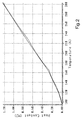
- FIG. 2 shows the amount of heat transferred in the circuit heat exchanger 12 as a function of the temperature.
- the upper curve represents the sum of the flows to be heated, the lower the sum of the flows to be cooled.
- the very low level of exchange losses which is achieved in the liquefaction process according to the invention can be clearly recognized from the good correspondence between the curves of the two curves. This results in an energetically particularly favorable process.
- a rectification column 503 which in the example is designed as a double column.
- Low-pressure nitrogen 504 and oxygen-rich product 505 are obtained from the upper part of the double column. At least a portion of the low pressure nitrogen 504 forms at least a portion of the gas to be liquefied.
- a nitrogen product 507 can be drawn off directly from the high-pressure section 506 of the column 503 (or, if appropriate, from a single column configured as a pressure column) and fed in whole or in part at a suitable point into the liquefaction section.
- the lower level is the Circuit (first pressure) approximately equal to the rectification pressure in the high pressure section 506 of the column 503.
- each section 12 can be realized by exactly one heat exchanger block; however, it is also possible for one or more sections to consist of more than one block or for two sections or the entire circuit heat exchanger 12 to be formed as one block.
- Turbines are preferably used as expansion machines.
- Each of the compressors 2, 4, 6, 8, 10 is followed by a cooling water-operated heat exchanger 3, 5, 7, 9, 11, which brings the compressed gas to the temperature of the warm end of the circuit heat exchanger.
- the process can also be used to liquefy another gas, for example oxygen. If nitrogen is retained as the circulating medium, the circuit and liquefaction must then be separated, in particular the circulating heat exchanger must have separate heating and cooling cross sections for the circulating medium and the gas or flash gas to be liquefied.
Landscapes
- Engineering & Computer Science (AREA)
- Physics & Mathematics (AREA)
- Mechanical Engineering (AREA)
- Thermal Sciences (AREA)
- General Engineering & Computer Science (AREA)
- Separation By Low-Temperature Treatments (AREA)
Applications Claiming Priority (2)
| Application Number | Priority Date | Filing Date | Title |
|---|---|---|---|
| DE19609489 | 1996-03-11 | ||
| DE19609489A DE19609489A1 (de) | 1996-03-11 | 1996-03-11 | Verfahren und Vorrichtung zur Verflüssigung eines tiefsiedenden Gases |
Publications (1)
| Publication Number | Publication Date |
|---|---|
| EP0795727A1 true EP0795727A1 (fr) | 1997-09-17 |
Family
ID=7787932
Family Applications (1)
| Application Number | Title | Priority Date | Filing Date |
|---|---|---|---|
| EP96109799A Withdrawn EP0795727A1 (fr) | 1996-03-11 | 1996-06-18 | Procédé et dispositif pour la liquéfaction d'un gaz à bas point d'ébullition |
Country Status (3)
| Country | Link |
|---|---|
| US (1) | US5802874A (fr) |
| EP (1) | EP0795727A1 (fr) |
| DE (1) | DE19609489A1 (fr) |
Cited By (4)
| Publication number | Priority date | Publication date | Assignee | Title |
|---|---|---|---|---|
| EP1205721A1 (fr) * | 2000-11-02 | 2002-05-15 | Air Products And Chemicals, Inc. | Procédé et appareil de production d'un liquide cryogénique |
| FR2977303A1 (fr) * | 2011-06-29 | 2013-01-04 | Air Liquide | Procede et appareil de production d'azote par distillation cryogenique |
| WO2012013231A3 (fr) * | 2010-07-28 | 2013-04-25 | Air Products And Chemicals, Inc. | Stockage de liquide intégré |
| US20180335256A1 (en) * | 2017-05-16 | 2018-11-22 | Terrence J. Ebert | Apparatus and Process for Liquefying Gases |
Families Citing this family (9)
| Publication number | Priority date | Publication date | Assignee | Title |
|---|---|---|---|---|
| DZ2535A1 (fr) * | 1997-06-20 | 2003-01-08 | Exxon Production Research Co | Procédé perfectionné pour la liquéfaction de gaz naturel. |
| MY117068A (en) | 1998-10-23 | 2004-04-30 | Exxon Production Research Co | Reliquefaction of pressurized boil-off from pressurized liquid natural gas |
| MY115506A (en) | 1998-10-23 | 2003-06-30 | Exxon Production Research Co | Refrigeration process for liquefaction of natural gas. |
| MY122625A (en) | 1999-12-17 | 2006-04-29 | Exxonmobil Upstream Res Co | Process for making pressurized liquefied natural gas from pressured natural gas using expansion cooling |
| US6220053B1 (en) * | 2000-01-10 | 2001-04-24 | Praxair Technology, Inc. | Cryogenic industrial gas liquefaction system |
| DE10045128A1 (de) * | 2000-09-13 | 2002-03-21 | Linde Ag | Verfahren und Vorrichtung zur Erzeugung hoch reinen Stickstoffs durch Tieftemperatur-Luftzerlegung |
| US20100186447A1 (en) * | 2006-10-23 | 2010-07-29 | Alexander Emanuel Maria Straver | Method and apparatus for controlling the turndown of a compressor for a gaseous hydrocarbon stream |
| US9714789B2 (en) * | 2008-09-10 | 2017-07-25 | Praxair Technology, Inc. | Air separation refrigeration supply method |
| FR3044747B1 (fr) * | 2015-12-07 | 2019-12-20 | L'air Liquide, Societe Anonyme Pour L'etude Et L'exploitation Des Procedes Georges Claude | Procede de liquefaction de gaz naturel et d'azote |
Citations (3)
| Publication number | Priority date | Publication date | Assignee | Title |
|---|---|---|---|---|
| US3194025A (en) * | 1963-01-14 | 1965-07-13 | Phillips Petroleum Co | Gas liquefactions by multiple expansion refrigeration |
| US3677019A (en) * | 1969-08-01 | 1972-07-18 | Union Carbide Corp | Gas liquefaction process and apparatus |
| WO1990008295A1 (fr) * | 1989-01-12 | 1990-07-26 | Eric Murray Smith | Procede et appareil permettant de produire de l'oxygene liquide et de l'hydrogene liquide |
Family Cites Families (5)
| Publication number | Priority date | Publication date | Assignee | Title |
|---|---|---|---|---|
| US2496380A (en) * | 1946-04-18 | 1950-02-07 | Elliott Co | Gas purifying method and apparatus |
| GB1023352A (en) * | 1963-04-29 | 1966-03-23 | Air Prod Ltd | Refrigeration process |
| US3285028A (en) * | 1964-01-06 | 1966-11-15 | Air Prod & Chem | Refrigeration method |
| US4894076A (en) * | 1989-01-17 | 1990-01-16 | Air Products And Chemicals, Inc. | Recycle liquefier process |
| JP2873381B2 (ja) * | 1989-11-24 | 1999-03-24 | 日本酸素株式会社 | 空気液化分離方法及び装置 |
-
1996
- 1996-03-11 DE DE19609489A patent/DE19609489A1/de not_active Withdrawn
- 1996-06-18 EP EP96109799A patent/EP0795727A1/fr not_active Withdrawn
-
1997
- 1997-03-05 US US08/810,764 patent/US5802874A/en not_active Expired - Fee Related
Patent Citations (3)
| Publication number | Priority date | Publication date | Assignee | Title |
|---|---|---|---|---|
| US3194025A (en) * | 1963-01-14 | 1965-07-13 | Phillips Petroleum Co | Gas liquefactions by multiple expansion refrigeration |
| US3677019A (en) * | 1969-08-01 | 1972-07-18 | Union Carbide Corp | Gas liquefaction process and apparatus |
| WO1990008295A1 (fr) * | 1989-01-12 | 1990-07-26 | Eric Murray Smith | Procede et appareil permettant de produire de l'oxygene liquide et de l'hydrogene liquide |
Cited By (5)
| Publication number | Priority date | Publication date | Assignee | Title |
|---|---|---|---|---|
| EP1205721A1 (fr) * | 2000-11-02 | 2002-05-15 | Air Products And Chemicals, Inc. | Procédé et appareil de production d'un liquide cryogénique |
| WO2012013231A3 (fr) * | 2010-07-28 | 2013-04-25 | Air Products And Chemicals, Inc. | Stockage de liquide intégré |
| FR2977303A1 (fr) * | 2011-06-29 | 2013-01-04 | Air Liquide | Procede et appareil de production d'azote par distillation cryogenique |
| US20180335256A1 (en) * | 2017-05-16 | 2018-11-22 | Terrence J. Ebert | Apparatus and Process for Liquefying Gases |
| US10852061B2 (en) * | 2017-05-16 | 2020-12-01 | Terrence J. Ebert | Apparatus and process for liquefying gases |
Also Published As
| Publication number | Publication date |
|---|---|
| US5802874A (en) | 1998-09-08 |
| DE19609489A1 (de) | 1997-09-18 |
Similar Documents
| Publication | Publication Date | Title |
|---|---|---|
| EP0093448B1 (fr) | Procédé et dispositif pour obtenir de l'oxygène gazeux sous pression élevée | |
| DE69413918T2 (de) | Tieftemperaturzerlegung von Luft | |
| EP0505812B1 (fr) | Procédé de séparation d'air à basse température | |
| EP0316768B1 (fr) | Procédé de séparation d'air par rectification à basse température | |
| EP1994344A1 (fr) | Procédé et dispositif de décomposition de l'air à basse température | |
| EP1150082A1 (fr) | Procédé et dispositif d'échange de chaleur | |
| WO2016131545A1 (fr) | Procédé et dispositif d'obtention d'un produit d'azote comprimé | |
| DE69420882T2 (de) | Verfahren und Vorrichtung zur Herstellung von gasförmigem Sauerstoff und/oder gasförmigem Stickstoff unter Druck durch Zerlegung von Luft | |
| DE2854508C2 (de) | Verfahren und Vorrichtung zur Tieftemperaturzerlegung eines Gasgemisches | |
| DE19936816A1 (de) | Verfahren und Vorrichtung zur Gewinnung von Sauerstoff unter überatmosphärischem Druck | |
| EP1146301A1 (fr) | Procédé et dispositif de production d'azote à haute pression par séparation d'air | |
| DE19609489A1 (de) | Verfahren und Vorrichtung zur Verflüssigung eines tiefsiedenden Gases | |
| DE69400794T2 (de) | Gaskompressionsverfahren und Vorrichtung | |
| EP3924677A1 (fr) | Procédé et installation pour fournir un ou plusieurs produits présents dans l'air, gazeux et à teneur élevée en oxygène | |
| DE3216510A1 (de) | Verfahren zur gewinnung von gasfoermigem sauerstoff unter erhoehtem druck | |
| EP0768503B1 (fr) | Procédé de séparation d'air à triple colonne | |
| EP3671085A1 (fr) | Dispositif et procédé de récupération de la chaleur de compression à partir de l'air comprimé et traité dans une installation de traitement de l'air | |
| EP0168519A2 (fr) | Dispositif de liquéfaction d'un gaz à bas point d'ébullition, en particulier de gaz d'hélium | |
| EP0878677A1 (fr) | Procédé et dispositif pour la production d'azote par séparation cryogénique d'air | |
| DE10045128A1 (de) | Verfahren und Vorrichtung zur Erzeugung hoch reinen Stickstoffs durch Tieftemperatur-Luftzerlegung | |
| DE10147047A1 (de) | Zwei-oder Drei-Turbinen-Kreislauf zur Erzeugung eines Flüssigkeitsprodukts | |
| DE2049181B2 (de) | Verfahren zur Kälteerzeugung durch Kompression eines Gemisches von verschiedenen Kältemitteln mit unterschiedlichen Siedepunkten | |
| DE4030750A1 (de) | Verfahren und vorrichtung zur tieftemperaturzerlegung von luft | |
| DE19545777C1 (de) | Verfahren und Vorrichtung zur Verflüssigung eines tiefsiedenden Gases, insbesondere von Stickstoff | |
| DE10058332A1 (de) | Verfahren und Vorrichtung zur Erzeugung von Sauerstoff und Stickstoff |
Legal Events
| Date | Code | Title | Description |
|---|---|---|---|
| PUAI | Public reference made under article 153(3) epc to a published international application that has entered the european phase |
Free format text: ORIGINAL CODE: 0009012 |
|
| AK | Designated contracting states |
Kind code of ref document: A1 Designated state(s): DE FR GB |
|
| RBV | Designated contracting states (corrected) |
Designated state(s): DE FR GB |
|
| 17P | Request for examination filed |
Effective date: 19980220 |
|
| STAA | Information on the status of an ep patent application or granted ep patent |
Free format text: STATUS: THE APPLICATION HAS BEEN WITHDRAWN |
|
| 18W | Application withdrawn |
Withdrawal date: 19981203 |