EP0796021A2 - Procédé et dispositifs pour incorporer des systèmes de communication extérieurs dans un réseau privé - Google Patents
Procédé et dispositifs pour incorporer des systèmes de communication extérieurs dans un réseau privé Download PDFInfo
- Publication number
- EP0796021A2 EP0796021A2 EP97104066A EP97104066A EP0796021A2 EP 0796021 A2 EP0796021 A2 EP 0796021A2 EP 97104066 A EP97104066 A EP 97104066A EP 97104066 A EP97104066 A EP 97104066A EP 0796021 A2 EP0796021 A2 EP 0796021A2
- Authority
- EP
- European Patent Office
- Prior art keywords
- communication
- isdn
- connection
- dialing information
- communication network
- Prior art date
- Legal status (The legal status is an assumption and is not a legal conclusion. Google has not performed a legal analysis and makes no representation as to the accuracy of the status listed.)
- Granted
Links
Images
Classifications
-
- H—ELECTRICITY
- H04—ELECTRIC COMMUNICATION TECHNIQUE
- H04Q—SELECTING
- H04Q11/00—Selecting arrangements for multiplex systems
- H04Q11/04—Selecting arrangements for multiplex systems for time-division multiplexing
- H04Q11/0428—Integrated services digital network, i.e. systems for transmission of different types of digitised signals, e.g. speech, data, telecentral, television signals
- H04Q11/0435—Details
-
- H—ELECTRICITY
- H04—ELECTRIC COMMUNICATION TECHNIQUE
- H04Q—SELECTING
- H04Q3/00—Selecting arrangements
- H04Q3/58—Arrangements providing connection between main exchange and sub-exchange or satellite
- H04Q3/62—Arrangements providing connection between main exchange and sub-exchange or satellite for connecting to private branch exchanges
-
- H—ELECTRICITY
- H04—ELECTRIC COMMUNICATION TECHNIQUE
- H04Q—SELECTING
- H04Q2213/00—Indexing scheme relating to selecting arrangements in general and for multiplex systems
- H04Q2213/1307—Call setup
-
- H—ELECTRICITY
- H04—ELECTRIC COMMUNICATION TECHNIQUE
- H04Q—SELECTING
- H04Q2213/00—Indexing scheme relating to selecting arrangements in general and for multiplex systems
- H04Q2213/13138—Least cost routing, LCR
-
- H—ELECTRICITY
- H04—ELECTRIC COMMUNICATION TECHNIQUE
- H04Q—SELECTING
- H04Q2213/00—Indexing scheme relating to selecting arrangements in general and for multiplex systems
- H04Q2213/13176—Common channel signaling, CCS7
-
- H—ELECTRICITY
- H04—ELECTRIC COMMUNICATION TECHNIQUE
- H04Q—SELECTING
- H04Q2213/00—Indexing scheme relating to selecting arrangements in general and for multiplex systems
- H04Q2213/13204—Protocols
-
- H—ELECTRICITY
- H04—ELECTRIC COMMUNICATION TECHNIQUE
- H04Q—SELECTING
- H04Q2213/00—Indexing scheme relating to selecting arrangements in general and for multiplex systems
- H04Q2213/13209—ISDN
-
- H—ELECTRICITY
- H04—ELECTRIC COMMUNICATION TECHNIQUE
- H04Q—SELECTING
- H04Q2213/00—Indexing scheme relating to selecting arrangements in general and for multiplex systems
- H04Q2213/1322—PBX
-
- H—ELECTRICITY
- H04—ELECTRIC COMMUNICATION TECHNIQUE
- H04Q—SELECTING
- H04Q2213/00—Indexing scheme relating to selecting arrangements in general and for multiplex systems
- H04Q2213/13224—Off-net subscriber, dial in to/out from network, teleworking
-
- H—ELECTRICITY
- H04—ELECTRIC COMMUNICATION TECHNIQUE
- H04Q—SELECTING
- H04Q2213/00—Indexing scheme relating to selecting arrangements in general and for multiplex systems
- H04Q2213/13299—Bus
-
- H—ELECTRICITY
- H04—ELECTRIC COMMUNICATION TECHNIQUE
- H04Q—SELECTING
- H04Q2213/00—Indexing scheme relating to selecting arrangements in general and for multiplex systems
- H04Q2213/13384—Inter-PBX traffic, PBX networks, e.g. corporate networks
Definitions
- Company-owned or private, cooperating communication networks - known in the professional world as corporate networks - are formed by connecting private communication systems that implement telephone and data services, in particular telecommunication switching systems, with private communication terminals - telephone and data terminals - being connectable to the communication systems are.
- the connection of the private communication systems - for example HICOM private branch exchanges from Siemens - is preferably carried out via a private network on private property or, if not possible via a private network, via dedicated connections of a public communication network - for example ISDN or Euro-ISDN Communication network.
- remote communication systems are currently connected to a corporate network via dedicated connections, since a private dialing information scheme can usually not be used for dial-up connections via a public dial-up communication network. This means that remote communication systems with few connected communication terminals, i.e. low market values, can only be connected to a corporate network at high cost - renting at least one fixed connection of a public communication network.
- the remote communication system represents a customer-specific communication system, for example the remote communication system and the private communication network are assigned to different companies
- the communication terminals connected to the remote communication system usually address the corporate network via the public network Communication network set up or dismantled in accordance with its signaling and, if necessary, a by-election.
- the private transmission network implemented in the corporate network which may be less expensive.
- the object on which the invention is based is to reduce the economic outlay for connecting private, remote communication systems to a corporate.
- the object is solved by the features of claim 1.
- the essential aspect of the invention is to be seen in the fact that in the remote communication system - advantageously with the aid of a network access device according to claims 12 to 18 - a dialing information given by a remote communication system or communication terminal specified when establishing a connection, ie the transmitted call numbers, is evaluated and depending on the evaluation result, either a connection to the public ISDN communication network or via the ISDN communication network - claims 2 and 3 - to the private communication network is established.
- additional, predetermined dialing information is derived from the dialing information provided, ie the communication link is conveyed to predetermined communication connections of the public ISDN communication network.
- the dialing information specified when establishing the connection is transmitted to the private communication network in a sub-dialing information field of the signaling.
- the specified dialing information in the sub-dialing information field - referred to in the standard as subaddressing - is advantageously transmitted to the Euro ISDN signaling DSS1 - claim 3.
- the sub-dial information field is 20 bytes.
- a major advantage of the invention is that an evaluation of the dialing information given in the remote communication system means that the respective communication connection is switched depending on a wide variety of criteria either directly into the public ISDN communication network or via this to a private or corporate network.
- An essential criterion is the "internal number"; - Claim 7. If an internal dialing information or telephone number is recognized in the network access device, a connection to the private or corporate network is initiated. For this purpose, a predetermined dialing information stored in the network access device is used. An incoming connection to a specific communication connection of the ISDN communication network is conveyed by this predetermined dialing information.
- This communication connection is advantageously connected to a private or corporate network via a network access device.
- the dialing information of the calling communication terminal connected to the remote communication system which is fundamentally transmitted each time a connection is set up as part of the ISDN signaling, is advantageously checked with regard to a communication network access authorization into at least one first communication network.
- the transmission of the dialing information of the calling party the remote communication system of the connected communication terminal takes place as part of the ISDN signaling as originating dialing information or telephone numbers.
- this source dialing information is defined as Calling Line Identification and Presentation CLIP, each one Communication terminal initializing communication connection and additionally indicates whether this dialing information should be presented or displayed on the called communication terminal.
- additional identification information - advantageously stored and inserted in the network access device according to claim 14 - is transmitted in the sub-dialing information field of the signaling - claim 5.
- the identification information is checked with regard to its authorization and, depending on the result of the check, the incoming communication connection is either forwarded to the corporate network or rejected.
- the transmitted identification information is compared with that stored in the network access device, and if there is a match, a connection to the corporate network is initiated.
- a further essential criterion for the evaluation of the dialing information given by the remote communication system is the fee evaluation.
- further dialing information or ISDN dialing information or telephone numbers are stored in the remote communication system - advantageously in the network access device - when they occur, the assigned dialing information is stored in the specified dialing information Communication connection for cost or fee reasons is not mediated via the ISDN communication network but via the corporate network.
- the further dialing information is essentially ISDN dialing information which is assigned to predetermined geographic areas such as states, countries, cities, etc.
- the respective incoming communication connection becomes Mediated via the ISDN communication network to the nearest corporate network and relayed to the respective geographical target area via, for example, inexpensive private networks.
- the respective communication connection can be switched back into the ISDN communication network and forwarded to an ISDN communication terminal there.
- the ISDN dialing information must be carried in the corporate network and inserted in the geographical target area according to the ISDN signaling.
- This measure referred to in the specialist world as “least cost routing” is particularly advantageous for those communication connections which can be switched more cheaply over private networks or corporate networks than over the public ISDN communication network.
- the "least cost routing" is used particularly advantageously for international communication connections.
- the specified dialing information transmitted in the sub-dialing information field is evaluated in the corporate network - advantageously in the network access device - and after determining or recognizing the transmitted specified dialing information as dialing information, the respective communication link to the relevant communication terminal is used with it of the first communication network or the corporate network - claim 10.
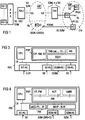
- ISDN communication network ISDN shows an ISDN communication network ISDN and a private network or a corporate network CN - each indicated by dashed lines.
- the physical and procedural properties of communication connections KA of the ISDN communication network ISDN are designed in accordance with the ETS standard ETS 300 195 "Integrated Services Digital Network (ISDN); Digital Subscriber Signaling System NO.1 (DSS1)".
- ISDN communication connection KA known in the technical field as a Euro-ISDN communication connection (DSS1), has a “subaddressing” performance feature, with the aid of which information can be transmitted in the signaling channel or in the D channel when establishing a connection KV - see FIG. 2 is.
- this sub-dialing information field or "subaddressing" field information with a maximum length of 20 bytes, i.e. 15-digit ISDN dialing information can also be transmitted.
- the corporate network CN represents, for example, a company-owned, private communication network that is formed by intermeshed communication systems KS - three communication systems KS are shown by way of example.
- the corporate Network CN is implemented, for example, in accordance with the ISDN-oriented Cornet protocol from Siemens.
- the Cornet protocol includes additional performance features that go beyond the range of performance features of the public ISDN communication networks ISDN.
- a network access device RAU (remote access unit) is connected to an ISDN base connection S0 of the ISDN communication network ISDN.
- Such an ISDN base connection S0 comprises two message channels B each with a transmission rate of 64 kbit / s and a signaling channel D with a transmission rate of 16 kbit / s.
- the network access device RAU has a further, similarly implemented ISDN base connection S0, which is connected to an ISDN base connection S0 of a remote communication system AKS.
- the number of ISDN basic connections S0 must be coordinated - for example three or four - or alternatively the network access device RAU can be connected to the remote communication system AKS via an ISDN primary interface S2M .
- the ISDN primary interface comprises 30 message channels (N) and a signaling channel D.
- analog HKZ interfaces HKZ can be implemented for the connection of conventional, remote communication systems AKS, whereby, in order to implement ISDN communication connections KV, at least two in accordance with the known main connection identifier ( HKZ) - HKZ interfaces with signaling methods are provided.
- the remote communication system AKS represents, for example, another company-owned private branch exchange, wherein the operators of the corporate network CN and the remote communication system AKS can be the same or different.
- the remote communication system AKS or its connected communication terminals K1 ... n can use connecting lines VL of the corporate network CN.
- Such use is particularly advantageous if this results in cost savings compared to switching in or via the ISDN communication network.
- Such use is therefore only useful for long-distance connections, ie not for connections in the local area.
- the ISDN communication network ISDN is connected to the corporate network CN via a network access device DIS (dial in server).
- the communication connections KA of both the ISDN communication network ISDN and the corporate network CN are each implemented by an ISDN primary connection S2M.
- the ISDN primary connection S2M comprises 30 message channels a 64 kbit / s and a signaling channel D with 64 kbit / s.
- This ISDN primary connection SM2 which has a plurality of message channels B, is advantageously used when several remote communication systems AKS are included in the corporate network CN.
- n ISDN basic connections S0 - for example five - can be implemented.
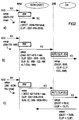
- FIG. 2 a) - c) shows in a flowchart three different connection setup variants as a function of the dialing information wi given by one of the communication terminals KE1..n.
- a connection setup to the network access device RAU shown in FIG. 1 is initiated by one of the communication terminals KE1..n connected to the remote communication system AKS via the remote communication system AKS.
- An ISDN dialing information ISDN-RN is specified as the destination dialing information wi or telephone number.
- whose assigned ISDN communication terminal KE is in the same geographic or local area of the ISDN communication system - for example in the same city area - as the remote communication system AKS.
- the specified dialing information wi or ISDN number ISDN-RN is in the network access device RAU by an evaluation function BW evaluated, ie by comparing the specified dialing information wi with dialing information wi stored in the access device RAU, if there is no match, it is determined that the connection setup of the incoming communication connection KV is to be forwarded unchanged to the ISDN communication network ISDN.
- a connection setup is initiated to the ISDN communication network ISDN, the specified ISDN call number ISDN-RN as the destination dialing information DEST and dialing information defining the originating communication terminal K1..n according to the ETS 300 195 standard, a calling line identification and presentation (CLIP) - hereinafter the abbreviation CLIP is used - is inserted.
- CLIP calling line identification and presentation
- the CLIP stored in the remote communication system AKS for each connected communication terminal KE1,, n is represented, for example, by an ISDN dialing information 0201-816-3319.
- the initiated connection establishment of the communication connection KV is continued in the ISDN communication network ISDN and after transmission of a switching message - not shown - the communication connection KV is switched through both in the network access device RAU and in the remote communication system AKS.
- the connection is triggered according to the previously specified ETS standard.
- FIG. 2 b shows a connection establishment alternative in which the connection establishment setup is initiated with a destination dialing information wi, which is composed of a remote dialing information 089, a regional dialing information 722 and a post-dialing information NW.
- the evaluation function BW in the network access device RAU by comparing the incoming remote dialing and regional dialing information 089-722 with dialing information wi stored in a stored dialing information table TAB - see FIG.
- the communication terminal KE assigned to this dialing information wi is arranged in the corporate network CN is - ie it is an internal dialing information wi - and a communication link KV in the local area via the ISDN communication network ISDN and in the long range is mediated via the corporate network - in the exemplary embodiment from the regional area of Düsseldorf to the target area of Kunststoff.
- Switching via the corporate network CN is moreover cheaper than long-distance switching via the ISDN communication network ISDN - in the professional world as "least cost" due to the fact that not yet fully utilized, dedicated connecting lines VL - in the exemplary embodiment, for example, dedicated connecting lines VL from Düsseldorf to Kunststoff Routing "known.
- a connection setup setup to a given ISDN communication connection KA (S0) is initiated in the network access device RAU.
- dialing information 0211-816 for example, is specified as the target dialing information DEST.
- This dialing information corresponds to additional dialing information wiz, which is stored in the network access device RAU.
- the CLIP is again provided as the originating number - see FIG. 2a).
- the specified dialing information wi is inserted into the sub-dialing information field SUB - the subaddressing field in the Euro-ISDN standard.
- the dialing information specified is usually completely in the subaddressing field SUB or the post-dialing NW or the post-dialing digits are transmitted in accordance with the overlap sending method OVL specified in the ISDN standard - in FIG. 2 b) by the designation ALT: OVL: NW indicated.
- the post-election information NW in particular in the event of delays in the input of the post-election information NW, is transmitted transparently in the information fields provided for this purpose in the “subaddressing field” in accordance with the overlap sending method.
- the further connection setup is carried out via the ISDN communication network ISDN to the network access device DIS, the information given being transmitted.
- An authorization check AUT is carried out in the network access device DIS using the CLIP.
- the transmitted CLIP is compared with CLIP stored in tables TAB and if there is a match, the connection is continued.
- additional identification information ID can be transmitted in the "subaddressing" field, which is compared in the network access device DIS with stored identification information ID and, if there is a match, the connection setup is forwarded to the corporate network CN.
- connection setup is carried out using the number 089-722-NW transmitted in the "Subaddressing" field as the destination dialing information DEST with the transmitted CLIP or alternatively the post-dialing information NW using the overlap sending function OVL.
- the communication connection KV is conveyed via the dedicated connection VL (x) to the relevant private communication system KS w and from there to the communication terminal KE (x) defined by the post-dialing information NW.
- the remote communication system AKS transfers dialing information wi, in which the addressed communication terminal KE is arranged in the remote area of the ISDN communication network ISDN.
- the communication terminal arranged in this remote area FB is designated KE (y).
- the evaluation function BW ie by comparing stored and specified destination dialing information wi, determines in the network access device RAU that the communication link KV is switched more cheaply via the corporate network CN than via the ISDN communication network KN.
- underutilized connecting lines VL or cheaper fees in the corporate network CN can reduce costs.
- a connection setup is setup with the same destination dialing information DEST and the same CLIP as in FIG 2a a) initiated.
- the specified destination dialing information wi is transmitted either completely or with the help of the overlap sending method OVL explained - in the exemplary embodiment 089 and a local ISDN number ISDN - RN.
- connection KV arriving in the network access device DIS is checked with regard to its authorization AUT with the aid of the CLIP and a connection setup setup is then initiated to the corporate network CN.
- the dialing information wi transmitted in the subaddressing field SUB is inserted as the destination dialing information DEST and the CLIP as the originating dialing information or telephone number.
- the communication connection KV is transmitted to the communication system KS and from there, for example, via a further ISDN basic connection SO or an ISDN primary connection S2M to a communication connection KA (w) in the remote area FB of the ISDN communication network ISDN further conveyed.
- the communication connection KV is forwarded to the addressed communication terminal KE (y), the connection setup setup being initiated with the destination information DEST and the originating dialing information or call number CLIP.
- the fee calculation in the variants according to FIG. 2 b) and c) is carried out with the aid of the transmitted CLIP.
- the calculation of the switching charges for switching communication links KV in the corporate network CN is determined independently of the determination of the charges in the ISDN communication network ISDN in the respective local areas.
- FIG. 3 shows a block diagram of the network access device RAU, in which a control CPU, two ISDN base connection units S0-AE, an operating technology connection unit BT-AE and a program memory are connected to a common, local bus LB. PSP is connected.
- an ISDN primary connection unit S2M-AE can be used instead of the two ISDN base connection units S0-AE - indicated by the designation (S2M-AE) and dashed lines.
- the control CPU is assigned a working memory - not shown.
- the control CPU is implemented, for example, by a microprocessor system, the local bus LB being formed by the microprocessor bus.
- Layer 1 - physical layer - and layer 2 - data link layer - of an ISDN basic interface S0 or an ISDN primary interface (S2M) are implemented in the ISDN basic access units S0-AE and the ISDN primary access unit S2M-AE. Furthermore, a program structure for the operation OP, the administration AM and the safety monitoring SI of the network access device RAU is provided in the program memory PSP.
- Layer 3 - messages or information are sent from the ISDN basic interfaces S0 or from the ISDN primary connection unit (S2M-AE) to the control CPU and processed there with the aid of a program structure DSS1 stored in the program memory PSP.
- the specified dialing information or target dialing information wi and identification information ID are stored in a table TAB of the program memory PSP.
- the specified dialing information wi is, in particular, the dialing information or parts of dialing information wi from called communication terminals KE, which are arranged in the corporate network CN or in the remote area FB of the ISDN communication network ISDN and are conveyed via the corporate network CN.
- the dialing information wi stored in the table TAB - in particular the dialing information wi which determines the long-range part in the exemplary embodiment 089 - the evaluations of dialing information or target dialing information wi transmitted as part of a connection set-up are carried out, ie the transmitted dialing information given wi is correct with a stored dialing information wi - for example 089-722-, the incoming communication connection KV is switched to the corporate network CN via the ISDN communication network ISDN.
- the operating technology connection unit BT-AE implements a V.24 interface V.24 to which an operating technology terminal - not shown - can be connected on site in order to operate and maintain the network access device RAU.
- Remote maintenance or remote operation of the network access device RAU is possible from the remote communication system AKS via the at least one ISDN base connection S0.
- remotely administrable dialing information wiz is stored in the memory PSP, which is provided for a specific connection establishment to the communication connection KA to which the assigned network access device DIS is connected.
- FIG. 4 shows a block diagram of an embodiment of a network access device DIS in which a local bus LB is connected to a control CPU, a program memory PSP, an operating technology connection unit BT-AE and a multi-vendor integration protocol - bus MVIP bus to which an ISDN primary connection unit S2M-AE realizing an ISDN primary connection S2M is connected.
- the Multi-Vendor-Integration-Protocol-Bus MVIP-Bus implements a Multi-Vendor-Integration-Protocol - hereinafter referred to as MVIP - and a physical bus, with whose help on eight serial channels with a 2048 kBit / s 256 64 kBit / s channels can be transmitted or controlled.
- This MVIP bus is particularly suitable for the connection of ISDN connection units AE - for example ISDN base or ISDN primary connection units S0-AE, S2M-AE - and for their connection to one another.
- An ISDN primary connection S2M comprises thirty message channels B each with 64 kbit / s and a signaling channel B with 16 kbit / s. Thirty communication connections KV including the assigned ISDN signaling can thus be transmitted via such an ISDN primary connection S2M.
- one or more ISDN Basisa connection units S0-AE can be integrated instead of the ISDN primary connection unit SM2-AE.
- These ISDN base connection units S0-AE are connected directly to the local bus LB, the MVIP bus being omitted.
- the operating technology connection unit BT-AE which realizes a further S0 interface S0 is used in the same way as in the network access device RAU.
- the control device CPU which is advantageously implemented by a microprocessor system, controls the network access device DIS via the local bus LB, which is implemented as a microprocessor bus, with the aid of the program structures implemented in the program memory PSP.
- An administration technology program structure AM manages a switching program structure VT, FW, an authorization program structure AUT and a conversion program stricture UMW.
- the switching technology program structure VT, FW is provided for the routing of the incoming communication connections KV or for the layer 3 protocol control of the outgoing and incoming communication connections KV.
- the switching technology program structure VT, FW takes over the procedural control of a remote maintenance function FW, which is carried out in particular by a communication system KS integrated in the corporate network CN.
- the dialing information wi .. and identification information ID .. and the others are stored in a table TAB via this remote maintenance function FW Dialing information can be updated, i.e. it is deleted, changed or added.
- the transmitted dialing information of the calling communication terminals KE1..n that is to say the CLIP
- the CLIP stored in the table TAB is compared with the CLIP stored in the table TAB and, if there is a match, a connection to the corporate network CN is initiated for the incoming information connection KV.
- the communication connections KV to be transmitted via the corporate network CN to a further ISDN communication connection KA (w) are converted, that is, instead of the transmitted destination information DEST, destination information DEST is formed and inserted into the ISDN signaling , with the help of which the communication link KV is switched to a further communication connection KA (w) of the ISDN communication network ISDN.
- This embodiment of the invention is intended in particular for communication connections KV which are switched from a local area via the corporate network CN to a remote area - for example from Kunststoff to Düsseldorf or also to a remote area in the USA - for reasons of saving fees. In the case of long-distance connections in particular, switching communication connections KV via corporate networks CN can be cheaper and therefore more economical.
Landscapes
- Engineering & Computer Science (AREA)
- Computer Networks & Wireless Communication (AREA)
- Physics & Mathematics (AREA)
- Astronomy & Astrophysics (AREA)
- General Physics & Mathematics (AREA)
- Telephonic Communication Services (AREA)
- Data Exchanges In Wide-Area Networks (AREA)
- Mobile Radio Communication Systems (AREA)
- Radio Relay Systems (AREA)
Applications Claiming Priority (2)
| Application Number | Priority Date | Filing Date | Title |
|---|---|---|---|
| DE19610069 | 1996-03-14 | ||
| DE19610069A DE19610069C2 (de) | 1996-03-14 | 1996-03-14 | Verfahren und Anordnungen zum Einbeziehen von abgesetzten Kommunikationssystemen in ein Corporate Network |
Publications (3)
| Publication Number | Publication Date |
|---|---|
| EP0796021A2 true EP0796021A2 (fr) | 1997-09-17 |
| EP0796021A3 EP0796021A3 (fr) | 2000-06-07 |
| EP0796021B1 EP0796021B1 (fr) | 2005-05-25 |
Family
ID=7788291
Family Applications (1)
| Application Number | Title | Priority Date | Filing Date |
|---|---|---|---|
| EP97104066A Expired - Lifetime EP0796021B1 (fr) | 1996-03-14 | 1997-03-11 | Procédé et dispositifs pour incorporer des systèmes de communication extérieurs dans un réseau privé |
Country Status (4)
| Country | Link |
|---|---|
| US (1) | US6081520A (fr) |
| EP (1) | EP0796021B1 (fr) |
| AT (1) | ATE296522T1 (fr) |
| DE (2) | DE19610069C2 (fr) |
Cited By (3)
| Publication number | Priority date | Publication date | Assignee | Title |
|---|---|---|---|---|
| DE19756548C2 (de) * | 1997-12-18 | 2002-12-12 | Siemens Ag | Verfahren zur Behandlung einer in einem Kommunikationssystem vorliegenden Wahlinformation |
| EP1670228A3 (fr) * | 2004-12-09 | 2006-08-23 | Deutsche Telekom AG | Etablissement d'une connection VoIP par réseau téléphonique public commuté |
| EP1158815A3 (fr) * | 2000-03-21 | 2006-12-20 | Tenovis GmbH & Co. KG | Méthode de numerotation additionelle dans une communication entre des dispositifs de télécommunication |
Families Citing this family (7)
| Publication number | Priority date | Publication date | Assignee | Title |
|---|---|---|---|---|
| DE19743361C2 (de) | 1997-09-30 | 2001-02-01 | Siemens Ag | Verfahren zur Leitwegsuche in Telekommunikationsnetzen |
| DE19808368B4 (de) * | 1998-02-27 | 2004-12-09 | Siemens Ag | Verfahren und Anordnung zum Bereitstellen von Leistungsmerkmalen über ein Kommunikationsnetz |
| DE19963817C2 (de) * | 1999-12-30 | 2002-09-26 | Siemens Ag | Verfahren und Vorrichtung zur Umsetzung eines bidirektionalen Datenstroms über eine S2m-Schnittstelle für eine Übermittlung über ein Niederspannungsstromnetz |
| DE10035167A1 (de) * | 2000-07-19 | 2002-01-31 | Siemens Ag | Nebenstellenanlage zur Kopplung von Datennetzen |
| DE10120763C2 (de) * | 2001-04-27 | 2003-07-03 | Tenovis Gmbh & Co Kg | Vermittlungsanlage, Basisstation und Verfahren zum Übertragen von Leistungsmerkmalen einer Vermittlungsanlage |
| US7792053B1 (en) * | 2002-07-08 | 2010-09-07 | At&T Intellectual Property Ii, L.P. | System for accessing end-to-end broadband network via network access server platform |
| DE102004013864A1 (de) * | 2004-03-16 | 2005-11-17 | Deutsche Telekom Ag | Verfahren und System zur Übertragung von Daten zwischen zwei Kommunikationsanschlüssen |
Family Cites Families (8)
| Publication number | Priority date | Publication date | Assignee | Title |
|---|---|---|---|---|
| US4802199A (en) * | 1987-06-22 | 1989-01-31 | American Telephone And Telegraph Company | Method and apparatus for providing virtual facility communication service |
| JP2932673B2 (ja) * | 1990-10-30 | 1999-08-09 | 日本電気株式会社 | Isdn網を利用した仮想化専用線方式 |
| DE4119672A1 (de) * | 1991-06-14 | 1992-12-17 | Standard Elektrik Lorenz Ag | Verbindungsaufbau zwischen endgeraeten fuer mobile teilnehmer eines netzverbundes |
| GB9119773D0 (en) * | 1991-09-16 | 1991-10-30 | Plessey Telecomm | Virtual external extension |
| DE4225240C2 (de) * | 1992-07-30 | 1994-07-21 | Siemens Ag | Kommunikationssystem zum Bilden von virtuellen Netzen zwischen privaten Kommunikationsanlagen |
| JPH06245240A (ja) * | 1993-02-12 | 1994-09-02 | Nec Corp | 公衆回線専用線接続方式 |
| DE4329172A1 (de) * | 1993-08-30 | 1995-03-02 | Sel Alcatel Ag | Verfahren zur Anruflenkung für ein privates, virtuelles Netz, sowie Dienstrechner und Vermittlungsstelle dafür |
| US5440617A (en) * | 1994-04-11 | 1995-08-08 | Otis Elevator Company | Simple modem log-on authentication |
-
1996
- 1996-03-14 DE DE19610069A patent/DE19610069C2/de not_active Expired - Fee Related
-
1997
- 1997-03-11 DE DE59712321T patent/DE59712321D1/de not_active Expired - Lifetime
- 1997-03-11 EP EP97104066A patent/EP0796021B1/fr not_active Expired - Lifetime
- 1997-03-11 AT AT97104066T patent/ATE296522T1/de not_active IP Right Cessation
- 1997-03-12 US US08/820,342 patent/US6081520A/en not_active Expired - Lifetime
Cited By (3)
| Publication number | Priority date | Publication date | Assignee | Title |
|---|---|---|---|---|
| DE19756548C2 (de) * | 1997-12-18 | 2002-12-12 | Siemens Ag | Verfahren zur Behandlung einer in einem Kommunikationssystem vorliegenden Wahlinformation |
| EP1158815A3 (fr) * | 2000-03-21 | 2006-12-20 | Tenovis GmbH & Co. KG | Méthode de numerotation additionelle dans une communication entre des dispositifs de télécommunication |
| EP1670228A3 (fr) * | 2004-12-09 | 2006-08-23 | Deutsche Telekom AG | Etablissement d'une connection VoIP par réseau téléphonique public commuté |
Also Published As
| Publication number | Publication date |
|---|---|
| EP0796021A3 (fr) | 2000-06-07 |
| EP0796021B1 (fr) | 2005-05-25 |
| DE19610069A1 (de) | 1997-09-18 |
| DE19610069C2 (de) | 1998-05-07 |
| US6081520A (en) | 2000-06-27 |
| DE59712321D1 (de) | 2005-06-30 |
| ATE296522T1 (de) | 2005-06-15 |
Similar Documents
| Publication | Publication Date | Title |
|---|---|---|
| EP0971549B1 (fr) | Méthode pour informer les abonnés mobiles des caractéristiques des services sur un réseau de communication | |
| EP0796021B1 (fr) | Procédé et dispositifs pour incorporer des systèmes de communication extérieurs dans un réseau privé | |
| DE4225240A1 (de) | Kommunikationssystem zum bilden von virtuellen netzen zwischen privaten kommunikationsanlagen | |
| EP0634080B1 (fr) | Procede de routage de telecommunications dans un reseau maille | |
| EP0720395B1 (fr) | Procédé pour réaliser des connexions téléphoniques | |
| EP0886449B1 (fr) | Appels gratuits | |
| EP0634081B1 (fr) | Procede de signalisation de numeros d'abonnes dans un reseau de telecommunication | |
| DE4329056A1 (de) | Verfahren zum Betrieb eines aus mehreren Teilanlagen bestehenden digitalen Kommunikationsnetzes | |
| DE19708112A1 (de) | Telekommunikationssystem mit schleifenfreien Vermittlungstabellen | |
| EP0878972B1 (fr) | Réseau de raccordement d'abonnés, central de commutation, dispositif de commande de service et procédé d'établissemnt des communications | |
| EP0817509B1 (fr) | Procédé pour la construction des connexions de communication automatique, et unité de réglement de service | |
| DE19746712A1 (de) | Callback-Verfahren | |
| DE19808369A1 (de) | Verfahren und Anordnung zum Bereitstellen von Leistungsmerkmalen für mobile Teilnehmer über ein Kommunikationsnetz | |
| EP0634082B1 (fr) | Procede de signalisation de numeros d'appel dans un reseau de telecommunication | |
| DE19852774A1 (de) | Telefonvermittlungssystem | |
| DE19536221A1 (de) | Verfahren und Schaltungsanordnung für Fernmeldeermittlungsanlagen, insbesondere Fernsprechvermittlungsanlagen | |
| EP1587331B1 (fr) | Central de télécommunication, combinaison de centraux de télécommunication, procédé de configuration et procédé d'exploitation d'une telle combinaison, ainsi que du logiciel d'identification d'un client et d'un central dans celle-ci | |
| EP1033889B1 (fr) | Transmission du numéro d'appelant pour appels issus d'un réseau de télécommunication privé vers un réseau public | |
| EP1093313A2 (fr) | Méthode pour la transmission de messages de signalisation de service, central de commutation de service, noeud de conversion et point de commande de service | |
| DE60037933T2 (de) | Halbe Linkanwendung für einer Vermittlungsanlage eines privaten Netzes | |
| DE19964189B4 (de) | Routing-Einrichtung und TK-Einrichtung zum Management der Auslastung von Interconnectanschlüssen | |
| EP0817510A1 (fr) | Procédé pour la construction d'une connexion et unité de communication, avec calculateur et réseau de communication | |
| EP0775429A1 (fr) | Procede et circuit permettant d'etablir des liaisons de telecommunication | |
| DE102004013392A1 (de) | Verfahren zur Konfiguration und Verfahren zum Betrieb eines Telekommunikationssystems, Dispatcher-Software in einem Telekommunikationssystem sowie Telekommunikationsanlage | |
| DE10011212A1 (de) | Verfahren zur Bereitstellung von für eine in einem Kommunikationsnetz festgelegten Teilnehmergruppe spezifischen Leistungs- und/oder Dienstmerkmalen |
Legal Events
| Date | Code | Title | Description |
|---|---|---|---|
| PUAI | Public reference made under article 153(3) epc to a published international application that has entered the european phase |
Free format text: ORIGINAL CODE: 0009012 |
|
| AK | Designated contracting states |
Kind code of ref document: A2 Designated state(s): AT CH DE ES FR GB IT LI NL |
|
| PUAL | Search report despatched |
Free format text: ORIGINAL CODE: 0009013 |
|
| AK | Designated contracting states |
Kind code of ref document: A3 Designated state(s): AT CH DE ES FR GB IT LI NL |
|
| 17P | Request for examination filed |
Effective date: 20010202 |
|
| 17Q | First examination report despatched |
Effective date: 20030429 |
|
| GRAP | Despatch of communication of intention to grant a patent |
Free format text: ORIGINAL CODE: EPIDOSNIGR1 |
|
| GRAS | Grant fee paid |
Free format text: ORIGINAL CODE: EPIDOSNIGR3 |
|
| GRAA | (expected) grant |
Free format text: ORIGINAL CODE: 0009210 |
|
| AK | Designated contracting states |
Kind code of ref document: B1 Designated state(s): AT CH DE ES FR GB IT LI NL |
|
| PG25 | Lapsed in a contracting state [announced via postgrant information from national office to epo] |
Ref country code: NL Free format text: LAPSE BECAUSE OF FAILURE TO SUBMIT A TRANSLATION OF THE DESCRIPTION OR TO PAY THE FEE WITHIN THE PRESCRIBED TIME-LIMIT Effective date: 20050525 |
|
| REG | Reference to a national code |
Ref country code: GB Ref legal event code: FG4D Free format text: NOT ENGLISH |
|
| REG | Reference to a national code |
Ref country code: CH Ref legal event code: EP |
|
| REF | Corresponds to: |
Ref document number: 59712321 Country of ref document: DE Date of ref document: 20050630 Kind code of ref document: P |
|
| GBT | Gb: translation of ep patent filed (gb section 77(6)(a)/1977) |
Effective date: 20050613 |
|
| PG25 | Lapsed in a contracting state [announced via postgrant information from national office to epo] |
Ref country code: ES Free format text: LAPSE BECAUSE OF FAILURE TO SUBMIT A TRANSLATION OF THE DESCRIPTION OR TO PAY THE FEE WITHIN THE PRESCRIBED TIME-LIMIT Effective date: 20050905 |
|
| NLV1 | Nl: lapsed or annulled due to failure to fulfill the requirements of art. 29p and 29m of the patents act | ||
| PG25 | Lapsed in a contracting state [announced via postgrant information from national office to epo] |
Ref country code: AT Free format text: LAPSE BECAUSE OF NON-PAYMENT OF DUE FEES Effective date: 20060311 |
|
| PG25 | Lapsed in a contracting state [announced via postgrant information from national office to epo] |
Ref country code: LI Free format text: LAPSE BECAUSE OF NON-PAYMENT OF DUE FEES Effective date: 20060331 Ref country code: CH Free format text: LAPSE BECAUSE OF NON-PAYMENT OF DUE FEES Effective date: 20060331 |
|
| PLBE | No opposition filed within time limit |
Free format text: ORIGINAL CODE: 0009261 |
|
| STAA | Information on the status of an ep patent application or granted ep patent |
Free format text: STATUS: NO OPPOSITION FILED WITHIN TIME LIMIT |
|
| ET | Fr: translation filed | ||
| 26N | No opposition filed |
Effective date: 20060228 |
|
| REG | Reference to a national code |
Ref country code: CH Ref legal event code: PL |
|
| REG | Reference to a national code |
Ref country code: GB Ref legal event code: 732E Free format text: REGISTERED BETWEEN 20121025 AND 20121031 |
|
| REG | Reference to a national code |
Ref country code: FR Ref legal event code: TP Owner name: SIEMENS ENTERPRISE COMMUNICATIONS GMBH & CO. K, DE Effective date: 20130108 |
|
| REG | Reference to a national code |
Ref country code: DE Ref legal event code: R084 Ref document number: 59712321 Country of ref document: DE |
|
| REG | Reference to a national code |
Ref country code: DE Ref legal event code: R082 Ref document number: 59712321 Country of ref document: DE Representative=s name: FRITZSCHE PATENT, DE |
|
| REG | Reference to a national code |
Ref country code: DE Ref legal event code: R084 Ref document number: 59712321 Country of ref document: DE Effective date: 20130226 |
|
| REG | Reference to a national code |
Ref country code: DE Ref legal event code: R082 Ref document number: 59712321 Country of ref document: DE Representative=s name: FRITZSCHE PATENTANWAELTE, DE Effective date: 20130313 Ref country code: DE Ref legal event code: R082 Ref document number: 59712321 Country of ref document: DE Representative=s name: FRITZSCHE PATENT, DE Effective date: 20130313 Ref country code: DE Ref legal event code: R081 Ref document number: 59712321 Country of ref document: DE Owner name: UNIFY GMBH & CO. KG, DE Free format text: FORMER OWNER: SIEMENS AKTIENGESELLSCHAFT, 80333 MUENCHEN, DE Effective date: 20130313 Ref country code: DE Ref legal event code: R081 Ref document number: 59712321 Country of ref document: DE Owner name: SIEMENS ENTERPRISE COMMUNICATIONS GMBH & CO. K, DE Free format text: FORMER OWNER: SIEMENS AKTIENGESELLSCHAFT, 80333 MUENCHEN, DE Effective date: 20130313 |
|
| REG | Reference to a national code |
Ref country code: GB Ref legal event code: 746 Effective date: 20130418 |
|
| REG | Reference to a national code |
Ref country code: DE Ref legal event code: R082 Ref document number: 59712321 Country of ref document: DE Representative=s name: FRITZSCHE PATENT, DE |
|
| REG | Reference to a national code |
Ref country code: DE Ref legal event code: R082 Ref document number: 59712321 Country of ref document: DE Representative=s name: FRITZSCHE PATENTANWAELTE, DE Effective date: 20131112 Ref country code: DE Ref legal event code: R082 Ref document number: 59712321 Country of ref document: DE Representative=s name: FRITZSCHE PATENT, DE Effective date: 20131112 Ref country code: DE Ref legal event code: R081 Ref document number: 59712321 Country of ref document: DE Owner name: UNIFY GMBH & CO. KG, DE Free format text: FORMER OWNER: SIEMENS ENTERPRISE COMMUNICATIONS GMBH & CO. KG, 81379 MUENCHEN, DE Effective date: 20131112 |
|
| REG | Reference to a national code |
Ref country code: FR Ref legal event code: CD Owner name: UNIFY GMBH & CO.KG, DE Effective date: 20140429 |
|
| REG | Reference to a national code |
Ref country code: FR Ref legal event code: PLFP Year of fee payment: 20 |
|
| PGFP | Annual fee paid to national office [announced via postgrant information from national office to epo] |
Ref country code: DE Payment date: 20160322 Year of fee payment: 20 |
|
| PGFP | Annual fee paid to national office [announced via postgrant information from national office to epo] |
Ref country code: GB Payment date: 20160322 Year of fee payment: 20 Ref country code: FR Payment date: 20160322 Year of fee payment: 20 |
|
| PGFP | Annual fee paid to national office [announced via postgrant information from national office to epo] |
Ref country code: IT Payment date: 20160318 Year of fee payment: 20 |
|
| REG | Reference to a national code |
Ref country code: DE Ref legal event code: R071 Ref document number: 59712321 Country of ref document: DE |
|
| REG | Reference to a national code |
Ref country code: GB Ref legal event code: PE20 Expiry date: 20170310 |
|
| PG25 | Lapsed in a contracting state [announced via postgrant information from national office to epo] |
Ref country code: GB Free format text: LAPSE BECAUSE OF EXPIRATION OF PROTECTION Effective date: 20170310 |