EP0796025B1 - Intermittierender Empfang von Rufsignalen in einem mobilen Kommunikationssystem - Google Patents
Intermittierender Empfang von Rufsignalen in einem mobilen Kommunikationssystem Download PDFInfo
- Publication number
- EP0796025B1 EP0796025B1 EP97104182A EP97104182A EP0796025B1 EP 0796025 B1 EP0796025 B1 EP 0796025B1 EP 97104182 A EP97104182 A EP 97104182A EP 97104182 A EP97104182 A EP 97104182A EP 0796025 B1 EP0796025 B1 EP 0796025B1
- Authority
- EP
- European Patent Office
- Prior art keywords
- paging
- mobile station
- group
- paging indication
- identification information
- Prior art date
- Legal status (The legal status is an assumption and is not a legal conclusion. Google has not performed a legal analysis and makes no representation as to the accuracy of the status listed.)
- Expired - Lifetime
Links
Images







Classifications
-
- H—ELECTRICITY
- H04—ELECTRIC COMMUNICATION TECHNIQUE
- H04W—WIRELESS COMMUNICATION NETWORKS
- H04W68/00—User notification, e.g. alerting and paging, for incoming communication, change of service or the like
- H04W68/02—Arrangements for increasing efficiency of notification or paging channel
-
- H—ELECTRICITY
- H04—ELECTRIC COMMUNICATION TECHNIQUE
- H04W—WIRELESS COMMUNICATION NETWORKS
- H04W68/00—User notification, e.g. alerting and paging, for incoming communication, change of service or the like
- H04W68/02—Arrangements for increasing efficiency of notification or paging channel
- H04W68/025—Indirect paging
-
- H—ELECTRICITY
- H04—ELECTRIC COMMUNICATION TECHNIQUE
- H04J—MULTIPLEX COMMUNICATION
- H04J3/00—Time-division multiplex systems
- H04J3/02—Details
- H04J3/06—Synchronising arrangements
- H04J3/0602—Systems characterised by the synchronising information used
-
- H—ELECTRICITY
- H04—ELECTRIC COMMUNICATION TECHNIQUE
- H04W—WIRELESS COMMUNICATION NETWORKS
- H04W4/00—Services specially adapted for wireless communication networks; Facilities therefor
- H04W4/06—Selective distribution of broadcast services, e.g. multimedia broadcast multicast service [MBMS]; Services to user groups; One-way selective calling services
-
- H—ELECTRICITY
- H04—ELECTRIC COMMUNICATION TECHNIQUE
- H04W—WIRELESS COMMUNICATION NETWORKS
- H04W68/00—User notification, e.g. alerting and paging, for incoming communication, change of service or the like
-
- Y—GENERAL TAGGING OF NEW TECHNOLOGICAL DEVELOPMENTS; GENERAL TAGGING OF CROSS-SECTIONAL TECHNOLOGIES SPANNING OVER SEVERAL SECTIONS OF THE IPC; TECHNICAL SUBJECTS COVERED BY FORMER USPC CROSS-REFERENCE ART COLLECTIONS [XRACs] AND DIGESTS
- Y02—TECHNOLOGIES OR APPLICATIONS FOR MITIGATION OR ADAPTATION AGAINST CLIMATE CHANGE
- Y02D—CLIMATE CHANGE MITIGATION TECHNOLOGIES IN INFORMATION AND COMMUNICATION TECHNOLOGIES [ICT], I.E. INFORMATION AND COMMUNICATION TECHNOLOGIES AIMING AT THE REDUCTION OF THEIR OWN ENERGY USE
- Y02D30/00—Reducing energy consumption in communication networks
- Y02D30/70—Reducing energy consumption in communication networks in wireless communication networks
Definitions
- the present invention relates to a scheme for intermittent reception of paging signals in a mobile communication system in which a receiver circuit of a mobile station is operated intermittently in order to reduce the battery power consumption at the mobile station in a state of waiting for paging signals from a base station, so that the mobile station receives the paging signals from a base station intermittently.
- the present invention also relates to a base station apparatus and a mobile station apparatus which are suitable for realizing this scheme for intermittent reception of paging signals in a mobile communication system.
- the mobile stations are divided into groups and each mobile station identifies a control channel determined according to the group assigned to this mobile station and a paging channel (PCH) in that control channel, so as to realize the intermittent reception by receiving only the paging channel (PCH) of the own group.
- PCH paging channel
- Fig. 1 the grouping in a case of using three control channels as shown in Fig. 1 will be described.
- the frequency number I F and the PCH group number Ip can be calculated as follows.
- control channel to be used by this mobile station is the third one F 3 (S), and the PCH group of this mobile station in this control channel is the third one P 9 . Therefore, it suffices for this mobile station to intermittently receive the paging channel P 9 , of the ninth group alone.
- the mobile station which is classified into the first group according to its mobile station ID information is required to intermittently receive the paging channel P 1 of the first group alone and identify paging signals contained within that paging channel P 1
- the mobile station which is classified into the second group according to its mobile station ID information is required to intermittently receive the paging channel P 2 of the second group and identify the paging signals contained within that paging channel P 2
- B represents the broadcast channel (BCCH)
- SC represents the signalling control channel (SCCH) for the cell specific information.
- the ON/OFF timing of a receiver circuit of the mobile station in a case of the intermittent reception is specified within a 720 ms superframe formed by 36 frames as shown in a part (a) of Fig. 2.
- the reception time of the paging signals is partitioned by time-slots and the 3-channel TDMA is used so that, in Fig. 2, the broadcast channel (BCCH) (represented by B in Fig. 2) occupies two time-slots and the paging channel (PCH) (represented by P in Fig. 2) of the mobile station which is classified into a specific group is provided at one time-slot following these broadcast channels.
- BCCH broadcast channel
- PCH paging channel
- the mobile station turns the power of the receiver circuit ON only during a period corresponding to the broadcast channel B and a period corresponding to the paging channel P of the own group as indicated in a part (b) of Fig. 2, so as to intermittently receive only the paging signals within that paging channel P.
- a time rate for turning the power of the receiver circuit of the mobile station ON i.e., the intermittent rate
- this intermittent rate i.e., the power ON time rate
- the power ON time rate implies a smaller rate for the consumption of the battery power of the mobile station.
- the mobile station reduces the battery power consumption by carrying out the intermittent reception of the paging signals, but in order to reduce the battery power consumption further, it is necessary to make the above described intermittent rate as small as possible, and there is still a demand from the mobile station user's viewpoint for a further reduction of the battery power consumption.
- US 5 491 718 discloses a CDMA radiotelephone having an optimized slotted mode and a long code operation.
- the radiotelephone includes a receiver for receiving a paging channel transmission, a system time pseudonoise generator, and a despreading circuitry having an input coupled to the receiver for despreading the paging channel transmission received during at least a portion of the assigned slot.
- the assigned slot is predetermined to have a duration that is three times the duration of a rollover period of the system time pseudonoise generator and four times the duration of one frame. Therefore, the duty cycle of the CDMA radiotelephone is reduced when operating in a slotted paging mode.
- EP 0 687 078 A2 describes a system for transmitting packet data in radiotelephone TDMA systems.
- the number of time slots in the TDMA frame dedicated for packet transmission varies according to transmission needs, and each logical channel consisting of corresponding time slots in consecutive TDMA frames is independent of the other logical channels.
- a method of intermittent reception of paging signals in a mobile communication system formed by mobile stations which are grouped into a plurality of groups and base stations comprising the steps of: transmitting a frame from each base station repeatedly, said frame containing: at least one regular reception section having a plurality of paging indication regions provided in corresponding to said plurality of groups, in which a paging presence information for indicating a presence of a paging with respect to a mobile station of a group is set in a paging indication region corresponding to said group when a paging with respect to a mobile station of said group occurs; and a mobile station alerting section having a plurality of identification information setting regions provided in correspondence to said plurality of paging indication regions, in which an identification information of a mobile station called by a paging indicated by a paging indication region is set in an identification information setting region corresponding to said paging indication region; and receiving said frame at each mobile station by operating a receiver circuit of said each
- a base station apparatus for use in a mobile communication system formed by mobile stations which are grouped into a plurality of groups and base stations, in which each mobile station receives paging signals transmitted from each base station by operating a receiver circuit of said each mobile station intermittently, the base station apparatus comprising: a regular reception section forming circuit for forming at least one regular reception section of a frame to be transmitted, said at least one regular reception section having a plurality of paging indication regions provided in corresponding to said plurality of groups, in which a paging presence information for indicating a presence of a paging with respect to a mobile station of a group is set in a paging indication region corresponding to said group when a paging with respect to a mobile station of said group occurs; a mobile station alerting section forming circuit for forming a mobile station alerting section of said frame, the mobile station alerting section having a plurality of identification information setting regions provided in correspondence to said plurality of paging indication regions, in which
- a mobile station apparatus for use in a mobile communication system formed by mobile stations which are grouped into a plurality of groups and base stations, in which each base station is repeatedly transmitting a frame which contains: (1) at least one regular reception section having a plurality of paging indication regions provided in corresponding to said plurality of groups, in which a paging presence information for indicating a presence of a paging with respect to a mobile station of a group is set in a paging indication region corresponding to said group when a paging with respect to a mobile station of said group occurs; and (2) a mobile station alerting section having a plurality of identification information setting regions provided in correspondence to said plurality of paging indication regions, in which an identification information of a mobile station called by a paging indicated by a paging indication region is set in an identification information setting region corresponding to said paging indication region; the mobile station apparatus comprising: a battery for providing a power; a receiver circuit for receiving said frame transmitted from
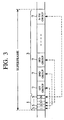
- Fig. 3 shows a configuration of a superframe on a physical channel for providing a downlink control channel for alerting which is to be transmitted from a base station to a mobile station in this first embodiment.
- This superframe of Fig. 3 largely comprises a regular reception section 1 and a mobile station alerting section 3.
- the regular reception section 1 has a plurality (N in this embodiment) of paging indication regions 5, while the mobile station alerting section 3 has a plurality (N in this embodiment) of identification information setting regions 7 in correspondence to a plurality of paging indication regions 5 of the regular reception section 1.
- the mobile stations to be used in the mobile communication system of this embodiment are classified into a plurality (N in this embodiment) of groups similarly as described in the description of the background art section above.
- the grouping can be made similarly as in a case of the PDC described above, but any other suitable manner of grouping may be used instead, if desired.
- the mobile stations are divided into N groups, and N paging indication regions 5 constituting the regular reception section 1 are provided in correspondence to these N groups.
- a paging presence information is set to each paging indication region 5 when a paging to a mobile station of a corresponding group occurs, so as to indicate an occurrence of a paging to a mobile station of that group.
- the paging presence information is set to the paging indication region 5 for this first group.
- the paging presence information is set to the paging indication region 5 for this second group, and so on.
- the paging presence information is set to the paging indication region 5 for this N-th group.
- the paging presence information can be a very short one.
- the paging presence information can be given in one bit.
- N identification information setting regions 7 constituting the mobile station alerting section 3 are provided in correspondence to a plurality of paging indication sections 5 of the regular reception section 1, and when the paging presence information is set to a certain paging indication region 5, an identification information of a mobile station with respect to which the paging indicated by the paging presence information occurred is set to the identification information setting region 7 corresponding to that certain paging indication region 5.
- an identification information of a mobile station with respect to which that paging occurred is set to the identification information setting region 7 for the first group corresponding to the paging indication region 5 for the first group as the paging signal.
- an identification information of a mobile station with respect to which that paging occurred is set to the identification information setting region 7 for the second group corresponding to the paging indication region 5 for the second group, and so on.
- an identification information of a mobile station with respect to which that paging occurred is set to the identification information setting region 7 for the N-th group corresponding to the paging indication region 5 for the N-th group.
- the superframe in a configuration of Fig. 3 as described above is repeatedly transmitted from a base station. Then, a mobile station in a waiting state receives this superframe and judges whether there is a paging for that mobile station or not according to the received superframe.
- the mobile station is configured to regularly receive only the paging indication region 5 corresponding to the own group to which that mobile station belongs from the regular reception section 1 of the superframe, and judges whether a paging presence information is set to that received paging indication region 5 or not.
- the mobile station next receives only the identification information setting region 7 corresponding to the own group to which that mobile station belongs from the mobile station alerting section 3 of the superframe, and obtains the paging signal by extracting the identification information of a mobile station from that received identification information setting region 7.
- the extracted identification information is the identification information of that mobile station itself, the mobile station detects the occurrence of the paging.
- the mobile station is configured to not to receive the mobile station alerting section 3 at all when the mobile station receives the paging indication region 5 corresponding to the own group to which that mobile station belongs and there is no paging presence information in that paging indication region 5, so that it suffices for the mobile station to receive only the paging indication region 5 corresponding to the own group to which that mobile station belongs when there is no paging presence information, that is, when there is no paging. Consequently, the power of the receiver circuit of the mobile station is turned ON only during a period of time corresponding to that paging indication region 5, so that the intermittent rate is very small, and therefore the consumption of the battery of the mobile station can be reduced as much as possible.
- the mobile station is required to receive only the paging indication region 5 and the identification information setting region 7 corresponding to the own group to which that mobile station belongs. Consequently, the power of the receiver circuit of the mobile station is turned ON only during periods of time corresponding to these paging indication region 5 and identification information setting region 7, so that the intermittent rate is still very small, and therefore the consumption of the battery of the mobile station can be reduced as much as possible.
- Fig. 4 shows a configuration of the base station according to this first embodiment.
- This base station of Fig. 3 has a control circuit 11 for receiving the paging signal from an upper level station and calculating a group number of a called mobile station from a called mobile station identification information in the received paging signal, while controlling an overall operation of the base station.
- the group number calculated by the control circuit 11 is supplied to a regular reception section forming circuit 13 and a mobile station alerting section forming circuit 15, while the called mobile station identification information is also supplied to the mobile station alerting section forming circuit 15.
- the regular reception section forming circuit 13 sets the paging presence information into the paging indication region 5 of the regular reception section 1 corresponding to the group number supplied from the control circuit 11, so as to form a signal for the regular reception section 1 of the superframe.
- the setting of the paging presence information into the paging indication region 5 is carried out by erecting "1" bit in one paging indication region 5 while setting "0" bits to the other paging indication regions 5, for example.
- the mobile station alerting section forming circuit 15 sets the called mobile station identification information supplied from the control circuit 11 into the identification information setting region 7 of the mobile station alerting section 3 corresponding to the group number supplied from the control circuit 11, while setting "0" to all the other identification information setting regions 7, so as to form a signal for the mobile station alerting section 3 of the superframe.
- the signal for the regular reception section 1 formed by the regular reception section forming circuit 13 and the signal for the mobile station alerting section 3 formed by the mobile station alerting section forming circuit 15 are supplied to a superframe forming circuit 17.
- This superframe forming circuit 17 combines the supplied regular reception section 1 and the supplied mobile station alerting section 3 together, so as to form the superframe in a configuration of Fig. 3.
- the superframe formed by the superframe forming circuit 17 is supplied to a transmitter circuit 19 which carries out the encoding and modulation processing with respect to the supplied superframe so as to generate a radio transmission signal.
- This radio transmission signal is then amplified by an amplifier circuit 21, and transmitted toward the mobile stations from an antenna 23. Note that, in the generation of the radio transmission signal at the transmitter circuit 19, it should be obvious that the signal is generated so as not to transmit those groups with all "0" bits in the mobile station alerting section 3 of the superframe.
- Fig. 5 shows a configuration of the mobile station according to this first embodiment.
- This mobile station of Fig. 5 has a control circuit 31 for controlling an overall operation of the mobile station and a memory 33 for storing the own mobile station identification information and other necessary information.
- the control circuit 31 reads out the own mobile station identification information from the memory 33 when the power of the mobile station is turned ON, and calculates a group number of the group to be waited from that own mobile station identification information. The calculated group number is then supplied to a reception ON/OFF judging circuit 41.
- This mobile station of Fig. 5 also has an antenna 37 for receiving the radio signal from the base station.
- the signal received by this antenna 37 is supplied to a receiver circuit 35 which carries out the demodulation and decoding processing with respect to the received signal supplied from the antenna 37, so as to generate the superframe from the received signal.
- the receiver circuit 35 supplies the superframe timing and the signal for the regular reception section 1 of the superframe to the reception ON/OFF judging circuit 41, while supplying the signal for the mobile station alerting section 3, i.e., the called mobile station identification information in the mobile station alerting section 3, of the superframe to the control circuit 31.
- the reception ON/OFF judging circuit 41 judges ON/OFF of the power supply to the receiver circuit 35, and controls a switch 43 so as to control the power supply from a battery to the receiver circuit 35 via the switch 43. Also, when the power of the mobile station is turned ON, the reception ON/OFF judging circuit 41 controls the switch 43 so that the receiver circuit 35 is set in ON state via the switch 43 and the superframe timing of the superframe received by the receiver circuit 35 will be supplied to the reception ON/OFF judging circuit 41.
- the reception ON/OFF judging circuit 41 judges a timing for the pertinent paging indication region 5 of the regular reception section 1 and a timing for the pertinent identification information setting region 7 of the mobile station alerting section 3 with respect to the superframe timing at which the power supply to the receiver circuit 35 is to be turned ON, according to the group number received from the control circuit 31. Then, the reception ON/OFF judging circuit 41 controls the switch 43 at the judged timing of the pertinent paging indication region 5 of the regular reception section 1 so as to supply the power from the battery 45 to the receiver circuit 35 via the switch 43 and thereby set the receiver circuit 35 in ON state, while setting the receiver circuit 35 in OFF state at the other timings.
- the reception ON/OFF judging circuit 41 supplies the power from the battery 45 to the receiver circuit 35 via the switch 43 at the timing of the paging indication region 5 corresponding to the supplied group number within the regular reception section 1, so as to set the receiver circuit 35 in ON state for receiving that paging indication region 5, and then judges whether or not the paging presence information is provided in that paging indication region 5 of the regular reception section 1 obtained from the receiver circuit 35.
- the reception ON/OFF judging circuit 41 controls the switch 43 again at the timing of the identification information setting region 7 corresponding to the supplied group number within the mobile station alerting section 3, so as to supply the power from the battery 45 to the receiver circuit 35 via the switch 43 and thereby set the receiver circuit 35 in ON state for receiving that identification information setting region 7.
- the received information of the identification information setting region 7, i.e., the mobile station identification information indicating the paging signal, is supplied to the control circuit 31.
- the control circuit 31 judges that there is a paging with respect to this mobile station, and proceeds to the paging connection processing.
- a spread code generation circuit 39 connected to the receiver circuit 35 generates the spread code used in the demodulation carried out at the receiver circuit 35.
- the spread code generation circuit 39 continues to generate the spread code even while the power of the receiver circuit 35 is turned OFF, so that the synchronization can be established as soon as the power of the receiver circuit 35 is turned ON.
- the spread code generation circuit 39 also carries out the adjustment of the spread code generation timing with respect to the receiver circuit 35 during a period of time in which the receiver circuit 35 is in ON state.
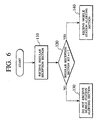
- the mobile station activates the receiver circuit 35 by supplying the power from the battery 45 to the receiver circuit 35 via the switch 43 under the control of the reception ON/OFF judging circuit 41, only during a period of time corresponding to the paging indication region 5 of the regular reception section 1 of the superframe which corresponds to the group number obtained from the mobile station identification information, so as to receive the information of that paging indication region 5 (step 110).
- the mobile station judges whether the received information of the paging indication region 5 of the regular reception section 1 is equal to "1" or not (step 120).
- the received information of the paging indication region 5 of the regular reception section 1 is not equal to "1"
- the receiver circuit 35 When the received information of the paging indication region 5 of the regular reception section 1 is equal to "1", it implies that there is a paging presence information, so that the receiver circuit 35 is set in ON state, so as to receive the information of the identification information setting region 7 of the mobile station alerting section 3 which corresponds to that paging indication region 5 (step 140). Then, when the own mobile station identification information is found in the received information of the identification information setting region 7, it is judged that there is a paging with respect to the own mobile station.
- Fig. 7 the second embodiment of a scheme for intermittent reception of paging signals in a mobile communication system according to the present invention will be described in detail.
- Fig. 7 shows a configuration of a superframe according to the second embodiment, which differs from the configuration of Fig. 3 in that a plurality of regions are provided in each paging indication region 5 of the regular reception section 1.
- the rest of this configuration of Fig. 7 is identical to that of Fig. 3.
- each paging indication region 5 of the regular reception section 1 is formed by three regions, so that the paging indication region 5 for the first group comprises three regions 1a, 1b and 1c.
- the paging indication region 5 for the second group comprises three regions 2a, 2b and 2c, and so on.
- the paging indication region 5 for the N-th group comprises three regions Na, Nb and Nc.
- this paging indication region 5 formed by a plurality of regions it is possible to judge whether the paging with respect to the corresponding group occurred or not according to the decision by majority based on a number of paging presence information set in these plurality of regions, for example. It is also possible to judge that a paging with respect to the corresponding group occurred when at least one paging presence information is set in these plurality of regions. Thus, the reliability of the regular reception section 1 can be improved by using this paging indication region 5 formed by a plurality of regions.
- the paging presence information is given by a "1" bit and bits in the three regions constituting the paging indication region 5 are "111", it can be judged that there is a paging so that the mobile station is controlled to receive the mobile station alerting section 3 of the superframe a well.
- bits in the three regions constituting the paging indication region 5 are "101", i.e., a case of two "1" bits, for example, it can be judged that there is a paging according to the decision by majority.
- bits in the three regions constituting the paging indication region 5 are "100", i.e., a case of one "1" bit, for example, it can be judged that there is no paging and one "1" bit is due to an error, so that the mobile station is controlled not to receive the mobile station alerting section 3 of the superframe.
- bits in the three regions constituting the paging indication region 5 are "100"
- a case of one "1" bit for example, it can be judged that there is no paging and one "1" bit is due to an error, so that the mobile station is controlled not to receive the mobile station alerting section 3 of the superframe.
- Fig. 8 and Fig. 9 the third embodiment of a scheme for intermittent reception of paging signals in a mobile communication system according to the present invention will be described in detail.
- Fig. 8 shows a configuration of a superframe according to the third embodiment, which differs from the configuration of Fig. 3 in that three sets of regular reception sections 1a, 1b and 1c are provided where each regular reception section comprises a plurality of paging indication regions 5.
- the rest of this configuration of Fig. 8 is identical to that of Fig. 3.
- a plurality of paging indication regions 5 are provided for each group, in a plurality of regular reception sections such as the first regular reception section 1a, the second regular reception section 1b and the third regular reception section 1c.
- a plurality of paging indication regions 5 it is possible to judge whether the paging with respect to the corresponding group occurred or not according to the decision by majority based on a number of paging presence information set in these plurality of paging indication regions 5, for example. It is also possible to judge that a paging with respect to the corresponding group occurred when at least one paging presence information is set in these plurality of paging indication regions 5.
- the reliability of the regular reception section 1 can be improved by using these paging indication regions 5 provided in a plurality of regular reception sections 1.
- the mobile station activates the receiver circuit 35 only during periods of time corresponding to a plurality of paging indication regions 5 in a plurality of regular reception sections 1a, 1b and 1c of the superframe which correspond to the group number obtained from the mobile station identification information, so as to receive the information of these plurality of paging indication regions 5 (step 210).
- the mobile station judges whether no less than a prescribed number of the received information of these plurality of paging indication regions 5 of the regular reception sections 1a, 1b and 1c are equal to "1" or not, that is, the decision by majority as to whether no less than a prescribed number of the received information have the paging presence information or not (step 220).
- the mobile station alerting section 3 of the superframe is not received (step 230), and the next superframe is awaited while the receiver circuit 35 remains in OFF state.
- the receiver circuit 35 When no less than a prescribed number of the received information of these plurality of paging indication regions 5 of the regular reception sections 1a, 1b and 1c are equal to "1", the receiver circuit 35 is set in ON state, so as to receive the information of the identification information setting region 7 of the mobile station alerting section 3 which corresponds to these paging indication regions 5 (step 240). Then, when the own mobile station identification information is found in the received information of the identification information setting region 7, it is judged that there is a paging with respect to the own mobile station.
- a rate for overlooking the paging for the mobile station can be made lower by using the smaller prescribed number. so that it becomes possible to carry out the paging processing surely. Also, a probability for receiving the identification information setting region by error can be made lower by using the larger prescribed number, so that it becomes possible to avoid a wasteful consumption of the battery power.
- Fig. 10 shows a configuration of a superframe according to the fourth embodiment, which differs from the configuration of Fig. 3 in that two sets of regular reception sections 1a and 1b are provided where each regular reception section comprises a plurality of paging indication regions 5, and a plurality of regions are provided in each paging indication region 5.
- the rest of this configuration of Fig. 10 is identical to that of Fig. 3.
- this fourth embodiment is a hybrid of the second embodiment of Fig. 7 and third embodiment of Fig. 8 described above.
- the regular reception sections 1a and 1b of the superframe of Fig. 10 when all bits in three regions of the paging indication region 5 of the first regular reception section 1a are equal to "1", it is judged that the paging with respect to the corresponding group occurred, so that the mobile station is controlled to receive the mobile station alerting section 3.
- the paging indication region 5 of the second regular reception section 1b is also received.
- the reception of the regular reception section is repeated for a plurality of times until all bits in three regions of the paging indication region 5 have the same value.
- the mobile station can be controlled to receive the mobile station alerting section 3 as long as at least one bit has a value "1", in a case where it is desired to detect the paging surely.
- the mobile station can be controlled not to receive the mobile station alerting section 3 unless all bits have a value "1" in a case where it is desired to improve the intermittent rate rather than the safety.
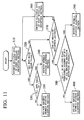
- the mobile station receives multiple bits in a plurality of regions of the paging indication region 5 of the first regular reception section 1a (step 310), and judges whether all these multiple bits have the same value or not (step 320).
- step 330 When all these multiple bits have the same value, whether all these multiple bits are equal to "1” or not is judged (step 330), and when all these multiple bits are equal to "1", the corresponding mobile station alerting section 3 of the superframe is received (step 340), whereas when all these multiple bits are equal to "0", the mobile station alerting section 3 is not received (step 350).
- step 370 whether the end of the regular reception sections is reached or not is judged (step 370), and if not, multiple bits in a plurality of regions of the paging indication region 5 of the next regular reception section 1b are received (step 360) and the operation returns to the step 320.
- a plurality of regular reception sections in the superframe is sequentially received in this manner until all the multiple bits are found to have the same value or until the end of the regular reception sections in the superframe is reached, and the steps 320 to 350 described above are carried out for each received regular reception section.
- step 380 When it is judged that the end of the regular reception sections in the superframe is reached at the step 370, whether no less than a prescribed number of bits in the paging indication regions 5 of all the regular reception sections received so far are equal to "1" or not is judged (step 380). If so, it is judged that the paging occurred, so that the corresponding identification information setting region 7 of the mobile station alerting section 3 is received (step 390), whereas otherwise, the mobile station alerting section 3 is not received (step 400), and the next superframe is awaited while the receiver circuit 35 remain in OFF state.
- Fig. 12 the fifth embodiment of a scheme for intermittent reception of paging signals in a mobile communication system according to the present invention will be described in detail.
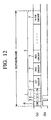
- Fig. 12 shows a configuration of a superframe according to the fifth embodiment, which differs from the configuration of Fig. 3 in that a synchronization word (SW) 6 for maintaining the synchronization is inserted immediately in front of the regular reception section 1.
- SW synchronization word
- the receiver circuit 35 of the mobile station is set in ON state not just at a timing of the corresponding paging indication region 5 of the regular reception section 1 but also at a timing of the synchronization word (SW) 6 as well, so as to receive the synchronization word (SW) 6 and the corresponding paging indication region 5 of the regular reception section 1, and compensate the synchronization by using the received synchronization word (SW) 6.
- the mobile station in receiving the superframe which is repeatedly transmitted from the base station, it is necessary for the mobile station to have a timing for receiving the superframe which is always synchronized, but a timing for receiving the superframe tends to be displaced when the mobile station moves and the propagation delay changes. Consequently, in order to compensate this timing displacement, the synchronization word (SW) 6 in the known pattern is inserted into the superframe.
- the mobile station judges that the timing is right when the received pattern matches with the known pattern, and is controlled to receive the corresponding identification information setting region 7 of the mobile station alerting section 3 by using a position of this synchronization word (SW) 6 as a reference.
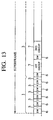
- Fig. 13 the sixth embodiment of a scheme for intermittent reception of paging signals in a mobile communication system according to the present invention will be described in detail.
- Fig. 13 shows a configuration of a superframe according to the sixth embodiment, which differs from the configuration of Fig. 3 in that a synchronization word (SW) 6 is inserted immediately in front of each paging indication region 5 of the regular reception section 1 and each identification information setting region 7 of the mobile station alerting section 3, so as to further improve the synchronization precision.
- SW synchronization word
- the timing may be displaced during a period of time between the reception of the synchronization word (SW) 6 and the reception of the signal for the N-th group when the mobile station moves during this period of time, because the signal for the N-th group is quite separated from the synchronization word (SW) 6 in a configuration of Fig. 12.
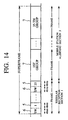
- the signal format of the PDC is specified as follows.
- one frame of the one PDC superframe is set as the regular reception section 1, while the other thirty-five frames are set as the mobile station alerting section 3.
- the mobile station alerting section 3 has one frame per one group, so that it is divided into thirty-five groups.
- the intermittent rate is drastically improved according to the present invention.
- the present invention is capable of considerably reducing the consumption of the battery power of the mobile station.
- Fig. 15 the seventh embodiment of a scheme for intermittent reception of paging signals in a mobile communication system according to the present invention will be described in detail.
- This seventh embodiment is directed to one exemplary superframe configuration in a case where a scheme for intermittent reception of paging signals according to the present invention is applied to signals for coherent detection with interpolation in a coherent detection device as disclosed in Japanese Patent Application No. 6-140569 (1994).
- the propagation function of a propagation path largely changes in conjunction with a move of the mobile station, and there is a need for the mobile station to estimate the propagation function of the propagation path at high speed in order to obtain the absolute phase of the transmission carrier waves.
- pilot signals (PL) given by symbols known to both the transmitting side and the receiving side in advance are periodically inserted into transmission signal, and the mobile station at the receiving side estimates the propagation function of the propagation path by using these pilot signals (PL).
- PL pilot signals
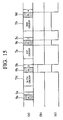
- FIG. 15 shows a configuration of a superframe according to the seventh embodiment, in which the above described pilot signals (PL) 9a, 9b, 9c, 9d, and so on are periodically inserted into the superframe formed by the regular reception section and the mobile station alerting section according to the present invention, and the propagation function of the propagation path is estimated at high speed by using these pilot signals (PL) so as to be able to follow the high speed variation of the propagation function of the propagation path.
- the above described pilot signals (PL) 9a, 9b, 9c, 9d, and so on are periodically inserted into the superframe formed by the regular reception section and the mobile station alerting section according to the present invention, and the propagation function of the propagation path is estimated at high speed by using these pilot signals (PL) so as to be able to follow the high speed variation of the propagation function of the propagation path.
- the paging indication region 5a of the regular reception section for the first group and the identification information setting region 7N of the mobile station alerting section for the N-th group are provided immediately behind the first pilot signal (PL) 9a
- the paging indication region 5b of the regular reception section for the second group and the identification information setting region 7a of the mobile station alerting section for the first group are provided immediately behind the second pilot signal (PL) 9b
- the paging indication region 5c of the regular reception section for the third group and the identification information setting region 7b of the mobile station alerting section for the second group are provided immediately behind the third pilot signal (PL) 9c, and so on.
- the paging indication region 5 of the regular reception section for each group and the identification information setting region 7 of the mobile station alerting section for each group are not provided consecutively, because the decoding of the paging indication region 5 cannot be carried out immediately in this case.
- the paging indication region 5b is short and appears immediately behind the pilot signal (PL) 9b, so that the estimation result obtained from the pilot signal (PL) 9b is used for the reception of the paging indication region 5b.
- FIG. 16 the eighth embodiment of a scheme for intermittent reception of paging signals in a mobile communication system according to the present invention will be described in detail.
- This eighth embodiment is also directed to another exemplary superframe configuration in a case where a scheme for intermittent reception of paging signals according to the present invention is applied to signals for coherent detection with interpolation in a coherent detection device as disclosed in Japanese Patent Application No. 6-140569 (1994).
- FIG. 16 shows a configuration of a superframe according to the seventh embodiment, which differs from the configuration of Fig. 15 in that the paging indication regions 5 of the regular reception section and the identification information setting regions 7 of the mobile station alerting section for two consecutive groups (first and second groups, third and fourth groups, fifth and sixth groups, and so on) are provided between each two pilot signals (PL) 9.
- the rest of this configuration of Fig. 16 is identical to that of Fig. 15.
- a part (b) of Fig. 16 shows timings for turning the receiver circuit 35 of the mobile station ON in a case where there is no paging with respect to two consecutive groups, while a part (c) of Fig. 16 shows timings for turning the receiver circuit 35 of the mobile station ON in a case where there is a paging with respect to two consecutive groups.
- the radio channel capacity is determined by the amount of interference, and an amount of interference does not increase when the transmission of the identification information setting regions is stopped for a group for which there is no paging, so that an increase of a number of groups does not cause any problem.
- a frequency for receiving the mobile station alerting section of the superframe becomes less, so that the present invention is even more effective in a case of CDMA.
Landscapes
- Engineering & Computer Science (AREA)
- Computer Networks & Wireless Communication (AREA)
- Signal Processing (AREA)
- Multimedia (AREA)
- Mobile Radio Communication Systems (AREA)
Claims (18)
- Ein Verfahren zum intermittierenden Empfang von Paging-Signalen in einem mobilen Kommunikationssystem, das durch Mobilstationen gebildet wird, die in einer Mehrzahl von Gruppen und Basisstationen gruppiert sind, die Schritte umfassend:wiederholtes Übermitteln eines Rahmens von jeder Basisstation, wobei der Rahmen enthält:wenigstens einen regulären Empfangsabschnitt (1), der eine Mehrzahl von Paging-Anzeigebereichen (5) aufweist, die entsprechend der Mehrzahl von Gruppen bereitgestellt werden, in dem eine Paging-Präsenzinformation zum Anzeigen einer Präsenz eines Pagings hinsichtlich einer Mobilstation einer Gruppe in einem Paging-Anzeigebereich entsprechend der Gruppe eingestellt wird, wenn ein Paging hinsichtlich einer Mobilstation der Gruppe auftritt;ein Mobilstationsalarmabschnitt (3), der eine Mehrzahl von Identifikationsinformationseinstellbereichen (7) aufweist, die entsprechend der Mehrzahl von Paging-Anzeigebereichen (5) bereitgestellt werden, in dem eine Identifikationsinformation einer Mobilstation, die durch ein durch einen Paging-Anzeigebereich (5) angezeigtes Paging gerufen wird, in einem Identifikationsinformationseinstellbereich (7) entsprechend dem Paging-Anzeigebereich (5) eingestellt wird; undEmpfangen des Rahmens an einer jeden Mobilstation durch intermittierendes Betreiben eines Empfängerschaltkreises (35) einer jeder Mobilstation.
- Verfahren nach Anspruch 1, wobei eine jede Mobilstation eine Information in wenigstens einem Paging-Anzeigebereich (5) entsprechend einer Gruppe, zu der eine jede Mobilstation gehört, empfängt, durch ausgewähltes Betreiben des Empfängerschaltkreises (35) während einer Zeitdauer entsprechend dem wenigstens einem Paging-Anzeigebereich (5) in dem regulären Empfangsabschnitt (1) des Rahmens.
- Verfahren nach Anspruch 2, wobei, wenn die Information in dem wenigstens eine Paging-Anzeigebereich (5) die Paging-Präsenzinformation ist, eine jede Mobilstation einen Zugriff auf eine Information in einem Identifikationsinformationseinstellbereich (7), entsprechend dem wenigstens einem Paging-Anzeigebereich (5) durchführt, durch ausgewähltes Betreiben des Empfängerschaltkreises (35) während einer Zeitdauer entsprechend dem einen Identifikationsinformationseinstellbereich (7) in dem Mobilstationsalarmabschnitt (3) des Rahmens.
- Verfahren nach Anspruch 3, wobei der Rahmen mehr als einen Paging-Anzeigebereich (5) enthält, die entsprechend jeder Gruppe bereitgestellt werden; und
eine jede Mobilstation den Zugriff durchführt, wenn die Paging-Präsenzinformation in nicht weniger als einer vorgeschriebenen Anzahl der mehr als einen Paging-Anzeigebereiche (5) entsprechend der einen Gruppe eingestellt ist. - Verfahren nach Anspruch 4, wobei die vorgeschriebene Anzahl die Hälfte einer gesamten Anzahl der mehr als einen Paging-Anzeigebereiche (5) ist, die entsprechend der Gruppe bereitgestellt werden.
- Verfahren nach Anspruch 3, wobei der Rahmen mehr als einen reguläre Empfangsabschnitt (1) enthält, wobei jeder eine Mehrzahl von entsprechend der Mehrzahl von Gruppen bereitgestellten Paging-Anzeigebereichen (5) aufweist; und
eine jede Mobilstation den Zugriff durchführt, wenn die Paging-Präsenzinformation in nicht weniger als einer vorgeschriebenen Anzahl von Paging-Anzeigebereichen (5), entsprechend der einen Gruppe in dem mehr als einen regulären Empfangsabschnitt (1) eingestellt wird. - Verfahren nach Anspruch 6, wobei die vorgeschriebene Anzahl die Hälfte einer gesamten Anzahl von den mehr als einen regulären Empfangsabschnitten (1) ist, die entsprechend jeder Gruppe bereitgestellt werden.
- Verfahren nach Anspruch 3, wobei der Rahmen mehr als einen regulären Empfangsabschnitt (1) enthält, wobei jeder eine Mehrzahl von Paging-Anzeigebereichen (5) aufweist, die entsprechend jeder Gruppe bereitgestellt werden; und
eine jede Mobilstation sequentiell die Mehrzahl von Paging-Anzeigebereichen (5) entsprechend der einen Gruppe in den mehr als einen regulären Empfangsabschnitten (1) empfängt, und den Zugriff durchführt, wenn die Paging-Präsenzinformation in allen der Mehrzahl von Paging-Anzeigebereichen (5) entsprechend der einen Gruppe in jedem der mehr als einen regulären Empfangsabschnitte (1) eingestellt wird, oder ein Betreiben des Empfängerschaltkreises (35) bis zu einem nächsten Rahmen stoppt, wenn die Paging-Präsenzinformation nicht in jedem der Mehrzahl von Paging-Anzeigebereichen (5) entsprechend der einen Gruppe in jedem der mehr als einen regulären Empfangsabschnitte (1) eingestellt ist. - Verfahren nach Anspruch 8, wobei, wenn die Mehrzahl von Paging-Anzeigebereichen (5) entsprechend der einen Gruppe keine identische Information in allen der mehr als einen regulären Empfangsabschnitte (1) aufweist, eine jede Mobilstation den Zugriff durchführt, wenn die Paging-Präsenzinformation in nicht weniger als einer vorgeschriebenen Anzahl von Paging-Anzeigebereichen (5) entsprechend der einen Gruppe unter den mehr als einen regulären Empfangsabschnitten (1) eingestellt ist.
- Verfahren nach Anspruch 1, wobei der Rahmen auch ein Synchronisationswort enthält, das zum Aufrechterhalten einer Synchronisation verwendet wird und das unmittelbar vor dem wenigstens einen regulären Empfangsabschnitt (1) bereitgestellt wird.
- Verfahren nach Anspruch 1, wobei der Rahmen auch ein Synchronisationswort enthält, das zum Aufrechterhalten einer Synchronisation verwendet wird und das unmittelbar vor jedem Paging-Anzeigebereich (5) des wenigstens einen regulären Empfangsabschnitts (1) bereitgestellt wird.
- Verfahren nach Anspruch 11, wobei das Synchronisationswort auch unmittelbar vor jedem Identifikationsinformationseinstellbereich (7) des Mobilstationsalarmbereichs (3) bereitgestellt wird.
- Verfahren nach Anspruch 1, wobei der Rahmen auch eine Mehrzahl von Pilotsignalen enthält, die zum Schätzen einer Ausbreitungsfunktion eines Ausbreitungspfads verwendet werden und die periodisch in den Rahmen eingefügt werden, und der Paging-Anzeigebereich (5) für eine Gruppe und der Identifikationsinformationseinstellbereich (7) für eine andere Gruppe zwischen jeweils zwei aufeinanderfolgenden Pilotsignalen bereitgestellt wird.
- Verfahren nach Anspruch 1, wobei der Rahmen auch eine Mehrzahl von Pilotsignalen enthält, die zum Schätzen einer Ausbreitungsfunktion eines Ausbreitungspfads verwendet werden und die periodisch in den Rahmen eingefügt werden, und die Paging-Anzeigebereiche (5) für zwei Gruppen und die Identifikationsinformationseinstellbereiche (7) für andere zwei Gruppen zwischen jeweils zwei aufeinanderfolgenden Pilotsignalen bereitgestellt werden.
- Ein Basisstationsgerät zum Verwenden in einem mobilen Kommunikationssystem, das durch Mobilstationen gebildet wird, die in eine Mehrzahl von Gruppen und Basisstationen gruppiert sind und in dem jede Mobilstation intermittierend Paging-Signale empfängt, die von jeder Basisstation durch Betreiben eines Empfängerschaltkreises (35) einer jeden Mobilstation übermittelt werden, wobei das Basisstationsgerät umfasst:einen regulären Empfangsabschnittbildungsschaltkreis (13) zum Bilden wenigstens eines regulären Empfangsabschnitts (1) eines zu übermittelnden Rahmens, wobei der wenigstens eine reguläre Empfangsabschnitt (1) eine Mehrzahl von Paging-Anzeigebereichen (5) aufweist, die entsprechend der Mehrzahl von Gruppen bereitgestellt werden, und in denen eine Paging-Präsenzeinformation zum Anzeigen einer Präsenz eines Pagings hinsichtlich einer Mobilstation einer Gruppe in einem Paging-Anzeigebereich (5) entsprechend der Gruppe eingestellt ist, wenn ein Paging hinsichtlich einer Mobilstation der Gruppe auftritt;ein Mobilstationsalarmabschnittsbildungsschaltkreis (15) zum Bilden eines Mobilstationsalarmabschnitts (3) des Rahmens, wobei der Mobilstationsalarmabschnitt (3) eine Mehrzahl von Identifikationsinformationseinstellbereichen (7) aufweist, die entsprechend der Mehrzahl von Paging-Anzeige-Bereichen (5) bereitgestellt sind, und in denen eine Identifikationsinformation einer Mobilstation, die durch ein durch einen Paging-Anzeige-Bereich (5) angezeigtes Paging gerufen wird, in einem Identifikationsinformationseinstellbereich (7) entsprechend dem Paging-Anzeige-Bereich (5) eingestellt ist; undein Übermittlungsschaltkreis zum Bilden des Rahmens durch Kombinieren des wenigstens einen regulären Empfangsabschnitts (1) und des Mobilstationsalarmabschnitts (3), und wiederholten Übermitteln des Rahmens als die Paging-Signale zu den Mobilstationen.
- Das Basisstationsgerät nach Anspruch 15, weiterhin umfassend:einen Steuerschaltkreis (11) zum Berechnen einer Gruppenanzahl von einer Gruppe, zu der eine gerufene Mobilstation gehört, gemäß einer gerufenen Mobilstationsidentifikationsinformation, die aus Paging-Signalen extrahiert wird, die von einer Oberen-Ebene-Station des Basisstationsgerätes empfangen wurden, und Steuern des regulären Empfangsabschnittsbildungsschaltkreises (13), um die Paging-Präsenzinformation in einem Paging-Anzeigebereich (5) durch Bilden des wenigstens einen regulären Empfangsabschnitts (1) entsprechend der einen Gruppe einzustellen, während des Steuerns des Mobilstationsalarmabschnittsbildungsschaltkreises (15), um die Identifikationsinformation der gerufen Mobilstation in dem Identifikationsinformationseinstellbereich (7) entsprechend dem einen Paging-Anzeigebereich (5) beim Bilden des Mobilstationsalarmabschnitts (3) einzustellen.
- Ein Mobilstationsgerät zum Verwenden in einem Mobilkommunikationssystem, das durch Mobilstationen gebildet wird, die in einer Mehrzahl von Gruppen und Basisstationen gruppiert sind, in dem jede Basisstation wiederholt einen Rahmen überträgt, der enthält:wobei das Mobilstationsgerät umfasst:wenigstens einen regulären Empfangsabschnitt (1), der eine Mehrzahl von Paging-Anzeigebereichen (5) aufweist, die entsprechend der Mehrzahl von Gruppen bereitgestellt werden, in dem eine Paging-Präsenzinformation in einem Paging-Anzeigebereich zum Anzeigen einer Präsenz eines Pagings hinsichtlich einer Mobilstation einer Gruppe (5) entsprechend der Gruppe eingestellt wird, wenn ein Paging hinsichtlich einer Mobilstation der Gruppe auftritt; undein Mobilstationsalarmabschnitt (3), der eine Mehrzahl von Identifikationsinformationseinstellbereichen (7) aufweist, die entsprechend der Mehrzahl von Paging-Anzeigebereichen (5) bereitgestellt werden, in dem eine Identifikationsinformation einer Mobilstation, die durch ein durch einen Paging-Anzeigebereich (5) angezeigtes Paging gerufen wird, in einem Identifikationsinformationseinstellbereich entsprechend dem Paging-Anzeigebereich (5) eingestellt wird;eine Batterie (45) zum Bereitstellen einer Leistung; einen Empfängerschaltkreis (35) zum Empfangen des Rahmens, er von jeder Basisstation übermittelt wird, und Erhalten einer Information in dem Paging-Anzeigebereich (5) und einer Information in dem Identifikationsinformationseinstellbereich (7), durch Versorgtwerden mit der Leistung, die durch die Batterie (45) bereitgestellt wird; undein Empfangs-AN/AUS-Beurteilungsschaltkreis (41) zum intermittierenden Betreiben des Empfängerschaltkreises (35) und zum Empfangen einer Information in wenigstens einem Paging-Anzeigebereich (5), entsprechend einer Gruppe, zu der das Mobilstationsgerät gehört, durch ausgewähltes Versorgen des Empfängerschaltkreises (35) mit Leistung aus der Batterie (45), während einer Zeitdauer, die wenigstens einem Paging-Anzeigebereich (5) in dem regulären Empfangsabschnitt (1) des Rahmens entspricht, und wenn die Information in dem wenigstens einen Paging-Anzeigebereich (5) die Paging-Präsenzinformation ist, intermittierendes Betreiben des Empfängerschaltkreises (35), um einen Zugriff auf eine Information in einem Identifikationsinformationseinstellbereich (7), entsprechend dem wenigstens einen Paging-Anzeigebereich (5) durchzuführen, durch ausgewähltes Versorgen des Empfängerschaltkreises (35) mit Leistung aus der Batterie (45), während einer Zeitdauer, die dem einen Identifikationsinformationseinstellbereich (7) in dem Mobilstationsalarmabschnitt (3) des Rahmens entspricht; undein Steuerschaltkreis (31) zum Empfangen der Information in dem Identifikationsinformationseinstellbereich (7), der durch den Empfängerschaltkreis (35) erhalten wird, und Ausführen einer Paging-Verbindungsverarbeitung, wenn die Information in dem Identifikationsinformationseinstellbereich (7) eine Identifikationsinformation des Mobilstationsgerätes enthält.
- Das Mobilstationsgerät nach Anspruch 17, wobei der Steuerschaltkreis (31) auch angepasst ist, um aus der Identifikationsinformation des Mobilstationsgerätes eine Gruppenanzahl einer Gruppe zu berechnen, zu der das Mobilstationsgerät gehört, und angepasst ist, um den Empfangs-AN/AUS-Beurteilungsschaltkreis (41) mit der berechneten Gruppenanzahl zu versorgen;
der Empfängerschaltkreis (35) auch angepasst ist, um ein Rahmen-Timing von dem Rahmen zu erzeugen, und angepasst ist, den Empfangs-AN/AUS-Beurteilungsschaltkreis (41) mit dem erzeugten Rahmen-Timing zu versorgen; und
der Empfangs-AN/AUS-Beurteilungsschaltkreis (41) angepasst ist, um Timings zum Versorgen des Empfängerschaltkreises (35) mit Leistung aus der Batterie (45) gemäß der Gruppenanzahl und des Rahmen-Timings zu bestimmen.
Applications Claiming Priority (3)
| Application Number | Priority Date | Filing Date | Title |
|---|---|---|---|
| JP55095/96 | 1996-03-12 | ||
| JP5509596 | 1996-03-12 | ||
| JP5509596 | 1996-03-12 |
Publications (3)
| Publication Number | Publication Date |
|---|---|
| EP0796025A2 EP0796025A2 (de) | 1997-09-17 |
| EP0796025A3 EP0796025A3 (de) | 1999-09-29 |
| EP0796025B1 true EP0796025B1 (de) | 2004-12-15 |
Family
ID=12989190
Family Applications (1)
| Application Number | Title | Priority Date | Filing Date |
|---|---|---|---|
| EP97104182A Expired - Lifetime EP0796025B1 (de) | 1996-03-12 | 1997-03-12 | Intermittierender Empfang von Rufsignalen in einem mobilen Kommunikationssystem |
Country Status (6)
| Country | Link |
|---|---|
| US (1) | US6138001A (de) |
| EP (1) | EP0796025B1 (de) |
| KR (1) | KR100270452B1 (de) |
| CN (1) | CN1099203C (de) |
| CA (1) | CA2199661C (de) |
| DE (1) | DE69731908T2 (de) |
Cited By (1)
| Publication number | Priority date | Publication date | Assignee | Title |
|---|---|---|---|---|
| US8224356B2 (en) | 1997-05-30 | 2012-07-17 | Qualcomm Incorporated | Dual event slotted paging |
Families Citing this family (29)
| Publication number | Priority date | Publication date | Assignee | Title |
|---|---|---|---|---|
| US6111865A (en) * | 1997-05-30 | 2000-08-29 | Qualcomm Incorporated | Dual channel slotted paging |
| JP3271939B2 (ja) * | 1997-08-05 | 2002-04-08 | ジェイフォン東日本株式会社 | デジタル無線電話システム |
| US6725068B2 (en) | 1997-08-05 | 2004-04-20 | Tokyo Digital Phone Co., Ltd. | Digital wireless telephone system |
| FI109861B (fi) * | 1998-01-05 | 2002-10-15 | Nokia Corp | Menetelmä solun yleislähetyskapasiteetin tehokkaaksi hyödyntämiseksi |
| US7072832B1 (en) | 1998-08-24 | 2006-07-04 | Mindspeed Technologies, Inc. | System for speech encoding having an adaptive encoding arrangement |
| US6711413B1 (en) * | 1999-03-10 | 2004-03-23 | Nokia Corporation | Apparatus, and associated method, by which to detect paging messages at a mobile station |
| DE19931130A1 (de) * | 1999-07-06 | 2001-01-18 | Siemens Ag | Verfahren zum Rufen von Teilnehmerstationen in einem Funk-Kommunikationssystem |
| US6289228B1 (en) * | 1999-07-20 | 2001-09-11 | Motorola, Inc. | Method and apparatus for reducing power consumption of a communication device |
| US6697622B1 (en) | 1999-09-06 | 2004-02-24 | Nit Docomo, Inc. | Control method of searching neighboring cells, mobile station, and mobile communication system |
| CA2309472A1 (en) * | 2000-05-25 | 2001-11-25 | Mark James Frazer | Data communication channel |
| JP4295934B2 (ja) * | 2001-09-28 | 2009-07-15 | 株式会社エヌ・ティ・ティ・ドコモ | 移動通信システム、無線基地局及び一斉呼び出し方法 |
| US7916674B2 (en) * | 2003-03-27 | 2011-03-29 | Panasonic Corporation | Method and apparatus for intermittent communication |
| KR100686775B1 (ko) | 2003-11-07 | 2007-02-23 | 삼성전자주식회사 | 광대역 무선 접속 통신 시스템에서 트래픽 지시 메시지 전송 방법 |
| JP3795496B2 (ja) * | 2004-03-10 | 2006-07-12 | 株式会社東芝 | デュアル無線端末装置およびデュアル無線システム |
| US20060072487A1 (en) * | 2004-09-22 | 2006-04-06 | Howard John S | Power conservation for a wireless device |
| CN1317920C (zh) * | 2005-06-15 | 2007-05-23 | 华为技术有限公司 | 一种睡眠模式下业务指示消息发送方法 |
| US8077677B2 (en) * | 2007-01-31 | 2011-12-13 | Interdigital Technology Corporation | Method and apparatus for paging group handling |
| JP5001693B2 (ja) * | 2007-03-22 | 2012-08-15 | 株式会社エヌ・ティ・ティ・ドコモ | 移動通信システムで使用される基地局装置及び方法 |
| US8165072B2 (en) * | 2007-03-22 | 2012-04-24 | Alcatel Lucent | Method for providing group paging and messaging |
| US8064932B2 (en) * | 2008-04-11 | 2011-11-22 | Mediatek Inc. | Methods for scheduling a receiving process and communication apparatuses utilizing the same |
| WO2009139600A2 (en) * | 2008-05-16 | 2009-11-19 | Samsung Electronics Co., Ltd. | Method and system for managing paging in wireless communication network |
| KR101578928B1 (ko) * | 2008-07-07 | 2015-12-18 | 한국전자통신연구원 | 수면 모드 관리 방법, 단말 및 수면 모드 관리 장치 |
| EP2312901A4 (de) | 2008-08-04 | 2013-05-22 | Otsl Inc | Rahmenerzeugungsvorrichtung, emfangsvorrichtung, datenübertragungs-/empfangssystem, rahmenerzeugungsverfahren und empfangsverfahren |
| CN102132611B (zh) * | 2008-08-05 | 2014-09-10 | 株式会社Otsl | 帧生成装置、接收装置、数据收发系统、帧生成方法及接收方法 |
| US8994508B2 (en) * | 2008-12-11 | 2015-03-31 | Intelleflex Corporation | Inclusive or exclusive RFID tag interrogation and query round |
| KR20110020707A (ko) * | 2009-08-24 | 2011-03-03 | 엘지전자 주식회사 | 멀티홉 릴레이 통신 시스템에서 유휴모드 단말의 페이징 방법 및 장치 |
| CN103517414A (zh) * | 2012-06-26 | 2014-01-15 | 中兴通讯股份有限公司 | 机器类型通信用户设备的寻呼方法及装置 |
| US8903457B2 (en) * | 2012-08-17 | 2014-12-02 | Nxp B.V. | Wireless data apparatus, system and method |
| CN104811279B (zh) * | 2014-01-23 | 2018-05-22 | 电信科学技术研究院 | 一种寻呼消息传输方法及装置 |
Family Cites Families (18)
| Publication number | Priority date | Publication date | Assignee | Title |
|---|---|---|---|---|
| US4449248A (en) * | 1982-02-01 | 1984-05-15 | General Electric Company | Battery saving radio circuit and system |
| JPS60212040A (ja) * | 1984-04-06 | 1985-10-24 | Nippon Telegr & Teleph Corp <Ntt> | Ss−tdma回線制御方式 |
| JP2551591B2 (ja) * | 1987-06-30 | 1996-11-06 | 日本電気株式会社 | 間欠受信方式 |
| JP2679185B2 (ja) * | 1988-12-06 | 1997-11-19 | 日本電気株式会社 | 無線選択呼び出し信号受信機 |
| JP3190030B2 (ja) * | 1990-03-19 | 2001-07-16 | 日本電信電話株式会社 | 移動通信における間欠受信方法 |
| CA2096832C (en) * | 1990-11-26 | 1996-08-20 | Daniel R. Tayloe | Method and apparatus for paging in a communication system |
| US5241542A (en) * | 1991-08-23 | 1993-08-31 | International Business Machines Corporation | Battery efficient operation of scheduled access protocol |
| US5604744A (en) * | 1992-10-05 | 1997-02-18 | Telefonaktiebolaget Lm Ericsson | Digital control channels having logical channels for multiple access radiocommunication |
| GB2278977B (en) * | 1993-06-10 | 1997-05-28 | Roke Manor Research | Improvements in or relating to cellular mobile radio systems |
| JP3108567B2 (ja) * | 1993-08-27 | 2000-11-13 | 株式会社エヌ・ティ・ティ・ドコモ | 移動無線方式および移動受信機 |
| AU681721B2 (en) * | 1993-11-01 | 1997-09-04 | Alex K. Raith | Enhanced sleep mode in radiocommunication systems |
| US5491718A (en) * | 1994-01-05 | 1996-02-13 | Nokia Mobile Phones Ltd. | CDMA radiotelephone having optimized slotted mode and long code operation |
| FI98427C (fi) * | 1994-06-08 | 1997-06-10 | Nokia Mobile Phones Ltd | Järjestelmäpakettidatan siirtämiseksi eri bittinopeuksilla TDMA-solukkojärjestelmässä |
| JP3118548B2 (ja) * | 1994-06-22 | 2000-12-18 | 株式会社エヌ・ティ・ティ・ドコモ | ディジタル通信受信機用同期検波装置および同期方法 |
| US5745860A (en) * | 1994-12-16 | 1998-04-28 | Telefonaktiebolaget Lm Ericsson | Method and system of data transmission and reception in a mobile station within a radio telecommunications system |
| WO1996031992A1 (en) * | 1995-04-04 | 1996-10-10 | Ericsson Inc. | Mobile station user group operation |
| US5930706A (en) * | 1995-11-29 | 1999-07-27 | Ericsson Inc. | Detecting messages transmitted over a communications channel such as a paging channel |
| US5842114A (en) * | 1997-02-12 | 1998-11-24 | Interdigital Technology Corporation | Global channel power control to minimize spillover in a wireless communication environment |
-
1997
- 1997-03-11 US US08/814,363 patent/US6138001A/en not_active Expired - Lifetime
- 1997-03-11 CA CA002199661A patent/CA2199661C/en not_active Expired - Fee Related
- 1997-03-11 CN CN97103467A patent/CN1099203C/zh not_active Expired - Fee Related
- 1997-03-12 KR KR1019970008308A patent/KR100270452B1/ko not_active Expired - Fee Related
- 1997-03-12 DE DE69731908T patent/DE69731908T2/de not_active Expired - Lifetime
- 1997-03-12 EP EP97104182A patent/EP0796025B1/de not_active Expired - Lifetime
Cited By (1)
| Publication number | Priority date | Publication date | Assignee | Title |
|---|---|---|---|---|
| US8224356B2 (en) | 1997-05-30 | 2012-07-17 | Qualcomm Incorporated | Dual event slotted paging |
Also Published As
| Publication number | Publication date |
|---|---|
| DE69731908D1 (de) | 2005-01-20 |
| CN1099203C (zh) | 2003-01-15 |
| EP0796025A2 (de) | 1997-09-17 |
| DE69731908T2 (de) | 2005-10-06 |
| KR970068268A (ko) | 1997-10-13 |
| CA2199661C (en) | 2001-08-14 |
| KR100270452B1 (ko) | 2000-11-01 |
| US6138001A (en) | 2000-10-24 |
| CN1163545A (zh) | 1997-10-29 |
| EP0796025A3 (de) | 1999-09-29 |
| CA2199661A1 (en) | 1997-09-12 |
Similar Documents
| Publication | Publication Date | Title |
|---|---|---|
| EP0796025B1 (de) | Intermittierender Empfang von Rufsignalen in einem mobilen Kommunikationssystem | |
| EP0665659B1 (de) | TDMA-CDMA mobile Kommunikationsanordnung | |
| EP0936831B1 (de) | Cdma mobile station und cdma übertragungsverfahren | |
| EP0847147B1 (de) | Verfahren zur Steuerung der Senderleistung für einen CDMA Nachrichtenübertragungssystem | |
| EP1512240B1 (de) | Vorrichtung und zugeordnetes verfahren zum ermöglichen der kommunikation in einem funkkommunikationssystem, das datenkommunikation mit mehreren datenraten bereitstellt | |
| EP0812121B1 (de) | Verfahren zur Semaphorkanalübertragung und Zellauswahl in einem CDMA Übertragungssystem | |
| EP0960541B1 (de) | Schaltung zur synchronisation von cdma-mobiltelephonen | |
| US6480504B1 (en) | Paging channel configuration for efficient wake-up period utilization | |
| EP0893890B1 (de) | CDMA Sender/ Empfänger und Sendeleistungsregelung in einem mobilen Funkübertragungssystem | |
| US6766146B1 (en) | Channel communication device and method for mobile communication system using transmission antenna diversity | |
| GB2305825A (en) | Mobile telephone measuring channel condition at time intervals depending on velocity | |
| KR19990038710A (ko) | 코드분할다중접속 셀룰러폰 시스템에서 주파수간 핸드오프 제어방법 | |
| EP0937341B1 (de) | Energiesparverfahren zur synchronisation in einem kommunikationssystem | |
| US6463261B1 (en) | Radio communication device and radio communication method | |
| KR100289572B1 (ko) | 이동통신시스템에있어서증가된페이징채널정보전송속도를사용하는페이징방식 | |
| EP1119117A1 (de) | Basisstation, übertragungsendgerät und verfahren zur steuerung der übertragungsleistung | |
| US7813751B2 (en) | Transmission power control system and method capable of saving battery consumption of mobile station and preventing connection capacity from being reduced | |
| US6212371B1 (en) | Mobile wireless terminal and power controlling method | |
| JP2957140B2 (ja) | 移動通信における着信信号の間欠受信方法および基地局装置と移動機装置 | |
| KR20000052644A (ko) | 디에스-씨디엠에이 이동 전화 시스템을 위한 송신 타이밍 오프셋방법 | |
| EP1005177B1 (de) | Verfahren und Gerät zur Steuerung eines Suchers in einem CDMA Kommunikationssystem | |
| US20020136186A1 (en) | Cdma terminal and cdma method | |
| EP2290845A1 (de) | Funkendgerät | |
| KR20010022486A (ko) | 이동국에서의 데이터 패킷 수신을 제어하는 방법 및 장치 | |
| EP0954111A1 (de) | Funkkommunikationsanordnung und Verfahren zur Übertragung von Steuerdaten zur Verwendung in demselben |
Legal Events
| Date | Code | Title | Description |
|---|---|---|---|
| PUAI | Public reference made under article 153(3) epc to a published international application that has entered the european phase |
Free format text: ORIGINAL CODE: 0009012 |
|
| 17P | Request for examination filed |
Effective date: 19970312 |
|
| AK | Designated contracting states |
Kind code of ref document: A2 Designated state(s): DE FR GB IT SE |
|
| PUAL | Search report despatched |
Free format text: ORIGINAL CODE: 0009013 |
|
| AK | Designated contracting states |
Kind code of ref document: A3 Designated state(s): DE FR GB IT SE |
|
| 17Q | First examination report despatched |
Effective date: 20030805 |
|
| GRAP | Despatch of communication of intention to grant a patent |
Free format text: ORIGINAL CODE: EPIDOSNIGR1 |
|
| RAP1 | Party data changed (applicant data changed or rights of an application transferred) |
Owner name: NTT DOCOMO, INC. |
|
| GRAS | Grant fee paid |
Free format text: ORIGINAL CODE: EPIDOSNIGR3 |
|
| GRAA | (expected) grant |
Free format text: ORIGINAL CODE: 0009210 |
|
| AK | Designated contracting states |
Kind code of ref document: B1 Designated state(s): DE FR GB IT SE |
|
| REG | Reference to a national code |
Ref country code: GB Ref legal event code: FG4D |
|
| REF | Corresponds to: |
Ref document number: 69731908 Country of ref document: DE Date of ref document: 20050120 Kind code of ref document: P |
|
| REG | Reference to a national code |
Ref country code: SE Ref legal event code: TRGR |
|
| PLBE | No opposition filed within time limit |
Free format text: ORIGINAL CODE: 0009261 |
|
| STAA | Information on the status of an ep patent application or granted ep patent |
Free format text: STATUS: NO OPPOSITION FILED WITHIN TIME LIMIT |
|
| 26N | No opposition filed |
Effective date: 20050916 |
|
| ET | Fr: translation filed | ||
| PGFP | Annual fee paid to national office [announced via postgrant information from national office to epo] |
Ref country code: IT Payment date: 20120319 Year of fee payment: 16 |
|
| PGFP | Annual fee paid to national office [announced via postgrant information from national office to epo] |
Ref country code: DE Payment date: 20130306 Year of fee payment: 17 Ref country code: GB Payment date: 20130306 Year of fee payment: 17 Ref country code: FR Payment date: 20130325 Year of fee payment: 17 Ref country code: SE Payment date: 20130312 Year of fee payment: 17 |
|
| REG | Reference to a national code |
Ref country code: DE Ref legal event code: R119 Ref document number: 69731908 Country of ref document: DE |
|
| REG | Reference to a national code |
Ref country code: SE Ref legal event code: EUG |
|
| REG | Reference to a national code |
Ref country code: DE Ref legal event code: R079 Ref document number: 69731908 Country of ref document: DE Free format text: PREVIOUS MAIN CLASS: H04Q0007380000 Ipc: H04W0004000000 |
|
| GBPC | Gb: european patent ceased through non-payment of renewal fee |
Effective date: 20140312 |
|
| PG25 | Lapsed in a contracting state [announced via postgrant information from national office to epo] |
Ref country code: SE Free format text: LAPSE BECAUSE OF NON-PAYMENT OF DUE FEES Effective date: 20140313 |
|
| REG | Reference to a national code |
Ref country code: DE Ref legal event code: R119 Ref document number: 69731908 Country of ref document: DE Effective date: 20141001 Ref country code: DE Ref legal event code: R079 Ref document number: 69731908 Country of ref document: DE Free format text: PREVIOUS MAIN CLASS: H04Q0007380000 Ipc: H04W0004000000 Effective date: 20141118 |
|
| REG | Reference to a national code |
Ref country code: FR Ref legal event code: ST Effective date: 20141128 |
|
| PG25 | Lapsed in a contracting state [announced via postgrant information from national office to epo] |
Ref country code: FR Free format text: LAPSE BECAUSE OF NON-PAYMENT OF DUE FEES Effective date: 20140331 Ref country code: DE Free format text: LAPSE BECAUSE OF NON-PAYMENT OF DUE FEES Effective date: 20141001 Ref country code: GB Free format text: LAPSE BECAUSE OF NON-PAYMENT OF DUE FEES Effective date: 20140312 |
|
| PG25 | Lapsed in a contracting state [announced via postgrant information from national office to epo] |
Ref country code: IT Free format text: LAPSE BECAUSE OF NON-PAYMENT OF DUE FEES Effective date: 20140312 |