EP0796838B1 - Composition contenant un précurseur de la dihydroxyacétone - Google Patents
Composition contenant un précurseur de la dihydroxyacétone Download PDFInfo
- Publication number
- EP0796838B1 EP0796838B1 EP97400471A EP97400471A EP0796838B1 EP 0796838 B1 EP0796838 B1 EP 0796838B1 EP 97400471 A EP97400471 A EP 97400471A EP 97400471 A EP97400471 A EP 97400471A EP 0796838 B1 EP0796838 B1 EP 0796838B1
- Authority
- EP
- European Patent Office
- Prior art keywords
- composition
- propanone
- composition according
- dihydroxyacetone
- radical
- Prior art date
- Legal status (The legal status is an assumption and is not a legal conclusion. Google has not performed a legal analysis and makes no representation as to the accuracy of the status listed.)
- Expired - Lifetime
Links
Classifications
-
- C—CHEMISTRY; METALLURGY
- C07—ORGANIC CHEMISTRY
- C07D—HETEROCYCLIC COMPOUNDS
- C07D317/00—Heterocyclic compounds containing five-membered rings having two oxygen atoms as the only ring hetero atoms
- C07D317/08—Heterocyclic compounds containing five-membered rings having two oxygen atoms as the only ring hetero atoms having the hetero atoms in positions 1 and 3
- C07D317/10—Heterocyclic compounds containing five-membered rings having two oxygen atoms as the only ring hetero atoms having the hetero atoms in positions 1 and 3 not condensed with other rings
- C07D317/32—Heterocyclic compounds containing five-membered rings having two oxygen atoms as the only ring hetero atoms having the hetero atoms in positions 1 and 3 not condensed with other rings with hetero atoms or with carbon atoms having three bonds to hetero atoms with at the most one bond to halogen, e.g. ester or nitrile radicals, directly attached to ring carbon atoms
- C07D317/34—Oxygen atoms
- C07D317/36—Alkylene carbonates; Substituted alkylene carbonates
-
- A—HUMAN NECESSITIES
- A61—MEDICAL OR VETERINARY SCIENCE; HYGIENE
- A61K—PREPARATIONS FOR MEDICAL, DENTAL OR TOILETRY PURPOSES
- A61K8/00—Cosmetics or similar toiletry preparations
- A61K8/18—Cosmetics or similar toiletry preparations characterised by the composition
- A61K8/30—Cosmetics or similar toiletry preparations characterised by the composition containing organic compounds
- A61K8/33—Cosmetics or similar toiletry preparations characterised by the composition containing organic compounds containing oxygen
- A61K8/35—Ketones, e.g. benzophenone
-
- A—HUMAN NECESSITIES
- A61—MEDICAL OR VETERINARY SCIENCE; HYGIENE
- A61K—PREPARATIONS FOR MEDICAL, DENTAL OR TOILETRY PURPOSES
- A61K8/00—Cosmetics or similar toiletry preparations
- A61K8/18—Cosmetics or similar toiletry preparations characterised by the composition
- A61K8/30—Cosmetics or similar toiletry preparations characterised by the composition containing organic compounds
- A61K8/33—Cosmetics or similar toiletry preparations characterised by the composition containing organic compounds containing oxygen
- A61K8/37—Esters of carboxylic acids
- A61K8/375—Esters of carboxylic acids the alcohol moiety containing more than one hydroxy group
-
- A—HUMAN NECESSITIES
- A61—MEDICAL OR VETERINARY SCIENCE; HYGIENE
- A61Q—SPECIFIC USE OF COSMETICS OR SIMILAR TOILETRY PREPARATIONS
- A61Q19/00—Preparations for care of the skin
- A61Q19/04—Preparations for care of the skin for chemically tanning the skin
-
- C—CHEMISTRY; METALLURGY
- C07—ORGANIC CHEMISTRY
- C07C—ACYCLIC OR CARBOCYCLIC COMPOUNDS
- C07C69/00—Esters of carboxylic acids; Esters of carbonic or haloformic acids
- C07C69/96—Esters of carbonic or haloformic acids
Definitions
- the present invention relates to new cosmetic compositions or dermatological comprising at least one dihydroxyacetone derivative (DHA by the rest of the text). More specifically, it relates to compositions self-tanners with improved activity and stability.
- DHA dihydroxyacetone derivative
- the present invention also relates to new derivatives of dihydroxyacetone.
- DHA dihydroxyacetone
- DHA has many disadvantages. These appear essentially during the storage of the compositions containing it and are very little compatible with the consumer expectation. Thus, DHA has an unfortunate tendency, more or less pronounced depending on the nature of the medium in which it is formulated, to degrade over time, this degradation generally resulting in time in an undesirable yellowing of the compositions which contain it. It also happens that over time, such compositions have a foul odor. Finally, the pH of the compositions containing DHA decreases over time, making them ultimately incompatible with use in topical application (pH of the skin close to 5.5).
- EP-A-547864 proposes to supply DHA in the presence of an amino acid and d a silicone, DHA and l amino acid being stored before application on the skin in different compartments.
- application WO-A-9404130 describes a device for supplying DHA at the same time as a primary amine, these two compounds also being stored in different compartments.
- the present invention aims in particular to solve the problems mentioned above.
- precursor of DHA is meant here a compound different from DHA but likely to produce the latter by reaction with one or more special compounds.
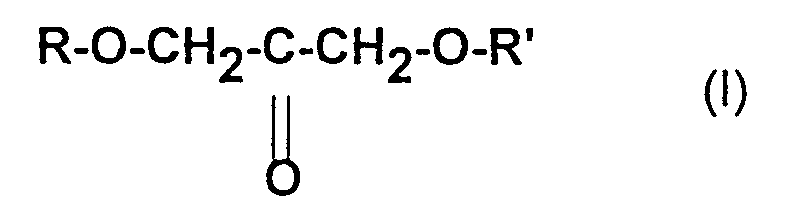
- a first object of the invention relates to a cosmetic or dermatological composition containing, in a cosmetically or dermatologically acceptable vehicle, at least one dihydroxyacetone derivative corresponding to the following general formula (I): wherein R and R 'represent a hydrogen atom or an alkyloxycarbonyl or arylalkyloxycarbonyl radical optionally hydroxylated or also containing a cyclic carbonate or an ether-oxide bridge, this radical having from 2 to 25 carbon atoms, being linear or branched, or still cyclic, saturated or unsaturated, R and R ′ being able to be identical or different on the condition that they are never simultaneously a hydrogen atom.
- R and R ′ represents a hydrogen atom or an alkyloxycarbonyl or arylalkyloxycarbonyl radical optionally hydroxylated or also containing a cyclic carbonate or an ether-oxide bridge, this radical having from 2 to 25 carbon atoms, being linear or branched, or still cyclic,
- compositions that once applied to the skin, they exhibit very good resistance.
- compositions provide, in the form of a derivative of DHA, a precursor of DHA. This precursor, by reacting with one or more compounds of the skin capable of cutting its carbon ester bond (s), produces DHA at the time of l applying the composition to the skin.
- L DHA activity on the skin in terms of intensity and hold is particularly effective.
- Such a composition is very stable over time and exhibits resistance over the particularly good skin.
- the radicals R and R have 2 to 18 carbon atoms.
- R and R ′ which are identical or different, represent an ethyloxycarbonyl, benzyloxycarbonyl, octyloxycarbonyl, oleyloxycarbonyl, isopropyloxy-carbonyl, decyloxycarbonyl, or carbonyl dioxy-2,3-propyloxycarbonyl radical. Even more preferably, the radicals R and R are the same.
- the DHA derivative can be present in the compositions of the invention at a concentration ranging from 0.1% to 30% by weight, relative to the total weight of the composition, and preferably at a concentration ranging from 0.5% to 15% by weight, relative to the total weight of the composition.
- the compound capable of cutting at least one carbonic ester bond can be any acceptable nucleophilic compound in the cosmetic and dermatological.
- a hydroxylated amine is preferably chosen, as for example example 3-amino-1,2-propanediol, 2-amino-2-methyl-1,3-propanediol, 2-amino-2-methyl-propanol, 2-amino-2-hydroxymethyl-1,3-propanediol, the glucamine, n-methyl-glucamine, or an amino acid such as lysine, arginine or histidine.
- a carboxylate anion is preferably chosen, as for example for example the salts of fatty acids, acid amines or lipoamino acids.
- the compound capable of cutting at least one carbonic ester bond can be used at a concentration ranging from 0.1% to 30% by weight, relative to the weight total of the composition, and preferably ranging from 0.5% to 15% by weight, per relative to the total weight of the composition.
- Another object of the present invention is therefore a packaging comprising at least two compartments, characterized in that one of the compartments contains a composition (A) comprising in a cosmetically acceptable vehicle at least one compound of formula (I) as defined above and that l other compartment contains a composition (B) comprising, in a cosmetically acceptable vehicle, a compound capable of cutting at least one carbonic ester bond as defined above, said compartments being separated so that the compositions (A) and (B) do not are not in contact l one of the other.
- a packaging comprising at least two compartments, characterized in that one of the compartments contains a composition (A) comprising in a cosmetically acceptable vehicle at least one compound of formula (I) as defined above and that l other compartment contains a composition (B) comprising, in a cosmetically acceptable vehicle, a compound capable of cutting at least one carbonic ester bond as defined above, said compartments being separated so that the compositions (A) and (B) do not are not in contact l one of the other.
- the two compartments are integral and arranged so as to constitute a single body and each allow the expulsion of composition (A) and composition (B) respectively and their mixing at the time of employment, expulsions may be simultaneous or separate.
- the mixture s performs during the application.
- the single body is in the form of a flexible tube.
- composition (A) is in the form of microcapsules or spherules encapsulating the compound of formula (I) and the composition (B) is in the form of a cream, gel or any other conventional form in which the compound capable of cutting at least one carbonic ester bond n is not encapsulated, the microcapsules or spherules constituting the composition (A) being embedded in the composition (B).
- the compounds defined above namely the DHA derivative and the compound d hydrolysis of DHA, can be encapsulated separately l one of l other.
- Such preparations are carried out by the usual techniques of well-known encapsulation of the skilled in the art.
- the release of the encapsulated substances takes place during application by crushing the capsules under pressure from the user.
- the compounds are mixed during the spreading of the product on the skin.
- the composition may also contain any other cosmetically or dermatologically acceptable component usually used in this kind of composition, such as ionic thickeners or not ionic, softeners, antioxidants, opacifiers, stabilizers, emollients, organic sunscreens active in UV-A and / or UV-B, the photoprotective mineral pigments and nanopigments, moisturizers, vitamins, perfumes, preservatives, fillers, sequestrants, dyes.
- any other cosmetically or dermatologically acceptable component usually used in this kind of composition such as ionic thickeners or not ionic, softeners, antioxidants, opacifiers, stabilizers, emollients, organic sunscreens active in UV-A and / or UV-B, the photoprotective mineral pigments and nanopigments, moisturizers, vitamins, perfumes, preservatives, fillers, sequestrants, dyes.
- each of the compositions containing either the DHA derivative or the compound capable of cutting a carbonic ester bond can be in the form of a cream, d a milk, d a gel, d a gel-cream, d a fluid lotion, d an oil-in-water emulsion or a water-in-oil emulsion, d a vesicular dispersion or any other form generally used in the field concerned.
- the radicals R and R have 2 to 18 carbon atoms.
- R and R ′ which are identical or different, represent an ethyloxycarbonyl, benzyloxycarbonyl, octyloxycarbonyl, oleyloxycarbonyl, isopropyloxy-carbonyl, decyloxycarbonyl, or carbonyl dioxy-2,3-propyloxycarbonyl radical. Even more preferably, the radicals R and R are the same.
- the compounds of formula (II) can be obtained by a preparation process which consists in reacting dihydroxyacetone with an equivalent of pyridine and an equivalent of chloroformate d alkyl. This process is an object of the invention.
- the present invention also relates to use of a cosmetic or dermatological composition as defined above as, or for the manufacture of, compositions intended for artificial tanning and / or browning of the skin.
- the present invention also relates to a method of cosmetic treatment of the skin intended for tanning and / or artificially browning it, characterized in that it consists in applying to it an effective amount of a cosmetic or dermatological composition as defined above.
- the present invention finally relates to the use of DHA derivatives as defined above as DHA precursors.
- the operating mode is the same as in the Example 1, the chloroformate used being chloroformate d isopropyl.
- the operating mode is the same as in the Example 1, the chloroformate used being carbonyldioxy-2,3-propyl chloroformate.
- the operating mode is the same as in the Example 1, the chloroformate used being decyl chloroformate.
- Phase A - ethanol 53.5% - 1,3-diethylcarbonato-2-propanone (example 1) 13% - hydroxypropylcellulose sold under the trade name ⁇ Klucel M ⁇ by Aqualon (gelling agent) 0.3%
- Phase B - butylene glycol (humectant) 10% - water
- Phase C - mixture of diethylene glycol dioctanoate / diisononanoate sold under the trade name ⁇ Dermol 489 ⁇ by Alzo (emollient) 8% - polyoxypropylene 15 stearyl ether sold under the trade name ⁇ Arlamol E ⁇ by ICI (emollient) 5% - perfume 0.2%
- This composition was carried out as follows: we have first prepared phase A by dissolving the DHA dicarbonate in the cold alcohol. Then we dispersed the ⁇ Klucel M ⁇ in this mixture until with full swelling from ⁇ Klucel M ⁇ to l help a disperser.
- phase B was then prepared phase B by mixing the water and butylene glycol. Phase B was then added to phase A when cold with planetary stirring.
- phase C previously mixed, was added to phases A and B with planetary stirring until with complete homogenization.
- the product obtained gives, after application to the skin, a coloration gradually tanned to the skin.
Landscapes
- Health & Medical Sciences (AREA)
- Organic Chemistry (AREA)
- Chemical & Material Sciences (AREA)
- Life Sciences & Earth Sciences (AREA)
- Veterinary Medicine (AREA)
- Animal Behavior & Ethology (AREA)
- General Health & Medical Sciences (AREA)
- Public Health (AREA)
- Dermatology (AREA)
- Emergency Medicine (AREA)
- Birds (AREA)
- Epidemiology (AREA)
- Cosmetics (AREA)
- Organic Low-Molecular-Weight Compounds And Preparation Thereof (AREA)
Description


- i) au moins un dérivé de la dihydroxyacétone répondant à la formule générale :
dans laquelle R et R' représentent un atome d'hydrogène ou un radical alcoyloxycarbonyle ou arylalcoyloxycarbonyle éventuellement hydroxylé ou encore renfermant un carbonate cyclique ou un pont éther-oxyde, ce radical ayant de 2 à 25 atomes de carbone, étant linéaire ou ramifié, ou encore cyclique, saturé ou insaturé, R et R' pouvant être identiques ou différents à la condition qu'ils ne soient jamais simultanément un atome d'hydrogène,
- ii) et au moins un composé capable de couper au moins une liaison ester carbonique.
- la 1,3-diéthylcarbonato-2-propanone,
- la 1,3-diisopropylcarbonato-2-propanone,
- la 1,3-didécylcarbonato-2-propanone,
- la 1,3-di(carbonyl dioxy-2,3-propylcarbonato)-2-propanone.

- R et R
- R et R
- si R (respectivement R
- la 1,3-diéthylcarbonato-2-propanone,
- la 1,3-diisopropylcarbonato-2-propanone,
- la 1,3-didécylcarbonato-2-propanone,
- la 1,3-di(carbonyl dioxy-2,3-propylcarbonato)-2-propanone.




- poudre blanche
- Pf (point de fusion) : 67 °C
| Analyse élémentaire : | |||
| théorique : | %C : 46,16 | %H : 6,03 | %O : 47,82 |
| trouvée : | %C : 45,99 | %H : 6,03 | %O : 47,94 |
- Pf : 40,5 °C
| Analyse élémentaire : | |||
| théorique : | %C : 50,38 | %H : 6,92 | %O : 42,70 |
| trouvée : | %C : 50,61 | %H : 6,93 | %O : 42,55 |
- Pf : 105-127 °C
| Analyse élémentaire : | |||
| théorique : | %C : 41,28 | %H : 3,73 | %O : 54,99 |
| trouvée : | %C : 41,13 | %H : 3,79 | %O : 54,96 |
- Pf : 71 °C
| Analyse élémentaire : | |||
| théorique : | %C : 65,47 | %H : 10,11 | %O : 24,42 |
| trouvée : | %C : 65,77 | %H : 10,13 | %O : 24,61 |
| Phase A : | |
| - éthanol | 53,5 % |
| - 1,3-diéthylcarbonato-2-propanone (exemple 1) | 13 % |
| - hydroxypropylcellulose vendue sous la dénomination commerciale 〈〈 Klucel M 〉〉 par Aqualon (gélifiant) | 0,3 % |
| Phase B : | |
| - butylène glycol (humectant) | 10 % |
| - eau | 10 % |
| Phase C : | |
| - mélange de diéthylène glycol dioctanoate / diisononanoate vendu sous la dénomination commerciale 〈〈 Dermol 489 〉〉 par Alzo (émollient) | 8 % |
| - polyoxypropylène 15 stéaryl éther vendu sous la dénomination commerciale 〈〈 Arlamol E 〉〉 par ICI (émollient) | 5 % |
| - parfum | 0,2 % |
Claims (29)
- Composition cosmétique ou dermatologique, caractérisée par le fait quelle comprend, dans un véhicule cosmétiquement ou dermatologiquement acceptable au moins un dérivé de la dihydroxyacétone répondant à la formule générale :
 dans laquelle R et R', représentent un atome d'hydrogéne ou un radical alcoyloxycarbonyle ou arylalcoyloxycarbonyle éventuellement hydroxylé ou encore renfermant un carbonate cyclique ou un pont éther-oxyde, ce radical ayant de 2 à 25 atomes de carbone, étant linéaire ou ramifé, ou encore cyclique, saturé ou insaturé, R et R' pouvant être identiques ou différents à la condition qu'ils ne soient jamais simultanément un atome d
- Composition selon la revendication 1, caractérisée par le fait qu
- Composition selon la revendication 1 ou 2, caractérisée par le fait que les radicaux R et R
- Composition selon l'une quelconque des revendications précédentes, caractérisée par le fait que les radicaux R et R', identiques ou différents, représentent un radical éthyloxycarbonyle, benzyloxycarbonyle, octyloxycarbonyle, oléyloxycarbonyle, isopropyloxy-carbonyle, décyloxycarbonyle, ou carbonyl dioxy-2,3-propyloxycarbonyle.
- Composition selon l'une quelconque des revendications précédentes, caractérisée par le fait que les radicaux R et R
- Composition selon l'une quelconque des revendications précédentes, caractérisée par le fait que le dérivé de la dihydroxyacétone est choisi dans le groupe constitué par :la 1,3-diéthylcarbonato-2-propanone,la 1,3-diisopropylcarbonato-2-propanone,la 1,3-didécylcarbonato-2-propanone,la 1,3-di(carbonyl dioxy-2,3-propylcarbonato)-2-propanone.
- Composition selon l'une quelconque des revendications précédentes, caractérisée par le fait que le dérivé est présent dans la composition à une concentration allant de 0,1% et 30% en poids par rapport au poids total de la composition.
- Composition selon la revendication 7, caractérisée par le fait que cette concentration va de 0,5% et 15% en poids par rapport au poids total de la composition.
- Composition selon l
- Composition selon l'une quelconque des revendications 2 à 9, caractérisée par le fait que le composé capable de couper au moins une liaison ester carbonique est choisi dans le groupe formé par les amines et les anions.
- Composition selon la revendication 10, caractérisée par le fait que les amines sont choisies parmi la 3-amino-1,2-propanediol, la 2-amino-2-méthyl-1,3-propanediol, la 2-amino-2-méthyl-propanol, la 2-amino-2-hydroxyméthyl-1,3-propanediol, la glucamine, la n-méthyl-glucamine, la lysine, l
- Composition selon la revendication 10, caractérisée par le fait que les anions sont choisis parmi les anions carboxylates.
- Composition selon l'une quelconque des revendications 2 à 12, caractérisée par le fait que le composé capable de couper au moins une liaison ester carbonique est présent dans la composition à une concentration allant de 0,1% et 30% en poids par rapport au poids total de la composition.
- Composition selon la revendication 13, caractérisée par le fait que cette concentration va de 0,5% et 15% en poids par rapport au poids total de la composition.
- Conditionnement comportant au moins deux compartiments, caractérisé par le fait qu
- Conditionnement selon la revendication 15, caractérisé par le fait que les deux compartiments sont solidaires et agencés de façon à constituer un corps unique et qu
- Conditionnement selon la revendication 16, caractérisée par le fait que l'un au moins du dérivé de la dihydroxyacétone ou du composé capable de couper au moins une liaison ester carbonique est encapsulé.
- Nouveaux dérivés de la dihydroxyacétone répondant à la formule générale suivante :dans laquelle R et R', représentent un atome d'hydrogène ou un radical alcoyloxycarbonyle ou arylalcoyloxycarbonyle éventuellement hydroxylé ou encore renfermant un carbonate cyclique ou un pont éther-oxyde, ayant de 2 à 25 atomes de carbone, linéaire ou ramifié, ou cyclique, saturé ou insaturé, R et R

- Dérivé selon la revendication 18, caractérisé par le fait que les radicaux R et R
- Dérivé selon l'une quelconque des revendications 18 ou 19, caractérisé par le fait que les radicaux R et R', identiques ou différents, représentent un radical éthyloxycarbonyle, benzyloxycarbonyle, octyloxycarbonyle, oléyloxycarbonyle, isopropyloxy-carbonyle, décyloxy-carbonyle, ou carbonyl dioxy-2,3-propyloxycarbonyle.
- Dérivé selon l
- Dérivé selon l'une quelconque des revendications 18 à 21, caractérisée par le fait qu
- Procédé de préparation des nouveaux dérivés de dihydroxyacétone tels que définis à la revendication 18 caractérisé par le fait qu
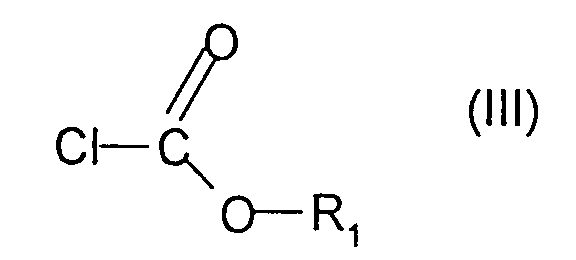
- Procédé selon la revendication 23 pour obtenir les composés particuliers de formule (IV) suivante :dans laquelle -(CO)-O-R1 a les mêmes significations que celles indiquées à la revendication 18 pour R ou R

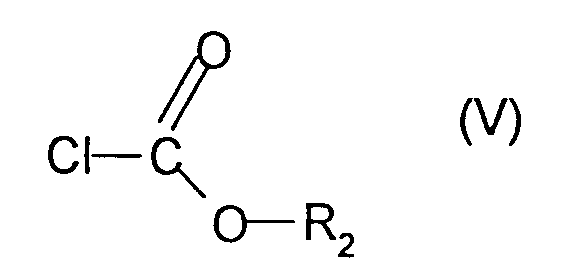
- Procédé selon la revendication 24 pour obtenir les composés particuliers de formule (VI) suivante :dans laquelle -(CO)-O-R2 a les mêmes significations que celles données pour -(CO)-O-R1 dans la revendication 24, caractérisé par le fait qu

- Utilisation d
- Utilisation d
- Procédé de traitement cosmétique de la peau destiné à la bronzer et/ou la brunir artificiellement, caractérisé en ce qu
- Utilisation de dérivés de la dihydroxyacétone tels que définis à la revendication 18 comme précurseurs de la dihydroxyacétone.
Applications Claiming Priority (2)
| Application Number | Priority Date | Filing Date | Title |
|---|---|---|---|
| FR9603344 | 1996-03-18 | ||
| FR9603344A FR2746100B1 (fr) | 1996-03-18 | 1996-03-18 | Composition contenant un precurseur de la dihydroxyacetone |
Publications (2)
| Publication Number | Publication Date |
|---|---|
| EP0796838A1 EP0796838A1 (fr) | 1997-09-24 |
| EP0796838B1 true EP0796838B1 (fr) | 1998-04-08 |
Family
ID=9490264
Family Applications (1)
| Application Number | Title | Priority Date | Filing Date |
|---|---|---|---|
| EP97400471A Expired - Lifetime EP0796838B1 (fr) | 1996-03-18 | 1997-02-28 | Composition contenant un précurseur de la dihydroxyacétone |
Country Status (4)
| Country | Link |
|---|---|
| US (1) | US5972313A (fr) |
| EP (1) | EP0796838B1 (fr) |
| DE (1) | DE69700003T2 (fr) |
| FR (1) | FR2746100B1 (fr) |
Cited By (1)
| Publication number | Priority date | Publication date | Assignee | Title |
|---|---|---|---|---|
| DE102007041854A1 (de) | 2007-09-03 | 2009-03-05 | Merck Patent Gmbh | Bifunktionelle DHA-Derivate |
Families Citing this family (9)
| Publication number | Priority date | Publication date | Assignee | Title |
|---|---|---|---|---|
| DE10123102A1 (de) * | 2001-05-12 | 2003-01-09 | Sachsenwerk Gmbh | Schloßisolierung bei der Stabverbindung von Wicklungen elektrischer Maschinen |
| US6630130B1 (en) | 2001-07-16 | 2003-10-07 | Pearl Grimes | Sunless tanning cream |
| WO2004043330A2 (fr) * | 2002-11-07 | 2004-05-27 | L'oreal | Composition cosmetique comprenant au moins un carbonate cyclique particulier apte a polymeriser |
| DE102004039281A1 (de) | 2004-08-13 | 2006-02-23 | Merck Patent Gmbh | UV Filter |
| DE102005047647A1 (de) | 2005-10-05 | 2007-04-12 | Merck Patent Gmbh | a,a'-Dihydroxyketonderivate und deren Verwendung als UV-Filter |
| DE102005058542A1 (de) * | 2005-12-08 | 2007-06-14 | Merck Patent Gmbh | Erythruloseester als UV Filter |
| FR2906457B1 (fr) * | 2006-10-03 | 2008-11-28 | Oreal | Composition a effet bonne mine. |
| WO2011163671A2 (fr) * | 2010-06-25 | 2011-12-29 | Boston Polymer Llc | Plastifiants sans danger pour l'environnement, à base de dérivés d'acétone |
| DE102010055656A1 (de) | 2010-12-22 | 2012-06-28 | Merck Patent Gmbh | Dihydroxyacetonmonoether |
Family Cites Families (2)
| Publication number | Priority date | Publication date | Assignee | Title |
|---|---|---|---|---|
| CA2149861C (fr) * | 1992-11-23 | 2001-06-12 | Louis L. Punto | Compositions cosmetiques auto-bronzantes et mode d'emploi |
| DE69431344T2 (de) * | 1993-09-30 | 2003-07-31 | Shiseido Co Ltd | Selbstbräunendes kosmetikpräparat |
-
1996
- 1996-03-18 FR FR9603344A patent/FR2746100B1/fr not_active Expired - Fee Related
-
1997
- 1997-02-28 EP EP97400471A patent/EP0796838B1/fr not_active Expired - Lifetime
- 1997-02-28 DE DE69700003T patent/DE69700003T2/de not_active Expired - Fee Related
- 1997-03-18 US US08/819,084 patent/US5972313A/en not_active Expired - Fee Related
Cited By (1)
| Publication number | Priority date | Publication date | Assignee | Title |
|---|---|---|---|---|
| DE102007041854A1 (de) | 2007-09-03 | 2009-03-05 | Merck Patent Gmbh | Bifunktionelle DHA-Derivate |
Also Published As
| Publication number | Publication date |
|---|---|
| FR2746100B1 (fr) | 1998-04-17 |
| DE69700003D1 (de) | 1998-05-14 |
| EP0796838A1 (fr) | 1997-09-24 |
| DE69700003T2 (de) | 1998-08-06 |
| FR2746100A1 (fr) | 1997-09-19 |
| US5972313A (en) | 1999-10-26 |
Similar Documents
| Publication | Publication Date | Title |
|---|---|---|
| CA2245119C (fr) | Nouveaux composes 4,4-dihydroxypyrazolin-5-ones; leurs procedes de preparation et utilisations cosmetiques | |
| CA2104635C (fr) | Composition pour le traitement de l'acne contenant un derive d'acide salicylique et derives d'acide salicylique | |
| EP0648204B1 (fr) | Utilisation en cosmetique de derives lipophiles des amino deoxyalditols, compositions cosmetiques les contenant, et nouveaux carbamates d'alkyle | |
| CA2115504C (fr) | Procede de stabilisation de vesicules de lipide(s) amphiphile(s) et composition pour application topique contenant lesdites vesicules stabilisees | |
| EP1638991B1 (fr) | Composition cosmetique ou dermopharmaceutique pour reduire les signes du vieillissement cutane | |
| EP1057809B1 (fr) | Dérivés carbonates de rétinol, procédé de préparation et utilisations | |
| EP0425324A1 (fr) | Composition pour la coloration de la peau à base de dérivés indoliques et d'hydroxyacétone | |
| EP0780115A1 (fr) | Nanoparticules enrobées d'une phase lamellaire à base de tensioactif siliconé et compositions les contenant | |
| EP0971683A1 (fr) | Compositions comprenant des santalines, santarubines pour la coloration artificielle de la peau | |
| BE1000404A3 (fr) | Composition cosmetique photostable contenant de la trihydroxyethylrutine en association avec des filtres hydrosolubles derives du benzylidenecamphre et son utilisation pour la protection de la peau et des cheveux. | |
| EP0681827A1 (fr) | Utilisations de bioflavonoides comme agent de protection des phanères kératiniques | |
| EP0077742A1 (fr) | Lanolate de cuivre et compositions topiques le contenant | |
| EP0913147B1 (fr) | Système à base de dérivé d'acide phosphonique et de métabisulfite pour stabiliser l'acide ascorbique | |
| EP0559502B1 (fr) | Composition pour traitement topique contenant des vésicules lipidiques encapsulant au moins une eau minérale | |
| EP0709081B1 (fr) | Composition contenant un précurseur de la dihydroxyacetone | |
| JP2003519643A (ja) | 化粧用最終配合物における、微生物封入された材料の使用 | |
| FR2841781A1 (fr) | Utilisation de peptides pour favoriser la regeneration cutannee | |
| EP0796838A1 (fr) | Composition contenant un précurseur de la dihydroxyacétone | |
| CA2210675C (fr) | Nouveaux derives de la melatonine anti-radicaux libres et compositions les comprenant | |
| EP0946516B1 (fr) | Nouveaux derives d'histidine, procede de preparation et leur utilisation comme agents anti-radicaux libres | |
| EP1092428A1 (fr) | Procédé pour limiter la pénétration dans la peau et/ou les fibres kératiniques d'un agent cosmétique et/ou pharmaceutique actif | |
| FR2773323A1 (fr) | Composition contenant une association de procysteine et de polyol | |
| EP0390681A1 (fr) | Compositions cosmétiques et pharmaceutiques contenant des dérivés lipophiles du benzylidène camphre et nouveaux dérivés lipophiles du benzylidène camphre | |
| FR2602424A1 (fr) | Composition pour induire et stimuler la croissance des cheveux et diminuer leur chute a base de derives de la pyrimidine | |
| EP0824097B1 (fr) | Dérivés n-(alkyloxycarbonyl)-N-(2-hydroxy 3-alkyloxypropyl)-éthanolamine et leur utilisation dans et pour la préparation de compositions cosmétiques ou dermatologiques |
Legal Events
| Date | Code | Title | Description |
|---|---|---|---|
| PUAI | Public reference made under article 153(3) epc to a published international application that has entered the european phase |
Free format text: ORIGINAL CODE: 0009012 |
|
| 17P | Request for examination filed |
Effective date: 19970715 |
|
| AK | Designated contracting states |
Kind code of ref document: A1 Designated state(s): DE ES FR GB IT |
|
| GRAG | Despatch of communication of intention to grant |
Free format text: ORIGINAL CODE: EPIDOS AGRA |
|
| 17Q | First examination report despatched |
Effective date: 19971205 |
|
| GRAG | Despatch of communication of intention to grant |
Free format text: ORIGINAL CODE: EPIDOS AGRA |
|
| GRAH | Despatch of communication of intention to grant a patent |
Free format text: ORIGINAL CODE: EPIDOS IGRA |
|
| GRAH | Despatch of communication of intention to grant a patent |
Free format text: ORIGINAL CODE: EPIDOS IGRA |
|
| GRAA | (expected) grant |
Free format text: ORIGINAL CODE: 0009210 |
|
| AK | Designated contracting states |
Kind code of ref document: B1 Designated state(s): DE ES FR GB IT |
|
| PG25 | Lapsed in a contracting state [announced via postgrant information from national office to epo] |
Ref country code: IT Free format text: LAPSE BECAUSE OF FAILURE TO SUBMIT A TRANSLATION OF THE DESCRIPTION OR TO PAY THE FEE WITHIN THE PRESCRIBED TIME-LIMIT;WARNING: LAPSES OF ITALIAN PATENTS WITH EFFECTIVE DATE BEFORE 2007 MAY HAVE OCCURRED AT ANY TIME BEFORE 2007. THE CORRECT EFFECTIVE DATE MAY BE DIFFERENT FROM THE ONE RECORDED. Effective date: 19980408 Ref country code: ES Free format text: THE PATENT HAS BEEN ANNULLED BY A DECISION OF A NATIONAL AUTHORITY Effective date: 19980408 |
|
| GBT | Gb: translation of ep patent filed (gb section 77(6)(a)/1977) |
Effective date: 19980422 |
|
| REF | Corresponds to: |
Ref document number: 69700003 Country of ref document: DE Date of ref document: 19980514 |
|
| PLBE | No opposition filed within time limit |
Free format text: ORIGINAL CODE: 0009261 |
|
| STAA | Information on the status of an ep patent application or granted ep patent |
Free format text: STATUS: NO OPPOSITION FILED WITHIN TIME LIMIT |
|
| 26N | No opposition filed | ||
| REG | Reference to a national code |
Ref country code: GB Ref legal event code: IF02 |
|
| PGFP | Annual fee paid to national office [announced via postgrant information from national office to epo] |
Ref country code: FR Payment date: 20030210 Year of fee payment: 7 |
|
| PGFP | Annual fee paid to national office [announced via postgrant information from national office to epo] |
Ref country code: GB Payment date: 20030226 Year of fee payment: 7 |
|
| PGFP | Annual fee paid to national office [announced via postgrant information from national office to epo] |
Ref country code: DE Payment date: 20030313 Year of fee payment: 7 |
|
| PG25 | Lapsed in a contracting state [announced via postgrant information from national office to epo] |
Ref country code: GB Free format text: LAPSE BECAUSE OF NON-PAYMENT OF DUE FEES Effective date: 20040228 |
|
| PG25 | Lapsed in a contracting state [announced via postgrant information from national office to epo] |
Ref country code: DE Free format text: LAPSE BECAUSE OF NON-PAYMENT OF DUE FEES Effective date: 20040901 |
|
| GBPC | Gb: european patent ceased through non-payment of renewal fee | ||
| PG25 | Lapsed in a contracting state [announced via postgrant information from national office to epo] |
Ref country code: FR Free format text: LAPSE BECAUSE OF NON-PAYMENT OF DUE FEES Effective date: 20041029 |
|
| REG | Reference to a national code |
Ref country code: FR Ref legal event code: ST |