EP0799621A1 - Methode zur Sterilisation mit Wasserstoffperoxid-Vorbehandlung - Google Patents
Methode zur Sterilisation mit Wasserstoffperoxid-Vorbehandlung Download PDFInfo
- Publication number
- EP0799621A1 EP0799621A1 EP97302305A EP97302305A EP0799621A1 EP 0799621 A1 EP0799621 A1 EP 0799621A1 EP 97302305 A EP97302305 A EP 97302305A EP 97302305 A EP97302305 A EP 97302305A EP 0799621 A1 EP0799621 A1 EP 0799621A1
- Authority
- EP
- European Patent Office
- Prior art keywords
- hydrogen peroxide
- diffusion
- sterilization
- lumen
- solution
- Prior art date
- Legal status (The legal status is an assumption and is not a legal conclusion. Google has not performed a legal analysis and makes no representation as to the accuracy of the status listed.)
- Granted
Links
Images

Classifications
-
- A—HUMAN NECESSITIES
- A61—MEDICAL OR VETERINARY SCIENCE; HYGIENE
- A61L—METHODS OR APPARATUS FOR STERILISING MATERIALS OR OBJECTS IN GENERAL; DISINFECTION, STERILISATION OR DEODORISATION OF AIR; CHEMICAL ASPECTS OF BANDAGES, DRESSINGS, ABSORBENT PADS OR SURGICAL ARTICLES; MATERIALS FOR BANDAGES, DRESSINGS, ABSORBENT PADS OR SURGICAL ARTICLES
- A61L2/00—Disinfection or sterilisation of materials or objects, in general; Accessories therefor
- A61L2/16—Disinfection or sterilisation of materials or objects, in general; Accessories therefor using chemical substances
- A61L2/18—Liquid substances
- A61L2/186—Peroxide solutions
-
- A—HUMAN NECESSITIES
- A61—MEDICAL OR VETERINARY SCIENCE; HYGIENE
- A61L—METHODS OR APPARATUS FOR STERILISING MATERIALS OR OBJECTS IN GENERAL; DISINFECTION, STERILISATION OR DEODORISATION OF AIR; CHEMICAL ASPECTS OF BANDAGES, DRESSINGS, ABSORBENT PADS OR SURGICAL ARTICLES; MATERIALS FOR BANDAGES, DRESSINGS, ABSORBENT PADS OR SURGICAL ARTICLES
- A61L2/00—Disinfection or sterilisation of materials or objects, in general; Accessories therefor
- A61L2/02—Disinfection or sterilisation of materials or objects, in general; Accessories therefor using physical processes
- A61L2/14—Plasma, i.e. ionised gases
-
- A—HUMAN NECESSITIES
- A61—MEDICAL OR VETERINARY SCIENCE; HYGIENE
- A61L—METHODS OR APPARATUS FOR STERILISING MATERIALS OR OBJECTS IN GENERAL; DISINFECTION, STERILISATION OR DEODORISATION OF AIR; CHEMICAL ASPECTS OF BANDAGES, DRESSINGS, ABSORBENT PADS OR SURGICAL ARTICLES; MATERIALS FOR BANDAGES, DRESSINGS, ABSORBENT PADS OR SURGICAL ARTICLES
- A61L2/00—Disinfection or sterilisation of materials or objects, in general; Accessories therefor
- A61L2/16—Disinfection or sterilisation of materials or objects, in general; Accessories therefor using chemical substances
-
- A—HUMAN NECESSITIES
- A61—MEDICAL OR VETERINARY SCIENCE; HYGIENE
- A61L—METHODS OR APPARATUS FOR STERILISING MATERIALS OR OBJECTS IN GENERAL; DISINFECTION, STERILISATION OR DEODORISATION OF AIR; CHEMICAL ASPECTS OF BANDAGES, DRESSINGS, ABSORBENT PADS OR SURGICAL ARTICLES; MATERIALS FOR BANDAGES, DRESSINGS, ABSORBENT PADS OR SURGICAL ARTICLES
- A61L2/00—Disinfection or sterilisation of materials or objects, in general; Accessories therefor
- A61L2/16—Disinfection or sterilisation of materials or objects, in general; Accessories therefor using chemical substances
- A61L2/20—Gaseous substances, e.g. vapours
- A61L2/208—Hydrogen peroxide
-
- A—HUMAN NECESSITIES
- A61—MEDICAL OR VETERINARY SCIENCE; HYGIENE
- A61L—METHODS OR APPARATUS FOR STERILISING MATERIALS OR OBJECTS IN GENERAL; DISINFECTION, STERILISATION OR DEODORISATION OF AIR; CHEMICAL ASPECTS OF BANDAGES, DRESSINGS, ABSORBENT PADS OR SURGICAL ARTICLES; MATERIALS FOR BANDAGES, DRESSINGS, ABSORBENT PADS OR SURGICAL ARTICLES
- A61L2/00—Disinfection or sterilisation of materials or objects, in general; Accessories therefor
- A61L2/24—Apparatus using programmed or automatic operation
-
- A—HUMAN NECESSITIES
- A61—MEDICAL OR VETERINARY SCIENCE; HYGIENE
- A61L—METHODS OR APPARATUS FOR STERILISING MATERIALS OR OBJECTS IN GENERAL; DISINFECTION, STERILISATION OR DEODORISATION OF AIR; CHEMICAL ASPECTS OF BANDAGES, DRESSINGS, ABSORBENT PADS OR SURGICAL ARTICLES; MATERIALS FOR BANDAGES, DRESSINGS, ABSORBENT PADS OR SURGICAL ARTICLES
- A61L2103/00—Materials or objects being the target of disinfection or sterilisation
- A61L2103/15—Laboratory, medical or dentistry appliances, e.g. catheters or sharps
-
- A—HUMAN NECESSITIES
- A61—MEDICAL OR VETERINARY SCIENCE; HYGIENE
- A61L—METHODS OR APPARATUS FOR STERILISING MATERIALS OR OBJECTS IN GENERAL; DISINFECTION, STERILISATION OR DEODORISATION OF AIR; CHEMICAL ASPECTS OF BANDAGES, DRESSINGS, ABSORBENT PADS OR SURGICAL ARTICLES; MATERIALS FOR BANDAGES, DRESSINGS, ABSORBENT PADS OR SURGICAL ARTICLES
- A61L2202/00—Aspects relating to methods or apparatus for disinfecting or sterilising materials or objects
- A61L2202/10—Apparatus features
- A61L2202/12—Apparatus for isolating biocidal substances from the environment
- A61L2202/122—Chambers for sterilisation
-
- Y—GENERAL TAGGING OF NEW TECHNOLOGICAL DEVELOPMENTS; GENERAL TAGGING OF CROSS-SECTIONAL TECHNOLOGIES SPANNING OVER SEVERAL SECTIONS OF THE IPC; TECHNICAL SUBJECTS COVERED BY FORMER USPC CROSS-REFERENCE ART COLLECTIONS [XRACs] AND DIGESTS
- Y10—TECHNICAL SUBJECTS COVERED BY FORMER USPC
- Y10S—TECHNICAL SUBJECTS COVERED BY FORMER USPC CROSS-REFERENCE ART COLLECTIONS [XRACs] AND DIGESTS
- Y10S220/00—Receptacles
- Y10S220/913—Ventilated container
-
- Y—GENERAL TAGGING OF NEW TECHNOLOGICAL DEVELOPMENTS; GENERAL TAGGING OF CROSS-SECTIONAL TECHNOLOGIES SPANNING OVER SEVERAL SECTIONS OF THE IPC; TECHNICAL SUBJECTS COVERED BY FORMER USPC CROSS-REFERENCE ART COLLECTIONS [XRACs] AND DIGESTS
- Y10—TECHNICAL SUBJECTS COVERED BY FORMER USPC
- Y10S—TECHNICAL SUBJECTS COVERED BY FORMER USPC CROSS-REFERENCE ART COLLECTIONS [XRACs] AND DIGESTS
- Y10S422/00—Chemical apparatus and process disinfecting, deodorizing, preserving, or sterilizing
- Y10S422/906—Plasma or ion generation means
Definitions
- This invention relates to a process for using hydrogen peroxide and negative pressure to sterilize articles such as medical instruments, and more particularly, to a method which includes the step of pretreating the articles with liquid hydrogen peroxide prior to exposure to negative pressure or negative pressure combined with plasma.
- Medical instruments have traditionally been sterilized using either heat, such as is provided by steam, or a chemical, such as formaldehyde or ethylene oxide in the gas or vapor state. Each of these methods has drawbacks. Many medical devices, such as fiberoptic devices, endoscopes, power tools, etc. are sensitive to heat, moisture, or both. Formaldehyde and ethylene oxide are both toxic gases that pose a potential hazard to healthcare workers. Problems with ethylene oxide are particularly severe, because its use requires long aeration times to remove the gas from articles that have been sterilized. This makes the sterilization cycle time undesirably long.
- U.S. Pat. 4,952,370 to Cummings et al. discloses a sterilization process wherein aqueous hydrogen peroxide vapor is first condensed on the article to be sterilized, and then a source of vacuum is applied to the sterilization chamber to evaporate the water and hydrogen peroxide from the article.
- This method is suitable to sterilize surfaces, however, it is ineffective at rapidly sterilizing diffusion-restricted areas, such as those found in lumened devices, since it too depends on the diffusion of the hydrogen peroxide vapor into the lumen to effect sterilization.
- U.S. Pat. 4,943,4144 entitled “Method for Vapor Sterilization of Articles Having Lumens,” and issued to Jacobs et al., discloses a process in which a vessel containing a small amount of a vaporizable liquid sterilant solution is attached to a lumen, and the sterilant vaporizes and flows directly into the lumen of the article as the pressure is reduced during the sterilization cycle.
- This system has the advantage that the water and hydrogen peroxide vapor are pulled through the lumen by the pressure differential that exists, increasing the sterilization rate for lumens, but it has the disadvantage that the vessel needs to be attached to each lumen to be sterilized. In addition, water is vaporized faster and precedes the hydrogen peroxide vapor into the lumen.
- One aspect of the present invention relates to a method for sterilizing an interior of a device with a diffusion restricted area, such as a device having a lumen.
- the method includes the steps of contacting the interior of the device with a liquid solution comprising hydrogen peroxide, and exposing the device to negative pressure for a time period sufficient to effect complete sterilization.
- the liquid solution is peracetic acid. If the exposing step is conducted for 1 hour at 40°C and 10 torr, the diffusion restricted area preferably retains 0.17 mg/L or more hydrogen peroxide, or retains 17% or more of the hydrogen peroxide placed therein after the exposing step.
- the diffusion-restricted area has the same or more diffusion restriction than provided by a lumen 27 cm in length and an internal diameter of 3 mm, or has the same or more diffusion restriction than provided by a lumen having a ratio of length to internal diameter greater than 50.
- the solution is preferably at a concentration of less than 25% by weight.
- the contacting step can be performed by delivery via a method such as injection, static soak, liquid flow-through or aerosol spray.
- the diffusion-restricted area is a lumen at least 27 cm in length and having an internal diameter of no more than 3 mm, more preferably having an internal diameter of no more than 1 mm.
- the exposing step is preferably performed for 60 minutes or less, and is preferably performed at a pressure less than the vapor pressure of hydrogen peroxide.
- the preferred pressure range under conditions of the present invention is between 0 and 100 torr.
- the pressure is approximately 10 torr and the exposing step is conducted at a temperature of approximately 23°C to approximately 28°C.
- the exposing step can include the step of heating the article, such as by heating the chamber in which the exposing step occurs.
- the chamber can be heated to about 40°C to about 45°C.
- the solution can be heated, such as to a temperature of about 40°C to about 45°C.
- the step of exposing the device to a plasma can be conducted during the step of exposing the device to negative pressure.
- the method is performed within a first chamber and the plasma is generated in a second, separate chamber.
- This embodiment further comprises the step of flowing the plasma into the first chamber.
- the contacting and/or exposing steps of the method can be repeated one or more times.
- Another aspect of the present invention relates to a method for sterilizing an interior and an exterior of an article.
- This method includes the following steps: contacting the article with a liquid solution comprising hydrogen peroxide; and placing the article in a diffusion-restricted environment.
- the contacting and placing steps can be performed in either order. These steps are followed by exposing the diffusion-restricted environment to negative pressure for a time period sufficient to effect complete sterilization.
- the contacting step can be performed both before and after the placing step. If the exposing step is conducted at 40°C and 10 torr, the diffusion restricted environment preferably retains 0.17 mg/L or more hydrogen peroxide after the exposing step, or retains 17% or more of the hydrogen peroxide placed therein after the exposing step.
- the exposing step can include the step of heating the article, such as by heating the chamber in which the exposing step occurs or by heating the liquid solution.
- the diffusion-restricted environment has the same or more diffusion restriction than provided by a single entry/exit port of 9 mm or less in internal diameter and 1 cm or greater in length, or is sufficiently diffusion restricted to completely sterilize a stainless steel blade within a 2.2 cm by 60 cm glass tube having a rubber stopper with a 1 mm by 50 cm stainless steel exit tube therein at a vacuum of 10 torr for one hour at 40°C.
- the solution can be peracetic acid.
- the contacting step can be by delivery via a method such as injection, static soak, liquid flow-through or aerosol spray.
- Plasma can also be used during the step of exposing the lumen to negative pressure. If plasma is used, the method can be performed within a sealed chamber and the plasma generated within the container. Thus, the method can be performed within a first chamber and the plasma generated in a second, separate chamber and the plasma flowed into the first chamber.
- the diffusion-restricted container can have at least one exit tube, such as one that is at least 1.0 cm in length and has an internal diameter of 9 mm or less.
- the exit tube can also include a filter. In a preferred embodiment, the filter is sufficient to prevent entry of bacteria from the environment into the container.
- the solution can be used at a concentration of less than 25% by weight.
- the exposing step is preferably performed for 60 minutes or less.
- the method can be conducted along with the step of heating the article during the exposing step.
- the exposing step can be conducted within a chamber, and the chamber heated during the exposing step.
- the exposing step can be conducted at a negative pressure between 0 and 100 Torr.
- the various steps of this method can also be repeated one or more times.
- Still one more aspect of the invention relates to a method for making a sterilized article within a diffusion-restricted container.
- This method includes contacting the article with a solution comprising hydrogen peroxide, and placing the article in the diffusion-restricted container in either order. If the initial contacting step precedes the placing step, the contacting step can be repeated after the placing step. These steps are followed by exposing the diffusion-restricted container to negative pressure for a time period sufficient to effect complete sterilization of the article.
- the container used in this aspect of the invention has at least one exit tube.
- the exit tube preferably has a filter therein which is preferably sufficient to prevent entry of bacteria into the container.
- the exit tube is at least 1.0 cm in length and/or has an internal diameter of 9 mm or less.
- the solution used can be peracetic acid.
- the exposing step, the contacting step, or the entire method can be repeated one or more times.
- the contacting step comprises delivery via injection, static soak, liquid flow-through or aerosol spray.
- the container can be exposed to a plasma during the step of exposing the container to negative pressure.
- the method is performed within a sealed chamber and the plasma is generated within the chamber.
- the exposing step is preferably performed for 60 minutes or less and/or at a pressure between 0 and 100 Torr.
- the container can be heated during the exposing step, or the solution heated prior to the contacting step.
- the invention also includes the sterilized article within a diffusion-restricted container produced by the method of this aspect.
- FIGURE 1 is a cross-sectional illustration of a lumen containing an inoculated stainless steel blade placed within a glass tube having only a narrow opening to create a diffusion-restricted environment for testing the sterilization method of the present invention.
- FIGURE 2 is a cross-sectional illustration of an inoculated stainless steel blade placed directly within a glass tube having only a narrow opening to create an alternate diffusion-restricted environment for testing the sterilization method of the present invention.
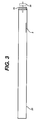
- FIGURE 3 is a cross-sectional illustration of an inoculated stainless steel blade placed directly within a glass tube having a filter placed at its narrow opening to create an alternate diffusion-restricted environment for testing the sterilization method of the present invention.
- Sterilizing the inside of lumened devices has always posed a challenge to sterilization systems. Achieving rapid sterilization of lumened devices or other diffusion restricted articles at low temperatures and low concentrations of sterilant represents an even greater challenge.
- the shortcomings of the prior art sterilization systems are overcome by pretreating articles to be sterilized with an aqueous solution of hydrogen peroxide (i.e. a solution comprising both water and hydrogen peroxide) prior to exposure to a vacuum, or optionally, plasma.
- the method of the present invention provides for the rapid sterilization of lumened and non-lumened articles under conditions that will not damage the articles nor leave toxic residues on the sterile articles.
- dilute, aqueous solutions of hydrogen peroxide are delivered into direct contact with the article to be sterilized.
- the solution In the case of a lumened device, the solution is delivered directly into the lumen. In the case of an article having an area where diffusion of vapor is restricted, the solution is delivered to the interior of the diffusion restricted area.
- the hydrogen peroxide solution is delivered into the lumen or into contact with the article to be sterilized through means such as direct delivery, a static soaking process, a liquid flow-through process, or by aerosol spray.
- the aqueous solutions of hydrogen peroxide can be relatively dilute, e.g., as low as 1-3% or lower by weight, since sterilization is not achieved through contact with the hydrogen peroxide solution, but rather, is achieved at low temperatures and in short periods of time upon exposure to hydrogen peroxide vapor under vacuum or vacuum combined with plasma.
- the method of the present invention is particularly effective with articles having inaccessible or hard-to-reach places. Such articles include long, narrow lumens, hinges, and other articles having spaces where diffusion of vapors is restricted.
- a similar method is used to sterilize both the inside and outside of an article.
- the article to be sterilized is placed in a diffusion-restricted environment. If the article to be sterilized is itself diffusion-restricted, such as a long, narrow lumen, peroxide is introduced to the inside of the article. For articles which are not diffusion-restricted, peroxide can be introduced anywhere into the diffusion-restricted environment. Peroxide can be introduced either before or after placing the article in the diffusion-restricted environment. The diffusion-restricted environment containing the article to be sterilized is then placed in the chamber, exposed to vacuum and removed as in steps 2 through 4 above.
- the article to be sterilized is exposed to a vacuum followed by low temperature plasma for a time sufficient to effect sterilization.
- plasma is intended to include any portion of the gas or vapor that contains electrons, ions, free radicals, dissociated and/or excited atoms or molecules produced as a result of an applied electric field, including any accompanying radiation that might be produced.
- the applied field may cover a broad frequency range; however, a radio frequency or microwaves are commonly used.
- the sterilization method of the present invention can also be used with plasmas generated by the method disclosed in the previously mentioned U.S. Pat. 4,643,876. Alternatively, it may be used with plasmas described in U.S. Patent 5,115,166 or 5,087,418, in which the article to be sterilized is located in a chamber that is separated from the plasma source.
- the present invention provides several advantages over earlier vapor sterilization systems, such as, (1) the rapid sterilization of lumened devices and diffusion restricted articles can be rapidly achieved at low temperatures; (2) the use of concentrated, potentially hazardous, solutions of anti-microbials is avoided; (3) the need to attach a special vessel to deliver sterilant vapors into long, narrow lumens is eliminated; (4) no toxic residues remain; (5) since the product is dry at the end of the process, sterile storage of these articles can be achieved; (6) closed end lumens can be sterilized; and (7) the process can be repeated as desired without undue effects.
- the method of the present invention therefore provides for a highly efficient, nonhazardous, and relatively inexpensive method of sterilization.
- Example 2 The testing was next performed to evaluate the effect on the sterilization of long, narrow lumens of a pretreatment step in which the lumens to be sterilized are exposed to hydrogen peroxide solution prior to exposure to a vacuum. The testing evaluated the efficacy of hydrogen peroxide vapor sterilization inside the lumens. The testing is detailed below in Example 2.
- a biological challenge consisting of 1.9 ⁇ 10 6 B. stearothermophilus spores on a stainless steel scalpel blade was used. Some inoculated blades were pretreated with a solution of aqueous hydrogen peroxide. Other inoculated blades, designated control blades, did not receive pretreatment with hydrogen peroxide. The pretreatment consisted of 5 minutes of static soaking in peroxide solution. The pretreated blades were blotted dry, and each blade was then placed inside a stainless steel lumen, 3 mm internal diameter (ID) x 50 cm length. The lumen had a center piece of 1.3 cm ID and 5 cm length. The pretreated blade was placed inside this center piece, and additional hydrogen peroxide solution was added into the center piece in various amounts.
- ID internal diameter
- Control blades were handled identically, except that they did not receive pretreatment with hydrogen peroxide solution.
- the lumens were placed in a vacuum chamber, and the chamber was evacuated to 1 Torr and held there for 15 minutes, during which time the temperature increased from approximately 23°C to approximately 28°C. Following exposure to the vacuum, the chamber was vented and the blades were removed from the chamber and tested for sterility. The results were as follows:
- sterilization can be effected using relatively dilute solutions of peroxide and exposure to negative pressure.
- the peroxide added to the center piece of the lumen was vaporized and contacted the blade, which was sufficient to effect sterilization. It can be seen from these data that the pre-treatment increases effectiveness, but that pre-treatment is unnecessary as long as the -peroxide diffuses from the inside to the outside,.
- Test A in Table 3 below consisted of the inoculated blades being pretreated with a solution of 3% aqueous hydrogen peroxide. The pretreatment consisted of 5 minutes of static soaking in the peroxide solution. The pretreated blades were blotted dry, then placed into the center piece of a stainless steel lumen which varied in size, together with 10 ⁇ l of 3% hydrogen peroxide solution. The center piece was 1.3 cm ID and 5 cm length.
- Test B in Table 3 below consisted of identically inoculated control blades which did not receive pretreatment with hydrogen peroxide.
- Each inoculated control blade was placed directly into the center piece of a stainless steel lumen together with 10 ⁇ l of 3% hydrogen peroxide solution.
- the center piece had dimensions identical to those in Test A. Lumens of various dimensions were used to evaluate the effect on sterilization of lumen internal diameter and length. The lumens were placed in a vacuum chamber, and the chamber was evacuated to 1 Torr for 15 minutes. During this 15 minutes of the sterilization cycle, the temperature increased from approximately 23°C to approximately 28°C. Following exposure to the vacuum, the chamber was vented and the blades were removed from the chamber and tested for sterility. The results are reported in Table 3, where "LID Ratio" indicates the ratio of length to internal diameter.
- prior art methods of hydrogen peroxide vapor sterilization of lumens are generally limited to use on relatively short and wide lumens.
- the method of the present invention is effective on the interior of long, narrow lumens, including those longer than 27 cm in length and/or having an internal diameter of less than 3 mm.
- a non-diffusion restricted system is one in which the diffusion of vapors in and around the article is not restricted by narrow openings, long, narrow lumens, or the like.
- diffusion-restricted refers to any one or more of the following properties: (1) the ability of an article placed within the sterilization system of the present invention to retain 0.17 mg/L or more hydrogen peroxide solution after one hour at 40°C and 10 torr; (2) having the same or more diffusion restriction than provided by a single entry/exit port of 9 mm or less in internal diameter and 1 cm or greater in length; (3) having the same or more diffusion restriction than provided by a lumen 27 cm in length and having an intemal diameter of 3 mm; (4) having the same or more diffusion restriction than provided by a lumen having a ratio of length to internal diameter greater than 50; (5) the ability of an article placed within the sterilization system of the present invention to retain 17% or more of the hydrogen peroxide solution placed therein after one hour at 40°C and 10 torr; or (6) being sufficiently diffusion-restricted to completely sterilize a stainless steel blade within a 2.2 cm by 60 cm glass tube having a rubber stopper with a 1 mm
- Hydrogen peroxide vapor sterilization was tested in both open and diffusion restricted systems.
- the open system consisted of stainless steel lumens having internal diameters of 1, 3, and 6 mm, and lengths of 15, 27, 40 and 50 cm.
- Stainless steel scalpel blades were inoculated with 1.9 ⁇ 10 6 B. stearothermophilus spores, and the blades placed in the center piece of the lumen together with 10 ⁇ l of 3% hydrogen peroxide solution.
- the dimensions of the center piece were 1.3 cm ID, 5 cm length and 6.6 cc volume.
- FIGURE 1 The diffusion restricted system is illustrated in FIGURE 1.
- Identically inoculated scalpel blades 5 were placed within the center pieces 10 of lumens 15 having dimensions identical to those described above.
- Ten ⁇ l of 3% hydrogen peroxide solution was also added to the center piece 10 of the lumen 15.
- the lumen 15 was then placed within a 2.2 cm x 60 cm glass tube 20.
- the tube 20 was closed at one end, and the open end was plugged with a rubber stopper 25 having a 1 mm x 10 cm stainless steel tube 30 inserted through the stopper 25.
- gases entering or exiting the glass tube 20 could pass only through this 1 mm x 10 cm opening.
- the open lumen system and the diffusion restricted system were placed inside a vacuum chamber.
- the chamber was evacuated to 1 Torr pressure and held there for 15 minutes, during which time the temperature increased from approximately 23°C to approximately 28°C.
- the chamber was then vented, and the blades removed from the lumens and tested for sterility.
- a stainless steel scalpel blade 5 was placed within a 2.2 cm x 60 cm glass tube 20 which was closed at one end, as illustrated in FIGURE 2. Each blade 5 had been inoculated with 1.9 ⁇ 10 6 B. stearothermophilus spores.
- the glass tube 20 was left open at one end, providing an open system.
- the open end of the glass tube 20 was sealed with a rubber stopper 25 having a 1 mm x 10 cm stainless steel tube 30 through its center.
- hydrogen peroxide solution at a concentration of either 3% or 6% was added to the glass tube 20 in amounts of 50, 100, 150 or 200 ⁇ l, together with the inoculated blade 5.
- the tube 20 was placed in a vacuum chamber, and the chamber evacuated to 1 Torr for 15 minutes, during which time the temperature increased from approximately 23°C to approximately 28°C.
- the diffusion restricted system only was also tested at 1 Torr for 30 minutes, during which time the temperature increased from approximately 23°C to approximately 33°C.
- the vacuum chamber was then vented, and the blades 5 removed from the tube 20 and tested for sterility. The results are listed in Table 5 below.
- the method of the present invention wherein small amounts of hydrogen peroxide solution are delivered to the article to be sterilized prior to exposure to a vacuum, is an effective method of sterilization.
- the method does not depend on the diffusion of sterilant vapor into the article being sterilized. Rather, the hydrogen peroxide vapor is created by the vacuum within the system. This vapor is prevented from leaving the system too quickly, because the diffusion of the sterilant vapor from the inside of the article to the outside of the article is slowed. In a diffusion restricted environment, the vapor therefore contacts the article to be sterilized for a period of time sufficient to effect complete sterilization.
- the method of the present invention removes the water from the system first, thereby concentrating the hydrogen peroxide vapor remaining in the system. More importantly, in the present invention, the diffusion of vapor is from the inside to outside rather than outside to inside as in the prior art. As a result, diffusion-restriction in the present invention serves to increase the effectiveness of sterilization rather than to decrease the effectiveness, as in the prior art.
- a stainless steel scalpel blade 5 was placed within a 2.2 cm x 60 cm glass tube 20 which was closed at one end, as shown in FIGURE 2. Each blade 5 had been inoculated with 1.9 ⁇ 10 6 B. stearothermophilus spores.
- the open end of the glass tube 20 was sealed with a rubber stopper 25 having a 1 mm x 10 cm stainless steel tube 30 through its center.
- Hydrogen peroxide solution at a concentration of 3% was added to the glass tube 20 in amounts of 50, 100, 150 or 200 ⁇ l, together with the inoculated blade 5.
- the tube 20 was placed in a vacuum chamber, and subjected to various pressures for 15 minutes, during which time the temperature increased from approximately 23°C to approximately 28°C.
- the tube 20 was first heated to 45°C, then subjected to 50 Torr pressure for 15 minutes. The results were as follows.
- the temperature and pressure within the vacuum chamber should be such that vaporization of the aqueous hydrogen peroxide solution is achieved, i.e. the system should preferably be operated below the vapor pressure of the hydrogen peroxide.
- the pressure needs to be below the vapor pressure of hydrogen peroxide, such that the hydrogen peroxide solution present in the system is vaporized and diffuses from the interior of the diffusion restricted environment to the outside.
- the hydrogen peroxide can be vaporized locally where the system remains above the vapor pressure by introducing energy to the site of the peroxide, such as through microwaves, radio waves, or other energy sources.
- a stainless steel scalpel blade 5 was placed within a 2.2 cm x 60 cm glass tube 20 which was closed at one end, as illustrated in FIGURE 2. Each blade 5 had been inoculated with 1.9 ⁇ 10 6 B. stearothermophilus spores. To create a diffusion restricted environment, the open end of the glass tube 20 was sealed with a rubber stopper 25 having a 1 mm x 10 cm stainless steel tube 30 through its center. Hydrogen peroxide solution at a concentration of 3% was added to the glass tube 20 in amounts of 50, 100, 150 or 200 ⁇ l together with the inoculated blade 5. The tube 20 was placed in a vacuum chamber, and the chamber evacuated to 5 Torr.
- the valve to the vacuum pump was closed, such that the pressure within the chamber rose from 5 Torr to 6.15 Torr after 15 minutes, during which time the temperature increased from approximately 23°C to approximately 28°C.
- the tube 20 was placed in the chamber and the chamber was evacuated to 50 Torr. The temperature of the glass tube 20 was increased to 45°C after the evacuation of the chamber was complete. The tube 20 was treated for 15 minutes. The results of these tests are reported below.
- the method of the present invention relies on the delivery of liquid hydrogen peroxide to the article to be sterilized prior to vacuum or plasma treatment. The following testing was performed to determine the effect of the location of the delivery of the hydrogen peroxide within the diffusion restricted environment.
- a stainless steel scalpel blade 5 was inoculated with 1.9 ⁇ 10 6 B. stearothermophilus spores, and the blade 5 placed in the center piece 10 of a lumen 15 as illustrated in FIGURE 1.
- the dimensions of the center piece 10 were 1.3 cm ID, 5 cm length and 6.6 cc volume, while the lumen itself varied in size, having an ID of 1, 3 or 6 mm, and a length of 15, 27, 40 or 50 cm.
- the lumen 15 was placed within a 2.2 cm x 60 cm glass tube 20.
- the tube 20 was closed at one end, and the open end was plugged with a rubber stopper 25 having a 1 mm x 10 cm stainless steel tube 30 placed through the stopper 25.
- the method of the present invention is therefore useful in environments where diffusion of the sterilant vapor is limited.
- a stainless steel scalpel blade 5 was inoculated with 1.9 ⁇ 10 6 B. stearothermophilus spores, and placed in a 2.2 cm x 60 cm glass tube 20 as illustrated in FIGURE 2.
- the tube 20 was closed at one end, and the open end was plugged with a rubber stopper 25.
- Stainless steel tubing 30 of various dimensions was inserted through the stopper 25.
- gases entering or exiting the glass tube 20 could pass only through the opening in the tubing 30, which varied from 1 mm to 6 mm in diameter.
- Three percent hydrogen peroxide solution in volumes ranging from 50 ⁇ L to 200 ⁇ L was also placed inside the glass tube 20.
- the glass tube 20 was then placed in a vacuum chamber, which was sealed and evacuated to 5 Torr for 15 minutes, during which time the temperature increased from approximately 23°C to approximately 28°C.
- three lumens were tested at 10 Torr for 15 minutes with 3% hydrogen peroxide. The results of this testing are listed below in Table 9.
- the method of the present invention has been shown to be effective in diffusion restricted environments of metal and glass. To evaluate whether the method is effective in diffusion restricted environments formed of other materials, the experiments described in Examples 10 and 11 were performed.
- a diffusion restricted system was tested. 1.2 ⁇ 10 6 B. stearothermophilus spores were inoculated onto non-woven polypropylene pieces. As illustrated in FIGURE 1, the inoculated pieces 5 were placed inside the center piece 10 of a plastic lumen 15, together with 10 ⁇ l of 3% hydrogen peroxide solution.
- the center piece 10 was made of TeflonTM and had dimensions of 1.3 cm x 5 cm.
- the lumen 15 varied from 1 mm to 6 mm ID, and 15 cm to 50 cm in length. TeflonTM was used for the 1 mm lumen, polyethylene was used for the 3 mm and 6 mm lumen. The lumen 15 was then placed within a 2.2 cm x 60 cm glass tube 20.
- the glass tube 20 was closed on one end, and the open end was sealed with a rubber stopper 25 having a 1 mm x 10 cm piece of PTFE tubing 30 through it.
- the glass tube 20 was placed in the vacuum chamber and treated for 15 minutes at 1 Torr, during which time the temperature increased from approximately 23°C to approximately 28°C.
- Sterilization in diffusion restricted environments can be effected in both short, wide lumens and long, narrow lumens, regardless of whether metal or plastic is used to form the lumens.
- the method of the present invention is an effective sterilization method for diffusion restricted articles, and can be used on a wide variety of such articles, regardless of their composition.
- Stainless steel blades were inoculated with 2.1 ⁇ 10 6 B. stearothermophilus spores.
- the blades 5 were placed inside a 2.2 cm x 60 cm glass tube 20 as illustrated in FIGURE 2, along with various amounts of 3% hydrogen peroxide solution.
- the glass tube 20 was placed in a vacuum chamber and subjected to different pressures and different temperatures for various periods of time. During the sterilization cycles reported in Table 11A, the temperature increased from approximately 23°C to the temperatures indicated. In the experiments reported in Table 11B, the chamber was heated to approximately 45°C. In an alternative embodiment, rather than heating the chamber, the temperature of the peroxide solution itself can be heated.
- Table 11C Effect of Time and Volume of Peroxide on Sterilization in a Diffusion Restricted Environment At 5 Torr pressure: 5 min. (approx. 24°C) 10 min. (approx. 26°C) 15 min. (approx.
- Example 12 In order to evaluate a putative minimum concentration of peroxide in the liquid/vacuum system in a diffusion-restricted container, Example 12 was carried out.
- the exit tube 35 was a stainless steel tube having a length of 50 cm and an intemal diameter of 1 mm.
- a stainless steel blade inoculated with 1.9 ⁇ 10 6 spores of B. stearothermophilus was placed within the container which was a 2.2 cm ⁇ 60 cm glass tube.
- Various amounts of 3% hydrogen peroxide were introduced into the container.
- the container was placed in a vacuum chamber of 173 liters, and the pressure reduced to 10 Torr for a period of one hour, during which time the temperature increased from approximately 23 °C to approximately 40°C.
- Sporicidal activity was evaluated at each concentration of peroxide.
- Example 13 We further investigated the effects of length and internal diameter of the exit tube used in a system similar to that of Example 12. This testing is shown in Example 13.
- a stainless steel blade was inoculated with 2.1 ⁇ 10 6 B. stearothermophilus spores.
- the blade 5 was placed inside a 2.2 cm x 60 cm glass tube 20 as shown in FIGURE 3, together with various amounts of 3% hydrogen peroxide solution.
- One end of the tube was closed, and the open end was sealed with a rubber stopper 25 having a syringe filter 35 inserted therein.
- the glass tube 20 was placed inside a vacuum chamber and treated for 15 minutes at 5 Torr, during which time the temperature increased from approximately 23°C to approximately 28°C.
- identically inoculated blades were placed inside 2.2 cm x 60 cm glass tubes.
- the open end of the tubes was left open, no stopper or syringe filter was used. Thus, the diffusion of vapor from the interior of the tube was not restricted.
- syringe filters having various pore sizes were tested, including MFS PTFE 25 mm syringe filters with a 0.2 ⁇ m membrane filter and a 0.5 ⁇ m membrane filter; a Nalgene PTFE 50 mm syringe filter with a 0.2 ⁇ m membrane filter and a 0.45 ⁇ m membrane filter; a Whatman AnotopTM 10 Plus sterile syringe filter with a 0.02 ⁇ m membrane filter and a 0.1 ⁇ m membrane filter; and finally, a Gelman AcrodiscTM CR PTFE syringe filter with a 0.2 ⁇ m, 0.45 ⁇ m, and a 1.0 ⁇ m membrane.
- MFS PTFE 25 mm syringe filters with a 0.2 ⁇ m membrane filter and a 0.5 ⁇ m membrane filter a Nalgene PTFE 50 mm syringe filter with a 0.2 ⁇ m membrane filter and a 0.45 ⁇ m membrane filter
- filters do not create a sufficiently diffusion restricted environment at 5 Torr pressure when only 50 ⁇ L of hydrogen peroxide solution is placed in the system.
- Other brands of filters did provide sufficient diffusion restriction; these brands of filters had either longer lumens or smaller filter pore size.
- 10 Torr pressure, or serial filters enhances the efficacy of the sterilization system. This is important, as filters, including ones made of TyvekTM, are often used in packaging of sterile articles to prevent recontamination with bacteria. These filters generally have a pore size of 1 ⁇ m or less, or in the case of TyvekTM, create a tortuous path which bacteria cannot cross.
- filters can be used in combination with other packaging means to create a diffusion restricted environment to effect sterilization, and the sterile article can remain inside the packaging during storage prior to use; the filter will prevent re-contamination of the sterile article.
- a stainless steel blade was inoculated with 1.9 ⁇ 10 6 B. stearothermophilus spores.
- the blade 5 was placed inside a 2.2 cm x 60 cm glass tube 20 as shown in FIGURE 2, along with various amounts of 4.74% peracetic acid solution (Solvay Interox Ltd., Warrington, England).
- the glass tube 20 was placed in a vacuum chamber and subjected to 5 Torr pressure for 15 minutes, during which time the temperature increased from approximately 23°C to approximately 28°C. The results of this testing is shown below.
- a five minute soak in 3% hydrogen peroxide solution was an effective means for delivering the hydrogen peroxide into the lumen prior to vacuum or plasma treatment.
- treatment with hydrogen peroxide solution only is ineffective to achieve sterilization using dilute solutions and short soak times.
- Delivery of hydrogen peroxide solution via static soaking is at least as effective a way to deliver the hydrogen peroxide as depositing small volumes directly into the lumen of the device.
- Delivery of the hydrogen peroxide solution via constant flow is also an effective way to deliver hydrogen peroxide to the system.
- Flow-through of hydrogen peroxide as either a liquid solution or aerosol can also be achieved by introducing increased pressure at the delivery end or decreased pressure at the exit end of the device to be treated.
- Stainless steel blades were inoculated with 2.5 ⁇ 10 6 B. stearothermophilus spores. The blades were soaked in 3% hydrogen peroxide solution for either 1 or 5 minutes. The blades were then placed in the expanded center piece of a 3 mm x 50 cm stainless steel lumen. The lumen was then placed in a sterilization chamber which was evacuated to approximately 0.5 Torr. The sterilization cycle consisted of 15 minutes of hydrogen peroxide vapor diffusion with a minimum of 6 mg/L hydrogen peroxide, followed by 15 minutes of plasma at 400 watts. Following the plasma treatment, the chamber was vented and the blades tested for sterility. The results are shown below.
Landscapes
- Health & Medical Sciences (AREA)
- Public Health (AREA)
- Veterinary Medicine (AREA)
- Epidemiology (AREA)
- Life Sciences & Earth Sciences (AREA)
- Animal Behavior & Ethology (AREA)
- General Health & Medical Sciences (AREA)
- Chemical Kinetics & Catalysis (AREA)
- Chemical & Material Sciences (AREA)
- General Chemical & Material Sciences (AREA)
- Engineering & Computer Science (AREA)
- Physics & Mathematics (AREA)
- Plasma & Fusion (AREA)
- Apparatus For Disinfection Or Sterilisation (AREA)
- Food Preservation Except Freezing, Refrigeration, And Drying (AREA)
- Pharmaceuticals Containing Other Organic And Inorganic Compounds (AREA)
- External Artificial Organs (AREA)
- Control Of Turbines (AREA)
- Semiconductor Lasers (AREA)
Applications Claiming Priority (2)
| Application Number | Priority Date | Filing Date | Title |
|---|---|---|---|
| US628965 | 1996-04-04 | ||
| US08/628,965 US6030579A (en) | 1996-04-04 | 1996-04-04 | Method of sterilization using pretreatment with hydrogen peroxide |
Publications (2)
| Publication Number | Publication Date |
|---|---|
| EP0799621A1 true EP0799621A1 (de) | 1997-10-08 |
| EP0799621B1 EP0799621B1 (de) | 2003-11-26 |
Family
ID=24521040
Family Applications (2)
| Application Number | Title | Priority Date | Filing Date |
|---|---|---|---|
| EP97302305A Expired - Lifetime EP0799621B1 (de) | 1996-04-04 | 1997-04-03 | Methode zur Sterilisation mit Wasserstoffperoxid-Vorbehandlung |
| EP97920328A Expired - Lifetime EP0907381B1 (de) | 1996-04-04 | 1997-04-04 | Verfahren zur sterilisierung in diffusionsbeschrankten umgebunden |
Family Applications After (1)
| Application Number | Title | Priority Date | Filing Date |
|---|---|---|---|
| EP97920328A Expired - Lifetime EP0907381B1 (de) | 1996-04-04 | 1997-04-04 | Verfahren zur sterilisierung in diffusionsbeschrankten umgebunden |
Country Status (22)
| Country | Link |
|---|---|
| US (8) | US6030579A (de) |
| EP (2) | EP0799621B1 (de) |
| JP (2) | JPH1028722A (de) |
| KR (1) | KR100874681B1 (de) |
| CN (3) | CN1131715C (de) |
| AT (1) | ATE254933T1 (de) |
| AU (2) | AU723034B2 (de) |
| BR (1) | BR9708498A (de) |
| CA (2) | CA2201572C (de) |
| DE (2) | DE69726329T2 (de) |
| DK (1) | DK0799621T3 (de) |
| ES (2) | ES2210455T3 (de) |
| IN (2) | IN185480B (de) |
| MX (1) | MX9702501A (de) |
| MY (1) | MY120695A (de) |
| NO (1) | NO311603B1 (de) |
| PT (1) | PT799621E (de) |
| RU (1) | RU2218184C2 (de) |
| SG (1) | SG86993A1 (de) |
| TW (1) | TW376323B (de) |
| WO (1) | WO1997037692A1 (de) |
| ZA (1) | ZA972844B (de) |
Cited By (13)
| Publication number | Priority date | Publication date | Assignee | Title |
|---|---|---|---|---|
| EP1226833A1 (de) * | 2001-01-26 | 2002-07-31 | Aventis Behring GmbH | Hydrogenperoxid-Plasma-Sterilisationsverfahren für die schonende Sterilisation temperaturempfindlicher Produkte |
| EP1140220A4 (de) * | 1998-12-30 | 2002-08-21 | Ethicon Inc | Verfahren zur aufkonzentrierung eines sterilisationsmittels sowie die sterilisation von gegenständen damit |
| US7179419B2 (en) | 1996-04-04 | 2007-02-20 | Johnson & Johnson Medical Div Ethicon, Inc. | Method for sterilizing devices in a container |
| US7252800B2 (en) | 1998-12-30 | 2007-08-07 | Ethicon, Inc. | Sterilization system and method and inlet control apparatus therefor |
| US7267806B2 (en) | 2002-06-28 | 2007-09-11 | Ethicon, Inc. | Sterilization system and method with heat pump operated vaporizer/condenser |
| US7300637B2 (en) | 2002-09-30 | 2007-11-27 | Ethicon, Inc. | Sterilization container kit |
| US7556767B2 (en) | 1997-12-17 | 2009-07-07 | Ethicon, Inc. | Integrated washing and sterilization process |
| US7670550B2 (en) | 1998-12-30 | 2010-03-02 | Ethicon, Inc. | Rapid sterilization system |
| US7807100B2 (en) | 2002-06-28 | 2010-10-05 | Ethicon, Inc. | Sterilization system and method with temperature-controlled condensing surface |
| US10814027B2 (en) | 2017-12-07 | 2020-10-27 | Asp Global Manufacturing Gmbh | Sterilization-assistance device |
| US10967084B2 (en) | 2017-12-15 | 2021-04-06 | Asp Global Manufacturing Gmbh | Flow restrictor |
| US11369708B2 (en) | 2017-12-27 | 2022-06-28 | Kocher-Plastik Maschinenbau Gmbh | Method for reducing microbiological contamination |
| US20250065000A1 (en) * | 2022-12-27 | 2025-02-27 | Z1 Enterprises, Inc. | UV Light and Hydrogen Peroxide for Sterilization |
Families Citing this family (91)
| Publication number | Priority date | Publication date | Assignee | Title |
|---|---|---|---|---|
| US6030579A (en) * | 1996-04-04 | 2000-02-29 | Johnson & Johnson Medical, Inc. | Method of sterilization using pretreatment with hydrogen peroxide |
| US6977061B2 (en) * | 1997-04-04 | 2005-12-20 | Ethicon Endo-Surgery, Inc. | Method and apparatus for sterilizing a lumen device |
| US6066294A (en) * | 1997-08-21 | 2000-05-23 | Ethicon, Inc. | Multi-compartment sterilization system |
| US6203756B1 (en) | 1997-12-17 | 2001-03-20 | Johnson & Johnson Medical, Inc. | Integrated cleaning sterilization process |
| US6451255B1 (en) * | 1997-08-21 | 2002-09-17 | Ethicon, Inc. | Dry booster |
| US7803316B2 (en) * | 1997-08-21 | 2010-09-28 | Ethicon, Inc. | Method and apparatus for processing a lumen device |
| AU753047B2 (en) * | 1997-11-14 | 2002-10-03 | Ethicon Inc. | Method for measuring the concentration of hydrogen peroxide vapor |
| ID26315A (id) * | 1997-12-12 | 2000-12-14 | Tetra Pak Plastics Ltd | Suatu proses kontinyu untuk hiperaktivasi fluida-fluida untuk sterilisasi |
| US6596232B1 (en) | 1997-12-17 | 2003-07-22 | Ethicon, Inc. | Device processing apparatus and method having positive pressure with two partitions to minimize leakage |
| US6013227A (en) * | 1997-12-17 | 2000-01-11 | Johnson & Johnson Medical, Inc. | Lumen device reprocessor without occlusion |
| US6645430B1 (en) | 1997-12-17 | 2003-11-11 | Ethicon, Inc. | Method and apparatus for processing device with fluid submersion |
| US6187266B1 (en) | 1997-12-17 | 2001-02-13 | Johnson & Johnson Medical, Inc. | Integrated cleaning/sterilization process with lumen devices |
| AU6716598A (en) * | 1998-03-31 | 1999-10-18 | Chuanlin Liu | A method and device for sterilizing goods by using direct electric field |
| US6312646B2 (en) | 1998-08-17 | 2001-11-06 | Enviromedical Systems, Inc. | Sterilization of elongate lumens |
| JP2000176391A (ja) * | 1998-12-16 | 2000-06-27 | Ethicon Inc | 洗浄/滅菌処理用のトレイ/コンテナシステム |
| US7569180B2 (en) * | 2004-10-12 | 2009-08-04 | Ethicon, Inc. | Sterilization system and method and orifice inlet control apparatus therefor |
| US6451254B1 (en) | 1998-12-30 | 2002-09-17 | Ethicon, Inc. | Sterilization of diffusion-restricted area by revaporizing the condensed vapor |
| US20030170142A1 (en) * | 1999-08-09 | 2003-09-11 | Lorenzo Lepore | Method of sterilization of musical wind instruments |
| US7192553B2 (en) | 1999-12-15 | 2007-03-20 | Plasmasol Corporation | In situ sterilization and decontamination system using a non-thermal plasma discharge |
| US6923890B2 (en) | 1999-12-15 | 2005-08-02 | Plasmasol Corporation | Chemical processing using non-thermal discharge plasma |
| DE10042416A1 (de) * | 2000-08-30 | 2002-03-14 | Ruediger Haaga Gmbh | Verfahren zum Sterilisieren von Gegenständen |
| DE10044117A1 (de) * | 2000-09-07 | 2002-03-21 | Ruediger Haaga Gmbh | Verfahren zum Sterilisieren von Gegenständen |
| US20020098111A1 (en) * | 2000-12-04 | 2002-07-25 | Nguyen Nick N. | Vaporizer |
| US7770577B2 (en) * | 2001-05-15 | 2010-08-10 | Gregory E Conner | Methods and devices for treating lung dysfunction |
| EP1430501A2 (de) | 2001-07-02 | 2004-06-23 | Plasmasol Corporation | Neuartige elektrode zur verwendung mit einer atmosphärendruck-plasmaemittervorrichtung und verfahren zu ihrer verwendung |
| US7090808B2 (en) * | 2001-07-09 | 2006-08-15 | Pharmaceutical Systems, Inc. | Apparatus for testing sterilization methods and materials |
| US6793880B2 (en) * | 2001-07-13 | 2004-09-21 | Minntech Corporation | Apparatus and method for monitoring biofilm cleaning efficacy |
| RU2219952C2 (ru) * | 2001-10-25 | 2003-12-27 | Российский научно-исследовательский институт травматологии и ортопедии им. Р.Р. Вредена | Способ стерилизации биологических препаратов газообразной окисью этилена |
| RU2219953C2 (ru) * | 2001-10-25 | 2003-12-27 | Российский научно-исследовательский институт травматологии и ортопедии им. Р.Р. Вредена | Способ стерилизации биологических трансплантатов газообразной окисью этилена |
| US20030124026A1 (en) * | 2001-11-05 | 2003-07-03 | Hal Williams | Apparatus and process for concentrating a sterilant and sterilizing articles therewith |
| US6807975B1 (en) | 2002-02-15 | 2004-10-26 | Byron K. Muller, Jr. | Urine bag cleaning machine |
| US20040005261A1 (en) * | 2002-04-23 | 2004-01-08 | Jung-Suek Ko | Plasma sterilization apparatus |
| US7201869B2 (en) * | 2002-06-28 | 2007-04-10 | Ethicon, Inc. | Sterilizer with restrictor |
| WO2004011162A1 (en) * | 2002-07-01 | 2004-02-05 | Philip Robert Coles | Transesophageal ultrasonic probe disinfectant systems |
| KR100414360B1 (ko) * | 2002-11-08 | 2004-01-16 | 주식회사 휴먼메디텍 | 플라즈마 처리기가 부착된 멸균장치 및 멸균방법 |
| CA2412997A1 (fr) * | 2002-12-02 | 2004-06-02 | Universite De Montreal | Procede de sterilisation par plasma d'objets de nature dielectrique et comportant une partie creuse |
| DE10303989B4 (de) * | 2003-02-01 | 2006-07-06 | Microm International Gmbh | Verfahren und Vorrichtung zur Desinfektion eines Mikrotom-Kryostaten |
| WO2005003273A1 (en) * | 2003-07-01 | 2005-01-13 | William A. Barnstead Engineering Corporation | Method, process, chemistry and apparatus for treating a substrate |
| US20050042130A1 (en) * | 2003-08-22 | 2005-02-24 | Szu-Min Lin | Mist sterilization system |
| US7504066B2 (en) * | 2003-09-11 | 2009-03-17 | Tuttnauer Israel Ltd. | Ozone plasma medical sterilization |
| BRPI0400237A (pt) * | 2004-01-16 | 2005-08-16 | Tadashi Shiosawa | Processo de esterelização a vácuo com aplicação de vapor de uma mistura de ácido peracético com peróxido de hidrogênio e plasma de gás residual de ar atmosférico excitado por descarga elétrica dc pulsada; dispositivos e métodos operacionais utilizados no processo de esterilização |
| DE102004024175A1 (de) * | 2004-05-13 | 2005-12-01 | Gesellschaft für Ingenieur- und Unternehmensberatung mbH | Verfahren zum hygienischen Aufbereiten von Beatmungsgeräten sowie Verfahren zum hygienischen Aufbereiten von medizinischen Gegenständen und Vorrichtung mit einem Plasmasterilisator sowie Verwendung eines Niedertemperatur-Plasmasterilisators |
| US20050260096A1 (en) * | 2004-05-18 | 2005-11-24 | Steris Inc. | Method and apparatus for vaporizing a sterilant fluid using microwave energy |
| US7300638B2 (en) * | 2004-05-18 | 2007-11-27 | American Sterilizer Company | Sterilization device for sterilization of lumen devices |
| US7164095B2 (en) * | 2004-07-07 | 2007-01-16 | Noritsu Koki Co., Ltd. | Microwave plasma nozzle with enhanced plume stability and heating efficiency |
| US20060021980A1 (en) * | 2004-07-30 | 2006-02-02 | Lee Sang H | System and method for controlling a power distribution within a microwave cavity |
| US7806077B2 (en) | 2004-07-30 | 2010-10-05 | Amarante Technologies, Inc. | Plasma nozzle array for providing uniform scalable microwave plasma generation |
| US7271363B2 (en) * | 2004-09-01 | 2007-09-18 | Noritsu Koki Co., Ltd. | Portable microwave plasma systems including a supply line for gas and microwaves |
| US7189939B2 (en) * | 2004-09-01 | 2007-03-13 | Noritsu Koki Co., Ltd. | Portable microwave plasma discharge unit |
| US20060052883A1 (en) * | 2004-09-08 | 2006-03-09 | Lee Sang H | System and method for optimizing data acquisition of plasma using a feedback control module |
| US20060095021A1 (en) * | 2004-11-02 | 2006-05-04 | Casas-Bejar Jesus W | Introduction of agent with medical device |
| ATE550048T1 (de) * | 2004-11-26 | 2012-04-15 | Human Meditek Co Ltd | Wasserstoffperoxid-dampfsterilisator und sterilisierverfahren damit |
| FR2879933B1 (fr) * | 2004-12-28 | 2007-03-30 | Satelec Soc | Dispositif de sterilisation par plasma gazeux forme a partir d'un melange d'azote et d'hydrogene |
| US20060269442A1 (en) * | 2005-05-31 | 2006-11-30 | Nguyen Nick N | Endoscope reprocessor connectors having reduced occlusion |
| AU2006275319B2 (en) * | 2005-08-04 | 2012-09-13 | Saban Ventures Pty Limited | Space disinfection |
| US20070154371A1 (en) * | 2005-12-29 | 2007-07-05 | Szu-Min Lin | Endoscope processing cabinet |
| US7651672B2 (en) * | 2005-12-29 | 2010-01-26 | Ethicon, Inc. | Cabinet type endoscope processor |
| US7959859B2 (en) * | 2006-03-22 | 2011-06-14 | Sparks David W | Ultrasonic sanitation device and associated methods |
| US7780909B2 (en) * | 2006-03-22 | 2010-08-24 | Zimek Technologies Ip, Llc | Ultrasonic sanitation and disinfecting methods |
| US8062588B2 (en) * | 2006-03-22 | 2011-11-22 | Zimek Technologies Ip, Llc | Ultrasonic sanitation device and associated methods |
| US20070231202A1 (en) * | 2006-03-31 | 2007-10-04 | Roberts Charles G | method and system for prion inactivation |
| US7744832B2 (en) * | 2007-02-05 | 2010-06-29 | American Sterilizer Company | Instrument container having multiple chambers with flow pathways therebetween |
| US20090110708A1 (en) * | 2007-10-30 | 2009-04-30 | Platt Robert C | Animate tissue antisepsis |
| US20090196807A1 (en) * | 2008-02-01 | 2009-08-06 | Burns Phillip E | Sponge Sanitizer |
| US20090194138A1 (en) * | 2008-02-01 | 2009-08-06 | Burns Phillip E | Sponge Sanitizer |
| US8366995B2 (en) * | 2009-06-11 | 2013-02-05 | Sterilucent, Inc. | Apparatus and method for drying and then sterilizing objects in a load using a chemical sterilant |
| US8889081B2 (en) * | 2009-10-15 | 2014-11-18 | Medivators Inc. | Room fogging disinfection system |
| AU2010325926B2 (en) | 2009-12-03 | 2014-01-09 | Minntech Corporation | Container and system for decontaminating a medical device with a fog |
| DE102010026104B3 (de) * | 2010-07-05 | 2011-12-01 | Fresenius Medical Care Deutschland Gmbh | Verfahren zur Sterilisation wenigstens eines Gegenstandes, Sterilisationsvorrichtung sowie Verwendung hierzu |
| KR101270570B1 (ko) * | 2011-05-27 | 2013-06-03 | 인제대학교 산학협력단 | 방사성 동위원소를 활용한 의료용 하이브리드 멸균세척장치 및 이를 이용한 멸균세척방법 |
| CN103702689B (zh) | 2011-05-27 | 2016-08-17 | 马尔科尔净化装置公司 | 包括使用净化物质的环境控制的净化系统 |
| US9078435B2 (en) * | 2011-09-08 | 2015-07-14 | Joseph Dunn | Methods for disinfecting or sterilizing articles |
| DE102012001566A1 (de) * | 2012-01-27 | 2013-08-01 | Fresenius Medical Care Deutschland Gmbh | Verfahren zur Sterilisation wenigstens eines Gegenstandes, Sterilisationsvorrichtung sowie Verwendung hierzu |
| US10022189B2 (en) | 2013-12-16 | 2018-07-17 | Stryker Sustainability Solutions, Inc. | Apparatus and method for cleaning an instrument |
| US10449263B2 (en) | 2014-12-11 | 2019-10-22 | Microlin, Llc | Devices for disinfection, deodorization, and/or sterilization of objects |
| US20160346416A1 (en) * | 2015-05-27 | 2016-12-01 | Mar Cor Purification | Low relative humidity decontamination system |
| ES2879653T3 (es) * | 2015-10-13 | 2021-11-22 | Suntory Holdings Ltd | Aparato y método de esterilización |
| US10314929B2 (en) * | 2016-06-30 | 2019-06-11 | Ethicon, Inc. | Apparatus and method for sterilizing endoscope |
| US11696967B2 (en) | 2016-06-30 | 2023-07-11 | Asp Global Manufacturing Gmbh | Apparatus and method for sterilizing endoscope |
| US20180147309A1 (en) * | 2016-11-29 | 2018-05-31 | Ethicon, Inc. | Sterilization system with independent vacuum chambers |
| KR20240133776A (ko) | 2017-03-27 | 2024-09-04 | 리제너론 파아마슈티컬스, 인크. | 살균 방법 |
| US11266760B2 (en) | 2017-04-25 | 2022-03-08 | Plasmapp Co., Ltd. | Cartridge and sterilizing device using same |
| EP3443994B1 (de) * | 2017-08-17 | 2020-04-08 | Gambro Lundia AB | Verfahren zur sterilisierung wassergefüllter vorrichtungen |
| WO2020049388A1 (en) * | 2018-09-06 | 2020-03-12 | Tuttnauer Ltd. | Plasma sterilizer |
| US11712321B2 (en) * | 2018-11-15 | 2023-08-01 | Asp Global Manufacturing Gmbh | Apparatus and method for adjusting a volume of a basin of a treatment apparatus |
| US20200330634A1 (en) * | 2019-04-22 | 2020-10-22 | Medivators Inc. | Method for improved flow with oscillation for sterilization of devices |
| MA54325A (fr) | 2019-06-05 | 2022-05-11 | Regeneron Pharma | Dispositifs et procédés pour l'administration précise de doses |
| NL2024409B1 (en) * | 2019-12-09 | 2021-08-31 | Log10 B V | Method and apparatus for sterilizing medical instruments |
| NO20210383A1 (en) * | 2021-03-24 | 2022-09-26 | Noah Solutions As | Method and apparatus for neutralizing and stabilizing of fly ash |
| WO2023205342A1 (en) * | 2022-04-21 | 2023-10-26 | Plasma Bionics LLC | Sterilization apparatus |
| USD1120314S1 (en) | 2022-11-30 | 2026-03-24 | Regeneron Pharmaceuticals, Inc. | Dose delivery device |
Citations (3)
| Publication number | Priority date | Publication date | Assignee | Title |
|---|---|---|---|---|
| EP0302419A2 (de) * | 1987-07-30 | 1989-02-08 | JOHNSON & JOHNSON MEDICAL, INC. | Verfahren und Vorrichtung zur Gassterilisation von Erzeugnissen mit Lumen |
| DE4102055A1 (de) * | 1990-01-26 | 1991-08-01 | Olympus Optical Co | Desinfektionsvorrichtung fuer endoskope |
| EP0456135A2 (de) * | 1990-05-11 | 1991-11-13 | Abtox, Inc. | Sterilisation mit Wasserstoffperoxid und einem Plasma |
Family Cites Families (44)
| Publication number | Priority date | Publication date | Assignee | Title |
|---|---|---|---|---|
| US4169123A (en) * | 1975-12-11 | 1979-09-25 | Moore-Perk Corporation | Hydrogen peroxide vapor sterilization method |
| DE2623917A1 (de) * | 1976-05-28 | 1977-12-15 | Edel Heinz H | Verfahren zur reinigung gebrauchter dialysatoren |
| SE401912B (sv) * | 1976-10-07 | 1978-06-05 | Tetra Pak Int | Sett att sterilisera foremal medelst vetskeformigt steriliseringsmedel samt anordning for genomforande av settet |
| US4169124A (en) * | 1977-09-26 | 1979-09-25 | Moore-Perk Corporation | Cold gas sterilization process |
| US4230663A (en) | 1979-07-10 | 1980-10-28 | Moore-Perk Corporation | Cold gas sterilization process using hydrogen peroxide at low concentrations |
| CA1166421A (en) * | 1980-12-30 | 1984-05-01 | Edward Koubek | Hydrogen peroxide liquid film sterilization method |
| US4337223A (en) * | 1981-02-13 | 1982-06-29 | Ben Venue Laboratories, Inc. | Sterilizing apparatus incorporating recirculation of chamber atmosphere |
| US4410492A (en) * | 1981-02-13 | 1983-10-18 | Ben Venue Laboratories, Inc. | Sterilizing method incorporating recirculation of chamber atmosphere |
| US4756882A (en) * | 1985-06-21 | 1988-07-12 | Surgikos Inc. | Hydrogen peroxide plasma sterilization system |
| US4643876A (en) * | 1985-06-21 | 1987-02-17 | Surgikos, Inc. | Hydrogen peroxide plasma sterilization system |
| AU590017B2 (en) * | 1985-11-08 | 1989-10-26 | Minnesota Mining And Manufacturing Company | Article and method for enzymatic neutralization of hydrogen peroxide |
| US5552115A (en) * | 1986-02-06 | 1996-09-03 | Steris Corporation | Microbial decontamination system with components porous to anti-microbial fluids |
| US5087418A (en) * | 1987-02-25 | 1992-02-11 | Adir Jacob | Process for dry sterilization of medical devices and materials |
| US5302343A (en) * | 1987-02-25 | 1994-04-12 | Adir Jacob | Process for dry sterilization of medical devices and materials |
| US4909999A (en) * | 1987-07-06 | 1990-03-20 | American Sterilizer Company | Flow-through vapor phase sterilization system |
| US5580530A (en) * | 1987-07-30 | 1996-12-03 | Johnson & Johnson Medical, Inc. | Device for vapor sterilization of articles having lumens |
| US4956145A (en) | 1987-12-30 | 1990-09-11 | American Sterilizer Company | Optimum hydrogen peroxide vapor sterilization method |
| US4952370A (en) * | 1988-05-06 | 1990-08-28 | American Sterilizer Company | Hydrogen peroxide sterilization method |
| JPH02279160A (ja) * | 1989-03-08 | 1990-11-15 | Abtox Inc | プラズマ滅菌方法及び滅菌装置 |
| US5413760A (en) * | 1989-03-08 | 1995-05-09 | Abtox, Inc. | Plasma sterilizer and method |
| SE465918B (sv) * | 1990-04-27 | 1991-11-18 | Tetra Pak Holdings Sa | Anordning foer sterilisering av foerpackningsbehaallaraemnen |
| US5443801A (en) * | 1990-07-20 | 1995-08-22 | Kew Import/Export Inc. | Endoscope cleaner/sterilizer |
| US5244629A (en) * | 1990-08-31 | 1993-09-14 | Caputo Ross A | Plasma sterilizing process with pulsed antimicrobial agent pretreatment |
| GB9020559D0 (en) * | 1990-09-20 | 1990-10-31 | Keymed Medicals & Ind Equip | Cleaning and disinfecting medical instruments |
| GB9022268D0 (en) * | 1990-10-13 | 1990-11-28 | Cmb Foodcan Plc | Sterilising apparatus |
| US5310524A (en) * | 1992-02-11 | 1994-05-10 | Minntech Corporation | Catheter reprocessing and sterilizing system |
| CA2102903C (en) * | 1992-03-13 | 1998-11-10 | H. William Hillebrenner | Device and system for sterilizing objects |
| WO1993017726A1 (en) * | 1992-03-13 | 1993-09-16 | American Sterilizer Company | Sterilization apparatus and method for multicomponent sterilant |
| US5346075A (en) * | 1992-04-17 | 1994-09-13 | Johnson & Johnson Medical, Inc. | Apparatus and method for holding a medical instrument |
| US5527508A (en) * | 1992-11-12 | 1996-06-18 | American Sterilizer Company | Method of enhanced penetration of low vapor pressure chemical vapor sterilants during sterilization |
| DE4239414C2 (de) * | 1992-11-24 | 1994-11-10 | Wilfried Moltrecht | Sterilisiereinrichtung für Endoskopkanäle |
| US5286448A (en) * | 1993-02-04 | 1994-02-15 | American Sterilizer Company | Method of decontaminating a chamber that has movable shelves |
| US5558841A (en) | 1993-04-26 | 1996-09-24 | Olympus Optical Co., Ltd. | Washing/sterilizing apparatus for an endoscope and method for washing/sterilizing its water supplying system |
| JP3530954B2 (ja) * | 1994-03-24 | 2004-05-24 | 清之 竹迫 | 遠赤外線殺菌装置 |
| US5674450A (en) * | 1994-04-28 | 1997-10-07 | Johnson & Johnson Medical, Inc. | Vapor sterilization using a non-aqueous source of hydrogen peroxide |
| US5667753A (en) * | 1994-04-28 | 1997-09-16 | Advanced Sterilization Products | Vapor sterilization using inorganic hydrogen peroxide complexes |
| US5882589A (en) * | 1994-06-03 | 1999-03-16 | Leon Shipper | Sealed endoscope decontamination, disinfection and drying device |
| US5656238A (en) * | 1994-10-11 | 1997-08-12 | Johnson & Johnson Medical, Inc. | Plasma-enhanced vacuum drying |
| US5570739A (en) | 1994-12-07 | 1996-11-05 | Foster Wheeler Development Corporation | Anti-vibration spacers used in tubular type heat exchangers |
| US5633424A (en) * | 1994-12-29 | 1997-05-27 | Graves; Clinton G. | Device and methods for plasma sterilization |
| JP2896754B2 (ja) * | 1995-06-08 | 1999-05-31 | 株式会社巴川製紙所 | 電子部品用接着テープ |
| KR0160860B1 (ko) * | 1995-06-14 | 1998-12-15 | 김경한 | 수용성 핫멜트 접착제 조성물 |
| US6030579A (en) * | 1996-04-04 | 2000-02-29 | Johnson & Johnson Medical, Inc. | Method of sterilization using pretreatment with hydrogen peroxide |
| US5792422A (en) * | 1996-12-20 | 1998-08-11 | Ethicon, Inc. | Liquid/vapor sterilization container systems |
-
1996
- 1996-04-04 US US08/628,965 patent/US6030579A/en not_active Expired - Lifetime
-
1997
- 1997-04-02 AU AU17701/97A patent/AU723034B2/en not_active Ceased
- 1997-04-02 CA CA002201572A patent/CA2201572C/en not_active Expired - Fee Related
- 1997-04-03 ZA ZA972844A patent/ZA972844B/xx unknown
- 1997-04-03 RU RU97105575/13A patent/RU2218184C2/ru active
- 1997-04-03 AT AT97302305T patent/ATE254933T1/de not_active IP Right Cessation
- 1997-04-03 ES ES97302305T patent/ES2210455T3/es not_active Expired - Lifetime
- 1997-04-03 NO NO19971510A patent/NO311603B1/no not_active IP Right Cessation
- 1997-04-03 DE DE69726329T patent/DE69726329T2/de not_active Expired - Fee Related
- 1997-04-03 IN IN589CA1997 patent/IN185480B/en unknown
- 1997-04-03 JP JP9101011A patent/JPH1028722A/ja active Pending
- 1997-04-03 PT PT97302305T patent/PT799621E/pt unknown
- 1997-04-03 EP EP97302305A patent/EP0799621B1/de not_active Expired - Lifetime
- 1997-04-03 DK DK97302305T patent/DK0799621T3/da active
- 1997-04-04 MX MX9702501A patent/MX9702501A/es not_active IP Right Cessation
- 1997-04-04 BR BR9708498A patent/BR9708498A/pt not_active Application Discontinuation
- 1997-04-04 CN CN97193537A patent/CN1131715C/zh not_active Expired - Fee Related
- 1997-04-04 US US08/833,375 patent/US5961921A/en not_active Expired - Fee Related
- 1997-04-04 DE DE69724958T patent/DE69724958T2/de not_active Expired - Fee Related
- 1997-04-04 EP EP97920328A patent/EP0907381B1/de not_active Expired - Lifetime
- 1997-04-04 CA CA002251153A patent/CA2251153C/en not_active Expired - Fee Related
- 1997-04-04 ES ES97920328T patent/ES2206703T3/es not_active Expired - Lifetime
- 1997-04-04 MY MYPI97001469A patent/MY120695A/en unknown
- 1997-04-04 CN CNB021561273A patent/CN100496616C/zh not_active Expired - Fee Related
- 1997-04-04 WO PCT/US1997/006017 patent/WO1997037692A1/en not_active Ceased
- 1997-04-04 CN CN97113795A patent/CN1112938C/zh not_active Expired - Fee Related
- 1997-04-04 JP JP53651897A patent/JP2001514531A/ja not_active Ceased
- 1997-04-04 AU AU24549/97A patent/AU721001B2/en not_active Ceased
- 1997-04-04 SG SG9701043A patent/SG86993A1/en unknown
- 1997-04-04 KR KR1019970012448A patent/KR100874681B1/ko not_active Expired - Fee Related
- 1997-05-29 TW TW086107273A patent/TW376323B/zh not_active IP Right Cessation
-
1998
- 1998-06-10 IN IN1030CA1998 patent/IN192210B/en unknown
- 1998-06-26 US US09/105,280 patent/US6068817A/en not_active Expired - Lifetime
- 1998-06-26 US US09/105,491 patent/US6174502B1/en not_active Expired - Lifetime
- 1998-12-18 US US09/216,381 patent/US5980825A/en not_active Expired - Lifetime
- 1998-12-30 US US09/222,966 patent/US6589481B1/en not_active Expired - Fee Related
-
1999
- 1999-09-10 US US09/394,538 patent/US6132680A/en not_active Expired - Lifetime
-
2000
- 2000-08-22 US US09/643,336 patent/US6319480B1/en not_active Expired - Lifetime
Patent Citations (4)
| Publication number | Priority date | Publication date | Assignee | Title |
|---|---|---|---|---|
| EP0302419A2 (de) * | 1987-07-30 | 1989-02-08 | JOHNSON & JOHNSON MEDICAL, INC. | Verfahren und Vorrichtung zur Gassterilisation von Erzeugnissen mit Lumen |
| US4943414A (en) * | 1987-07-30 | 1990-07-24 | Johnson & Johnson Medical, Inc. | Method for vapor sterilizaton of articles having lumens |
| DE4102055A1 (de) * | 1990-01-26 | 1991-08-01 | Olympus Optical Co | Desinfektionsvorrichtung fuer endoskope |
| EP0456135A2 (de) * | 1990-05-11 | 1991-11-13 | Abtox, Inc. | Sterilisation mit Wasserstoffperoxid und einem Plasma |
Cited By (16)
| Publication number | Priority date | Publication date | Assignee | Title |
|---|---|---|---|---|
| US7179419B2 (en) | 1996-04-04 | 2007-02-20 | Johnson & Johnson Medical Div Ethicon, Inc. | Method for sterilizing devices in a container |
| US7556767B2 (en) | 1997-12-17 | 2009-07-07 | Ethicon, Inc. | Integrated washing and sterilization process |
| EP1140220A4 (de) * | 1998-12-30 | 2002-08-21 | Ethicon Inc | Verfahren zur aufkonzentrierung eines sterilisationsmittels sowie die sterilisation von gegenständen damit |
| EP1146915A4 (de) * | 1998-12-30 | 2003-07-02 | Ethicon Inc | Verfahren zur sterilisierung eines gegenstands und zertifizierung des gegenstandes als steril |
| US7252800B2 (en) | 1998-12-30 | 2007-08-07 | Ethicon, Inc. | Sterilization system and method and inlet control apparatus therefor |
| US7670550B2 (en) | 1998-12-30 | 2010-03-02 | Ethicon, Inc. | Rapid sterilization system |
| US7273594B2 (en) | 1999-12-22 | 2007-09-25 | Johnson & Johnson Medical Div Of Ethicon, Inc. | Sterilization container with self-sealing closure |
| US6790410B2 (en) | 2001-01-26 | 2004-09-14 | Aventis Behring Gmbh | Use of a hydrogen peroxide plasma sterilization method for the mild sterilization of temperature-sensitive products |
| EP1226833A1 (de) * | 2001-01-26 | 2002-07-31 | Aventis Behring GmbH | Hydrogenperoxid-Plasma-Sterilisationsverfahren für die schonende Sterilisation temperaturempfindlicher Produkte |
| US7807100B2 (en) | 2002-06-28 | 2010-10-05 | Ethicon, Inc. | Sterilization system and method with temperature-controlled condensing surface |
| US7267806B2 (en) | 2002-06-28 | 2007-09-11 | Ethicon, Inc. | Sterilization system and method with heat pump operated vaporizer/condenser |
| US7300637B2 (en) | 2002-09-30 | 2007-11-27 | Ethicon, Inc. | Sterilization container kit |
| US10814027B2 (en) | 2017-12-07 | 2020-10-27 | Asp Global Manufacturing Gmbh | Sterilization-assistance device |
| US10967084B2 (en) | 2017-12-15 | 2021-04-06 | Asp Global Manufacturing Gmbh | Flow restrictor |
| US11369708B2 (en) | 2017-12-27 | 2022-06-28 | Kocher-Plastik Maschinenbau Gmbh | Method for reducing microbiological contamination |
| US20250065000A1 (en) * | 2022-12-27 | 2025-02-27 | Z1 Enterprises, Inc. | UV Light and Hydrogen Peroxide for Sterilization |
Also Published As
Similar Documents
| Publication | Publication Date | Title |
|---|---|---|
| EP0799621B1 (de) | Methode zur Sterilisation mit Wasserstoffperoxid-Vorbehandlung | |
| US6528017B2 (en) | System and method for sterilizing a lumen device | |
| US7179419B2 (en) | Method for sterilizing devices in a container | |
| MXPA97002501A (en) | Sterilization method using pre-treatment with hidrog peroxide | |
| US6365102B1 (en) | Method of enhanced sterilization with improved material compatibility | |
| CA2050368C (en) | Plasma sterilizing process with pulsed antimicrobial agent treatment | |
| CA2225244C (en) | Process for sterilization with liquid sterilant using controlled pumpdown rate | |
| CA2225167C (en) | Two-step sterilization process using liquid sterilant | |
| US6010662A (en) | Two-step sterilization process using liquid sterilant | |
| EP1442752A1 (de) | Verfahren zur Sterilisation mit verbesserter Materialkompabilität |
Legal Events
| Date | Code | Title | Description |
|---|---|---|---|
| PUAI | Public reference made under article 153(3) epc to a published international application that has entered the european phase |
Free format text: ORIGINAL CODE: 0009012 |
|
| AK | Designated contracting states |
Kind code of ref document: A1 Designated state(s): AT BE CH DE DK ES FI FR GB IT LI LU NL PT SE |
|
| 17P | Request for examination filed |
Effective date: 19980313 |
|
| 17Q | First examination report despatched |
Effective date: 20020129 |
|
| GRAH | Despatch of communication of intention to grant a patent |
Free format text: ORIGINAL CODE: EPIDOS IGRA |
|
| GRAS | Grant fee paid |
Free format text: ORIGINAL CODE: EPIDOSNIGR3 |
|
| GRAA | (expected) grant |
Free format text: ORIGINAL CODE: 0009210 |
|
| RAP1 | Party data changed (applicant data changed or rights of an application transferred) |
Owner name: ETHICON, INC. |
|
| AK | Designated contracting states |
Kind code of ref document: B1 Designated state(s): AT BE CH DE DK ES FI FR GB IT LI LU NL PT SE |
|
| REG | Reference to a national code |
Ref country code: GB Ref legal event code: FG4D |
|
| REG | Reference to a national code |
Ref country code: CH Ref legal event code: EP |
|
| REF | Corresponds to: |
Ref document number: 69726329 Country of ref document: DE Date of ref document: 20040108 Kind code of ref document: P |
|
| REG | Reference to a national code |
Ref country code: CH Ref legal event code: NV Representative=s name: E. BLUM & CO. PATENTANWAELTE |
|
| REG | Reference to a national code |
Ref country code: SE Ref legal event code: TRGR |
|
| REG | Reference to a national code |
Ref country code: DK Ref legal event code: T3 |
|
| REG | Reference to a national code |
Ref country code: PT Ref legal event code: SC4A Free format text: AVAILABILITY OF NATIONAL TRANSLATION Effective date: 20040220 |
|
| REG | Reference to a national code |
Ref country code: ES Ref legal event code: FG2A Ref document number: 2210455 Country of ref document: ES Kind code of ref document: T3 |
|
| ET | Fr: translation filed | ||
| PLBE | No opposition filed within time limit |
Free format text: ORIGINAL CODE: 0009261 |
|
| STAA | Information on the status of an ep patent application or granted ep patent |
Free format text: STATUS: NO OPPOSITION FILED WITHIN TIME LIMIT |
|
| 26N | No opposition filed |
Effective date: 20040827 |
|
| REG | Reference to a national code |
Ref country code: CH Ref legal event code: PFA Owner name: ETHICON, INC. Free format text: ETHICON, INC.#U.S. ROUTE 22#SOMERVILLE, NJ 08876 (US) -TRANSFER TO- ETHICON, INC.#U.S. ROUTE 22#SOMERVILLE, NJ 08876 (US) |
|
| PGFP | Annual fee paid to national office [announced via postgrant information from national office to epo] |
Ref country code: PT Payment date: 20090330 Year of fee payment: 13 |
|
| PGFP | Annual fee paid to national office [announced via postgrant information from national office to epo] |
Ref country code: ES Payment date: 20090508 Year of fee payment: 13 Ref country code: DK Payment date: 20090415 Year of fee payment: 13 |
|
| PGFP | Annual fee paid to national office [announced via postgrant information from national office to epo] |
Ref country code: SE Payment date: 20090407 Year of fee payment: 13 Ref country code: NL Payment date: 20090405 Year of fee payment: 13 Ref country code: LU Payment date: 20090424 Year of fee payment: 13 Ref country code: IT Payment date: 20090423 Year of fee payment: 13 Ref country code: FR Payment date: 20090417 Year of fee payment: 13 Ref country code: FI Payment date: 20090416 Year of fee payment: 13 Ref country code: DE Payment date: 20090327 Year of fee payment: 13 Ref country code: AT Payment date: 20090415 Year of fee payment: 13 |
|
| PGFP | Annual fee paid to national office [announced via postgrant information from national office to epo] |
Ref country code: BE Payment date: 20090428 Year of fee payment: 13 |
|
| PGFP | Annual fee paid to national office [announced via postgrant information from national office to epo] |
Ref country code: CH Payment date: 20090416 Year of fee payment: 13 |
|
| PGFP | Annual fee paid to national office [announced via postgrant information from national office to epo] |
Ref country code: GB Payment date: 20090401 Year of fee payment: 13 |
|
| BERE | Be: lapsed |
Owner name: *ETHICON INC. Effective date: 20100430 |
|
| REG | Reference to a national code |
Ref country code: NL Ref legal event code: V1 Effective date: 20101101 |
|
| EUG | Se: european patent has lapsed | ||
| REG | Reference to a national code |
Ref country code: CH Ref legal event code: PL |
|
| REG | Reference to a national code |
Ref country code: DK Ref legal event code: EBP |
|
| GBPC | Gb: european patent ceased through non-payment of renewal fee |
Effective date: 20100403 |
|
| REG | Reference to a national code |
Ref country code: FR Ref legal event code: ST Effective date: 20101230 |
|
| PG25 | Lapsed in a contracting state [announced via postgrant information from national office to epo] |
Ref country code: NL Free format text: LAPSE BECAUSE OF NON-PAYMENT OF DUE FEES Effective date: 20101101 Ref country code: FI Free format text: LAPSE BECAUSE OF NON-PAYMENT OF DUE FEES Effective date: 20100403 Ref country code: AT Free format text: LAPSE BECAUSE OF NON-PAYMENT OF DUE FEES Effective date: 20100403 |
|
| PG25 | Lapsed in a contracting state [announced via postgrant information from national office to epo] |
Ref country code: PT Free format text: LAPSE BECAUSE OF NON-PAYMENT OF DUE FEES Effective date: 20101004 Ref country code: LI Free format text: LAPSE BECAUSE OF NON-PAYMENT OF DUE FEES Effective date: 20100430 Ref country code: DE Free format text: LAPSE BECAUSE OF NON-PAYMENT OF DUE FEES Effective date: 20101103 Ref country code: CH Free format text: LAPSE BECAUSE OF NON-PAYMENT OF DUE FEES Effective date: 20100430 |
|
| PG25 | Lapsed in a contracting state [announced via postgrant information from national office to epo] |
Ref country code: GB Free format text: LAPSE BECAUSE OF NON-PAYMENT OF DUE FEES Effective date: 20100403 Ref country code: BE Free format text: LAPSE BECAUSE OF NON-PAYMENT OF DUE FEES Effective date: 20100430 Ref country code: IT Free format text: LAPSE BECAUSE OF NON-PAYMENT OF DUE FEES Effective date: 20100403 |
|
| PG25 | Lapsed in a contracting state [announced via postgrant information from national office to epo] |
Ref country code: DK Free format text: LAPSE BECAUSE OF NON-PAYMENT OF DUE FEES Effective date: 20100503 |
|
| REG | Reference to a national code |
Ref country code: ES Ref legal event code: FD2A Effective date: 20110718 |
|
| PG25 | Lapsed in a contracting state [announced via postgrant information from national office to epo] |
Ref country code: ES Free format text: LAPSE BECAUSE OF NON-PAYMENT OF DUE FEES Effective date: 20110706 |
|
| PG25 | Lapsed in a contracting state [announced via postgrant information from national office to epo] |
Ref country code: ES Free format text: LAPSE BECAUSE OF NON-PAYMENT OF DUE FEES Effective date: 20100404 |
|
| PG25 | Lapsed in a contracting state [announced via postgrant information from national office to epo] |
Ref country code: FR Free format text: LAPSE BECAUSE OF NON-PAYMENT OF DUE FEES Effective date: 20100430 |
|
| PG25 | Lapsed in a contracting state [announced via postgrant information from national office to epo] |
Ref country code: SE Free format text: LAPSE BECAUSE OF NON-PAYMENT OF DUE FEES Effective date: 20100404 Ref country code: LU Free format text: LAPSE BECAUSE OF NON-PAYMENT OF DUE FEES Effective date: 20100403 |