EP0801575B1 - Vecteurs retroviraux destines a l'expression dans les cellules embryonnaires - Google Patents
Vecteurs retroviraux destines a l'expression dans les cellules embryonnaires Download PDFInfo
- Publication number
- EP0801575B1 EP0801575B1 EP95944182A EP95944182A EP0801575B1 EP 0801575 B1 EP0801575 B1 EP 0801575B1 EP 95944182 A EP95944182 A EP 95944182A EP 95944182 A EP95944182 A EP 95944182A EP 0801575 B1 EP0801575 B1 EP 0801575B1
- Authority
- EP
- European Patent Office
- Prior art keywords
- vector
- cells
- retroviral
- ltr
- vol
- Prior art date
- Legal status (The legal status is an assumption and is not a legal conclusion. Google has not performed a legal analysis and makes no representation as to the accuracy of the status listed.)
- Expired - Lifetime
Links
Images




Classifications
-
- C—CHEMISTRY; METALLURGY
- C12—BIOCHEMISTRY; BEER; SPIRITS; WINE; VINEGAR; MICROBIOLOGY; ENZYMOLOGY; MUTATION OR GENETIC ENGINEERING
- C12N—MICROORGANISMS OR ENZYMES; COMPOSITIONS THEREOF; PROPAGATING, PRESERVING, OR MAINTAINING MICROORGANISMS; MUTATION OR GENETIC ENGINEERING; CULTURE MEDIA
- C12N15/00—Mutation or genetic engineering; DNA or RNA concerning genetic engineering, vectors, e.g. plasmids, or their isolation, preparation or purification; Use of hosts therefor
- C12N15/09—Recombinant DNA-technology
- C12N15/63—Introduction of foreign genetic material using vectors; Vectors; Use of hosts therefor; Regulation of expression
- C12N15/79—Vectors or expression systems specially adapted for eukaryotic hosts
- C12N15/85—Vectors or expression systems specially adapted for eukaryotic hosts for animal cells
- C12N15/86—Viral vectors
-
- C—CHEMISTRY; METALLURGY
- C07—ORGANIC CHEMISTRY
- C07K—PEPTIDES
- C07K14/00—Peptides having more than 20 amino acids; Gastrins; Somatostatins; Melanotropins; Derivatives thereof
- C07K14/005—Peptides having more than 20 amino acids; Gastrins; Somatostatins; Melanotropins; Derivatives thereof from viruses
-
- C—CHEMISTRY; METALLURGY
- C12—BIOCHEMISTRY; BEER; SPIRITS; WINE; VINEGAR; MICROBIOLOGY; ENZYMOLOGY; MUTATION OR GENETIC ENGINEERING
- C12N—MICROORGANISMS OR ENZYMES; COMPOSITIONS THEREOF; PROPAGATING, PRESERVING, OR MAINTAINING MICROORGANISMS; MUTATION OR GENETIC ENGINEERING; CULTURE MEDIA
- C12N15/00—Mutation or genetic engineering; DNA or RNA concerning genetic engineering, vectors, e.g. plasmids, or their isolation, preparation or purification; Use of hosts therefor
- C12N15/09—Recombinant DNA-technology
- C12N15/63—Introduction of foreign genetic material using vectors; Vectors; Use of hosts therefor; Regulation of expression
- C12N15/79—Vectors or expression systems specially adapted for eukaryotic hosts
- C12N15/85—Vectors or expression systems specially adapted for eukaryotic hosts for animal cells
-
- A—HUMAN NECESSITIES
- A01—AGRICULTURE; FORESTRY; ANIMAL HUSBANDRY; HUNTING; TRAPPING; FISHING
- A01K—ANIMAL HUSBANDRY; AVICULTURE; APICULTURE; PISCICULTURE; FISHING; REARING OR BREEDING ANIMALS, NOT OTHERWISE PROVIDED FOR; NEW BREEDS OF ANIMALS
- A01K2217/00—Genetically modified animals
- A01K2217/05—Animals comprising random inserted nucleic acids (transgenic)
-
- A—HUMAN NECESSITIES
- A61—MEDICAL OR VETERINARY SCIENCE; HYGIENE
- A61K—PREPARATIONS FOR MEDICAL, DENTAL OR TOILETRY PURPOSES
- A61K48/00—Medicinal preparations containing genetic material which is inserted into cells of the living body to treat genetic diseases; Gene therapy
-
- C—CHEMISTRY; METALLURGY
- C12—BIOCHEMISTRY; BEER; SPIRITS; WINE; VINEGAR; MICROBIOLOGY; ENZYMOLOGY; MUTATION OR GENETIC ENGINEERING
- C12N—MICROORGANISMS OR ENZYMES; COMPOSITIONS THEREOF; PROPAGATING, PRESERVING, OR MAINTAINING MICROORGANISMS; MUTATION OR GENETIC ENGINEERING; CULTURE MEDIA
- C12N2740/00—Reverse transcribing RNA viruses
- C12N2740/00011—Details
- C12N2740/10011—Retroviridae
- C12N2740/11011—Alpharetrovirus, e.g. avian leucosis virus
- C12N2740/11022—New viral proteins or individual genes, new structural or functional aspects of known viral proteins or genes
-
- C—CHEMISTRY; METALLURGY
- C12—BIOCHEMISTRY; BEER; SPIRITS; WINE; VINEGAR; MICROBIOLOGY; ENZYMOLOGY; MUTATION OR GENETIC ENGINEERING
- C12N—MICROORGANISMS OR ENZYMES; COMPOSITIONS THEREOF; PROPAGATING, PRESERVING, OR MAINTAINING MICROORGANISMS; MUTATION OR GENETIC ENGINEERING; CULTURE MEDIA
- C12N2740/00—Reverse transcribing RNA viruses
- C12N2740/00011—Details
- C12N2740/10011—Retroviridae
- C12N2740/13011—Gammaretrovirus, e.g. murine leukeamia virus
- C12N2740/13041—Use of virus, viral particle or viral elements as a vector
- C12N2740/13043—Use of virus, viral particle or viral elements as a vector viral genome or elements thereof as genetic vector
Definitions
- This invention relates to retroviral vectors. More particularly, this invention relates to retroviral vectors which provide for improved gene expression in non-human embryonic cells and in non-human embryonic stem cells.
- Moloney Murine Leukemia Virus based retroviral vectors have been introduced into large numbers of cells for the purpose of gene therapy; however, the Moloney Murine Leukemia Virus LTR has been observed to be inactive and become de novo methylated when transduced into embryonic carcinoma (EC) cell lines, embryonic stem (ES) cells, and hematopoietic stem cells.
- EC embryonic carcinoma
- ES embryonic stem
- hematopoietic stem cells hematopoietic stem cells.
- the inactivity of the enhancer is mediated by its interaction with negatively-acting cellular factors (Niwa, et al. Cell, Vol. 32, pgs. 1105-1113 (1983); Gorman, et al., Cell , Vol. 42, pgs. 519-526 91985); Weiher, et al., J. Virol., Vol. 61, pgs. 2742-2746 91987); Akgun, et al., J. Virol., Vol. 65, pgs. 382-388 (1991); Tsukiyama, et al., Mol. Cell. Biol, Vol. 12, pgs.1286-1291 (1992)).
- An LTR has been isolated from the Myeloproliferative Sarcoma Virus (MPSV).
- MPSV Myeloproliferative Sarcoma Virus
- CMV murine embryonic stem cell virus
- An LTR has been isolated from the Myeloproliferative Sarcoma Virus (MPSV).
- ncr negative control region
- Another inhibitory element is located at the primer binding site (PBS) of the Moloney Murine Leukemia Virus leader region.
- PBS primer binding site
- the sequence from the Moloney Murine Leukemia Virus PBS acts by binding a cellular factor which inhibits RNA transcription (Loh, et al., Mol. Cell. Biol.
- An endogenous murine retrovirus, d1587rev, was isolated from murine genomic sequences and found to contain a novel PBS sequence which includes adenine at position +160 (Colicelli, et al., J. Virol. , Vol. 57, pgs. 37-45 (1987)).
- retroviral vectors which achieve expression in non-human embryonic cells would have a wide range of applications. Due to their high efficiency of transduction and integration, active retroviral vectors could be very useful tools to transfer genes into non-human embryonic stem cells for the generation of transgenic mice, non-human embryonic stem cell chimeras, and in cell marking studies during non-human embryonic development (Jaenisch, Science, Vol. 240, pgs. 1468-1475 (1988); Cepko, et al., Meth. Enzymol. , Vol. 225, pgs. 933-960 (1993)). Also, retroviral expression vectors expressing in non-human embryonic cells also show enhanced expression in hematopoietic stem cells, and thereby provide valuable tools for gene therapy via bone marrow cells.
- Efforts have been made to produce retroviral vectors which overcome the inherent inactivity of the Moloney Murine Leukemia Virus transcriptional unit in embryonic cells.
- One approach has been to produce vectors with an internal promoter to mediate gene transcription in embryonic stem cells, while using the retroviral LTR only for producing a full length viral genome in the packaging cell; (Bowtell, et al., J. Virol., Vol. 62, pgs. 2464-2473 (1988); Guild, et al., J. Virol. , Vol. 62, pgs. 3795-3801 (1988); Soriano, et al., J. Virol. , Vol. 65, pgs. 2315-2319 (1991)).
- Moloney Murine Leukemia Virus enhancer and primer binding site may have negative effects even on heterologous promoters placed internally.
- Another approach involved incorporation of variant elements, which are active in embryonic stem cells, to replace the Moloney Murine Leukemia Virus sequences, such as the enhancer from the Myeloproliferative Sarcoma Virus variant (Hilberg, et al., Proc. Nat. Acad. Sci. , Vol. 84, pgs.
- a retroviral plasmid vector including an enhancer region obtained from Myeloproliferative Sarcoma Virus, and a primer binding site obtained from murine retrovirus dl587rev.
- the retroviral plasmid vector does not include a negative control region.
- the retroviral plasmid vector further includes a nucleic acid sequence which demethylates cytosine residues in the proviral LTR.
- the nucleic acid sequence is obtained from the 5' upstream region of the murine Thy-1 gene.
- a retroviral plasmid vector including an enhancer region obtained from Myeloproliferative Sarcoma Virus, a primer binding site obtained from murine retrovirus dl587rev, and a nucleic acid sequence which demethylates cytosine residues in the proviral LTR.
- the retroviral plasmid vector is derived from Moloney Murine Leukemia Virus.
- a retroviral plasmid vector derived from Moloney Murine Leukemia Virus wherein the enhancer region of the LTR of the Moloney Murine Leukemia Virus has been removed and replaced with an enhancer region from Myeloproliferative Sarcoma Virus. Also, the primer binding site of the Moloney Murine Leukemia Virus is removed and replaced with a primer binding site obtained from murine.
- the negative control region retrovirus d1587 rev. of the Moloney Murine Leukemia Virus also has been deleted.
- the primer binding site of Moloney Murine Leukemia Virus is defined as the sequence from base 146 to base 163 of Moloney Murine Leukemia Virus.
- the retroviral plasmid vector further includes a nucleic acid sequence which demethylates cytosine residues in the proviral LTR.
- a nucleic acid sequence which demethylates cytosine residues in the proviral LTR.
- Such nucleic acid sequence may be obtained from the 5' upstream region of the murine Thy-1 gene, as hereinabove described.
- a retroviral plasmid vector derived from Moloney Murine Leukemia Virus wherein the enhancer region of the LTR of the Moloney Murine Leukemia Virus has been removed and replaced with an enhancer region from Myeloproliferative Sarcoma Virus, and the primer binding site of the Moloney Murine Leukemia Virus is removed and replaced with a primer binding site obtained from Murine retrovirus d1587 rev.
- the vector also includes a nucleic acid sequence which demethylates cytosine residues in the proviral LTR.
- the retroviral plasmid vectors derived from Moloney Murine Leukemia Virus may be derived from the LN series of vectors, as described in Bender, et al., J. Virol. , Vol. 61, pgs. 1639-1649 (1987) and Miller, et al., Biotechniques , Vol. 7, pgs. 980-990 (1989).
- Such vectors have a portion of the packaging signal derived from a mouse sarcoma virus, and a mutated gag initiation codon.
- the term "mutated" as used herein means that the gag initiation codon has been deleted or altered such that the gag protein or fragments or truncations thereof, are not expressed.
- the.retroviral vector may include at least four cloning, or restriction enzyme recognition sites, wherein at least two of the sites have an average frequency of appearance in eukaryotic genes of less than once in 10,000 base pairs; i.e., the restriction product has an average DNA size of at least 10,000 base pairs.
- Preferred cloning sites are selected from the group consisting of NotI, SnaBI, SalI, and XhoI.
- the retroviral vector includes each of these cloning sites. Such vectors are further described in U.S. Patent Application Serial No. 919,062, filed July 23, 1992, and incorporated herein by reference in its entirety.
- a shuttle cloning vector which includes at least two cloning sites which are compatible with at least two cloning sites selected from the group consisting of NotI, SnaBI, SalI, and XhoI located on the retroviral vector.
- the shuttle cloning vector also includes at least one desired gene which is capable of being transferred from the shuttle cloning vector to the retroviral vector.
- the shuttle cloning vector may be constructed from a basic "backbone" vector or fragment to which are ligated one or more linkers which include cloning or restriction enzyme recognition sites. Included in the cloning sites are the compatible, or complementary cloning sites hereinabove described. Genes and/or promoters having ends corresponding to the restriction sites of the shuttle vector may be ligated into the shuttle vector through techniques known in the art.
- the shuttle cloning vector can be employed to amplify DNA sequences in prokaryotic systems.
- the shuttle cloning vector may be prepared from plasmids generally used in prokaryotic systems and in particular in bacteria.
- the shuttle cloning vector may be derived from plasmids such as pBR322; pUC 18; etc.
- the vector includes one or more promoters.
- Suitable promoters which may be employed include, but are not limited to, the retroviral LTR; the SV40 promoter; and the human cytomegalovirus (CMV) promoter described in Miller, et al., Biotechniques, Vol. 7, No. 9, 980-990 (1989), or any other promoter (e.g., cellular promoters such as eukaryotic cellular promoters including, but not limited to, the histone, pol III, and ⁇ -actin promoters).
- CMV cytomegalovirus
- Other viral promoters which may be employed include, but are not limited to, adenovirus promoters, thymidine kinase (TK) promoters, and B19 parvovirus promoters. The selection of a suitable promoter will be apparent to those skilled in the art from the teachings contained herein.
- the retroviral plasmid vectors of the present invention may further include at least one nucleic acid sequence encoding a therapeutic agent.
- a therapeutic agent is used in a generic sense and includes treating agents, prophylactic agents and replacement agents.
- nucleic acid sequence means a DNA or RNA molecule, and more particularly a linear series of deoxyribonucleotides or ribonucleotides connected one to the other by phosphodiester bonds between the 3' and 5' carbons of the adjacent pentoses. Depending on the use herein, such term includes complete and partial gene sequences, and includes polynucleotides as well.
- Nucleic acid sequences encoding therapeutic agents include, but are not limited to, nucleic acid sequences encoding tumor necrosis factor (TNF) genes, such as TNF- ⁇ ; genes encoding inteferons such as Interferon- ⁇ , Interferon- ⁇ , and Interferon- ⁇ ; genes encoding interleukins such as IL-1, IL-1 ⁇ , and Interleukins 2 through 15; genes encoding G-CSF, M-CSF, and GM-CSF; genes encoding adenosine deaminase, or ADA; the Zap70 kinase gene; genes which encode cellular growth factors, such as lymphokines, which are growth factors for lymphocytes; the glucocerebrosidase gene; genes encoding epidermal growth factor (EGF), and keratinocyte growth factor (KGF); genes encoding soluble CD4; the ⁇ -globin gene; Factor VIII; Factor IX; T-cell receptors; the ⁇ -
- the nucleic acid sequence encoding at least one therapeutic agent is under the control of a suitable promoter.
- suitable promoters which may be employed include, but are not limited to, adenoviral promoters, such as the adenoviral major late promoter; or hetorologous promoters, such as the cytomegalovirus (CMV) promoter; the respiratory syncytial virus (RSV) promoter; inducible promoters, such as the MMT promoter, the metallothionein promoter; heat shock promoters; the albumin promoter; the ApoAI promoter; human globin promoters; viral thymidine kinase promoters, such as the Herpes Simplex thymidine kinase promoter; retroviral LTRs (including the modified retroviral LTRs hereinabove described); the ⁇ -actin promoter; and human growth hormone promoters.
- the promoter also may be the native promoter which controls the gene encoding
- the retroviral plasmid vector is employed to transduce packaging cell lines to form producer cell lines.
- packaging cells which may be transfected include, but are not limited to, the PE501, PA317, ⁇ -2, ⁇ -AM, PA12, T19-14X, VT-19-17-H2, ⁇ CRE, ⁇ CRIP, GP+E-86, GP+envAm12, and DAN cell lines as described in Miller, Human Gene Therapy , Vol. 1, pgs. 5-14 (1990), which is incorporated herein by reference in its entirety.
- the vector may transduce the packaging cells through any means known in the art. Such means include, but are not limited to, electroporation, the use of liposomes, such as hereinabove described, and CaPO 4 precipitation.
- the retroviral plasmid vector may be encapsulated into a liposome, or coupled to a lipid, as hereinabove described, and then administered to a host, also as hereinabove described.
- the producer cell line generates infectious retroviral vector particles which include the nucleic acid sequence(s) encoding the therapeutic agent(s). Such retroviral vector particles then may be employed, to transduce eukaryotic cells, other than human embryonic cells either in vitro or in vivo. The transduced eukaryotic cells other than human embryonic cells will express the nucleic acid sequence (s) encoding the therapeutic agent.
- Eukaryotic cells other than human embryonic cells which may be transduced include, but are not limited to, non-human embryonic stem cells, non-human embryonic carcinoma cells, as well as hematopoietic stem cells, hepatocytes, fibroblasts, myoblasts, keratinocytes, endothelial cells, and bronchial epithelial cells.
- the retroviral vector particles may transduce the eukaryotic cells at a multiplicity of infection (moi) of from about 0.001 to about 10, preferably from about 1 to about 10.
- moi multiplicity of infection
- the transduced eukaryotic cells other than human embryonic cells then may be administered to a host as part of a gene therapy procedure.
- Such cells may be administered to a host, which may be mammalian host, a non-human primate host, or a human host, in an amount of from about 1 x 10 2 to about 1 x 10 11 cells, preferably from about 5 x 10 4 to about 5 x 10 8 cells, more preferably from about 5 x 10 6 to about 5 x 10 8 cells.
- a host which may be mammalian host, a non-human primate host, or a human host, in an amount of from about 1 x 10 2 to about 1 x 10 11 cells, preferably from about 5 x 10 4 to about 5 x 10 8 cells, more preferably from about 5 x 10 6 to about 5 x 10 8 cells.
- the exact dosage of eukaryotic cells is dependent upon a variety of factors, including the age, weight, and sex of the host, the type of cells to be transduced, and the disease or disorder to be treated.
- the retroviral vector particles When administered in vivo , the retroviral vector particles are administered to a host in an amount effective to produce a therapeutic effect in a host. In general, the retroviral particles are administered in an amount of from 1 to about 10 particles per cell. The exact dosage of particles to be administered is dependent upon the factors hereinabove described.
- the retroviral vectors of the present invention are applicable particularly to the transduction of non-human embryonic cells, and in particular non-human embryonic stem cells.
- the retroviral vectors could be employed for the transfer of genes into non-human embryonic stem cells for the generation of non-human transgenic animals, non-human embryonic stem cell chimeras, or may be employed in cell marking studies during non-human embryonic development.
- retroviral vectors expressing in non-human embryonic cells also may show enhanced expression in hematopoietic stem cells (other than those of the human embryo), and therefore such retroviral vectors may be useful for gene therapy via bone marrow cells (other than those of the human embryo).
- the retroviral vectors of the present invention may be employed in the treatment of a variety of diseases and disorders.
- diseases and disorders include, but are not limited to, genetic disease such as hemoglobinopathies; lysosomal storage diseases; metabolic disorders; immune deficiencies; cancer leukemia; and AIDS.
- the retroviral vector particles may be employed in animal models in order to determine the effectiveness of a gene therapy treatment.
- the retroviral vector particles including a gene encoding a therapeutic agent, or eukaryotic cells (other than those of the human embryo) transduced in vitro with such retroviral vector particles are administered to an animal.
- the animal is tested for expression of the gene encoding the therapeutic agent in the animal. From such testing, one may determine the amount of retroviral particles or eukaryotic cells transduced with such retroviral particles to be administered to a human patient.
- the retroviral vector particles may be employed to transduce eukaryotic cells (other than those of the human embryo), such as those hereinabove described, in vitro, for the in vitro production of a therapeutic agent, which may be obtained from the culture of transduced eukaryotic cells by methods known to those skilled in the art.
- Plasmid pG1 was constructed from pLNSX (Palmer, et al., Blood, Vol. 73, pgs. 438-445), and incorporated herein by reference.
- the construction strategy for plasmid pG1 is shown in Figure 1.
- the 1.6kb EcoRI fragment, containing the 5' Moloney Murine Sarcoma Virus (MoMuSV) LTR, and the 3.0kb EcoRI/ClaI fragment, containing the 3' LTR, the bacterial origin of replication and the ampicillin resistance gene, were isolated separately.
- a linker containing seven unique cloning sites was then used to close the EcoRI/ClaI fragment on itself, thus generating the plasmid pGO.
- pG1 ( Figure 3) consists of a retroviral vector backbone composed of a 5' portion derived from MoMuSV, a short portion of gag in which the authentic ATG start codon has been mutated to TAG (Bender, et al.
- MCS 54 base pair multiple cloning site
- the MCS was designed to generate a maximum number of unique insertion sites, based on a screen of non-cutting restriction enzymes of the pG1 plasmid, the neo r gene, the ⁇ -galactosidase gene, the hygromycin r gene, and the SV40 promoter.
- the "backbone”vector pG1Na was constructed from pG1 and pN2 (Armentano, et al., J. Virology , Vol. 61, pgs. 1647-1650 (1987)).
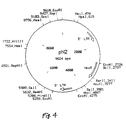
- pGlNa was constructed by cutting pN2 ( Figure 4) with EcoRI and AsuII, filling in the ends of the EcoRI/AsuII fragment containing the neo R gene, and ligating the fragment into SnaBI digested pG1 to form pGlNa ( Figure 5).
- the Myeloproliferative Sarcoma Virus (MPSV) LTR (provided by W. Ostertag, Heinrich-Pette Institute, Hamburg, Germany) was used to replace the 3' Moloney Murine Leukemia Virus LTR of pG1Na to make MPneo.
- MPSV Myeloproliferative Sarcoma Virus
- pG1Na was cut at the ClaI site (bp 2366) and the AccI site (bp 3248) to release the Moloney Murine Leukemia Virus 3' LTR.
- the 3' LTR from MPSV was cloned into the ClaI-AccI site of pG1Na to make MP-neo.
- pG1Na was cut with EcoRI, which cuts at bp 1460 and bp 5375 to obtain a fragment containing the 5' LTR, the pbs, and the leader (Psi) region. This fragment was subcloned into pGEM11 (Promega). ( Figure 9.) The pbs was removed from this pG1Na-derived fragment as a KpnI/SpeI fragment and replaced with the KpnI/SpeI pbs fragment from dl587 rev.
- the ncr region (NheI at position 33 to Sau3a at position 97; Figure 13) was deleted from the 3' LTR of pGlNa. Specifically, a portion of the 3'LTR from pGlNa was subcloned into Bluescript as a ClaI/SstI fragment. Then, PCR was performed using primers overlapping the Sau3a site (bp 97), 5'-GACCGCTAGC AGATCT AGGTCAGG-3' (sense) and the Sst1 site (bp 413), 5'-CTGGAGCTCGGGGAGCAGA-3' (antisense).
- the sequence of the sense primer included a 5' overhang which contains the recognition site for NheI (boldfaced in primer sequence), followed by sequences overlapping the Sau3a site converting it to a BglII site (underlined in primer sequence).
- the 320 bp PCR product which lacks the ncr region, was digested with NheI and SstI and used to replace the 380 bp NheI to SstI fragment of the 3' LTR, effectively removing the ncr and adding a novel BglII site.
- the plasmid vectors MPneo, MPdlneo, MPncrdlneo, LNncrneo, MPthyneo, and MPthydlneo were transfected into the ecotropic packaging cell line GP+E-86 (obtained from A. Bank, Columbia University, New York) using Transfection-Reagent (DOTAP; Boehringer Mannheim Corp., Indianapolis, IN) and selection in 0.5 mg/ml of active G418 (Geneticin; GIBCO-BRL, Bethesda, MD).
- the GP+E-86 cells were grown under selection pressure in DMEM supplemented with 10% Newborn Calf Serum, hypoxanthine (15 ⁇ g/ml), xanthine (250 ⁇ g/ml) (Markowitz, et al., J. Virol., Vol. 62, pgs. 1120-1124 (1988)). Culture supernatants were collected and used to transduce the PA317 (ATCC No. CRL 9078) amphotropic packaging cell line. The PA317 cells were grown in DMEM containing 10% FCS. The PA317 cells then were selected in G418 and cell clones were isolated.
- Viral supernatants in DMEM containing 10% FCS were harvested from confluent 100-mm tissue culture plates of vector producing PA317 fibroblasts and passed through 0.45 ⁇ m filters. They were serially diluted ten-fold in a total volume of 5 mls. The dilutions were as follows: undiluted, 1:10, 1:100, 1:1,000, 1:10,000, and no virus. Two milliliters of each dilution were overlayed on each of F9 cells and 3T3 cells plated twenty-four hours earlier at 2.5X10 4 cells in 6-well tissue culture dishes. Transduction was performed in the presence of 8 ⁇ g/ml of polybrene for 2 hrs.
- the cells were washed in phosphate buffered saline (PBS) and cultured in their respective media. Twenty-four hours later, G418 (GIBCO-BRL) was added at 0.5 mg/ml. Selection was carried out for 12-14 days, until no cells were seen in the non-transduced wells and visible colonies were formed in the transduced wells. Then, the cells were washed in PBS and stained with 0.5% crystal violet in methanol. G418 resistant colonies were counted and the colony forming units per milliliter (G418 R cfu/ml) of viral suspension was calculated.
- PBS phosphate buffered saline
- the standard Moloney Murine Leukemia Virus based vector, LN showed restricted activity on F9 embryonic carcinoma cells only 1/120 (or 0.0082) as efficiently as compared with NIH 3T3 cells.
- the presence of the Myeloproliferative Sarcoma Virus enhancer instead of the Moloney Murine Leukemia Virus enhancer resulted in a slight increase in the relative number of G418 resistant cfu/ml formed on F9 cells (0.0352).
- Substitution of the Moloney Murine Leukemia Virus primer binding site with the dl587rev primer binding site did not increase further the effective titer on F9 cells (0.0245).
- the vector containing the MPSV enhancer and a deletion of the ncr region in addition to the dl587rev primer binding site (MPncrdlneo), was able to transfer G418 resistance to F9 cells almost half as efficiently as to NIH 3T3 fibroblasts. Presence of the Thy-1 fragment encoding demethylation, in addition to the dl587rev primer binding site resulted in a vector (MPthydlneo) that transferred G418 resistance to F9 cells one-fifth as efficiently as to NIH 3T3 fibroblasts.
- F9 and 3T3 cells were transduced, in parallel, with viral particles generated from the retroviral plasmid vectors hereinabove described, with four rounds exposure to viral supernatant for 3 hours each in 6-well plates. The cells then were cultured for two weeks, and cell pellets were prepared for DNA and RNA extractions.
- Genomic DNA and total cellular RNA were extracted from the retrovirally transduced F9 and 3T3 cell pellets for Southern blot and Northern blot analysis.
- DNA was isolated by SDS/proteinase K and RNase digestion at 55°C for 3 to 4 hours. The digested samples were extracted with phenol-chloroform, the DNA was precipitated in ethanol, and resuspended in TE buffer. (Sambrook, et al., Molecular Cloning: A Laboratory Manual , 2nd edition, Cold Spring Harbor Laboratory Press, (1989)). A quantitative Southern blot was performed to measure proviral copy number.
- Control and sample DNA (10 ⁇ g) were digested with the restriction enzyme SstI(G1BC0-BRL) which cuts once in each LTR, thereby releasing the full length proviral sequence.
- SstI(G1BC0-BRL) restriction enzyme which cuts once in each LTR, thereby releasing the full length proviral sequence.
- DNA from a PA317 clone containing a single copy of the neo gene was diluted with DNA from the parental PA317 cells. The dilutions were 100%, 50%, 10%, 5%, and 0%.
- the digested DNA's were electrophoresed on a 1.3% agarose gel, denatured, and blotted onto a nylon membrane. The filter then was probed with 32 P-labeled neo DNA (Feinberg, et al., Anal. Biochem. , Vol.
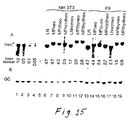
- the Southern blot included a standard curve for copy number made by serially diluting genomic DNA extracted from a PA317 cell line containing one copy per cell of the LN provirus ( Figure 15; lanes 1-5).
- a copy number standard curve was plotted by measuring the intensity of the provirus neo signal by densitometry and normalizing the results to the glucocerbrosidase endogenous marker thereby accounting for differences in loading between DNA samples.
- the provirus copy number in the transduced NIH 3T3 cells ( Figure 15; lanes 6-12) and F9 cells (Figure 15; lanes 13-19) was derived from the standard curve. Similar transduction efficiencies were achieved by the different vectors in the F9 cells and in the NIH 3T3 cells, with limited experimental variations.
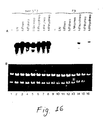
- RNA was isolated by the acid guanidinium thiocyanate - phenolchloroform method described in Chomczynski, et al., Anal. Biochem., Vol. 163, pgs. 156-159 (1987). 15 ⁇ g of RNA were electrophoresed on a 1.2% formaldehyde gel, denatured, neutralized, and transferred to a nylon membrane by capillary blotting. The filter was hybridized with 32 P-labeled neo DNA and used to expose x-ray films at -70°C. The filter was analyzed using the Betascope 603 Blot Analyzer (Betagen, Waltham, Massachusetts) to quantitate the level of RNA. The filter then was stripped, rehybridized with a mouse ⁇ -actin DNA probe, and analyzed again by autoradiography. The Northern blot is shown in Figure 16.
- Genomic DNA (15 ⁇ g), from F9 cells transduced with the retroviral vectors hereinabove described, was digested with the restriction enzyme BamHI (New England Biolabs, Beverly, MD) to reduce the size of the high molecular weight DNA, followed by digestion with EcoRV (GIBCO-BRL). Then, half of each DNA sample was digested with the methylation-sensitive restriction enzyme SmaI (New England Biolabs). In order to monitor completeness of the enzyme digestions, a 20 ⁇ l sample of the digestion mixture was mixed with lambda DNA (GIBCO-BRL) for EcoRV digestion and Adenovirus Type 2 DNA (GIBCO-BRL) for SmaI digestion.
- BamHI New England Biolabs, Beverly, MD
- SmaI methylation-sensitive restriction enzyme
- the mixtures were incubated in parallel with the main samples at 37°C and run subsequently on an agarose check gel.
- EcoRV and EcoRV/SmaI digested genomic DNA were electrophoresed on a 1.5% agarose gel, denatured, and blotted to a nylon membrane.
- the blots were hybridized with a 285 bp probe from the 5' end of the neo gene at the Not I site to the PvuII site in the pGlNa plasmid.
- Several exposures of the blot were obtained on X-ray films.
- the autoradiograms were analyzed on a U.S. Biochemical Sci.
- Scan 5000 measuring the relative intensities of the SmaI-sensitive and SmaI-resistant bands.
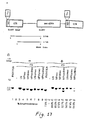
- the blot is shown in Figure 17B.
- Lanes 1-9 are blots of genomic DNA from stably transduced F9 cells which were digested with BamHI and EcoRV alone
- lanes 10-18 are blots of genomic DNA from stably transduced F9 cells which were digested with BamHI, EcoRV, and SmaI.
- This figure also depicts the values of percentage SmaI resistance of the proviruses as the relative intensities of the 2.0 kb and 1.7 kb bands generated after SmaI digestion. The values represent the average obtained from analyzing two different exposures of the same blot.
- the SmaI site is methylated heavily in the Moloney Murine Leukemia Virus LTR of the LN vector in F9 cells, showing an SmaI resistance of 98.3% ( Figure 17B; lane 12).
- the vectors MPneo, MPdlneo, LNncrneo, and MPthyneo did not show any significant decrease in methylation, with recorded values of SmaI resistance of 95.0%, 97.8%, 94.3%, and 97.4%, respectively. (Figure 17B; lanes 13, 14, 16, and 17).
- the vectors MPncrdlneo and MPthydlneo were significantly less methylated than the parent vectors, with 52.7% and 54.6% SmaI resistance, respectively ( Figure 17B; lanes 15 and 18).
- the simultaneous incorporation of three modifications in the Moloney Murine Leukemia Virus based vector decreases the state of methylation of the provirus in F9 embryonic carcinoma cells, in parallel to the increase in RNA transcription.
- the 5'LTR and leader regions of the proviruses were sequenced, first in the PA317 cells, then in the F9 cells, to ensure correct duplication and maintenance of all the modifications after packaging and serial transduction.
- the proviral sequences were amplified by PCR of genomic DNA using primers to the 5' end of the LTR (5'-GACCCCACCTGTACGTATGGCAA-3', sense) and 5' end of the neo gene (5'-GCTGGCCAGGTTAACTCCC-3', antisense).
- the 1.7-1.9 kb PCR products were purified by electrophoresis on a 1.2% agarose gel and extracted using the Qiaex Gel Extraction Kit (Qiagen Inc., Chatsworth, CA). Then, sequencing was performed using the CircumVent Thermal Cycle Sequencing Kit (New England Biolabs) by internal labeling with 35 S-dATP and cycle sequencing.
- the primer at the 5' end of the LTR (described above) was used; for the PBS region, oligonucleotides from the splice donor site (5'-GCTGGCCAGGTTAACTCCC-3', antisense) and the R/U5 region (5'-TGCATCCGAATCGTGGTCTC-3', sense) were used.
- a primer from the Thy-1 sequence (5'-TCGGGGTGGAGCAGTCTTCT-3', sense) allowed sequencing of the enhancer region of the two vectors containing the Thy-1 fragment.
- Vectors MP-neo; MP-ncr-neo; MP-Thy-neo; MP-dl-neo; MP-ncr-dl-neo; and MP-Thy-dl-neo were transduced into primary murine embryonic stem cells of the CCE line (Bradley, et al ., Nature, Vol. 309, pgs. 255-256 (1984)).
- the transduced cells were expanded in culture for two weeks without G418 selection, and harvested for nucleic acid analysis. The results are similar to those seen in the F9 cells.
- the 5' LTR of the vectors showed complete methylation, except for those of MP-ncr-dl-neo and MP-Thy-dl-neo. These two vectors showed that approximately 50% of the LTR could be cut with SmaI, thus demonstrating that there is significantly decreased methylation in these vectors.
- Northern blot analysis showed that these two vectors also yielded detectable levels of vector-derived transcripts; all others did not produce detectable levels of RNA. Thus, these vectors are active transcriptionally in primary embryonic stem cells.
- transgenic mice expressing the inserted gene, such as, for example, an interleukin, including Interleukins 1 through 15; a transcriptional factor; a homeobox gene; or a surface antigen gene.
- an interleukin including Interleukins 1 through 15
- a transcriptional factor including Interleukins 1 through 15
- a homeobox gene such as, for example, a transcriptional factor, a homeobox gene, or a surface antigen gene.
- Bone marrow was collected from C57b1/6 mice, and the bone marrow cells were transduced with either MP-ncr-dl-neo, MP-Thy-dl-neo, or the control vector LN. Transduction was carried out in accordance with the procedure described in Challita, et al. Proc. Nat. Acad. Sci. Vol. 91, pqs. 2567-2571 (1994) and Kra, et al ., Blood , Vol. 83, pgs. 2373-2378 (1994). 6 to 8 week old C57B1/6 mice then were irradiated with 950 Rads, and the transduced marrow from each group was injected into the mice.
- the marrow was allowed to grow in the mice for 3 to 4 months, and then the mice were sacrificed. The marrow was collected and transplanted into secondary irradiated mice. Twelve days later, the secondary mice were sacrificed and colonies which had formed from the transplanted marrow in the spleens (2° CFU-S) were isolated. The presence of the vectors in the 2° CFU-S was ascertained by PCR assay for the neo R gene. 2° CFU-S which contained the vectors based upon DNA PCR then were analyzed to ascertain vector expression by Northern blot analysis. The results of the Northern blot analysis are listed in Table II below. Table II Analysis of Retroviral Vector Expression in 2° CFU-S Vector 1° Donor Mouse No.
- both modified vectors showed higher frequencies of expression 2° CFU-S containing the MP-Thy-dl-neo vector showed expression in 59%, and those of MP-ncr-dl-neo in 69%.
- the modified vectors that showed increased expression in the F9 cells also showed higher frequencies of expression in the above murine gene transfer/bone marrow transplant model.
Landscapes
- Health & Medical Sciences (AREA)
- Life Sciences & Earth Sciences (AREA)
- Genetics & Genomics (AREA)
- Chemical & Material Sciences (AREA)
- Organic Chemistry (AREA)
- Engineering & Computer Science (AREA)
- Bioinformatics & Cheminformatics (AREA)
- Biomedical Technology (AREA)
- Biotechnology (AREA)
- General Engineering & Computer Science (AREA)
- Zoology (AREA)
- Wood Science & Technology (AREA)
- Biochemistry (AREA)
- Biophysics (AREA)
- General Health & Medical Sciences (AREA)
- Molecular Biology (AREA)
- Virology (AREA)
- Physics & Mathematics (AREA)
- Plant Pathology (AREA)
- Microbiology (AREA)
- Gastroenterology & Hepatology (AREA)
- Medicinal Chemistry (AREA)
- Proteomics, Peptides & Aminoacids (AREA)
- Micro-Organisms Or Cultivation Processes Thereof (AREA)
- Medicines Containing Material From Animals Or Micro-Organisms (AREA)
- Medicines That Contain Protein Lipid Enzymes And Other Medicines (AREA)
- Pharmaceuticals Containing Other Organic And Inorganic Compounds (AREA)
Claims (10)
- Vecteur du virus de leucémie murine Moloney comprenant :(i) une région d'amplificateur obtenue à partir du virus du sarcome myéloprolifératif ;(ii) un site de liaison d'amorce obtenu à partir du rétrovirus murin dl587rev, et dans lequel ledit vecteur ne comprend pas la région de contrôle négatif du virus de leucémie murine Moloney.
- Vecteur selon la revendication 1, dans lequel ledit vecteur comprend en outre une séquence d'acide nucléique qui déméthyle les résidus cytosine dans le LTR proviral.
- Vecteur du virus de leucémie murine Moloney comprenant :(i) une région d'amplificateur obtenues à partir du virus du sarcome myéloprolifératif ;(ii) un site de liaison d'amorce obtenu à partir du rétrovirus murin dl587rev ; et(iii) une séquence d'acide nucléique qui dëméthyle les résidus cytosine dans le LTR proviral.
- Vecteur selon la revendication 1, 2 ou 3, dans lequel ledit vecteur comprend en outre au moins une séquence d'acide nucléique codant pour un agent thérapeutique.
- Cellules d'enveloppe transduites avec le vecteur selon la revendication 1, 2, 3 ou 4.
- Particules de vecteur générées à partir des cellules d'enveloppe selon la revendication 5.
- Cellules prokaryotes, à l'exception des cellules embryonnaires humaines, transduites avec les particules de vecteur réteoviral selon la revendication 6.
- Cellules selon la revendication 7, lesdites cellules étant des cellules souches hématopoïétiques.
- Utilisation d'un vecteur selon la revendication 1, 2, 3 ou 4, dans la préparation d'un médicament pour un traitement par thérapie génique chez un hôte.
- Utilisation d'une cellule selon la revendication 7 ou 8 dans la préparation d'un médicament pour un traitement par thérapie génique chez un hôte.
Applications Claiming Priority (3)
| Application Number | Priority Date | Filing Date | Title |
|---|---|---|---|
| US361112 | 1994-12-21 | ||
| US08/361,112 US5707865A (en) | 1994-12-21 | 1994-12-21 | Retroviral vectors for expression in embryonic cells |
| PCT/US1995/016678 WO1996019245A1 (fr) | 1994-12-21 | 1995-12-19 | Vecteurs retroviraux destines a l'expression dans les cellules embryonnaires |
Publications (3)
| Publication Number | Publication Date |
|---|---|
| EP0801575A1 EP0801575A1 (fr) | 1997-10-22 |
| EP0801575A4 EP0801575A4 (fr) | 2001-08-16 |
| EP0801575B1 true EP0801575B1 (fr) | 2006-04-19 |
Family
ID=23420695
Family Applications (1)
| Application Number | Title | Priority Date | Filing Date |
|---|---|---|---|
| EP95944182A Expired - Lifetime EP0801575B1 (fr) | 1994-12-21 | 1995-12-19 | Vecteurs retroviraux destines a l'expression dans les cellules embryonnaires |
Country Status (11)
| Country | Link |
|---|---|
| US (1) | US5707865A (fr) |
| EP (1) | EP0801575B1 (fr) |
| JP (1) | JPH10510995A (fr) |
| AT (1) | ATE323776T1 (fr) |
| AU (1) | AU693317B2 (fr) |
| CA (1) | CA2208210A1 (fr) |
| DE (1) | DE69534948T2 (fr) |
| DK (1) | DK0801575T3 (fr) |
| NZ (1) | NZ300795A (fr) |
| PT (1) | PT801575E (fr) |
| WO (1) | WO1996019245A1 (fr) |
Families Citing this family (13)
| Publication number | Priority date | Publication date | Assignee | Title |
|---|---|---|---|---|
| AU5703796A (en) * | 1995-05-10 | 1996-11-29 | Introgene B.V. | Improved retroviral vectors, especially suitable for gene th erapy |
| CA2222808A1 (fr) * | 1995-06-02 | 1996-12-05 | Tadanori Yoshimatsu | Cellules generatrices de retrovirus de recombinaison |
| US7129043B1 (en) | 1998-10-22 | 2006-10-31 | Duke University | Methods of screening for risk of proliferative disease and methods for the treatment of proliferative disease |
| US6642038B1 (en) | 1999-09-14 | 2003-11-04 | Genzyme Glycobiology Research Institute, Inc. | GlcNAc phosphotransferase of the lysosomal targeting pathway |
| US6770468B1 (en) | 1999-09-14 | 2004-08-03 | Genzyme Glycobiology Research Institute, Inc. | Phosphodiester-α-GlcNAcase of the lysosomal targeting pathway |
| US7381813B2 (en) | 2001-05-31 | 2008-06-03 | Novartis Ag | Nucleic acids encoding estrogen receptor ligand binding domain variants |
| US20030124652A1 (en) * | 2001-12-21 | 2003-07-03 | Novazyme Pharmaceuticals, Inc. | Methods of producing high mannose glycoproteins in complex carbohydrate deficient cells |
| US6905856B2 (en) * | 2001-12-21 | 2005-06-14 | Genzyme Glycobiology Research Institute, Inc. | Soluble GlcNAc phosphotransferase |
| US6800472B2 (en) * | 2001-12-21 | 2004-10-05 | Genzyme Glycobiology Research Institute, Inc. | Expression of lysosomal hydrolase in cells expressing pro-N-acetylglucosamine-1-phosphodiester α-N-acetyl glucosimanidase |
| US20040009158A1 (en) * | 2002-07-11 | 2004-01-15 | Washington University | Promotion of neovascularization using bone marrow-derived endothelial-progenitor cells |
| EP3188762A4 (fr) | 2014-07-31 | 2018-01-10 | The Board of Regents of the University of Oklahoma | Mutants de rpe65 de mammifère à activité isomérohydrolase élevée |
| CN110607394A (zh) * | 2018-06-15 | 2019-12-24 | 云舟生物科技(广州)有限公司 | 莫洛尼鼠白血病病毒滴度检测试剂盒及滴度检测方法 |
| WO2025059113A1 (fr) | 2023-09-12 | 2025-03-20 | The Board Of Regents Of The University Of Oklahoma | Traitements pour améliorer la réponse immunitaire à des infections à clostridioides difficile |
-
1994
- 1994-12-21 US US08/361,112 patent/US5707865A/en not_active Expired - Fee Related
-
1995
- 1995-12-19 DK DK95944182T patent/DK0801575T3/da active
- 1995-12-19 PT PT95944182T patent/PT801575E/pt unknown
- 1995-12-19 EP EP95944182A patent/EP0801575B1/fr not_active Expired - Lifetime
- 1995-12-19 JP JP8519995A patent/JPH10510995A/ja not_active Ceased
- 1995-12-19 DE DE69534948T patent/DE69534948T2/de not_active Expired - Fee Related
- 1995-12-19 WO PCT/US1995/016678 patent/WO1996019245A1/fr not_active Ceased
- 1995-12-19 AU AU46046/96A patent/AU693317B2/en not_active Ceased
- 1995-12-19 NZ NZ300795A patent/NZ300795A/en unknown
- 1995-12-19 CA CA002208210A patent/CA2208210A1/fr not_active Abandoned
- 1995-12-19 AT AT95944182T patent/ATE323776T1/de not_active IP Right Cessation
Also Published As
| Publication number | Publication date |
|---|---|
| CA2208210A1 (fr) | 1996-06-27 |
| WO1996019245A1 (fr) | 1996-06-27 |
| ATE323776T1 (de) | 2006-05-15 |
| US5707865A (en) | 1998-01-13 |
| AU693317B2 (en) | 1998-06-25 |
| DE69534948D1 (de) | 2006-05-24 |
| JPH10510995A (ja) | 1998-10-27 |
| DE69534948T2 (de) | 2006-11-16 |
| EP0801575A4 (fr) | 2001-08-16 |
| PT801575E (pt) | 2006-08-31 |
| AU4604696A (en) | 1996-07-10 |
| NZ300795A (en) | 2001-08-31 |
| DK0801575T3 (da) | 2006-08-21 |
| EP0801575A1 (fr) | 1997-10-22 |
Similar Documents
| Publication | Publication Date | Title |
|---|---|---|
| US6013517A (en) | Crossless retroviral vectors | |
| US5925345A (en) | Vectors including foreign genes and negative selective markers | |
| EP0953052B1 (fr) | Vecteurs retroviraux sans croisement | |
| JP4303315B2 (ja) | 非交差性レトロウイルスベクター | |
| EP0710288B1 (fr) | Vecteurs adenoviraux pour le traitement de l'hemophilie | |
| US5714353A (en) | Safe vectors for gene therapy | |
| Kim et al. | Construction of retroviral vectors with improved safety, gene expression, and versatility | |
| WO1997042338A9 (fr) | Vecteurs retroviraux sans croisement | |
| AU693317B2 (en) | Retroviral vectors for expression in embryonic cells | |
| WO1995030763A9 (fr) | Vecteurs retroviraux a taux de recombinaison reduit | |
| WO1995009654A1 (fr) | Therapie genique concernant le systeme nerveux | |
| US6576463B1 (en) | Hybrid vectors for gene therapy | |
| US5710037A (en) | Retroviral vector particles | |
| WO1995034639A9 (fr) | Nouvelle enveloppe retrovirale et long segment terminal a repetitions (ltr) et particules de vecteur retroviral comprenant cette enveloppe et/ou le ltr | |
| JPH11511651A (ja) | 遺伝子治療に特に適した改良型レトロウイルスベクター | |
| US6090608A (en) | SV-40 derived DNA constructs comprising exogenous DNA sequences | |
| Lin | Construction of new retroviral producer cells from adenoviral and retroviral vectors | |
| AU758155B2 (en) | Construction of retroviral producer cells from adenoviral and retroviral vectors | |
| US6022738A (en) | Vectors for expression of globin genes | |
| CA2244663A1 (fr) | Cellules d'encapsidation de vecteurs retroviraux 10a1 et utilisations de ce type de cellules | |
| Herman et al. | Expression of human argininosuccinate synthetase in murine hematopoietic cells in vivo | |
| Yu | DEVELOPING RETROVIRAL VECTORS FOR EFFICIENT GENE TRANSFER AND EXPRESSION IN HUMAN GENE THERAPY | |
| Zhang et al. | MOLECULAR TARGETING OF CANCER: RETROVIRAL VECTOR-MEDIATED ANTISENSE NUCLEIC ACID THERAPY | |
| Bender | Virus-mediated gene therapy for human beta-thalassemia and sickle cell disease | |
| Hesdorffer et al. | Retroviral gene transfer in mice: The use of a unique packaging line improves efficiency |
Legal Events
| Date | Code | Title | Description |
|---|---|---|---|
| PUAI | Public reference made under article 153(3) epc to a published international application that has entered the european phase |
Free format text: ORIGINAL CODE: 0009012 |
|
| 17P | Request for examination filed |
Effective date: 19970712 |
|
| AK | Designated contracting states |
Kind code of ref document: A1 Designated state(s): AT BE CH DE DK ES FR GB GR IE IT LI LU MC NL PT SE |
|
| A4 | Supplementary search report drawn up and despatched |
Effective date: 20010704 |
|
| AK | Designated contracting states |
Kind code of ref document: A4 Designated state(s): AT BE CH DE DK ES FR GB GR IE IT LI LU MC NL PT SE |
|
| RIC1 | Information provided on ipc code assigned before grant |
Free format text: 7C 12N 15/86 A, 7A 61K 48/00 B, 7C 12N 15/00 B |
|
| 17Q | First examination report despatched |
Effective date: 20030507 |
|
| GRAP | Despatch of communication of intention to grant a patent |
Free format text: ORIGINAL CODE: EPIDOSNIGR1 |
|
| RIC1 | Information provided on ipc code assigned before grant |
Ipc: 7C 12N 15/00 B Ipc: 7A 61K 48/00 B Ipc: 7C 12N 15/867 A |
|
| GRAS | Grant fee paid |
Free format text: ORIGINAL CODE: EPIDOSNIGR3 |
|
| GRAA | (expected) grant |
Free format text: ORIGINAL CODE: 0009210 |
|
| AK | Designated contracting states |
Kind code of ref document: B1 Designated state(s): AT BE CH DE DK ES FR GB GR IE IT LI LU MC NL PT SE |
|
| REG | Reference to a national code |
Ref country code: GB Ref legal event code: FG4D |
|
| REF | Corresponds to: |
Ref document number: 69534948 Country of ref document: DE Date of ref document: 20060524 Kind code of ref document: P |
|
| REG | Reference to a national code |
Ref country code: IE Ref legal event code: FG4D |
|
| REG | Reference to a national code |
Ref country code: SE Ref legal event code: TRGR |
|
| REG | Reference to a national code |
Ref country code: DK Ref legal event code: T3 |
|
| REG | Reference to a national code |
Ref country code: PT Ref legal event code: SC4A Effective date: 20060705 |
|
| PG25 | Lapsed in a contracting state [announced via postgrant information from national office to epo] |
Ref country code: ES Free format text: LAPSE BECAUSE OF FAILURE TO SUBMIT A TRANSLATION OF THE DESCRIPTION OR TO PAY THE FEE WITHIN THE PRESCRIBED TIME-LIMIT Effective date: 20060919 |
|
| REG | Reference to a national code |
Ref country code: GR Ref legal event code: EP Ref document number: 20060402519 Country of ref document: GR |
|
| ET | Fr: translation filed | ||
| PG25 | Lapsed in a contracting state [announced via postgrant information from national office to epo] |
Ref country code: IE Free format text: LAPSE BECAUSE OF NON-PAYMENT OF DUE FEES Effective date: 20061219 |
|
| PG25 | Lapsed in a contracting state [announced via postgrant information from national office to epo] |
Ref country code: SE Free format text: LAPSE BECAUSE OF NON-PAYMENT OF DUE FEES Effective date: 20061220 |
|
| PG25 | Lapsed in a contracting state [announced via postgrant information from national office to epo] |
Ref country code: MC Free format text: LAPSE BECAUSE OF NON-PAYMENT OF DUE FEES Effective date: 20061231 Ref country code: LI Free format text: LAPSE BECAUSE OF NON-PAYMENT OF DUE FEES Effective date: 20061231 Ref country code: CH Free format text: LAPSE BECAUSE OF NON-PAYMENT OF DUE FEES Effective date: 20061231 Ref country code: BE Free format text: LAPSE BECAUSE OF NON-PAYMENT OF DUE FEES Effective date: 20061231 |
|
| PGFP | Annual fee paid to national office [announced via postgrant information from national office to epo] |
Ref country code: IT Payment date: 20061231 Year of fee payment: 12 |
|
| PLBE | No opposition filed within time limit |
Free format text: ORIGINAL CODE: 0009261 |
|
| STAA | Information on the status of an ep patent application or granted ep patent |
Free format text: STATUS: NO OPPOSITION FILED WITHIN TIME LIMIT |
|
| 26N | No opposition filed |
Effective date: 20070122 |
|
| PG25 | Lapsed in a contracting state [announced via postgrant information from national office to epo] |
Ref country code: NL Free format text: LAPSE BECAUSE OF NON-PAYMENT OF DUE FEES Effective date: 20070701 |
|
| PG25 | Lapsed in a contracting state [announced via postgrant information from national office to epo] |
Ref country code: DE Free format text: LAPSE BECAUSE OF NON-PAYMENT OF DUE FEES Effective date: 20070703 |
|
| REG | Reference to a national code |
Ref country code: DK Ref legal event code: EBP |
|
| REG | Reference to a national code |
Ref country code: CH Ref legal event code: PL |
|
| EUG | Se: european patent has lapsed | ||
| GBPC | Gb: european patent ceased through non-payment of renewal fee |
Effective date: 20061219 |
|
| NLV4 | Nl: lapsed or anulled due to non-payment of the annual fee |
Effective date: 20070701 |
|
| PG25 | Lapsed in a contracting state [announced via postgrant information from national office to epo] |
Ref country code: PT Free format text: LAPSE BECAUSE OF NON-PAYMENT OF DUE FEES Effective date: 20070919 |
|
| REG | Reference to a national code |
Ref country code: FR Ref legal event code: ST Effective date: 20070831 |
|
| REG | Reference to a national code |
Ref country code: PT Ref legal event code: MM4A Free format text: LAPSE DUE TO NON-PAYMENT OF FEES Effective date: 20070919 |
|
| PG25 | Lapsed in a contracting state [announced via postgrant information from national office to epo] |
Ref country code: GB Free format text: LAPSE BECAUSE OF NON-PAYMENT OF DUE FEES Effective date: 20061219 |
|
| BERE | Be: lapsed |
Owner name: *CHILDREN'S HOSPITAL LOS ANGELES Effective date: 20061231 |
|
| PG25 | Lapsed in a contracting state [announced via postgrant information from national office to epo] |
Ref country code: DK Free format text: LAPSE BECAUSE OF NON-PAYMENT OF DUE FEES Effective date: 20070102 |
|
| PG25 | Lapsed in a contracting state [announced via postgrant information from national office to epo] |
Ref country code: AT Free format text: LAPSE BECAUSE OF NON-PAYMENT OF DUE FEES Effective date: 20061219 |
|
| PG25 | Lapsed in a contracting state [announced via postgrant information from national office to epo] |
Ref country code: GR Free format text: LAPSE BECAUSE OF NON-PAYMENT OF DUE FEES Effective date: 20060720 Ref country code: FR Free format text: LAPSE BECAUSE OF NON-PAYMENT OF DUE FEES Effective date: 20070102 |
|
| PG25 | Lapsed in a contracting state [announced via postgrant information from national office to epo] |
Ref country code: LU Free format text: LAPSE BECAUSE OF NON-PAYMENT OF DUE FEES Effective date: 20061219 |
|
| PG25 | Lapsed in a contracting state [announced via postgrant information from national office to epo] |
Ref country code: IT Free format text: LAPSE BECAUSE OF NON-PAYMENT OF DUE FEES Effective date: 20071219 |