EP0804446B1 - Method and composition for stabilization of labelled nucleoside triphosphates - Google Patents
Method and composition for stabilization of labelled nucleoside triphosphates Download PDFInfo
- Publication number
- EP0804446B1 EP0804446B1 EP96903394A EP96903394A EP0804446B1 EP 0804446 B1 EP0804446 B1 EP 0804446B1 EP 96903394 A EP96903394 A EP 96903394A EP 96903394 A EP96903394 A EP 96903394A EP 0804446 B1 EP0804446 B1 EP 0804446B1
- Authority
- EP
- European Patent Office
- Prior art keywords
- preparation
- labelled
- compound
- sig
- nucleotide
- Prior art date
- Legal status (The legal status is an assumption and is not a legal conclusion. Google has not performed a legal analysis and makes no representation as to the accuracy of the status listed.)
- Expired - Lifetime
Links
- 238000000034 method Methods 0.000 title claims description 24
- 239000002777 nucleoside Substances 0.000 title claims description 7
- 239000000203 mixture Substances 0.000 title description 15
- 239000001226 triphosphate Substances 0.000 title description 8
- 235000011178 triphosphate Nutrition 0.000 title description 6
- -1 nucleoside triphosphates Chemical class 0.000 title description 5
- 230000006641 stabilisation Effects 0.000 title description 3
- 238000011105 stabilization Methods 0.000 title description 3
- KRKNYBCHXYNGOX-UHFFFAOYSA-K Citrate Chemical compound [O-]C(=O)CC(O)(CC([O-])=O)C([O-])=O KRKNYBCHXYNGOX-UHFFFAOYSA-K 0.000 claims description 32
- ODBLHEXUDAPZAU-UHFFFAOYSA-N isocitric acid Chemical compound OC(=O)C(O)C(C(O)=O)CC(O)=O ODBLHEXUDAPZAU-UHFFFAOYSA-N 0.000 claims description 31
- 125000003729 nucleotide group Chemical group 0.000 claims description 28
- 239000002773 nucleotide Substances 0.000 claims description 27
- 238000002360 preparation method Methods 0.000 claims description 24
- KCXVZYZYPLLWCC-UHFFFAOYSA-N EDTA Chemical compound OC(=O)CN(CC(O)=O)CCN(CC(O)=O)CC(O)=O KCXVZYZYPLLWCC-UHFFFAOYSA-N 0.000 claims description 20
- 150000001875 compounds Chemical class 0.000 claims description 19
- DEFVIWRASFVYLL-UHFFFAOYSA-N ethylene glycol bis(2-aminoethyl)tetraacetic acid Chemical compound OC(=O)CN(CC(O)=O)CCOCCOCCN(CC(O)=O)CC(O)=O DEFVIWRASFVYLL-UHFFFAOYSA-N 0.000 claims description 18
- FCKYPQBAHLOOJQ-UHFFFAOYSA-N Cyclohexane-1,2-diaminetetraacetic acid Chemical compound OC(=O)CN(CC(O)=O)C1CCCCC1N(CC(O)=O)CC(O)=O FCKYPQBAHLOOJQ-UHFFFAOYSA-N 0.000 claims description 17
- 229910019142 PO4 Inorganic materials 0.000 claims description 14
- NBIIXXVUZAFLBC-UHFFFAOYSA-K phosphate Chemical compound [O-]P([O-])([O-])=O NBIIXXVUZAFLBC-UHFFFAOYSA-K 0.000 claims description 14
- 239000010452 phosphate Substances 0.000 claims description 14
- 108010014303 DNA-directed DNA polymerase Proteins 0.000 claims description 11
- 102000016928 DNA-directed DNA polymerase Human genes 0.000 claims description 11
- KDCGOANMDULRCW-UHFFFAOYSA-N 7H-purine Chemical compound N1=CNC2=NC=NC2=C1 KDCGOANMDULRCW-UHFFFAOYSA-N 0.000 claims description 8
- SUYVUBYJARFZHO-RRKCRQDMSA-N dATP Chemical compound C1=NC=2C(N)=NC=NC=2N1[C@H]1C[C@H](O)[C@@H](COP(O)(=O)OP(O)(=O)OP(O)(O)=O)O1 SUYVUBYJARFZHO-RRKCRQDMSA-N 0.000 claims description 7
- SUYVUBYJARFZHO-UHFFFAOYSA-N dATP Natural products C1=NC=2C(N)=NC=NC=2N1C1CC(O)C(COP(O)(=O)OP(O)(=O)OP(O)(O)=O)O1 SUYVUBYJARFZHO-UHFFFAOYSA-N 0.000 claims description 6
- CZPWVGJYEJSRLH-UHFFFAOYSA-N Pyrimidine Chemical compound C1=CN=CN=C1 CZPWVGJYEJSRLH-UHFFFAOYSA-N 0.000 claims description 4
- 239000000298 carbocyanine Substances 0.000 claims description 4
- QWYZFXLSWMXLDM-UHFFFAOYSA-M pinacyanol iodide Chemical class [I-].C1=CC2=CC=CC=C2N(CC)C1=CC=CC1=CC=C(C=CC=C2)C2=[N+]1CC QWYZFXLSWMXLDM-UHFFFAOYSA-M 0.000 claims description 4
- 239000000758 substrate Substances 0.000 claims description 4
- GNBHRKFJIUUOQI-UHFFFAOYSA-N fluorescein Chemical compound O1C(=O)C2=CC=CC=C2C21C1=CC=C(O)C=C1OC1=CC(O)=CC=C21 GNBHRKFJIUUOQI-UHFFFAOYSA-N 0.000 claims description 3
- 239000002510 pyrogen Substances 0.000 claims description 3
- 239000003381 stabilizer Substances 0.000 claims description 3
- DLHNIFPAUZVLLA-XLPZGREQSA-N 2'-deoxy-5-hydroxymethyl-CTP Chemical compound C1=C(CO)C(N)=NC(=O)N1[C@@H]1O[C@H](COP(O)(=O)OP(O)(=O)OP(O)(O)=O)[C@@H](O)C1 DLHNIFPAUZVLLA-XLPZGREQSA-N 0.000 claims description 2
- OALHHIHQOFIMEF-UHFFFAOYSA-N 3',6'-dihydroxy-2',4',5',7'-tetraiodo-3h-spiro[2-benzofuran-1,9'-xanthene]-3-one Chemical compound O1C(=O)C2=CC=CC=C2C21C1=CC(I)=C(O)C(I)=C1OC1=C(I)C(O)=C(I)C=C21 OALHHIHQOFIMEF-UHFFFAOYSA-N 0.000 claims description 2
- 102000004163 DNA-directed RNA polymerases Human genes 0.000 claims description 2
- 108090000626 DNA-directed RNA polymerases Proteins 0.000 claims description 2
- 102100034343 Integrase Human genes 0.000 claims description 2
- 108010092799 RNA-directed DNA polymerase Proteins 0.000 claims description 2
- 108091028664 Ribonucleotide Proteins 0.000 claims description 2
- YCOXPTBWJXOXAV-XLPZGREQSA-N [[(2r,3s,5r)-5-(5-formyl-2,4-dioxopyrimidin-1-yl)-3-hydroxyoxolan-2-yl]methoxy-hydroxyphosphoryl] phosphono hydrogen phosphate Chemical compound O1[C@H](COP(O)(=O)OP(O)(=O)OP(O)(O)=O)[C@@H](O)C[C@@H]1N1C(=O)NC(=O)C(C=O)=C1 YCOXPTBWJXOXAV-XLPZGREQSA-N 0.000 claims description 2
- 239000000470 constituent Substances 0.000 claims description 2
- 239000005547 deoxyribonucleotide Substances 0.000 claims description 2
- 125000002637 deoxyribonucleotide group Chemical group 0.000 claims description 2
- 238000001914 filtration Methods 0.000 claims description 2
- 150000003833 nucleoside derivatives Chemical class 0.000 claims description 2
- 239000008363 phosphate buffer Substances 0.000 claims description 2
- 125000002467 phosphate group Chemical group [H]OP(=O)(O[H])O[*] 0.000 claims description 2
- 239000002336 ribonucleotide Substances 0.000 claims description 2
- 125000002652 ribonucleotide group Chemical group 0.000 claims description 2
- 150000001735 carboxylic acids Chemical class 0.000 claims 1
- RGWHQCVHVJXOKC-SHYZEUOFSA-J dCTP(4-) Chemical compound O=C1N=C(N)C=CN1[C@@H]1O[C@H](COP([O-])(=O)OP([O-])(=O)OP([O-])([O-])=O)[C@@H](O)C1 RGWHQCVHVJXOKC-SHYZEUOFSA-J 0.000 claims 1
- 230000003019 stabilising effect Effects 0.000 claims 1
- 239000000872 buffer Substances 0.000 description 27
- 108020004414 DNA Proteins 0.000 description 24
- 238000012163 sequencing technique Methods 0.000 description 24
- 238000006243 chemical reaction Methods 0.000 description 23
- 238000002372 labelling Methods 0.000 description 22
- 239000000243 solution Substances 0.000 description 20
- 229950007919 egtazic acid Drugs 0.000 description 17
- 239000012634 fragment Substances 0.000 description 12
- 239000000047 product Substances 0.000 description 9
- 238000001962 electrophoresis Methods 0.000 description 8
- 238000001712 DNA sequencing Methods 0.000 description 7
- RGWHQCVHVJXOKC-SHYZEUOFSA-N dCTP Chemical compound O=C1N=C(N)C=CN1[C@@H]1O[C@H](CO[P@](O)(=O)O[P@](O)(=O)OP(O)(O)=O)[C@@H](O)C1 RGWHQCVHVJXOKC-SHYZEUOFSA-N 0.000 description 6
- 239000011550 stock solution Substances 0.000 description 6
- 230000015556 catabolic process Effects 0.000 description 5
- HAAZLUGHYHWQIW-KVQBGUIXSA-N dGTP Chemical compound C1=NC=2C(=O)NC(N)=NC=2N1[C@H]1C[C@H](O)[C@@H](COP(O)(=O)OP(O)(=O)OP(O)(O)=O)O1 HAAZLUGHYHWQIW-KVQBGUIXSA-N 0.000 description 5
- NHVNXKFIZYSCEB-XLPZGREQSA-N dTTP Chemical compound O=C1NC(=O)C(C)=CN1[C@@H]1O[C@H](COP(O)(=O)OP(O)(=O)OP(O)(O)=O)[C@@H](O)C1 NHVNXKFIZYSCEB-XLPZGREQSA-N 0.000 description 5
- 238000001514 detection method Methods 0.000 description 5
- 238000007323 disproportionation reaction Methods 0.000 description 5
- 239000000975 dye Substances 0.000 description 5
- 102000053602 DNA Human genes 0.000 description 4
- 238000000211 autoradiogram Methods 0.000 description 4
- 230000027832 depurination Effects 0.000 description 4
- 230000001627 detrimental effect Effects 0.000 description 4
- 238000011534 incubation Methods 0.000 description 4
- 238000011068 loading method Methods 0.000 description 4
- 238000006116 polymerization reaction Methods 0.000 description 4
- 239000007858 starting material Substances 0.000 description 4
- 108091028043 Nucleic acid sequence Proteins 0.000 description 3
- 108020004682 Single-Stranded DNA Proteins 0.000 description 3
- 239000002253 acid Substances 0.000 description 3
- 150000007513 acids Chemical class 0.000 description 3
- 230000015572 biosynthetic process Effects 0.000 description 3
- 229910021645 metal ion Inorganic materials 0.000 description 3
- MYWUZJCMWCOHBA-VIFPVBQESA-N methamphetamine Chemical compound CN[C@@H](C)CC1=CC=CC=C1 MYWUZJCMWCOHBA-VIFPVBQESA-N 0.000 description 3
- 238000003786 synthesis reaction Methods 0.000 description 3
- 238000012800 visualization Methods 0.000 description 3
- YBJHBAHKTGYVGT-ZKWXMUAHSA-N (+)-Biotin Chemical compound N1C(=O)N[C@@H]2[C@H](CCCCC(=O)O)SC[C@@H]21 YBJHBAHKTGYVGT-ZKWXMUAHSA-N 0.000 description 2
- 102000004594 DNA Polymerase I Human genes 0.000 description 2
- 108010017826 DNA Polymerase I Proteins 0.000 description 2
- ZHNUHDYFZUAESO-UHFFFAOYSA-N Formamide Chemical compound NC=O ZHNUHDYFZUAESO-UHFFFAOYSA-N 0.000 description 2
- FAPWRFPIFSIZLT-UHFFFAOYSA-M Sodium chloride Chemical compound [Na+].[Cl-] FAPWRFPIFSIZLT-UHFFFAOYSA-M 0.000 description 2
- 102000004887 Transforming Growth Factor beta Human genes 0.000 description 2
- 108090001012 Transforming Growth Factor beta Proteins 0.000 description 2
- PYMYPHUHKUWMLA-LMVFSUKVSA-N aldehydo-D-ribose Chemical compound OC[C@@H](O)[C@@H](O)[C@@H](O)C=O PYMYPHUHKUWMLA-LMVFSUKVSA-N 0.000 description 2
- 238000000137 annealing Methods 0.000 description 2
- 125000002843 carboxylic acid group Chemical group 0.000 description 2
- 230000000295 complement effect Effects 0.000 description 2
- 238000013480 data collection Methods 0.000 description 2
- 238000013479 data entry Methods 0.000 description 2
- 238000004925 denaturation Methods 0.000 description 2
- 230000036425 denaturation Effects 0.000 description 2
- 239000012470 diluted sample Substances 0.000 description 2
- 238000009472 formulation Methods 0.000 description 2
- 238000004108 freeze drying Methods 0.000 description 2
- 238000001502 gel electrophoresis Methods 0.000 description 2
- 108020004707 nucleic acids Proteins 0.000 description 2
- 102000039446 nucleic acids Human genes 0.000 description 2
- 150000007523 nucleic acids Chemical class 0.000 description 2
- 229920002401 polyacrylamide Polymers 0.000 description 2
- 108090000623 proteins and genes Proteins 0.000 description 2
- 230000002285 radioactive effect Effects 0.000 description 2
- 239000007787 solid Substances 0.000 description 2
- 230000000087 stabilizing effect Effects 0.000 description 2
- 239000012089 stop solution Substances 0.000 description 2
- 239000000126 substance Substances 0.000 description 2
- ZRKFYGHZFMAOKI-QMGMOQQFSA-N tgfbeta Chemical compound C([C@H](NC(=O)[C@H](C(C)C)NC(=O)CNC(=O)[C@H](CCC(O)=O)NC(=O)[C@H](CCCNC(N)=N)NC(=O)[C@H](CC(N)=O)NC(=O)[C@H](CC(C)C)NC(=O)[C@H]([C@@H](C)O)NC(=O)[C@H](CCC(O)=O)NC(=O)[C@H]([C@@H](C)O)NC(=O)[C@H](CC(C)C)NC(=O)CNC(=O)[C@H](C)NC(=O)[C@H](CO)NC(=O)[C@H](CCC(N)=O)NC(=O)[C@@H](NC(=O)[C@H](C)NC(=O)[C@H](C)NC(=O)[C@@H](NC(=O)[C@H](CC(C)C)NC(=O)[C@@H](N)CCSC)C(C)C)[C@@H](C)CC)C(=O)N[C@@H]([C@@H](C)O)C(=O)N[C@@H](C(C)C)C(=O)N[C@@H](CC=1C=CC=CC=1)C(=O)N[C@@H](C)C(=O)N1[C@@H](CCC1)C(=O)N[C@@H]([C@@H](C)O)C(=O)N[C@@H](CC(N)=O)C(=O)N[C@@H](CCC(O)=O)C(=O)N[C@@H](C)C(=O)N[C@@H](CC=1C=CC=CC=1)C(=O)N[C@@H](CCCNC(N)=N)C(=O)N[C@@H](C)C(=O)N[C@@H](CC(C)C)C(=O)N1[C@@H](CCC1)C(=O)N1[C@@H](CCC1)C(=O)N[C@@H](CCCNC(N)=N)C(=O)N[C@@H](CCC(O)=O)C(=O)N[C@@H](CCCNC(N)=N)C(=O)N[C@@H](CO)C(=O)N[C@@H](CCCNC(N)=N)C(=O)N[C@@H](CC(C)C)C(=O)N[C@@H](CC(C)C)C(O)=O)C1=CC=C(O)C=C1 ZRKFYGHZFMAOKI-QMGMOQQFSA-N 0.000 description 2
- OAKPWEUQDVLTCN-NKWVEPMBSA-N 2',3'-Dideoxyadenosine-5-triphosphate Chemical compound C1=NC=2C(N)=NC=NC=2N1[C@H]1CC[C@@H](CO[P@@](O)(=O)O[P@](O)(=O)OP(O)(O)=O)O1 OAKPWEUQDVLTCN-NKWVEPMBSA-N 0.000 description 1
- FCKYPQBAHLOOJQ-NXEZZACHSA-N 2-[[(1r,2r)-2-[bis(carboxymethyl)amino]cyclohexyl]-(carboxymethyl)amino]acetic acid Chemical compound OC(=O)CN(CC(O)=O)[C@@H]1CCCC[C@H]1N(CC(O)=O)CC(O)=O FCKYPQBAHLOOJQ-NXEZZACHSA-N 0.000 description 1
- 108020004635 Complementary DNA Proteins 0.000 description 1
- 108020003215 DNA Probes Proteins 0.000 description 1
- 239000003298 DNA probe Substances 0.000 description 1
- AHCYMLUZIRLXAA-SHYZEUOFSA-N Deoxyuridine 5'-triphosphate Chemical compound O1[C@H](COP(O)(=O)OP(O)(=O)OP(O)(O)=O)[C@@H](O)C[C@@H]1N1C(=O)NC(=O)C=C1 AHCYMLUZIRLXAA-SHYZEUOFSA-N 0.000 description 1
- 229920002307 Dextran Polymers 0.000 description 1
- 241000588724 Escherichia coli Species 0.000 description 1
- 206010056740 Genital discharge Diseases 0.000 description 1
- 108091034117 Oligonucleotide Proteins 0.000 description 1
- 108091028733 RNTP Proteins 0.000 description 1
- 241000700605 Viruses Species 0.000 description 1
- HDRRAMINWIWTNU-NTSWFWBYSA-N [[(2s,5r)-5-(2-amino-6-oxo-3h-purin-9-yl)oxolan-2-yl]methoxy-hydroxyphosphoryl] phosphono hydrogen phosphate Chemical compound C1=2NC(N)=NC(=O)C=2N=CN1[C@H]1CC[C@@H](COP(O)(=O)OP(O)(=O)OP(O)(O)=O)O1 HDRRAMINWIWTNU-NTSWFWBYSA-N 0.000 description 1
- ARLKCWCREKRROD-POYBYMJQSA-N [[(2s,5r)-5-(4-amino-2-oxopyrimidin-1-yl)oxolan-2-yl]methoxy-hydroxyphosphoryl] phosphono hydrogen phosphate Chemical compound O=C1N=C(N)C=CN1[C@@H]1O[C@H](COP(O)(=O)OP(O)(=O)OP(O)(O)=O)CC1 ARLKCWCREKRROD-POYBYMJQSA-N 0.000 description 1
- PYMYPHUHKUWMLA-UHFFFAOYSA-N arabinose Natural products OCC(O)C(O)C(O)C=O PYMYPHUHKUWMLA-UHFFFAOYSA-N 0.000 description 1
- SRBFZHDQGSBBOR-UHFFFAOYSA-N beta-D-Pyranose-Lyxose Natural products OC1COC(O)C(O)C1O SRBFZHDQGSBBOR-UHFFFAOYSA-N 0.000 description 1
- 229960002685 biotin Drugs 0.000 description 1
- 235000020958 biotin Nutrition 0.000 description 1
- 239000011616 biotin Substances 0.000 description 1
- 150000001732 carboxylic acid derivatives Chemical class 0.000 description 1
- 239000003795 chemical substances by application Substances 0.000 description 1
- 238000010367 cloning Methods 0.000 description 1
- 239000000356 contaminant Substances 0.000 description 1
- URGJWIFLBWJRMF-JGVFFNPUSA-N ddTTP Chemical compound O=C1NC(=O)C(C)=CN1[C@@H]1O[C@H](COP(O)(=O)OP(O)(=O)OP(O)(O)=O)CC1 URGJWIFLBWJRMF-JGVFFNPUSA-N 0.000 description 1
- 238000000354 decomposition reaction Methods 0.000 description 1
- 230000001419 dependent effect Effects 0.000 description 1
- 238000010790 dilution Methods 0.000 description 1
- 239000012895 dilution Substances 0.000 description 1
- 239000001177 diphosphate Substances 0.000 description 1
- XPPKVPWEQAFLFU-UHFFFAOYSA-J diphosphate(4-) Chemical compound [O-]P([O-])(=O)OP([O-])([O-])=O XPPKVPWEQAFLFU-UHFFFAOYSA-J 0.000 description 1
- 235000011180 diphosphates Nutrition 0.000 description 1
- 239000012153 distilled water Substances 0.000 description 1
- 238000005516 engineering process Methods 0.000 description 1
- 230000002255 enzymatic effect Effects 0.000 description 1
- 230000001747 exhibiting effect Effects 0.000 description 1
- 239000012467 final product Substances 0.000 description 1
- 238000009396 hybridization Methods 0.000 description 1
- 238000000338 in vitro Methods 0.000 description 1
- 238000010348 incorporation Methods 0.000 description 1
- 238000004811 liquid chromatography Methods 0.000 description 1
- 238000012792 lyophilization process Methods 0.000 description 1
- 239000000463 material Substances 0.000 description 1
- 238000002844 melting Methods 0.000 description 1
- 230000008018 melting Effects 0.000 description 1
- 239000012528 membrane Substances 0.000 description 1
- 230000004048 modification Effects 0.000 description 1
- 238000012986 modification Methods 0.000 description 1
- 239000013110 organic ligand Substances 0.000 description 1
- 230000003647 oxidation Effects 0.000 description 1
- 238000007254 oxidation reaction Methods 0.000 description 1
- 238000003752 polymerase chain reaction Methods 0.000 description 1
- 108091033319 polynucleotide Proteins 0.000 description 1
- 102000040430 polynucleotide Human genes 0.000 description 1
- 239000002157 polynucleotide Substances 0.000 description 1
- 230000002035 prolonged effect Effects 0.000 description 1
- 102000004169 proteins and genes Human genes 0.000 description 1
- 238000000746 purification Methods 0.000 description 1
- 238000011160 research Methods 0.000 description 1
- 239000000523 sample Substances 0.000 description 1
- 238000000926 separation method Methods 0.000 description 1
- 239000011780 sodium chloride Substances 0.000 description 1
- 238000013112 stability test Methods 0.000 description 1
- 238000006467 substitution reaction Methods 0.000 description 1
- 239000013589 supplement Substances 0.000 description 1
- 238000005382 thermal cycling Methods 0.000 description 1
- UNXRWKVEANCORM-UHFFFAOYSA-N triphosphoric acid Chemical compound OP(O)(=O)OP(O)(=O)OP(O)(O)=O UNXRWKVEANCORM-UHFFFAOYSA-N 0.000 description 1
- 238000005406 washing Methods 0.000 description 1
- XLYOFNOQVPJJNP-UHFFFAOYSA-N water Chemical compound O XLYOFNOQVPJJNP-UHFFFAOYSA-N 0.000 description 1
Images

Classifications
-
- C—CHEMISTRY; METALLURGY
- C07—ORGANIC CHEMISTRY
- C07H—SUGARS; DERIVATIVES THEREOF; NUCLEOSIDES; NUCLEOTIDES; NUCLEIC ACIDS
- C07H19/00—Compounds containing a hetero ring sharing one ring hetero atom with a saccharide radical; Nucleosides; Mononucleotides; Anhydro-derivatives thereof
- C07H19/02—Compounds containing a hetero ring sharing one ring hetero atom with a saccharide radical; Nucleosides; Mononucleotides; Anhydro-derivatives thereof sharing nitrogen
- C07H19/04—Heterocyclic radicals containing only nitrogen atoms as ring hetero atom
- C07H19/16—Purine radicals
- C07H19/20—Purine radicals with the saccharide radical esterified by phosphoric or polyphosphoric acids
Definitions
- the field of the present invention is stabilized preparations of labelled nucleoside triphosphates.
- the field of the present invention is labelled nucleoside triphosphates stored in a buffer comprising citrate, isocitrate, EGTA, EDTA, and/or CDTA.
- DNA sequencing is generally accomplished by the method of Sanger, et al. ( Proc. Natl. Acad. Sci. USA. vol. 74, 1977, pp. 5463-5467) and involves the in vitro enzymatic synthesis of single-stranded DNA starting from either a single- or doublestranded DNA template.
- a primer usually a synthetic oligonucleotide 15 to 30 bases in length, was first annealed to its complementary sequence on the template of the single-stranded DNA to be sequenced.
- dNTPs 2'-deoxynucleoside 5'-triphosphates
- dATP 2'-deoxyadenosine 5'-triphosphate
- dCTP 2'-deoxycytidine 5'-triphosphate
- dGTP 2'-deoxyguanosine 5'-triphosphate
- dTTP 2'-deoxythymidine 5'-triphosphate
- the polymerase By varying the ratio of the specific chain-terminating ddNTP to its dNTP analog in a particular reaction, the polymerase generated a population of fragments where a specific ddNTP had been substituted at every possible position along the DNA template where the corresponding dNTP would have been incorporated.
- an excess of all four dNTPs was added to each reaction to "chase" all fragments not terminated by a specific ddNTP into higher molecular weight DNA.
- the products of the four separate reactions were then fractionated in adjacent lanes on a high resolution denaturing polyacrylamide gel system. Visualization of the separated DNA fragments was accomplished by exposing the gel to X-ray film and subsequently developing the film. Each band on the autoradiogram corresponded to its specific complementary nucleotide base in the sequence of the DNA template in a 5' (bottom of the autoradiogram) to 3' (top of the autoradiogram) direction from the primer.
- the mixture was aliquoted equally into four separate termination reactions. Each termination reaction contained nonlimiting concentrations of all four dNTPs and one specific ddNTP. Following a second short incubation step at the optimal polymerization temperature for the polymerase (37°C), detection of the DNA fragments was done as outlined for the Sanger protocol. The final process in both of the radiolabelled sequencing protocols described above included reading the autoradiogram to generate an ordered DNA sequence and then manual entry of this sequence into a data base for subsequent manipulations.
- Murray (Murray, V. Nucl. Acids Res. vol. 17, 1989, p. 8889) described a novel method for sequence generation from DNA templates with ddNTP termination of DNA fragments.
- Murray used a variation of the polymerase chain reaction (Mullis, K. B., et al . Cold Spring Harbor Symp. Quant. Blol. vol. 51, 1986, pp. 263-273; Saiki, R.K., et al . Science vol. 230, 1985, pp. 1350-1354) termed "cycle sequencing.” Cycle sequencing uses a small amount of template DNA combined with an excess of one primer, dNTPs, a radiolabelled dNTP, ddNTPs and a thermostable DNA polymerase.
- the mixture undergoes 20 to 30 cycles of thermal cycling, each cycle consisting of a denaturation, an annealing and a polymerization step.
- Denaturation temperatures typically are 94°C-95°C, while annealing temperatures are calculated according to the melting temperature between the primer and its complementary sequence on the DNA template (usually between 37°C and 72°C).
- Polymerization temperatures are picked to be optimal for the thermostable polymerase used in the reaction.
- the handling of completed cycle sequencing reactions includes gel electrophoresis, data entry and manipulation.
- Sequencing reactions for use with AUTOMATED LASER FLUORESCENT (ALF) DNA SequencerTM contain a single fluorescein label attached either to a primer or to a dNTP molecule for generation and collection of sequence data.
- ALF LASER FLUORESCENT
- sequences may be generated using methodologies employing both T7 DNA polymerase and cycle sequencing, as basically described above. Both methodologies are readily adaptable for use with a labelled primer instead of a radiolabeled dNTP.
- the T7 reaction can be modified slightly to provide both primer extension (labelling) and termination in a single step (Voss, H., et al . Meth. Mol. & Cell.
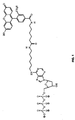
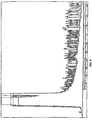
- the commercially available labelling mix containing fluorescein-15-dATP (Fig. 1) for use with T7 DNA polymerase (Fluore-dATP Labelling Mix; Pharmacia Biotech Inc.) contained a fluorescent breakdown product that seriously affected data collection 40 to 50 bases into the sequence (Fig. 2). This fluorescent breakdown product regularly obscured five to seven bases of sequence data and caused the researcher using this sequencing methodology to expend extra time, effort and money to obtain the lost sequence.
- dNTPs in solution are not as susceptible to disproportionation (a concentration-dependent reaction) as the lyophilized forms and are also more stable upon prolonged storage at -20°C (>99% triphosphate even after 30 months of storage; Analects, Pharmacia Biotech Inc. vol. 22 no. 1, 1993, p.8). Stability was still not an issue with the advent of nonisotopically-labelled dNTPs in the early 1980s (Langer, P.R., et al ., Proc. Natl. Acad. Sci. USA vol. 78, 1981, pp. 6633-6637). The types of reactions using these compounds usually involved some form of purification or washing step prior to visualization of the final product (e.g., hybridizations). Not until the use of fluorescein-labelled dNTPs in the early 1990s for the automated visualization of sequencing reactions did the stability of dNTP solutions became critical.
- EP-A-0 267 996 discloses nucleotide derivatives useful in modified DNA probe synthesis.
- US 4,957,865 discloses a virus for cloning or expression of a foreign gene. Radioactive probes are used in the processes described therein.
- US 5,168,051 describes nucleic acid encoding TGF- ⁇ . Radioactive probing is used in the process for isolating a TGF- ⁇ Exon.
- US 5,241,060 discloses chemically modified or labelled nucleotides and polynucleotides which can be detected after incorporation into nucleic acid material.
- One version of the stabilized preparation of a labelled nucleotide comprises at least one compound having a Mg 2+ association constant between 1 x 10 -11 to 1 x 10 -2 , inclusive and a concentration of the compound of at least 5mM.
- preparations comprising (i) (alpha- 32 P)TTP, (alpha- 32 P)dCTP or biotinylated 5-formyl-2'-deoxyuridine-triphosphate as the labelled nucleotide and EDTA as the at least one compound; or (ii) 5-hydroxymethyl-2'-deoxycytidine-5'-triphosphate as the labelled nucleotide and phosphate buffer as the at least one compound.
- the labelled nucleotide preferably has the formula PM-SM-BASE-SIG wherein PM is a phosphate moiety, SM is a sugar moiety, BASE is a pyrimidine, purine or 7-deazapurine moiety, PM being attached at the 3' or the 5' position of SM when the nucleotide is a deoxyribonucleotide and at the 2', 3' or 5' position when the nucleotide is a ribonucleotide, BASE being attached to the 1' position of SM from the N 1 position when BASE is a pyrimidine or the N 9 position when BASE is a purine or a 7-deazapurine, and SIG is covalently attached to BASE and wherein SIG represents a detectable moiety.
- the at least one compound is selected from the group consisting of citrate, isocitrate, phosphate, EGTA, EDTA, and CDTA.
- SIG is preferably selected from the group consisting of fluorophores, chromophores, and radiolabels, most preferably fluorophores and chromophores.
- SIG is more preferably selected from the group consisting of fluoresceins, carbocyanines, and rhodamines.
- SIG can be a fluorescein and, thus, the labelled nucleotide can be fluorescein-labelled dATP.
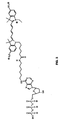
- SIG can be a carbocyanine and, thus, the labelled nucleotide can be carbocyanine-labelled dATP.
- the labelled nucleotide can be covalently attached to at least one nucleoside.
- the compound is preferably a carboxylic acid or a compound having at least one carboxylic acid group.
- Another version of the invention provides a method of stabilizing a labelled nucleotide comprising the step of adding to the labelled nucleotide a stabilising agent which is compound having a Mg 2+ association constant from 1 x 10 -11 to 1 x 10 -2 , wherein the final concentration of the compound is at least 5 mM.
- the method preferably comprises the further step of first removing pyrogens from the constituents. Filtering is preferably used to remove the pyrogens.
- Another version of the invention provides a polymerisation process using the above preparation as a substrate comprising incubating the preparation in the presence of a DNA polymerase, a RNA polymerase, or a reverse transcriptase.
- the labelled nucleotide is fluorescein-15-dATP.
- the labelled nucleotide is carbocyanine-13-dATP.
- the concentration of the buffers in each preparation above is at least 5 mM, preferably at least. 50 mM.
- the objects of the invention include providing preparations of labelled nucleotides of the above kind which:
- the invention discloses a way to stabilize fluorescein-15-dATP (F-dATP) during storage in solution to prevent depurination of the molecule.
- F-dATP fluorescein-15-dATP
- This stabilization method is readily incorporated into the T7 sequencing reactions and does not appear to have a detrimental effect upon the polymerase's ability to generate sequence data.
- the present invention is a method and composition for storage of solutions containing CY5TM-13-dATP (carbocyanine-13-dATP) (Biological Detection Systems, Inc.) used in T7 sequencing reactions with another commercially available automated DNA sequencing instrument, ALFREDTM DNA Sequencer (Pharmacia Biotech Inc.).
- CY5TM-13-dATP carbocyanine-13-dATP
- ALFREDTM DNA Sequencer Pharmacia Biotech Inc.
- the present invention is also useful for stabilizing labelled dNTP for use during PCR reactions, labelled primers, labelled dNTPs during lyophilization, labelled ddNTPs, and rNTPs.
- EGTA ethylene glycol-bis-( ⁇ -amino-ethyl ether) N,N,N',N'-tetraacetic acid
- EDTA ethylenediaminetetraacetic acid
- CDTA trans-1,2-diaminocyclohexane-N,N,N',N'-tetraacetic acid
- dH 2 O sterile distilled water
- mM millimolar
- ⁇ M micromolar
- F-dATP fluorescein-15-dATP
- FPLCTM Flust Protein Liquid Chromatography
- the Mg 2+ association constant for citrate is 1x10 -3.6
- isocitrate is 1x10 -2.6
- CDTA is 1x10 -11
- EDTA is 1x10 -8.7
- EGTA is 1x10 -5.2 .
- detectable moiety we mean, for example, any fluorescing moiety, biotin, radiolabel, magnetic label, antibody.
- fluorescing moiety we mean, for example, fluorophores and chromophores.
- Preferred compounds for the stabilized preparation are those having at least one carboxylic acid group.
- Each of the F-dATP stock solutions from Example 1 (those stored at -20°C) were diluted to prepare a labelling mix for use with T7 DNA polymerase according to the following formulation: Component Concentration F-dATP 10.0 ⁇ M dCTP 1.0 ⁇ M dGTP 1.0 ⁇ M dTTP 1.0 ⁇ M Appropriate 50 mM Buffer
- the identical buffer used to prepare the concentrated stock of F-dATP was used to prepare the labelling mix, except in the case where dH 2 O was used. Aliquots of the labelling mixes were also incubated at either +50° or -20°C for three days (as in Example 1). After the incubation period labelling mixes were diluted 1:31 using the appropriate buffer or dH 2 O. 7 ⁇ l of the diluted labelling mixes were then mixed with 5 ⁇ l of gel loading dye and 8 ⁇ l of the resulting solution was loaded into appropriate wells of a sequencing gel.
- CY5TM-dATP stock solutions from Example 4 were diluted to prepare a labelling mix for use with T7 DNA polymerase according to the following formulation: Component Concentration CY5-dATP 10.0 ⁇ M dCTP 1.0 ⁇ M dGTP 1.0 ⁇ M dTTP 1.0 ⁇ M Appropriate 50 mM Buffer
- the identical buffer used to prepare the concentrated stock of CY5TM-dATP was used to prepare the labelling mix, except in the case where dH 2 O was used. Aliquots of the labelling mixes were also incubated at either +50° or -20°C for three days (as in Example 1). After the incubation period the labelling mixes were diluted 1:31 using the appropriate buffer or dH 2 O. 7 ⁇ l of the diluted labelling mixes were then mixed with 5 ⁇ l of gel loading dye and 8 ⁇ l of the resulting solution was loaded into wells of a sequencing gel.
- CY5TM-labelled M13 Universal Primer (5'-Cy5-CGA CGT TGT. AAA ACG ACG GCC AGT-3'-OH) was resuspended at a concentration of 3 ⁇ M in either filtered (10,000 MW cutoff) dH 2 O or filtered 10 mM isocitrate, pH 6.6. Aliquots of each solution were stored at -20° or +50° for 17 days (as in Example 1). Samples from each of the primers were diluted 1:15 in dH 2 O or 10 mM isocitrate, pH 6.6, as appropriate, and then mixed with Stop Solution at the ratio of 2 ⁇ l primer + 5 ⁇ l dH 2 O + 5 ⁇ l Stop Solution.
Landscapes
- Chemical & Material Sciences (AREA)
- Organic Chemistry (AREA)
- Health & Medical Sciences (AREA)
- Life Sciences & Earth Sciences (AREA)
- Engineering & Computer Science (AREA)
- Biochemistry (AREA)
- Biotechnology (AREA)
- General Health & Medical Sciences (AREA)
- Genetics & Genomics (AREA)
- Molecular Biology (AREA)
- Measuring Or Testing Involving Enzymes Or Micro-Organisms (AREA)
- Saccharide Compounds (AREA)
Applications Claiming Priority (3)
| Application Number | Priority Date | Filing Date | Title |
|---|---|---|---|
| US374456 | 1995-01-18 | ||
| US08/374,456 US5808043A (en) | 1995-01-18 | 1995-01-18 | Composition for stabilization of labelled nucleoside triphosphates and methods for using same |
| PCT/US1996/000274 WO1996022298A1 (en) | 1995-01-18 | 1996-01-05 | Method and composition for stabilization of labelled nucleoside triphosphates |
Publications (3)
| Publication Number | Publication Date |
|---|---|
| EP0804446A1 EP0804446A1 (en) | 1997-11-05 |
| EP0804446A4 EP0804446A4 (en) | 1998-10-14 |
| EP0804446B1 true EP0804446B1 (en) | 2003-07-09 |
Family
ID=23476905
Family Applications (1)
| Application Number | Title | Priority Date | Filing Date |
|---|---|---|---|
| EP96903394A Expired - Lifetime EP0804446B1 (en) | 1995-01-18 | 1996-01-05 | Method and composition for stabilization of labelled nucleoside triphosphates |
Country Status (7)
| Country | Link |
|---|---|
| US (1) | US5808043A (ja) |
| EP (1) | EP0804446B1 (ja) |
| JP (1) | JP3093275B2 (ja) |
| AU (1) | AU4749796A (ja) |
| CA (1) | CA2210900C (ja) |
| DE (1) | DE69629011T2 (ja) |
| WO (1) | WO1996022298A1 (ja) |
Families Citing this family (6)
| Publication number | Priority date | Publication date | Assignee | Title |
|---|---|---|---|---|
| US5986086A (en) * | 1997-06-20 | 1999-11-16 | Amersham Pharmacia Biotech Inc. | Non-sulfonated cyanine dyes for labeling nucleosides and nucleotides |
| JP2001288197A (ja) * | 2000-04-10 | 2001-10-16 | Fuji Photo Film Co Ltd | 蛍光ヌクレオチド |
| US20080026379A1 (en) * | 2006-07-31 | 2008-01-31 | Siddiqi Suhaib M | Nucleotide analogs |
| WO2009085328A1 (en) * | 2008-01-03 | 2009-07-09 | Helicos Biosciences Corporation | Molecules and methods for nucleic acid sequencing |
| US8805844B2 (en) | 2008-08-04 | 2014-08-12 | Liveperson, Inc. | Expert search |
| US8753868B2 (en) * | 2008-08-04 | 2014-06-17 | General Electric Company | Method and system for selective isolation of target biological molecules in a general purpose system |
Family Cites Families (6)
| Publication number | Priority date | Publication date | Assignee | Title |
|---|---|---|---|---|
| US5260433A (en) * | 1982-06-23 | 1993-11-09 | Enzo Diagnostics, Inc. | Saccharide specific binding system labeled nucleotides |
| US5241060A (en) * | 1982-06-23 | 1993-08-31 | Enzo Diagnostics, Inc. | Base moiety-labeled detectable nucleatide |
| FR2571737B1 (fr) * | 1984-10-15 | 1987-02-20 | Agronomique Inst Nat Rech | Vecteurs de clonage ou d'expression comportant le genome du virus de l'erythroblastose aviaire et cellules transfectees par ces vecteurs |
| US5168051A (en) * | 1985-03-22 | 1992-12-01 | Genentech, Inc. | Nucleic acid encoding TGF-β its uses |
| US5047519A (en) * | 1986-07-02 | 1991-09-10 | E. I. Du Pont De Nemours And Company | Alkynylamino-nucleotides |
| EP0267996A1 (en) * | 1986-11-20 | 1988-05-25 | Tamir Biotechnology Ltd. | New nucleotide derivatives |
-
1995
- 1995-01-18 US US08/374,456 patent/US5808043A/en not_active Expired - Fee Related
-
1996
- 1996-01-05 JP JP08522303A patent/JP3093275B2/ja not_active Expired - Fee Related
- 1996-01-05 DE DE69629011T patent/DE69629011T2/de not_active Expired - Fee Related
- 1996-01-05 WO PCT/US1996/000274 patent/WO1996022298A1/en not_active Ceased
- 1996-01-05 CA CA002210900A patent/CA2210900C/en not_active Expired - Fee Related
- 1996-01-05 EP EP96903394A patent/EP0804446B1/en not_active Expired - Lifetime
- 1996-01-05 AU AU47497/96A patent/AU4749796A/en not_active Abandoned
Also Published As
| Publication number | Publication date |
|---|---|
| WO1996022298A1 (en) | 1996-07-25 |
| JPH10504974A (ja) | 1998-05-19 |
| EP0804446A4 (en) | 1998-10-14 |
| JP3093275B2 (ja) | 2000-10-03 |
| AU4749796A (en) | 1996-08-07 |
| US5808043A (en) | 1998-09-15 |
| CA2210900C (en) | 2000-06-06 |
| EP0804446A1 (en) | 1997-11-05 |
| CA2210900A1 (en) | 1996-07-25 |
| DE69629011T2 (de) | 2004-04-22 |
| DE69629011D1 (de) | 2003-08-14 |
Similar Documents
| Publication | Publication Date | Title |
|---|---|---|
| US5912118A (en) | Method for sequencing nucleic acids | |
| JP5280879B2 (ja) | 置換プロパルギルエトキシアミドヌクレオシド | |
| CA2723134C (en) | Dna capable of being amplified by pcr with high selectivity and high efficiency | |
| EP1198594B1 (en) | Polymerase extension at 3' terminus of pna-dna chimera | |
| US6001566A (en) | DNA polymerase having 3'-intrinsic editing activity | |
| EP2487181A1 (en) | Artificial base pair capable of forming specific base pair | |
| JPH11513044A (ja) | プロパルギルエトキシアミノヌクレオチド | |
| JP2001509271A (ja) | 標識されたエネルギー移送蛍光性プライマーのセット及び複合成分分析におけるその使用 | |
| US20080044836A1 (en) | Nucleic Acid Analysis Using Non-templated Nucleotide Addition | |
| CA2471109A1 (en) | Enzymatic redox labelling of nucleic acids | |
| US8431366B2 (en) | Modified oligonucleotides and applications thereof | |
| EP0804446B1 (en) | Method and composition for stabilization of labelled nucleoside triphosphates | |
| EP1071812A1 (en) | A method, reagent solution and kits for dna sequencing | |
| WO2005019476A1 (en) | Polymerase compositions | |
| EP2409980B1 (en) | 3'modified oligonucleotides containing pseudoisocytosine nucleobase derivatives and applications thereof as primers or probes | |
| EP0745688A1 (en) | The use of DNA polymerase having 3'-intrinsic editing activity | |
| US20030228589A1 (en) | Polymerase compositions | |
| MXPA99004392A (en) | Stabilized aqueous nucleoside triphosphate solution |
Legal Events
| Date | Code | Title | Description |
|---|---|---|---|
| PUAI | Public reference made under article 153(3) epc to a published international application that has entered the european phase |
Free format text: ORIGINAL CODE: 0009012 |
|
| 17P | Request for examination filed |
Effective date: 19970818 |
|
| AK | Designated contracting states |
Kind code of ref document: A1 Designated state(s): DE FR GB SE |
|
| A4 | Supplementary search report drawn up and despatched |
Effective date: 19980827 |
|
| AK | Designated contracting states |
Kind code of ref document: A4 Designated state(s): DE FR GB SE |
|
| 17Q | First examination report despatched |
Effective date: 20010206 |
|
| GRAH | Despatch of communication of intention to grant a patent |
Free format text: ORIGINAL CODE: EPIDOS IGRA |
|
| GRAH | Despatch of communication of intention to grant a patent |
Free format text: ORIGINAL CODE: EPIDOS IGRA |
|
| GRAA | (expected) grant |
Free format text: ORIGINAL CODE: 0009210 |
|
| AK | Designated contracting states |
Designated state(s): DE FR GB SE |
|
| REG | Reference to a national code |
Ref country code: GB Ref legal event code: FG4D |
|
| REF | Corresponds to: |
Ref document number: 69629011 Country of ref document: DE Date of ref document: 20030814 Kind code of ref document: P |
|
| PG25 | Lapsed in a contracting state [announced via postgrant information from national office to epo] |
Ref country code: SE Free format text: LAPSE BECAUSE OF FAILURE TO SUBMIT A TRANSLATION OF THE DESCRIPTION OR TO PAY THE FEE WITHIN THE PRESCRIBED TIME-LIMIT Effective date: 20031009 |
|
| ET | Fr: translation filed | ||
| PLBE | No opposition filed within time limit |
Free format text: ORIGINAL CODE: 0009261 |
|
| STAA | Information on the status of an ep patent application or granted ep patent |
Free format text: STATUS: NO OPPOSITION FILED WITHIN TIME LIMIT |
|
| 26N | No opposition filed |
Effective date: 20040414 |
|
| PGFP | Annual fee paid to national office [announced via postgrant information from national office to epo] |
Ref country code: GB Payment date: 20051229 Year of fee payment: 11 |
|
| PGFP | Annual fee paid to national office [announced via postgrant information from national office to epo] |
Ref country code: FR Payment date: 20060117 Year of fee payment: 11 |
|
| PGFP | Annual fee paid to national office [announced via postgrant information from national office to epo] |
Ref country code: DE Payment date: 20060228 Year of fee payment: 11 |
|
| REG | Reference to a national code |
Ref country code: FR Ref legal event code: TP Ref country code: FR Ref legal event code: CD |
|
| PG25 | Lapsed in a contracting state [announced via postgrant information from national office to epo] |
Ref country code: DE Free format text: LAPSE BECAUSE OF NON-PAYMENT OF DUE FEES Effective date: 20070801 |
|
| GBPC | Gb: european patent ceased through non-payment of renewal fee |
Effective date: 20070105 |
|
| REG | Reference to a national code |
Ref country code: FR Ref legal event code: ST Effective date: 20070930 |
|
| PG25 | Lapsed in a contracting state [announced via postgrant information from national office to epo] |
Ref country code: GB Free format text: LAPSE BECAUSE OF NON-PAYMENT OF DUE FEES Effective date: 20070105 |
|
| PG25 | Lapsed in a contracting state [announced via postgrant information from national office to epo] |
Ref country code: FR Free format text: LAPSE BECAUSE OF NON-PAYMENT OF DUE FEES Effective date: 20070131 |