EP0805165B1 - Procédé de récupération de complexes metallocènes - Google Patents
Procédé de récupération de complexes metallocènes Download PDFInfo
- Publication number
- EP0805165B1 EP0805165B1 EP97107021A EP97107021A EP0805165B1 EP 0805165 B1 EP0805165 B1 EP 0805165B1 EP 97107021 A EP97107021 A EP 97107021A EP 97107021 A EP97107021 A EP 97107021A EP 0805165 B1 EP0805165 B1 EP 0805165B1
- Authority
- EP
- European Patent Office
- Prior art keywords
- alkyl
- aryl
- bis
- cycloalkyl
- formula
- Prior art date
- Legal status (The legal status is an assumption and is not a legal conclusion. Google has not performed a legal analysis and makes no representation as to the accuracy of the status listed.)
- Expired - Lifetime
Links
- 238000000034 method Methods 0.000 title claims description 27
- -1 iodine, hydrogen Chemical class 0.000 claims description 32
- 125000000008 (C1-C10) alkyl group Chemical group 0.000 claims description 31
- 229910052739 hydrogen Inorganic materials 0.000 claims description 23
- 239000001257 hydrogen Substances 0.000 claims description 23
- 229920000642 polymer Polymers 0.000 claims description 23
- 125000004432 carbon atom Chemical group C* 0.000 claims description 19
- 239000002253 acid Substances 0.000 claims description 18
- 239000003054 catalyst Substances 0.000 claims description 18
- 150000001875 compounds Chemical class 0.000 claims description 18
- 125000000753 cycloalkyl group Chemical group 0.000 claims description 15
- 238000002360 preparation method Methods 0.000 claims description 15
- 239000010936 titanium Substances 0.000 claims description 14
- 125000003710 aryl alkyl group Chemical group 0.000 claims description 13
- 239000000460 chlorine Substances 0.000 claims description 13
- 238000006116 polymerization reaction Methods 0.000 claims description 12
- 229910052719 titanium Inorganic materials 0.000 claims description 12
- 125000002877 alkyl aryl group Chemical group 0.000 claims description 10
- IJGRMHOSHXDMSA-UHFFFAOYSA-N nitrogen Substances N#N IJGRMHOSHXDMSA-UHFFFAOYSA-N 0.000 claims description 9
- 125000004122 cyclic group Chemical group 0.000 claims description 8
- ZAMOUSCENKQFHK-UHFFFAOYSA-N Chlorine atom Chemical compound [Cl] ZAMOUSCENKQFHK-UHFFFAOYSA-N 0.000 claims description 7
- RTAQQCXQSZGOHL-UHFFFAOYSA-N Titanium Chemical group [Ti] RTAQQCXQSZGOHL-UHFFFAOYSA-N 0.000 claims description 7
- 238000000605 extraction Methods 0.000 claims description 7
- 125000001424 substituent group Chemical group 0.000 claims description 7
- QCWXUUIWCKQGHC-UHFFFAOYSA-N Zirconium Chemical group [Zr] QCWXUUIWCKQGHC-UHFFFAOYSA-N 0.000 claims description 6
- 229910052801 chlorine Inorganic materials 0.000 claims description 6
- 229910052735 hafnium Inorganic materials 0.000 claims description 6
- VBJZVLUMGGDVMO-UHFFFAOYSA-N hafnium atom Chemical group [Hf] VBJZVLUMGGDVMO-UHFFFAOYSA-N 0.000 claims description 6
- 150000003254 radicals Chemical group 0.000 claims description 6
- VGGSQFUCUMXWEO-UHFFFAOYSA-N Ethene Chemical compound C=C VGGSQFUCUMXWEO-UHFFFAOYSA-N 0.000 claims description 5
- 239000005977 Ethylene Substances 0.000 claims description 5
- PXGOKWXKJXAPGV-UHFFFAOYSA-N Fluorine Chemical compound FF PXGOKWXKJXAPGV-UHFFFAOYSA-N 0.000 claims description 5
- OAICVXFJPJFONN-UHFFFAOYSA-N Phosphorus Chemical group [P] OAICVXFJPJFONN-UHFFFAOYSA-N 0.000 claims description 5
- 150000005840 aryl radicals Chemical class 0.000 claims description 5
- 229910052757 nitrogen Inorganic materials 0.000 claims description 5
- 229910052760 oxygen Inorganic materials 0.000 claims description 5
- 239000001301 oxygen Substances 0.000 claims description 5
- 239000011541 reaction mixture Substances 0.000 claims description 5
- 150000002500 ions Chemical class 0.000 claims description 4
- 229910052726 zirconium Inorganic materials 0.000 claims description 4
- WKBOTKDWSSQWDR-UHFFFAOYSA-N Bromine atom Chemical compound [Br] WKBOTKDWSSQWDR-UHFFFAOYSA-N 0.000 claims description 3
- NINIDFKCEFEMDL-UHFFFAOYSA-N Sulfur Chemical compound [S] NINIDFKCEFEMDL-UHFFFAOYSA-N 0.000 claims description 3
- WATWJIUSRGPENY-UHFFFAOYSA-N antimony atom Chemical group [Sb] WATWJIUSRGPENY-UHFFFAOYSA-N 0.000 claims description 3
- RQNWIZPPADIBDY-UHFFFAOYSA-N arsenic atom Chemical group [As] RQNWIZPPADIBDY-UHFFFAOYSA-N 0.000 claims description 3
- QVGXLLKOCUKJST-UHFFFAOYSA-N atomic oxygen Chemical compound [O] QVGXLLKOCUKJST-UHFFFAOYSA-N 0.000 claims description 3
- 229910052797 bismuth Chemical group 0.000 claims description 3
- JCXGWMGPZLAOME-UHFFFAOYSA-N bismuth atom Chemical group [Bi] JCXGWMGPZLAOME-UHFFFAOYSA-N 0.000 claims description 3
- GDTBXPJZTBHREO-UHFFFAOYSA-N bromine Substances BrBr GDTBXPJZTBHREO-UHFFFAOYSA-N 0.000 claims description 3
- 229910052794 bromium Inorganic materials 0.000 claims description 3
- 239000011737 fluorine Substances 0.000 claims description 3
- 229910052731 fluorine Inorganic materials 0.000 claims description 3
- GUCVJGMIXFAOAE-UHFFFAOYSA-N niobium atom Chemical group [Nb] GUCVJGMIXFAOAE-UHFFFAOYSA-N 0.000 claims description 3
- 229910052698 phosphorus Inorganic materials 0.000 claims description 3
- 239000011574 phosphorus Chemical group 0.000 claims description 3
- 229910052717 sulfur Inorganic materials 0.000 claims description 3
- 239000011593 sulfur Substances 0.000 claims description 3
- GUVRBAGPIYLISA-UHFFFAOYSA-N tantalum atom Chemical group [Ta] GUVRBAGPIYLISA-UHFFFAOYSA-N 0.000 claims description 3
- PORWMNRCUJJQNO-UHFFFAOYSA-N tellurium atom Chemical compound [Te] PORWMNRCUJJQNO-UHFFFAOYSA-N 0.000 claims description 3
- 229910052720 vanadium Inorganic materials 0.000 claims description 3
- GPPXJZIENCGNKB-UHFFFAOYSA-N vanadium Chemical group [V]#[V] GPPXJZIENCGNKB-UHFFFAOYSA-N 0.000 claims description 3
- BUGBHKTXTAQXES-UHFFFAOYSA-N Selenium Chemical compound [Se] BUGBHKTXTAQXES-UHFFFAOYSA-N 0.000 claims description 2
- 229910052787 antimony Inorganic materials 0.000 claims description 2
- 229910052785 arsenic Inorganic materials 0.000 claims description 2
- 125000003709 fluoroalkyl group Chemical group 0.000 claims description 2
- 125000004407 fluoroaryl group Chemical group 0.000 claims description 2
- 150000007522 mineralic acids Chemical class 0.000 claims description 2
- 229910052758 niobium Inorganic materials 0.000 claims description 2
- 239000010955 niobium Chemical group 0.000 claims description 2
- 229910052711 selenium Inorganic materials 0.000 claims description 2
- 239000011669 selenium Substances 0.000 claims description 2
- 229910052715 tantalum Chemical group 0.000 claims description 2
- 229910052714 tellurium Inorganic materials 0.000 claims description 2
- 125000004435 hydrogen atom Chemical class [H]* 0.000 claims 5
- QJGQUHMNIGDVPM-UHFFFAOYSA-N nitrogen group Chemical group [N] QJGQUHMNIGDVPM-UHFFFAOYSA-N 0.000 claims 1
- YXFVVABEGXRONW-UHFFFAOYSA-N Toluene Chemical compound CC1=CC=CC=C1 YXFVVABEGXRONW-UHFFFAOYSA-N 0.000 description 33
- UFHFLCQGNIYNRP-UHFFFAOYSA-N Hydrogen Chemical compound [H][H] UFHFLCQGNIYNRP-UHFFFAOYSA-N 0.000 description 20
- RTZKZFJDLAIYFH-UHFFFAOYSA-N Diethyl ether Chemical compound CCOCC RTZKZFJDLAIYFH-UHFFFAOYSA-N 0.000 description 18
- 125000002704 decyl group Chemical group [H]C([H])([H])C([H])([H])C([H])([H])C([H])([H])C([H])([H])C([H])([H])C([H])([H])C([H])([H])C([H])([H])C([H])([H])* 0.000 description 16
- 239000000243 solution Substances 0.000 description 15
- 239000002904 solvent Substances 0.000 description 15
- 150000002431 hydrogen Chemical class 0.000 description 11
- 150000007513 acids Chemical class 0.000 description 10
- YMWUJEATGCHHMB-UHFFFAOYSA-N Dichloromethane Chemical compound ClCCl YMWUJEATGCHHMB-UHFFFAOYSA-N 0.000 description 9
- ZSWFCLXCOIISFI-UHFFFAOYSA-N endo-cyclopentadiene Natural products C1C=CC=C1 ZSWFCLXCOIISFI-UHFFFAOYSA-N 0.000 description 9
- 125000001495 ethyl group Chemical group [H]C([H])([H])C([H])([H])* 0.000 description 9
- 125000002496 methyl group Chemical group [H]C([H])([H])* 0.000 description 9
- 239000000203 mixture Substances 0.000 description 9
- 238000011084 recovery Methods 0.000 description 9
- OKKJLVBELUTLKV-UHFFFAOYSA-N Methanol Chemical compound OC OKKJLVBELUTLKV-UHFFFAOYSA-N 0.000 description 8
- 239000004698 Polyethylene Substances 0.000 description 8
- UAOMVDZJSHZZME-UHFFFAOYSA-N diisopropylamine Chemical compound CC(C)NC(C)C UAOMVDZJSHZZME-UHFFFAOYSA-N 0.000 description 8
- 229920000573 polyethylene Polymers 0.000 description 8
- 239000007787 solid Substances 0.000 description 8
- MZRVEZGGRBJDDB-UHFFFAOYSA-N N-Butyllithium Chemical compound [Li]CCCC MZRVEZGGRBJDDB-UHFFFAOYSA-N 0.000 description 6
- 150000001768 cations Chemical class 0.000 description 6
- 238000004519 manufacturing process Methods 0.000 description 6
- 238000005160 1H NMR spectroscopy Methods 0.000 description 5
- VYPSYNLAJGMNEJ-UHFFFAOYSA-N Silicium dioxide Chemical compound O=[Si]=O VYPSYNLAJGMNEJ-UHFFFAOYSA-N 0.000 description 5
- 229910052782 aluminium Inorganic materials 0.000 description 5
- 125000002524 organometallic group Chemical group 0.000 description 5
- GBXQPDCOMJJCMJ-UHFFFAOYSA-M trimethyl-[6-(trimethylazaniumyl)hexyl]azanium;bromide Chemical compound [Br-].C[N+](C)(C)CCCCCC[N+](C)(C)C GBXQPDCOMJJCMJ-UHFFFAOYSA-M 0.000 description 5
- XLYOFNOQVPJJNP-UHFFFAOYSA-N water Substances O XLYOFNOQVPJJNP-UHFFFAOYSA-N 0.000 description 5
- 238000001644 13C nuclear magnetic resonance spectroscopy Methods 0.000 description 4
- CSCPPACGZOOCGX-UHFFFAOYSA-N Acetone Chemical compound CC(C)=O CSCPPACGZOOCGX-UHFFFAOYSA-N 0.000 description 4
- 239000002841 Lewis acid Substances 0.000 description 4
- 238000005481 NMR spectroscopy Methods 0.000 description 4
- OFBQJSOFQDEBGM-UHFFFAOYSA-N Pentane Chemical compound CCCCC OFBQJSOFQDEBGM-UHFFFAOYSA-N 0.000 description 4
- 125000001188 haloalkyl group Chemical group 0.000 description 4
- 125000004051 hexyl group Chemical group [H]C([H])([H])C([H])([H])C([H])([H])C([H])([H])C([H])([H])C([H])([H])* 0.000 description 4
- 150000008040 ionic compounds Chemical class 0.000 description 4
- 125000001449 isopropyl group Chemical group [H]C([H])([H])C([H])(*)C([H])([H])[H] 0.000 description 4
- 125000004108 n-butyl group Chemical group [H]C([H])([H])C([H])([H])C([H])([H])C([H])([H])* 0.000 description 4
- 125000004123 n-propyl group Chemical group [H]C([H])([H])C([H])([H])C([H])([H])* 0.000 description 4
- 125000001997 phenyl group Chemical group [H]C1=C([H])C([H])=C(*)C([H])=C1[H] 0.000 description 4
- QTBSBXVTEAMEQO-UHFFFAOYSA-N Acetic acid Chemical compound CC(O)=O QTBSBXVTEAMEQO-UHFFFAOYSA-N 0.000 description 3
- HEDRZPFGACZZDS-UHFFFAOYSA-N Chloroform Chemical compound ClC(Cl)Cl HEDRZPFGACZZDS-UHFFFAOYSA-N 0.000 description 3
- 125000000058 cyclopentadienyl group Chemical group C1(=CC=CC1)* 0.000 description 3
- ROSDSFDQCJNGOL-UHFFFAOYSA-O dimethylaminium Chemical compound C[NH2+]C ROSDSFDQCJNGOL-UHFFFAOYSA-O 0.000 description 3
- 125000003106 haloaryl group Chemical group 0.000 description 3
- 125000005842 heteroatom Chemical group 0.000 description 3
- VLKZOEOYAKHREP-UHFFFAOYSA-N n-Hexane Chemical compound CCCCCC VLKZOEOYAKHREP-UHFFFAOYSA-N 0.000 description 3
- 239000000047 product Substances 0.000 description 3
- XJDNKRIXUMDJCW-UHFFFAOYSA-J titanium tetrachloride Chemical compound Cl[Ti](Cl)(Cl)Cl XJDNKRIXUMDJCW-UHFFFAOYSA-J 0.000 description 3
- DUNKXUFBGCUVQW-UHFFFAOYSA-J zirconium tetrachloride Chemical compound Cl[Zr](Cl)(Cl)Cl DUNKXUFBGCUVQW-UHFFFAOYSA-J 0.000 description 3
- VXNZUUAINFGPBY-UHFFFAOYSA-N 1-Butene Chemical compound CCC=C VXNZUUAINFGPBY-UHFFFAOYSA-N 0.000 description 2
- LIKMAJRDDDTEIG-UHFFFAOYSA-N 1-hexene Chemical compound CCCCC=C LIKMAJRDDDTEIG-UHFFFAOYSA-N 0.000 description 2
- AQZWEFBJYQSQEH-UHFFFAOYSA-N 2-methyloxaluminane Chemical compound C[Al]1CCCCO1 AQZWEFBJYQSQEH-UHFFFAOYSA-N 0.000 description 2
- 239000007848 Bronsted acid Substances 0.000 description 2
- 239000004215 Carbon black (E152) Substances 0.000 description 2
- MYMOFIZGZYHOMD-UHFFFAOYSA-N Dioxygen Chemical compound O=O MYMOFIZGZYHOMD-UHFFFAOYSA-N 0.000 description 2
- TWRXJAOTZQYOKJ-UHFFFAOYSA-L Magnesium chloride Chemical compound [Mg+2].[Cl-].[Cl-] TWRXJAOTZQYOKJ-UHFFFAOYSA-L 0.000 description 2
- 239000004743 Polypropylene Substances 0.000 description 2
- WYURNTSHIVDZCO-UHFFFAOYSA-N Tetrahydrofuran Chemical compound C1CCOC1 WYURNTSHIVDZCO-UHFFFAOYSA-N 0.000 description 2
- DTQVDTLACAAQTR-UHFFFAOYSA-N Trifluoroacetic acid Chemical compound OC(=O)C(F)(F)F DTQVDTLACAAQTR-UHFFFAOYSA-N 0.000 description 2
- SVSARCCKBMZNMR-UHFFFAOYSA-N [1-[2-[methyl-[2-[4-(oxoazaniumylmethylidene)pyridin-1-yl]ethyl]amino]ethyl]pyridin-4-ylidene]methyl-oxoazanium;dichloride Chemical compound [Cl-].[Cl-].C1=CC(=C[NH+]=O)C=CN1CCN(C)CCN1C=CC(=C[NH+]=O)C=C1 SVSARCCKBMZNMR-UHFFFAOYSA-N 0.000 description 2
- XAGFODPZIPBFFR-UHFFFAOYSA-N aluminium Chemical compound [Al] XAGFODPZIPBFFR-UHFFFAOYSA-N 0.000 description 2
- 238000004458 analytical method Methods 0.000 description 2
- 150000001450 anions Chemical class 0.000 description 2
- 150000004945 aromatic hydrocarbons Chemical class 0.000 description 2
- 229910052796 boron Inorganic materials 0.000 description 2
- 150000001735 carboxylic acids Chemical class 0.000 description 2
- 239000000969 carrier Substances 0.000 description 2
- 239000012876 carrier material Substances 0.000 description 2
- 239000013078 crystal Substances 0.000 description 2
- 150000004820 halides Chemical class 0.000 description 2
- 229910052736 halogen Inorganic materials 0.000 description 2
- 150000002367 halogens Chemical class 0.000 description 2
- 229930195733 hydrocarbon Natural products 0.000 description 2
- 150000002430 hydrocarbons Chemical class 0.000 description 2
- 229910052740 iodine Inorganic materials 0.000 description 2
- 150000007517 lewis acids Chemical class 0.000 description 2
- DBKDYYFPDRPMPE-UHFFFAOYSA-N lithium;cyclopenta-1,3-diene Chemical compound [Li+].C=1C=C[CH-]C=1 DBKDYYFPDRPMPE-UHFFFAOYSA-N 0.000 description 2
- 229910052751 metal Inorganic materials 0.000 description 2
- 239000002184 metal Substances 0.000 description 2
- 239000000178 monomer Substances 0.000 description 2
- 230000007935 neutral effect Effects 0.000 description 2
- YWAKXRMUMFPDSH-UHFFFAOYSA-N pentene Chemical compound CCCC=C YWAKXRMUMFPDSH-UHFFFAOYSA-N 0.000 description 2
- 230000000737 periodic effect Effects 0.000 description 2
- 229920000098 polyolefin Polymers 0.000 description 2
- 229920001155 polypropylene Polymers 0.000 description 2
- 239000000377 silicon dioxide Substances 0.000 description 2
- 239000000725 suspension Substances 0.000 description 2
- 125000000999 tert-butyl group Chemical group [H]C([H])([H])C(*)(C([H])([H])[H])C([H])([H])[H] 0.000 description 2
- 229910052723 transition metal Inorganic materials 0.000 description 2
- 238000005406 washing Methods 0.000 description 2
- LWNGJAHMBMVCJR-UHFFFAOYSA-N (2,3,4,5,6-pentafluorophenoxy)boronic acid Chemical compound OB(O)OC1=C(F)C(F)=C(F)C(F)=C1F LWNGJAHMBMVCJR-UHFFFAOYSA-N 0.000 description 1
- MCSXGCZMEPXKIW-UHFFFAOYSA-N 3-hydroxy-4-[(4-methyl-2-nitrophenyl)diazenyl]-N-(3-nitrophenyl)naphthalene-2-carboxamide Chemical compound Cc1ccc(N=Nc2c(O)c(cc3ccccc23)C(=O)Nc2cccc(c2)[N+]([O-])=O)c(c1)[N+]([O-])=O MCSXGCZMEPXKIW-UHFFFAOYSA-N 0.000 description 1
- ZCYVEMRRCGMTRW-UHFFFAOYSA-N 7553-56-2 Chemical compound [I] ZCYVEMRRCGMTRW-UHFFFAOYSA-N 0.000 description 1
- 229910018072 Al 2 O 3 Inorganic materials 0.000 description 1
- SBUKLPSBNFWJCU-UHFFFAOYSA-N ClIBr Chemical compound ClIBr SBUKLPSBNFWJCU-UHFFFAOYSA-N 0.000 description 1
- VVNCNSJFMMFHPL-VKHMYHEASA-N D-penicillamine Chemical group CC(C)(S)[C@@H](N)C(O)=O VVNCNSJFMMFHPL-VKHMYHEASA-N 0.000 description 1
- 229910019142 PO4 Inorganic materials 0.000 description 1
- 229910004298 SiO 2 Inorganic materials 0.000 description 1
- FOIXSVOLVBLSDH-UHFFFAOYSA-N Silver ion Chemical compound [Ag+] FOIXSVOLVBLSDH-UHFFFAOYSA-N 0.000 description 1
- 230000002378 acidificating effect Effects 0.000 description 1
- 239000004480 active ingredient Substances 0.000 description 1
- 230000001476 alcoholic effect Effects 0.000 description 1
- 150000001298 alcohols Chemical class 0.000 description 1
- 150000001338 aliphatic hydrocarbons Chemical class 0.000 description 1
- 150000001336 alkenes Chemical class 0.000 description 1
- 125000003545 alkoxy group Chemical group 0.000 description 1
- 150000001348 alkyl chlorides Chemical class 0.000 description 1
- 125000000217 alkyl group Chemical group 0.000 description 1
- 229910000323 aluminium silicate Inorganic materials 0.000 description 1
- 125000003118 aryl group Chemical group 0.000 description 1
- 150000001639 boron compounds Chemical class 0.000 description 1
- CODNYICXDISAEA-UHFFFAOYSA-N bromine monochloride Chemical compound BrCl CODNYICXDISAEA-UHFFFAOYSA-N 0.000 description 1
- 150000004649 carbonic acid derivatives Chemical class 0.000 description 1
- 238000006243 chemical reaction Methods 0.000 description 1
- 150000008280 chlorinated hydrocarbons Chemical class 0.000 description 1
- 150000001805 chlorine compounds Chemical class 0.000 description 1
- 230000000052 comparative effect Effects 0.000 description 1
- 229920001577 copolymer Polymers 0.000 description 1
- 238000002425 crystallisation Methods 0.000 description 1
- 230000008025 crystallization Effects 0.000 description 1
- JLTDJTHDQAWBAV-UHFFFAOYSA-O dimethyl(phenyl)azanium Chemical compound C[NH+](C)C1=CC=CC=C1 JLTDJTHDQAWBAV-UHFFFAOYSA-O 0.000 description 1
- 238000005516 engineering process Methods 0.000 description 1
- 150000002170 ethers Chemical class 0.000 description 1
- 238000004992 fast atom bombardment mass spectroscopy Methods 0.000 description 1
- 239000000706 filtrate Substances 0.000 description 1
- 229910052733 gallium Inorganic materials 0.000 description 1
- 239000007789 gas Substances 0.000 description 1
- 239000000499 gel Substances 0.000 description 1
- 238000005227 gel permeation chromatography Methods 0.000 description 1
- 150000008282 halocarbons Chemical class 0.000 description 1
- 229920001519 homopolymer Polymers 0.000 description 1
- 150000003840 hydrochlorides Chemical class 0.000 description 1
- PNDPGZBMCMUPRI-UHFFFAOYSA-N iodine Chemical compound II PNDPGZBMCMUPRI-UHFFFAOYSA-N 0.000 description 1
- 239000011630 iodine Substances 0.000 description 1
- 239000003446 ligand Substances 0.000 description 1
- 239000007788 liquid Substances 0.000 description 1
- 229910052744 lithium Inorganic materials 0.000 description 1
- 229910001629 magnesium chloride Inorganic materials 0.000 description 1
- 239000000463 material Substances 0.000 description 1
- 239000012968 metallocene catalyst Substances 0.000 description 1
- 150000002823 nitrates Chemical class 0.000 description 1
- 150000007524 organic acids Chemical class 0.000 description 1
- 235000005985 organic acids Nutrition 0.000 description 1
- 125000001181 organosilyl group Chemical group [SiH3]* 0.000 description 1
- NFHFRUOZVGFOOS-UHFFFAOYSA-N palladium;triphenylphosphane Chemical compound [Pd].C1=CC=CC=C1P(C=1C=CC=CC=1)C1=CC=CC=C1.C1=CC=CC=C1P(C=1C=CC=CC=1)C1=CC=CC=C1.C1=CC=CC=C1P(C=1C=CC=CC=1)C1=CC=CC=C1.C1=CC=CC=C1P(C=1C=CC=CC=1)C1=CC=CC=C1 NFHFRUOZVGFOOS-UHFFFAOYSA-N 0.000 description 1
- 239000002245 particle Substances 0.000 description 1
- 125000000538 pentafluorophenyl group Chemical group FC1=C(F)C(F)=C(*)C(F)=C1F 0.000 description 1
- 235000021317 phosphate Nutrition 0.000 description 1
- 150000003013 phosphoric acid derivatives Chemical class 0.000 description 1
- QQONPFPTGQHPMA-UHFFFAOYSA-N propylene Natural products CC=C QQONPFPTGQHPMA-UHFFFAOYSA-N 0.000 description 1
- 125000004805 propylene group Chemical group [H]C([H])([H])C([H])([*:1])C([H])([H])[*:2] 0.000 description 1
- 230000035484 reaction time Effects 0.000 description 1
- 238000001953 recrystallisation Methods 0.000 description 1
- 239000000741 silica gel Substances 0.000 description 1
- 229910002027 silica gel Inorganic materials 0.000 description 1
- 235000012239 silicon dioxide Nutrition 0.000 description 1
- 229940054334 silver cation Drugs 0.000 description 1
- OHUVHDUNQKJDKW-UHFFFAOYSA-N sodium;cyclopenta-1,3-diene Chemical compound [Na+].C=1C=C[CH-]C=1 OHUVHDUNQKJDKW-UHFFFAOYSA-N 0.000 description 1
- 239000000126 substance Substances 0.000 description 1
- 150000003467 sulfuric acid derivatives Chemical class 0.000 description 1
- YLQBMQCUIZJEEH-UHFFFAOYSA-N tetrahydrofuran Natural products C=1C=COC=1 YLQBMQCUIZJEEH-UHFFFAOYSA-N 0.000 description 1
- 150000003624 transition metals Chemical class 0.000 description 1
- 125000000026 trimethylsilyl group Chemical group [H]C([H])([H])[Si]([*])(C([H])([H])[H])C([H])([H])[H] 0.000 description 1
- OBAJXDYVZBHCGT-UHFFFAOYSA-N tris(pentafluorophenyl)borane Chemical compound FC1=C(F)C(F)=C(F)C(F)=C1B(C=1C(=C(F)C(F)=C(F)C=1F)F)C1=C(F)C(F)=C(F)C(F)=C1F OBAJXDYVZBHCGT-UHFFFAOYSA-N 0.000 description 1
- 238000010626 work up procedure Methods 0.000 description 1
- 239000008096 xylene Substances 0.000 description 1
- 150000003738 xylenes Chemical class 0.000 description 1
Classifications
-
- C—CHEMISTRY; METALLURGY
- C08—ORGANIC MACROMOLECULAR COMPOUNDS; THEIR PREPARATION OR CHEMICAL WORKING-UP; COMPOSITIONS BASED THEREON
- C08F—MACROMOLECULAR COMPOUNDS OBTAINED BY REACTIONS ONLY INVOLVING CARBON-TO-CARBON UNSATURATED BONDS
- C08F10/00—Homopolymers and copolymers of unsaturated aliphatic hydrocarbons having only one carbon-to-carbon double bond
-
- C—CHEMISTRY; METALLURGY
- C08—ORGANIC MACROMOLECULAR COMPOUNDS; THEIR PREPARATION OR CHEMICAL WORKING-UP; COMPOSITIONS BASED THEREON
- C08F—MACROMOLECULAR COMPOUNDS OBTAINED BY REACTIONS ONLY INVOLVING CARBON-TO-CARBON UNSATURATED BONDS
- C08F6/00—Post-polymerisation treatments
- C08F6/02—Neutralisation of the polymerisation mass, e.g. killing the catalyst also removal of catalyst residues
-
- Y—GENERAL TAGGING OF NEW TECHNOLOGICAL DEVELOPMENTS; GENERAL TAGGING OF CROSS-SECTIONAL TECHNOLOGIES SPANNING OVER SEVERAL SECTIONS OF THE IPC; TECHNICAL SUBJECTS COVERED BY FORMER USPC CROSS-REFERENCE ART COLLECTIONS [XRACs] AND DIGESTS
- Y10—TECHNICAL SUBJECTS COVERED BY FORMER USPC
- Y10S—TECHNICAL SUBJECTS COVERED BY FORMER USPC CROSS-REFERENCE ART COLLECTIONS [XRACs] AND DIGESTS
- Y10S526/00—Synthetic resins or natural rubbers -- part of the class 520 series
- Y10S526/943—Polymerization with metallocene catalysts
Definitions
- the present invention relates to the use of the recovered metallocene complexes for the preparation of polymers of C 2 -C 10 -alkenes and processes for the preparation of these polymers.
- metallocene complexes as active catalyst components for the production of polyolefins. It a variety of technical polymerization processes have been developed, where, however, the metallocene complex in the manufactured Polymer remains. However, this means that the polymer with the Metallocene complex contaminated and also goes on in this way expensive metallocene complex lost.
- US-A-5 428 127 describes a process for washing polypropylene which has been produced by means of a metallocene catalyst in which the polymer is treated under acidic conditions before using a Hydrocarbon solvent is washed so that in the polymer contained catalyst residue solubilized in the hydrocarbon solvent becomes. This can improve the properties of the polymer.
- the issue of the present invention was therefore a method for the recovery of metallocene complexes.
- the metallocene complexes I can be prepared by first reacting cyclopentadienyl lithium or cyclopentadienyl sodium with a heteroatom-functionalized chloroalkane, which produces cyclopentadienyl systems functionalized with the heteroatom, as described in Journal of Organometallic Chemistry, 1992, 423, 31-38 and Journal of Organometallic Chemistry, 1994, 480, C18-C19.
- the corresponding cyclopentadienyl lithium systems functionalized with the heteroatom can be prepared, for example as described in Journal of Organometallic Chemistry, 1995, 486, 287-289.
- alkyl lithium for example n-butyllithium
- the corresponding cyclopentadienyl lithium systems functionalized with the heteroatom can be prepared, for example as described in Journal of Organometallic Chemistry, 1995, 486, 287-289.
- MCl 4 to give the corresponding metallocene complexes, as described in Journal of Organometallic Chemistry, 1995, 486, 287-289, the metallocene complexes, however, not yet carrying cationically functionalized cyclopentadienyl ligands.
- the conversion to the metallocene complexes of the general formula I can be carried out by adding acids of any kind, as described in Journal of Organometallic Chemistry, 1995, 486, 287-289.
- counterion to the metallocene complexes of the general formula I which is derived from the type of acid added.
- These counterions can be, for example: halides, carboxylic acid anions, sulfates, phosphates, carbonates, nitrates, PF 6 - , BF 4 - or HPO 4 2- .
- the type of counterion is not critical. Halides, in particular chlorides, are preferred.
- these metallocene complexes were already used as active catalyst components in the preparation of polymers of C 2 -C 10 -alkenes.
- the catalyst systems already used also contain compounds which form metallocenium ions as a further active ingredient.
- Suitable compounds which form metallocenium ions are in particular strong, neutral Lewis acids, ionic compounds with Lewis acid cations, ionic compounds with Bronsted acids as a cation and alumoxane compounds.
- Carbonium cations, oxonium cations and Sulfonium cations and cationic transition metal complexes are also called in WO 91/09882, preferably tetrakis (pentafluorophenyl) borate.
- Ionic compounds with Bronsted acids as cations and preferably counterions that do not coordinate are also in the WO 91/09882 called, preferred cation is the N, N-dimethylanilinium.
- oligomeric alumoxane compounds are prepared usually by reacting a solution of trialkyl aluminum with water and is in EP-A 284 708 and US-A 4,794,096.
- the oligomeric alumoxane compounds obtained in this way are as mixtures of different lengths, both more linear as well as cyclic chain molecules, so that m is the mean can be seen.
- the alumoxane compounds can also be mixed with other metal alkyls, preferably with aluminum alkyls.
- metallocenium ion-forming compounds Aryloxyalumoxanes, as described in US Pat. No. 5,391,793, aminoaluminoxanes, as described in US Pat. No. 5,371,260, aminoaluminoxane hydrochlorides, as described in EP-A 633 264, Siloxyaluminoxanes as described in EP-A 621 279, or Mixtures of these are used.
- metallocene complexes and the oligomeric alumoxane compound in amounts such that the atomic ratio between aluminum from the oligomeric alumoxane compound and the transition metal from the metallocene complexes is in the range from 10: 1 to 10 6 : 1, in particular in the range from 10: 1 to 10 4 : 1.
- aromatic hydrocarbons used, preferably with 6 to 20 carbon atoms, in particular xylenes and toluene and their Mixtures.
- Catalyst systems can also be used in a supported form have been.
- the carrier materials used are preferably finely divided carriers which preferably have a particle diameter in the range from 1 to 300 ⁇ m, in particular from 30 to 70 ⁇ m.
- Suitable carrier materials are, for example, silica gels, preferably those of the formula SiO 2 .a Al 2 O 3 , in which a stands for a number in the range from 0 to 2, preferably 0 to 0.5; So these are aluminosilicates or silicon dioxide.
- Such products are commercially available, for example Silica Gel 332 from Grace.
- Other carriers include finely divided polyolefins, for example finely divided polypropylene or magnesium chloride.
- metallocene complexes of the general formula I these metallocene complexes were already used for the preparation of polymers of C 2 -C 10 -alkenes.
- This polymerization can be carried out in the gas phase, in suspension, in solution or in liquid monomers.
- Suitable suspension media are, for example, aliphatic hydrocarbons.
- the process according to the invention is preferably carried out in solution, preferably in toluene as the solvent.
- the metallocene complex of the general formula I (with its counterion) suspended in toluene at temperatures in the range of -80 to 110 ° C and the metallocenium ion-forming compound, too preferably as a toluene solution, at a pressure of 0.5 to Add 50 bar.
- the actual polymerization conditions are not critical per se, temperatures in the range are preferred from -50 to 300 ° C, pressures in the range from 0.5 to 3000 bar and Response times from 0.1 to 24 hours.
- the average molecular weight of the polymers formed can with the in methods customary in polymerization technology are controlled, for example by adding regulators such as hydrogen.
- Suitable C 2 -C 10 -alkenes which can be used for the polymerization are, in particular, ethylene, but also propylene or higher alk-1-ene such as but-1-ene, pent-1-ene and hex-1-ene .
- the term polymers is understood to mean both homopolymers and copolymers.
- the metallocene complexes of the general formula I can according to the Process according to the invention can be recovered by the Polymerization stops by adding acids and the metallocene complexes of the general formula I by extraction from the Reaction mixture recovered.
- Suitable acids are compounds of any kind in which the Acid anion that can stabilize the metallocene cation on the metal M, preferably the acid anion goes on with the metallocene cation Metal M a bond.
- Preferred acids are inorganic Acids such as hydrohalic acids, especially HCl. It can but also organic acids such as carboxylic acids, for example Acetic acid or substituted carboxylic acids, for example trifluoroacetic acid are used or mixtures of different Acids.
- the acids can be in concentrated form or as aqueous and / or alcoholic solution can be used.
- the amount of acid is not critical in itself, it can be a molar ratio from acid to metallocene complex in the range of 10,000,000: 1 up to 3: 1, in particular 500000: 1 to 1000: 1 can be used.
- the acid has proven to be preferred to use the acid at room temperature and ambient pressure, but it can also work at temperatures in the range of -80 to 200 ° C and pressures in the range of 0.1 can be worked up to 300 bar.
- solvents can be used.
- Suitable solvents are, for example, water, aromatic hydrocarbons such as toluene, halogenated hydrocarbons, especially chlorinated Hydrocarbons such as chloroform or dichloromethane, Ethers such as diethyl ether or tetrahydrofuran or alcohols like methanol. Mixtures of different solvents can also be used be used.
- the type of solvent is aimed according to the type of metallocene complex. However, preference is given Dichloromethane used.
- the amounts of the solvent used for the extraction as well the temperature and pressure are not critical per se.
- the amount of solvent can range from 1 1 to 0.1 1, based on 1 mmol metallocene complex, the temperature in the range of 20 up to 150 ° C, the pressure in the range of 0.1 to 300 bar.
- the recovered metallocene complex of the general formula I can be isolated as a solid by the solvent is removed and the metallocene complex if appropriate is washed.
- the metallocene complexes of the general formula I recovered by the process according to the invention can again be used as active catalyst components for the preparation of polymers of C 2 -C 10 -alkenes. Details of this are superfluous, since the recovered metallocene complex can be used analogously to the freshly produced metallocene complex and reference is therefore made to what has already been written.
- a further active catalyst component is also one here metallocenium ion-forming compound (component B)) used, the polymerization process corresponds to that already described, the polymerization being terminated by adding acids can be.
- the recovery method according to the invention of metallocene complexes of the general formula I can be repeated preferably up to 10 times in succession. It can also mix mixtures of several recovered metallocene complexes of the general formula I are used or also Mixtures of recovered metallocene complex and fresh Metallocene complex, whereby it prefers the same chemical Have structure.
- the quantity ratio of recovered Metallocene complex and fresh metallocene complex can be in any Limits vary.
- ethylene is also preferred as monomer, as already described.
- the method according to the invention for the recovery of metallocene complexes is technically easy to carry out, the expensive Complexes can be used again without extensive work-up the productivity of the catalyst systems, the recovered Metallocene complexes as active catalyst components are comparable to productivities of catalyst systems, the fresh metallocene complexes as active catalyst components included and the resulting polymers are not contaminated with metallocene complexes and show otherwise Properties that correspond to those polymers that were made using fresh metallocene complexes.
- the metallocene complexes I1 and I2 were each suspended in toluene at room temperature. Under an ethylene atmosphere (1 bar) was methylalumoxane (MAO) (10% Solution in toluene) added dropwise. After 5 min the solution was run through emerging PE slowly cloudy and warmed up. After a response time the polymerization was increased by adding 500 ml of methanolic / aqueous HCl stopped (400 ml methanol, 100 ml conc. HCl). The PE was filtered off, with water and acetone as an example 3, washed with dilute HCl and water in Example 4 and until dried to constant weight. The filtrate became dry concentrated and the residue extracted with dichloromethane (in example 4 in a Soxhlet apparatus). After removing the solvent and washing with diethyl ether became the respective metallocene complex isolated as a solid.
- MAO methylalumoxane
- the ⁇ value was determined according to ISO 1628-3, the weight average values M w and number average values M n by means of gel permeation chromatography.
Landscapes
- Chemical & Material Sciences (AREA)
- Health & Medical Sciences (AREA)
- Chemical Kinetics & Catalysis (AREA)
- Medicinal Chemistry (AREA)
- Polymers & Plastics (AREA)
- Organic Chemistry (AREA)
- Transition And Organic Metals Composition Catalysts For Addition Polymerization (AREA)
- Addition Polymer Or Copolymer, Post-Treatments, Or Chemical Modifications (AREA)
Claims (9)
- Procédé de récupération de complexes de métallocéne de la formule générale I :dans laquelle les substituants et symboles ont les significations suivantes :
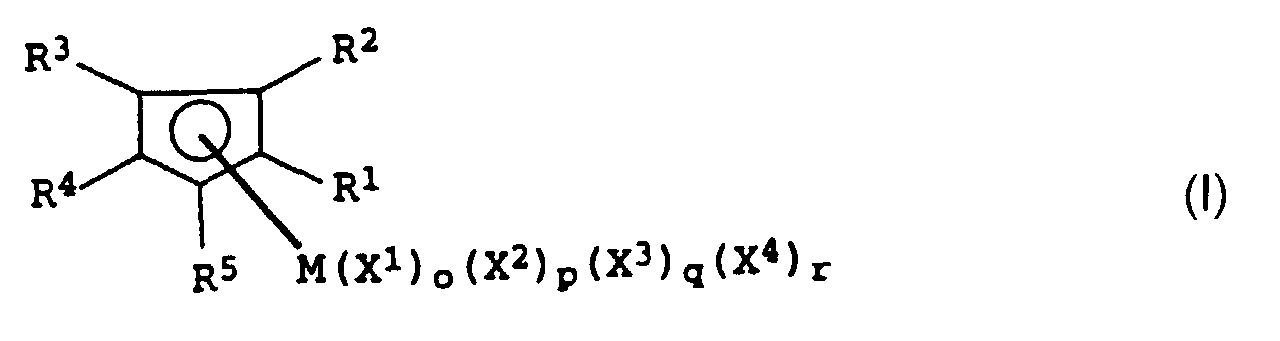
- M
- titane, zirconium, hafnium, vanadium, niobium ou tantale,
- R1 à R4
- hydrogène, alkyle en C1 à C10, cycloalkyle pentagonal à
heptagonal, qui a son tour peut porter un alkyle en C1 à C10
comme substituant, arylalkyle ou aryle en C6 à C15, deux
radicaux voisins pouvant aussi éventuellement former
conjointement des groupes cycliques présentant 4 à
15 atomes de C, Si(R6)3,
où
- R6
- alkyle en C1 à C10, aryle en C6 à C15 ou cycloalkyle en C3 à C10,
- R7 et R8
- hydrogène, alkyle en C1 à C10, aryle en C6 à C15 ou cycloalkyle en C3 à C10,
- R9 et R10
- alkyle en C1 à C10, aryle en C6 à C15 ou cycloalkyle en C3 à C10,
- Y
- azote, phosphore, arsenic, antimoine ou bismuth,
- Z
- oxygène, soufre, sélénium ou tellure,
- n
- un nombre entier de l'ordre de 0 à 10,
- R5
- où

- R11 et R12
- hydrogène, alkyle en C1 à C10, aryle en C6 à C15 ou cycloalkyle en C3 à C10,
- R13 et R14
- alkyle en C1 à C10, aryle en C6 à C15 ou cycloalkyle en C3 à C10,
- n1
- un nombre entier de l'ordre de 0 à 10,
- X1 à X4
- fluor, chlore, brome, iode, hydrogène, alkyle en C1 à C10,
aryle en C6 à C15, alkylaryle comportant de 1 à 10 atomes
de C dans le radical alkyle et 6 à 20 atomes de C dans le
radical aryle, -OR15-, -NR15R16 ou
où

- R15 et R16
- alkyle en C1 à C10, aryle en C6 à C15, alkylaryle, arylalkyle, fluoroalkyle ou fluoroaryle comportant chacun 1 à 10 atomes de C dans le radical alkyle et 6 à 20 atomes de C dans le radical aryle,
- R17 à R21
- hydrogène, alkyle en C1 à C10, cycloalkyle pentagonal à
heptagonal, qui à son tour peut porter un alkyle en C1 à C10
comme substituant, arylalkyle ou aryle en C6 à C15, deux
radicaux voisins pouvant éventuellement aussi former
conjointement des groupes cycliques présentant 4 à
15 atomes de C, Si(R22)3,
où

- R22
- alkyle en C1 à C10, aryle en C6 à C15 ou cycloalkyle en C3 à C10,
- R23 et R24
- hydrogène, alkyle en C1 à C10, aryle en C6 à C15 ou cycloalkyle en C3 à C10,
- R25 et R26
- alkyle en C1 à C10, aryle en C6 à C15 ou cycloalkyle en C3 à C10,
- n2
- un nombre entier de l'ordre de 0 à 10,
et - o, p, q, r
- des nombres entiers de l'ordre de 0 à 4, la somme de o+p+q+r+1 correspondant à la valence de M,
caractérisé en ce qu'on interrompt la polymérisation par addition d'acides et on récupère les complexes de métallocène de la formule générale I par extraction hors du mélange réactionnel. - Procédé suivant la revendication 1, caractérisé en ce que M dans la formule générale I représente du titane, du zirconium ou de l'hafnium.
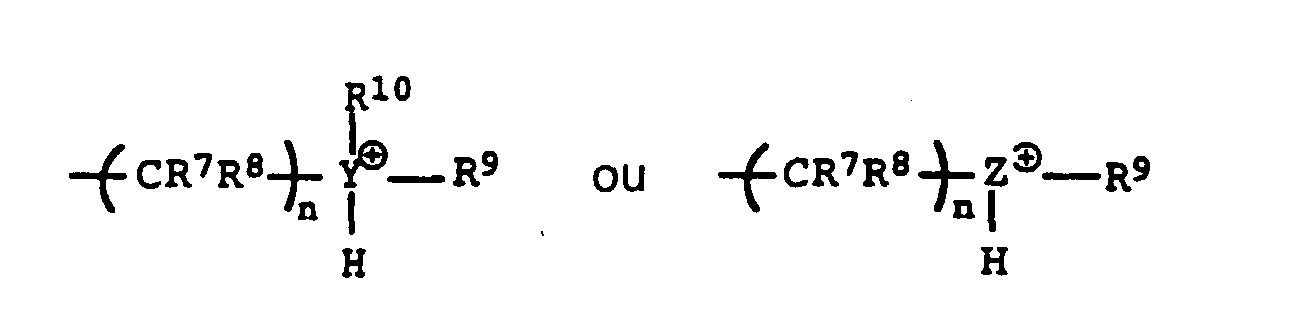
- Procédé suivant l'une des revendications 1 à 2, caractérisé en ce que R5 dans la formule générale I représente :
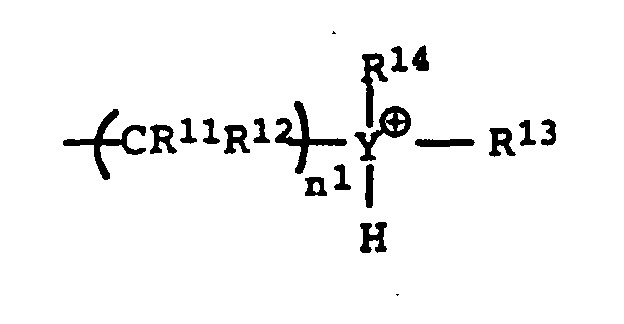
- Procédé suivant l'une des revendications 1 à 3, caractérisé en ce que R5 dans la formule générale I représente

- Procédé suivant l'une des revendications 1 à 4, caractérisé en ce que, comme acides, on utilise des acides inorganiques.
- Procédé suivant l'une des revendications 1 à 5, caractérisé en ce que les complexes de métallocène de la formule générale I sont mis en oeuvre comme éléments actifs lors de la fabrication de polymères d'éthylène.
- Utilisation des complexes de métallocène de la formule générale I, récupérés selon les revendications 1 à 6, comme éléments catalytiques actifs pour la fabrication de polymère d'alcènes en C2 à C10.
- Procédé de préparation de polymères d'alcènes en C2 à C10 en présence de systèmes catalytiques, caractérisé en ce que, comme systèmes catalytiques, on met en oeuvre ceux qui contiennent, comme éléments actifs,A) un complexe de métallocène de la formule générale I, récupéré selon l'une des revendications 1 à 6,
etB) un composé générateur d'ions métallocénium. - Procédé suivant la revendication 8, caractérisé en ce que, comme alcène en C2 à C10, on met en oeuvre de l'éthylène.
Applications Claiming Priority (2)
| Application Number | Priority Date | Filing Date | Title |
|---|---|---|---|
| DE19618007 | 1996-05-04 | ||
| DE19618007A DE19618007A1 (de) | 1996-05-04 | 1996-05-04 | Verfahren zur Wiedergewinnung von Metallocenkomplexen |
Publications (2)
| Publication Number | Publication Date |
|---|---|
| EP0805165A1 EP0805165A1 (fr) | 1997-11-05 |
| EP0805165B1 true EP0805165B1 (fr) | 1999-08-11 |
Family
ID=7793384
Family Applications (1)
| Application Number | Title | Priority Date | Filing Date |
|---|---|---|---|
| EP97107021A Expired - Lifetime EP0805165B1 (fr) | 1996-05-04 | 1997-04-28 | Procédé de récupération de complexes metallocènes |
Country Status (5)
| Country | Link |
|---|---|
| US (2) | US5840949A (fr) |
| EP (1) | EP0805165B1 (fr) |
| JP (1) | JPH1045823A (fr) |
| DE (2) | DE19618007A1 (fr) |
| ES (1) | ES2136452T3 (fr) |
Families Citing this family (1)
| Publication number | Priority date | Publication date | Assignee | Title |
|---|---|---|---|---|
| JP4828172B2 (ja) * | 2005-07-15 | 2011-11-30 | 三井化学株式会社 | オレフィン系重合体粒子およびオレフィン系重合体粒子の製造方法 |
Family Cites Families (13)
| Publication number | Priority date | Publication date | Assignee | Title |
|---|---|---|---|---|
| RU666784C (ru) * | 1976-05-17 | 1992-11-15 | Институт нефтехимического синтеза им.А.В.Топчиева | Способ получени полибутадиена |
| EP0284708B1 (fr) * | 1987-04-03 | 1996-01-31 | Fina Technology, Inc. | Systèmes catalitiques métallocènes pour la polymérisation des oléfines, présentant un pont de hydrocarbure de silicium. |
| US4794096A (en) * | 1987-04-03 | 1988-12-27 | Fina Technology, Inc. | Hafnium metallocene catalyst for the polymerization of olefins |
| JP3048591B2 (ja) * | 1989-04-11 | 2000-06-05 | 三井化学株式会社 | シンジオタクチックポリオレフィンの製造方法 |
| ATE186918T1 (de) * | 1990-01-02 | 1999-12-15 | Exxon Chemical Patents Inc | Ionische metallocenkatalysatoren auf träger für olefinpolymerisation |
| GB9103527D0 (en) * | 1991-02-20 | 1991-04-10 | Exxon Chemical Patents Inc | Hp catalyst killer |
| US5391793A (en) * | 1992-11-02 | 1995-02-21 | Akzo Nobel N.V. | Aryloxyaluminoxanes |
| JPH06169597A (ja) * | 1992-11-30 | 1994-06-14 | Mita Ind Co Ltd | モータ制御装置 |
| US5391529A (en) * | 1993-02-01 | 1995-02-21 | Albemarle Corporation | Siloxy-aluminoxane compositions, and catalysts which include such compositions with a metallocene |
| US5412131A (en) * | 1993-07-09 | 1995-05-02 | Albemarle Corporation | Teritary amino-aluminoxane halides |
| US5371260A (en) * | 1994-01-10 | 1994-12-06 | Albemarle Corporation | Amino-aluminoxane compositions |
| DE4406963A1 (de) * | 1994-03-03 | 1995-09-07 | Basf Ag | Metallocenkomplexe mit heterofunktionellen Gruppen am Cyclopentadienylsystem |
| DE19602543A1 (de) * | 1996-01-25 | 1997-07-31 | Basf Ag | Verfahren zur Herstellung von Polymerisaten von C¶2¶- bis C¶1¶¶0¶-Alkenen in Gegenwart von Metallocenkomplexen mit kationisch funktionalisierten Cyclopentadienylliganden |
-
1996
- 1996-05-04 DE DE19618007A patent/DE19618007A1/de not_active Withdrawn
-
1997
- 1997-04-25 US US08/847,487 patent/US5840949A/en not_active Expired - Fee Related
- 1997-04-28 DE DE59700326T patent/DE59700326D1/de not_active Expired - Lifetime
- 1997-04-28 ES ES97107021T patent/ES2136452T3/es not_active Expired - Lifetime
- 1997-04-28 EP EP97107021A patent/EP0805165B1/fr not_active Expired - Lifetime
- 1997-04-30 JP JP9112304A patent/JPH1045823A/ja not_active Withdrawn
-
1998
- 1998-03-23 US US09/046,003 patent/US5912310A/en not_active Expired - Fee Related
Also Published As
| Publication number | Publication date |
|---|---|
| EP0805165A1 (fr) | 1997-11-05 |
| ES2136452T3 (es) | 1999-11-16 |
| US5840949A (en) | 1998-11-24 |
| JPH1045823A (ja) | 1998-02-17 |
| US5912310A (en) | 1999-06-15 |
| DE19618007A1 (de) | 1997-11-06 |
| DE59700326D1 (de) | 1999-09-16 |
Similar Documents
| Publication | Publication Date | Title |
|---|---|---|
| EP0803520B1 (fr) | Catalyseurs de polymérisation contenant des ligands du type bèta-dicétiminate | |
| DE69514105T2 (de) | Gruppe-iv-metalldienkomplexe und diese enthaltende polymerisationskatalysatoren | |
| DE69331752T2 (de) | Verfahren zur Kontrolle des Schmelzpunktes und Molekulargewichtes von syndiotaktischen Olefinpolymeren unter Anwendung eines Metallocen-Katalysatorsystems | |
| EP0670325B1 (fr) | Metallocènes avec des groupements hétérofonctionnels fixés au groupement cyclopentadiènyles | |
| DE69631902T2 (de) | Metallocene mit offen-pentodienyl, deren vorläufer und diese enthaltende polymerisationskatalysatoren | |
| DE69717645T2 (de) | Verbrückte nicht-aromatische anionische dienylgruppen enthaltende metallkomplexe und darauf basierte polymerisatonskatalysatoren | |
| EP0645403B1 (fr) | Procédé pour la préparation de polyéthylène à poids moléculaire ultra élevé ayant une haute densité apparente | |
| DE69612331T2 (de) | Metallocenkatalysator für die Homo- oder Copolymerisation von Alpha-Olefinen | |
| EP0633897B1 (fr) | Systemes catalyseurs pour la polymerisation d'alcenes-1 en c 2- a c 10- | |
| DE69818810T2 (de) | Heteroligand | |
| EP1140955B1 (fr) | Complexes metallocenes | |
| DE4120009A1 (de) | Loesliche katalysatorsysteme zur herstellung von polyalk-1-enen mit hohen molmassen | |
| WO1997031038A1 (fr) | Systemes de catalyseurs a supports | |
| EP0670336B1 (fr) | Complexes de métallocènes comportant des groupes hétérofonctionnels sur le système cyclopentodiényle, sur support, utilisable comme catalyseur | |
| EP0650981B1 (fr) | Procédé de préparation de polymères de 1-alcènes en C2 à C10 utilisant des complexes racémiques de métallocènes en tant que catalyseurs | |
| DE4139262A1 (de) | Getraegerte katalysatorsysteme zur polymerisation von c(pfeil abwaerts)2(pfeil abwaerts)- bis c(pfeil abwaerts)1(pfeil abwaerts)(pfeil abwaerts)0(pfeil abwaerts)-alkenen | |
| EP0876408B1 (fr) | Procede de preparation de polymeres d'alcenes en c 2 a c 10 en presence de complexes metallocenes avec des ligands cyclopentadienyles fonctionnalises cationiquement | |
| DE3942366A1 (de) | Verfahren zur herstellung eines syndiotaktischen propylen-copolymers | |
| DE69902452T2 (de) | Übergangsmetall-cyclopentadienyl-verbindungen als polymerisationskatalysatoren | |
| EP0805165B1 (fr) | Procédé de récupération de complexes metallocènes | |
| EP0700935A1 (fr) | Système catalytique à base de métallocène sur support | |
| DE69817603T2 (de) | Polymerisationskatalysator für olefinmonomere | |
| EP1373283A1 (fr) | Non-metallocenes, leur procede de production et leur utilisation dans la polymerisation d'olefines | |
| EP0749975B1 (fr) | Composé d'un métal de transition | |
| DE69707439T2 (de) | Syndiotaktisches vinylaromatisches polymerisationsverfahren |
Legal Events
| Date | Code | Title | Description |
|---|---|---|---|
| PUAI | Public reference made under article 153(3) epc to a published international application that has entered the european phase |
Free format text: ORIGINAL CODE: 0009012 |
|
| AK | Designated contracting states |
Kind code of ref document: A1 Designated state(s): BE DE ES FR GB NL |
|
| 17P | Request for examination filed |
Effective date: 19971029 |
|
| GRAG | Despatch of communication of intention to grant |
Free format text: ORIGINAL CODE: EPIDOS AGRA |
|
| 17Q | First examination report despatched |
Effective date: 19980909 |
|
| GRAG | Despatch of communication of intention to grant |
Free format text: ORIGINAL CODE: EPIDOS AGRA |
|
| GRAH | Despatch of communication of intention to grant a patent |
Free format text: ORIGINAL CODE: EPIDOS IGRA |
|
| GRAH | Despatch of communication of intention to grant a patent |
Free format text: ORIGINAL CODE: EPIDOS IGRA |
|
| GRAA | (expected) grant |
Free format text: ORIGINAL CODE: 0009210 |
|
| AK | Designated contracting states |
Kind code of ref document: B1 Designated state(s): BE DE ES FR GB NL |
|
| REF | Corresponds to: |
Ref document number: 59700326 Country of ref document: DE Date of ref document: 19990916 |
|
| GBT | Gb: translation of ep patent filed (gb section 77(6)(a)/1977) |
Effective date: 19990913 |
|
| REG | Reference to a national code |
Ref country code: ES Ref legal event code: FG2A Ref document number: 2136452 Country of ref document: ES Kind code of ref document: T3 |
|
| ET | Fr: translation filed | ||
| PLBE | No opposition filed within time limit |
Free format text: ORIGINAL CODE: 0009261 |
|
| STAA | Information on the status of an ep patent application or granted ep patent |
Free format text: STATUS: NO OPPOSITION FILED WITHIN TIME LIMIT |
|
| 26N | No opposition filed | ||
| PGFP | Annual fee paid to national office [announced via postgrant information from national office to epo] |
Ref country code: FR Payment date: 20010316 Year of fee payment: 5 |
|
| PGFP | Annual fee paid to national office [announced via postgrant information from national office to epo] |
Ref country code: NL Payment date: 20010326 Year of fee payment: 5 |
|
| PGFP | Annual fee paid to national office [announced via postgrant information from national office to epo] |
Ref country code: ES Payment date: 20010409 Year of fee payment: 5 |
|
| PGFP | Annual fee paid to national office [announced via postgrant information from national office to epo] |
Ref country code: GB Payment date: 20010418 Year of fee payment: 5 |
|
| PGFP | Annual fee paid to national office [announced via postgrant information from national office to epo] |
Ref country code: DE Payment date: 20010424 Year of fee payment: 5 |
|
| PGFP | Annual fee paid to national office [announced via postgrant information from national office to epo] |
Ref country code: BE Payment date: 20010515 Year of fee payment: 5 |
|
| REG | Reference to a national code |
Ref country code: GB Ref legal event code: IF02 |
|
| PG25 | Lapsed in a contracting state [announced via postgrant information from national office to epo] |
Ref country code: DE Free format text: LAPSE BECAUSE OF THE APPLICANT RENOUNCES Effective date: 20020413 |
|
| PG25 | Lapsed in a contracting state [announced via postgrant information from national office to epo] |
Ref country code: GB Free format text: LAPSE BECAUSE OF NON-PAYMENT OF DUE FEES Effective date: 20020428 |
|
| PG25 | Lapsed in a contracting state [announced via postgrant information from national office to epo] |
Ref country code: ES Free format text: LAPSE BECAUSE OF NON-PAYMENT OF DUE FEES Effective date: 20020429 |
|
| PG25 | Lapsed in a contracting state [announced via postgrant information from national office to epo] |
Ref country code: BE Free format text: LAPSE BECAUSE OF NON-PAYMENT OF DUE FEES Effective date: 20020430 |
|
| PG25 | Lapsed in a contracting state [announced via postgrant information from national office to epo] |
Ref country code: NL Free format text: LAPSE BECAUSE OF NON-PAYMENT OF DUE FEES Effective date: 20021101 |
|
| GBPC | Gb: european patent ceased through non-payment of renewal fee |
Effective date: 20020428 |
|
| PG25 | Lapsed in a contracting state [announced via postgrant information from national office to epo] |
Ref country code: FR Free format text: LAPSE BECAUSE OF NON-PAYMENT OF DUE FEES Effective date: 20021231 |
|
| NLV4 | Nl: lapsed or anulled due to non-payment of the annual fee |
Effective date: 20021101 |
|
| REG | Reference to a national code |
Ref country code: FR Ref legal event code: ST |
|
| REG | Reference to a national code |
Ref country code: ES Ref legal event code: FD2A Effective date: 20030514 |