EP0805829B1 - Verfahren zur herstellung von polycyanatestern - Google Patents
Verfahren zur herstellung von polycyanatestern Download PDFInfo
- Publication number
- EP0805829B1 EP0805829B1 EP96902412A EP96902412A EP0805829B1 EP 0805829 B1 EP0805829 B1 EP 0805829B1 EP 96902412 A EP96902412 A EP 96902412A EP 96902412 A EP96902412 A EP 96902412A EP 0805829 B1 EP0805829 B1 EP 0805829B1
- Authority
- EP
- European Patent Office
- Prior art keywords
- stream
- solvent
- tertiary amine
- zone
- water
- Prior art date
- Legal status (The legal status is an assumption and is not a legal conclusion. Google has not performed a legal analysis and makes no representation as to the accuracy of the status listed.)
- Expired - Lifetime
Links
- 150000002148 esters Chemical class 0.000 title claims abstract description 106
- 238000000034 method Methods 0.000 title claims abstract description 50
- 238000004519 manufacturing process Methods 0.000 title description 6
- 239000002904 solvent Substances 0.000 claims abstract description 197
- 150000003512 tertiary amines Chemical class 0.000 claims abstract description 87
- 150000003839 salts Chemical class 0.000 claims abstract description 78
- -1 cyanogen halide Chemical class 0.000 claims abstract description 76
- 239000000203 mixture Substances 0.000 claims abstract description 61
- JMANVNJQNLATNU-UHFFFAOYSA-N glycolonitrile Natural products N#CC#N JMANVNJQNLATNU-UHFFFAOYSA-N 0.000 claims abstract description 47
- 239000012535 impurity Substances 0.000 claims abstract description 39
- 239000007795 chemical reaction product Substances 0.000 claims abstract description 33
- 239000000047 product Substances 0.000 claims abstract description 23
- 150000001875 compounds Chemical class 0.000 claims abstract description 13
- 229920001568 phenolic resin Polymers 0.000 claims abstract description 13
- 239000012429 reaction media Substances 0.000 claims abstract description 11
- SLGWESQGEUXWJQ-UHFFFAOYSA-N formaldehyde;phenol Chemical compound O=C.OC1=CC=CC=C1 SLGWESQGEUXWJQ-UHFFFAOYSA-N 0.000 claims abstract description 6
- XLYOFNOQVPJJNP-UHFFFAOYSA-N water Substances O XLYOFNOQVPJJNP-UHFFFAOYSA-N 0.000 claims description 136
- 238000006243 chemical reaction Methods 0.000 claims description 56
- 238000011084 recovery Methods 0.000 claims description 56
- WYURNTSHIVDZCO-UHFFFAOYSA-N Tetrahydrofuran Chemical group C1CCOC1 WYURNTSHIVDZCO-UHFFFAOYSA-N 0.000 claims description 33
- YMWUJEATGCHHMB-UHFFFAOYSA-N Dichloromethane Chemical compound ClCCl YMWUJEATGCHHMB-UHFFFAOYSA-N 0.000 claims description 30
- 238000005406 washing Methods 0.000 claims description 28
- 238000002955 isolation Methods 0.000 claims description 21
- 238000004821 distillation Methods 0.000 claims description 20
- 238000010791 quenching Methods 0.000 claims description 18
- 239000011347 resin Substances 0.000 claims description 15
- 229920005989 resin Polymers 0.000 claims description 15
- 125000000217 alkyl group Chemical group 0.000 claims description 12
- 230000000171 quenching effect Effects 0.000 claims description 12
- ZMANZCXQSJIPKH-UHFFFAOYSA-N Triethylamine Chemical group CCN(CC)CC ZMANZCXQSJIPKH-UHFFFAOYSA-N 0.000 claims description 11
- ZZTSQZQUWBFTAT-UHFFFAOYSA-N diethylcyanamide Chemical compound CCN(CC)C#N ZZTSQZQUWBFTAT-UHFFFAOYSA-N 0.000 claims description 10
- 229910052739 hydrogen Inorganic materials 0.000 claims description 10
- 239000001257 hydrogen Substances 0.000 claims description 10
- 150000001350 alkyl halides Chemical class 0.000 claims description 9
- ZAMOUSCENKQFHK-UHFFFAOYSA-N Chlorine atom Chemical compound [Cl] ZAMOUSCENKQFHK-UHFFFAOYSA-N 0.000 claims description 8
- 125000003545 alkoxy group Chemical group 0.000 claims description 8
- 239000006227 byproduct Substances 0.000 claims description 8
- 239000000460 chlorine Substances 0.000 claims description 8
- 229910052801 chlorine Inorganic materials 0.000 claims description 8
- 125000001424 substituent group Chemical group 0.000 claims description 8
- 239000008346 aqueous phase Substances 0.000 claims description 7
- GDTBXPJZTBHREO-UHFFFAOYSA-N bromine Substances BrBr GDTBXPJZTBHREO-UHFFFAOYSA-N 0.000 claims description 7
- 229910052794 bromium Inorganic materials 0.000 claims description 7
- 150000004820 halides Chemical class 0.000 claims description 7
- 239000012074 organic phase Substances 0.000 claims description 7
- WKBOTKDWSSQWDR-UHFFFAOYSA-N Bromine atom Chemical compound [Br] WKBOTKDWSSQWDR-UHFFFAOYSA-N 0.000 claims description 6
- 150000002118 epoxides Chemical class 0.000 claims description 6
- 238000000605 extraction Methods 0.000 claims description 6
- XZMCDFZZKTWFGF-UHFFFAOYSA-N Cyanamide Chemical compound NC#N XZMCDFZZKTWFGF-UHFFFAOYSA-N 0.000 claims description 5
- UFHFLCQGNIYNRP-UHFFFAOYSA-N Hydrogen Chemical compound [H][H] UFHFLCQGNIYNRP-UHFFFAOYSA-N 0.000 claims description 5
- 239000003637 basic solution Substances 0.000 claims description 5
- 229920001577 copolymer Polymers 0.000 claims description 5
- QPJDMGCKMHUXFD-UHFFFAOYSA-N cyanogen chloride Chemical compound ClC#N QPJDMGCKMHUXFD-UHFFFAOYSA-N 0.000 claims description 5
- 150000002431 hydrogen Chemical class 0.000 claims description 5
- ATDGTVJJHBUTRL-UHFFFAOYSA-N cyanogen bromide Chemical group BrC#N ATDGTVJJHBUTRL-UHFFFAOYSA-N 0.000 claims description 4
- 230000001105 regulatory effect Effects 0.000 claims description 4
- YLQBMQCUIZJEEH-UHFFFAOYSA-N tetrahydrofuran Natural products C=1C=COC=1 YLQBMQCUIZJEEH-UHFFFAOYSA-N 0.000 claims description 4
- 229920003986 novolac Polymers 0.000 claims description 2
- 239000000853 adhesive Substances 0.000 abstract description 2
- 230000001070 adhesive effect Effects 0.000 abstract description 2
- 239000007767 bonding agent Substances 0.000 abstract description 2
- 238000000576 coating method Methods 0.000 abstract description 2
- 239000002783 friction material Substances 0.000 abstract description 2
- 239000012778 molding material Substances 0.000 abstract description 2
- 238000004064 recycling Methods 0.000 abstract description 2
- 239000000243 solution Substances 0.000 description 27
- 150000001912 cyanamides Chemical class 0.000 description 17
- 238000002156 mixing Methods 0.000 description 17
- 238000000926 separation method Methods 0.000 description 17
- 239000012071 phase Substances 0.000 description 15
- 239000000376 reactant Substances 0.000 description 14
- 238000001816 cooling Methods 0.000 description 13
- 150000001412 amines Chemical class 0.000 description 10
- 235000020030 perry Nutrition 0.000 description 10
- 230000015572 biosynthetic process Effects 0.000 description 9
- 238000007333 cyanation reaction Methods 0.000 description 7
- 238000006386 neutralization reaction Methods 0.000 description 7
- 238000012545 processing Methods 0.000 description 7
- PXHVJJICTQNCMI-UHFFFAOYSA-N Nickel Chemical compound [Ni] PXHVJJICTQNCMI-UHFFFAOYSA-N 0.000 description 6
- HEMHJVSKTPXQMS-UHFFFAOYSA-M Sodium hydroxide Chemical compound [OH-].[Na+] HEMHJVSKTPXQMS-UHFFFAOYSA-M 0.000 description 6
- 239000005011 phenolic resin Substances 0.000 description 6
- 239000011541 reaction mixture Substances 0.000 description 6
- 238000009834 vaporization Methods 0.000 description 6
- 230000008016 vaporization Effects 0.000 description 6
- CSCPPACGZOOCGX-UHFFFAOYSA-N Acetone Chemical compound CC(C)=O CSCPPACGZOOCGX-UHFFFAOYSA-N 0.000 description 5
- 239000007788 liquid Substances 0.000 description 5
- 239000000463 material Substances 0.000 description 5
- 235000013824 polyphenols Nutrition 0.000 description 5
- 238000005086 pumping Methods 0.000 description 5
- 239000007787 solid Substances 0.000 description 5
- 238000003860 storage Methods 0.000 description 5
- 238000013019 agitation Methods 0.000 description 4
- 238000010533 azeotropic distillation Methods 0.000 description 4
- 238000009835 boiling Methods 0.000 description 4
- 239000003518 caustics Substances 0.000 description 4
- 239000004643 cyanate ester Substances 0.000 description 4
- ISWSIDIOOBJBQZ-UHFFFAOYSA-N phenol group Chemical group C1(=CC=CC=C1)O ISWSIDIOOBJBQZ-UHFFFAOYSA-N 0.000 description 4
- 150000003254 radicals Chemical class 0.000 description 4
- 238000010992 reflux Methods 0.000 description 4
- 238000007086 side reaction Methods 0.000 description 4
- 125000005270 trialkylamine group Chemical group 0.000 description 4
- RFFLAFLAYFXFSW-UHFFFAOYSA-N 1,2-dichlorobenzene Chemical compound ClC1=CC=CC=C1Cl RFFLAFLAYFXFSW-UHFFFAOYSA-N 0.000 description 3
- ZWEHNKRNPOVVGH-UHFFFAOYSA-N 2-Butanone Chemical compound CCC(C)=O ZWEHNKRNPOVVGH-UHFFFAOYSA-N 0.000 description 3
- KXGFMDJXCMQABM-UHFFFAOYSA-N 2-methoxy-6-methylphenol Chemical compound [CH]OC1=CC=CC([CH])=C1O KXGFMDJXCMQABM-UHFFFAOYSA-N 0.000 description 3
- WEVYAHXRMPXWCK-UHFFFAOYSA-N Acetonitrile Chemical group CC#N WEVYAHXRMPXWCK-UHFFFAOYSA-N 0.000 description 3
- QGJOPFRUJISHPQ-UHFFFAOYSA-N Carbon disulfide Chemical compound S=C=S QGJOPFRUJISHPQ-UHFFFAOYSA-N 0.000 description 3
- QMMFVYPAHWMCMS-UHFFFAOYSA-N Dimethyl sulfide Chemical compound CSC QMMFVYPAHWMCMS-UHFFFAOYSA-N 0.000 description 3
- LYCAIKOWRPUZTN-UHFFFAOYSA-N Ethylene glycol Chemical compound OCCO LYCAIKOWRPUZTN-UHFFFAOYSA-N 0.000 description 3
- ZMXDDKWLCZADIW-UHFFFAOYSA-N N,N-Dimethylformamide Chemical compound CN(C)C=O ZMXDDKWLCZADIW-UHFFFAOYSA-N 0.000 description 3
- KWYUFKZDYYNOTN-UHFFFAOYSA-M Potassium hydroxide Chemical compound [OH-].[K+] KWYUFKZDYYNOTN-UHFFFAOYSA-M 0.000 description 3
- YXFVVABEGXRONW-UHFFFAOYSA-N Toluene Chemical compound CC1=CC=CC=C1 YXFVVABEGXRONW-UHFFFAOYSA-N 0.000 description 3
- 150000007824 aliphatic compounds Chemical class 0.000 description 3
- 239000000956 alloy Substances 0.000 description 3
- 239000007864 aqueous solution Substances 0.000 description 3
- 239000002585 base Substances 0.000 description 3
- 238000010923 batch production Methods 0.000 description 3
- 230000008901 benefit Effects 0.000 description 3
- 239000012065 filter cake Substances 0.000 description 3
- 229910052736 halogen Inorganic materials 0.000 description 3
- 150000002367 halogens Chemical class 0.000 description 3
- VNWKTOKETHGBQD-UHFFFAOYSA-N methane Chemical class C VNWKTOKETHGBQD-UHFFFAOYSA-N 0.000 description 3
- 125000001570 methylene group Chemical group [H]C([H])([*:1])[*:2] 0.000 description 3
- 229910052759 nickel Inorganic materials 0.000 description 3
- CWHFDTWZHFRTAB-UHFFFAOYSA-N phenyl cyanate Chemical compound N#COC1=CC=CC=C1 CWHFDTWZHFRTAB-UHFFFAOYSA-N 0.000 description 3
- 125000001997 phenyl group Chemical group [H]C1=C([H])C([H])=C(*)C([H])=C1[H] 0.000 description 3
- 238000002360 preparation method Methods 0.000 description 3
- 238000005057 refrigeration Methods 0.000 description 3
- 239000012266 salt solution Substances 0.000 description 3
- 239000000126 substance Substances 0.000 description 3
- 150000003866 tertiary ammonium salts Chemical class 0.000 description 3
- 239000010409 thin film Substances 0.000 description 3
- QPFMBZIOSGYJDE-UHFFFAOYSA-N 1,1,2,2-tetrachloroethane Chemical compound ClC(Cl)C(Cl)Cl QPFMBZIOSGYJDE-UHFFFAOYSA-N 0.000 description 2
- UBOXGVDOUJQMTN-UHFFFAOYSA-N 1,1,2-trichloroethane Chemical compound ClCC(Cl)Cl UBOXGVDOUJQMTN-UHFFFAOYSA-N 0.000 description 2
- PAMIQIKDUOTOBW-UHFFFAOYSA-N 1-methylpiperidine Chemical compound CN1CCCCC1 PAMIQIKDUOTOBW-UHFFFAOYSA-N 0.000 description 2
- 0 CCCC(C)(C1)C2C3C(C)CCC2C1(*C1C2*45C2(*)CCC(*)CCC4(C)C5C(*C)CCC1)CCC*3 Chemical compound CCCC(C)(C1)C2C3C(C)CCC2C1(*C1C2*45C2(*)CCC(*)CCC4(C)C5C(*C)CCC1)CCC*3 0.000 description 2
- HEDRZPFGACZZDS-UHFFFAOYSA-N Chloroform Chemical compound ClC(Cl)Cl HEDRZPFGACZZDS-UHFFFAOYSA-N 0.000 description 2
- KFZMGEQAYNKOFK-UHFFFAOYSA-N Isopropanol Chemical compound CC(C)O KFZMGEQAYNKOFK-UHFFFAOYSA-N 0.000 description 2
- JLTDJTHDQAWBAV-UHFFFAOYSA-N N,N-dimethylaniline Chemical compound CN(C)C1=CC=CC=C1 JLTDJTHDQAWBAV-UHFFFAOYSA-N 0.000 description 2
- OFBQJSOFQDEBGM-UHFFFAOYSA-N Pentane Chemical compound CCCCC OFBQJSOFQDEBGM-UHFFFAOYSA-N 0.000 description 2
- ATUOYWHBWRKTHZ-UHFFFAOYSA-N Propane Chemical compound CCC ATUOYWHBWRKTHZ-UHFFFAOYSA-N 0.000 description 2
- JUJWROOIHBZHMG-UHFFFAOYSA-N Pyridine Chemical compound C1=CC=NC=C1 JUJWROOIHBZHMG-UHFFFAOYSA-N 0.000 description 2
- FAPWRFPIFSIZLT-UHFFFAOYSA-M Sodium chloride Chemical compound [Na+].[Cl-] FAPWRFPIFSIZLT-UHFFFAOYSA-M 0.000 description 2
- 229910045601 alloy Inorganic materials 0.000 description 2
- 150000001491 aromatic compounds Chemical class 0.000 description 2
- 125000001246 bromo group Chemical group Br* 0.000 description 2
- MVPPADPHJFYWMZ-UHFFFAOYSA-N chlorobenzene Chemical compound ClC1=CC=CC=C1 MVPPADPHJFYWMZ-UHFFFAOYSA-N 0.000 description 2
- HRYZWHHZPQKTII-UHFFFAOYSA-N chloroethane Chemical compound CCCl HRYZWHHZPQKTII-UHFFFAOYSA-N 0.000 description 2
- 150000004292 cyclic ethers Chemical class 0.000 description 2
- JHIVVAPYMSGYDF-UHFFFAOYSA-N cyclohexanone Chemical compound O=C1CCCCC1 JHIVVAPYMSGYDF-UHFFFAOYSA-N 0.000 description 2
- 238000010790 dilution Methods 0.000 description 2
- 239000012895 dilution Substances 0.000 description 2
- 229960003750 ethyl chloride Drugs 0.000 description 2
- 238000001704 evaporation Methods 0.000 description 2
- 230000008020 evaporation Effects 0.000 description 2
- 239000000706 filtrate Substances 0.000 description 2
- 239000012530 fluid Substances 0.000 description 2
- 230000005484 gravity Effects 0.000 description 2
- 238000000227 grinding Methods 0.000 description 2
- 238000010438 heat treatment Methods 0.000 description 2
- 239000000543 intermediate Substances 0.000 description 2
- KJFMBFZCATUALV-UHFFFAOYSA-N phenolphthalein Chemical compound C1=CC(O)=CC=C1C1(C=2C=CC(O)=CC=2)C2=CC=CC=C2C(=O)O1 KJFMBFZCATUALV-UHFFFAOYSA-N 0.000 description 2
- 150000002989 phenols Chemical class 0.000 description 2
- 238000000746 purification Methods 0.000 description 2
- 239000003507 refrigerant Substances 0.000 description 2
- GHMLBKRAJCXXBS-UHFFFAOYSA-N resorcinol Chemical compound OC1=CC=CC(O)=C1 GHMLBKRAJCXXBS-UHFFFAOYSA-N 0.000 description 2
- 238000010008 shearing Methods 0.000 description 2
- 239000000779 smoke Substances 0.000 description 2
- 125000004953 trihalomethyl group Chemical group 0.000 description 2
- GETQZCLCWQTVFV-UHFFFAOYSA-N trimethylamine Chemical compound CN(C)C GETQZCLCWQTVFV-UHFFFAOYSA-N 0.000 description 2
- 230000007306 turnover Effects 0.000 description 2
- 239000002699 waste material Substances 0.000 description 2
- JYEUMXHLPRZUAT-UHFFFAOYSA-N 1,2,3-triazine Chemical compound C1=CN=NN=C1 JYEUMXHLPRZUAT-UHFFFAOYSA-N 0.000 description 1
- RYHBNJHYFVUHQT-UHFFFAOYSA-N 1,4-Dioxane Chemical compound C1COCCO1 RYHBNJHYFVUHQT-UHFFFAOYSA-N 0.000 description 1
- AVFZOVWCLRSYKC-UHFFFAOYSA-N 1-methylpyrrolidine Chemical compound CN1CCCC1 AVFZOVWCLRSYKC-UHFFFAOYSA-N 0.000 description 1
- JSZOAYXJRCEYSX-UHFFFAOYSA-N 1-nitropropane Chemical compound CCC[N+]([O-])=O JSZOAYXJRCEYSX-UHFFFAOYSA-N 0.000 description 1
- FGLBSLMDCBOPQK-UHFFFAOYSA-N 2-nitropropane Chemical compound CC(C)[N+]([O-])=O FGLBSLMDCBOPQK-UHFFFAOYSA-N 0.000 description 1
- NLHHRLWOUZZQLW-UHFFFAOYSA-N Acrylonitrile Chemical group C=CC#N NLHHRLWOUZZQLW-UHFFFAOYSA-N 0.000 description 1
- CPELXLSAUQHCOX-UHFFFAOYSA-M Bromide Chemical compound [Br-] CPELXLSAUQHCOX-UHFFFAOYSA-M 0.000 description 1
- DKPFZGUDAPQIHT-UHFFFAOYSA-N Butyl acetate Natural products CCCCOC(C)=O DKPFZGUDAPQIHT-UHFFFAOYSA-N 0.000 description 1
- AFOPCURQYRRFRQ-UHFFFAOYSA-N CC(C)c1ccc[o]1 Chemical compound CC(C)c1ccc[o]1 AFOPCURQYRRFRQ-UHFFFAOYSA-N 0.000 description 1
- 229910000975 Carbon steel Inorganic materials 0.000 description 1
- XTHFKEDIFFGKHM-UHFFFAOYSA-N Dimethoxyethane Chemical compound COCCOC XTHFKEDIFFGKHM-UHFFFAOYSA-N 0.000 description 1
- NTIZESTWPVYFNL-UHFFFAOYSA-N Methyl isobutyl ketone Chemical compound CC(C)CC(C)=O NTIZESTWPVYFNL-UHFFFAOYSA-N 0.000 description 1
- UIHCLUNTQKBZGK-UHFFFAOYSA-N Methyl isobutyl ketone Natural products CCC(C)C(C)=O UIHCLUNTQKBZGK-UHFFFAOYSA-N 0.000 description 1
- DJEQZVQFEPKLOY-UHFFFAOYSA-N N,N-dimethylbutylamine Chemical compound CCCCN(C)C DJEQZVQFEPKLOY-UHFFFAOYSA-N 0.000 description 1
- AHVYPIQETPWLSZ-UHFFFAOYSA-N N-methyl-pyrrolidine Natural products CN1CC=CC1 AHVYPIQETPWLSZ-UHFFFAOYSA-N 0.000 description 1
- IGFHQQFPSIBGKE-UHFFFAOYSA-N Nonylphenol Natural products CCCCCCCCCC1=CC=C(O)C=C1 IGFHQQFPSIBGKE-UHFFFAOYSA-N 0.000 description 1
- RFFFKMOABOFIDF-UHFFFAOYSA-N Pentanenitrile Chemical group CCCCC#N RFFFKMOABOFIDF-UHFFFAOYSA-N 0.000 description 1
- 239000004734 Polyphenylene sulfide Substances 0.000 description 1
- 239000004809 Teflon Substances 0.000 description 1
- 229920006362 Teflon® Polymers 0.000 description 1
- 239000002253 acid Substances 0.000 description 1
- 125000002947 alkylene group Chemical group 0.000 description 1
- 125000003118 aryl group Chemical group 0.000 description 1
- 125000000732 arylene group Chemical group 0.000 description 1
- 230000009286 beneficial effect Effects 0.000 description 1
- 230000005540 biological transmission Effects 0.000 description 1
- 239000012267 brine Substances 0.000 description 1
- RDHPKYGYEGBMSE-UHFFFAOYSA-N bromoethane Chemical compound CCBr RDHPKYGYEGBMSE-UHFFFAOYSA-N 0.000 description 1
- GZUXJHMPEANEGY-UHFFFAOYSA-N bromomethane Chemical compound BrC GZUXJHMPEANEGY-UHFFFAOYSA-N 0.000 description 1
- KVNRLNFWIYMESJ-UHFFFAOYSA-N butyronitrile Chemical group CCCC#N KVNRLNFWIYMESJ-UHFFFAOYSA-N 0.000 description 1
- 150000004657 carbamic acid derivatives Chemical class 0.000 description 1
- 229910052799 carbon Inorganic materials 0.000 description 1
- 125000004432 carbon atom Chemical group C* 0.000 description 1
- 239000010962 carbon steel Substances 0.000 description 1
- 150000004649 carbonic acid derivatives Chemical class 0.000 description 1
- 230000015556 catabolic process Effects 0.000 description 1
- 239000003054 catalyst Substances 0.000 description 1
- 238000005119 centrifugation Methods 0.000 description 1
- 239000013626 chemical specie Substances 0.000 description 1
- UHZZMRAGKVHANO-UHFFFAOYSA-M chlormequat chloride Chemical compound [Cl-].C[N+](C)(C)CCCl UHZZMRAGKVHANO-UHFFFAOYSA-M 0.000 description 1
- 239000002131 composite material Substances 0.000 description 1
- 230000006835 compression Effects 0.000 description 1
- 238000007906 compression Methods 0.000 description 1
- 239000012141 concentrate Substances 0.000 description 1
- 238000009833 condensation Methods 0.000 description 1
- 230000005494 condensation Effects 0.000 description 1
- 238000007796 conventional method Methods 0.000 description 1
- 239000002826 coolant Substances 0.000 description 1
- 239000000498 cooling water Substances 0.000 description 1
- 238000005260 corrosion Methods 0.000 description 1
- 230000007797 corrosion Effects 0.000 description 1
- XLJMAIOERFSOGZ-UHFFFAOYSA-M cyanate group Chemical group [O-]C#N XLJMAIOERFSOGZ-UHFFFAOYSA-M 0.000 description 1
- 150000001913 cyanates Chemical class 0.000 description 1
- 125000001651 cyanato group Chemical group [*]OC#N 0.000 description 1
- 125000002993 cycloalkylene group Chemical group 0.000 description 1
- 125000004956 cyclohexylene group Chemical group 0.000 description 1
- 125000004978 cyclooctylene group Chemical group 0.000 description 1
- 230000003247 decreasing effect Effects 0.000 description 1
- 238000006731 degradation reaction Methods 0.000 description 1
- 230000001419 dependent effect Effects 0.000 description 1
- 238000011161 development Methods 0.000 description 1
- 238000007599 discharging Methods 0.000 description 1
- 238000009826 distribution Methods 0.000 description 1
- 150000002019 disulfides Chemical class 0.000 description 1
- 238000001035 drying Methods 0.000 description 1
- 125000001495 ethyl group Chemical group [H]C([H])([H])C([H])([H])* 0.000 description 1
- 238000000895 extractive distillation Methods 0.000 description 1
- 238000011049 filling Methods 0.000 description 1
- 239000012467 final product Substances 0.000 description 1
- 239000013505 freshwater Substances 0.000 description 1
- 125000002541 furyl group Chemical group 0.000 description 1
- 238000005227 gel permeation chromatography Methods 0.000 description 1
- 239000011521 glass Substances 0.000 description 1
- 125000005843 halogen group Chemical group 0.000 description 1
- 229910000856 hastalloy Inorganic materials 0.000 description 1
- FUZZWVXGSFPDMH-UHFFFAOYSA-M hexanoate Chemical compound CCCCCC([O-])=O FUZZWVXGSFPDMH-UHFFFAOYSA-M 0.000 description 1
- 230000007062 hydrolysis Effects 0.000 description 1
- 238000006460 hydrolysis reaction Methods 0.000 description 1
- 229910001026 inconel Inorganic materials 0.000 description 1
- 230000007774 longterm Effects 0.000 description 1
- 125000002496 methyl group Chemical group [H]C([H])([H])* 0.000 description 1
- 150000003956 methylamines Chemical class 0.000 description 1
- 238000012986 modification Methods 0.000 description 1
- 230000004048 modification Effects 0.000 description 1
- USSPHSVODLAWSA-UHFFFAOYSA-N n,n-dimethylbutan-2-amine Chemical compound CCC(C)N(C)C USSPHSVODLAWSA-UHFFFAOYSA-N 0.000 description 1
- 125000000449 nitro group Chemical group [O-][N+](*)=O 0.000 description 1
- 150000005181 nitrobenzenes Chemical class 0.000 description 1
- MCSAJNNLRCFZED-UHFFFAOYSA-N nitroethane Chemical compound CC[N+]([O-])=O MCSAJNNLRCFZED-UHFFFAOYSA-N 0.000 description 1
- LYGJENNIWJXYER-UHFFFAOYSA-N nitromethane Chemical compound C[N+]([O-])=O LYGJENNIWJXYER-UHFFFAOYSA-N 0.000 description 1
- SNQQPOLDUKLAAF-UHFFFAOYSA-N nonylphenol Chemical compound CCCCCCCCCC1=CC=CC=C1O SNQQPOLDUKLAAF-UHFFFAOYSA-N 0.000 description 1
- 230000010355 oscillation Effects 0.000 description 1
- 230000001590 oxidative effect Effects 0.000 description 1
- 239000002245 particle Substances 0.000 description 1
- BNIXVQGCZULYKV-UHFFFAOYSA-N pentachloroethane Chemical compound ClC(Cl)C(Cl)(Cl)Cl BNIXVQGCZULYKV-UHFFFAOYSA-N 0.000 description 1
- 238000005191 phase separation Methods 0.000 description 1
- 125000001639 phenylmethylene group Chemical group [H]C(=*)C1=C([H])C([H])=C([H])C([H])=C1[H] 0.000 description 1
- 239000004033 plastic Substances 0.000 description 1
- 229920003023 plastic Polymers 0.000 description 1
- 229920000642 polymer Polymers 0.000 description 1
- 229920000069 polyphenylene sulfide Polymers 0.000 description 1
- 229920001343 polytetrafluoroethylene Polymers 0.000 description 1
- 239000004810 polytetrafluoroethylene Substances 0.000 description 1
- 239000000843 powder Substances 0.000 description 1
- 238000003672 processing method Methods 0.000 description 1
- 239000001294 propane Substances 0.000 description 1
- FVSKHRXBFJPNKK-UHFFFAOYSA-N propionitrile Chemical group CCC#N FVSKHRXBFJPNKK-UHFFFAOYSA-N 0.000 description 1
- UMJSCPRVCHMLSP-UHFFFAOYSA-N pyridine Natural products COC1=CC=CN=C1 UMJSCPRVCHMLSP-UHFFFAOYSA-N 0.000 description 1
- 239000002994 raw material Substances 0.000 description 1
- 230000035484 reaction time Effects 0.000 description 1
- 238000007790 scraping Methods 0.000 description 1
- 239000002002 slurry Substances 0.000 description 1
- 239000011734 sodium Substances 0.000 description 1
- 229910052708 sodium Inorganic materials 0.000 description 1
- 239000011780 sodium chloride Substances 0.000 description 1
- HPALAKNZSZLMCH-UHFFFAOYSA-M sodium;chloride;hydrate Chemical compound O.[Na+].[Cl-] HPALAKNZSZLMCH-UHFFFAOYSA-M 0.000 description 1
- 238000000935 solvent evaporation Methods 0.000 description 1
- 239000010935 stainless steel Substances 0.000 description 1
- 229910001220 stainless steel Inorganic materials 0.000 description 1
- 230000003068 static effect Effects 0.000 description 1
- 238000003756 stirring Methods 0.000 description 1
- 229920002994 synthetic fiber Polymers 0.000 description 1
- 150000003511 tertiary amides Chemical class 0.000 description 1
- 150000003568 thioethers Chemical class 0.000 description 1
- 238000012546 transfer Methods 0.000 description 1
- YFTHZRPMJXBUME-UHFFFAOYSA-N tripropylamine Chemical compound CCCN(CCC)CCC YFTHZRPMJXBUME-UHFFFAOYSA-N 0.000 description 1
- 238000003828 vacuum filtration Methods 0.000 description 1
- 239000003039 volatile agent Substances 0.000 description 1
- 239000002351 wastewater Substances 0.000 description 1
- 238000005303 weighing Methods 0.000 description 1
Images


Classifications
-
- C—CHEMISTRY; METALLURGY
- C08—ORGANIC MACROMOLECULAR COMPOUNDS; THEIR PREPARATION OR CHEMICAL WORKING-UP; COMPOSITIONS BASED THEREON
- C08G—MACROMOLECULAR COMPOUNDS OBTAINED OTHERWISE THAN BY REACTIONS ONLY INVOLVING UNSATURATED CARBON-TO-CARBON BONDS
- C08G8/00—Condensation polymers of aldehydes or ketones with phenols only
- C08G8/28—Chemically modified polycondensates
-
- Y—GENERAL TAGGING OF NEW TECHNOLOGICAL DEVELOPMENTS; GENERAL TAGGING OF CROSS-SECTIONAL TECHNOLOGIES SPANNING OVER SEVERAL SECTIONS OF THE IPC; TECHNICAL SUBJECTS COVERED BY FORMER USPC CROSS-REFERENCE ART COLLECTIONS [XRACs] AND DIGESTS
- Y10—TECHNICAL SUBJECTS COVERED BY FORMER USPC
- Y10S—TECHNICAL SUBJECTS COVERED BY FORMER USPC CROSS-REFERENCE ART COLLECTIONS [XRACs] AND DIGESTS
- Y10S210/00—Liquid purification or separation
- Y10S210/902—Materials removed
- Y10S210/903—Nitrogenous
- Y10S210/904—-CN containing
-
- Y—GENERAL TAGGING OF NEW TECHNOLOGICAL DEVELOPMENTS; GENERAL TAGGING OF CROSS-SECTIONAL TECHNOLOGIES SPANNING OVER SEVERAL SECTIONS OF THE IPC; TECHNICAL SUBJECTS COVERED BY FORMER USPC CROSS-REFERENCE ART COLLECTIONS [XRACs] AND DIGESTS
- Y10—TECHNICAL SUBJECTS COVERED BY FORMER USPC
- Y10S—TECHNICAL SUBJECTS COVERED BY FORMER USPC CROSS-REFERENCE ART COLLECTIONS [XRACs] AND DIGESTS
- Y10S210/00—Liquid purification or separation
- Y10S210/902—Materials removed
- Y10S210/908—Organic
Definitions
- This invention relates to a process for preparing multicyanate esters. More particularly, this invention relates to a continuous or semi-batch process for producing multicyanate esters.
- multicyanate esters shall mean an oligomeric mixture of esters having greater than two cyanate groups attached thereto.
- Illustrative of such mixtures of esters are phenol-formaldehyde resins and derivatives thereof including, but not limited to, cresol-type resins and novolac-type resins, optionally substituted with at least one moiety, such as, chlorine, bromide, trihalomethyl, alkyl having 1 to 10 carbons, epoxide, alkoxy having 1 to 10 carbons, or phenyl, wherein the novolac-type resins are in either the solid or liquid form.
- Phenolic resins are a class of synthetic materials that have grown continuously in terms of volume and applications for over several decades. Phenolic resins are often used as bonding agents in friction materials such as brake linings, clutch facings, or transmission bonds. See, e.g., U.S. Pat. Nos. 4,268,157; 4,069,108; 4,268,657; 4,218,361; 4,219,452; and 3,966,670. Phenolics are also used as molding materials, coatings, and adhesives. Phenolic resins developed for non-flammability and long-term temperature stability up to 230°C have been studied in carbon-fiber composites. Potential for such composites lies in advanced aircraft applications.
- phenolics While present day phenolics exhibit several beneficial properties, they also suffer from a number of disadvantages, such as thermal oxidative instability, which restricts their utility. Although the modification of phenolics with cyanato groups has obviated this disadvantage, such modified phenolics have not been commercially produced because of poor shelf life, and a gel time too short for processing using known continuous processing methods for polymers and/or chemicals. This is because smoke and volatile chemicals are generated as the phenolic cyanate ester resins are cured, and the resultant crosslinked phenolic-triazine products ("PT resins") therefrom are unstable and possess poor mechanical properties, i.e., they are brittle.
- PT resins crosslinked phenolic-triazine products
- U.S. Pat. No. 4,831,086 discloses a new class of phenolic cyanates and a method for their production whereby a phenolic resin and a base are reacted in a cyclic ether solvent to form the corresponding salt at room temperature.
- the salt is then reacted with a cyanogen halide in a cyclic ether at temperatures preferably between -15° and -30°C in order to increase the yield and stability of the PT resins produced therefrom by minimizing the production of side reaction impurities, such as diethylcyanamide (C 2 H 5 ) 2 NCN, imidocarbonate Ar-O-C(NH)-O-Ar' wherein Ar and Ar' are any aromatic moieties such as phenyl, and alkyl halide C 2 H 5 X wherein X is bromine or chlorine. See also U.S. Pat. Nos. 5,124,414 and 5,137,989.
- Another aspect of this invention is directed to a process for the extraction and recovery of a multicyanate ester from a mixed multicyanate ester feed stock comprising a multicyanate ester and at least one of the following compounds selected from the group consisting of by-products, solvent, and impurities, comprising:
- Another aspect of this invention is directed to a process for the extraction and recovery of water miscible solvents from a mixed aqueous feed stock comprising at least one component selected from the group consisting of tertiary amine hydrohalide salt, water, and impurities including diethylcyanamide, cyanogen halide, and alkyl halide, comprising: introducing said mixed aqueous feed stock into the feed entry of a distillation column operating at conditions sufficient to produce an overhead product stream comprising, based upon the total weight of said overhead product stream, at least 95 weight percent water miscible solvent which is substantially free of trialkylamine- hydrohalide salt and impurities.
- Another aspect of this invention is directed to a process for the extraction and recovery of tertiary amine from a mixed aqueous feed stock comprising at least one component selected from the group consisting of tertiary amine, solvent, alkaline halide, water, impurities further comprising diethylcyanamide, cyanogen halide, and alkyl halide, and mixtures thereof, comprising: introducing said mixed aqueous feed stock into the top entry of a distillation column operating at conditions sufficient to produce an overhead product stream comprising, based upon the total weight of said overhead product stream, at least 95 weight percent of tertiary amine which is substantially free of water and impurities.
- Another aspect of this invention is directed to process for producing multicyanate esters comprising:
- Another aspect of this invention is directed to process for producing multicyanate esters comprising:
- the process of this invention is carried out in either a semi-batch reactor wherein each component is added thereto at a rate compatible with the cooling means, or in a continuous back mixed stirred tank reactor wherein the precooled reaction mass moderates the reaction mass temperature rise after the reactants are injected thereto, the amount of exothermic energy released during the reaction is reduced to a level which can be efficiently removed by conventional cooling means, and the increase in temperature of the reaction mass is minimized.
- Both the efficient removal of exothermic energy from the reactor as well as the intensive mixing achieved therein also contribute to the improved stability and gel time of the multicyanate esters produced therefrom.
- FIG. 1 is a schematic representation of one embodiment of the present invention using a water miscible solvent.
- FIG. 2 is a schematic representation of one embodiment of the present invention using a water immiscible solvent.
- FIG. 1 or FIG. 2 each of which represents one embodiment of the overall continuous or semi-batch process of the present invention.
- all references herein shall be in terms of weight. All feed streams described herein can be introduced into the subsequent respective vessel or zone continuously or intermittently during the course of the process.
- the process of this invention employs conventional means for introducing, discharging, and/or adjusting the quantity of streams.
- FIG. 1 and FIG. 2 show that a first feed stream 3 comprising an adduct or a tertiary ammonium salt of:
- a second feed stream 12 comprising a cyanogen halide in a reaction medium comprising a solvent is also fed into the same reactor vessel in reactor zone 200 to form a reaction mixture.
- the reaction mixture is reacted under conditions sufficient to form a stream comprising the multicyanate ester along with at least one component selected from the group consisting of solvent, trialkylamine hydrohalide salt, and organics such as diethylcyanamide, imidocarbonate, alkyl halide, phenyl cyanate, tertiary amine, cyanogen halide, and mixtures thereof, wherein the alkyl halide has from 1 to 10 carbons.
- the types of oligomers which are suitable for use in forming the adduct can vary widely and are those of the Formula 1.
- the monomeric phenol contained in the oligomer should be minimized since it can react with cyanogen halide during the reaction step of the process to form phenyl cyanate, a volatile material which contributes to the formation of smoke and other volatiles during the curing of the ester resin.
- the oligomers contain less than 5 percent, and more preferably less than 1 percent of monomeric phenol based on the total weight of the oligomer.
- the amount of monomeric phenol in the oligomer of choice is less than 0.5 percent based on the total weight of the oligomer.
- the oligomer may be combined with monofunctional phenolic compounds, e.g., nonylphenol, difunctional phenolic compounds such as resorcinol or phenolphthalein, and mixtures thereof in order to reduce the viscosity of the oligomer product.
- monofunctional phenolic compounds e.g., nonylphenol, difunctional phenolic compounds such as resorcinol or phenolphthalein, and mixtures thereof in order to reduce the viscosity of the oligomer product.
- the molecular weight of the oligomer may vary widely.
- the preferred number average molecular weight of the oligomer is in the range of from 200 to 2000, and more preferably from 250 to 1500.
- Novolac resins having a number average molecular weight of from 280 to 750 are most preferred.
- the molecular weight distribution and number average molecular weight can be determined by conventional methods known in the art, such as gel permeation chromatography using tetrahydrofuran ("THF”) as a solvent.
- THF tetrahydrofuran
- R 3 is an inert substituent.
- suitable R 3 groups are such inert substituents as halogen, trihalomethyl, alkyl, alkoxy, and phenyl.
- alkanediyl (alkylene) groups such as methanediyl (methylene), 1,1-propanediyl (ethylmethylene), 3-ethyl-1,1-hexanediyl (2-ethylpentylmethylene), 1,1-ethanediyl (methylmethylene), 2-methyl-1,1-propanediyl (isopropylmethylene), 3-methyl-1,1-butanediyl (isobutylmethylene), 1,1-hexanediyl (pentylmethylene), phenylmethanediyl (phenylmethylene), (4-methoxyphenyl)methanediyl (4-methoxyphenylmethylene) and (2-furyl)-methanediyl (furylmethylene); arylene-containing groups such as 1,3-benzenedimethylene, 1,4-benzenedimethylene,
- Preferred oligomers for use in the practice of this invention are those embodiments of the Formula 1 in which: -X- is -O-, -S-, -SO 2 -, -C(O)-, -OC(O)-, -C(O)O-, substituted or unsubstituted methylene or 1,4-benzenedimethylene wherein permissible substituents are halogen, alkyl or furyl; q and r are the same or different at each occurrence and are positive whole numbers from 0 to 3, with the proviso that the sum of q and r is 3; R 3 is alkyl; n is a positive number from 1 to 20; and o and p are the same or different at each occurrence and are positive whole numbers from 0 to 4, with the proviso that the sum of o and p at each occurrence is 4.
- particularly preferred oligomers are those of above Formula 1 in which:
- oligomers are those of the Formula 1 in which:
- tertiary amine Any type of tertiary amine can be used in the process of this invention.
- Illustrative of useful tertiary amines are trimethylamine, triethylamine, tripropylamine, N,N-dimethylaniline, N-methylpiperidine, dimethyl-n-butylamine, dimethyl-sec-butylamine, N-methylpyrrolidine, and pyridine.
- Preferred tertiary amines are trialkylamines having from 1 to 10 carbons in each alkyl group, and the most preferred trialkylamine is triethylamine ("TEA").
- the tertiary amine is reacted with the oligomer in an amount sufficient to form the desired adduct.
- the amount of amine reactant is at least equivalent to or substantially equivalent to the amount of the phenolic resin or an excess of the amine reactant is used.
- An equivalent amount of the amine is an amount which is sufficient to react with all or substantially all of the hydroxy substituents of the oligomer.
- the upper limit to the amount of amine reactant is not critical and is dependent primarily on economic factors and the difficulty of removing excess amine during purification of the reaction product.
- the amount of amine is such that the ratio of equivalents of oligomer to equivalents of tertiary amine is from 1:1 to 1:1.2.
- the amount of amine is such that the ratio of equivalents of oligomer to equivalents of tertiary amine is from 1:1.005 to 1:1.1, with an equivalent ratio of about 1:1.04 being the equivalent ratio of choice.
- the adduct or tertiary ammonium salt comprising the oligomer and the tertiary amine may be prepared by any means well-known in the art. See, for example, U.S. Patent Nos. 5,137,989 and 5,124,414. As used herein, the adduct or tertiary ammonium salt may be defined in terms of its chemical species, i.e., (oligomer) n tertiary amine, or in terms of weight of oligomer plus weight of tertiary amine.
- Suitable cyanogen halides for use in the practice of this invention include cyanogen chloride and cyanogen bromide, with cyanogen chloride being most preferred.
- Suitable solvents for use in the first step of the process of this invention include water miscible solvents, water immiscible solvents, and mixtures thereof.
- suitable water miscible solvents include THF, glyme, dioxane, dimethylformamide, acetone, and methyl ethyl ketone, and mixtures thereof.
- suitable water immiscible solvents include aliphatic nitriles as for example, acetonitrile, propionitrile, acrylonitrile, butyronitrile, valeronitrile, nitro substituted aromatic and aliphatic compounds such as nitrobenzenes, nitroethane, nitromethane, 1-nitropropane, and 2-nitropropane; halo substituted aromatic and aliphatic compounds such as chlorobenzene, 1,2-dichlorobenzene, chloroform, bromoethane, chloroethane, pentachloroethane, 1,1,2,2-tetrachloroethane, 1,1,2-trichloroethane, bromomethane, and dichloromethane, various sulfides and disulfides such as carbon disulfide and dimethyl sulfide, cyclohexanone, methylene chloride, alkyl acetate having from 1 to 10, preferably from 1 to 4 carbons in
- Suitable mixtures of water miscible and water immiscible solvents include toluene and isopropanol, butyl acetate and THF, and methylene chloride and acetone.
- Preferred solvents include the above-mentioned solvents having a solubility parameter equal to or greater than 8.0 Hildebrand units (H). In one preferred embodiment, a homogeneous solvent having a solubility parameter greater than 9.0 H and less than 13 H may be used.
- Particularly preferred solvents include water miscible solvents such as THF, and bromo and chloro-substituted aliphatic compounds such as methylene chloride, both types of solvents having a solubility parameter approximately equivalent to that of the multicyanate ester resin.
- THF is the most preferred solvent, one reason being that it is capable of dissolving both the adduct and the cyanate esters made from high molecular weight oligomers.
- methylene chloride alone will not dissolve all oligomers having a high molecular weight, the complex formed between methylene chloride and trialkylamine is unexpectedly capable of doing so. See U.S. Patent No. 5,137,989.
- an adduct of oligomer and tertiary amine is initially formed, then the adduct is fed as one feedstream into the reactor zone.
- the batch preparation of the oligomer-tertiary amine adduct allows for more stringent control of reaction stoichiometry, the importance of which is illustrated by the fact that the presence of tertiary amine in amounts greater than only 2 percent molar excess will promote diethylcyanamide formation.
- the cyanation reaction rate of cyanogen halide with the adduct is greater than the rate of reaction of cyanogen halide with individual streams of phenolic resin and tertiary amine, respectively.
- the relative amounts of the reactants may vary widely and will generally depend on the degree of cyanation desired. In general, the higher the desired degree of cyanation, the higher the equivalent ratio of cyanogen halide to adduct, and vice versa.
- the molar ratios of tertiary amine to oligomer repeat unit present in the feed stock charged to the reactor zone generally ranges between from 1.005:1 to 1.1:1, and preferably from 1.01:1 to 1.05:1, and more preferably from 1.02:1 to 1.04:1, and the molar ratios of cyanogen halide to oligomer repeat unit present in the feed stock charged to the reactor zone generally ranges between from 1.02:1 to 1.15:1, and preferably from 1.05:1 to 1.10:1, and more preferably from 1.06:1 to 1.09:1.
- the solvent is preferably divided so that from 50 to 100 percent, and more preferably from 65 to 70 percent of solvent is used to dissolve the adduct within the adduct-containing feed stock and the remainder is used to dissolve the cyanogen halide within the cyanogen halide-containing feed stock.
- the overall amount of solvent charged to the reactor zone is to be such that the final multicyanate ester concentration is, based upon the total weight of the stream exiting the reactor zone exclusive of the weight of any tertiary amine-hydrohalide salt contained therein, 10 to 40 percent, preferably 15 to 30 percent, and more preferably 20 to 25 percent, in the reaction stream exiting the reactor zone.
- the adduct in solution is charged to the reactor within the reactor zone 200 in a feed stream 3 containing from 21 to 51 percent, and preferably 38 to 41 percent of adduct.
- the selected cyanogen halide is cyanogen bromide
- the cyanogen halide in solution is charged to the reactor zone 200 in a feed stream 12 containing, based upon the total weight of the feed stream 12, from 21 to 51, and preferably 40 to 42 percent of cyanogen halide.
- feed stream 12 contains, based upon the total weight of the feed stream 12, from 13 to 100 percent, and preferably 27 to 30 percent cyanogen halide.
- multiple streams which are introduced into a respective zone may be combined in a conventional mixing means located in the flow stream before the vessels or the pipe volumes functioning as “vessels” contained within the respective zone, or in the alternative, the multiple streams may be independently introduced into and combined within the vessels or pipe volumes.
- all references to "vessels” shall include conventional vessels as well as pipe volumes functioning as “vessels”, i.e., pipe loop reactor. See Levenspiel, Chemical Reaction Engineering, 144-49 (2nd Ed. 1962).
- multiple streams within the reactor zone 200 are combined in high intensity mixing means, and more preferably within the reactor vessels.
- multiple streams in the reactor zone 200 are preferably not combined outside of either the reactor vessels and/or pipe volumes without also applying conventional cooling means thereto.
- Reactor zone 200 may contain one or more loop reactor vessels arranged in series, which is advantageous for reactions that are highly exothermic and have fast kinetics, such as the present reaction between the adduct and cyanogen halide. This is because loop reactors combine rapid mixing, within either circulation pumps or high intensity pipe line mixers, with high heat transfer rates in order to minimize heat and concentration gradients within its reactor vessels.
- Suitable loop reactors for the process of the present invention have a residence time of from 10 to 25 minutes. According to a preferred embodiment, either two loop reactors in series, or a first loop reactor attached in series with a means for providing a residence time of from 10 minutes to 25 minutes, such as a pipeline or staged agitated reactor, are used.
- the loop reactors may be comprised of an elongated tubular vessel or series of such vessels, and a piping means for recycling a portion of the reaction product stream.
- agitation means to vary the degree of mixing of the reaction mixture can also be employed. Mixing by vibration, shaking, stirring, shearing, rotation, oscillation, ultrasonic vibration or the like are all illustrative of the type of agitation means contemplated. Mechanical shearing devices such as pump impellers or agitator blades, are preferred. Such means are available and well known to those skilled in the art.
- the streams 3, 12 are admixed in an agitation means, such as a centrifugal pump, in order to provide intimate mixing before entering the reactor vessel or equivalent piping volume.
- the centrifugal pump also provides movement of reaction mass through a cooling heat exchanger located within the loop reactors of the reactor zone.
- the stream or stream(s) flowing into the initial loop reactor may be agitated to impart a degree of turbulence corresponding to a pipe flow Reynolds number greater than 5000 employing such agitation means operating at a net power input of at least 0.0013 kW per liter of reactor. Agitating the reaction mixture to provide a greater degree of turbulence, i.e., corresponding to a pipe flow Reynolds Number of greater than or equal to 100,000, while effective, produces no additional advantage. See U.S. Patent No. 3,338,965.
- the loop reactors of the present invention use circulating pump power input of from 0.01 to 0.029 kW/liter of reactor with a turbulence factor as expressed by Reynolds Number of from 5,000 to 30,000 in the heat exchanger, and from 50,000 to 250,000 in the circulating piping, with a system turnover of 4 to 10 times per minute.
- the turbulence factor ranges from 12,000 to 20,000 in the heat exchanger used to cool the first reactor vessel, and from 100,000 to 200,000 for the piping.
- the system turnover ranges from 4 to 8 for the first loop reactor, and from 7 to 10 for the second loop reactor.
- the equipment for use in this invention should be constructed of materials which are inert to the components contained therein, and the fabrication of such equipment should be able to withstand the reaction temperatures and pressure. More specifically, the loop reactor in which the cyanation reaction is conducted, as well as any other pipes and/or vessels containing the multicyanate ester, its purified raw materials and/or solvents are preferably made of corrosion resistant material such as stainless steel; carbon steel coated with cyanate ester resin; glass; plastics such as polytetrafluoroethylene (available from DuPont under the tradename "Teflon”) and polyphenylene sulfide; and nickel-based alloys such as "Hastalloy", alloys available from International Nickel Corporation under the tradename "Inconel".
- corrosion resistant material such as stainless steel; carbon steel coated with cyanate ester resin; glass; plastics such as polytetrafluoroethylene (available from DuPont under the tradename "Teflon”) and polyphenylene sulfide; and nickel-based alloy
- pipes and vessels in both the solvent recovery zone 500 and tertiary amine stripping zone 700 are preferably constructed from nickel-based alloy materials due to the presence of boiling salt water contained therein.
- both streams are generally at a temperature ranging between -20°C and 30°C, preferably about 20°C, and pressures of 345 kPa to 690 kPa (50 to 100 psig) upon entering the reactor zone 200.
- the reaction product stream exiting the first loop reactor will be at a temperature ranging from -20°C to -5°C, preferably from -10°C to -8°C as it is charged into the second loop reactor.
- the temperature at which the cyanation reaction occurs in the loop reactor is critical and must be equal to or less than -5°C in the first loop reactor. After about 98 percent of the reaction is completed, the temperature of the first loop reactor may be raised to from 5° to 10°C until the reaction is completed. The temperature is nearly uniform throughout the loop reactor, i.e., ⁇ 1°C to ⁇ 3°C. As the temperature within the reaction vessel increases, the amount of impurities, such as carbamates and cyanamides, produced also increases.
- the temperature at which the first loop reactor employed in the process operates generally is from -15°C to -5°C, preferably from -11°C to -10°C.
- the first loop reactor operates at a temperature ranging from -9.5°C to -10.5°C
- the second loop reactor operates at a temperature ranging from 0°C to 10°C, preferably from 4.8°C to 5.2°C.
- the temperature of the mixture within the first reaction pipe of the first loop reactor is cooled via external cooling provided by a heat exchanger connected to the first reaction pipe. Any conventional heat exchanger capable of maintaining the temperature of the first mixture within the prescribed range is suitable.
- a preferable method for cooling the first loop reactor is via a conventional refrigeration device which provides for the continuous flow of a conventional refrigerant at a temperature of from -50°C to -15°C around the exterior surrounding the first loop reactor heat exchanger and for compression and condensing of the recycled refrigerant.
- a central refrigeration source may supply a liquid coolant, such as ethylene glycol or brine.
- the refrigeration device also provides low temperature cooling for the condensers used the distillation columns in the devolatilization zone 400.
- Reaction pressures in the loop reactors in the reaction zone are not generally critical. However, if gaseous methyl amines are employed, then the pressure must be sufficient so as to maintain the amines in solution. For convenience, the reaction is generally carried out at atmospheric pressure, although pressure drop in the piping employed within the loop reactors may cause some of the reaction mixtures to be at 138 kPa gage to 276 kPa gage (20 to 40 psig).
- the period of reaction may vary considerably and will depend upon such factors as the degree of agitating, temperature, nature and proportion of reactants and the like.
- the reaction is carried out for a time sufficient to provide the desired amount of cyanation.
- the period of reaction i.e., residence time, will generally range from 5 to 30 minutes, preferably from 15 to 20 minutes for the first loop reactor, and from 5 to 25 minutes, preferably 10 to 15 minutes for the second loop reactor.
- a portion of the stream exiting the loop reactor is drawn off as a product stream, while the remainder thereof is recycled back into either the adduct feed stream, the cyanogen halide feed stream, or a mixture of both feedstreams located within or without the first reactor vessel.
- the recycle stream, along with the cyanogen halide feed stream and the adduct feed stream, are inputted into a mixing device, such as a conventional centrifugal pump, a high shear mechanical mixing device such as a turbine agitator or a static mixer, or both a centrifugal pump with a mechanical mixing device in series, and more preferably a centrifugal pump, which induces the mixing of the recycle stream with the adduct feed stream and the cyanogen halide feed stream.
- a mixing device such as a conventional centrifugal pump, a high shear mechanical mixing device such as a turbine agitator or a static mixer, or both a centrifugal pump with a mechanical mixing device in series, and more preferably a centrifugal pump, which induces the mixing of the recycle stream with the adduct feed stream and the cyanogen halide feed stream.
- a mixing device such as a conventional centrifugal pump, a high shear mechanical mixing device such as a turbine agitator
- the mixing of the two feed streams with the cool recycle stream results in a drop in the overall temperature of the mixture, which not only reduces the possibility of side product formation but which reduces the energy output required to maintain the subsequent loop reactor at a low temperature.
- the pump induces the circulation of the mass in order to prevent concentration gradient formation.
- the recycle stream is input into the center, or "eye" of the circulation pump.
- a portion of the stream exiting the second loop reactor is drawn off as product, while the remainder is recycled back into either: 1) the first reaction product stream itself; 2) a mixing means located in the flow stream before the first product stream enters the second loop reactor; or 3) the second loop reactor, and preferably into the second loop reactor.
- the quantity and quality of reaction product stream that is recycled in the reactor zone 200 may vary considerably and will depend on such factors as the nature and proportion of reactants, the degree of agitating, and temperature.
- the portion of the reaction product stream exiting a loop reactor is such that the volume ratio of the recycle stream to the exiting product stream is 100:1 to 25:1 more preferably about 100:1.
- the reaction product stream may comprise, based upon the total weight of the reaction stream not including the weight of the tertiary amine-hydrohalide salt, from 10 to 40 percent, preferably from 15 to 30 percent of a multicyanate ester, and at least one component selected from the group consisting of: solvent; tertiary amine hydrohalide salt; impurities such as cymamides, i.e., diethyl cyanamide; carbonates, i.e., imidocarbonates; cyanogen halides, i.e., cyanogen bromide and cyanogen chloride; and other organics, i.e., alkyl halides wherein the alkyl group has from 1 to 4 carbons and the halides are bromine or chlorine, phenyl cyanate, tertiary amide; and mixtures thereof.
- solvent tertiary amine hydrohalide salt
- impurities such as cymamides, i.e., diethyl
- One of ordinary skill in the art can readily optimize the conditions of the reaction in order to arrive at a conversion of the multicyanate ester after the first reactor loop of at least 99 percent, and after the second reactor loop or other residence time-providing means of 99.5 to 99.99 percent.
- the second step of the process of this invention comprises the separation of the multicyanate ester from the tertiary amine hydrohalide salt in the salt isolation and washing zone 300. It is believed that small amounts of tertiary amine hydrohalide salt dissolve in the multicyanate ester and must be removed to less than 1000 parts per million ("ppm"), preferably less than 500 ppm, in order to maintain good gel times in the ester. This is because the tertiary amine hydrohalide breaks down into a tertiary amine and a hydrohalic acid upon heating, and the resulting tertiary amines therefrom disadvantageously are strong catalysts for triazine formation which reduces resin gel times.
- ppm parts per million
- the maximum amount of cyanamides which may be present in stream 13 should be removed at the salt isolation and washing zone 300 in order to minimize the amount to be later removed downstream in the process. Although it is believed that the cyanamides themselves do not affect gel times of the multicyanate esters, it is believed that they make later processing difficult.
- the reaction product stream 13 is filtered in the salt isolation zone 300 in order to remove the tertiary amine hydrohalide from the multicyanate ester solution.
- the filtrate comprising multicyanate ester dissolved in solvent can be removed from the filter cake by conventional means known in the art for the separation of solids from liquids, such as by vacuum filtration or centrifugation.
- the remaining filter cake contains some multicyanate ester, solvent and soluble impurities.
- Any multicyanate ester contained within the filter cake may be recovered by well-known means, such as by washing with fresh solvent and refiltering as described in Perry and Chilton, Chemical Engineers' Handbook, 19.77 - 19.78, 19.80 - 19.81, and 19.47, (5th Ed. 1973) ("Perry's").
- the initial filtrate from the reaction mixture and the washing are then combined and discharged from the salt isolation zone by conventional means.
- reaction stream 13 exiting the reactor zone 200 may be quenched with a water stream 20 in the salt isolation and washing zone 300, more preferably in a conventional mixing device located therein, to produce two phases: one phase comprises the multicyanate ester and dicyanamides in solvent, and the other aqueous phase comprises the tertiary amine hydrohalide salt, and at least one component selected from the group consisting of water miscible solvent, water, impurities, organics and mixtures thereof.
- the solvent is a water immiscible solvent, more preferably methylene chloride
- the solvent is a water immiscible solvent, more preferably methylene chloride
- the resulting stream containing multicyanate ester may be washed, preferably twice, with a water stream. Additional water streams may be provided for each washing step, or preferably, a water stream may be divided into several parts using conventional metering devices such as pumps, flowmeters, and the like, and be used not only to quench stream 13 but also to provide subsequent washes.
- Quenching means the admixing of a sufficient amount of water with the reaction stream 13, in order to dissolve the tertiary hydrohalide salt solids remaining therein as well as to preclude the further reaction of cyanogen halide with the ester.
- Wash means the admixing of a sufficient amount of water with the post-quenched stream containing the majority of multicyanate ester.
- the ratios of water to solvent must be controlled during quenching in order to maintain the tertiary hydrohalide salt solids in solution and to maintain the proper specific gravity difference between the aqueous salt solution phase and the multicyanate ester solution phase.
- the water stream is mixed with the reaction stream 13 at a weight ratio of reactant slurry to water of 1:1 to 4:1.
- this amount of water sufficiently dissolves the hydrohalide salt, giving a concentrated salt water solution which: 1) minimizes the solubility of the multicyanate ester in the aqueous salt solution phase; 2) provides a large density difference between the aqueous salt solution phase and the multicyanate ester solution phase which promotes rapid and clean separation; and 3) quenches side reactions of excess tertiary amine and cyanogen halide leading to cyanamide formation.
- a lower ratio of water to multicyanate ester solution 1) provides a concentrated alkaline halide solution upon subsequent neutralization with a caustic, such as sodium hydroxide, in the Tertiary Amine Recovery Zone 800; and 2) minimizes the tertiary amine/solvent solubility in the aqueous salt water phase, thereby reducing the amount of organic which must be removed from waste water in a stripping column located with the Solvent Recovery Zone 500.
- a water miscible solvent in a preferred embodiment wherein a water miscible solvent is employed, some of the solvent will migrate from stream 13 into the solution of salt in water during quenching, which advantageously increases the concentration of the multicyanate ester, preferably to about 25 percent, in the stream exiting the quench. During subsequent washings of the multicyanate ester-containing stream, the solvent contained therein will migrate into the wash water. As a result, the evaporation load on subsequent ester recovery units in the Devolatilization Zone 400 is reduced.
- the water preferably flows countercurrently to the reaction stream containing multicyanate ester.
- the volumetric ratio of water to solution containing multicyanate ester generally ranges from 2:1 to 0.25:1, preferably from 0.25:1 to 0.35:1.
- One disadvantage associated with using a water immiscible solvent is that the ester solution which exits the countercurrent flow contacting means is not concentrated by subsequent removal of the solvent employed therein because the ester and solvent remain together in one stream and because the solvent is insoluble in water. Thus, the effectiveness of removing cyanamides from the ester-containing stream is also reduced due to the insolubility of the water immiscible solvent in water.
- the reaction stream from the reactor zone is mixed with quench water, the resulting mixture is then separated by a conventional separator in the salt isolation and washing zone 300.
- temperature is not critical during the quenching and washing steps, it is preferable that the temperatures achieved during those steps does not rise above 15°C in order to prevent hydrolysis of the multicyanate ester.
- the temperature may vary from 5°C to 10°C.
- the residence time for the mixture in the mixer-separator of zone 300 may vary from 10 to 40 minutes, preferably from 23 to 26 minutes.
- the salt isolation and washing zone 300 contains a plurality of conventional mixer-separators arranged in series, in order to further concentrate the ester and to further remove more cyanamide and tertiary amine hydrohalide salt remaining in the multicyanate ester-containing stream.
- mixer-separators from 3 to 5 mixer-separators are employed, and most preferably 3 are employed in order to wash the multicyanate ester solution preferably 2 to 4 times, and more preferably 2 times.
- THF is employed as the solvent and the multicyanate ester solution is quenched and then washed with water in about a 4:1 ratio during each quench or application of fresh water wash
- 25 to 30 percent of dicyanamides may also be extracted from the multicyanate ester solution per quench/wash applied thereto.
- the THF solvent is present in an amount, based upon the total weight of the aqueous layer, solvent-containing phase, from 20 to 25 percent after quenching, 30 to 34 percent after quenching and one wash, and 38 to 42 percent after quenching and two washes.
- a water immiscible solvent such as methylene chloride
- means for effecting a countercurrent separation such as via conventional connected mixer settlers, packed columns, and mechanical contactors such as rotating disk contactors or contactors available from York-Schiebel may be similarly arranged in series and similar amounts of water may be employed for quenching and washing. Processing with such well-known countercurrent separation means described in, for example, Perry's at 21-7, 21-14, 21-19, 21-24, and 21-26.
- the quantity and quality of the tertiary amine-hydrohalide salt containing streams 22 which exit each separator/mechanical contactor in the Salt Isolation And Washing Zone 300 may vary depending on the residence times and temperatures within the separator/mechanical contactors. These streams 22 may be combined and/or may be stored in a conventional storage tank for subsequent recovery of the solvent in the embodiment employing a water miscible solvent, or for subsequent neutralization in the embodiment employing a water immiscible solvent
- the quantity and quality of the organic multicyanate ester-containing stream 21 exiting the final separator/contactor in the salt isolation and washing zone 300 also may vary depending on the residence time and temperature within each separator/contactor, as well as on the number of separators/contactors used.
- stream 21 contains the multicyanated ester in an amount of, based upon the total weight of stream 21, at least 35 percent, preferably at least 40 percent, and more preferably at least 50 percent; and, based upon the weight of ester in stream 21, less than 10000 ppm, preferably less than 6000 ppm of cyanamides, less than 1000 ppm, preferably less than 500 ppm of tertiary halides, and less than 9500 ppm of cyanogen halides.
- Stream 21 may be introduced into a conventional storage tank for later devolatilization or may be directly introduced in the devolatilization zone 400.
- the overhead stream 21 from the salt isolation zone 300 is fed into a devolatilization zone 400 comprised of one or more evaporators and one or more devolatilization means for the purpose of removing the remaining solvent from the stream containing the multicyanate ester.
- Suitable devolatilization means are well known in the art, and include evaporators having external pumps and heat exchangers, and preferably thin film wiped surface evaporators, such as those obtainable from Luwa Co. For example, such means are described in Perry's at 10-34. Thin film wiped surface evaporators preferably minimize the length of time to which the ester is exposed to high temperatures, and thus minimizes the possibility of its thermal degradation.
- a single devolatilization means or a plurality of devolatilization means arranged in series may be used. In a preferred embodiment of this invention, from 1 to 3, and preferably 2 devolatilization means are employed in zone 400.
- the output stream 21 from the salt isolation and washing zone 21 is preferably preheated via conventional heat exchanger means to a temperature of from 75°C to 100°C, and preferably 78°C to 82°C, before entering into the initial evaporator.
- the solvent is removed in two devolatilization stages such as with the use of two devolatilization means arranged in series within the devolatilization zone 400.
- the vaporization duty is preferably split from 80 to 95 percent to the first evaporator and from 20 to 5 percent to the second evaporator. In a more preferred embodiment, the vaporization duty is split from 80 to 85 percent to the first evaporator and from 20 to 15 percent to the second evaporator.
- the vaporization duty is preferably split as such in order to: 1) allow for most of the solvent to be removed at approximately atmospheric pressure or low vacuum pressure, i.e., about 51 kPa (0.5 atm); 2) to allow for condensation of the solvent vapor against cooling water at ambient temperature; and 3) to minimize the occurrence of problems associated with operating under a high vacuum, i.e., leakage of air into the first devolatilization means.
- the vaporization duties are set such that the first devolatilization means discharges a multicyanated ester-containing stream comprising from 5 to 20 percent, more preferably from 15 to 20 percent solvent, based upon the total weight of the stream exiting the first devolatilization means.
- the devolatilization zone 400 is designed such that the bottoms stream exiting the first devolatilization means has a concentration, based upon the total weight of the stream exiting the first devolatilization means, of 15 to 25 percent, more preferably 18 to 20 percent, of solvent in order to allow for the use of lower temperatures in the first devolatilization means while simultaneously reducing the viscosity of the high molecular weight multicyanate ester solution, which may range from 0.05 Pa ⁇ s (50 cp) to 0.10 Pa ⁇ s (100 cp), preferably from 0.075 Pa ⁇ s (75 cp) to 0.085 Pa ⁇ s (85 cp); and, in embodiments using a water immiscible solvent, to reduce the content of cyanamides in the multicyanate ester-containing final product stream 30 exiting the second devolatilization means.
- the cyanamide content in stream 30 is reduced because the solvent present in the second devolatilization means effectively entrains the high-bo
- the vaporization temperature within the devolatilization means located within the devolatilization zone 400 generally ranges between from 100°C to 135°C, preferably from 115°C to 120°C.
- the bottoms temperature generally ranges between from 100°C to 135°C, preferably 115°C to 120°C.
- the contact time to which the cyanate ester is exposed to such temperatures is from 1 to 6 minutes, preferably 2.5 to 3 minutes.
- the pressure within the second devolatilization means generally ranges from 533 Pa abs (4 mmHg abs) to 1066 Pa abs (10 mmHg abs).
- the pressure within the first devolatilization means is from 51 kPa abs (0.5 atm) to 132 kPa abs (13 atm), preferably about 101 kPa abs (1 atm)
- the pressure in the second devolatilization means is from 400 Pa abs (3 mmHg abs) to 1330 Pa abs (10 mmHg abs), preferably from 533 Pa abs (4 mmHg abs) to 667 Pa abs (5 mmHg abs).
- the multicyanate ester is separated from the distillate stream 31 generally comprising solvent, water, and impurities, i.e., cyanamides and alkyl halides, within the devolatilization zone 400.
- impurities i.e., cyanamides and alkyl halides
- most of the cyanogen halide and water remaining in the input stream 21 will leave with overhead stream 31 of the first evaporator and separate from the multifunctional ester during subsequent evaporations.
- the product stream from the first evaporator in the devolatilization zone 400 may either be fed directly into a second evaporator within the devolatilization zone without intervening storage, or alternatively the product stream may be fed into a storage tank before entering the second evaporator.
- lines leading to and from the tank are preferably jacketed, covered with electric heaters, or traced with a conventional heating fluid such that the contents within the lines are maintained at temperatures ranging between 80°C and 110°C, preferably 90°C to 95°C, in order to keep the viscosity of the stream low.
- an elevated head storage tank may be located at 1.5 m to 4.5 m (5 feet to 15 feet), preferably 3 m to 3.7 m (10 feet to 12 feet), above the inlet of the second evaporator in the devolatilization zone 400, and a conventional pumping means, i.e., gear pump, may be positioned near the inlet of the second evaporator.
- the pumping means may be controlled such that the material within the tank remains level and the head pressure of liquid above the pumping means would suppress any solvent vaporization in the line leading to the second devolatilization means.
- the pumping means or other means for regulating the flow such as a control valve, prevents solutions exiting the first devolatilization means from reaching the low pressure of the second devolatilization means. Without such pumping or regulating means, the solvent within the stream leaving the first evaporator will flash and cool, thereby causing the viscosity of the ester contained therein to increase and thus plug its flow.
- a conventional gear pump or extractor extruder may be required to evacuate the highly viscous ester having a viscosity within the range of 200 Pa ⁇ s to 400 Pa ⁇ s (200,000 - 400,000 cp) from the evaporator. Processing with such gear pumps and extractor extruders are known in the art and are described in, for example, Perry's at 6-13 and 8-61, respectively.
- the ester contained within the stream exiting the bottom stream 30 of the last devolatilization means in the devolatilization zone 400 may be quickly solidified in any conventional cooling device, preferably a conventional chilled surface device such as a chilled belt or drum cooler having a scraping device, i.e., blade, in order to remove solidified ester as flakes. Processing with such chilled surfaced devices is well known in the art and described at, for example, Perry's at 11 - 39. These ester flakes may then be ground via conventional means, preferably by cryogenic grinding, in order to put the ester into a suitable powder form. Such grinding processes are well-known in the art and described in, for example, Perry's at 8-54.
- the ester contained within the stream exiting the bottom stream 30 of the devolatilization zone 400 may be cooled to a temperature of 20°C to 30°C by conventional cooling means such as by shell and tube heat exchangers, and subsequently recovered by filling containers.
- the solvent-containing stream 32 recovered from the first devolatilization means may be recycled for use in adduct preparation and/or in the dilution of the cyanogen halide stream.
- the water immiscible solvents may be recovered without need for the solvent recovery zone 500.
- the solvent recovered from the second devolatilization means is then fed into the tertiary amine stripping zone 700 in order to remove the cyanamides therein.
- stream 91 comprising both the solvent-containing stream recovered from the first devolatilization means as well as the overhead stream from the second devolatilization means containing the cyanamides, is fed into the solvent recovery zone 500.
- the water miscible solvent may be recovered in the solvent recovery zone 500.
- the condensate stream 91 containing water miscible solvent, water, cyanamides, and cyanogen halide which exits form the devolatilization zone 400 is admixed with stream 22 comprised of the aqueous effluent resulting from the quench and wash steps performed in the salt isolation and washing zone 300.
- Stream 22 is generally comprised of water, solvent, dissolved tertiary amine hydrohalide salt, cyanamides, and mixtures thereof.
- the resulting mixture of streams 22 and 91 is then fed into a multi-tray distillation column within the solvent recovery zone 500, wherein the water miscible solvent is separated from the salt, impurities, and water.
- Any conventional separators known in the art such as packed distillation columns, may alternatively be used in place of the multitray distillation column for separating the solvent in the solvent recovery zone 500. Details regarding multitray distillation and packed column separations may be found, for example, in Perry's at 18-5 and 18-19, respectively.
- a stripping column operating at a temperature ranging between 80°C to 115°C, preferably 100°C to 105°C, and a pressure of 47 kPa abs (350 mmHg) to 133 kPa abs (1000 mmHg), preferably about 101 kPa abs (1 atm), wherein the water miscible solvent and water are separated from bottoms stream comprising most of the water, tertiary amine hydrohalide salt and cyanamides, may be used as the separation means in the solvent recovery zone 500.
- the water and THF form an azeotrope upon mixing streams 91 and 22.
- This azeotropic composition leaves the top of the column as a distillate stream in the solvent recovery zone 500 operating at atmospheric pressure.
- the amount of reflux will vary based on the number of trays within the column, one skilled in the art would be capable of balancing the size of the column and the amount of reflux in order to optimally produce the azeotrope composition in an energy-efficient and cost-effective manner.
- Reflux streams in amounts of from 0.4 to 1, preferably 0.50 to 0.65 times the exiting distillate stream are preferred.
- the mixture of streams 22 and 91 is fed into the feed entry of a distillation column within the solvent recovery zone 500.
- the bubble point temperature within the column may vary upon the pressure selected and the azeotrope composition, it preferably is from 60°C to 65°C.
- the temperature in the bottoms stream may vary depending upon the pressure in the top of the column, the pressure drop between trays, and the increase in the boiling point of the mixture due to the presence of the tertiary amine-hydrohalide salt, the bottoms stream temperature is preferably from 102°C to 105°C.
- operating pressures in the top and bottom of the column may vary depending on the number of trays and'the pressure drop/tray, it is preferably about 101 kPa abs in the top of the column, and 113 kPa abs to 117 kPa abs (850 mmHg to 880 mmHg) in the bottom of the column.
- the water miscible solvent is separated from the bottoms stream 40 comprising impurities, water, and tertiary amine hydrohalide salt. Operating under these conditions eliminates "carry over" of the tertiary amine salt and flushes the cyanamides down the column.
- tertiary amine-hydrohalide salt may become entrained on the uppermost trays and thus be insufficiently scrubbed out of the solvent-containing distillate if the feed entered the column well above the top quarter.
- the bottom section of the column also strips out any traces of water miscible solvent from the aqueous tertiary amine hydrohalide solution.
- the tertiary amine-hydrohalide salt is neither volatile nor breaks down, but rather remains in aqueous solution as confirmed by the minimal ppm content of tertiary amine and halide in the solvent distillate stream.
- the tertiary amine-hydrohalide salt could be neutralized prior to the removal of the water miscible solvent by the addition of caustic compounds thereto; however, this is undesirable since the remaining separation of tertiary amine from the water miscible solvent is, in some cases, difficult.
- the separation of tertiary amine in the form of non-volatile salt from any water miscible solvent having a boiling point lower than that of water may readily be accomplished because the amine remains in aqueous solution as discussed above.
- the water miscible solvent stream recovered from the separation means in the solvent separation zone 500 generally contains, based upon the total weight of the water miscible solvent stream 41, less than 0.1 percent water, preferably less than 0.01 percent water, which may be separated from the solvent via a second conventional separation means such as by extractive distillation, by conventional azeotropic distillation with n-pentane or other entrained compound, or preferably by drying with pressure distillation at 690 kPa to 1380 kPa (100 to 200 psig).
- azeotropic distillation is well-known in the art and described in, for example, Chang, T. et.
- the solvent stream 41 recovered from the separation means in the solvent separation zone 500 may be fed into a second separation means, such as a second distillation column having a condenser temperature of 160°C to 166°C, a condenser pressure of 690 kPa to 1380 kPa (100 psig to 200 psig) and preferably about 1380 kPa (200 psig).
- a second separation means such as a second distillation column having a condenser temperature of 160°C to 166°C, a condenser pressure of 690 kPa to 1380 kPa (100 psig to 200 psig) and preferably about 1380 kPa (200 psig).
- dry water miscible solvent is removed from the bottoms stream of a second distillation column in the solvent recovery zone 500.
- the water plus water miscible solvent azeotrope exits the distillate stream of the second distillation column operating under high pressure in the solvent recovery zone 500 as a result of the shifting of the azeotropic composition to a higher water content by raising the pressure and concomitantly the temperature, and then is fed back into the first column of zone 500.
- the water miscible solvent may then be cooled by conventional means and recycled in stream 41 for use in preparing the adduct solution 2 and/or the cyanogen halide solution 11.
- the solvent recovery zone 500 preferably is omitted.
- the tertiary amine-hydrohalide salt-containing streams 22 from the salt isolation and washing zone 300 are preferably then combined with a caustic stream 50 comprised of a solution having a concentration of 25 to 50 percent alkaline base, such as sodium hydroxide or potassium hydroxide in either solid or solution form, in a conventional container, such as a stirred vessel, a pipe with line mixer, and the like, located within the neutralization zone 600 under conditions sufficient in order to form a solution stream 51 having an organic liquid layer comprising primarily tertiary amine and a trace amount of a water immiscible solvent, as well as a water layer comprising primarily water and sodium halide.
- the temperature of stream 50 is from 25°C to 60°C, and the temperature and pressure within the container are from 50°C to 80°C and about 101 kPa (1 atm), respectively.
- the two-phase stream 51 exiting the neutralization zone 600 as well as the cyanamide-containing overhead stream 31 from the second devolatilization means are then fed into the tertiary amine stripping zone 700, which is comprised of a plurality of, preferably about 2, separators, such as a distillation column, packed-plate column, slit-plate column, or mixtures thereof, operating under conditions sufficient to initially distill the water immiscible solvent, the tertiary amine, and about 11 percent water in an overhead stream from the aqueous salt water stream 80, i.e., alkaline halide water stream, which is sent to waste treatment.
- separators such as a distillation column, packed-plate column, slit-plate column, or mixtures thereof
- streams 31 and 51 are fed into a tray located in the top quarter of the first separator of zone 700 operating at a reflux ratio of 0.5 to 1.0, preferably 0.6 to 0.7.
- the temperature and pressure within the separators of zone 700 may vary, the temperature therein is preferably about 76°C and the pressure is from 40 kPa to 101 kPa, and preferably about 101 kPa (1 atm)(300 to 760 mmHg, preferably about 760 mmHg).
- the purpose of this initial separator in zone 700 is to remove all but traces of water immiscible solvent and tertiary amine from the aqueous salt water stream 80.
- the overhead stream from the first separator in zone 700 may then be admixed with the distillate stream from a heteroazeotropic distillation column also located within the zone 700.
- Separation processing via heteroazeotropic distillation is well-known in the art and described in, for example, Perry's at 13-27 - 13-39.
- the overhead streams from both columns in zone 700 are co-condensed, then phase separated in a conventional separator tank
- the water phase is fed back to the first separator in zone 700, while the tertiary amine phase is recycled back to the second azeotropic distillation column of the zone 700.
- the water immiscible solvent/tertiary amine bottoms stream 61 exiting the bottoms of the second distillation column in zone 700 may be recycled for use in the preparation of the adduct.
- stream 40 containing impurities, water, and tertiary amine hydrohalide salt which exits therefrom is then preferably cooled to a temperature ranging between 20°C and 50°C, preferably about 50°C, by a conventional cooling device, such as a heat exchanger, filtered to remove any multicyanate ester particles, then neutralized with the aforementioned caustic or basic solution 50 in the neutralization stage 600 of the tertiary amine recovery zone 800.
- a conventional cooling device such as a heat exchanger
- a neutralization mixture 71 comprising a salt, i.e., KCI or NaCl, free tertiary amine, and water is formed.
- a salt i.e., KCI or NaCl
- free tertiary amine free tertiary amine
- water is formed.
- the remainder of the process of the present invention in the tertiary amine recovery zone 800 is essentially equivalent to that described above with respect to the use of a water immiscible solvent, but with one exception: As illustrated in FIG. 1, stream 91 containing the water miscible solvent and cyanamides is initially fed into the solvent recovery zone rather than the tertiary amine stripping zone 700.
Landscapes
- Chemical & Material Sciences (AREA)
- General Chemical & Material Sciences (AREA)
- Health & Medical Sciences (AREA)
- Chemical Kinetics & Catalysis (AREA)
- Medicinal Chemistry (AREA)
- Polymers & Plastics (AREA)
- Organic Chemistry (AREA)
- Organic Low-Molecular-Weight Compounds And Preparation Thereof (AREA)
- Phenolic Resins Or Amino Resins (AREA)
- Macromolecular Compounds Obtained By Forming Nitrogen-Containing Linkages In General (AREA)
Claims (21)
- Verfahren zur Herstellung von Multicyanatestern umfassend:a) Einspeisen, in einen Reaktionsbehälter, eines ersten Beschickungsstroms, der ein Reaktionsmedium umfaßt, das ein Lösungsmittel und ein Addukt eines tertiären Amins an ein Phenolformaldehydoligomer oder eines Derivats davon umfaßt der Formel:worin:
 n eine positive ganze Zahl gleich oder größer als 1 ist;q und r bei jedem Auftreten gleich oder verschieden sind und jeweils ganze Zahlen von 0 bis 3 sind, mit der Einschränkung, daß die Summe aus q und r bei jedem Vorkommen gleich 3 ist;o und p bei jedem Auftreten gleich oder verschieden sind und ganze Zahlen von 0 bis 4 sind, mit der Einschränkung, daß die Summe von o und p bei jedem Auftreten gleich 4 ist;-X- ein bivalenter organischer Rest ist;A ausgewählt ist aus der Gruppe bestehend aus Wasserstoff, Chlor, Brom, Alkyl mit 1 bis 10 Kohlenstoffatomen, Epoxid, Alkoxy mit 1 bis 10 Kohlenstoffatomen, Cresolharzen Mischungen davon; undR3 bei jedem Auftreten gleich oder verschieden ist und ein von Wasserstoff verschiedener Substituent ist, der unter den Bedingungen, die zur vollständigen Härtung des Copolymers erforderlich sind, nicht reaktiv ist;b) Einspeisen, in den Reaktionsbehälter, eines zweiten Beschickungsstroms umfassend ein Cyanhalogenid in einem Reaktionsmedium, das ein Lösungsmittel umfaßt;c) Einspeisen, in den Reaktionsbehälter, eines Rücklaufstroms, der wenigstens eine Verbindung umfaßt, die ausgewählt ist aus der Gruppe bestehend aus Hydrohalogenidsalz von tertiärem Amin, Lösungsmittel, Fremdstoffen, Multicyanatester und Mischungen davon;d) Umsetzen des ersten, des zweiten und des Rücklaufstroms in dem Reaktionsbehälter unter Bedingungen, die ausreichen, um einen Reaktionsproduktstrom zu bilden, der wenigstens eine Verbindung umfaßt, die ausgewählt ist aus der Gruppe bestehend aus Hydrohalogenidsalz von tertiärem Amin, Lösungsmittel und Fremdstoffen und, bezogen auf das Gesamtgewicht des Reaktionsproduktstroms ausschließlich des Gewichts an Hydrohalogenidsalz von tertiärem Amin, 10% bis 40% eines Multicyanatesters; unde) Abtrennen eines Teils des Reaktionsproduktstroms zur Erzeugung des Rücklaufstroms, so daß das Volumenverhältnis des Rücklaufstroms zum Produktstrom 100:1 bis 25:1 beträgt.
 - Verfahren nach Anspruch 1, worin das Oligomer ein Molekulargewicht-Zahlenmittel von 200 bis 2000 besitzt.
- Verfahren nach Anspruch 1, worin das Oligomer ein Novolac-Harz ist und:n 1 bis 8 ist;q 0 ist;o 0 ist; undX eine Einheit der Formel -CF2-,-SO2-, -C(O)-, -OC(O)-, C(O)O-, -S- oder -O- bedeutet;
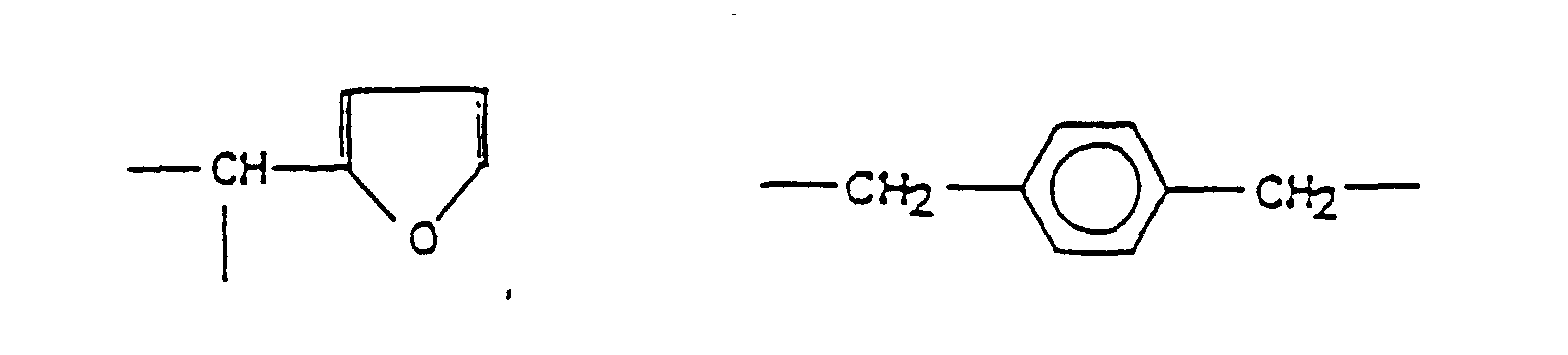 r 3 ist; undp 4 ist.
 - Verfahren nach Anspruch 1, worin das tertiäre Amin Triethylamin ist.
- Verfahren nach Anspruch 1, worin das Gewichtsverhältnis von Oligomer zu tertiärem Amin 1:1 bis 1:1,20 ist.
- Verfahren nach Anspruch 1, worin das Cyanhalogenid Cyanbromid oder Cyanchlorid ist.
- Verfahren nach Anspruch 1, worin das Lösungsmittel ausgewählt ist aus der Gruppe bestehend aus wassermischbarem Lösungsmittel, nicht-wassermischbarem Lösungsmittel und Mischungen daraus.
- Verfahren nach Anspruch 1, worin das Lösungsmittel Tetrahydrofuran oder Methylenchlorid ist.
- Verfahren nach Anspruch 1, worin das Molverhältnis von Cyanhalogenid zu Oligomer-Grundeinheit in dem Oligomer 1,02:1 bis 1,15:1 beträgt.
- Verfahren nach Anspruch 1, worin der Reaktionsbehälter aus zwei Schlaufenreaktoren mit jeweils einer Verweilzeit von 10 bis 25 Minuten besteht.
- Verfahren nach Anspruch 1, worin die Temperatur in dem Reaktionsbehälter weniger als -5°C beträgt.
- Verfahren nach Anspruch 1, welches die zusätzlichen Stufen zur Extraktion und Gewinnung von Multicyanatester aus einer Mischbeschickung mit Multicyanatester beinhaltet, welche einen Multicyanatester und wenigstens eine Verbindung umfaßt, die ausgewählt ist aus der Gruppe bestehend aus Nebenprodukten, Lösungsmittel und Fremdstoffen, umfassend:f) Quenchen der Beschickung mit einem Wasserstrahl unter Erzeugung eines Organische-Phase-Stroms, der den Multicyanatester umfaßt, und eines Wäßrige-Phase-Stroms;g) Abtrennen des den Multicyanatester umfassenden Organische-Phase-Stroms von dem Wäßrige-Phase-Strom; undh) Waschen des Organische-Phase-Stroms mit Wasser zur weiteren Entfernung der Nebenprodukte und Fremdstoffe aus dem MulticyanatesterproduktStrom.
- Verfahren nach Anspruch 12, worin das Lösungsmittel Tetrahydrofuran ist und das Gewichtsverhältnis des Wasserstroms zur Beschickung oder zum Organische-Phase-Strom ungefähr 1:4 beträgt.
- Verfahren nach Anspruch 13, worin 25 bis 30% der Fremdstoffe, bezogen auf das Gesamtgewicht der Beschickung, während jedem der Schritte a und c aus dieser entfernt werden.
- Verfahren nach Anspruch 1, welches eine zusätzliche Stufe zur Extraktion und Rückgewinnung wassermischbarer Lösungsmittel aus einer wäßrigen Mischbeschickung beinhaltet, welche wenigstens eine Komponente umfaßt, der ausgewählt ist aus der Gruppe bestehend aus Hydrohalogenidsalz von tertiärem Amin, Wasser und Fremdstoffen einschließlich Diethylcyanamid, Cyanhalogenid und Alkylhalogenid, umfassend:
Einleiten der wäßrigen Mischbeschickung in die Einspeisestelle einer Destillationskolonne, die unter Bedingungen arbeitet, die ausreichen, um einen Kopfprodukt-Strom zu erzeugen, der bezogen auf das Gesamtgewicht des Kopfprodukt-Stroms, wenigstens 95 Gew.-% tertiäres Amin, das im wesentlichen frei von Hydrohalogenidsalz von tertiärem Amin und von Fremdstoffen ist. - Verfahren nach Anspruch 1, welches eine zusätzliche Stufe zur Extraktion und Rückgewinnung des tertiären Amins aus einer wäßrigen Mischbeschickung beinhaltet, die wenigstens eine Komponente umfaßt, die ausgewählt ist aus der Gruppe bestehend aus tertiärem Amin, Lösungsmittel, Alkalihalogenid, Wasser und Fremdstoffen, die weiter Diethylcyanamid, Cyanhalogenid und Alkylhalogenid umfassen, und Mischungen davon, umfassend:
Einleiten der wäßrigen Mischbeschickung in die Einspeisestelle einer Destillationskolonne, die unter Bedingungen arbeitet, die ausreichen, um einen Kopfprodukt-Strom zu erzeugen, der bezogen auf das Gesamtgewicht des Kopfprodukt-Stroms wenigstens 95 Gew.-% tertiäres Amin umfaßt, das im wesentlichen frei von Wasser und Fremdstoffen ist. - Verfahren nach Anspruch 1, welches ferner die Stufen umfaßt:f) Einleiten des Reaktionsproduktstroms in eine Salzisolierungs- und Waschzone zum Auftrennen des Reaktionsproduktstroms in einen organischen Strom und einen wäßrigen Strom, wobei der organische Strom den Multicyanatester und wenigstens eine Komponente ausgewählt aus der Gruppe bestehend aus Wasser, Lösungsmittel, Fremdstoffen und Mischungen davon umfaßt, und der wäßrige Strom das Hydrohalogenidsalz des tertiären Amins und wenigstens eine Komponente ausgewählt aus der Gruppe bestehend aus Wasser, Lösungsmittel, Fremdstoffen und Mischungen davon umfaßt;g) Einleiten des organischen Stroms in eine Verflüchtigungszone zur Auftrennung des organischen Stroms in einen Multicyanatester-Strom und einen Verflüchtigungszonen-Lösungsmittelstrom;h) Einleiten des Verflüchtigungszonen-Lösungsmittelstroms und des wäßrigen Stroms aus der Salzisolierungs- und Waschzone in eine Zone zur Lösungsmittelrückgewinnung unter Bildung einer Lösungsmittelrückgewinnungszonenmischung;i) in der Zone zur Lösungsmittelrückgewinnung, Auftrennen der Lösungsmittelrückgewinnungszonenmischung in einen Lösungsmittelrückgewinnungszonen-Überkopfprodukt-Lösungsmittelstrom und einen Lösungsmittelrückgewinnungszonen-Sumpfproduktstrom, der wenigstens eine Komponente umfaßt, die ausgewählt ist aus der Gruppe bestehend aus Hydrohalogenidsalz von tertiärem Amin, Wasser, Cyanamid, Cyanhalogenid und anderen organischen Verbindungen;j) Einbringen des Lösungsmittelrückgewinnungszonen-Sumpfproduktstroms und eines Basische-Lösung-Stroms in eine tertiäres-Amin-Rückgewinnungszonenmischung; undk) in der tertiäres-Amin-Rückgewinnungszone, Abtrennen des tertiären Amins von der tertiäres-Amin-Rückgewinnungszonenmischung.
- Verfahren nach Anspruch 17, worin das Lösungsmittel ein wassermischbares Lösungsmittel oder eine Mischung aus wassermischbarem und nicht-wassermischbarem Lösungsmittel ist.
- Verfahren nach Anspruch 17, worin die Verflüchtigungszone besteht aus:a) einem ersten und einem zweiten Verflüchtigungsmittel, die in Reihe geschaltet sind; undb) einem Regelungsmittel zwischen dem ersten und zweiten Verflüchtigungsmittel,
wodurch das Regelungsmittel das Überschlagen des Lösungsmittels in das erste Verflüchtigungsmittel verhindert. - Verfahren nach Anspruch 1, ferner umfassend die Stufen:f) Einleiten des Reaktionsproduktstroms in eine Salzisolierungs- und Waschzone zur Auftrennung des Reaktionsproduktstroms in einen organischen Strom und einen wäßrigen Strom, wobei der organische Strom den Multicyanatester und wenigstens eine Komponente ausgewählt aus der Gruppe bestehend aus Wasser, Lösungsmittel, Nebenprodukten und Mischungen davon umfaßt, und der wäßrige Strom das Hydrohalogenidsalz des tertiären Amins und wenigstens eine Komponente ausgewählt aus der Gruppe bestehend aus Wasser, Lösungsmittel, Fremdstoffen und Mischungen davon umfaßt;g) Einleiten des organischen Stroms in eine Verflüchtigungszone zur Auftrennung des organischen Stroms in einen Multicyanatesterstrom und einen Verflüchtigungszonen-Lösungsmittelstrom;h) Einleiten des Verflüchtigungszonen-Lösungsmittelstroms und des wäßrigen Stroms aus der Salzisolierungs- und Waschzone und eines eine basische Lösung enthaltenden Stroms in eine tertiäres-Amin-Rückgewinnungszone unter Bildung einer tertiäres-Amin-Rückgewinnungszonenmischung;i) in der tertiäres-Amin-Rückgewinnungszone, Abtrennen des tertiären Amins aus der tertiäres-Amin-Rückgewinnungszonenmischung.
- Verfahren nach Anspruch 20, worin das Lösungsmittel ein nicht-wassermischbares Lösungsmittel oder eine Mischung aus nicht-wassermischbarem Lösungsmittel und wassermischbarem Lösungsmittel ist.
Applications Claiming Priority (5)
| Application Number | Priority Date | Filing Date | Title |
|---|---|---|---|
| US08/379,233 US5483013A (en) | 1995-01-27 | 1995-01-27 | Process for production of multicyanate esters |
| US379233 | 1995-01-27 | ||
| US558218 | 1995-11-17 | ||
| US08/558,218 US5648435A (en) | 1995-01-27 | 1995-11-17 | Process for production of multicyanate esters |
| PCT/IB1996/000168 WO1996023013A1 (en) | 1995-01-27 | 1996-01-29 | Process for production of multicyanate esters |
Publications (2)
| Publication Number | Publication Date |
|---|---|
| EP0805829A1 EP0805829A1 (de) | 1997-11-12 |
| EP0805829B1 true EP0805829B1 (de) | 1999-10-06 |
Family
ID=27008530
Family Applications (1)
| Application Number | Title | Priority Date | Filing Date |
|---|---|---|---|
| EP96902412A Expired - Lifetime EP0805829B1 (de) | 1995-01-27 | 1996-01-29 | Verfahren zur herstellung von polycyanatestern |
Country Status (10)
| Country | Link |
|---|---|
| US (1) | US5648435A (de) |
| EP (1) | EP0805829B1 (de) |
| JP (1) | JP4293633B2 (de) |
| KR (1) | KR100366981B1 (de) |
| CN (1) | CN1100074C (de) |
| AT (1) | ATE185358T1 (de) |
| AU (1) | AU4674296A (de) |
| DE (1) | DE69604565T2 (de) |
| RU (1) | RU2198898C2 (de) |
| WO (1) | WO1996023013A1 (de) |
Families Citing this family (7)
| Publication number | Priority date | Publication date | Assignee | Title |
|---|---|---|---|---|
| JP5239743B2 (ja) * | 2007-10-29 | 2013-07-17 | 三菱瓦斯化学株式会社 | 樹脂組成物並びにこれを用いたプリプレグ及び積層板 |
| KR102153300B1 (ko) | 2012-10-26 | 2020-09-08 | 미츠비시 가스 가가쿠 가부시키가이샤 | 할로겐화시안의 제조 방법, 시안산에스테르 화합물 및 그 제조 방법, 그리고 수지 조성물 |
| JP6667126B2 (ja) * | 2015-06-02 | 2020-03-18 | 三菱瓦斯化学株式会社 | シアン酸エステル化合物、該化合物を含む硬化性樹脂組成物及びその硬化物 |
| CN107778427A (zh) * | 2017-11-17 | 2018-03-09 | 常州市宏发纵横新材料科技股份有限公司 | 一种含氰酸酯基团的苯并噁嗪树脂及其制备方法 |
| CN110330612A (zh) * | 2019-06-27 | 2019-10-15 | 扬州天启新材料股份有限公司 | 一种酚醛型氰酸酯树脂的生产工艺 |
| CN111195511B (zh) * | 2020-01-17 | 2021-05-11 | 中国航空工业集团公司济南特种结构研究所 | 一种氰酸酯树脂的环保合成系统 |
| CN117736116B (zh) * | 2023-11-28 | 2026-03-10 | 宁夏瑞泰科技股份有限公司 | 六亚甲基二异氰酸酯的制备方法 |
Family Cites Families (20)
| Publication number | Priority date | Publication date | Assignee | Title |
|---|---|---|---|---|
| US3338965A (en) * | 1965-03-03 | 1967-08-29 | Allied Chem | Production of cyclohexanone oxime |
| US3966670A (en) * | 1972-12-27 | 1976-06-29 | Hooker Chemicals & Plastics Corporation | Friction particle for brake lining |
| JPS5114995A (en) * | 1974-07-29 | 1976-02-05 | Mitsubishi Gas Chemical Co | Shiansanesuterukiganjufuenoorujushino seizohoho |
| US4069108A (en) * | 1975-03-26 | 1978-01-17 | Hartung, Kuhn & Co. Maschinenfabrik Gmbh | Apparatus for removing dust-containing gases during coking operations |
| JPS51151544A (en) * | 1975-06-20 | 1976-12-27 | Ricoh Co Ltd | Transferring process of toner image |
| US4219452A (en) * | 1978-05-19 | 1980-08-26 | Amsted Industries Incorporated | Composite friction element |
| US4218361A (en) * | 1979-03-14 | 1980-08-19 | Molded Materials Company, Div. Carlisle Corporation | Friction material |
| US4268657A (en) * | 1979-12-10 | 1981-05-19 | Minnesota Mining And Manufacturing Company | Friction element containing phenol-formaldehyde-alkylphenol binder |
| JPS5834822A (ja) * | 1981-08-24 | 1983-03-01 | Mitsubishi Gas Chem Co Inc | シアナト基含有フエノ−ル樹脂の製法 |
| JPS59149918A (ja) * | 1983-02-15 | 1984-08-28 | Mitsubishi Gas Chem Co Inc | シアナト基含有フエノ−ル樹脂の製法 |
| US4831086A (en) * | 1987-10-05 | 1989-05-16 | Allied-Signal Inc. | Cyanato group containing phenolic resins, phenolic triazines derived therefrom |
| US5124414A (en) * | 1986-01-23 | 1992-06-23 | Allied-Signal Inc. | Process for preparing phenolic cyanate resins |
| US4970276A (en) * | 1986-01-23 | 1990-11-13 | Allied-Signal Inc. | Phenolic triazine copolymers based on pure cyanato novolacs |
| US4978727A (en) * | 1986-01-23 | 1990-12-18 | Allied-Signal | Cyanato group containing phenolic resins, phenolic triazines derived therefrom |
| US5126412A (en) * | 1987-10-05 | 1992-06-30 | Allied-Signal Inc. | Cyanato group containing phenolic resins, and phenolic triazines derived therefrom |
| US5137989A (en) * | 1989-09-01 | 1992-08-11 | Allied-Signal Inc. | Process for making cyanato containing phenolic resins |
| US5264500A (en) * | 1991-07-30 | 1993-11-23 | Allied-Signal Inc. | APT resins |
| US5329061A (en) * | 1993-06-01 | 1994-07-12 | Uop | Crystallization process for para-xylene recovery using two-stage recovery section |
| CH686784A5 (de) * | 1994-05-27 | 1996-06-28 | Lonza Ag Gampel Wallis Gesch F | Verfahren zur Herstellung von Arylcyanaten. |
| US5483013A (en) * | 1995-01-27 | 1996-01-09 | Alliedsignal Inc. | Process for production of multicyanate esters |
-
1995
- 1995-11-17 US US08/558,218 patent/US5648435A/en not_active Expired - Lifetime
-
1996
- 1996-01-29 AU AU46742/96A patent/AU4674296A/en not_active Abandoned
- 1996-01-29 KR KR1019970705105A patent/KR100366981B1/ko not_active Expired - Fee Related
- 1996-01-29 DE DE69604565T patent/DE69604565T2/de not_active Expired - Lifetime
- 1996-01-29 WO PCT/IB1996/000168 patent/WO1996023013A1/en not_active Ceased
- 1996-01-29 JP JP52275896A patent/JP4293633B2/ja not_active Expired - Fee Related
- 1996-01-29 CN CN96191632A patent/CN1100074C/zh not_active Expired - Fee Related
- 1996-01-29 RU RU97114227/04A patent/RU2198898C2/ru not_active IP Right Cessation
- 1996-01-29 AT AT96902412T patent/ATE185358T1/de active
- 1996-01-29 EP EP96902412A patent/EP0805829B1/de not_active Expired - Lifetime
Also Published As
| Publication number | Publication date |
|---|---|
| KR100366981B1 (ko) | 2003-04-11 |
| RU2198898C2 (ru) | 2003-02-20 |
| JP4293633B2 (ja) | 2009-07-08 |
| EP0805829A1 (de) | 1997-11-12 |
| CN1181763A (zh) | 1998-05-13 |
| JPH10512908A (ja) | 1998-12-08 |
| DE69604565D1 (de) | 1999-11-11 |
| ATE185358T1 (de) | 1999-10-15 |
| CN1100074C (zh) | 2003-01-29 |
| DE69604565T2 (de) | 2000-05-18 |
| KR19980701709A (ko) | 1998-06-25 |
| WO1996023013A1 (en) | 1996-08-01 |
| AU4674296A (en) | 1996-08-14 |
| US5648435A (en) | 1997-07-15 |
Similar Documents
| Publication | Publication Date | Title |
|---|---|---|
| EP0805829B1 (de) | Verfahren zur herstellung von polycyanatestern | |
| EP0304691B1 (de) | Herstellung von Polycarbonat | |
| JP4685244B2 (ja) | 重合体溶液から固体を分離する方法および装置 | |
| US5504186A (en) | Process for production of multicyanate esters | |
| IE50095B1 (en) | Process for the preparation of polycarbonate/polyether block copolymers and their use | |
| CN105295026A (zh) | 一种万吨级芳氧基聚合物的制备方法及其装置 | |
| WO2007083721A1 (ja) | ポリカーボネートオリゴマーの連続製造方法 | |
| JP3795679B2 (ja) | 臭素化合物の製造方法 | |
| US5210172A (en) | Method for the continuous preparation of carbonate oligomers with loop reactor, static mixer and plug flow | |
| JPS5826338B2 (ja) | ポリイソシアネ−トノ セイゾウホウ | |
| US3959335A (en) | Process for the preparation of a bisphenol bischlorocarbonic acid ester | |
| CN110483337A (zh) | 一种苯二亚甲基二异氰酸酯产品的分离精制系统及方法 | |
| US5874644A (en) | Method and system for bisphenol a production using controlled turbulence | |
| US20020137874A1 (en) | Process for producing oligocarbonates | |
| JP2004250452A (ja) | ジニトロトルエンの製造方法 | |
| CN113474329B (zh) | 制备4,4′-二氯二苯亚砜的方法 | |
| US4468257A (en) | Washing and removal method of high molecular substances | |
| US5932762A (en) | Process for the production of aryl cyanates | |
| CN113521789B (zh) | 聚碳酸酯生产过程处理有机蒸汽的装置及其方法和应用 | |
| US5959158A (en) | Method and system for bisphenol a production using water | |
| WO2023118974A1 (en) | An agitator reactor for synthesis of acrylamido tertiary butyl sulfonic acid and process implemented thereon | |
| JPS6221011B2 (de) | ||
| TW200528488A (en) | A method of producing organic solution of refined polycarbonicester and high purity polycarbonic ester | |
| JP4027514B2 (ja) | 未反応フェノール性化合物の抽出方法 | |
| JPH021733A (ja) | 環状ポリカーボネートオリゴマーの製造方法 |
Legal Events
| Date | Code | Title | Description |
|---|---|---|---|
| PUAI | Public reference made under article 153(3) epc to a published international application that has entered the european phase |
Free format text: ORIGINAL CODE: 0009012 |
|
| 17P | Request for examination filed |
Effective date: 19970725 |
|
| AK | Designated contracting states |
Kind code of ref document: A1 Designated state(s): AT BE CH DE FR GB LI |
|
| 17Q | First examination report despatched |
Effective date: 19971210 |
|
| GRAG | Despatch of communication of intention to grant |
Free format text: ORIGINAL CODE: EPIDOS AGRA |
|
| GRAG | Despatch of communication of intention to grant |
Free format text: ORIGINAL CODE: EPIDOS AGRA |
|
| GRAH | Despatch of communication of intention to grant a patent |
Free format text: ORIGINAL CODE: EPIDOS IGRA |
|
| GRAH | Despatch of communication of intention to grant a patent |
Free format text: ORIGINAL CODE: EPIDOS IGRA |
|
| GRAA | (expected) grant |
Free format text: ORIGINAL CODE: 0009210 |
|
| AK | Designated contracting states |
Kind code of ref document: B1 Designated state(s): AT BE CH DE FR GB LI |
|
| REF | Corresponds to: |
Ref document number: 185358 Country of ref document: AT Date of ref document: 19991015 Kind code of ref document: T |
|
| REG | Reference to a national code |
Ref country code: CH Ref legal event code: EP |
|
| REF | Corresponds to: |
Ref document number: 69604565 Country of ref document: DE Date of ref document: 19991111 |
|
| ET | Fr: translation filed | ||
| RBV | Designated contracting states (corrected) |
Designated state(s): AT BE CH DE FR GB LI |
|
| PLBE | No opposition filed within time limit |
Free format text: ORIGINAL CODE: 0009261 |
|
| STAA | Information on the status of an ep patent application or granted ep patent |
Free format text: STATUS: NO OPPOSITION FILED WITHIN TIME LIMIT |
|
| 26N | No opposition filed | ||
| REG | Reference to a national code |
Ref country code: GB Ref legal event code: IF02 |
|
| PGFP | Annual fee paid to national office [announced via postgrant information from national office to epo] |
Ref country code: GB Payment date: 20101112 Year of fee payment: 16 |
|
| PGFP | Annual fee paid to national office [announced via postgrant information from national office to epo] |
Ref country code: FR Payment date: 20111128 Year of fee payment: 17 Ref country code: CH Payment date: 20111205 Year of fee payment: 17 |
|
| PGFP | Annual fee paid to national office [announced via postgrant information from national office to epo] |
Ref country code: BE Payment date: 20111117 Year of fee payment: 17 |
|
| PGFP | Annual fee paid to national office [announced via postgrant information from national office to epo] |
Ref country code: DE Payment date: 20111117 Year of fee payment: 17 |
|
| PGFP | Annual fee paid to national office [announced via postgrant information from national office to epo] |
Ref country code: AT Payment date: 20111117 Year of fee payment: 17 |
|
| BERE | Be: lapsed |
Owner name: *ALLIEDSIGNAL INC. Effective date: 20130131 |
|
| REG | Reference to a national code |
Ref country code: CH Ref legal event code: PL |
|
| REG | Reference to a national code |
Ref country code: AT Ref legal event code: MM01 Ref document number: 185358 Country of ref document: AT Kind code of ref document: T Effective date: 20130131 |
|
| GBPC | Gb: european patent ceased through non-payment of renewal fee |
Effective date: 20130129 |
|
| REG | Reference to a national code |
Ref country code: FR Ref legal event code: ST Effective date: 20130930 |
|
| PG25 | Lapsed in a contracting state [announced via postgrant information from national office to epo] |
Ref country code: CH Free format text: LAPSE BECAUSE OF NON-PAYMENT OF DUE FEES Effective date: 20130131 Ref country code: DE Free format text: LAPSE BECAUSE OF NON-PAYMENT OF DUE FEES Effective date: 20130801 Ref country code: BE Free format text: LAPSE BECAUSE OF NON-PAYMENT OF DUE FEES Effective date: 20130131 Ref country code: LI Free format text: LAPSE BECAUSE OF NON-PAYMENT OF DUE FEES Effective date: 20130131 Ref country code: AT Free format text: LAPSE BECAUSE OF NON-PAYMENT OF DUE FEES Effective date: 20130131 |
|
| REG | Reference to a national code |
Ref country code: DE Ref legal event code: R119 Ref document number: 69604565 Country of ref document: DE Effective date: 20130801 |
|
| PG25 | Lapsed in a contracting state [announced via postgrant information from national office to epo] |
Ref country code: FR Free format text: LAPSE BECAUSE OF NON-PAYMENT OF DUE FEES Effective date: 20130131 Ref country code: GB Free format text: LAPSE BECAUSE OF NON-PAYMENT OF DUE FEES Effective date: 20130129 |