EP0807094B1 - Adjuvants non ioniques a liaisons seches - Google Patents
Adjuvants non ioniques a liaisons seches Download PDFInfo
- Publication number
- EP0807094B1 EP0807094B1 EP96903753A EP96903753A EP0807094B1 EP 0807094 B1 EP0807094 B1 EP 0807094B1 EP 96903753 A EP96903753 A EP 96903753A EP 96903753 A EP96903753 A EP 96903753A EP 0807094 B1 EP0807094 B1 EP 0807094B1
- Authority
- EP
- European Patent Office
- Prior art keywords
- formula
- fertilizer
- independently
- adjuvant system
- weight percent
- Prior art date
- Legal status (The legal status is an assumption and is not a legal conclusion. Google has not performed a legal analysis and makes no representation as to the accuracy of the status listed.)
- Expired - Lifetime
Links
- 239000002671 adjuvant Substances 0.000 title claims abstract description 51
- 239000000203 mixture Substances 0.000 claims abstract description 71
- 239000004094 surface-active agent Substances 0.000 claims abstract description 46
- 239000003337 fertilizer Substances 0.000 claims abstract description 41
- 239000007787 solid Substances 0.000 claims abstract description 37
- 239000002736 nonionic surfactant Substances 0.000 claims abstract description 29
- 239000002245 particle Substances 0.000 claims abstract description 29
- BFNBIHQBYMNNAN-UHFFFAOYSA-N ammonium sulfate Chemical compound N.N.OS(O)(=O)=O BFNBIHQBYMNNAN-UHFFFAOYSA-N 0.000 claims abstract description 22
- 229910052921 ammonium sulfate Inorganic materials 0.000 claims abstract description 22
- 235000011130 ammonium sulphate Nutrition 0.000 claims abstract description 22
- 238000005507 spraying Methods 0.000 claims abstract description 10
- QJGQUHMNIGDVPM-UHFFFAOYSA-N nitrogen group Chemical group [N] QJGQUHMNIGDVPM-UHFFFAOYSA-N 0.000 claims abstract description 8
- 238000004519 manufacturing process Methods 0.000 claims abstract 3
- 238000000034 method Methods 0.000 claims description 23
- 125000000217 alkyl group Chemical group 0.000 claims description 16
- 238000000576 coating method Methods 0.000 claims description 9
- 238000002156 mixing Methods 0.000 claims description 9
- 239000011248 coating agent Substances 0.000 claims description 7
- 238000005469 granulation Methods 0.000 claims description 7
- 230000003179 granulation Effects 0.000 claims description 7
- IAYPIBMASNFSPL-UHFFFAOYSA-N Ethylene oxide Chemical compound C1CO1 IAYPIBMASNFSPL-UHFFFAOYSA-N 0.000 claims description 5
- GOOHAUXETOMSMM-UHFFFAOYSA-N Propylene oxide Chemical compound CC1CO1 GOOHAUXETOMSMM-UHFFFAOYSA-N 0.000 claims description 5
- 229920001400 block copolymer Polymers 0.000 claims description 5
- 229940117927 ethylene oxide Drugs 0.000 claims description 5
- JNYAEWCLZODPBN-JGWLITMVSA-N (2r,3r,4s)-2-[(1r)-1,2-dihydroxyethyl]oxolane-3,4-diol Chemical class OC[C@@H](O)[C@H]1OC[C@H](O)[C@H]1O JNYAEWCLZODPBN-JGWLITMVSA-N 0.000 claims description 4
- LFQSCWFLJHTTHZ-UHFFFAOYSA-N Ethanol Chemical compound CCO LFQSCWFLJHTTHZ-UHFFFAOYSA-N 0.000 claims description 4
- 239000000460 chlorine Substances 0.000 claims description 4
- 238000002844 melting Methods 0.000 claims description 4
- 230000008018 melting Effects 0.000 claims description 4
- TVFWYUWNQVRQRG-UHFFFAOYSA-N 2,3,4-tris(2-phenylethenyl)phenol Chemical compound C=1C=CC=CC=1C=CC1=C(C=CC=2C=CC=CC=2)C(O)=CC=C1C=CC1=CC=CC=C1 TVFWYUWNQVRQRG-UHFFFAOYSA-N 0.000 claims description 2
- ZAMOUSCENKQFHK-UHFFFAOYSA-N Chlorine atom Chemical compound [Cl] ZAMOUSCENKQFHK-UHFFFAOYSA-N 0.000 claims description 2
- VGGSQFUCUMXWEO-UHFFFAOYSA-N Ethene Chemical compound C=C VGGSQFUCUMXWEO-UHFFFAOYSA-N 0.000 claims description 2
- 239000005977 Ethylene Substances 0.000 claims description 2
- LSDPWZHWYPCBBB-UHFFFAOYSA-N Methanethiol Chemical compound SC LSDPWZHWYPCBBB-UHFFFAOYSA-N 0.000 claims description 2
- 229910052801 chlorine Inorganic materials 0.000 claims description 2
- 238000001816 cooling Methods 0.000 claims description 2
- 229920001577 copolymer Polymers 0.000 claims description 2
- 235000014113 dietary fatty acids Nutrition 0.000 claims description 2
- 239000000194 fatty acid Substances 0.000 claims description 2
- 229930195729 fatty acid Natural products 0.000 claims description 2
- -1 fatty acid esters Chemical class 0.000 claims description 2
- 150000002314 glycerols Chemical class 0.000 claims description 2
- 238000004090 dissolution Methods 0.000 description 18
- 239000000463 material Substances 0.000 description 15
- 239000007921 spray Substances 0.000 description 15
- 239000000047 product Substances 0.000 description 14
- 239000008187 granular material Substances 0.000 description 13
- 239000007788 liquid Substances 0.000 description 12
- 230000002363 herbicidal effect Effects 0.000 description 10
- 239000004009 herbicide Substances 0.000 description 10
- 239000000575 pesticide Substances 0.000 description 9
- 239000012736 aqueous medium Substances 0.000 description 8
- 239000007931 coated granule Substances 0.000 description 8
- 230000000694 effects Effects 0.000 description 8
- XDDAORKBJWWYJS-UHFFFAOYSA-N glyphosate Chemical compound OC(=O)CNCP(O)(O)=O XDDAORKBJWWYJS-UHFFFAOYSA-N 0.000 description 8
- XLYOFNOQVPJJNP-UHFFFAOYSA-N water Substances O XLYOFNOQVPJJNP-UHFFFAOYSA-N 0.000 description 8
- JKTAIYGNOFSMCE-UHFFFAOYSA-N 2,3-di(nonyl)phenol Chemical group CCCCCCCCCC1=CC=CC(O)=C1CCCCCCCCC JKTAIYGNOFSMCE-UHFFFAOYSA-N 0.000 description 7
- 244000068988 Glycine max Species 0.000 description 7
- 235000010469 Glycine max Nutrition 0.000 description 7
- 238000009472 formulation Methods 0.000 description 7
- PLLBRTOLHQQAQQ-UHFFFAOYSA-N 8-methylnonan-1-ol Chemical compound CC(C)CCCCCCCO PLLBRTOLHQQAQQ-UHFFFAOYSA-N 0.000 description 5
- 239000004440 Isodecyl alcohol Substances 0.000 description 5
- 231100000674 Phytotoxicity Toxicity 0.000 description 5
- 239000003795 chemical substances by application Substances 0.000 description 5
- 238000005056 compaction Methods 0.000 description 5
- IJGRMHOSHXDMSA-UHFFFAOYSA-N Atomic nitrogen Chemical compound N#N IJGRMHOSHXDMSA-UHFFFAOYSA-N 0.000 description 4
- 239000005562 Glyphosate Substances 0.000 description 4
- CSPPKDPQLUUTND-NBVRZTHBSA-N Sethoxydim Chemical compound CCO\N=C(/CCC)C1=C(O)CC(CC(C)SCC)CC1=O CSPPKDPQLUUTND-NBVRZTHBSA-N 0.000 description 4
- QAOWNCQODCNURD-UHFFFAOYSA-L Sulfate Chemical compound [O-]S([O-])(=O)=O QAOWNCQODCNURD-UHFFFAOYSA-L 0.000 description 4
- 239000002518 antifoaming agent Substances 0.000 description 4
- 238000001125 extrusion Methods 0.000 description 4
- 239000000499 gel Substances 0.000 description 4
- 229940097068 glyphosate Drugs 0.000 description 4
- 241000196324 Embryophyta Species 0.000 description 3
- 229940100389 Sulfonylurea Drugs 0.000 description 3
- 239000008186 active pharmaceutical agent Substances 0.000 description 3
- KRKNYBCHXYNGOX-UHFFFAOYSA-N citric acid Chemical compound OC(=O)CC(O)(C(O)=O)CC(O)=O KRKNYBCHXYNGOX-UHFFFAOYSA-N 0.000 description 3
- 150000001875 compounds Chemical class 0.000 description 3
- 238000003359 percent control normalization Methods 0.000 description 3
- YROXIXLRRCOBKF-UHFFFAOYSA-N sulfonylurea Chemical compound OC(=N)N=S(=O)=O YROXIXLRRCOBKF-UHFFFAOYSA-N 0.000 description 3
- 238000012360 testing method Methods 0.000 description 3
- 238000009736 wetting Methods 0.000 description 3
- YIVXMZJTEQBPQO-UHFFFAOYSA-N 2,4-DB Chemical compound OC(=O)CCCOC1=CC=C(Cl)C=C1Cl YIVXMZJTEQBPQO-UHFFFAOYSA-N 0.000 description 2
- QGZKDVFQNNGYKY-UHFFFAOYSA-N Ammonia Chemical compound N QGZKDVFQNNGYKY-UHFFFAOYSA-N 0.000 description 2
- OYPRJOBELJOOCE-UHFFFAOYSA-N Calcium Chemical compound [Ca] OYPRJOBELJOOCE-UHFFFAOYSA-N 0.000 description 2
- LYCAIKOWRPUZTN-UHFFFAOYSA-N Ethylene glycol Chemical compound OCCO LYCAIKOWRPUZTN-UHFFFAOYSA-N 0.000 description 2
- 240000006394 Sorghum bicolor Species 0.000 description 2
- 235000006923 Sorghum x drummondii Nutrition 0.000 description 2
- 240000008042 Zea mays Species 0.000 description 2
- 235000005824 Zea mays ssp. parviglumis Nutrition 0.000 description 2
- 235000002017 Zea mays subsp mays Nutrition 0.000 description 2
- 230000008485 antagonism Effects 0.000 description 2
- 239000007864 aqueous solution Substances 0.000 description 2
- 230000015572 biosynthetic process Effects 0.000 description 2
- 239000011575 calcium Substances 0.000 description 2
- 239000012141 concentrate Substances 0.000 description 2
- 235000005822 corn Nutrition 0.000 description 2
- 230000001419 dependent effect Effects 0.000 description 2
- 239000000428 dust Substances 0.000 description 2
- 238000005538 encapsulation Methods 0.000 description 2
- 229910052757 nitrogen Inorganic materials 0.000 description 2
- 235000019198 oils Nutrition 0.000 description 2
- 230000035515 penetration Effects 0.000 description 2
- 230000000361 pesticidal effect Effects 0.000 description 2
- 239000000843 powder Substances 0.000 description 2
- 238000012545 processing Methods 0.000 description 2
- 238000000926 separation method Methods 0.000 description 2
- 239000000243 solution Substances 0.000 description 2
- 235000015112 vegetable and seed oil Nutrition 0.000 description 2
- 230000000007 visual effect Effects 0.000 description 2
- 239000001993 wax Substances 0.000 description 2
- QGZKDVFQNNGYKY-UHFFFAOYSA-O Ammonium Chemical compound [NH4+] QGZKDVFQNNGYKY-UHFFFAOYSA-O 0.000 description 1
- 0 CC1C(*)C(C)OC1 Chemical compound CC1C(*)C(C)OC1 0.000 description 1
- CZSCWQWPQDZKSG-UHFFFAOYSA-N CC1C(C)C(C)OC1 Chemical compound CC1C(C)C(C)OC1 CZSCWQWPQDZKSG-UHFFFAOYSA-N 0.000 description 1
- 241001649190 Campsis Species 0.000 description 1
- 244000303965 Cyamopsis psoralioides Species 0.000 description 1
- XZMCDFZZKTWFGF-UHFFFAOYSA-N Cyanamide Chemical compound NC#N XZMCDFZZKTWFGF-UHFFFAOYSA-N 0.000 description 1
- 235000005853 Cyperus esculentus Nutrition 0.000 description 1
- 244000075634 Cyperus rotundus Species 0.000 description 1
- 239000005696 Diammonium phosphate Substances 0.000 description 1
- 235000001602 Digitaria X umfolozi Nutrition 0.000 description 1
- 235000017898 Digitaria ciliaris Nutrition 0.000 description 1
- 235000005476 Digitaria cruciata Nutrition 0.000 description 1
- 235000006830 Digitaria didactyla Nutrition 0.000 description 1
- 235000005804 Digitaria eriantha ssp. eriantha Nutrition 0.000 description 1
- 235000010823 Digitaria sanguinalis Nutrition 0.000 description 1
- 239000001692 EU approved anti-caking agent Substances 0.000 description 1
- 244000025670 Eleusine indica Species 0.000 description 1
- 235000014716 Eleusine indica Nutrition 0.000 description 1
- RYECOJGRJDOGPP-UHFFFAOYSA-N Ethylurea Chemical compound CCNC(N)=O RYECOJGRJDOGPP-UHFFFAOYSA-N 0.000 description 1
- PDYXIVPKOMYDOK-UHFFFAOYSA-N Glyphosate-monoammonium Chemical compound [NH4+].OC(=O)CNCP(O)([O-])=O PDYXIVPKOMYDOK-UHFFFAOYSA-N 0.000 description 1
- 206010061217 Infestation Diseases 0.000 description 1
- OWYWGLHRNBIFJP-UHFFFAOYSA-N Ipazine Chemical compound CCN(CC)C1=NC(Cl)=NC(NC(C)C)=N1 OWYWGLHRNBIFJP-UHFFFAOYSA-N 0.000 description 1
- 239000002202 Polyethylene glycol Substances 0.000 description 1
- 239000005616 Rimsulfuron Substances 0.000 description 1
- PMZURENOXWZQFD-UHFFFAOYSA-L Sodium Sulfate Chemical class [Na+].[Na+].[O-]S([O-])(=O)=O PMZURENOXWZQFD-UHFFFAOYSA-L 0.000 description 1
- 240000002439 Sorghum halepense Species 0.000 description 1
- XSQUKJJJFZCRTK-UHFFFAOYSA-N Urea Chemical compound NC(N)=O XSQUKJJJFZCRTK-UHFFFAOYSA-N 0.000 description 1
- 239000000654 additive Substances 0.000 description 1
- 230000000996 additive effect Effects 0.000 description 1
- 230000002411 adverse Effects 0.000 description 1
- 238000005054 agglomeration Methods 0.000 description 1
- 230000002776 aggregation Effects 0.000 description 1
- 239000003905 agrochemical Substances 0.000 description 1
- 125000005233 alkylalcohol group Chemical group 0.000 description 1
- 229910021529 ammonia Inorganic materials 0.000 description 1
- BIGPRXCJEDHCLP-UHFFFAOYSA-N ammonium bisulfate Chemical compound [NH4+].OS([O-])(=O)=O BIGPRXCJEDHCLP-UHFFFAOYSA-N 0.000 description 1
- LFVGISIMTYGQHF-UHFFFAOYSA-N ammonium dihydrogen phosphate Chemical compound [NH4+].OP(O)([O-])=O LFVGISIMTYGQHF-UHFFFAOYSA-N 0.000 description 1
- 229910000387 ammonium dihydrogen phosphate Inorganic materials 0.000 description 1
- 239000011230 binding agent Substances 0.000 description 1
- 229910052791 calcium Inorganic materials 0.000 description 1
- 229910001424 calcium ion Inorganic materials 0.000 description 1
- 235000011132 calcium sulphate Nutrition 0.000 description 1
- 239000004202 carbamide Substances 0.000 description 1
- 150000001768 cations Chemical class 0.000 description 1
- 210000002421 cell wall Anatomy 0.000 description 1
- 238000007906 compression Methods 0.000 description 1
- 230000006835 compression Effects 0.000 description 1
- 239000013078 crystal Substances 0.000 description 1
- OILAIQUEIWYQPH-UHFFFAOYSA-N cyclohexane-1,2-dione Chemical compound O=C1CCCCC1=O OILAIQUEIWYQPH-UHFFFAOYSA-N 0.000 description 1
- 239000008367 deionised water Substances 0.000 description 1
- 229910021641 deionized water Inorganic materials 0.000 description 1
- 238000013461 design Methods 0.000 description 1
- MNNHAPBLZZVQHP-UHFFFAOYSA-N diammonium hydrogen phosphate Chemical compound [NH4+].[NH4+].OP([O-])([O-])=O MNNHAPBLZZVQHP-UHFFFAOYSA-N 0.000 description 1
- 229910000388 diammonium phosphate Inorganic materials 0.000 description 1
- 235000019838 diammonium phosphate Nutrition 0.000 description 1
- 238000001035 drying Methods 0.000 description 1
- 238000010410 dusting Methods 0.000 description 1
- 239000000975 dye Substances 0.000 description 1
- 230000008030 elimination Effects 0.000 description 1
- 238000003379 elimination reaction Methods 0.000 description 1
- 239000003995 emulsifying agent Substances 0.000 description 1
- 238000005516 engineering process Methods 0.000 description 1
- 150000004665 fatty acids Chemical class 0.000 description 1
- 239000000945 filler Substances 0.000 description 1
- 239000012467 final product Substances 0.000 description 1
- 238000005188 flotation Methods 0.000 description 1
- 230000009969 flowable effect Effects 0.000 description 1
- 239000006260 foam Substances 0.000 description 1
- 238000005187 foaming Methods 0.000 description 1
- 239000000417 fungicide Substances 0.000 description 1
- 150000002334 glycols Chemical class 0.000 description 1
- 230000036571 hydration Effects 0.000 description 1
- 238000006703 hydration reaction Methods 0.000 description 1
- 230000002209 hydrophobic effect Effects 0.000 description 1
- WGCNASOHLSPBMP-UHFFFAOYSA-N hydroxyacetaldehyde Natural products OCC=O WGCNASOHLSPBMP-UHFFFAOYSA-N 0.000 description 1
- MTNDZQHUAFNZQY-UHFFFAOYSA-N imidazoline Chemical compound C1CN=CN1 MTNDZQHUAFNZQY-UHFFFAOYSA-N 0.000 description 1
- 238000010348 incorporation Methods 0.000 description 1
- 229940060367 inert ingredients Drugs 0.000 description 1
- 239000004615 ingredient Substances 0.000 description 1
- 239000002917 insecticide Substances 0.000 description 1
- 238000011068 loading method Methods 0.000 description 1
- 239000002609 medium Substances 0.000 description 1
- 239000012528 membrane Substances 0.000 description 1
- 235000019837 monoammonium phosphate Nutrition 0.000 description 1
- 239000006012 monoammonium phosphate Substances 0.000 description 1
- 239000006174 pH buffer Substances 0.000 description 1
- 239000006069 physical mixture Substances 0.000 description 1
- 231100000208 phytotoxic Toxicity 0.000 description 1
- 230000000885 phytotoxic effect Effects 0.000 description 1
- 239000005648 plant growth regulator Substances 0.000 description 1
- 229920001223 polyethylene glycol Polymers 0.000 description 1
- 229920001296 polysiloxane Polymers 0.000 description 1
- 239000011148 porous material Substances 0.000 description 1
- 239000002244 precipitate Substances 0.000 description 1
- 238000001556 precipitation Methods 0.000 description 1
- MEFOUWRMVYJCQC-UHFFFAOYSA-N rimsulfuron Chemical compound CCS(=O)(=O)C1=CC=CN=C1S(=O)(=O)NC(=O)NC1=NC(OC)=CC(OC)=N1 MEFOUWRMVYJCQC-UHFFFAOYSA-N 0.000 description 1
- 229910001415 sodium ion Inorganic materials 0.000 description 1
- 229910052938 sodium sulfate Inorganic materials 0.000 description 1
- 235000011152 sodium sulphate Nutrition 0.000 description 1
- YWICANUUQPYHOW-UHFFFAOYSA-M sodium;2-(phosphonomethylamino)acetate Chemical compound [Na+].OP(O)(=O)CNCC([O-])=O YWICANUUQPYHOW-UHFFFAOYSA-M 0.000 description 1
- 239000002689 soil Substances 0.000 description 1
- 239000008247 solid mixture Substances 0.000 description 1
- 230000007928 solubilization Effects 0.000 description 1
- 238000005063 solubilization Methods 0.000 description 1
- 239000003381 stabilizer Substances 0.000 description 1
- 238000003756 stirring Methods 0.000 description 1
- 239000000758 substrate Substances 0.000 description 1
- 230000001629 suppression Effects 0.000 description 1
- 230000009885 systemic effect Effects 0.000 description 1
- 231100000331 toxic Toxicity 0.000 description 1
- 230000002588 toxic effect Effects 0.000 description 1
- 238000009827 uniform distribution Methods 0.000 description 1
Classifications
-
- C—CHEMISTRY; METALLURGY
- C05—FERTILISERS; MANUFACTURE THEREOF
- C05C—NITROGENOUS FERTILISERS
- C05C3/00—Fertilisers containing other salts of ammonia or ammonia itself, e.g. gas liquor
-
- C—CHEMISTRY; METALLURGY
- C05—FERTILISERS; MANUFACTURE THEREOF
- C05C—NITROGENOUS FERTILISERS
- C05C3/00—Fertilisers containing other salts of ammonia or ammonia itself, e.g. gas liquor
- C05C3/005—Post-treatment
-
- C—CHEMISTRY; METALLURGY
- C05—FERTILISERS; MANUFACTURE THEREOF
- C05G—MIXTURES OF FERTILISERS COVERED INDIVIDUALLY BY DIFFERENT SUBCLASSES OF CLASS C05; MIXTURES OF ONE OR MORE FERTILISERS WITH MATERIALS NOT HAVING A SPECIFIC FERTILISING ACTIVITY, e.g. PESTICIDES, SOIL-CONDITIONERS, WETTING AGENTS; FERTILISERS CHARACTERISED BY THEIR FORM
- C05G3/00—Mixtures of one or more fertilisers with additives not having a specially fertilising activity
- C05G3/50—Surfactants; Emulsifiers
-
- C—CHEMISTRY; METALLURGY
- C05—FERTILISERS; MANUFACTURE THEREOF
- C05G—MIXTURES OF FERTILISERS COVERED INDIVIDUALLY BY DIFFERENT SUBCLASSES OF CLASS C05; MIXTURES OF ONE OR MORE FERTILISERS WITH MATERIALS NOT HAVING A SPECIFIC FERTILISING ACTIVITY, e.g. PESTICIDES, SOIL-CONDITIONERS, WETTING AGENTS; FERTILISERS CHARACTERISED BY THEIR FORM
- C05G3/00—Mixtures of one or more fertilisers with additives not having a specially fertilising activity
- C05G3/70—Mixtures of one or more fertilisers with additives not having a specially fertilising activity for affecting wettability, e.g. drying agents
-
- C—CHEMISTRY; METALLURGY
- C05—FERTILISERS; MANUFACTURE THEREOF
- C05G—MIXTURES OF FERTILISERS COVERED INDIVIDUALLY BY DIFFERENT SUBCLASSES OF CLASS C05; MIXTURES OF ONE OR MORE FERTILISERS WITH MATERIALS NOT HAVING A SPECIFIC FERTILISING ACTIVITY, e.g. PESTICIDES, SOIL-CONDITIONERS, WETTING AGENTS; FERTILISERS CHARACTERISED BY THEIR FORM
- C05G5/00—Fertilisers characterised by their form
- C05G5/30—Layered or coated, e.g. dust-preventing coatings
Definitions
- the present invention relates to solid, nonionic surfactant coated, water-soluble fertilizer delivery systems.
- the art has also recognized the particular importance of two of the adjuvant properties. They are first, the hydrophilic - hydrophobic balance (HLB) and secondly, the physical form of the initial surface deposit, ideally a moist gel. It has been theorized that with surfactants in the appropriate HLB range, the surfactant is hydrophilic enough to solubilize the herbicide in water and lipophilic enough to penetrate the cuticle of a leaf. In moist gels, the surfactants are hypothesized to form monolayers on the leaf surfaces with the lipophilic portion along the waxes and the hydrophilic portion forming "hydrophilic channels" through surface imperfections such as cracks, punctures, and pores. These channels absorb water and slightly swell to allow herbicides to diffuse through the cuticle into the cell walls.
- HLB hydrophilic - hydrophobic balance
- the surfactants preferred by the art and which can realize the above-described properties when admixed with pesticides in aqueous medium, are the nonionics.
- the solid, nonionic surfactants are desired by the end-user, usually a farmer, for ease of handling such as when preparing a pesticidal spray tank mix.
- the solid nonionics are also preferred to eliminate the need for triple rinsing of the liquid surfactant containers, e.g., the 2.5 gallon jugs, usually used to deliver liquid surfactant concentrates to farmers and to avoid the attendant jug disposal problem.
- dry water-soluble nitrogen fertilizers such as urea, ethylurea, mono and diammonium phosphate; mono and diammonium sulfate, and mixtures thereof can enhance the efficacy of pesticides, especially the herbicides.
- This significant increase in herbicide phytotoxicity in the presence of nitrogen fertilizers has been especially observed with the use of diammonium sulfate adjuvant.
- Large increases in herbicidal efficacy have been reported (Adjuvants and Agrochemicals, Vol. II, Chapter 34) when diammonium sulfate was used as an adjuvant in combination with methylated seed oil, a known cuticle "softener".
- Glyphosate one of the most frequently used herbicides worldwide, usually has diammonium sulfate added to its spray tank solution to enhance its herbicidal efficacy.
- diammonium sulfate appears to have at least two modes of action when coupled to glyphosates: firstly, by directly increasing the glyphosates phytotoxicity and secondly, by overcoming antagonism from certain cations. It has been theorized that the sulfate ions precipitate calcium and sodium ions by forming calcium and sodium sulfates which have low water solubility. The ammonium ions form the more toxic glyphosate-ammonium complex and prevent formation of the less phytotoxic glyphosate - sodium complex during droplet drying.
- Extrusion processing to prepare melt-admixed granules such as is taught in EP 501,798A1 has the disadvantage of always intimately admixing all of the components thus inherently placing a restriction on the individual components that can be utilized in such a process.
- the individual components sought to be used are incompatible in intimate contact.
- all of the material components will be exposed to the aqueous medium simultaneously, i.e., one cannot program for differing dissolution rates.
- granule-type products i.e., multi-component particles are desirable in many end-use applications such as when they are to be used in pesticidal tank mixes for they are more stable during storage and transport than mere physical mixtures of the dry individual components and provide ease of handling.
- dry water-soluble nitrogen-containing fertilizers preferably diammonium sulfate can provide excellent substrates for certain solid nonionic surfactants when the surfactant composition is dry bonded onto from 70 to 99 weight percent (based on the total dry bonded particle weight) of the fertilizer by spray-coating the fertilizer with the molten surfactant.
- the time for complete dissolution in water of the solid, nonionic surfactant compositions can ofttimes be significantly reduced.
- These coated fertilizer carrier systems also realize many additional advantages over the blends of fertilizer and adjuvants in the prior art. At the outset, being a hard coated, granular type product, the instant fertilizer carrier systems are exceptionally stable and relatively unaffected by attrition during storage and shipping.
- spray-coated is meant that the solid surfactant is melted and coated upon the fertilizer while still in the molten state. This is done by spraying the molten surfactant onto the fertilizer, most preferably the diammonium sulfate particles in a coating blender. Complete coating of the fertilizer particles is not always necessary but, rather, the degree of completeness of the coating is often determined by specific requirements such as the need to isolate the fertilizer from other added incompatible adjuvants.
- the sprayed material, while still in a sticky state can optionally be continuously tumbled to partially agglomerate or granulate the individual particles so as to yield dry bonded flowable granules.
- solid, nonionic surfactants that can be used in the process of this invention are those known in the art which are solid or of a hard, nontacky wax consistency at room temperature, and are selected from:
- mixtures of the above surfactants are acceptable and, in fact, mixtures of the above surfactants with other nonionics that alone are liquid even at room temperature may be acceptable provided that the amount or nature of the liquid surfactant is such that the final particulate product does not exhibit tackiness at room temperature. Preferably, tackiness is not exhibited even at 50°C.
- the preferred solid nonionic surfactants are the aforedescribed alkyl alcohol ethoxylates and alkylphenol ethoxylates.
- the solid, nonionic surfactant composition of the instant granules should be from about 1 to 30 weight percent, preferably from about 4 to 30, based on the total weight of the granules.
- the most preferred solid nonionic surfactant is dinonylphenol ethoxylate ( ⁇ 100 EO) for it has been discovered that this compound possesses the ability to provide excellent wetting characteristics together with a high melting point. Furthermore, the material exhibits an ability to dissolve in aqueous medium without formation of a gel phase.
- the amount of the dry water-soluble nitrogen-containing fertilizer to be spray-coated by the solid nonionic composition can be from 70 to about 99 weight percent, preferably from 70 to about 96 weight percent based on the total weight of the final spray-coated composition.
- the essence of the preferred embodiment of the instant invention lies in the discovery that if solid nonionic surfactant compositions are spray-coated upon dry, water-soluble nitrogen-containing fertilizers such as diammonium sulfate, the dissolution rate of the dry surfactant particulate composition in aqueous solution can be greatly enhanced. It is also hypothesized that in addition to the action of the fertilizer per se upon the dissolution rate of the solid, nonionic surfactant composition, the coating/granulation process tends to entrap air within the coated granules thereby increasing the surface area ultimately exposed to the aqueous medium which increases the dissolution rate (as opposed to compaction and extrusion processes which tend to compress air out of the particles). Also, the pockets of entrapped air function as flotation aids which assist in keeping the coated granules from settling.
- the preferred process of the instant spray-coating invention comprises the steps of:
- the fertilizer particles are initially blended for at least 10 minutes before the spraying step to ensure that the initial crystal or particle sizes are uniformly distributed throughout the batch.
- the preferred spray blender-mixers are those of the Mark VI design manufactured by Continental Rollo or an equivalent.
- the mixture should continue to be blended for at least three additional minutes after the spraying has ceased. If it is desired to have any additional components adhere to the surface of the coated granules, e.g., if an additional additive is a fine powder and one desires to reduce dusting in the final product, the material can be added while the coated granules are still tacky to obtain adherence, i.e., the material can be added before the coated material is completely cooled.
- additional components include anti-foam agents, flow agents, anti-caking agents, stabilizers, inert fillers, gas-generating agents, dyes, and/or any adjuvants particular to the specific end-use application of the resulting product.
- Optional adjuvants can be added from about 0 to about 20 weight percent of the granular composition. Inert ingredients can be added up to about 80 weight percent.
- One of the distinct advantages of the instant spray-coated, i.e., multi-layered particle is that it frees the preparer from many of the restrictions normally imposed upon multi-component systems manufacturers.
- additional adjuvant components which normally would be incompatible with the fertilizer, specifically the diammonium sulfate can be made a part of the coated granule by introducing the component after the coating process is essentially completed, but while the multi-layered material is still tacky so that the adjuvant can be adhered to the outer surface, i.e., the component would only be in contact with the nonionic composition layer.
- Another advantage realized by this adherence contact procedure is that it allows material to be placed on the outside of the spray-coated granule, thus giving the adhered material preferential or advanced exposure to the aqueous media. Thus, one can also selectively sequence the exposure times of certain components of the granule.
- the fertilizer of the instant process preferably should be of a coarse grade; most preferably 95 weight percent of the material should have an average particle size diameter of from about 200 to about 600 microns, i.e., 95 weight percent should pass through a 600 ⁇ m (30 mesh (U. S. Standard)) screen and not pass through a 212 ⁇ m (70 mesh (U. S. Standard)) screen. Elimination of fines is preferred to minimize compaction or agglomeration of the fertilizer particles during the coating process.
- the granules may be used as is or, if preferred, screened to a desired particle size.
- a calculated amount of product such that the surfactant weight remained at 2.0 grams is added into a 250 ml beaker filled with 98 ml of deionized water at room temperature while stirring with a magnetic stirrer set to a speed of about 30-50% full scale and a stopwatch started. When complete dissolution is observed, i.e., the solution becomes completely clear, the time is recorded.
- a flaked dinonylphenol ethoxylate ( ⁇ 100 EO) (sold under the Rhone-Poulenc trademark Igepal DM-970 FLK) is blended with a sufficient amount of a liquid isodecyl alcohol ethoxylate (4 EO) (sold under the Rhone-Poulenc trademark Rhodasurf DA-530) to produce a non-tacky, solid mixture with a 85:15 respectively weight ratio surfactant Composition A.
- isodecyl alcohol ethoxylate has an adverse effect on the melting point of the solid dinonylphenol ethoxylated surfactant, its presence is useful for the improved wetting characteristic it provides, i.e., the lower surface tension realized in the final aqueous solution as a result of its incorporation.
- dry diammonium sulfate is added to the dry Composition A prepared above in a Sigma Blade Mixer in a weight ratio of approximately 85:15 weight percent sulfate to surfactant. Blending is unable to be accomplished because the materials compress together and cake.
- the test is run again utilizing solely the flaked dinonylphenol ethoxylate ( ⁇ 100 EO), i.e., Igepal DM-970 FLK in lieu of Composition A. Again, the blending is unsuccessful because, even at room temperature, the surfactant and diammonium sulfate compact to form cakes.
- Diammonium sulfate is charged into a Continental Rollo mixer Mark VI blender. The sulfate is rotationally blended for about 10 minutes.
- a solid nonionic surfactant composition comprising dinonylphenol ethoxylate ( ⁇ 100 EO) (Igepal DM 970) and isodecyl alcohol ethoxylate (4 EO) (Igepal DA 530) respectively, (said nonionic surfactant composition blend sold under the Rhone-Poulenc trademark AgRHô DS 420) is heated at a temperature of about 85° C until the surfactant composition is melted. The molten surfactant is then sprayed onto the rotating diammonium sulfate through fine sized 8008E spray tips.
- the mixture is blended continuously for three additional minutes to ensure uniform granulation.
- the mixture is then cooled to about 45° C at which time an antifoam agent, followed by citric acid and a flow aid is blended into the mixture for three minutes.
- the coated granular product is collected through a 2.36 mm (#8 (U. S. Standard)) mesh screen.
- the weight percentages as indicated are based on the total weight of the final granule formulation.
- the resulting dissolution time of the solid nonionic surfactant composition indicates the significantly enhanced dissolution rates that can be unexpectedly realized by this invention, i.e., by the spray-coating of diammonium sulfate with the molten nonionic surfactant composition.
- 84.05 weight percent diammonium sulfate is charged into a Continental Rollo mixer Mark VI blender. The sulfate is rotationally blended for about 10 minutes. 15 weight percent of a solid nonionic surfactant composition comprising a 85:15 weight ratio of dinonylphenol ethoxylate ( ⁇ 100 EO) (Igepal DM 970) to isodecyl alcohol ethoxylate (4 EO) (Igepal DA 530) respectively, (said nonionic surfactant composition blend sold under the Rhone-Poulenc trademark AgRHô DS 420) is heated at a temperature of about 85° C until the surfactant composition is melted.
- a solid nonionic surfactant composition comprising a 85:15 weight ratio of dinonylphenol ethoxylate ( ⁇ 100 EO) (Igepal DM 970) to isodecyl alcohol ethoxylate (4 EO) (Igepal DA 530) respectively, (said nonionic sur
- the molten surfactant is then sprayed onto the rotating ammonium sulfate through five sized 8008E spray tips.
- the mixture is blended continuously for three additional minutes to ensure uniform granulation.
- the mixture is then cooled to about 45° C at which time 0.2 weight percent of antifoam Rhodorsil Silicone EP 6703 is blended into the mixture for three minutes.
- 0.75 weight percent of an anti-caking or free flow aid (Tixosil 38AB) is blended in for a few minutes.
- the coated granular product is collected through a 2.36 mm (#8) mesh sieve.
- the dissolution times of the resulting coated granules are less than half that of the solid nonionic surfactant composition alone.
- Example IV The process of Example IV is followed utilizing the following weight percentages: ammonium sulfate - 93.15%; AgRHô DS 420 - 6.0%; Rhodorsil EP 6703 - 0.1%; and Tixosil 38 AB - 0.75%.
- Example IV the dissolution times of the resulting coated granules are again less than half that of the solid nonionic surfactant compositions alone.
- the spray-admixed compositions of this invention do not suffer from particle separation that can occur with simple solid blends of the same materials.
- the coated products of this invention also realize a very uniform granule size together with excellent attrition resistance. Serendipitously, the process is significantly less energy intensive and more capital cost effective than other melt-admixing processes, e.g., the extrusion processes of the prior art.
- Dry bonded Adjuvant A is the spray-coated composition of Example V.
- Kinetic a trademark of Helena Chemical Co.
- Dynamic a trademark of Helena Chemical Co.
- MSO methylated seed oil
- C.O.C. is a crop oil concentrate usually about 83 weight percent paraffinic crop oil and 17 weight percent emulsifier.
- Crop Compounds Rate per 0.404 ha (Acre) Phytotoxicity (5 days) % Control (22 days) Days before Visual Activity Corn Adjuvant A (2.50 lbs.) 1.13 kg 0% 100 5 Beacon (.78 oz.) 22.11 g Accent (.78 oz.) 22.11 g Corn Kinetic (1.60 oz.) 45.36 g 0% 95 10 Beacon (.78 oz.) 22.11 g Accent (.78 oz.) 22.11 g Soybeans 1.
- Adjuvant A (2.50 lbs.) 1.13 kg - 100 2 Pursuit (4.00 oz.) 113.40 g Soybeans Dynamic (6.40 oz.) 181.43 g 0% 95 10 Pursuit (4.00 oz.) 113.40 g Soybeans 2.
- Adjuvant A (2.50 lbs.) 1.13 kg 2% 100 3 Classic (.33 oz.) 9.36 g Pinnacle (.25 oz.) 7.09 g Soybeans Kinetic (1.60 oz.) 45.36 g 15% 95 5 Classic (.66 oz.) 18.71 g Pinnacle (.66 oz.) 18.71 g Soybeans 3.
- Adjuvant A (2.50 lbs.) 1.13 kg 0% 100 2.5 Poast Plus (18.00 oz.) 510.28 g Soybeans C.O.C. (2.00 pts.) 1.14 l 0% 95 14 Poast Plus (18.00 oz.) 510.28 g Soybeans 4.
- Adjuvant A (2.50 lbs.) 1.13 kg 0% 100 3 Pursuit (4.00 oz.) 113.40 g Butyrac 200 (3.00 oz.) 85.05 g 1.
- Pursuit controlled all of the label weeds, plus had 100% control of shatter cane 30.5 - 35.6 cm (12-14"), normally a suppression.
- Beacon is a trademark of Ciba Geigy for a sulfonyl urea formulation.
- Accent, Classic and Pinnacle are trademarks of DuPont for sulfonyl urea formulations.
- Pursuit is a trademark of American Cyanamid for an imidazoline formulation.
- Poast Plus is a trademark of BASF for a proprietary cyclohexanedione formulation.
- Butyrac 200 is a trademark for a 2,4 DB formulation sold by Rhone-Poulenc Inc.
- the dry bonded adjuvant system combines performance, convenience, and safety to the end-user -- an ideal situation.
Landscapes
- Chemical & Material Sciences (AREA)
- Organic Chemistry (AREA)
- Life Sciences & Earth Sciences (AREA)
- Pest Control & Pesticides (AREA)
- Fertilizers (AREA)
- Agricultural Chemicals And Associated Chemicals (AREA)
- Medicines Containing Antibodies Or Antigens For Use As Internal Diagnostic Agents (AREA)
- Solid-Sorbent Or Filter-Aiding Compositions (AREA)
- Basic Packing Technique (AREA)
- Pharmaceuticals Containing Other Organic And Inorganic Compounds (AREA)
- Confectionery (AREA)
- Saccharide Compounds (AREA)
Claims (10)
- Procédé de production d'un système adjuvant lié sec comprenant :
l'application par pulvérisation, sur un engrais azoté sec soluble dans l'eau, d'une composition tensioactive non-ionique fondue, choisie parmi :à la condition que la composition tensioactive soit un solide ou présente la consistance d'une cire dure non-poisseuse à la température ambiante ; de telle sorte que 70 à environ 99 % en poids dudit système adjuvant représentent ledit engrais, et 1 à 30 % en poids dudit système adjuvant représentent la composition tensioactive ; tous les pourcentages en poids étant rapportés au poids total du système adjuvant lié sec.i) les alcanolamides de formuledans laquelle R' et R" peuvent être chacun -H,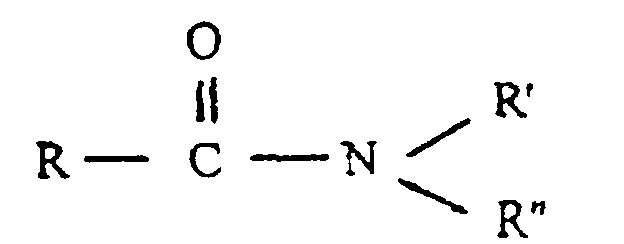
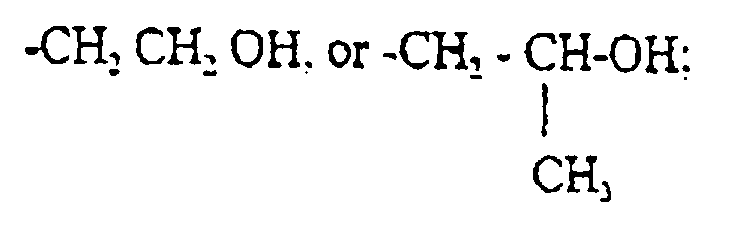 ii) les alcanolamides éthoxylés de formule
 iii) les éthylène bisamides de formule
 iv) les esters du glycérol de formule
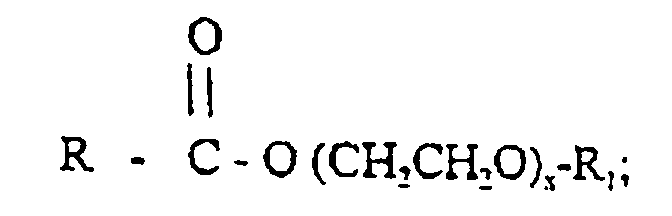
 v) les esters d'acides gras éthoxylés de formule
 vi) les esters du sorbitan de formule
 vii) les esters du sorbitan éthoxylés de formule
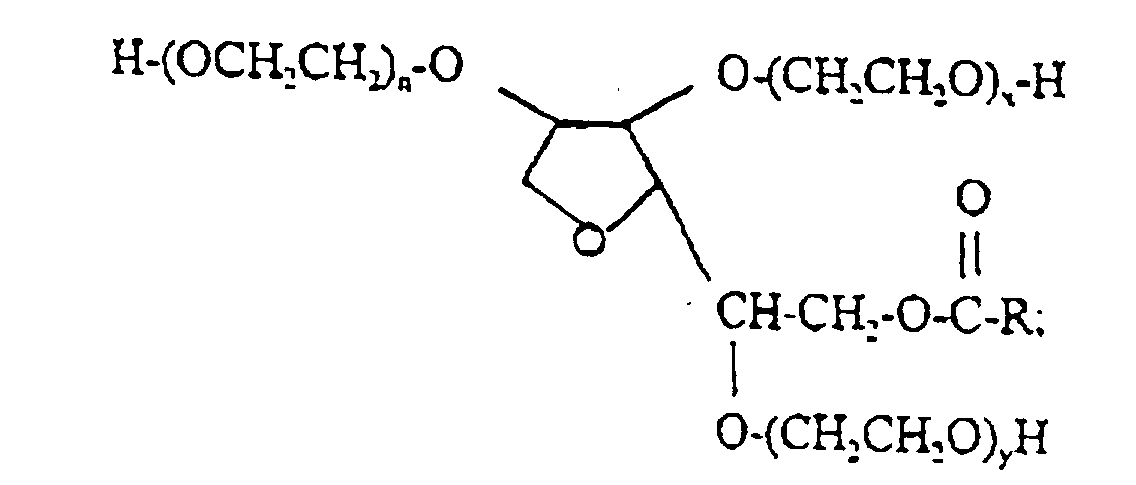 viii) les alkylphénols éthoxylés de formule
 ix) les alcools éthoxylés de formulex) les tristyrylphénols éthoxylés de formule
 xi) les mercaptans éthoxylés de formulexii) les alcools alcoxylés de formule
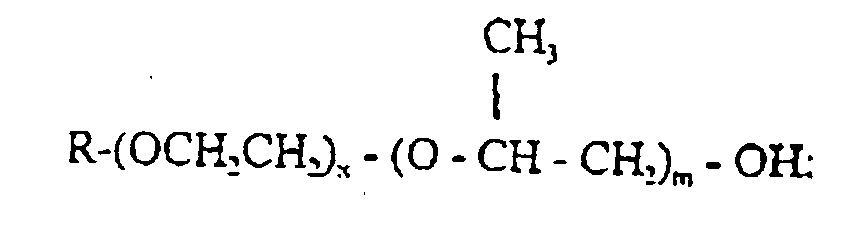 xiii) les copolymères séquencés oxyde d'éthylène/ oxyde de propylène de formule
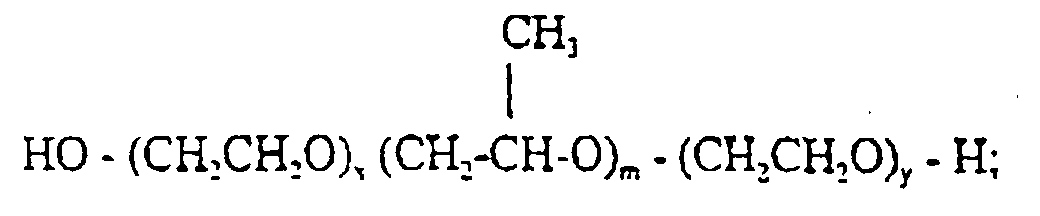 xiv) les copolymères de formule
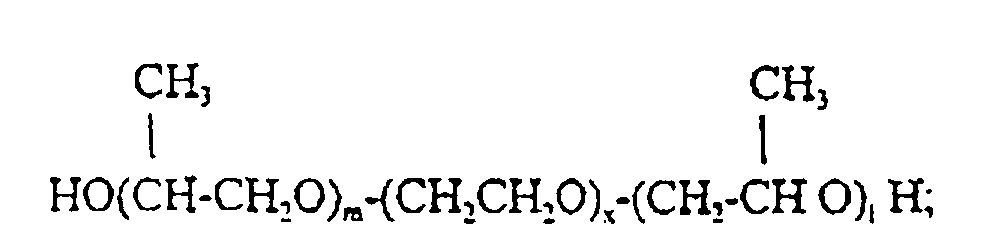 xv) les produits d'éthoxylation coiffés en bout par un atome de chlore, de formulexvi) les copolymères séquencés tétrafonctionnels de formuleou
 et
et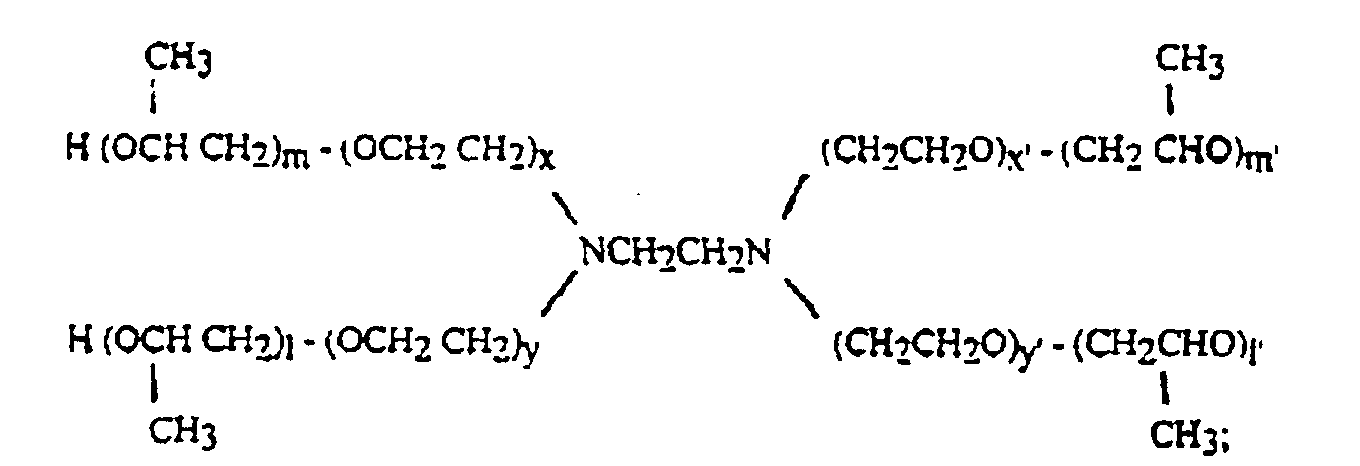 xvii) les mélanges de ceux-ci
oùR est un groupe alkyle gras ;R1 est -H ou un groupe alkyle gras ;x, x', y, y' et n représentent chacun indépendamment des autres le nombre de moles d'oxyde d'éthylène ; etm, m', 1 et 1' représentent chacun indépendamment des autres le nombre de moles d'oxyde de propylène ; et - Procédé selon la revendication 1, dans lequel l'engrais est présent en une quantité de 70 à environ 96 % en poids par rapport au système adjuvant.
- Procédé selon la revendication 1 ou 2, dans lequel ledit engrais est le sulfate diammonique.
- Procédé selon l'une quelconque des revendications 1 à 3, dans lequelles groupes alkyle gras R sont en C6 à C22 ;R1 est H, ou les groupes alkyle gras sont en C6 à C22 ;x, x', y, y' et n valent chacun indépendamment des autres 1 à 300 ; etm, m', 1 et 1' valent chacun indépendamment des autres 1 à 300.
- Procédé selon la revendication 4, dans lequelR est un groupe alkyle en C8 à C18 ;R1 est H ou un groupe alkyle en C8 à C18 ;x, x', y, y' et n valent chacun indépendamment des autres 1 à 200 ;m, m', 1 et 1' valent chacun indépendamment des autres 1 à 200.
- Procédé de production d'un système adjuvant lié sec, qui comprendtous les pourcentages en poids étant rapportés au poids total du système adjuvant.a) le mélange, dans une chambre de mélange, de particules d'un engrais azoté sec soluble dans l'eau ;b) la fusion d'un tensioactif non-ionique solide choisi parmi ceux qui sont définis dans la revendication 1, à la condition que la composition tensioactive soit un solide ou présente la consistance d'une cire dure non-poisseuse à la température ambiante ;c) l'application par pulvérisation du tensioactif fondu sur l'engrais, avec mélange continu pour réaliser un enrobage et une granulation des particules d'engrais ; etd) le refroidissement des particules enrobées, où ledit engrais représente de 70 à 99 % en poids du système adjuvant et ladite composition tensioactive représente de 1 à 30 % en poids du système adjuvant ;
- Procédé selon la revendication 6, dans lequel l'engrais est présent en une quantité de 70 à environ 96 % en poids par rapport au système adjuvant.
- Procédé selon l'une quelconque des revendications 6 ou 7, dans lequelles groupes alkyle gras R sont en C6 à C22 ;R1 est -H, ou les groupes alkyle gras sont en C6 à C22 ;x, x', y, y' et n valent chacun indépendamment des autres 1 à 300 ; etm, m', 1 et 1' valent chacun indépendamment des autres 1 à 300.
- Procédé selon la revendication 8, dans lequelR est un groupe alkyle en C8 à C18;R1 est -A ou un groupe alkyle en C8 à C18 ;x, x', y, y' et n valent chacun indépendamment des autres 1 à 200 ;m, m', 1 et 1' valent chacun indépendamment des autres 1 à 200.
- Procédé selon l'une quelconque des revendications 6 à 9, dans lequeli) le tensioactif non-ionique est fondu à une température de 65 à 95°C ; etii) les particules refroidies sont refroidies à moins d'environ 50°C.
Applications Claiming Priority (3)
| Application Number | Priority Date | Filing Date | Title |
|---|---|---|---|
| US08/381,581 US5679128A (en) | 1995-01-31 | 1995-01-31 | Dry-bonded nonionic adjuvants |
| US381581 | 1995-01-31 | ||
| PCT/US1996/001319 WO1996023746A1 (fr) | 1995-01-31 | 1996-01-31 | Adjuvants non ioniques a liaisons seches |
Publications (2)
| Publication Number | Publication Date |
|---|---|
| EP0807094A1 EP0807094A1 (fr) | 1997-11-19 |
| EP0807094B1 true EP0807094B1 (fr) | 2001-11-07 |
Family
ID=23505579
Family Applications (1)
| Application Number | Title | Priority Date | Filing Date |
|---|---|---|---|
| EP96903753A Expired - Lifetime EP0807094B1 (fr) | 1995-01-31 | 1996-01-31 | Adjuvants non ioniques a liaisons seches |
Country Status (10)
| Country | Link |
|---|---|
| US (1) | US5679128A (fr) |
| EP (1) | EP0807094B1 (fr) |
| AT (1) | ATE208358T1 (fr) |
| AU (1) | AU717174B2 (fr) |
| BR (1) | BR9606993A (fr) |
| CA (1) | CA2211861C (fr) |
| DE (1) | DE69616755T2 (fr) |
| DK (1) | DK0807094T3 (fr) |
| ES (1) | ES2167545T3 (fr) |
| WO (1) | WO1996023746A1 (fr) |
Families Citing this family (17)
| Publication number | Priority date | Publication date | Assignee | Title |
|---|---|---|---|---|
| US5964917A (en) * | 1995-01-31 | 1999-10-12 | Latting; John Alvis | Free-flowing fertilizer compositions |
| EP0971590B1 (fr) * | 1997-03-24 | 2003-05-28 | Basf Aktiengesellschaft | Melanges solides a base de sulfonylurees et adjuvants |
| JP2003502449A (ja) | 1999-06-10 | 2003-01-21 | ハネウエル・インターナシヨナル・インコーポレーテツド | フォトリソグラフィ用スピンオンガラス反射防止コーティング |
| US6824879B2 (en) | 1999-06-10 | 2004-11-30 | Honeywell International Inc. | Spin-on-glass anti-reflective coatings for photolithography |
| IL145236A0 (en) * | 2001-09-03 | 2002-06-30 | Agro Vant Ltd | Multi-layer adjuvants for controlled delivery of agro-materials into plant tissue |
| US6878180B2 (en) * | 2001-10-19 | 2005-04-12 | Exacto, Inc. | Combination ammonium sulfate/drift reducing adjuvant and wet bond process for making the same |
| KR20040066124A (ko) | 2001-11-15 | 2004-07-23 | 허니웰 인터내셔널 인코포레이티드 | 포토리소그라피용 스핀온 반사 방지 피막 |
| MXPA04005081A (es) * | 2001-11-28 | 2004-08-19 | Western Production Corp | Compuesto para crecimiento organico basado en carbon. |
| US8053159B2 (en) | 2003-11-18 | 2011-11-08 | Honeywell International Inc. | Antireflective coatings for via fill and photolithography applications and methods of preparation thereof |
| AU2007336711B2 (en) * | 2006-12-22 | 2011-08-25 | Opal Australasia Pty Ltd | Adjuvant composition |
| US8642246B2 (en) | 2007-02-26 | 2014-02-04 | Honeywell International Inc. | Compositions, coatings and films for tri-layer patterning applications and methods of preparation thereof |
| US8557877B2 (en) | 2009-06-10 | 2013-10-15 | Honeywell International Inc. | Anti-reflective coatings for optically transparent substrates |
| US8864898B2 (en) | 2011-05-31 | 2014-10-21 | Honeywell International Inc. | Coating formulations for optical elements |
| WO2015116301A1 (fr) * | 2014-02-03 | 2015-08-06 | Agxplore International | Procédés permettant le traitement d'engrais solide |
| NZ631396A (en) * | 2014-09-12 | 2016-03-31 | South Star Fertilizers Ltd | Improvements in and relating to fertiliser and like compositions and the manufacture thereof |
| WO2016167892A1 (fr) | 2015-04-13 | 2016-10-20 | Honeywell International Inc. | Formulations de polysiloxane et revêtements pour applications optoélectroniques |
| CN114478128B (zh) * | 2022-03-30 | 2023-02-21 | 深圳市芭田生态工程股份有限公司 | 包裹式防粉化添加剂和防粉化肥料及其制备方法 |
Family Cites Families (10)
| Publication number | Priority date | Publication date | Assignee | Title |
|---|---|---|---|---|
| BE661598A (fr) * | 1964-06-20 | 1965-07-16 | ||
| GB1042797A (en) * | 1964-09-03 | 1966-09-14 | Ici Ltd | Improvements in and relating to granulated fertilizers |
| SU659551A1 (ru) * | 1976-08-19 | 1979-04-30 | Предприятие П/Я Р-6603 | Способ уменьшени слеживаемости гранул аммиачной селитры |
| JPS5466260A (en) * | 1977-10-25 | 1979-05-28 | Showa Denko Kk | Slowly acting solid fertilizer |
| JPS59182287A (ja) * | 1983-03-29 | 1984-10-17 | 電気化学工業株式会社 | 粒状肥料の製造法 |
| DE3544399A1 (de) * | 1985-12-16 | 1987-06-19 | Sueddeutsche Kalkstickstoff | Verfahren zur herstellung von stickstoffduengern |
| US5258132A (en) * | 1989-11-15 | 1993-11-02 | Lever Brothers Company, Division Of Conopco, Inc. | Wax-encapsulated particles |
| RU2096955C1 (ru) * | 1991-03-01 | 1997-11-27 | Е.И.Дюпон Де Немур Энд Компани | Вододиспергируемая гранулированная пестицидная композиция, получаемая методом экструзии, и способ ее получения |
| US5211985A (en) * | 1991-10-09 | 1993-05-18 | Ici Canada, Inc. | Multi-stage process for continuous coating of fertilizer particles |
| US5589577A (en) * | 1993-04-07 | 1996-12-31 | Alko Group Ltd. | Applications and methods for the preparation of fatty acid esters of polysaccharides |
-
1995
- 1995-01-31 US US08/381,581 patent/US5679128A/en not_active Expired - Lifetime
-
1996
- 1996-01-31 AU AU47735/96A patent/AU717174B2/en not_active Expired
- 1996-01-31 ES ES96903753T patent/ES2167545T3/es not_active Expired - Lifetime
- 1996-01-31 EP EP96903753A patent/EP0807094B1/fr not_active Expired - Lifetime
- 1996-01-31 WO PCT/US1996/001319 patent/WO1996023746A1/fr not_active Ceased
- 1996-01-31 AT AT96903753T patent/ATE208358T1/de active
- 1996-01-31 DE DE69616755T patent/DE69616755T2/de not_active Expired - Lifetime
- 1996-01-31 CA CA002211861A patent/CA2211861C/fr not_active Expired - Lifetime
- 1996-01-31 DK DK96903753T patent/DK0807094T3/da active
- 1996-01-31 BR BR9606993-7A patent/BR9606993A/pt not_active IP Right Cessation
Also Published As
| Publication number | Publication date |
|---|---|
| WO1996023746A1 (fr) | 1996-08-08 |
| CA2211861A1 (fr) | 1996-08-08 |
| DE69616755D1 (de) | 2001-12-13 |
| ES2167545T3 (es) | 2002-05-16 |
| ATE208358T1 (de) | 2001-11-15 |
| US5679128A (en) | 1997-10-21 |
| AU717174B2 (en) | 2000-03-16 |
| BR9606993A (pt) | 2000-10-31 |
| AU4773596A (en) | 1996-08-21 |
| CA2211861C (fr) | 2004-10-19 |
| DE69616755T2 (de) | 2002-08-01 |
| DK0807094T3 (da) | 2002-03-04 |
| EP0807094A1 (fr) | 1997-11-19 |
Similar Documents
| Publication | Publication Date | Title |
|---|---|---|
| US5679128A (en) | Dry-bonded nonionic adjuvants | |
| AU651335B2 (en) | Water-dispersible or water-soluble pesticide granules from heat-activated binders | |
| US5075058A (en) | Process for preparing pellets comprising insecticidal n-hydrocarboyl phosphoroamidothioates and/or phosphoroamidodithioates, and fungicides, herbicides, fertilizers or other insecticides | |
| KR101385068B1 (ko) | 과립 제형 | |
| US6878180B2 (en) | Combination ammonium sulfate/drift reducing adjuvant and wet bond process for making the same | |
| JPH08509485A (ja) | 農業用有効成分を含む濃厚組成物 | |
| EP0806893A1 (fr) | Granules pesticides contenant un fertilisant et un agent tensioactif | |
| JP2511431B2 (ja) | 新規の水分散性顆粒及びその用途 | |
| US6416775B1 (en) | Dry spreadable carrier for pesticides | |
| US4183740A (en) | Solid compositions of a liquid surfactant and a pyrazolium herbicide | |
| US6375969B1 (en) | Broadcast carriers for pesticides and their use | |
| EP0638235B1 (fr) | Formulation solide | |
| TW202044993A (zh) | 抗活性成分降解之殺蟲組成物及其製備程序 | |
| PL172504B1 (pl) | Sposób wytwarzania granulowanego produktu chwastobójczego PL PL PL | |
| EP0807162B1 (fr) | Tensio-actifs non ioniques a vitesses de dissolution aqueuse superieures | |
| EP0135714B1 (fr) | Compositions à libération soutenue pour matières biologiquement actives | |
| JPH11255609A (ja) | 除草剤組成物及びその製造方法と使用方法 | |
| JPH07291804A (ja) | 水溶性農薬顆粒剤 | |
| JP2001517207A (ja) | 農薬のための自発的水分散性担体の製造法およびそれらの使用 | |
| Fu¹ et al. | Incorporated," Pesticide Formulations and Application Systems: 14th | |
| AU2004242523A1 (en) | Adjuvant composition for use with a pesticide and a process for preparation thereof |
Legal Events
| Date | Code | Title | Description |
|---|---|---|---|
| PUAI | Public reference made under article 153(3) epc to a published international application that has entered the european phase |
Free format text: ORIGINAL CODE: 0009012 |
|
| 17P | Request for examination filed |
Effective date: 19970829 |
|
| AK | Designated contracting states |
Kind code of ref document: A1 Designated state(s): AT BE DE DK ES FR GB IT NL SE |
|
| 17Q | First examination report despatched |
Effective date: 19980630 |
|
| GRAG | Despatch of communication of intention to grant |
Free format text: ORIGINAL CODE: EPIDOS AGRA |
|
| GRAG | Despatch of communication of intention to grant |
Free format text: ORIGINAL CODE: EPIDOS AGRA |
|
| GRAH | Despatch of communication of intention to grant a patent |
Free format text: ORIGINAL CODE: EPIDOS IGRA |
|
| GRAH | Despatch of communication of intention to grant a patent |
Free format text: ORIGINAL CODE: EPIDOS IGRA |
|
| GRAA | (expected) grant |
Free format text: ORIGINAL CODE: 0009210 |
|
| AK | Designated contracting states |
Kind code of ref document: B1 Designated state(s): AT BE DE DK ES FR GB IT NL SE |
|
| REF | Corresponds to: |
Ref document number: 208358 Country of ref document: AT Date of ref document: 20011115 Kind code of ref document: T |
|
| REF | Corresponds to: |
Ref document number: 69616755 Country of ref document: DE Date of ref document: 20011213 |
|
| REG | Reference to a national code |
Ref country code: GB Ref legal event code: IF02 |
|
| REG | Reference to a national code |
Ref country code: DK Ref legal event code: T3 |
|
| REG | Reference to a national code |
Ref country code: ES Ref legal event code: FG2A Ref document number: 2167545 Country of ref document: ES Kind code of ref document: T3 |
|
| PLBE | No opposition filed within time limit |
Free format text: ORIGINAL CODE: 0009261 |
|
| STAA | Information on the status of an ep patent application or granted ep patent |
Free format text: STATUS: NO OPPOSITION FILED WITHIN TIME LIMIT |
|
| 26N | No opposition filed | ||
| PGFP | Annual fee paid to national office [announced via postgrant information from national office to epo] |
Ref country code: GB Payment date: 20141230 Year of fee payment: 20 Ref country code: DK Payment date: 20141230 Year of fee payment: 20 |
|
| PGFP | Annual fee paid to national office [announced via postgrant information from national office to epo] |
Ref country code: FR Payment date: 20141226 Year of fee payment: 20 |
|
| PGFP | Annual fee paid to national office [announced via postgrant information from national office to epo] |
Ref country code: NL Payment date: 20150115 Year of fee payment: 20 |
|
| PGFP | Annual fee paid to national office [announced via postgrant information from national office to epo] |
Ref country code: DE Payment date: 20150126 Year of fee payment: 20 Ref country code: ES Payment date: 20150114 Year of fee payment: 20 Ref country code: IT Payment date: 20150120 Year of fee payment: 20 |
|
| PGFP | Annual fee paid to national office [announced via postgrant information from national office to epo] |
Ref country code: SE Payment date: 20150108 Year of fee payment: 20 Ref country code: AT Payment date: 20141229 Year of fee payment: 20 |
|
| PGFP | Annual fee paid to national office [announced via postgrant information from national office to epo] |
Ref country code: BE Payment date: 20150112 Year of fee payment: 20 |
|
| REG | Reference to a national code |
Ref country code: DE Ref legal event code: R071 Ref document number: 69616755 Country of ref document: DE |
|
| REG | Reference to a national code |
Ref country code: DK Ref legal event code: EUP Effective date: 20160131 |
|
| REG | Reference to a national code |
Ref country code: NL Ref legal event code: MK Effective date: 20160130 |
|
| REG | Reference to a national code |
Ref country code: GB Ref legal event code: PE20 Expiry date: 20160130 |
|
| REG | Reference to a national code |
Ref country code: AT Ref legal event code: MK07 Ref document number: 208358 Country of ref document: AT Kind code of ref document: T Effective date: 20160131 |
|
| REG | Reference to a national code |
Ref country code: SE Ref legal event code: EUG |
|
| PG25 | Lapsed in a contracting state [announced via postgrant information from national office to epo] |
Ref country code: GB Free format text: LAPSE BECAUSE OF EXPIRATION OF PROTECTION Effective date: 20160130 |
|
| REG | Reference to a national code |
Ref country code: ES Ref legal event code: FD2A Effective date: 20160526 |
|
| PG25 | Lapsed in a contracting state [announced via postgrant information from national office to epo] |
Ref country code: ES Free format text: LAPSE BECAUSE OF EXPIRATION OF PROTECTION Effective date: 20160201 |