EP0812090B1 - Méthode et appareil utilisant un ordinateur client sans logiciel serveur - Google Patents
Méthode et appareil utilisant un ordinateur client sans logiciel serveur Download PDFInfo
- Publication number
- EP0812090B1 EP0812090B1 EP97303643A EP97303643A EP0812090B1 EP 0812090 B1 EP0812090 B1 EP 0812090B1 EP 97303643 A EP97303643 A EP 97303643A EP 97303643 A EP97303643 A EP 97303643A EP 0812090 B1 EP0812090 B1 EP 0812090B1
- Authority
- EP
- European Patent Office
- Prior art keywords
- host machine
- computer
- client
- software
- network
- Prior art date
- Legal status (The legal status is an assumption and is not a legal conclusion. Google has not performed a legal analysis and makes no representation as to the accuracy of the status listed.)
- Expired - Lifetime
Links
Images


Classifications
-
- G—PHYSICS
- G06—COMPUTING OR CALCULATING; COUNTING
- G06F—ELECTRIC DIGITAL DATA PROCESSING
- G06F9/00—Arrangements for program control, e.g. control units
- G06F9/06—Arrangements for program control, e.g. control units using stored programs, i.e. using an internal store of processing equipment to receive or retain programs
- G06F9/46—Multiprogramming arrangements
- G06F9/50—Allocation of resources, e.g. of the central processing unit [CPU]
-
- H—ELECTRICITY
- H04—ELECTRIC COMMUNICATION TECHNIQUE
- H04L—TRANSMISSION OF DIGITAL INFORMATION, e.g. TELEGRAPHIC COMMUNICATION
- H04L67/00—Network arrangements or protocols for supporting network services or applications
- H04L67/01—Protocols
-
- H—ELECTRICITY
- H04—ELECTRIC COMMUNICATION TECHNIQUE
- H04L—TRANSMISSION OF DIGITAL INFORMATION, e.g. TELEGRAPHIC COMMUNICATION
- H04L67/00—Network arrangements or protocols for supporting network services or applications
- H04L67/2866—Architectures; Arrangements
- H04L67/30—Profiles
- H04L67/306—User profiles
-
- H—ELECTRICITY
- H04—ELECTRIC COMMUNICATION TECHNIQUE
- H04L—TRANSMISSION OF DIGITAL INFORMATION, e.g. TELEGRAPHIC COMMUNICATION
- H04L67/00—Network arrangements or protocols for supporting network services or applications
- H04L67/01—Protocols
- H04L67/10—Protocols in which an application is distributed across nodes in the network
- H04L67/104—Peer-to-peer [P2P] networks
- H04L67/1087—Peer-to-peer [P2P] networks using cross-functional networking aspects
- H04L67/1091—Interfacing with client-server systems or between P2P systems
Definitions
- This invention relates to the field of client/server computer environments.
- ORB daemon a local object request broker process
- client/server environments supporting networked objects rely on a local object request broker process, or ORB daemon, to coordinate requests between a client and an object server.
- ORB daemon a local object request broker process
- the client attempts to contact a locally running ORB daemon. If there is no ORB daemon running on the local host machine or at a user preset override location, the client cannot access services on the network.
- There is no mechanism for a pure client i.e., a client without the support of ORB software, to automatically locate and contact another ORB daemon on the network for the purpose of accessing object services.
- an object server is a multi-threaded process that controls access to, instantiation of, and deletion of, the methods, data, etc., embodied in the objects within its domain.
- Objects are self-contained, clearly defined, software modules that encapsulate procedures, such as business practices, and their data. Communicating with each other through carefully defined interfaces, objects allow complex solutions to be constructed similar to the manner in which computers are manufactured from standardized electronic components. Multiple levels of re-use and standardization are made possible, enabling engineers to produce modules, applications, and entire systems that are highly reusable and leveragable.
- Networked object technology allows applications access to objects and their shared services anywhere in the network, substantially independent of where the application or object resides.
- Networked objects also permit individual objects to be updated without the risk of disrupting the application or business process it models, facilitating the graceful, incremental evolution of complex systems. For example, if a new component fails, the component's predecessor can be re-instated quickly and transparently.
- An example of the networked object environment is the CORBA-compliant NEO product family from SunSoftTM, which provides for sharing of objects across networks and differing computing platforms.
- the OMG Common Object Request Broker Architecture (CORBA) is designed to allow different object systems from multiple vendors to interact with each other on a network.
- the CORBA specification comprises the following four components:
- the Network Object Request Broker is a CORBA-compliant network-based software system providing for the location and execution of objects through a standard interface protocol, enabling objects and programs to transparently interact with each other across the network.
- the NEO ORB is implemented as one or more multi-threaded UNIX processes, providing scalable performance and availability as needed.
- the OMG has provided a portable source code reference implementation of the CORBA 2.0 Internet Inter-ORB Protocol to assist software vendors in testing and delivering OMG-compliant products.
- the Internet Inter-ORB Protocol (Internet IOP) provides a standardized way of connecting ORBs from different CORBA 2.0 compliant vendors, enabling them to communicate with each other.
- the current Internet IOP is based on TCP/IP protocols.
- the OMG CORBAservices definition describes the basic operations required for building distributed systems with objects, such as naming, events, properties, lifecycle and relationship services.
- the Interface Definition Language enables the separation of interface and implementation, allowing object implementation details to change without compromising the plug-and-play qualities of the object.
- the OMG IDL is a neutral interface definition of an object's operations, allowing the behavior of the object to be defined in IDL, but accommodating the automated transformation of the interface to the C, C++, Objective C, or Smalltalk languages.
- a multi-threaded environment such as that provided by UNIX, is typically used for supporting networked objects. Threads are subprocesses spawned off of larger processes for performing a certain function, e.g. performing a printing process, acting on a database object, etc. By supporting multiple threads, the system can serve many clients and processes simultaneously. This enables the sharing of objects and services on the network.
- an Object Request Broker Daemon process receives object requests, also referred to as method invocations, from the client processes registered to it.
- the ORB daemon locates the object on the network, and acts as the interface between the client process and the networked object.
- the ORB daemon may activate a NEO object server to act as a further interface for the object which may be a standard NEO object or, in some instances, a legacy process encapsulated in a NEO shell to perform as a NEO object.
- the NEO object server acts to instantiate the object as is necessary to respond to the requests forwarded by the ORB daemon.
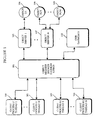
- Figure 1 is a block diagram of a CORBA-compliant networked object system. Multiple threads are represented by elements 100-103, where threads 100-101 are threads spawned from a first client process, Client Process 1, and threads 102-103 are threads spawned from a second client process, Client Process N. As indicated in Figure 1, a single client process can spawn any number of threads.
- Each of threads 100-103 is linked to Object Request Broker Daemon (ORBD) process 104.
- ORBD process 104 is in turn linked to a plurality of object servers represented by object server 105 and object server 107.
- a second ORBD process, ORBD process 110 is further linked to ORBD process 104. ORBD process 110 could also be coupled to further object servers and/or client processes (not shown).
- Object server 105 is linked to object 106.
- Object server 107 is linked to objects 108 and 109.
- ORBD process 104 receives object requests, such as method invocations in the form of locate requests, from client process threads 100-103, and determines which object server is supporting the appropriate object. If the necessary server is not currently running, the server is activated and the object is instantiated. Information on the location of the object is returned in response to the locate request, and further requests between the thread and the object are directed by the location information.
- object requests such as method invocations in the form of locate requests
- ORB daemon 110 may provide a gateway for the networked object environment over a large network such as the Internet and/or it may provide cross-platform interaction by providing a platform dependent interface to clients and object servers in its own domain, while providing a standardized interface to ORBD 104.
- Object servers 105 and 107 provide access to objects, such as shown by objects 106 and 108-109.
- Legacy objects that is those objects comprising stand-alone applications and other objects not originally designed for the networked object environment, are provided with an IDL shell that forms an interface through which the object server can access the functions of the legacy object.
- a Persistent Store Manager process running in tandem with the ORB daemon keeps track of locks the object server may have on objects, e.g., database objects, to maintain server-exclusive access.
- the objects and object servers may reside on the same computer as the client processes and the ORB daemon, or they may reside on separate computers within the network.
- FIGS 2A and 2B The physical configuration of a network for supporting networked objects is illustrated in Figures 2A and 2B.
- the interaction of two host machines in a network is described with respect to two interactive scenarios.
- both host machines are configured as combination clients and servers, capable of providing object services to each other.
- Each host machine stores the full software support for client and server functions.
- the second scenario described with respect to Figure 2B, one host machine is configured as a client, whereas the second host machine is configured as a combination client and server for providing object services to both host machines.
- the first host machine relies on the second host machine as a remote provider of object services, thus reducing the locally stored software support by excluding server specific software. Software administration needs are therefore reduced.
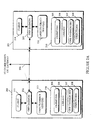
- Figure 2A illustrates a possible network configuration wherein each host machine has a full installation of networked objects software.
- a full installation includes executable, machine language binaries for a client application, machine language binaries for the ORB daemon, a library containing networked object support software such as development tools, debugging tools, administration tools, etc., as well as machine language binaries for any objects and object servers to be served from the host machine.
- Network 204 provides network communications services, e.g., using TCP/IP, to support object requests between host machines.
- Host machines 200 and 201 contain, in their respective mass storage (e.g., a hard disk drive) 209 and 210, a full installation of binaries and other files for client.exe 205, library 206, ORB daemon.bin 207 and objects.bin 208.
- the software elements 205, 207 and 208 from mass storage 209 are executed by the central processing unit (CPU) in host machine 200 to provide active processes for client 211, ORB daemon 212 and objects/object servers 213, respectively.
- the software elements 205, 207 and 208 from mass storage 210 are executed by the CPU in host machine 201 to provide active processes for client 214, ORB daemon 215 and objects/object servers 216, respectively.
- ORB daemon 212 provides access to the object services of objects/object servers 213, as well as interacting with ORB daemon 215 over network 204 to provide further access to objects/object servers 216.
- client 211 is able to obtain services from local objects 213 and remote objects 216.
- client 214 sends all object requests through ORB daemon 215.
- ORB daemon provides client 214 with access to local objects 216 and, through ORB daemon 213, with access to remote objects 213.
- Object services are thus shared through any number of host machines on the network.
- a host machine is used for forwarding local client requests to remote hosts.
- the local ORB daemon for the local host is used to forward object requests from the local client process to a remote ORB daemon on a remote host machine wherein the desired object services are provided.
- the local host is configured with a full support installation, such as library 206, ORB daemon.bin 207 and objects.bin 208.
- the ORB daemon.bin 207 does not provide any object service support.
- none of the other support object software is used. Only the software needed to support the client is used in this case. Therefore, the storage of full support software at the host machine is wasteful and unnecessary.
- the administration of networked object software including the handling of version updates, is unnecessarily complicated by the installation of unneeded networked object software. It is more efficient to store only the binary files necessary to support a pure client.
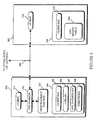
- FIG. 2B is a block diagram of a network wherein host machine 201 contains a pure client, i.e., a client.exe binary file without further local support software.
- Host machine 201 stores client.exe 205 in mass storage 210.
- Client process 214 resulting from execution of host.exe 205 by the host machine's CPU, operates without the benefit of a local ORB daemon process.
- host machine 200 is configured as in Figure 2A, with a full installation of networked object support software. Host machine 200 is therefore enabled to act as a server for object services, and also as a client.
- Host machine 200 contains the running processes for ORB daemon 212 and objects/object servers 213.
- Figure 2B The configuration of Figure 2B is efficient since it contains a software installation that provides only client support. Thus, only the binary file client.exe requires administration on host machine 201. There is no need to install and administer any other software since host machine 201 provides client capability alone. However, the configuration of host machine 201 does not provide any networked object support such as a local ORB daemon. Client process 214 must have some mechanism for locating a remote ORB daemon, such as ORB daemon 212 on host machine 200, in order to access object services. In the prior art, the client requires support from the user in order to access a remote ORB daemon.
- the user e.g., a person, such as a software developer, interacting with the client process via keyboard, mouse, display, etc.
- the remote ORB daemon This requires that a user possess current information regarding network configurations.
- a user override value can be set in the NEO environment to specify a host machine in which a client process is to look for an ORB daemon. This is the mechanism by which a user may invoke a client process and successfully access remote object services without benefit of a local ORB daemon. However, this process requires that the user know beforehand the hostname for a host machine wherein an active ORB daemon process resides. There is no mechanism by which a pure client can locate a running ORB daemon without intervention from the user. This is inconvenient for the user and detracts from the transparency of client/server operations.
- Figure 3 is a flow diagram of the process of the prior art whereby a pure client is directed to a remote ORB daemon to access object services.
- the process requires that the user determine where on the network an active ORB daemon is provided. This is typically done by contacting a network system administrator to inquire where a full installation of the networked objects software has been performed. The administrator then furnishes the hostname for the applicable host machine. Determining the needed hostname is step 300 in Figure 3.
- step 301 the user sets the override path for the pure client using the hostname provided in step 300.
- step 302 the user invokes, or launches, the client process (214) on the local host machine (201).
- the client process looks for an active ORB daemon residing at the host machine specified with the user override value.
- a branching occurs at step 304 based on whether the ORB daemon is present at the user override location. If the user override value points to a host machine with an active ORB daemon, such as host machine 200 in Figure 2B, in step 305, the client contacts the remote ORB daemon, and sends all object requests through the remote ORB daemon.
- step 306 the client process attempts to contact a local ORB daemon.
- a branching occurs at step 307 based on whether a local ORB daemon exists. If there is a local ORB daemon running on the local host machine, in step 308, the client process sends an object request to the local ORB daemon. If, as is the case in Figure 2B, there is no local ORB daemon process, an error is returned in step 309 to indicate that an ORB daemon is not available. From step 309, the process returns to step 300, where the user must find another suitable host machine.
- the process of Figure 3 is dependent for pure client support on the user and his administration-level knowledge of the network. If the user-supplied override value is not valid, i.e., does not point to a host with an active ORB daemon, then the client is unable to access object services. Thus, the process of Figure 3 is error prone and difficult to use.
- a method and apparatus for supporting a pure client is provided.
- a client process is executing on a local host machine, whereas server software for supporting the client is physically stored on a remote host machine.
- the remote host machine also includes an active server process.
- the remote server software that supports the client is identified in the local host machine using an automatic, system generated reference, such as an NFS mount table entry.
- the mount table entry associated with the remote server software identifies the hostname of the remote host machine in which the remote server software is physically mounted.
- the client process locates the remote server software entry in the mount table.
- a hostname specified in the mount table entry is used by the client process to contact the active server process at the remote host machine having that hostname.
- a pure client is able to locate and contact a remote server process, such as an ORB daemon without local ORB daemon support or user intervention.
- An embodiment of the invention can be implemented as computer software in the form of computer readable program code executed on a general purpose computer such as illustrated in Figure 4.
- a keyboard 410 and mouse 411 are coupled to a bi-directional system bus 418.
- the keyboard and mouse are for introducing user input to the computer system and communicating that user input to central processing unit (CPU) 413.
- CPU central processing unit
- the computer system of Figure 4 also includes a video memory 414, main memory 415 and mass storage 412, all coupled to bi-directional system bus 418 along with keyboard 410, mouse 411 and CPU 413.
- the mass storage 412 may include both fixed and removable media, such as magnetic, optical or magnetic optical storage systems or any other available mass storage technology.
- Bus 418 may contain, for example, thirty-two address lines for addressing video memory 414 or main memory 415.
- the system bus 418 also includes, for example, a 32-bit data bus for transferring data between and among the components, such as CPU 413, main memory 415, video memory 414 and mass storage 412. Alternatively, multiplex data/address lines may be used instead of separate data and address lines.
- the CPU 413 is a 32-bit microprocessor manufactured by Motorola, such as the 680X0 processor or a microprocessor manufactured by Intel, such as the 80X86, or Pentium processor. However, any other suitable microprocessor or microcomputer may be utilized.
- Main memory 415 is comprised of dynamic random access memory (DRAM).
- Video memory 414 is a dual-ported video random access memory. One port of the video memory 414 is coupled to video amplifier 416.
- the video amplifier 416 is used to drive the cathode ray tube (CRT) raster monitor 417.
- Video amplifier 416 is well known in the art and may be implemented by any suitable apparatus. This circuitry converts pixel data stored in video memory 414 to a raster signal suitable for use by monitor 417.
- Monitor 417 is a type of monitor suitable for displaying graphic images.
- Front end systems for accessing the shared services of the network may comprise PC systems running WindowsTM, web browsers supporting the JavaTM application interface, workstations running SolarisTM, or other suitable systems, including combinations thereof.
- a local client process seeking services from a remote server process relies on intervention from a user to specify the remote host on which the remote server process resides.
- Network information of this nature is not typically known to users other than system administrators.
- a client process determines the remote host transparently based on an automatic, system generated reference to the remote host machine which is stored on the local host machine. Thus, there is no need for user intervention.
- NFS Network File System
- software physically stored on one host machine may be "NFS mounted.”
- Software that is "NFS mounted” is accessible to the entire NFS network as if the software were stored locally at each host machine. This is accomplished by a system of tables identifying mounted software and the appropriate pathnames to the host machine wherein the software is physically stored.
- the NFS system can also be used to locate the designated software such that it can be accessed from a remote location.
- the NFS system generated mount table is stored as a file entitled "mnttab" in the "/etc" directory of the mass storage of each host machine in the NFS network.
- the mount table consists of list of entries. When a new file is mounted, a new entry is generated in the table automatically. Each entry is a line of fields separated by spaces in the form: special mount_point fstype options time where
- the "special” field may include, for instance, the name of a remote file system or resource in "hostname:pathname” form, and is therefore suitable for identifying the mounted software, as well as the hostname of the remote host machine.
- the "mount_point” field may be used for identification purposes as well. Information from the mount table can be accessed using known C library functions for NFS, such as getmntent, getmntany, etc.
- a full installation of networked object software is physically stored on a remote host machine.
- all of the software, or an identifiable portion of the software such as the library is NFS mounted onto the network.
- mount tables stored in each host machine on the NFS network contain an entry identifying the hostname of the remote host machine and the pathname leading to the physically stored software.
- This pathname indudes, by naming convention, the name or identifier of the software.
- the server process For a client process to contact a server process, such as an ORB daemon, at the remote host machine, the server process must be active, i.e., instantiated from executable binaries. Therefore, by convention, an active server process is maintained at the remote host machine containing the NFS mounted software so that object services may be requested. This can be accomplished with continuous execution of a server process at the remote host.
- this embodiment of the invention is not limited to such.
- a local client process sends requests, e.g. using TCP/IP, to the active ORB daemon at the remote host machine.
- requests e.g. using TCP/IP
- the ORB daemon can begin providing object services to the client process.
- FIG. 5 is a block diagram of a network using NFS capabilities.
- host machine 200 is also referred to as the remote host machine, whereas host machine 201 is referred to as the local host machine.
- Host machine 200 has a full installation of networked object software stored in mass storage 209, including client executables 205, library 206, ORB daemon 207, and objects and object servers 208.
- client process 211, ORB daemon 212 and objects/object servers 213 are executed by the CPU.
- ORB daemon 212 is running at times when it is likely that a client process on the network may wish access to object services. ORB daemon 212 may also run continuously. Client process 211 is shown for illustrative purposes, but is not required to be running for support of a pure client process elsewhere on the network. Similarly, objects/object servers 213 need not be executing at all times because ORB daemon 212 can invoke an object server when necessary in response to an object request from a client.
- At least one identifiable element from the full installation of network software comprising elements 205-208 is NFS mounted on the network.
- the NFS mounted element is library 206.
- Other elements may be NFS mounted instead of, or in addition to, library 206.
- Each NFS mounted element is listed as an entry in the mount table of each host machine in the NFS network with the appropriate pathname, including the hostname for remote host machine 200.
- Local host machine 201 is coupled to remote host machine 200 via network 204. Being executed in the CPU of local host machine 201 is client process 214. Mass storage 210 of local host machine 201 does not contain networked object software other than, in one embodiment of the invention, client executables 205. Local host machine 201 and client process 214 thus constitute a pure client. In another embodiment of the invention, the client executables are NFS mounted on the network, and therefore may physically reside at another host machine, further reducing software administration requirements.
- NFS mount table 500 is stored in mass storage 210 to provide pathnames for all NFS mounted software in the NFS network.
- Mount table 500 contains an entry, which client process 214 accesses, that identifies the hostname for the physical location of the NFS mounted networked object software. For example, an entry may exist for library 206 which includes, as part of the pathname, the hostname for remote host machine 200. Client process utilizes the hostname thus obtained to send requests to remote host machine 200, and active ORB daemon 212 being executed therein.
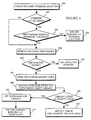
- Figure 6 is a flow diagram of the process by which a pure client process on a local host machine contacts an ORB daemon at a remote host machine.
- a client process wants to obtain the services of a certain object, the client attempts to contact an active ORB daemon to initiate an object request.
- the client begins this process by checking for a user override location. A branching occurs at step 601 based on whether an override value has been preset.
- step 602 a branching occurs based on whether an active ORB daemon exists at the location specified by the override value. If an active ORB daemon exists at the override location, in step 603, the client process sends an object request to the active ORB daemon. However, if there is no active ORB daemon resident at the override location specified, or if no override location was specified by the user, in step 604, the client attempts to contact a local ORB daemon, i.e., an ORB daemon process running in the local host machine.
- a local ORB daemon i.e., an ORB daemon process running in the local host machine.
- step 605 a branching occurs dependent on whether a local ORB daemon is found. If a local ORB daemon exists, in step 606, the client process sends an object request to the local ORB daemon. However, if no local ORB daemon exists, as is the case for a pure client, in step 607, the client process opens the mount table stored in the local host machine.
- step 608 the client process searches the mount table for an entry containing a pathname for NFS mounted networked object software, e.g., the library files.
- step 609 a branching occurs based on whether such a pathname entry exists in the mount table. If there is no pathname entry present for networked object software, in step 612, an error message is returned to indicate "ORB daemon unavailable" or "ORB daemon not found," etc.
- step 610 the client process extracts from the pathname the hostname of the remote host machine from which the software was NFS mounted. Finally, in step 611, using the extracted hostname to direct the request, the client process sends an object request to the active ORB daemon running on the remote host machine.
- a pure client is able to locate and contact a remote ORB daemon to obtain object services. Further, the method for locating the ORB daemon is performed without the need for user intervention, providing efficient, transparent operation.
Landscapes
- Engineering & Computer Science (AREA)
- Software Systems (AREA)
- Theoretical Computer Science (AREA)
- Computer Networks & Wireless Communication (AREA)
- Signal Processing (AREA)
- Physics & Mathematics (AREA)
- General Engineering & Computer Science (AREA)
- General Physics & Mathematics (AREA)
- Computer And Data Communications (AREA)
- Multi Processors (AREA)
Claims (22)
- Réseau informatique, comprenant :une machine hôte à distance ayant un nom d'hôte, la machine hôte à distance enregistrant un processus serveur adapté pour tourner sur la machine hôte à distance ;une machine hôte locale couplée à la machine hôte à distance via un réseau, la machine hôte locale enregistrant une référence générée par système à la machine hôte distante ; etun processus client adapté pour tourner dans la machine hôte locale, le processus client comprenant un code logiciel configuré pour accéder à la référence.
- Réseau informatique selon la revendication 1,
caractérisé en ce que
le processus client comprend en outre un code logiciel configuré pour envoyer des demandes au processus serveur sur la base de la référence. - Réseau informatique selon la revendication 1.
caractérisé en ce que
la machine hôte à distance enregistre en outre un logiciel. - Réseau informatique selon la revendication 3.
caractérisé en ce que
la référence générée par système comprend :une entrée dans un tableau de montage, le tableau de montage étant enregistré dans la machine hôte locale, l'entrée comprenant une référence au logiciel et au nom d'hôte. - Réseau informatique selon la revendication 4,
caractérisé en ce que
le logiciel est le NFS (système de communication en réseau) monté sur le réseau. - Réseau informatique selon la revendication 3,
caractérisé en ce que
le logiciel comprend une bibliothèque de logiciels. - Réseau informatique selon la revendication 1,
caractérisé en ce que
le processus serveur comprend un démon ORB. - Réseau informatique selon la revendication 7,
caractérisé en ce que
le démon ORB fournit l'accès à des services objets dans un environnement objets mis en réseau. - Réseau informatique selon la revendication 1,
caractérisé en ce qu'
aucun processus serveur n'est résident dans la machine hôte locale. - Réseau informatique selon la revendication 1,
caractérise en ce que
la machine hôte locale enregistre également des exécutables clients enregistrés dans une mémoire de masse. - Procédé pour supporter un processus de client, comprenant les étapes consistant à :maintenir un processus serveur actif sur une machine hôte à distance couplée à un réseau ;exécuter un processus client sur une machine hôte locale couplée au réseau ;enregistrer une référence générée par système sur la machine hôte locale à la machine hôte à distance ;envoyer une demande de serveur depuis le processus client au processus serveur actif à l'aide de la référence générée par système.
- Procédé selon la revendication 11,
caractérise en ce quel'étape consistant à enregistrer une référence générée par système comprend les étapes consistant à :réaliser le montage NFS, à partir de la machine hôte à distance, d'un élément logiciel identifiable ;enregistrer un tableau de montage dans la machine hôte locale. - Procédé selon la revendication 12,
caractérise en ce que
l'étape d'envoi comprend l'étape consistant à :localiser une entrée dans le tableau de montage, l'entrée comprenant un nom d'hôte de la machine hôte à distance en association avec l'élément logiciel identifiable. - Procédé selon la revendication 11, comprenant également l'étape consistant à :déterminer s'il existe un deuxième processus serveur actif sur la machine hôte locale.
- Procédé selon la revendication 14, comprenant également l'étape consistant à :envoyer une demande de serveur au deuxième processus serveur actif, si le deuxième processus serveur actif existe.
- Procédé selon la revendication 11, comprenant également l'étape consistant à :déterminer s'il existe un deuxième processus serveur à un endroit spécifié par une prise de contrôle utilisateur.
- Procédé selon la revendication 16, comprenant également l'étape consistant à :envoyer une demande de serveur au deuxième processus serveur actif, si le deuxième processus serveur actif existe.
- Produit-programme informatique, comprenant :un médium assimilable par ordinateur ayant un code de programme lisible par ordinateur qui y est intégré pour envoyer une demande depuis un processus client vers un processus serveur, le produit-programme informatique comprenant :un code de programme lisible par ordinateur configuré pour amener un ordinateur à rechercher un tableau de montage pour une entrée contenant une référence au logiciel de serveur et un nom d'hôte associé ;un code de programme lisible par ordinateur configuré pour amener un ordinateur à envoyer des demandes de serveur à un processus serveur actif au niveau d'une machine hôte identifiée par le nom d'hôte.
- Produit-programme informatique selon la revendication 18, comprenant également :un code de programme lisible par ordinateur configuré pour amener un ordinateur à déterminer s'il existe un processus serveur actif local sur une machine hôte locale.
- Produit-programme informatique selon la revendication 19, comprenant également :un code de programme lisible par ordinateur configuré pour amener un ordinateur à envoyer une demande de serveur au processus serveur actif local si le processus serveur local existe.
- Produit-programme informatique selon la revendication 18, comprenant également :un code de programme lisible par ordinateur configuré pour amener un ordinateur à déterminer s'il existe un deuxième processus serveur actif à un endroit spécifié dans une valeur de prise de contrôle utilisateur.
- Produit-programme informatique selon la revendication 21, comprenant également :un code de programme lisible par ordinateur configuré pour amener un ordinateur à envoyer une demande de serveur au deuxième processus serveur actif si le deuxième processus serveur actif existe.
Applications Claiming Priority (2)
| Application Number | Priority Date | Filing Date | Title |
|---|---|---|---|
| US657400 | 1996-06-03 | ||
| US08/657,400 US6625641B1 (en) | 1996-06-03 | 1996-06-03 | Method and apparatus for providing client support without installation of server software |
Publications (3)
| Publication Number | Publication Date |
|---|---|
| EP0812090A2 EP0812090A2 (fr) | 1997-12-10 |
| EP0812090A3 EP0812090A3 (fr) | 2003-07-16 |
| EP0812090B1 true EP0812090B1 (fr) | 2005-08-10 |
Family
ID=24637010
Family Applications (1)
| Application Number | Title | Priority Date | Filing Date |
|---|---|---|---|
| EP97303643A Expired - Lifetime EP0812090B1 (fr) | 1996-06-03 | 1997-05-29 | Méthode et appareil utilisant un ordinateur client sans logiciel serveur |
Country Status (4)
| Country | Link |
|---|---|
| US (1) | US6625641B1 (fr) |
| EP (1) | EP0812090B1 (fr) |
| JP (1) | JPH1083306A (fr) |
| DE (1) | DE69733918T2 (fr) |
Families Citing this family (14)
| Publication number | Priority date | Publication date | Assignee | Title |
|---|---|---|---|---|
| GB2365287B (en) * | 1999-12-16 | 2002-11-06 | Actv Inc | Method using a local host for network communication |
| US8082339B2 (en) * | 2003-02-28 | 2011-12-20 | Hewlett-Packard Development Company, L.P. | Electronic device network having graceful denial of service |
| EP1676251A1 (fr) * | 2003-10-08 | 2006-07-05 | Innerworkings (Holdings) Limited | Systeme d apprentissage |
| US7480699B2 (en) * | 2004-01-20 | 2009-01-20 | International Business Machines Corporation | System and method for replacing an application on a server |
| US7904895B1 (en) | 2004-04-21 | 2011-03-08 | Hewlett-Packard Develpment Company, L.P. | Firmware update in electronic devices employing update agent in a flash memory card |
| US8526940B1 (en) | 2004-08-17 | 2013-09-03 | Palm, Inc. | Centralized rules repository for smart phone customer care |
| KR20060053274A (ko) * | 2004-10-13 | 2006-05-19 | 조배수 | 클라이언트의 오류 복구 시스템 및 방법 |
| US20060130124A1 (en) * | 2004-12-15 | 2006-06-15 | Guard Insurance Group | A Remote Communication System and Method Implementing a Session Server and One or More Object Servers |
| US7590744B2 (en) * | 2004-12-15 | 2009-09-15 | Guard Insurance Group | Remote communication system and method implementing a session server and one or more object servers |
| US8832229B2 (en) * | 2006-05-04 | 2014-09-09 | Dell Products L.P. | System and method for using a network file system mount from a remote management card |
| EP2025095A2 (fr) | 2006-06-08 | 2009-02-18 | Hewlett-Packard Development Company, L.P. | Gestion de dispositif sur un réseau |
| WO2008014454A2 (fr) | 2006-07-27 | 2008-01-31 | Hewlett-Packard Development Company, L.P. | Gestion à base d'expérience et de dependence d'utilisateur dans un dispositive mobile |
| US8824299B1 (en) * | 2014-02-28 | 2014-09-02 | tw telecom holdings, inc. | Selecting network services based on hostname |
| CN104158886B (zh) * | 2014-08-21 | 2017-05-24 | 中南大学 | 一种应用程序的流式执行方法 |
Family Cites Families (32)
| Publication number | Priority date | Publication date | Assignee | Title |
|---|---|---|---|---|
| US5151989A (en) * | 1987-02-13 | 1992-09-29 | International Business Machines Corporation | Directory cache management in a distributed data processing system |
| US5187790A (en) * | 1989-06-29 | 1993-02-16 | Digital Equipment Corporation | Server impersonation of client processes in an object based computer operating system |
| AU6151090A (en) * | 1989-08-01 | 1991-03-11 | Silicon Graphics, Inc. | File alteration monitor for computer operating and file management systems |
| CA2066566C (fr) * | 1989-09-08 | 2001-12-25 | David Hitz | Architecture de systeme d'exploitation multifonction |
| CA2048306A1 (fr) * | 1990-10-02 | 1992-04-03 | Steven P. Miller | Configuration repartie pour systeme informatique |
| US5403639A (en) * | 1992-09-02 | 1995-04-04 | Storage Technology Corporation | File server having snapshot application data groups |
| EP0592080A2 (fr) * | 1992-09-24 | 1994-04-13 | International Business Machines Corporation | Méthode et appareil pour la communication entre des processus dans un système multi-ordinateur |
| US5329619A (en) * | 1992-10-30 | 1994-07-12 | Software Ag | Cooperative processing interface and communication broker for heterogeneous computing environments |
| US5452447A (en) * | 1992-12-21 | 1995-09-19 | Sun Microsystems, Inc. | Method and apparatus for a caching file server |
| US5574898A (en) * | 1993-01-08 | 1996-11-12 | Atria Software, Inc. | Dynamic software version auditor which monitors a process to provide a list of objects that are accessed |
| US5463772A (en) * | 1993-04-23 | 1995-10-31 | Hewlett-Packard Company | Transparent peripheral file systems with on-board compression, decompression, and space management |
| JP3365576B2 (ja) * | 1993-06-14 | 2003-01-14 | インターナショナル・ビジネス・マシーンズ・コーポレーション | オブジェクトの実行方法および装置 |
| US5539099A (en) * | 1993-11-15 | 1996-07-23 | Bristol-Myers Squibb Company | Process for large-scale preparation of 2',3'-didehydro-2',3'-dideoxynucleosides |
| US6119151A (en) * | 1994-03-07 | 2000-09-12 | International Business Machines Corp. | System and method for efficient cache management in a distributed file system |
| US5627979A (en) * | 1994-07-18 | 1997-05-06 | International Business Machines Corporation | System and method for providing a graphical user interface for mapping and accessing objects in data stores |
| US6317773B1 (en) * | 1994-10-11 | 2001-11-13 | International Business Machines Corporation | System and method for creating an object oriented transaction service that interoperates with procedural transaction coordinators |
| US5689701A (en) * | 1994-12-14 | 1997-11-18 | International Business Machines Corporation | System and method for providing compatibility between distributed file system namespaces and operating system pathname syntax |
| CA2167633A1 (fr) * | 1995-01-23 | 1996-07-24 | Leonard R. Fishler | Appareil et methode de modularisation efficaces pour systeme d'exploitation parallele insensible aux defaillances et a base de messages |
| US5857102A (en) * | 1995-03-14 | 1999-01-05 | Sun Microsystems, Inc. | System and method for determining and manipulating configuration information of servers in a distributed object environment |
| US5793965A (en) * | 1995-03-22 | 1998-08-11 | Sun Microsystems, Inc. | Method and apparatus for determining the type of an object in a distributed object system |
| US6009266A (en) * | 1995-03-22 | 1999-12-28 | Sun Microsystems, Inc. | Methods, apparatus and data structures for managing objects |
| US5802291A (en) * | 1995-03-30 | 1998-09-01 | Sun Microsystems, Inc. | System and method to control and administer distributed object servers using first class distributed objects |
| US5636371A (en) * | 1995-06-07 | 1997-06-03 | Bull Hn Information Systems Inc. | Virtual network mechanism to access well known port application programs running on a single host system |
| US5713017A (en) * | 1995-06-07 | 1998-01-27 | International Business Machines Corporation | Dual counter consistency control for fault tolerant network file servers |
| US5682534A (en) * | 1995-09-12 | 1997-10-28 | International Business Machines Corporation | Transparent local RPC optimization |
| US6226691B1 (en) * | 1995-10-02 | 2001-05-01 | International Business Machines Corporation | System, method, and article of manufacture for adding object services to a binary class in an object oriented server |
| US6006018A (en) * | 1995-10-03 | 1999-12-21 | International Business Machines Corporation | Distributed file system translator with extended attribute support |
| US5706442A (en) * | 1995-12-20 | 1998-01-06 | Block Financial Corporation | System for on-line financial services using distributed objects |
| US5960173A (en) * | 1995-12-22 | 1999-09-28 | Sun Microsystems, Inc. | System and method enabling awareness of others working on similar tasks in a computer work environment |
| US5815415A (en) * | 1996-01-19 | 1998-09-29 | Bentley Systems, Incorporated | Computer system for portable persistent modeling |
| US5778378A (en) * | 1996-04-30 | 1998-07-07 | International Business Machines Corporation | Object oriented information retrieval framework mechanism |
| US5881230A (en) * | 1996-06-24 | 1999-03-09 | Microsoft Corporation | Method and system for remote automation of object oriented applications |
-
1996
- 1996-06-03 US US08/657,400 patent/US6625641B1/en not_active Expired - Lifetime
-
1997
- 1997-05-29 EP EP97303643A patent/EP0812090B1/fr not_active Expired - Lifetime
- 1997-05-29 DE DE69733918T patent/DE69733918T2/de not_active Expired - Fee Related
- 1997-06-03 JP JP9145158A patent/JPH1083306A/ja active Pending
Also Published As
| Publication number | Publication date |
|---|---|
| DE69733918D1 (de) | 2005-09-15 |
| EP0812090A3 (fr) | 2003-07-16 |
| EP0812090A2 (fr) | 1997-12-10 |
| US6625641B1 (en) | 2003-09-23 |
| DE69733918T2 (de) | 2006-05-24 |
| JPH1083306A (ja) | 1998-03-31 |
Similar Documents
| Publication | Publication Date | Title |
|---|---|---|
| US6629153B1 (en) | Method and apparatus for providing peer ownership of shared objects | |
| US6687831B1 (en) | Method and apparatus for multiple security service enablement in a data processing system | |
| KR100245972B1 (ko) | 데이터리스 엔드포인트를 가진 스케일가능하고 확장가능한시스템 관리 아키텍춰 | |
| US8127291B2 (en) | Virtual machine manager for managing multiple virtual machine configurations in the scalable enterprise | |
| EP0956687B1 (fr) | Systeme de courtage pour demandes dans le web commandant des operations multiples | |
| US6233584B1 (en) | Technique for providing a universal query for multiple different databases | |
| US6496865B1 (en) | System and method for providing interpreter applications access to server resources in a distributed network | |
| US6463459B1 (en) | System and method for executing commands associated with specific virtual desktop | |
| US6820267B2 (en) | Method and system for remote automation of object oriented applications | |
| US6260077B1 (en) | Method, apparatus and program product for interfacing a multi-threaded, client-based API to a single-threaded, server-based API | |
| US6185609B1 (en) | Method, apparatus and program to provide client access to a management information service residing on a server in a computer network system | |
| US8032623B2 (en) | Context-based dynamic policy assignment in a distributed processing environment | |
| US6282580B1 (en) | Bridge providing communication between different implementations of object request brokers | |
| CA2171572C (fr) | Systeme et methode pour manipuler les informations de configuration des serveurs dans un environnement a objets repartis | |
| US20030023826A1 (en) | Dynamic disk partition management | |
| US20030221094A1 (en) | Method and system for configuring a computer | |
| US6601110B2 (en) | System and method for translating file-level operations in a non-door-based operating system to door invocations on a door server | |
| US6625641B1 (en) | Method and apparatus for providing client support without installation of server software | |
| JPH0675846A (ja) | アプリケーションのオブジェクト指向呼出しをデータベースで行うための方法及び装置 | |
| GB2305747A (en) | Load balancing of connections to parallel servers | |
| WO1997010545A1 (fr) | Objet mandataire recuperable dans un environnement oriente objets | |
| EP0807884B1 (fr) | Procédé et dispositif pour l'élimination des objets dans un environnement à fils multiples | |
| US6351751B1 (en) | Persistent storage managers for configuring client/server environments | |
| US6957427B1 (en) | Remote object activation in a distributed system | |
| US20020138665A1 (en) | Binding of processes in network systems |
Legal Events
| Date | Code | Title | Description |
|---|---|---|---|
| PUAI | Public reference made under article 153(3) epc to a published international application that has entered the european phase |
Free format text: ORIGINAL CODE: 0009012 |
|
| AK | Designated contracting states |
Kind code of ref document: A2 Designated state(s): DE FR GB NL SE |
|
| PUAL | Search report despatched |
Free format text: ORIGINAL CODE: 0009013 |
|
| RIC1 | Information provided on ipc code assigned before grant |
Ipc: 7H 04L 29/08 B Ipc: 7G 06F 9/46 B Ipc: 7H 04L 29/06 A |
|
| AK | Designated contracting states |
Designated state(s): DE FR GB NL SE |
|
| AKX | Designation fees paid |
Designated state(s): DE FR GB NL SE |
|
| 17P | Request for examination filed |
Effective date: 20040116 |
|
| GRAP | Despatch of communication of intention to grant a patent |
Free format text: ORIGINAL CODE: EPIDOSNIGR1 |
|
| GRAS | Grant fee paid |
Free format text: ORIGINAL CODE: EPIDOSNIGR3 |
|
| GRAA | (expected) grant |
Free format text: ORIGINAL CODE: 0009210 |
|
| RAP1 | Party data changed (applicant data changed or rights of an application transferred) |
Owner name: SUN MICROSYSTEMS, INC. |
|
| AK | Designated contracting states |
Kind code of ref document: B1 Designated state(s): DE FR GB NL SE |
|
| PG25 | Lapsed in a contracting state [announced via postgrant information from national office to epo] |
Ref country code: NL Free format text: LAPSE BECAUSE OF FAILURE TO SUBMIT A TRANSLATION OF THE DESCRIPTION OR TO PAY THE FEE WITHIN THE PRESCRIBED TIME-LIMIT Effective date: 20050810 |
|
| REG | Reference to a national code |
Ref country code: GB Ref legal event code: FG4D |
|
| REF | Corresponds to: |
Ref document number: 69733918 Country of ref document: DE Date of ref document: 20050915 Kind code of ref document: P |
|
| PG25 | Lapsed in a contracting state [announced via postgrant information from national office to epo] |
Ref country code: SE Free format text: LAPSE BECAUSE OF FAILURE TO SUBMIT A TRANSLATION OF THE DESCRIPTION OR TO PAY THE FEE WITHIN THE PRESCRIBED TIME-LIMIT Effective date: 20051110 |
|
| NLV1 | Nl: lapsed or annulled due to failure to fulfill the requirements of art. 29p and 29m of the patents act | ||
| PG25 | Lapsed in a contracting state [announced via postgrant information from national office to epo] |
Ref country code: GB Free format text: LAPSE BECAUSE OF NON-PAYMENT OF DUE FEES Effective date: 20060529 |
|
| PLBE | No opposition filed within time limit |
Free format text: ORIGINAL CODE: 0009261 |
|
| STAA | Information on the status of an ep patent application or granted ep patent |
Free format text: STATUS: NO OPPOSITION FILED WITHIN TIME LIMIT |
|
| 26N | No opposition filed |
Effective date: 20060511 |
|
| PG25 | Lapsed in a contracting state [announced via postgrant information from national office to epo] |
Ref country code: FR Free format text: LAPSE BECAUSE OF FAILURE TO SUBMIT A TRANSLATION OF THE DESCRIPTION OR TO PAY THE FEE WITHIN THE PRESCRIBED TIME-LIMIT Effective date: 20060811 |
|
| EN | Fr: translation not filed | ||
| GBPC | Gb: european patent ceased through non-payment of renewal fee |
Effective date: 20060529 |
|
| PGFP | Annual fee paid to national office [announced via postgrant information from national office to epo] |
Ref country code: DE Payment date: 20080605 Year of fee payment: 12 |
|
| PG25 | Lapsed in a contracting state [announced via postgrant information from national office to epo] |
Ref country code: FR Free format text: LAPSE BECAUSE OF FAILURE TO SUBMIT A TRANSLATION OF THE DESCRIPTION OR TO PAY THE FEE WITHIN THE PRESCRIBED TIME-LIMIT Effective date: 20050810 |
|
| PG25 | Lapsed in a contracting state [announced via postgrant information from national office to epo] |
Ref country code: DE Free format text: LAPSE BECAUSE OF NON-PAYMENT OF DUE FEES Effective date: 20091201 |