EP0812920A1 - Verwendung von Porphyrinen bei einem Verfahren zur Instrumental-Erkennung - Google Patents
Verwendung von Porphyrinen bei einem Verfahren zur Instrumental-Erkennung Download PDFInfo
- Publication number
- EP0812920A1 EP0812920A1 EP96201674A EP96201674A EP0812920A1 EP 0812920 A1 EP0812920 A1 EP 0812920A1 EP 96201674 A EP96201674 A EP 96201674A EP 96201674 A EP96201674 A EP 96201674A EP 0812920 A1 EP0812920 A1 EP 0812920A1
- Authority
- EP
- European Patent Office
- Prior art keywords
- formula
- entities
- luminol
- porphyrin
- cells
- Prior art date
- Legal status (The legal status is an assumption and is not a legal conclusion. Google has not performed a legal analysis and makes no representation as to the accuracy of the status listed.)
- Withdrawn
Links
Images



Classifications
-
- C—CHEMISTRY; METALLURGY
- C12—BIOCHEMISTRY; BEER; SPIRITS; WINE; VINEGAR; MICROBIOLOGY; ENZYMOLOGY; MUTATION OR GENETIC ENGINEERING
- C12Q—MEASURING OR TESTING PROCESSES INVOLVING ENZYMES, NUCLEIC ACIDS OR MICROORGANISMS; COMPOSITIONS OR TEST PAPERS THEREFOR; PROCESSES OF PREPARING SUCH COMPOSITIONS; CONDITION-RESPONSIVE CONTROL IN MICROBIOLOGICAL OR ENZYMOLOGICAL PROCESSES
- C12Q1/00—Measuring or testing processes involving enzymes, nucleic acids or microorganisms; Compositions therefor; Processes of preparing such compositions
- C12Q1/26—Measuring or testing processes involving enzymes, nucleic acids or microorganisms; Compositions therefor; Processes of preparing such compositions involving oxidoreductase
-
- G—PHYSICS
- G01—MEASURING; TESTING
- G01N—INVESTIGATING OR ANALYSING MATERIALS BY DETERMINING THEIR CHEMICAL OR PHYSICAL PROPERTIES
- G01N33/00—Investigating or analysing materials by specific methods not covered by groups G01N1/00 - G01N31/00
- G01N33/48—Biological material, e.g. blood, urine; Haemocytometers
- G01N33/50—Chemical analysis of biological material, e.g. blood, urine; Testing involving biospecific ligand binding methods; Immunological testing
- G01N33/52—Use of compounds or compositions for colorimetric, spectrophotometric or fluorometric investigation, e.g. use of reagent paper and including single- and multilayer analytical elements
Definitions
- the present invention relates to the field of instrumental detection methods, and in particular to processes for labelling, detecting and quantifying chemical, biological and/or physical entities. These entities can for instance be molecules, particles, beads, microorganisms or cells.
- the present invention additionally relates to light output enhancement of enzymatic and non-enzymatic triggered luminol-type dependent chemiluminescent compositions.
- direct analysis is, e.g., carried out by microscopic, nephelometric or electronic enumeration
- indirect analysis makes use of, e.g., chromogenic or fluorogenic dyes, incorporation of radioactive precursors or of metabolic activity of microorganisms and cells.
- the complexes formed can be detected either chemiluminometrically, fluorimetrically or radiometrically in an amount which is proportional to the number of labelled entities.
- the present invention relates in a first aspect to a process for quantifying entities, comprising the steps of
- the entity to be detected can be any molecule, particle, bead, microorganism, cell, micel and so on, which at least has a hydrophobic part or at least a part capable to hydrophobic interaction.
- particles and beads include particles or beads of nylon, polystyrene, polypropene, latex or glass. These particles or beads may carry ligands, haptens or bridging molecules such as biotin, biotin-N-hydroxy-succinimide or binding proteins including avidin, streptavidin and antibodies.
- Non-limiting examples of microorganisms include gram-positive and gram-negative bacteria, mycoplasma, and viruses.
- Non-limiting examples of cells include prokaryotic as well as eukaryotic cells, mammalian cells inclusive. The compounds of formula I more or less act as a suction cup on these entities.
- step (b) can be carried out in any known way and in fact is dependent on the entity to be detected.
- suitable collecting methods are adhesion, magnetic separation, centrifugation, filtration, and membrane separation.
- the detection and quantification can for instance be carried out using radiometric techniques. Radiation emission of isotope-labelled compounds of formula I can be detected and is proportional to the number of entities labelled.
- the compounds defined by formula I can contain isotopically marked or labelled - e.g. by a suitable substituent - with carbon-14, chlorine-36, cobalt-(57,58,60), gadolinium-153, iron-(55,59), nickel-63, tritium, iodine-125, tin-113 or zinc-65; compounds of formula I tritiated or labelled with iodine-125 being preferred.
- Radiometric detection is used suitably in a system that contains (traces of) porphyrin-like structures, such as traces of blood (haemoglobulin), or chlorophyll-containing substances, which systems may interfere when using other detection methods.
- SPA sintillation proximity assay
- This detection and quantification method comprises the steps of mixing an effective detection amount of isotope labelled compound of formula I with an aqueous suspension in which SPA beads need to be detected and quantified; and measuring the increase in radiation emission, which is proportional to the number of SPA beads.
- the detection can be effected by fluorimetry.
- the fluorescence signal emitted after light excitation of the compounds having formula I is detected, which light signal is proportional to the number of labelled entities.
- the detection step of step (c) of the process of the invention preferably involves a chemiluminometric analysis.
- the (proto)porphyrin labelled entities such as porphyrin labelled particles
- the (proto)porphyrin labelled entities can be exposed to a stabilized mixture of a luminescent probe and an oxidizer, which mixture only produces luminescence upon destabilization by the label based on the compound having formula I, the luminescence signal being determined.
- the signals obtained can be compared with the emission of light emitted by a stabilized mixture of luminescent probe and oxidizer containing a known number of particles, because there is a direct relationship between the number of labelled entities and the amount of radiation generated.
- Chemiluminescence is used in a large number of analytical assays, including immunoassays and DNA probe analysis.
- chemiluminescent assays are classified in two categories.
- the first category comprises chemiluminescent assays wherein the quantifiable phenomenon consists of a very brief signal of only a few seconds. This signal is obtained after instantaneous injection of a triggering reagent into a reaction medium. Examples of this category are described by Schroeder et al. in Methods Enzymology 57 (1978) 424-445, who teach the use of coupling derivatives of luminol as a tracer; and by Weeks et al. in Analytical Applications of Bioluminescence and Chemiluminescence, Academic Press, 185-188 (1984), who teach the use of acridinium esters as a tracer.
- This first category of chemiluminescent assays has a number of known disadvantages of which the following two are explicitly mentioned. Firstly, the brevity of the signal leads to inconveniences in the measurements. Secondly, complicated measuring devices are needed, which require means for injecting reagents into the measuring chamber.
- the second category comprises chemiluminescent assays wherein the quantifiable phenomenon consists of a longer-lasting signal, which can be measured for a significant time period. This category enables measurements to be repeated where appropriate and the samples to be prepared outside the luminometer.
- the preferred embodiment of the present invention relates to compositions of the second category.
- said oxidase systems are particularly useful as a tracer for the detection of analytes in immunoassays, immunoblotting or nucleotide probe analysis as they provide long-lived light emitting entities which are stable for more than 20 hours with most emitting light for 120 hours or more.
- the oxidase systems can also be employed in immunoassay procedures using the avidinbiotin system. More in particular, in the specification of said patent, potentiation of the xanthine oxidase dependent oxidation of luminol by the iron/EDTA complex is clearly illustrated. In the examples a 10-fold increase in light output in the presence of the iron/EDTA comples is shown. No other procedures, evidence or other parameters are described which result in a (further) enhancement of the light output or triggering of the chemiluminescence by other means except oxidases.
- the compounds of formula (I) used in accordance with the present invention provide an alternative chemiluminescence system providing long-lived chemiluminescent detectable products, and provide an improved chemiluminescence system.
- the present invention relates in a further embodiment to a luminol-type chemiluminescent composition which comprises a porphyrin of formula I and an active oxygen providing source.
- Preferred structures of protoporphyrins and porphyrins capable of being used in the process and in the composition of the present invention are deducted from ferroprotoporphyrin IX.
- This porphyrin-like structure, depicted in formula II, is the prosthetic group of hemoglobin, myoglobin, erythrocryorin, catalase, peroxidase and cytochromes of class B.
- ferriprotoporphyrins e.g. chlorohemin (Formula III) or hematin (Formula IV), are examples of compounds which very efficiently adhere to entities such as molecules, beads, particles, microorganisms, cells and micels, and which very efficiently trigger the chemiluminescence as described.
- Fe(III) comprising structures are functionally dead enzymes being still capable of initiating chemiluminescence based on its protoporphyrin content.
- a heat-inactivated peroxidase will trigger the chemiluminescence in accordance with the present invention, but will not produce any chemiluminescence in the system described by Thorpe et al. described herein above.
- luminol or derivatives of luminol are used as a chemiluminescent reagent.
- Suitable luminol derivatives are described in the above-mentioned articles of Schroeder et al. and Weeks et al.
- luminol and/or isoluminol are used as the chemiluminescent reagent in the compositions of the invention.
- an active oxygen providing source is required.
- any active oxygen providing source may be used.
- Suitable sources are peroxidase systems comprising a peroxidase as well as a substrate for this enzyme, peracids, and peroxides.
- the active oxygen providing source is perborate.
- a chemiluminescent composition which comprises a porphyrin or protoporphyrin together with a perborate is found to be an alternative for the known oxidase enzyme system based compositions described in, e.g., US-A-5,108,893.
- a chemiluminescent composition in which the oxidase is replaced by a porphyrin stability and storage problems are overcome.
- the oxidases used in the prior art have to be stored as solutions.
- a number of these oxidases, e.g. xanthine oxidase are stable upon storage at 4°C for only 6 months, whereas other oxidase solutions require storage at a considerably lower temperature of about -20°C or even -80°C.
- the compounds having formula I into a composition comprising an oxidase, such as xanthine oxidase, fumarate oxidase, choline oxidase, and/or sarcosine oxidase, as part of the active oxygen providing system. It has surprisingly been found that the presence of the compounds depicted by formula I in such systems give rise to an increase in light output of the chemiluminescence.
- an oxidase such as xanthine oxidase, fumarate oxidase, choline oxidase, and/or sarcosine oxidase
- the present invention also relates to a porphyrin-mediated increase in light output of iron-EDTA catalyzed luminol-dependent chemiluminescence which is observed with several oxidases for the detection and quantification of analytes with immunoassays, DNA-probe analysis and to diagnostic kits designed to facilitate these assays.
- a preferred chemiluminescent composition of the invention comprises an oxidase enzyme system as the active oxygen providing source.
- the compound of formula I can in accordance the present invention be used in the quantitative and/or qualitative analysis of various chemical and biochemical compounds. Furthermore, this composition allows the quantification of immunoassays, or hybridization reactions, particularly in small sample volumes.
- the present invention relates to adhesion or binding assays comprising the steps of
- Step (vi) can be carried out by e.g. chemiluminometric detection, comprising addition of a stabilized mixture of luminscent probe and oxidizer; and detection of the chemiluminescent signal, which signal is proportional to the number of labelled complexes.
- chemiluminometric detection comprising addition of a stabilized mixture of luminscent probe and oxidizer; and detection of the chemiluminescent signal, which signal is proportional to the number of labelled complexes.
- Step (vi) can also suitably be carried out by radiometric detection and by fluorimetric detection.
- the present invention further provides a method for the analysis of the diameter or particle size of particles or beads, comprising the steps of:
- the invention relates to an uptake study which can be an in vitro or an in vivo method.
- This method comprises the steps of providing a suspension of entities to be tested; mixing an effective detection amount of at least one compound having formula I; removing excess label, preferably by centrifugation, magnetic separation or filtration; resuspending the labelled entities in an appropriate medium to be injected in a biological object; and tracing the injected labelled entities.
- the present invention relates to assay kits for quantifying entities, such as particles, beads, microorganisms, cells and so on, comprising
- the invention provides a process of quantifying the number of adherent or bound particles, beads, microorganisms or cells to target surfaces.
- an effective detection amount of e.g. ferriprotoporphyrin is ixed with aqueous suspensions of particles, beads, microorganisms or cells of interest. After removal of excess label, e.g. by centrifugation, magnetic separation or filter collection, labelled particles, -beads, -microorganisms or -cells are suspended at required densities in aqueous solutions of choice.
- Labelled particles, -beads, -microorganisms or -cells are then added to target surfaces, maintained under required reaction conditions for a period of time sufficient to bind or to adhere. Subsequently, non-bound or non-adherent labelled particles, -beads, -microorganisms or -cells are removed. Adherent or bound labelled particles, -beads, -microorganisms or -cells are detected:
- Chemiluminescence precursors for use in the present invention include 2,3-dihydro-1,4-phthalazinediones of the general formula V: wherein R 1 is amino, and each of R 3 and R 4 is -H or an inert substituent.
- a particularly preferred chemiluminescence precursor is 5-amino-2,3-dihydro-1,4-phthalazinedione (luminol).
- porphyrin labelled adherent or bound molecules, -particles, -beads, -microorganisms or -cells on a solid surface (i.e. membranes, dipsticks) enclosed in a transparent container or on microplates with transparent well bottom are placed on a high speed photographic film, such as a Polaroid film, cartridge.
- Immobilized labelled molecules, particles, -beads, -microorganisms or -cells are detected by injection of stabilized mixture of luminescent probe and oxidizer into the vessel to contact adherent or bound molecules, particles, beads, microorganisms or cells.
- emitted light by virtue of a reaction between mixture of luminescent probe, oxidizer and porphyrin labelled molecules, -particles, -beads, -microorganisms or -cells are detected on the film.
- emitted light can be detected by other means such as by a photomultiplier tube or CCD (charge coupled device) cameras.
- This method comprises the addition of a sufficient amount of an appropriate scintillation cocktail to molecules, particles, beads, microorganisms or cells labelled with an isotope (e.g. a beta emitter marked) compound of formula I and detectiion of the radiation emission by PMT or CCD cameras or direct detection of radiation by PMT of molecules, particles, beads, microorganisms or cells labelled with an isotope marked porphyrin and adhering or bound to surfaces coated with an appropriate solid scintillator.
- an isotope e.g. a beta emitter marked
- adherent labelled particles, -beads, -microorganisms or -cells are exposed to a beam of light of which the wavelength matches the excitation wavelength of the label based on a compound of formula I after or during which excitation the emission of light by the excited porphyrin is detected by a CCD camera or by photomultiplier tubes.
- the luminol-dependent chemiluminescence is highly pH-dependent.
- the pH optimum is 10.3.
- the same effects can be observed with compositions of which the chemiluminescence is triggered by a porphyrin.
- a varying light output is observed. These variations in light output may be used to detect and determine pH variations in solutions of interest.
- the invention relates to a process for increasing the light output of a luminol-type chemiluminescence composition
- a luminol-type chemiluminescence composition comprising an oxidase enzyme system as an active oxygen providing source, wherein a light-output increasing amount of a porphyrin of the formula I is used.
- hemin and/or hematin are added together with perborate as the active oxygen providing source to signal reagent compositions.
- perborate as the active oxygen providing source to signal reagent compositions.
- the addition of hematin and/or hemin does not alter the overall stability of the signal which is produced in their absence.
- the invention relates to a process for providing long-lived chemiluminescent detectable products, wherein a porphyrin of the formula I is used in combination with an active oxygen providing source.
- the active oxygen providing source is perborate.
- suitable oxidants than perborate which react with compounds of formula I to cause excitation of a chemiluminescence precursor so that it emits light in a chemiluminescence reaction are peroxides, e.g. hydrogen peroxide, endoperoxides, and peracids, as well as oxidizer producing enzymes.
- (proto)porphyrins of the formula I can be used as triggers of the chemiluminescence of luminol-type perborate solutions.
- these solutions normally comprise an enhancer, e.g. a transition metal complex, preferably an iron-complex, such as a Fe-EDTA complex.
- an enhancer e.g. a transition metal complex, preferably an iron-complex, such as a Fe-EDTA complex.
- Chelators such as deferrioxamine or ethylene diamine tetraacetic acid are added as stabilizer for mixtures of luminescence precursor and oxidizer.
- the composition of the invention normally incorporates a buffer.
- a borate buffer is used, because of its buffering capacity around pH 10.3.
- other buffers showing a comparable buffer capacity in the pH range of about 9.5-12, and preferably of about 10-11, may be used, as well.
- Suitable buffering substances are phosphate buffers, tris(hydroxymethyl)aminomethane, carbonate buffers and borate buffers.
- porphyrins leading to an increase in light output of luminol-dependent oxidase luminescence in the presence of perborate can be employed in immunoassay procedures, chemiluminescent detection of oxidase labeled nucleotide probes or in general any chemiluminescent oxidase system designed to detect an analyte wherein a specific binding pair ligand is coupled with an enzymatic or substrate tracer.
- the signal reagent can be used for the detection of porphyrins, including porphyrin labeled analytes, antibodies or porphyrin containing proteins, such as hemoglobin, cytochromes, non-functional peroxidases, and catalase. Furthermore, as the chemiluminescence using porphyrins occurs in the absence of xanthine oxidase, the hypoxanthine substrate can be omitted.
- kits for the quantification of porphyrins comprises 0.2 M borate buffer, pH 10.3 containing minimal 100 ⁇ M perborate, 25 ⁇ M luminol, 62.5 ⁇ M Fe-EDTA, and a positive control sample containing a porphyrin of formula I.
- Another suitable reagent composition contains 0.1 M borate buffer (pH 9.50) containing 6.5 mM perborate, 3.4 mM EDTA and 0.1 mM luminol.
- kits for the enhancement of the light output obtained with oxidase enzyme systems such as those described in US-A-5,108,893.
- a kit of the invention comprises 0.2 M borate buffer, pH 10.3 containing less than 25 ⁇ M perborate, and optionally no perborate at all, 25 ⁇ M luminol, 62.5 ⁇ M Fe-EDTA, and a positive control sample containing the enzyme of the afore mentioned oxidase enzyme system.
- the kit for determining the presence of a predetermined target nucleotide sequence in the DNA of a biological sample may be assembled in the following way.
- target nucleotide sequences are applied to a nitrocellulose membrane, a solid support or any applicable support which may be produced in the form of strips.
- the support is, after drying and baking, subjected to hybridisation with a highly specific DNA-probe.
- This DNA-probe is prelabeled with a substance capable of binding with high affinity to a second substance of which the presence is required for the production of the chemiluminescence in the final step.
- digoxigenin or biotin are used as a label of the DNA-probe.
- the prelabeled probe is detected with xanthine oxidase labeled with anti-digoxigenin or streptavidin. Finally, the xanthine oxidase is detected by means of chemiluminescence as outlined in the examples hereinbelow.
- kits may be used for the detection and quantification of any antigen present in biological samples.
- the antibody of interest is applied to a solid support, preferably a membrane of microwells.
- the biological sample of interest is added and incubated for a predetermined period of time at a predetermined temperature.
- monoclonal or polyclonal secondary antibody bound to xanthine oxidase is added. After removal of excess secondary antibody-xanthine oxidase conjugate, the xanthine oxidase is detected first by adding hematin-solution in water prior to the addition of signal reagent.
- the invention uses protoporphyrins to enhance the light output of luminol-dependent chemiluminescent reactions which are based on the simultaneous production of hydrogen peroxide and superoxide. More in particular, the enhancement of the light output is observed with enzymes such as xanthine oxidase, producing superoxide and hydrogen peroxide, and with superoxide generating systems in the presence of perborate.
- excess porphyrin is coupled to an antigen or antibody to be determined and the chemiluminescent composition of the invention used for the assay contains increased concentrations of perborate.
- Porphyrins coupled to antigens or antibodies may provide so-called "direct" labelling systems.
- all other chemiluminescent detection systems are based on the labelling of an antigen or antibody with an enzyme. In these known systems, only one enzyme can usually be bound to a specific antibody, because of the relatively high molecular weight of the enzyme in relation to the antibody; the molecular weight of xanthine oxidase is for example about 150,000 u.
- porphyrin-like structures have a relatively low molecular weight in the order of 600 u. This makes that porphyrin-labelling of molecules of interest can be done in excess or at saturation. Several hundreds of porphyrins can be bound to an antibody instead of only one. The advantages of this multiple binding possibility will be clear to a person skilled in the field of the present invention.
- excess porphyrin can be coupled or be bound to xanthine oxidase.
- the porphyrins directly provide the enhancement of the light output of the luminescence.
- porphyrins to be used in accordance with the present invention may be encapsulated in liposomes using well known techniques.
- the advantage of encapsulated porphyrins resides in the fact that thousands of molecules, e.g. hematins or hemins, may be contained in one liposome.
- This liposome can be destabilized by a specific molecule, which one would like to detect.
- Destabilization can e.g. be effected by reactive oxygen species (superoxide, singlet oxygen, hydroxyl radicals) or by a change in pH, or by the addition of surface active compounds, such as detergents.
- reactive oxygen species superoxide, singlet oxygen, hydroxyl radicals
- surface active compounds such as detergents.
- an effective detection amount of porphyrin is that amount of porphyrin needed to provide detectable luminescent signal in proportion to the number of particles, beads, microorganisms or cells to be counted.
- An effective detection amount varies inter alia with the number of particles, beads, microorganisms or cells and the nature of the porphyrin.
- the effective detection amount of porphyrin, used for labelling is from about 10 -3 M to about 10 -5 M.
- Labelling and detection conditions include: temperature, pH value, osmolality, tonicity and the like.
- the temperature can range from about 5°C to about 50°C and, preferably, from about 20°C to about 40°C.
- the pH can range for labelling from about 6 to about 8.5 and, preferably from 6.5 to 7.5.
- Detection pH can range from 7.5 up to 12.5 and preferably from a value of about 8 to a value of about 10.5.
- the maintenance time of porphyrin labelling is generally from 5 up to 20 minutes, preferably 10 minutes.
- a particle means any particulate phase with undefined shape, including molecules, micelles and coloids and size ranging from submicroscopic to about 1 cm.
- a bead means either a solid sphere or hollow sphere, including liposomes and size ranging from submicroscopic to about 1 cm.
- the present invention contemplates an assay kit for detecting and quantifying particles, beads microorganisms or cells comprising:
- the porphyrin label can be suspended or dissolved in a suitable medium or can be in a dry form.
- the only limitation on the formulation is that a particular formulation should ensure stability to the label such that the label does not undergo chemical alteration during storage.
- the assay kit can further comprise a second container that contains:
- a stabilized mixture of luminescence precursor and oxidizer in an amount sufficient to perform at least one quantification assy, wherein the stabilized mixture interacts with particles, beads, microorganisms or cells labelled with the porphyrin label of the first container in an amount proportional to their number.
- a stabilized mixture of luminescence precursor and oxidizer can also exist as a suspension, solution or in dy form (e.g. tablets).
- a suitable scintillatin cocktail for the detection of porphyrin isotopically labelled with a beta-emitter in an amount sufficient to perform at least one quantification assay.
- an exemplary kit comprises a first container containing 1,1 ml of 1.5 mM hematin (porphyrin label) in dimethylsulfoxide (DMSO) and a second container containing 110 ml of 6.5 mM sodiumperborate (oxidizer) in 0.1 M borate buffer pH 9.5 containing 3.5 mM EDTA (stabilizer) and 0.1 mM luminol (luminescence precursor).
- DMSO dimethylsulfoxide
- oxidizer 6.5 mM sodiumperborate
- stabilizer stabilizer
- luminol luminol
- the first and second container are labelled with indicia setting forth the nature, amount or concentration and effective amounts of the ingredients contained herein.
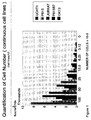
- UCHT1, P815, Jurkat T-cells, P815B7 and OKT3 cells were collected, centrifuged and resuspended in Dulbecco's PBS at a density of 1.10 6 cells/ml in a standard 15 ml Falcon tube. Next, to 1 ml of each cell suspension, 10 ⁇ l of a hematin stock solution (1 mg/ml in DMSO) was added and left after gentle mixing at room temperature for about 10 minutes. After another gentle mix, cells were left for another 5 minutes at room temperature, after which 4 ml of PBS were added and cells gently aspirated.
- a hematin stock solution (1 mg/ml in DMSO
- cell pellets were resuspended in another 4 ml of PBS and washed again to make sure all excess hematin label was removed. Finally, cell pellets were resuspended at a density of 10 6 /ml. Next, cells were plated into individual wells of a white microtiter plate so that the number of cells ranged from 0 cells/well to about 100,000 cells/well in a total volume of 100 ⁇ l PBS/well.
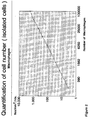
- Macrophages isolated by bronchial lavage of mice, were pooled and concentrated after washing in Dulbecco's PBS at a density of 10 6 /ml. Next, to 1 ml macrophage suspension, 10 ⁇ l of hematin (1 mg/ml in DMSO) were added and cells incubated and washed as set forth above in Example 1.
- Example 3 Quantification of inert particles.
- Example 4 Quantification of microorganisms.
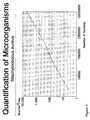
- a suspension of 10 8 Staphylococci aureus was prepared in Dulbecco's PBS starting from a crude suspension of Staph. aureus grown overnight in Trypcase Soya Broth.
- the Staph. aureus suspensin was centrifuges (450 g/5 min) and the bacterial pellet washed with 5 ml PBS. This washing procedure was repeated twice after which the pellet of labelled bacteria was resuspended at a density of 10 8 bacteria/ml.
- Example 5 Quantification of the number of adherent bacteria of different strains to nasal cell monolayers
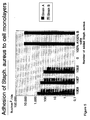
- Suspensions of two different strains of Staph. aureus were prepared at a density of 10 9 /ml in PBS and labelled with hematin as set forth above in Example 4.
- 10 8 , 5.10 7 , 2.5. 10 7 and 0 bacteria in a total volume of 100 ⁇ l were incubated with confluently grown adherent human nasal epithelial cell monolayers. After 1.5 hours incubation at 37°C in a humidified incubator (air, 5% CO 2 ) non-adherent bacteria were removed by gentle washing.
- 100 ⁇ l Dulbecco's PBS were added to wells to be measured. Chemiluminescence was initiated and measured as described in Example 4. Results are summarized in Fig. 5 and show, differential adhesion of the different Staph. aureus strains.
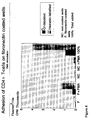
- Example 6 Adhesion of PMA stimulated CD4+-T cells on fibronectin coated microtiter wells.
- CD4+ T cells were isolated from a T-cell preparation according to standard procedures starting from a human whole blood sample which was first centrifuges over a Ficoll-Hypaque gradient. CD4+-T cells were isolated by magnetic separation using Dynabeads. Finally, CD4+-T cells were suspended at a final concentration of 10 6 /ml in PBS. 10 ⁇ l hematin (1 mg/ml in DMSO) were added to label the T-cells as set forth above in Example 2.
- CD4+-T cells were resuspended at a density of 10 6 /ml in 50% (VV) PBS/Hanks albumine (0.1%).
- VV 50% (VV) PBS/Hanks albumine
- another aliquot of CD4+-T cells was 51 Cr labelled according to standard protocols.
- DSN non-virus producing and DSNpJD21MDR1 transfected and virus producing cell monolayers were grown confluently in petridishes (Falcon) and labelled with hematin 100 ⁇ g hematin contained in 10 ml Dulbecco's PBS for 10 minutes. After labelling, cells were washed 2 times with excess PBS (controls (no hematin label)) were treated accordingly, except the PBS did not contain hematin label.
Landscapes
- Life Sciences & Earth Sciences (AREA)
- Health & Medical Sciences (AREA)
- Chemical & Material Sciences (AREA)
- Engineering & Computer Science (AREA)
- Immunology (AREA)
- Hematology (AREA)
- Organic Chemistry (AREA)
- Molecular Biology (AREA)
- Zoology (AREA)
- Biotechnology (AREA)
- Microbiology (AREA)
- Proteomics, Peptides & Aminoacids (AREA)
- Urology & Nephrology (AREA)
- Wood Science & Technology (AREA)
- Physics & Mathematics (AREA)
- Biochemistry (AREA)
- Biomedical Technology (AREA)
- Analytical Chemistry (AREA)
- General Health & Medical Sciences (AREA)
- Genetics & Genomics (AREA)
- General Engineering & Computer Science (AREA)
- Bioinformatics & Cheminformatics (AREA)
- Cell Biology (AREA)
- Biophysics (AREA)
- Food Science & Technology (AREA)
- Medicinal Chemistry (AREA)
- General Physics & Mathematics (AREA)
- Pathology (AREA)
- Measuring Or Testing Involving Enzymes Or Micro-Organisms (AREA)
- Investigating Or Analysing Materials By The Use Of Chemical Reactions (AREA)
Priority Applications (3)
| Application Number | Priority Date | Filing Date | Title |
|---|---|---|---|
| EP96201674A EP0812920A1 (de) | 1996-06-14 | 1996-06-14 | Verwendung von Porphyrinen bei einem Verfahren zur Instrumental-Erkennung |
| US08/876,093 US5998128A (en) | 1996-06-14 | 1997-06-13 | Use of porphyrins in instrumental detection methods |
| US08/956,856 US6001573A (en) | 1996-06-14 | 1997-10-23 | Use of porphyrins as a universal label |
Applications Claiming Priority (1)
| Application Number | Priority Date | Filing Date | Title |
|---|---|---|---|
| EP96201674A EP0812920A1 (de) | 1996-06-14 | 1996-06-14 | Verwendung von Porphyrinen bei einem Verfahren zur Instrumental-Erkennung |
Publications (1)
| Publication Number | Publication Date |
|---|---|
| EP0812920A1 true EP0812920A1 (de) | 1997-12-17 |
Family
ID=8224083
Family Applications (1)
| Application Number | Title | Priority Date | Filing Date |
|---|---|---|---|
| EP96201674A Withdrawn EP0812920A1 (de) | 1996-06-14 | 1996-06-14 | Verwendung von Porphyrinen bei einem Verfahren zur Instrumental-Erkennung |
Country Status (2)
| Country | Link |
|---|---|
| US (1) | US5998128A (de) |
| EP (1) | EP0812920A1 (de) |
Cited By (4)
| Publication number | Priority date | Publication date | Assignee | Title |
|---|---|---|---|---|
| AU2003236911B2 (en) * | 2002-06-28 | 2007-08-09 | The Secretary Of State For Defence | Assay for detecting an analyte containing or labelled with a haem moiety |
| CN103575897A (zh) * | 2012-07-23 | 2014-02-12 | 苏州长光华医生物试剂有限公司 | 一种检测akt2蛋白的试剂盒及其制备方法 |
| CN103575899A (zh) * | 2012-07-23 | 2014-02-12 | 苏州长光华医生物试剂有限公司 | 一种检测npm蛋白的试剂盒及其制备方法 |
| CN109433270A (zh) * | 2018-10-10 | 2019-03-08 | 万华化学集团股份有限公司 | 一种异辛醛氧化制备异辛酸的催化剂及其制备方法,以及制备异辛酸的方法 |
Families Citing this family (15)
| Publication number | Priority date | Publication date | Assignee | Title |
|---|---|---|---|---|
| US6232124B1 (en) | 1996-05-06 | 2001-05-15 | Verification Technologies, Inc. | Automated fingerprint methods and chemistry for product authentication and monitoring |
| US6490030B1 (en) | 1999-01-18 | 2002-12-03 | Verification Technologies, Inc. | Portable product authentication device |
| US7079230B1 (en) | 1999-07-16 | 2006-07-18 | Sun Chemical B.V. | Portable authentication device and method of authenticating products or product packaging |
| US6512580B1 (en) | 1999-10-27 | 2003-01-28 | Verification Technologies, Inc. | Method and apparatus for portable product authentication |
| US6638593B2 (en) | 2000-06-30 | 2003-10-28 | Verification Technologies, Inc. | Copy-protected optical media and method of manufacture thereof |
| US7486790B1 (en) | 2000-06-30 | 2009-02-03 | Verification Technologies, Inc. | Method and apparatus for controlling access to storage media |
| AU2001259033A1 (en) | 2000-06-30 | 2002-01-14 | Verification Technologies, Inc. | Copy-protected optical media and method of manufacture thereof |
| US7124944B2 (en) | 2000-06-30 | 2006-10-24 | Verification Technologies, Inc. | Product packaging including digital data |
| US7660415B2 (en) | 2000-08-03 | 2010-02-09 | Selinfreund Richard H | Method and apparatus for controlling access to storage media |
| US7157047B2 (en) | 2001-02-09 | 2007-01-02 | Pss Bio Instruments, Inc. | Device for containing, reacting and measuring, and method of containing, reacting and measuring |
| GB2397067B (en) | 2002-12-23 | 2005-05-11 | Destiny Pharma Ltd | Porphin & azaporphin derivatives with at least one cationic-nitrogen-containing meso-substituent for use in photodynamic therapy & in vitro sterilisation |
| JP2004323363A (ja) * | 2003-04-21 | 2004-11-18 | Institute Of Physical & Chemical Research | ビオチニル基含有ポルフィリン化合物及びその用途 |
| US20050282182A1 (en) * | 2003-12-30 | 2005-12-22 | Universal Bio Research Co., Ltd. | Reaction vessel and reaction apparatus comprising three-dimensional particle array |
| GB2415372A (en) | 2004-06-23 | 2005-12-28 | Destiny Pharma Ltd | Non photodynamical or sonodynamical antimicrobial use of porphyrins and azaporphyrins containing at least one cationic-nitrogen-containing substituent |
| KR100813266B1 (ko) * | 2006-09-19 | 2008-03-13 | 삼성전자주식회사 | 마이크로어레이-커버 슬립 조립체로부터 기포를 제거하는방법 및 이를 위한 마이크로어레이 키트 |
Citations (13)
| Publication number | Priority date | Publication date | Assignee | Title |
|---|---|---|---|---|
| US3754868A (en) * | 1970-07-06 | 1973-08-28 | Aerojet General Co | Device for preparation of sample for biological agent detector |
| US4176007A (en) * | 1978-02-09 | 1979-11-27 | Nasa | Method and apparatus for eliminating luminol interference material |
| US4234681A (en) * | 1978-07-21 | 1980-11-18 | The Regents Of The University Of California | Immobolized light emitting systems |
| GB2063469A (en) * | 1979-10-17 | 1981-06-03 | Fisher Scientific Co | A conjugate for use in an immunoassay procedure |
| EP0070685A2 (de) * | 1981-07-17 | 1983-01-26 | Amoco Corporation | Diagnostisches homogenes Verfahren mittels Nucleinsäure-Hybridisierung mit strahlungsfreier Energieübertragung |
| US4375972A (en) * | 1979-10-17 | 1983-03-08 | Allied Corporation | Heterogeneous chemiluminescent immunoassays utilizing metallo porphyrin tag |
| US4577636A (en) * | 1982-11-23 | 1986-03-25 | The Beth Israel Hospital Association | Method for diagnosis of atherosclerosis |
| US4672039A (en) * | 1984-02-10 | 1987-06-09 | Ab Sangtec Medical | Apparatus for registering the presence of bacteria, particularly in field conditions |
| JPS62135769A (ja) * | 1985-12-10 | 1987-06-18 | Motohide Takahama | 細胞中の蛋白質とdnaの比率の測定法及び測定用試薬 |
| JPH0347093A (ja) * | 1989-04-06 | 1991-02-28 | Nippon Steel Chem Co Ltd | 標的細胞の生残もしくは死滅細胞数を測定する方法及びそのための試薬 |
| EP0480361A2 (de) * | 1990-10-11 | 1992-04-15 | Takeda Chemical Industries, Ltd. | Quantifizierung durch Chemilumineszenz mittels lichtempfindlicher Verbindungen |
| US5108893A (en) * | 1986-08-06 | 1992-04-28 | Canberra Industries, Inc. | Use of oxidase enzyme systems in chemiluminescent assays |
| WO1993012809A1 (en) * | 1991-12-24 | 1993-07-08 | Fred Hutchinson Cancer Research Center | Competitive inhibition of high-avidity alpha4-beta1 receptor using tripeptide ldv |
Family Cites Families (1)
| Publication number | Priority date | Publication date | Assignee | Title |
|---|---|---|---|---|
| JP3047093U (ja) | 1997-06-30 | 1998-03-31 | 親広 才田 | 溝のついた突起を設けた注ぎ口部を有する急須 |
-
1996
- 1996-06-14 EP EP96201674A patent/EP0812920A1/de not_active Withdrawn
-
1997
- 1997-06-13 US US08/876,093 patent/US5998128A/en not_active Expired - Fee Related
Patent Citations (13)
| Publication number | Priority date | Publication date | Assignee | Title |
|---|---|---|---|---|
| US3754868A (en) * | 1970-07-06 | 1973-08-28 | Aerojet General Co | Device for preparation of sample for biological agent detector |
| US4176007A (en) * | 1978-02-09 | 1979-11-27 | Nasa | Method and apparatus for eliminating luminol interference material |
| US4234681A (en) * | 1978-07-21 | 1980-11-18 | The Regents Of The University Of California | Immobolized light emitting systems |
| GB2063469A (en) * | 1979-10-17 | 1981-06-03 | Fisher Scientific Co | A conjugate for use in an immunoassay procedure |
| US4375972A (en) * | 1979-10-17 | 1983-03-08 | Allied Corporation | Heterogeneous chemiluminescent immunoassays utilizing metallo porphyrin tag |
| EP0070685A2 (de) * | 1981-07-17 | 1983-01-26 | Amoco Corporation | Diagnostisches homogenes Verfahren mittels Nucleinsäure-Hybridisierung mit strahlungsfreier Energieübertragung |
| US4577636A (en) * | 1982-11-23 | 1986-03-25 | The Beth Israel Hospital Association | Method for diagnosis of atherosclerosis |
| US4672039A (en) * | 1984-02-10 | 1987-06-09 | Ab Sangtec Medical | Apparatus for registering the presence of bacteria, particularly in field conditions |
| JPS62135769A (ja) * | 1985-12-10 | 1987-06-18 | Motohide Takahama | 細胞中の蛋白質とdnaの比率の測定法及び測定用試薬 |
| US5108893A (en) * | 1986-08-06 | 1992-04-28 | Canberra Industries, Inc. | Use of oxidase enzyme systems in chemiluminescent assays |
| JPH0347093A (ja) * | 1989-04-06 | 1991-02-28 | Nippon Steel Chem Co Ltd | 標的細胞の生残もしくは死滅細胞数を測定する方法及びそのための試薬 |
| EP0480361A2 (de) * | 1990-10-11 | 1992-04-15 | Takeda Chemical Industries, Ltd. | Quantifizierung durch Chemilumineszenz mittels lichtempfindlicher Verbindungen |
| WO1993012809A1 (en) * | 1991-12-24 | 1993-07-08 | Fred Hutchinson Cancer Research Center | Competitive inhibition of high-avidity alpha4-beta1 receptor using tripeptide ldv |
Non-Patent Citations (5)
| Title |
|---|
| ADAM Y. ET AL: "Luminol and Isoluminol Chemiluminescence Reaction Catalysed by synthetic water-soluble Metalloporphyrins", NEW JOURNAL OF CHEMISTRY, vol. 16, 1992, pages 525 - 528, XP002027700 * |
| DATABASE WPI Section Ch Week 8730, Derwent World Patents Index; Class B04, AN 87-209408, XP002019950 * |
| DATABASE WPI Section Ch Week 9115, Derwent World Patents Index; Class B04, AN 91-105677, XP002019949 * |
| EWETZ L. ET AL: "Factors affecting the Specificity of the Luminol Reaction with Hematin Compounds", ANALYTICAL BIOCHEMISTRY, vol. 71, 1976, pages 564 - 570, XP002027698 * |
| OLSSON T. ET AL: "Catalytic Action and Destruction of Protohematin during Peroxide Dependent Luminol Chemiluminescence", PHOTOCHEMISTRY AND PHOTOBIOLOGY, vol. 38, 1983, pages 223 - 229, XP002027699 * |
Cited By (7)
| Publication number | Priority date | Publication date | Assignee | Title |
|---|---|---|---|---|
| AU2003236911B2 (en) * | 2002-06-28 | 2007-08-09 | The Secretary Of State For Defence | Assay for detecting an analyte containing or labelled with a haem moiety |
| CN103575897A (zh) * | 2012-07-23 | 2014-02-12 | 苏州长光华医生物试剂有限公司 | 一种检测akt2蛋白的试剂盒及其制备方法 |
| CN103575899A (zh) * | 2012-07-23 | 2014-02-12 | 苏州长光华医生物试剂有限公司 | 一种检测npm蛋白的试剂盒及其制备方法 |
| CN103575897B (zh) * | 2012-07-23 | 2016-01-13 | 苏州长光华医生物试剂有限公司 | 一种检测akt2蛋白的试剂盒及其制备方法 |
| CN103575899B (zh) * | 2012-07-23 | 2016-01-13 | 苏州长光华医生物试剂有限公司 | 一种检测npm蛋白的试剂盒及其制备方法 |
| CN109433270A (zh) * | 2018-10-10 | 2019-03-08 | 万华化学集团股份有限公司 | 一种异辛醛氧化制备异辛酸的催化剂及其制备方法,以及制备异辛酸的方法 |
| CN109433270B (zh) * | 2018-10-10 | 2021-05-14 | 万华化学集团股份有限公司 | 一种异辛醛氧化制备异辛酸的催化剂及其制备方法,以及制备异辛酸的方法 |
Also Published As
| Publication number | Publication date |
|---|---|
| US5998128A (en) | 1999-12-07 |
Similar Documents
| Publication | Publication Date | Title |
|---|---|---|
| US6001573A (en) | Use of porphyrins as a universal label | |
| US5998128A (en) | Use of porphyrins in instrumental detection methods | |
| US7052864B2 (en) | Bioanalytical measuring method using oxidases and lanthanoid-ligand complexes | |
| CA1281643C (en) | Use of phenols and anilines to increase the rate of peroxidase catalyzed oxidation of leuco dyes | |
| CA1174482A (en) | Luminescence detection device | |
| Seitz et al. | Chemiluminescence and bioluminescence analysis: fundamentals and biomedical applications | |
| Kricka | Application of bioluminescence and chemiluminescence in biomedical sciences | |
| JP2983820B2 (ja) | 電子移動剤を含む組成物、試験デバイス及び方法 | |
| Kricka | Ultrasensitive immunoassay techniques | |
| EP0774011B1 (de) | Fangtestverfahren | |
| EP0087959A1 (de) | Lumineszenz- und Luminometrieprüfung | |
| JPH09511581A (ja) | 化学アッセイ較正方法 | |
| KR101789356B1 (ko) | 전기화학발광 검출에 있어서의 신호 증강 화합물의 용도 | |
| WO2008094273A2 (en) | Detection of analytes in samples using liposome-amplified luminescence and magnetic separation | |
| Nelson et al. | Chemiluminescent DNA probes: a comparison of the acridinium ester and dioxetane detection systems and their use in clinical diagnostic assays | |
| JPH10506006A (ja) | インドキシル基質、チオインドキシル基質及び他の基質に基づく化学ルミネセンスアッセイ | |
| Garcia-Campana et al. | Potential of chemiluminescence and bioluminescence in organic analysis | |
| CA1272125A (en) | Chemiluminescent methods and kit | |
| JPH063447B2 (ja) | 化学的触媒の調節剤によるイムノアッセイの信号強化法 | |
| JP4434015B2 (ja) | 化学発光増強剤 | |
| EP0441469A1 (de) | Immunspezifischer und Biolumineszenztest für zelluläres ATP | |
| CA1134744A (en) | Peroxidase determination by emission of light | |
| JPH11160313A (ja) | ユニバーサル・ラベルとしてのポルフィリン類の使用法 | |
| US4847194A (en) | Colorimetric detection of delta-5-3-ketosteroid isomerase and immunoassay based thereon | |
| AU6041690A (en) | Chemiluminescent compositions, chemiluminescent processes and their uses in analytical assays |
Legal Events
| Date | Code | Title | Description |
|---|---|---|---|
| PUAI | Public reference made under article 153(3) epc to a published international application that has entered the european phase |
Free format text: ORIGINAL CODE: 0009012 |
|
| AK | Designated contracting states |
Kind code of ref document: A1 Designated state(s): AT BE CH DE DK ES FI FR GB GR IE IT LI LU MC NL PT SE |
|
| AX | Request for extension of the european patent |
Free format text: LT;LV;SI |
|
| 17P | Request for examination filed |
Effective date: 19980525 |
|
| 17Q | First examination report despatched |
Effective date: 19980729 |
|
| STAA | Information on the status of an ep patent application or granted ep patent |
Free format text: STATUS: THE APPLICATION IS DEEMED TO BE WITHDRAWN |
|
| 18D | Application deemed to be withdrawn |
Effective date: 20050101 |