EP0814093A2 - Polymerverbindung mit Glykopolymer und ein Verfahren zu ihrem Abbau - Google Patents
Polymerverbindung mit Glykopolymer und ein Verfahren zu ihrem Abbau Download PDFInfo
- Publication number
- EP0814093A2 EP0814093A2 EP97109871A EP97109871A EP0814093A2 EP 0814093 A2 EP0814093 A2 EP 0814093A2 EP 97109871 A EP97109871 A EP 97109871A EP 97109871 A EP97109871 A EP 97109871A EP 0814093 A2 EP0814093 A2 EP 0814093A2
- Authority
- EP
- European Patent Office
- Prior art keywords
- glycopolymer
- component
- saccharide
- enzyme
- bond
- Prior art date
- Legal status (The legal status is an assumption and is not a legal conclusion. Google has not performed a legal analysis and makes no representation as to the accuracy of the status listed.)
- Granted
Links
- 229920000550 glycopolymer Polymers 0.000 title claims abstract description 113
- 238000000034 method Methods 0.000 title claims description 41
- 229920000642 polymer Polymers 0.000 title abstract description 94
- 150000001720 carbohydrates Chemical class 0.000 claims abstract description 63
- WQZGKKKJIJFFOK-GASJEMHNSA-N Glucose Chemical group OC[C@H]1OC(O)[C@H](O)[C@@H](O)[C@@H]1O WQZGKKKJIJFFOK-GASJEMHNSA-N 0.000 claims abstract description 26
- 150000001875 compounds Chemical class 0.000 claims abstract description 12
- 229920001542 oligosaccharide Polymers 0.000 claims description 102
- 150000002482 oligosaccharides Chemical class 0.000 claims description 97
- GUBGYTABKSRVRQ-CUHNMECISA-N D-Cellobiose Chemical compound O[C@@H]1[C@@H](O)[C@H](O)[C@@H](CO)O[C@H]1O[C@@H]1[C@@H](CO)OC(O)[C@H](O)[C@H]1O GUBGYTABKSRVRQ-CUHNMECISA-N 0.000 claims description 47
- 102000004190 Enzymes Human genes 0.000 claims description 38
- 108090000790 Enzymes Proteins 0.000 claims description 38
- 229940088598 enzyme Drugs 0.000 claims description 38
- 229920001282 polysaccharide Polymers 0.000 claims description 26
- 239000005017 polysaccharide Substances 0.000 claims description 26
- 150000004804 polysaccharides Chemical class 0.000 claims description 26
- -1 chitotetraose Chemical compound 0.000 claims description 25
- 238000004132 cross linking Methods 0.000 claims description 15
- OFOBLEOULBTSOW-UHFFFAOYSA-N Malonic acid Chemical compound OC(=O)CC(O)=O OFOBLEOULBTSOW-UHFFFAOYSA-N 0.000 claims description 11
- LUEWUZLMQUOBSB-ZLBHSGTGSA-N alpha-maltotetraose Chemical compound O[C@@H]1[C@@H](O)[C@H](O)[C@@H](CO)O[C@@H]1O[C@@H]1[C@@H](CO)O[C@H](O[C@@H]2[C@H](O[C@H](O[C@@H]3[C@H](O[C@H](O)[C@H](O)[C@H]3O)CO)[C@H](O)[C@H]2O)CO)[C@H](O)[C@H]1O LUEWUZLMQUOBSB-ZLBHSGTGSA-N 0.000 claims description 11
- OCIBBXPLUVYKCH-FYTDUCIRSA-N beta-D-cellohexaose Chemical compound O[C@@H]1[C@@H](O)[C@H](O)[C@@H](CO)O[C@H]1O[C@@H]1[C@@H](CO)O[C@@H](O[C@@H]2[C@H](O[C@@H](O[C@@H]3[C@H](O[C@@H](O[C@@H]4[C@H](O[C@@H](O[C@@H]5[C@H](O[C@@H](O)[C@H](O)[C@H]5O)CO)[C@H](O)[C@H]4O)CO)[C@H](O)[C@H]3O)CO)[C@H](O)[C@H]2O)CO)[C@H](O)[C@H]1O OCIBBXPLUVYKCH-FYTDUCIRSA-N 0.000 claims description 11
- OCIBBXPLUVYKCH-UHFFFAOYSA-N cellopentanose Natural products OC1C(O)C(O)C(CO)OC1OC1C(CO)OC(OC2C(OC(OC3C(OC(OC4C(OC(OC5C(OC(O)C(O)C5O)CO)C(O)C4O)CO)C(O)C3O)CO)C(O)C2O)CO)C(O)C1O OCIBBXPLUVYKCH-UHFFFAOYSA-N 0.000 claims description 11
- FTNIPWXXIGNQQF-XHCCAYEESA-N cellopentaose Chemical compound O[C@@H]1[C@@H](O)[C@H](O)[C@@H](CO)O[C@H]1O[C@@H]1[C@@H](CO)O[C@@H](O[C@@H]2[C@H](O[C@@H](O[C@@H]3[C@H](O[C@@H](O[C@@H]4[C@H](OC(O)[C@H](O)[C@H]4O)CO)[C@H](O)[C@H]3O)CO)[C@H](O)[C@H]2O)CO)[C@H](O)[C@H]1O FTNIPWXXIGNQQF-XHCCAYEESA-N 0.000 claims description 11
- FYGDTMLNYKFZSV-ZWSAEMDYSA-N cellotriose Chemical compound O[C@@H]1[C@@H](O)[C@H](O)[C@@H](CO)O[C@H]1O[C@@H]1[C@@H](CO)O[C@@H](O[C@@H]2[C@H](OC(O)[C@H](O)[C@H]2O)CO)[C@H](O)[C@H]1O FYGDTMLNYKFZSV-ZWSAEMDYSA-N 0.000 claims description 11
- 102000035195 Peptidases Human genes 0.000 claims description 9
- 108091005804 Peptidases Proteins 0.000 claims description 9
- 239000004372 Polyvinyl alcohol Substances 0.000 claims description 9
- 229920002451 polyvinyl alcohol Polymers 0.000 claims description 9
- 239000004365 Protease Substances 0.000 claims description 8
- 235000019419 proteases Nutrition 0.000 claims description 8
- 108090000371 Esterases Proteins 0.000 claims description 7
- 125000003178 carboxy group Chemical group [H]OC(*)=O 0.000 claims description 7
- 229920002678 cellulose Polymers 0.000 claims description 7
- OWEGMIWEEQEYGQ-UHFFFAOYSA-N 100676-05-9 Natural products OC1C(O)C(O)C(CO)OC1OCC1C(O)C(O)C(O)C(OC2C(OC(O)C(O)C2O)CO)O1 OWEGMIWEEQEYGQ-UHFFFAOYSA-N 0.000 claims description 6
- GUBGYTABKSRVRQ-PICCSMPSSA-N Maltose Natural products O[C@@H]1[C@@H](O)[C@H](O)[C@@H](CO)O[C@@H]1O[C@@H]1[C@@H](CO)OC(O)[C@H](O)[C@H]1O GUBGYTABKSRVRQ-PICCSMPSSA-N 0.000 claims description 6
- GUBGYTABKSRVRQ-QUYVBRFLSA-N beta-maltose Chemical compound OC[C@H]1O[C@H](O[C@H]2[C@H](O)[C@@H](O)[C@H](O)O[C@@H]2CO)[C@H](O)[C@@H](O)[C@@H]1O GUBGYTABKSRVRQ-QUYVBRFLSA-N 0.000 claims description 6
- 239000001913 cellulose Substances 0.000 claims description 6
- 235000010980 cellulose Nutrition 0.000 claims description 6
- 235000010443 alginic acid Nutrition 0.000 claims description 5
- 239000000783 alginic acid Substances 0.000 claims description 5
- 229920000615 alginic acid Polymers 0.000 claims description 5
- 229960001126 alginic acid Drugs 0.000 claims description 5
- 150000004781 alginic acids Chemical class 0.000 claims description 5
- QLTSDROPCWIKKY-PMCTYKHCSA-N beta-D-glucosaminyl-(1->4)-beta-D-glucosamine Chemical compound O[C@@H]1[C@@H](N)[C@H](O)O[C@H](CO)[C@H]1O[C@H]1[C@H](N)[C@@H](O)[C@H](O)[C@@H](CO)O1 QLTSDROPCWIKKY-PMCTYKHCSA-N 0.000 claims description 5
- 150000004985 diamines Chemical class 0.000 claims description 5
- NAOLWIGVYRIGTP-UHFFFAOYSA-N 1,3,5-trihydroxyanthracene-9,10-dione Chemical group C1=CC(O)=C2C(=O)C3=CC(O)=CC(O)=C3C(=O)C2=C1 NAOLWIGVYRIGTP-UHFFFAOYSA-N 0.000 claims description 4
- 229920001661 Chitosan Polymers 0.000 claims description 4
- 229920002472 Starch Polymers 0.000 claims description 4
- 150000007824 aliphatic compounds Chemical class 0.000 claims description 4
- RQFQJYYMBWVMQG-IXDPLRRUSA-N chitotriose Chemical compound O[C@@H]1[C@@H](N)[C@H](O)O[C@H](CO)[C@H]1O[C@H]1[C@H](N)[C@@H](O)[C@H](O[C@H]2[C@@H]([C@@H](O)[C@H](O)[C@@H](CO)O2)N)[C@@H](CO)O1 RQFQJYYMBWVMQG-IXDPLRRUSA-N 0.000 claims description 4
- 125000005442 diisocyanate group Chemical group 0.000 claims description 4
- 150000002009 diols Chemical class 0.000 claims description 4
- 239000008107 starch Substances 0.000 claims description 4
- 235000019698 starch Nutrition 0.000 claims description 4
- DBTMGCOVALSLOR-UHFFFAOYSA-N 32-alpha-galactosyl-3-alpha-galactosyl-galactose Natural products OC1C(O)C(O)C(CO)OC1OC1C(O)C(OC2C(C(CO)OC(O)C2O)O)OC(CO)C1O DBTMGCOVALSLOR-UHFFFAOYSA-N 0.000 claims description 3
- RXVWSYJTUUKTEA-UHFFFAOYSA-N D-maltotriose Natural products OC1C(O)C(OC(C(O)CO)C(O)C(O)C=O)OC(CO)C1OC1C(O)C(O)C(O)C(CO)O1 RXVWSYJTUUKTEA-UHFFFAOYSA-N 0.000 claims description 3
- 108010059378 Endopeptidases Proteins 0.000 claims description 3
- 102000005593 Endopeptidases Human genes 0.000 claims description 3
- 108010091443 Exopeptidases Proteins 0.000 claims description 3
- 102000018389 Exopeptidases Human genes 0.000 claims description 3
- FYGDTMLNYKFZSV-UHFFFAOYSA-N mannotriose Natural products OC1C(O)C(O)C(CO)OC1OC1C(CO)OC(OC2C(OC(O)C(O)C2O)CO)C(O)C1O FYGDTMLNYKFZSV-UHFFFAOYSA-N 0.000 claims description 3
- FYGDTMLNYKFZSV-BYLHFPJWSA-N β-1,4-galactotrioside Chemical compound O[C@@H]1[C@@H](O)[C@H](O)[C@@H](CO)O[C@H]1O[C@@H]1[C@H](CO)O[C@@H](O[C@@H]2[C@@H](O[C@@H](O)[C@H](O)[C@H]2O)CO)[C@H](O)[C@H]1O FYGDTMLNYKFZSV-BYLHFPJWSA-N 0.000 claims description 3
- GUBGYTABKSRVRQ-XLOQQCSPSA-N Alpha-Lactose Chemical compound O[C@@H]1[C@@H](O)[C@@H](O)[C@@H](CO)O[C@H]1O[C@@H]1[C@@H](CO)O[C@H](O)[C@H](O)[C@H]1O GUBGYTABKSRVRQ-XLOQQCSPSA-N 0.000 claims description 2
- 108700023418 Amidases Proteins 0.000 claims description 2
- 102100022749 Aminopeptidase N Human genes 0.000 claims description 2
- 108090000915 Aminopeptidases Proteins 0.000 claims description 2
- 102000004400 Aminopeptidases Human genes 0.000 claims description 2
- 108010049990 CD13 Antigens Proteins 0.000 claims description 2
- 108060005980 Collagenase Proteins 0.000 claims description 2
- 102000029816 Collagenase Human genes 0.000 claims description 2
- 229920002527 Glycogen Polymers 0.000 claims description 2
- AYRXSINWFIIFAE-SCLMCMATSA-N Isomaltose Natural products OC[C@H]1O[C@H](OC[C@@H](O)[C@@H](O)[C@H](O)[C@@H](O)C=O)[C@@H](O)[C@@H](O)[C@@H]1O AYRXSINWFIIFAE-SCLMCMATSA-N 0.000 claims description 2
- GUBGYTABKSRVRQ-QKKXKWKRSA-N Lactose Natural products OC[C@H]1O[C@@H](O[C@H]2[C@H](O)[C@@H](O)C(O)O[C@@H]2CO)[C@H](O)[C@@H](O)[C@H]1O GUBGYTABKSRVRQ-QKKXKWKRSA-N 0.000 claims description 2
- 108010004098 Leucyl aminopeptidase Proteins 0.000 claims description 2
- 102000002704 Leucyl aminopeptidase Human genes 0.000 claims description 2
- 102000003960 Ligases Human genes 0.000 claims description 2
- 108090000364 Ligases Proteins 0.000 claims description 2
- 239000004367 Lipase Substances 0.000 claims description 2
- 108090001060 Lipase Proteins 0.000 claims description 2
- 102000004882 Lipase Human genes 0.000 claims description 2
- 102000004317 Lyases Human genes 0.000 claims description 2
- 108090000856 Lyases Proteins 0.000 claims description 2
- 229920000057 Mannan Polymers 0.000 claims description 2
- 108010059712 Pronase Proteins 0.000 claims description 2
- 108010022999 Serine Proteases Proteins 0.000 claims description 2
- 102000012479 Serine Proteases Human genes 0.000 claims description 2
- 241000191940 Staphylococcus Species 0.000 claims description 2
- 241000187392 Streptomyces griseus Species 0.000 claims description 2
- 108090000787 Subtilisin Proteins 0.000 claims description 2
- 108090001109 Thermolysin Proteins 0.000 claims description 2
- 101710097834 Thiol protease Proteins 0.000 claims description 2
- 108090000631 Trypsin Proteins 0.000 claims description 2
- 102000004142 Trypsin Human genes 0.000 claims description 2
- FTNIPWXXIGNQQF-UHFFFAOYSA-N UNPD130147 Natural products OC1C(O)C(O)C(CO)OC1OC1C(CO)OC(OC2C(OC(OC3C(OC(OC4C(OC(O)C(O)C4O)CO)C(O)C3O)CO)C(O)C2O)CO)C(O)C1O FTNIPWXXIGNQQF-UHFFFAOYSA-N 0.000 claims description 2
- 102000005922 amidase Human genes 0.000 claims description 2
- 229960002424 collagenase Drugs 0.000 claims description 2
- 229940096919 glycogen Drugs 0.000 claims description 2
- DLRVVLDZNNYCBX-RTPHMHGBSA-N isomaltose Chemical compound O[C@@H]1[C@@H](O)[C@H](O)[C@@H](CO)O[C@@H]1OC[C@@H]1[C@@H](O)[C@H](O)[C@@H](O)C(O)O1 DLRVVLDZNNYCBX-RTPHMHGBSA-N 0.000 claims description 2
- 239000008101 lactose Substances 0.000 claims description 2
- 235000019421 lipase Nutrition 0.000 claims description 2
- FJCUPROCOFFUSR-UHFFFAOYSA-N malto-pentaose Natural products OC1C(O)C(OC(C(O)CO)C(O)C(O)C=O)OC(CO)C1OC1C(O)C(O)C(OC2C(C(O)C(OC3C(C(O)C(O)C(CO)O3)O)C(CO)O2)O)C(CO)O1 FJCUPROCOFFUSR-UHFFFAOYSA-N 0.000 claims description 2
- FJCUPROCOFFUSR-GMMZZHHDSA-N maltopentaose Chemical compound O[C@@H]1[C@@H](O)[C@@H](O[C@H]([C@H](O)CO)[C@H](O)[C@@H](O)C=O)O[C@H](CO)[C@H]1O[C@@H]1[C@H](O)[C@@H](O)[C@H](O[C@@H]2[C@@H]([C@@H](O)[C@H](O[C@@H]3[C@@H]([C@@H](O)[C@H](O)[C@@H](CO)O3)O)[C@@H](CO)O2)O)[C@@H](CO)O1 FJCUPROCOFFUSR-GMMZZHHDSA-N 0.000 claims description 2
- 239000012588 trypsin Substances 0.000 claims description 2
- 125000000391 vinyl group Chemical group [H]C([*])=C([H])[H] 0.000 claims description 2
- 125000001142 dicarboxylic acid group Chemical group 0.000 claims 2
- 239000004382 Amylase Substances 0.000 claims 1
- 102000013142 Amylases Human genes 0.000 claims 1
- 108010065511 Amylases Proteins 0.000 claims 1
- 108010059892 Cellulase Proteins 0.000 claims 1
- 102000053187 Glucuronidase Human genes 0.000 claims 1
- 108010060309 Glucuronidase Proteins 0.000 claims 1
- 102000005840 alpha-Galactosidase Human genes 0.000 claims 1
- 108010030291 alpha-Galactosidase Proteins 0.000 claims 1
- 235000019418 amylase Nutrition 0.000 claims 1
- 230000001588 bifunctional effect Effects 0.000 claims 1
- 229940106157 cellulase Drugs 0.000 claims 1
- 125000004427 diamine group Chemical group 0.000 claims 1
- 235000019833 protease Nutrition 0.000 claims 1
- 238000000354 decomposition reaction Methods 0.000 abstract description 41
- 238000006243 chemical reaction Methods 0.000 description 51
- WNLRTRBMVRJNCN-UHFFFAOYSA-N adipic acid Chemical compound OC(=O)CCCCC(O)=O WNLRTRBMVRJNCN-UHFFFAOYSA-N 0.000 description 46
- ZMXDDKWLCZADIW-UHFFFAOYSA-N N,N-Dimethylformamide Chemical compound CN(C)C=O ZMXDDKWLCZADIW-UHFFFAOYSA-N 0.000 description 36
- 239000007787 solid Substances 0.000 description 33
- 239000000126 substance Substances 0.000 description 31
- 239000000047 product Substances 0.000 description 29
- 239000001361 adipic acid Substances 0.000 description 23
- 235000011037 adipic acid Nutrition 0.000 description 23
- 238000003756 stirring Methods 0.000 description 21
- 229920005989 resin Polymers 0.000 description 20
- 239000011347 resin Substances 0.000 description 20
- LFQSCWFLJHTTHZ-UHFFFAOYSA-N Ethanol Chemical compound CCO LFQSCWFLJHTTHZ-UHFFFAOYSA-N 0.000 description 18
- 238000000862 absorption spectrum Methods 0.000 description 17
- 239000000203 mixture Substances 0.000 description 16
- UHOVQNZJYSORNB-UHFFFAOYSA-N Benzene Chemical compound C1=CC=CC=C1 UHOVQNZJYSORNB-UHFFFAOYSA-N 0.000 description 15
- 238000000655 nuclear magnetic resonance spectrum Methods 0.000 description 15
- 239000000843 powder Substances 0.000 description 15
- 238000004566 IR spectroscopy Methods 0.000 description 13
- JUJWROOIHBZHMG-UHFFFAOYSA-N Pyridine Chemical compound C1=CC=NC=C1 JUJWROOIHBZHMG-UHFFFAOYSA-N 0.000 description 12
- 238000010521 absorption reaction Methods 0.000 description 12
- 238000005227 gel permeation chromatography Methods 0.000 description 11
- 239000000463 material Substances 0.000 description 10
- FYSNRJHAOHDILO-UHFFFAOYSA-N thionyl chloride Chemical compound ClS(Cl)=O FYSNRJHAOHDILO-UHFFFAOYSA-N 0.000 description 10
- XLYOFNOQVPJJNP-UHFFFAOYSA-N water Substances O XLYOFNOQVPJJNP-UHFFFAOYSA-N 0.000 description 10
- 239000001124 (E)-prop-1-ene-1,2,3-tricarboxylic acid Substances 0.000 description 9
- XEKOWRVHYACXOJ-UHFFFAOYSA-N Ethyl acetate Chemical compound CCOC(C)=O XEKOWRVHYACXOJ-UHFFFAOYSA-N 0.000 description 9
- ZMANZCXQSJIPKH-UHFFFAOYSA-N Triethylamine Chemical compound CCN(CC)CC ZMANZCXQSJIPKH-UHFFFAOYSA-N 0.000 description 9
- 229940091181 aconitic acid Drugs 0.000 description 9
- GTZCVFVGUGFEME-IWQZZHSRSA-N cis-aconitic acid Chemical compound OC(=O)C\C(C(O)=O)=C\C(O)=O GTZCVFVGUGFEME-IWQZZHSRSA-N 0.000 description 9
- 150000002148 esters Chemical class 0.000 description 9
- 238000004128 high performance liquid chromatography Methods 0.000 description 9
- 238000010992 reflux Methods 0.000 description 9
- GTZCVFVGUGFEME-UHFFFAOYSA-N trans-aconitic acid Natural products OC(=O)CC(C(O)=O)=CC(O)=O GTZCVFVGUGFEME-UHFFFAOYSA-N 0.000 description 9
- 238000001914 filtration Methods 0.000 description 8
- 125000002887 hydroxy group Chemical group [H]O* 0.000 description 8
- 150000002772 monosaccharides Chemical class 0.000 description 8
- WLJVNTCWHIRURA-UHFFFAOYSA-N pimelic acid Chemical compound OC(=O)CCCCCC(O)=O WLJVNTCWHIRURA-UHFFFAOYSA-N 0.000 description 8
- BWHMMNNQKKPAPP-UHFFFAOYSA-L potassium carbonate Chemical compound [K+].[K+].[O-]C([O-])=O BWHMMNNQKKPAPP-UHFFFAOYSA-L 0.000 description 8
- 238000000746 purification Methods 0.000 description 8
- 238000005481 NMR spectroscopy Methods 0.000 description 7
- 230000032050 esterification Effects 0.000 description 7
- 238000005886 esterification reaction Methods 0.000 description 7
- 238000002329 infrared spectrum Methods 0.000 description 7
- UDSFAEKRVUSQDD-UHFFFAOYSA-N Dimethyl adipate Chemical compound COC(=O)CCCCC(=O)OC UDSFAEKRVUSQDD-UHFFFAOYSA-N 0.000 description 6
- OKKJLVBELUTLKV-UHFFFAOYSA-N Methanol Chemical compound OC OKKJLVBELUTLKV-UHFFFAOYSA-N 0.000 description 6
- 229920002125 Sokalan® Polymers 0.000 description 6
- 239000003054 catalyst Substances 0.000 description 6
- 239000003431 cross linking reagent Substances 0.000 description 6
- NAQMVNRVTILPCV-UHFFFAOYSA-N hexane-1,6-diamine Chemical compound NCCCCCCN NAQMVNRVTILPCV-UHFFFAOYSA-N 0.000 description 6
- 238000005259 measurement Methods 0.000 description 6
- 239000012299 nitrogen atmosphere Substances 0.000 description 6
- 239000004584 polyacrylic acid Substances 0.000 description 6
- 239000002244 precipitate Substances 0.000 description 6
- KIDHWZJUCRJVML-UHFFFAOYSA-N putrescine Chemical compound NCCCCN KIDHWZJUCRJVML-UHFFFAOYSA-N 0.000 description 6
- UMJSCPRVCHMLSP-UHFFFAOYSA-N pyridine Natural products COC1=CC=CN=C1 UMJSCPRVCHMLSP-UHFFFAOYSA-N 0.000 description 6
- 230000035484 reaction time Effects 0.000 description 6
- 238000004064 recycling Methods 0.000 description 6
- 239000002904 solvent Substances 0.000 description 6
- LYCAIKOWRPUZTN-UHFFFAOYSA-N Ethylene glycol Chemical compound OCCO LYCAIKOWRPUZTN-UHFFFAOYSA-N 0.000 description 5
- CPELXLSAUQHCOX-UHFFFAOYSA-N Hydrogen bromide Chemical compound Br CPELXLSAUQHCOX-UHFFFAOYSA-N 0.000 description 5
- DZAIBGWGBBQGPZ-XQRVVYSFSA-N trimethyl (z)-prop-1-ene-1,2,3-tricarboxylate Chemical compound COC(=O)C\C(C(=O)OC)=C\C(=O)OC DZAIBGWGBBQGPZ-XQRVVYSFSA-N 0.000 description 5
- RYHBNJHYFVUHQT-UHFFFAOYSA-N 1,4-Dioxane Chemical compound C1COCCO1 RYHBNJHYFVUHQT-UHFFFAOYSA-N 0.000 description 4
- RTZKZFJDLAIYFH-UHFFFAOYSA-N Diethyl ether Chemical compound CCOCC RTZKZFJDLAIYFH-UHFFFAOYSA-N 0.000 description 4
- VEXZGXHMUGYJMC-UHFFFAOYSA-N Hydrochloric acid Chemical compound Cl VEXZGXHMUGYJMC-UHFFFAOYSA-N 0.000 description 4
- OWIKHYCFFJSOEH-UHFFFAOYSA-N Isocyanic acid Chemical compound N=C=O OWIKHYCFFJSOEH-UHFFFAOYSA-N 0.000 description 4
- CDBYLPFSWZWCQE-UHFFFAOYSA-L Sodium Carbonate Chemical compound [Na+].[Na+].[O-]C([O-])=O CDBYLPFSWZWCQE-UHFFFAOYSA-L 0.000 description 4
- WYURNTSHIVDZCO-UHFFFAOYSA-N Tetrahydrofuran Chemical compound C1CCOC1 WYURNTSHIVDZCO-UHFFFAOYSA-N 0.000 description 4
- 229940091179 aconitate Drugs 0.000 description 4
- 238000007792 addition Methods 0.000 description 4
- XLJMAIOERFSOGZ-UHFFFAOYSA-N anhydrous cyanic acid Natural products OC#N XLJMAIOERFSOGZ-UHFFFAOYSA-N 0.000 description 4
- 229920002988 biodegradable polymer Polymers 0.000 description 4
- 239000013078 crystal Substances 0.000 description 4
- 125000001495 ethyl group Chemical group [H]C([H])([H])C([H])([H])* 0.000 description 4
- 125000000524 functional group Chemical group 0.000 description 4
- 230000014759 maintenance of location Effects 0.000 description 4
- 229930014626 natural product Natural products 0.000 description 4
- 229920003023 plastic Polymers 0.000 description 4
- 239000004033 plastic Substances 0.000 description 4
- IOLCXVTUBQKXJR-UHFFFAOYSA-M potassium bromide Chemical compound [K+].[Br-] IOLCXVTUBQKXJR-UHFFFAOYSA-M 0.000 description 4
- 229910000027 potassium carbonate Inorganic materials 0.000 description 4
- 239000011541 reaction mixture Substances 0.000 description 4
- 238000002411 thermogravimetry Methods 0.000 description 4
- 239000002699 waste material Substances 0.000 description 4
- QTBSBXVTEAMEQO-UHFFFAOYSA-N Acetic acid Chemical compound CC(O)=O QTBSBXVTEAMEQO-UHFFFAOYSA-N 0.000 description 3
- IAZDPXIOMUYVGZ-UHFFFAOYSA-N Dimethylsulphoxide Chemical compound CS(C)=O IAZDPXIOMUYVGZ-UHFFFAOYSA-N 0.000 description 3
- MUBZPKHOEPUJKR-UHFFFAOYSA-N Oxalic acid Chemical compound OC(=O)C(O)=O MUBZPKHOEPUJKR-UHFFFAOYSA-N 0.000 description 3
- KWYUFKZDYYNOTN-UHFFFAOYSA-M Potassium hydroxide Chemical compound [OH-].[K+] KWYUFKZDYYNOTN-UHFFFAOYSA-M 0.000 description 3
- 229930006000 Sucrose Natural products 0.000 description 3
- CZMRCDWAGMRECN-UGDNZRGBSA-N Sucrose Chemical compound O[C@H]1[C@H](O)[C@@H](CO)O[C@@]1(CO)O[C@@H]1[C@H](O)[C@@H](O)[C@H](O)[C@@H](CO)O1 CZMRCDWAGMRECN-UGDNZRGBSA-N 0.000 description 3
- 239000000654 additive Substances 0.000 description 3
- 230000002411 adverse Effects 0.000 description 3
- 239000007795 chemical reaction product Substances 0.000 description 3
- 238000007796 conventional method Methods 0.000 description 3
- 150000001991 dicarboxylic acids Chemical class 0.000 description 3
- 150000005690 diesters Chemical class 0.000 description 3
- SHWINQXIGSEZAP-UHFFFAOYSA-N dimethyl heptanedioate Chemical compound COC(=O)CCCCCC(=O)OC SHWINQXIGSEZAP-UHFFFAOYSA-N 0.000 description 3
- 230000000694 effects Effects 0.000 description 3
- 239000003480 eluent Substances 0.000 description 3
- 238000001704 evaporation Methods 0.000 description 3
- 230000008020 evaporation Effects 0.000 description 3
- 244000005700 microbiome Species 0.000 description 3
- 230000000379 polymerizing effect Effects 0.000 description 3
- 239000007858 starting material Substances 0.000 description 3
- 239000005720 sucrose Substances 0.000 description 3
- 239000006228 supernatant Substances 0.000 description 3
- 150000003628 tricarboxylic acids Chemical class 0.000 description 3
- PUPZLCDOIYMWBV-UHFFFAOYSA-N (+/-)-1,3-Butanediol Chemical compound CC(O)CCO PUPZLCDOIYMWBV-UHFFFAOYSA-N 0.000 description 2
- ADFXKUOMJKEIND-UHFFFAOYSA-N 1,3-dicyclohexylurea Chemical compound C1CCCCC1NC(=O)NC1CCCCC1 ADFXKUOMJKEIND-UHFFFAOYSA-N 0.000 description 2
- SMZOUWXMTYCWNB-UHFFFAOYSA-N 2-(2-methoxy-5-methylphenyl)ethanamine Chemical compound COC1=CC=C(C)C=C1CCN SMZOUWXMTYCWNB-UHFFFAOYSA-N 0.000 description 2
- NIXOWILDQLNWCW-UHFFFAOYSA-N 2-Propenoic acid Natural products OC(=O)C=C NIXOWILDQLNWCW-UHFFFAOYSA-N 0.000 description 2
- IJGRMHOSHXDMSA-UHFFFAOYSA-N Atomic nitrogen Chemical compound N#N IJGRMHOSHXDMSA-UHFFFAOYSA-N 0.000 description 2
- CURLTUGMZLYLDI-UHFFFAOYSA-N Carbon dioxide Chemical compound O=C=O CURLTUGMZLYLDI-UHFFFAOYSA-N 0.000 description 2
- XLYOFNOQVPJJNP-ZSJDYOACSA-N Heavy water Chemical compound [2H]O[2H] XLYOFNOQVPJJNP-ZSJDYOACSA-N 0.000 description 2
- 239000002202 Polyethylene glycol Substances 0.000 description 2
- 239000004793 Polystyrene Substances 0.000 description 2
- PMZURENOXWZQFD-UHFFFAOYSA-L Sodium Sulfate Chemical compound [Na+].[Na+].[O-]S([O-])(=O)=O PMZURENOXWZQFD-UHFFFAOYSA-L 0.000 description 2
- FAPWRFPIFSIZLT-UHFFFAOYSA-M Sodium chloride Chemical class [Na+].[Cl-] FAPWRFPIFSIZLT-UHFFFAOYSA-M 0.000 description 2
- KKEYFWRCBNTPAC-UHFFFAOYSA-N Terephthalic acid Chemical compound OC(=O)C1=CC=C(C(O)=O)C=C1 KKEYFWRCBNTPAC-UHFFFAOYSA-N 0.000 description 2
- HEDRZPFGACZZDS-MICDWDOJSA-N Trichloro(2H)methane Chemical compound [2H]C(Cl)(Cl)Cl HEDRZPFGACZZDS-MICDWDOJSA-N 0.000 description 2
- 230000021736 acetylation Effects 0.000 description 2
- 238000006640 acetylation reaction Methods 0.000 description 2
- 125000005263 alkylenediamine group Chemical group 0.000 description 2
- 150000001408 amides Chemical class 0.000 description 2
- 150000001412 amines Chemical class 0.000 description 2
- 238000000149 argon plasma sintering Methods 0.000 description 2
- 229920006167 biodegradable resin Polymers 0.000 description 2
- 238000006664 bond formation reaction Methods 0.000 description 2
- WERYXYBDKMZEQL-UHFFFAOYSA-N butane-1,4-diol Chemical compound OCCCCO WERYXYBDKMZEQL-UHFFFAOYSA-N 0.000 description 2
- 239000006227 byproduct Substances 0.000 description 2
- 150000001732 carboxylic acid derivatives Chemical class 0.000 description 2
- 238000011161 development Methods 0.000 description 2
- WOZVHXUHUFLZGK-UHFFFAOYSA-N dimethyl terephthalate Chemical compound COC(=O)C1=CC=C(C(=O)OC)C=C1 WOZVHXUHUFLZGK-UHFFFAOYSA-N 0.000 description 2
- 238000004821 distillation Methods 0.000 description 2
- 238000001035 drying Methods 0.000 description 2
- 239000000945 filler Substances 0.000 description 2
- 239000000706 filtrate Substances 0.000 description 2
- 229910000042 hydrogen bromide Inorganic materials 0.000 description 2
- 230000000977 initiatory effect Effects 0.000 description 2
- 239000007788 liquid Substances 0.000 description 2
- 229920002521 macromolecule Polymers 0.000 description 2
- PSHKMPUSSFXUIA-UHFFFAOYSA-N n,n-dimethylpyridin-2-amine Chemical compound CN(C)C1=CC=CC=N1 PSHKMPUSSFXUIA-UHFFFAOYSA-N 0.000 description 2
- BDJRBEYXGGNYIS-UHFFFAOYSA-N nonanedioic acid Chemical compound OC(=O)CCCCCCCC(O)=O BDJRBEYXGGNYIS-UHFFFAOYSA-N 0.000 description 2
- 239000000049 pigment Substances 0.000 description 2
- 239000004014 plasticizer Substances 0.000 description 2
- 229920001223 polyethylene glycol Polymers 0.000 description 2
- 229920000139 polyethylene terephthalate Polymers 0.000 description 2
- 239000005020 polyethylene terephthalate Substances 0.000 description 2
- 238000006116 polymerization reaction Methods 0.000 description 2
- 229920002223 polystyrene Polymers 0.000 description 2
- 150000003839 salts Chemical class 0.000 description 2
- CXMXRPHRNRROMY-UHFFFAOYSA-N sebacic acid Chemical compound OC(=O)CCCCCCCCC(O)=O CXMXRPHRNRROMY-UHFFFAOYSA-N 0.000 description 2
- 229910000029 sodium carbonate Inorganic materials 0.000 description 2
- VWDWKYIASSYTQR-UHFFFAOYSA-N sodium nitrate Chemical compound [Na+].[O-][N+]([O-])=O VWDWKYIASSYTQR-UHFFFAOYSA-N 0.000 description 2
- 229910052938 sodium sulfate Inorganic materials 0.000 description 2
- 235000011152 sodium sulphate Nutrition 0.000 description 2
- 238000001228 spectrum Methods 0.000 description 2
- TYFQFVWCELRYAO-UHFFFAOYSA-N suberic acid Chemical compound OC(=O)CCCCCCC(O)=O TYFQFVWCELRYAO-UHFFFAOYSA-N 0.000 description 2
- 230000002194 synthesizing effect Effects 0.000 description 2
- 150000005691 triesters Chemical class 0.000 description 2
- JOYRKODLDBILNP-UHFFFAOYSA-N urethane group Chemical group NC(=O)OCC JOYRKODLDBILNP-UHFFFAOYSA-N 0.000 description 2
- OVBFMUAFNIIQAL-UHFFFAOYSA-N 1,4-diisocyanatobutane Chemical compound O=C=NCCCCN=C=O OVBFMUAFNIIQAL-UHFFFAOYSA-N 0.000 description 1
- 229940043375 1,5-pentanediol Drugs 0.000 description 1
- QUPKOUOXSNGVLB-UHFFFAOYSA-N 1,8-diisocyanatooctane Chemical compound O=C=NCCCCCCCCN=C=O QUPKOUOXSNGVLB-UHFFFAOYSA-N 0.000 description 1
- IXPNQXFRVYWDDI-UHFFFAOYSA-N 1-methyl-2,4-dioxo-1,3-diazinane-5-carboximidamide Chemical compound CN1CC(C(N)=N)C(=O)NC1=O IXPNQXFRVYWDDI-UHFFFAOYSA-N 0.000 description 1
- RTBFRGCFXZNCOE-UHFFFAOYSA-N 1-methylsulfonylpiperidin-4-one Chemical compound CS(=O)(=O)N1CCC(=O)CC1 RTBFRGCFXZNCOE-UHFFFAOYSA-N 0.000 description 1
- UPMLOUAZCHDJJD-UHFFFAOYSA-N 4,4'-Diphenylmethane Diisocyanate Chemical compound C1=CC(N=C=O)=CC=C1CC1=CC=C(N=C=O)C=C1 UPMLOUAZCHDJJD-UHFFFAOYSA-N 0.000 description 1
- BTJIUGUIPKRLHP-UHFFFAOYSA-N 4-nitrophenol Chemical compound OC1=CC=C([N+]([O-])=O)C=C1 BTJIUGUIPKRLHP-UHFFFAOYSA-N 0.000 description 1
- GVNWZKBFMFUVNX-UHFFFAOYSA-N Adipamide Chemical compound NC(=O)CCCCC(N)=O GVNWZKBFMFUVNX-UHFFFAOYSA-N 0.000 description 1
- 241000588986 Alcaligenes Species 0.000 description 1
- 241000894006 Bacteria Species 0.000 description 1
- VEXZGXHMUGYJMC-UHFFFAOYSA-M Chloride anion Chemical compound [Cl-] VEXZGXHMUGYJMC-UHFFFAOYSA-M 0.000 description 1
- 108090000317 Chymotrypsin Proteins 0.000 description 1
- 102000008186 Collagen Human genes 0.000 description 1
- 108010035532 Collagen Proteins 0.000 description 1
- AVVWPBAENSWJCB-IVMDWMLBSA-N D-glucofuranose Chemical group OC[C@@H](O)[C@H]1OC(O)[C@H](O)[C@H]1O AVVWPBAENSWJCB-IVMDWMLBSA-N 0.000 description 1
- QOSSAOTZNIDXMA-UHFFFAOYSA-N Dicylcohexylcarbodiimide Chemical compound C1CCCCC1N=C=NC1CCCCC1 QOSSAOTZNIDXMA-UHFFFAOYSA-N 0.000 description 1
- VIZORQUEIQEFRT-UHFFFAOYSA-N Diethyl adipate Chemical compound CCOC(=O)CCCCC(=O)OCC VIZORQUEIQEFRT-UHFFFAOYSA-N 0.000 description 1
- PIICEJLVQHRZGT-UHFFFAOYSA-N Ethylenediamine Chemical compound NCCN PIICEJLVQHRZGT-UHFFFAOYSA-N 0.000 description 1
- 108010010803 Gelatin Proteins 0.000 description 1
- UFHFLCQGNIYNRP-UHFFFAOYSA-N Hydrogen Chemical compound [H][H] UFHFLCQGNIYNRP-UHFFFAOYSA-N 0.000 description 1
- 229920002292 Nylon 6 Polymers 0.000 description 1
- ALQSHHUCVQOPAS-UHFFFAOYSA-N Pentane-1,5-diol Chemical compound OCCCCCO ALQSHHUCVQOPAS-UHFFFAOYSA-N 0.000 description 1
- 239000004698 Polyethylene Substances 0.000 description 1
- 239000004743 Polypropylene Substances 0.000 description 1
- 108090000919 Pyroglutamyl-Peptidase I Proteins 0.000 description 1
- PPBRXRYQALVLMV-UHFFFAOYSA-N Styrene Chemical group C=CC1=CC=CC=C1 PPBRXRYQALVLMV-UHFFFAOYSA-N 0.000 description 1
- KDYFGRWQOYBRFD-UHFFFAOYSA-N Succinic acid Natural products OC(=O)CCC(O)=O KDYFGRWQOYBRFD-UHFFFAOYSA-N 0.000 description 1
- NINIDFKCEFEMDL-UHFFFAOYSA-N Sulfur Chemical compound [S] NINIDFKCEFEMDL-UHFFFAOYSA-N 0.000 description 1
- 206010042618 Surgical procedure repeated Diseases 0.000 description 1
- ZVQOOHYFBIDMTQ-UHFFFAOYSA-N [methyl(oxido){1-[6-(trifluoromethyl)pyridin-3-yl]ethyl}-lambda(6)-sulfanylidene]cyanamide Chemical compound N#CN=S(C)(=O)C(C)C1=CC=C(C(F)(F)F)N=C1 ZVQOOHYFBIDMTQ-UHFFFAOYSA-N 0.000 description 1
- 125000000218 acetic acid group Chemical group C(C)(=O)* 0.000 description 1
- 239000002253 acid Substances 0.000 description 1
- WNLRTRBMVRJNCN-UHFFFAOYSA-L adipate(2-) Chemical compound [O-]C(=O)CCCCC([O-])=O WNLRTRBMVRJNCN-UHFFFAOYSA-L 0.000 description 1
- PWAXUOGZOSVGBO-UHFFFAOYSA-N adipoyl chloride Chemical compound ClC(=O)CCCCC(Cl)=O PWAXUOGZOSVGBO-UHFFFAOYSA-N 0.000 description 1
- 238000003915 air pollution Methods 0.000 description 1
- 150000001298 alcohols Chemical class 0.000 description 1
- 229920003232 aliphatic polyester Polymers 0.000 description 1
- 125000003368 amide group Chemical group 0.000 description 1
- JFCQEDHGNNZCLN-UHFFFAOYSA-N anhydrous glutaric acid Natural products OC(=O)CCCC(O)=O JFCQEDHGNNZCLN-UHFFFAOYSA-N 0.000 description 1
- 125000001797 benzyl group Chemical group [H]C1=C([H])C([H])=C(C([H])=C1[H])C([H])([H])* 0.000 description 1
- WQZGKKKJIJFFOK-VFUOTHLCSA-N beta-D-glucose Chemical compound OC[C@H]1O[C@@H](O)[C@H](O)[C@@H](O)[C@@H]1O WQZGKKKJIJFFOK-VFUOTHLCSA-N 0.000 description 1
- 230000015572 biosynthetic process Effects 0.000 description 1
- 235000019437 butane-1,3-diol Nutrition 0.000 description 1
- KDYFGRWQOYBRFD-NUQCWPJISA-N butanedioic acid Chemical compound O[14C](=O)CC[14C](O)=O KDYFGRWQOYBRFD-NUQCWPJISA-N 0.000 description 1
- 239000001569 carbon dioxide Substances 0.000 description 1
- 229910002092 carbon dioxide Inorganic materials 0.000 description 1
- 150000001735 carboxylic acids Chemical class 0.000 description 1
- 238000007385 chemical modification Methods 0.000 description 1
- 239000012295 chemical reaction liquid Substances 0.000 description 1
- 229960002376 chymotrypsin Drugs 0.000 description 1
- 229920001436 collagen Polymers 0.000 description 1
- 238000012217 deletion Methods 0.000 description 1
- 230000037430 deletion Effects 0.000 description 1
- 239000000539 dimer Substances 0.000 description 1
- BTVWZWFKMIUSGS-UHFFFAOYSA-N dimethylethyleneglycol Natural products CC(C)(O)CO BTVWZWFKMIUSGS-UHFFFAOYSA-N 0.000 description 1
- 150000002016 disaccharides Chemical class 0.000 description 1
- 239000010791 domestic waste Substances 0.000 description 1
- 238000003912 environmental pollution Methods 0.000 description 1
- 238000010931 ester hydrolysis Methods 0.000 description 1
- 239000000499 gel Substances 0.000 description 1
- 239000008273 gelatin Substances 0.000 description 1
- 229920000159 gelatin Polymers 0.000 description 1
- 235000019322 gelatine Nutrition 0.000 description 1
- 235000011852 gelatine desserts Nutrition 0.000 description 1
- 239000008103 glucose Substances 0.000 description 1
- 230000034659 glycolysis Effects 0.000 description 1
- 229910052736 halogen Inorganic materials 0.000 description 1
- 150000002367 halogens Chemical class 0.000 description 1
- 238000010438 heat treatment Methods 0.000 description 1
- 125000000623 heterocyclic group Chemical group 0.000 description 1
- 229910052739 hydrogen Inorganic materials 0.000 description 1
- 239000001257 hydrogen Substances 0.000 description 1
- 230000007062 hydrolysis Effects 0.000 description 1
- 238000006460 hydrolysis reaction Methods 0.000 description 1
- 239000012535 impurity Substances 0.000 description 1
- 239000012770 industrial material Substances 0.000 description 1
- 239000002440 industrial waste Substances 0.000 description 1
- 238000011835 investigation Methods 0.000 description 1
- 239000012948 isocyanate Substances 0.000 description 1
- 150000002513 isocyanates Chemical class 0.000 description 1
- 238000006140 methanolysis reaction Methods 0.000 description 1
- 230000004048 modification Effects 0.000 description 1
- 238000012986 modification Methods 0.000 description 1
- 229910052757 nitrogen Inorganic materials 0.000 description 1
- 230000003287 optical effect Effects 0.000 description 1
- 235000006408 oxalic acid Nutrition 0.000 description 1
- 239000008188 pellet Substances 0.000 description 1
- 238000006303 photolysis reaction Methods 0.000 description 1
- 229920000728 polyester Polymers 0.000 description 1
- 229920000573 polyethylene Polymers 0.000 description 1
- 229920000921 polyethylene adipate Polymers 0.000 description 1
- 229920001155 polypropylene Polymers 0.000 description 1
- 229920000915 polyvinyl chloride Polymers 0.000 description 1
- 239000004800 polyvinyl chloride Substances 0.000 description 1
- 238000001953 recrystallisation Methods 0.000 description 1
- 239000012925 reference material Substances 0.000 description 1
- 150000003384 small molecules Chemical class 0.000 description 1
- 239000000661 sodium alginate Substances 0.000 description 1
- 235000010413 sodium alginate Nutrition 0.000 description 1
- 229940005550 sodium alginate Drugs 0.000 description 1
- 239000002689 soil Substances 0.000 description 1
- 238000003900 soil pollution Methods 0.000 description 1
- 238000006467 substitution reaction Methods 0.000 description 1
- 229910052717 sulfur Inorganic materials 0.000 description 1
- 239000011593 sulfur Substances 0.000 description 1
- 238000003786 synthesis reaction Methods 0.000 description 1
- LXEJRKJRKIFVNY-UHFFFAOYSA-N terephthaloyl chloride Chemical compound ClC(=O)C1=CC=C(C(Cl)=O)C=C1 LXEJRKJRKIFVNY-UHFFFAOYSA-N 0.000 description 1
- YLQBMQCUIZJEEH-UHFFFAOYSA-N tetrahydrofuran Natural products C=1C=COC=1 YLQBMQCUIZJEEH-UHFFFAOYSA-N 0.000 description 1
- 150000004044 tetrasaccharides Chemical class 0.000 description 1
- 238000002076 thermal analysis method Methods 0.000 description 1
- 150000004043 trisaccharides Chemical class 0.000 description 1
- 238000010792 warming Methods 0.000 description 1
- 238000005406 washing Methods 0.000 description 1
- 229920003169 water-soluble polymer Polymers 0.000 description 1
Images





Classifications
-
- C—CHEMISTRY; METALLURGY
- C08—ORGANIC MACROMOLECULAR COMPOUNDS; THEIR PREPARATION OR CHEMICAL WORKING-UP; COMPOSITIONS BASED THEREON
- C08G—MACROMOLECULAR COMPOUNDS OBTAINED OTHERWISE THAN BY REACTIONS ONLY INVOLVING UNSATURATED CARBON-TO-CARBON BONDS
- C08G63/00—Macromolecular compounds obtained by reactions forming a carboxylic ester link in the main chain of the macromolecule
- C08G63/66—Polyesters containing oxygen in the form of ether groups
- C08G63/668—Polyesters containing oxygen in the form of ether groups derived from polycarboxylic acids and polyhydroxy compounds
- C08G63/672—Dicarboxylic acids and dihydroxy compounds
-
- C—CHEMISTRY; METALLURGY
- C08—ORGANIC MACROMOLECULAR COMPOUNDS; THEIR PREPARATION OR CHEMICAL WORKING-UP; COMPOSITIONS BASED THEREON
- C08B—POLYSACCHARIDES; DERIVATIVES THEREOF
- C08B37/00—Preparation of polysaccharides not provided for in groups C08B1/00 - C08B35/00; Derivatives thereof
-
- C—CHEMISTRY; METALLURGY
- C08—ORGANIC MACROMOLECULAR COMPOUNDS; THEIR PREPARATION OR CHEMICAL WORKING-UP; COMPOSITIONS BASED THEREON
- C08G—MACROMOLECULAR COMPOUNDS OBTAINED OTHERWISE THAN BY REACTIONS ONLY INVOLVING UNSATURATED CARBON-TO-CARBON BONDS
- C08G18/00—Polymeric products of isocyanates or isothiocyanates
- C08G18/06—Polymeric products of isocyanates or isothiocyanates with compounds having active hydrogen
- C08G18/28—Polymeric products of isocyanates or isothiocyanates with compounds having active hydrogen characterised by the compounds used containing active hydrogen
- C08G18/40—High-molecular-weight compounds
- C08G18/64—Macromolecular compounds not provided for by groups C08G18/42 - C08G18/63
- C08G18/6484—Polysaccharides and derivatives thereof
-
- Y—GENERAL TAGGING OF NEW TECHNOLOGICAL DEVELOPMENTS; GENERAL TAGGING OF CROSS-SECTIONAL TECHNOLOGIES SPANNING OVER SEVERAL SECTIONS OF THE IPC; TECHNICAL SUBJECTS COVERED BY FORMER USPC CROSS-REFERENCE ART COLLECTIONS [XRACs] AND DIGESTS
- Y02—TECHNOLOGIES OR APPLICATIONS FOR MITIGATION OR ADAPTATION AGAINST CLIMATE CHANGE
- Y02P—CLIMATE CHANGE MITIGATION TECHNOLOGIES IN THE PRODUCTION OR PROCESSING OF GOODS
- Y02P20/00—Technologies relating to chemical industry
- Y02P20/50—Improvements relating to the production of bulk chemicals
- Y02P20/582—Recycling of unreacted starting or intermediate materials
Definitions
- the present invention relates to a polymeric compound containing a glycopolymer, in particular a glycopolymer which is readily decomposed and the resulting decomposition products are readily recycled.
- the present invention relates to a polymeric compound containing an glycopolymer having a saccharide component, such as an oligosaccharide, which exclusively contains glucopyranose rings.
- Examples of conventional methods for disposing of waste plastic having less adverse effects include a process comprising the steps of decomposing waste plastic into low-molecular compounds thermally or chemically, and then incinerating or burying the low-molecular compounds.
- incineration may contribute to earth warming, since it is accompanied by carbon dioxide discharge or causes air pollution if the resins contain halogens, sulfur, or nitrogen.
- the resins When buried, almost all resins practically used at the present time remain unchanged for long time-periods during which additives and the like disperse from the resins, thereby causing soil pollution.
- Biodegradable polymeric compounds having few adverse effects on the earth's environment at the time of final disposal have actively been under development (e.g., Japanese Unexamined Patent Publication No. 5-287043).
- Biodegradable resins are generally classified into three types, i.e., (1) microorganism products, (2) natural products derived from plants, and (3) chemically synthesized products.
- An example of a microorganism product which is commercially available is "BIOPOLE" (Trade name) manufactured by MONSANTO Co. Ltd.
- BIOPOLE is a copolymerized polyester of D-3-hydroxybutylate and D-3-hydroxyvalerate derived from Alcaligenes Eutroplus, i.e., hydrogen bacteria and is biodegradable by microorganisms.
- natural products are collagen, gelatin, starch, cellulose, and chitosan. These natural products per se are biodegradable.
- a mixture of starch and modified polyvinyl alcohol, a cellulose ester obtained by chemical modification of cellulose, and a complex of cellulose and chitosan are typical natural products.
- Examples of chemically synthesized biodegradable products are: water-soluble polymers such as polyvinyl alcohol and polyethylene glycol; and aliphatic polyesters such as polyethylene adipate and polycaprolactam.
- waste plastic is decomposed into low-molecular weight compounds.
- the low molecular-weight decomposition products can be recycled as a starting material for forming polymeric compounds.
- polystyrene is catalytically decomposed using a solid base catalyst and recovered as a styrene monomer or dimer and is supplied as a recycled material for polymerization into polystyrene.
- polyethylene terephthalate is decomposed to dimethyl terephthalate, ethylene glycol, or terephthalic acid by (1) methanolysis using methanol, (2) glycolysis using ethylene glycol, or (3) hydrolysis using an acid or base, respectively.
- decomposition products can then be utilized as a starting material for synthesizing polyethylene terephthalate or other chemicals.
- numerous purification steps are necessary to obtain recyclable components from the decomposition products. Such numerous steps increase the cost of recycling the decomposition products of waste plastic.
- biodegradable polymeric compounds are preferable when disposing by burying them as compared with conventional non-biodegradable resins such as polyethylene, polypropylene, and polyvinyl chloride, biodegradable polymeric compounds have never been known up to now which are synthesized with a view toward recycling their decomposition products.
- a polymeric compound containing a saccharide, that is, a glycopolymer, which is synthesized by polymerization is described in detail, for example, in "High Polymers, Japan” (Vol. 45 (August), page 553 to 557, 1996).
- a glycopolymer synthesized by copolymerizing (a main-chain type) sucrose and a diester of adipic acid using an enzyme catalyst is described by D.R. Patil et al. in Table 1 on page 554 and from line 11 to 13 in the left column on page 555 of the above Journal. Furthermore, it is reported that this glycopolymer contains approximately 30 sucrose molecules, is decomposed by heat at approximately 150°C, and is biodegradable in Macromolecules (D.R.
- a glycopolymer wherein the glycopolymer comprises a saccharide component consisting of glucopyranose and a second component.
- a glycopolymer comprising a main chain of a saccharide component and a second component, wherein said saccharide component consists of glucopyranose.
- a glycopolymer containing a plurality of molecular chains, each said molecular chain containing at least one repeating unit wherein said molecular chains are crosslinked with a saccharide crosslinking component, said saccharide crosslinking component consisting of glucopyranose.
- a method for decomposing a glycopolymer which comprises a saccharide consisting of glucopyranose and a second component wherein the method comprises the steps of selectively decomposing a bond between the saccharide and the second component to decompose the glycopolymer.
- a glycopolymer which has an oligosaccharide containing glucopyranose rings is excellent in resin characteristics, is decomposed by an enzyme, and the decomposition products thereof are controllable.
- Fig. 1A illustrates the concept of a linear glycopolymer of the first embodiment and Fig. 1B explains the concept of decomposition of the linear glycopolymer of Fig. 1A.
- oligosaccharide portions 11 and second-component portions 13 are linked to form the main chain of the glycopolymer.
- each of the saccharide portions 11 and the second-component portions 13 are linked by an ester bond.
- one oligosaccharide molecule has 2 to 10 monosaccharide molecules. Oligosaccharides are classified into homo-oligosaccharides composed of one type of monosaccharide and hetero-oligosaccharides composed of not less than 2 types of monosaccharides, and both of these can be used as the oligosaccharide portions 11.
- the oligosaccharide portions 11 contain a saccharide exclusively having glucopyranose rings, since heat resistance of the polymeric compound is improved by introducing the saccharide exclusively having glucopyranose rings to the oligosaccharide portion.
- typical oligosaccharide having only a glucopyranose ring as a heterocyclic ring are: disaccharides such as maltose, cellobiose, lactose, isomaltose, and chitotriose; trisaccharides such as cellotriose, maltotriose and chitotriose and tetrasaccharides and other oligosaccharides having more than 4 monosaccharides such as chitotetraose, cellotetraose, cellopentaose, chitopentaose, chitohexaose, maltotriose, maltopentaose, and cellohexaose.
- the second-component portions 13 are formed of a compound which can form, for example, a decomposable ester bond, urethane bond or peptide bond with the saccharide component.
- Such compounds can include dicarboxylic acids, diamines, diols, diisocyanates and the like.
- Typical diamines include alkylenediamines, such as lower C 2 -C 8 alkylenediamines, especially ethylene diamine, tetramethylene diamine and hexamethylene diamine.
- Typical diols include alkylene diols, such as lower C 2 -C 8 alkylenediols, including 1,3-butane diol, 1,5-pentane diol, 1,4-butane diol and 1,6-hexamethylene diol.
- Typical isocyanates include, diisocyanates, such as tetramethylene diisocyanate, octamethylene diisocyanate and diphenyl methane diisocyanate.
- the second-component portions 13 are preferably composed of a material which can form an ester bond with the hydroxy group of the above saccharide and can synthesize a linear polymer.
- a material which can form an ester bond with the hydroxy group of the above saccharide and can synthesize a linear polymer are: dicarboxylic acids including oxalic acid, malonic acid, succinic acid, glutaric acid, adipic acid, pimelic acid, suberic acid, azelaic acid, and sebacic acid; salts thereof; and derivatives thereof.
- the main chain of the glycopolymer shown in Fig. 1A can be synthesized by polymerizing the OH group of the above saccharide and the COOH or the COCl group of the carboxylic acid using an ester bond or by ester interchange between a dicarboxylate and an oligosaccharide.
- glycopolymers having the structure shown in Fig. 1A Decomposition of glycopolymers having the structure shown in Fig. 1A will be explained below.
- a glycopolymer shown in Fig. 1A can be decomposed into oligosaccharide and a second component by applying an enzyme which decomposes bonds between the oligosaccharide portions 11 and the second-component portions 13.
- esterase- or lipase-catalyzing ester hydrolysis acts on a glycopolymer composed of an oligosaccharide and a dicarboxylic acid, the ester bonds between the oligosaccharide portions 11 and the second-component portions 13 (i.e.
- the dicarboxylic acid are hydrolyzed so that oligosaccharide and dicarboxylic acid are obtained as decomposition products, as is shown in Fig. 1B. Since the oligosaccharide portions 11 and the second-component portions 13 are regularly arranged in a glycopolymer in Fig. 1A, the molecular weights of the resulting products, i.e., oligosaccharide or dicarboxylic acid, do not greatly differ from each other. Therefore, the decomposition products can be recycled without any purification step or with simple purification of oligosaccharide or dicarboxylic acid, resulting in a large reduction in cost of recycling such decomposition products.
- the bond between the oligosaccharide portion 11 and the second-component portion 13 is not restricted to the ester bond. Any bond can be used, so long as it can be selectively decomposed by an enzyme. Typical examples of such bonds are peptide bonds and urethane bonds.
- a saccharic acid e.g., D-glucuronyl- ⁇ -1,2-D-glucuronic acid
- an amine e.g., tetramethylenediamine
- the oligosaccharide portion and the second-component portion can be linked by a chemical bond other than the ester bond by introducing a polymerizable functional group, such as the amido or urethane group, into at least the oligosaccharide portion or the second-component portion.
- a polymerizable functional group such as the amido or urethane group
- At least one enzyme selected from the following can be used as an endopeptidase: chymotrypsin, Staphylococcus protease, Streptomyces griseus protease, subtilisin, trypsin, serine protease, pronase, thiol protease, thermolysin, collagenase, Armillarimellea protease, and carboxyl protease.
- an exopeptidase at least one enzyme selected from the following can also be used: aminopeptidase, aminopeptidase M, pyrrolidonyl peptidase and leucine aminopeptidase.
- the glycopolymer can be decomposed by amidase, ligase, and lyase.
- the weight-average molecular weight of the glycopolymers is, preferably, from 1,000 to 1,000,000, and, more preferably, from 2,000 to 2,000,000.
- the oligosaccharide portions 11 and the second-component portions 13 may be directly linked or linked through crosslinking agents or various functional substances (e.g., compounds having photochromic characteristics, photodecomposition characteristics, or non-linear optical effects). Furthermore, when the glycopolymers acquire a predetermined strength by adding additives such as pigments, plasticizers, and fillers, they can be employed in various structural materials and the like.
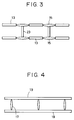
- oligosaccharide or polysaccharide portions 15 there are shown oligosaccharide or polysaccharide portions 15.
- the oligosaccharide or polysaccharide portions 15 and second-component portions 13 are linked by enzyme decomposable bonds, such as ester bonds, and form the main chain of the glycopolymer.
- a crosslinking site 23 is provided, which crosslinks main chains, wherein the main chains consist of the oligosaccharide or polysaccharide portions 15 and the second-component portions 13.
- a glycopolymer of the second embodiment can be prepared as follows: an oligosaccharide or polysaccharide having at least three reactive sites to a second component composing the second-component portions 13 is used as the oligosaccharide or polysaccharide portions 15 and is subjected to reaction with a dicarboxylic acid or the like which is employed as the second component.
- a oligosaccharide are those having 3 to 10 monosaccharide molecules.
- Examples of such a polysaccharide are chitosan, alginic acid, cellulose, starch, glycogen, galactan, mannan, and polyglucosamine.
- the oligosaccharide or polysaccharide portions 15 contain a saccharide exclusively having glucopyranose rings so as to improve heat resistance of the resulting polymeric compound, as is mentioned in the first embodiment.
- a glycopolymer shown in Fig. 2 or Fig. 3 can also be synthesized as follows: the hydroxy groups in saccharide portions of a linear glycopolymer, which is composed of a dicarboxylic acid and an oligosaccharide (e.g., cellobiose) having two monosaccharide molecules, are esterified by a reaction with adipic acid in pyridine or dimethylformamide (hereinafter referred to as DMF) so as to achieve crosslinking by adipic acid.
- adipic acid pyridine or dimethylformamide
- glycopolymer shown in Fig. 3 it is preferable to synthesize the glycopolymer shown in Fig. 3 by providing the main chain consisting of the oligosaccharide or polysaccharide portions 15 and the second-component portions 13, and then crosslinking the main chain with a crosslinking agent.
- Suitable crosslinking agents include aliphatic compounds having two or more functional groups capable of reacting with the OH-group or COOH-group in the oligosaccharide of polysaccharide portions 15.
- Such crosslinking agents include dicarboxylic acids, diols, diisocyanates, diamines or polyvinyl alcohol and the like.
- a glycopolymer having a structure shown in Figs. 2 and 3 in which the oligosaccharide and the second component are linked by peptide bonds can be obtained when a saccharic acid such as alginic acid is used for preparing the oligosaccharide portions 15 and a diamine such as hexamethylenediamine is employed as the second component.
- a saccharic acid such as alginic acid
- a diamine such as hexamethylenediamine
- Such a glycopolymer can be decomposed by an enzyme acting on bonds between the oligosaccharide or polysaccharide portions 15 and the second-component portions 13, as is similar to the first embodiment. Furthermore, the resulting decomposition products can be recycled without any purification step or with a simpler purification step as compared with conventional methods, thereby greatly reducing the cost of recycling such decomposition products.
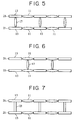
- oligosaccharide or polysaccharide portions 17 and second components 19 formed in molecular chains there are shown oligosaccharide or polysaccharide portions 17 and second components 19 formed in molecular chains.
- the second components 19 formed in molecular chains are crosslinked by the oligosaccharide or polysaccharide portions 17.
- An oligosaccharide or a polysaccharide which can be used for the oligosaccharide portions 11 of the first embodiment or the polysaccharide portions 15 of the second embodiment, respectively, can be applied to the oligosaccharide or polysaccharide portions 17 of this embodiment.
- the oligosaccharide or polysaccharide portions 17 contain a saccharide exclusively having glucopyranose rings so as to improve heat resistance of the polymeric compound, as is similar to the first and second embodiments.
- a compound which has functional groups capable of reacting with the -OH group in the saccharide component is employed.
- Typical second components can form decomposable ester, urethane and/or peptide bonds with the saccharide component 17 and include polymerizable carboxylic acids, amines, alcohols and the like.
- a molecular chain containing at least one repeating unit such as a repeating unit derived from a compound having vinyl group, and containing a plurality of function groups capable of reacting with OH-group in saccharide, is preferable.
- a molecular chain includes a molecular chain consisting of polyacrylic acid and the like.
- a glycopolymer comprising a second-component portion 19 bonded with oligosaccharide 17 by an ester bond can be obtained.
- the bond between the oligosaccharide portion 17 and the second-component portion 19 is not restricted to the ester bond, and any bond such as a peptide bond, or a urethane bond, can be used, so long as it can be decomposed by an enzyme.
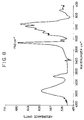
- a glycopolymer shown in Fig. 5 is different from that shown in Fig. 4 in that molecular chains 21 of Fig. 5 are composed of saccharide portions 11 and second-component portions 13 which are linked together, instead of the molecular chain of the second-component portion 19 in Fig. 4.
- the glycopolymer synthesized according to the method described in the first embodiment can be employed as the molecular chain 21.
- the second-component 13 a material having a functional group which can be crosslinked by the oligosaccharide or polysaccharide portions 17 is preferably used.
- materials for the second-component portion 13 include tricarboxylic acids such as aconitic acid and salts thereof.
- a tricarboxylic acid is employed for the second-component portions 13 and an oligosaccharide such as cellobiose is employed for the oligosaccharide portions 17 crosslinking the molecular chains 21, and for the saccharide portions 11, a glycopolymer in which each bond between the saccharide portions 11 and the second-component portions 13 in the molecular chain 21, and between the oligosaccharide portions 17 and the molecular chains 21 is an ester bond, can be obtained.
- crosslinks between the oligosaccharide or polysaccharide portions 17 and the molecular chains 21 are not restricted to the ester bonds, and any bond such as a peptide bond, or a urethane bond, can be used, as long as they can be decomposed by an enzyme.
- the glycopolymers illustrated in Figs. 4 and 5 can be decomposed by an enzyme acting on the bonds between the molecular chains of the second component 19 or the molecular chains 21 and the oligosaccharide or polysaccharide portions 17 crosslinking the molecular chains, as is similar to the first and second embodiments. Therefore, the resulting decomposition products can be recycled without purification step or with a simpler purification step as compared with conventional methods, thereby greatly reducing cost of recycling such decomposition products.
- a glycopolymer shown in Fig. 6 is different from that shown in Fig. 5 in that molecular chains 21 of Fig. 6 are crosslinked such that oligosaccharide portions 11 in one molecular chain 21 and those in the other molecular chain 21 are crosslinked by oligosaccharide or polysaccharide portions 17.
- the glycopolymer shown in Fig. 6 can be prepared as follows: For example, it is preferred to employ as oligosaccharide portion 11, an oligosaccharide, which is composed of two monosaccharide molecules (e.g., cellobiose or maltose), which has two reactive sites polymerizable with second-component portions 13 and another site reactive to a crosslinking agent.
- the oligosaccharide 11 is reacted with a material (e.g., a dicarboxylic acid) composing the second-component portions 13 so as to synthesize a straight glycopolymer (the molecular chain 21) composed of the oligosaccharide and the second-component.
- a material e.g., a dicarboxylic acid
- the resulting molecular chains 21 are then crosslinked at hydroxy groups or carboxylic groups in the oligosaccharide 11 in the main chain using an oligosaccharide composed of two monosaccharide molecules or a polysaccharide as a crosslinking agent 17.
- the crosslinks between the oligosaccharide or polysaccharide portions 17 and the molecular chains 21 are not restricted to ester bonds, and any bond such as a peptide bond, or a urethane bond can be used, so far as it can be decomposed by an enzyme.
- the glycopolymer of Fig. 7 is different from that of Fig. 5 in that crosslinking portions 23 crosslinking two molecular chains 21 do not contain saccharide.
- the glycopolymer of Fig. 7 can be obtained by employing a similar method to that for synthesizing the glycopolymer of Fig. 5.
- the glycopolymer having the above structure can be prepared by employing a process comprising the steps of reacting oligosaccharide with an excessive quantity of tricarboxylic acid, followed by adding a crosslinking component such as polyvinyl alcohol.
- a glycopolymer in which the molecular chains and the crosslinking-component portions are linked by urethane bonds can be obtained by reaction of an oligosaccharide, polysaccharide, acetylated oligosaccharide, or acetylated polysaccharide with an excessive quantity of isocyanic acid or an ester thereof, followed by reaction with a polyvinyl alcohol.
- glycopolymers incorporated in the above embodiments can be used alone or in combination with additives such as conventional pigments, plasticizers, and fillers, if required.
- an enzyme-decomposable polymeric compound can be obtained according to the present invention.
- a glycopolymer having the structure shown in Fig. 1A was synthesized according to the following method:
- Cellobiose i. e., an oligosaccharide derived from cellulose, was employed as the oligosaccharide having glucopyranose rings.
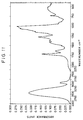
- the resulting polymeric compound was then subjected to the infrared absorption spectroscopy.
- the NMR spectrum of the resulting polymeric compound apparently indicated that esterification occurred mainly in the 6-position of glucopyranose rings in cellobiose.
- the polymeric compound synthesized in this example was a linear-chain polymer in which cellobiose and dimethyl adipate were alternately polymerized to form a main chain containing an oligosaccharide derived from cellobiose.
- Polymeric compounds were synthesized according to the same method as in Example 1, except that the type of oligosaccharide and the reaction conditions were changed as shown in Table 1.
- each resulting polymeric compound exhibited similar infrared absorption spectrum characteristics to those in Example 1.
- the NMR spectrum of each resulting polymeric compound revealed that esterification occurred mainly in the 6-position of glucopyranose rings in the oligosaccharide.
- Table 1 Example No. Oligosaccharide Dimethyl adipate (mol) Catalyst (mol) Reaction Temp.
- Polymeric compounds each incorporated in Examples 6 to 10 were synthesized according to the same method as in Examples 1 to 5, except that dimethyl pimelate was employed instead of dimethyl adipate and the reaction conditions were changed as shown in Table 2.
- Each resulting polymeric compound exhibited similar infrared absorption spectrum characteristics to those in Example 1.
- the NMR spectrum of each resulting polymeric compound revealed that esterification occurred mainly in the 6-position of glucopyranose rings in the oligosaccharide.
- Table 2 Example No. Oligosaccharide Dimethyl pimelate (mol) Catalyst (mol) Reaction Temp.
- a glycopolymer having the schematic structure shown in Fig. 1A was synthesized according to the following method:
- a DMF solution containing 4.5 g of terephthalic acid dichloride and 2.7 g of dimethylaminopyridine was added dropwise to a dioxane solution containing 5 g of cellobiose, followed by stirring for 22 hours at 60°C to form a reaction solid.
- the resulting solid was washed with ethanol and then separated into a water-soluble substance and a water-insoluble substance.
- the Mw of the polymeric compound isolated from the water-insoluble substance using DMF was approximately 10 3 to 10 5 and that of the water-soluble substance was 100 to 1,000.
- Fig. 9 shows the NMR spectrum (heavy-water solvent) of the water-soluble substance and Fig. 10 shows the infrared absorption spectrum. It is understood from these spectra that the primary OH group in cellobiose mainly participates in the reaction.
- Fig. 11 shows the infrared absorption spectrum of the water-insoluble substance
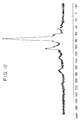
- Fig. 12 shows the solid NMR spectrum.
- the solid NMR spectrum shown in Fig. 12 also confirms the esterification.
- Fig. 13 shows the result of a thermogravimetric analysis of the water-insoluble substance. As is apparent from Fig. 13, the decomposition temperature of the polymeric compound of this example is 308°C.
- Glycopolymers containing glucofuranose rings and glucopyranose rings for example, those described in the foregoing Macromolecules (D. R. Patil et al., vol 24, page 3462, 1991) and Biotechnology and Bioengineering (D. R. Patil et al., vol 37, page 639 to 646, 1991) are decomposed at 150°C. Therefore, the polymeric compound exclusively containing glucopyranose rings of the present invention apparently has superior heat resistance. In addition, the water-soluble substance exhibited almost the same heat decomposition characteristics to those of the water-insoluble substance.
- a glycopolyzmer having the structure shown in Fig. 4 was synthesized according to the following method:
- Polymeric compounds were synthesized according to the same method as in Example 12, except that cellotriose, cellotetraose, cellopentaose, and cellohexaose were respectively employed instead of cellobiose.
- the infrared absorption spectrum of each resulting polymeric compound exhibited no peak for carboxylic acid and showed a new peak for the ester bond. Therefore, it was confirmed that the resulting polymeric compounds had structures in which polyacrylic acid was crosslinked by cellotriose, cellotetraose, cellopentaose, or cellohexaose.
- a condensate of cellobiose and a triester of aconitic acid was prepared by ester interchange using trimethyl aconitate (trans-form) with cellobiose as an oligosaccharide.
- the infrared absorption spectrum of the white powder showed an absorption peak due to the ester bond in glycoester at around 1720 cm -1 . Since an absorption peak due to trimethyl aconitate was not observed, it was understood that all of the aconitic-acid component contained in the glycopolymer had reacted with the saccharide.
- Polymeric compounds were synthesized according to the same method as in Example 17, except that cellotriose, cellotetraose, cellopentaose, and cellohexaose were respectively employed instead of cellobiose and the reaction conditions were changed as shown in Table 3.
- the infrared absorption spectrum of each resulting polymeric compound exhibited a peak due to the ester in the glycoester at around 1720 cm -1 . Since an absorption peak due to trimethyl aconitate was not observed, it was understood that all of the aconitic-acid component contained in the polymeric compound had reacted with the saccharide.
- Table 3 Example No. Saccharide Triester (mol) Potassium carbonate (mol) Reaction Temp.
- a condensate of cellobiose and a diester of aconitic acid which condensate had the schematic structure shown in Fig. 5, was prepared by ester interchange using dimethyl aconitate (in which any two of the three carboxylic groups had been methylesterified) with cellobiose as an oligosaccharide.
- resin 1 was immersed in a solution of cellobiose in pyridine for 15 min., dried, and then heated at 70 to 100°C for 10 min.
- the infrared absorption spectroscopy of the resulting polymeric compound revealed that the absorption intensity due to COOH or COO - decreased to not more than one tenth that of the resin 1.
- GPC which had been carried out similarly to Example 1 showed that the Mw of the resulting polymeric compound increased by two to ten times that of resin 1. Therefore, it was understood that the resin 1 was crosslinked by cellobiose.
- Polymeric compounds were synthesized according to the same two-step method as in Example 22, except that cellotriose, cellotetraose, cellopentaose, and cellohexaose were respectively employed instead of cellobiose and the reaction conditions were changed as shown in Table 4.
- Example 4 Example No. Saccharide Diester (mol) Enzyme (mol) Reaction Temp.
- a polymeric compound containing a glycopolymer having the general structure shown in Fig. 7 was synthesized according to the following method:
- the NMR and infrared absorption spectra of the polymeric compound did not have a peak due to the NCO group and showed a peak specific to the urethane bond. Therefore, it was assumed that the resulting polymeric compound had a structure in which isocyanic acid portions in a polymer chain prepared by reaction between cellobiose and ethyl triisocyanate were crosslinked by polyvinyl alcohol.
- a glycopolymer having the general structure shown in Fig. 3 was synthesized according to the following method:
- a glycopolymer having the general structure shown in Fig. 2 was synthesized according to the following method:
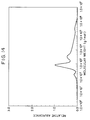
- Fig. 14 shows the distribution of the absolute molecular weight of the white powder.
- Fig. 15 shows the NMR spectrum of the white powder. Although the NMR spectrum has some peaks (indicated by *) due to impurities, it indicates that cellobiose is linked by ester bonds. Considering the molecular weight, the white powder, i.
- a polymeric compound e., a polymeric compound
- the decomposition temperature of the polymeric compound measured by a thermal analysis was 304°C which was approximately 150°C higher than that of the sucrose-containing polymeric compound described by D. R. Patil et al.
- Fig. 16 shows the result of a thermogravimetric analysis of the polymeric compound obtained in Example 35.
- a glycopolymer having the structure shown in Fig. 1 was synthesized according to the following method:
- the collected crystals were washed with water, dried, and then dissolved in 500 ml of hot ethanol.
- the solution was filtered to remove a small quantity of dicyclohexyl urea and the filtrate was evaporated to 300 ml of liquid to precipitate a solid.
- the solid crystals were collected by filtration.
- the resulting crystals were subjected to recrystallization from hot ethanol to yield 3.1 g of crystallized p-nitrophenyl ester of adipic acid.
- reaction solution was then mixed with 75 ml of ethyl acetate to collect a precipitated solid by filtration.
- the resulting solid was placed in a funnel, washed with 75 ml of ethyl acetate, 100 ml of ethanol, and 100 ml of ethyl acetate in that order, and then dried to yield 2. 8 g of a solid.
- the solid was a polymeric compound having a Mw of approximately 20,000 base on the results of GPC employing a TSK-GEL (manufactured by Tosoh Corporation), two GMPWXL columns, with a solution of 0.1 mol NaNO 3 as an eluent.
- glycopolymers each composed of the corresponding oligosaccharide ⁇ adipic amide were synthesized in Examples 37 to 40.
- esterase manufactured by Boehringer Mannheim
- HPLC high performance liquid chromatography
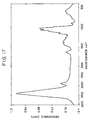
- Fig. 17 and 18 of fractions collected by GPC in Example 43 agreed with those of cellobiose and adipic acid.
- cellobiose was dispersed in potassium bromide powder and formed into a pellet, and adipic acid was dispersed in nujol mull.
- Fig. 17 shows the IR spectrum of cellobiose obtained as a decomposition product in Example 43.
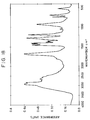
- Fig. 18 shows the IR spectrum of adipic acid obtained as a decomposition product in Example 43.
- Example 1 The same polymeric compound as that prepared in Example 1 could be obtained as follows: the fractionated oligosaccharide and newly prepared dimethyl adipate were mixed together at the same mixture ratio as in Example 1 and dissolved by stirring for 45 min. at 200 to 230 °C. Furthermore, a similar polymeric compound as that prepared in Example 35 could be obtained by dissolving and polymerizing the fractionated oligosaccharide and the fractionated adipic acid according to a similar method to Example 35. Therefore, it was understood that the enzyme decomposition products of the polymeric compounds prepared in Examples 1 to 5 could be readily recycled. Table 7 Example No. pH Decomposition Temp. (°C) Enzyme (g) 43 8.0 ⁇ 30 0.01 44 8.6 ⁇ 30 0.01 45 7.5 ⁇ 45 0.05 46 9.0 ⁇ 40 0.1 47 8.6 ⁇ 30 0.1
- the fractionated oligosaccharide and newly prepared dimethyl pimelate were mixed together at the same mixture ratio as in Examples 6 to 10 and dissolved by stirring for 45 min. at 200 to 230 °C. Furthermore, a similar polymeric compound as that prepared in Example 35 could be obtained by dissolving and polymerizing the fractionated oligosaccharide and the fractionated pimelic acid according to a similar method to Example 35. Therefore, it was understood that enzyme decomposition products of the polymeric compounds prepared in Examples 6 to 10 could be readily recycled.
- Each of the polymeric compounds synthesized in Examples 12 to 16 was mixed with esterase (manufactured by Boehringer Mannheim) and stirred.
- the reaction conditions were as follows: 1 g of each polymeric compound was added to 0.05 g of the enzyme adjusted to pH 7.5, followed by stirring at 45°C. Ten hours after initiation of stirring, a portion of the reaction supernatant was collected and subjected to HPLC similar to Examples 43 to 47. HPLC revealed two new peaks whose intensity gradually increased with lapse of time. Two weeks later, fractions corresponding to these peaks were collected and subjected to the IR spectroscopy. As a result, the two peaks caused by addition of the enzyme were identified as being due to oligosaccharide and acrylic acid, respectively.
- the resulting polymeric compound had a Mw of 2,000 to 4,000.
- the Mw of the resulting polymeric compound was 3,000 to 8,000 under conditions employed in Examples 12 to 16.
- Each of the polymeric compounds synthesized in Examples 17 to 21 was decomposed using esterase (manufactured by Boehringer Mannheim K. K.).
- esterase manufactured by Boehringer Mannheim K. K.
- 1.0 g of each polymeric compound was mixed with 0.05 g of the enzyme adjusted to pH 7.5, followed by stirring at 45°C.
- the reaction supernatant collected 10 hours after initiation of reaction was subjected to HPLC.
- two peaks with retention times almost corresponding to oligosaccharide and aconitic acid were observed.
- the intensity of these two peaks gradually increased with lapse of time and reached constant values after 1 week. Fractions corresponding to the two peaks were collected and subjected to NMR spectroscopy by which the peaks were identified as being due to oligosaccharide and aconitic acid.
- the fractionated aconitic acid was trimethylesterified and subjected to reaction by a similar method to Examples 17 to 21 with the corresponding oligosaccharide produced by decomposition. Polymeric compounds similar to those prepared in Examples 17 to 21 were thereby obtained. Therefore, it was understood that enzyme decomposition products of the polymeric compounds prepared in Examples 17 to 21 could be readily recycled.
- Each of the polymeric compounds synthesized in Examples 27 to 33 was press-molded into a disk-shape having a diameter of 2 cm and thickness of 1 mm and then buried in garden soil at 3 cm depth. One year after burying, the polymeric compound was found to be totally decomposed without remains of the molded shape.
- the polymeric compound prepared in Example 27 was placed in a 0.1N hydrochloric acid solution and stirred. After 24 hours, the resulting reaction solution was subjected to HPLC conducted similarly to Examples 43 to 47.
- the resulting reaction solution mainly contained glucose, cellobiose, and isocyanic acid.
- the saccharide mixture was fractionated from the reaction solution. Then, 10 g of the fractionated saccharide mixture was mixed with 5 g of adipic acid and dissolved by stirring while heating. The resulting compound had a similar NMR spectrum to that shown in Fig. 15.
- reaction solution from which the enzyme had been removed was lyophilized to remove the water solvent.
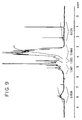
- the resulting powder and lipase (pH 8.0) were poured into pyridine at a weight ratio of 1:0.04. Reaction was carried out in a nitrogen atmosphere at 45°C for 3 weeks. A water-insoluble substance was collected from the resulting solid, which substance was revealed to be a polymeric compound having an IR spectrum similar to that shown in Fig. 8.
- reaction solution from which the enzyme had been removed was lyophilized to remove the water solvent.
- the resulting powder and the enzyme (PROLEATHER) (pH 8.0) were poured into pyridine at a weight ratio of 1:0.03. Reaction was carried out in a nitrogen atmosphere at 45°C for 3 weeks. A water-insoluble substance was collected from the resulting solid, which substance was revealed to be a polymeric compound having an IR spectrum similar to that shown in Fig. 8.
Landscapes
- Chemical & Material Sciences (AREA)
- Health & Medical Sciences (AREA)
- Chemical Kinetics & Catalysis (AREA)
- Organic Chemistry (AREA)
- Polymers & Plastics (AREA)
- Medicinal Chemistry (AREA)
- Life Sciences & Earth Sciences (AREA)
- Biochemistry (AREA)
- Materials Engineering (AREA)
- Molecular Biology (AREA)
- Engineering & Computer Science (AREA)
- General Health & Medical Sciences (AREA)
- Separation, Recovery Or Treatment Of Waste Materials Containing Plastics (AREA)
- Polyesters Or Polycarbonates (AREA)
- Saccharide Compounds (AREA)
- Compositions Of Macromolecular Compounds (AREA)
- Manufacture Of Porous Articles, And Recovery And Treatment Of Waste Products (AREA)
Applications Claiming Priority (6)
| Application Number | Priority Date | Filing Date | Title |
|---|---|---|---|
| JP15817596 | 1996-06-19 | ||
| JP15817596 | 1996-06-19 | ||
| JP158175/96 | 1996-06-19 | ||
| JP7925197 | 1997-03-14 | ||
| JP7925197 | 1997-03-14 | ||
| JP79251/97 | 1997-03-14 |
Publications (3)
| Publication Number | Publication Date |
|---|---|
| EP0814093A2 true EP0814093A2 (de) | 1997-12-29 |
| EP0814093A3 EP0814093A3 (de) | 1999-03-17 |
| EP0814093B1 EP0814093B1 (de) | 2003-05-07 |
Family
ID=26420290
Family Applications (1)
| Application Number | Title | Priority Date | Filing Date |
|---|---|---|---|
| EP97109871A Expired - Lifetime EP0814093B1 (de) | 1996-06-19 | 1997-06-17 | Polymerverbindung mit Glykopolymer und ein Verfahren zu ihrem Abbau |
Country Status (3)
| Country | Link |
|---|---|
| US (2) | US6316606B1 (de) |
| EP (1) | EP0814093B1 (de) |
| DE (1) | DE69721635T2 (de) |
Cited By (2)
| Publication number | Priority date | Publication date | Assignee | Title |
|---|---|---|---|---|
| EP0987296A1 (de) * | 1998-09-14 | 2000-03-22 | Canon Kabushiki Kaisha | Cellulosischer Verbundwerkstoff und Verfahren zu dessen Herstellung |
| US6252027B1 (en) | 1998-09-14 | 2001-06-26 | Canon Kabushiki Kaisha | Thermally formed article, production process of thermally formed article, toner cartridge, and recording medium |
Families Citing this family (9)
| Publication number | Priority date | Publication date | Assignee | Title |
|---|---|---|---|---|
| DE69721635T2 (de) * | 1996-06-19 | 2004-05-13 | Canon K.K. | Polymerverbindung mit Glykopolymer und ein Verfahren zu ihrem Abbau |
| US6528643B1 (en) * | 2000-05-05 | 2003-03-04 | Hercules Incorporated | Esterified polysaccharide products and B-lactone ring opened ketene dimer products containing the compositions, and process of making the same |
| US20050096446A1 (en) * | 2003-10-29 | 2005-05-05 | Council Of Scientific And Industrial | Tri-block copolymers and a process for the preparation of the same |
| US7109280B2 (en) * | 2003-10-29 | 2006-09-19 | Council Of Scientific And Industrial Research | Block copolymers and preparation thereof |
| JP4515162B2 (ja) * | 2004-06-15 | 2010-07-28 | キヤノン株式会社 | Dnaインターカレート物質類の吸着用構造物 |
| EP1942123A4 (de) * | 2005-10-04 | 2012-06-20 | Kaneka Corp | Polyurethanderivat, polyurethanschaumstoff und herstellungsverfahren dafür |
| US7811829B2 (en) | 2006-06-08 | 2010-10-12 | Canon Kabushiki Kaisha | Measuring probe and production process thereof |
| RU2535202C2 (ru) | 2010-02-10 | 2014-12-10 | Ньютрипол Кэпитал Сарл | Биодеградируемые полимеры и способы их получения |
| CN107417857B (zh) * | 2017-09-15 | 2020-01-21 | 桂林理工大学 | 抗癌活性衍生物蔗渣木聚糖丁香酸酯-g-AM/MMA的合成方法 |
Family Cites Families (19)
| Publication number | Priority date | Publication date | Assignee | Title |
|---|---|---|---|---|
| CH339188A (de) * | 1955-04-07 | 1959-06-30 | Lonza Werke Elektrochemische | Verfahren zur Herstellung von vernetzten Zelluloseestern |
| US3950282A (en) * | 1974-12-06 | 1976-04-13 | Gilbert Richard D | Polyanhydroglucose biodegradable polymers and process of preparation |
| US4429076A (en) * | 1979-06-13 | 1984-01-31 | Asahi Kasei Kogyo Kabushiki Kaisha | Thermoplastic polymer composition |
| JPH0331294A (ja) * | 1989-06-28 | 1991-02-12 | Gun Ei Chem Ind Co Ltd | 新規なオリゴ糖及びその製造方法 |
| US5227415A (en) * | 1990-04-06 | 1993-07-13 | Director-General Of Agency Of Industrial Science And Technology | Biodegradable plastic composition |
| CA2088366C (en) * | 1991-05-28 | 1998-07-28 | Jonathan S. Dordick | Sugar-based polymers |
| JPH0539381A (ja) * | 1991-08-08 | 1993-02-19 | Mitsui Toatsu Chem Inc | 生分解性ポリマー組成物 |
| DE69229710T2 (de) * | 1991-11-15 | 2000-03-02 | Kanegafuchi Kagaku Kogyo K.K., Osaka | Esterbindung enthaltende Polymere für pharmazeutische Zubereitungen |
| JP3179177B2 (ja) | 1992-04-10 | 2001-06-25 | 昭和高分子株式会社 | ウレタン結合を含む脂肪族ポリエステル |
| US5321064A (en) * | 1992-05-12 | 1994-06-14 | Regents Of The University Of Minnesota | Compositions of biodegradable natural and synthetic polymers |
| TW256845B (de) * | 1992-11-13 | 1995-09-11 | Taisyal Kagaku Kogyo Kk | |
| DE4404840A1 (de) * | 1994-02-16 | 1995-08-17 | Wolff Walsrode Ag | Thermoplastische biologisch abbaubare Polysaccharidderivate, Verfahren zu ihrer Herstellung und ihre Verwendung |
| EP0721784A4 (de) | 1994-07-29 | 1997-09-17 | Kanegafuchi Chemical Ind | Arzneimittelzubereitung mit kontrollierter freisetzung |
| DE19507668C2 (de) * | 1995-03-04 | 2000-01-27 | Suedzucker Ag | Waschmittelformulierungen, enthaltend eine acylierte Disaccharidcarbonsäure |
| US5663254A (en) * | 1995-05-22 | 1997-09-02 | The Johns Hopkins University | Synthesis of high mannose glycopolymers |
| DE69721635T2 (de) * | 1996-06-19 | 2004-05-13 | Canon K.K. | Polymerverbindung mit Glykopolymer und ein Verfahren zu ihrem Abbau |
| ATE279445T1 (de) * | 1999-03-05 | 2004-10-15 | Wolff Walsrode Ag | Regioselektiv substituierte ester von oligo- und polysacchariden und verfahren zu ihrer herstellung |
| US6204369B1 (en) * | 1999-06-08 | 2001-03-20 | Henkel Corporation | Process for the preparation of alykl polyglycosides |
| CA2351253A1 (en) * | 2000-11-10 | 2002-05-10 | Groupe Lysac Inc./Lysac Group Inc. | Crosslinked polysaccharide, obtained by crosslinking with substituted polyethylene glycol, as superabsorbent |
-
1997
- 1997-06-17 DE DE69721635T patent/DE69721635T2/de not_active Expired - Lifetime
- 1997-06-17 EP EP97109871A patent/EP0814093B1/de not_active Expired - Lifetime
- 1997-06-18 US US08/878,128 patent/US6316606B1/en not_active Expired - Lifetime
-
2001
- 2001-11-13 US US10/054,482 patent/US6900295B2/en not_active Expired - Fee Related
Cited By (3)
| Publication number | Priority date | Publication date | Assignee | Title |
|---|---|---|---|---|
| EP0987296A1 (de) * | 1998-09-14 | 2000-03-22 | Canon Kabushiki Kaisha | Cellulosischer Verbundwerkstoff und Verfahren zu dessen Herstellung |
| US6252027B1 (en) | 1998-09-14 | 2001-06-26 | Canon Kabushiki Kaisha | Thermally formed article, production process of thermally formed article, toner cartridge, and recording medium |
| US6468668B1 (en) | 1998-09-14 | 2002-10-22 | Canon Kabushiki Kaisha | Cellulosic composite product and a method of producing the same |
Also Published As
| Publication number | Publication date |
|---|---|
| US6900295B2 (en) | 2005-05-31 |
| EP0814093B1 (de) | 2003-05-07 |
| DE69721635T2 (de) | 2004-05-13 |
| EP0814093A3 (de) | 1999-03-17 |
| US6316606B1 (en) | 2001-11-13 |
| US20020132918A1 (en) | 2002-09-19 |
| DE69721635D1 (de) | 2003-06-12 |
Similar Documents
| Publication | Publication Date | Title |
|---|---|---|
| US6900295B2 (en) | Polymeric compound comprising glycopolymer and a method for decomposing the same | |
| KR100421246B1 (ko) | 분해성을 가지는 폴리우레탄수지 | |
| US5208316A (en) | Cyclodextrin polymer and cyclodextrin membrane prepared using said polymer | |
| CN1194041C (zh) | 脂族热塑性聚氨酯及其应用 | |
| JP3392411B1 (ja) | アルキレンカーボネートを含む共重合体及びその製造方法 | |
| JPH06298921A (ja) | マクロモノマーおよびその重合体 | |
| US3950282A (en) | Polyanhydroglucose biodegradable polymers and process of preparation | |
| US5618933A (en) | Sugar-based polymers | |
| CN109721700B (zh) | 一种纤维素及其衍生物与pet的接枝共聚物及其合成方法 | |
| JP3413062B2 (ja) | 糖鎖高分子化合物を含む高分子化合物及びその分解方法 | |
| JP4491626B2 (ja) | ベチュリンから得られるポリマー及びその製造法 | |
| JP2743053B2 (ja) | ポリエステル樹脂組成物 | |
| CN1073582C (zh) | 一种生物降解性共聚酯的合成方法 | |
| CA2088366C (en) | Sugar-based polymers | |
| JP2840999B2 (ja) | 重合体組成物 | |
| JP3054188B2 (ja) | 新規共重合体及びその製造方法 | |
| US4038223A (en) | Novel segmented copolymers containing free hydroxyl groups and method of preparing the same | |
| JP3685438B2 (ja) | 糖鎖高分子化合物の分解方法 | |
| US20020023570A1 (en) | Sugar - inorganic substance composite | |
| JP4221456B2 (ja) | 両親媒性糖含有ポリマー、その製法およびその用途 | |
| CN114989770B (zh) | 一种可降解的生物基聚氨酯胶粘剂组合物及其制备方法 | |
| CN112724384B (zh) | 一种扩链法制备生物降解聚对苯二甲酸-丁二酸-1,3-丙二醇酯的方法 | |
| JPS60135423A (ja) | 低分子量酢酸セルロ−スを一成分とする共重合体の製法 | |
| Buruiana et al. | Synthesis and properties of polyurethane cationomers with urethane-cholesteryl and dodecylmethylammonium moieties | |
| JP3342570B2 (ja) | ポリエチレンサクシネートの製造方法 |
Legal Events
| Date | Code | Title | Description |
|---|---|---|---|
| PUAI | Public reference made under article 153(3) epc to a published international application that has entered the european phase |
Free format text: ORIGINAL CODE: 0009012 |
|
| AK | Designated contracting states |
Kind code of ref document: A2 Designated state(s): DE FR GB |
|
| PUAL | Search report despatched |
Free format text: ORIGINAL CODE: 0009013 |
|
| AK | Designated contracting states |
Kind code of ref document: A3 Designated state(s): AT BE CH DE DK ES FI FR GB GR IE IT LI LU MC NL PT SE |
|
| 17P | Request for examination filed |
Effective date: 19990916 |
|
| AKX | Designation fees paid |
Free format text: DE FR GB |
|
| 17Q | First examination report despatched |
Effective date: 20011112 |
|
| GRAH | Despatch of communication of intention to grant a patent |
Free format text: ORIGINAL CODE: EPIDOS IGRA |
|
| GRAH | Despatch of communication of intention to grant a patent |
Free format text: ORIGINAL CODE: EPIDOS IGRA |
|
| GRAA | (expected) grant |
Free format text: ORIGINAL CODE: 0009210 |
|
| AK | Designated contracting states |
Designated state(s): DE FR GB |
|
| REG | Reference to a national code |
Ref country code: GB Ref legal event code: FG4D |
|
| REF | Corresponds to: |
Ref document number: 69721635 Country of ref document: DE Date of ref document: 20030612 Kind code of ref document: P |
|
| ET | Fr: translation filed | ||
| PLBE | No opposition filed within time limit |
Free format text: ORIGINAL CODE: 0009261 |
|
| STAA | Information on the status of an ep patent application or granted ep patent |
Free format text: STATUS: NO OPPOSITION FILED WITHIN TIME LIMIT |
|
| 26N | No opposition filed |
Effective date: 20040210 |
|
| PGFP | Annual fee paid to national office [announced via postgrant information from national office to epo] |
Ref country code: GB Payment date: 20140610 Year of fee payment: 18 |
|
| PGFP | Annual fee paid to national office [announced via postgrant information from national office to epo] |
Ref country code: DE Payment date: 20140630 Year of fee payment: 18 |
|
| PGFP | Annual fee paid to national office [announced via postgrant information from national office to epo] |
Ref country code: FR Payment date: 20140625 Year of fee payment: 18 |
|
| REG | Reference to a national code |
Ref country code: DE Ref legal event code: R119 Ref document number: 69721635 Country of ref document: DE |
|
| GBPC | Gb: european patent ceased through non-payment of renewal fee |
Effective date: 20150617 |
|
| REG | Reference to a national code |
Ref country code: FR Ref legal event code: ST Effective date: 20160229 |
|
| PG25 | Lapsed in a contracting state [announced via postgrant information from national office to epo] |
Ref country code: DE Free format text: LAPSE BECAUSE OF FAILURE TO SUBMIT A TRANSLATION OF THE DESCRIPTION OR TO PAY THE FEE WITHIN THE PRESCRIBED TIME-LIMIT Effective date: 20160101 Ref country code: GB Free format text: LAPSE BECAUSE OF NON-PAYMENT OF DUE FEES Effective date: 20150617 |
|
| PG25 | Lapsed in a contracting state [announced via postgrant information from national office to epo] |
Ref country code: FR Free format text: LAPSE BECAUSE OF NON-PAYMENT OF DUE FEES Effective date: 20150630 |